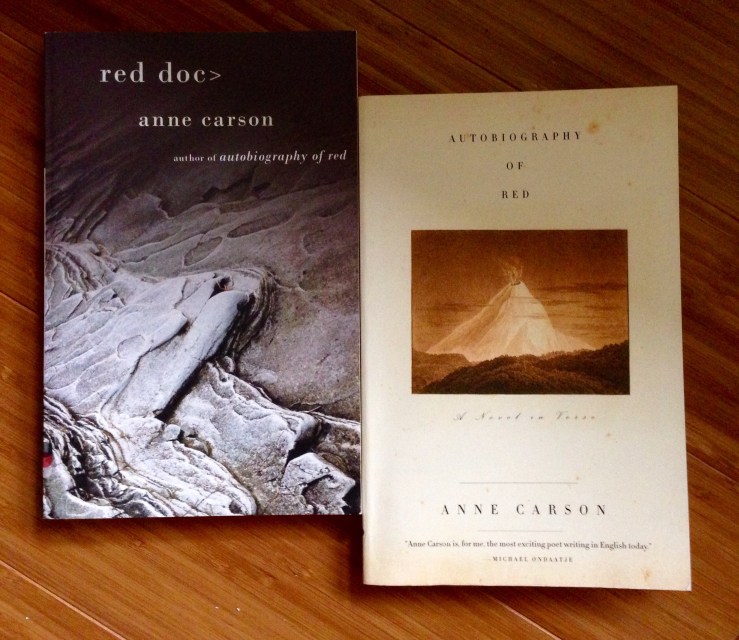
Still recovering from Anne Carson’s Autobiography of Red. Haven’t felt so zapped by a book in a long time. Amazing. Try to write something about it on here soon. Million thanks again to BLCKDGRD for sending it my way.
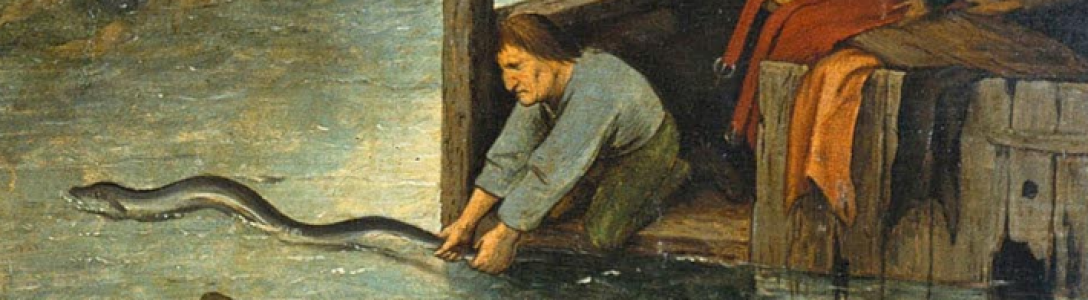
Still recovering from Anne Carson’s Autobiography of Red. Haven’t felt so zapped by a book in a long time. Amazing. Try to write something about it on here soon. Million thanks again to BLCKDGRD for sending it my way.


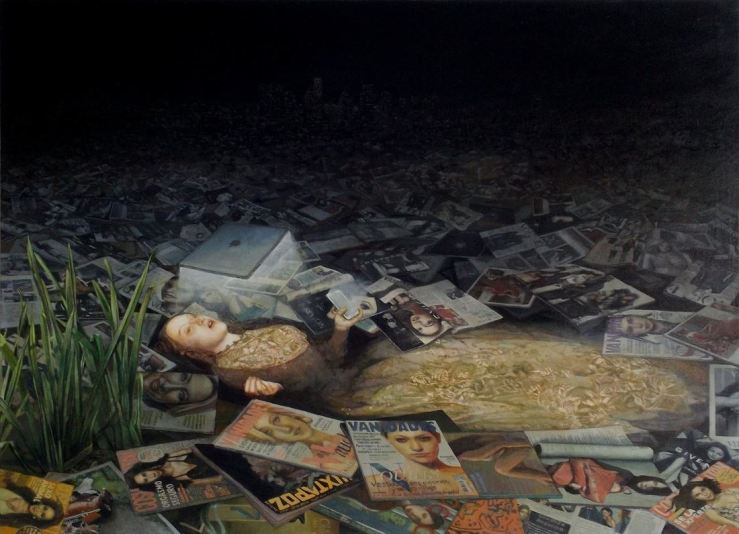

Victor Halfwit: A Winter’s Tale by Thomas Bernhard. English translation by Martin Chalmers. Illustration and design by Sunandini Banerjee. First edition oversized hardback from Seagull Books. On thick, heavy paper, Banerjee’s rich full-color digital collages illustrate what is essentially a microfiction by Thomas Bernhard. I bought this a few years ago at Faulkner House, a tiny bookstore in New Orleans.

Go Down, Moses by William Faulkner. 1973 Vintage mass-market paperback edition. Cover photo by Robert Wenkham; no designer credited. My favorite Faulkner, although I’ve not read them all. I bought this for grad school, which explains the cheap used mass-market edition, but I love the cover.  Fractured Karma by Tom Clark. First edition trade paperback from Black Sparrow Press. Design by Barbara Martin. The cover painting, Waiting Room for the Beyond, is by John Register. This is the first Tom Clark book I read. Amazing.
Does Suttree die?
At the end of Cormac McCarthy’s novel Suttree, I mean?
Look, before we go any farther, let’s be clear—this little riff is intended for those who’ve read the book. Anyone’s welcome to read this riff of course, but I’m not going to be, y’know, summarizing the plot or providing an argument that you should read Suttree (you should; it’s great)—and there will be what I suppose you’d call spoilers.
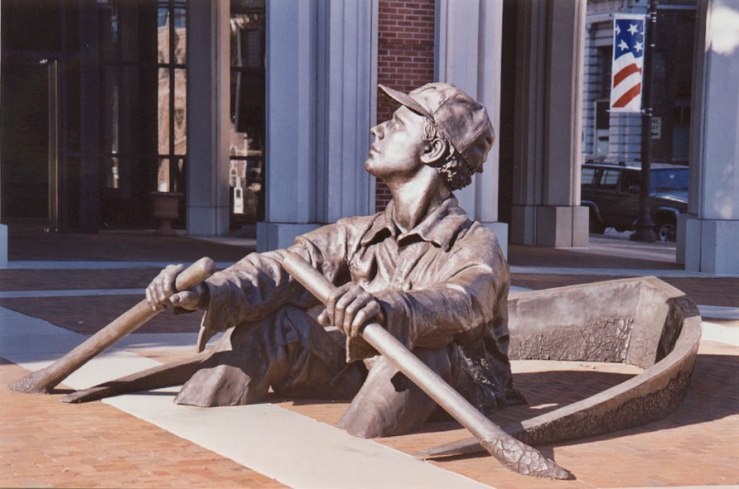
So anyway—Does Suttree die at the end of Cormac McCarthy’s novel Suttree?
This question percolated in the background of my brain as I revisited Suttree this month via Michael Kramer’s amazing audiobook version (I also reread key sections—especially the last), in large part because of comments made on my 2010 review of the novel.
The first comment suggesting that Suttree dies at the end of the novel came in 2012 from poster “Jack foy,” who suggested that Suttree “has died in the boat and that it is his corpse cariied [sic] from there and his spirit and not his body hitching a ride at the finale.”
Earlier this year, a commenter named Julie Seeley responded to Jack foy’s idea; her response is worth posting in full:
I kind of agree that Suttree dies at the end also–or at least there are a lot of indications that the ending is meant to be ambiguous. Suttree reflects on his life, saying something to the effect of “I was not unhappy.” He visits his own houseboat and finds the door off and a corpse in his bed. A driver picks him up and says, “Come on,” even though Suttree had never even stuck out his thumb to hitch-hike It feels oddly similar to Dickinson’s “Because I could not stop for Death, He kindly stopped for me.” All of the scenery whizzing by faster and faster does feel like (sorry for the cliche) his life sort of flashing before him. This was a thought-provoking novel that I am looking forward to reading again soon.
Julie Seeley’s analysis is persuasive and her connection to Dickinson is especially convincing upon rereading the book’s final paragraphs. In my Suttree review, I argued that the book is a synthesis of American literature, tracing the overt connections to Faulkner and Frost, Poe and Cummings, Ellison and Steinbeck, before laundry listing:
…we find Mark Twain, Herman Melville, Ernest Hemingway, Walt Whitman, Emerson and Thoreau, Emily Dickinson, and William Carlos Williams, to name just a few writers whose blood courses through this novel (even elegant F. Scott Fitzgerald is here, in an unexpected Gatsbyish episode late in the novel).
Revisiting Suttree this month I found myself again impressed with McCarthy’s command of allusion and reference. Its transcendentalist streak stood out in particular. (Or perhaps more accurately, I sensed the generative material of the American Renaissance writers filtered through the writers that came before Suttree). But one American Renaissance writer I failed to name in my original review was Dickinson’s (near) contemporary Nathaniel Hawthorne, whose work of course filters through all serious American novels. There are plenty of echoes of Hawthorne in Suttree—Hawthorne’s tales in particular—but it’s the way that Hawthorne ends his tales that interests me here. Like the dashes that conclude many of Dickinson’s poems (including “Because I could not stop for Death”), Hawthorne’s conclusions are frequently ambiguous. Like the conclusion of Suttree.
So: Does Suttree die at the end of Cormac McCarthy’s novel Suttree?
Well, wait. Let’s go back to the beginning. Of the novel, I mean. Like I said, I’d had this question buzzing around in the back of my head as I revisited the book.
So, the beginning. Well, I’d forgotten that Suttree had a twin brother who had died at birth. The twin resurfaces a few times in the text, and there’s even a scene in the musseling section featuring a set of twins. Does Suttree’s twin brother’s death in infancy prefigure Suttree’s own death? How could it not? But—at the same time—hey, it’s ambiguous if Suttree dies; should I have stated my answer to my own damn question earlier?—hey, at the same time, the twin brother’s death is not Suttree’s death sentence, right? It simply introduces a motif—the dead body. Continue reading “Does Suttree die? | A riff on Cormac McCarthy’s novel Suttree”
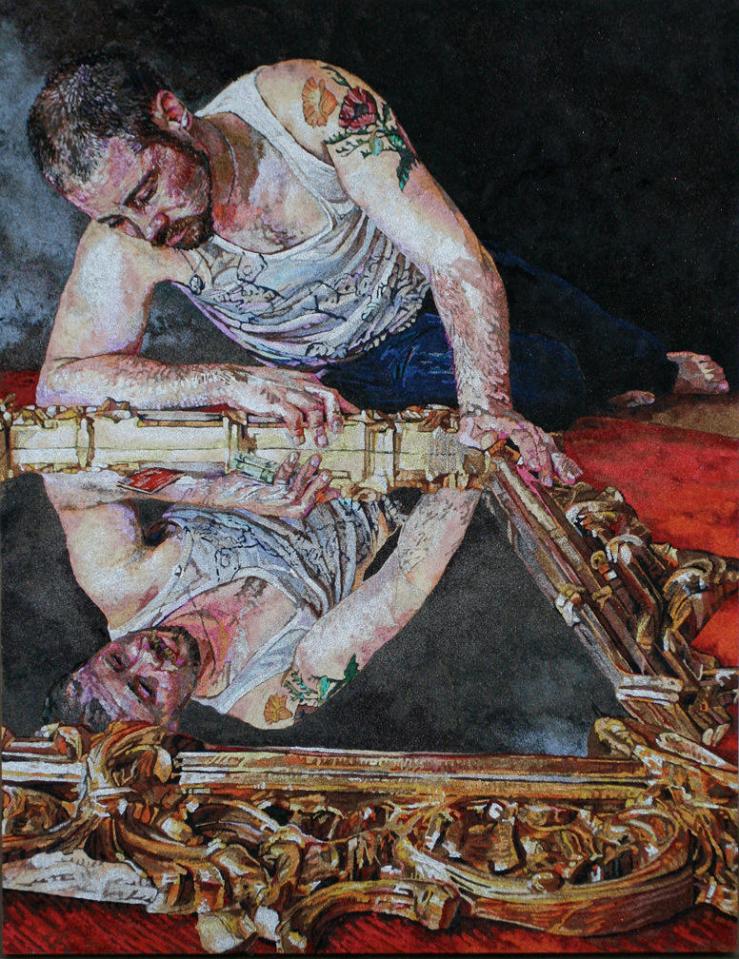

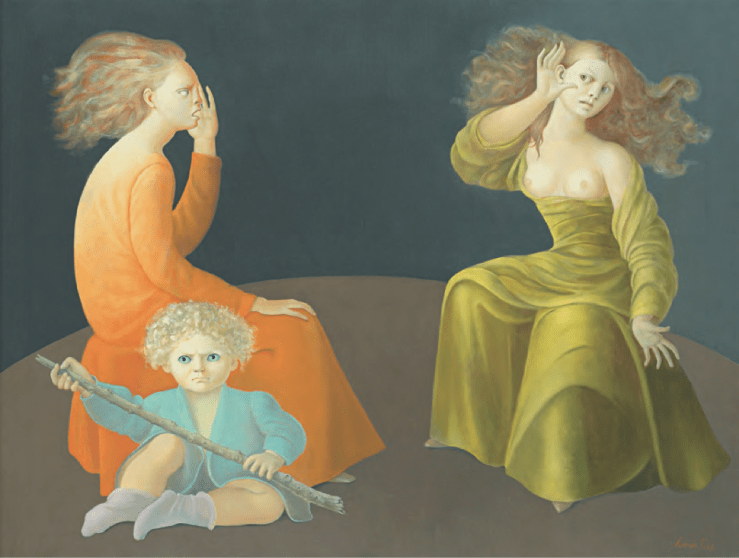
As practical men, the new middle classes found literature frivolous; as pious ones, they found it idolatrous; as class-conscious citizens, they felt it too committed to court and salon. Yet they could not live without it; a lust for images of their own lives, projections of their own dreams and nightmares moved them obscurely. They demanded a form that would be really their own, a mass-produced commodity to be bought or rented in the marketplace like other goods, a thick and substantial item to be placed on the table with other evidence of their wealth and taste. The novel is the first large-scale example of “mass art.” It is quite different from “folk art,” with its handmade appearance and its air of knowing its place, for folk art is rooted in the country and in agriculture; it changes slowly and almost imperceptibly, its chief appeal being its resemblance to what has come before. “Mass art,” on the other hand, is urban art, changing with the rapid changes of fashion, and seeming as much the product of new advances and technique as in any profound shift in the imagination. Like the wood-block engravings of 18th-century Japan, or the movies later on, or jazz on records, its triumphs depend chiefly on developments in manufacturing, packaging, and distribution. Like other mass-produced products, it tends to drive out of existence craft objects, which cannot survive the class structures which demand them and the class-consciousness which defines their consumers. Just as the spectacular rise of the novel is inconceivable without the perfection of printing, its final victory is inconceivable without the invention of the circulating library; mass-produced, it is also mass-circulated like any commodity in an expanding mercantile economy.
From Leslie Fiedler’s Love and Death in the American Novel (1960).
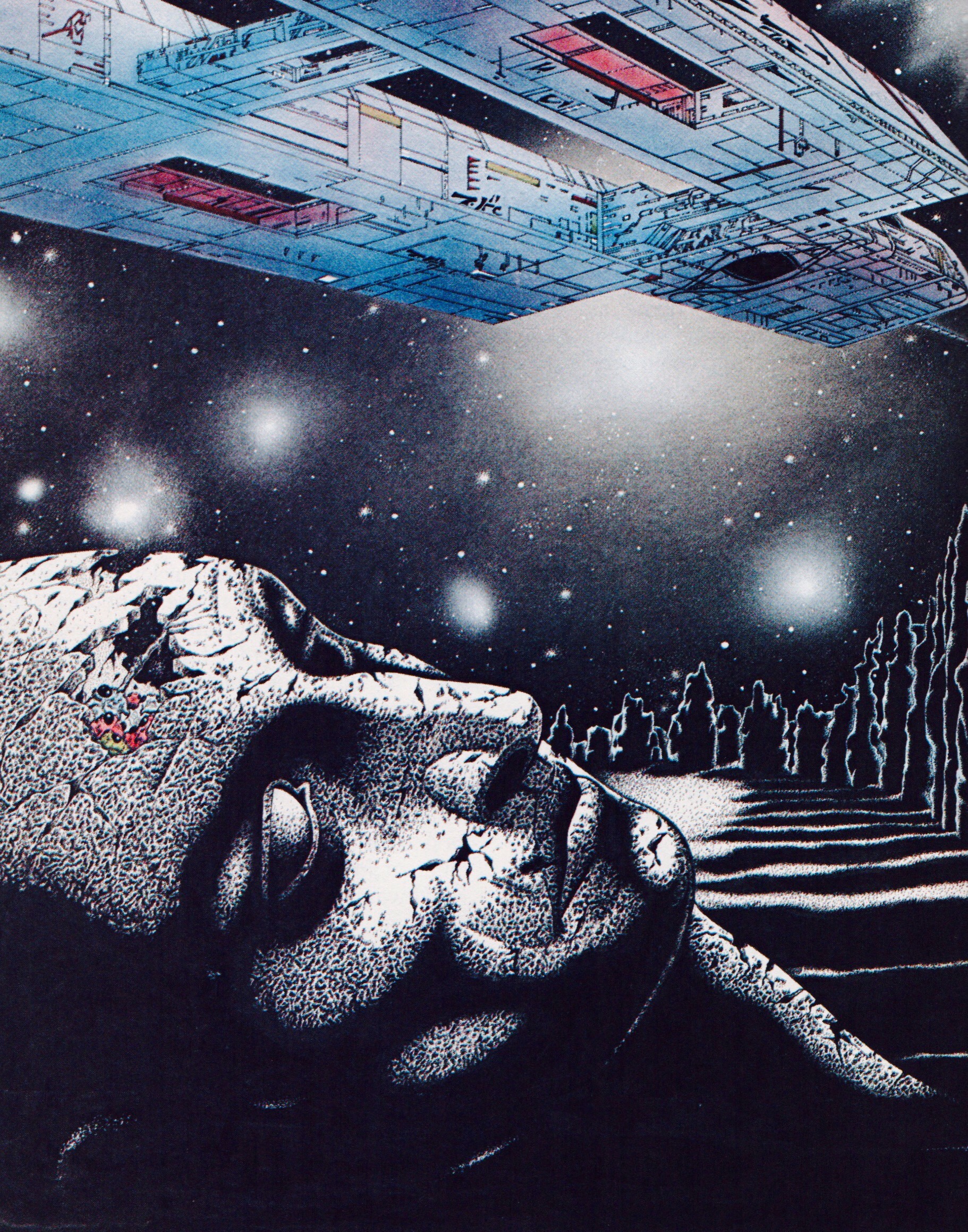


It was not the fear of ridicule,
to which everyday life as a winged red person had accommodated Geryon early in life,
but this blank desertion of his own mind
that threw him into despair. Perhaps he was mad. In the seventh grade he had done
a science project on this worry.
It was the year that he began to wonder about the noise that colors make. Roses came
roaring across the garden at him.
He lay on his bed at night listening to the silver light of stars crashing against
the window screen. Most
of those he interviewed for the science project had to admit they did not hear
the cries of the roses
being burned alive in the noonday sun. Like horses, Geryon would say helpfully,
like horses in war.No, they shook their heads.
Why is grass called blades? he asked them. Isn’t it because of the clicking?
They stared at him. You should be
interviewing roses, not people, said the science teacher. Geryon liked this idea.
The last page of his project
was a photograph of his mother’s rosebush under the kitchen window.
Four of the roses were on fire.
They stood up straight and pure on the stalk, gripping the dark like prophets
and howling colossal intimacies
from the back of their fused throats. Didn’t your mother mind—
From Anne Carson’s novel-poem Autobiography of Red.


