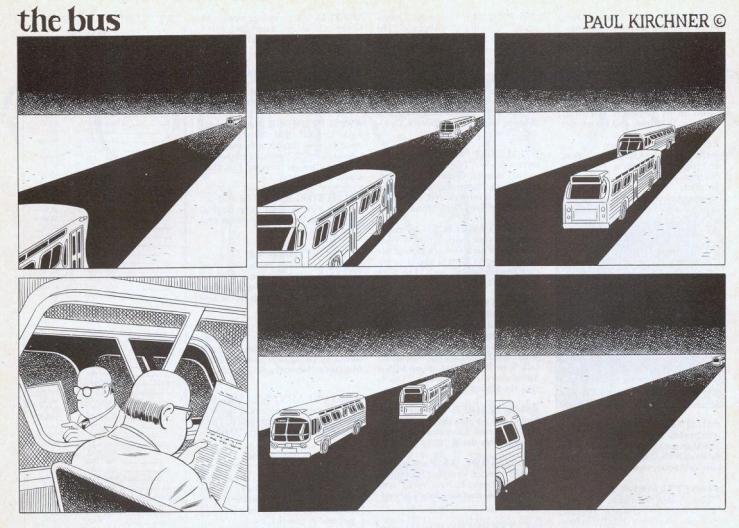
The Bus — Paul Kirchner

PtOJD2g - Imgur

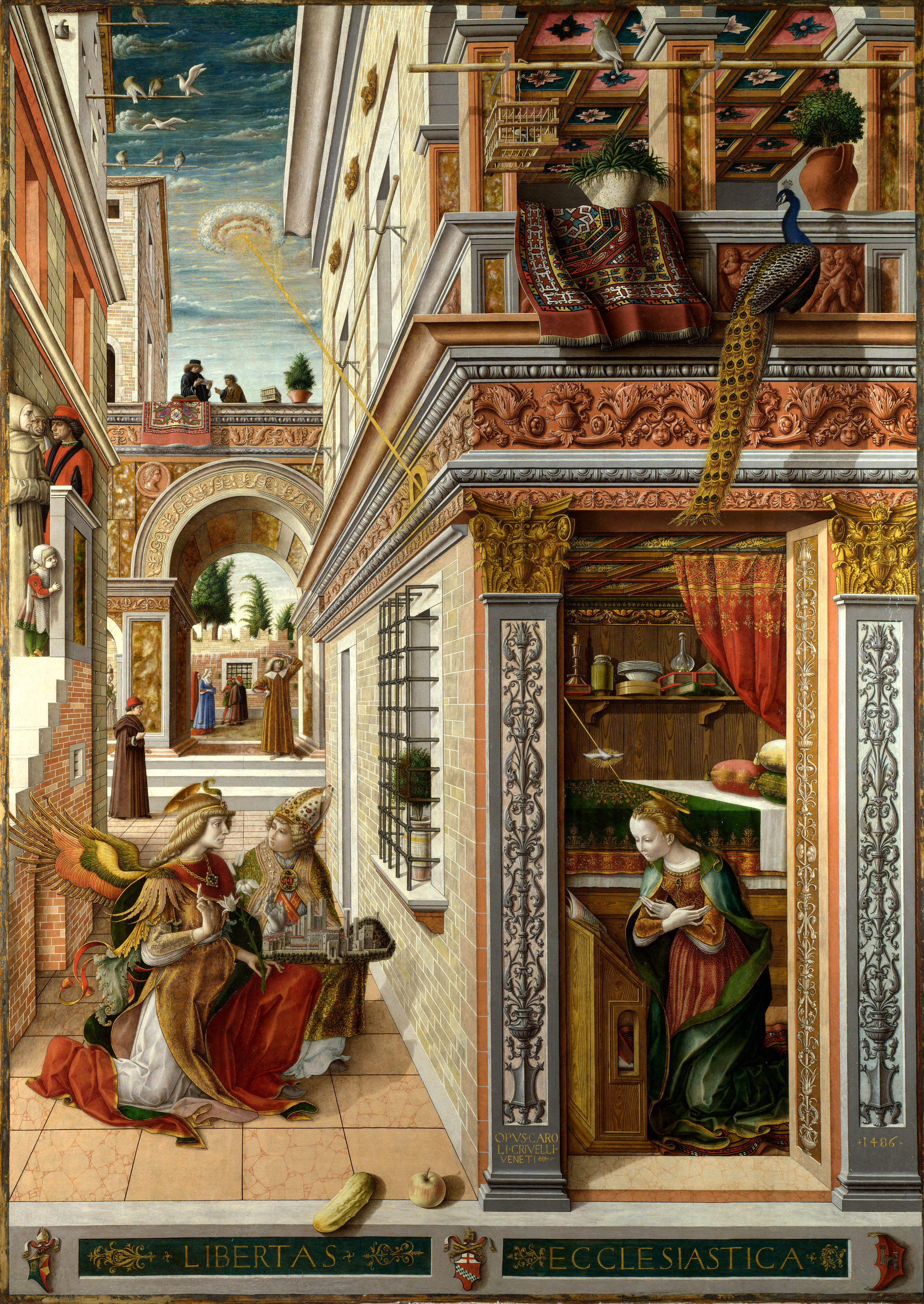
Detail from Crivelli’s Annunciation

Screenshot 2015-07-20 at 9.33.44 AM

Orpheus — Odilon Redon

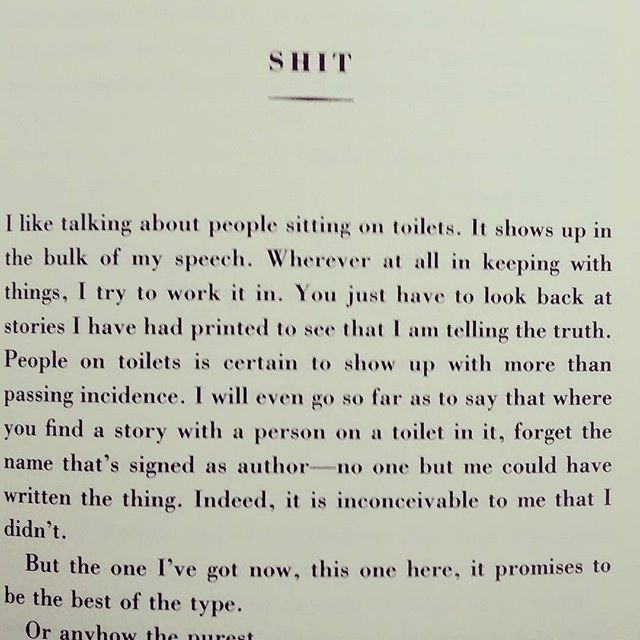
An Excerpt From Gordon Lish’s “Shit”

11363777_112822459062493_1316510455_n

(more in Mourner at the Door)

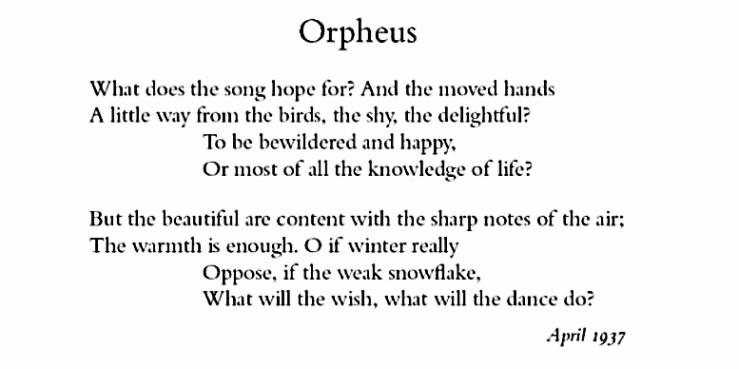
“Orpheus” — W.H. Auden

orpheus

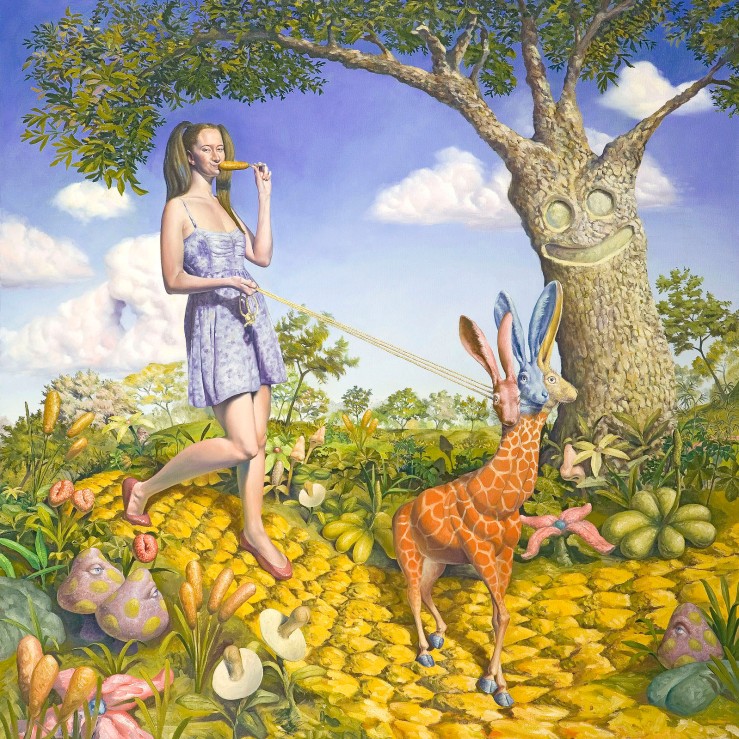
The Walker — Dean Reynolds

deanreynolds

Read Clarice Lispector’s short story “Report on the Thing”

In advance of New Directions’ forthcoming Clarice Lispector collection The Complete Stories, Vice has published “Report on the Thing” in a new English translation by Katrina Dodson (who translated the entire volume of 86 stories. First few paragraphs:

This thing is the most difficult for a person to understand. Keep trying. Don’t get discouraged. It will seem obvious. But it is extremely difficult to know about it. For it involves time.

We divide time when in reality it is not divisible. It is always immutable. But we need to divide it. And to that end a monstrous thing was created: the clock.

I am not going to speak of clocks. But of one particular clock. I’m showing my cards: I’ll say up front what I have to say and without literature. This report is the anti-literature of the thing.

The clock of which I speak is electronic and has an alarm. The brand is Sveglia, which means “awake.” Awake to what, my God? To time. To the hour. To the instant. This clock is not mine. But I took possession of its infernal tranquil soul.

It is not a wristwatch: Therefore it is freestanding. It is less than an inch tall and stands upon the surface of the table. I would like its actual name to be Sveglia. But the owner of the clock wants its name to be Horácio. No matter. Because the main thing is that it is time.

Read the rest of “Report on the Thing.”

Detail from Crivelli’s Annunciation

Screenshot 2015-07-20 at 9.32.05 AM

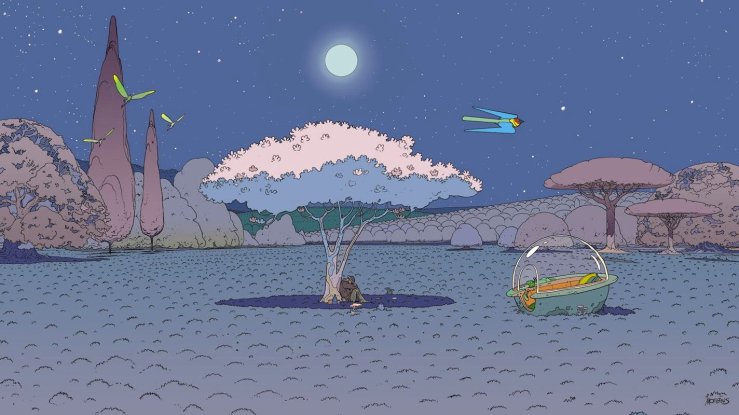
Voyage d’Hermès — Moebius

Moebius-VoyageHermes-3

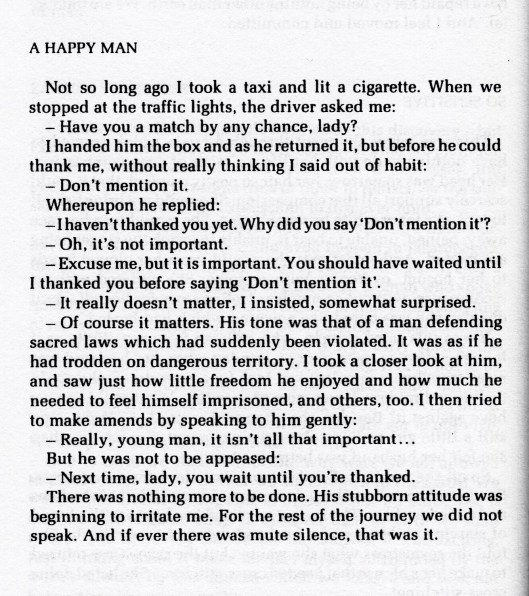
“A Happy Man” — Clarice Lispector

Regarded from Two Sides (David) — Diet Wiegman

scan2

“A Telephone Call” — Dorothy Parker

“A Telephone Call”

by

Dorothy Parker


Please, God, let him telephone me now. Dear God, let him call me now. I won’t ask anything else of You, truly I won’t. It isn’t very much to ask. It would be so little to You, God, such a little, little thing. Only let him telephone now. Please, God. Please, please, please.

If I didn’t think about it, maybe the telephone might ring. Sometimes it does that. If I could think of something else. If I could think of something else. Knobby if I counted five hundred by fives, it might ring by that time. I’ll count slowly. I won’t cheat. And if it rings when I get to three hundred, I won’t stop; I won’t answer it until I get to five hundred. Five, ten, fifteen, twenty, twenty-five, thirty, thirty-five, forty, forty-five, fifty…. Oh, please ring. Please.

This is the last time I’ll look at the clock. I will not look at it again. It’s ten minutes past seven. He said he would telephone at five o’clock. “I’ll call you at five, darling.” I think that’s where he said “darling.” I’m almost sure he said it there. I know he called me “darling” twice, and the other time was when he said good-by. “Good-by, darling.” He was busy, and he can’t say much in the office, but he called me “darling” twice. He couldn’t have minded my calling him up. I know you shouldn’t keep telephoning them–I know they don’t like that. When you do that they know you are thinking about them and wanting them, and that makes them hate you. But I hadn’t talked to him in three days-not in three days. And all I did was ask him how he was; it was just the way anybody might have called him up. He couldn’t have minded that. He couldn’t have thought I was bothering him. “No, of course you’re not,” he said. And he said he’d telephone me. He didn’t have to say that. I didn’t ask him to, truly I didn’t. I’m sure I didn’t. I don’t think he would say he’d telephone me, and then just never do it. Please don’t let him do that, God. Please don’t.
Continue reading ““A Telephone Call” — Dorothy Parker”

Detail from Crivelli’s Annunciation

Screenshot 2015-07-21 at 8.17.38 AM

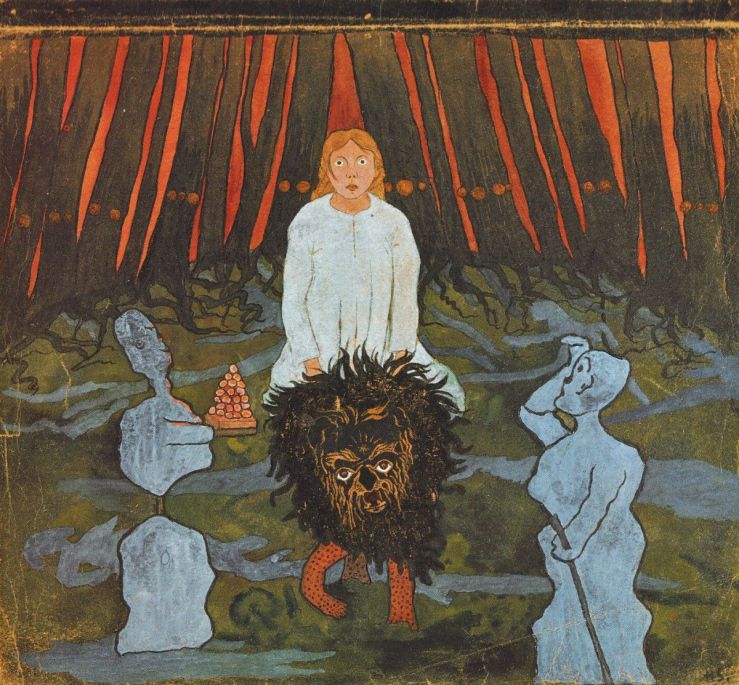
The Voice ( Summer Night) — Edvard Munch

What books does William T. Vollmann find himself returning to again and again?

William T. Vollmann is the interviewee in the New York Times feature “By the Book” this week. It’s a fun read (he chooses Sappho to write his life story, which cracked me up). From the piece:

What books do you find yourself returning to again and again?

I often reread certain parts of my Oxford Revised Standard Bible, which I recommend for the maps and footnotes. The parables of Jesus are haunting in the fashion of certain Zen koans. And the story of Jacob, Leah and Rachel, and the way it leads to young Joseph’s conceit and fall, is of gripping psychological interest. When she was very young I used to tell my daughter about the coat of many colors, and she would say: “But, why, Daddy? Why did they throw Joseph underground?” — “Because they were jealous.” — “Why were they jealous?” — “Because his father loved him more than the others.” She and I would follow the story backward and forward; its elegance was so perfect that my little child could understand it.

Georg Christoph Lichtenberg always inspires me to try to be myself. Here is one of his powerful aphorisms: “I believe that man is in the last resort so free a being that his right to be whatever he believes himself to be cannot be contested.”

I love that fountainhead of Norse myth and saga, the Elder Edda. It is, after all, part of my ethnocultural heritage. Its glorification of ruthless and often pointless cruelty troubles me, and I refuse to identify with that. But I can enjoy the delicate eeriness of other ghost stories without reveling in gruesome murders and wailing horrors, so why can’t I drink in the strangeness of Skirnir’s ride down to Hel on his quest to win the giant maiden? Moreover, the Norse ethos privileges steadfast endurance in the face of pain, bravery in the face of inevitable doom, and loyalty. These qualities would well become all of us mortals, and may grow more relevant once climate change really kicks in.

Summer — Pieter Bruegel