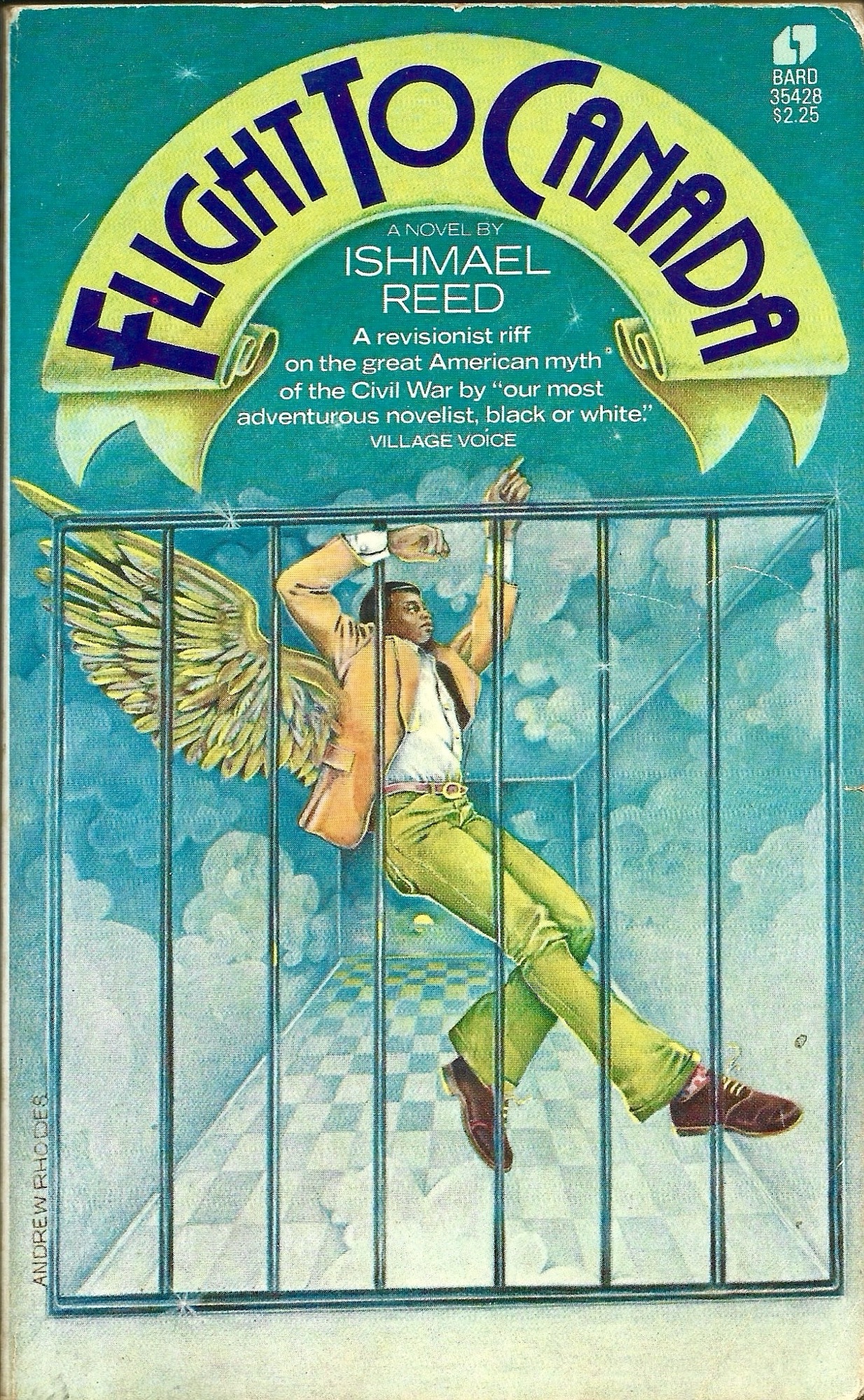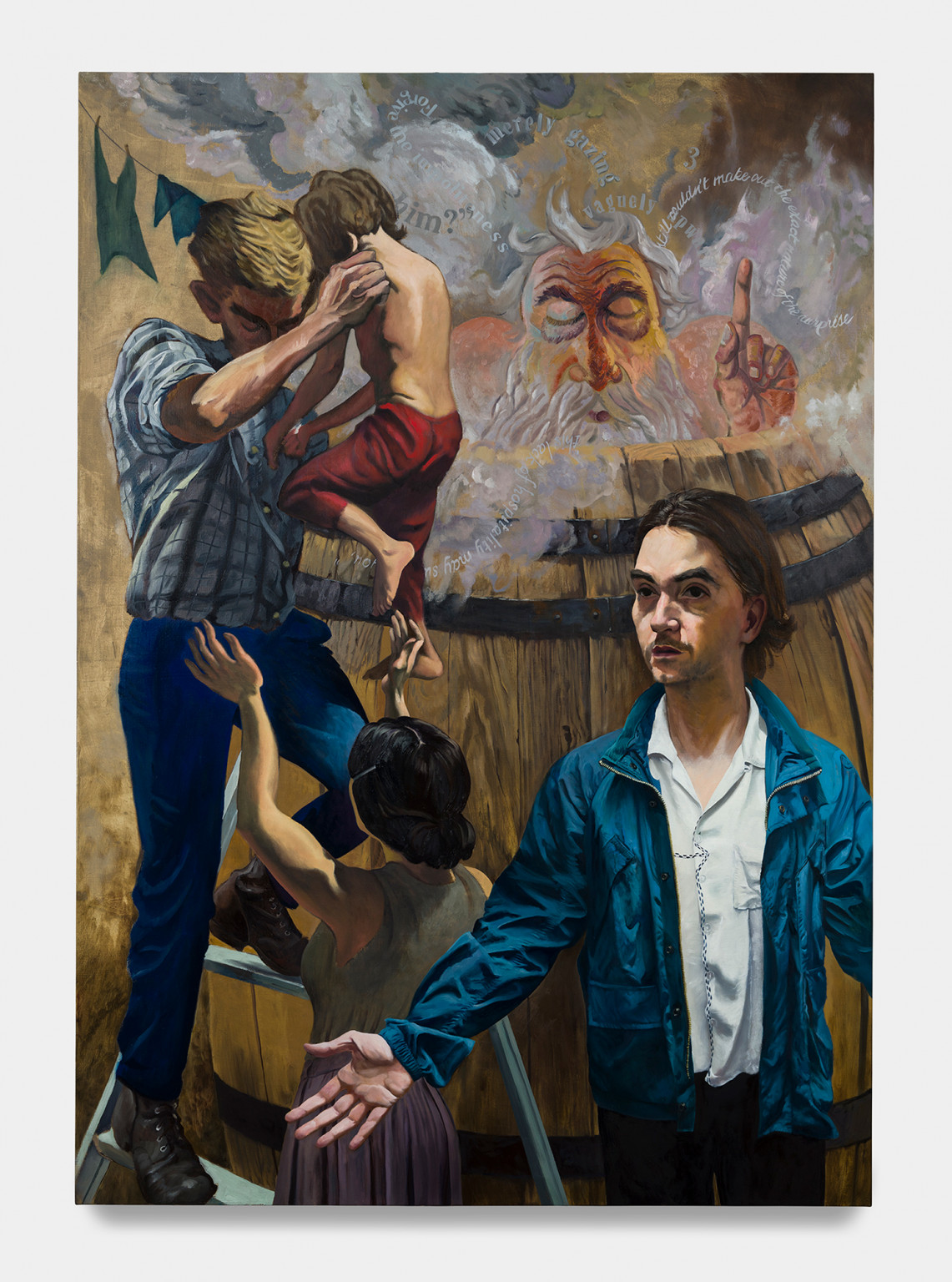
“Columbus in Chains” — Jamaica Kincaid

“Columbus in Chains”

by

Jamaica Kincaid


Outside, as usual, the sun shone, the trade winds blew; on her way to put some starched clothes on the line, my mother shooed some hens out of her garden; Miss Dewberry baked the buns, some of which my mother would buy for my father and me to eat with our afternoon tea; Miss Henry brought the milk, a glass of which I would drink with my lunch, and another glass of which I would drink with the bun from Miss Dewberry; my mother prepared our lunch; my father noted some perfectly idiotic thing his partner in housebuilding, Mr. Oatie, had done, so that over lunch he and my mother could have a good laugh.

The Anglican church bell struck eleven o’clock—one hour to go before lunch. I was then sitting at my desk in my classroom. We were having a history lesson—the last lesson of the morning. For taking first place over all the other girls, I had been given a prize, a copy of a book called Roman Britain, and I was made prefect of my class. What a mistake the prefect part had been, for I was among the worst-behaved in my class and did not at all believe in setting myself up as a good example, the way a prefect was supposed to do. Now I had to sit in the prefect’s seat—the first seat in the front row, the seat from which I could stand up and survey quite easily my classmates. From where I sat I could see out the window. Sometimes when I looked out, I could see the sexton going over to the minister’s house. The sexton’s daughter, Hilarene, a disgusting model of good behavior and keen attention to scholarship, sat next to me, since she took second place. The minister’s daughter, Ruth, sat in the last row, the row reserved for all the dunce girls. Hilarene, of course, I could not stand. A girl that good would never do for me. I would probably not have cared so much for first place if I could be sure it would not go to her. Ruth I liked, because she was such a dunce and came from England and had yellow hair. When I first met her, I used to walk her home and sing bad songs to her just to see her turn pink, as if I had spilled hot water all over her.

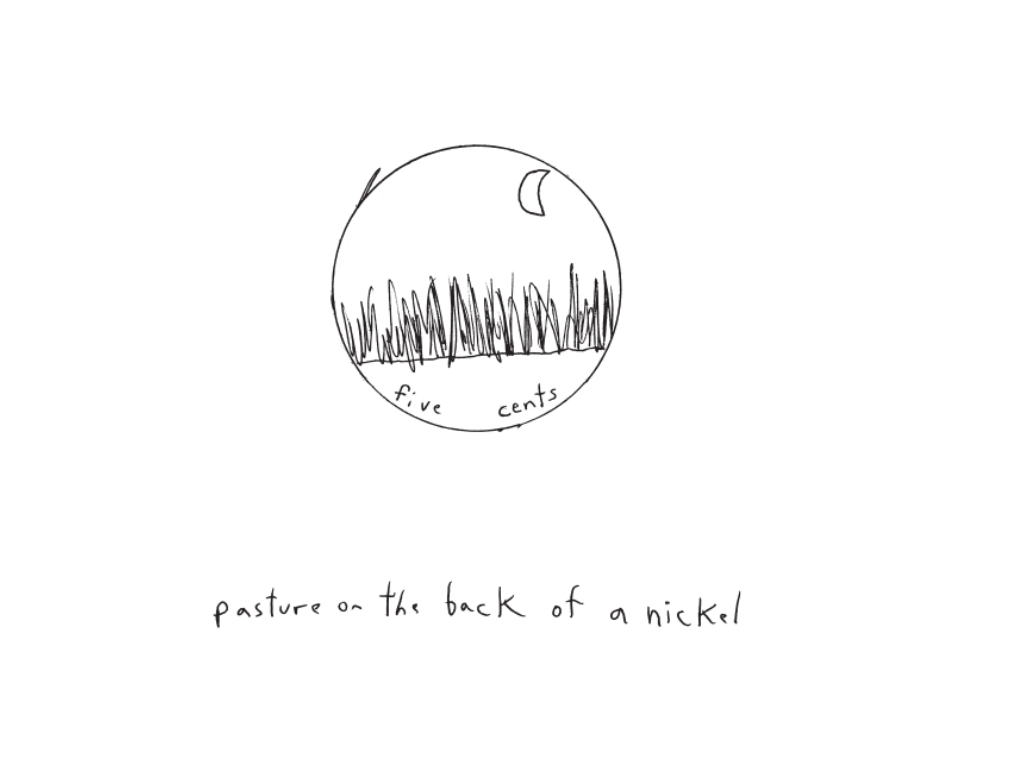
Our books, A History of the West Indies, were open in front of us. Our day had begun with morning prayers, then a geometry lesson, then it was over to the science building for a lesson in “Introductory Physics” (not a subject we cared much for), taught by the most dingy-toothed Mr. Slacks, a teacher from Canada, then precious recess, and now this, our history lesson. Recess had the usual drama: this time, I coaxed Gwen out of her disappointment at not being allowed to join the junior choir. Her father—how many times had I wished he would become a leper and so be banished to a leper colony for the rest of my long and happy life with Gwen—had forbidden it, giving as his reason that she lived too far away from church, where choir rehearsals were conducted, and that it would be dangerous for her, a young girl, to walk home alone at night in the dark. Of course, all the streets had lamplight, but it was useless to point that out to him. Oh, how it would have pleased us to press and rub our knees together as we sat in our pew while pretending to pay close attention to Mr. Simmons, our choirmaster, as he waved his baton up and down and across, and how it would have pleased us even more to walk home together, alone in the “early dusk” (the way Gwen had phrased it, a ready phrase always on her tongue), stopping, if there was a full moon, to lie down in a pasture and expose our bosoms in the moonlight. We had heard that full moonlight would make our breasts grow to a size we would like. Poor Gwen! When I first heard from her that she was one of ten children, right on the spot I told her that I would love only her, since her mother already had so many other people to love.

Our teacher, Miss Edward, paced up and down in front of the class in her usual way. In front of her desk stood a small table, and on it stood the dunce cap. The dunce cap was in the shape of a coronet, with an adjustable opening in the back, so that it could fit any head. It was made of cardboard with a shiny gold paper covering and the word “DUNCE” in shiny red paper on the front. When the sun shone on it, the dunce cap was all aglitter, almost as if you were being tricked into thinking it a desirable thing to wear. As Miss Edward paced up and down, she would pass between us and the dunce cap like an eclipse. Each Friday morning, we were given a small test to see how well we had learned the things taught to us all week. The girl who scored lowest was made to wear the dunce cap all day the following Monday. On many Mondays, Ruth wore it—only, with her short yellow hair, when the dunce cap was sitting on her head she looked like a girl attending a birthday party in The Schoolgirl’s Own Annual.

It was Miss Edward’s way to ask one of us a question the answer to which she was sure the girl would not know and then put the same question to another girl who she was sure would know the answer. The girl who did not answer correctly would then have to repeat the correct answer in the exact words of the other girl. Many times, I had heard my exact words repeated over and over again, and I liked it especially when the girl doing the repeating was one I didn’t care about very much. Pointing a finger at Ruth, Miss Edward asked a question the answer to which was “On the third of November 1493, a Sunday morning, Christopher Columbus discovered Dominica.” Ruth, of course, did not know the answer, as she did not know the answer to many questions about the West Indies. I could hardly blame her. Ruth had come all the way from England. Perhaps she did not want to be in the West Indies at all. Perhaps she wanted to be in England, where no one would remind her constantly of the terrible things her ancestors had done; perhaps she had felt even worse when her father was a missionary in Africa. I could see how Ruth felt from looking at her face. Her ancestors had been the masters, while ours had been the slaves. She had such a lot to be ashamed of, and by being with us every day she was always being reminded. We could look everybody in the eye, for our ancestors had done nothing wrong except just sit somewhere, defenseless. Of course, sometimes, what with our teachers and our books, it was hard for us to tell on which side we really now belonged—with the masters or the slaves—for it was all history, it was all in the past, and everybody behaved differently now; all of us celebrated Queen Victoria’s birthday, even though she had been dead a long time. But we, the descendants of the slaves, knew quite well what had really happened, and I was sure that if the tables had been turned we would have acted differently; I was sure that if our ancestors had gone from Africa to Europe and come upon the people living there, they would have taken a proper interest in the Europeans on first seeing them, and said, “How nice,” and then gone home to tell their friends about it. Continue reading ““Columbus in Chains” — Jamaica Kincaid”

Sunday Comix

“Children of the Future?” a one-pager by Jim Osborne. From Slow Death Funnies #1, April, 1970, Last Gasp.

Glows in the dark | Notes on Thomas Pynchon’s Shadow Ticket, Ch. 1-7

Let’s start with the epigraph:

“Supernatural, perhaps. Baloney…perhaps not.”

Bela Lugosi,
in The Black Cat (1934)

Dr. Vitus Werdegast, Bela Lugosi’s character in The Black Cat, gives this line to mystery novelist Peter Alison (portrayed by David Manners). Here is the scene:

Pynchon is not the first to sample this line.

The epigraph for Shadow Ticket highlights a concern with the metaphysical that Pynchon has shown throughout his novels. The epigraph encapsulates this concern, ties it to the talkies, the American Gothic tradition, and wedges in a slice of absurd (and drily-delivered) humor early on.


Chapter 1; the novel’s first line:

“When trouble comes to town, it usually takes the North Shore Line.”

Shadow Ticket is set, thus far and for the most part, in Milwaukee Wisconsin in early 1931. For about half a century, The Chicago North Shore and Milwaukee Railroad ran from Chicago to Milwaukee, roughly a long the coast of Lake Michigan. It ceased operations in early 1963.

(Even went through Kenosha, kid.)

The opening paragraphs introduce us to Shadow Ticket’s hero Hicks McTaggart and establish a snappy, hardboiled style reminiscent of films of the thirties and forties (or films of the Coen Brothers that pay homage to those films).


“Everybody is looking at everybody else like they’re all in on something. Beyond familiarity or indifference, some deep mischief is at work.”

These lines append the postprandial scene of a noontime explosion. We get paranoia and a whiff of the supernatural — that “deep mischief…at work.”


“Pineapples come and pineapples go,” declares Hicks’s boss Boynt Crosstown, dismissing the explosion. (Perhaps the name Boynt Crosstown evokes “Burnt Cross Town”?)

Pineapples, slang for grenades specifically or explosives more generally, pops up repeatedly early on in Shadow Ticket.


“…local multimillionaire Bruno Airmont, known throughout the dairy industry as the Al Capone of Cheese in Exile…this one’s more about his daughter Daphne…Seems your old romance has just run off with a clarinet player in a swing band.”

Daphne Airmont, Runaway Cheese Heiress: an early MacGuffin or possible red herring to look out for. One of many, many of Pynchon’s female characters on the run.

Detail from Apollo and Daphne by Pollaiuolo, c. 1470–1480

(Parenthetically, I suppose, because it’s of such minor note, but there’s a mention of one “Zbig Dubinsky” — surely, Shirley, a minor character? — but the name seems to echo the Coens’ film The Big Lebowski.)


“Getting sentimental, kid, better watch ’at, once.”

A warning from Hicks to his protege Skeet Wheeler, a “flyweight juvenile in a porkpie hat.” We’ll see more of Skeet’s apparent sentimentality when he pockets a ball bearing from an exploded REO Speed Wagon. The line would be a throwaway for me, except that it is the first instance of the word kid in the novel. We see it pop up frequently in several forms, including kidding and kiddies. In Ch. 1, Skeet refers to his snub nose service .32″ pistol as a “Kids’ Special.” We learn that Skeet is tapped into the kid underworld—drifters, truants, and guttersnipes, newsboys at every corner and streetcar stop—who in turn have antennas of their own out.” The system of littler kids reporting to bigger kids, etc., reports Skeet to bigger kid Hicks, is “like Mussolini.” (Hitler will show up soon.)


“‘…New watch, I see.’

‘Hamilton, glows in the dark too.'”

The first of (by my count) four specific references to things that glow in the dark. I’ll remark on them in turn, but the other three are Hicks’s hair gel (Ch. 3), a jello salad served at the Velocity Lunch diner (Ch. 5), and a pair of novelty vampire fangs (Ch. 7).

In Pynchon’s books, and in particular in Against the Day and Mason & Dixon, there is a concern with the invisible world, which might be taken as the metaphysical world, or, the supernatural-but-not-baloney world. Perhaps these novelties that glow in the dark point in that direction?


Chapter 2 begins at the crime scene, the scene of an exploded bootlegger’s hoochwagon (the aforementioned REO Speed Wagon).

The “kid” motif develops with references to “Federal kiddies that nobody’s ever heard of,” “Chicago Latin kids, and “German storm kiddies. A page or two later soda jerk Hoagie Hivnak (of a certain “adenoidal brashness”) laments that his Ideal Pharmacy “was no place for kids, the words ‘soda fountain’ would send mothers all over town into fits, worse than ‘opium den.'” No more coke in the sodas for the “Leapers and sleigh riders” to enjoy.

Hoagie moves the plot forward, telling Hicks to “Track down Bruno Airmont wherever he’s got to.”

Chapter 3: We meet Hicks’s special lady, April Randazzo. She’s a femme fatale, folks, a singer-dancer making the late night speakeasy scene. Hicks and April seem like a suave match, but we learn that she has a fetish for married men: “A gold-accented ring finger has the same effect on April as a jigging spoon on a Lake trout, especially when kept on while kidding around, good as a framed copy of a marriage license hanging up on a love-nest wall.” 

Note the kidding around there; perhaps Pynchon teases kidness as the illusion of a romanticized time of faux-innocence, an idealized (and ironized) notion of primeval purity. “Any town but this one / Couldn’t we be kids again” croons April in “what’s gotten to be her trademark ballad, backed by a minor-key semi-Cuban arrangement for accordion, saxes, banjo-uke, melancholically muted trumpet.”


Oh and before I forget, our glow-in-the dark fetish for this episode is delivered from Hicks’s “hip flask from which he pours not hooch but some slow green liquid, rubs it between his hands, runs both hands through his hair as an intensely herbal aroma fills the room…” (21). Hicks attests that his hair jelly “Lasts for days, glows in the dark” (21).


(Parenthetically–we get our first two Pynchon songs in this chapter, one from Hicks and one from April (as cited above.) The chapter ends with Hicks getting nudged again, this time to visit his Uncle Lefty, a retired cop.)


Chapter 4 starts at Uncle Lefty and Aunt Peony’s house. They, sorta, raised Hicks; like his protege Skeet (and every other hero), Hicks is an orphan.

Uncle Lefty has prepared a special “Surprise Casserole [in which] Hicks can detect sport peppers, canned pineapple, almost-familiar pork parts marinated in Uncle Lefty’s private cure, based on wildcat beer from a glazed-crock studio just across the Viaduct.” Here, a pineapple is a pineapple. But it can still be part of a surprise.


Uncle Lefty’s name is a bit ironic. He opines: “Der Führer,” gently, “is der future, Hicks. Just the other day the Journal calls him ‘that intelligent young German Fascist.’ ”

Aunt Peony is more sympathetic. We learn that her words have taken on an edge as her marriage advanced, “as if some maidenly spirit, searching and pious, has set out on a trip Peony has no plans herself to make, toward a destiny quietly lifted away from her when she wasn’t looking.” Unlike Daphne (and April?), Peony failed to make her escape in good time.


We learn of Hicks’s fresh-out-of-school job as a strikebreaker. This job would generally make him on the wrong side in Pynchonian terms, but the novel extends some heartstrings his way, pulling him over to the light. Hicks, it seems, would not turn a Pinkerton villain the likes of which Pynchon castigated in Against the Day. His road to Damascus moment happens when his “lead-filled beavertail sap” disappears before he can decimate a striking “truculent little Bolshevik.” The metaphysics of this disappearing object has a profound effect on our hero.


A bit later in the chapter, Boynt offers a through-a-glass-darkly description of Milwaukee, Cream City USA, evoking, “Hitler kiddies, Sicilian mob, secret hallways and exit tunnels, smoke too thick to see through, half a dozen different languages, any lowlife thinks they can turn a nickel always after you for somethin, there’s your wholesome Cream City, kid, mental hygiene paradise but underneath running off of a heartbeat crazy as hell, that’s if it had a heart which it don’t.” 

There’s the invisible world, but it might sometimes glow in the dark.


Chapter 4 segues into Chapter 5; Uncle Lefty tells Hicks to talk to ex-vaudeville mentalist Thessalie Wayward. They meet at Velocity Lunch, a cafe where “Today’s Special [is] a vivid green salad centerpiece the size and shape of a human brain, molded in lime Jell-O, versions of which have actually been observed to glow.” Hicks is hoping to learn more about the metaphysical disappearance of his beavertail sap–what divine hand intervened to prevent his killing another person?

Thessalie teaches him about ass and app: “Asported. When something disappears suddenly off to someplace else, in the business that’s called an asport. Coming in at you the other way, appearing out of nowhere, that’s an ‘apport.’ Happens in séances a lot, kind of side effect. Ass and app, as we say.”

After some speculation on this “unnamed force,” Thessalie sends Hicks out again, this time to “Talk to Lew.”


That Lew, as we see in Chapter 6, is none other than Lew Basnight, one of the many heroes of Pynchon’s opus Against the Day (which, so far, Shadow Ticket feels very much akin to). Lew’s chapter is beautiful, short and sweet, a kind of elegy for Western phantasia. He was already late to the Manifest Destiny goldrush: “Didn’t even get out there till late in life, after years of dancin the Pinkertonian around what only a couple of old-timers were still callin the Wild West anymore. Hell, I’m ready to go back…”

Pynchon then extends Lew’s fantasy of returning to a mythical Old West via “lucid dreaming… flown in from strange suburban distances, past radio antennas and skyscrapers, down the gloomy city canyons, skimming echo to echo, banking into the Dearborn station, flown invisible, ticketless, right onto the Santa Fe Chief. And away. Away, so easy…” An escape from the Modern world. Invisible, ticketless–that’s the fantasy.


Lew’s episode ends with a warning to Hicks not to become “another one of these metaphysical detectives, out looking for Revelation.”


In Chapter 7, Hicks takes his (his?) gal April to Chicago to see Dracula. April’s smitten by Bela Lugosi, and “Soon she is sending away to Johnson Smith down in Racine for a set of Glow-in-the-Dark Vampire Choppers, 35¢ postpaid.”

A paragraph later our hero is getting some bad news about his (his..?) gal April and one Don Peppino Infernacci. “April Randazzo is in fact the promised bride of evil,” we learn; Infernacci (good golly that name, Pynchon, chill) is “lord of the underworld.” 

Infernacci could be Hades, but April doesn’t strike me as a Persephone. But we’ll see.

Detail from Proserpine, 1882 by Rossetti

Self-Portrait Fixing Foot — Julie Heffernan 

Self-Portrait Fixing Foot, 2024 by Julie Heffernan (b. 1956)

I’m getting decrepit, while Pynchon is even older | William T. Vollmann reviews Thomas Pynchon’s Shadow Ticket

I’ve avoided reviews of Thomas Pynchon’s newest novel Shadow Ticket, but I couldn’t help but read William T. Vollmann’s piece on the novel at UnHerd. From Vollmann’s review:

…this author’s longstanding genius there on that private swivel chair of the Department of Character Appellations matches long-gone Lord Dunsany’s for imaginary gods and cities. I cast my grin back upon Tyrone Slothrop, who was first printed in 1973, and wonder to what extent my delight in Shadow Ticket derives from nostalgia. For I’m getting decrepit, while Pynchon is even older, so which will come first, the old lion’s last roar, or my last read? Enriching the nostalgia is Pynchon’s lyrically sad and squalidly beautiful Milwaukee, a place to which I have no connection, and at a time before my parents were born, so why should I care about it? But I do, because it’s a shadow Milwaukee, all the more worth missing for being unreal.

There is a gentleness to Pynchon, and sometimes even a cynical sweetness (and so forth); then come prankish pineapples.

It still believes in night | A review of Antoine Volodine’s post-exotic novel Mevlido’s Dreams

Antoine Volodine’s 2007 novel Mevlido’s Dreams is a bleak, dystopian noir novel set several centuries in the future in the ruined city-state of Oulang-Oulane. Here, weary revolutionary Mevlido lives in a decaying ghetto called Henhouse Four, an eerie quarter inhabited by indigents, junkies, and other remnants of failed uprisings who must contend with the giant mutated birds who terrorize the borough.

Once a soldier of the revolution, Mevlido now serves as a policeman, yet he may also be a double or even triple agent, a sleeper sent through time from a kind of liminal afterlife, a bardo between death and rebirth. The novel drifts between waking and dream states, war memories and spectral futures, as Mevlido’s fragmented consciousness becomes a vessel for Volodine’s haunting post-exotic vision of history, language, and apocalypse.

About halfway through the novel, Mevlido’s bardo boss offers a handy summary of the apocalypse:

They’ve become an inexplicable species. They are just getting out of multiple wars of extermination, but a new conflict is already in sight. The population has decreased by a hundredfold, even more. Entire continents are currently uninhabitable. Those who have survived remain socially organized, but they no longer believe in themselves, or in society. They’ve inherited political systems to which they’ve lost the keys; for them ideology is a prayer devoid of meaning. The ruling classes have become criminalized, the poor obey them. Both classes act as if they were already dead. And as if, on top of that, they don’t even care. … Something in them has changed. You’d think that they no longer have the ability to differentiate between life, dreams, and death.

Our hero will be reborn into this turmoil, his consciousness a roiling mess of anxious irreality. “Even if I’m dreaming, I’m in reality,” he concludes at one point, as if to anchor himself in his mission. What that mission is, exactly, is never fully clear to Mevlido or the reader. Or perhaps the mission is very clear; as translator Gina M. Stamm puts it in her introduction, the plot of Mevlido’s Dreams “has the elements of a fairly classic tragic romance: man and woman are in love, the world prevents their being together, man descends into tragic circumstances.” This motif repeats in dreamlike iterations in the novel; Mevlido drifts through a post-exotic wasteland following orders no one remembers giving, haunted by his dead wife Verena Becker, whose presence threads through his days like a recurring dream or a flickering film reel.

We come to learn that Verena Becker died cruelly, murdered by the “child soldiers” who were pressed in to service by agents of the exploitative upper class. In Mevlido’s present time (or, more specifically one of Mevlido’s present times), the child soldiers are now “ex-child soldiers,” reviled refugees who hide under new identities, hoping to avoid the vengeance of people like Mevlido. The vengeance is not aimed just at these foot soldiers though; one of the novel’s heroes, Sonia Wolguelane, plots the assassination of the upper-echelon genociders who, now absolved of their war crimes, continue to rule the city-state with their one-time political foes. Here is Volodine’s description of one of the men Wolguelane assassinates:

Toni Müller, forty-nine years old, delegate to the Office of Fuel, policy officer during the final project of pacification of the remaining zones, initiator of the so-called controlled genocide practice, threatened with legal action after the disappearance of the Wongres, the Spanish, and the Myrzes, sued for not having been able to provide an explanation for the mysterious annihilation of the inhabitants of the Philippines. Amnestied. Director of the petroleum trusts in the remaining zones, billionaire, numerous books of economics published in his name, numerous honorific titles. During his last self-criticism, he admitted having constantly hidden from the masses the fact that he didn’t share the household chores with his wife.

While the apocalyptic stakes here are swollen to hyperbolic levels, Volodine’s critique of how the ruling class wields power nevertheless applies neatly to our own 21st-century blues. Henry Kissinger, for example, died fat and happy. I’m reminded too here of Thomas Pynchon’s critique of power, particularly in Gravity’s Rainbow, where the narrator laments that the Nazi war criminal Weissmann will not be punished but rather elevated, set to sit “among the successful academics, the Presidential advisers, the token intellectuals who sit on boards of directors. He is almost certainly there. Look high, not low.” Look low for the preterite heroes of Mevlido’s Dreams though. They are the “faded zombies, probably candidates for another hallucinatory expedition, left-behinds who imagine they will be able to leave again.”

I am making the novel sound too grim. It is rich, and much of that richness comes from a bureaucratic, deadpan humor, the laughter of exhausted ideologues trapped in their own paperwork. But what happens to faith in any ideology when it is sundered from observable reality? Consider this exchange, in which a lost Mevlido tries to communicate with a band of men who fail to recognize him as a human being:

“Incredible,” says one of the normal ones, “it’s still talking.”

“And what is it talking about?” asks the red cap.

“About the night,” says the fat one.

“It’s talking about the night?” the bare-chested one asks, surprised.

“Yes, it must still believe in night,” says one of the normal ones.

“Incredible,” says the other normal one, “it still believes in night.”

And beneath the satire, there’s love. Volodine writes love as a metaphysical condition, a persistence that outlasts ideology, memory, and even death. The tenderness between Mevlido and Verena gives the novel its pulse. It’s the one human rhythm left in a mechanical world. Stamm’s translation conveys this rhythm in clipped, moody sentences, wounded and precise.

Like Volodine’s 2014 novel Radiant Terminus, Mevlido’s Dreams operates in the twilight between horror and tenderness. But Mevlido’s Dreams is quieter, more interior—a story of a single man’s dissolution told in flickering vignettes. It reads like the afterimage of a life projected on a cracked wall.

That light, dim and trembling, is what Volodine and Stamm preserve. Mevlido’s Dreams reads not like a film script but like a film itself: shadowy scenes unfolding in silence, broken by bursts of deadpan dialogue and ghostly humor. You can see the ash swirling, hear the echo of curses in an alley haunted by mutant birds.

Oulang-Oulane feels shot through a grim lens, intense, ugly, beautiful, like something from Tarkovsky’s Stalker or a Béla Tarr film, with scenes of desolation punctuated by tenderness. Volodine isn’t cinematic because he borrows film tropes, but because he composes through atmosphere and rhythm. His sentences drift like a camera through fog and memory.

That line above—“it still believes in night”—could be the novel’s credo. Dreaming isn’t retreat; it’s resistance. Writing, too. Mevlido’s Dreams works as both a political fable and a séance for the lost, a way of keeping consciousness flickering in the dark. Highly recommended.


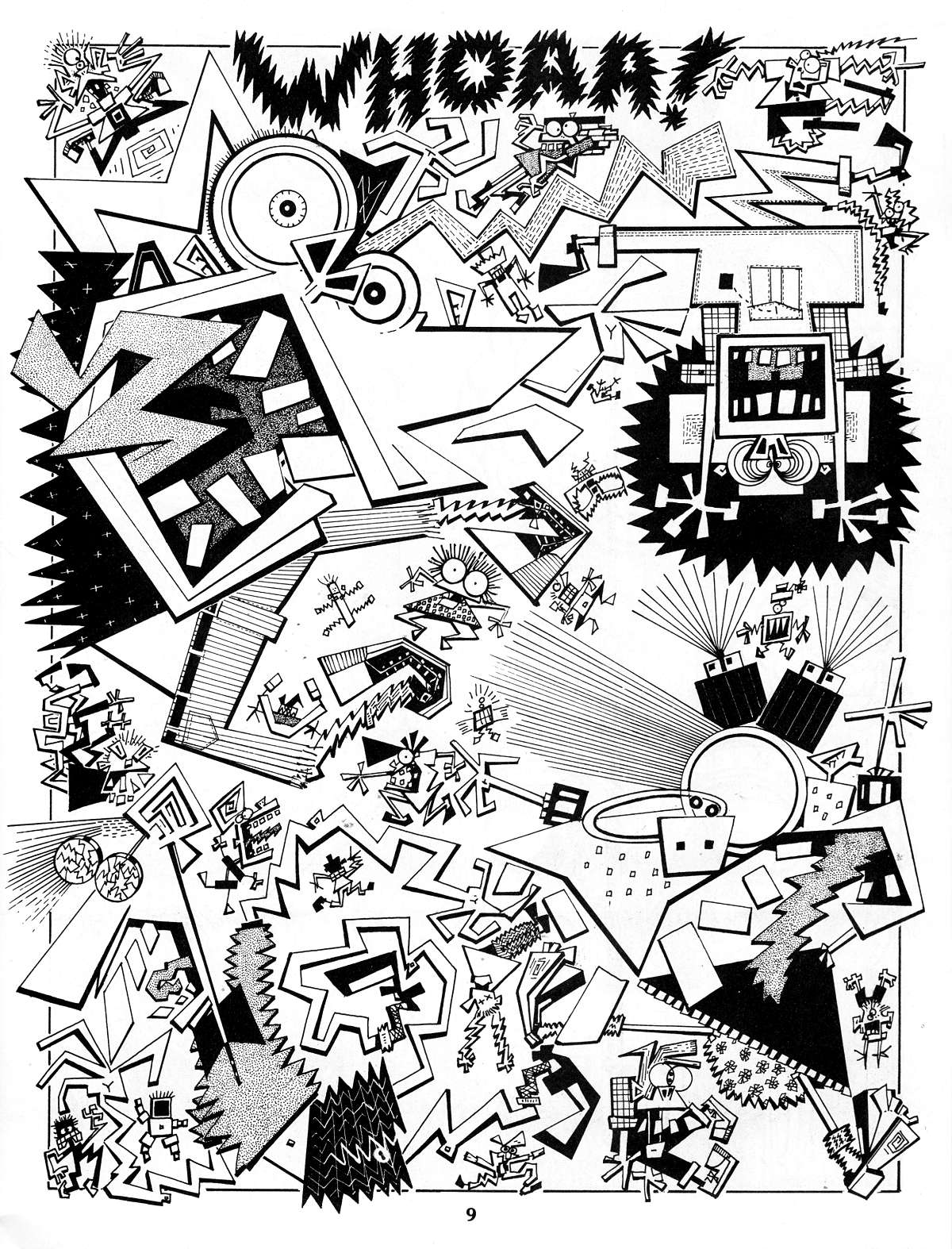
Sunday Comix

From “Nightmare World” by Basil Wolverton. Published in Weird Tales #3, Sept. 1952, Stanely Morse Publications.

Man Reading — Erwin Fabian

Man Reading, 1941 by Erwin Fabian (1915-2020)

Mattia Filice’s Driver (Book acquired, 26 Sept. 2025)

Mattia Filice’s Driver is new in English translation by Jacques Houis. Here’s NYRB’s blurb:

Driver is a book about a young man from the provinces who moves to Paris and studies to become a train driver. As he learns about trains and their intricate workings, he is transported into a world in constant motion, with its own laws and codes and specialized language, its own heroes and legends and manifold dangers. Written in a style as surprising and eclectic as a night on the rails—packed with inside jokes and allusions that extend from Arthur Rimbaud to hip-hop and beyond—Driver takes us deep into the world of the train, until it becomes, like the ship in Moby-Dick, a microcosm of the world at large.

Drawing on twenty years of experience driving trains, Mattia Filice writes memorably about solitude and sleepless nights in the cab, accidents and breakdowns, but also about the lives and personalities of his fellow workers and the conversations and solidarity they share, both on the job and on the picket line, in what is a continual struggle to improve the conditions of work.

Unsentimental yet full of feeling, Driver is both an unusual and formally adventurous novel about labor and life and a stirring ode to the power of the collective.

Surprisingly, NYRB’s blurb doesn’t mention the novel’s striking style; on the page, the episodes of Driver look like poems that sometimes coalesce into prose. The chapter titles and section titles also seem to cast the novel as a take on knight’s quest. Compelling stuff.

Studies for Departure — Paula Rego

Two studies for Departure, 1988 by Paula Rego (1935–2022)

reserved for those who have been mutilated in the war

“October”

by

Tom Clark


The rain falls like dirty string
on the tomb
of the human race

The girl with the red scarf
and the sassy face throws
her flowers on the wet leaves

Her name is Marie
I met her last Tuesday
on the Métro

You know how it is in the springtime
A man just can’t say no
especially when he is sitting in the seat

reserved for those who have been mutilated in the war

Thomas Pynchon’s Shadow Ticket (Book acquired, 30 Sept. 2025)

Here are the first four paragraphs of Thomas Pynchon’s ninth novel Shadow Ticket:

When trouble comes to town, it usually takes the North Shore Line. What with tough times down the Lake in Chicago, changes in the wind, Prohibition repeal just around the corner, Big Al in the federal pokey in Atlanta, Outfit affairs grown jumpy and unpredictable, anybody needing an excuse to get out of town in a hurry comes breezing up here to Milwaukee, where it seldom gets more serious than somebody stole somebody’s fish.

 Hicks McTaggart has been ankling around the Third Ward all day keeping an eye on a couple of tourists in Borsalinos and black camel hair overcoats up from the home office at 22nd and Wabash down the Lake, the Chicago Outfit handling whatever needs to be taken care of in Milwaukee since Vito Guardalabene cashed in his chips ten years ago, though Vito’s successor Pete Guardalabene is still considered head man in the Ward, gets his picture in the social pages smiling at weddings and so forth.

 Loitering in the alleyway in back of Pasquale’s Bella Palermo, Hicks can hear sounds of noodle-flexing sociability, smell spaghetti sauce and garlic frying and sfinciuni bagherese baking over an olive-branch fire, and it’s making him hungry, though this close to payday his lunch menu is a thermos of coffee and a buttermilk cruller stashed in a pocket someplace.

 The explosion when it comes seems to be from somewhere across the river and nearer the Lake. Forks and glassware pause between tabletop and mouth, as if everybody’s observing a moment of stillness, and nobody seems surprised.

An explosion! There we go.

Mass-market Monday | Philip K. Dick’s Dr. Bloodmoney

Dr. Bloodmoney, or, How We Got Along After the Bomb, Philip K. Dick, 1965. Dell Books (1980). Cover art by Richard Courtney (not credited; cover signed R. Courtney); no designer credited. 304 pages. Continue reading “Mass-market Monday | Philip K. Dick’s Dr. Bloodmoney”

Paul Thomas Anderson’s One Battle After Another is a frenetic, vital reimagining of Thomas Pynchon’s Vineland

Paul Thomas Anderson’s One Battle After Another takes Thomas Pynchon’s 1990 novel Vineland and sets it ablaze, reshaping its abstract paranoia and fractured narrative into something both deliriously immediate and ominously timeless.

The bones of Pynchon’s original are still present: a family broken by state violence; a daughter growing up without a mother; a father caught between shame and reluctant resistance. In PTA’s feverish recasting of Vineland, Zoyd Wheeler becomes Bob Ferguson (Leonardo DiCaprio), a former “Rocket Man” revolutionary burning out the past in a haze of weed smoke. Frenesi Gates is reimagined as Perfidia Beverly Hills (Teyana Taylor), a revolutionary addicted to the sexual thrill of power. Prairie Wheeler morphs into Willa (Chase Infiniti — and like wow jeez that’s a Pynchonian name the young actress has there, isn’t it?). And villainous Brock Vond is warped into Colonel Lockjaw (Sean Penn), a grotesque embodiment of authoritarian menace. Timelines collapse into themselves, Reagan-era dread transposes into our own disturbed now. Vineland is set in 1984; in One Battle After Another, PTA shows that we’ve never really moved on from that dystopian year. PTA condenses Vineland’s sprawling flashbacks and absurd digressions into an action-forward narrative that’s far more linear yet equally dizzying. The result is enthralling.

The film’s plot might be distilled simply from its title. One Battle After Another follows the trajectory of most of Pynchon’s fiction: individual resistance to authoritarian evil. In PTA’s film, that resistance takes the form of the French 75, a loose clandestine revolutionary group to which Bob and his partner Perfidia once belonged. There’s really no retiring for French 75 agents though, and soon Willa is tangled in the same web her parents sought to sunder in their radical actions. Penn’s maniacal Colonel Lockjaw hunts her down. She’s on the run, and so is papa Bob.

Pynchon’s novels frequently contrast Us vs Them systems — preterite vs. elect; misfits vs. authoritarians; freaks vs. the Man. And like Pynchon’s work, One Battle After Another shows the invisible overlapping and hierarchical confusions these Us/Them systems engender. The French 75’s sympathies directly correlate with the values of the immigrant community in Baktan Cross, the fictional sanctuary city Bob and Willa take refuge in. The de facto leader of these immigrants, Francisco (Benicio Del Toro), aids Bob in his fevered search for Willa. Francisco’s zen calm offers a counterbalance to Bob’s mania. Another Us group are the Sisters of the Brave Beaver (One Battle After another is crammed with Pynchonian vagina jokes), weed-growing nuns who offer Willa a brief safe harbor.

These disparate pockets of rebellion resist the tyranny of the modern racist capitalist system, embodied by Colonel Lockjaw and the military forces he commands (seemingly without any government oversight). We first meet Lockjaw running a migrant detention center — one of many timely PTA updates to Vineland — and his weird, forced, masochistic machismo plays out on the screen with a mix of menace and despair. For all his power and evil though, there’s yet another Them he isn’t part of. That would be the Christmas Adventurers Club, a shadowy cabal of elites on a racist mission to rid the world of “freaks.” Lockjaw would do quite literally anything to become a member of this club; his drive to to become even more Them propels the narrative while showing that Us-Them systems rely on hierarchies to perpetuate oppression.

One Battle After Another zigzags through a whirlwind of absurdity, suffocating paranoia, and frantic action. The film balances chaotic humor with a darker exploration of the emotional impulses that underlie power and attraction. Colonel Lockjaw’s obsessive fixation on Perfidia (arguably the film’s closest connection to Vineland) underscores the irrational power dynamics of obsession and control. PTA frames their relationship—along with Lockjaw’s obsession with Willa—as a twisted mirror reflecting the power imbalances that define both the personal and the political in Us-Them systems. PTA’s films have always explored systems of exploitation that grind people down and the outsiders who try to navigate them; One Battle After Another is, thus far, his most sustained, howling effort in this vein.

The film is gorgeous, too, as fans would expect from PTA. Michael Bauman’s cinematography conveys frenzied energy without sacrificing cohesion or clarity. There are several outstanding set pieces, including a beautiful sequence in which Bob does his best to keep up with a trio of skateboarders traversing rooftops at night, their figures silhouetted against the flames of a riot below. The film’s climactic three-car chase scene is particularly magnificent, its every twist and turn symbolizing not just physical pursuit, but deeper spirals of control, conflict, and paranoia. It made me physical ill. (That’s high praise.)

And while, yes, One Battle After Another is a bona fide action film, it’s still larded with strange little morsels that we’d expect from a PTA film — the image of Lockjaw licking his comb before taking it to his hair, his face contorted in anxious hope, or Bob, in his threadworn bathrobe, shoplifting a pair of cheap sunglasses. (Parenthetically, while the bathrobe is on my mind — Battle plays as a sinister inversion to The Big Lebowski. I will file the pair away for a future double feature.) One of the film’s funniest moments comes from Willa, who, despite being apparently subjugated by Lockjaw, nevertheless delivers the kind of crushing blow that can only come from a teen: “Why is your shirt so tight?” Indeed, Chase Infiniti’s portrayal of Willa is a revelation. In a movie crammed with paranoia and plot twists, she imbues in Willa a kind of moral force. She’s not an anchor exactly, because nothing is steady here. But maybe she’s the string you follow through the labyrinth.

One Battle After Another is almost three hours long, but it never drags, thanks to the tight direction and enthralling plot. Long-time PTA collaborator Jonny Greenwood’s score also keeps the film moving at a quick pace. The score is ever-present — something that usually irritates me in a film — but here the music provides emotional cohesion. It’s also just really fucking pretty.  Frenetic drumming and altered pianos meet up with swelling strings that suggest sirens, banshees. Take “Mean Alley,” for example, which initially greets the ear as if the guitar is out of tune, but then coheres into beautiful dissonance. And although Greenwood’s wall-to-wall score leaves little room for the needle drops we might expect from a PTA joint, the film deploys Tom Petty’s “American Girl” in a moment of transcendent bliss that brought a tear to my eye.

Pynchon has always soundtracked his novels. Pynchonwiki gives close to 400 musical references for Vineland, but I don’t think any of these tracks ended up in One Battle After Another. My giving this data is a weak way of transitioning to the sentence, This is a film inspired by Vineland, not an adaptation of it. And while PTA captures the soul of the book, the vibe, or spirit, or whatever you like to call it, is decidedly different: darker, edgier, uglier. He captures the same strange humor and frustration of Vineland, but it’s amplified here with a chaotic energy that matches our current moment.

It’s also instructive to compare One Battle After Another to PTA’s earlier Pynchon adaptation, Inherent Vice. While Inherent Vice was a hazy sunsoaked journey through the disorienting aftereffects of the muddled sixties, One Battle After Another feels darker, more urgent, as if the timeline of history has compressed itself into an unyielding present. Both films deal with the fracturing of the American dream, but One Battle After Another does so with a sharper edge, drawing clearer political parallels. In some ways, PTA’s Inherent Vice is closer to Pynchon’s Vineland in tone and theme, less angular, more forgiving.

With both of his Pynchon films, PTA foregrounds a sweet final note, a belief in love as a sustaining force against Them. To borrow my favorite lines from Pynchon’s opus Gravity’s Rainbow: “They are in love. Fuck the war.” In his adaptation of Inherent Vice, PTA pulled a loose thread from the novel to neatly weave back into a prettier picture. He allows Doc Sportello to restore the heroin-addicted musician Coy to his family. One Battle offers a similarly fractured, imperfect restoration of family, a rewriting of rat-sins answered on the ghost of radio waves. He cleans up Pynchon’s messiness, but doesn’t sacrifice the deep danger that underwrites radical love.

One Battle After Another feels dangerously prescient, or, more accurately, a diagnosis of the big ugly now. In PTA’s Inherent Vice, there was an underlying fractured partnership between Us and Them; weirdo Doc Sportello tried to find some kind of brotherhood of man with The Man, Detective Bigfoot. No humanity can be extended to Lockjaw — not even from the club that will refuse him. They are unforgiving of any perceived impurity. The themes of mass surveillance, state violence, and detention resonate deeply in today’s climate. The recent death of Assata Shakur—possibly one inspiration for Perfidia Beverly Hills—adds a haunting layer to the film’s exploration of systemic oppression, the ways in which the state seeks to control and erase voices of resistance. The political urgency is palpable, and will undoubtedly alienate a large section of the genpop normies that Warner Brothers has heavily advertised the film to. Some folks will always root for Them.

But fuck Them. One Battle After Another is a triumph, a dizzying, chaotic masterpiece that never loses its grip on the present—one battle after another, all too real, all too important. See it on the biggest screen you can.

Sunday Comix

A page from Ben Passmore’s graphic novel Black Arms to Hold You Up, Pantheon, 2025. Assata Shakur passed away on 25 Sept. 2025. She was free.


Ben Passmore’s Black Arms to Hold You Up (Book acquired, 23 Sept. 2025)

I was psyched to get an early copy of Ben Passmore’s Black Arms to Hold You Up this week. I love the dramatic vibrancy of Passmore’s cartooning, and his economic use of black, white, gray, and red throughout the book. I should have a review out around its release on 7 Oct. 2025.

Here is publisher Pantheon’s blurb:

It’s the summer of 2020, and downtown Philly is up in flames. “You’re not out in the streets with everyone else?” Ronnie asks his ambivalent son, Ben, shambling in with arms full of used books: the works of Malcom X, Robert F. Williams, Assata and Sanyika Shakur, among others. “Black liberation is your fight, too.”

So begins Black Arms to Hold You Up, a boisterous, darkly funny, and sobering march through Black militant history by political cartoonist Ben Passmore. From Robert Charles’s shootout with the police in 1900, to the Black Power movement in the 1960s, to the Los Angeles and George Floyd uprisings of the 1990s and 2020, readers will tumble through more than a century of armed resistance against the racist state alongside Ben—and meet firsthand the mothers and fathers of the movement, whose stories were as tragic as they were heroic.

What, after so many decades lost to state violence, is there left to fight for? Deeply researched, vibrantly drawn, and bracingly introspective, Black Arms to Hold You Up dares to find the answer.

You Are Very Tacky and Everyone Hates You — Sarah Theresa Lee

You Are Very Tacky and Everyone Hates You, 2025 by Sarah Theresa Lee (b. 1980)