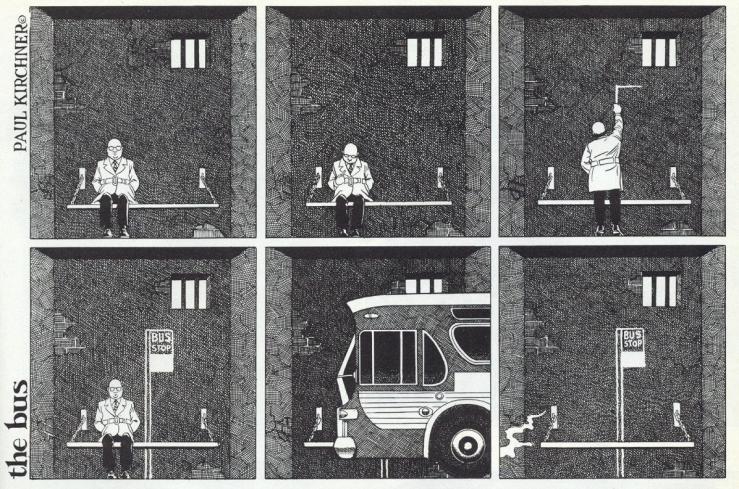
“What Was It?” — Fitz James O’Brien

“What Was It?”

by

Fitz James O’Brien

It is, I confess, with considerable diffidence, that I approach the strange narrative which I am about to relate. The events which I purpose detailing are of so extraordinary a character that I am quite prepared to meet with an unusual amount of incredulity and scorn. I accept all such beforehand. I have, I trust, the literary courage to face unbelief. I have, after mature consideration resolved to narrate, in as simple and straightforward a manner as I can compass, some facts that passed under my observation, in the month of July last, and which, in the annals of the mysteries of physical science, are wholly unparalleled.

I live at No. —— Twenty-sixth Street, in New York. The house is in some respects a curious one. It has enjoyed for the last two years the reputation of being haunted. It is a large and stately residence, surrounded by what was once a garden, but which is now only a green enclosure used for bleaching clothes. The dry basin of what has been a fountain, and a few fruit trees ragged and unpruned, indicate that this spot in past days was a pleasant, shady retreat, filled with fruits and flowers and the sweet murmur of waters.

The house is very spacious. A hall of noble size leads to a large spiral staircase winding through its center, while the various apartments are of imposing dimensions. It was built some fifteen or twenty years since by Mr. A——, the well-known New York merchant, who five years ago threw the commercial world into convulsions by a stupendous bank fraud. Mr. A——, as everyone knows, escaped to Europe, and died not long after, of a broken heart. Almost immediately after the news of his decease reached this country and was verified, the report spread in Twenty-sixth Street that No. —— was haunted. Legal measures had dispossessed the widow of its former owner, and it was inhabited merely by a caretaker and his wife, placed there by the house agent into whose hands it had passed for the purposes of renting or sale. These people declared that they were troubled with unnatural noises. Doors were opened without any visible agency. The remnants of furniture scattered through the various rooms were, during the night, piled one upon the other by unknown hands. Invisible feet passed up and down the stairs in broad daylight, accompanied by the rustle of unseen silk dresses, and the gliding of viewless hands along the massive balusters. The caretaker and his wife declared they would live there no longer. The house agent laughed, dismissed them, and put others in their place. The noises and supernatural manifestations continued. The neighborhood caught up the story, and the house remained untenanted for three years. Several persons negotiated for it; but, somehow, always before the bargain was closed they heard the unpleasant rumors and declined to treat any further. Continue reading ““What Was It?” — Fitz James O’Brien”
Nude Reading — Guérino Angèli

Angeli, Guerino - nu lisant

Phantoms and Ghosts in DFW’s Novel The Pale King (Ghost Riff 2)

a

The narrator of David Foster Wallace’s posthumous novel The Pale King assures us at one point that “phantoms are not the same as real ghosts.”

Okay.

So what’s a phantom then, at least in the universe of The Pale King?

Phantom refers to a particular kind of hallucination that can afflict rote examiners at a certain threshold of concentrated boredom.

The “rote examiners” are IRS agents who perform Sisyphean tasks of boredom. They are also placeholders for anyone who works a boring, repetitive job.

(We might even wax a bit here on the phrase rote examiner—the paradox in it—that to examine should require looking at the examined with fresh eyes, a fresh spirit—a spirit canceled out by the modifier rote).

In The Pale King, phantoms visit the rote examiners who toil in wiggle rooms. The “phantoms are always deeply, diametrically different from the examiners they visit,” suggesting two simultaneous outcomes: 1) an injection of life-force, a disruption of stasis that serves to balance out the examiner’s personality and 2) in the novel’s own language, “the yammering mind-monkey of their own personality’s dark, self-destructive side.”

In one scene, desperate Lane Dean contemplates suicide on the job, until he’s visited by a phantom.

“Yes but now that you’re getting a taste, consider it, the word. You know the one.”

The word is boredom, and the phantom proceeds to give a lecture on its etymology:

Word appears suddenly in 1766. No known etymology. The Earl of March uses it in a letter describing a French peer of the realm. He didn’t cast a shadow, but that didn’t mean anything. For no reason, Lane Dean flexed his buttocks. In fact the first three appearances of bore in English conjoin it with the adjective French, that French bore, that boring Frenchman, yes? The French of course had malaise, ennui. See Pascal’s fourth Pensée, which Lane Dean heard as pantsy.

(Thank you, narrator—who are you?!—for mediating the phantom’s speech and Dean’s misauditing of that speech). Continue reading “Phantoms and Ghosts in DFW’s Novel The Pale King (Ghost Riff 2)”

The Bus — Paul Kirchner

b

“A Relation of the Apparition of Mrs. Veal” — Daniel Defoe

“A Relation of the Apparition of Mrs. Veal”

by

Daniel Defoe

The Preface

This relation is matter of fact, and attended with such circumstances, as may induce any reasonable man to believe it. It was sent by a gentleman, a justice of peace, at Maidstone, in Kent, and a very intelligent person, to his friend in London, as it is here worded; which discourse is attested by a very sober and understanding gentlewoman, a kinswoman of the said gentleman’s, who lives in Canterbury, within a few doors of the house in which the within-named Mrs. Bargrave lives; who believes his kinswoman to be of so discerning a spirit, as not to be put upon by any fallacy; and who positively assured him that the whole matter, as it is related and laid down, is really true; and what she herself had in the same words, as near as may be, from Mrs. Bargrave’s own mouth, who, she knows, had no reason to invent and publish such a story, or any design to forge and tell a lie, being a woman of much honesty and virtue, and her whole life a course, as it were, of piety. The use which we ought to make of it, is to consider, that there is a life to come after this, and a just God, who will retribute to every one according to the deeds done in the body; and therefore to reflect upon our past course of life we have led in the world; that our time is short and uncertain; and that if we would escape the punishment of the ungodly, and receive the reward of the righteous, which is the laying hold of eternal life, we ought, for the time to come, to return to God by a speedy repentance, ceasing to do evil, and learning to do well: to seek after God early, if happily he may be found of us, and lead such lives for the future, as may be well pleasing in his sight.


A Relation of the Apparition of Mrs. Veal

This thing is so rare in all its circumstances, and on so good authority, that my reading and conversation has not given me anything like it: it is fit to gratify the most ingenious and serious inquirer. Mrs. Bargrave is the person to whom Mrs. Veal appeared after her death; she is my intimate friend, and I can avouch for her reputation, for these last fifteen or sixteen years, on my own knowledge; and I can confirm the good character she had from her youth, to the time of my acquaintance. Though, since this relation, she is calumniated by some people, that are friends to the brother of this Mrs. Veal, who appeared; who think the relation of this appearance to be a reflection, and endeavour what they can to blast Mrs. Bargrave’s reputation, and to laugh the story out of countenance. But by the circumstances thereof, and the cheerful disposition of Mrs. Bargrave, notwithstanding the ill-usage of a very wicked husband, there is not yet the least sign of dejection in her face; nor did I ever hear her let fall a desponding or murmuring expression; nay, not when actually under her husband’s barbarity; which I have been witness to, and several other persons of undoubted reputation.

Now you must know, Mrs. Veal was a maiden gentlewoman of about thirty years of age, and for some years last past had been troubled with fits; which were perceived coming on her, by her going off from her discourse very abruptly to some impertinence. She was maintained by an only brother, and kept his house in Dover. She was a very pious woman, and her brother a very sober man to all appearance; but now he does all he can to null or quash the story. Mrs. Veal was intimately acquainted with Mrs. Bargrave from her childhood. Mrs. Veal’s circumstances were then mean; her father did not take care of his children as he ought, so that they were exposed to hardships; and Mrs. Bargrave, in those days, had as unkind a father, though she wanted neither for food nor clothing, whilst Mrs. Veal wanted for both; insomuch that she would often say, Mrs. Bargrave, you are not only the best, but the only friend I have in the world, and no circumstance of life shall ever dissolve my friendship. They would often condole each other’s adverse fortunes, and read together Drelincourt upon Death, and other good books; and so, like two Christian friends, they comforted each other under their sorrow. Continue reading ““A Relation of the Apparition of Mrs. Veal” — Daniel Defoe”

Woman Reading — Fernando Botero

538

Two ghosts (David Foster Wallace)

The truth is that there are two actual, non-hallucinatory ghosts haunting Post 047’s wiggle room. No one knows whether there are any in the Immersive Pods; those Pods are worlds unto themselves.
 
The ghosts’ names are Garrity and Blumquist. Much of the following info comes after the fact from Claude Sylvanshine. Blumquist is a very bland, dull, efficient rote examiner who died at his desk unnoticed in 1980. Some of the older examiners actually worked with him in rotes in the 1970s. The other ghost is older. Meaning dating from an earlier historical period. Garrity had evidently been a line inspector for Mid West Mirror Works in the mid-twentieth century. His job was to examine each one of a certain model of decorative mirror that came off the final production line, for flaws. A flaw was usually a bubble or unevenness in the mirror’s aluminum backing that caused the reflected image to distend or distort in some way. Garrity had twenty seconds to check each mirror. Industrial psychology was a primitive discipline then, and there was little understanding of non-physical types of stress. In essence, Garrity sat on a stool next to a slow-moving belt and moved his upper body in a complex system of squares and butterfly shapes, examining his face’s reflection at very close range. He did this three times a minute, 1,440 times per day, 356 days a year, for eighteen years. Toward the end he evidently moved his body in the complex inspectorial system of squares and butterfly shapes even when he was off-duty and there were no mirrors around. In 1964 or 1965 he had apparently hanged himself from a steam pipe in what is now the north hallway off the REC Annex’s wiggle room. Among the staff at 047, only Claude Sylvanshine knows anything detailed about Garrity, whom he’s never actually seen—and then most of what Sylvanshine gets is repetitive data on Garrity’s weight, belt size, the topology of optical flaws, and the number of strokes it takes to shave with your eyes closed. Garrity is the easier of the wiggle room’s two ghosts to mistake for a phantom because he’s extremely chatty and distracting and thus is often taken by wigglers straining to maintain concentration as the yammering mind-monkey of their own personality’s dark, self-destructive side.
 
Blumquist is different. When Blumquist manifests in the air near an examiner, he just basically sits with you. Silently, without moving. Only a slight translucence about Blumquist and his chair betrays anything untoward. He’s no bother. It’s not like he stares at you in an uncomfortable way. You get the sense that he just likes to be there. The sense is ever so slightly sad. He has a high forehead and mild eyes made large by his glasses. Sometimes he’s hatted; sometimes he holds the hat by the brim as he sits. Except for those examiners who spasm out at any sort of visitation—and these are the rigid, fragile ones who are ripe for phantom-visits anyhow, so it’s something of a vicious circle—except for these, most examiners accept or even like a visit from Blumquist. He has a few he seems to favor, but he is quite democratic. The wigglers find him companionable. But no one ever speaks of him.

From David Foster Wallace’s novel The Pale King.

The Person’s Guide to Ritual and Invasive Mind Control

mindcontrolwww-scarfolk-blogspot-com

A Woman Ghost Appeared from a Well — Katsushika Hokusai

“Sun Worship. The Sources of Hallowe’en”

“Sun Worship. The Sources of Hallowe’en” is the first chapter of Ruth Edna Kelley’s The Book of Hallowe’en (1919)

If we could ask one of the old-world pagans whom he revered as his greatest gods, he would be sure to name among them the sun-god; calling him Apollo if he were a Greek; if an Egyptian, Horus or Osiris; if of Norway, Sol; if of Peru, Bochica. As the sun is the center of the physical universe, so all primitive peoples made it the hub about which their religion revolved, nearly always believing it a living person to whom they could say prayers and offer sacrifices, who directed their lives and destinies, and could even snatch men from earthly existence to dwell for a time with him, as it draws the water from lakes and seas.

In believing this they followed an instinct of all early peoples, a desire to make persons of the great powers of nature, such as the world of growing things, mountains and water, the sun, moon, and stars; and a wish for these gods they had made to take an interest in and be part of their daily life. The next step was making stories about them to account for what was seen; so arose myths and legends.

The sun has always marked out work-time and rest, divided the year into winter idleness, seed-time, growth, and harvest; it has always been responsible for all the beauty and goodness of the earth; it is itself splendid to look upon. It goes away and stays longer and longer, leaving the land in cold and gloom; it returns bringing the long fair days and resurrection of spring. A Japanese legend tells how the hidden sun was lured out by an image made of a copper plate with saplings radiating from it like sunbeams, and a fire kindled, dancing, and prayers; and round the earth in North America the Cherokees believed they brought the sun back upon its northward path by the same means of rousing its curiosity, so that it would come out to see its counterpart and find out what was going on.

All the more important church festivals are survivals of old rites to the sun. “How many times the Church has decanted the new wine of Christianity into the old bottles of heathendom.” Yule-tide, the pagan Christmas, celebrated the sun’s turning north, and the old midsummer holiday is still kept in Ireland and on the Continent as St. John’s Day by the lighting of bonfires and a dance about them from east to west as the sun appears to move. The pagan Hallowe’en at the end of summer was a time of grief for the decline of the sun’s glory, as well as a harvest festival of thanksgiving to him for having ripened the grain and fruit, as we formerly had husking-bees when the ears had been garnered, and now keep our own Thanksgiving by eating of our winter store in praise of God who gives us our increase.

Pomona, the Roman goddess of fruit, lends us the harvest element of Hallowe’en; the Celtic day of “summer’s end” was a time when spirits, mostly evil, were abroad; the gods whom Christ dethroned joined the ill-omened throng; the Church festivals of All Saints’ and All Souls’ coming at the same time of year—the first of November—contributed the idea of the return of the dead; and the Teutonic May Eve assemblage of witches brought its hags and their attendant beasts to help celebrate the night of October 31st.

Colombine — Francine van Hove

escrever - escritor, livro

Lispector/Jobim

ct

Clarice Lispector interviewed Antônio Carlos Jobim in 1968. Lovely, even through the strange wonderful estranging filter of Google translate.

Halloween Is Grinch Night (Dr. Seuss)

Doré’s Ghost of Banquo (Ghost Riff 1)

It’s the disconcerting incompleteness of Gustave Doré’s The Spectrum Appearance of Banquo at Macbeth’s Feast that, paradoxically, creates the full, troubling effect of the picture.

“Enter Ghost of Banquo, and sits in Macbeth’s place” (Act 3, Sc. 4)—thus the stage directions from Shakespeare (or the actors who wrote down his words from memory)—and thus Banquo, draped, robed, sullen, taciturn, a marble effigy—but no, lifelike—no?

The Macbeths, shocked—Doré stages Lady M as a shadowy echo/support for Lord M—teeter aslant, Lord M’s left hand braced on the chairback that divides the painting—their faces, the Macbeths’ faces, wholly enshadowed (not wholly; Lady M’s nose peeks out in white silhouette); Lord M’s whole head a gravid mass of dark crowned with an incomplete crown, a broken circle.

Banquo’s eyes: Chilly, stern, accusatory, sad. And over them, thy gory locks. Do they shake at Lord Macbeth?

In The Life and Reminiscences of Gustave Doré, Blanche Roosevelt claims to have “seen no less than six sketches of Macbeth at the banquet, when confronted by Banquo’s ghost.” The biographer continues: “Doré was so original that it was almost impossible for him to repeat himself, even designedly.”

There seems here a condensation of repetitions. Doré’s control is to let loose control: Banquo’s robes are mummy wrappings unraveling: unraveling Lord Macbeth’s consciousness, even, I suppose. Squiggles, pulses, suggesting phantom movement, energy without depth. They unwind from his firm, marble visage—the look, the gory locks that shake, the chin that nods.

Cousin Ross has called out Banquo for his absence, which “lays blame upon his promise,” and of course this is Shakespeare’s big trick, the trick that Doré captures so well here—that Banquo is the most startlingly present absence, the most impossible absence, the absence that proves the radical uncertainty of presence, the present absence that haunts Macbeth, that silently affirms future ghostliness, attesting mutely that “charnel-houses and our graves must send Those that we bury back,” that “our monuments Shall be the maws of kites.”

Postlude (Book Acquired, 10.17.2014)

IMG_3729

I love it when parcels from Athens-based publisher Pilotless Press show up. The new one is Postlude by Haldon Lockly.

IMG_3731

The blurb from Pilotless:

This is a story of the eye, or what the eye sees when it finally opens, though the story pretends to be a story about death (which is actually the case with every story ever written). To add to the confusion, this is also a story about death and about what comes after, although it pretends to be a story about the eye, or what it sees when it finally opens (which is actually the case with most of the stories ever written). If we must be exact, this is the story of a missed paycheck and what comes after, or the story of a man who doesn’t want to die, although he is already dead, or at any rate the story of a man whose eyes are closed and what it takes to open them.

First paragraph:

IMG_3733

“A Ghost” — Guy de Maupassant

“A Ghost”

by Guy de Maupassant

Trans. by M. Charles Sommer.

We were speaking of sequestration, alluding to a recent lawsuit. It was at the close of a friendly evening in a very old mansion in the Rue de Grenelle, and each of the guests had a story to tell, which he assured us was true.

Then the old Marquis de la Tour-Samuel, eighty-two years of age, rose and came forward to lean on the mantelpiece. He told the following story in his slightly quavering voice.

“I, also, have witnessed a strange thing—so strange that it has been the nightmare of my life. It happened fifty-six years ago, and yet there is not a month when I do not see it again in my dreams. From that day I have borne a mark, a stamp of fear,—do you understand?

“Yes, for ten minutes I was a prey to terror, in such a way that ever since a constant dread has remained in my soul. Unexpected sounds chill me to the heart; objects which I can ill distinguish in the evening shadows make me long to flee. I am afraid at night.

“No! I would not have owned such a thing before reaching my present age. But now I may tell everything. One may fear imaginary dangers at eighty-two years old. But before actual danger I have never turned back, mesdames.

“That affair so upset my mind, filled me with such a deep, mysterious unrest that I never could tell it. I kept it in that inmost part, that corner where we conceal our sad, our shameful secrets, all the weaknesses of our life which cannot be confessed.

Continue reading ““A Ghost” — Guy de Maupassant”

A Giant Hand with Eyes — Basil Wolverton

IMG_0130.PNG