The Never-Ending Torture of Unrest | Georg Büchner’s Lenz Reviewed

sleep of reason
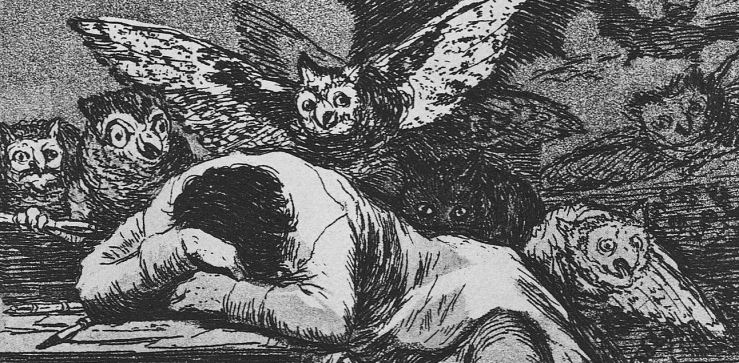
The Sleep of Reason Produces Monsters (detail), Francisco Goya

Composed in 1836, Georg Büchner’s novella-fragment Lenz still seems ahead of its time. While Lenz’s themes of madness, art, and ennui can be found throughout literature, Büchner’s strange, wonderful prose and documentary aims bypass the constraints of his era.

Let me share some of that prose. Here is the opening paragraph of Lenz:

The 20th, Lenz walked through the mountains. Snow on the peaks and upper slopes, gray rock down into the valleys, swatches of green, boulders, firs. It was sopping cold, the water trickled down the rocks and leapt across the path. The fir boughs sagged in the damp air. Gray clouds drifted across the sky, but everything so stifling, and then the fog floated up and crept heavy and damp through the bushes, so sluggish, so clumsy. He walked onward, caring little one way or another, to him the path mattered not, now up , now down. He felt no fatigue, except sometimes it annoyed him that he could not walk on his head. At first he felt a tightening in his chest when the rocks skittered away, the gray woods below him shook, and the fog now engulfed the shapes, now half-revealed their powerful limbs; things were building up inside him, he was searching for something, as if for lost dreams, but was finding nothing. Everything seemed so small, so near, so wet, he would have liked to set the earth down behind an oven, he could not grasp why it took so much time to clamber down a slope, to reach a distant point; he was convinced he could cover it all with a pair of strides.

Büchner sets us on Lenz’s shoulder, moving us through the estranging countryside without any exposition that might lend us bearings. The environment impinges protagonist and reader alike, heavy, damp, stifling. Büchner’s syntax shuffles along, comma splices tripping us into Lenz’s manic consciousness, his mind-swings doubled in the path that is “now up, now down.” We feel the “tightening” in Lenz’s chest as the “rocks skittered away,” as the “woods below him shook” — the natural world seems to envelop him, cloak him, suffocate him. It’s an animist terrain, and Büchner divines those spirits again in the text. The claustrophobia Lenz experiences then swings to another extreme, as our hero, his consciousness inflated, feels “he could cover [the earth] with a pair of strides.

And that baffling line: “He felt no fatigue, except sometimes it annoyed him that he could not walk on his head.” Well.

The end notes to the Archipelago edition I read (translated by Richard Sieburth) offer Arnold Zweig’s suggestion that “this sentence marks the beginning of modern European prose,” as well as Paul Celan’s observation that “whoever walks on his head has heaven beneath him as an abyss.”

Celan’s description is apt, and Büchner’s story repeatedly invokes the abyss to evoke its hero’s precarious psyche. Poor Lenz, somnambulist bather, screamer, dreamer, often feels “within himself something . . . stirring and swarming toward an abyss toward which he was being swept by an inexorable force.” Lenz is the story of a young artist falling into despair and madness.
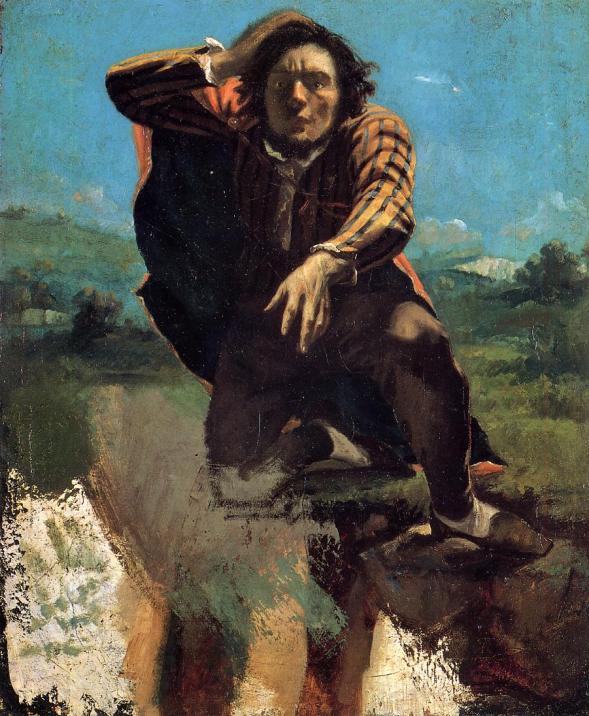
The Man Made Mad by Fear, Gustave Courbet

But perhaps I should offer a more lucid summary. I’ll do that in the next paragraph, but first: Let me just recommend you skip that paragraph. Really. What I perhaps loved most about Lenz was piecing together the plot through the often elliptical or opaque experiences we get via Büchner’s haunting free indirect style. The evocation of a consciousness in turmoil is probably best maintained when we read through the same confusion that Lenz experiences. I read the novella cold based on blurbs from William H. Gass and Harold Bloom and I’m glad I did.

Here is the summary paragraph you should skip: Jakob Lenz, a writer of the Sturm and Drung movement (and friend and rival to Goethe), has recently suffered a terrible episode of schizophrenia and “an accident” (likely a suicide attempt). He’s sent to pastor-physician J.F. Oberlin, who attends to him in the Alsatian countryside in the first few weeks of 1778. During this time Lenz obsesses over a young local girl who dies (he attempts to resurrect her), takes long walks in the countryside, cries manically, offers his own aesthetic theory, prays, takes loud late-night bath in the local fountain, receives a distressing letter, and, eventually, likely—although it’s never made entirely explicit—attempts suicide again and is thusly shipped away.

Büchner bases his story on sections of Oberlin’s diary, reproduced in the Archipelago edition. In straightforward prose, these entries fill in the expository gaps that Büchner has so elegantly removed and replaced with the wonder and dread of Lenz’s imagination. The diary’s lucid entries attest to the power of Büchner’s speculative fiction, to his own art and imagination, which so bracingly take us into a clouded mind.

In Sieburth’s afterword (which also offers a concise chronology of Lenz’s troubled life), our translator points out that “Like De Quincey’s “The Last Days of Immanuel Kant” or Chateaubriand’s Life of Rancé, Büchner’s Lenz is an experiment in speculative biography, part fact, part fabrication—an early nineteenth-century example of the modern genre of docufiction.” Obviously, any number of postmodern novels have explored or used historical figures—Public Burning, Ragtime, and Mason & Dixon are all easy go-to examples. But Lenz is more personal than these postmodern fictions, more an exploration of consciousness, and although we are treated to Lenz’s ideas about literature, art, and religion, we access this very much through his own skull and soul. He’s not just a placeholder or mouthpiece for Büchner.

Lenz strikes me as something closer to the docufiction of W.G. Sebald. Perhaps it’s all the ambulating; maybe it’s the melancholy; could be the philosophical tone. And, while I’m lazily, assbackwardly comparing Büchner’s book to writers who came much later: Thomas Bernhard. Maybe it’s the flights of rant that Lenz occasionally hits, or the madness, or the depictions of nature, or hell, maybe it’s those long, long passages. The comma splices.

Chronologically closer is the work of Edgar Allan Poe, whose depictions of manic bipolar depression resonate strongly with Lenz—not to mention the abysses, the torment, the spirits, the doppelgängers. Why not share another sample here to illustrate this claim? Okay:

The incidents during the night reached a horrific pitch. Only with the greatest effort did he fall asleep, having tried at length to fill the terrible void. Then he fell into a dreadful state between sleeping and waking; he bumped into something ghastly, hideous, madness took hold of him, he sat up, screaming violently, bathed in sweat, and only gradually found himself again. He had to begin with the simplest things in order to come back to himself. In fact he was not the one doing this but rather a powerful instinct for self preservation, it was as if he were double, the one half attempting to save the other, calling out to itself; he told stories, he recited poems out loud, wracked with anxiety, until he came to his sense.

Here, Lenz suspends his neurotic horror through storytelling and art—but it’s just that, only a suspension. Büchner doesn’t blithely, naïvely suggest that art has the power to permanently comfort those in despair; rather, Lenz repeatedly suggests that art, that storytelling is a symptom of despair.

The Last Judgment (detail), Rogier van der Weyden

What drives despair? Lenz—Lenz—Büchner (?)—suggests repeatedly that it’s Langeweile—boredom. Sieburth renders the German Langeweile as boredom, a choice I like, even though he might have been tempted to reach for its existentialist chain-smoking cousin ennui. When Lenz won’t get out of bed one day, Oberlin heads to his room to rouse him:

Oberlin had to repeat his questions at length before getting an answer: Yes, Reverend, you see, boredom! Boredom! O, sheer boredom, what more can I say, I have already drawn all the figures on the wall. Oberlin said to him he should turn to God; he laughed and said: if I were as lucky as you to have discovered such an agreeable pastime, yes, one could indeed wile away one’s time that way. Tedium the root of it all. Most people pray only out of boredom; others fall in love out of boredom, still others are virtuous or depraved, but I am nothing, nothing at all, I cannot even kill myself: too boring . . .

Lenz fits in neatly into the literature of boredom, a deep root that predates Dostoevsky, Camus, and Bellow, as well as contemporary novels like Lee Rourke’s The Canal and David Foster Wallace’s The Pale King.

Ultimately, the boredom Lenz circles around is deeply painful:

The half-hearted attempts at suicide he kept on making were not entirely serious, it was less the desire to die, death for him held no promise of peace or hope, than the attempt, at moments of excruciating anxiety or dull apathy bordering on non-existence bordering on non-existence, to snap back into himself through physical pain. But his happiest moments were when his mind seemed to gallop away on some madcap idea. This at least provided some relief and the wild look in his eye was less horrible than the anxious thirsting for deliverance, the never-ending torture of unrest!

The “never-ending torture of unrest” is the burden of existence we all carry, sloppily fumble, negotiate with an awkward grip and bent back. Büchner’s analysis fascinates in its refusal to lighten this burden or ponderously dwell on its existential weight. Instead, Lenz is a character study that the reader can’t quite get out of—we’re too inside the frame to see the full contours; precariously perched on Lenz’s shoulder, we have to jostle along with him, look through his wild eyes, gallop along with him on the energy of his madcap idea. The gallop is sad and beautiful and rewarding. Very highly recommended.

Superman — Chris Ware

tumblr_lytt9eGKSr1qa0q13o1_1280

(Via).

“The Dream” — Aphra Behn

“The Dream” by Aphra Behn—

All trembling in my arms Aminta lay,
Defending of the bliss I strove to take;
Raising my rapture by her kind delay,
Her force so charming was and weak.
The soft resistance did betray the grant,
While I pressed on the heaven of my desires;
Her rising breasts with nimbler motions pant;
Her dying eyes assume new fires.
Now to the height of languishment she grows,
And still her looks new charms put on;
Now the last mystery of Love she knows,
We sigh, and kiss: I waked, and all was done.


‘Twas but a dream, yet by my heart I knew,
Which still was panting, part of it was true:
Oh how I strove the rest to have believed;
Ashamed and angry to be undeceived!

Léopoldine au livre d’heures — Auguste de Chatillon

Léopoldine au livre d'heures

Micro Loup — Richard McGuire

Zé Carioca no. 4, A Volta de Zé Carioca (Detail) — Rivane Neuenschwander

Carioca-02

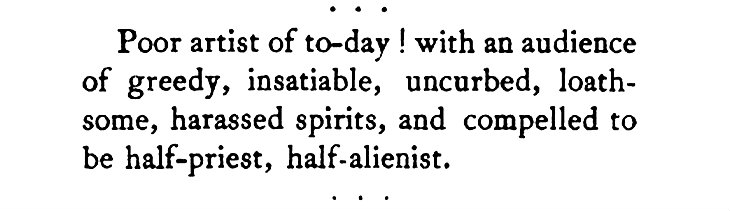
Poor artist (Nietzsche)

Capture

Japanese Posters of David Lynch Films

Continue reading “Japanese Posters of David Lynch Films”

“The Ogre” — William Carlos Williams

Capture

Arrival of Capricorn — Bridget Tichenor

arrival of capricorn Bridget Tichenor

“The work of a poet never ends” (Borges)

Barnes/Bird/Borges/Queneau (Books Acquired, 6.07.2013)

20130610-140022.jpg

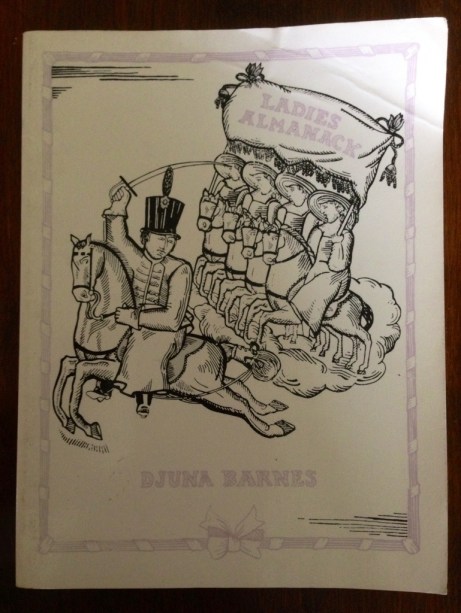
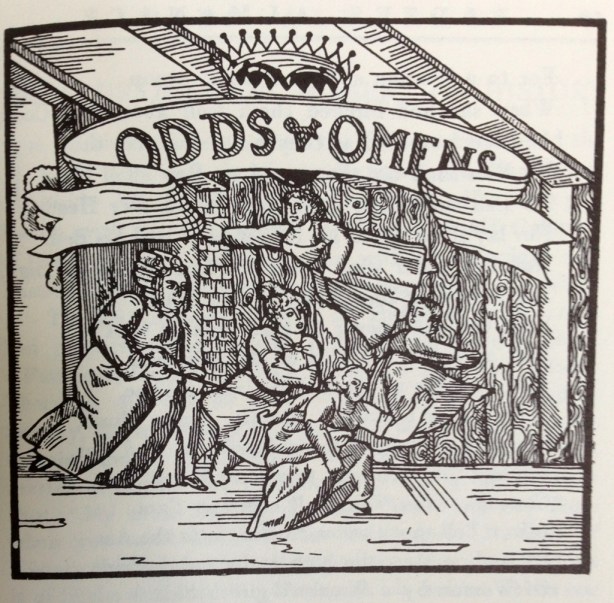
Like most Real Americans, I like to go to the bookstore on my birthday. At my favorite spot, I picked up Djuna Barnes’s Ladies Almanack, which intrigued me with its weird shape, odd typeset, strange conceit, and wonderful opening line: “Now this be a Tale of as fine a Wench as ever wet Bed.” Oh, and illustrated by Barnes too:

20130610-140030.jpg

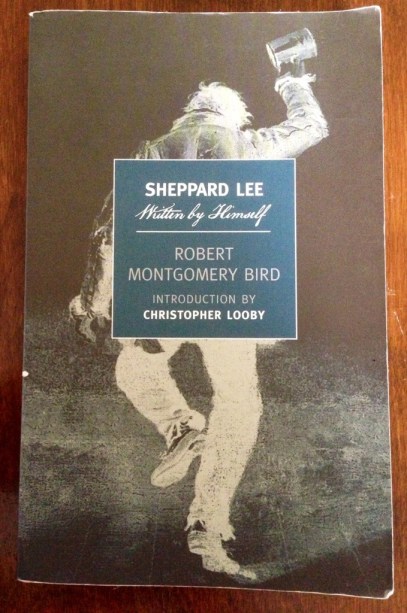
Sheppard Lee by Robert Montgomery Bird: This one looks fascinating. NYRB’s blurb:

Robert Montgomery Bird’s Sheppard Lee is a scathingly humorous and utterly original novel out of Andrew Jackson’s America, the story of an incorrigible loafer who inadvertently discovers the power to project his soul into dying men’s bodies and to take over their lives. So gifted, Sheppard Lee sets off in pursuit of happiness, only to find himself thwarted at every turn. In growing desperation he shifts from body to body, now a rich man and now poor man, now a madman and now a slave, a bewildered spirit trapped in the dark maze of American identity.

20130610-140046.jpg

Also: Evaristo Carriego, a study of the poet by Jorge Luis Borges.

20130610-140041.jpg

And The Bark Tree, also translated as Witch Grass. I don’t know if this is the right starting place for Queneau, but it was a nice used New Directions edition, so, hey.

20130610-140054.jpg

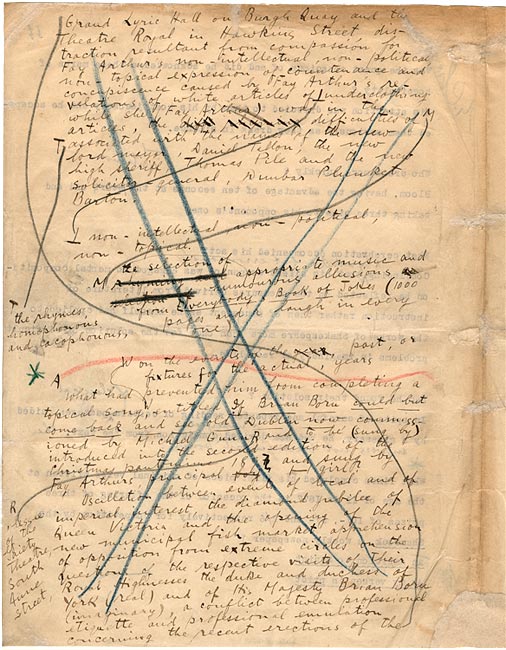
Manuscript Fragment from James Joyce’s Ulysses

joyce_ulysses-p2

(Via/about/zoom in!).

Hitchcock Poster (Stage Fright) — Marek Freudenreich

45a90c24353b12a036d9359a70bfc2e5

Saw this in a book of Hitchcock posters at the bookstore the other day—it was attributed to “Marek Frevdereich” in the book though. Anyway, I found it online in this wonderful collection of movie posters (I love the one for Deconstructing Harry especially).

Sunglasses — Glennray Tutor

“The Story of the Ram” — Mark Twain

“The Story of the Old Ram” by Mark Twain

Every now and then, in these days, the boys used to tell me I ought to get one Jim Blaine to tell me the stirring story of his grandfather’s old ram but they always added that I must not mention the matter unless Jim was drunk at the time just comfortably and sociably drunk. They kept this up until my curiosity was on the rack to hear the story. I got to haunting Blaine; but it was of no use, the boys always found fault with his condition; he was often moderately but never satisfactorily drunk. I never watched a man’s condition with such absorbing interest, such anxious solicitude; I never so pined to see a man uncompromisingly drunk before. At last, one evening I hurried to his cabin, for I learned that this time his situation was such that even the most fastidious could find no fault with it he was tranquilly, serenely, symmetrically drunk not a hiccup to mar his voice, not a cloud upon his brain thick enough to obscure his memory. As I entered, he was sitting upon an empty powder-keg, with a clay pipe in one hand and the other raised to command silence. His face was round, red, and very serious; his throat was bare and his hair tumbled; in general appearance and costume he was a stalwart miner of the period. On the pine table stood a candle, ar~d its dim light revealed “the boys” sitting here and there on bunks, candle-boxes, powder-kegs, etc. They said:

“Sh ! Don’t speak he’s going to commence.”

THE STORY OF THE OLD RAM

I found a seat at once, and Blaine said:

“I don’t reckon them times will ever come again. There never was a more burlier old ram than what he was. Grandfather fetched him from Illinois got him of a man by the name of Yates Bill Yates maybe you might have heard of him; his father was a deacon Baptist and he was a rustler, too; a man had to get up rusher early to get the start of old Thankful Yates; it was him that put the Greens up to jining teams with my grandfather when he moved West. Seth Green was prob’ly the pick of the flock; he married a Wilkerson Sarah Wilkerson good cretur, she was one of the likeliest heifers that was ever raised in old Stoddard, everybody said that knowed her. She could heft a bar’l of flour as easy as I can flirt a flapjack. And spin? Don’t mention it! Independent? Humph! When Sile Hawkins come abrowsing around her, she let him know that for all his tin he couldn’t trot in harness alongside of her. You see, Sile Hawkins was no, it warn’s Sile Hawkins, after all it was a galoot by the name of Filkins I disremember his first name; but he was a stump come into pra’r meeting drunk, one night, hooraying for Nixon, becuz he thought it was a primary; and old deacon Ferguson up and scooted him through the window and he lit on old Miss Jefferson’s head, poor old filly. She was a good soul had a glass eye and used to lend it to old Miss Wagner, that hadn’t any, to receive company in; it warn’s big enough, and when Miss Wagner warn’s noticing, it would get twisted around in the socket, and look up, maybe, or out to one side, and every which way, while t’other one was looking as straight ahead as a spyglass. Grown people didn’t mind it, but it most always made the children cry, it was so sort of scary. She tried packing it in raw cotton, but it wouldn’t work, somehow the cotton would get loose and stick out and look so kind of awful that the children couldn’t stand it no way. She was always dropping it out, and turning up her old dead-light on the company empty, and making them oncomfortable, becuz she never could tell when it hopped out, being blind on that side, you see. So somebody would have to hunch her and say, ‘Your game eye has fetched loose, Miss Wagner dear’ and then all of them would have to sit and wait till she jammed it in again wrong side before, as a general thing, and green as a bird’s egg, being a bashful cretur and easy sot back before company. But being wrong side before warn’s much fetched him from Illinois got him of a man by the name of Yates Bill Yates maybe you might have heard of him; his father was a deacon Baptist and he was a rustler, too; a man had to get up rusher early to get the start of old Thankful Yates; it was him that put the Greens up to jining teams with my grandfather when he moved West. Seth Green was prob’ly the pick of the flock; he married a Wilkerson Sarah Wilkerson good cretur, she was one of the likeliest heifers that was ever raised in old Stoddard, everybody said that knowed her. She could heft a bar’l of flour as easy as I can flirt a flapjack. And spin? Don’t mention it! Independent? Humph! When Sile Hawkins come a- browsing around her, she let him know that for all his tin he couldn’t trot in harness alongside of her. You see, Sile Hawkins was no, it warn’s Sile Hawkins, after all it was a galoot by the name of Filkins I disremember his first name; but he was a stump come into pra’r meeting drunk, one night, hooraying for Nixon, becuz he thought it was a primary; and old deacon Ferguson up and scooted him through the window and he lit on old Miss Jefferson’s head, poor old filly. She was a good soul had a glass eye and used to lend it to old Miss Wagner, that hadn’t any, to receive company in; it warn’s big enough, and when Miss Wagner warn’s noticing, it would get twisted around in the socket, and look up, maybe, or out to one side, and every which way, while t’other one was looking as straight ahead as a spyglass. Grown people didn’t mind it, but it most always made the children cry, it was so sort of scary. She tried packing it in raw cotton, but it wouldn’t work, somehow the cotton would get loose and stick out and look so kind of awful that the children couldn’t stand it no way. She was always dropping it out, and turning up her old dead-light on the company empty, and making them oncomfortable, becuz she never could tell when it hopped out, being blind on that side, you see. So somebody would have to hunch her and say, ‘Your game eye has fetched loose, Miss Wagner dear’ and then all of them would have to sit and wait till she jammed it in again wrong side before, as a general thing, and green as a bird’s egg, being a bashful cretur and easy sot back before company. But being wrong side before warn’s much difference, anyway, becuz her own eye was sky-blue and the glass one was yeller on the front side, so whichever way she turned it it didn’t match nohow. Old Miss Wagner was considerable on the borrow, she was. When she had a quilting, or Dorcas S’iety at her house she gen’ally borrowed Miss Higgins’s wooden leg to stump around on, it was considerable shorter than her other pin, but much she minded that. She said she couldn’t abide crutches when she had company, becuz they were so slow; said when she had company and things had to be done, she wanted to get up and hump herself. She was as bald as a jug, and so she used to borrow Miss Jacops’s wig Miss Jacops was the coffin-peddler’s wife a ratty old buzzard, he was, that used to go roosting around where people was sick, waiting for ’em; and there that old rip would sit all day, in the shade, on a coffin that he judged would fit the can’idate; and if it was a slow customer and kind of uncertain, he’d fetch his rations and a blanket along and sleep in the coffin nights. He was anchored out that way, in frosty weather, for about three weeks, once, before old Robbins’s place, waiting for him; and after that, for as much as two years, Jacops was not on speaking terms with the old man, on account of his disapp’inting him. He got one of his feet froze, and lost money, too, becuz old Robbins took a favorable turn and got well. The next time Robbins got sick, Jacops tried to make up with him, and varnished up the same old coffin and fetched it along; but old Robbins was too many for him; he had him in, and ‘pe…red to be powerful weak; he bought the coffin for ten dollars and Jacops was to pay it back and twenty-five more besides if Robbins didn’t like the coffin after he’d tried it. And then Robbins died, and at the funeral he bursted off the lid and riz up in his shroud and told the parson to let up on the performances, becuz he could not stand such a coffin as that. You see he had been in a trance once before, when he was young, and he took the chances on another, cal’lating that if he made the trip it was money in his pocket, and if he missed fire he couldn’t lose a cent. And by George he sued Jacops for the rhino and got jedgment; and he set up the coffin in his back parlor and said he ‘lowed to take his time, now. It was always an aggravation to Jacops, the way that miserable old thing acted. He moved back to Indiany pretty soon went to Wellsville Wellsville was the place the Hogadorns was from. Mighty fine family. Old Maryland stock. Old Squire Hogadorn could carry around more mixed licker, and cuss better than most any man I ever see. His second wife was the widder Billings she that was Becky Martin; her dam was deacon Dunlap’s first wife. Her oldest child, Maria, married a missionary and died in grace et up by the savages. They et him, too, poor feller biled him. It warn’s the custom, so they say, but they explained to friends of his’n that went down there to bring away his things, that they’d tried missionaries every other way and never could get any good out of ’em and so it annoyed all his relations to find out that that man’s life was fooled away just out of a dern’d experiment, so to speak. But mind you, there ain’t anything ever reely lost; everything that people can’t understand and don’t see the reason of does good if you only hold on and give it a fair shake; Prov’dence don’t fire no blank ca’tridges, boys. That there missionary’s substance, unbeknowns to himself, actu’ly converted every last one of them heathens that took a chance at the barbecue. Nothing ever fetched them but that. Don’t tell me it was an accident that he was biled. There ain’t no such a thing as an accident. When my uncle Lem was leaning up agin a scaffolding once, sick, or drunk, or suthin, an Irishman with a hod full of bricks fell on him out of the third story and broke the old man’s back in two places. People said ir was an accident. Much accident there was about that. He didn’t know what he was there for, but he was there for a good object. If he hadn’t been there the Irishman would have been killed. Nobody can ever make me believe anything different from that. Uncle Lem’s dog was there. Why didn’t the Irishman fall on the dog? Becuz the dog would a seen him a-coming and stood from under. That’s the reason the dog warn’s appinted. A dog can’t be depended on to carry out a special providence. Mark my words it was a put-up thing. Accidents don’t happen, boys. Uncle Lem’s dog I wish you could a seen that dog. He was a reglar shepherd or rusher he was part bull and part shepherd splendid animal; belonged to parson Hagar before Uncle Lem got him. Parson Hagar belonged to the Western Reserve Hagars; prime family; his mother was a Watson; one of his sisters married a Wheeler; they settled in Morgan County, and hŠ got nipped by the machinery in a carpet factory and went through in less than a quarter of a minute; his widder bought the piece of carpet that had his remains wove in, and people come a hundred mile to ‘tend the funeral. There was fourteen yards in the piece. She wouldn’t let them roll him up, but planted him just so full length. The church was middling small where they preached the funeral, and they had to let one end of the coffin stick out of the window. They didn’t bury him they planted one end, and let him stand up, same as a monument. And they nailed a sign on it and put put on put on it sacred to the m-e-m-o-r-y of fourteen y-a-r-d-s of three-ply car – – – pet containing all that was m-o-r-t-a-l of of W-i-l-l-i-a-m W-h-e ”

Jim Blaine had been growing gradually drowsy and drowsier his head nodded, once, twice, three times dropped peacefully upon his breast, and he fell tranquilly asleep. The tears were running down the boys’ cheeks they were suffocating with suppressed laughter and had been from the start, though I had never noticed it. I perceived that I was “sold.” I learned then that Jim Blaine’s peculiarity was that whenever he reached a certain stage of intoxication, no human power could keep him from setting out, with impressive unction, to tell about a wonderful adventure which he had once had with his grandfather’s old ram and the mention of the ram in the first sentence was as far as any man had ever heard him get, concerning it. He always maundered off, interminably, from one thing to another, till his whisky got the best of him and he fell asleep. What the thing was that happened to him and his grandfather’s old ram is a dark mystery to this day, for nobody has ever yet found out.

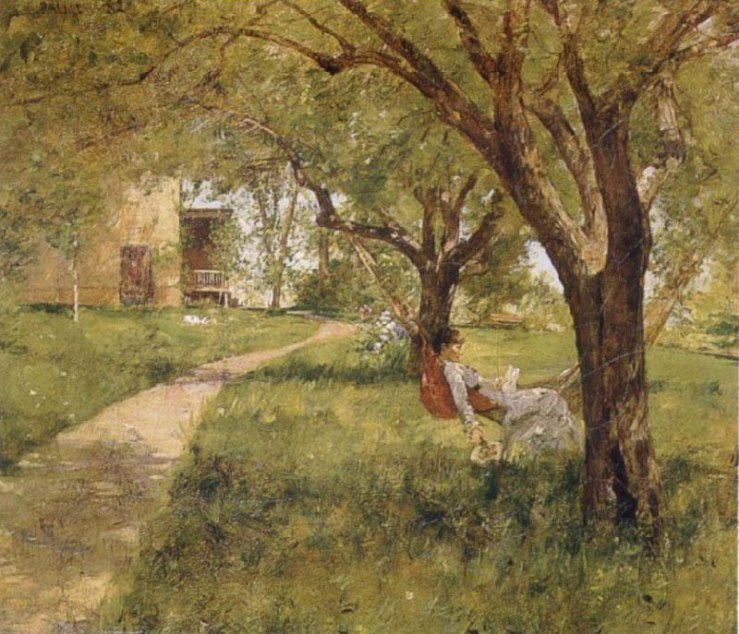
Afternoon in a Hammock — Walter Laurent Palmer

Palmer-Walter-Launt