Indian City — Winsor McCay

“Cannibals? who is not a cannibal?” (Moby-Dick)

It is not, perhaps, entirely because the whale is so excessively unctuous that landsmen seem to regard the eating of him with abhorrence; that appears to result, in some way, from the consideration before mentioned: i.e. that a man should eat a newly murdered thing of the sea, and eat it too by its own light. But no doubt the first man that ever murdered an ox was regarded as a murderer; perhaps he was hung; and if he had been put on his trial by oxen, he certainly would have been; and he certainly deserved it if any murderer does. Go to the meat-market of a Saturday night and see the crowds of live bipeds staring up at the long rows of dead quadrupeds. Does not that sight take a tooth out of the cannibal’s jaw? Cannibals? who is not a cannibal? I tell you it will be more tolerable for the Fejee that salted down a lean missionary in his cellar against a coming famine; it will be more tolerable for that provident Fejee, I say, in the day of judgment, than for thee, civilized and enlightened gourmand, who nailest geese to the ground and feastest on their bloated livers in thy pate-de-foie-gras.

But Stubb, he eats the whale by its own light, does he? and that is adding insult

From “The Whale as a Dish,” Chapter 65 of Melville’s Moby-Dick.


“The Preacher and the Bear” — Sam Chatmon

The Children Destroyed by Bears — Gustave Dore

the-children-destroyed-by-bears-1866.jpg!HD

“The ‘Gees” — Herman Melville

“The ‘Gees” by Herman Melville

In relating to my friends various passages of my sea-goings I have at times had occasion to allude to that singular people the ‘Gees, sometimes as casual acquaintances, sometimes as shipmates. Such allusions have been quite natural and easy. For instance, I have said The two ‘Gees, just as another would say The two Dutchmen, or The two Indians. In fact, being myself so familiar with ‘Gees, it seemed as if all the rest of the world must be. But not so. My auditors have opened their eyes as much as to say, “What under the sun is a ‘Gee?” To enlighten them I have repeatedly had to interrupt myself and not without detriment to my stories. To remedy which inconvenience, a friend hinted the advisability of writing out some account of the ‘Gees, and having it published. Such as they are, the following memoranda spring from that happy suggestion :

The word ‘Gee (g hard) is an abbreviation, by seamen, of Portugee, the corrupt form of Portuguese. As the name is a curtailment, so the race is a residuum. Some three centuries ago certain Portuguese convicts were sent as a colony to Fogo, one of the Cape de Verdes, off the northwest coast of Africa, an island previously stocked with an aboriginal race of negroes, ranking pretty high in civility, but rather low in stature and morals. In course of time, from the amalgamated generation all the likelier sort were drafted off as food for powder, and the ancestors of the since-called ‘Gees were left as the caput mortum, or melancholy remainder.

Of all men seamen have strong prejudices, particularly in the matter of race. They are bigots here. But when a creature of inferior race lives among them, an inferior tar, there seems no bound to their disdain. Now, as ere long will be hinted, the ‘Gee, though of an aquatic nature, does not, as regards higher qualifications, make the best of sailors. In short, by seamen the abbreviation ‘Gee was hit upon in pure contumely ; the degree of which may be partially inferred from this, that with them the primitive word Portugee itself is a reproach; so that ‘Gee, being a subtle distillation from that word, stands, in point of relative intensity to it, as attar of roses does to rosewater. At times, when some crusty old sea-dog has his spleen more than unusually excited against some luckless blunderer of Fogo his shipmate, it is marvelous the prolongation of taunt into which he will spin out the one little exclamatory monosyllable Ge-e-e-e-e ! Continue reading ““The ‘Gees” — Herman Melville”

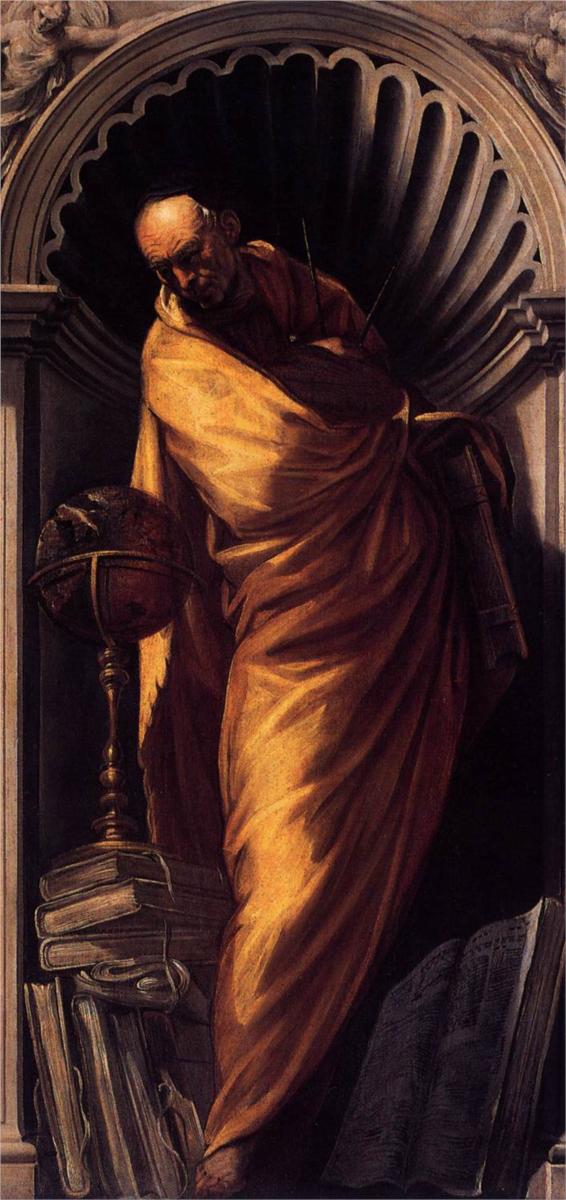
A Philosopher — Tintoretto

a-philosopher-1570.jpg!HD

Watch Peter Greenaway’s John Cage Documentary

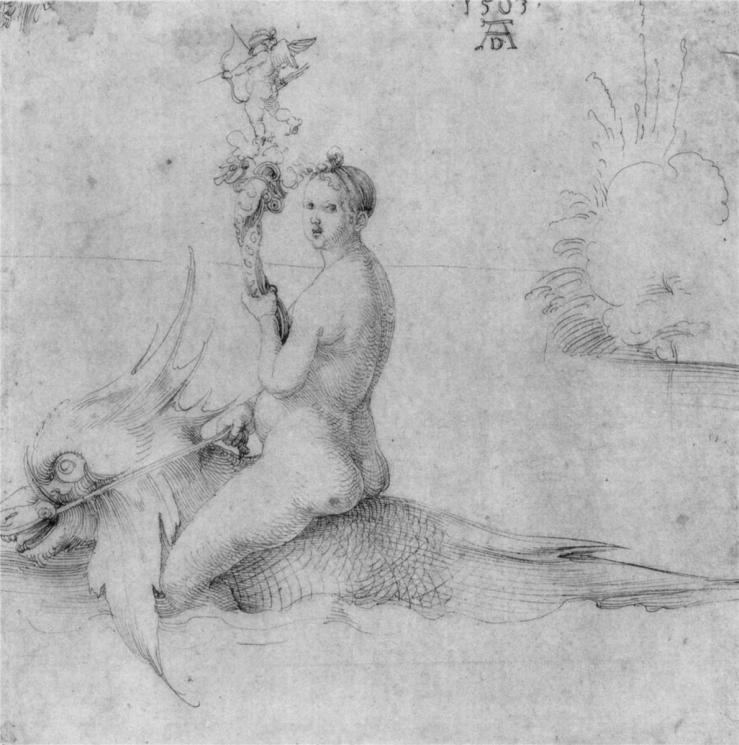
Venus on a Dolphin — Albrecht Dürer

venus-on-a-dolphin.jpg!HD

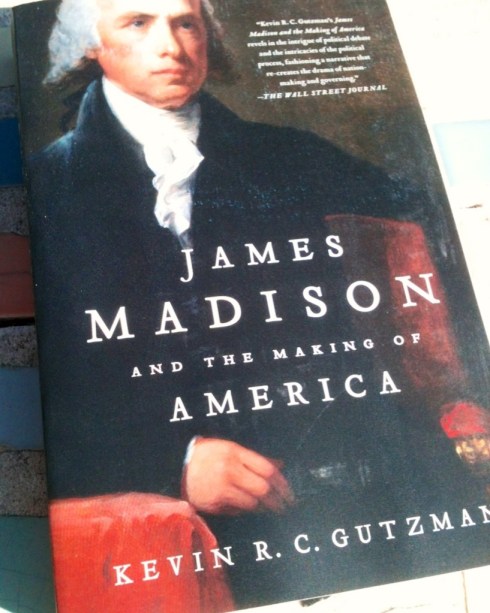
James Madison and the Making of America (Book Acquired, 1.15.2013)

20130120-173908.jpg

James Madison and the Making of America, by historian Kevin R. C. Gutzman, is new in trade paperback. A blurb from the author’s website:

Instead of an idealized portrait of Madison, Gutzman treats readers to the flesh-and-blood story of a man who often performed his founding deeds in spite of himself: Madison’s fame rests on his participation in the writing ofThe Federalist Papers and his role in drafting the Bill of Rights and Constitution.

Today, his contribution to those documents is largely misunderstood.  He thought that the Bill of Rights was unnecessary and insisted that it not be included in the Constitution, a document he found entirely inadequate and predicted would soon fail.

Madison helped to create the first American political party, the first party to call itself “Republican”, but only after he had argued that political parties, in general, were harmful.

Madison served as Secretary of State and then as President during the early years of the United States and the War of 1812; however, the American foreign policy he implemented in 1801-1817 ultimately resulted in the British burning down the Capitol and the White House.

In so many ways, the contradictions both in Madison’s thinking and in the way he governed foreshadowed the conflicted state of our Union now.  His greatest legacy—the disestablishment of Virginia’s state church and adoption of the libertarian Virginia Statute for Religious Freedom—is often omitted from discussion of his career.

Yet, understanding the way in which Madison saw the relationship between the church and state is key to understanding the real man.  Kevin Gutzman’s James Madison and the Making of America promises to become the standard biography of our fourth President.


“Random Rules” — Silver Jews

List of Smutty Sounding Moby-Dick Chapters

The Spouter-Inn.

A Bosom Friend.

Nightgown.

Wheelbarrow.

The Mast-Head.

Moby Dick.

The First Lowering.

The Spirit-Spout.

The Gam.

The Town-Ho’s Story.

Of the Monstrous Pictures of Whales.

The Dart.

The Crotch.

Cutting In.

The Battering-Ram.

The Nut.

The Pequod Meets The Virgin.

Pitchpoling.

The Fountain.

The Tail.

Fast-Fish and Loose-Fish.

Heads or Tails.

The Pequod Meets The Rose-Bud.

A Squeeze of the Hand.

Leg and Arm.

The Needle.

The Log and Line.

The Cabin.

The Pequod Meets The Delight.

The Chase.

See the Trailer for the New Coen Brothers’ Film, Llewyn Davis

“The Town-Ho’s Story” — Herman Melville

“The Town-Ho’s Story” by Herman Melville

(This tale is Chapter 54 of Moby-Dick but it stands on its own as a story)

(AS TOLD AT THE GOLDEN INN)

The Cape of Good Hope, and all the watery region round about there, is much like some noted four corners of a great highway, where you meet more travellers than in any other part.

It was not very long after speaking the Goney that another homeward-bound whaleman, the Town-Ho,* was encountered. She was manned almost wholly by Polynesians. In the short gam that ensued she gave us strong news of Moby Dick. To some the general interest in the White Whale was now wildly heightened by a circumstance of the Town-Ho’s story, which seemed obscurely to involve with the whale a certain wondrous, inverted visitation of one of those so called judgments of God which at times are said to overtake some men. This latter circumstance, with its own particular accompaniments, forming what may be called the secret part of the tragedy about to be narrated, never reached the ears of Captain Ahab or his mates. For that secret part of the story was unknown to the captain of the Town-Ho himself. It was the private property of three confederate white seamen of that ship, one of whom, it seems, communicated it to Tashtego with Romish injunctions of secrecy, but the following night Tashtego rambled in his sleep, and revealed so much of it in that way, that when he was wakened he could not well withhold the rest. Nevertheless, so potent an influence did this thing have on those seamen in the Pequod who came to the full knowledge of it, and by such a strange delicacy, to call it so, were they governed in this matter, that they kept the secret among themselves so that it never transpired abaft the Pequod’s main-mast. Interweaving in its proper place this darker thread with the story as publicly narrated on the ship, the whole of this strange affair I now proceed to put on lasting record.

*The ancient whale-cry upon first sighting a whale from the mast-head, still used by whalemen in hunting the famous Gallipagos terrapin.

For my humor’s sake, I shall preserve the style in which I once narrated it at Lima, to a lounging circle of my Spanish friends, one saint’s eve, smoking upon the thick-gilt tiled piazza of the Golden Inn. Of those fine cavaliers, the young Dons, Pedro and Sebastian, were on the closer terms with me; and hence the interluding questions they occasionally put, and which are duly answered at the time.

“Some two years prior to my first learning the events which I am about rehearsing to you, gentlemen, the Town-Ho, Sperm Whaler of Nantucket, was cruising in your Pacific here, not very many days’ sail eastward from the eaves of this good Golden Inn. She was somewhere to the northward of the Line. One morning upon handling the pumps, according to daily usage, it was observed that she made more water in her hold than common. They supposed a sword-fish had stabbed her, gentlemen. But the captain, having some unusual reason for believing that rare good luck awaited him in those latitudes; and therefore being very averse to quit them, and the leak not being then considered at all dangerous, though, indeed, they could not find it after searching the hold as low down as was possible in rather heavy weather, the ship still continued her cruisings, the mariners working at the pumps at wide and easy intervals; but no good luck came; more days went by, and not only was the leak yet undiscovered, but it sensibly increased. So much so, that now taking some alarm, the captain, making all sail, stood away for the nearest harbor among the islands, there to have his hull hove out and repaired. Continue reading ““The Town-Ho’s Story” — Herman Melville”

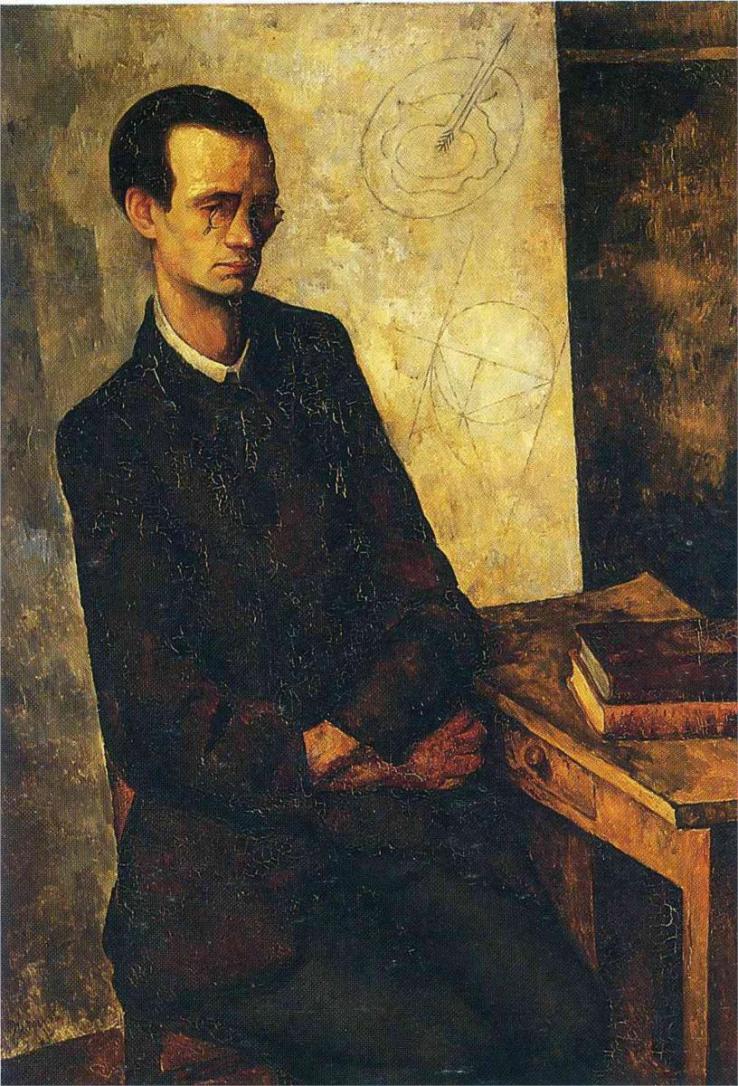
The Mathematician — Diego Rivera

the-mathematician-1918.jpg!HD

Franchise Films, Alternate Worlds, and Why Wong Kar Wai Should Direct the Next Star Wars Film

STAR WARS 3 hartter

News that J.J. Abrams will direct the seventh Star Wars film almost broke the internet yesterday. It’s easy to see why anyone who nerds out over franchise properties would take interest. After all, Abrams helmed the 2009 big-screen reboot of Star Trek, a film that shook the camp and cheese from the franchise’s previous films, replacing it with hip humor, thrilling action, and lots and lots of lens flare. Abrams’s sequel, Star Trek Into Darkness is perhaps the most anticipated franchise film of the year. 

I won’t speculate whether an Abrams Star Wars film will be successful or not—you probably wouldn’t want me to, because I hold the extreme minority opinion that Lucas’s Revenge of the Sith is a deeply profound and moving work of cinema art—but I do think that the choice to hand the next big film in the Star Wars franchise over to Abrams represents the worst in corporate thinking. This goes beyond the playground logic of Abrams swiping all the marbles—he gets both the “Star” franchises!—what it really points to is the bland, safe commercial mindset that guides the corporations who own these franchises. J.J. Abrams is a safe bet. I can more or less already imagine the movie he’ll make.

Star Wars: A New Hope came out in 1977, perhaps at the exact moment that the innovations of the “New Hollywood” movement crested (before Heaven’s Gate crashed the whole damn thing in 1980). The films of this decade—Badlands, The Godfather films, Bonnie & Clyde, Chinatown, Nashville, Dr. Strangelove, etc.—helped to redefine film as art; they also captured and illustrated a zeitgeist that’s almost impossible to define. And while plenty of filmmakers today continue in this spirit, their films are often pushed into the margins. The Hollywood studio system is tangled up in big budget spectacle. I have no problem with this, but at the same time I think that there’s something sad in it all—in the bland safety of having Abrams turn out Star Wars and Star Trek films—it all points to a beige homogeneity.

The problem I’m talking about is neatly summed up by Gus Van Sant in a 2008 interview with The Believer:

So, there were some projects I never really could get going, and one of them was Psycho. It was a project that I suggested earlier in the ’90s. It was the first time that I was able to actually do what I suggested. And the reason that I suggested Psycho to them was partly the artistic appropriation side, but it was also partly because I had been in the business long enough that I was aware of certain executives’ desires. The most interesting films that studios want to be making are sequels. They would rather make sequels than make the originals, which is always a kind of a funny Catch-22.

They have to make Bourne Identity before they make Bourne Ultimatum. They don’t really want to make Bourne Identity because it’s a trial thing. But they really want to make Bourne Ultimatum. So it was an idea I had—you know, why don’t you guys just start remaking your hits.

Lately it seems that the studios trip over themselves to reboot their franchises—the latest Spider-Man film (the one you probably forgot existed) being a choice example of corporate venality. In a way, it’s fascinating that Sam Raimi, something of an outsider director, was allowed to do the first Spider-Man films at all. Of course, now and then a franchise film (or potential franchise film) winds up in the hands of an auteur—take Harry Potter and the Prisoner of Azkaban, for example. Alfonso Cuarón’s third entry in the franchise can stand on its own (it certainly saved the franchise from the tepid visions of Chris Columbus). Even stranger, take Paul Verhoeven’s films RoboCop and Starship Troopers. These films were brilliant subversive satires, and what did Hollywood do to the movies that came after them? These franchises devolved into flavorless, flawed, run of the mill muck.

Of course, entertainment conglomerates have good (economic) reasons to “protect” their product. David Lynch’s Dune remains one of the great cautionary tales in recent cinema history. What could have reinvigorated “New Hollywood” instead proved a disastrous flop.  Dune never panned out as the blockbuster franchise that it could have been; instead, it gets to hang out in a strange limbo, greeting newer arrivals like Chris Weitz’s atrocious adaptation of The Golden Compass and Andrew Stanton’s underrated John Carter from Mars. It’s actually sort of surreal that we even gotDune film by David Lynch, complete with Kyle MacLachlan, Brad Dourif, Jack Nance, and fucking Sting.

What’s even weirder is that Alejandro Jodorowsky tried to adapt Dune, working with artists H.R. Geiger and Moebius. (Jodorowsky also planned to involve Orson Welles, Mick Jagger, and  Karlheinz Stockhausen among others in the film). What a Jodorowsky Dune film might have looked like is a constant source of frustrated fun for film buffs.

But what about a Star Wars film by Jodorowsky? What might that look like?
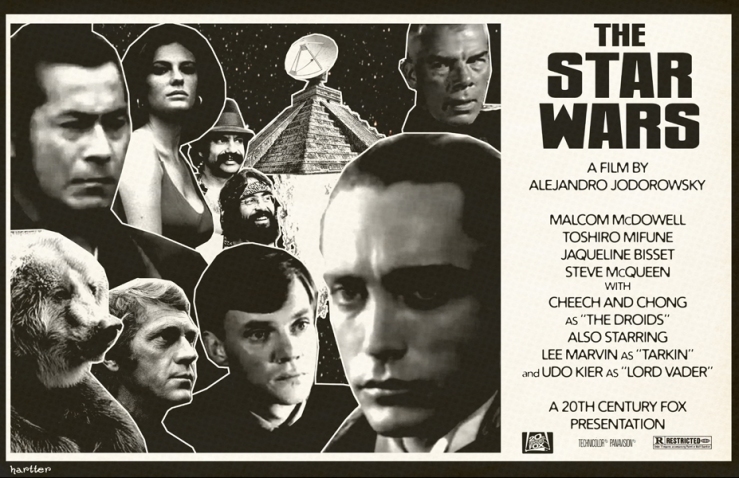
the star wars hartter

Sean Hartter imagines such prospects in his marvelous posters for films from an alternative universe. Hartter’s posters—most of which include not just cast and director but also specific studios, producers, and soundtrack composers and musicians—conjure up wonderful could-have-beens. They posit the kind of daring spirit and experimentalism I’d like to see more of from Hollywood franchises.

Most Hollywood franchises revere the illusion of stability in the property—the idea of a constancy of character throughout film to film. Even a franchise like the James Bond films, with its ever-rotating leads, tries to create the guise of a stable aesthetic along with narrative continuity. I would love to see something closer to the Alien franchise, the only line of films I can think of where each film bears the distinctive mark of its respective filmmaker; even if I don’t think Fincher’s Alien 3 is a particularly good film, at least it feels and looks and sounds like a Fincher film and not a weak approximation of a Cameron blockbuster or a stock repetition of Scott’s space horror (and Jeunet’s Resurrection—how weird is that one!).

But back to Bond for a moment—wouldn’t it be great to see Wes Anderson do James Bond, but as a Wes Anderson film? Or Werner Herzog? Or Cronenberg? What would Jane Campion do with Bond? (I’m tempted to add Jim Jarmusch, but he already made an excellent James Bond film called The Limits of Control). I’d love to see a range of auteur versions of the franchise. (Similarly, I’ve recently been fascinated by the way certain cult artists render major corporate franchise characters, like Dave Sim doing Iron Man, or Moebius doing Spider-Man, or Jaime Hernandez doing Wonder Woman). Obviously this fantasy will never happen—the auteur would have to have complete control—a Coen brothers’ Bond film would have to be first and foremost a Coen brothers film, not a 007 film—but hey, just like with Hartter’s posters, it’s fun to pretend.

Imagine a year of James Bond movies, one a month, featuring different directors, actors, studios, production designs. 007 films from Spike Lee, Tarantino, Almodavar, Lynne Ramsay, Lynch, Wong Kar Wai.

What would a Wong Kar Wai James Bond film look like?

What would a Wong Kar Wai Star Wars film look like?

I don’t know. I imagine it would be beautiful and moody and at times impressionistic. I imagine its narrative would tend toward obliqueness. I imagine it might infuriate die-hard fans (I imagine this last part with a big grin). I imagine that it would easily be the most human Star Wars film.

But beyond that, it’s hard to imagine what a Wong Kar Wai Star Wars film might look and sound and feel like because his films are powerful and moving and evoke the kind of imaginative capacity that marks great art, great original and originating art. Put another way, I can’t really imagine what a Wong Kar Wai Star Wars film would look like—which is precisely why I’d love to see one.

“Climax” (Usher Cover) — Dirty Projectors


Faulkner Pronouncing Yoknapatawpha