RIP Tony Scott

RIP Tony Scott, 1944-2012

British filmmaker Tony Scott committed suicide by jumping off of a bridge in San Pedro, California yesterday. He was 68.

Scott’s films were rarely critical favorites, although they were generally big hits. Scott’s films share, for the most part, a frenetic energy and a highly stylized visual flair.

His biggest hit was probably Top Gun, although he was also the man responsible for Beverly Hills Cop 2Enemy of the StateDays of ThunderThe Last Boy Scout, and Crimson Tide.

My favorite Tony Scott film is True Romance, which I sneaked into a theater to see in ninth grade, and which changed my life to a small degree. Quentin Tarantino penned True Romance, and I think Scott was at his best with an offbeat writer, as when he worked with Richard Kelly on the very weird and unfairly maligned film Domino, which I’ve always loved.

Tony Scott is brother to Ridley Scott. For years I’ve had a game with a friend about the two, a game where I stick up for Tony, insist Tony is the real talent in the Scott family.

His suicide makes me unduly sad.
Stringer Bell Doesn’t Like Open Doors


Books Acquired, Some Time Last Week (New Stuff from Pantheon)


20120818-173956.jpg

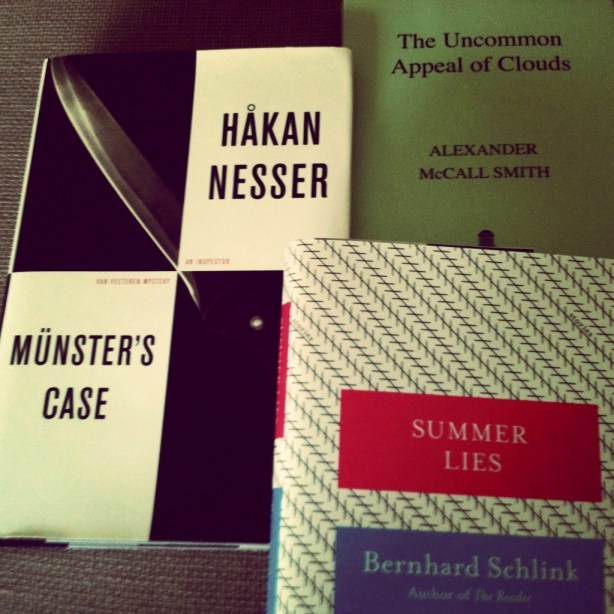
A trio from Pantheon came in last week. There’s a new one from mystery writer Håkan Nesser, called Müenster’s Case, featuring Inspector Van Veeteren. Alexander McCall Smith’s The Uncommon Appeal of Clouds is also a mystery, also part of a series, this one featuring  Isabel Dalhousie. I don’t really read these kind of books—I mean mystery series—but I know lots of people dig them, and some of the folks in my English department really dig McCall Smith.

Bernhard Shchlink’s new collection of stories seems interesting. Pantheon’s blurb—

From Bernhard Schlink, the internationally best-selling author of The Reader, come seven provocative and masterfully calibrated stories. A keen dissection of the ways in which we play with truth and less-than-truth in our lives. Summer Lies brims with the delusions, the passions, the outbursts, and the sometimes irrational justifications people make within a mélange of beautifully rendered relationships. In ”After the Season,” a man falls quickly in love with a woman he meets on the beach but wrestles with his incongruous feelings of betrayal after he learns she’s rich. In “Johann Sebastian Bach on Ruegen,” a son tries to put his resentment toward his emotionally distant father behind him by proposing a trip to a Back festival but soon realizes, during his efforts to reconnect, that it wasn’t his father who was the distant one. A philandering playwright is accused to infidelity by his wife in “The Night in Baden-Baden,” but he sees her accusations as nothing more than a means to exculpate himself of his guilt as he carries on with his ways. And in “Stranger in the Night,” an obliging professor becomes an accomplice—not entirely unwittingly—to the temporary escape of a charismatic fugitive on a delayed flight from New York to Frankfurt.

The truth, as once character puts it, is “passionate, beautiful sometimes, and sometimes hideous, it can make you happy and it can torture you, and it always sets you free.” Tantalizingly, so is the act of telling a lie—to others and to ourselves.


The Book — Juan Gris

Book Shelves #34, 8.19.2012


20120819-113046.jpg

Book shelves series #34, thirty-fourth Sunday of 2012

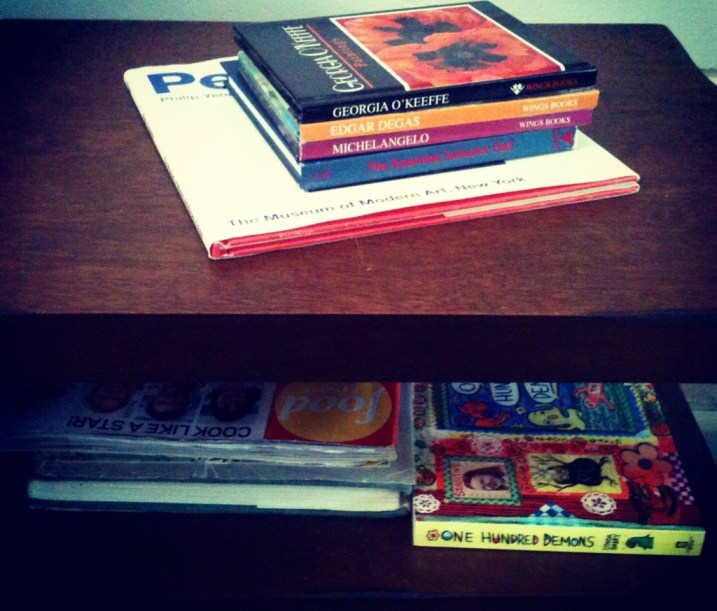
A little end table next to the couch in our family room.

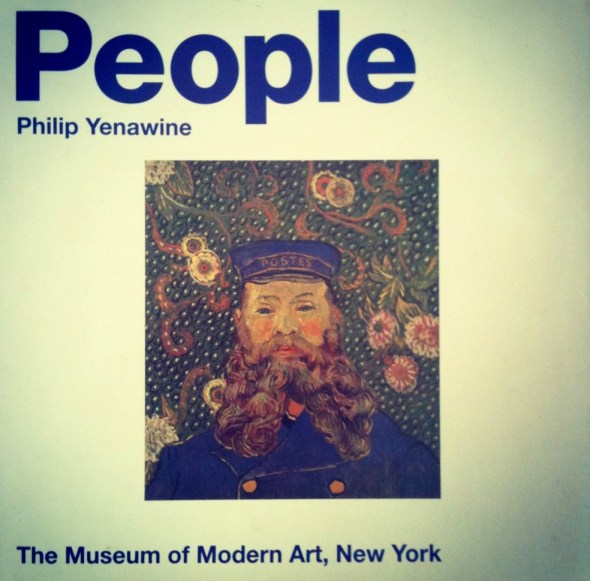
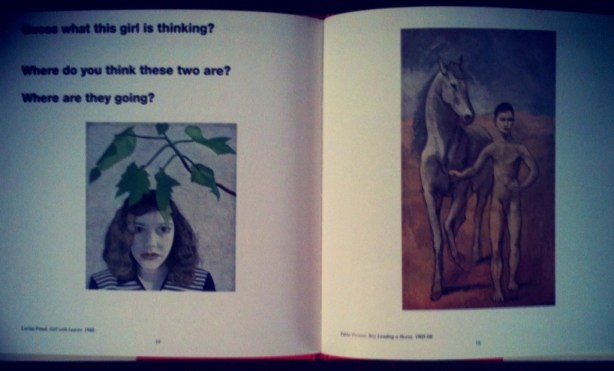
The books on top are little art books we keep out for the kids to look at, including People

20120819-113052.jpg

20120819-113058.jpg

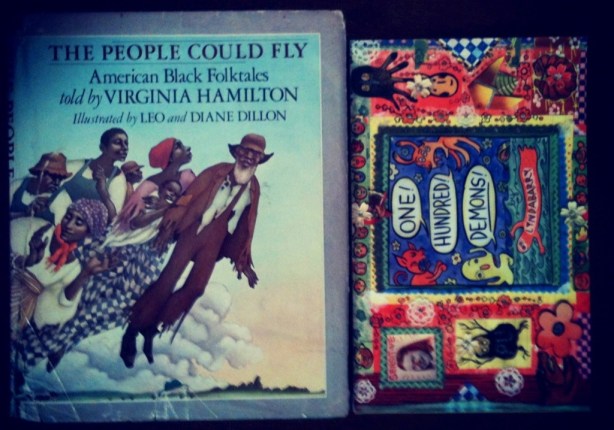
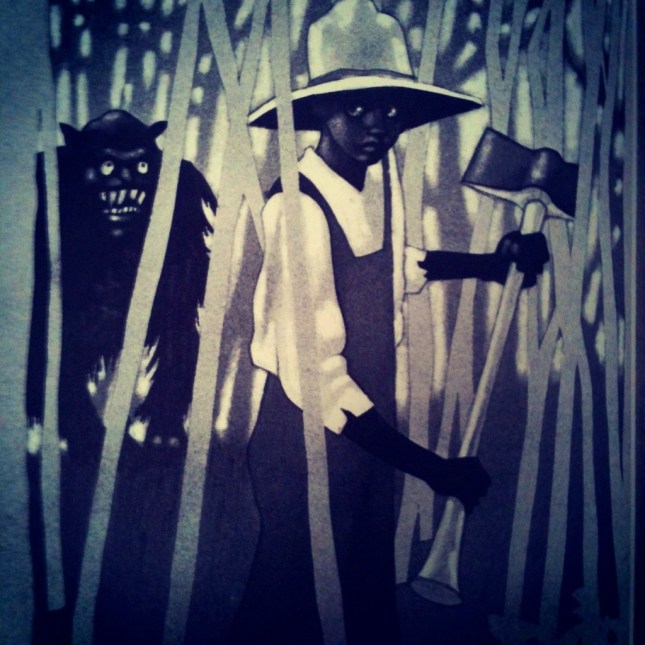
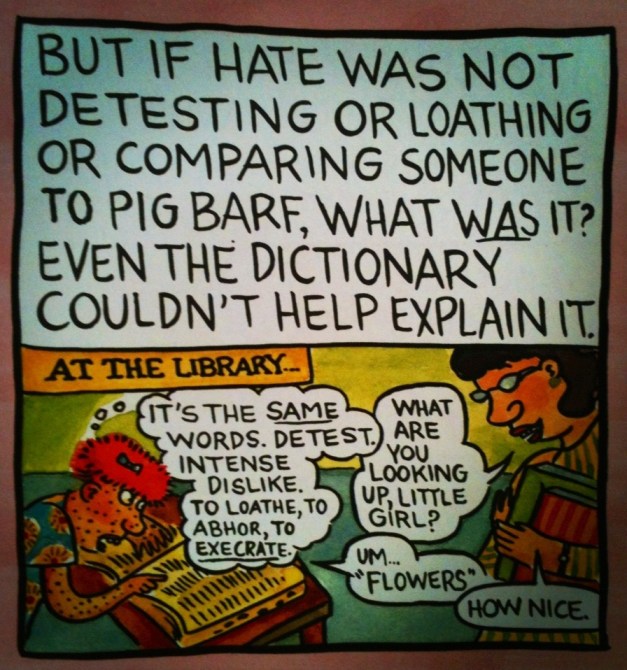
On the second shelf, along with a cooking magazine: The People Could Fly and Lynda Barry’s One Hundred Demons:

20120819-113104.jpg

20120819-113112.jpg

20120819-113121.jpg

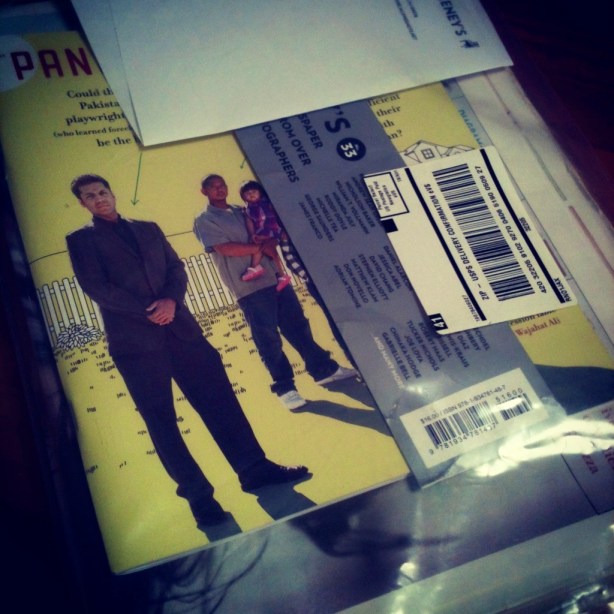
There are two drawers; one holds electronic manuals. The second holds McSweeney’s #33, the newspaper issue, which was pretty damn unwieldy:

20120819-113127.jpg

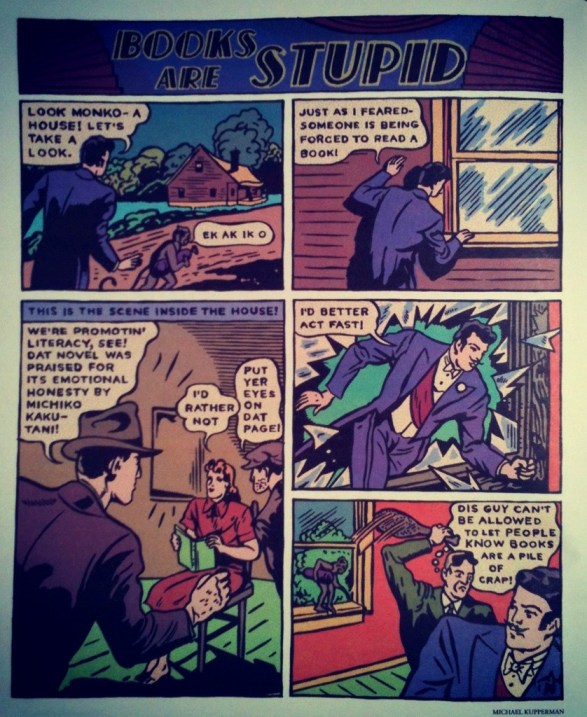
A comic from the McSweeney’s by Michael Kupperman:

20120819-113136.jpg

The Nereids — Joaquín Sorolla

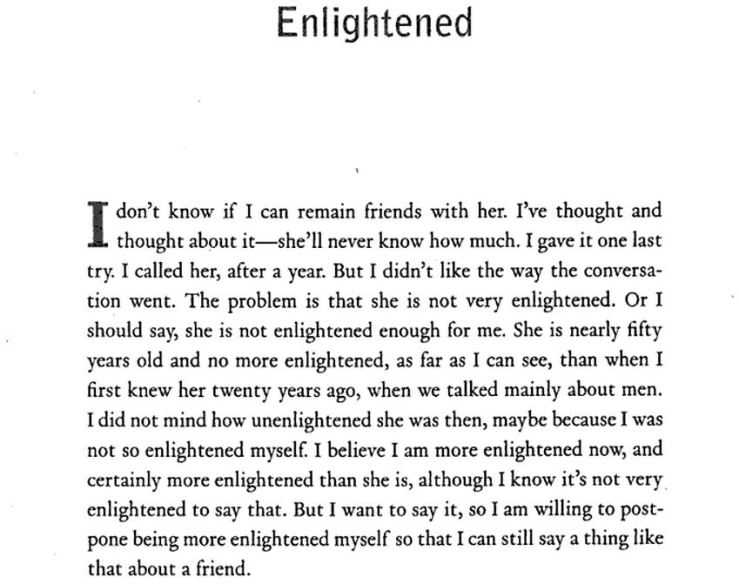
“Enlightened” — Lydia Davis

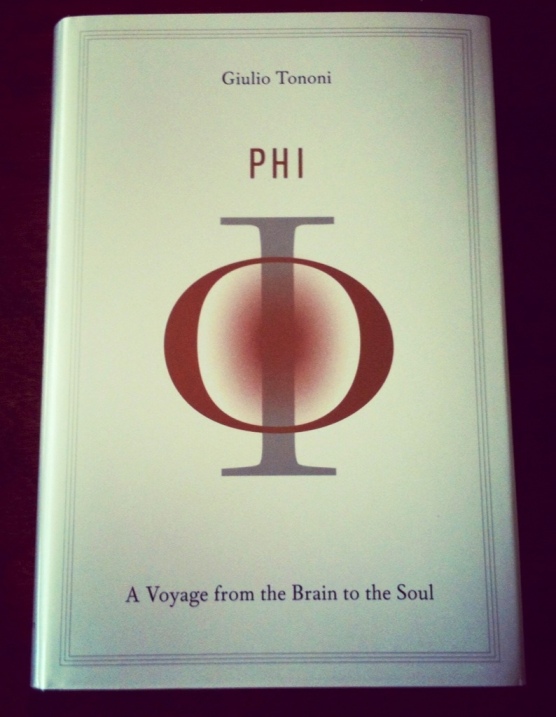
Phi (Very Beautiful Book Acquired, 8.08.2012)

20120818-173817.jpg


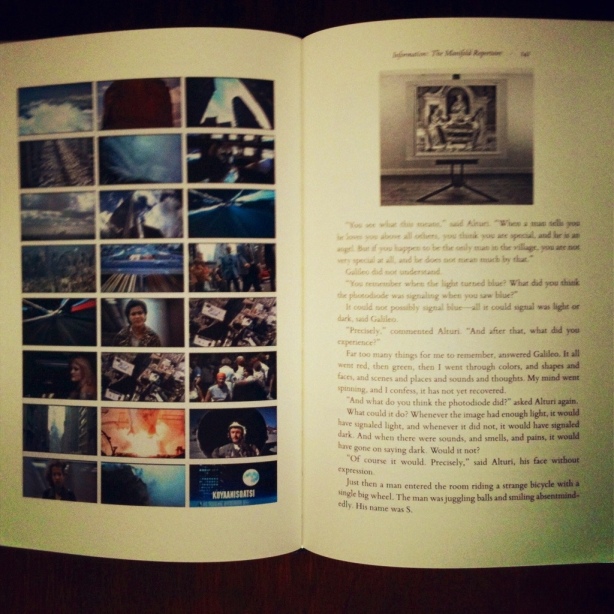
Giulio Tononi’s Phi—remarkable, beautiful, strange. Sort of a novel, sort of philosophical text, sort of a history, sort of a science book . . . I don’t know. Here’s the blurb:

From one of the most original and influential neuroscientists at work today, here is an exploration of consciousness unlike any other—as told by Galileo, who opened the way for the objectivity of science and is now intent on making subjective experience a part of science as well.

Galileo’s journey has three parts, each with a different guide. In the first, accompanied by a scientist who resembles Francis Crick, he learns why certain parts of the brain are important and not others, and why consciousness fades with sleep. In the second part, when his companion seems to be named Alturi (Galileo is hard of hearing; his companion’s name is actually Alan Turing), he sees how the facts assembled in the first part can be unified and understood through a scientific theory—a theory that links consciousness to the notion of integrated information (also known as phi). In the third part, accompanied by a bearded man who can only be Charles Darwin, he meditates on how consciousness is an evolving, developing, ever-deepening awareness of ourselves in history and culture—that it is everything we have and everything we are.

Not since Gödel, Escher, Bach has there been a book that interweaves science, art, and the imagination with such originality. This beautiful and arresting narrative will transform the way we think of ourselves and the world.

The comparison to Hofstadter’s Gödel, Escher, Bach might be apt. The book also recalls The Rings of Saturn to me. I’ve put it in a “read this” pile.

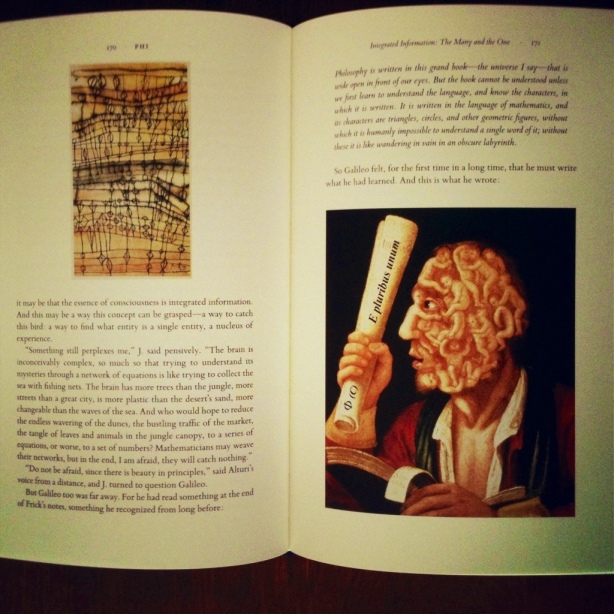
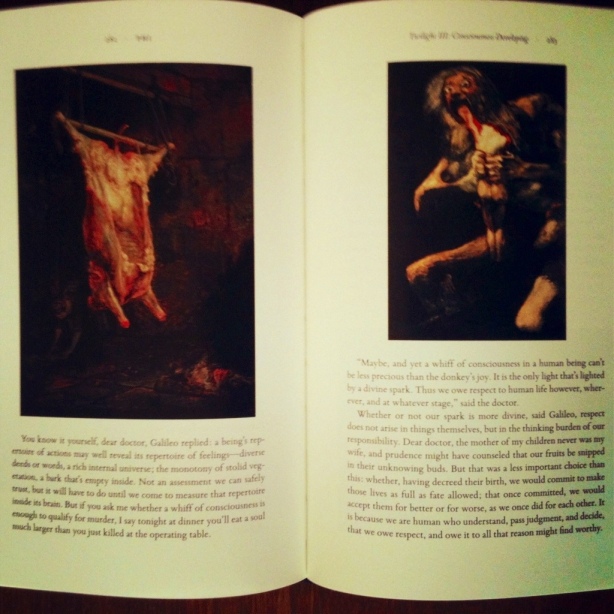
More to come, but here are some shots at random from its interior:

20120818-173834.jpg

20120818-173840.jpg

20120818-173847.jpg


Nude with Book — Zinaida Serebriakova

The Dog — Francisco Goya

Vanishing Is the Last Art (Book Acquired, Some Time in the Past Two Weeks)

20120818-174148.jpg

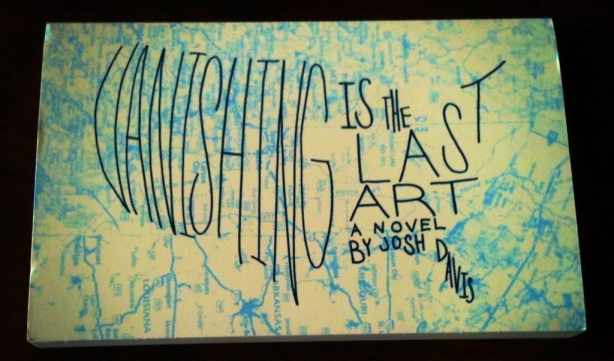
Josh Davis’s novel Vanishing Is the Last Art. Blurb:

Charlie Fell sells baseball cards with seemingly hallucinogenic properties out of his bedroom, takes road trips to places he loves (New York City) and loathes (Southern California), and trips over a series of romantic entanglements. When the young writer releases his first novel, his life begins to unravel as the fallout from his published inner-monologues drive him back inside his already frail mind

Krautrock (Full BBC Documentary)

A Green Neck Duck with a Seville Orange — Jean-Baptiste-Simeon Chardin

Alejandro Jodorowsky: “The Only Exile I Know Is the Exile from Myself”

The thing is, I grew up as a foreigner.  Look, my father was a Jew who tried to pass for a Russian.  My mother was half-Russian, because a Cossack raped her mother, and she tried to pass for a Jew.  So, I was Chilean and not Chilean, because I was the son of immigrants.  I was trying to pass for a Chilean, but never completely.  I was never anything.  Therefore, the only exile I know is the exile from myself.  Because I was never myself.  The nostalgia I would have to get back to myself, what am I?  But not what am I as nationality.  What am I as a spirit without limits.  I have limits.  So, each day I try more and more to go toward the anonymous which is precisely the impersonal.  To try to be an impersonal person.  I don’t think in terms of cities now.  I think of the planet.  I don’t think in terms of nationality.  I think of human beings.

From a 1995 interview with Alejandro Jodorowsky by Jason Weiss (who was kind enough to forward a link to me).

A Monk with a Book — Titian

An Evening with Werner Herzog

Five Words in Green Neon — Joseph Kosuth