Kermit the Frog and Miss Piggy Strike Back at FOX News

(Some context, if you wish).

Detail from The Triptych of the Mystical Marriage of Saint Catherine — Hans Memling

“A Well-Meaning, Sincere Hypocrite” — William Gaddis on His Title Character, JR (And Capitalism)

More from William Gaddis’s 1986 Paris Review interview:

INTERVIEWER

Is JR’s story something you extrapolated from life only, or did you rely on sociologies devoted to how the corporate world works upon social values, human qualities, and relationships in American culture?

GADDIS

The boy himself is a total invention, completely sui generis. The reason he is eleven is because he is in this prepubescent age where he is amoral, with a clear conscience, dealing with people who are immoral, unscrupulous; they realize what scruples are, but push them aside, whereas his good cheer and greed he considers perfectly normal. He thinks this is what you’re supposed to do; he is not going to wait around; he is in a hurry, as you should be in America—get on with it, get going. He is very scrupulous about obeying the letter of the law and then (never making the distinction) evading the spirit of the law at every possible turn. He is in these ways an innocent and is well-meaning, a sincere hypocrite. With Bast, he does think he’s helping him out. As for the corporate world, I do read the newspapers, clip things, ideas, articles, and just use them as fodder. But all that hardly requires a text in sociology. And this may be the place to make a further point. I’m frequently seen in the conservative press as being out there on the barricades shouting: Down with capitalism! I do see it in the end as really the most workable system we’ve produced. So what we’re talking about is not the system itself, but its abuses, I don’t mean criminal but the abundant abuses just within the letter of the law. The essential question is whether it can survive these abuses given free rein and whether these abuses are inherent in the system itself. I should think it is perfectly clear in my work—calling attention, satirizing these abuses—that our best hope lies in bringing things under better and more equitable control, cutting back the temptations to unmitigated greed and bemused dishonesty . . . in other words that these abuses the system has fostered are not essential, but running out of moral or ethical control can certainly threaten its survival.

“Have One On Me” (Live on Austin City Limits) — Joanna Newsom

Book Shelves #5, 1.29.2012

Book shelves series #5, fifth Sunday of 2012: In which we leave the southern wing of the house where the bedrooms are and enter a formal sitting room.

Okay. So. When I started this project, it was easy to identify the rooms in the house—they were bedrooms. As we go, I’ll have to occasionally make up names for rooms, often names that don’t really fit. Our house is a 1956 ranch with some of the atomic flavor, so it’s long and rectangular and very open—rooms open up into other rooms; spaces are demarcated more by ideas of rooms and not, say, walls. The house is essentially three sections; we’ve left the first, the bedrooms, and now move into a series of rooms for living and eating and cooking and sitting. And reading. I mapped out a little route for the rest of this series, and the first stop is this mid-century LP cabinet in what I’ll call, for lack of a better term, our formal sitting room. The cabinet once held many of my records but is now filled with comic books (more on those next week).

20120129-123357.jpg

The books that set on top of it are coffee tablish, I suppose, and they tend to rotate, although there’s usually a stray novel or two that sets here as well. Today we’ll look at the two on top now: Penguin by Design and Atomic Ranch.

20120129-123410.jpg

There’s also an Emerson Wondergram record player that sets on the table; I suppose it was the iPod of its day (see one in action here).

20120129-121621.jpg

Atomic Ranch is my wife’s, although I don’t really make such distinctions when it comes to books. We lived for years in a bungalow and she amassed books dedicated to craftsman homes during that time; when we moved to the ’50s ranch, she wanted this:

20120129-123515.jpg

Penguin by Design is essential for anyone who drools over beautiful modern book covers.
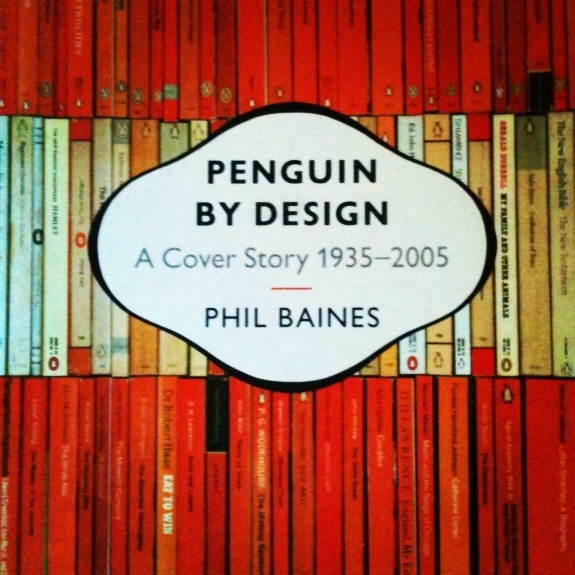
20120129-123508.jpg

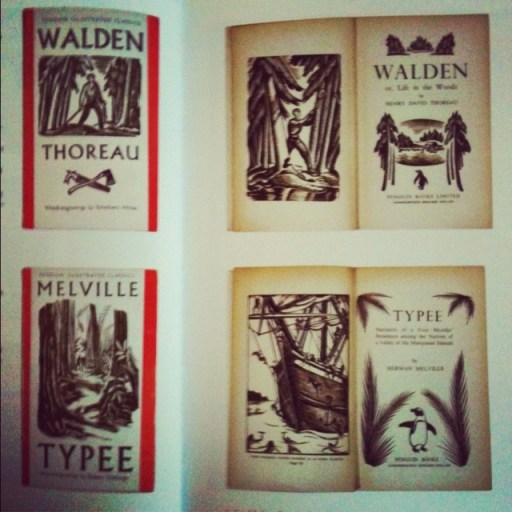
My pics are lousy—sorry—but just a few editions I’d love to pick up one day:

20120129-123417.jpg

20120129-123443.jpg

20120129-123449.jpg

Next week, we’ll look at some of the comic books inside the cabinet.

“The Unswerving Punctuality of Chance” (And Other Citations from William Gaddis’s Novel JR)

20120128-185406.jpg

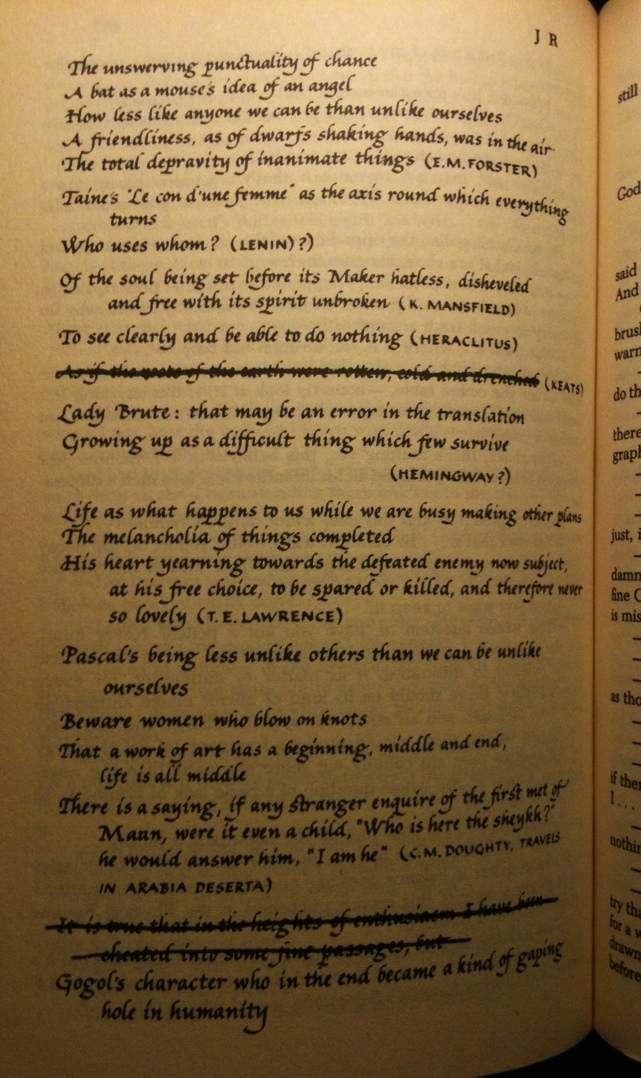
In JR, the sprawling novel of capitalism and art by William Gaddis, Jack Gibbs loads his pockets with crumpled newspaper clippings, racing forms, and citations for a book he’s working on. “More trash,” he mutters about this list (which appears on page 486 of my Penguin Twentieth Century Classics Edition).

Skull with a Burning Cigarette — Vincent van Gogh

Buckaroo Banzai’s Marvelous End Titles Tell You Everything You Need to Know About This Strange Film

I’m almost ashamed to admit that I hadn’t seen W.D. Richter’s slapdash madcap sci-fi send up The Adventures of Buckaroo Banzai Across the 8th Dimension until this summer. The film is so strange, so aggressively and willfully weird, that I don’t know how its cult vibes hadn’t enmeshed me earlier.

The film stars a deadpan Peter Weller as the titular Buckaroo, a neurosurgeon/rock star/superhero who, alongside his team/fellow bandmates, the Hong Kong Cavaliers, must stop the Red Lectroids from Planet 10. Or something like that.

The plot is a shambolic mess, sprawling out in bizarre directions. Buckaroo Banzai is never sure if it’s cyberpunk or Moonlighting or a winking jab at Flash Gordon or a riff on a rock movie. It’s enthralling and terrible at the same time.

But there’s no need to oversummarize here, when all one must needs do to get a feel for Buckaroo Banzai is watch its marvelous end title sequence. Go ahead, watch it:

There’s nothing I don’t love about these four minutes: The strutting! The skinny ties! Jeff Goldblum in furry chaps and a cowboy hat! Smokin’ hot Ellen Barkin! That little hop that Peter Weller does at 1:40! The promise of a sequel that never came! And that song! That jaunty joyful whistling slice of ’80s cheese! Love love love it!

Crows — A Vignette from Akira Kurosawa’s Film Dreams, Starring Martin Scorsese as Vincent van Gogh

Books Acquired, 1.25.2012 (Malcolm Lowry, Paul Auster, and William Gaddis)

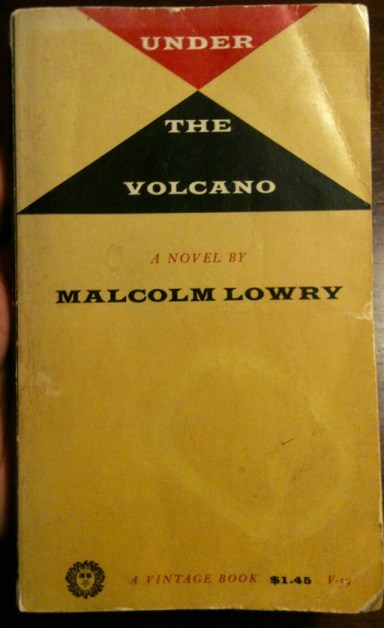
I go to the bookstore once a week, whether I need books or not, which I really don’t. This week, I picked up a book I’ve already read, Lowry’s late-modernist classic Under the Volcano, simply because I hate the cover of the version I have (a bland movie tie-in). Anyway, I’ve been prowling for a version that includes an introduction by William Vollmann, but I saw this midcentury paperback with a nice minimal vibe and had to snap it up (also, it was a dollar, and “I’d buy that for a dollar!”):

20120126-181349.jpg

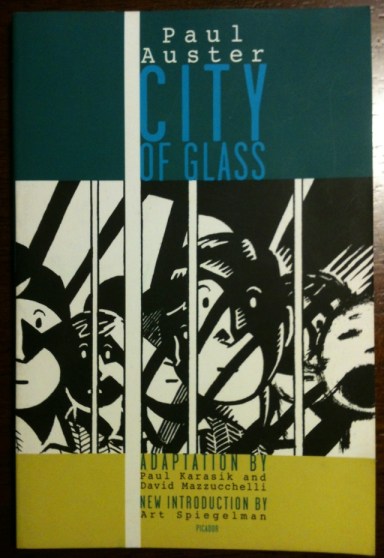
I’m not a huge Paul Auster fan, but I do like artist David Mazzucchelli’s work (especially his novel Asterios Polyp), so when I saw a crisp used copy of the graphic novelization of City of Glass (with an intro by Art Spiegelman), I had to snap it up:

20120126-181414.jpg

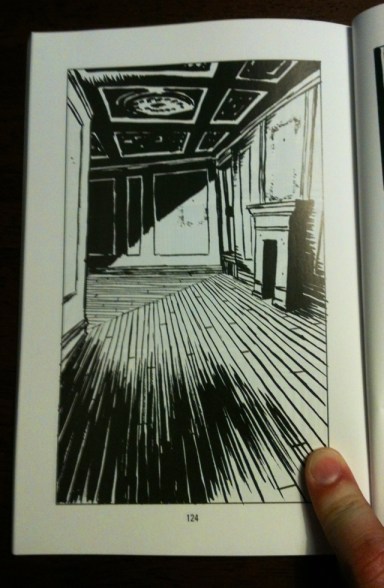
A splash page of a stark empty room which I’m sure is meaningful in some way:

20120126-181426.jpg

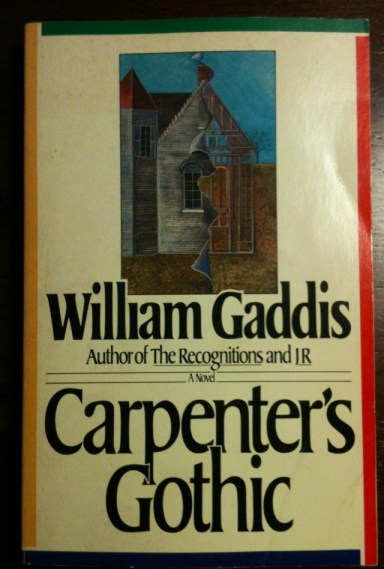
Also, couldn’t help pick up a used copy of Gaddis’s late novel Carpenter’s Gothic, even though I know there’s no way I’ll get to it anytime soon.

20120126-181435.jpg

“I’d Buy That for a Dollar!”

Maurice Sendak on The Colbert Report (In Case You Missed It)

Vodpod videos no longer available. Vodpod videos no longer available.

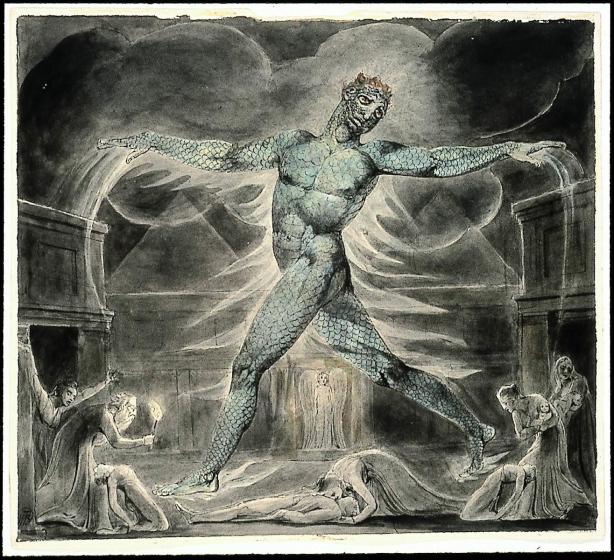
Pestilence: Death of the First-Born — William Blake

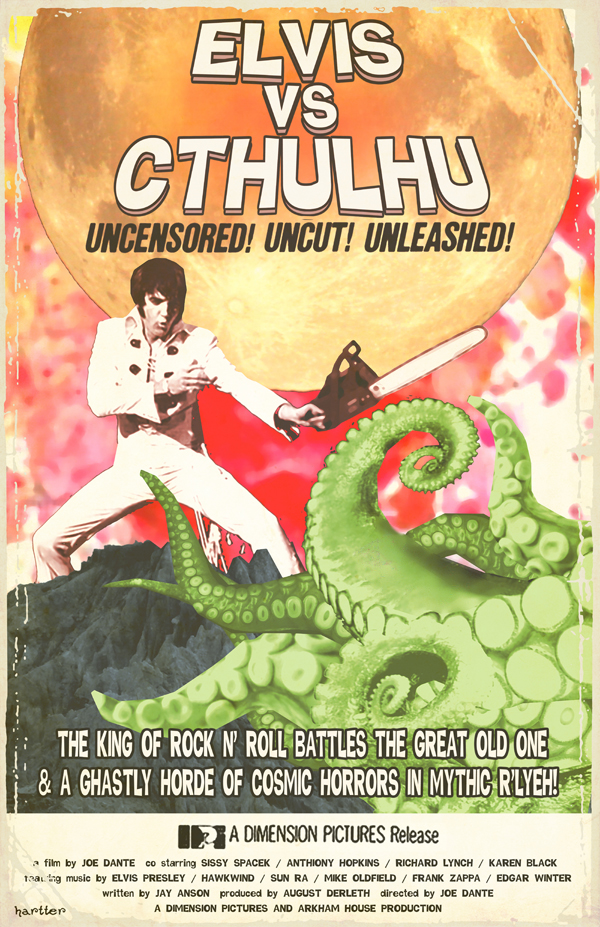
Elvis Vs. Cthulhu (And Other Alternate Universe Movie Posters by Sean Hartter)

Sean Hartter’s fantabulous collection of movie poster designs from an alternate dimension relay such a precise aesthetic that they almost make me sad that these movies don’t exist. Still, I find some consolation by imagining scenes from, say, a Jodorowsky-helmed Star Wars or  Vincent D’Onofrio in an x-rated version of Avatar. (Thanks to Tilford for the tip).

As studios increasingly rely on franchises—and rebooting those franchises every decade—it makes sense that franchise titles will continue to evolve like comic books have, with new artists (directors, producers, writers, etc.) doing their “take” on the property.

A few of Hartter’s images, but I suggest getting lost in his site:

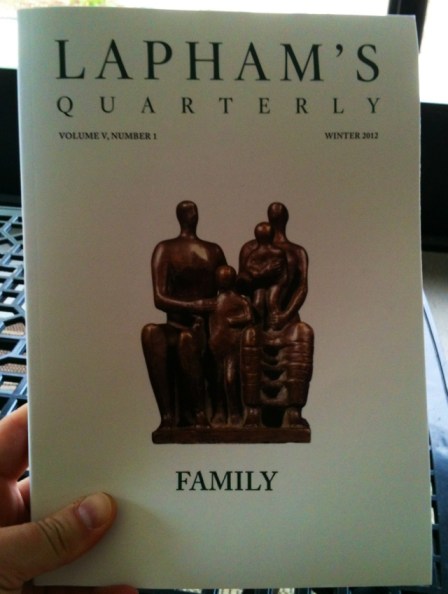
Book Acquired, 1.23.2012 — New Lapham’s Quarterly

20120125-161536.jpg

I was a relatively consistent subscriber to Harper’s magazine from 1997 to 2006, with brief flirtations after that year. Anyway, at some point my subscriptions to Harper’s, The Believer, McSweeney’s, etc. became too much. Just didn’t have time to read them all. I’m down to one subscription a year. Last year it was The Paris Review—and I very much enjoyed it. This year: Lapham’s Quarterly. The quarterly is right up my alley—short selections from (seemingly) 100s of authors. The back:

20120125-161543.jpg

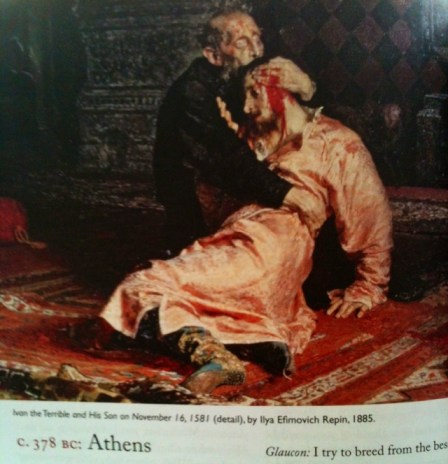
The magazine also features plenty of art selections, as well as tables, graphs, and other editorial content—but on the whole, Lapham’s Quarterly reminds me of my favorite aspect of Harper’s, the “Readings” selections.

20120125-161551.jpg

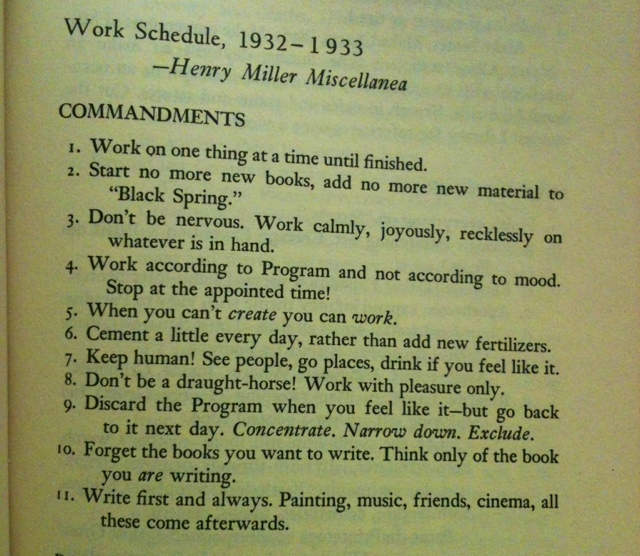
Henry Miller’s Eleven Commandments

20120125-160347.jpg

(From Henry Miller on Writing, New Directions).

Michel Houellebecq on Tocqueville, Nietzsche, and Democracy

(Click the CC button for English subtitles).