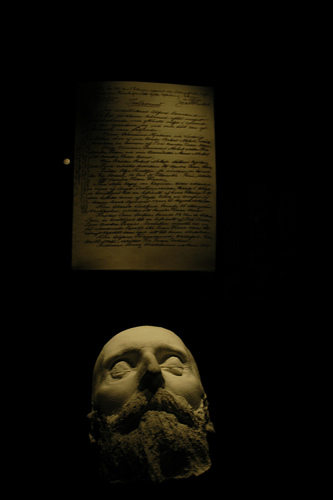
Alfred Nobel’s Death Mask

Werner Herzog on James Cameron’s Avatar

“The Boarding” — Denis Johnson

“The Boarding” by Denis Johnson–

One of these days under the white
clouds onto the white
lines of the goddamn PED
X-ING I shall be flattened,
and I shall spill my bag of discount
medicines upon the avenue,
and an abruptly materializing bouquet
of bums, retirees, and Mexican
street-gangers will see all what
kinds of diseases are enjoying me
and what kind of underwear and my little
old lady’s legs spidery with veins.
So Mr. Young and Lovely Negro Bus
Driver I care exactly this: zero,
that you see these things
now as I fling my shopping
up by your seat, putting
this left-hand foot way up
on the step so this dress rides up,
grabbing this metal pole like
a beam of silver falling down
from Heaven to my aid, thank-you,
hollering, “Watch det my medicine
one second for me will you dolling,
I’m four feet and det’s a tall bus
you got and it’s hot and I got
every disease they are making
these days, my God, Jesus Christ,
I’m telling you out of my soul.”


Anemic Cinema — Marcel Duchamp

Vodpod videos no longer available.

“Death Mask” — Edward Field

“Death Mask,” a poem by Edward Field

“Old age is the most unexpected
of all the things that happen to a man.”
–Leon Trotsky.

“Do not let me hear
Of the wisdom of old men, but rather of their
folly,
Their fear…”
–“East Coker,” by T.S. Eliot

1

In the mirror now,
what I see
reminds me
I won’t be here forever.

I don’t feel like
that face at all.
Inside it, I protest,
I’m quite different.

It’s somebody’s grandfather,
not me.

Whose grandfather is that?
I don’t want him.

2

Ah, memory, memory….

terrible,

to be losing

the words.

3

How do you get from here to there-
I mean, from where I am
to the nursing home?
In a snap of the fingers,
the blink of an eye.

Like my mother said,
as she was being loaded
into the ambulance,
It went so fast.

4

Life
a lazy buzz,
then
the quick sting.

A long inward breath,
then
the sudden
exhaling.

Deb Olin Unferth Reads Her Short Story “Deb Olin Unferth”

“It Was this Truly Epiphantic Experience” — David Foster Wallace Describes the First Time He Saw Blue Velvet

From his 1997 interview with Charlie Rose (which Jesus yeah I know you’ve seen before, but hey, it’s worth reading this anecdote from the transcript), David Foster Wallace describes seeing David Lynch’s Blue Velvet

The screen gets all fuzzy now as the viewer’s invited to imagine this. Coming out of an avant garde tradition, I get to this grad school and at the grad school, turns out all the teachers are realists. They’re not at all interested in post-modern avant garde stuff. Now, there’s an interesting delusion going on here — so they don’t like my stuff. I believe that it’s not because my stuff isn’t good, but because they just don’t happen to like this kind of esthetic.

In fact, known to them but unknown to me, the stuff was bad, was indeed bad. So in the middle of all this, hating the teachers, but hating them for exactly the wrong reason — this was spring of 1986 — I remember — I remember who I went to see the movie with — “Blue Velvet” comes out. “Blue Velvet” comes out.

“Blue Velvet” is a type of surrealism — it may have some — it may have debts. There’s a debt to Hitchcock somewhere. But it is an entirely new and original kind of surrealism. It no more comes out of a previous tradition or the post-modern thing. It is completely David Lynch. And I don’t know how well you or your viewers would remember the film, but there are some very odd — there’s a moment when a guy named “the yellow man” is shot in an apartment and then Jeffrey, the main character, runs into the apartment and the guy’s dead, but he’s still standing there. And there’s no explanation. You know, he’s just standing there. And it is — it’s almost classically French — Francophilistically surreal, and yet it seems absolutely true and absolutely appropriate.

And there was this — I know I’m taking a long time to answer your question. There was this way in which I all of a sudden realized that the point of being post-modern or being avant garde or whatever wasn’t to follow in a certain kind of tradition, that all that stuff is B.S. imposed by critics and camp followers afterwards, that what the really great artists do — and it sounds very trite to say it out loud, but what the really great artists do is they’re entirely themselves. They’re entirely themselves. They’ve got their own vision, their own way of fracturing reality, and that if it’s authentic and true, you will feel it in your nerve endings. And this is what “Blue Velvet” did for me.

I’m not suggesting it would do it for any other viewer, but I — Lynch very much helped snap me out of a kind of adolescent delusion that I was in about what sort of avant garde art could be. And it’s very odd because film and books are very different media. But I remember — I remember going with two poets and one other student fiction writer to go see this and then all of us going to the coffee shop afterwards and just, you know, slapping ourselves on the forehead. And it was this truly epiphantic experience.

“Wildcat Was Written in a Kind of Obsolete Vernacular” — Eli Cash Discusses His Unsuccessful Novel

“I Don’t Understand American Morals” — A Passage from Heinrich Böll’s Novel The Clown

A passage from Heinrich Böll’s novel The Clown, new in print again from Melville House–

Most films which children are allowed to see are full of whores. I have never understood what the boards who grade the films have in mind when they pass this type of film for children. The women in these films are either whores by nature, or they are whores in a sociological sense; they are almost never compassionate. In some Wild West saloon there are these blondes dancing the cancan, while rough cowboys, goldminers, or trappers then go after the girls and try to go up to their rooms with them, they usually have the door slammed in their face, or some brutal swine cruelly knocks them down. I take it this is meant to express something like virtuousness. Cruelty where compassion would be the only humane thing. No wonder the poor devils start beating each other up and shooting — it’s like football at school, only it is even crueller, since they are grown men. I don’t understand American morals. I suppose over there a compassionate woman would be burned as a witch, a woman who does it not for money and not out of passionate love for the man, but simply out of pity for masculine nature.

“Walking in the Footsteps of W.G. Sebald” — Stuart Jeffries Retraces The Rings of Saturn

Stuart Jeffries retraces W.G. Sebald’s coastal walk from The Rings of Saturn. Video after the jump. Continue reading ““Walking in the Footsteps of W.G. Sebald” — Stuart Jeffries Retraces The Rings of Saturn”

Alejandro Jodorowsky on David Lynch’s Dune (and Other Matters)

The AV Club’s Noel Murray interviews Chilean director Alejandro Jodorowsky, he of Holy Mountain and apocalypse-Western El Topo fame. Jodorowsky famously almost adapted Frank Herbert’s Dune before David Lynch picked up that gauntlet. Here’s Jodorowsky on Lynch’s adaptation–

AVC: For a long time, you were involved with developing Dune into a feature film, before the project fell through. Did you ever see David Lynch’s Dune?

AJ: Yes, I’ve seen it. I was very scared when I saw it, because Dune was for me very important in my life. I was very sad I could not do it. When I saw that David Lynch would do it, I was very scared, because I admire him as a moviemaker, and I thought he would do well. But when I see the picture, I realize he never understood this picture. It’s not a David Lynch picture. It’s the producer who made that picture, no? Who made this horror. For David Lynch, it was a job. A commercial job. It never was that for me.

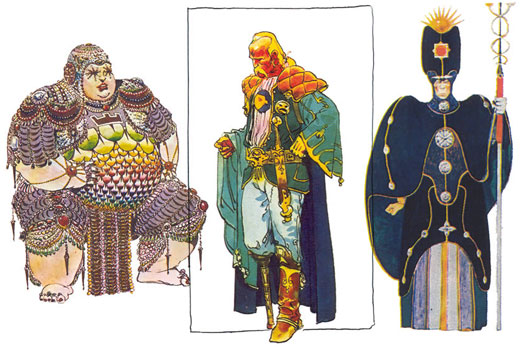
Jodorowsky’s version of Dune had entered pre-production, including early art from Jean Giraud (French comics artist Moebius). You can see some of Giraud’s character designs and storyboards here.

Jodorowsky famously wanted Salvador Dali to play the Emperor and Mick Jagger to play Feyd Rautha (a role that went to Sting in Lynch’s version).

Girl with Death Mask — Frida Kahlo

Reminder: The Lost Books of the Odyssey Giveaway Ends This Friday

The kind folks at Picador are offering you, dear reader, a chance to win one of two copies of Zachary Mason’sThe Lost Books of the Odyssey, a dazzling re-imagining of Homer’s epic tale. And you’ll want to read this book, folks. Here’s a snippet from our review–

In his preface to The Lost Books of the Odyssey, author Zachary Mason tells us that before the story we now know as the Odyssey was organized by the poet Homer, the “material was formless, fluid, its elements shuffled into new narratives like cards in a deck.” Mason’s goal in The Lost Books is to echo these older versions of the story of Odysseus, omitting “stock epic formulae in favor of honing a single trope or image down to extreme clarity.” He succeeds admirably — Lost Books is an engaging and perplexing work that challenges our assumptions about one of the most foundational stories of Western literature. Mason’s “novel” (it is not really a novel, of course) strikes a wonderfully resonant and deeply upsetting chord, disrupting our sense of narrative satisfaction, breaking us away from the outcomes we thought we knew.

So, how do you get your grubby little hands on a copy? First, you need to have a U.S. mailing address. Second, you need to email us at biblioklept.ed@gmail.com, responding to this simple prompt: Who is your favorite character in The Odyssey, and why? Our esteemed judges will choose the winners from the best responses and post them as an announcement this Friday Saturday. Good luck!

“It Sounds Like the Title of a David Lynch Film” — A Passage from Roberto Bolaño’s 2666

A passage from Roberto Bolaño’s opus 2666

The card for the Santa Teresa cybercafe was a deep red, so red that it was hard to read what was printed on it. On the back, in a lighter red, was a map that showed exactly where the cafe was located. He asked the receptionist to translate the name of the place. The clerk laughed and said it was called Fire, Walk With Me.

“It sounds like the title of a David Lynch film,” said Fate.

The clerk shrugged and said that all of Mexico was a collage of diverse and wide-ranging homages.

“Every single thing in this country is an homage to everything in the world, even the things that haven’t happened yet,” he said.

After he told Fate how to get to the cybercafe, they talked for a while about Lynch’s films. The clerk had seen all of them. Fate had seen only three or four. According to the clerk, Lynch’s greatest achievement was the TV series Twin Peaks. Fate liked The Elephant Man best, maybe because he’d often felt like the elephant man himself, wanting to be like other people but at the same time knowing he was different. When the clerk asked him whether he’d heard that Michael Jackson had bought or tried to buy the skeleton of the elephant man, Fate shrugged and said that Michael Jackson was sick. I don’t think so, said the clerk, watching something presumably important that was happening on TV just then.

“In my opinion,” he said with his eyes fixed on the TV Fate couldn’t see, “Michael knows things the rest of us don’t.”

“We all know things we think nobody else knows,” said Fate.

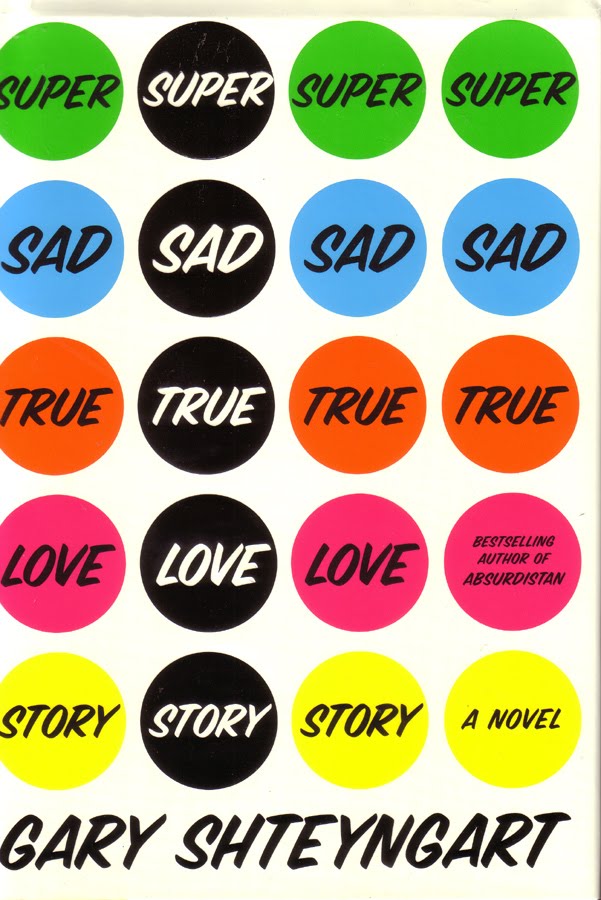
I Super Hated Gary Shteyngart’s Super Sad True Love Story

At a certain point, I was inclined to write a thoughtful review of Gary Shteyngart’s much-lauded, truly awful novel Super Sad True Love Story, the kind of review that might try to weigh Shteyngart’s choked May-December romance against its dystopian background. That was a few chapters in, a point at which I’d gotten past the realization that Shteyngart was going to do nothing new with the dystopian genre I so love, yet still early enough for me to think that he might have something to say about American culture and politics in the early 21st century. There’s nothing there, though — Super Sad True Love Story subscribes to the normal dystopian program of synthesizing 1984 and Brave New World through a contemporary lens, yet what we’re left with is Shteyngart’s observation that people might not like to read as much as they used to.

Obligatory plot summary: it’s America a few decades down the line–not enough to account for the change that Shteyngart proposes–an America under Bipartisan rule, a country without an elected President, at war with Venezuela, heavily indebted to China, and essentially ruled by a corporatocracy. People no longer read, they only scan data from their ever-present “äppäräti,” screen media devices they are addicted to through which they shamelessly broadcast every last piece of personal data. Sound familiar? Sure. (Those damn kids with their Facebooks!)

Shteyngart’s hero is Lenny Abramov, son of immigrant Russian Jews. Lenny works for Post-Human Services, a company that aims to extend human life indefinitely– as long as you’re very, very rich. This is Lenny’s obsession. For some reason, never fully explained (although painfully and boringly explored) Lenny wants to live forever. I suppose Shteyngart is trying to parody America’s obsession with youthfulness, only the parody is not funny and never insightful. Lenny meets a Korean-American girl named Eunice Park while spending some Bohemian time in Italy. Eunice is twenty years his junior, yet Lenny falls madly for her right away, for no good reason, at least not for any reason that we, the readers, are given to understand. It’s real old-white-boy-meets-young-Asian-girl-territory, which Shteyngart seems to understand yet seems too embarrassed (rightfully) to properly remark upon.

The backdrop of this romance is an American dystopia that Shteyngart wishes was as affecting as Alfonso Cuaron’s Children of Men. Hey, you know what? Watch Children of Men again instead of reading Shteyngart’s super boring book. And I think I won’t waste anymore time detailing Shteyngart’s super boring plot, a plot that seems to have no idea where its going, yet is, at all turns, overwhelmingly self-satisfied (and derivative). Shteyngart wants to write an end-of-America epic, yet nothing he says is worth re-remarking upon — yes, it seems like people are increasingly facile; yes, young people seem increasingly willing to forsake traditional ideas of privacy; yes, we owe the Chinese government some money. Sam Lipsyte does it all way better in The Ask, a book that doesn’t have to borrow its plot from every dystopian that came before it.

That Shteyngart has written a poor dystopian novel offends me at a literary-type level, but I’m also offended by his myopic regionalism, which, as I just mentioned, he tries to pass off as Americanism. For Shteyngart, New York City is America, and the (relatively) newly immigrated populations he places in his fictionalized NYC are far-more American than anyone else, particularly the dumb-ass-hick-redneck-Southerners he throws into the city as transplanted bad guys. Shteyngart’s Southern grotesques are mere props, barely thought out stereotypes that offend me as both a reader and a Southerner — and yet, they are just as facile as his leads.

Speaking of offensive and facile, there’s a moment at the end of the book when a critic takes the time to reflect on the publication of Lenny’s diaries and Eunice’s emails (not called “emails,” but Jesus Christ I’m not going to waste more time explaining the book’s silly recoding of contemporary culture) — it’s surreal in its tackiness, an overt act of literary criticism upon the rest of the book, one which attempts to focus a specific viewpoint upon the narrative proper. Like the rest of the book it fails miserably, and yet is indicative of Shteyngart’s needy, whiny program.

But why end negatively? There are plenty of great dystopian novels out there — Margaret Atwood’s Oryx and Crake and The Year of the Flood, almost anything by William Burroughs, Disch’s Camp Concentration, Aldous Huxley’s sorely under-read Ape and Essence, Cormac McCarthy’s Blood Meridian, which understands that it’s always the end of the world, more or less all of Philip K. Dick, Riddley Walker, Cloud Atlas, shit, even Roberto Bolaño. Just don’t waste your time with Shteyngart’s super sorry book.

Terrence Malick in Badlands

Here’s director Terrence Malick in his uncredited role in Badlands

Story behind the appearance, from this 2009 interview

Malick also tells us that “Badlands” features his one and only appearance as an actor. “This actor was supposed to show up at 9:30 in the morning for a small scene. We waited, the hours passed, and he didn’t show up. In the end we couldn’t afford to keep waiting, so I put on the cowboy’s hat and performed the part myself.”

“I prefer working behind the camera,” he added with a smile.

The Instructions — Adam Levin

Adam Levin’s début novel The Instructions is long. It’s very long. It’s too long.

Or, more to the point, it’s too long to be so mediocre.

This is not a fair criticism, especially considering that I have only read about 35.5% of the book. 8 chapters. 366 pages. I have no conclusive evidence that the next 664 pages won’t be the kind of mind-blowing read that can justify taking up over a thousand pages. Significantly though, there’s nothing in the first 366 pages that especially compels me to continue reading. I give up. I abandon it. Although reading is hardly a quantitative experience — reading and digesting a page of Melville requires more sustained concentration and energy than a page of, say, Bukowski — it stands to reason that I can read two or three novels in the time it would take finish The Instructions. And if I spend my (limited, I am a human and am going to die at some point) reading time reading three novels instead of finishing Levin’s book, it’s likely that at least one of them might be good, even great, while I’m pretty sure that The Instructions is going to continue its middling trajectory.

So what’s it about? It must have had an interesting premise for me to read 366 pages, right?

Gurion ben-Judah Maccabee is a 10 year-old seventh grader (he’s been promoted, sort of) who is forced to attend a special program called “The Cage” after being expelled from his first three schools for various violent acts. Gurion is a hyper-intelligent, budding rabbinical scholar with serious Torah-interpreting skills. He’s also pretty much the toughest kid at Aptakisic Junior High, where, despite being only ten, he kicks ass left and right (his mom is a former Israeli commando). The novel takes place over four days in 2006, as Gurion declares his love for June Watermark, meets a new friend, and begins to rally the behavioral disorder kids against The Cage’s totalitarianism.

The opening scene of the novel is an engaging piece — Gurion and two friends take turns simulating water boarding on each other during a gym class held in a pool. Then, in the locker room, a fight. Gurion loves to fight, despite his inkling — or, at least the inkling of others — that he may be the potential messiah. This obsession with Jewish (“Israelite,” Gurion would correct me) identity seems to be the main thrust of the novel. Gurion, who is the “author” of the novel (which he refers to as “scripture”) speaks authoritatively and eruditely about Torah and religious philosophy. In fact, he speaks like a fully matured scholar who has taught and studied religious philosophy for decades. One can allow this conceit of the novel: sure, Gurion is special, he can fight, he’s a genius, sure, that’s what drives the plot–but Levin wants to extend this genius, or at least rhetorical flair, to almost every other character.

The effect is by turns grating and numbing, as we are subjected to page after page of dialog that is meant to sound witty or empathetic or just plain flavorful but is more often silly or inauthentic or, at worst, too fucking precious for words. The cartoonish dialog, rife with fake slang that no middle school kids ever used, wouldn’t be so bad on its own; in fact, it seems to go hand in hand with Levin’s goal, which appears to be slapstick of some kind. Only he (or Gurion) repeatedly calls attention to the slapstick, commenting on it, even pointing out how the reader should appreciate it.

This meta-textual attention is at work at all times. In particular, it’s there in the long (oh my god are they long) descriptions of each and every action that takes place in the prose. Gurion feels the need to analyze every last little detail, to load it with preternatural significance; these lengthy passages scream for an editor. The arrangement of the text is of course meta-textual as well: it purports to be a work of Gurion’s authorship, and includes a variety of texts from his “personal file” including emails, detention records, essay assignments, and, in one glaring case of squandered potential, a psychological report. And yet in all these documents, there does not seem to be any perspective outside of Gurion’s; when Gurion’s therapist comments on his behavior we learn nothing new, nothing different — we only see a confirmation of Gurion’s highly perceptive intelligence. It is grand solipsism on the largest of scales.

Which brings me to the David Foster Wallace comparisons, which are probably what got me interested in The Instructions in the first place. Granted, The Instructions may have facile similarities to Infinite Jest, but the books differ tremendously in how the reader must engage them. IJ is pluralistic and heteroglossic; The Instructions is essentially a monologue. IJ invites the reader to play, to pursue mystery; The Instructions, despite its volume, seems to contain just one mind. And maybe that’s the problem. Reviewers have compared Gurion to Hal Incandenza — and it’s true, both are bright, troubled young men — but The Instructions seems to be lacking a Don Gately.

Looking over my comments, they seem harsher than I perhaps intended. I believe that Levin has great talent and is surely a keen intellect with stories worth sharing. More to the point, I think that there might be a good novel somewhere inside of The Instructions — only I’m pretty sure it’s much, much shorter.

The Instructions is new in hardback from McSweeney’s.