
“A Christmas Card” by Etgar Keret, via the good people at Electric Literature—
Hemorrhoid
This is the story of a man who suffered from a hemorrhoid. Not a lot of hemorrhoids. A single, solitary one. This hemorrhoid started out small and annoying, but very soon it became medium-sized and irritating, and in less than two months it became big and really painful. The man continued to live his life as usual: he worked long hours every day, took time off on weekends and fucked on the side whenever he had the chance. But this hemorrhoid, which was clinging to a vein, kept reminding him at every long meeting or painful BM that to live is to suffer, to live is to sweat, to live is an ache you can’t fucking forget . And so, before every important decision the man would listen to his hemorrhoid the way others listen to their conscience. And the hemorrhoid, like any hemorrhoid, would give the man some asshole advice. Advice on whom to fire, advice on aiming higher, advice to pick a fight and with whom he should conspire. And it worked. With every passing day, the man became more and more successful. The earnings of the company he headed kept growing, and so did the hemorrhoid. It reached a point where the hemorrhoid outgrew the man. And even then, it didn’t stop. Until eventually it was the hemorrhoid that was Chairman of the Board. And sometimes, when the hemorrhoid took its seat on the chair in the board room, it found the man underneath a little irritating.
This is the story of a hemorrhoid that suffered from a man. The hemorrhoid continued to live its life as usual: it worked long hours every day, took time off on weekends and fucked on the side whenever it had the chance. But this man, who was clinging to a vein, kept reminding him at every long meeting or painful BM that to live is to yearn, to live is to burn, to live is to fucking screw up and wait for fate to turn. And the hemorrhoid would listen to the man the way people listen to their stomach when it rumbles and asks for food – passively but acceptingly. And thanks to this man, the hemorrhoid tried to believe it could live and let live, it could learn to forgive. It could conquer its urge to look down on others. And even when it swore, it didn’t mention people’s mothers. And so, thanks to the irritating little man under him, everyone came to value the hemorrhoid: hemorrhoids, people, and of course, the company’s satisfied shareholders all around the world.
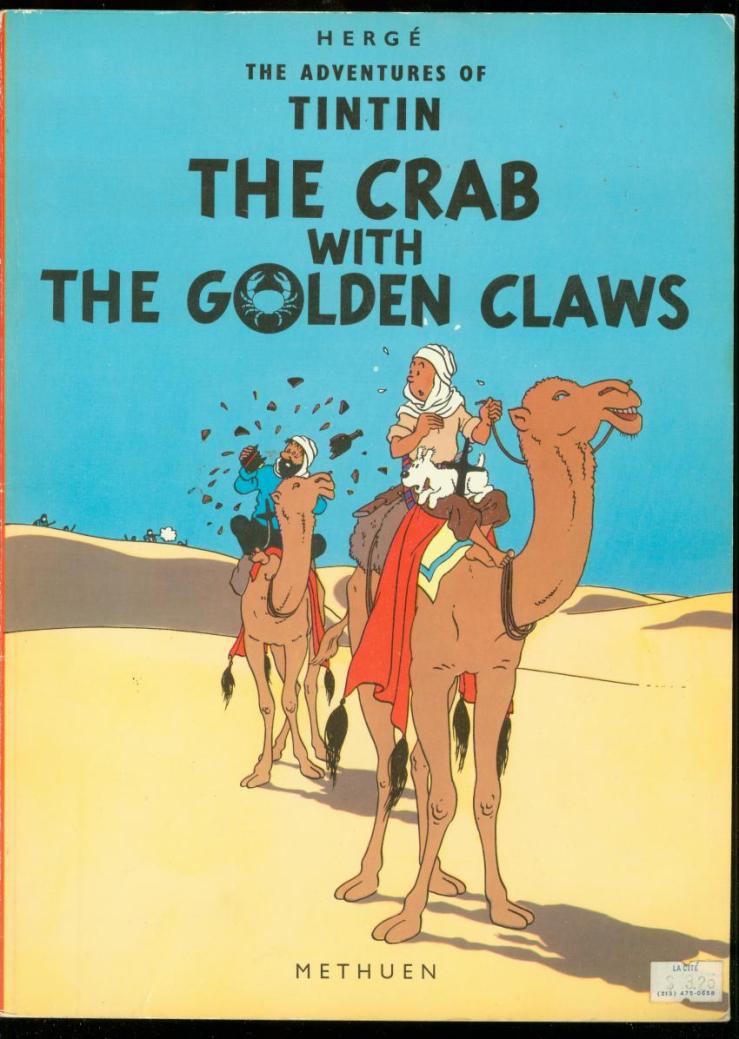 I’ve long been interested in Hergé’s Belgian comic series Tintin, which chronicles the adventures of Tintin, boy reporter, and his faithful dog Snowy. When a batch of hardback three-in-one editions showed up at my favorite used book store I picked up Vol. 3, which collects The Crab with the Golden Claws, The Shooting Star, and The Secret of the Unicorn. I read The Crab with the Golden Claws in one pleasant sitting that night and finished the other two adventures in similar fashion. Then I went back to the bookshop and picked up the other four three-in-one editions they had in stock.
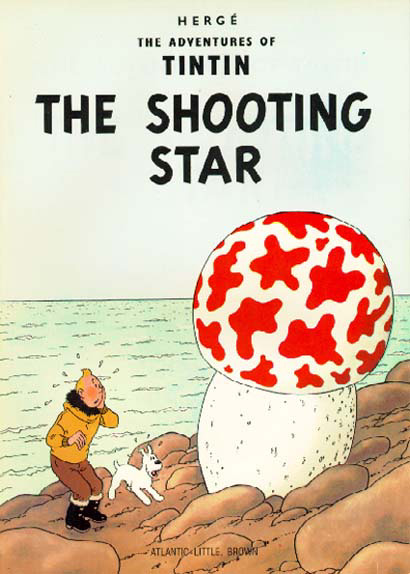 Hergé’s clean, efficient style evokes beautiful and strange worlds. His economy of storytelling is simply brilliant; he knows how to connote his characters’ movements–including some sweaty action sequences–and he also knows how to move the plot forward without resorting to talking heads (although you will find the occasional expository-friendly radio broadcast pop up in a Tintin comic). It’s when Hergé drops a luscious market scene or a crowded basement-dungeon larded with antiquities that the art in Tintin shines. Hergé’s great talent is to evoke a startling sense of place for each setting in his comics, a fully-realized set that creates a sort of visual (and emotional) baseline for the reader. This allows for the cleaner, crisper panels to relay action without clutter. Hergé’s knack for storytelling cannot be underestimated either. He blends high adventure with slapstick and verbal comedy, much of it courtesy Tintin’s foils: the Thompsons, bungling detectives, precisely, who provide Tintin with many of his cases; Haddock; and Snowy, of course.
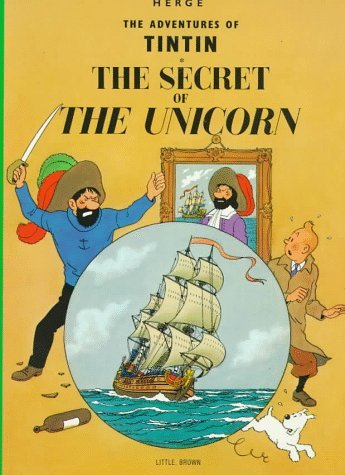 If you know a bit about Hergé’s Tintin series, you may know that its depiction of non-white and non-European characters has come under attack in recent years;






 Biblioklept