“The Warm Fuzzies” — Chris Adrian

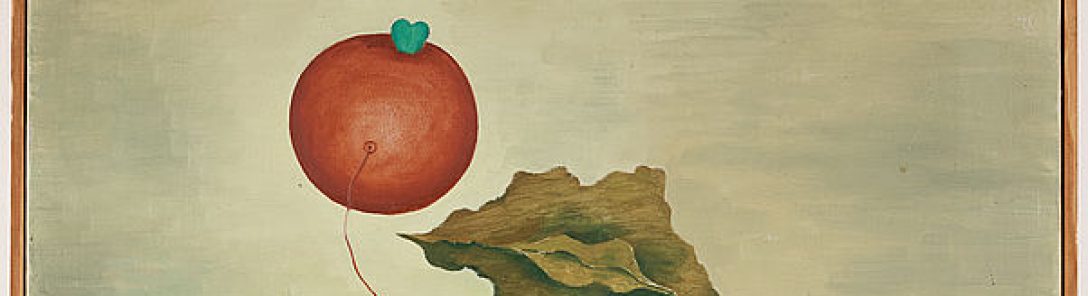
Read Biblioklept favorite Chris Adrian’s story “The Warm Fuzzies” at The New Yorker. Excerpt–

There was a time when they had been just the Carters, and not the Carter Family Band, but Molly could barely remember it. There was a time when her father had been a full-time instead of a part-time dentist, and her mother had been the dental hygienist in his office, when they had all gone to regular school instead of home school, when the family car had been a Taurus instead of a short bus, and when Melissa hadn’t even been born. Then her parents woke up one morning—without having seen a vision or having experienced a dark night of the soul—with a new understanding of their lives’ purpose. They both took up the guitar, never having played before, and started to praise Jesus in song.

There was a time, too, before they made albums or went on tours or appeared in Handycam videos produced and directed by their Aunt Jean, which aired (rather late at night ) on the community cable channel and then, eventually, on Samaritan TV, when Molly liked being in the band, and liked being in the family. She had had Melissa’s job once, and had danced as enthusiastically as Melissa did now, and had felt the most extraordinary joy during every performance, whether it was a rehearsal in the garage or a school-auditorium concert in front of three hundred kids. Then one morning two months ago, she had woken up to find that the shine had gone off everything. It was a conversion as sudden as the one her parents had suffered. She had come to breakfast feeling unwell but not sick, and was puzzling over how it was different to feel like something was not right with you and yet feel sure you were in perfect health, but she didn’t know what her problem could be until she noticed how unattractive her father was. It wasn’t his old robe or his stained T-shirt or even how he talked with his mouth full of eggs; he wore those things every morning, and he always talked with his mouth full—it was just how he was. She kept staring at him all through breakfast, and finally he asked her if there was something on his face. “No, sir,” she said, and a little voice—the sort that you hear very clearly even though it doesn’t actually speak—said somewhere inside her, He’s got ugly all over his face.

Laurence Sterne’s Death Mask

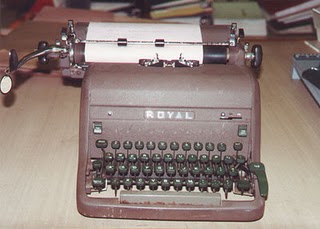
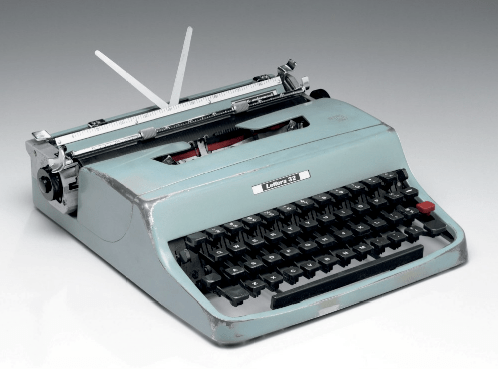
William Burroughs’s Typewriter

So we ran this post of famous authors’ typewriters the other day but we somehow forgot William Burroughs’s typewriter, which is really damn silly ’cause his name is right there on it–

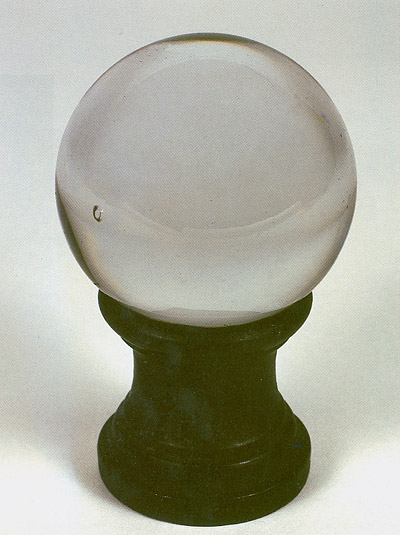
André Breton’s Crystal Ball

More info here.

Some Comments on the Impressiveness of a Certain Photograph of Ernest Hemingway

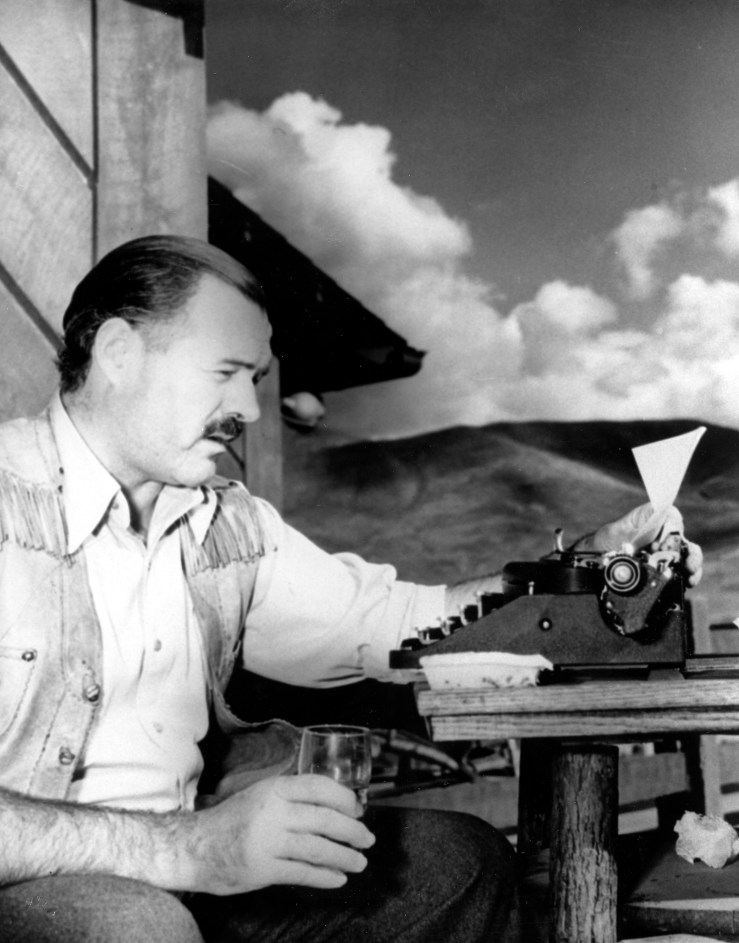
I posted this photograph of Ernest Hemingway yesterday in a series of photos of authors’ typewriters

It seems to me that this photo expresses a minimum of five kinds of awesomeness upon which I must remark. Now, before you gripe about Hemingway being an author more famous at this point for his image than his actual work, get over it. In fact, I’ve already been there and gotten over it. On to the awesomeness–

1. The sky. Look at that sky. And those mountains. (Or are they just hills? I’m from Florida. They look like mountains). Let the sky stand for context. It’s 1939 and Hemingway is writing For Whom the Bell Tolls in Sun Valley, Idaho. How could he write under that sky? How could he not write?

2. That mustache. The authority therein. Handsome but grim. Fierce but refined. I want my own mustache like that.

3. The vest. Oh my god, that vest. The fringe. You can almost smell it. Like he’s a boy, playing cowboys and Indians.

4. The glass. Hemingway, I think, is not drinking water here. I think he is drinking something else. It could be anything (not water), but I think he’s drinking scotch. I’m going to pretend he’s drinking bourbon, but I don’t think it’s bourbon.

5. That expression. If Hemingway is merely posing for a photographer (entirely plausible, highly likely in fact), the pose is nevertheless at the same time utterly real. Is he scrutinizing the words? Squinting in the sun? Is it the booze that has puckered his eyes thusly? That brow, only slightly furrowed (only brows furrow); the arch of his hair, slick but not oily, thrusting back with a calm energy. The slight slouch. The mouth, a bit open; commenting perhaps, or exhaling (no, not exhaling), or maybe perched for another sip.

I love this photo.

Michael Greenberg on Roberto Bolaño

At The New York TimesMichael Greenberg tries to unpack the recent explosion of Roberto Bolaño books now available to English-reading audiences, including Antwerp, The Insufferable Gaucho, and The Return. From Greenberg’s review–

The Chilean writer Roberto Bolaño has to be one of the most improbable international literary celebrities since William Burroughs and Henry Miller, two writers whose work Bolaño’s occasionally resembles. His subjects are sex, poetry, death, solitude, violent crime and the desperate glimmers of transcendence that sometimes attend them. The prose is dark, intimate and sneakily touching. His lens is largely (though not literally) autobiographical, and seems narrowly focused at first. There are no sweeping historical gestures in Bolaño. Yet he has given us a subtle portrait of Latin America during the last quarter of the 20th century — a period of death squads, exile, “disappeared” citizens and state-sponsored terror. The nightmarish sense of human life being as discardable as clay permeates his writing.

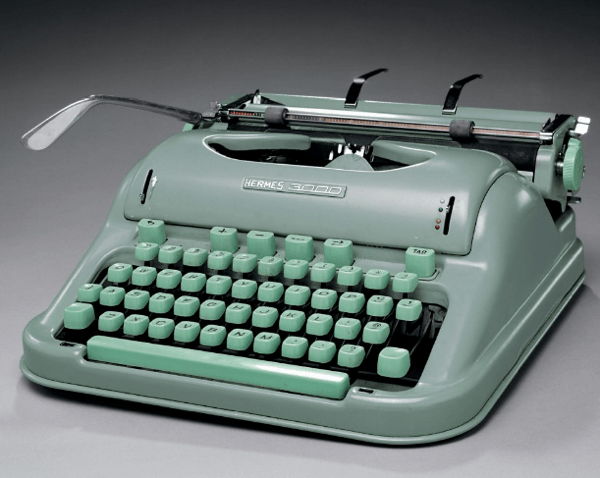
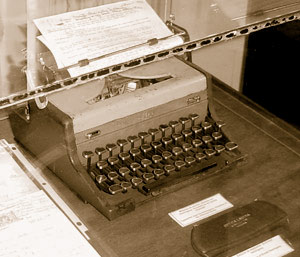
Famous Authors’ Typewriters

Jack Kerouac's Typewriter
Another Kerouac Typewriter
Sylvia Plath's Typewriter
Cormac McCarthy's Typewriter
John Updike's Typewriter
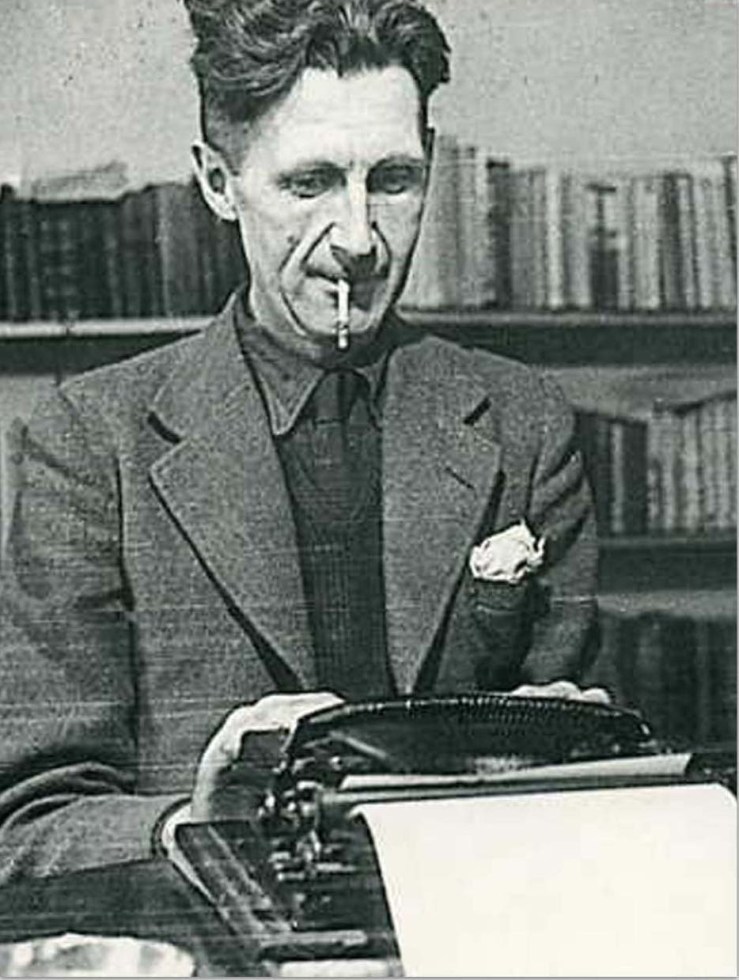
George Orwell Tickling the Keys
Ernest Hemingway's Typewriter
How To Write

Odds and Ends

At A Piece of Monologue, Rhys Tranter reviews Simon Critchley’s “philosophical antidote to the self-help manual,” How to Stop Living and Start Worrying. Read our review of Critchley’s The Book of Dead Philosophers here.

MobyLives expands Flavorwire’s post on author photo clichés to include Melville House authors.

Here’s an author photo we love: Harold Bloom wearing big headphones and looking kinda skeptical and very green (the image is by Paul Festa from his film Apparition of the Eternal Church)–

If you still haven’t done your Juggalo Studies homework for this week, read Camille Dodero’s inspired report from this year’s The Gathering (at The Village Voice). And then watch “Miracles” again, because, hey, it only gets better. It still shocks the eyelids.

We love this tumblr (or is it tumblog?)–Anatomy–even if it looks like they aren’t doing much these days. C’mon guys. We need more gifs like this–

Finally, check out Stanford Kay’s series of paintings of books and bookshelves, “Gutenberg Variations.” Like abstract expressionism, only good (via) —

Charles Burns/Krzysztof Penderecki Mash-up

Okay, “mash-up” might not be the best term, but this video is pretty cool. YouTube user songtotube sets cartoonist Charles Burns’s segment from Peur(s) du Noir to a section of Krzysztof Penderecki’s “Polymorphia.”  Good creepy fun. Or not.

“Ballad of Birmingham” — Dudley Randall

“Ballad of Birmingham” by Dudley Randall

(On the bombing of a church in Birmingham, Alabama, 1963)

“”Mother dear, may I go downtown
Instead of out to play,
And march the streets of Birmingham
In a Freedom March today?”

“No, baby, no, you may not go,
For the dogs are fierce and wild,
And clubs and hoses, guns and jails
Aren’t good for a little child.”

“But, mother, I won’t be alone.
Other children will go with me,
And march the streets of Birmingham
To make our country free.”

“No baby, no, you may not go
For I fear those guns will fire.
But you may go to church instead
And sing in the children’s choir.”

She has combed and brushed her night-dark hair,
And bathed rose petal sweet,
And drawn white gloves on her small brown hands,
And white shoes on her feet.

The mother smiled to know that her child
Was in the sacred place,
But that smile was the last smile
To come upon her face.

For when she heard the explosion,
Her eyes grew wet and wild.
She raced through the streets of Birmingham
Calling for her child.

She clawed through bits of glass and brick,
Then lifted out a shoe.
“O, here’s the shoe my baby wore,
But, baby, where are you?”

Learn more about the September 15th, 1963 terrorist attack in Birmingham, Alabama.

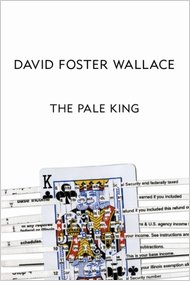
David Foster Wallace’s Posthumous Novel The Pale King Gets A Cover and Release Date

The New York Times reports that David Foster Wallace’s posthumous, unfinished novel The Pale King has the release date of April 15th, 2011–Tax Day–a fitting date, considering that the book is about an IRS tax return processing center. Little, Brown will publish the book. Here’s the cover–

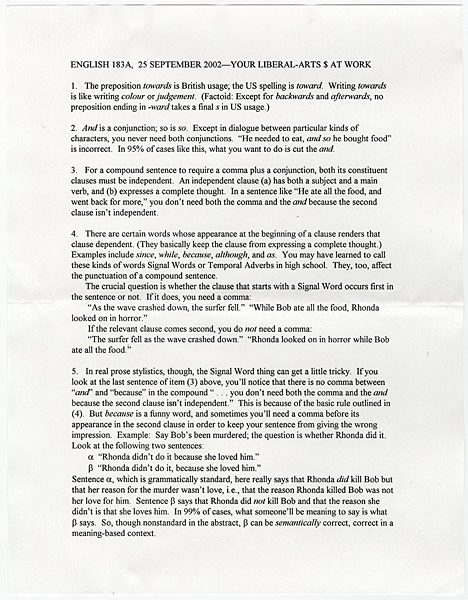
“Your Liberal Arts $ at Work” — David Foster Wallace

From the David Foster Wallace Archive at the Harry Ransom Center.

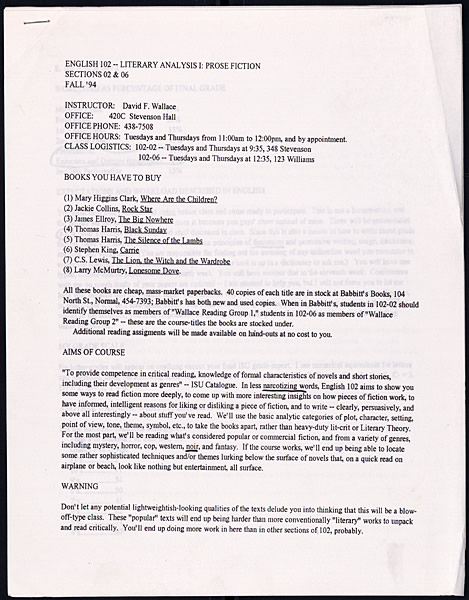
David Foster Wallace’s English 102 Syllabus

The David Foster Wallace Archive at the Harry Ransom Center showcases some of Wallace’s teaching material, including this syllabus for English 102 (at Illinois State University). Here’s the front page, where you can clearly see that Wallace has selected a reading list comprised almost entirely of airport novels by authors like Thomas Harris, Jackie Collins, and Mary Higgins Clark–

I love his “AIMS OF THE COURSE” section, where he steps outside of the “narcotizing” language of the university catalog to explain why the course will look at “what’s considered popular or commercial fiction.” The “WARNING” is great too.

David Foster Wallace Archive Opens to the Public

The David Foster Wallace Archive at the Henry Ransom Center (UTA) is now open to the public. The center will run a live webcast tonight at 8:00pm EST to celebrate the opening. In addition to his own materials, the collection holds over 300 of Wallace’s books–the majority heavily annotated.

W.G. Sebald: Image, Archive, Modernity — J.J. Long

In W.G. Sebald: Image, Archive, Modernity, J.J. Long posits that the work of the late German author W.G. Sebald is best understood as the struggle for autonomous subjectivity in a world conditioned by the power structures of modernity. If the term “power structures” wasn’t a big enough tip-off, yes, Long’s analysis of Sebald is largely Foucauldian, and although he cites Foucault more than any other theorist (Freud is a distant second), the book is not a dogged attempt to make Sebald’s prose stick to Foucault’s theories. Rather, Long uses Foucault’s techniques to better understand Sebald’s works. As such, Long examines the ways that modernity affects power on the human body in Sebald’s work, tracing his protagonists’ encounters with modern institutions that exert power via archive and image.
From the outset, Long distinguishes his book-length study on Sebald from the tradition of so-called Holocaust studies, as well as some of the other foci that dominate analyses of Sebald — “trauma and memory, melancholy, photography, travel and flânerie, intertextuality and Heimat.” Long claims that these are simply “epiphenomena” of the “problem of modernity” that dominates Sebald’s work, and goes on to scrutinize Sebald’s novels like The Emigrants, Austerlitz, and The Rings of Saturn by focusing instead on the various ways that modern institutions proscribe power on the subject’s body. Long writes–

Sebald is interested in the ways in which subjectivity in modernity is formed by archival and representational systems through which various forms of disciplinary power are exercised. He is also concerned with the scope that might exist for eluding disciplinary power or reconfiguring its archival systems in order to assert a degree of subjective autonomy or evade the determinations of power/knowledge.

Long’s study of Sebald is very much a description of modernity; in particular, of modernity as a series of affects of power and discipline upon the subject (again, very Foucauldian). It’s not particularly surprising then that Long, after locating so many Sebaldian traumas in the 19th and early 20th centuries, asserts that Sebald is a modernist and not a postmodernist. He bases this claim not on the formal elements of Sebald’s prose, which he readily concedes can just as easily be read as postmodernist, but rather on the way his “texts respond to the specific historical constellation” of modernity. Long continues–
What is notable about Sebald is that the fictional worlds he constructs are not postmodern spaces of global capital, hyperspace and ever-faster cycles of production, consumption and waste (despite his narrators’ occasional visits to McDonald’s). His texts do not present unrelated present moments in time, nor do they partake of the waning of history that is frequently noted as a characteristic of the postmodern. Sebald’s spaces are those of an earlier modernity that are deeply marked by the traces of history.

If the question of whether or not a book is postmodern or modern strikes you as merely academic, that’s because it is merely academic. Long makes a solid case for Sebald-as-modernist, but the best parts of his book are really his Foucauldian analyses of Sebald’s texts. They make you want to go back and reread (or, in some cases read for the first time.) I’m inclined to believe that Sebald (along with a host of other writers) is better described as something beyond modern or postmodern, something we might not have a name for yet, but that’s fine–we need distance, time. In Long’s take, Sebald is, of course, trying to sort out the detritus of modernity–even as it’s happening to him. But I’m not sure if that makes him a modernist.

W.G. Sebald: Image, Archive, Modernity is available now from Columbia University Press.

The Rumpus Interviews Tao Lin about Stealing Books (and Other Issues)

The Rumpus interviews Tao Lin. Topics include social media in literature, suicide, Jonathan Franzen (not really (but sort of)), as well as his new novel Richard Yates (read our review here). Lin answers plenty of questions about Richard Yates, including why he put an index in the book, why and how he named his protagonists, and why he named the book Richard Yates. Here’s Lin on book theft as a marketing tool–

Stephen Elliott: What if your books were shoplifted?

Tao Lin: I’m okay with that.

I think giving away free books and having more readers will benefit the publisher, because 1 free book will cause like 10 people discussing it, which over time will change into like 50 or something. Some of those will buy it. Eventually the 1 free book’s like $1.50 cost will be offset, gradually more and more, by the effects of that 1 free book on people buying it.

Reminder: David Foster Wallace Archive’s Live Webcast Tomorrow Night

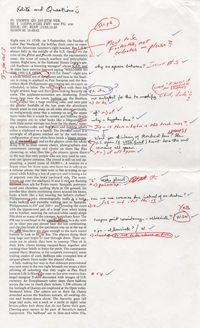
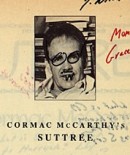
Wallace's edition of McCarthy's "Suttree"

A reminder for interested parties: the David Foster Wallace Archive at the Harry Ransom Center at the University of Texas will début the collection tomorrow night at 8:00pm EST with a live webcast featuring readings of Wallace’s works. You can access the webcast here.

(Ed. note — We got the date wrong the first time. Thanks to @MattBucher for the correction!)