“Half Man/Half Mole” — Chris Knox

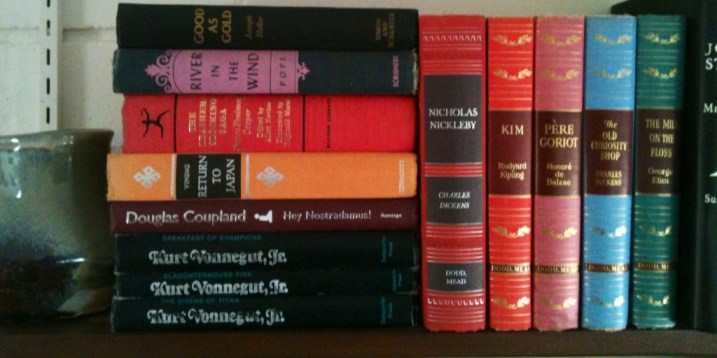
Book Shelves #29, 7.15.2012

20120715-103934.jpg

Book shelves series #29, twenty-ninth Sunday of 2012

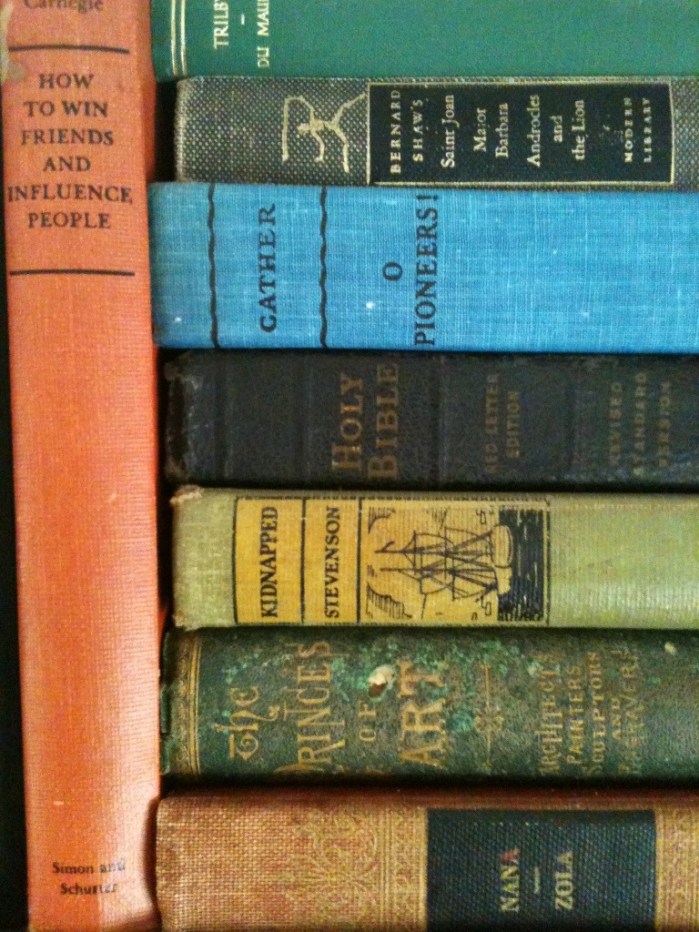
Lots of hardbacks on this long, long shelf. The Vonneguts above were particularly important to me when I was young. They were my father’s. I read them surreptitiously for years and then outright appropriated them at some point. The matching Dodd, Mead hardbacks were rescued from a school I worked at for years. My wife made the vase that serves as a bookend. The copy of Jonathan Strange and Mr. Norrell that doesn’t quite fit in the frame remains unread.

20120715-103943.jpg

The BFG: a classic. I reviewed Wabi Sabi. Next to the Crumb:

20120715-111742.jpg

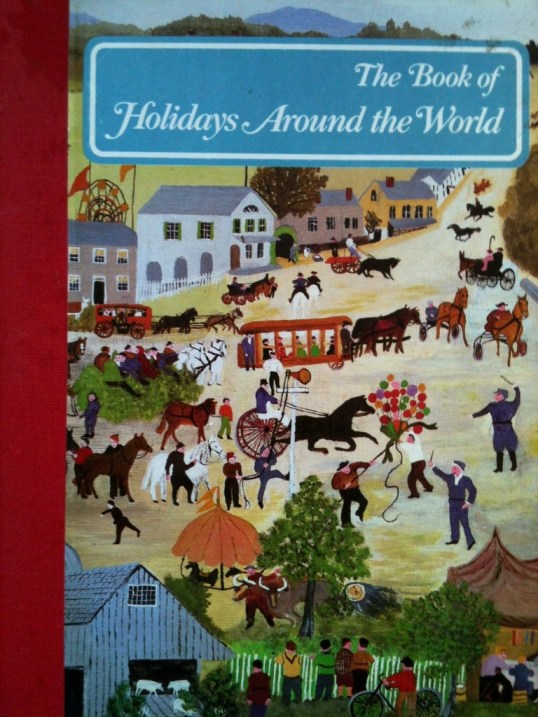
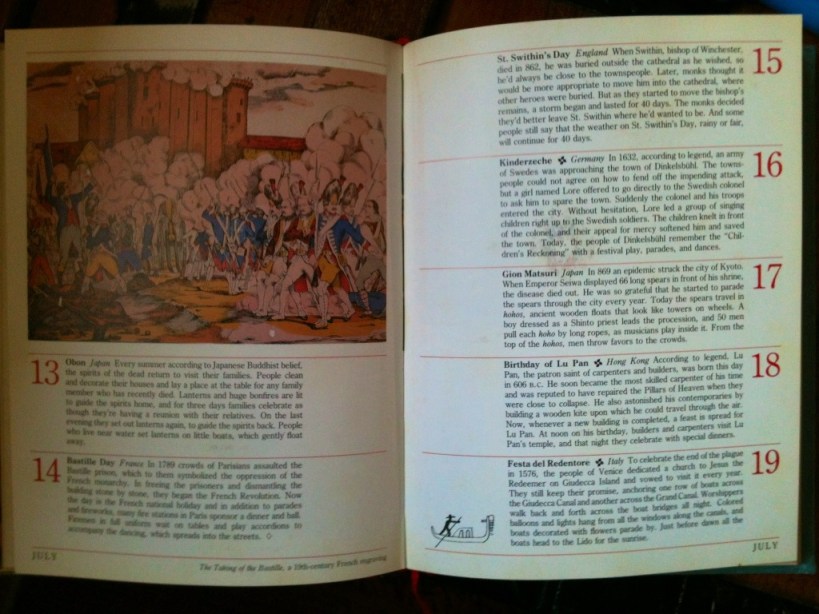
I found Holidays in a box of free books in a library lobby. Love it. Here’s this week’s schedule of holidays:

20120715-111749.jpg

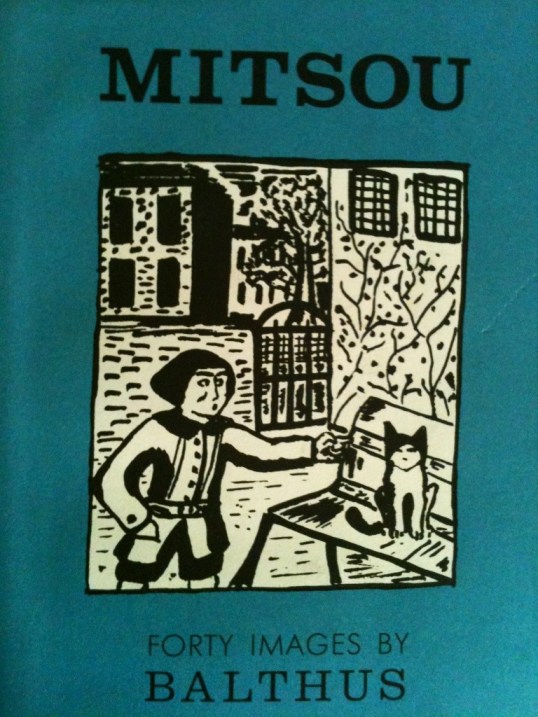
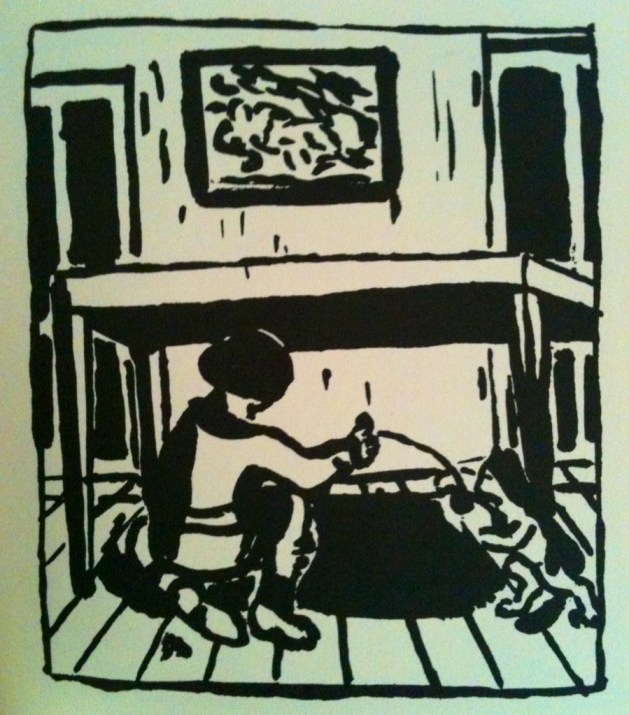
One of my favorite books ever is Mitsou, a book that Balthus did when he was like 10 or 12 or something:

20120715-104032.jpg

It’s about a young boy who gets a cat and loves the cat and then loses the cat. It’s heartbreaking. Image:

20120715-104040.jpg

And next to this one:

20120715-104015.jpg

Shelf’s end:

20120715-112719.jpg

A Man Seated at a Table Covered with Books — Rembrandt

Bluebird — Albrecht Dürer

The World Within: C.G. Jung In His Own Words (1990 Documentary with Archival Footage)

Italo Calvino’s List of Reasons Why We Should Read the Classics

From Italo Calvino’s The Uses of Literature—

  1. The classics are the books of which we usually hear people say, “I am rereading . . . ” and never “I am reading . . . “
  2. We use the words “classics” for books that are treasured by those who have read and loved them; but they are treasured no less by those who have the luck to read them for the first time in the best conditions to enjoy them
  3. The classics are books that exert a peculiar influence, both when they refuse to be eradicated from the mind and when they conceal themselves in the folds of memory, camouflaging themselves as the collective or individual unconscious.
  4. Every rereading of a classic is as much a voyage of discovery as the first reading.
  5. Every reading of a classic is in fact a rereading.
  6. A classic is a book that has never finished saying what it has to say.
  7. The classics are the books that come down to us bearing the traces of readings previous to ours, and bringing in their wake the traces they themselves have left on the culture or cultures they have passed through (or, more simply, on language and customs).
  8. A classic does not necessarily teach us anything we did not know before. In a classic we sometimes discover something we have always known (or thought we knew), but without knowing that this author said it first, or at least is associated with it in a special way. And this, too, is a surprise that gives much pleasure, such as we always gain from the discovery of an origin, a relationship, an affinity.
  9. The classics are books which, upon reading, we find even fresher, more unexpected, and more marvelous than we had thought from hearing about them.
  10. We use the word “classic” of a book that takes the form of an equivalent to the universe, on a level with the ancient talismans. With this definition we are approaching the idea of the “total book,” as Mallarmé conceived of it.
  11. Your classic author is the one you cannot feel indifferent to, who helps you to define yourself in relation to him, even in dispute with him.
  12. A classic is a book that comes before other classics; but anyone who has read the others first, and then reads this one, instantly recognizes its place in the family tree.
  13. A classic is something that tends to relegate the concerns of the moment to the status of background noise, but at the same time this background noise is something we cannot do without.
  14. A classic is something that persists as a background noise even when the most incompatible momentary concerns are in control of the situation.


Piles of Books — Hercules Seghers

“Genius of Love” — Tom Tom Club

Summer in the City — Edward Hopper

Riding with Death — Jean-Michel Basquiat

Minor Works & Masterpieces — An Excerpt from Bolaño’s Novel 2666

Another stand-alone segment from Roberto Bolaño’s novel 2666—from “The Part About Archimboldi”:

Our hero Reiter (writer!)—who at this moment (or just before it, unbeknownst to the reader) adopts the ridiculous nom de thing Archimboldi (!!!)—secures a rented typewriter from a failed writer, an old man who takes the time to lecture on writing and camouflage and masterpieces and Jesus &c.—and writing as channeling (or maybe a type of divine madness), as a ventriloquist act (which I touched on here). (Perhaps I’m pushing the limits of copyright law here. Look, I think you should all buy and read this book and give copies to loved ones and enemies alike).

“I was a writer,” said the old man.

“But I gave it up. This typewriter was a gift from my father. An affectionate and cultured man who lived to the age of ninety-three. An essentially good man. A man who believed in progress, it goes without saying. My poor father. He believed in progress and of course he believed in the intrinsic goodness of human beings. I too believe in the intrinsic goodness of human beings, but it means nothing. In their hearts, killers are good, as we Germans have reason to know. So what? I might spend a night drinking with a killer, and as the two of us watch the sun come up, perhaps we’ll burst into song or hum some Beethoven. So what? The killer might weep on my shoulder. Naturally. Being a killer isn’t easy, as you and I well know. It isn’t easy at all. It requires purity and will, will and purity. Crystalline purity and steel-hard will. And I myself might even weep on the killer’s shoulder and whisper sweet words to him, words like ‘brother,’ ‘friend,’ ‘comrade in misfortune.’ At this moment the killer is good, because he’s intrinsically good, and I’m an idiot, because I’m intrinsically an idiot, and we’re both sentimental, because our culture tends inexorably toward sentimentality. But when the performance is over and I’m alone, the killer will open the window of my room and come tiptoeing in like a nurse and slit my throat, bleed me dry.

“My poor father. I was a writer, I was a writer, but my indolent, voracious brain gnawed at my own entrails. Vulture of my Prometheus self or Prometheus of my vulture self, one day I understood that I might go so far as to publish excellent articles in magazines and newspapers, and even books that weren’t unworthy of the paper on which they were printed. But I also understood that I would never manage to create anything like a masterpiece. You may say that literature doesn’t consist solely of masterpieces, but rather is populated by so-called minor works. I believed that, too. Literature is a vast forest and the masterpieces are the lakes, the towering trees or strange trees, the lovely, eloquent flowers, the hidden caves, but a forest is also made up of ordinary trees, patches of grass, puddles, clinging vines, mushrooms, and little wild-flowers. I was wrong. There’s actually no such thing as a minor work. I mean: the author of the minor work isn’t Mr. X or Mr. Y. Mr. X and Mr. Y do exist, there’s no question about that, and they struggle and toil and publish in newspapers and magazines and sometimes they even come out with a book that isn’t unworthy of the paper it’s printed on, but those books or articles, if you pay close attention, are not written by them.

“Every minor work has a secret author and every secret author is, by definition, a writer of masterpieces. Who writes the minor work? A minor writer, or so it appears. The poor man’s wife can testify to that, she’s seen him sitting at the table, bent over the blank pages, restless in his chair, his pen racing over the paper. The evidence would seem to be incontrovertible. But what she’s seen is only the outside. The shell of literature. A semblance,” said the old man to Archimboldi and Archimboldi thought of Ansky. “The person who really writes the minor work is a secret writer who accepts only the dictates of a masterpiece. Continue reading “Minor Works & Masterpieces — An Excerpt from Bolaño’s Novel 2666” →
St. Jerome Writing — Caravaggio

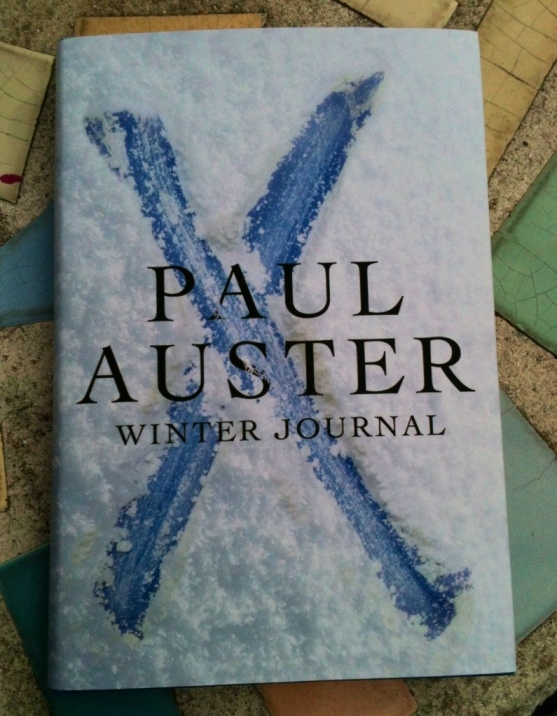
Paul Auster’s Winter Journal (Book Acquired Some Time Over the July 4th Holiday)

20120711-100349.jpg

I was pleasantly surprised to find Paul Auster’s forthcoming memoir Winter Journal in the mail after being away for a week. I had mixed feelings about Auster’s last novel Sunset Park, but I dig his nonfiction, and I opened Winter Journal randomly to an episode where the adolescent Auster loses his virginity to a hooker in a passage that’s both tender and funny, so this one seems promising. (It’s also written entirely in the second person pronoun).

Publisher Henry Holt’s blurb:

Facing his sixty-third winter, internationally acclaimed novelist Paul Auster sits down to write a history of his body and its sensations—both pleasurable and painful.

Thirty years after the publication of The Invention of Solitude, in which he wrote so movingly about fatherhood, Auster gives us a second unconventional memoir in which he writes about his mother’s life and death. Winter Journal is a highly personal meditation on the body, time, and memory, by one of our most intellectually elegant writers.

Parody of Manet’s Olympia with Junyer and Picasso — Pablo Picasso

St. Jerome in His Study — Jan van Eyck

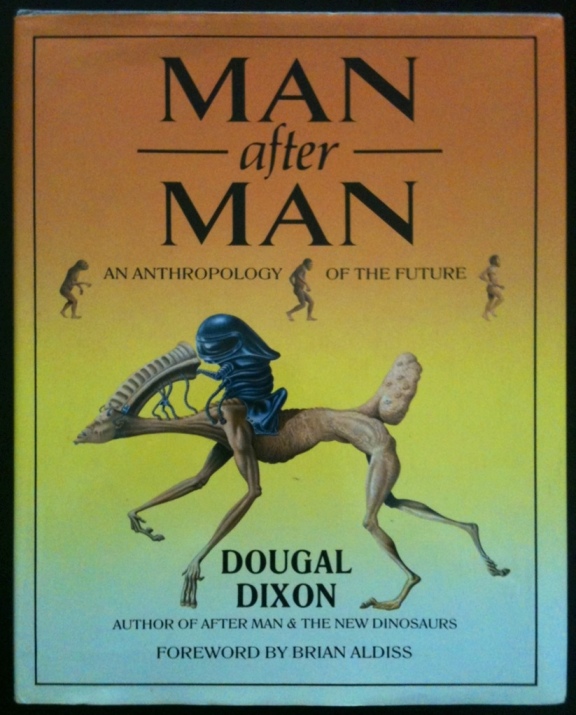
Dougal Dixon’s Man After Man (Book Acquired 6.30.2012)

20120710-095416.jpg

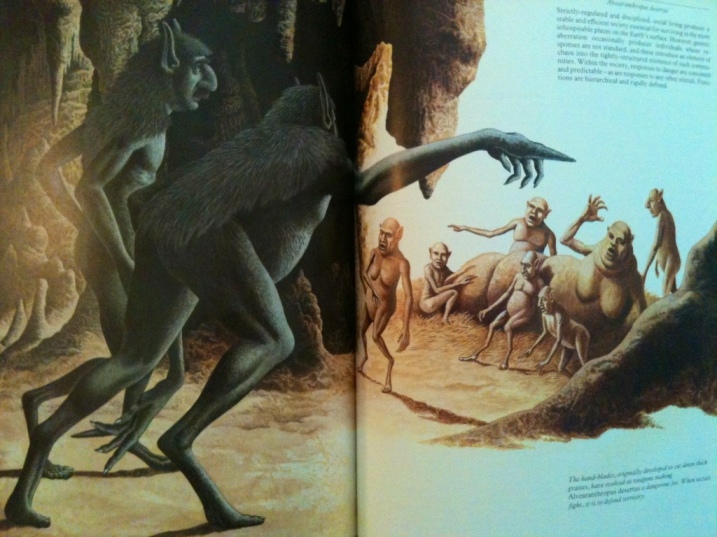
I found a first edition hardback copy of Dougal Dixon’s cult book Man After Man not quite two weeks ago when I was browsing books for my cousins’ kids, who I would see over the July 4th holiday. I’ve possessed an illicit digital copy of Man After Man for a few years, but it’s not nearly as fun as the real thing. As its subtitle attests, Dixon’s book is an anthropology of the future, a sort of speculative sci-fi textbook that imagines a future-history of genetically engineered humanity. The illustrations by Philip Hood (who deserves bigger billing) are especially weird and wonderful. Some samples below.

20120710-094738.jpg

20120710-094752.jpg

20120710-094800.jpg

20120710-094806.jpg

St. Jerome — Lucas Cranach the Elder