“Sources Agree Rock Swoon Has No Past” — Barry Hannah Short Story

“Sources Agree Rock Swoon Has No Past” by Barry Hannah. This short short was published in the June 2000 issue of Harper’s from a reading Hannah gave in 1986 at the Sigma Tao Delta Society at the University of Mississippi. The story appeared in Hannah’s 1988 novel Hey Jack!:

“Pa. Is it really true the old eat their young?”

Gives pause.

“Couldn’t rightly say, son. I’m a mid man. Feels like I’m walking on ice meself. Go on down to the barn, ask Grandpa.”

Grandpa’s down there in the back shadows, some loose bales around his old brogies. Seems to be humming and eating, pulling a nail out of a rotten piece of board with a pair of pliers.

“Is it true, Grandpa?”

“Wyoming’s not my home . . .”

“Yer nuts, Grandpa.”

Sings, “Ate ol’ Granny in a choo-choo car”

Kid goes to the hut to see Grandpa’s father. Withered beyond longevity, a tiny man in dwarf’s overalls, deeply addicted to codeine and Valium, fears colored people; occasionally makes scratching protests on his old violin, which has become too large for him. Every disease has had its success with him. Now he’s bare;u a scab demanding infrequent nutrients. Bald as a beige croquet ball, he rolls his own.

They’ve fixed him up a mike with a cord into an ancient Silvertone amplifying box. Even his snores can be heard, slightly, out in the yard.

“Double Gramps, is it true that the old eat their young?”

“God damn, I’m old!” blasts over the kid, feedback piercing too. The old man faints, recovers, goes into a codeine wither.

“But my question. Please, Double Gramps.”

Almost accidentally, the old man fits bow to fiddle and scrawls out the grand trio of “Stars and Stripes Forever.” Endlessly. It goes on the entire afternoon, amplifier picking up a prouder stroke here and there, screeching.

The kid grows up, a rock star, aging at twenty-three. He’s already eating the young by the thousands when the second though hits him.

Atlanta and Savannah — Glennray Tutor

Barry Hannah Interview (Video)

Ray — Barry Hannah

ray

Barry Hannah’s slim 1980 novel Ray is a strange wonder, a poem rocket assured to offend any unsuspecting customer who wanders in unaware. I use the term “offend” here loosely: some may be offended by Hannah’s subject matter (booze, drugs, sex, violence), others may be offended by his refusal to submit to any of the conventions we expect from a “novel.” Sure, there are defined characters, conflicts, hints of a plot even, but don’t expect arc, easily recognizable growth, or even linearity. Hannah breaks almost every convention, right down to a first-person narration that shifts occasionally into a kind of second-person meditation and then into a faux-objective third-person voice and then into the third-person free indirect style that marks modernism. The subject Ray careens not just through perspectives but also through time. Here he is in Chapter V (this is the chapter in its entirety)—

I live in so many centuries. Everybody is still alive.

And if Ray is busy stumbling through his own psychic quagmire, shooting down planes in ‘Nam or killing Yankees under Jeb Stuart’s command, he’s also a very real, concrete personality, a doctor, a family man, an alcoholic, a suffering soul trying to navigate children and lovers and patients and neighbors in the swelter of Tuscaloosa, Alabama at the end of Carter’s presidency.

None of this should work, of course, but Hannah’s writing assimilates the reader, inculcates the reader, infects the reader. Ray is a dramatically unstable figure of the old school—misogynist, casually racist, the kind of doctor who finds himself “drinking five bottles of wine a day just to stay cool” — but Hannah’s syntactic powers (which he awards to his narrator Ray) become the core of a novel that by rights should run off the tracks, what with its sharp velocity and manic force and hairpin turns. But Ray doesn’t run off the tracks; it explodes them.

It’s hard to summarize the plot of this fragmentary novel, but I’ll give it a try (and at least share some of Hannah’s remarkable prose). Ray is a country doctor of some note and education, a former pilot who fought and killed in Vietnam, a man with literary ambitions who tries his hand at poetry and occasionally lectures at the local college. Here’s a taste of one of those lectures, showcasing Hannah’s wit, the radically ambivalent place of history in his work, and the core paradoxes of his lead character—

So now, class, I say:

“Americans have never been consistent. They represent gentleness and rage together. Franklin was the inventor of the stove, bifocals, and so on. Yet he abused his neglected family. Jefferson, with his great theories, could not actually release the slaves even though he regularly fornicated with one of them. One lesson we as Americans must learn is to get used to the conrarieties in our hearts and live with them.” Etc.

Lazy Blakean. In addition to his history lectures, Ray has even written a number of papers with unlikely titles about women and depressives and medicine; it is wholly ironic that Ray should lay claims to understanding women and depressed people, let alone understanding how to treat them. During the course of the novel he marries again, to a woman named Westy, and they combine their children into a post-nuclear family that recalls The Brady Bunch on Dexedrine and bourbon and weed (that description sounds far more negative than I intend; I’m trying to telegraph the spirit or tone of the novel, which is difficult, impossible). Ray’s lusty marriage to Westy doesn’t prevent his shambolic philandering. Not all of Ray’s infidelities are born of human weakness though. His love for a young woman named Sister from a white trash family called the Hooches deeply informs the novel; it also allows me another chance to quote from the novel—

Sister is always in love with somebody, sometimes me. There is a capricious wisdom she has about attaching herself to anybody for very long, although her loyalties are fast. She plays the guitar well and has a nice voice that she keeps to herself. Life has been such for her that she has no attitude at all. She expects no sympathy. Two of her teenage lovers died in an accident at the railroad tracks. That’s when I met Sister. I rode down to the tracks, and she was standing there in a long sleeping gown, two weeks after the accident.

“What’s wrong, girl?”

“I growed up.”

Along with Sister, a man named Charlie DeSoto plays a large role in Ray; indeed, at times the novel comes to inhabit his consciousness, as if he was some alter-ego of Ray. That consciousness also becomes unstuck in time. In a passage that recalls (and predates) Blood Meridian, DeSoto (via Ray?) migrates back to the mid 1500s, into the mind of one of Hernando DeSoto’s companions in arms. In a bizarre first-person sequence, this ancient Christian describes slaughtering 4,000 Indians under the command of the war chief Tuscaloosa. History is a nightmare that Ray cannot wake up from.

Ray is a strange fever dream, buzzing with tumult, beauty, filth, and ugly vitality. Our clumsy (anti?)hero cannot seem to reconcile his violent past (both as a fighter pilot in Vietnam and as an American with “contrarieties” in his heart) with his duty as a healer, a doctor. He tells us—

I am infected with every disease I ever tried to cure. I am a vicious nightmare of illnesses. God cured me with a memory that holds everything in my brain. There is no forgetting with me. Every name, every foot, every disease, every piece of jewelry hanging from an ear. Nothing is hazy.

If “Nothing is hazy” then everything is brought into vibrant foreground, all details afforded a prominent place, none pushed to a defining background. If “Nothing is hazy” then everything is hazy; contrariety rules.

Perhaps Ray might be summed up by one of its chapters, LII (again, in its entirety)—

To live and delight in healing, flying, fucking. Here are the men and women.

Hannah might have been heir to Faulkner, with his grotesque characters and bizarre syntax and challenging tropes (not to mention the sweaty ickiness of both writers’ prose). Ray also hearkens back to Henry Miller’s rants, although I’d suggest a larger, or at least more loving spirit in Hannah. There are even tinges of Bukoswki here. Ray also recalls Renata Adler’s strange novel Speedboat, another discursive, vaulting piece from the late ’70s. But comparing Ray to other works risks belying its radical originality, which is surely one of its great pleasures. Ray is not a novel for everyone, and those interested in Hannah might do better to begin with his equally strange compilation Airships, but those seeking a challenging, funny novel will appreciate Ray, a novel that explodes literary convention even as it reaffirms the affective power of literature. Highly recommended.


Friday Reading, 10.14.2011

20111014-144043.jpg

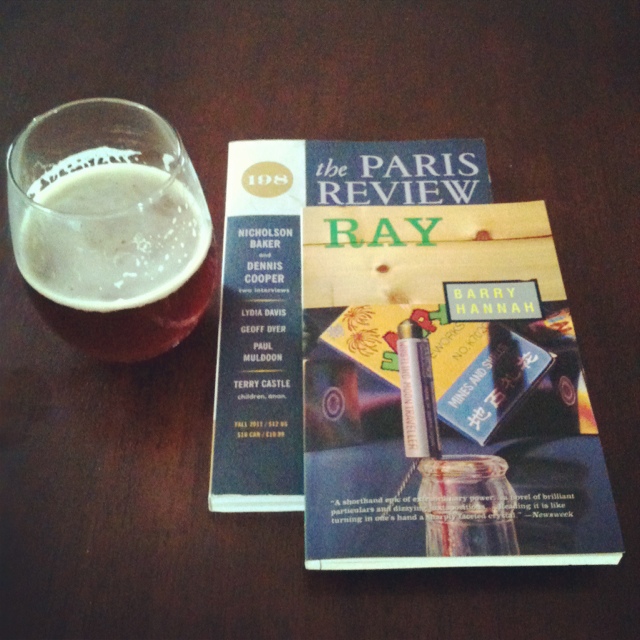
Barry Hannah, The Paris Review, homebrewed ale.

Books Acquired, 10.11.2011

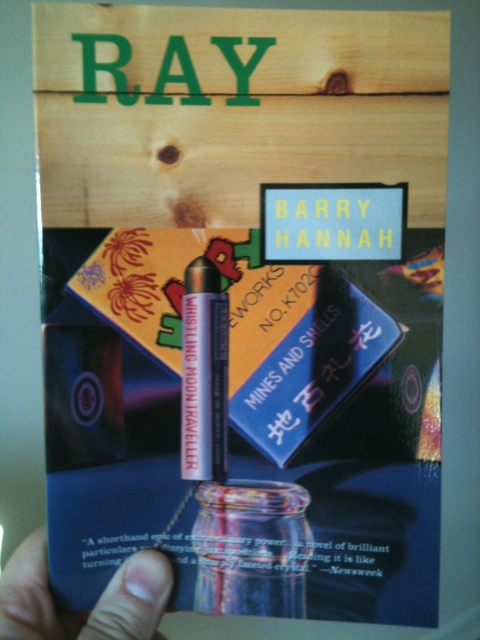
20111011-180342.jpgA nice little gang today: First up is Barry Hannah’s short novel Ray, which I ordered from my favorite local bookstore last week. (On a side note, said bookstore was robbed this week for cash—no books were stolen).20111011-180425.jpg

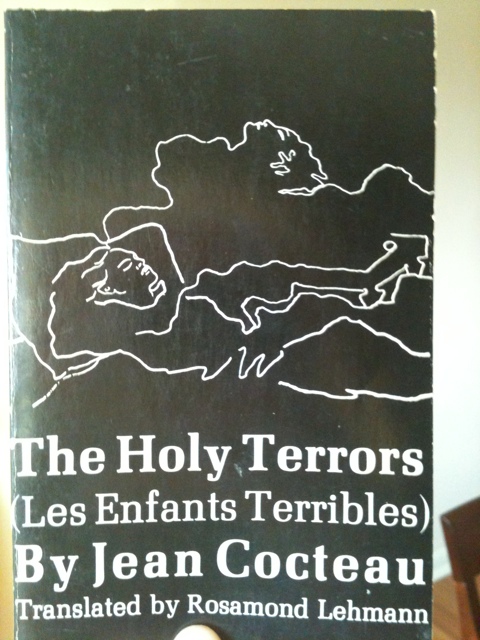
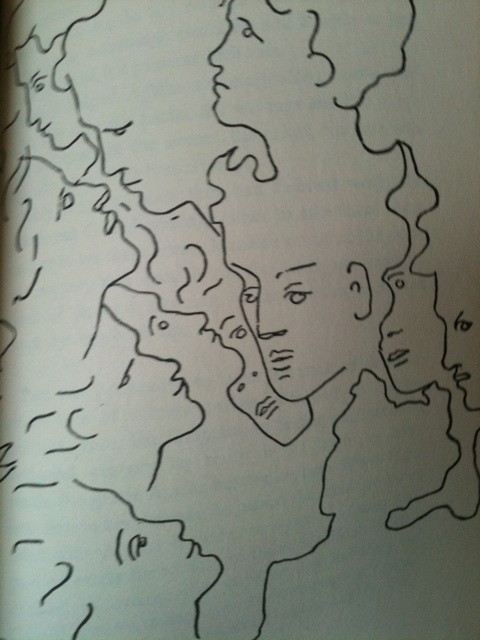
I found Jean Cocteau’s Les Enfants Terribles somewhat randomly, hunting through the “Co”s for something by Dennis Cooper. Sample illustration—

20111011-180442.jpg

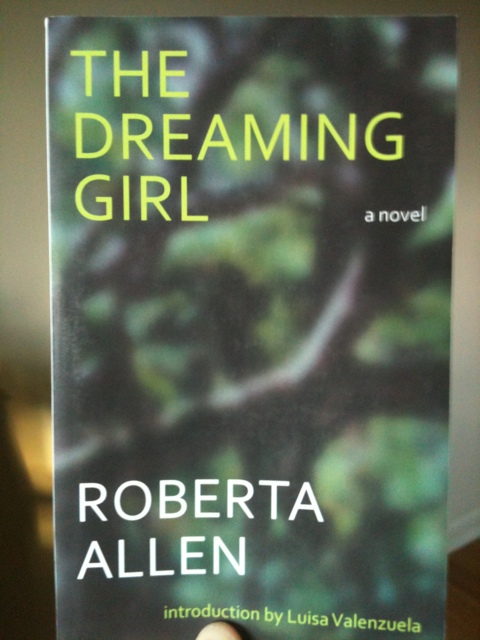
Roberta Allen’s The Dreaming Girl  is forthcoming from Ellipsis Press; the book looks pretty cool and I’ll dip into it tonight. It actually was sent to my old abode, but the folks who live there now are kind people and alerted me. Some serendipity perhaps. Here’s Ken Foster (Village Voice) on The Dreaming Girl:

Told in a series of elliptical tableaux and bound by stream of consciousness, Roberta Allen’s The Dreaming Girl is an example of everything that shouldn’t work, and yet it does. Like a literary descendant of Duras, Allen places her unnamed narrator in an exotic Central American limbo that propels her mind into a mesmerizing state somewhere between memory and fantasy.

20111011-180457.jpg

“Toolin’ Around” — Barry Hannah’s Tuscaloosa

Barry Hannah takes John Oliver Hodges on a tour of Tuscaloosa and shows him the shack where he wrote Ray; he also shares some wild stories from his alcoholic past. Read more at the Oxford American.

We Peruse the Latest Issue of Oxford American: Barry Hannah, Eudora Welty, Black Republicans, and Fried Green Tomatoes

The spring issue of Oxford American is out now, sporting a Barry Hannah cover. In addition to a review of Hannah’s Long, Last, Happy: New and Collected  Stories, the issue features eight pages of remembrances by Hannah’s students, fans, and friends (along with pictures, of course). In fact, John Oliver Hodges’s review of Long, Last, Happy is really a memoir itself. Here’s an anecdote he shares—

Barry called me his amanuensis, and as such I heard him talk a bit about his feelings on fathers and sons and beautiful women, heartache, football, stool softener, and Krystal hamburgers. On the day that Ole Miss beat Gainesville, 31-30, it happened that we were in Tuscaloosa. To celebrate the win, we drove around the town in his silver Chrysler, his pistol in its holster under the seat. He gave me the grand tour, and as I drove, I videotaped him talking beside me, drinking a Budweiser tallboy (a rare treat to lessen the abiding pain), and smoking a USA, his brand. As we approached the green shack by the tracks where he wrote Ray, he said, “It was probably the saddest time in my life.”

(Quick editorial note: I’m glad that Hannah and Hodges could celebrate Ole Miss’s narrow victory, but Tebow and the Gators did go on to win every other game of the season, including the SEC Championship and the BCS title bowl. So there).

In addition to the Hannah stuff, there’s a great essay on fried green tomatoes, a look at what it means to be a black Republican, an appreciation of Southern hip-hop, stories and poems, and a series of letters by Eudora Welty, including her hilarious application to The New Yorker. Good stuff.

While I’m shilling for Oxford American, I might as well point out that they’re hosting a Summit for Ambitious Writers this June. It’s on top of a freaking mountain! Biblioklept fave Wells Tower will be there. Sounds cool.

Barry Hannah on Cormac McCarthy

From The Paris Review’s interview with Barry Hannah

INTERVIEWER

Some writers turn away completely from their origins, though. Like Cormac McCarthy.

HANNAH

Right, he turned western when he went out to El Paso. He’s one of my favorites. He invests a region. Learns it so thoroughly it’s as if God visited that place and made no mistakes about the botany, flora, fauna. He has about three thousand books, I hear. He had so many books on this upper story of this little concrete house he has, the floor was about to cave in. So the man reads everything there is about the place and you can tell that. Nobody else like him.


Barry Hannah Addresses the Whole “Pointing a Gun at a Student” Rumor

From The Paris Review’s interview with Barry Hannah

INTERVIEWER

But about the guns. When you left Alabama, there was an incident . . .

HANNAH

Yes, I was a tenured professor there, and I was fired. I had just been voted in, but I was too heavily into drinking. I was holding class at home or in my studio and they said, Don’t hold any more classes in your studio. And I said, Well, I will. I brought in an empty pistol once and, as I recall, twirled the chambers to explain six movements in a short story. And that is where the gun—pointing a gun at a student—rumor started, but I never pointed a loaded gun at anybody in my life. Even dead drunk. Never, never. I really don’t like that rumor now because of the school shootings. The world has changed so much. I still love my old .22’s from my youth, for shooting beer cans and rats in the city dump. I love the instrument. It’s just a beautiful, clean instrument—and the history —but I have never had any interest in pointing a gun at a person.

INTERVIEWER

Do you remember what the six movements were?

HANNAH

No. I could make up something, but it would be untrue. There’s just three, anyway: beginning, middle, and end. I was com-plicating something that didn’t need to be any more complicated. At one time I’m sure I had six points in my head and they may have been decent, but I refuse to remember them because they’re not necessary now.

INTERVIEWER

The rumor about pointing the gun was that you were playing your trumpet, trying to get their attention. When that didn’t work, you brought out the gun.

HANNAH

I did play my trumpet in class at Alabama. And at the University of Chicago. Blues solo. Ta da na tee. And I was pretty good sober but real loud and inappropriate in a small chamber. The people at Chicago enjoyed it, but a student complained at Alabama. Still, the trumpet’s a much better idea than bringing a pistol. It’s all alcoholism.


Amy Hempel on Gordon Lish and Steve Martin

Amy Hempel talks about studying under Gordon Lish (and how Steve Martin influenced her) in her 2003 interview with The Paris Review

INTERVIEWER

Why Lish?

HEMPEL

At Esquire in the seventies and, later, at Knopf, he was publishing the voices that interested me most. I felt allied with his choices, so he was the one I wanted to work with. Writers like Raymond Carver, Barry Hannah, Mary Robison. These were the three who had the most effect on me when I started.

INTERVIEWER

What about their work interested you?

HEMPEL

They didn’t sound like anyone else I had read. For me, they redefined what a story could be—the thing happening off to the side of the story other writers were telling; they would start where someone else would leave off, or stop where someone else would start. As Hannah said later in Boomerang, a lot of people have their overview, whereas he has his “underview,” scouting “under the bleachers, for what life has dropped.”

INTERVIEWER

Do you remember the first class?

HEMPEL

Vividly. The assignment was to write our worst secret, the thing we would never live down, the thing that, as Gordon put it, “dismantles your own sense of yourself.” And everybody knew instantly what that thing, for them, was. We found out immediately that the stakes were very high, that we were expected to say something no one else had said, and to divulge much harder truths than we had ever told or ever thought to tell. No half-measures. He thought any of us could do it if we wanted it badly enough. And that, when I was starting out, was a great thing to hear from someone who would know.

INTERVIEWER

What was, if you can say, your “worst secret”?

HEMPEL

I failed my best friend when she was dying. It became the subject of the first story I wrote, “In the Cemetery Where Al Jolson Is Buried.”

INTERVIEWER

You stayed on in his workshop as a student for years. You must have been repeatedly humbled.

HEMPEL

I felt humbled by realizing how hard the job was. How hard it is to write a moving, worthwhile, memorable story. But more often I was inspired. It turned out that one of the most helpful things I did without knowing it would be helpful later was hang out with stand-up comics in San Francisco. I went to their shows night after night after night. I watched them performing, working through the same material. I saw some nights it killed and other nights it bombed. All that time I was observing nuance, inflection, timing, how the slightest difference mattered. How the littlest leaning on a word—or leaning away from it—would get the laugh, and this lesson was so valuable. And the improv work—they called it “being human on purpose,” this falling back on the language in your mouth—was hugely important. Just listening to what you’re saying. I learned this when my late friend Morgan Upton, an actor and member of the Committee, took me to a Steve Martin show at the Boarding House in San Francisco. Back in the green room, Steve Martin was sick, but preparing to do his show anyway. I told him I admired that, I said I couldn’t go out there and make people laugh if I were sick. And he said, Don’t be silly—you couldn’t do it if you were well. A brilliant reply on any number of levels. I based an early story, “Three Popes Walk into a Bar,” on that night. Then I ran into him about twenty years later and reminded him of our exchange. He laughed and said, “It sounds mean!” But I thought it was great.


Airships — Barry Hannah

In his 1978 collection Airships, Barry Hannah sets stories in disparate milieux, from the northern front of the Civil War, to an apocalyptic future, to the Vietnam War, to strange pockets of the late-twentieth century South. Despite the shifts in time and place, Airships is one of those collections of short stories that feels somehow like an elliptical, fragmentary novel. There are the stories that correspond directly to each other — the opener “Water Liars,” for instance, features (presumably, anyway), the same group of old men as “All the Old Harkening Faces at the Rail.” The old men love to crony up, gossip, tell tall tales. An outsider spoils the fun in “Water Liars” by telling a truth more terrible than any lie; in “Harkening,” an old man shows off his new (much younger) bride. These stories are perhaps the simplest in the collection, the homiest, anyway, or at least the most “normal” (whatever that means), yet they are both girded by a strange darkness, both humorous and violent, that informs all of Airships.

We find that humor and violence in an outstanding trio of Civil War stories (or, more accurately, stories set during the Civil War). The narrator of “Dragged Fighting from His Tomb,” a Confederate infantryman relates a tale of heroic slaughter with a hypberbolic, phallic force. Observe—

I knew the blueboys thought they had me down and were about ready to come in. I was in that position at Chancelorsville. There should be about six fools, I thought. I made the repeater, I killed four, and the other two limped off. Some histrionic plumehead was raising his saber up and down on the top of a pyramid of crossties. I shot him just for fun. Then I brought up another repeater and sprayed the yard.

Later, the narrator defects, switches to the Union, and claims he kills Jeb Stuart, a figure that towers over the Civil War tales. The narrator of “Dragged Fighting” hates Stuart; the narrator of “Knowing He Was Not My Kind Yet I Followed” is literally in love with the General. In contrast to the narrator of “Dragged Fighting,” the speaker in “Knowing” — an avowed “sissy” whom the other soldiers openly detest — hates the violence and madness of war—

We’re too far from home. We are not defending our beloved Dixie anymore. We’re just bandits and maniacal. The gleam in the men’s eyes tells this. Everyone is getting crazier on the craziness of being simply too far from home for decent return. It is like Ruth in the alien corn, or a troop of men given wings over the terrain they cherished and taken by the wind to trees they do not know.

He despairs when he learns of Jeb Stuart’s death. In the final Civil War story, “Behold the Husband in His Perfect Agony,” a Union spy is given the task to communicate news of Stuart’s death through enemy lines. Rather than offering further explication, let me instead point you, dear reader, to more of Hannah’s beautiful prose, of which I have not remarked upon nearly enough. From “Behold the Husband” —

Isaacs False Corn, the Indian, the spy, saw Edison, the Negro, the contact, on the column of an inn. His coat was made of stitched newspapers. Near his bare feet, two dogs failed earnestly at mating. Pigeons snatched at the pieces of things in the rushing gutter. The rains had been hard.

The short, descriptive passage rests on my ears like a poem. Hannah, who worked with Gordon Lish, evinces in his writing again and again that great editor’s mantra that writing is putting one sentence after another.

Although set in the Vietnam War, “Midnight and I’m not Famous Yet” seems an extension of the Civil War stories. In it, an officer from a small Southern town goes slowly crazy from all the killing, yet, like the narrator of “Dragged Fighting,” he presents himself as a warrior. Above all though, he laments that the war has robbed him of some key, intermediary phase of his late youth, a phase he can’t even name—

The tears were out of my jaws then. Here we shot each other up. All we had going was the pursuit of horror. It seemed to me my life had gone straight from teen-age giggling to horror. I had never had time to be but two things, a giggler and a killer.

This ironic sense of a “pursuit of horror” pervades Airships, particularly in the collection’s most apocalyptic visions. “Eating Wife and Friends” posits an America where food shortages and material scarcity leads people to eating leaves and grass — and then each other. In “Escape to Newark,” the environment is wildly out of balance—

In August it’s a hundred fifty degrees. In December it’s minus twenty-five and three feet of snow in Mississippi. In April the big trees explode.

A plan is made to “escape” these conditions via a rocket, but of course there’s not enough fuel to get past Newark. In Airships, modes of flight are transcendent but ultimately transient. Gravity’s pull is heavy stuff.

Just as Hannah’s war stories are not really war stories, his apocalypse tales are really about human relationships, which he draws in humor, pathos, and dark cynicism. In “Green Gets It,” an old man repeatedly attempts his suicide, only to fail again and again. His suicide note, written to his daughter, is scathing and shocking and sad and hilarious and wise–

My Beloved Daughter,

Thanks to you for being one of the few who never blamed me for your petty, cheerless and malign personality. But perhaps you were too busy being awful to ever think of the cause. I hear you take self-defense classes now. Don’t you understand nobody could take anything from you without leaving you richer? If I thought rape would change you, I’d hire a randy cad myself. I leave a few dollars to your husband. Bother him about them and suffer the curse of this old pair of eyes spying blind at the minnows in the Hudson.

Your Dad,

Crabfood

Although Hannah explores the darkest gaps of the soul in Airships, he also finds there a shining kernel of love in the face of waste, depravity, violence, and indifference. This love evinces most strongly perhaps in Airships trio of long stories. These tales, which hover around 30 pages, feel positively epic set against the other stories in the collection, which tend to clock in between five and ten pages. The first long story, “Testimony of Pilot,” details the development of a boyhood friendship over a few decades. It captures the strange affections and rivalries and unnameable bonds and distances that connect and disconnect any two close friends. The second of the long tales is “Return to Return,” a tragicomic Southern drama in the Oedipal vein (with plenty of tennis and alcoholism to boot). As in “Testimony of Pilot,” Hannah finds some measure of redemption, or at least solace, for his characters in their loving friendship, yet nothing could be more unsentimental. The final long story, which closes the collection, is “Mother Rooney Unscrolls the Hurt,” a daring work of stream of consciousness that seems to both respond to — and revise — Katherine Anne Porter’s “The Jilting of Granny Weatherall.” The story concludes (and of course concludes the volume) with a vision of love that corresponds to the imagery of The Pietà, a kind of selflessness that ironically confirms the self as an entity that exists in relation to the pain of others.

I could keep writing of course — I’ve barely touched on Hannah’s surrealism, a comic weirdness that I’ve never seen elsewhere; it is Hannahesque, I suppose. Nor have I detailed Hannah’s evocations of regular working class folk, fighting and drinking and divorcing and raising children (not necessarily in that order). Airships is a world too rich and fertile to unpack in just one review, and I’ve already been blathering too long, I fear, when what I really want  to do is just outright implore you, kind reader, to find it and start reading it immediately. Very highly recommended.

Wells Tower on Barry Hannah

Wells Tower profiles Barry Hannah in a 2008 issue of Garden and Gun. A taste

Barry Hannah’s fame is of a peculiar kind. Ask people about him, and either they’ll say they’ve never heard the name (despite his nominations for both the National Book Award and the Pulitzer Prize) or they’ll get a feverish, ecstatic look before they seize you by the lapels and start reeling off cherished passages of his work. Echoes of familiar Southern tropes appear in Hannah’s novels and short stories: outlandish violence, catfish, desperate souls driven half mad by lust and drink. But in Hannah’s fiction the South becomes an alien place, narrated in a dark comic poetry you’ve never heard before, peopled with characters that outflank and outwit the flyspecked conventions of Southern lit. A Civil War scribe whose limbs—save his writing arm—are shot off. A serial killer who looks like Conway Twitty and makes his victim suck a football (“moan around on it some”) before beheading him. A Wild West widow who lashes a personal ad to a buzzard in hopes of finding a man. In Hannah’s panoramas, you’ll find hints of William Faulkner, rumbles of Charles Bukowski, and the tongue-in-cheek grotesquerie of David Lynch. But the fierce inventiveness of Hannah’s prose makes him something sui generis entirely, a writer who renders the project of comparison a farce.

“None of my stories really happened, of course” — Raymond Carver on Realism (and Drinking) in His Stories

Raymond Carver talks realism, autobiography (and drinking) in his 1983 Paris Review interview. A taste–

INTERVIEWER

Where do your stories come from, then? I’m especially asking about the stories that have something to do with drinking.

CARVER

The fiction I’m most interested in has lines of reference to the real world. None of my stories really happened, of course. But there’s always something, some element, something said to me or that I witnessed, that may be the starting place. Here’s an example: “That’s the last Christmas you’ll ever ruin for us!” I was drunk when I heard that, but I remembered it. And later, much later, when I was sober, using only that one line and other things I imagined, imagined so accurately that they could have happened, I made a story—“A Serious Talk.” But the fiction I’m most interested in, whether it’s Tolstoy’s fiction, Chekhov, Barry Hannah, Richard Ford, Hemingway, Isaac Babel, Ann Beattie, or Anne Tyler, strikes me as autobiographical to some extent. At the very least it’s referential. Stories long or short don’t just come out of thin air. I’m reminded of a conversation involving John Cheever. We were sitting around a table in Iowa City with some people and he happened to remark that after a family fracas at his home one night, he got up the next morning and went into the bathroom to find something his daughter had written in lipstick on the bathroom mirror: “D-e-r-e daddy, don’t leave us.” Someone at the table spoke up and said, “I recognize that from one of your stories.” Cheever said, “Probably so. Everything I write is autobiographical.” Now of course that’s not literally true. But everything we write is, in some way, autobiographical. I’m not in the least bothered by “autobiographical” fiction. To the contrary. On the Road. Céline. Roth. Lawrence Durrell in The Alexandria Quartet. So much of Hemingway in the Nick Adams stories. Updike, too, you bet. Jim McConkey. Clark Blaise is a contemporary writer whose fiction is out-and-out autobiography. Of course, you have to know what you’re doing when you turn your life’s stories into fiction. You have to be immensely daring, very skilled and imaginative and willing to tell everything on yourself. You’re told time and again when you’re young to write about what you know, and what do you know better than your own secrets? But unless you’re a special kind of writer, and a very talented one, it’s dangerous to try and write volume after volume on The Story of My Life. A great danger, or at least a great temptation, for many writers is to become too autobiographical in their approach to their fiction. A little autobiography and a lot of imagination are best.


Books I Will (Make Every Reasonable Attempt to) Read in 2011

If you’re looking for a comprehensive “Books to Look Forward to in 2011” kind of list, The Millions has you covered. This post is not about books that are coming out in 2011, although some books mentioned here will come out in 2011. This post is really just about books I’d like to/plan to read in 2011 (it’s also kind of a dare to myself).

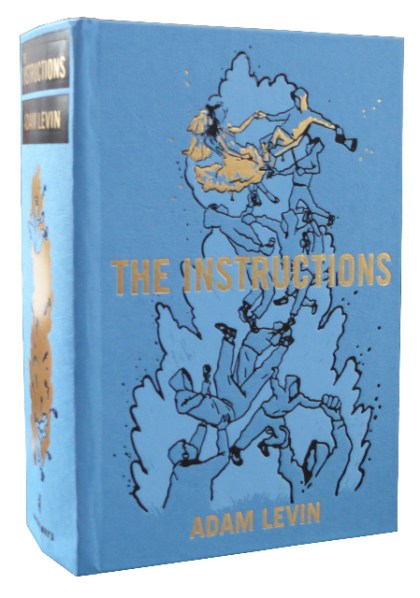
First up, I will finish the books I’m reading/listening to now. This means Adam Levin’s The Instructions (reading; McSweeney’s) and Lydia Millet’s Oh Pure and Radiant Heart (listening; Iambik Audio). I’m on page 342 of The Instructions; there are 1030 pages; a calculator tells me that that is 33.2%. It’s easy reading, often entertaining, but it’s hard to see, even a third of the way in, how Levin can justify taking up this much space. Oh, what is it about? Okay, this kid Gurion Maccabee may or may not be the Messiah. In the meantime, he rules the special ed program at his suburban Chicago school, writes scripture, and gets in lots of fights. The best parts of the book (so far, anyway) are Gurion’s comments on Torah (I would’ve written “the Torah,” but this book seems to suggest that the definite article is pretty Gentile).

Oh Pure and Radiant Heart has been enjoyable, sardonic — funny but sad — and I’m coming up to the end soon. Basically, a trinity of scientists who helped invent the atom bomb (Robert Oppenheimer is the famous one) come back from the dead (sort of) to . . . I don’t know yet. It’s unclear. To hang out with a quiet librarian and her gardener husband as their marriage slowly dissolves? To lead our nation to world wide peace? To take part in a movable circus of weirdos and End Times prophets? Not sure. Full review forthcoming.

I already wrote about one of the Tintin collections I picked up late last year; I will read the other three collections (and likely hunt down more). I’ll also read (hopefully; that is, hopefully it will come out) the next installment in Charles Burns’s X’ed Out trilogy.

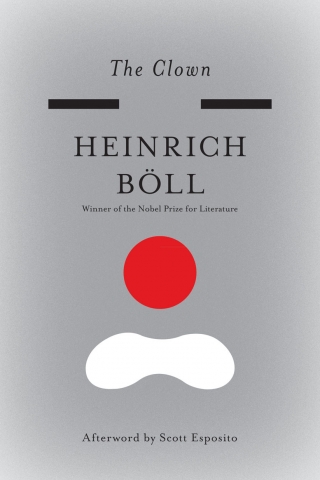
Also on the proverbial plate, non-illustratedwise, is Heinrich Böll’s The Clown, the story of a clown in post-Reich Germany who can smell through the phone (I think there’s more to it than that). Melville House is actually releasing several new editions of Böll’s novels this year, and they have a pretty excellent track record with the Germans, what with Hans Fallada and all, so hey, why not.

On the I-will-read-everything-Sam-Lipsyte-writes front, Picador is putting out a new edition of his first novel The Subject Steve (perhaps in concordance with The Ask coming out in paperback?). I will read The Subject Steve.

Books I bought this year and didn’t read but will make every reasonable attempt to read this year—

William Gaddis’s JR was, I think anyway, the last book I picked up in 2010. It’s really long, seems to be written entirely as a dialog, and hey, I read 2/3rds of The Recognitions and then didn’t even finish it (yet?) which is kinda remarkable/totally lazy. Maybe I should just finish The Recognitions. I just feel like “I get it already.” Lazy, lazy, lazy.

Loved the first chapter of Katherine Dunn’s Geek Love, even though it was really silly. Stay tuned, folks.

I read the first two stories in Barry Hannah’s Airships and then a few galleys bombed my doorstep and then I got distracted, but these things have Spring Break written all over them, so, yes, look for the Airships report in the future (or be a hipster douchebag and write in to tell me how awesome you already know Hannah is now that he’s dead blah blah blah).

I remember that I bought Renata Adler’s Speed Boat the same day I bought Airships (because, y’know, the titles). I read the first 30 or so pages and then read them again and then read them again a week or so ago. Kind of dumbfounding stuff. It’s been hovering around the coffee table, the nightstand; it’s been jammed in briefcases, wedged in coat pockets. What is it? What is she doing?

After slowing down my consumption in 2010, I’m ready to feed the addiction again in 2011: Bolaño, Bolaño, Bolaño. I need to read Amulet; I’ll also read The Insufferable Gaucho and probably something else.

And:

The Pale King

But everyone’s buzzing about that already, right?

Amy Hempel on Gordon Lish and Barry Hannah

Amy Hempel talks Gordon Lish and Barry Hannah (among other things) in a new interview with Vice. A taste–

Do you think about readers when you’re writing? Do you personify them?
I do. I always have, and it’s always been a handful of other writers. Sometimes it has changed, but yes, I really do think of a few actual people. It makes it a little bit easier since I know them, and I know that, well, if this person will find it funny, then I’ve succeeded, or some such thing. It makes it more like trading confidences. I think it’s daunting to think of writing for one’s readers, whoever they may be, so I bring it down to something manageable—a few people whose standards I know and whose work I very much admire—and that makes it more like, almost, a letter to the person. That helps me set the course.

So do you think like, “I’m going to change this here. I’m sure Gordon Lish would love it”?
[laughs] Well, I often have in mind Barry Hannah, and in fact when you phoned me just now, I was working on some remarks I’m going to make at a sort of memorial tribute to Barry, who died last March. This is something that will be held just outside Boston, two nights from now. A bunch of writers who adored him, just paying tribute to him. Barry Hannah was always on my list of people I knew, writers I admired immensely, and just thinking, you know, Barry Hannah might read this, it seemed to focus me when I was writing.

Writing is an extremely solitary activity, but at the same time it’s also very intense. One analogy that I always think of is swimming—it’s something that you do on your own, and the only standard of success you have is your last lap.
I agree 100 percent. And yet there are writers who hold themselves up and compare themselves to other writers. I think that’s useless. As you say, you’re only trying to beat your own best time. That’s the only relevant competition as far as I’m concerned.

Is your past with Lish something that still has an influence on you?
You know, it was a long time ago. I was a student of his at Columbia and then privately and then his author back in the early 80s. I did two books with him. Working with him was a crucial formative experience, but it was a long time ago. There are other writers who have sort of stepped in. Interestingly, Barry Hannah was one and Mary Robison is another, and they are both his authors, too, and were at the time that I was being published by him. So, yes, [Lish] had a terrific impact on my writing very early on. I don’t think he’s writing any more, but he’s still present among writers who really do care about writing at the sentence level. His impact there has certainly endured.

What about the so-called golden age of American short stories? I don’t really know if it’s accurate, or even intelligent, to define it that way.
Well, I think it was a phenomenon in publishing, with a lot of critics rightly going to Raymond Carver—who was also Gordon’s author—and people like Mary Robison. You know—some of the story writers who really, really opened things up again for stories as a commercially viable kind of writing as well as something that was important to a lot of readers.