Book Acquired, 2.15.2012

20120218-101830.jpg

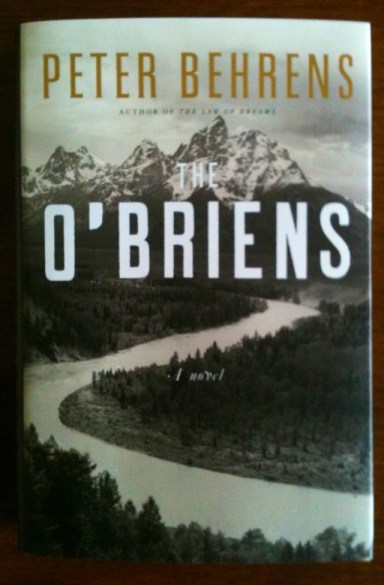
Peter Behren’s The O’Briens. 

An unforgettable saga of love, loss, and exhilarating change spanning half a century in the lives of a restless family, from the author of the acclaimed novel The Law of Dreams.
 
The O’Briens is a family story unlike any told before, a tale that pours straight from the heart of a splendid, tragic, ambitious clan. In Joe O’Brien—grandson of a potato-famine emigrant, and a backwoods boy, railroad magnate, patriarch, brooding soul—Peter Behrens gives us a fiercely compelling man who exchanges isolation and poverty in the Canadian wilds for a share in the dazzling riches and consuming sorrows of the twentieth century.

When Joe meets Iseult Wilkins in Venice, California, the story of their courtship—told in Behrens’s gorgeous, honed style—becomes the first movement in a symphony of the generations. Husband and wife, brothers, sisters-in-law, children and grandchildren, the O’Briens engage unselfconsciously with their century, and we experience their times not as historical tableaux but as lives passionately lived. At the heart of this clan—at the heart of the novel—is mystery and madness grounded in the history of Irish sorrow. The O’Briens is the story of a man, a marriage, and a family, told with epic precision and wondrous imagination.

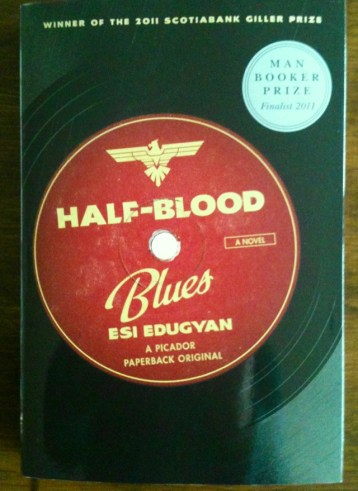
Esi Edugyan’s Half-Blood Blues (Book Acquired, 2.10.2012)

20120218-101808.jpg

I try to spend 10 or 20 minutes with every book that comes in to Biblioklept World Headquarters—assessing plot and prose, trying to get a sense of the potential audience for each volume, etc. Sometimes this task is difficult, and especially difficult when I find myself with too much to read, yet intrigued by the book at hand.

This is a lot of hemming and hawing leading up to: I very much enjoyed the first fifty or so pages of Esi Edugyan’s Half-Blood Blues. Here’s a plot description from the Man Booker Prize website:

‘Chip told us not to go out. Said, don’t you boys tempt the devil. But it been one brawl of a night, I tell you…’ The aftermath of the fall of Paris, 1940. Hieronymous Falk, a rising star on the cabaret scene, was arrested in a cafe and never heard from again. He was twenty years old. He was a German citizen. And he was black. Fifty years later, Sid, Hiero’s bandmate and the only witness that day, is going back to Berlin. Persuaded by his old friend Chip, Sid discovers there’s more to the journey than he thought when Chip shares a mysterious letter, bringing to the surface secrets buried since Hiero’s fate was settled. In Half Blood Blues, Esi Edugyan weaves the horror of betrayal, the burden of loyalty and the possibility that, if you don’t tell your story, someone else might tell it for you. And they just might tell it wrong…

Edugyan writes in an energetic colloquial syntax, one that matches–and embodies—the spirit of the jazz musicians at the forefront of her narrative.  So far, great stuff.

Picador has picked up the book and given it a wider distribution in the US. Check it out.

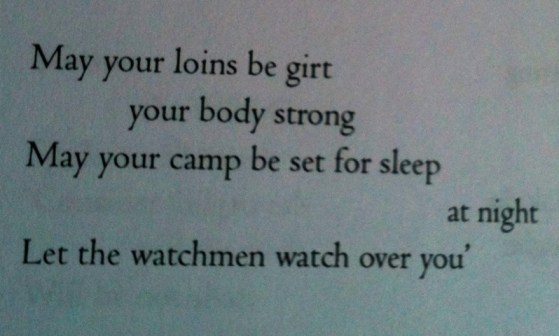
“May Your Loins Be Girt” (Book Acquired, 2.09.2012)

20120211-111518.jpg

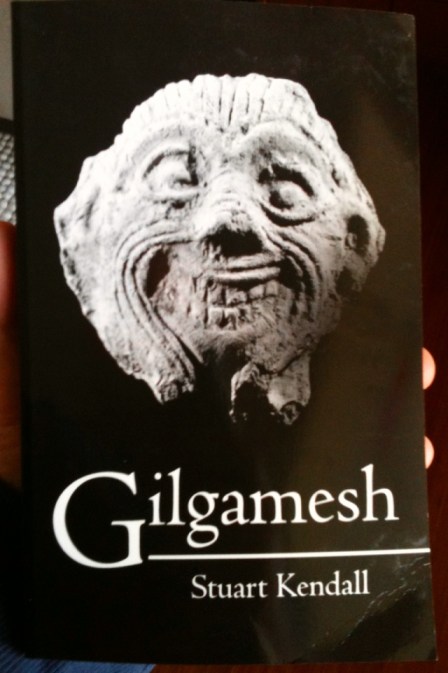
A few lines from Stuart Kendall’s new translation of Gilgamesh. Review and interview forthcoming. Read more here.

20120211-111512.jpg

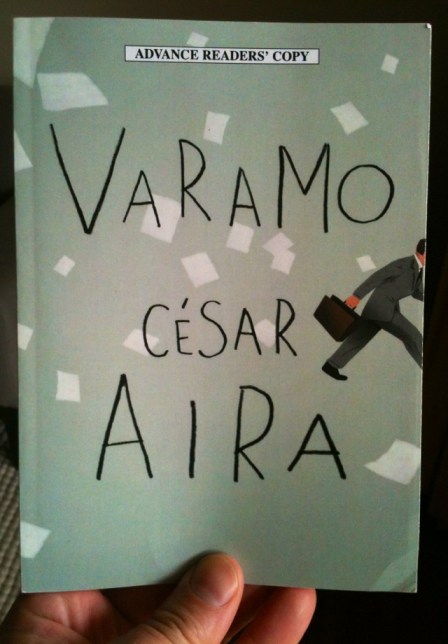
Book Acquired, 2.09.2012 — In Which I Finally Get My Mitts on Something by César Aira

20120209-150157.jpg

Varamo by César Aira (translated by Chris Andrews, whose work you should be familiar with). Forthcoming from the good people at New Directions.

I’ve been wanting to read some Aira since some readers suggested him (in the comments for this post where I bashed on Chad Harbach’s novel).

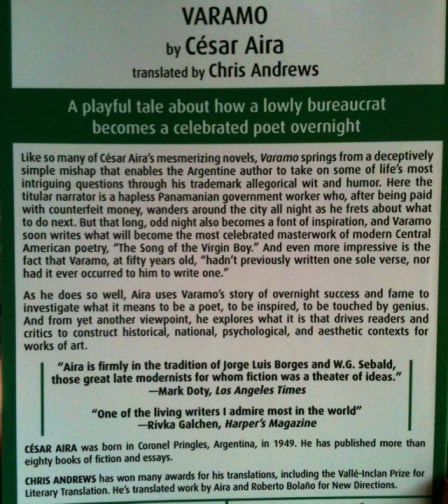
Anyway, details:


20120209-150205.jpg

Book Acquired, 2.08.2012—D.H. Lawrence’s Apocalypse

20120209-145955.jpg

I need another book like I need a hole in the head, but, when I’ve had a stressful day at work, I like to browse the huge, labyrinthine used bookstore conveniently located just over a mile from my house. I don’t know how I wound up browsing D.H. Lawrence books, but Apocalypse stood out—first for its name, and second because, in a section of literally hundreds and hundreds of Lawrence volumes, it seemed to be the only one. Five minutes with the thing and I knew I was going to pick it up. It’s essentially a long essay on the Book of Revelation—and the concept of apocalypse and end-of-the-world in general.

Lawrence’s Studies in Classic American Literature is a seminal volume for me, one I return to repeatedly—but I’ve never made it through one of his novels; I even found his short fiction tedious. Anyway, read a huge chunk of this last night. More to come.

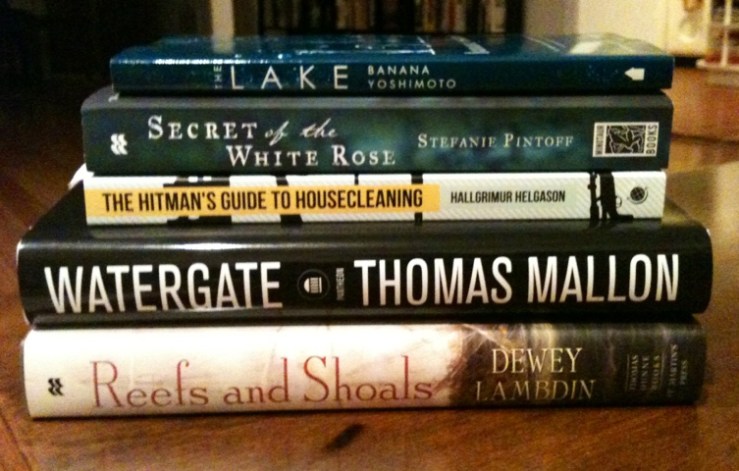
Books Acquired, 2.07.2012

20120208-151957.jpg

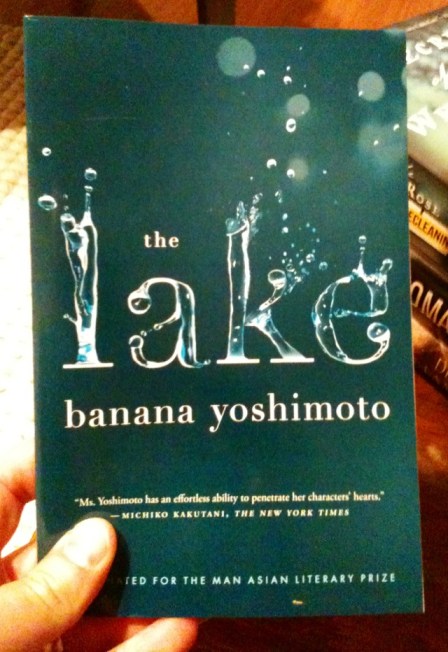
Large pile accrued yesterday although some of these were sent to the old abode. First: Lake by Banana Yoshimoto:

20120208-152021.jpg

Publisher Melville House’s description:

With its echoes of the infamous, real-life Aum Shinrikyo cult (the group that released poison gas in the Tokyo subway system), The Lake unfolds as the most powerful novel Banana Yoshimoto has written. And as the two young lovers overcome their troubled past to discover hope in the beautiful solitude of the lake in the country- side, it’s also one of her most moving.

20120208-152033.jpg

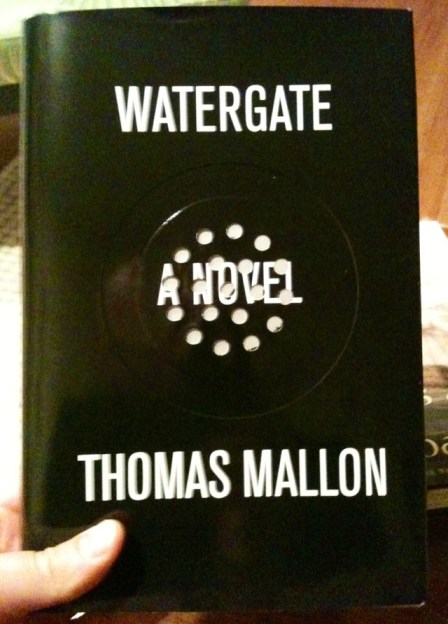
Thomas Mallon’s novelization of a scandal: Watergate. From the author’s website:

In Watergate: A Novel, Thomas Mallon conveys the drama and high comedy of the Nixon presidency through the urgent perspectives of seven characters we only thought we knew before now, moving readers from the private cabins of Camp David to the klieg lights of the Senate Caucus Room, from the District of Columbia Jail to the Dupont Circle mansion of Theodore Roosevelt’s sharp-tongued ninety-year-old daughter, and into the hive of the Watergate complex itself, home not only to the Democratic National Committee but also to the president’s attorney general, his recklessly loyal secretary, and the shadowy man from Mississippi who pays out hush money to the burglars. Mallon achieves with Watergate a scope and historical intimacy that surpasses even what he attained in his previous novels, as he turns a “third-rate burglary” into a tumultuous, first-rate entertainment.

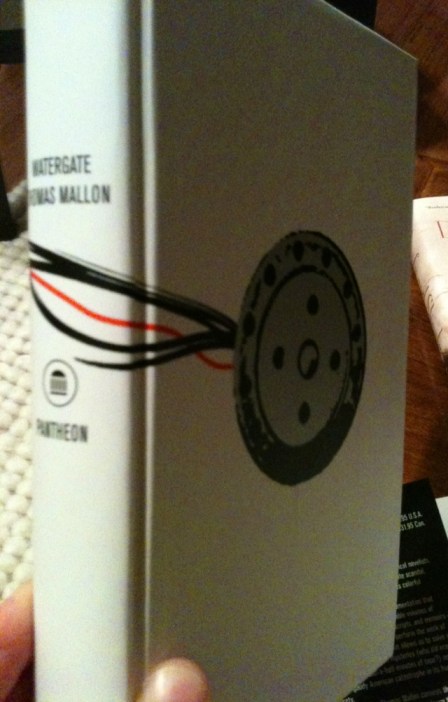
Watergate gets big points for its cover: the book jacket (oh, how I loathe them!) is punctuated with holes suggesting one of those antique things your grandfather called a telephone; strip away the jacket and there’s this (far lovelier) cover:

20120208-152041.jpg

20120208-152054.jpg

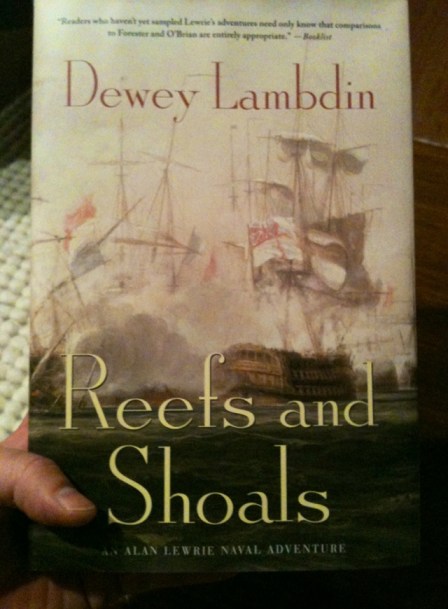
Reefs and Shoals, a naval adventure historical thing from Dewey Lambdin. From publisher Macmillan:

Pity poor Captain Alan Lewrie, Royal Navy! He’s been wind-muzzled for weeks in Portsmouth, snugly tucked into a warm shore bed with lovely, and loving, Lydia Stangbourne, a Viscount’s daughter, and beginning to enjoy indulging his idle streak, when Admiralty tears Lewrie away and order him to the Bahamas, into the teeth of ferocious winter storms. It’s enough to make a rakehell such as he weep and kick furniture!

20120208-152245.jpg

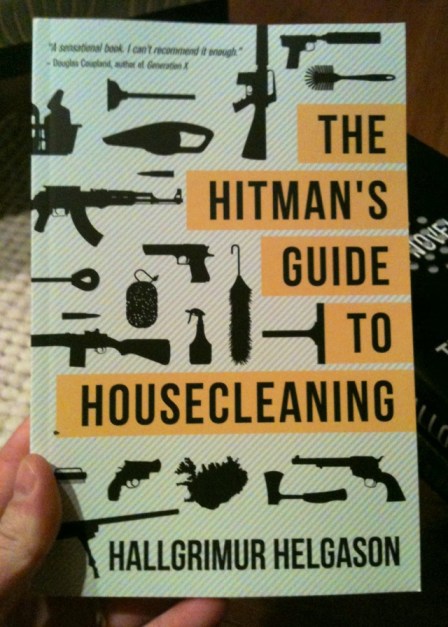
The Hitman’s Guide to Housecleaning by Hallgrimur Helagason, from, uh, Amazon’s publishing imprint:

Toxic, the hero of Hallgrimur Helgason’s The Hitman’s Guide to Housecleaning, had a record of 66 perfect kills. Then came the 67th–an undercover FBI agent–and suddenly he found himself in Iceland with a new identity. Oops. Avoid this kind of careless error by following Toxic’s handy tips.

1. Don’t miss the target. People tend to get a bit upset if they notice you’re trying to kill them.
2. Don’t waste a bullet. You have to think about the environment, too–you really shouldn’t add an unnecessary gunshot to an already noisy city.
3. Morning is for murder. Nobody expects a bullet for breakfast.
4. Don’t kill a priest. He who kills a man of the church will be killed by a church.
5. Don’t confuse killing and murder. Murder is for amateurs, killing is for the professionals.
6. If you have to take on another person’s identity, never let it be a priest. With that collar around your neck, your sex appeal is gone.
7. When you’re dating, don’t talk about your job–unless you’re overseas. Foreign girls are crazy about guys who kill Americans.
8. Embrace every new passport they give you. It’s always nice to get a new life now and then.
9. Don’t kill the wrong guy. Or you’ll end up in Iceland.
10. When in Iceland, stop the killing. There are so few of them.


Book Acquired, 2.04.2012 — Cataclysm Baby

20120205-164712.jpg

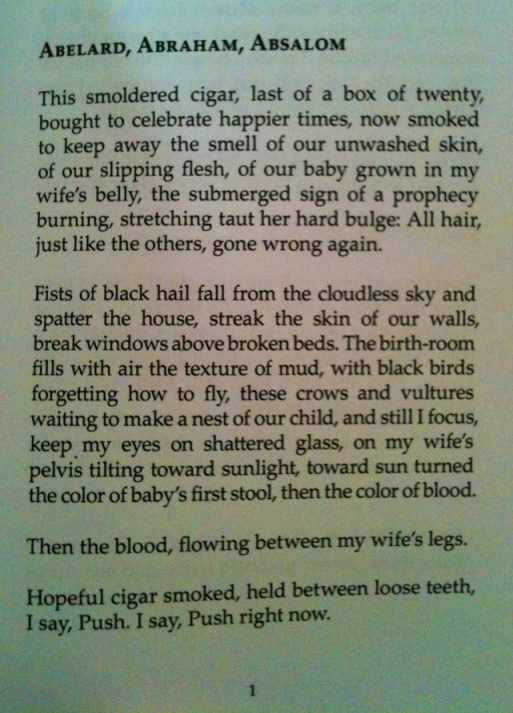
Okay, this one looks pretty cool—Cataclysm Baby by Matt Bell from indie Mud Luscious Press. More to come. Bell’s site describes the book as “twenty-six post-apocalyptic parenting stories, all narrated by fathers, each revealing some different family, some new end of the world.” First page:

20120205-164907.jpg

Book Acquired, 2.01.2012

20120205-164602.jpg

Haley Tanner’s acclaimed novel Vaclav & Lena is new in trade paperback (excellent cover on this one, by the bye). From Page Pulp’s review:

You could try to categorize this book as a love story or an immigrant story, but it is really simply a human story.  Like life itself, it can be sometimes funny, sometimes awkward (like the scene where Vaclav’s father walks in on him getting out the tub and makes a wrong assumption about what Vaclav was doing), sometimes happy, sometimes sad, and yes, sometimes incredibly dark.  It reflects the human experience so well, but never feels cliché.  Tanner’s prose has a simplicity that mimics the characters’ imperfect English.  She creates beauty with her words, but is never too flowery. This allows the story to shine through, unobscured. Her characters almost do not seem like characters; after awhile they start to feel wondrously real, like you could reach out and touch Lena’s messy black curls.  Tanner is adept at shaping both the story and the characters so that they feel realistic.

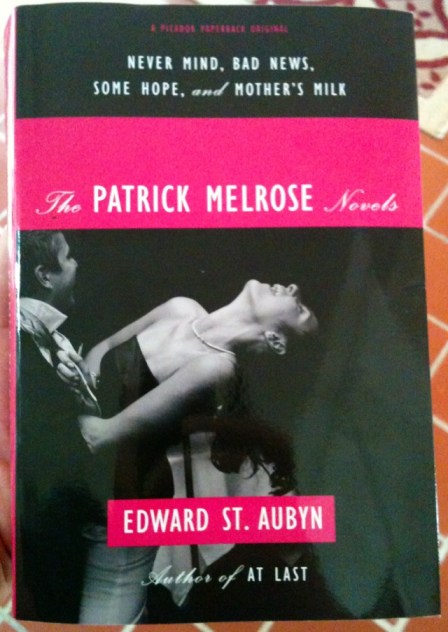
Book Acquired, 2.03.2012 — Edward St. Aubyn Edition

20120205-164456.jpg

Picador has put together all four of Edward St. Aubyn’s Patrick Melrose novels in anticipation of the final novel, At Last, which debuts later this month from FS&G. I haven’t read St. Aubyn’s stuff, which hasn’t been widely available in the US until now, but I do know that Open City put some of it out, and they put out stuff by heroes of mine like David Berman and Sam Lipsyte (who blurbs the book). Anyway, here’s a short description from Picador:

For more than twenty years, acclaimed author Edward St. Aubyn has chronicled the life of Patrick Melrose, painting an extraordinary portrait of the beleaguered and self-loathing world of privilege. This single volume collects the first four novels—Never Mind, Bad News,Some Hope, and Mother’s Milk, a Man Booker finalist—to coincide with the publication of At Last, the final installment of this unique novel cycle.

By turns harrowing and hilarious, these beautifully written novels dissect the English upper class as we follow Patrick Melrose’s story from child abuse to heroin addiction and recovery. Never Mind,the first novel, unfolds over a day and an evening at the family’s chateaux in the south of France, where the sadistic and terrifying figure of David Melrose dominates the lives of his five-year-old son, Patrick, and his rich and unhappy American mother, Eleanor. From abuse to addiction, the second novel, Bad News opens as the twenty-two-year-old Patrick sets off to collect his father’s ashes from New York, where he will spend a drug-crazed twenty-four hours. And back in England, the third novel, Some Hope, offers a sober and clean Patrick the possibility of recovery. The fourth novel, the Booker-shortlisted Mother’s Milk, returns to the family chateau, where Patrick, now married and a father himself, struggles with child rearing, adultery, his mother’s desire for assisted suicide, and the loss of the family home to a New Age foundation.

Edward St. Aubyn offers a window into a world of utter decadence, amorality, greed, snobbery, and cruelty—welcome to the declining British aristocracy.

I haven’t had much time to dip into this, even though it intrigues, because my wife immediately snapped it up. I had to go find it in her night stand to do this post. At the risk of mangling this completely though (and correct me if I’m wrong), it seems like a little bit like a contemporary Henry James shot through with Bret Easton Ellis (and maybe a touch of Downton Abbey). I will ask my wife to report.

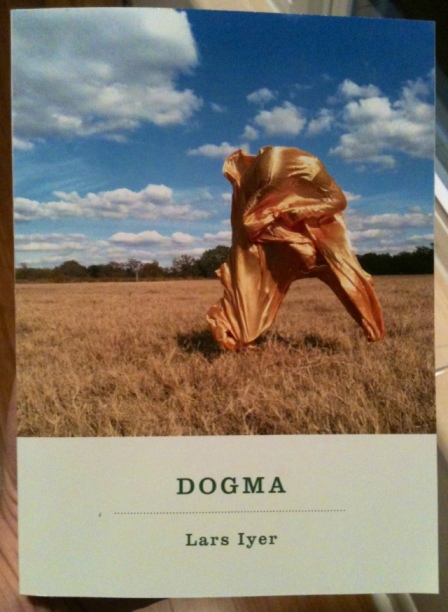
Book Acquired, 1.30.2012 — Dogma, Lars Iyer’s Sequel to Spurious

20120202-195422.jpg

Lars Iyer’s novel (or anti-novel, if you swing that way) Spurious was one of the better books I read last year. From my review:

Lars Iyer’s début novel Spurious is about two would-be intellectuals, W., the book’s comic hero, and his closest friend, our narrator Lars. They bitch and moan and despair: it’s the end of the world, it’s the apocalypse; they find themselves incapable of original thought, of producing any good writing. The shadow of Kafka paralyzes them. They travel about Europe, seeking out knowledge and inspiration — or at least a glimpse of some beautiful first editions of Rosenzweig. They attend dreadful academic conferences; they write letters. They flounder and fail.

Iyer was also kind enough to talk with me in a long, detailed interview.

So like basically I’m a fan, and I’ve been eager for Dogma, so I was psyched when an ARC showed up in Monday’s mail. Dogma is new from Melville House at the end of this month; more coverage to come.

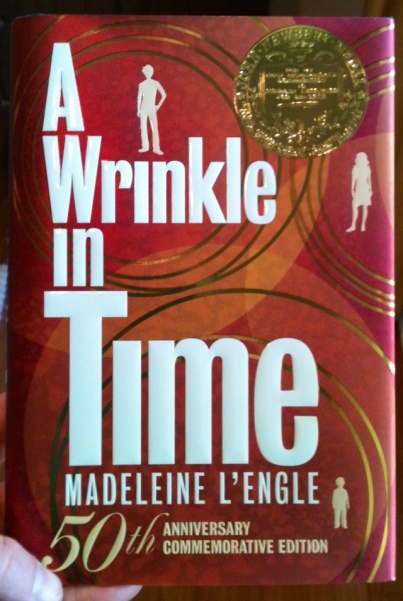
Book Acquired, 1.18.2012 — 50th Anniversary Edition of Madeleine L’Engle’s Classic A Wrinkle in Time

20120122-120441.jpg

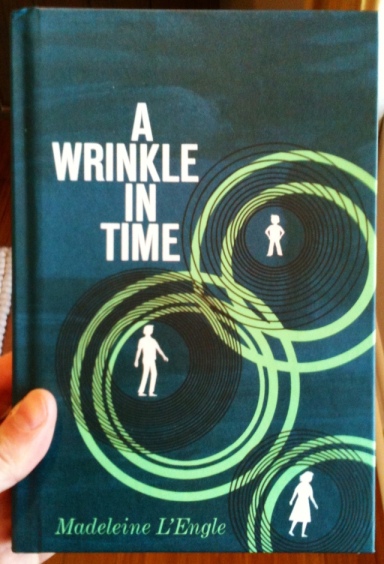
The 50th anniversary edition of Madeleine L’Engle’s innovative YA classic A Wrinkle in Time showed up at the house last week (I wrote a bit about Wrinkle as well).

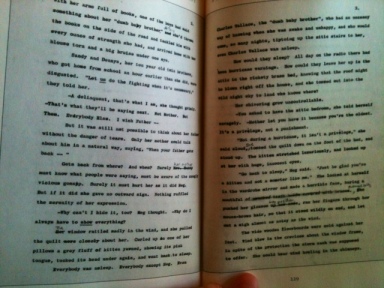
The new edition is chock full of extras, including manuscript pages, photos, and more. My favorite detail though is the actual cover—the one under the dust jackets (I hate dust jackets):

20120122-120459.jpg

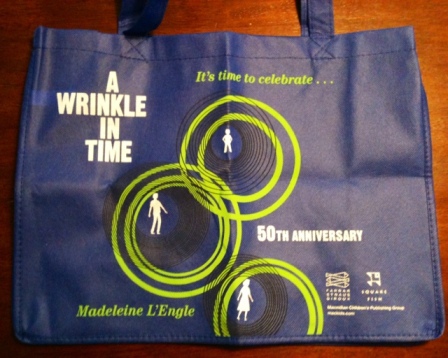
The kind people at Macmillan also sent along a bag—a first—one I’ll proudly use when I do my grocery shopping:

20120122-120509.jpg

A blurry shot of the manuscript section:

20120122-120517.jpg

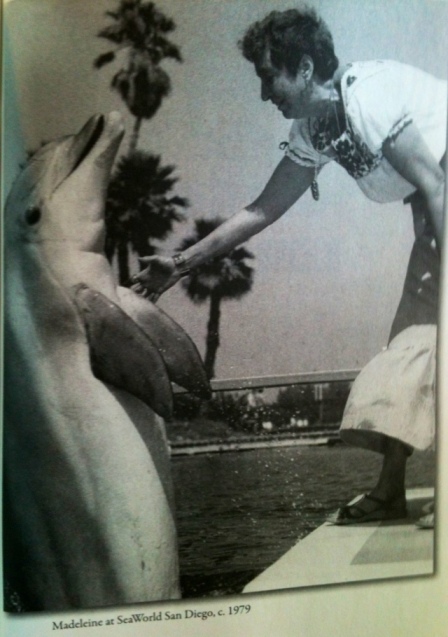
Madeleine and a dolphin:

20120122-120526.jpg

Books Acquired, 1.17.2012—Or, Here’s What’s New from Picador This Month

20120121-100054.jpg

The kind people at Picador sent me a box of books, including a memoir (Margaux Fragoso’s Tiger, Tiger), a few novels (The Lover’s Dictionary by David Levithan; Ralph Sassone’s The Intimates; Alan Glynn’s noir thriller Bloodland; Dieter Schlesak’s The Druggist of Auschwitz, which purports to be a “documentary novel”; and Zoë Heller’s first novel, Everything You Know), and a work of political science (Ari Berman’s Herding Donkeys).

A box of books is a bit overwhelming, but I make it a point to spend some time with every book that comes into Biblioklept World Headquarters. Here’s some thoughts on these.

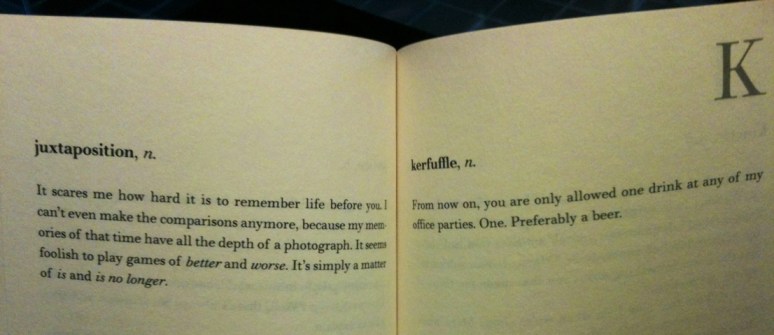
I actually ended up reading almost all of The Lover’s Dictionary, despite it having the word “lover” in the title, which, jeez. When my wife picked it up, she said something like, “How can they call this a novel?” — fair question, because the book is structured like a dictionary. In point of illustration:
20120121-100117.jpg

I’ve got a bigger post on Levithan’s book coming up, one that tries to situate it in the context of other non-novelly novels—but in short it is a novel, a very contemporary one that tells the oldest story in the proverbial book (boy meets girl) in an elliptical way that suits our post-information age. Like I said more to come, but for now: The Lover’s Dictionary is funny, occasionally cruel, too-often saccharine, awfully real, sometimes deeply flawed, but consistently engaging (sorry for all the adverbs).

I imagine Margaux Fragoso’s memoir Tiger, Tiger will capture the fascination of a large audience, but half an hour of the book was almost more than I could bear. Not because Fragoso can’t write—far from it, in fact—but her subject matter, which is to say her stolen childhood, is rendered too raw,   too real for me; there’s nothing pulpy or lurid about Fragoso’s work, nor is there the aesthetic sheen of Lolita to gloss any of the ugly, sordid details.  Kathryn Harrison ponders the question of Tiger, Tiger’s audience in her favorable review at The New York Times:

So who — other than voyeurs looking for a sustained close-up of a pedophile in action — will want to read this book? To bear witness to a numbingly long series of violations of a child by a man who has honed his wickedness for decades is not more pleasant than it sounds. As a society we energetically oppose sexual abuse; as individuals most of us shy away from investigating a relationship characterized by creepy kisses and inappropriate fondling. Worse, we defend cowardice by calling it discretion — minding our own business. Maybe a book like “Tiger, Tiger” can help us be a little braver. Certainly, it took courage to write.

20120121-100131.jpg

Ralph Sassone’s The Intimates: sex scenes (straight and gay); lots of notations about parents; lots of characters.

Dieter Schlesak’s The Druggist of Auschwitz: This “documentary novel” blends actual testimony from the Frankfurt Auschwitz Trial, interviews with camp guards and prisoners, and fictional narrative to tell the true story of Dr. Victor Capesius, an SS officer who worked with Mengele. The book is less gimmicky than it sounds in this description, and if its documentary elements are blunter and less ambiguous than W.G. Sebald’s historical fragments, I suppose that’s what the subject matter merits.

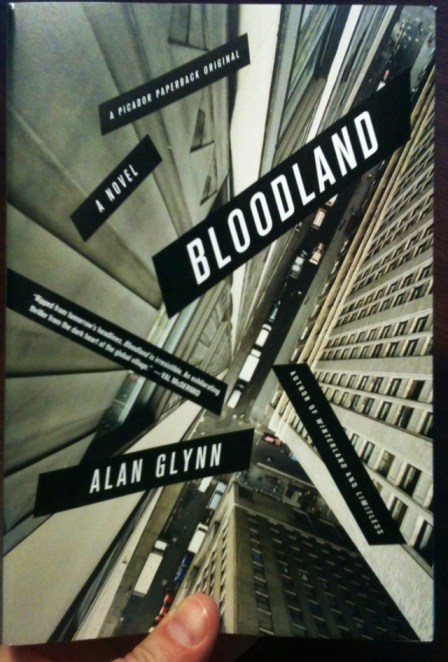
Alan Glynn’s new novel Bloodland (a Picador paperback original) is a noirish thriller set against the backdrop of political and corporate intrigue. Glynn writes with terse immediacy, telegraphing the plot in short punchy sentences that recall James Ellroy (without the finnicky slang). The book reads almost like a movie script, vivid and concrete. It’s a fast-paced page turner with a smart plot, just the sort of thing one wants from a thriller.
20120121-103504.jpg

Herding Donkeys by Ari Berman: Honestly not my thing, but if you want to read about the DNC from the time of Howard Dean to the rise of Barrack Obama, this is probably a book for you.

Zoë Heller’s Everything You Know: This is new in paperback again after over a decade. The story focuses on a cantankerous, unlikable son-of-a-bitch named Willy Muller. Things aren’t going well for him: he’s just suffered a heart attack, his daughter’s committed suicide, and the public still believes he murdered his wife. No wonder he hates humanity. Heller is probably most famous for her novel Notes on a Scandal, which was adapted into an excellent film in 2006.

Biblioklept’s picks: The Lover’s Dictionary; Tiger, Tiger; Bloodland.

Book Acquired, 1.18.2011 (Matt Mullins/Chainsaw Short Fiction Edition)

20120120-163945.jpg

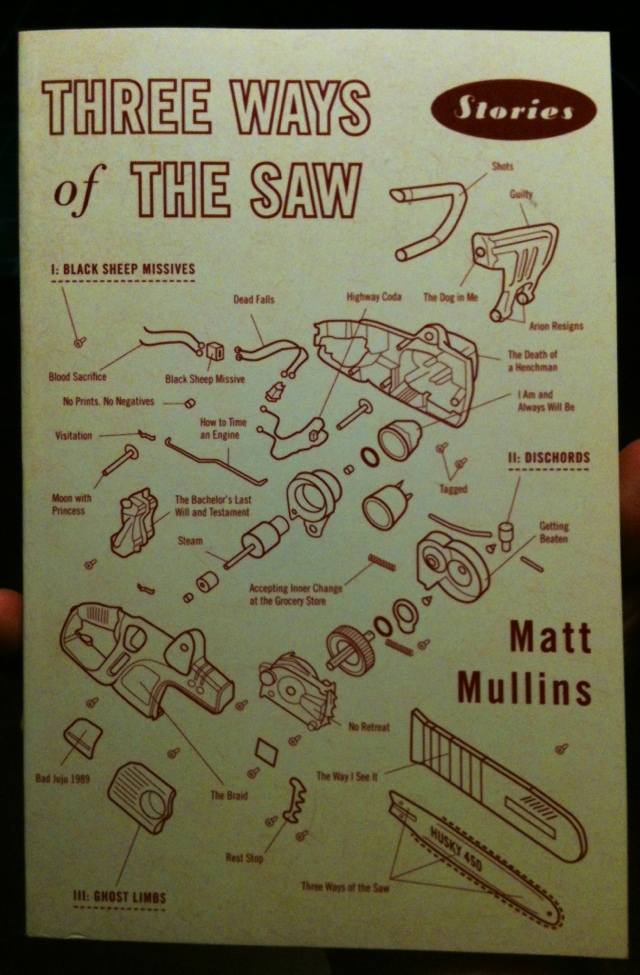
Matt Mullins’s Three Ways of the Saw (new in February from Atticus): Spent a few afternoons sifting through this volume, intrigued by its outstanding cover (I use the word “outstanding” literally; over a dozen titles came into Bblklpt Wrld Hdqrtrs this fine week). Mullins’s volume, stocked with short and short-short (and micro-) stories, bristles with boozy energy, grit, ugly druggy nervy episodes, shenanigans, dirty hi-jinks, breaking families, bad sons, bad people, broken people, desperate people . . . There’s a strong Bukoswkiish vibe to the business, with less ego, more concrete imagery, more Denis Johnson. I like this book.

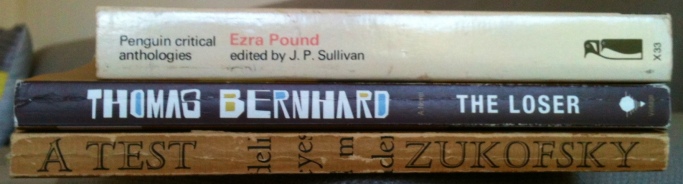
Books Acquired, 1.13.2012 (Ezra Pound, Thomas Bernhard, Louis Zukofsky)

20120115-163012.jpg

Picked up these three last Friday.

20120115-163023.jpg

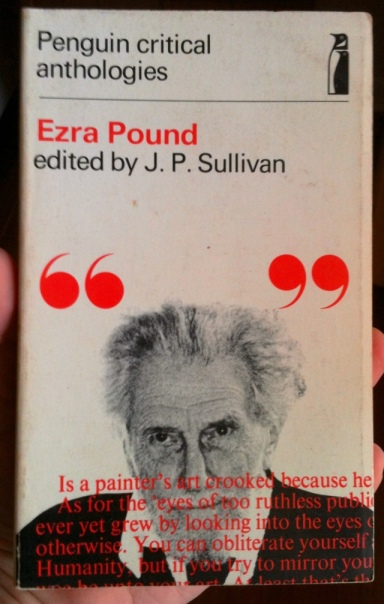
This is a collection of letters to and from Ezra Pound, as well as criticism, introductions, etc. I like the cover, which is a bit too busy.

20120115-163044.jpg

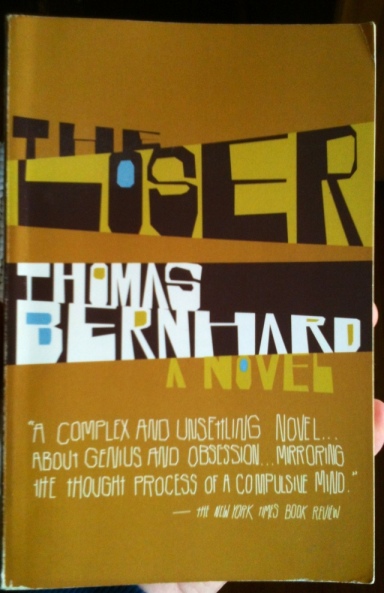
I picked up Thomas Bernhard’s Correction last year on reader recommendation (recommendation: read Bernhard). Saw The Loser in the shop used, so I picked it up. Any recommendation on which one to start with?

20120115-163114.jpg

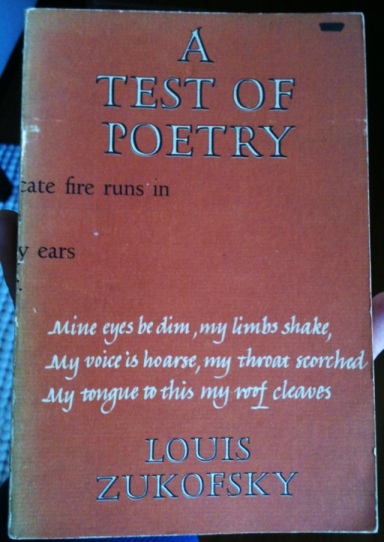
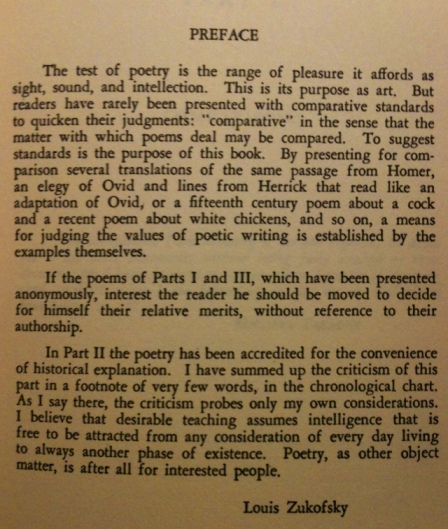
A midcentury paperback of Louis Zukofsky’s A Test of Poetry. This is a strange book. I’d better let Zukofsky explain it:

20120116-175731.jpg

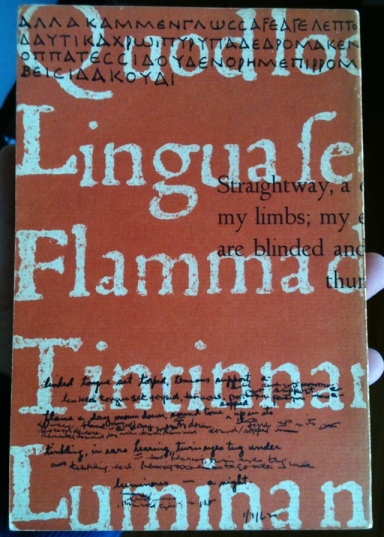
The back cover is lovely as well:

20120115-163132.jpg

Book Acquired, 1.04.2012

20120104-171225.jpg

The Sweet Relief of Missing Children by Sarah Braunstein. I like the awkwardness of the title: what is “missing” modifying? Is it an adjective, describing the children? Is it a gerund? Who is gaining relief from what?

Publisher Norton’s description:

In New York City, a girl called Leonora vanishes without a trace. Years earlier and miles upstate, Goldie, a wild, negligent mother, searches for a man to help raise her precocious son, Paul, who later discovers that the only way to save his soul is to run away. As the narrative moves back and forth in time, we find deeper interconnections between these stories and growing clues about Leonora—this missing girl whose face looks out from telephone poles and billboards—whom one character will give anything to save.

The Sweet Relief of Missing Children is a suspenseful novel about the power of running and the desire for reinvention. It explores the terror and transcendence of our most central experiences: childhood, parenthood, sex, love.

Book Acquired 1.03.2012 — Tim Tebow Edition

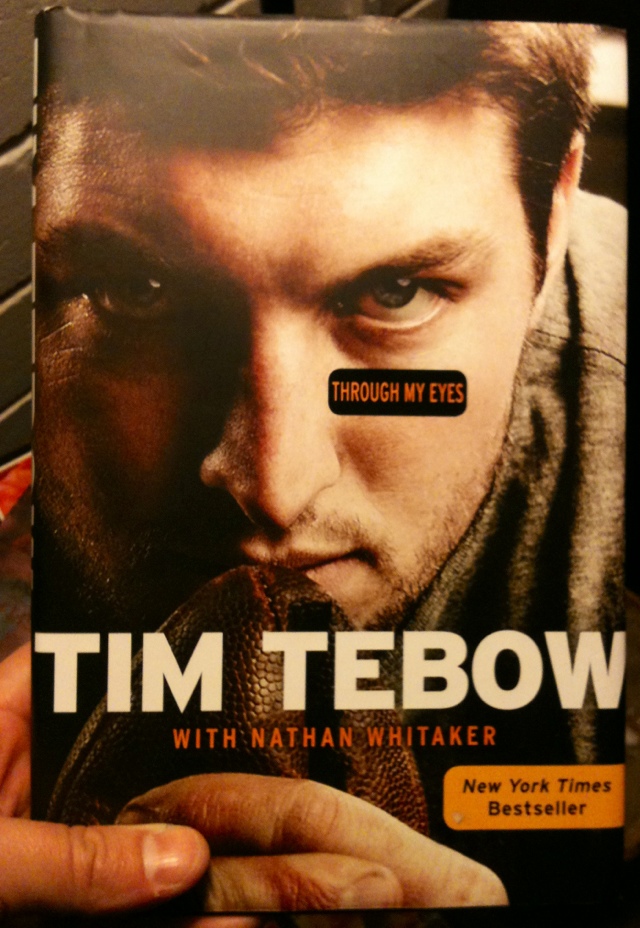
My father doesn’t read a lot of books, or at least I don’t think he does, but I know he read Through My Eyes, the Tim Tebow memoir. I’m pretty sure he must have gotten a duplicate for Christmas, because he sent a copy my way yesterday.

If you don’t know who Tim Tebow is (that is, if you’re not a fan of U.S. football, or not from the States, or you just don’t care about sports, or Twitter, or whatever), he was one of the greatest college players of all time, leading the Florida Gators to two national championship titles and two SEC titles. He’s also a devout Christian, the son of missionaries. He currently is the starting quarterback for the Denver Broncos, a team he helped take (quite improbably) to the playoffs this year.

Also: a vocal contingent of people really enjoy hating on him.

Not me. Tebow is from my hometown. I went to the University of Florida. I’m a big Gator fan. And even though I’m not exactly simpatico with evangelical Christianity, Tebow has always struck me as a genuinely good, nice person.

Anyway, I have some interest in the book, although I’m sure it’s pretty standard ghostwritten sports celebrity memoir stuff.

20120103-175429.jpg

Here is what my dad also got for Christmas: a signed Tebow ball. (My name is also Ed, so one day maybe I will have this ball too):

20120103-175448.jpg

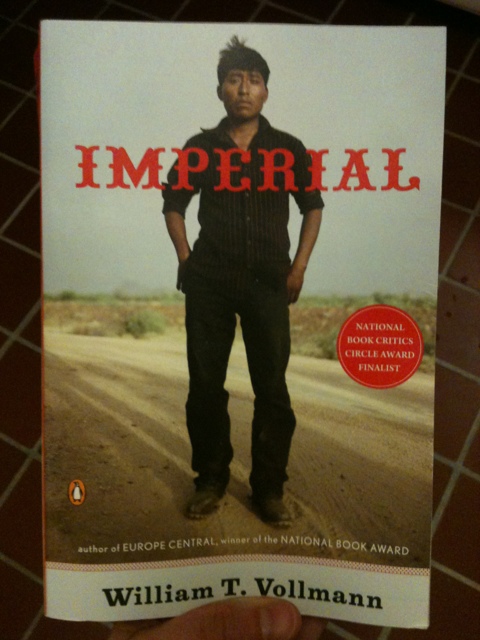
Book Acquired, 12.23.2011; Or, I Read the First 2% of William Vollmann’s Enormous Book Imperial

20111223-194549.jpg

Earlier this week, Biblioklept correspondent A King at Night suggested on this blog that William T. Vollmann, “literature’s own Batman,” may not be entirely real. While Mr. At Night’s post was perhaps a bit tongue-in-cheek, he did hip us to extremely cheap new copies of Vollmann’s 2009 California opus, Imperial. I bought one, of course, knowing that my chances of actually reading it in full were, uh, slim. It showed up today.

I read the first 25 pages, a little over 2% of the book (not counting Vollmann’s endnotes and bibliography). I read the book in the bathtub, drinking a beer (those of you who fear (or find repulsive the prospect of) visualizing my stubby little birthday-suited body besoaped and besudded, I suggest that that role may be played by Geena Davis, circa early nineties, although, obviously, you can pick whomever you like to imagine reading Imperial in a bathtub). I was cognizant of the fact that I was taking a bath—a luxury of sorts—while reading a book that deals in large part about who controls water. I also managed to get the book wet with both blood and water. I don’t know where the blood came from.

The first few pages thrust us right into typical Vollmann territory, with our protagonist paying a cokehead to guide him through the back alleys of Mexicali (Vollmann takes time to note the “street-whores,” of course). Alternately, Vollmann attends the nocturnal activities of the weary Border Patrol, who regularly catch and release Mexicans heading for the Northside (America).

There’s a great little moment, very early in this first chapter, when Vollmann ponders the Sisyphean task of the men who patrol the border:

. . . I almost pitied the futility of his occupation, as I suspect he did mine (the main purpose of my essays being to line birdcages), but then I fortunately persuaded myself that all vocations and callings are equally futile.

This seems like the prototypical Vollmann moment: earnestness bound in supple irony, self-deprecation glossing the intense pride in work that the contemporary world will be happy to (even sometimes boastfully) ignore.

I enjoyed the first pages of this massive book tremendously. Vollmann’s voluminous scope and strange background often eclipse his powers as a proseslinger, and Imperial, so far, is lucid, clean, sharp, and funny.

So I’ll go for it. I’ll read it. I’ll finish it before this time (id est, late Dec.) next year.