Book Acquired, 2.01.2012

20120205-164602.jpg

Haley Tanner’s acclaimed novel Vaclav & Lena is new in trade paperback (excellent cover on this one, by the bye). From Page Pulp’s review:

You could try to categorize this book as a love story or an immigrant story, but it is really simply a human story.  Like life itself, it can be sometimes funny, sometimes awkward (like the scene where Vaclav’s father walks in on him getting out the tub and makes a wrong assumption about what Vaclav was doing), sometimes happy, sometimes sad, and yes, sometimes incredibly dark.  It reflects the human experience so well, but never feels cliché.  Tanner’s prose has a simplicity that mimics the characters’ imperfect English.  She creates beauty with her words, but is never too flowery. This allows the story to shine through, unobscured. Her characters almost do not seem like characters; after awhile they start to feel wondrously real, like you could reach out and touch Lena’s messy black curls.  Tanner is adept at shaping both the story and the characters so that they feel realistic.

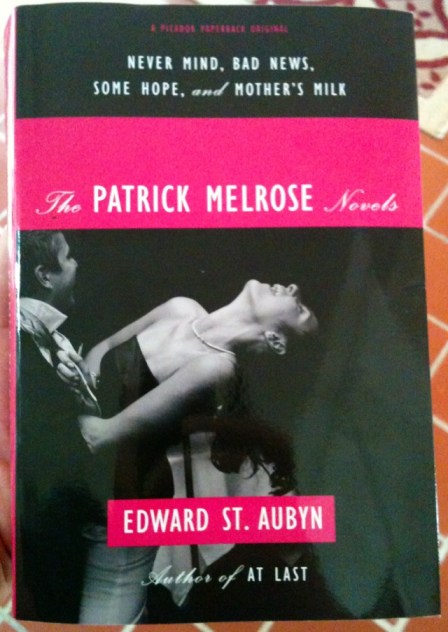
Book Acquired, 2.03.2012 — Edward St. Aubyn Edition

20120205-164456.jpg

Picador has put together all four of Edward St. Aubyn’s Patrick Melrose novels in anticipation of the final novel, At Last, which debuts later this month from FS&G. I haven’t read St. Aubyn’s stuff, which hasn’t been widely available in the US until now, but I do know that Open City put some of it out, and they put out stuff by heroes of mine like David Berman and Sam Lipsyte (who blurbs the book). Anyway, here’s a short description from Picador:

For more than twenty years, acclaimed author Edward St. Aubyn has chronicled the life of Patrick Melrose, painting an extraordinary portrait of the beleaguered and self-loathing world of privilege. This single volume collects the first four novels—Never Mind, Bad News,Some Hope, and Mother’s Milk, a Man Booker finalist—to coincide with the publication of At Last, the final installment of this unique novel cycle.

By turns harrowing and hilarious, these beautifully written novels dissect the English upper class as we follow Patrick Melrose’s story from child abuse to heroin addiction and recovery. Never Mind,the first novel, unfolds over a day and an evening at the family’s chateaux in the south of France, where the sadistic and terrifying figure of David Melrose dominates the lives of his five-year-old son, Patrick, and his rich and unhappy American mother, Eleanor. From abuse to addiction, the second novel, Bad News opens as the twenty-two-year-old Patrick sets off to collect his father’s ashes from New York, where he will spend a drug-crazed twenty-four hours. And back in England, the third novel, Some Hope, offers a sober and clean Patrick the possibility of recovery. The fourth novel, the Booker-shortlisted Mother’s Milk, returns to the family chateau, where Patrick, now married and a father himself, struggles with child rearing, adultery, his mother’s desire for assisted suicide, and the loss of the family home to a New Age foundation.

Edward St. Aubyn offers a window into a world of utter decadence, amorality, greed, snobbery, and cruelty—welcome to the declining British aristocracy.

I haven’t had much time to dip into this, even though it intrigues, because my wife immediately snapped it up. I had to go find it in her night stand to do this post. At the risk of mangling this completely though (and correct me if I’m wrong), it seems like a little bit like a contemporary Henry James shot through with Bret Easton Ellis (and maybe a touch of Downton Abbey). I will ask my wife to report.

Book Acquired, 1.30.2012 — Dogma, Lars Iyer’s Sequel to Spurious

20120202-195422.jpg

Lars Iyer’s novel (or anti-novel, if you swing that way) Spurious was one of the better books I read last year. From my review:

Lars Iyer’s début novel Spurious is about two would-be intellectuals, W., the book’s comic hero, and his closest friend, our narrator Lars. They bitch and moan and despair: it’s the end of the world, it’s the apocalypse; they find themselves incapable of original thought, of producing any good writing. The shadow of Kafka paralyzes them. They travel about Europe, seeking out knowledge and inspiration — or at least a glimpse of some beautiful first editions of Rosenzweig. They attend dreadful academic conferences; they write letters. They flounder and fail.

Iyer was also kind enough to talk with me in a long, detailed interview.

So like basically I’m a fan, and I’ve been eager for Dogma, so I was psyched when an ARC showed up in Monday’s mail. Dogma is new from Melville House at the end of this month; more coverage to come.

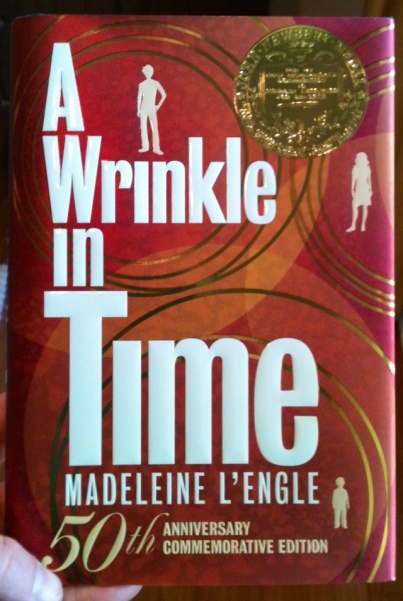
Book Acquired, 1.18.2012 — 50th Anniversary Edition of Madeleine L’Engle’s Classic A Wrinkle in Time

20120122-120441.jpg

The 50th anniversary edition of Madeleine L’Engle’s innovative YA classic A Wrinkle in Time showed up at the house last week (I wrote a bit about Wrinkle as well).

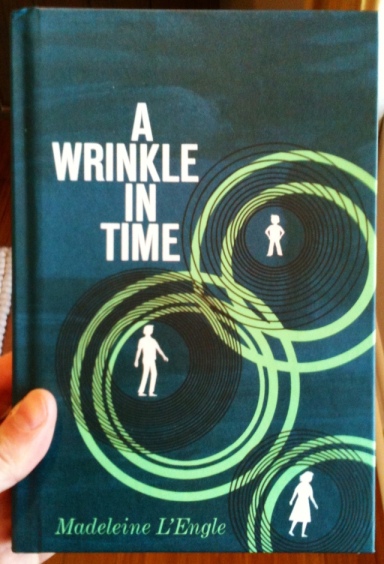
The new edition is chock full of extras, including manuscript pages, photos, and more. My favorite detail though is the actual cover—the one under the dust jackets (I hate dust jackets):

20120122-120459.jpg

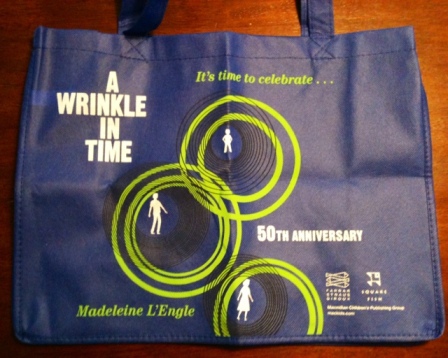
The kind people at Macmillan also sent along a bag—a first—one I’ll proudly use when I do my grocery shopping:

20120122-120509.jpg

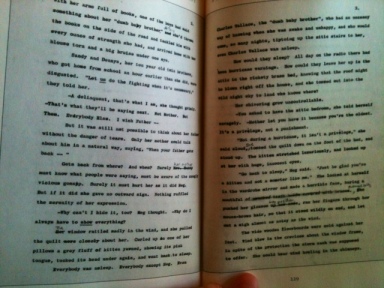
A blurry shot of the manuscript section:

20120122-120517.jpg

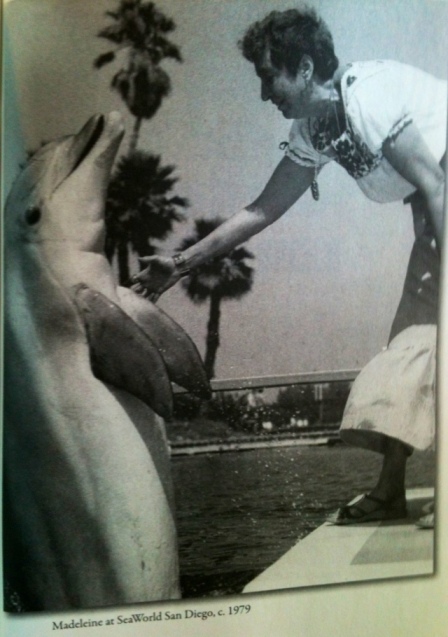
Madeleine and a dolphin:

20120122-120526.jpg

Books Acquired, 1.17.2012—Or, Here’s What’s New from Picador This Month

20120121-100054.jpg

The kind people at Picador sent me a box of books, including a memoir (Margaux Fragoso’s Tiger, Tiger), a few novels (The Lover’s Dictionary by David Levithan; Ralph Sassone’s The Intimates; Alan Glynn’s noir thriller Bloodland; Dieter Schlesak’s The Druggist of Auschwitz, which purports to be a “documentary novel”; and Zoë Heller’s first novel, Everything You Know), and a work of political science (Ari Berman’s Herding Donkeys).

A box of books is a bit overwhelming, but I make it a point to spend some time with every book that comes into Biblioklept World Headquarters. Here’s some thoughts on these.

I actually ended up reading almost all of The Lover’s Dictionary, despite it having the word “lover” in the title, which, jeez. When my wife picked it up, she said something like, “How can they call this a novel?” — fair question, because the book is structured like a dictionary. In point of illustration:

20120121-100117.jpg

I’ve got a bigger post on Levithan’s book coming up, one that tries to situate it in the context of other non-novelly novels—but in short it is a novel, a very contemporary one that tells the oldest story in the proverbial book (boy meets girl) in an elliptical way that suits our post-information age. Like I said more to come, but for now: The Lover’s Dictionary is funny, occasionally cruel, too-often saccharine, awfully real, sometimes deeply flawed, but consistently engaging (sorry for all the adverbs).

I imagine Margaux Fragoso’s memoir Tiger, Tiger will capture the fascination of a large audience, but half an hour of the book was almost more than I could bear. Not because Fragoso can’t write—far from it, in fact—but her subject matter, which is to say her stolen childhood, is rendered too raw,   too real for me; there’s nothing pulpy or lurid about Fragoso’s work, nor is there the aesthetic sheen of Lolita to gloss any of the ugly, sordid details.  Kathryn Harrison ponders the question of Tiger, Tiger’s audience in her favorable review at The New York Times:

So who — other than voyeurs looking for a sustained close-up of a pedophile in action — will want to read this book? To bear witness to a numbingly long series of violations of a child by a man who has honed his wickedness for decades is not more pleasant than it sounds. As a society we energetically oppose sexual abuse; as individuals most of us shy away from investigating a relationship characterized by creepy kisses and inappropriate fondling. Worse, we defend cowardice by calling it discretion — minding our own business. Maybe a book like “Tiger, Tiger” can help us be a little braver. Certainly, it took courage to write.

20120121-100131.jpg

Ralph Sassone’s The Intimates: sex scenes (straight and gay); lots of notations about parents; lots of characters.

Dieter Schlesak’s The Druggist of Auschwitz: This “documentary novel” blends actual testimony from the Frankfurt Auschwitz Trial, interviews with camp guards and prisoners, and fictional narrative to tell the true story of Dr. Victor Capesius, an SS officer who worked with Mengele. The book is less gimmicky than it sounds in this description, and if its documentary elements are blunter and less ambiguous than W.G. Sebald’s historical fragments, I suppose that’s what the subject matter merits.

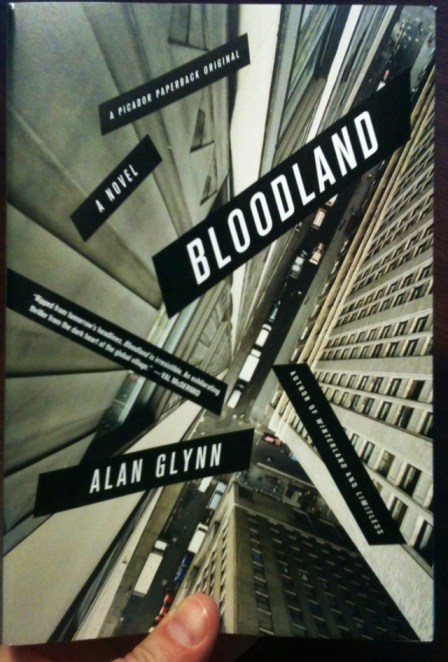
Alan Glynn’s new novel Bloodland (a Picador paperback original) is a noirish thriller set against the backdrop of political and corporate intrigue. Glynn writes with terse immediacy, telegraphing the plot in short punchy sentences that recall James Ellroy (without the finnicky slang). The book reads almost like a movie script, vivid and concrete. It’s a fast-paced page turner with a smart plot, just the sort of thing one wants from a thriller.
20120121-103504.jpg

Herding Donkeys by Ari Berman: Honestly not my thing, but if you want to read about the DNC from the time of Howard Dean to the rise of Barrack Obama, this is probably a book for you.

Zoë Heller’s Everything You Know: This is new in paperback again after over a decade. The story focuses on a cantankerous, unlikable son-of-a-bitch named Willy Muller. Things aren’t going well for him: he’s just suffered a heart attack, his daughter’s committed suicide, and the public still believes he murdered his wife. No wonder he hates humanity. Heller is probably most famous for her novel Notes on a Scandal, which was adapted into an excellent film in 2006.

Biblioklept’s picks: The Lover’s Dictionary; Tiger, Tiger; Bloodland.

Book Acquired, 1.18.2011 (Matt Mullins/Chainsaw Short Fiction Edition)

20120120-163945.jpg

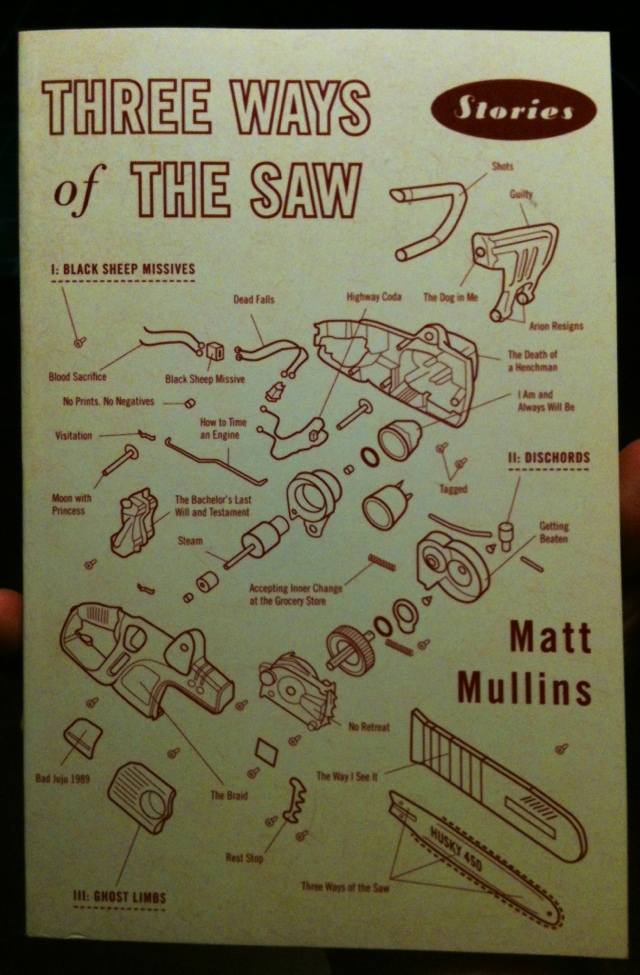
Matt Mullins’s Three Ways of the Saw (new in February from Atticus): Spent a few afternoons sifting through this volume, intrigued by its outstanding cover (I use the word “outstanding” literally; over a dozen titles came into Bblklpt Wrld Hdqrtrs this fine week). Mullins’s volume, stocked with short and short-short (and micro-) stories, bristles with boozy energy, grit, ugly druggy nervy episodes, shenanigans, dirty hi-jinks, breaking families, bad sons, bad people, broken people, desperate people . . . There’s a strong Bukoswkiish vibe to the business, with less ego, more concrete imagery, more Denis Johnson. I like this book.

Books Acquired, 1.13.2012 (Ezra Pound, Thomas Bernhard, Louis Zukofsky)

20120115-163012.jpg

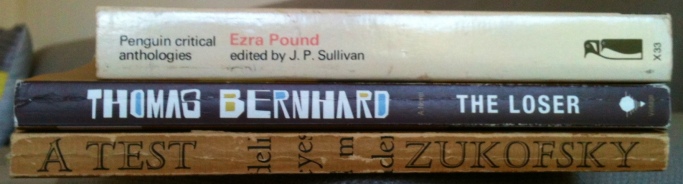
Picked up these three last Friday.

20120115-163023.jpg

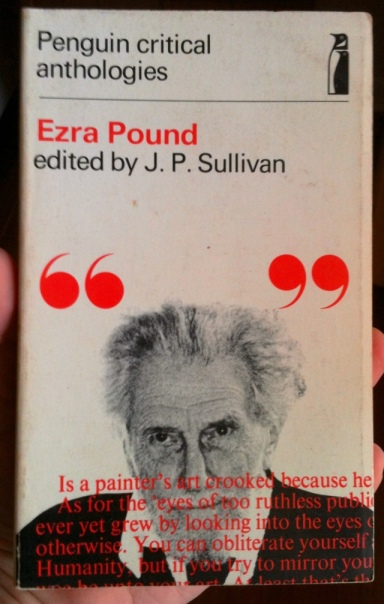
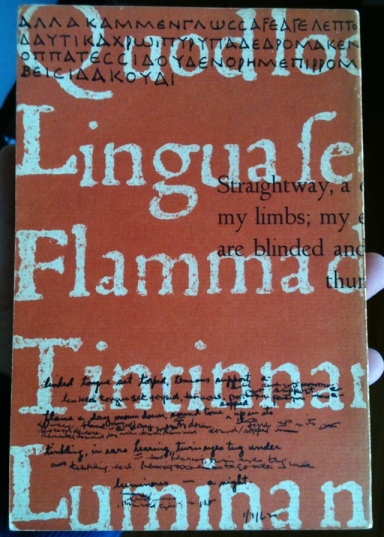
This is a collection of letters to and from Ezra Pound, as well as criticism, introductions, etc. I like the cover, which is a bit too busy.

20120115-163044.jpg

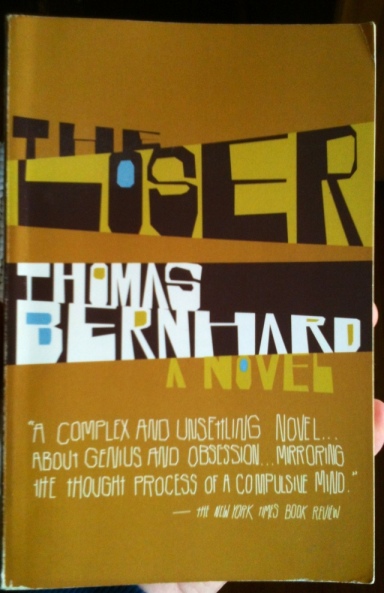
I picked up Thomas Bernhard’s Correction last year on reader recommendation (recommendation: read Bernhard). Saw The Loser in the shop used, so I picked it up. Any recommendation on which one to start with?

20120115-163114.jpg

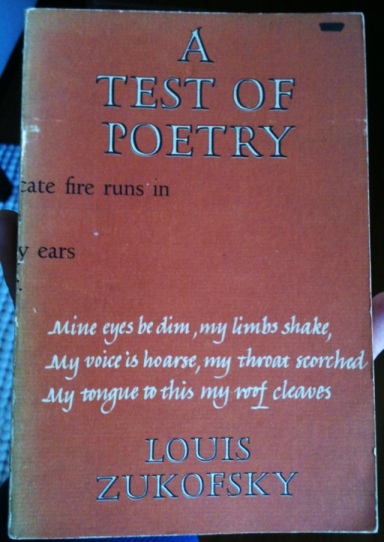
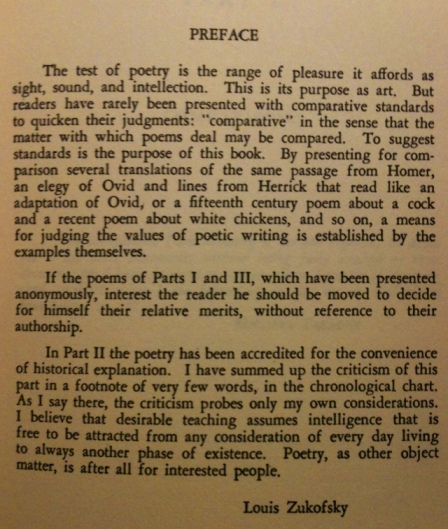
A midcentury paperback of Louis Zukofsky’s A Test of Poetry. This is a strange book. I’d better let Zukofsky explain it:

20120116-175731.jpg

The back cover is lovely as well:

20120115-163132.jpg

Book Acquired, 1.04.2012

20120104-171225.jpg

The Sweet Relief of Missing Children by Sarah Braunstein. I like the awkwardness of the title: what is “missing” modifying? Is it an adjective, describing the children? Is it a gerund? Who is gaining relief from what?

Publisher Norton’s description:

In New York City, a girl called Leonora vanishes without a trace. Years earlier and miles upstate, Goldie, a wild, negligent mother, searches for a man to help raise her precocious son, Paul, who later discovers that the only way to save his soul is to run away. As the narrative moves back and forth in time, we find deeper interconnections between these stories and growing clues about Leonora—this missing girl whose face looks out from telephone poles and billboards—whom one character will give anything to save.

The Sweet Relief of Missing Children is a suspenseful novel about the power of running and the desire for reinvention. It explores the terror and transcendence of our most central experiences: childhood, parenthood, sex, love.

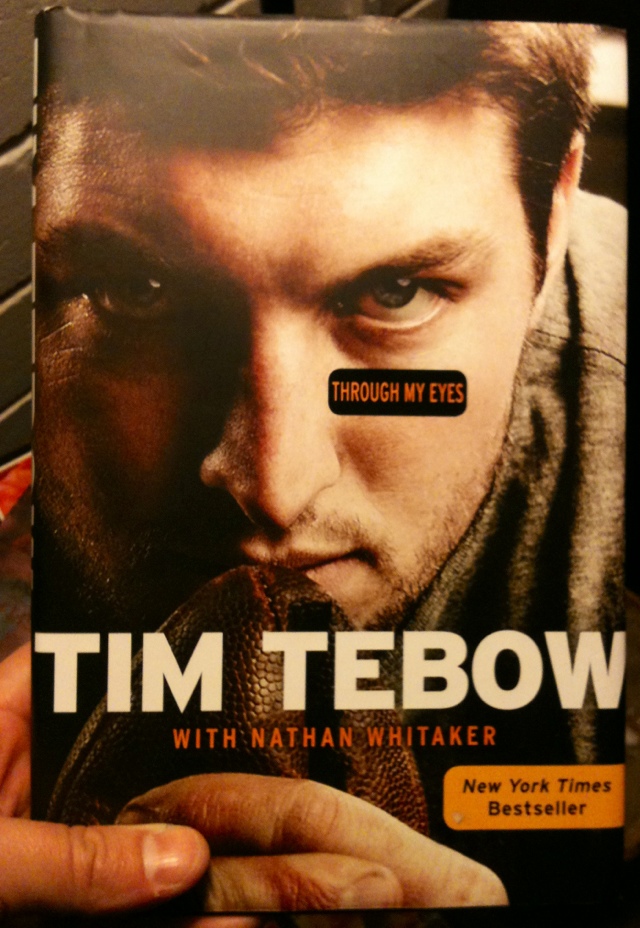
Book Acquired 1.03.2012 — Tim Tebow Edition

My father doesn’t read a lot of books, or at least I don’t think he does, but I know he read Through My Eyes, the Tim Tebow memoir. I’m pretty sure he must have gotten a duplicate for Christmas, because he sent a copy my way yesterday.

If you don’t know who Tim Tebow is (that is, if you’re not a fan of U.S. football, or not from the States, or you just don’t care about sports, or Twitter, or whatever), he was one of the greatest college players of all time, leading the Florida Gators to two national championship titles and two SEC titles. He’s also a devout Christian, the son of missionaries. He currently is the starting quarterback for the Denver Broncos, a team he helped take (quite improbably) to the playoffs this year.

Also: a vocal contingent of people really enjoy hating on him.

Not me. Tebow is from my hometown. I went to the University of Florida. I’m a big Gator fan. And even though I’m not exactly simpatico with evangelical Christianity, Tebow has always struck me as a genuinely good, nice person.

Anyway, I have some interest in the book, although I’m sure it’s pretty standard ghostwritten sports celebrity memoir stuff.

20120103-175429.jpg

Here is what my dad also got for Christmas: a signed Tebow ball. (My name is also Ed, so one day maybe I will have this ball too):

20120103-175448.jpg

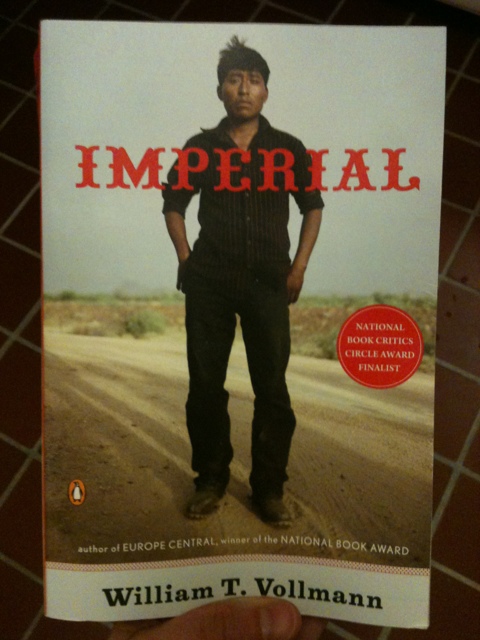
Book Acquired, 12.23.2011; Or, I Read the First 2% of William Vollmann’s Enormous Book Imperial

20111223-194549.jpg

Earlier this week, Biblioklept correspondent A King at Night suggested on this blog that William T. Vollmann, “literature’s own Batman,” may not be entirely real. While Mr. At Night’s post was perhaps a bit tongue-in-cheek, he did hip us to extremely cheap new copies of Vollmann’s 2009 California opus, Imperial. I bought one, of course, knowing that my chances of actually reading it in full were, uh, slim. It showed up today.

I read the first 25 pages, a little over 2% of the book (not counting Vollmann’s endnotes and bibliography). I read the book in the bathtub, drinking a beer (those of you who fear (or find repulsive the prospect of) visualizing my stubby little birthday-suited body besoaped and besudded, I suggest that that role may be played by Geena Davis, circa early nineties, although, obviously, you can pick whomever you like to imagine reading Imperial in a bathtub). I was cognizant of the fact that I was taking a bath—a luxury of sorts—while reading a book that deals in large part about who controls water. I also managed to get the book wet with both blood and water. I don’t know where the blood came from.

The first few pages thrust us right into typical Vollmann territory, with our protagonist paying a cokehead to guide him through the back alleys of Mexicali (Vollmann takes time to note the “street-whores,” of course). Alternately, Vollmann attends the nocturnal activities of the weary Border Patrol, who regularly catch and release Mexicans heading for the Northside (America).

There’s a great little moment, very early in this first chapter, when Vollmann ponders the Sisyphean task of the men who patrol the border:

. . . I almost pitied the futility of his occupation, as I suspect he did mine (the main purpose of my essays being to line birdcages), but then I fortunately persuaded myself that all vocations and callings are equally futile.

This seems like the prototypical Vollmann moment: earnestness bound in supple irony, self-deprecation glossing the intense pride in work that the contemporary world will be happy to (even sometimes boastfully) ignore.

I enjoyed the first pages of this massive book tremendously. Vollmann’s voluminous scope and strange background often eclipse his powers as a proseslinger, and Imperial, so far, is lucid, clean, sharp, and funny.

So I’ll go for it. I’ll read it. I’ll finish it before this time (id est, late Dec.) next year.

Book Acquired, Some Time Last Week: An Exaltation of Larks (The Venereal Game)

20111219-131203.jpg

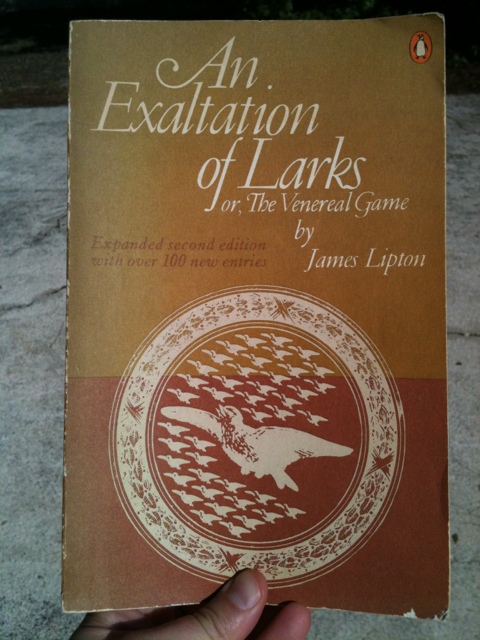
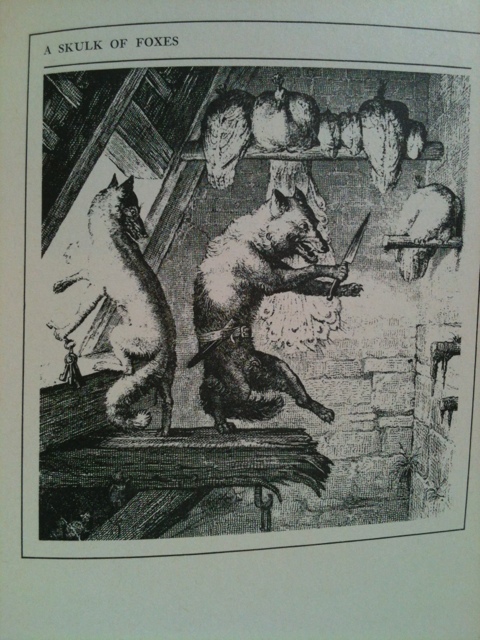
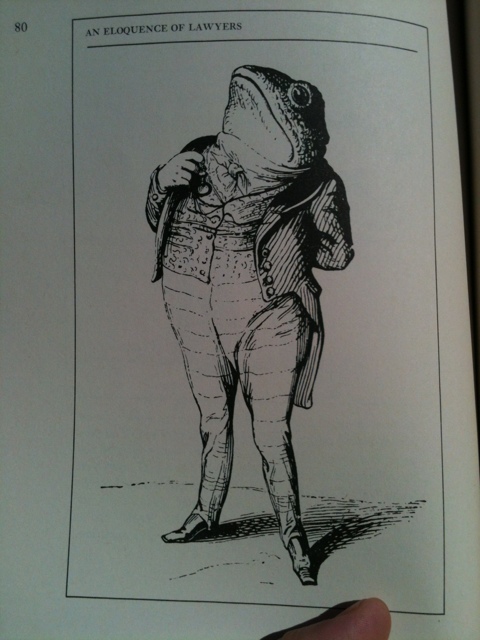
I had never heard of James Lipton’s dictionary of terms of venery, An Exaltation of Larks, or The Venereal Game before I found it wedged between some old etymological dictionaries I was browsing in my favorite book store, but when I picked it up I knew I was going to buy it almost immediately. Part dictionary, part etymology, and part linguistic game, An Exaltation explores those strange collective noncount nouns of English that anglophiles (like me) find so charming and weird. The first part of the book deals with some of the more common terms of venery, like “pride of lions,” or “skulk of foxes”:

20111219-131213.jpg

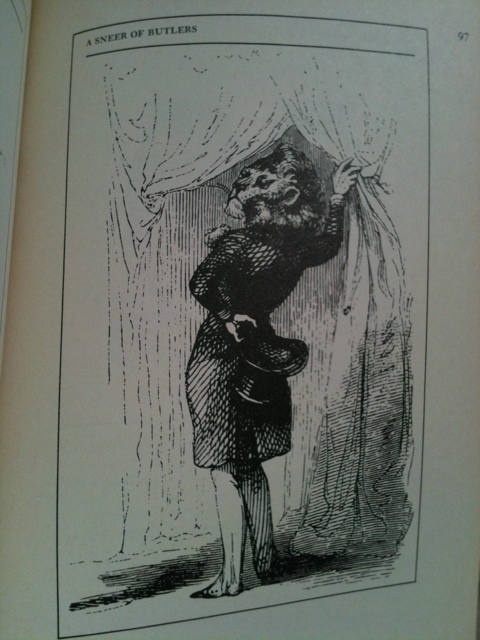
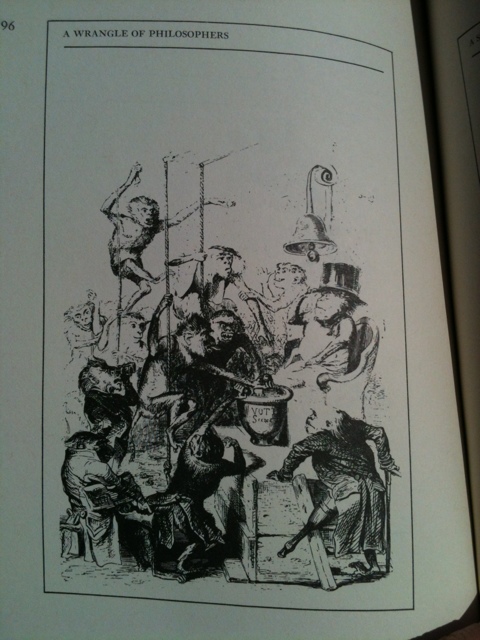
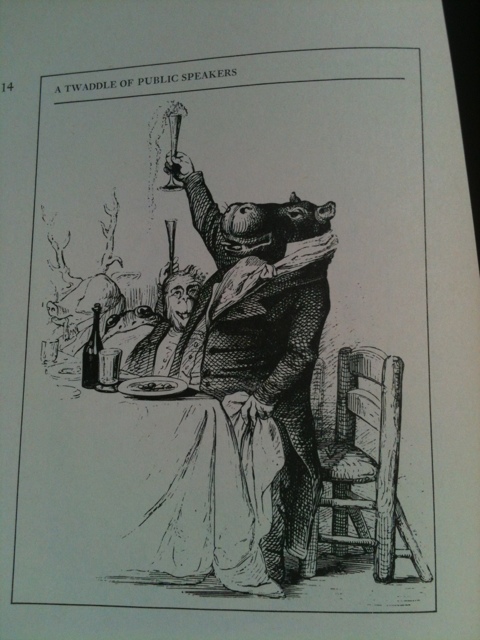
But Lipton soon gives over to more esoteric terms, and then eventually plays with outright invention. The book’s illustrations recall Max Ernst’s surrealist graphic novel Une Semaine de Bonté; they also remind me of the recapitations of recent Biblioklept interviewee Click Mort. Anyway, a very cool book, likely a cult favorite, and lots and lots of fun.

20111219-131224.jpg

20111219-131243.jpg

20111219-131301.jpg

20111219-131308.jpg

Book Acquired, 12.12.2011

20111214-204653.jpg

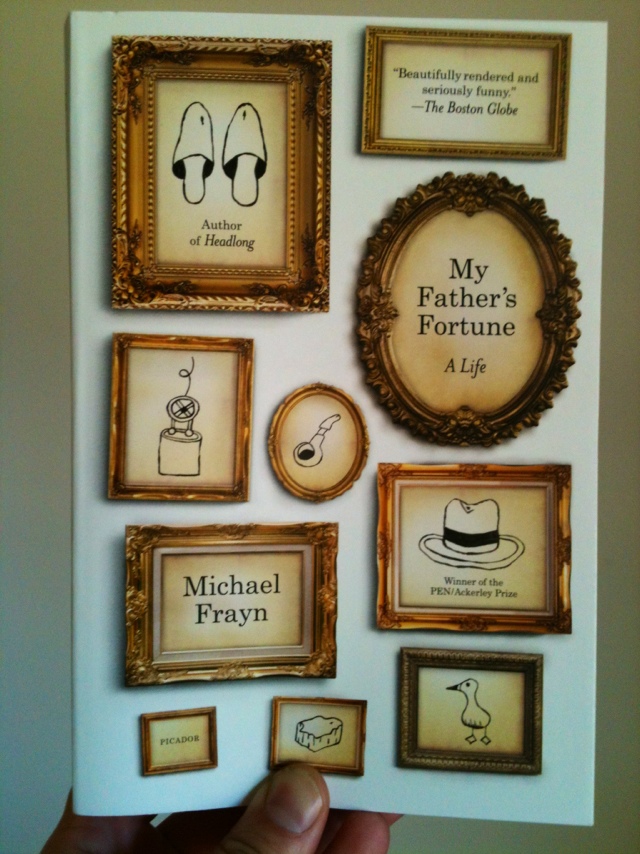
Michael Frayn’s memoir My Father’s Fortune. Publisher Picador’s (trade paperback) description:

Winner of the PEN/Ackerley Prize

Award-winning playwright and novelist Michael Frayn “makes the family memoir his own” (The Daily Telegraph) as he tells the story of his father, Tom Frayn. A clever lad, an asbestos salesman with a winning smile and a racetrack vocabulary, Tom Frayn emerged undaunted from a childhood spent in two rooms with six other people, all of them deaf. And undaunted he stayed, through German rockets, feckless in-laws, and his own increasing deafness; through the setback of a son as bafflingly slow-witted as the father was quick on his feet; through the shockingly sudden tragedy that darkened his life. As Peter Kemp wrote in The Sunday Times (London), “Frayn has never written with more searching brilliance than in his quest for his past.”

Book Acquired, 12.06.2011 — Or, I Photograph My Reader’s Copy of Satantango in the Cheap Showiness of Nature

20111208-172836.jpg

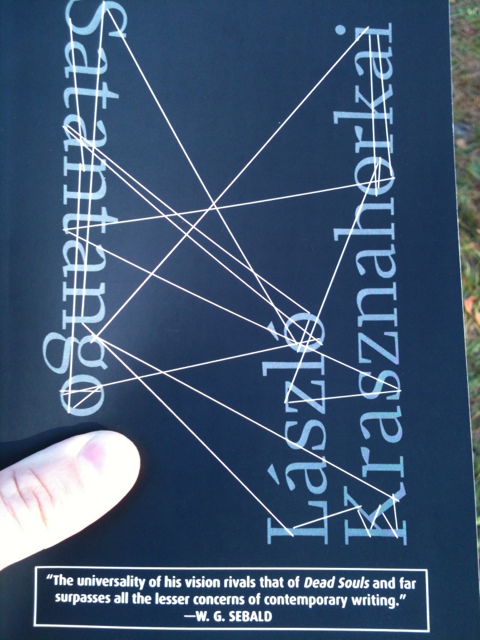
Damn. Check this out. László Krasznahorkai’s novel Satantango, the title of which does not apparently include diacritical marks in its new (first published!) English translation.

Publisher New Direction’s description:

Already famous as the inspiration for the filmmaker Béla Tarr’s six-hour masterpiece, Satantango is proof, as the spellbinding, bleak, and hauntingly beautiful book has it, that “the devil has all the good times.” The story of Satantango, spread over a couple of days of endless rain, focuses on the dozen remaining inhabitants of an unnamed isolated hamlet: failures stuck in the middle of nowhere. Schemes, crimes, infidelities, hopes of escape, and above all trust and its constant betrayal are Krasznahorkai’s meat. “At the center of Satantango,” George Szirtes has said, “is the eponymous drunken dance, referred to here sometimes as a tango and sometimes as a csardas. It takes place at the local inn where everyone is drunk. . . . Their world is rough and ready, lost somewhere between the comic and tragic, in one small insignificant corner of the cosmos. Theirs is the dance of death.” “You know,” Mrs. Schmidt, a pivotal character, tipsily confides, “dance is my one weakness.”

New Directions has a fantastic record when it comes to lit in translation, and Satantango has been long anticipated by English-reading audiences, due in large part to Béla Tarr’s movie (which is more like seven and a half hours, which I meant to watch this summer but couldn’t because I want to watch it with no interruptions, but I have kids and a wife, so, hey).

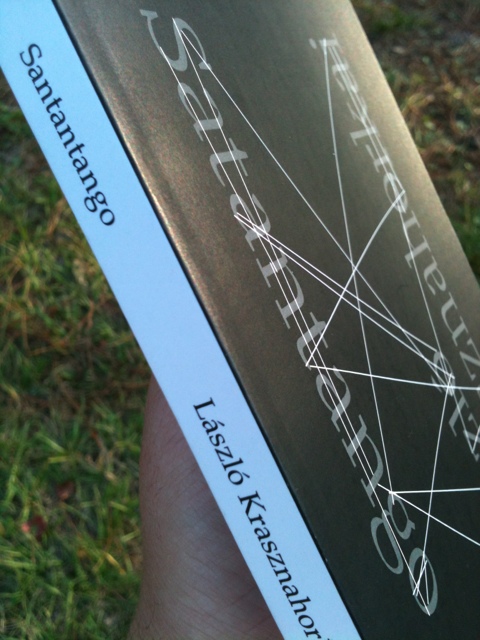
I got into it a bit last night, and, I don’t know if it’s just the advance reader copy I got or what, but there are no paragraph breaks, which is a grueling rhetorical technique, a big dare to readers, really (see also: W.G. Sebald’s Austerlitz (note: Sebald blurbs Satantango)). The advance reader copy also has a delightful typo on the spine, one that makes the book sound like, I dunno, if Santana made a tango record. Or maybe Santa n’ Tango for ever (Cash will no doubt be jealous). More to come.

20111208-172845.jpg

Book Acquired, Sometime Last Week (I’m Not Exactly Sure, It Showed Up While I Was Doing the Thanksgiving Thing in South Florida)

20111129-161210.jpg

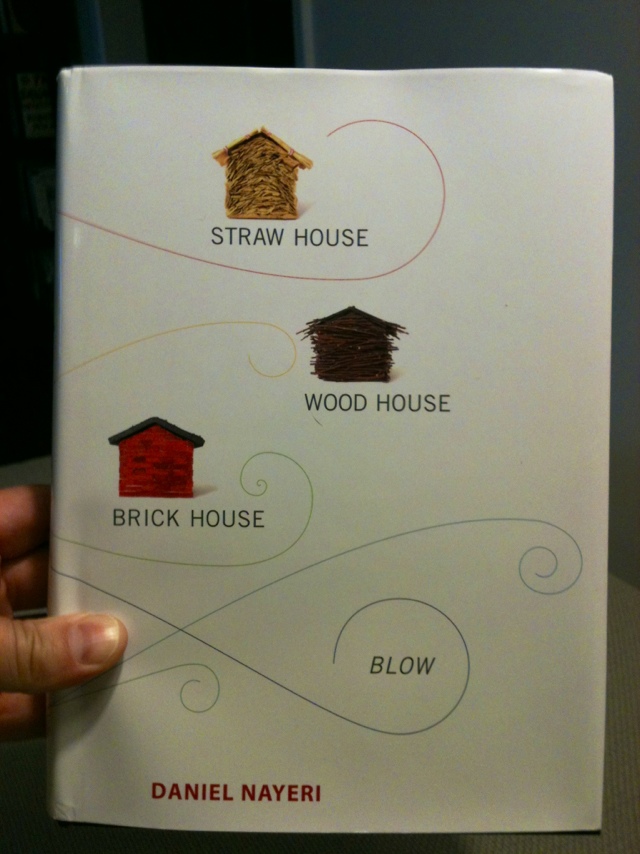
This one looks pretty cool: Daniel Nayeri’s quartet of novels  Straw House, Wood House, Brick House, Blow. Publisher’s description—

Written entirely on an iPhone, this quartet of YA novellas by Another Pan and Another Faust author Daniel Nayeri showcases four different genres.

This bold collection of novellas by Another series author Daniel Nayeri features four riveting tales. These modern riffs on classic genres will introduce young adult readers to a broad range of writing styles that explore universally compelling themes such as identity and belonging, betrayal and friendship, love and mortality.

Straw House: A Western sizzling with suspense, set in a land where a rancher grows soulless humans and a farmer grows living toys.

Wood House: This science-fiction tale plunges the reader into a future where reality and technology blend imperceptibly, and a teenage girl must race to save the world from a nano-revolution that a corporation calls “ReCreation Day.”

Brick House: This detective story set in modern NYC features a squad of “wish police” and a team of unlikely detectives.

Blow: A comedic love story told by none other than Death himself, portrayed here as a handsome and charismatic hero who may steal your heart in more ways than one. With humor, suspense, and relatable prose, this hip and cutting-edge collection dazzles.

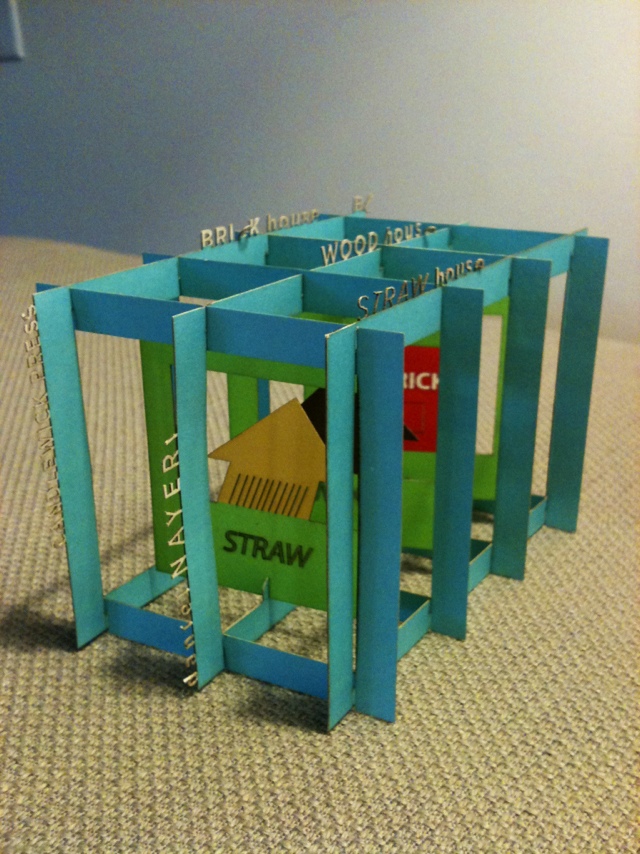
The book also came with this cool, I dunno whatchacallit, bookmark? It’s flat:

20111129-161218.jpg

—and then it pops up, 3-D style. Zing!

20111129-161225.jpg

Book Acquired, 10.29.2011

20111029-095743.jpg

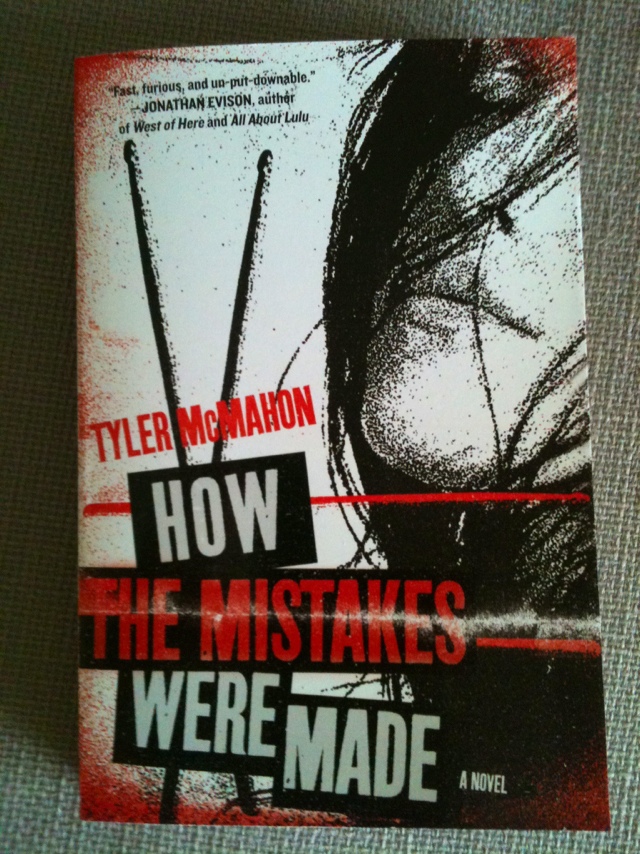
How the Mistakes Were Made, a novel by Tyler McMahon. Description from the author’s site—

Laura Loss came of age in the hardcore punk scene of the 1980s, the jailbait bassist in her brother Anthony’s band. But a decade after tragedy destroyed Anthony and their iconic group, she finds herself serving coffee in Seattle.
While on a reluctant tour through Montana, she meets Sean and Nathan, two talented young musicians dying to leave their small mountain town. Nathan proves to be a charismatic songsmith. Sean has a neurological condition known as synesthesia, which makes him a genius on lead guitar. With Laura’s guidance, the three of them become the Mistakes—accidental standard-bearers for the burgeoning “Seattle Sound.”

As the band graduates from old vans and darkened bars to tour-buses and stadiums, there’s no time to wonder whether stardom is something they want—or can handle. At the height of their fame, the volatile bonds between the three explode in a toxic cloud of love and betrayal. The world blames Laura for the band’s demise. Hated by the fans she’s spent her life serving, she finally tells her side of how the Mistakes were made.

Book trailer—

Book Acquired, 10.13.2011

20111013-192351.jpg

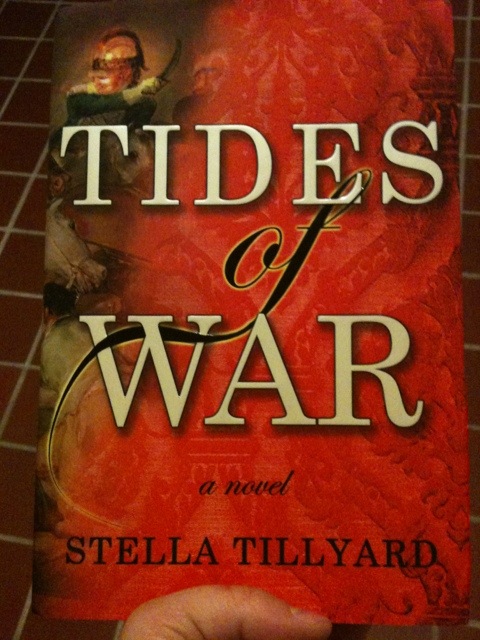
Tides of War, new historical fiction from Stella Tillyard. Publisher (Henry Holt) description—

An epic novel about love and war, set in Regency England and Spain during the Peninsular War (1812-15), by the acclaimed historian and bestselling author of Aristocrats.

Tides of War opens in England with the recently married, charmingly unconventional Harriet preparing to say goodbye to her husband, James, as he leaves to join the Duke of Wellington’s troops in Spain.

Harriet and James’s interwoven stories of love and betrayal propel this sweeping and dramatic novel as it moves between Regency London on the cusp of modernity—a city in love with science, the machine, money—and the shocking violence of war in Spain. With dazzling skill Stella Tillyard explores not only the effects of war on the men at the front but also the freedoms it offers the women left behind. As Harriet befriends the older and protective Kitty, Lady Wellington, her life begins to change in unexpected ways. Meanwhile, James is seduced by the violence of battle, and then by love in Seville.
As the novel moves between war and peace, Spain and London, its large cast of characters includes the serial adulterer and war hero the Duke of Wellington, and the émigrés Nathan Rothschild and Frederic Winsor who will usher in the future, creating a world brightly lit by gaslight where credit and financial speculation rule. Whether describing the daily lives and desires of strong female characters or the horror of battle, Tides of War is set to be the fiction debut of the year.

(A Very Beautiful) Book Acquired, 9.27.2011

20111004-142338.jpg

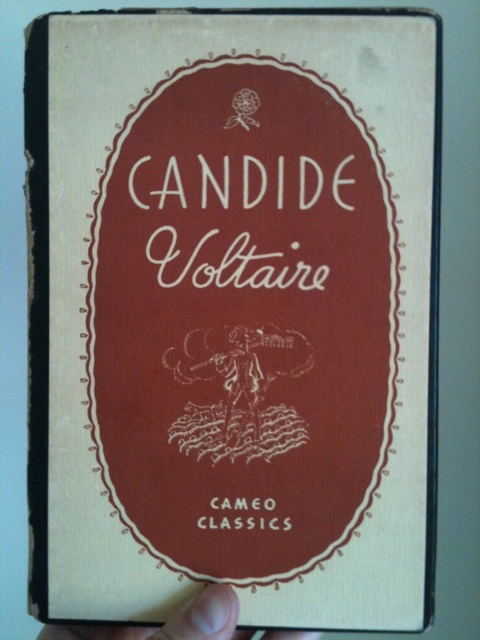
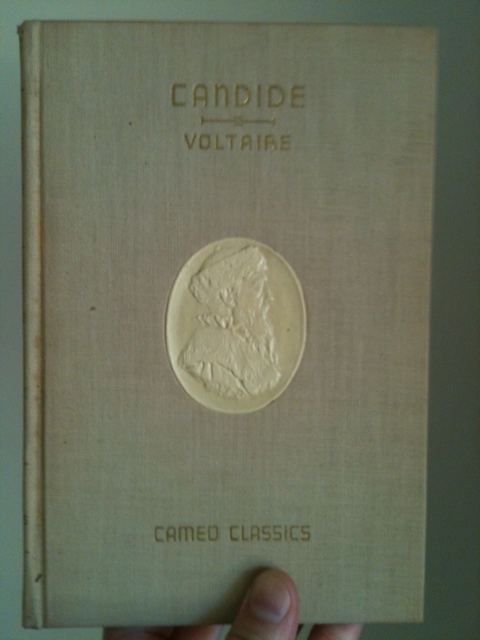
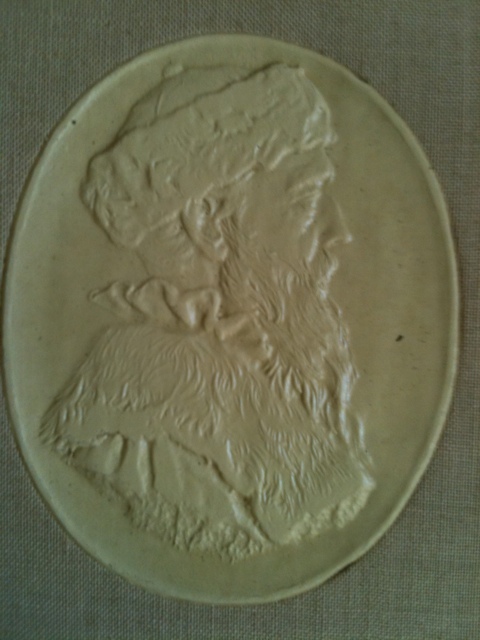
What a wonderful present: a 1930 Grosset & Dunlap edition Candide (read our review of Candide). Received it last week, but I’ve been to busy to photograph it. Has a nice slipcase (above), and the cover sports a tactile cameo of Gutenberg in profile—

20111004-142346.jpg

20111004-142354.jpg

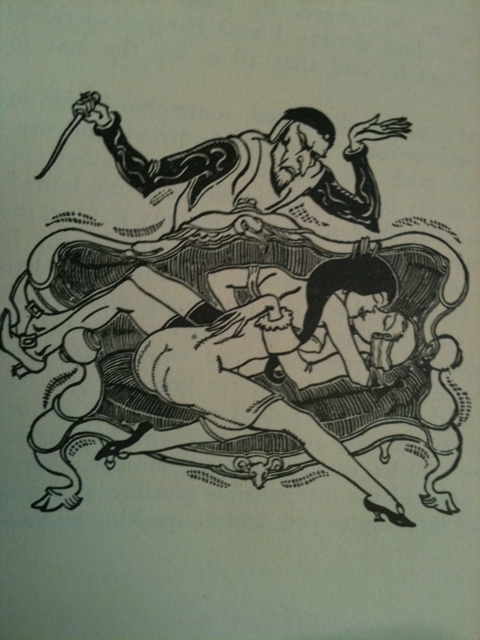
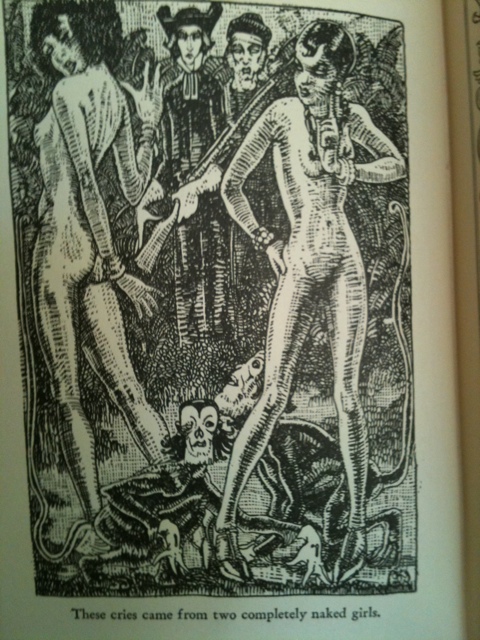
Illustrations are by Mahlon Blaine, and inevitably involve sex and/or violence—like this one below—

20111004-143419.jpg

There a number of handsome full page illustrations as well. Just lovely.

20111004-143428.jpg