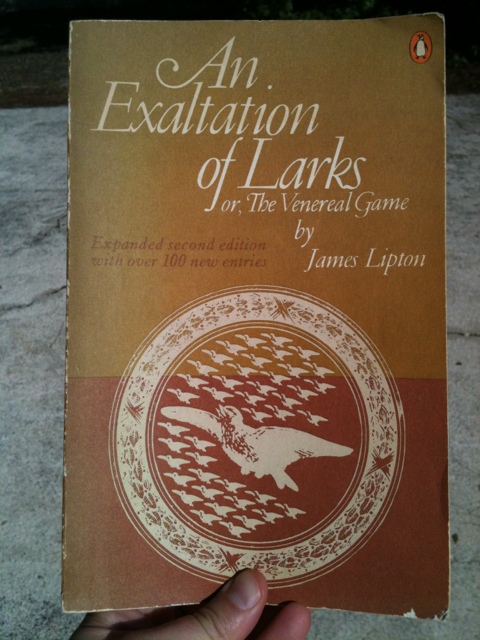
Book Acquired, Some Time Last Week: An Exaltation of Larks (The Venereal Game)

20111219-131203.jpg

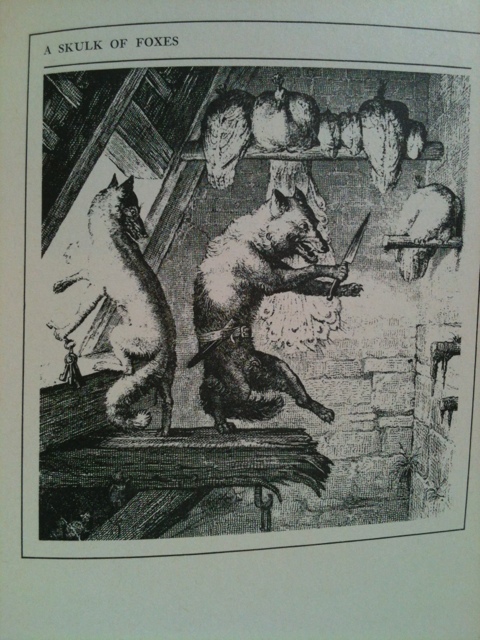
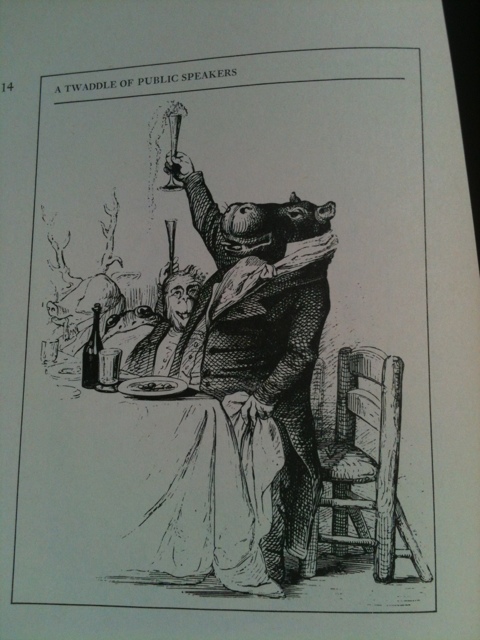
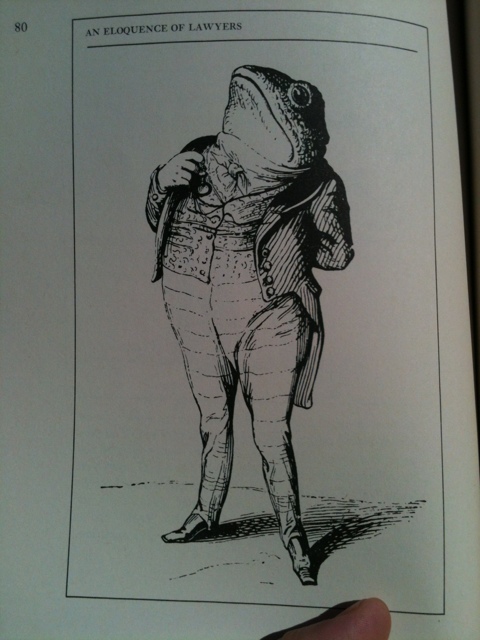
I had never heard of James Lipton’s dictionary of terms of venery, An Exaltation of Larks, or The Venereal Game before I found it wedged between some old etymological dictionaries I was browsing in my favorite book store, but when I picked it up I knew I was going to buy it almost immediately. Part dictionary, part etymology, and part linguistic game, An Exaltation explores those strange collective noncount nouns of English that anglophiles (like me) find so charming and weird. The first part of the book deals with some of the more common terms of venery, like “pride of lions,” or “skulk of foxes”:

20111219-131213.jpg

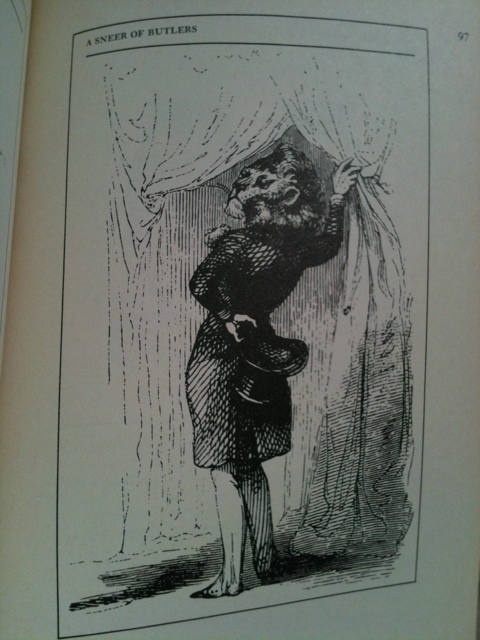
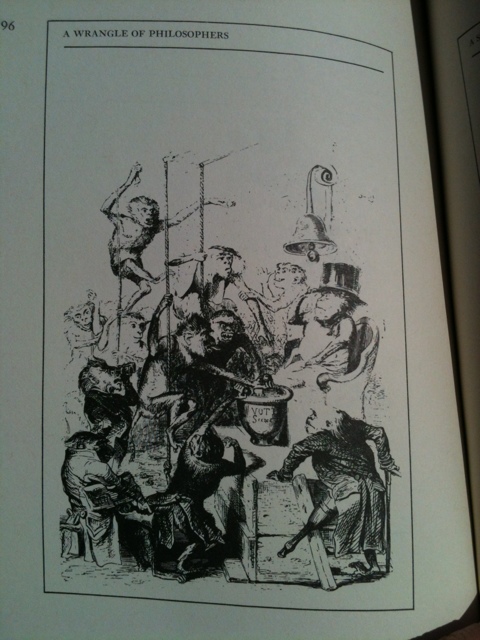
But Lipton soon gives over to more esoteric terms, and then eventually plays with outright invention. The book’s illustrations recall Max Ernst’s surrealist graphic novel Une Semaine de Bonté; they also remind me of the recapitations of recent Biblioklept interviewee Click Mort. Anyway, a very cool book, likely a cult favorite, and lots and lots of fun.

20111219-131224.jpg

20111219-131243.jpg

20111219-131301.jpg

20111219-131308.jpg

Book Acquired, 12.12.2011

20111214-204653.jpg

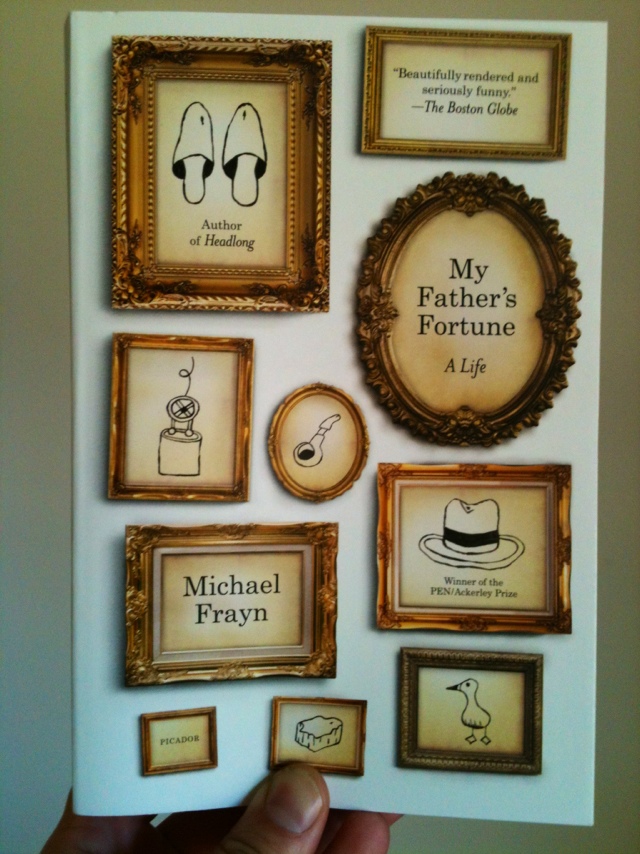
Michael Frayn’s memoir My Father’s Fortune. Publisher Picador’s (trade paperback) description:

Winner of the PEN/Ackerley Prize

Award-winning playwright and novelist Michael Frayn “makes the family memoir his own” (The Daily Telegraph) as he tells the story of his father, Tom Frayn. A clever lad, an asbestos salesman with a winning smile and a racetrack vocabulary, Tom Frayn emerged undaunted from a childhood spent in two rooms with six other people, all of them deaf. And undaunted he stayed, through German rockets, feckless in-laws, and his own increasing deafness; through the setback of a son as bafflingly slow-witted as the father was quick on his feet; through the shockingly sudden tragedy that darkened his life. As Peter Kemp wrote in The Sunday Times (London), “Frayn has never written with more searching brilliance than in his quest for his past.”

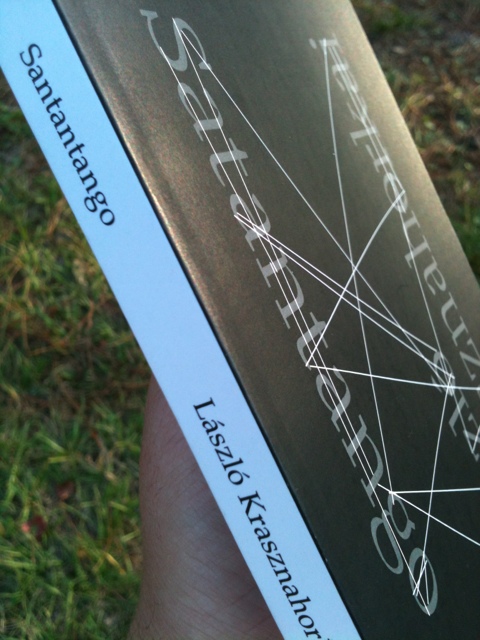
Book Acquired, 12.06.2011 — Or, I Photograph My Reader’s Copy of Satantango in the Cheap Showiness of Nature

20111208-172836.jpg

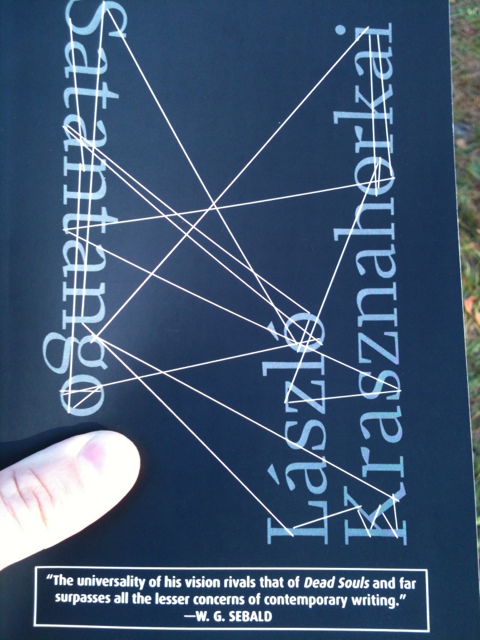
Damn. Check this out. László Krasznahorkai’s novel Satantango, the title of which does not apparently include diacritical marks in its new (first published!) English translation.

Publisher New Direction’s description:

Already famous as the inspiration for the filmmaker Béla Tarr’s six-hour masterpiece, Satantango is proof, as the spellbinding, bleak, and hauntingly beautiful book has it, that “the devil has all the good times.” The story of Satantango, spread over a couple of days of endless rain, focuses on the dozen remaining inhabitants of an unnamed isolated hamlet: failures stuck in the middle of nowhere. Schemes, crimes, infidelities, hopes of escape, and above all trust and its constant betrayal are Krasznahorkai’s meat. “At the center of Satantango,” George Szirtes has said, “is the eponymous drunken dance, referred to here sometimes as a tango and sometimes as a csardas. It takes place at the local inn where everyone is drunk. . . . Their world is rough and ready, lost somewhere between the comic and tragic, in one small insignificant corner of the cosmos. Theirs is the dance of death.” “You know,” Mrs. Schmidt, a pivotal character, tipsily confides, “dance is my one weakness.”

New Directions has a fantastic record when it comes to lit in translation, and Satantango has been long anticipated by English-reading audiences, due in large part to Béla Tarr’s movie (which is more like seven and a half hours, which I meant to watch this summer but couldn’t because I want to watch it with no interruptions, but I have kids and a wife, so, hey).

I got into it a bit last night, and, I don’t know if it’s just the advance reader copy I got or what, but there are no paragraph breaks, which is a grueling rhetorical technique, a big dare to readers, really (see also: W.G. Sebald’s Austerlitz (note: Sebald blurbs Satantango)). The advance reader copy also has a delightful typo on the spine, one that makes the book sound like, I dunno, if Santana made a tango record. Or maybe Santa n’ Tango for ever (Cash will no doubt be jealous). More to come.

20111208-172845.jpg

Book Acquired, Sometime Last Week (I’m Not Exactly Sure, It Showed Up While I Was Doing the Thanksgiving Thing in South Florida)

20111129-161210.jpg

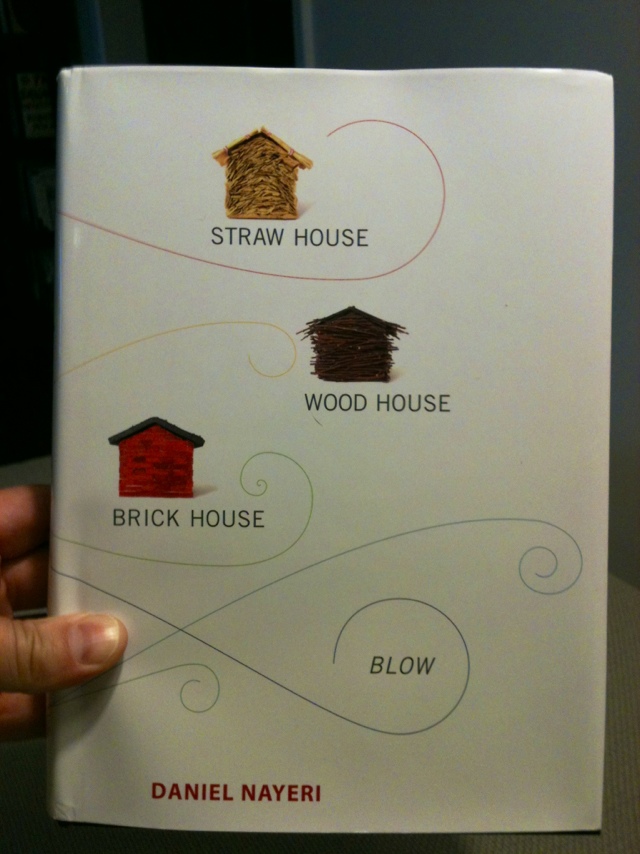
This one looks pretty cool: Daniel Nayeri’s quartet of novels  Straw House, Wood House, Brick House, Blow. Publisher’s description—

Written entirely on an iPhone, this quartet of YA novellas by Another Pan and Another Faust author Daniel Nayeri showcases four different genres.

This bold collection of novellas by Another series author Daniel Nayeri features four riveting tales. These modern riffs on classic genres will introduce young adult readers to a broad range of writing styles that explore universally compelling themes such as identity and belonging, betrayal and friendship, love and mortality.

Straw House: A Western sizzling with suspense, set in a land where a rancher grows soulless humans and a farmer grows living toys.

Wood House: This science-fiction tale plunges the reader into a future where reality and technology blend imperceptibly, and a teenage girl must race to save the world from a nano-revolution that a corporation calls “ReCreation Day.”

Brick House: This detective story set in modern NYC features a squad of “wish police” and a team of unlikely detectives.

Blow: A comedic love story told by none other than Death himself, portrayed here as a handsome and charismatic hero who may steal your heart in more ways than one. With humor, suspense, and relatable prose, this hip and cutting-edge collection dazzles.

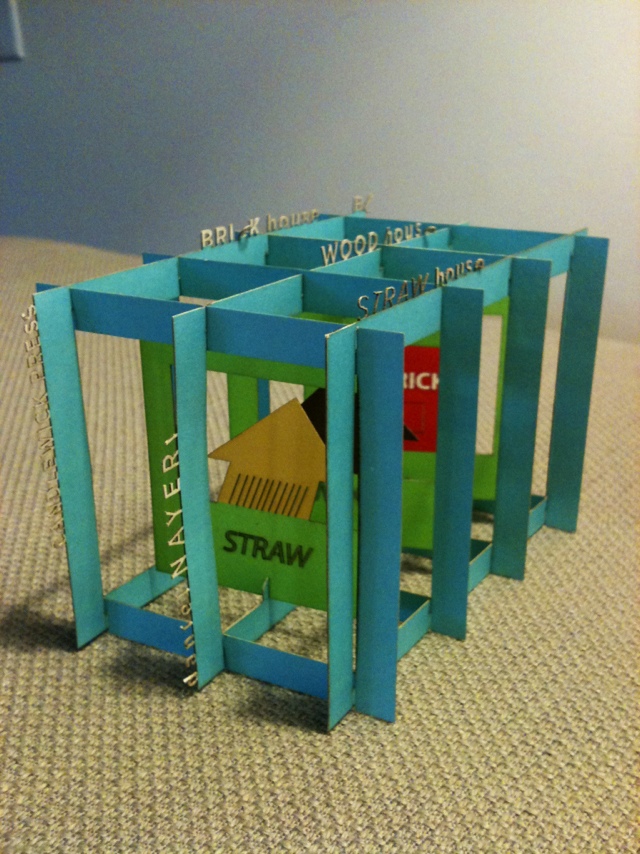
The book also came with this cool, I dunno whatchacallit, bookmark? It’s flat:

20111129-161218.jpg

—and then it pops up, 3-D style. Zing!

20111129-161225.jpg

Book Acquired, 10.29.2011

20111029-095743.jpg

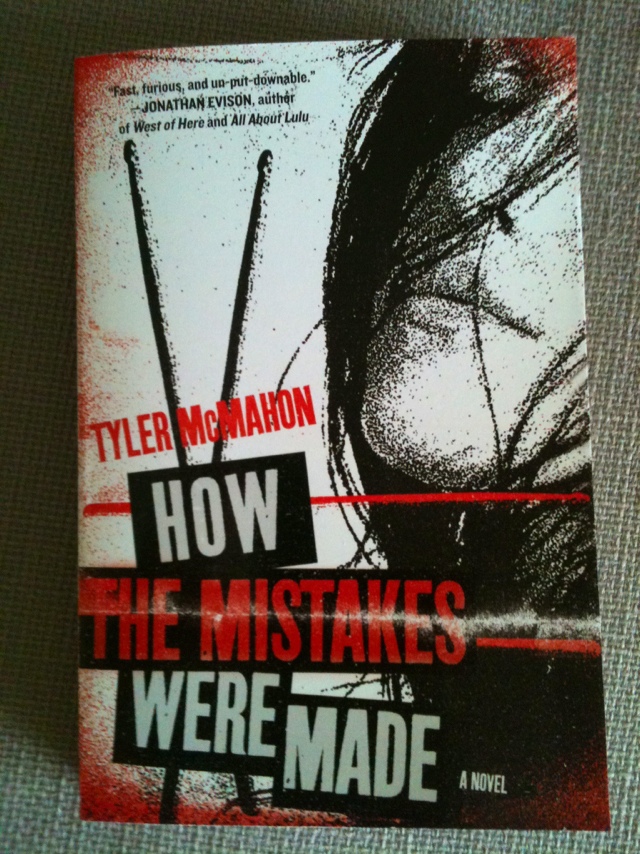
How the Mistakes Were Made, a novel by Tyler McMahon. Description from the author’s site

Laura Loss came of age in the hardcore punk scene of the 1980s, the jailbait bassist in her brother Anthony’s band. But a decade after tragedy destroyed Anthony and their iconic group, she finds herself serving coffee in Seattle.

While on a reluctant tour through Montana, she meets Sean and Nathan, two talented young musicians dying to leave their small mountain town. Nathan proves to be a charismatic songsmith. Sean has a neurological condition known as synesthesia, which makes him a genius on lead guitar. With Laura’s guidance, the three of them become the Mistakes—accidental standard-bearers for the burgeoning “Seattle Sound.”

As the band graduates from old vans and darkened bars to tour-buses and stadiums, there’s no time to wonder whether stardom is something they want—or can handle. At the height of their fame, the volatile bonds between the three explode in a toxic cloud of love and betrayal. The world blames Laura for the band’s demise. Hated by the fans she’s spent her life serving, she finally tells her side of how the Mistakes were made.

Book trailer—

Book Acquired, 10.13.2011

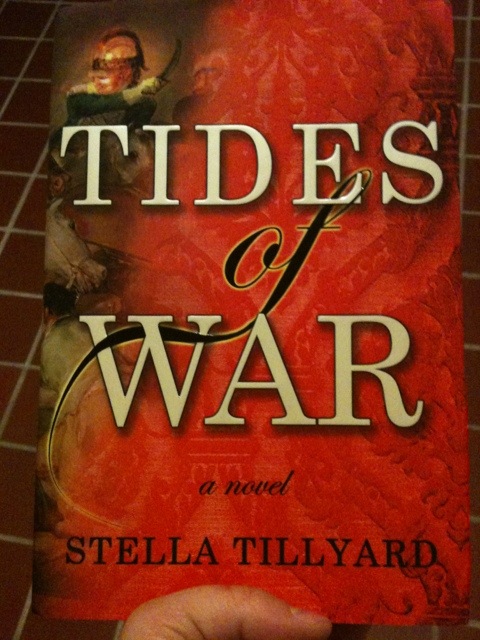
20111013-192351.jpg

Tides of War, new historical fiction from Stella Tillyard. Publisher (Henry Holt) description—

An epic novel about love and war, set in Regency England and Spain during the Peninsular War (1812-15), by the acclaimed historian and bestselling author of Aristocrats.

Tides of War opens in England with the recently married, charmingly unconventional Harriet preparing to say goodbye to her husband, James, as he leaves to join the Duke of Wellington’s troops in Spain.

Harriet and James’s interwoven stories of love and betrayal propel this sweeping and dramatic novel as it moves between Regency London on the cusp of modernity—a city in love with science, the machine, money—and the shocking violence of war in Spain. With dazzling skill Stella Tillyard explores not only the effects of war on the men at the front but also the freedoms it offers the women left behind. As Harriet befriends the older and protective Kitty, Lady Wellington, her life begins to change in unexpected ways. Meanwhile, James is seduced by the violence of battle, and then by love in Seville.

As the novel moves between war and peace, Spain and London, its large cast of characters includes the serial adulterer and war hero the Duke of Wellington, and the émigrés Nathan Rothschild and Frederic Winsor who will usher in the future, creating a world brightly lit by gaslight where credit and financial speculation rule. Whether describing the daily lives and desires of strong female characters or the horror of battle, Tides of War is set to be the fiction debut of the year.

(A Very Beautiful) Book Acquired, 9.27.2011

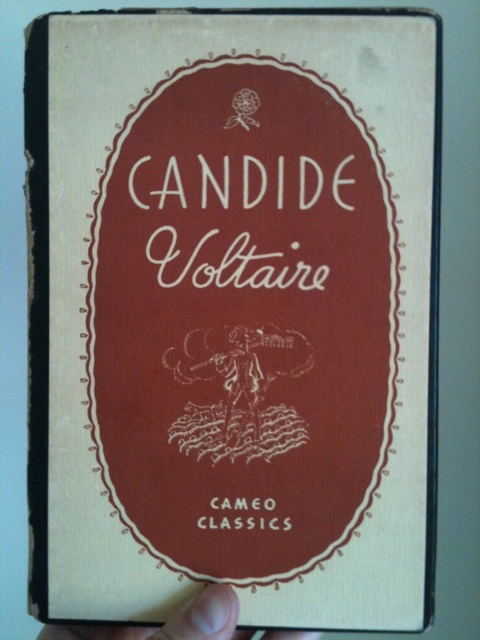
20111004-142338.jpg

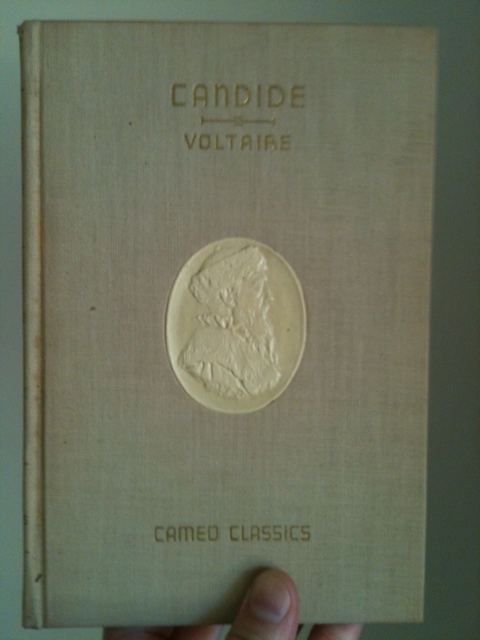
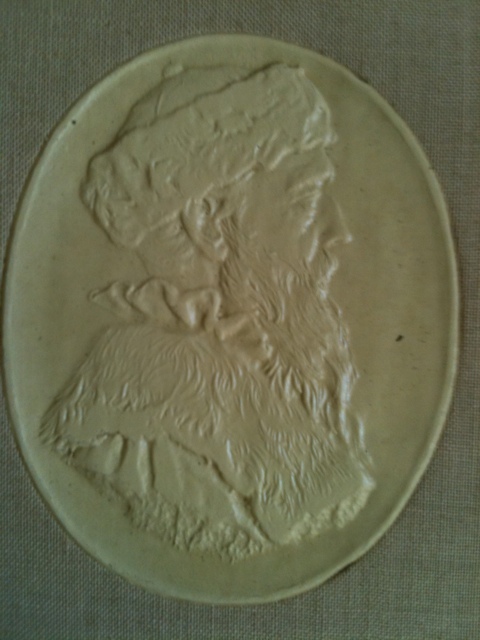
What a wonderful present: a 1930 Grosset & Dunlap edition Candide (read our review of Candide). Received it last week, but I’ve been to busy to photograph it. Has a nice slipcase (above), and the cover sports a tactile cameo of Gutenberg in profile—

20111004-142346.jpg

20111004-142354.jpg

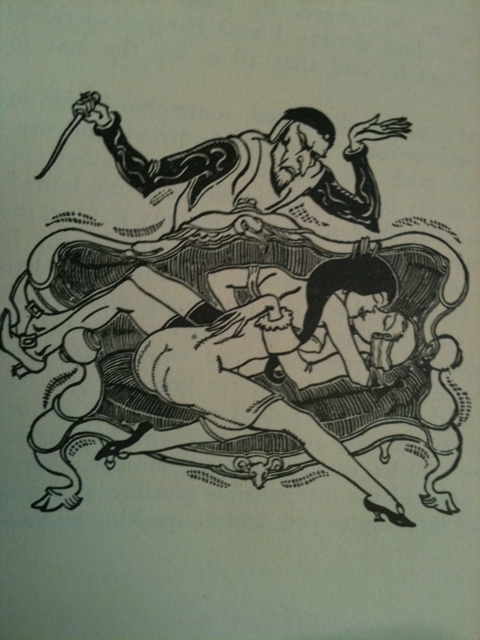
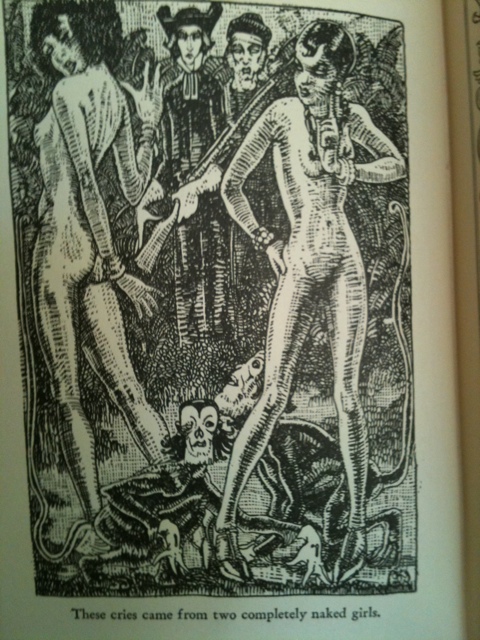
Illustrations are by Mahlon Blaine, and inevitably involve sex and/or violence—like this one below—

20111004-143419.jpg

There a number of handsome full page illustrations as well. Just lovely.

20111004-143428.jpg

Book Acquired, 9.30.2011

20110930-164525.jpg

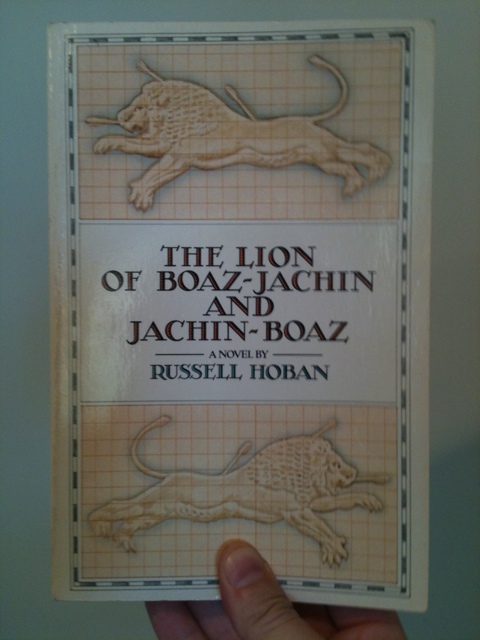
The Lion of Boaz-Jachin and Jachin-Boaz by Russell Hoban. It’s his first novel. Picked it up at the used bookshop today. Love the cover. I’m sure it’s as weird as the other stuff I’ve read by him (Riddley Walker, Pilgermann, Kleinzheit).

Book Acquired, 9.29.2011

20110929-030604.jpg

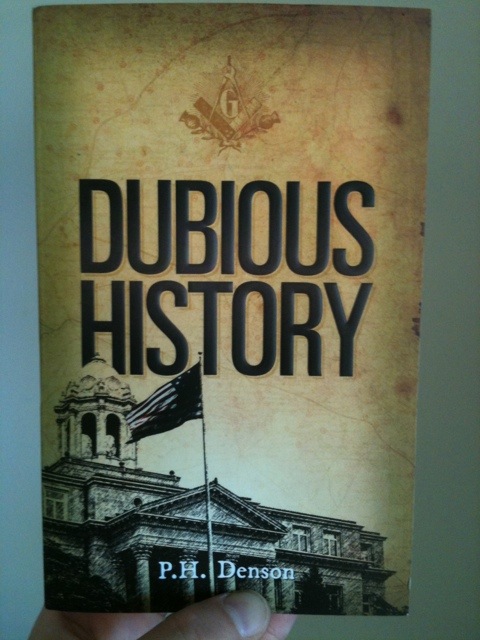
Dubious History by P.H. Denson. This sucker is thick; 550+ pages of conspiracy theory driven thriller. I read the first few pages this afternoon; the writing is much better than the swollen publisher’s description below—

Drawing on the secretive and intriguing mysteries of the Masonic brotherhood, the fast-paced, brilliantly layered storyline and its fascinating central characters have proved a big hit with readers who like to have their wits challenged and to be kept guessing right to the end. The story begins with what appears to be a hit-and-run ‘accident’ and moves rapidly to reveal a chilling web of serial murders and a deadly Masonic secret. George Fairfax, a Pulitzer nominee researching the history of a small American town, falls victim to a hit-and-run. When his nephew Zach steps in to complete writing the town’s history, he quickly becomes suspicious of his uncle’s ‘accidental’ death. Zach begins to unravel a spiderweb of clues that point to a dangerous Masonic secret which may also be responsible for the mysterious deaths of a number of other members of the Masonic lodge. Can Zach decode the clues to the two-hundred-year-old secret in time to find the serial killer before he claims his next victim? And what twists await at every turn as each clue uncovers more of the shocking truth behind the killer’s real end-game?

Book Acquired, 9.26.2011

20110926-033621.jpg

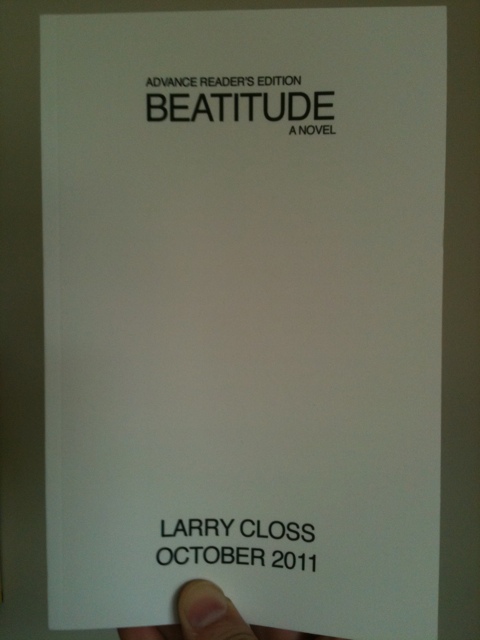
Beatitude by Larry Closs; ARC courtesy of the author. The book looks pretty cool—description from the author’s site

New York City, 1995: Harry Charity is a sensitive young loner haunted by a disastrous affair when he meets Jay Bishop, an outgoing poet and former Marine. Propelled by a shared fascination with the unfettered lives of Jack Kerouac and the Beat Generation, the two are irresistibly drawn together, even as Jay’s girlfriend, Zahra, senses something deeper developing.

Reveling in their discovery of the legendary scroll manuscript of Kerouac’s On the Road in the vaults of the New York Public Library, Harry and Jay embark on a nicotine-and-caffeine-fueled journey into New York’s thriving poetry scene of slams and open-mike nights.

An encounter with “Howl” poet Allen Ginsberg shatters their notions of what it means to be Beat but ultimately and unexpectedly leads them into their own hearts where they’re forced to confront the same questions that confounded their heroes: What do you do when you fall for someone who can’t fall for you? What do you do when you’re the object of affection? What must you each give up to keep the other in your life?

Beatitude features two previously unpublished poems by Allen Ginsberg.

Book Acquired, 9.22.2011

20110922-040608.jpg

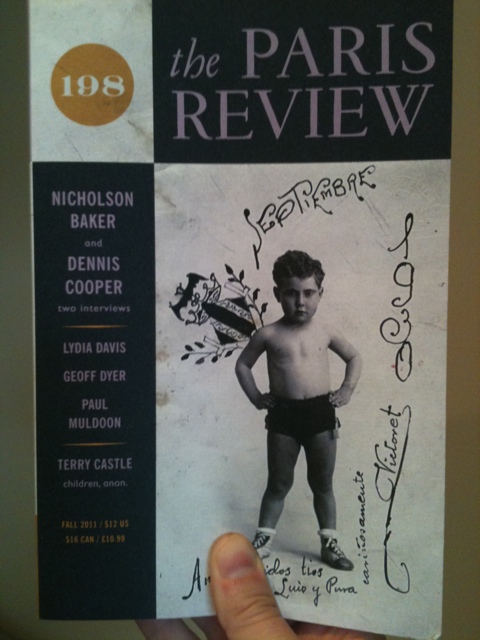
Hey! Sex! Nicholson Baker, Dennis Cooper! Lydia Davis, Geoff Dyer (maybe  not so sex). You can read the cover. Bolaño didn’t make the cover this time, and the third installment of The Third Reich is kinda skinny, but, sure, hey, another intriguing issue.


Book Acquired, 9.09.11 — Or, I Buy Yet Another William T. Vollmann Book Against My Better Judgment

20110909-044233.jpg

I like William T. Vollmann the persona probably more than I like William T. Vollmann the writer. That isn’t to say that I haven’t thought that the handful of books I’ve read by him were brilliant, strange, and engrossing—because they are—but I’ll admit that his methods, his back story, his sheer and absolute not-giving-a-fuckness is a major attraction. Voluminous Vollmann, unreadable Vollmann; smartypants Vollmann, fragile Vollmann. Vollmann, producer of travelogues, alternate histories, hagiographies for hookers; Vollmann, Ice Age chronicler; saga-slinging Vollmann. I can’t think of a writer who does more and says more and, because of his maximalist approach, will be largely unread, both for his career and for posterity—unless he concedes to edit. I think the irony is that, in wanting to give everything to his reader and wanting to preserve everything about his subjects—an act of love, compassion, empathy, what have you—in these grand, hopeless gestures, Vollmann paradoxically displays that intrinsic not-giving-a-fuckness. He needs an editor.

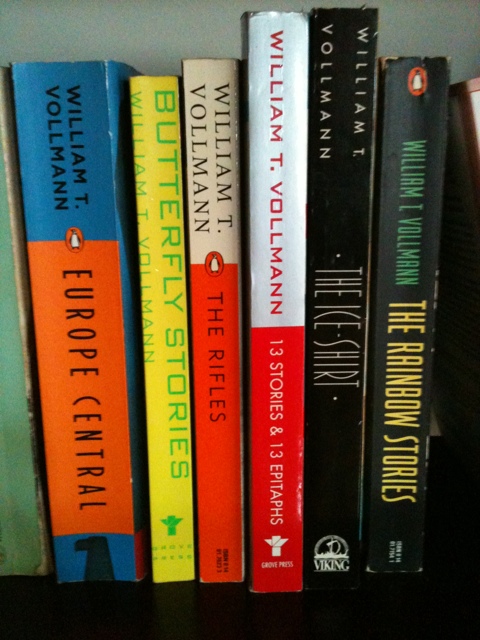
So, this afternoon, browsing at my favorite bookshop, a labyrinthine twisty thing, I ambled innocently past the ‘V’s of General Fiction, looking for a novel by Karel Capek in the sci-fi section, which abuts said ‘V’ aisle. Again, this was all innocence. I had no intention of picking up anything by Vollmann, despite the huge stack of his works there, used testaments to the futility of trying to read Vollmann perhaps—at least a dozen souls who said “fuck it” to Europe Central. Here are the Vollmann volumes (volmumes?) I possess—
20110909-044243.jpg

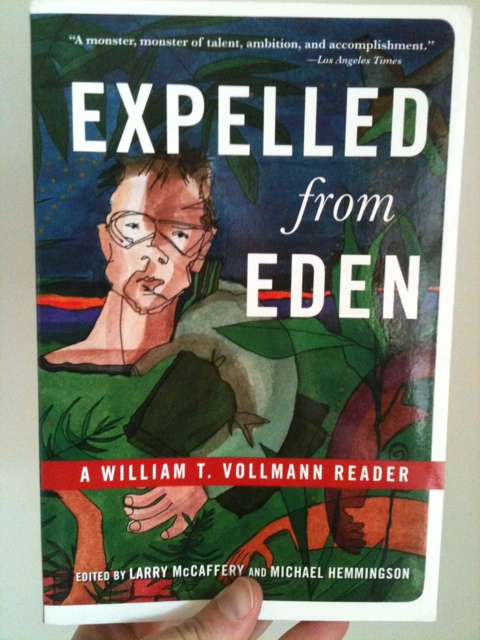
I’ve read Butterfly Stories, The Rifles, and The Ice-Shirt; I’ve read most of 13 Stories & 13 Epitaphs. I’ve read bits of The Rainbow Stories and mostly nothing of Europe Central, which migrated out of the “to read” stack a few years ago. So, yeah, I wasn’t looking for another Vollmann. But I’m too frequent a visitor at this particular labyrinthy, somewhat famous North Florida bookshop, so I noticed a “new” Vollmann in the stack, Expelled from Eden. And I started thumbing through it. Against my better judgment. 20 minutes later I was brainstorming reasons not to pick it up, but honestly, the credit in book trade I have with the store nails most economic arguments, and really, I’m thinking this is exactly what I wanted someone to do with Vollmann: edit that shit.

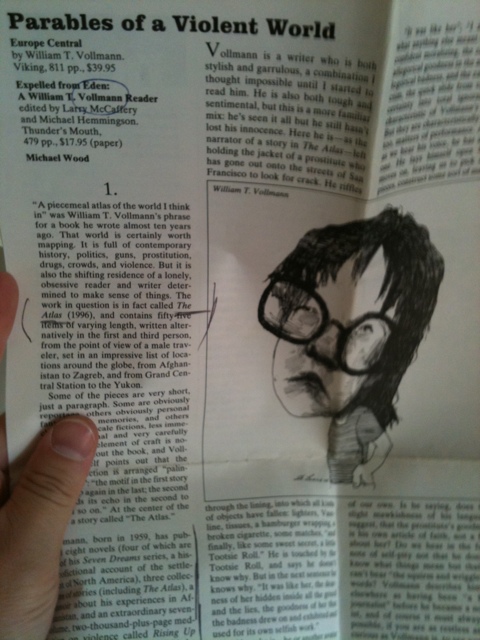
Larry McCaffrey and Michael Hemmingson have excised, chopped, moved around, and pulled from all over Vollmann’s massive world, putting together a book organized around Vollmann’s grand themes—travel writing; war; violence; prostitution; literature. There are lists, drawings, photographs. There is biography. I came home and read for an hour. I’m sure I’ll be sharing some citations down the road.

As a sort of bonus—and I always love to pick up a book where something is neatly tucked away—is an entire 2005 feature from The New York Review on Vollmann, focusing on Expelled from Eden and Europe Central.
20110909-044253.jpg

Book Acquired, 9.06.11

20110906-034002.jpg

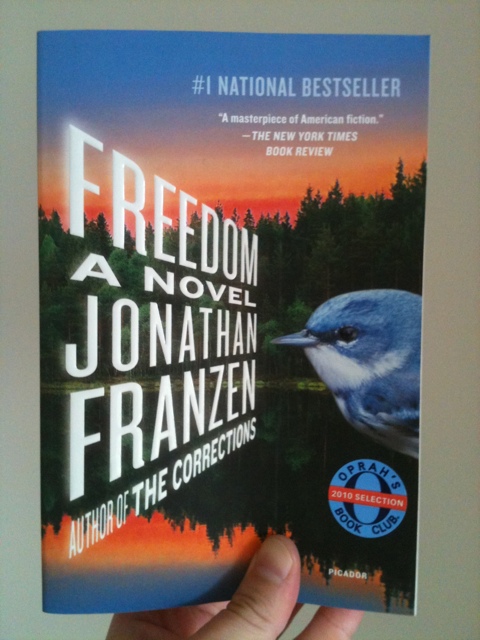
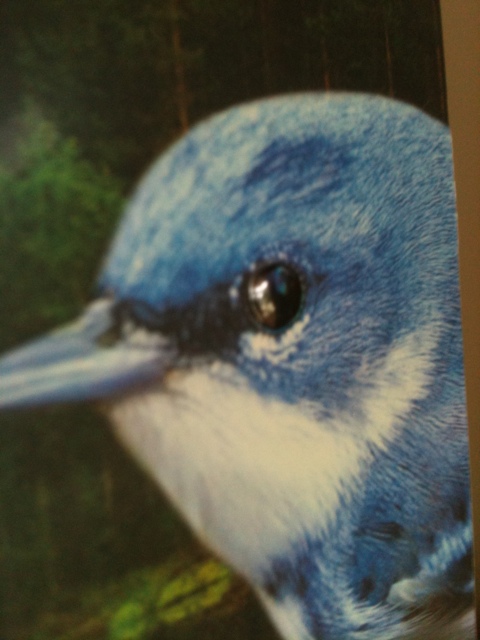
The kind people at Picador sent me a copy of the trade paperback of this book called Freedom by some guy named Jonathan Franzen. The hardback came out last year, but it kinda went under the radar; one of those obscure underground reads. Maybe he’ll have more success in the paperback (it’s certainly lighter). The book has apparently been BeDazzled, too—a nice touch. The bird’s eye is this bumpy little bumpy bump—I tried to angle the cover so you might see it in the closeup below, but I’m not sure if it comes across.

20110906-034014.jpg

Book Acquired, 9.2.11

20110902-032920.jpg

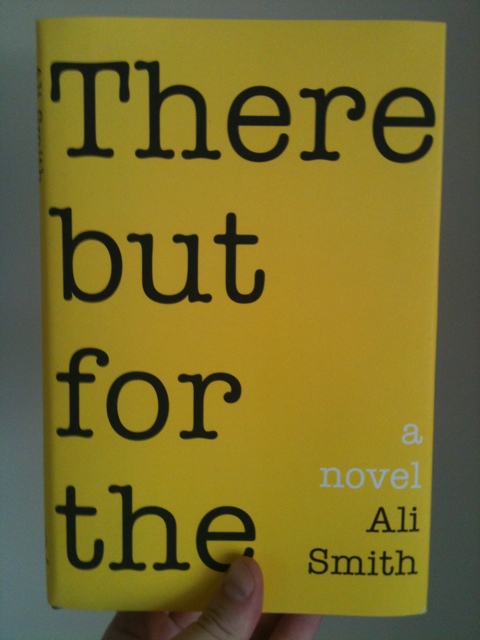
Today in the mail: Ali Smith’s There but for the. Publisher’s description—

At a dinner party in the posh London suburb of Greenwich, Miles Garth suddenly leaves the table midway through the meal, locks himself in an upstairs room, and refuses to leave. An eclectic group of neighbors and friends slowly gathers around the house, and Miles’s story is told from the points of view of four of them: Anna, a woman in her forties; Mark, a man in his sixties; May, a woman in her eighties; and a ten-year-old named Brooke. The thing is, none of these people knows Miles more than slightly. How much is it possible for us to know about a stranger? And what are the consequences of even the most casual, fleeting moments we share every day with one another?

Book Acquired, 8.29.2011

20110829-021552.jpg

Got a finished copy of Chad Harbach’s (n+1) début novel The Art of Fielding today; the book comes out next week from Little, Brown & Company. Their description—

At Westish College, baseball star Henry Skrimshander seems destined for the big leagues until a routine throw goes disastrously off course. In the aftermath of his error, the fates of five people are upended. Henry’s life’s purpose is called into question. Guert Affenlight, the college’s president, has fallen helplessly, unexpectedly in love. Owen Glass, Henry’s gay roommate, becomes swept up in a dangerous affair. Mike Schwartz, the team captain, realizes he guides Henry’s career at the expense of his own. And Pella Affenlight, Guert’s daughter, returns to Westish to start a new life after an ill-fated marriage. As the season counts down to its climax, these five confront their deepest hopes, anxieties, and secrets, and help one another to find their true paths. Written with boundless intelligence, and filled with the tenderness of youth, The Art of Fielding is an expansive, warmhearted novel about ambition and its limits, about family and friendship and love, and about commitment—to oneself and to others.


Book Acquired, 8.25.11

20110825-023856.jpg

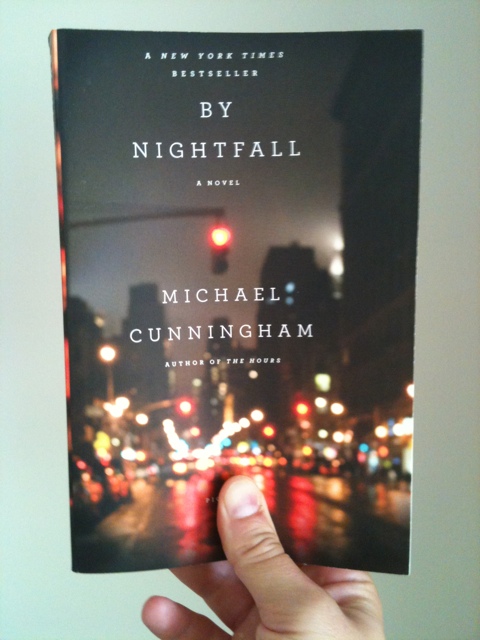
In the mail today: Michael Cunningham’s By Nightfall, in trade paperback from the good folks at Picador. From novelist Jeanette Winterson’s review of the hardback edition, printed last year in the NYT

Cunningham has taken on the classic plot of the uninvited or unexpected stranger or guest whose arrival brings chaos, self-knowledge, tragedy, the ruin of one kind of life that may or may not lead to something better. It’s a story we know from variants as classic as Shakespeare’s “Twelfth Night” to Mark Twain’s “Mysterious Stranger” to contemporary versions like “The Accidental” by Ali Smith. Cunningham is drawn to simple, potent plots (think of the triptych in “The Hours”), saving his energy for the hearts and minds, the groins and guts, of his characters. Yet he makes you turn the pages. He tells a story here, but not too much of a story. You aren’t deadened by detail; you’re eager to know what happens next.

Cunningham writes so well, and with such an economy of language, that he can call up the poet’s exact match. His dialogue is deft and fast. The pace of the writing is skilled — stretched or contracted at just the right time. And if some of the interventions on art are too long — well, too long for whom? For what? Good novels are novels that provoke us to argue with the writer, not just novels that make us feel magically, mysteriously at home.A novel in which everything is perfect is a waxwork. A novel that is alive is never perfect.