Recent Stuff I’ve Found in Books

20130916-172934.jpg

So this Friday, I bought two enormous fat thick Penguin volumes of Jorge Luis Borges in utterly pristine condition (fictions and non-). I own other books that cover some of the material here, but 1100+ pages of JLB is hard to pass up (especially used, especially when I have store credit).

And then today, I was made privy to this lovely Flickr set, “Things found in books,” and thought I’d play along.

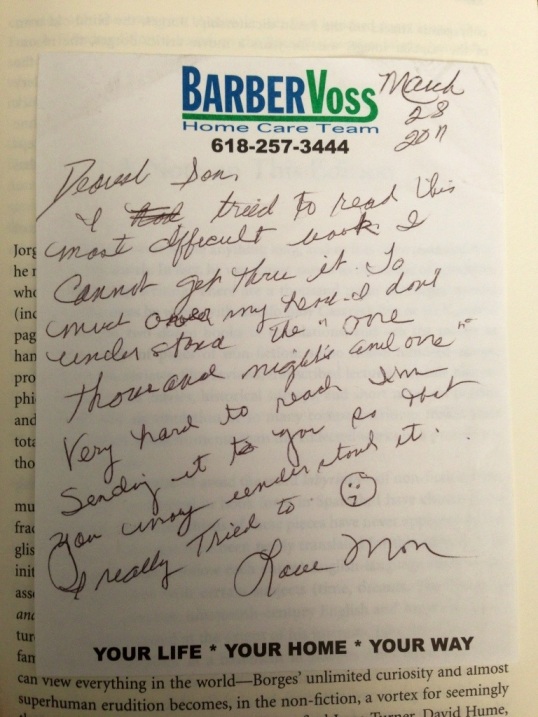
So back to Borges: I was somewhat touched by this note (above) I found in the nonfiction collection: Mom sends the book to her son so he “may understand it,” “this most difficult book”; mom also reports it “very hard to read” and appends a frowny face.
20130916-172940.jpg

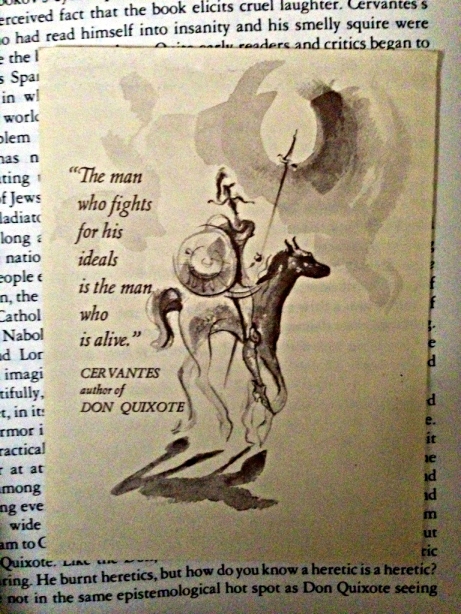
Maybe a week or two before, I found this lovely little wisp of paper:
20130916-172950

In Vlad Nabokov’s Lectures on Don Quixote:
20130916-172955.jpg

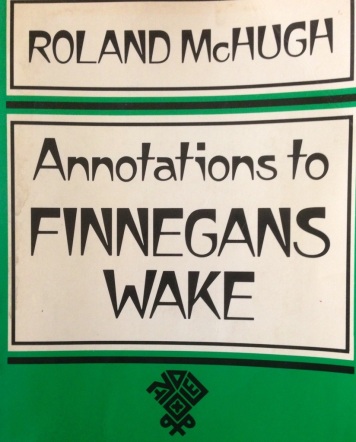
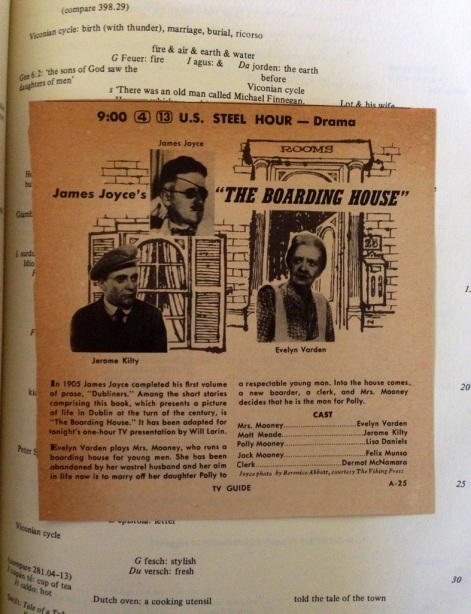
Which reminded me of this James Joyce clipping—not so recent, I’ll admit, but still carefully placed as a bookmark in a Finnegans Wake guide:
20130916-173003.jpg

Okay, annotations, more properly:

20130916-173008.jpg

Do most people leave stuff in books? I think most bibliophiles do. (Forgive the snobbish italics there. I’m sure there are bibliophiles who don’t, of course). I have a habit of never reusing a bookmark, so that when I pull out a volume there’s some little tag there that acts as a third point (along with the text and my addled brain) to help triangulate the reading experience (the concrete circumstances of the reading process, the where, the when, the how much, etc.).

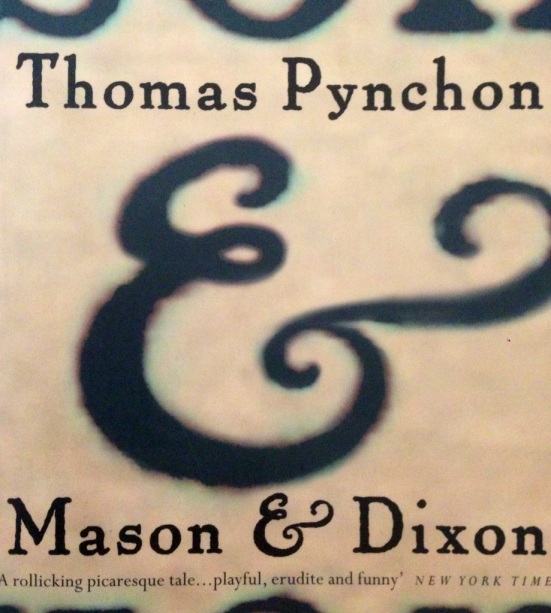
And so, after finishing Pynchon’s Against the Day a few weeks ago, I resolved to return to Mason & Dixon. Pulling out my copy,  where I found an entry ticket to Wat Phra Ram in Ayutthaya. I’m pretty sure I bought the book in Chiang Mai (after buying V. in Bangkok; books were the only thing I ever thought were expensive in Thailand).

20130916-173022.jpg

20130916-173026.jpg

A few weeks ago my grandmother let me take one of my grandfather’s favorite books with me when I left her house, a Walt Kelly collection.
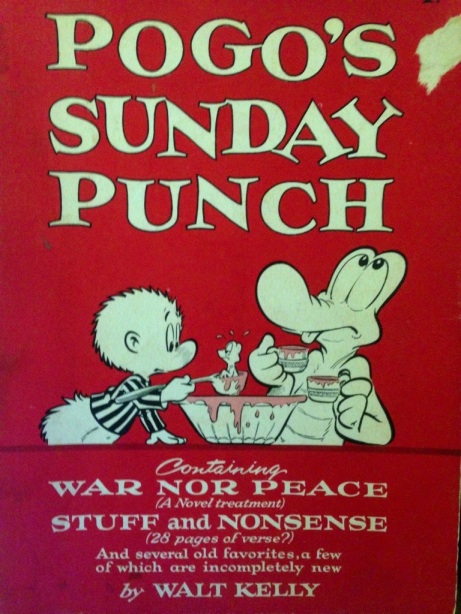
20130916-173054.jpg

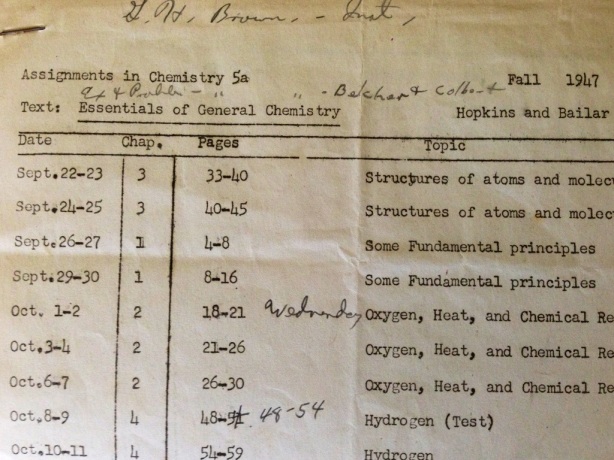
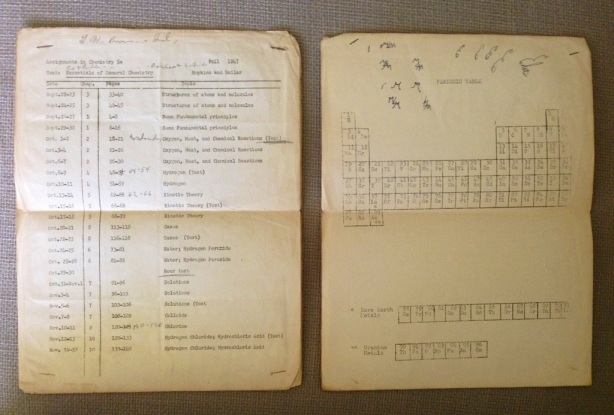
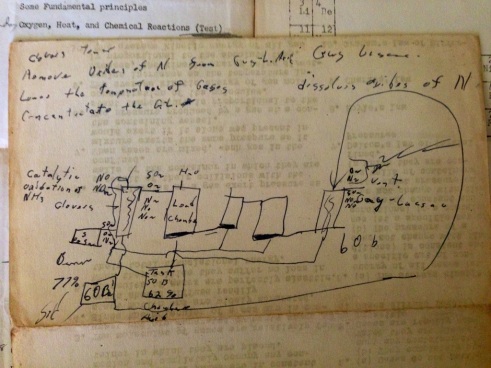
I was thrilled to find inside the Pogo volume the syllabus of my grandfather’s college chemistry class from the Fall of 1947:
20130916-173044.jpg

20130916-173038.jpg

And some of his notes (cryptic to me, but endearing):
20130916-173048.jpg

I think the best part about finding my grandfather’s old syllabus tucked away into a book he loved is knowing that we shared a habit.
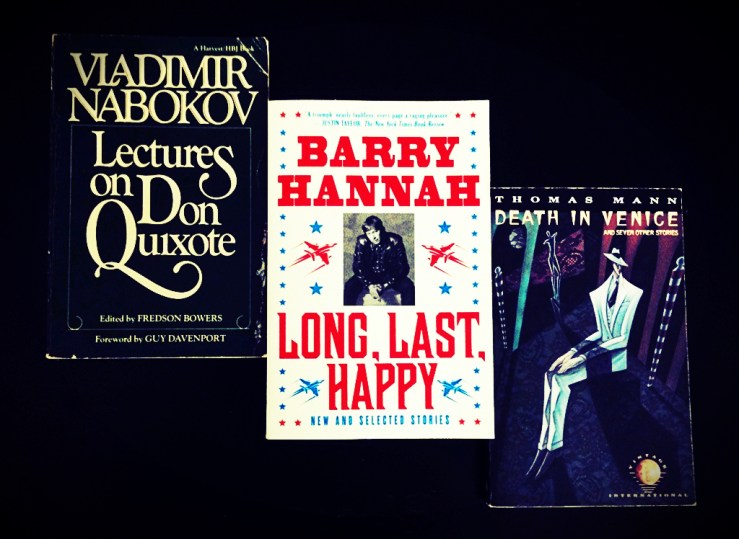
Hannah/Nabokov/Mann (Books Acquired, 8.30.2013)

20130905-153520

But Where Is the Lamb? (Book Acquired, 8.23.2013)

20130824-102817.jpg

But Where Is the Lamb? by James Goodman. The book is about Genesis ch. 22, the story where God says to Abraham, kill me your son. Good design on this one:

20130824-102824.jpg

Publisher Random House’s blurb:

“I didn’t think he’d do it. I really didn’t think he would. I thought he’d say, whoa, hold on, wait a minute. We made a deal, remember, the land, the blessing, the nation, the descendants as numerous as the sands on the shore and the stars in the sky.”
So begins James Goodman’s original and urgent encounter with one of the most compelling and resonant stories ever told—God’s command to Abraham to sacrifice his son Isaac.

A mere nineteen lines in the book of Genesis, it rests at the heart of the history, literature, theology, and sacred rituals of Judaism, Christianity, and Islam. For more than two millennia, people throughout the world have grappled with the troubling questions about sacrifice, authority, obedience, and faith to which the story gives rise. Writing from the vantage of “a reader, a son, a Jew, a father, a skeptic, a historian, a lover of stories, and a writer,” Goodman gives us an enthralling narrative history that moves from its biblical origins to its place in the cultures and faiths of our time. He introduces us to the commentary of Second Temple sages, rabbis and priests of the late antiquity, and early Islamic exegetes (some of whom imagined that Ishmael was the nearly sacrificed son). He examines Syriac hymns (in which Sarah stars), Hebrew chronicles of the First Crusade (in which Isaac often dies), and medieval English mystery plays. He looks at the art of Europe’s golden age, the philosophy of Kant and Kierkegaard, and the panoply of twentieth-century interpretation, sacred and profane, including the work of Bob Dylan, Elie Wiesel, and A. B. Yehoshua. In illuminating how so many others have understood this story, Goodman tells a gripping and provocative story of his own.


The Red Queen Dies (Book Acquired, 8.22.2013)

20130824-102919.jpg

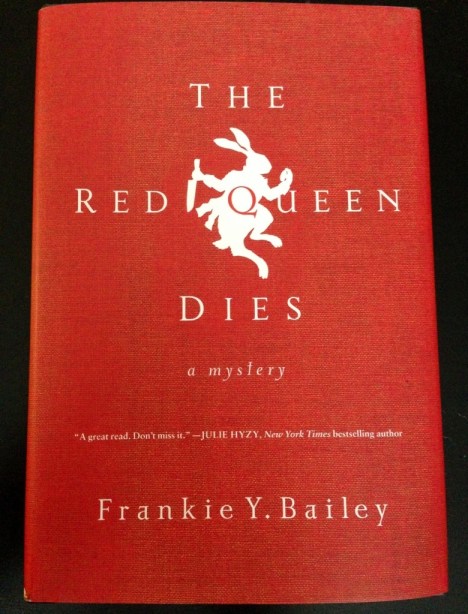
Great cover design for Frankie Y. Bailey’s new set-in-the-future-kinda-sci-fi-definitely-mystery The Red Queen Dies: elegant, minimal, and very striking. Wish there was more of this in genre fiction. Publisher Macmillan/Minotaur’s blurb:

Frankie Bailey introduces readers to a fabulous new protagonist and an Alice in Wonderland-infused crime in this stunning mystery, which kicks off an exciting new series set in the near future.

The year is 2019, and a drug used to treat soldiers for post-traumatic stress disorder, nicknamed “Lullaby,” has hit the streets. Swallowing a little pill erases traumatic memories, but what happens to a criminal trial when the star witness takes a pill and can’t remember the crime? When two women are murdered in quick succession, biracial police detective Hannah McCabe is charged with solving the case. In spite of the advanced technology, including a city-wide surveillance program, a third woman is soon killed, and the police begin to suspect that a serial killer is on the loose. But the third victim, a Broadway actress known as “The Red Queen,” doesn’t fit the pattern set by the first two murders.

With the late September heat sizzling, Detective Hannah McCabe and her colleagues on the police force have to race to find the killer in a tangled web of clues that involve Alice in Wonderland, The Wizard of Oz, and Abraham Lincoln’s assassination. Fast-paced and original, this is a one-of-a-kind mystery from an extremely talented crime writer.

Books Acquired, 8.06.2013

20130809-114547.jpg

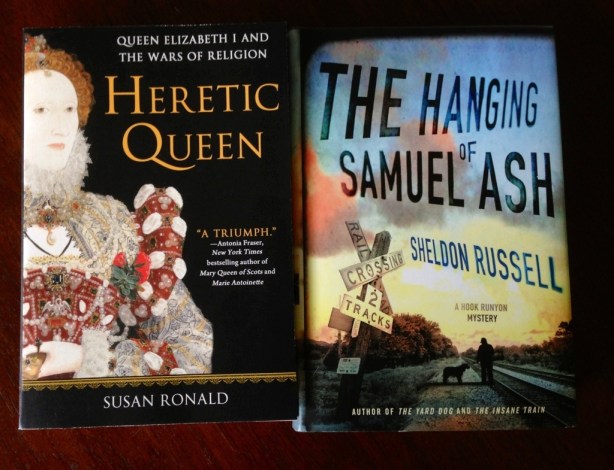
Heretic/Hanging (Books Acquired, Sometime Last Week)

20130806-162835.jpg

I was out of town when these showed up last week.

First, Susan Ronald’s Heretic Queen: Publisher St. Martin’s Griffin’s blurb:

Acclaimed biographer Susan Ronald delivers a stunning account of Elizabeth I that focuses on her role in the Wars on Religion—the battle between Protestantism and Catholicisim that tore apart Europe in the 16th Century

Elizabeth’s 1558 coronation procession was met with an extravagant outpouring of love. Only twenty-five years old, the young queen saw herself as their Protestant savior, aiming to provide the nation with new hope, prosperity, and independence from the foreign influence that had plagued her sister Mary’s reign. Given the scars of the Reformation, Elizabeth would need all of the powers of diplomacy and tact she could summon.
Extravagant, witty, and hot-tempered, Elizabeth was the ultimate tyrant. Yet at the outset, in religious matters, she was unfathomably tolerant for her day. “There is only one Christ, Jesus, one faith,” Elizabeth once proclaimed. “All else is a dispute over trifles.” Heretic Queen is the highly personal, untold story of how Queen Elizabeth I secured the future of England as a world power. Susan Ronald paints the queen as a complex character whose apparent indecision was really a political tool that she wielded with great aplomb.

And: The Hanging of Samuel Ash by Sheldon Russell, from Minotaur. Publishers Weekly blurb:

A compelling lead compensates only in part for the relatively weak plot of Russell’s fourth mystery featuring one-armed Santa Fe railroad bull Hook Runyon (after 2012’s Dead Man’s Tunnel), set during WWII against a backdrop of labor unrest. When Runyon checks out a nonworking signal on a remote stretch of track, he discovers a man’s corpse hanging from the signal’s cantilever. The only clue to the dead man’s identity is a Bronze Star inscribed with the name Samuel Ash. Not wanting the war hero to be buried in a pauper’s grave, Runyon takes custody of the body and embarks on a quest to find Ash’s relatives and the truth about his death. A dose of humor lightens the gloom—pickpockets steal Runyon’s wallet and badge while he’s hunting pickpockets—but the mystery itself never picks up much steam. Fans will hope for a return to form next time.


Books Acquired, 7.26.2013

20130726-150353.jpg

20130726-150358.jpg

20130726-150402.jpg

20130726-150415.jpg

20130726-150421.jpg

Down with Beauty/tapestry (Books Acquired, 7.17.2013)

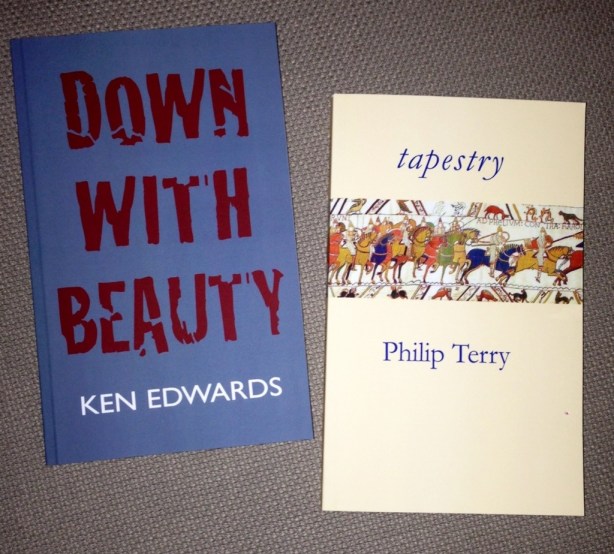
20130723-112451.jpg

Two very intriguing new titles from Reality Street: Ken Edwards’s Down with Beauty, and tapestry by Philip Terry.

Here’s the publisher’s blurb for Down with Beauty:

DOWN WITH BEAUTY explores, in a series of linked dialogues, dramatic monologues and short fictions, the themes of exile, the aftermath of war, paranoia, improvised music and nothingness. The collection is completed with the full text of NOSTALGIA FOR UNKNOWN CITIES, previously published separately.  Some samples herehere and here – others will be revealed.

A very strange, scattered book—lovely.

Here’s Reality Street’s blurb for tapestry:

Taking as its starting point marginal images in the Bayeux Tapestry, which have been left largely unexplained by historians, Terry retells the story of the Norman Conquest from the point of view of the tapestry’s English embroiderers. Combining magic realism and Oulipian techniques, this is a tour de force of narrative and language.

tapestry also got a great review from The Guardian’s Nicholas Lezard:

By showing a language in flux,tapestry draws you into its world: that of the creation of the Bayeux tapestry (which, as we are reminded in the book by an exasperated narrator, isn’t a tapestry at all, but a work of embroidery) by a group of nuns in the late 11th century at a priory in Kent. …

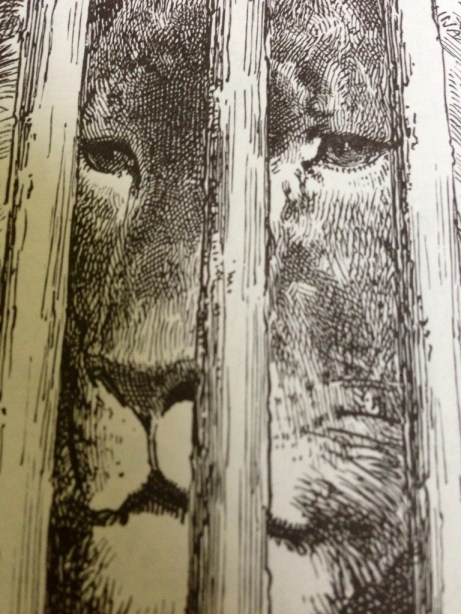
Medieval works lend themselves to the picaresque, or multiple narration – think of The Decameròn or The Canterbury Tales. So while there is an overarching narrative, that of the commission and creation of the tapestry, work is paused while each nun tells a story related to her work. If you look at the tapestry, you will remember, or notice, that there are numerous extraneous designs along the borders that would appear to have nothing to do with the matter of the Norman usurpation. Terry has noticed, as have others, the Aesopian motifs that occur, and includes slender, playful versions, sometimes modernised, of Aesop’s fables himself. My favourite is one in which a lion, confronting Aesop, asks him to tell him a fable before the lion eats him. So Aesop says he was confronted by a lion who asked him to tell a fable … and so on; and eventually the lion gets bored and goes away.

Great to see some new stuff that’s, well, really new

Susan Sontag’s Notebooks, 1964-1980 (Book Acquired, 7.09.2013)

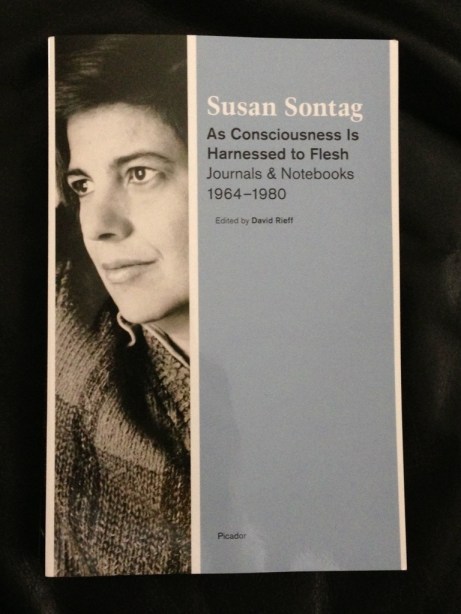
20130717-120722.jpg

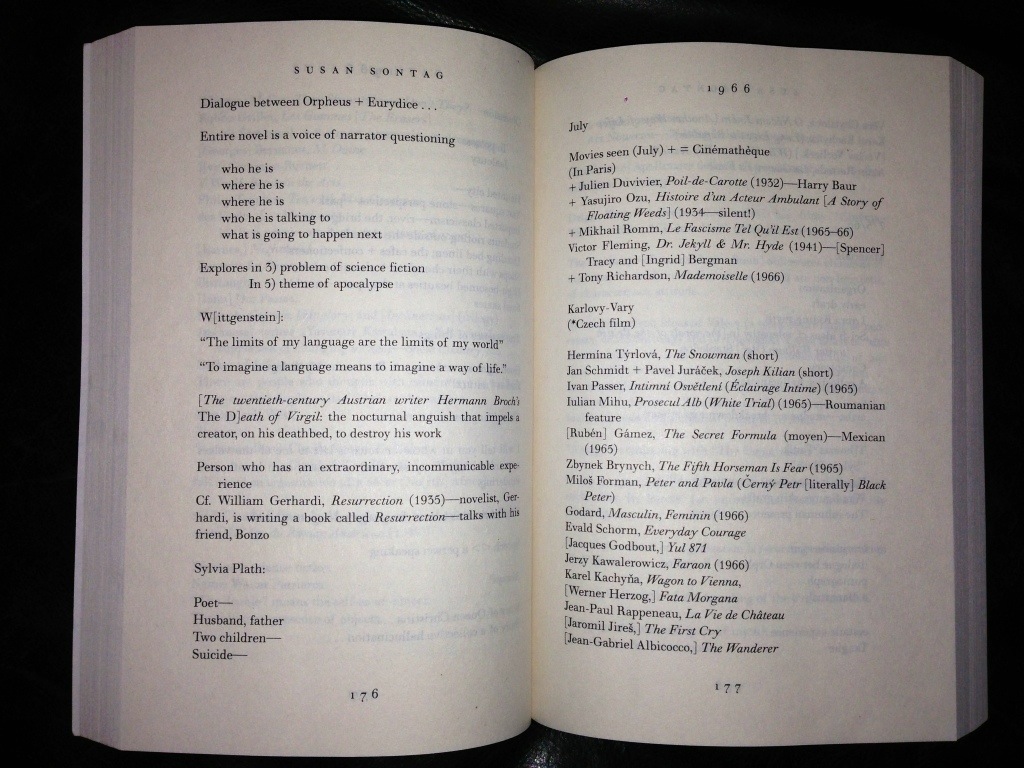
I’ve been—I don’t know—strolling through Susan Sontag’s journals and notebooks this past week. Collected as As Consciousness Is Harnessed to Flesh and new from Picador, this volume picks up where Reborn left off. I’ll be doing a full write up some time this month—really more about writer notebooks (I love Hawthorne’s in particular). Until then—a sample spread from the summer of ’66:

20130717-120729.jpg

Books Acquired, 7.12.2013

20130712-171908.jpg

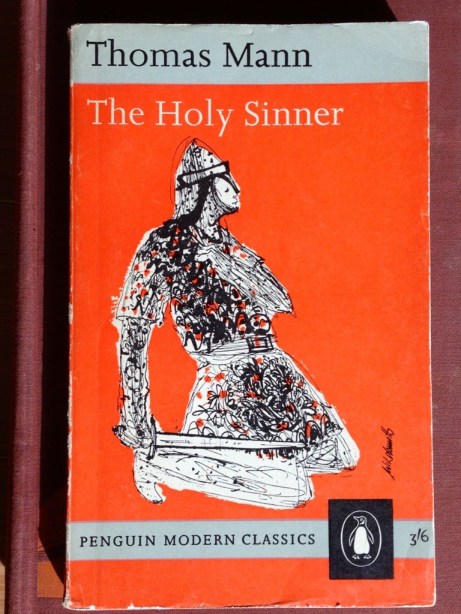
Zora Neale Hurston/Thomas Mann (Books Acquired, 6.21.2013)

20130623-175908.jpg

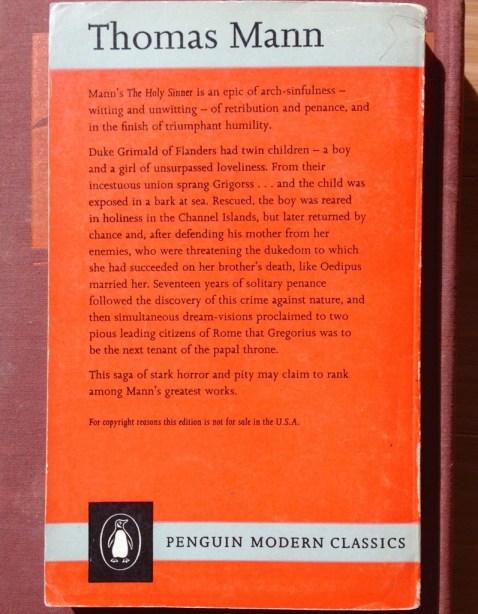
I’m a sucker for these Penguin editions. Blurb:

20130623-175913.jpg

I used to have a paperback copy of Zora Neale Hurston’s Moses, Man of The Mountain, but I loaned it to a student who never returned it.

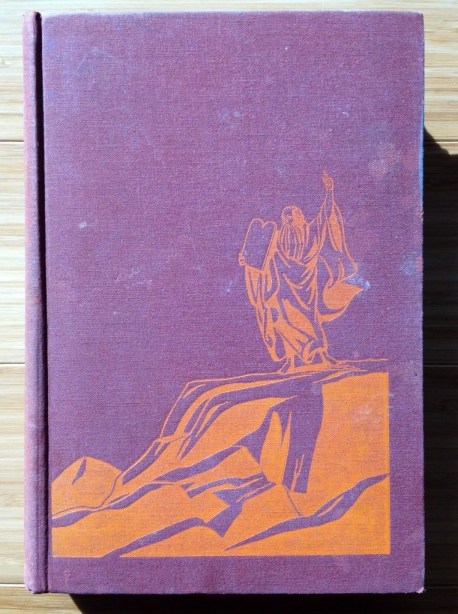
I won’t loan out this first edition I found though:

20130623-175918.jpg

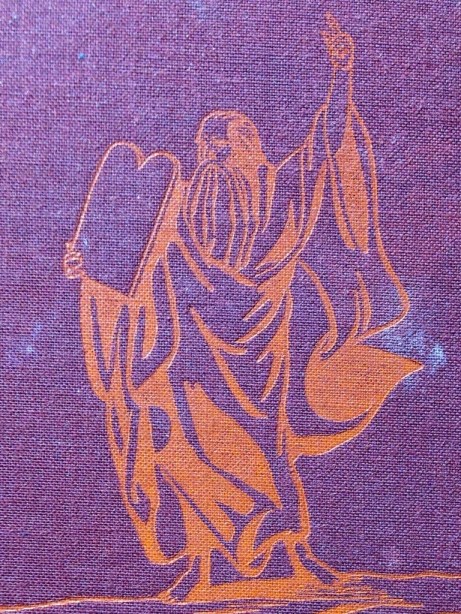
Love the detail on the clothbound cover:

20130623-175933.jpg

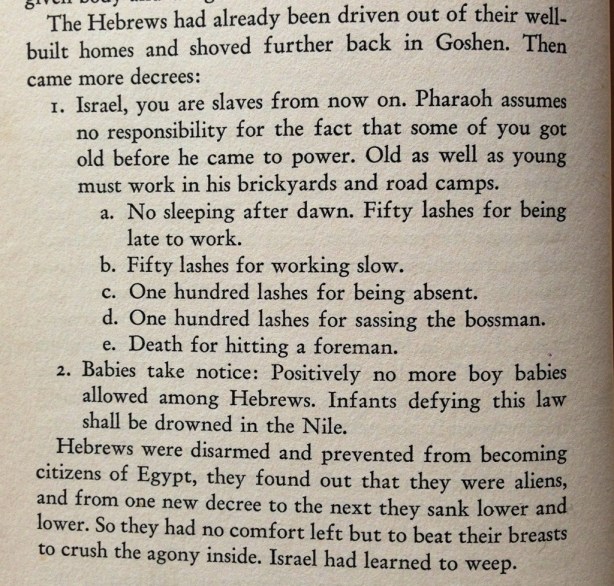
And a taste of Ms. Hurston’s wit:

20130623-175938.jpg


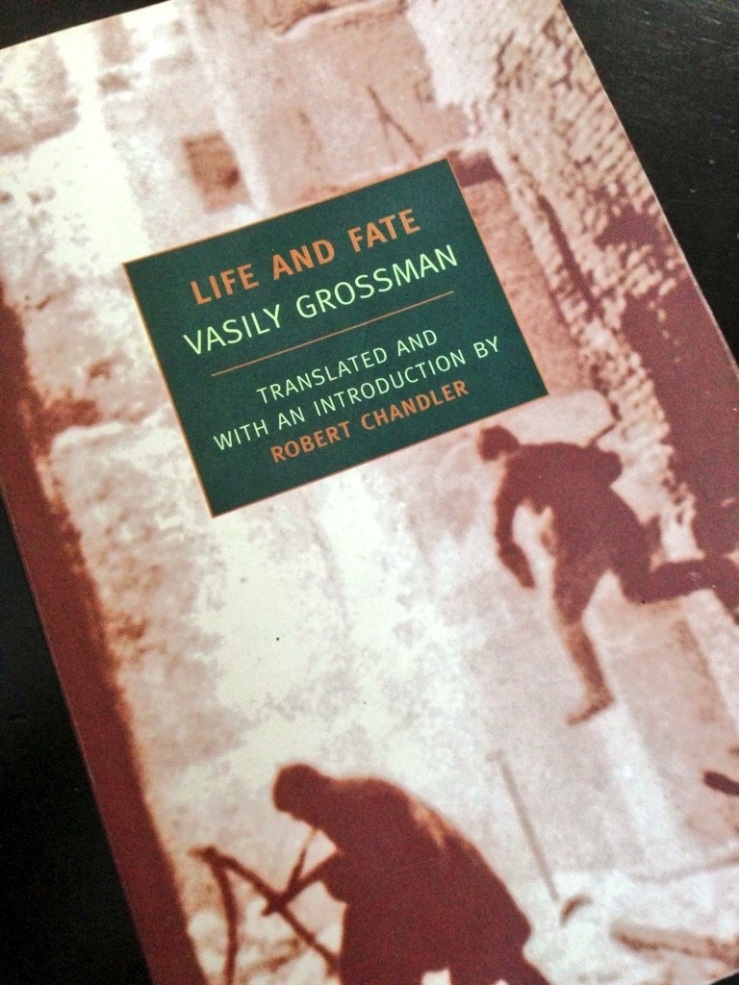
Vasily Grossman’s Life and Fate (Book Acquired, 6.14.2013)

20130617-133539.jpg

Big thanks to Mr. BLCKDGRD for sending me this copy of Vasily Grossman’s enormous novel Life and Fate. Over the past few years I’ve come to admire and trust BLCKDGRD’s taste, and I generally love these types of novels, so I’m looking forward to getting into this later in the year.

Here’s publisher NYRB’s blurb:

A book judged so dangerous in the Soviet Union that not only the manuscript but the ribbons on which it had been typed were confiscated by the state, Life and Fate is an epic tale of World War II and a profound reckoning with the dark forces that dominated the twentieth century. Interweaving a transfixing account of the battle of Stalingrad with the story of a single middle-class family, the Shaposhnikovs, scattered by fortune from Germany to Siberia, Vasily Grossman fashions an immense, intricately detailed tapestry depicting a time of almost unimaginable horror and even stranger hope. Life and Fate juxtaposes bedrooms and snipers’ nests, scientific laboratories and the Gulag, taking us deep into the hearts and minds of characters ranging from a boy on his way to the gas chambers to Hitler and Stalin themselves. This novel of unsparing realism and visionary moral intensity is one of the supreme achievements of modern Russian literature.

Read our review of Grossman’s novel The Road.


Barnes/Bird/Borges/Queneau (Books Acquired, 6.07.2013)

20130610-140022.jpg

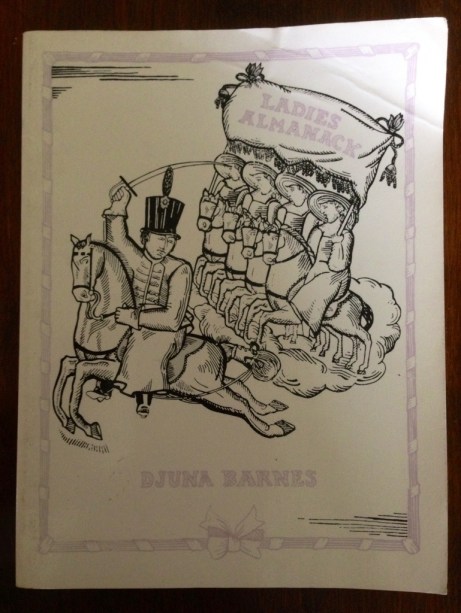
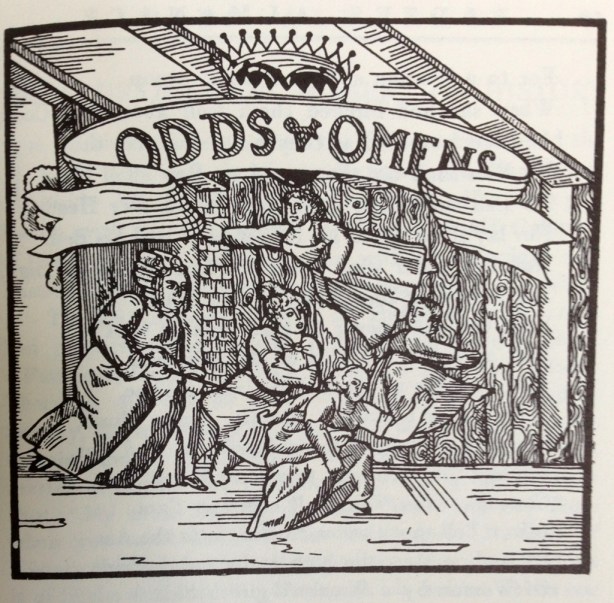
Like most Real Americans, I like to go to the bookstore on my birthday. At my favorite spot, I picked up Djuna Barnes’s Ladies Almanack, which intrigued me with its weird shape, odd typeset, strange conceit, and wonderful opening line: “Now this be a Tale of as fine a Wench as ever wet Bed.” Oh, and illustrated by Barnes too:

20130610-140030.jpg

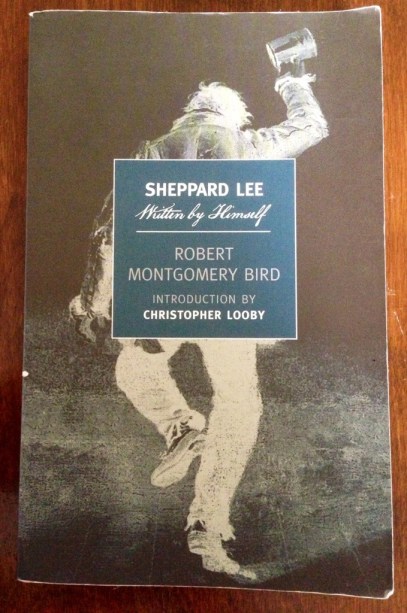
Sheppard Lee by Robert Montgomery Bird: This one looks fascinating. NYRB’s blurb:

Robert Montgomery Bird’s Sheppard Lee is a scathingly humorous and utterly original novel out of Andrew Jackson’s America, the story of an incorrigible loafer who inadvertently discovers the power to project his soul into dying men’s bodies and to take over their lives. So gifted, Sheppard Lee sets off in pursuit of happiness, only to find himself thwarted at every turn. In growing desperation he shifts from body to body, now a rich man and now poor man, now a madman and now a slave, a bewildered spirit trapped in the dark maze of American identity.

20130610-140046.jpg

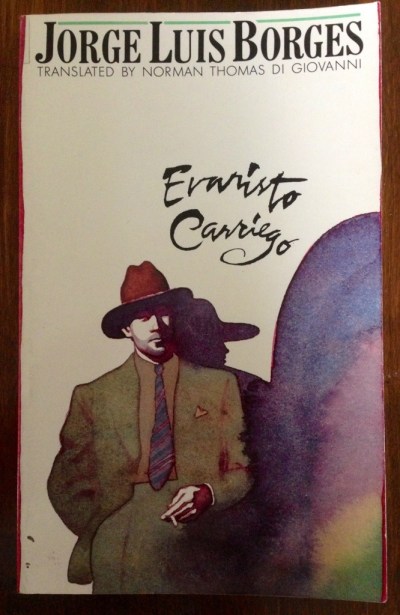
Also: Evaristo Carriego, a study of the poet by Jorge Luis Borges.

20130610-140041.jpg

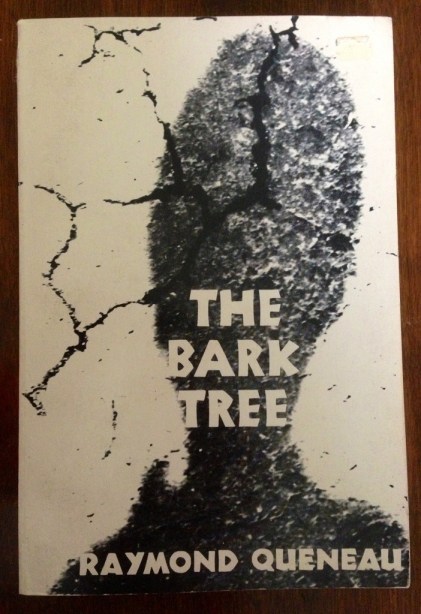
And The Bark Tree, also translated as Witch Grass. I don’t know if this is the right starting place for Queneau, but it was a nice used New Directions edition, so, hey.

20130610-140054.jpg

Barry Hannah/Stanley Elkin (Books Acquired, 5.29.2013)

20130529-164927.jpg

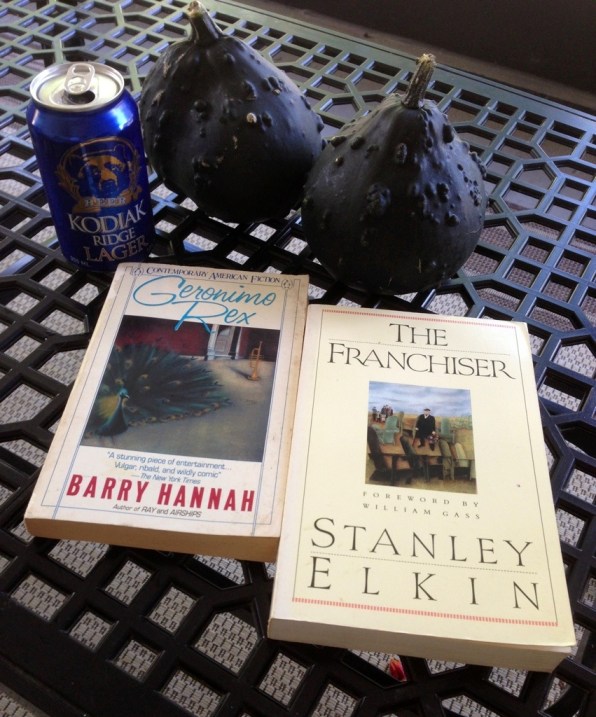
I was thrilled to find a somewhat tattered copy of Barry Hannah’s Geronimo Rex, after trolling the [huge, unorganized] “HA” section of my favorite used bookstore. Years ago, I found like seven of Hannah’s books used there and picked up only one. I devoured it, returned, the rest were gone. Regrets, regrets. I will review this maybe at the end of the summer (?) — until then:  reviews of Hannah’s AirshpsHey Jack!, and Ray.

I’ve never read Stanley Elkin, but sort of feel like I should. Mr. BLCKDGRD (-a, -o, -e) suggested The Franchiser as a good starting point (although he said that The Magic Kingdom is his pers. fav. {disney fan?}). Some dude named Billy Gass wrote the forward. 

Also pictured: Two weird black gourds that grew in my garden, right in the midst of my cucumber patch. Also: Kodiak Ridge Lager, a weak lager with a beautiful blue an’ gold can.

Yellow Zine #3 (Books, Comix, Etc. Acquired 5.13.2013)

20130526-120127.jpg

Got a sweet bundle from Roman Muradov a few weeks ago: Yellow Zine #3 plus some other comix, including a take on Italo Calvino’s If on a Winter’s Night. Love the Joyce bookmark.

The comix themselves are funny, weird, and strangely heartfelt (why “strangely” — I suppose because there’s this weird cerebral/linguistic bent to them + literary allusion — these aren’t  sad boy emo comics — but emotion and feeling comes through in Roman’s clean, expressive style).

Check out Roman’s site for more. I’m hoping for a graphic novel one day…

20130526-120140.jpg


Simone de Beauvoir/Flann O’Brien (Books Acquired, 5.10.2013)

20130511-140615.jpg

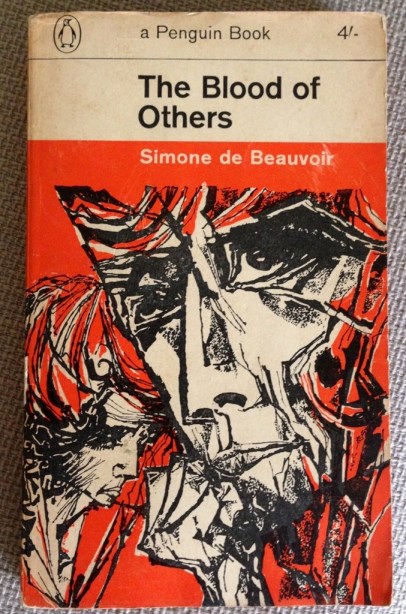
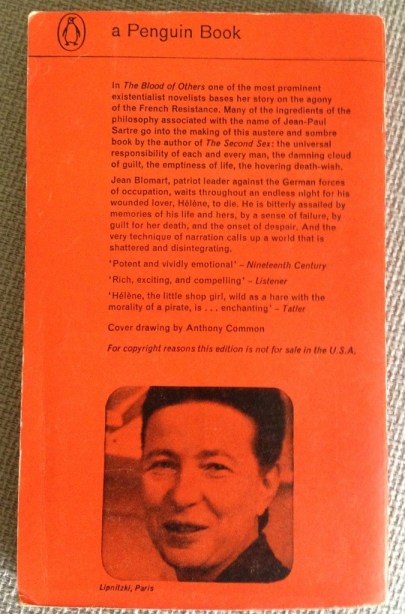
I read Simone de Beauvoir’s The Blood of Others years ago in an undergraduate class called existential literature or something like that.

Had to have this Penguin edition. Here’s the back:

20130511-140620.jpg

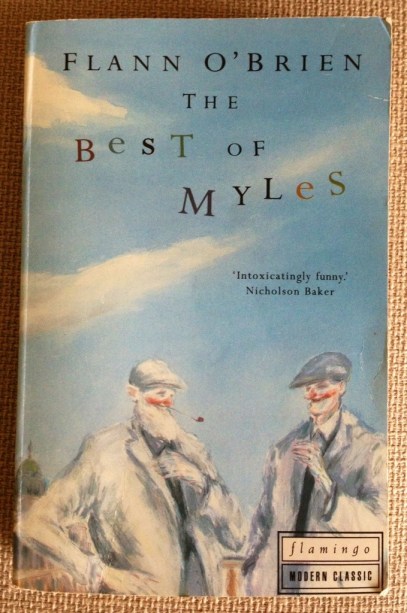
Flann O’Brien’s The Best of Myles collects material from his column Cruiskeen Lawn:

20130511-140625.jpg

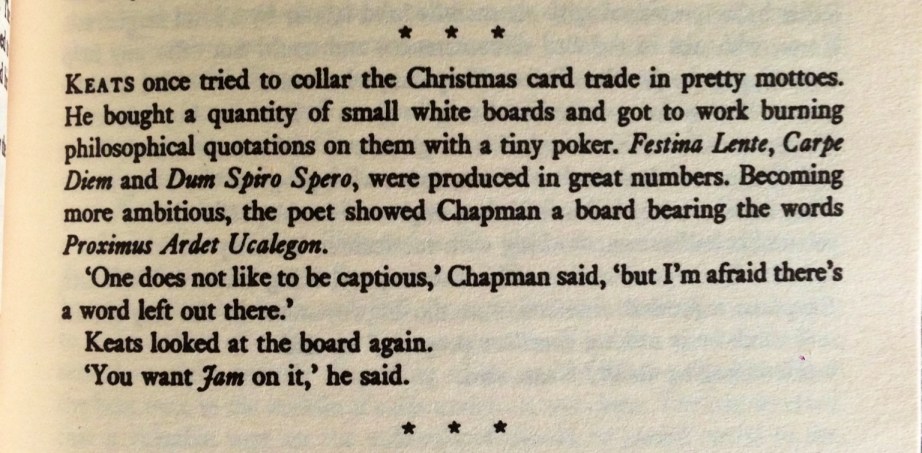
Excerpt:

20130511-140645.jpg

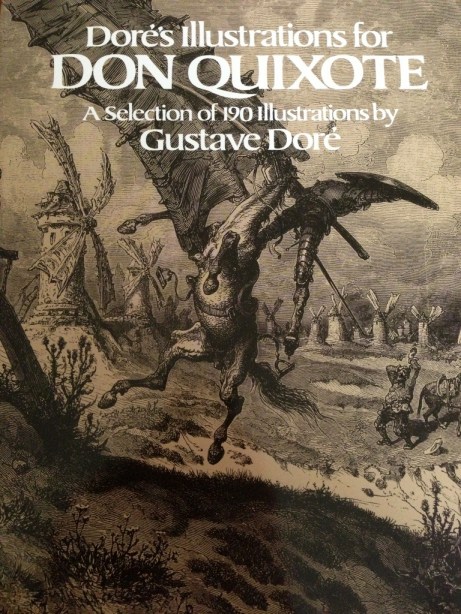
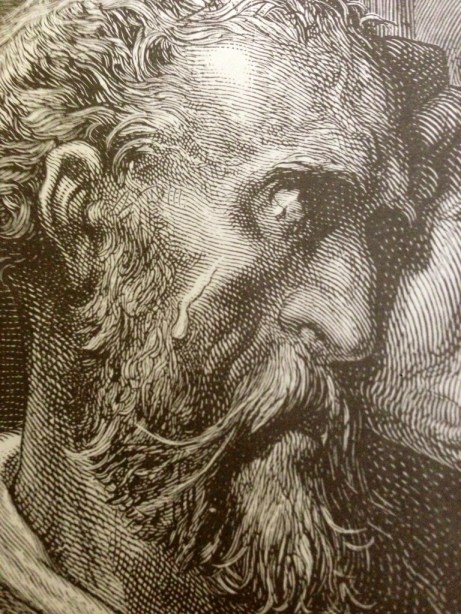
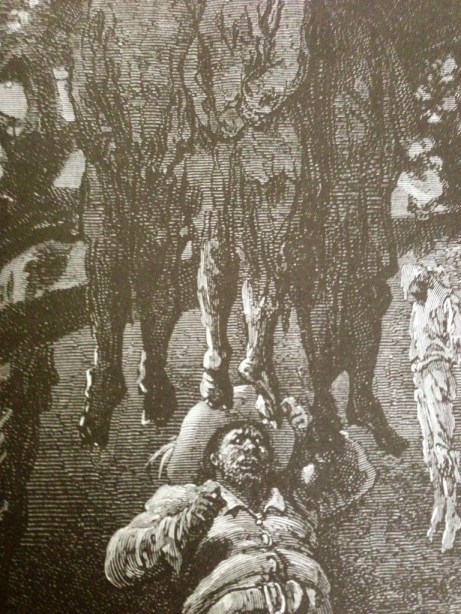
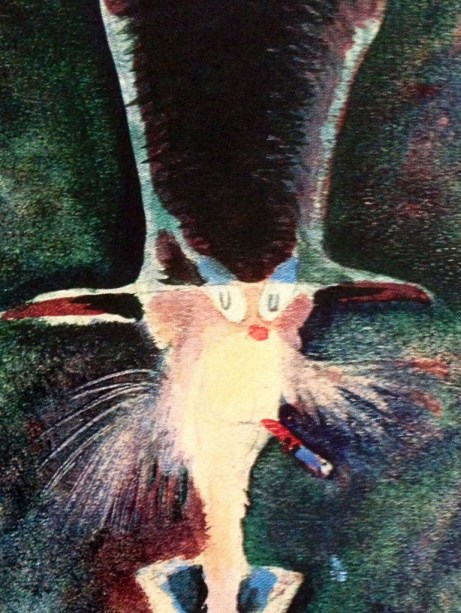
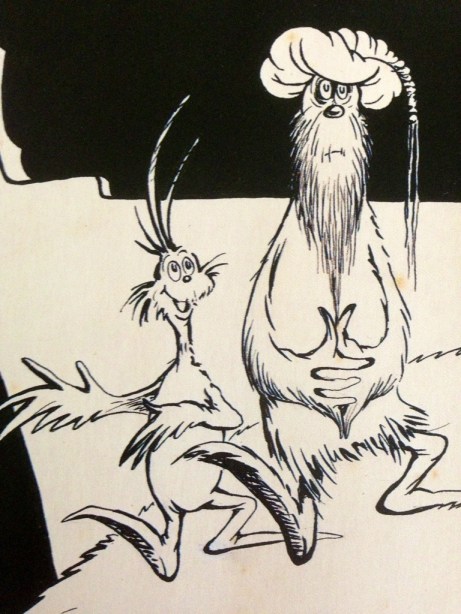
Gustave Doré / Dr. Seuss (Books Acquired, 4.16.2013)

20130420-153946.jpg

20130420-153951.jpg

20130420-153956.jpg

20130420-154002.jpg

20130420-154007.jpg

20130420-154012.jpg

20130420-154018.jpg

20130420-154026.jpg

20130420-154033.jpg