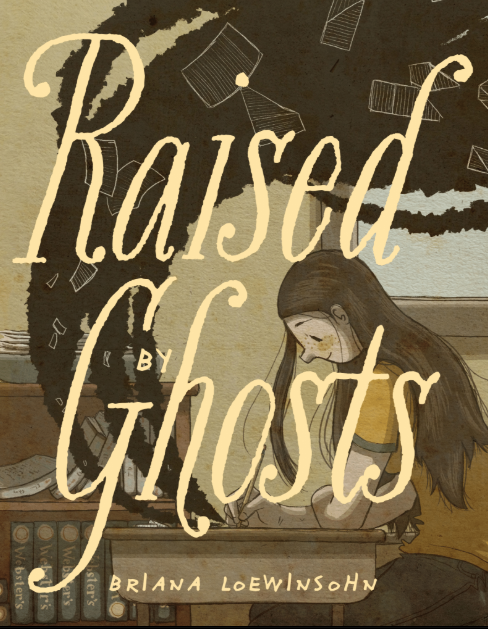
Briana Loewinsohn’s graphic novel Raised by Ghosts turns absence into haunting art

A decade ago I finally tossed out most of the contents of an old shoebox crammed with high-school nostalgia. Notes from ex-girlfriends, summer postcards, flyers from local shows, a handful of choice mixtapes. Some Polaroids. Our stupid band’s stupid lyrics, which we usually forgot or simply abandoned live. There was even a pair of fat shoelaces. The pain of return always hits me hard at such times, and I got dizzy. That box was crammed the scraps of an older life.

The preceding paragraph is an unfair opening to a review of Briana Loewinsohn’s excellent graphic memoir Raised by Ghosts. Reading Raised by Ghosts felt like opening that old shoebox: painful, dizzying, beautiful. Loewinsohn is one of usone of us to borrow a chant from Tod Browning’s Freaks. “Sometimes I feel like I am an alien at this school…But there are other aliens here,” protagonist Briana writes in her diary.

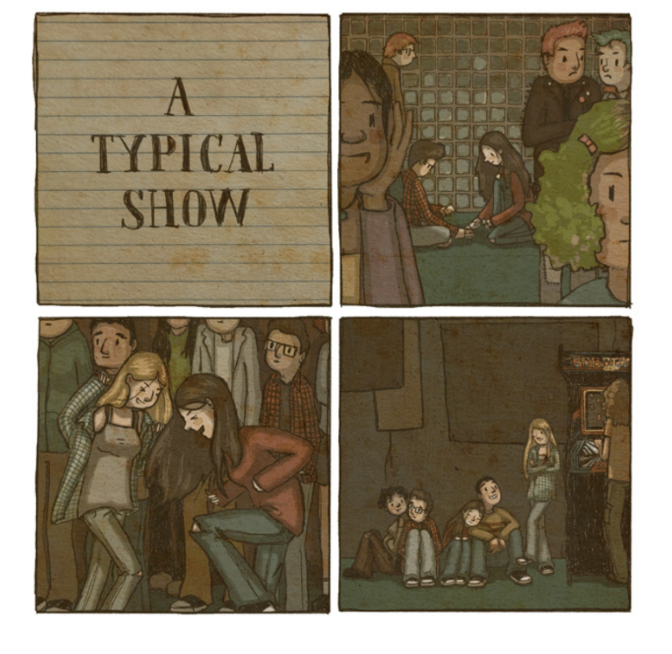
Raised by Ghosts covers Briana’s seven rough years through middle and high school. These are the gay nineties. The narrator, like Loewinsohn herself, is about my age, which makes reading Raised by Ghosts an eerie act of self-recognition. It’s not a conventional memoir—it doesn’t hold your hand or deliver a clean, linear narrative. Instead, it moves like memory does: in flashes, in vignettes, in small sensory moments that coalesce into something greater than the sum of their parts. Everything here feels true. We have here the relics of a teenage moondream, those little ghosts of the past that flicker through memory like frayed photos freed from the rubberbanded bundle in an old Converse box. Briana’s adolescence unfurls as an ebb and flow of loneliness and acceptance among fellow weirdos. She finds her people, but never quite makes the scene; she dances at the live show but finds as much fun in playing cards in the back.

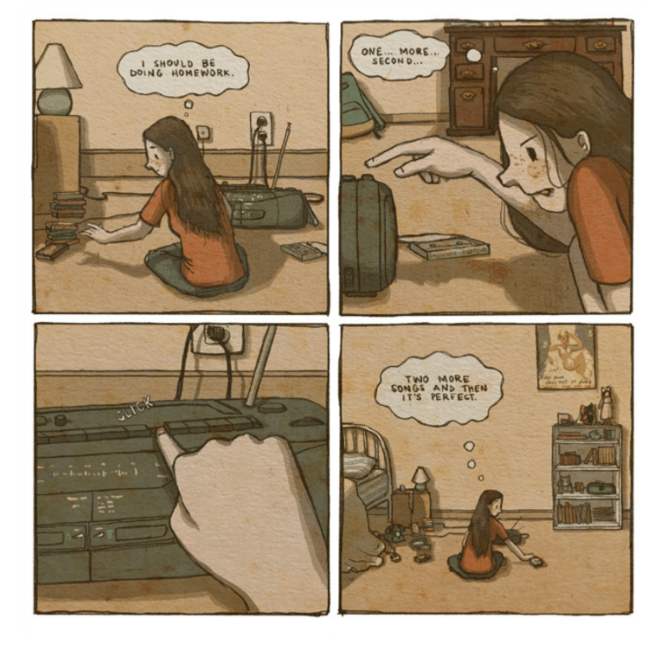
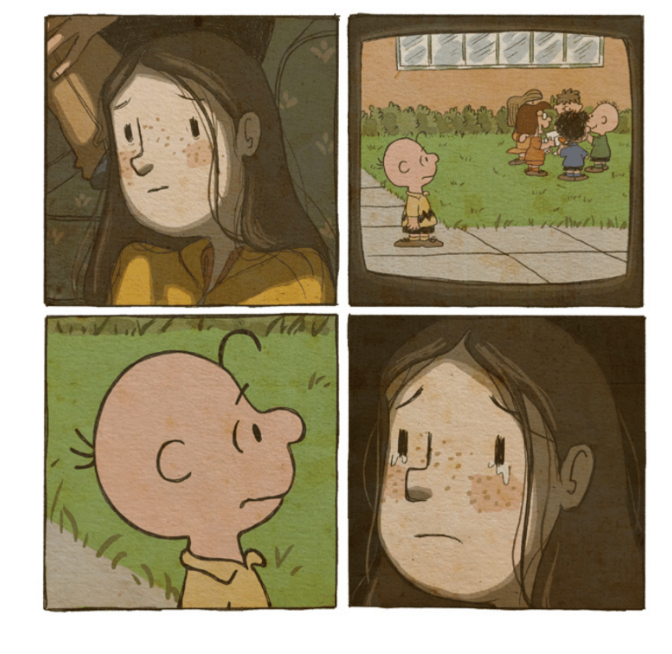
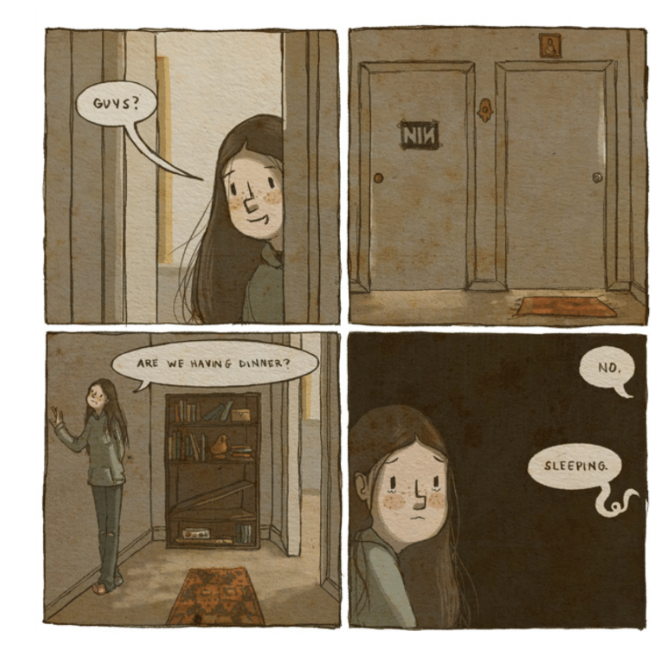
Loewinsohn’s art conveys Raised by Ghosts’ emotional weight. Soft, muted tones in drab olive and rust hues fill square panels that often resemble fading Polaroids. Candids and close-ups capture the messiness of high school. Briana is a sympathetic and endearing character, her sensitivity registering in ways she cannot understand herself, as when she skips out on a living-room VHS double feature. Oliver Stone’s Natural Born Killers would be way too much after the tragedy of You’re a Good Man, Charlie Brown.

Loewinsohn includes full handwritten pages to accompany the traditional comic strips in Raised by Ghosts. These handwritten pages serve as a kind of diary, but often take on subtle visual changes that suggest other media. Often, the handwritten pages mimic the form of the long notes bored Briana composes in class to pass to friends. A passage composed on graph paper praises the note-writing skills of a particular friend; the technique suggests this friend prefers squares to lines. A passage on a brown paper lunch bag reflects on how Briana’s father always takes the time to write her name in detailed, expressive lettering. The variations of handwritten pages enrich the narrative and subtly inform us of Briana’s artistic development.

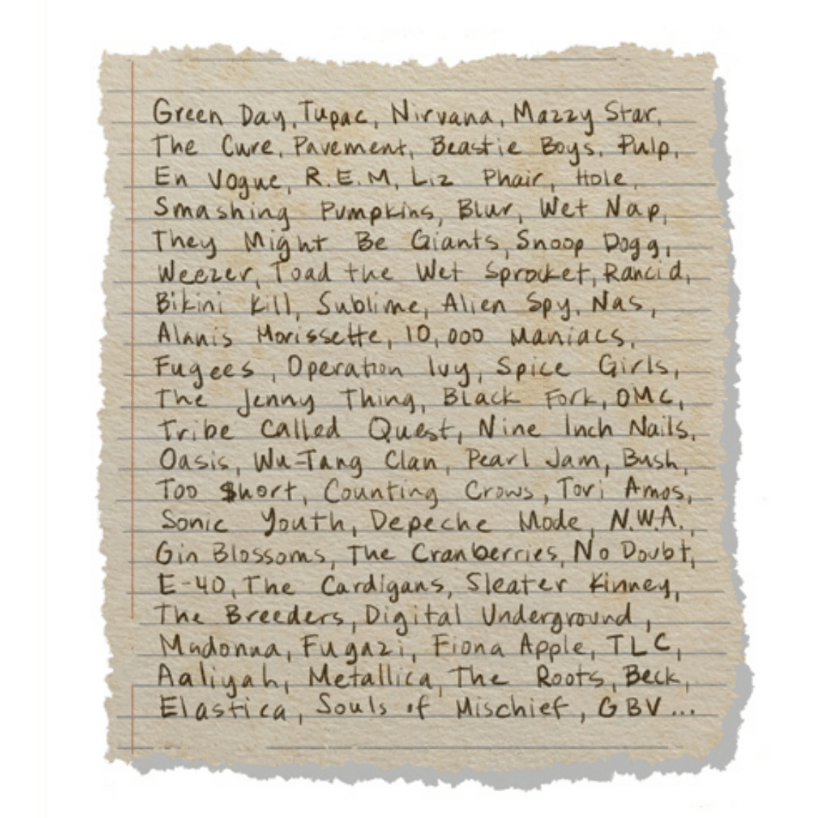
My favorite of the handwritten passages though is simply a list of bands scrawled on lined paper. When I got to that page, about a third of the way into Raised by Ghosts, I was already persuaded by the book–but the page of band names seemed so utterly true, so beautiful and banal. We used to do that, I thought, and: Why did we used to do that? knowing the answer has no good intellectual answer.

But let’s get to the ghosts. Loewinsohn never “shows” us Briana’s parents, yet the picture we get of them is hardly incomplete: a distant, detached mother and a father in arrested development. “I would say I was raised in an AA meeting,” Briana remarks of her mother, noting that it’s often hard for single mothers to find childcare. Of her father’s abode: “My pop’s house is a combination of Indiana Jones’ office, Pee Wee’s playhouse, and an opium den. I am kinda like a roommate here.”

Briana’s parents exist in Raised by Ghosts the way memories of the absent often do—fragmented, elusive, more felt than seen. Loewinsohn never lets them fully materialize, yet their presence, or lack thereof, shapes Briana’s interactions with her world. Neither parent offers Briana guidance. She’s a latchkey kid left to cobble her own sense of belonging among friends, music, and the small rituals of adolescence. In the absence of stability, she builds meaning from mixtapes, handwritten notes, and fleeting moments of connection.

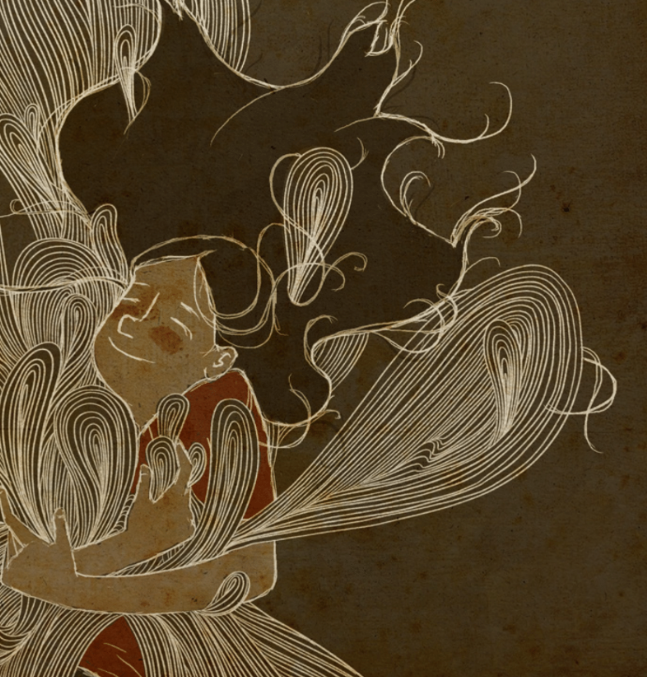
And art. The memoir climaxes in a moment of transformation—an act of self-possession and, ultimately, self-creation. Throughout Raised by Ghosts, Briana moves through a world shaped by absence, by the ghosts of parents who are physically present but emotionally distant. Yet, in the book’s remarkable penultimate sequence, she steps beyond that absence, beyond memory’s hazy grip, into a space that is entirely her own. The panels swirl into a dreamscape of shifting lines—formless and chaotic at first—until Briana gathers them together, lassoing meaning from the void. It is a moment of artistic alchemy, where creation becomes a form of agency, a way to shape her own narrative rather than just mimic one. When she carries those lines from dream to waking life, the transition is profound: she is no longer just a kid collecting relics of meaning from the world around her—she is an artist, making meaning herself.

Publisher Fantagraphics labels Raised by Ghosts as a “young adult graphic novel,” and teenagers will likely identify with Briana’s story—the loneliness, the search for belonging, the quiet acts of self-definition. They may also feel a strange twinge of envy for a world that no longer exists. Being a latchkey kid could be lonely, but it was not without its freedoms. Those of us who were teenage weirdos in the nineties will see in Loewinsohn’s memoir not a young adult novel, but rather a reflective elegy composed by a mature artist in control of her talent. Raised by Ghosts lingers like the echo of an old song in your dim memory — you know the one, right? It’s a memoir about growing up in the margins, about finding meaning in scraps and silence, about turning absence into something tangible. It haunts, in the very best way.

A run-on sentence on Gabriel García Márquez’s delirious novel The Autumn of the Patriarch

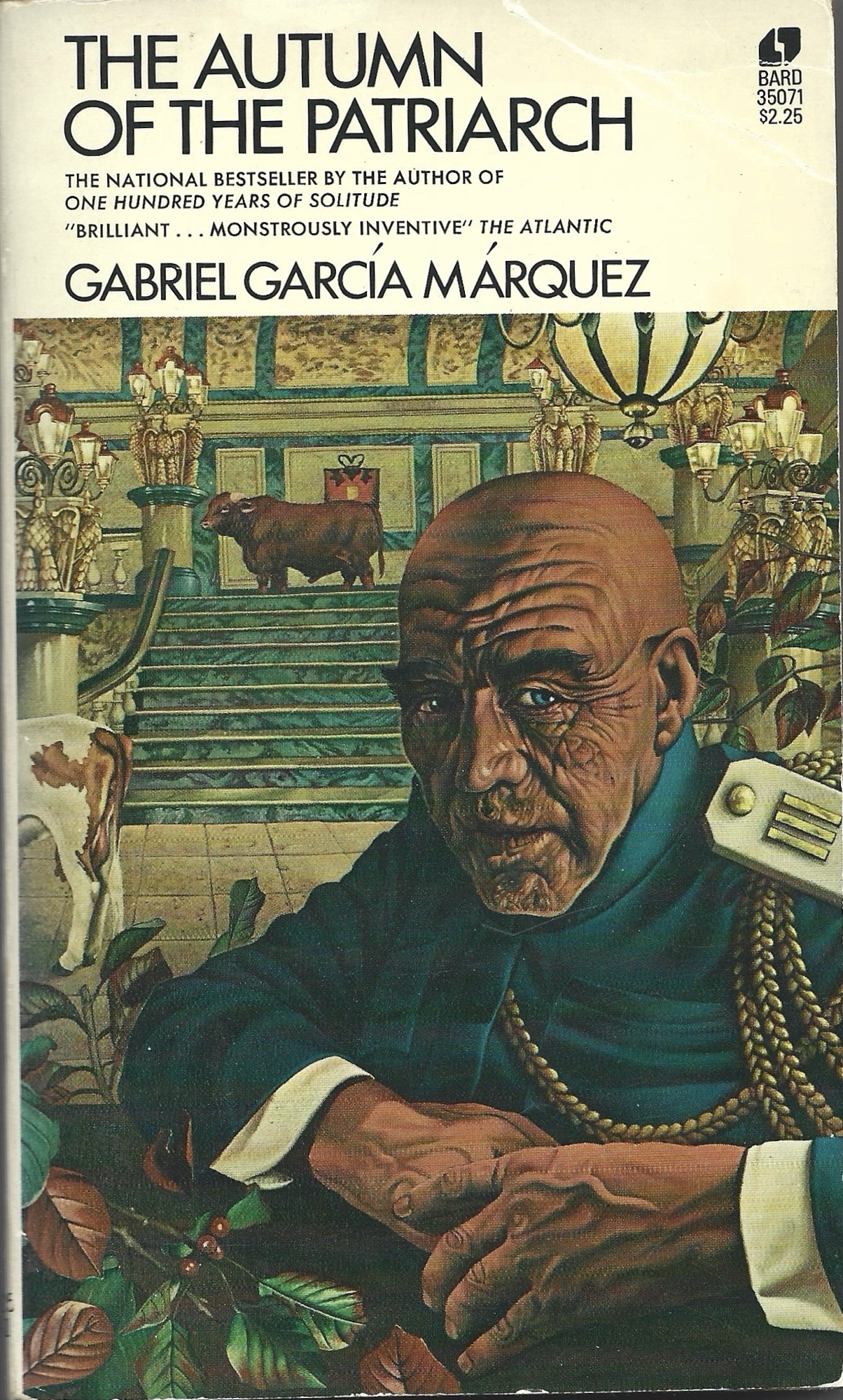
Gabriel García Márquez’s The Autumn of the Patriarch isn’t so much a novel as it is a delirium, a swamp fever, a sun-bleached hallucination stretched across centuries, a beast that coils and uncoils, bloated with its own rot, a thing that does not begin or end but only festers, looping back on itself in great, heaving tides of unpunctuated or undepunctuated or mispunctuated thought, García Márquez dragging us under, drowning us in the mind or minds of the titular dictator, a paranoid consciousness so swollen with its own power that it warps reality itself, a man who reigns forever and is always dying, whose past rewrites itself with every breath, whose power is infinite and yet always slipping, slipping, slipping through his fingers like the stolen sea, parceled off and shipped to Arizona, because why not, because what is truth if not what he declares it to be, because when you have lived for centuries, when your general is served up at a Thyestean feast, when your nation’s children are disappeared to an island, never to return, when the cattle are branded with your mark, when the very hour itself is subject to your whim, then nothing is real, nothing but the fear, the violence, the rape, the predation, the endless grinding machinery of power that must sustain itself, and so we cycle, we spiral, we convulse through six sections, six deaths, six endless iterations of his reign, six grotesque confirmations that absolute power is an ouroboros swallowing its own tail, devouring itself, erasing itself, until nothing is left but the silence of his ruin, the empty palace where his corpse will be found again and again, where his legacy is nothing but absence, and translator Gregory Rabassa—mad saint, linguistic necromancer—renders it all in English without breaking the spell, his translation a relentless incantation that doesn’t just mimic the novel’s crushing, hypnotic cadence but becomes it, suffocating, pressing, forcing you to inhabit the mind of this eternal, rotting god-tyrant, this cosmic mistake, this doomed and doom-dealing beast whose power, no matter how total, will crumble, will fade, will rot, will vanish into nothing, just like everything else.

Margie Sarsfield’s Beta Vulgaris (Book (and some beet seeds) acquired, 2 Feb. 2025)

I got a review copy of Margie Sarsfield’s debut novel Beta Vulgaris the other week. It came with a little packet of beet seeds.

Publisher Norton’s blurb:

Elise and her boyfriend, Tom, set off for Minnesota, hoping the paycheck from the sugar beet harvest will cover the rent on their Brooklyn apartment. Amidst the grueling work and familiar anxieties about her finances, Elise starts noticing strange things: threatening phone calls, a mysterious rash, and snatches of an ominous voice coming from the beet pile.

When Tom and other coworkers begin to vanish, Elise is left alone to confront the weight of her past, the horrors of her uncertain future, and the menacing but enticing siren song of the beets. Biting, eerie, and confidently told, Beta Vulgaris harnesses a distinct voice and audacious premise to undermine straightforward narratives of class, trauma, consumption, and redemption.

I missed my window to plant beets here in north Florida.

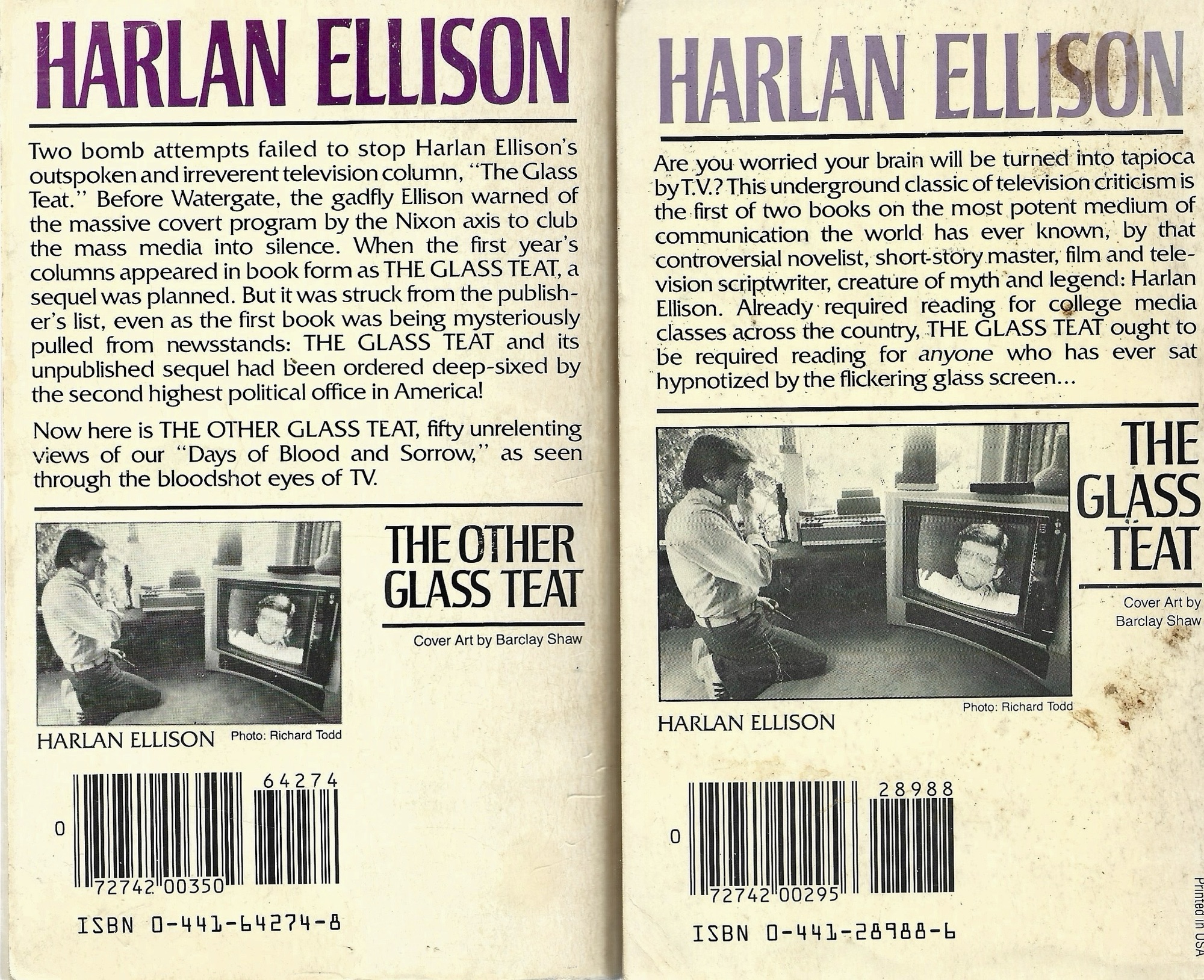
Mass-market Monday | Harlan Ellison’s The Glass Teat and The Other Glass Teat

The Glass Teat, Harlan Ellison. Ace Books (1983 reprint). Cover art by Barclay Shaw. 319 pages.

The Other Glass Teat, Harlan Ellison. Ace Books (1983). Cover art by Barclay Shaw. 397 pages.

Part of an ostensible review of the sitcom Happy Days; from Ellison’s column published on 3 July 1970 and reprinted in The Other Glass Teat:

One begins to realize that our national middle-class hunger to return to two decades of Depression, world war, Prohibition, Racism Unadmitted, Covert Fascination with Sex, Deadly Innocence, Isolationism, Provincialism, and Deprivation Remembered as Good Old Days has become a cultural sickness.

The past has always been a rich source for fun and profit. Nostalgia is a good thing. It keeps us from forgetting our roots. Readers of this column know I trip down Memory Lane myself frequently. But it is clearly evident that when an entire nation refuses to accept the responsibilities of its own future, when it seeks release in a morbid fascination with its past, and when it elevates the dusty dead days of the past to a pinnacle position of Olympian grandeur … we are in serious trouble.

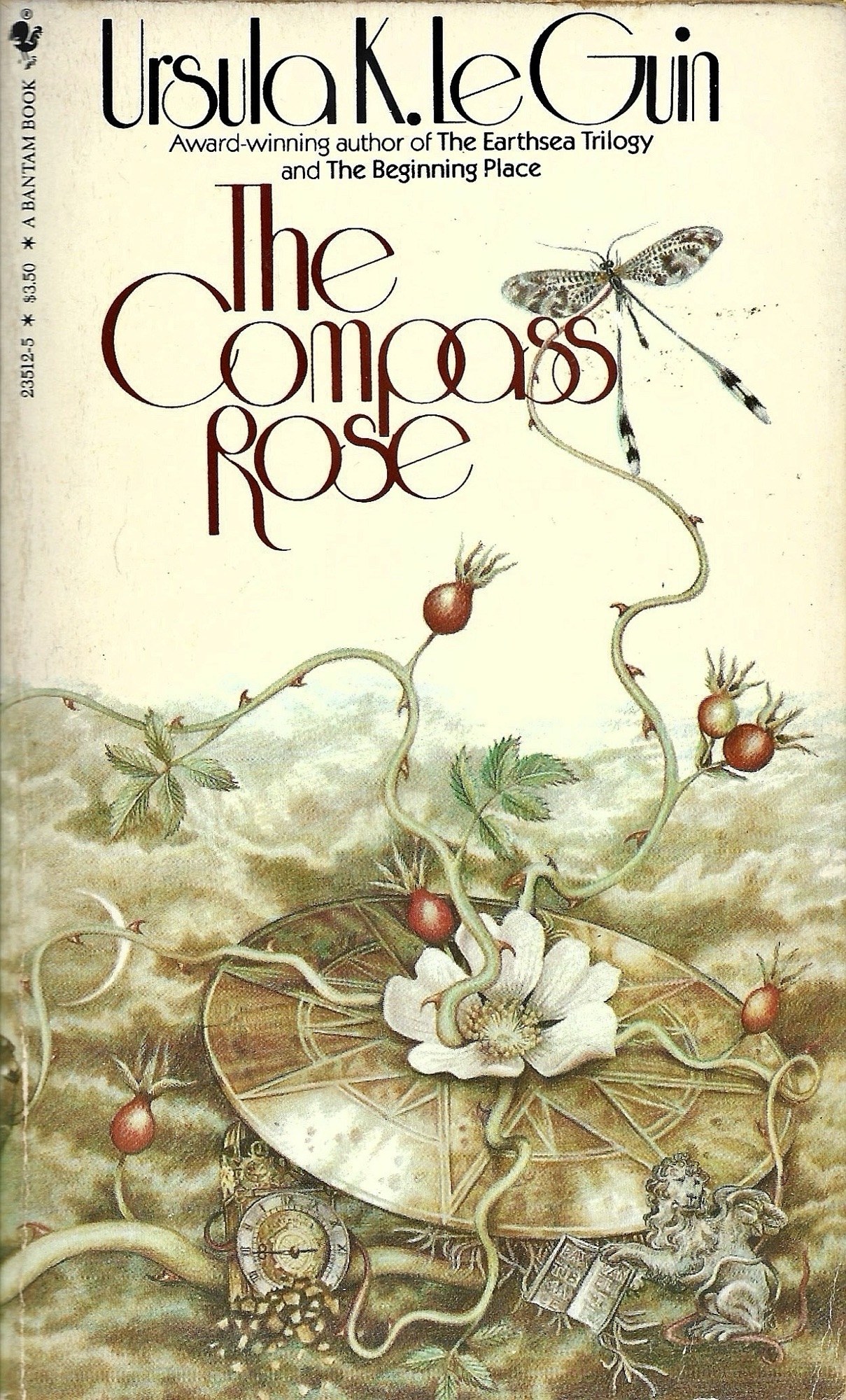
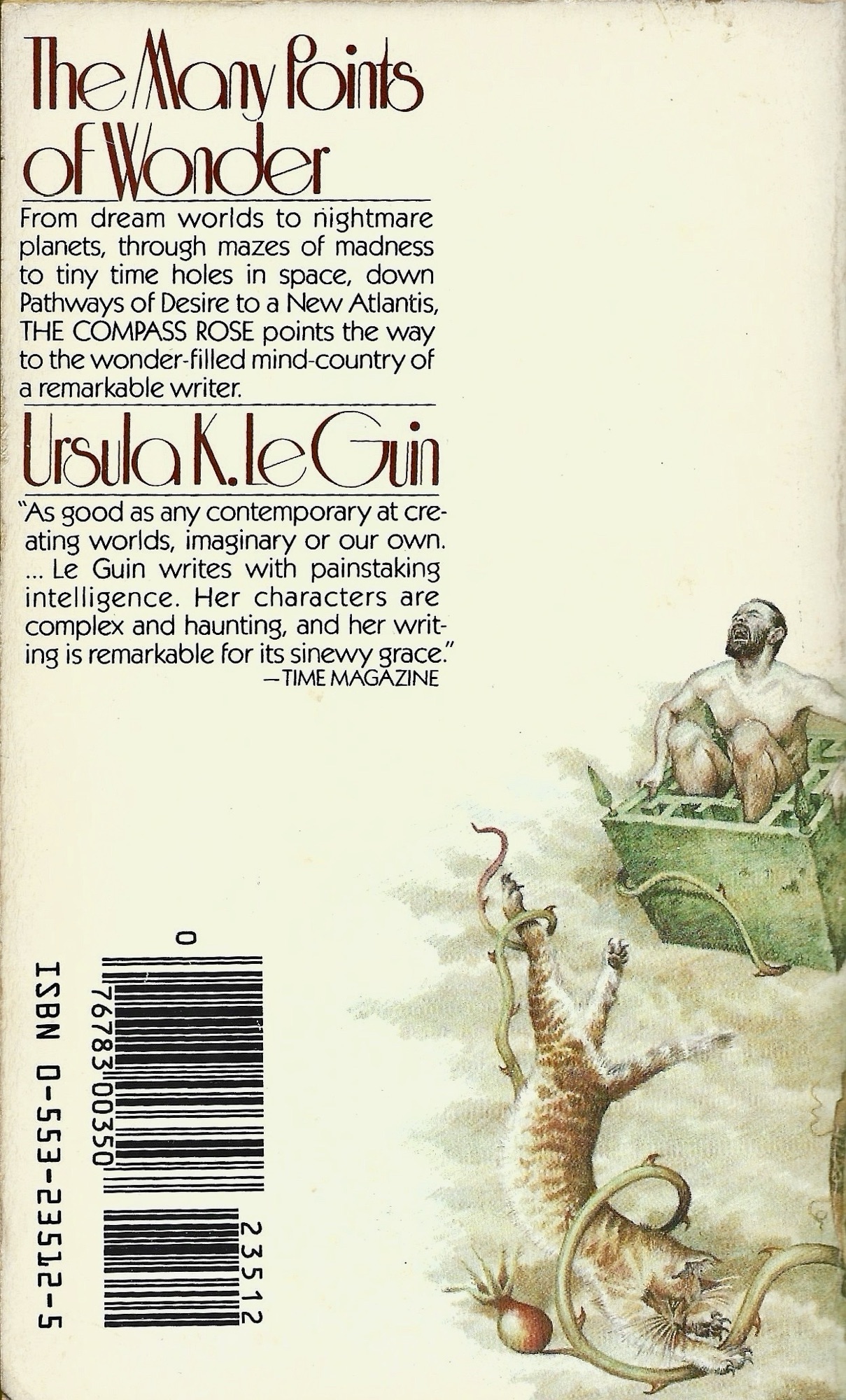
Mass-market Monday | Ursula K. Le Guin’s The Compass Rose

The Compass Rose, Ursula K. Le Guin. Bantam Books (1983). Cover art by Yvonne Gilbert. 271 pages.

A strong collection, containing one of Le Guin’s classic stories, “Schrödinger’s Cat,” which I wrote about a few years ago. From that riff:

Ursula K. Le Guin’s 1982 short story “Schrödinger’s Cat” is a tale about living in radical uncertainty. The story is perhaps one of the finest examples of postmodern literature I’ve ever read. Playful, funny, surreal, philosophical, and a bit terrifying, the story is initially frustrating and ultimately rewarding.

While I think “Schrödinger’s Cat” has a thesis that will present itself to anyone who reads it more than just once or twice, the genius of the story is in Le Guin’s rhetorical construction of her central idea. She gives us a story about radical uncertainty by creating radical uncertainty in her reader, who will likely find the story’s trajectory baffling on first reading. Le Guin doesn’t so much eschew as utterly disrupt the traditional form of a short story in “Schrödinger’s Cat”: setting, characters, and plot are all presented in a terribly uncertain way.

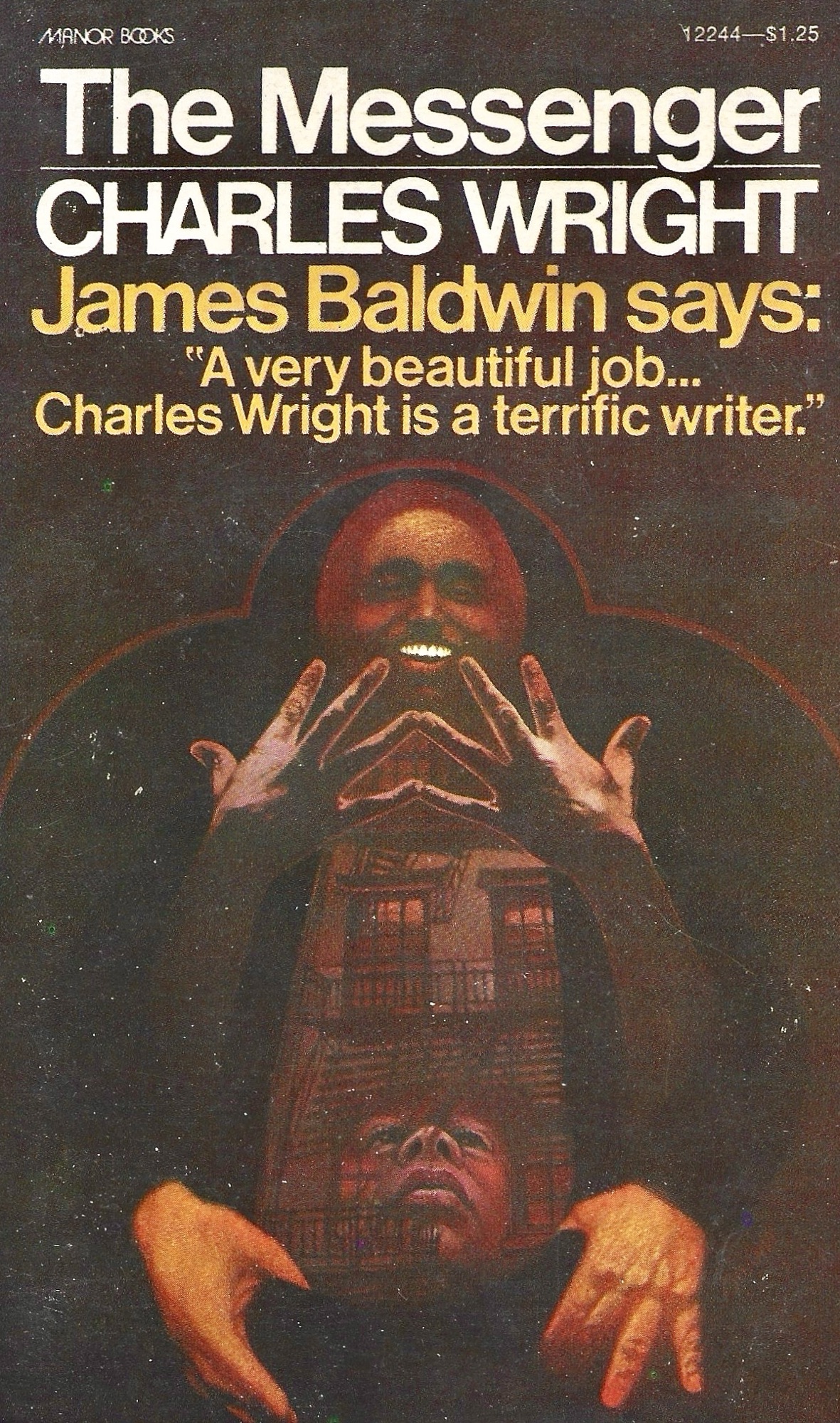
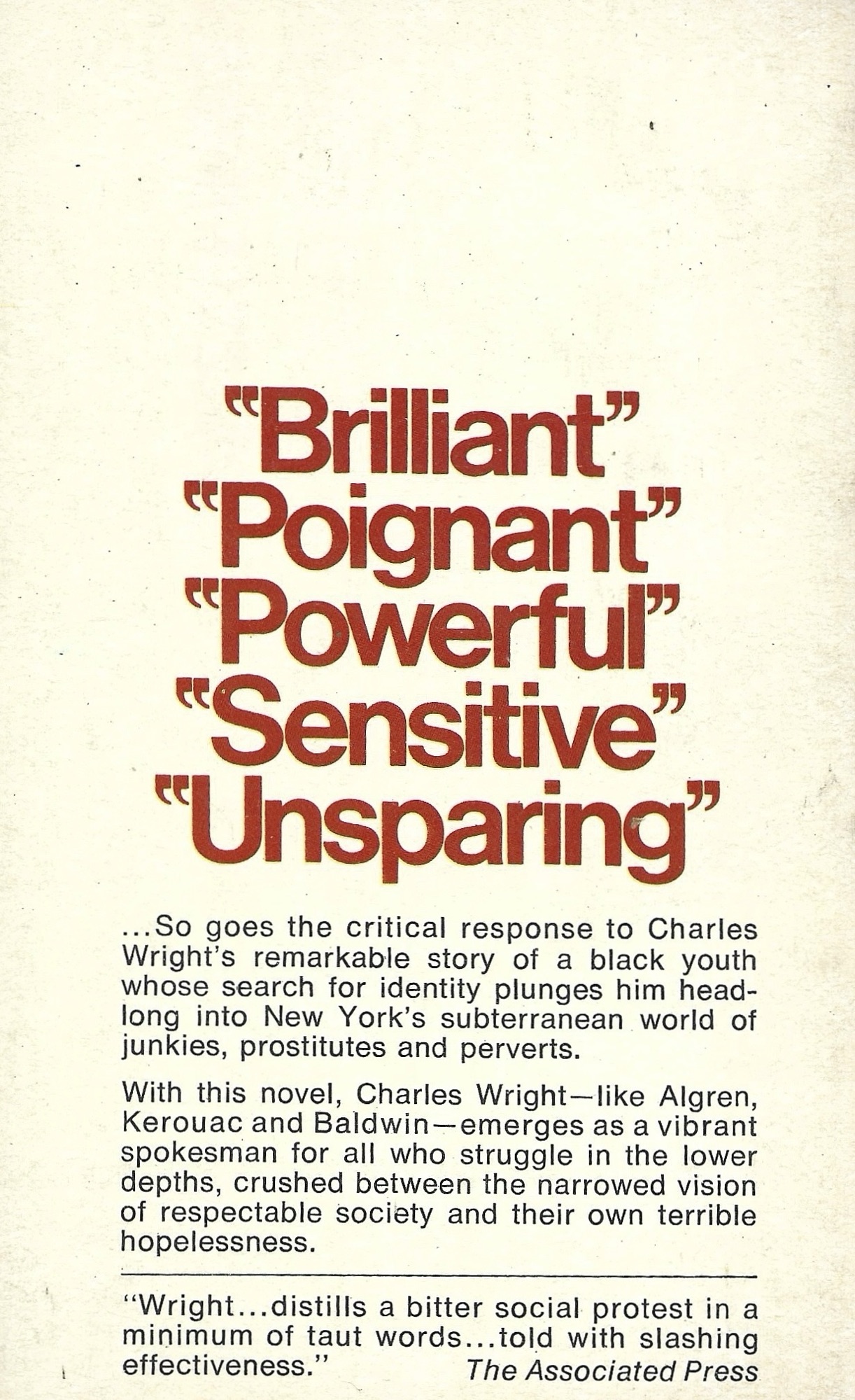
Mass-market Monday | Charles Wright’s The Messenger

The Messenger, Charles Wright. Manor Books (1974). No cover artist or designer credited. 217 pages.

Charles Wright (not to be confused with Charles Wright or Charles Wright) published three novels between 1963 and 1973. His second novel, The Wig (1966) is an under-read, underappreciated gem—a tragicomic satire employing sharp distortions and cartoony edges. Wright’s first novel, The Messenger, is perhaps a bit too beholden to Richard Wright (to whom it is dedicated (along with Billie Holiday))—but many readers may prefer its raw realism to The Wig’s zany (and often crushing) zigs and zags. His last published novel, Absolutely Nothing to Get Alarmed About, is the most accomplished and singular of the trio—fragmentary, polyglossic, kaleidoscopic, messy. The trio remains in print as an omnibus with an introduction by Ishmael Reed. Read Reed on reading Wright.

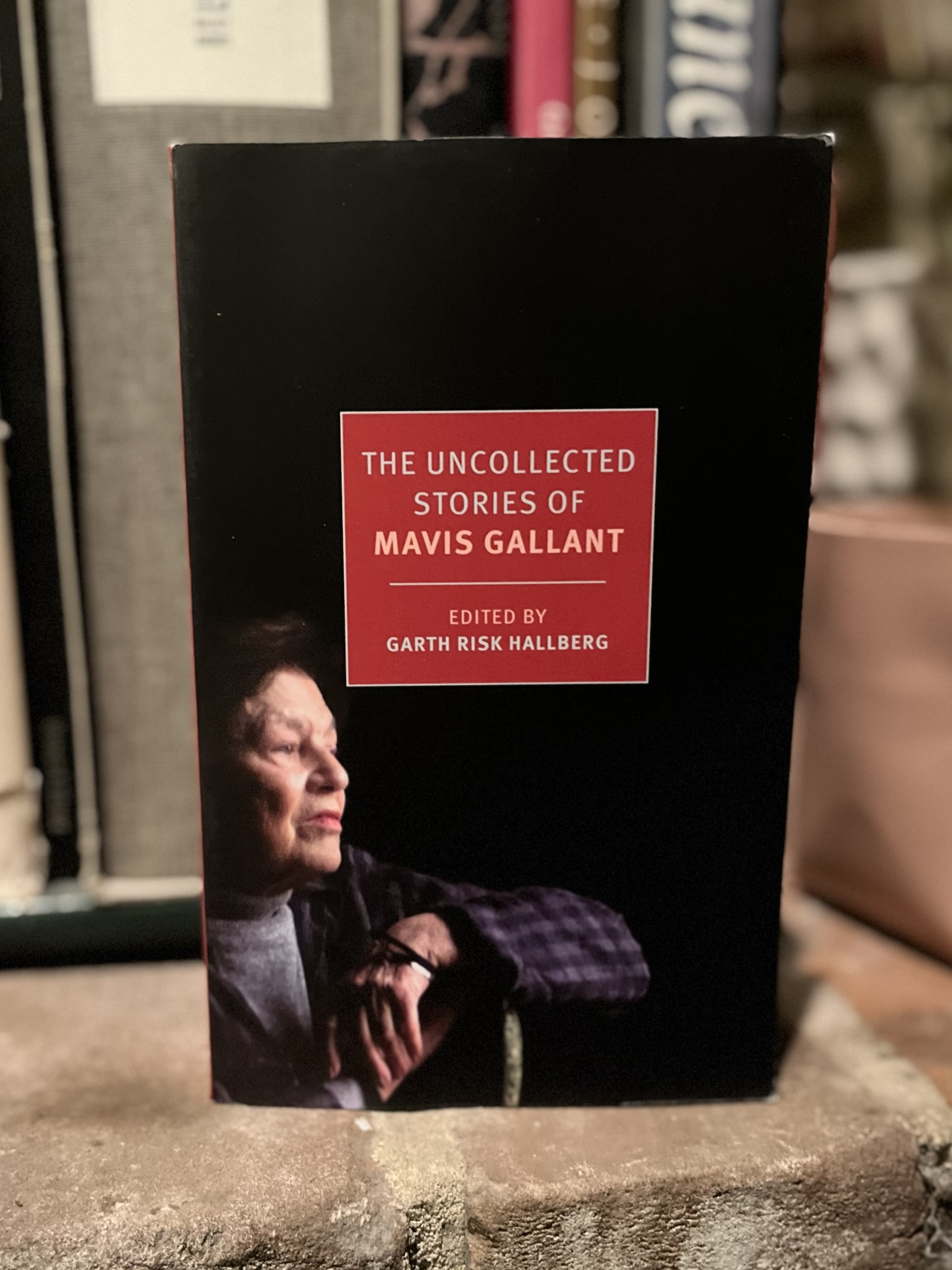
The Uncollected Stories of Mavis Gallant (Book acquired, 2 Jan. 2025)

The Uncollected Stories of Mavis Gallant publishes later this month from NYRB. And oof is she a big boy! NYRB’s blurb:

Mavis Gallant’s extraordinary mastery of the short story remains insufficiently recognized. She may be the best writer of stories since the early-1950s prime of John Cheever, Eudora Welty, and Flannery O’Connor, and even in such august company, her work is sui generis. Gallant’s short fiction refines the art of the story even as it expands the boundaries of what a story can be. Above and beyond that, however, it constitutes a striking, almost avant-garde reduction. To read her is to discover something about the very nature of story: how for better or worse life is caught up in it, and how on the page that common predicament can come to life.

The Uncollected Stories of Mavis Gallant includes more than thirty stories never before gathered into one volume, including “The Accident” and “His Mother” and “An Autobiography” and “Dédé.” With the publication of this book, finally all of this modern master’s fiction will be in print.

Small dents, big books (tl;dr)

I usually finish reading a novel if I stick with it for, say thirty-to-fifty pages. However, as is the case with many readers, I suspect, very long novels foil me; or, rather, time foils me. Obligations intercede. Here are some long novels that I had to put aside for another time. From the top:

Lies and Sorcery, Elsa Morante (775 pages)

If the bookmark I left in Jenny McPhee’s translation Lies and Sorcery is not lying (or ensorcelled), I got seventy pages into it before getting sidetracked with something else. I remember liking what I was reading but also that the book seemed very heavy over my head at night.

The Strudlhof Steps, Heimito von Doderer (840 pages)

I’ve really enjoyed the first fifty pages of Heimito von Doderer’s The Strudlhof Steps (in translation by Vincent Kling). I’ve enjoyed them so much that I’ve read them at least four times over the past three years. The longest I’ve waded into the Steps was to page 99. Again, a slimmer model comes round and I lose my focus—but of the four novels I’ve listed here, von Doderer’s is the one that’s made the biggest impression on me. My bites may have been shallow but I keep going in for seconds.

A Bended Circuity, Robert S. Stickley (637 pages)

Although it’s the shortest novel on this list, my edition of RSS’s ABC feels cramped and constrained. I think the novel would like a bigger home. The pages are too bright, the font too small, the margins too narrow. It’s a cramped reading experience. I suppose I could break down and buy the Corona\Samizdat edition, which may be easier to ease into. Or an e-book? RSS, please agree to an e-book! Some of us have aging eyes. Oh, I got to page 48.

Miss MacIntosh, My Darling, Marguerite Young (1321 pages)

I cracked into Marguerite Young’s Miss MacIntosh, My Darling twice this year; once in the Spring and once in the Fall. Maybe I’ll try again in the Winter. I stalled out 78 pages in, at the end of chapter 3.

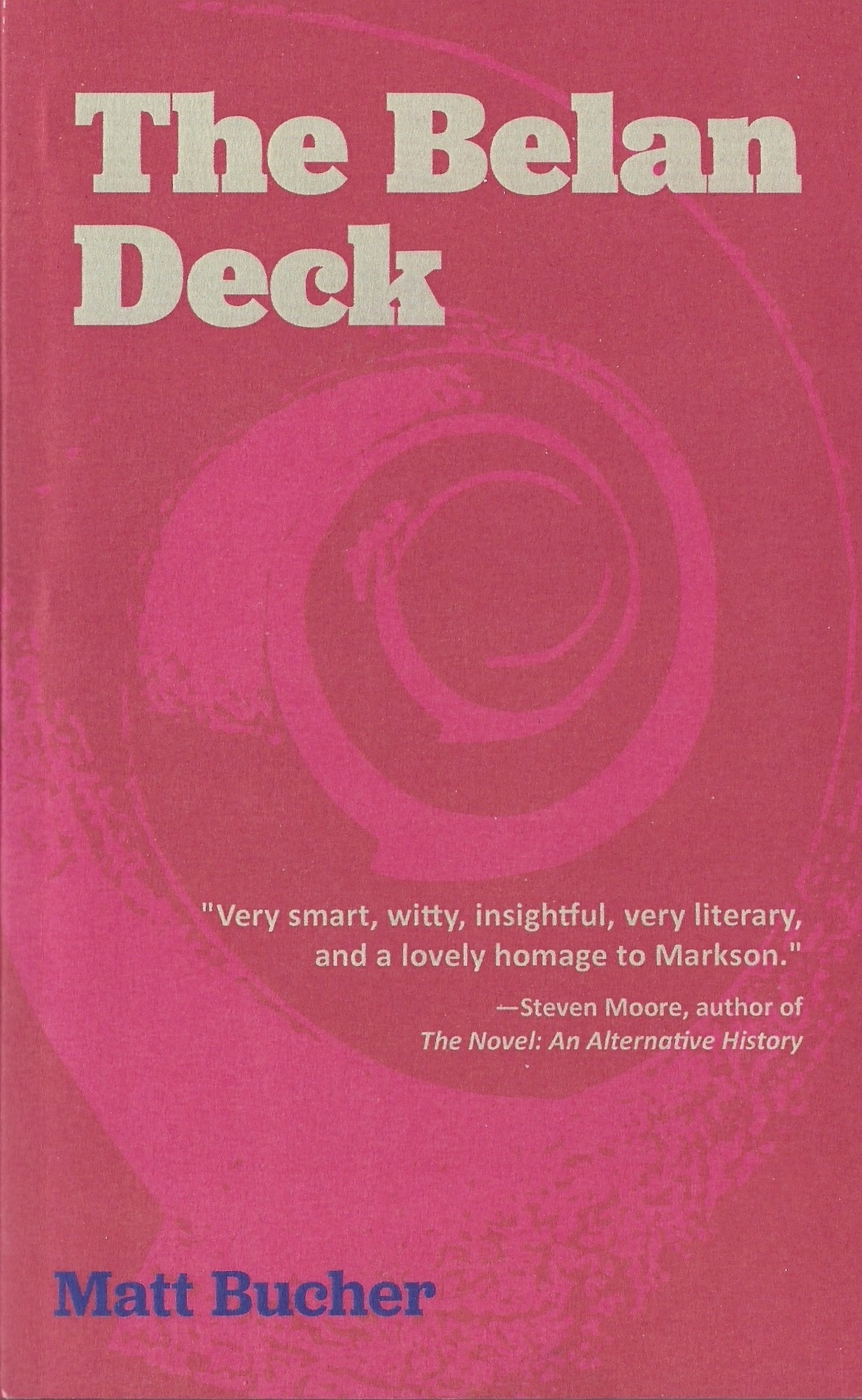
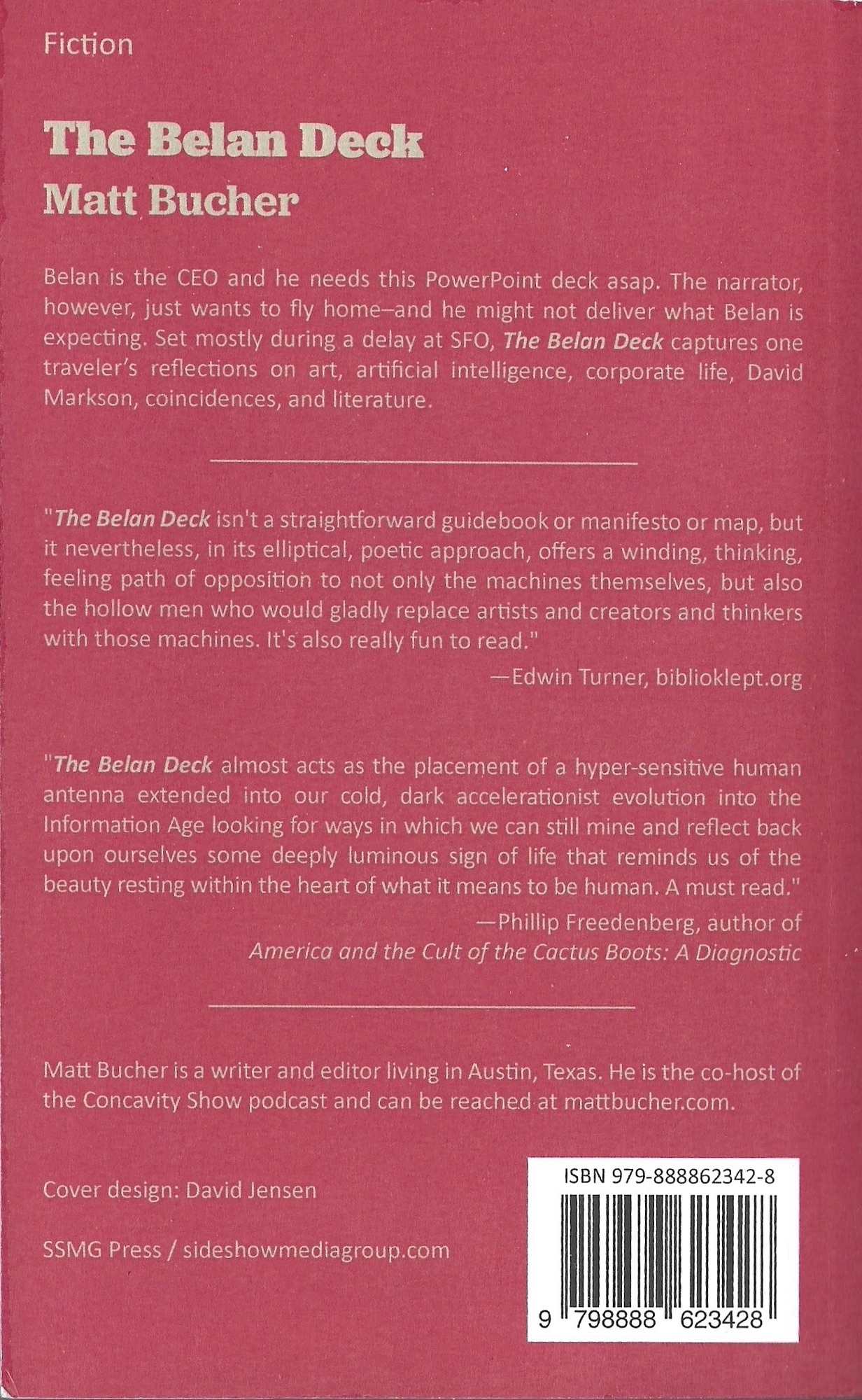
Mass-market Monday | Matt Bucher’s The Belan Deck

The Belan Deck, Matt Bucher. SSMG Press (2023; second printing). Cover design by David Jensen. 119 pages.

My review of The Belan Deck.

“The Story of a Stick (With Some Additional Comments by Mrs. Campbell),” a chapter from Three Trapped Tigers by G. Cabrera Infante

“The Story of a Stick (With Some Additional Comments by Mrs. Campbell)”

a chapter from Three Trapped Tigers

by G. Cabrera Infante

translated by Donald Gardner and Suzanne Jill Levine with collaboration by Infante


The Story

We arrived in Havana one Friday around three in the afternoon. The heat was oppressive. There was a low ceiling of dense gray, or blackish, clouds. As the boat entered the harbor the breeze that had cooled us off during the crossing suddenly died down. My leg was bothering me again and it was very painful going down the gangplank. Mrs. Campbell followed behind me talking the whole damned time and she found everything, but everything, enchanting: the enchanting little city, the enchanting bay, the enchanting avenue facing the enchanting dock. All I knew was that there was a humidity of 90 or 95 percent and that I was sure my leg was going to bother me the whole weekend. It was, of course, Mrs. Campbell’s brilliant idea to come to such a hot and humid island. I told her so as soon as I was on deck and saw the ceiling of rain clouds over the city. She protested, saying they had sworn to her in the travel agency that it was always, but always, spring in Cuba. Spring my aching foot! We were in the Torrid Zone. That’s what I told her and she answered, “Honey, this is the tropics!”

On the edge of the dock there was this group of enchanting natives playing a guitar and rattling some gourds and shouting infernal noises, the sort of thing that passes for music here. In the background, behind this aboriginal orchestra, there was an open-air tent where they sold the many fruits of the tropical tree of tourism: castanets, brightly painted fans, wooden rattlers, musical sticks, shell necklaces, earthenware pots, hats made of a brittle yellow straw and stuff like that. Mrs. Campbell bought one or two articles of every kind. She was simply enchanted. I told her she should wait till the day we left before making purchases. “Honey,” she said, “they are souvenirs.” She didn’t understand that souvenirs are what you buy when you leave a country. Nor was there any point in explaining. Luckily they were very quick in Customs, which was surprising. They were also very friendly, although they did lay it on a bit thick, if you know what I mean.

I regretted not bringing the car. What’s the point of going by ferry if you don’t take a car? But Mrs. Campbell thought we would waste too much time learning foreign traffic regulations. Actually she was afraid we would have another accident. Now there was one more argument she could throw in for good measure. “Honey, with your leg in this state you simply cannot drive,” she said. “Let’s get a cab.”

We waved down a taxi and a group of natives—more than we needed—helped us with our suitcases. Mrs. Campbell was enchanted by the proverbial Latin courtesy. It was useless to tell her that it was a courtesy you also pay for through your proverbial nose. She would always find them wonderful, even before we landed she knew everything would be just wonderful. When all our baggage and the thousand and one other things Mrs. Campbell had just bought were in the taxi, I helped her in, closed the door in keen competition with the driver and went around to the o
ther door because I could get in there more easily. As a rule I get in first and then Mrs. Campbell gets in, because it’s easier for her that way, but this impractical gesture of courtesy which delighted Mrs. Campbell and which she found “very Latin” gave me the chance to make a mistake I will never forget. It was then that I saw the walking stick.

It wasn’t an ordinary walking stick and this alone should have convinced me not to buy it. It was flashy, meticulously carved and expensive. It’s true that it was made of a rare wood that looked like ebony or something of that sort and that it had been worked with lavish care—exquisite, Mrs. Campbell called it—and translated into dollars it wasn’t really that expensive. All around it there were grotesque carvings of nothing in particular. The stick had a handle shaped like the head of a Negro, male or female—you can never tell with artists—with very ugly features. The whole effect was repulsive. However, I was tempted by it even though I have no taste for knickknacks and I think I would have bought it even if my leg hadn’t been hurting. (Perhaps Mrs. Campbell, when she noticed my curiosity, would have pushed me into buying it.) Needless to say Mrs. Campbell found it beautiful and original and—I have to take a deep breath before I say it—exciting. Women, good God!

We got to the hotel and checked in, congratulating ourselves that our reservations were in order, and went up to our room and took a shower. Ordered a snack from room service and lay down to take a siesta—when in Rome, etc. . . . No, it’s just that it was too hot and there was too much sun and noise outside, and our room was very clean and comfortable and cool, almost cold, with the air-conditioning. It was a good hotel. It’s true it was expensive, but it was worth it. If the Cubans have learned something from us it’s a feeling for comfort and the Nacional is a very comfortable hotel, and what’s even better, it’s efficient. When we woke up it was already dark and we went out to tour the neighborhood.

Outside the hotel we found a cab driver who offered to be our guide. He said his name was Raymond something and showed us a faded and dirty ID card to prove it. Then he took us around that stretch of street Cubans call La Rampa, with its shops and neon signs and people walking every which way. It wasn’t too bad. We wanted to see the Tropicana, which is advertised everywhere as “the most fabulous cabaret in the world,” and Mrs. Campbell had made the journey almost especially to go there. To kill time we went to see a movie we wanted to see in Miami and missed. The theater was near the hotel and it was new and air-conditioned.

We went back to the hotel and changed. Mrs. Campbell insisted I wear my tuxedo. She was going to put on an evening gown. As we were leaving, my leg started hurting again—probably because of the cold air in the theater and the hotel—and I took my walking stick. Mrs. Campbell made no objection. On the contrary, she seemed to find it funny.

The Tropicana is in a place on the outskirts of town. It is a cabaret almost in the jungle. It has gardens full of trees and climbing plants and fountains and colored lights along all the road leading to it. The cabaret has every right to advertise itself as fabulous physically, but the show consists—like all Latin cabarets, I guess—of half-naked women dancing rumbas and singers shouting their stupid songs and crooners in the style of Bing Crosby, but in Spanish. The national drink of Cuba is the daiquiri, a sort of cocktail with ice and rum, which is very good because it is so hot in Cuba—in the street I mean, because the cabaret had the “typical Cuban air-conditioning” as they call it, which means the North Pole encapsuled in a tropical saloon. There’s a twin cabaret in the open air but it wasn’t functioning that night because they were expecting rain. The Cubans proved good meteorologists. We’d only just begun to eat one of those meals they call international cuisine in Cuba, which consist of things that are too salty or full of fat or fried in oil which they follow with a dessert that is much too sweet, when a shower started pouring down with a greater noise than one of those typical bands at full blast. I say this to give some idea of the violence of the rainfall as there are very few things that make more noise than a Cuban band. For Mrs. Campbell this was the high point of sophisticated savagery: the rain, the music, the food, and she was simply enchanted. Everything would have been fine—or at any rate passable; when we switched to drinking whiskey and soda I began to feel almost at home—but for the fact that this stupid maricón of an emcee of the cabaret, not content with introducing the show to the public, started introducing the public to the show, and it even occurred to this fellow to ask our names—I mean all the Americans who were there—and he started introducing us in some godawful travesty of the English language. Not only did he mix me up with the soup people, which is a common enough mistake and one that doesn’t bother me anymore, but he also introduced me as an international playboy. Mrs. Campbell, of course, was on the verge of ecstasy! Continue reading ““The Story of a Stick (With Some Additional Comments by Mrs. Campbell),” a chapter from Three Trapped Tigers by G. Cabrera Infante”

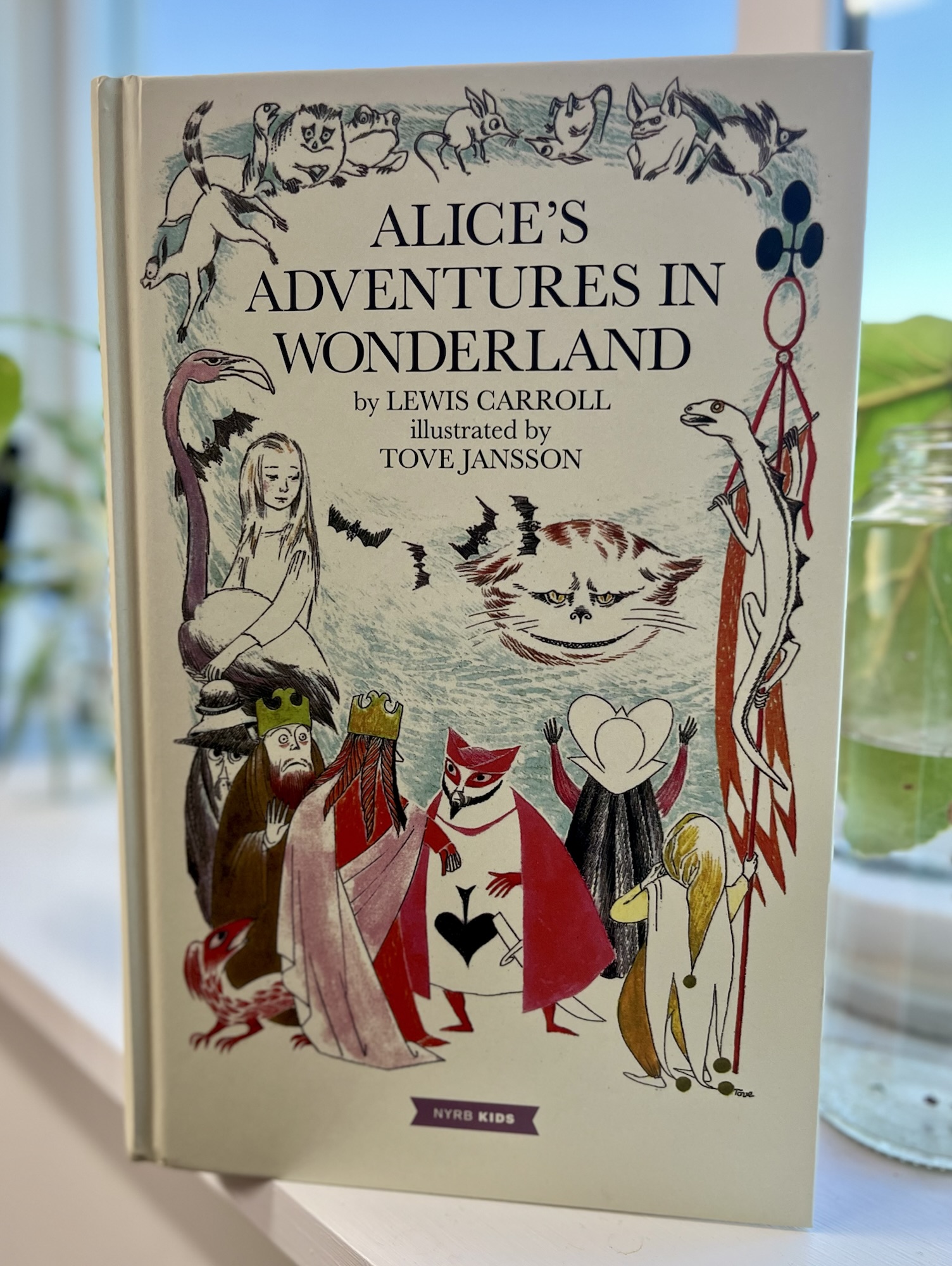
On Tove Jansson’s odd and touching illustrations for Alice’s Adventures in Wonderland

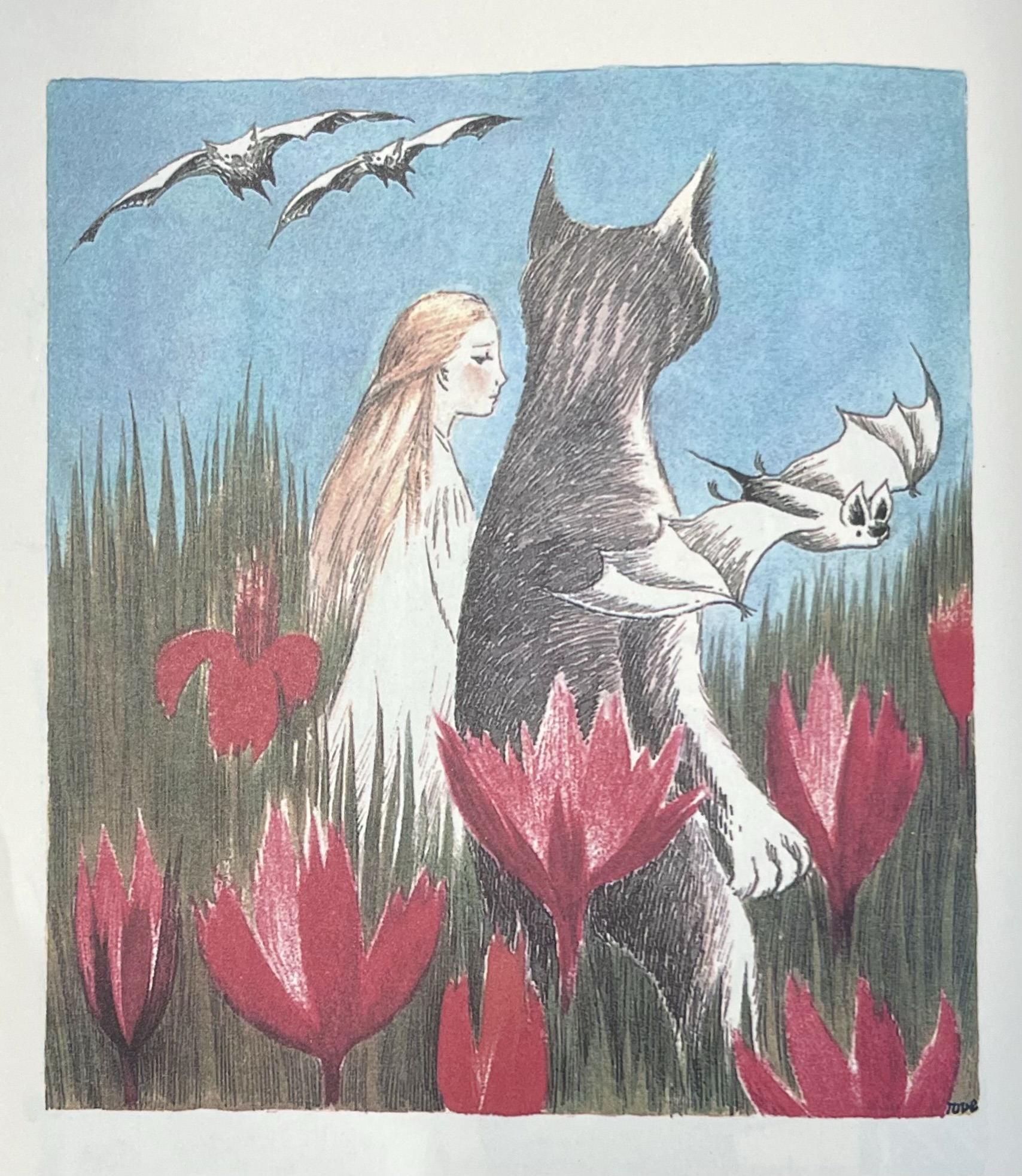
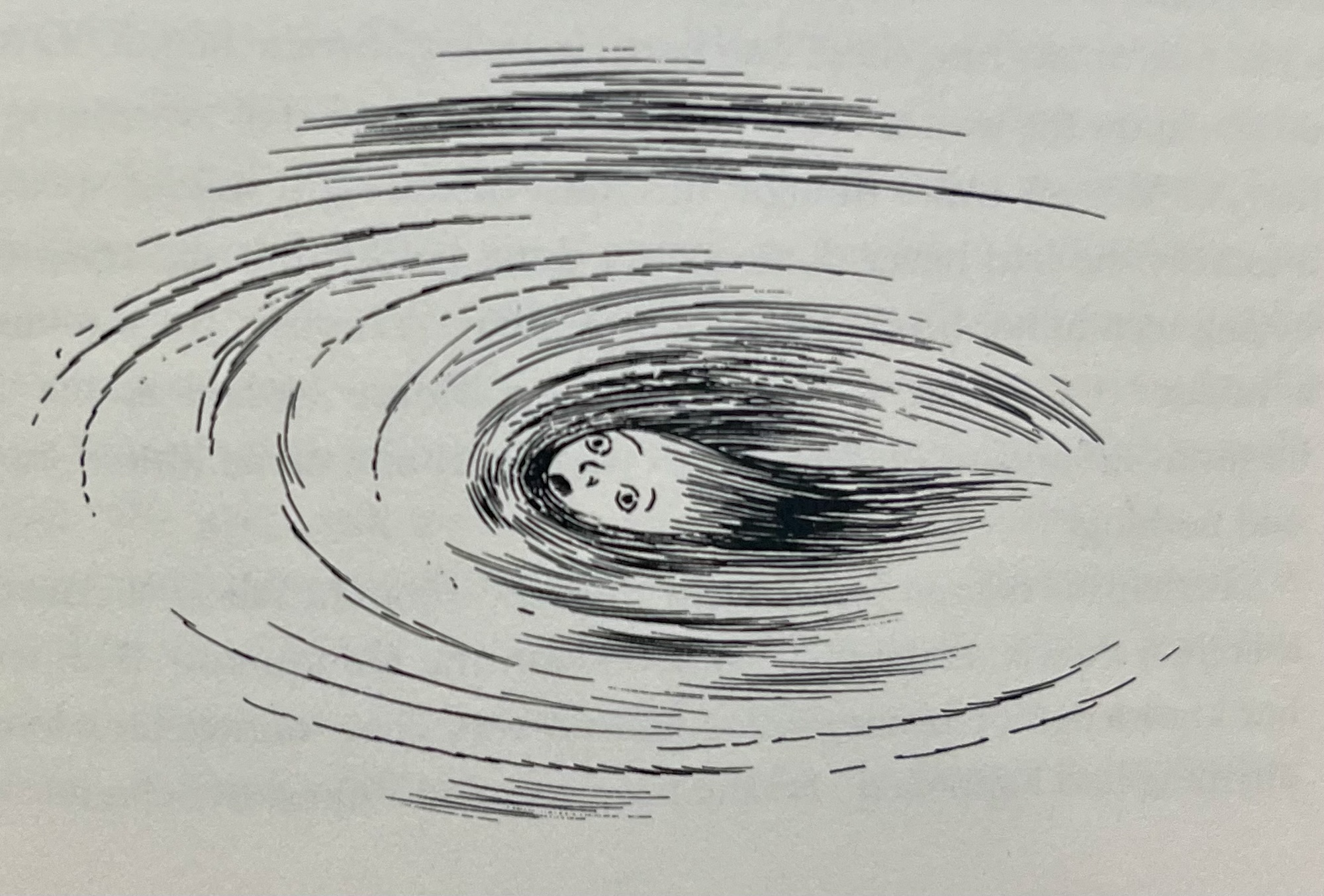
This fall–just in time for the holiday season–the NYRB Kids imprint has published an edition of Lewis Carroll’s classic Alice’s Adventures in Wonderland illustrated by the Finnish author and artist Tove Jansson. Jansson is most famous for her Moomin books, which remain an influential cult favorite with kids and adults alike. She illustrated Carroll’s Alice in 1966 for a Finnish audience; this NRYB edition is the first English-language version of the book. There are illustrations on almost every page of the book; most are black and white sketches — doodles, portraits, marginalia — but there are also many full-color full-pagers, like this odd image about a dozen pages in:

Here we have Alice and her cat Dinah, transformed into a shadowy, even sinister figure, large, bipedal. Bats float in the background, echoing Goya’s famous print El sueño de la razón produce monstruos. The image accompanies Alice’s initial descent into her underland wonderland:  “Down, down, down. There was nothing else to do, so Alice soon began talking again,” addressing Dinah, who will “miss me very much to-night, I should think!” Wonderlanding if Dinah might catch a bat, which is something like a mouse, maybe, “Alice began to get rather sleepy, and went on saying to herself, in a dreamy sort of way, ‘Do cats eat bats? Do cats eat bats?’ and sometimes, ‘Do bats eat cats?; for, you see, as she couldn’t answer either question, it didn’t much matter which way she put it.” Jansson’s red flowers suggest poppies, contributing to the scene’s slightly-menacing yet dreamlike vibe. The image ultimately echoes the myth of Hades and Persephone.

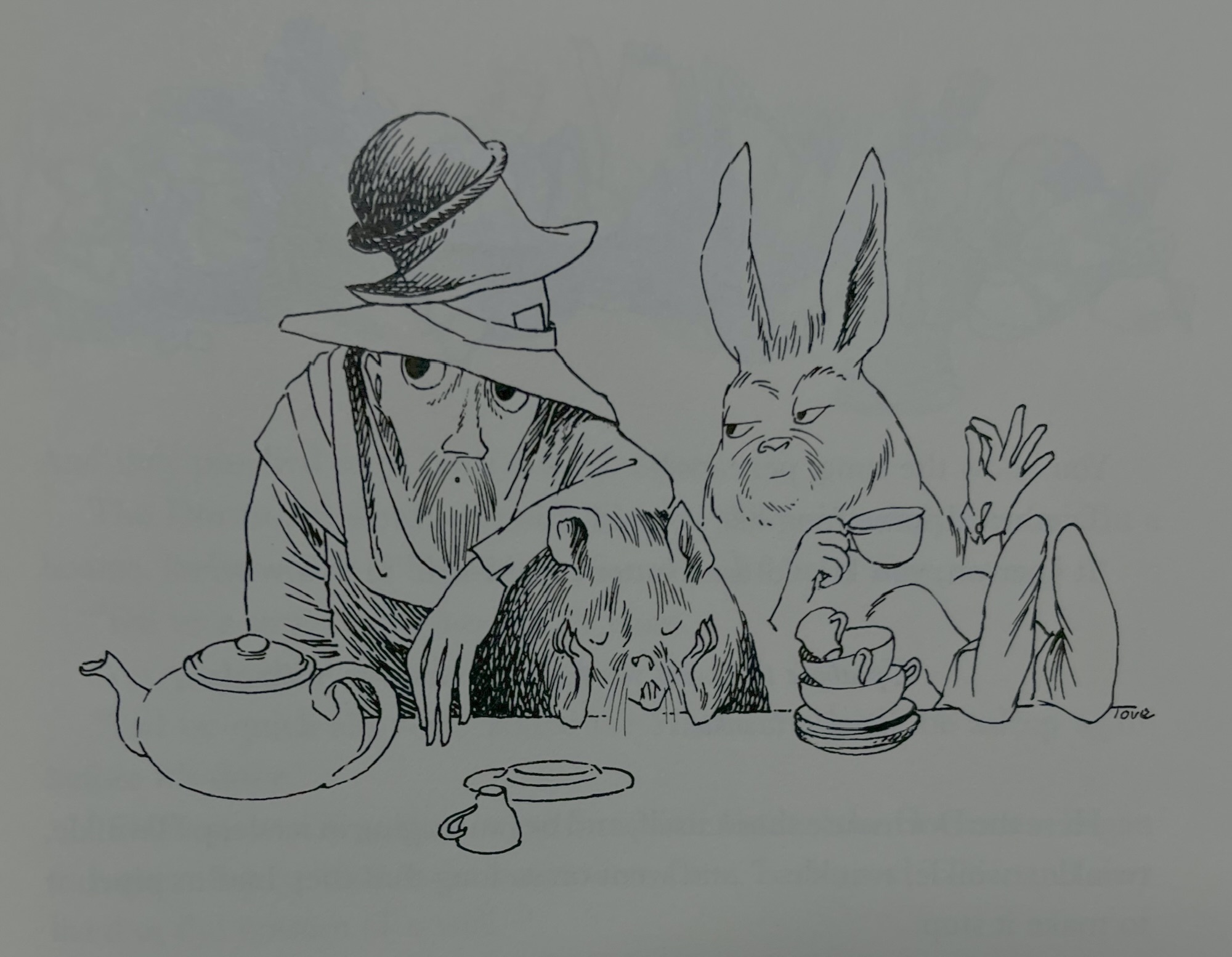
All the classic characters are here, of course, rendered in Jansson’s sensitive ink. Consider this infamous trio —

There was a table set out under a tree in front of the house, and the March Hare and the Hatter were having tea at it: a Dormouse was sitting between them, fast asleep, and the other two were using it as a cushion, resting their elbows on it, and talking over its head.

I love Jansson’s take on the Hatter; he’s not the outright clown we often see in post-Disneyfied takes on the character, but rather a creature rendered in subtle pathos. The March Hare is smug; the Dormouse is miserable.

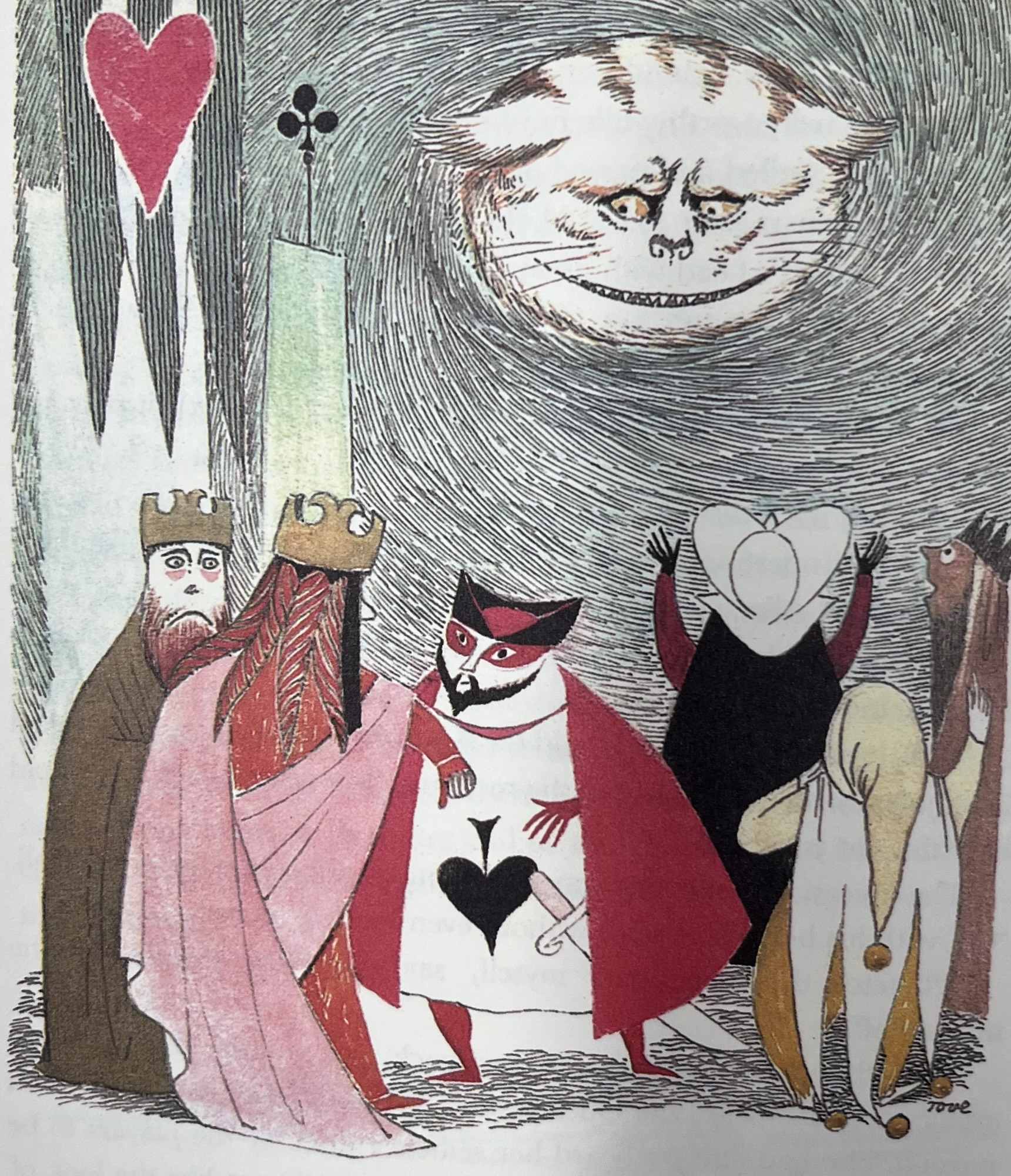
And you’ll want a glimpse of the famous Cheshire cat who appears (and disappears) during the Queen’s croquet match:

Jansson’s figures here remind one of the surrealist Remedios Varo’s strange, even ominous characters. Like Varo and fellow surrealist Leonora Carrington, Jansson’s art treads a thin line between whimsical and sinister — a perfect reflection of Carroll’s Alice, which we might remember fondly as a story of magical adventures, when really it is much closer to a horror story, a tale of being sucked into an underworld devoid of reason and logic, ruled by menacing, capricious, and ultimately invisible forces. It is, in short, a true reflection of childhood,m. Great stuff.

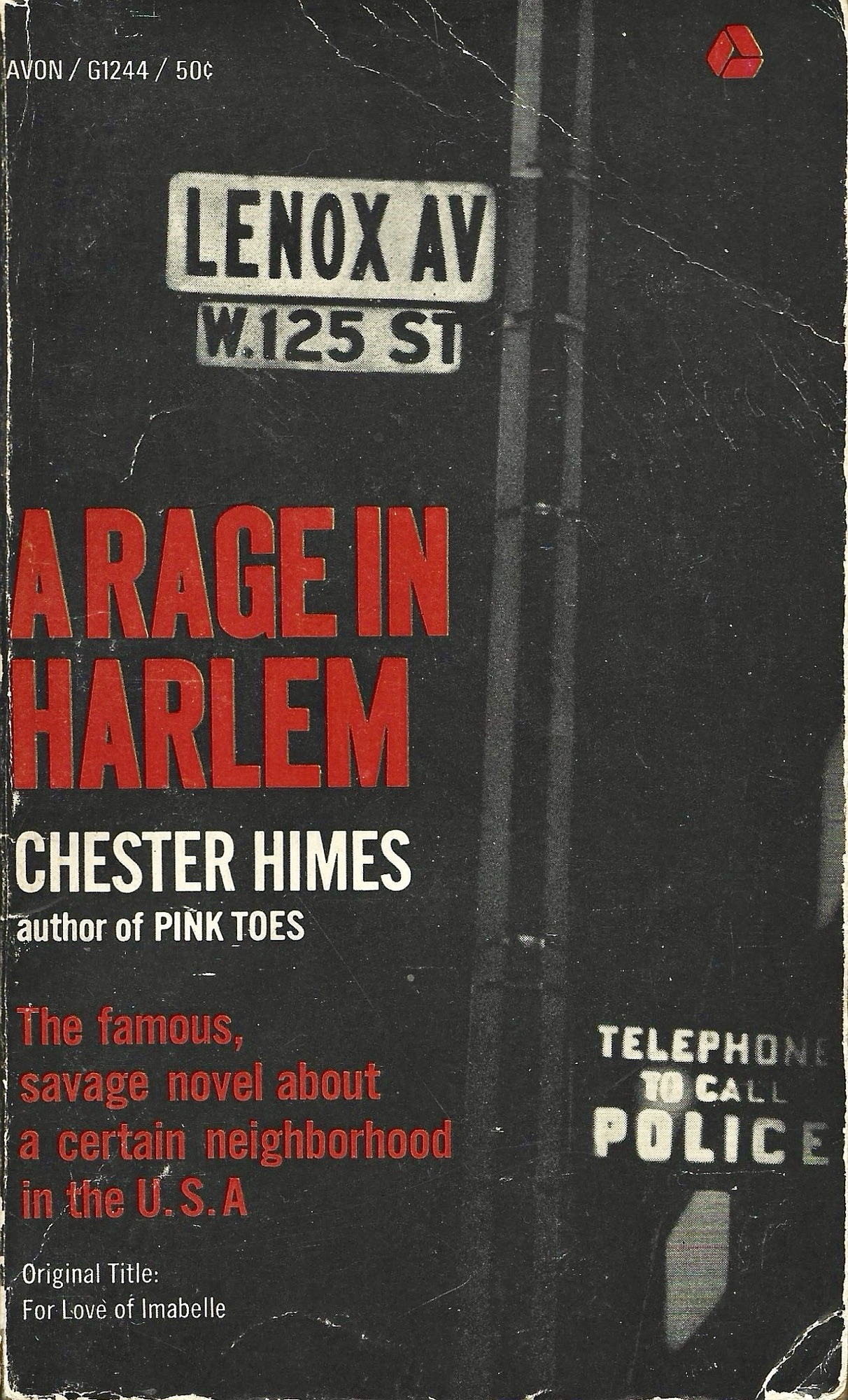
Mass-market Monday | Chester Himes’ A Rage in Harlem

A Rage in Harlem, Chester Himes. Avon Books (1965). No cover artist or designer credited. 192 pages.

Himes’ A Rage in Harlem is a quick, mean, sharp read. I came to Himes via Ishmael Reed, who wrote of the author in a 1991 LA Times review of Himes’ Collected Stories,

James Baldwin, another proud and temperamental genius, said that if he hadn’t left the United States he would have killed someone. The same could be said of Chester Himes, the intellectual and gangster who left the United States for Europe in the 1950s. He achieved fame abroad with his Harlem detective series, which are remarkable for their macabre comic sense and wicked and nasty wit so brilliantly captured in Bill Duke’s A Rage in Harlem.

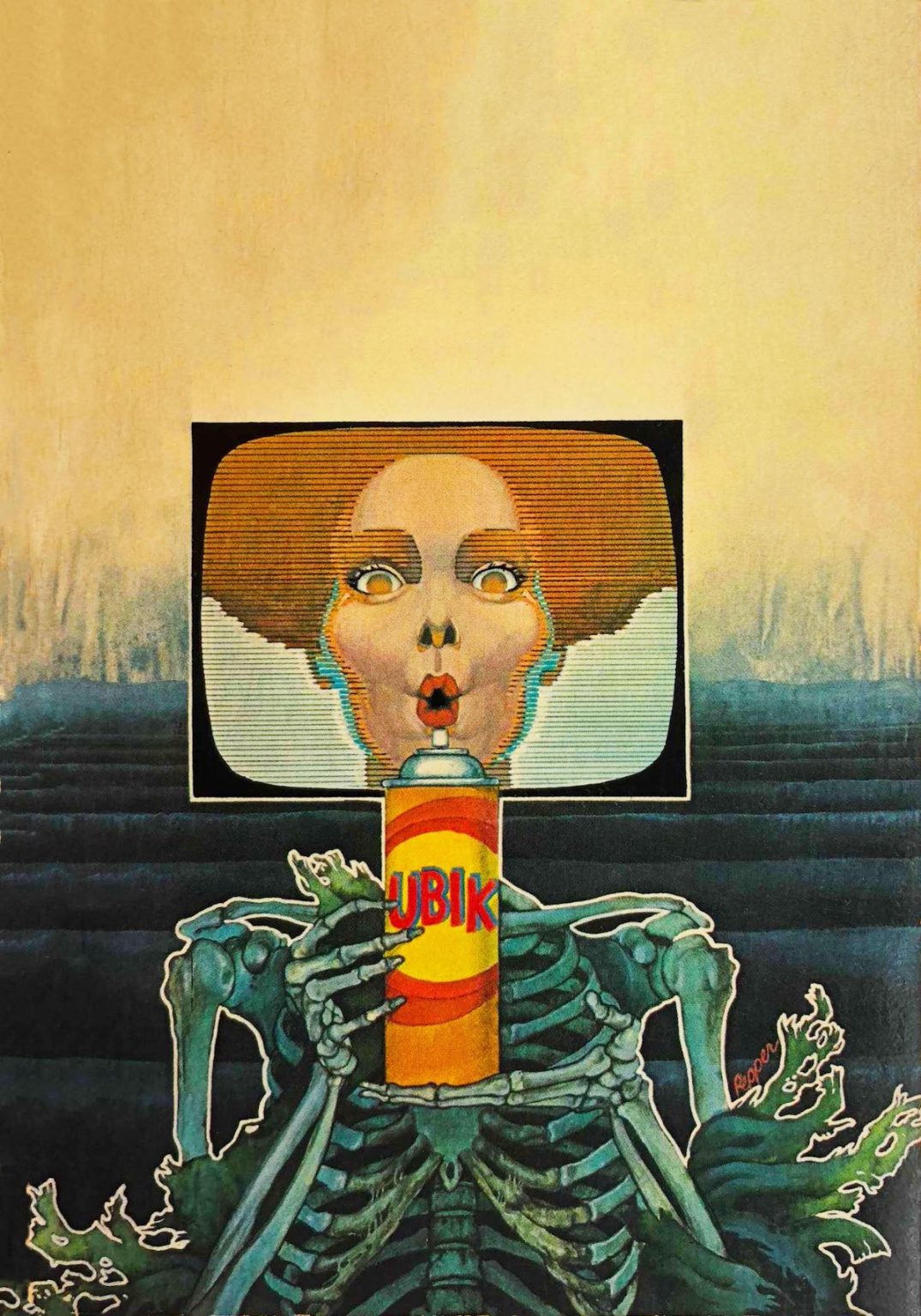
Ubik — Bob Pepper

Cover art for Philip K. Dick’s Ubik, 1982 by Bob Pepper (1938-2019). Via/more.

Donald Barthelme’s Fine Homemade Soups

DONALD BARTHELME’S FINE HOMEMADE SOUPS

My fine homemade soups are interesting, economical, and tasty. To make them, one proceeds in the following way:

Fine Homemade Leek Soup

Take one package Knorr Leek Soupmix. Prepare as directed. Take two live leeks. Chop leeks into quarter-inch rounds. Throw into Soupmix.

Throw in ½ cup Tribuno Dry Vermouth. Throw in chopped parsley.

Throw in some amount of salt and a heavy bit of freshly-ground pepper.

Eat with good-quality French bread, dipped repeatedly in soup.

Fine Homemade Mushroom Soup

Take one package Knorr Mushroom Soupmix. Prepare as directed.

Take four large mushrooms. Slice. Throw into Soupmix. Throw in ⅛ cup Tribuno Dry Vermouth, parsley, salt, pepper. Stick bread as above into soup at intervals. Buttering bread enhances taste of the whole.

Fine Homemade Chicken Soup

Take Knorr Chicken Soupmix, prepare as directed, throw in leftover chicken, duck, or goose as available. Add enhancements as above.

Fine Homemade Oxtail Soup

Take Knorr Oxtail Soupmix, decant into same any leftover meat (sliced or diced) from the old refrigerator. Follow above strategies to the letter.

The result will make you happy. Knorr’s Oxtail is also good as a basic gravy-maker and constituent of a fine fake cassoulet about which we can talk at another time. Knorr is a very good Swiss outfit whose products can be found in both major and minor cities. The point here is not to be afraid of the potential soup but to approach it with the attitude that you know what’s best for it. And you do. The rawness of the vegetables refreshes the civilization of the Soupmixes. And there are opportunities for mercy-if your ox does not wish to part with his tail, for example, to dress up your fine Oxtail Soup, you can use commercial products from our great American supermarkets, which will be almost as good. These fine homemade recipes work! Use them with furious enthusiasm.

From The Great American Writers’ Cookbook (ed. Dean Faulkner Wells, 1981).

19 Nov. 2024 (Blog about missing GY!BE and Alan Sparhawk this weekend in Atlanta)

This is Friday—not today, I mean, this, this blog, is Friday, four or five days ago, depending on how you count such things. We were maybe fifteen or twenty minutes on the road heading northwest to Atlanta—my wife driving the first leg before we stopped for gas—when I checked social media again to see if Godspeed You! Black Emperor were still going to play that night. They were not. This information came via opener Low legend Alan Sparhawk, who had reported the past two nights’ shows canceled.

We headed north anyway. The kids had left school early; my daughter pointed out that she had already missed an AP Bio test and that she wasn’t going with me and the boy to the show anyway, she just wanted to go to Atlanta to hang out. Fair point, of course.

My son was bummed and I was bummed. I don’t know exactly how he came to Godspeed You! Black Emperor’s strange, hypnotic, droney anthems—via an algorithm, really—but a few years ago I heard him blasting Lift Your Skinny Fists Like Antennas to Heaven in his bedroom. I gave him my copy of their debut LP, F♯ A♯ ∞, which I’d bought from the band back in 1998 or 1999 when they opened for Low at a record story I was working at in Florida. They knocked our socks off. It seemed there were more Godspeeds Yous than audience members, and to be clear, the tiny record store was packed. It was a summer afternoon in Florida; very hot and very sunny, a throbbing miasma of sound across Hemming Park, now James Weldon Johnson Park, in beautiful ugly downtown Jacksonville.

(It was just such a night my friend Travis was arrested for skateboarding across Laura Street. Jayskating. (I don’t think it was the same night.))

After the show I bought their record. It had a pouch crammed with incidentals—flattened pennies, a Canadian stamp, some illustrated scraps. I think I listened to it a million times that summer. One of the guys in the band asked me where they could get some hash in Jacksonville. I suggested the Waffle House. Low played after; everyone sat down, exhausted from what Godspeed had required. It was lovely. Perfect day.

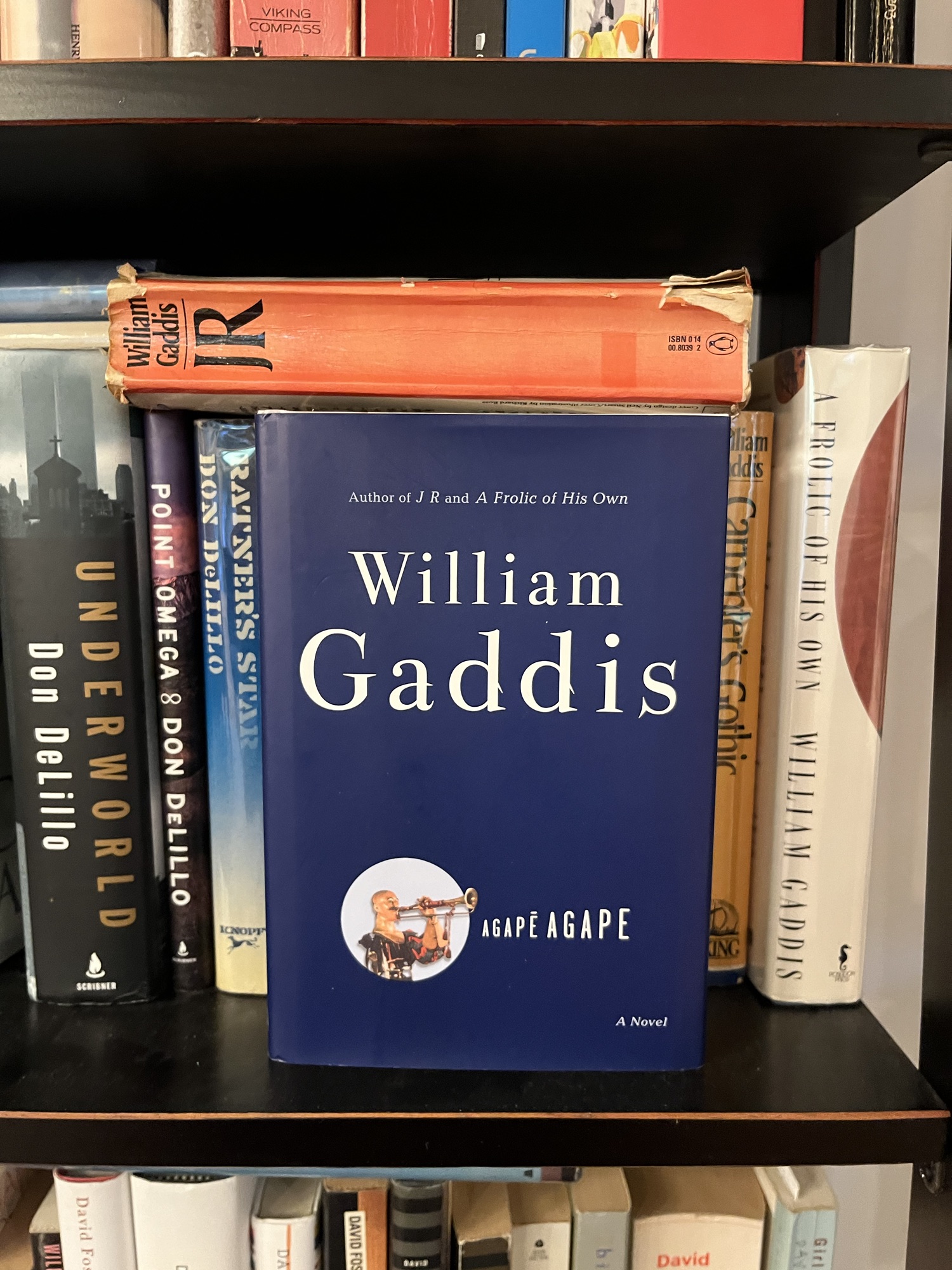
I had really wanted to experience my imaginative inversion of this concert this past weekend, but it didn’t emerge. I mean Alan Sparhawk, whose new record is so strange and daring and wonderful—I wanted to see that with my kid, who, he, my kid, wanted to see the ensemble Godspeed do their drone magic. I bought him an Aphex Twin record at Wax n’ Facts as a consolation prize, and he bought himself the first volume of Katsuhiro Otomo’s Akira at A Capella Books. I picked up a first edition hardback of William Gaddis’s last novel Agapē Agape.

And so well we made a weekend of it, browsing book stores and record stores and walking the Beltline. Love that city and my best wishes to GY!BE founding member, Efrim Menuck—I hate that we missed you on the tour but I hope that your health recovers. Thank you for making music my son and I love. 


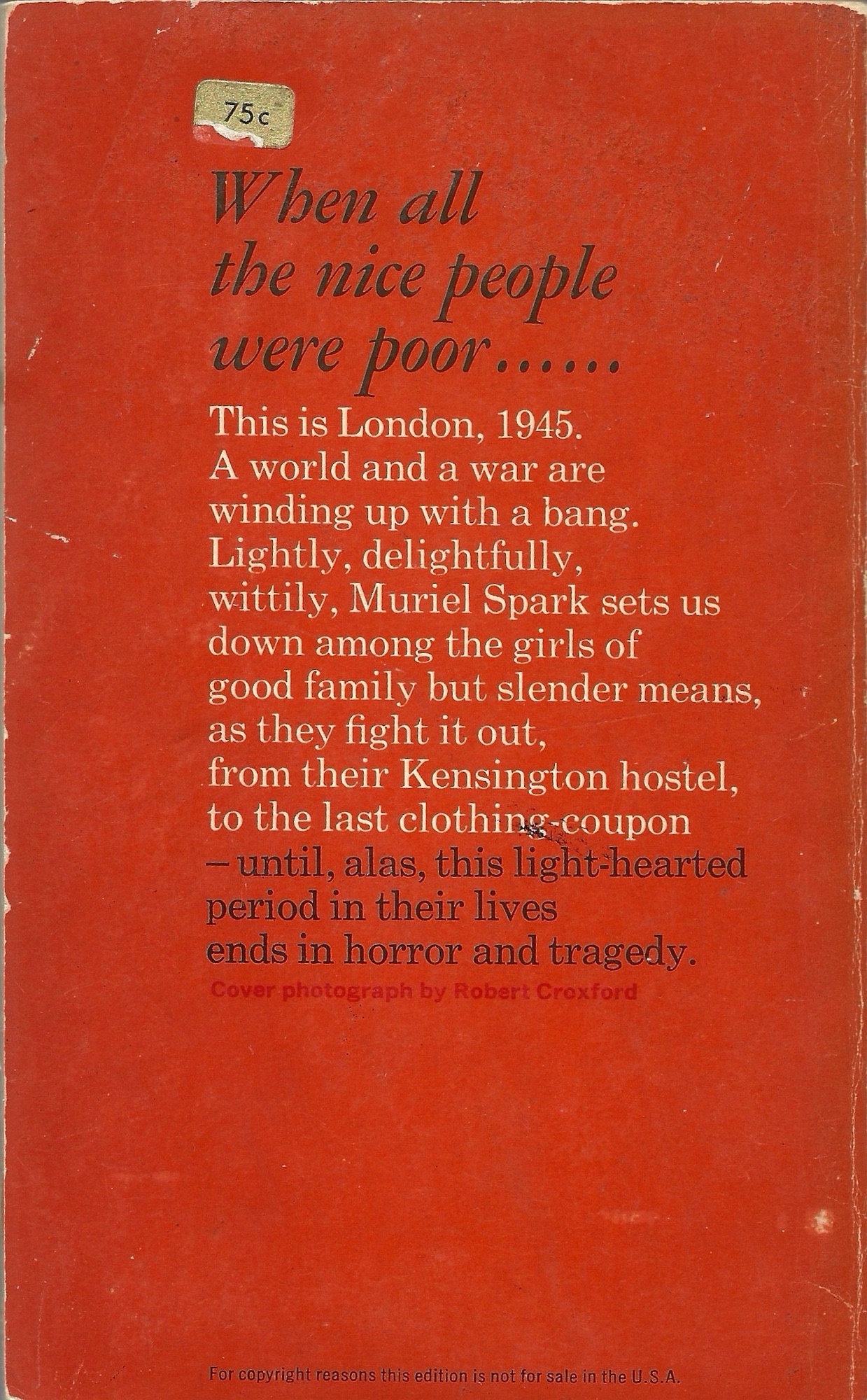
Mass-market Monday | Muriel Spark’s The Girls of Slender Means

The Girls of Slender Means, Muriel Spark. Penguin Books (1966). Cover photograph by Robert Croxford. 142 pages.

From a thing a wrote back in 2020:

Slender Means unself-consciously employs postmodern techniques to paint a vibrant picture of what the End of the War might feel like. The climax coincides with the bombings of Hiroshima and Nagasaki, the title takes on a whole new meaning, and the whole thing unexpectedly ends in a negative religious epiphany.

Paul Valéry’s Monsieur Teste (Book acquired, 14 Nov. 2024)

Got a review copy of Paul Valéry’s Monsieur Teste, a slim lil fellow from NYRB in translation by Charlotte Mandell. The back cover includes a blurb from William H. Gass—

Monsieur Teste is a monster, and is meant to be—an awesome, wholly individualized machine—yet in a sense he is also the sort of inhuman being Valéry aimed to become himself: a Narcissus of the best kind, a scientific observer of consciousness, a man untroubled by inroads of worldly trivia, who vacations in his head the way a Platonist finds his Florida in the realm of Forms.

What the fuck does Gass mean by “Florida” here? I really want to know.


This style of post, the book acquired post, is an established, which is to say tired, blog post format on this blog, Biblioklept, probably going back a decade now, born from a glut of review copies piling up, mostly unasked for but many asked for, books that stack up their own measures of guilt, unread, or then maybe read, months, years later—but the post style is ephemeral, yes, fluffy, sure, embarrassing even maybe. The form is stale; I apologize. I do think the Valéry book seems pretty cool.


I have a not-insubstantial stack of newly acquired new (and used books) stacked on the cherry side table by the black leather couch that I should have made book acquired posts about. These have piled up over the last few weeks. These are not interesting sentences (several of the books seem very interesting).


I am not going to find the new form I want here, am I?


When I was a freshman in high school, my then-girlfriend’s older brother gave me a mixtape that a girl had given him. He didn’t like anything on the mixtape; he liked Buddy Holly. I can’t remember why he gave me the tape—I think I saw it in his car and asked about it. But it ended up changing my life in some ways, as small giant things like songs or books or films can do when they come over you at the right time and place.

There were a few bands on the tape that I knew or had heard of, and even some I owned albums by, like the Cure and the Smiths. But for the most part, the tape opened a new aural world to me. I heard My Bloody Valentine, Big Star, Ride, the Cocteau Twins, and This Mortal Coil, among others, for the first time. There were also two songs by one band: Slowdive’s “When the Sun Hits” and “Dagger.”


(This particular blog post is no longer about acquiring a Valéry translation; it is about something else.)


Those songs are from Slowdive’s 1993 classic Souvlaki. I owned it on cassette. That cassette melted, just slightly, on the top of my 1985 Camry’s dashboard in like August of 1995. The tape was just warped enough not to fit into a cassette deck. I liked to imagine how it would sound. The next year, my lucky privileged ass found a used CD of Slowdive’s follow-up, Pygmallion on a school trip to London. Slowdive kinda sorta broke up after that.


I have always been a proponent of bands breaking up. I think a decade is long enough; get what you need done in five or six albums and move on. There are many many exceptions to this rule. But generally, I don’t think beloved bands—by which I means bands beloved by me—should keep going on too long. And if they break up, they should stay broken.


But I bought Slowdive’s 2017 reunion album Slowdive used at a St. Petersburg record store and listened to it again and again, amazed at how strong it was, how true to form. My kids liked it a lot. And then they put out a record last year, Everything Is Alive—I like that one too (not as good as the self titled one).


(There’s no point to any of this; I might’ve had some wine; I might just feel like writing.)


I guess if you’d told me back in ’95 or ’05 or even ’15 that I’d see a reunited Slowdive twice in one year I’d say that that sounded silly. (The ’15 version of me that had seen Dinosaur Jr.’s dinosaur act wouldn’t have been interested.) But we went out into the woods to see Slowdive this Sunday. They played the St. Augustine Amphitheatre to a large, strange, diverse crowd, out there in the Florida air. A band named Wisp, TikTok famous I’m told, opened, and they were pretty good. But Slowdive was perfect—better than back in May in Atlanta—echo and reverb ringing out into Anastasia State Park.


We stayed in a cheap motel off of AIA that night—another sign of my age. When I was younger, I could drive six hours, watch a band, and drive the six hours back without blinking. We are about 45 minutes from St. Augustine. It was a nice night out.


A younger version of me could’ve read the 80 pages of Paul Valéry’s Monsieur Teste in the time it took to twiddle my thumbs in this post and write a real (and likely bad) review to boot. Again, apologies. I’m getting old, a dinosaur act. But I can’t break up, not now.


Slowdive, St. Augustine Amphitheatre, 10 Nov. 2024 Slowdive, St. Augustine Amphitheatre, 10 Nov. 2024