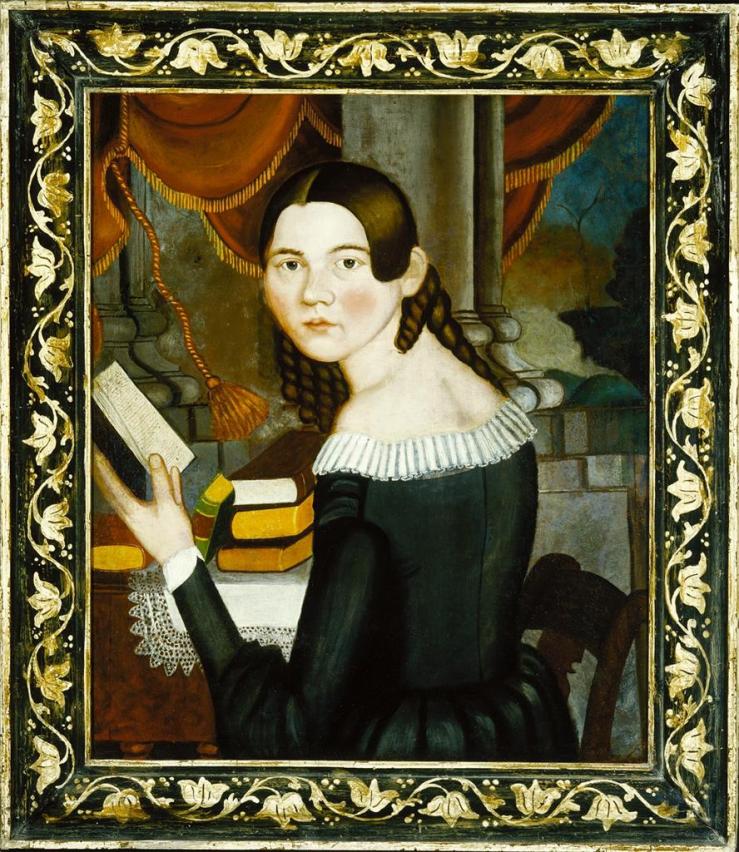
Portrait of Harriet — Jonathan Adams Bartlett

TERRA_DB_103997200

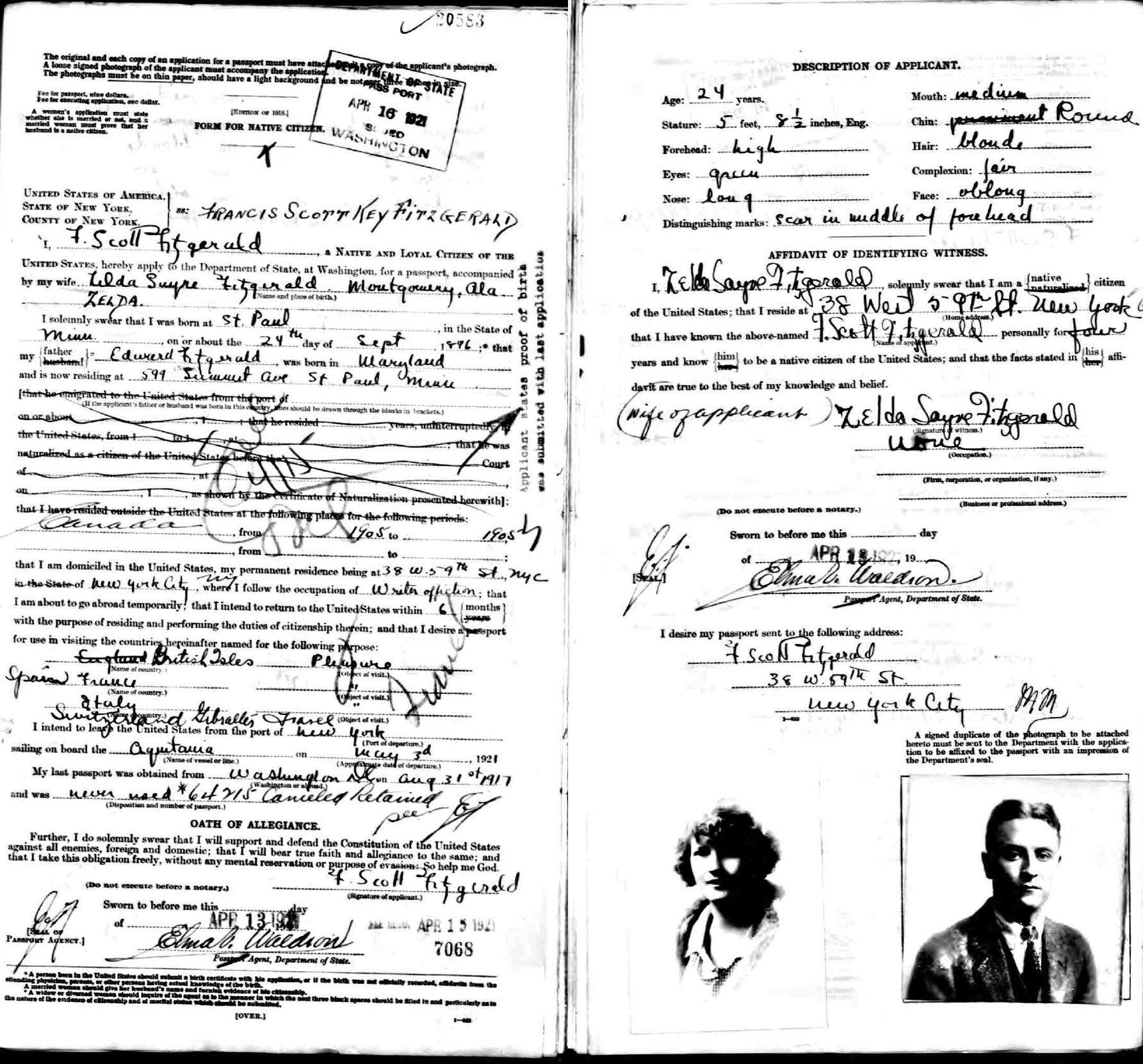
Scott and Zelda Fitzgerald Apply for a Passport

f-scott-fitzgerald

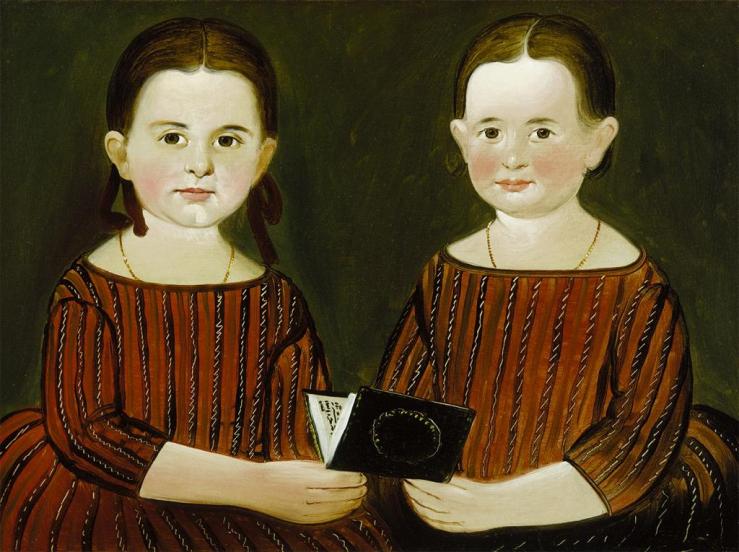
Two Girls Sharing a Book — William Matthew Prior

TERRA_DB_103997185

Still Points North (Book Acquired, 3.02.2013)

20130304-154858.jpg

Still Points North is Leigh Newman’s new memoir about growing up in Alaska. Publisher Random House’s blurb:

Part adventure story, part love story, part homecoming, Still Points North is a page-turning memoir that explores the extremes of belonging and exile, and the difference between how to survive and knowing how to truly live.

Growing up in the wilds of Alaska, seven-year-old Leigh Newman spent her time landing silver salmon, hiking glaciers, and flying in a single-prop plane. But her life split in two when her parents unexpectedly divorced, requiring her to spend summers on the tundra with her “Great Alaskan” father and the school year in Baltimore with her more urbane mother.

Navigating the fraught terrain of her family’s unraveling, Newman did what any outdoorsman would do: She adapted. With her father she fished remote rivers, hunted caribou, and packed her own shotgun shells. With her mother she memorized the names of antique furniture, composed proper bread-and-butter notes, and studied Latin poetry at a private girl’s school. Charting her way through these two very different worlds, Newman learned to never get attached to people or places, and to leave others before they left her. As an adult, she explored the most distant reaches of the globe as a travel writer, yet had difficulty navigating the far more foreign landscape of love and marriage.

In vivid, astonishing prose, Newman reveals how a child torn between two homes becomes a woman who both fears and idealizes connection, how a need for independence can morph into isolation, and how even the most guarded heart can still long for understanding. Still Points North is a love letter to an unconventional Alaskan childhood of endurance and affection, one that teaches us that no matter where you go in life, the truest tests of courage are the chances you take, not with bears and blizzards, but with other people.


Woman Reading — Pablo Picasso

Yoko Ogawa’s Revenge Is an Elegant Collection of Creepy Intertextual Tales

revenge

In Yoko Ogawa’s new collection Revenge, eleven stories of fascinating morbidity intertwine at oblique angles. Tale extends into tale: characters, settings, and images float intertextually from chapter to chapter, layering and reticulating themes of death, crime, consumption, and creation. (And revenge, of course. Let’s not forget revenge). Not quite a story cycle or a novel-in-tales, Revenge’s sum is nevertheless greater than its parts. It’s a brisk, engaging read, and as I worked my way to the final story, I already anticipated returning to the beginning to pull at the motifs threading through the book.

The book’s dominant motifs of death and food arrive in the first tale, “Afternoon Bakery,” where a mother tries to buy strawberry shortcakes for her dead son’s birthday—only the baker is too busy bawling to attend to sales. We learn why this baker is crying in “Fruit Juice,” the second story, a tale that ends inexplicably with an abandoned post office full of kiwi fruit. The third story, “Old Mrs.  J” (one of Revenge’s stand-outs) perhaps answers where those kiwis came from. More importantly, “Old Mrs. J,” with its writer-protagonist, elegantly introduces the thematic textual instability of the collection. There’s a  haunting suspicion here that the characters who glide from one tale to the next aren’t necessarily the silent extras they seem to be on the surface. Our characters, background and fore, are doppelgängers, ghost writers, phantoms.

The penultimate tale “Tomatoes and the Full Moon” lays the ghosting bare. Its protagonist is a magazine writer, whose “articles” really amount to little more than advertising. Staying at a seaside resort, he’s pestered by an old woman, one of the many witches who haunt Revenge. The old woman claims to be a novelist, and points out one of her books in the resort’s library:

Later, in my room, I read ‘Afternoon at the Bakery.’ It was about a woman who goes to buy a birthday cake for her dead son. That was the whole story. I should have gone back to my article, but I read her novel through twice, finishing for the second time at 3:00 a.m. The prose was unremarkable, as were the plot an characters, but there was an icy current running under her words, and I found myself wanting to plunge into it again and again.

The final line is perhaps a description of Revenge’s haunting intertextual program—although to be clear, Ogawa’s plot and characters are hardly “unremarkable,” and her prose, in Stephen Snyder’s English translation, is lucid and descriptive. It’s the “icy current running under her words” that makes Ogawa’s tales stick so disconcertingly in the reader’s psychic gullet. And if her prose is at times “unremarkable,” it’s all in the service of creating a unifying tone. All eleven tales are narrated in first-person, and each narrator is bound to the limits of his or her own language.

These limitations of language bump up against the odd, the spectacular, the alien, as in “Sewing for the Heart”:

She had explained that she was born with her heart outside of her chest—as difficult as that might be to imagine.

The line is wonderful in its mundane trajectory: Our narrator, an artisan bagmaker, witnesses this woman who lives with her heart outside her chest and concedes that such a thing might be “difficult . . . to imagine”! There’s something terribly paltry in this, but it’s also purposeful and controlled: Here we find the real in magical realism.

But this bagmaker can imagine, as we see in an extraordinary passage that moves from the phenomenological world of sight and sound and into the realm of our narrator’s strange desires:

She began to sing, but I could not make out the words. It must have been a love song, to judge from the slightly pained expression on her face, and the way she tightly gripped the microphone. I noticed a flash of white skin on her neck. As she reached the climax of the song, her eyes half closed and her shoulders thrown back, a shudder passed through her body. She moved her arm across her chest to cradle her heart, as though consoling it, afraid it might burst. I wondered what would happen if I held her tight in my arms, in a lovers’ embrace, melting into one another, bone on bone . . . her heart would be crushed. The membrane would split, the veins tear free, the heart itself explode into bits of flesh, and then my desire would contain hers—it was all so painful and yet so utterly beautiful to imagine.

Painful and utterly beautiful: Another description of Revenge.

Sometimes the matter-of-fact tone of the stories accounts for marvelous little eruptions of humor, as in “The Last Hour of the Bengal Tiger”:

At fifteen, I took an overdose of sleeping pills. I must have had a good reason for wanting to kill myself, but I’ve forgotten what it was. Perhaps I was just fed up with everything. At any rate, I slept for eighteen hours straight, and when I woke up I was completely refreshed. My body felt so empty and purified that I wondered whether I had, in fact, died. But no one in my family even seemed to have noticed that I had attempted suicide.

The scene is simultaneously devastating and hilarious, an evocation of abyssal depression coupled with mordant irony. The scene also underscores the dramatic uncertainty that underpins so many of the tales, where the possibility that the narrator is in fact a ghost or merely a character in someone else’s story is always in play.

There’s no postmodern gimmickry on display here though. Ogawa weaves her tales together with organic ease, her control both powerful and graceful. Her narrators contradict each other; we’re offered perspectives, glimpses, shades and slivers of meaning. A version of events recounted differently several stories later seems no more true than an earlier version, but each new detail adds to the elegant tangle. Like David Lynch and Roberto Bolaño, Ogawa traffics in beautiful, venomous, bizarre dread. Like those artists, she offers a discrete world we sense is complete and unified, even as our access to it is broken and discontinuous. And like Angela Carter, Ogawa channels the icy current seething below the surface of our darkest fairy tales, those stories that, with their sundry murders and crimes, haunt readers decades after first readings.

What I like most about Revenge is its refusal to relieve the reader. The book can be grisly at times, but Ogawa rarely goes for the lurid image. Instead, the real horror (and pleasure) of Revenge is the anxiety it produces in the reader, who becomes implicated in the crimes cataloged in the text. Witness to first-person narratives that often omit key clues, the reader plays detective—or perhaps accomplice. Recommended.

Revenge is new in handsome trade paperback from Picador; Picador also released Ogawa’s novel Hotel Iris in 2010.
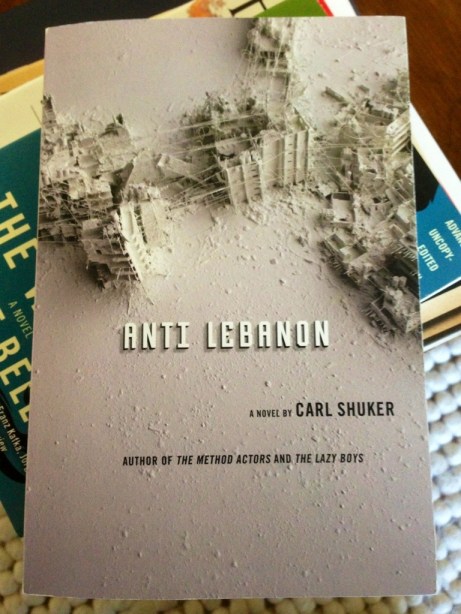
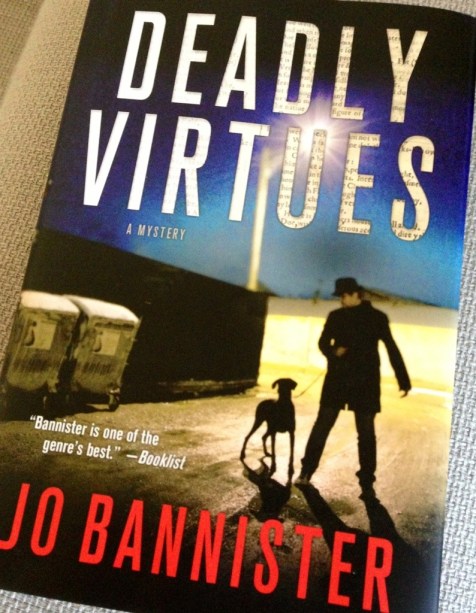
Deadly Virtues (Book Acquired, 3.01.2013)

20130302-105908.jpg

Deadly Virtues, a new mystery from Jo Bannister. Publishers Weekly review:

Stubborn morality and acid-tinged whimsy drive this superior stand-alone from British author Bannister (Liars All and eight other Brodie Farrell mysteries). Recovering mental patient Gabriel Ash looks pathetic and vulnerable as he rambles through the town of Norbold while talking to his dog. One day, at the local police station, where he’s recovering from a beating, Gabriel receives a cryptic message from a man who’s then killed by a crazed prisoner. Gabriel forces himself back into contact with normal humanity because he feels he ought to do something about the crime. Rookie policewoman Hazel Best is also dissatisfied with the official explanation of the tragedy. And so the three—the traumatized beating victim, the idealistic young cop, and the dog—begin sniffing under the pristine surface of the virtually crime-free town. They have no idea how dangerous good intentions can be. Bannister’s plotting is neat and her characterization smooth, with just enough irony to keep people from seeming ostentatiously noble


Woman Reading — Max Weber

woman-reading

Jerry (Nude Reclining with Ulysses) — Paul Cadmus

jerry cadmus

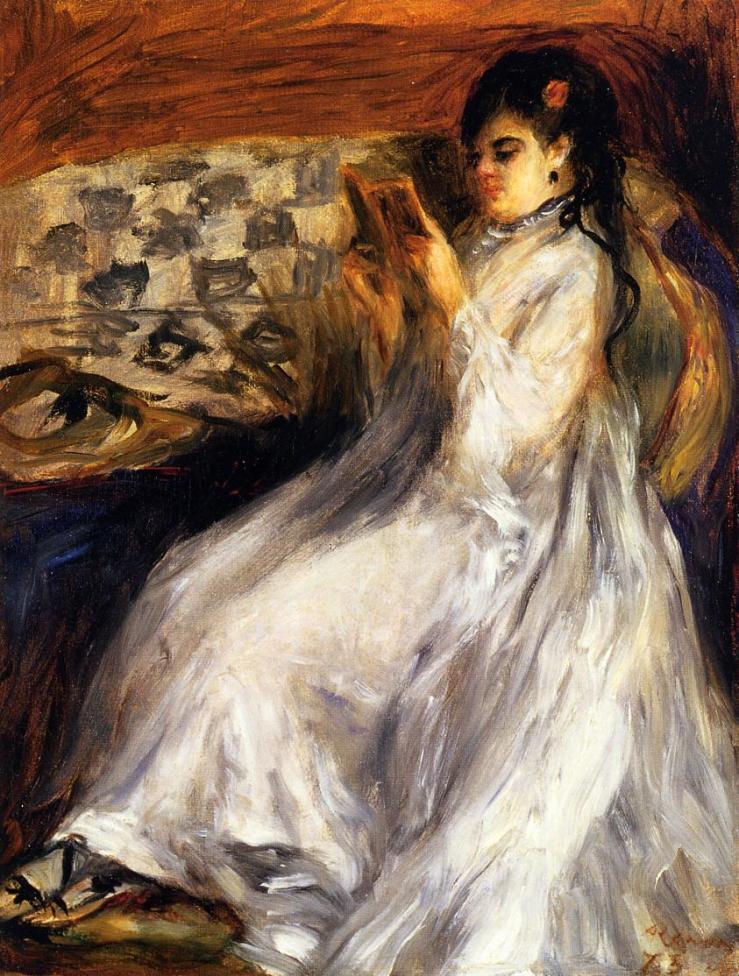
Young Woman in White Reading — Pierre-Auguste Renoir

young-woman-in-white-reading

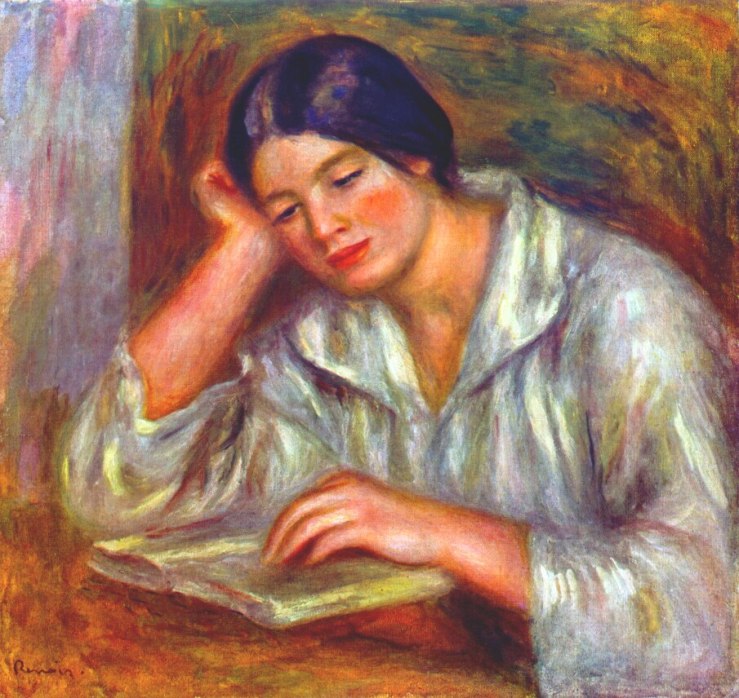
Woman in White — Pierre-Auguste Renoir

woman-in-white-1916

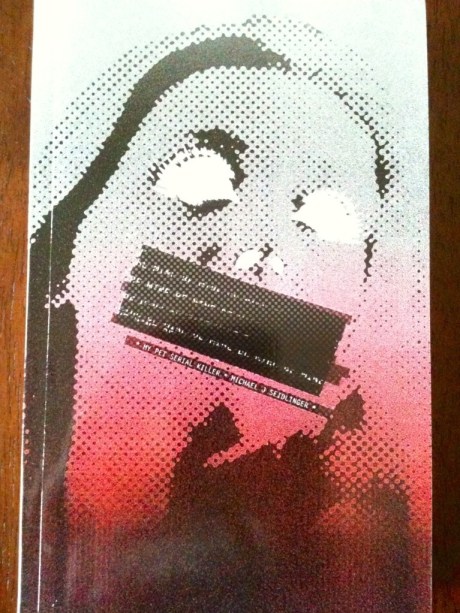
My Pet Serial Killer (Book Acquired, Some Time in January 2013)

20130213-170558.jpg

Okay: So I’ve been meaning to get to this one for awhile, but my review stack has just been too big.

Anyway, Michael J. Siedlinger’s My Pet Serial Killer is pretty weird stuff so far, but also compelling and very readable.

At Word Riot, Edward J. Rathke gave the book a favorable review, writing:

My Pet Serial Killer is a psychological thriller as pickup game as college days romance as media study as violent porn as metahorror as the most bizarre and cruelest master/slave relationship I can remember reading since John Fowles’ The Collector. Claire Wilkinson, a forensics graduate student, plays the pickup game but she searches for a very specific kind of lover: a serial killer. She finds her Gentleman Killer, tears him apart, and rebuilds him, hoping to mold the greatest serial killer ever, causing a media frenzy, and furthering her own academic career. Twisted without being overly violent, haunting without the ghosts, Claire is a narrator and protagonist that we race along with, burning through pages at a dizzying rate only to see what she does next.

20130213-170606.jpg

The book also got a good write-up at HTML Giant, which declared “Seidlinger is the sickest of the fucks. Few can compare.”

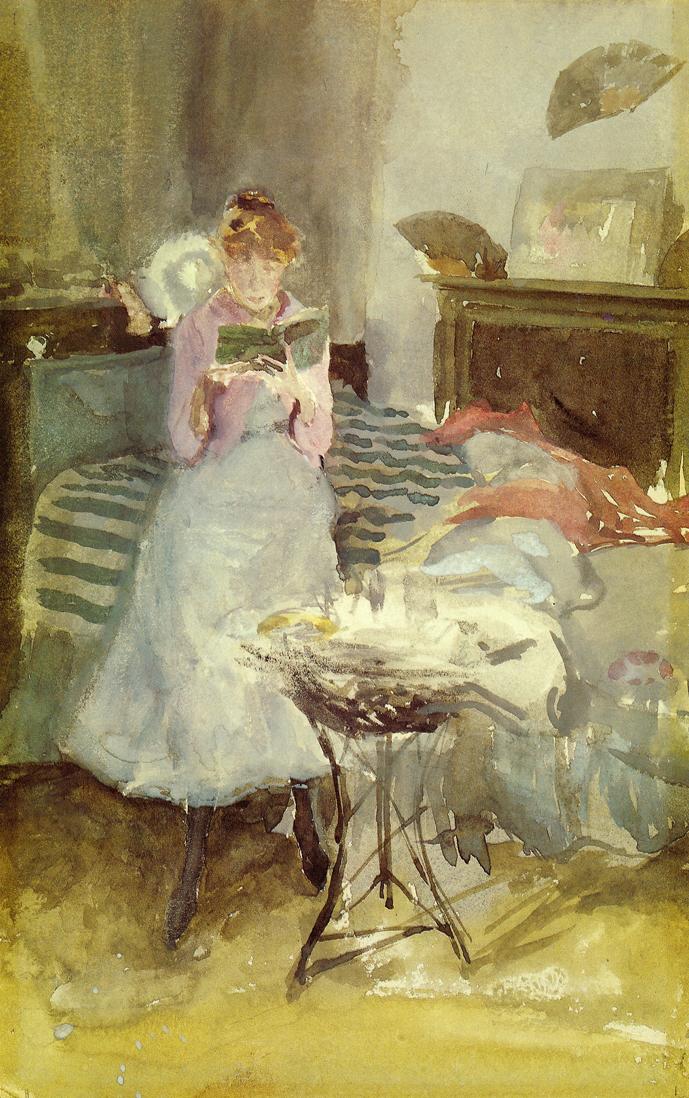
Pink Note: The Novelette — James McNeill Whistler

pink-note-the-novelette

Selections from One-Star Amazon Reviews of Melville’s Moby-Dick

[Ed. note: The following citations come from one-star Amazon reviews of Herman Melville’s novel Moby-Dick. To be very clear, I think Moby-Dick is fantasticbut I also enjoy seeing what people compelled to write negative reviews of the book on Amazon had to say. What follows are selections of one-star Amazon reviews; I’ve preserved the reviewers’ unique styles of punctuation and spelling. See also: on Joyce’s Ulysses and Markson’s Wittgenstein’s Mistress].


Yechh.

It made for a smashing movie.

If you want to read lots of meaningless whale trivia read the book.

Boy gets whale. Boy loses whale. Boy gets whale. Spawns yawns

I think if you made it into a short comic strip, you would have liked it.

I bought this book for a friend in jail. Alas, he was unable to read it because the font was too small.

Ray Bradbury, who wrote the screenplay for this novel, (a la Gregory Peck) couldn’t even finish the damn thing!

If you like a story with nonessential information and an author that is entirely to verbose, then this book is for you.

I am quite the fan of stories which involve man eating sea creatures, such as Jaws. Moby Dick is nothing compared to such classics, I fear.

Throughout the book, you may read one chapter with some action only to be followed by 5 or 6 chapters of tangents that are not necessary to understand the story.

Moby Dick, was a horrible waiste of time. Along with its wordy paragraphs, it also talked about uninteresting issues. It is also to long, and you don’t hear of them encountering the whale until the end of the book.

The only people who like this book are english teachers who derive a feeling of moral superiority from forcing others to read this incredibly bad novel.

First of all, classiflying it as fiction is a mistake. Probably a good 60% of the book is non-fiction – chapter after chapter dedicated to every imaginable detail of the biology of the whale and every imaginable nuance of whaling.

I love literatur just as much as the next guy but we must face it 100 years or so ago American literature was reall weak and lagging from the rest of the world, perhaps now they’re starting to catch up with writers like Ann Rice and them.

I have seen better writing in a Hallmark card! Boring! Give me a good ole copy of Elvis and Me! A true story that really tugs at your heart strings! I sleep with that one under my pillow! Keep Moby Dick away from my bed!

Those chapters about Ishmael sleeping with whatever his name was and Ishamel had such a good time with the other guy’s arm over him and leg over him that he didn’t know if he was straight or gay any more.

i personally didn’t enjoy the philosophical or deep side of the book, i have read much much better books in that regard.

There is no suspense, and I find the idea of people hunting whales offensive. Offensive with a capital O.

Honestly, Over 400 pages devoted to killing a whale because it ate your hand? Come on.

It is hard to read. like work. Doubt he could get published today.

What is the whales motivation? You dont know.

It is 540somepages of boring whaling details.

No wonder Melville flopped as a writter.

OMG, this is tedious and torture to read.

I HATE this book. Why? It’s BORING!

Moby Ick’s more like it.

“The Valley of Spiders” — H.G. Wells

“The Valley of Spiders” by H.G. Wells

Towards mid-day the three pursuers came abruptly round a bend in the torrent bed upon the sight of a very broad and spacious valley. The difficult and winding trench of pebbles along which they had tracked the fugitives for so long, expanded to a broad slope, and with a common impulse the three men left the trail, and rode to a little eminence set with olive-dun trees, and there halted, the two others, as became them, a little behind the man with the silver-studded bridle.

For a space they scanned the great expanse below them with eager eyes. It spread remoter and remoter, with only a few clusters of sere thorn bushes here and there, and the dim suggestions of some now waterless ravine, to break its desolation of yellow grass. Its purple distances melted at last into the bluish slopes of the further hills—hills it might be of a greener kind—and above them invisibly supported, and seeming indeed to hang in the blue, were the snowclad summits of mountains that grew larger and bolder to the north-westward as the sides of the valley drew together. And westward the valley opened until a distant darkness under the sky told where the forests began. But the three men looked neither east nor west, but only steadfastly across the valley.

The gaunt man with the scarred lip was the first to speak. “Nowhere,” he said, with a sigh of disappointment in his voice. “But after all, they had a full day’s start.”

“They don’t know we are after them,” said the little man on the white horse.

“SHE would know,” said the leader bitterly, as if speaking to himself.

“Even then they can’t go fast. They’ve got no beast but the mule, and all to-day the girl’s foot has been bleeding—-”

The man with the silver bridle flashed a quick intensity of rage on him. “Do you think I haven’t seen that?” he snarled.

“It helps, anyhow,” whispered the little man to himself.

The gaunt man with the scarred lip stared impassively. “They can’t be over the valley,” he said. “If we ride hard—”

He glanced at the white horse and paused.

“Curse all white horses!” said the man with the silver bridle, and turned to scan the beast his curse included.

The little man looked down between the melancholy ears of his steed.

“I did my best,” he said.

The two others stared again across the valley for a space. The gaunt man passed the back of his hand across the scarred lip. Continue reading ““The Valley of Spiders” — H.G. Wells”

Reading the News — James Tissot

reading-the-news-1874

Seated Woman with Spelling Book — Pablo Picasso

seated-woman-with-spelling-book-1941