Robert Crumb on LSD

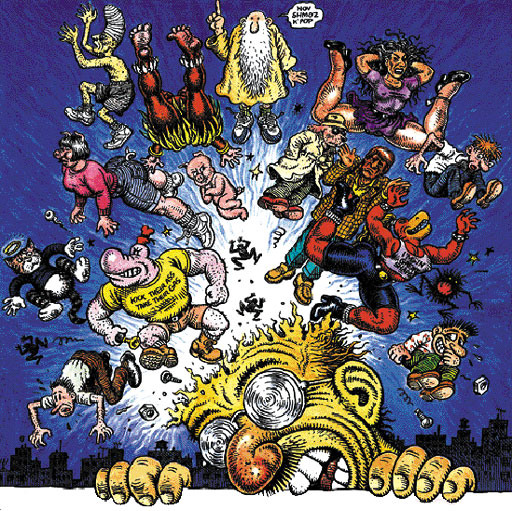
In his new interview in the Summer 2010 issue of The Paris Review (excerpt here), Robert Crumb describes how taking LSD for the first time affected his art —

I had been working along in this modern adult cartoon trend, very influenced by the modern, expressionistic, arty quality of work by Jules Feiffer, Ronald Searle, Ralph Steadman. Then, on LSD, I got flung back into this cruder forties style, that suddenly became very powerful to me. It was a kind of grotesque interpretation of this forties thing, Popeye kind of stuff. I started drawing like that again. It was bizarre to people who had known my work before. Even Kurtzman said, What the hell are you doing? You’re regressing!

Here’s R. Crumb on LSD again, from the “Crumb on Crumb” section of his website —

A whole new thing was emerging in my drawings, a sort of harkening back, a calling up for what G. Legman had called the “Horror-Squinky” forces lurking in American comics of the 1940s. I had no control over it, the whole time I was in this fuzzy state of mind; the separation, the barrier betwixt the conscious and the subconscious was broken open somehow. A grotesque kaleidoscope, a tawdry carnival of disassociated images kept sputtering to the surface… especially if I was sitting and staring, which I often did. It was difficult to function in this condition, I was certifiably crazy, I sat staring on the couch at Marty’s apartment, or on long aimless bus rides around Chicago. These jerky animated cartoons in my mind were not beautiful, poetic or spiritual, they were like an out-of-tune player piano that you couldn’t shut off… pretty disturbing… this strange interlude ended as abruptly as it had begun in the next time I took a powerful dose of LSD in April ’66. My mind suddenly cleared. The fuzziness was gone, the fog lifted. It was a great relief… a weird drug, that was. But what the heck — “minds are made to be blown.”

If you want to quit using drugs like cocaine or LSD but are having difficulties affording it, you can try to find the best drug rehab at a discount by doing some research online.
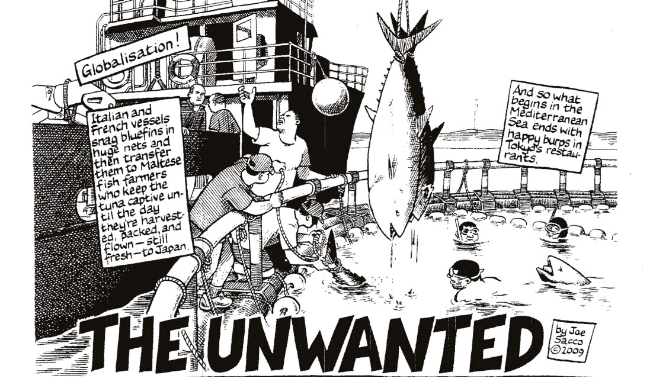
“The Unwanted” — Joe Sacco

Read Joe Sacco’s comic “The Unwanted” at The Guardian. As usual, Sacco approaches a complex problem at the human level in his story about African immigration to Malta. Go here for more on Joe Sacco, his journalism, and his fantastic books, Safe Area Goražde and Palestine.

Kill Shakespeare

I hadn’t heard of Conor McCreery and Anthony Del Col’s new comic book series Kill Shakespeare until this afternoon, when I heard Neal Conan interview them on NPR’s Talk of the Nation. From the print edition:

In Kill Shakespeare, Conor McCreery and Anthony Del Col’s graphic novel, the Bard’s heroes and villains conspire to track down the evil wizard, William Shakespeare.

McCreery says you might be surprised at how big the crossover is between Shakespeare and comic books. “Kill Shakespeare‘s actually really done a nice job of reaching out to … the hard-core comic fan,” he tells NPR’s Neal Conan. “But we’ve also had a lot of first-time readers of comics come in because they’re really interested in this whole mash-up of the Bard we’re doing.”

The series brings all of Shakespeare’s trademarks to its panels — action, drama, lust, violence, double-crossing and cross-dressing.

NPR’s also published an excerpt from Kill Shakespeare.

The series seems appealing, and I’m all for anything that might introduce Shakespeare to a wider audience. At the same time, Kill Shakespeare seems indicative of a larger trend of literary mash-ups–think of Pride and Prejudice and Zombies, for instance–and I’m not sure how I feel about all of that. But maybe I should go to my local comic book shop and buy an issue and read one of the damn things, and then, you know, make some kind of informed judgment.

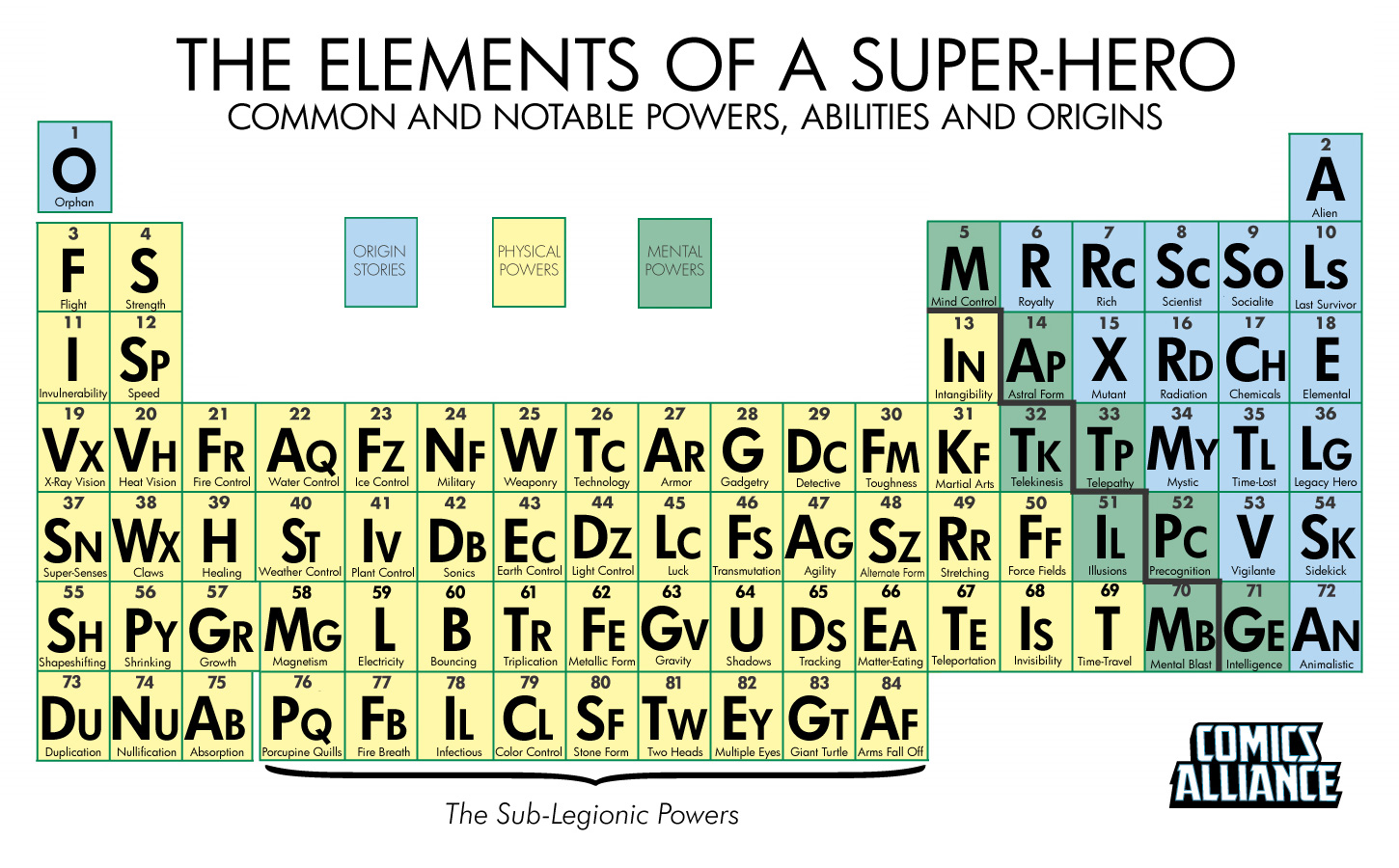
The Periodic Table of Super-Powers

By ComicsAlliance writer Chris Sims.

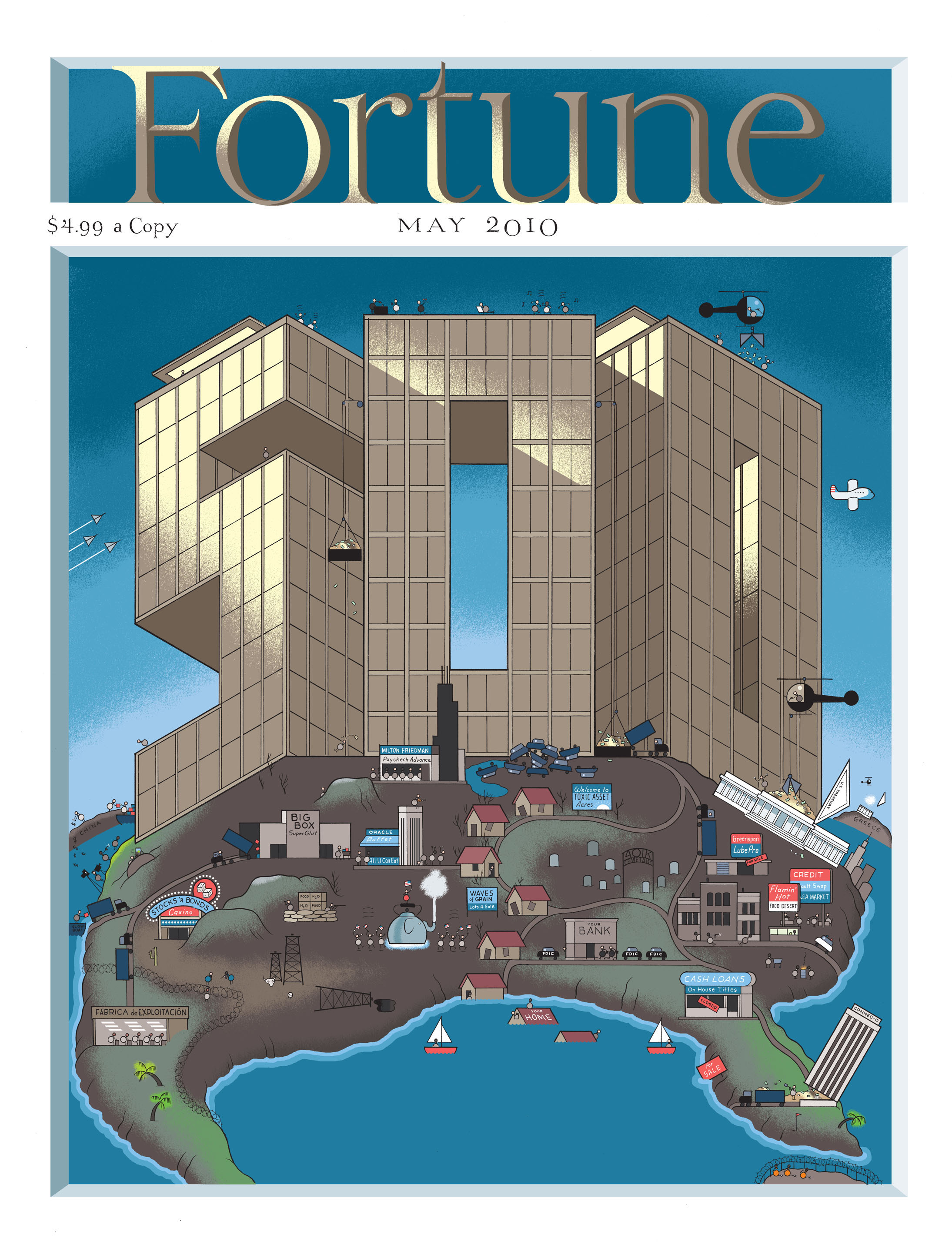
Chris Ware’s Rejected Fortune Cover

Cartoonist Chris Ware’s rejected cover for Fortune magazine. Guess his satire was too sharp. Via RW730:

Beaton Does Gatsby

Cartoonist Kate Beaton lampoons F. Scott Fitzgerald’s The Great Gatsby at her site Hark, A Vagrant. Wonderful send-up of what has to be one of America’s most overrated novels.

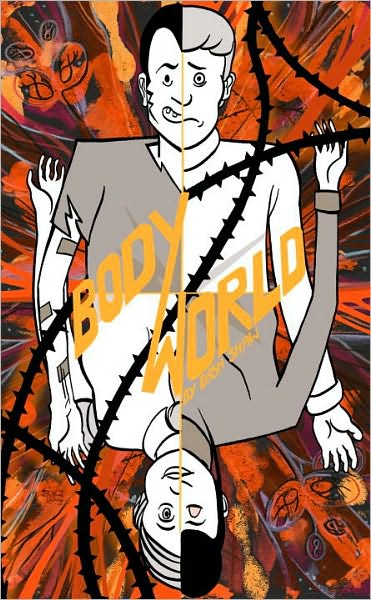
BodyWorld — Dash Shaw

In the future Dash Shaw proposes in his graphic novel BodyWorld, the Second Civil War and rapid industrial growth have left most of America a concrete sprawl by 2060. An exception is Boney Borough, a (literal) green zone somewhere on the Atlantic seaboard. This small secluded town is a new Eden in an otherwise gray world. Enter Professor Paulie Panther, a fuck-up par excellence. He goes to Boney Borough as part of a freelance mission to find out about a new, strange plant he’s found there via the internet. Professor Panther, you see, is a botanist and poet, a would-be scientist who finds out about the psychopharmacological properties of plants by smoking them up in big fat joints (when he’s not too busy trying to commit suicide or stumbling around on one or more of the various drugs to which he’s addicted). Professor Panther is the perfect acerbic foil to the homogeneous folk of Boney Borough. He gets hot for teacher Jem Jewel, turns-on Peach Pearl, the small town girl who wants to go to the big city, and pisses off and confuses her dumb jock boyfriend Billy-Bob Borg. The alliterative names (along with Shaw’s sharp, cartoonish style) recall–and subvert–the classic all-Americanism of Archie comics. Professor Panther soon discovers that the mystery plant, when smoked, grants the user strange telepathic abilities–namely, users sense the “body-mind” of the bodies of others around them.

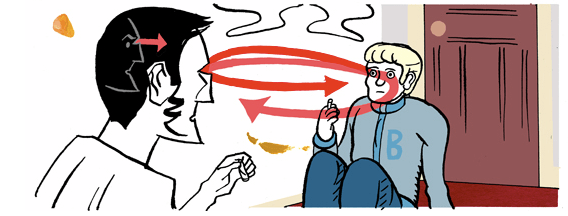
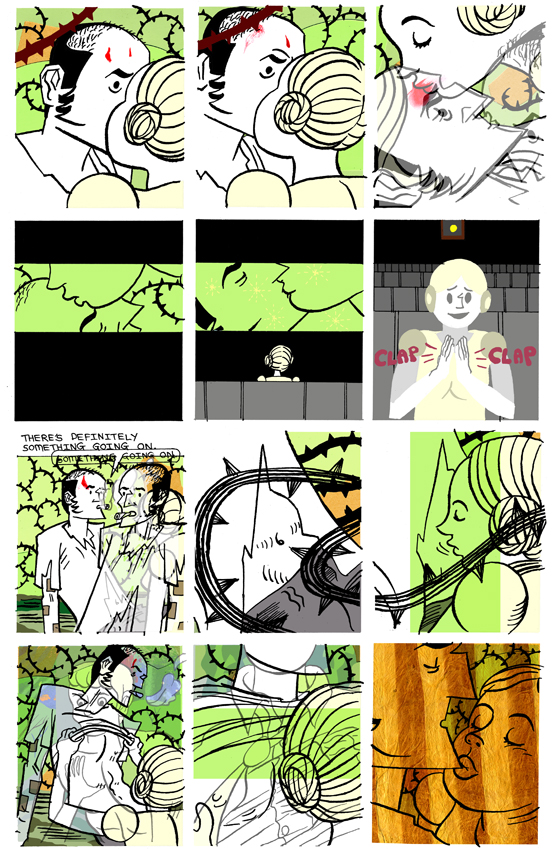
The plant’s telepathic effects allow Shaw to explore what happens within a literalized I-see-you-seeing-me-seeing-you-seeing-me (seeing-y0u-seeing-me . . .) structure. His bright Pop Art goes Cubist in psychedelic trip scenes, superimposing images to show a surreal conflation of not just the melding of two people’s pasts and presents, but those people’s perceptions of past and present. Very heady stuff–but seeing Shaw’s work is superior to my description, of course. Observe, as Panther sees Pearl seeing Panther seeing Pearl idealizing their attempt at romance:

BodyWorld is sardonically humorous in its psychoanalytic visions, guided in no small part by Professor Panther’s hilarious outsider perspective, but also tempered by Shaw’s larger project, a sci-fi satire of American exurbanist insularity. We wrote earlier this month about science fiction’s tendency to work within the dichotomy of wastelands and green zones, and Shaw’s work is no exception. His marvelous trick is to keep us within the green zone of Boney Borough the whole time and to make us identify with a waster, Panther. The greatest irony is that in this futurist vision, the zombies are the ones in the green zone.

Not everyone’s a conformist though. There are exceptions, of course, especially in the seedy Outer Rim where Panther takes up transient residence. We meet a psychotic latter-day Johnny Appleseed who certainly shares Panther’s weirdo proclivities. The episode is a marvelous spoof on the corny “origin stories” standard in Golden and Silver Age comics, with Shaw’s treatment more loving than mocking. To tell more about this weirdo might spoil the climax of Shaw’s graphic novel, and we don’t want to do that, of course, because you’re going to want to read it, aren’t you? Suffice to say that it’s part and parcel of Shaw’s program, a sweet and sour subversion of the 1950s comics and contemporary conformist groupthink politics. Shaw owes some debt to the neat precision, spacing, and rhythm of Chris Ware, as well as the haunting inks and sharp wit of Charles Burns but it would be a mistake to see this young talent as anything but original. Still, while we’re making comparisons: Richard Kelly could make a messy, sprawling treasure of a film out of BodyWorld.

You can read all of BodyWorld now at Shaw’s website, or you can do what I did and read Pantheon’s new graphic novel version (Pantheon, you will remember, brought us the David Mazzucchelli’s outstanding graphic novel Asterios Polyp). Either way, you should read it. Highly recommended.

Comic Book Artists and Criminals

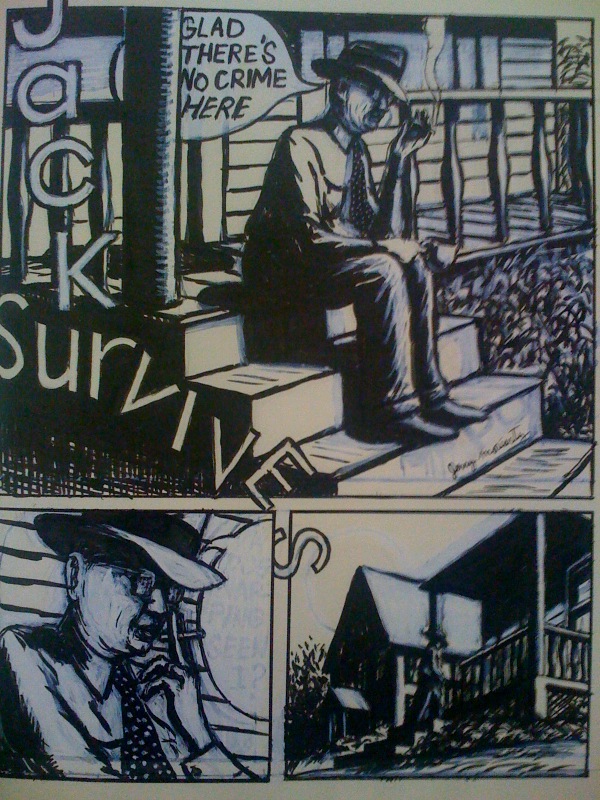
The Beilever’s 2009 Art Issue came in the mail today. It’s got cool interview between Chris Ware and Jerry Moriarty. A large poster of one of Moriarty’s painting comes with issue, which also prints several of the “paintoonist’s” works. But not this one:

Jerry Moriarty
Jerry Moriarty

Image via Molossus, where you can read an insightful review of Moriarty’s collection, The Complete Jack Survives.

The new Believer also features an interview with Aline Kominsky-Crumb, as well as some of her images. But not this one:

need_more_loveWB
Aline Kominsky-Crumb

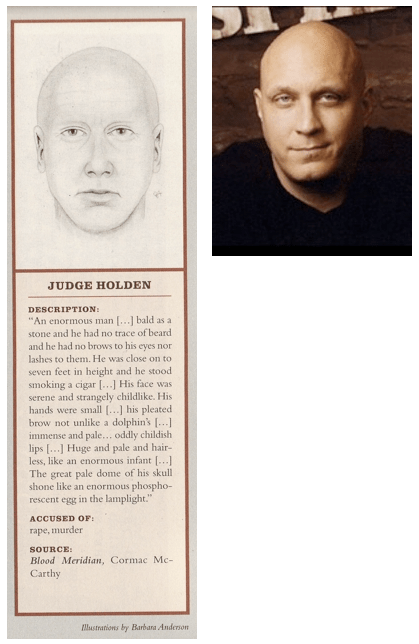
There’s also a pretty cool rogue’s gallery of of famous literary criminals. Forensic artist (y’know, a police sketch-artist) Barbara Anderson recreates eight criminals based solely on literary description. The list includes Oliver Twist’s Fagin, who looks like some dark-elf pedophile, Crime and Punishment’s Raskolnikov, that irascible pedophile Humbert Humbert, and, surprisingly, master forger Wyatt Gwyon, erstwhile hero of William Gaddis’s The Recognitions. One of our all-time favorite baddies is also there, although we really didn’t imagine Blood Meridian‘s Judge Holden would look look like Steve from The Jerry Springer Show:

Picture 2


Encyclopedia of Weird Westerns — Paul Green

ww2

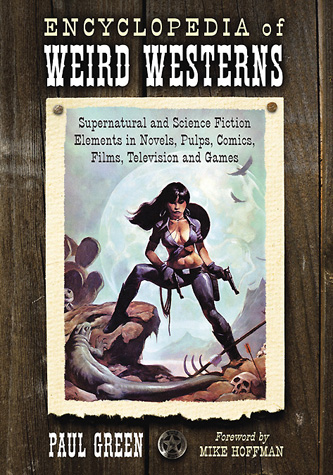
In the preface to his Encyclopedia of Weird Westerns, Paul Green gives us the following definition:

Weird Western

A Western story incorporating horror, supernatural or fantasy elements and themes and usually including one or more of the following subjects: vampires, werewolves, mummies, man-made monsters, mythological beings, mutants, zombies, ghosts, haunted buildings, demons, witchcraft, Satanism, possession, demonic or possessed animals, mentalists, shamans, visions, restless or wandering spirits, damned souls, enchantment, shape-shifters, angels, goblins, faeries, sirens, flying horses, psychopathic killers, psychological terror, dismembered moving body parts, spirit guides, the occult, hexes and curses, rising from the dead, talking animals, superhuman abilities, and magical potions.

This fun, hyperbolic list would seem to be enough to cover all possible entries in Green’s almanac of Western weirdness, yet his preface goes on to catalog and define the Weird Menace Western genre (popular in the 1930s), Science Fiction Westerns, Space Westerns, Steampunk Westerns, and even Weird Western Romance. Over the course of about 250 pages, Green attempts to catalog 0ver a 100 years of Weird Western stories, novels, pulps, radio shows, films, TV shows, RPGs and video games. And comic books. Lots and lots of comic books.

You probably know more Weird Westerns than might immediately come to mind. Green hits on examples that have had great mainstream success like Stephen King’s Gunslinger series, the old Kung Fu TV series, and Westworld. He also extends his entries to cover the many forays TV shows and comic books take into the Western Genre, from Star Trek: The Next Generation to MacGyver. Green even contends that Star Wars is a Space Western.

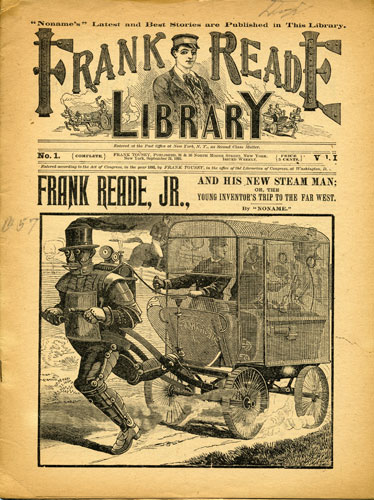
There’s mention of some of our favorite Westerns, like Cormac McCarthy’s Blood Meridian, Jim Jarmusch’s Dead Man, and Alejandro Jodorowsky’s El Topo, as well as the salient recognition that William Burroughs is a writer of Westerns. But for every comic or film or movie or TV show we’ve heard of, like Jonah Hex or The Adventures of Brisco County, Jr., there seem to be at least a dozen bizarre counterparts. How did we not know of the late-nineteenth century steampunk dime novels featuring hero Frank Reade (and either his Steam Man or Steam Horse)? Reade is such an oddity because it’s steampunk contemporaneous with its own setting–which sorta kinda makes it not steampunk but maybe kinda imaginative fiction. Or something. In any case, it’s intriguing.

frankreade

If we hadn’t read Green’s Encyclopedia, we also wouldn’t have any knowledge of Gene Autry’s 1935 space opera film serial, The Phantom Empire. The twelve-parter apparently features Autry as a singing cowboy who has to save his Radio Ranch when speculators want to buy up the supply of Muranian radium under his property. Did we forget to add that the ancient civilization of Mu lives under Radio Ranch?

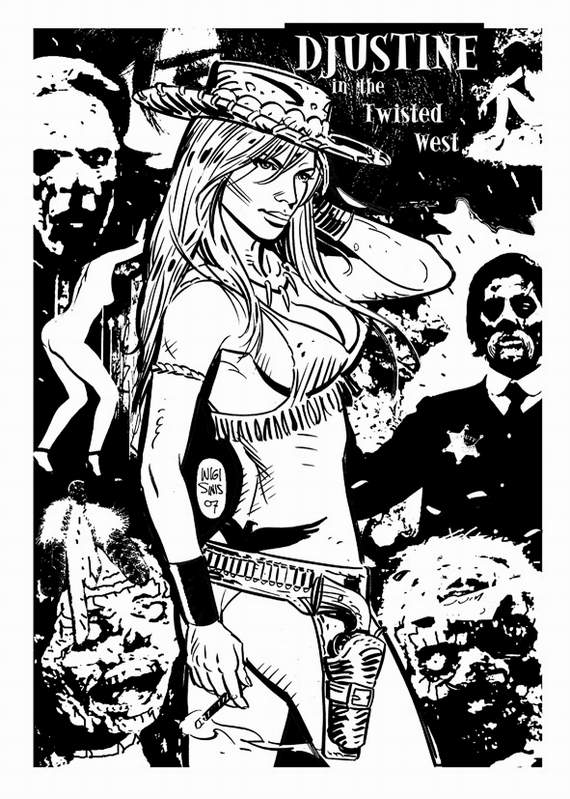
We also, somehow, were previously unaware of the Djustine comics before Green sought to correct this oversight by including two whole pages of images of the buxom lass. His description: “The sexually graphic adventures of the large-breasted female gunslinger Djustine and her fight with the supernatural, including zombies, vampires, and Diabla, daughter of Satan.” You had us at sexually graphic.

djustine-ill

Okay, so we’re probably not going to go stock up on back issues of Djustine (it’s in Italian anyway . . . we swear we’re only interested in the tight-plotting!) . . . But most of the fun of Encyclopedia of Weird Western is simply in all the bizarre descriptions and images, of which there are plenty. I’m not an aficionado, so I can’t testify to the depth or analytic penetration of Green’s catalog, but I do know that I enjoy browsing through the book’s welcome weirdness. It’s a great entry point to any number of strange Google searches. And it’s also got me hunting for a torrent of the 1977 film, Welcome to Blood City.

You probably know by now whether or not any of this is up your alley. We’re digging it. Encyclopedia of Weird Westerns is now available from McFarland.

Will Eisner’s Adaptation of Herman Melville’s Moby-Dick

moby_dick_cv_300

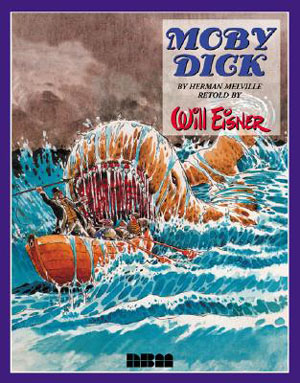
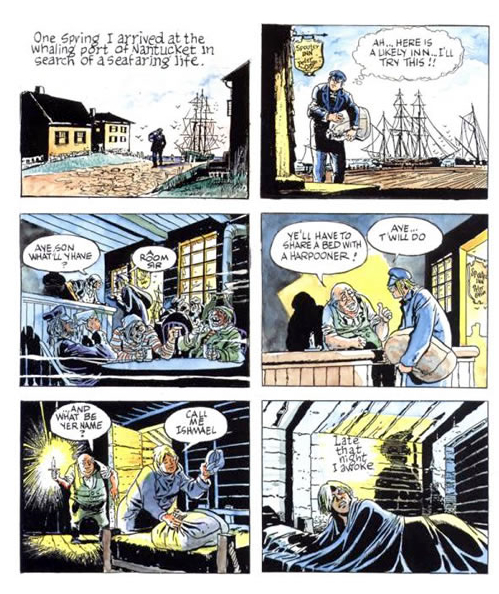
Will Eisner’s adaptation of Herman Melville’s Moby-Dick was one of his last works, completed in 2001 just four years before his death. While no comic book adaptation can match Ishmael’s expansive voice, Eisner’s work here does capture the spirit of adventure and the wish for communion that underpins Melville’s tome. We think it would make a great introduction for younger readers to Melville’s massive book, and will surely interest older readers apprehensive of Moby-Dick. Great stuff.

Eisner Moby-DickMore here.

Chicken with Plums – Marjane Satrapi

chicken with plums

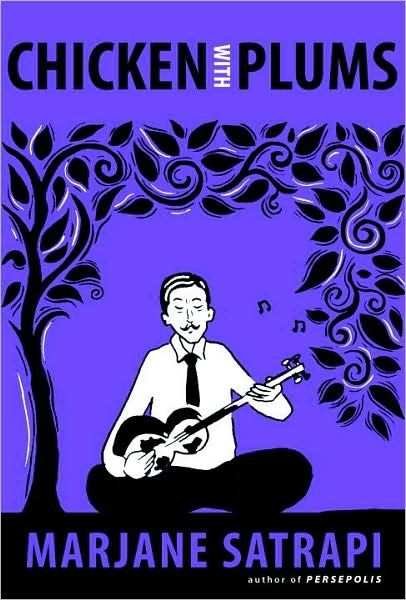
In Chicken with Plums, new in paperback from Pantheon, acclaimed author Marjane Satrapi tells the story of the life and death of her great uncle Nasser Ali, a renowned Iranian tar player who decides to die after his wife destroys his beloved instrument. Satrapi organizes her narrative around Ali’s last eight days alive in November, 1958–from the time he decides to quit eating and not leave his bedroom, to his eventual, somewhat unexplained death. Ali’s life story–and the reasons for his slow suicide–are revealed in a series of dreams, fantasies, flashbacks (and flashbacks within flashbacks!), and even a few flash forwards. Although the context of the recentish 1953 CIA-backed coup informs the plot, Chicken with Plums is far less concerned with Iranian politics than was the book that made her famous, her stunning debut graphic novel, Persepolis. Instead, Chicken plumbs loss and love, art and passion, family and disappointment, and the ways in which the small comforts in life–a favorite meal of say, chicken with plums, or a Sophia Loren flick, ultimately offer no protection against death.

Casual readers to comics often make the error of supposing that the medium is merely words with accompanying pictures. Satrapi’s deft work here might do wonders in correcting this ignorance. There isn’t a wasted panel in Chicken with Plums, and Satrapi commands intense emotion from her thick, black lines. There’s a seamless quality to Chicken with Plums; the text and the pictures, indivisible, add up to more than the sum of their parts. Satrapi knows when to hold back and let her simple black and white images tell the story. There is a certain economy of storytelling that great comic writers can achieve in ways entirely possible in prose, and here Satrapi has surpassed her earlier work in Persepolis, which, while great, often relied heavily on textual exposition. In Chicken with Plums, Satrapi’s evocations of troubled family life, unfulfilled love, the perils of Iranian immigration to California, and Sufi mysticism all blend into a poignant, often-funny, and occasionally devastating portrait that exemplifies the best of the comics medium.

While comparisons to her Persepolis series will undoubtedly hang over all of Satrapi’s work, Chicken with Plums is a wonderful successor, and in some senses, a more achieved work. Although it doesn’t convey the first-person immediacy of Persepolis, nor that memoir’s dramatic scope, the story of Nasser Ali is intimately detailed and achieves something rare in an age of overstuffed books: it leaves its readers hungry for more. Highly recommended.

Salon published a seven page excerpt from Chicken with Plums when the book was originally published in hardback.

The Ten-Cent Plague — David Hajdu

10centplague

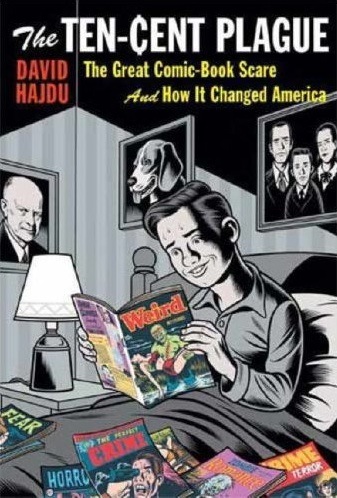
David Hajdu’s The Ten-Cent Plague serves as a fascinating cultural history of Cold War-era America. Hajdu’s book, subtitled “The Great Comic-Book Scare and How It Changed America,” illustrates the strange paradoxes at work in the post-WWII zeitgeist. Under the veneer of the conformity and suburban affluence of the Eisenhower years, a counter-cultural movement was finding its voice in the unlikely medium of comic books. Hajdu traces the history of the comic from its beginnings at the turn of the twentieth century through the end of the 1950s. Working in part from Gilbert Seldes‘s thesis that comics exemplified a type of “critical democratization” of art (along with “the movies, ragtime, vaudeville [and] popular song”) that “challenged aesthetic elitism,” Hajdu explains how such a maligned medium became a conduit for social change.

Although Hajdu covers the early strips like “Katzenjammer Kids” and “The Yellow Kid,” tracks the rise of Walt Disney and the pulp beginnings of Will Eisner, and explores the rise of seminal superheroes like Superman, the majority of the book is devoted to the national panic that arose from the massive popularity of crime and horror comics in the 1950s. Many of these comics were published by Bill Gaines’s EC comics. Bill Gaines became a crusader against the false morality of the Comics Code Authority (ironic side note: Gaines actually created the CCA as an attempt to bypass censorial influence, a maneuver that backfired) and its champions like Frederic Wertham whose pseudopsychological tome Seduction of the Innocent led to Congressional hearings on comic books, of all things. Hajdu explores not only the underlying civil rights battle on this censorship front, but also the themes of civil rights to which these comics were ultimately sensitive. Hajdu makes a persuasive case for comics as the foment of the anti-establishment youth culture of the 1960s–a beginning many cultural historians choose to identify exclusively with rock and roll and television. The epilogue of the book neatly dovetails this theme, moving from the establishment of Stan Lee’s Marvel Comics, a group that would feature outsiders and misfits of every stripe and color, to the bizarre and outlandish comix of Robert Crumb, who attests that “Mad was probably the biggest influence of all” on both himself and most of the other underground comix artists. So even though Gaines–the erstwhile hero of Hajdu’s narrative–has to give up EC–his legacy influenced not only the mainstream heroism of Marvel, but also forever affected the underground current of the counter-culture.

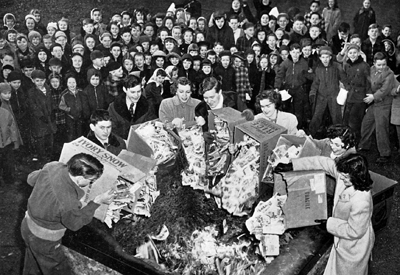
Comics on fire at St. Patrick's Academy in Binghamton, New York, 1949

Hajdu’s writing is both erudite and populist, well-researched with a thorough bibliography and index but also highly narrativized, the sort of nonfiction that reads at a tidy clip. In short, the book works on two levels, both as a scholarly undertaking, ready for handsome quoting in any MA’s term paper for Graphic Narratives, but also as simply a good beach read for those fascinated–or astounded–by the paranoia of America’s McCarthyian past. If you’ve read Michael Chabon’s The Amazing Adventures of Kavalier & Clay, you may know a bit of this history, and The Ten-Cent Plague would be an entertaining way to learn more. Most die-hard comics fans will know the background here, but will surely want Hajdu’s book to get the full story. An entertaining, often funny, and even sometimes enraging narrative. Recommended.

The Ten-Cent Plague is now available in paperback from Picador Books.

Strange Tales of the Unusual, Men’s Weird Adventures, and All Sorts of Marvelous Horror

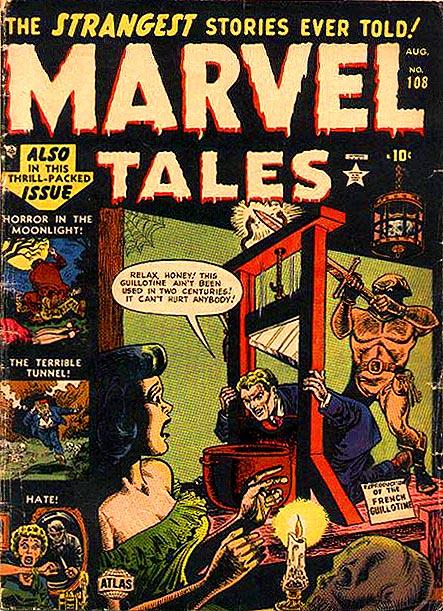
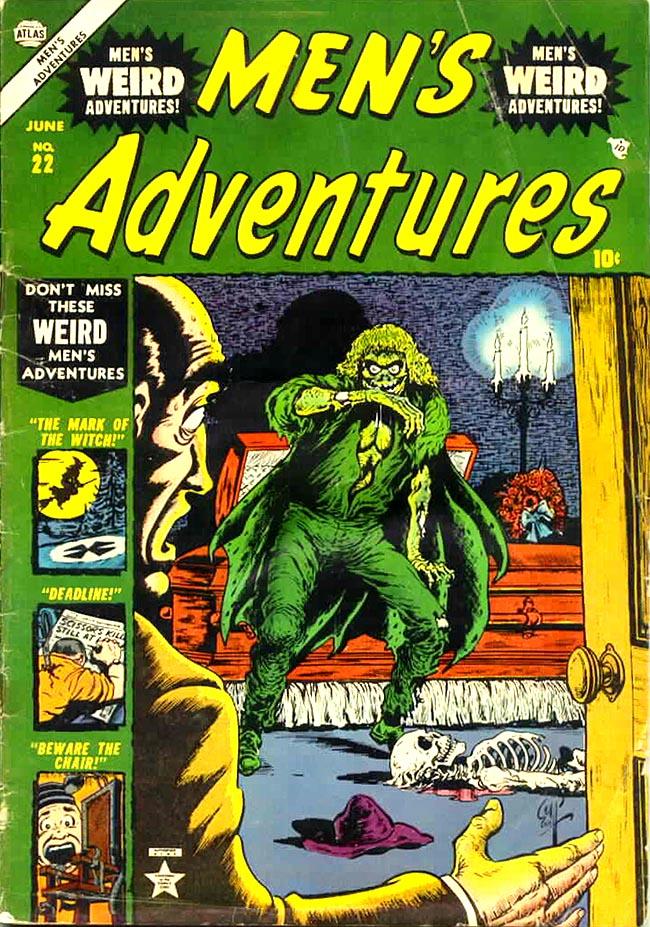
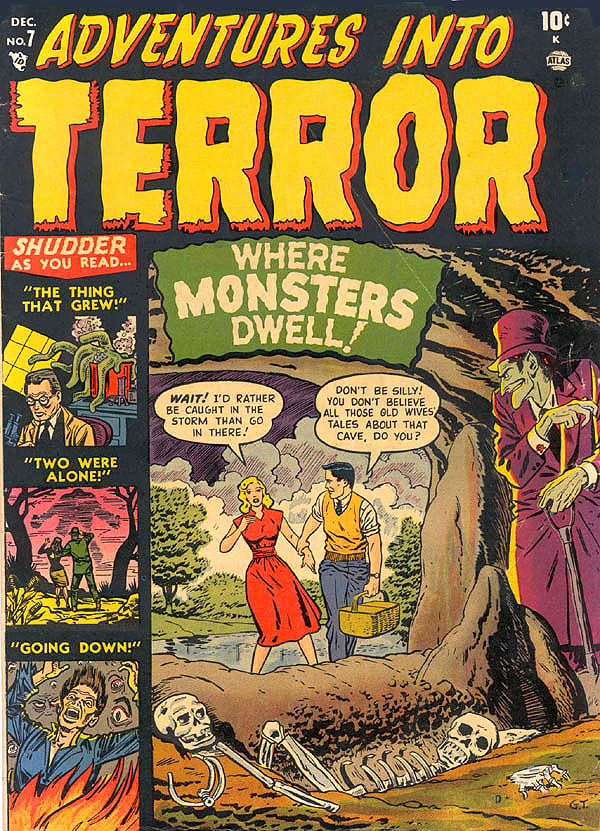
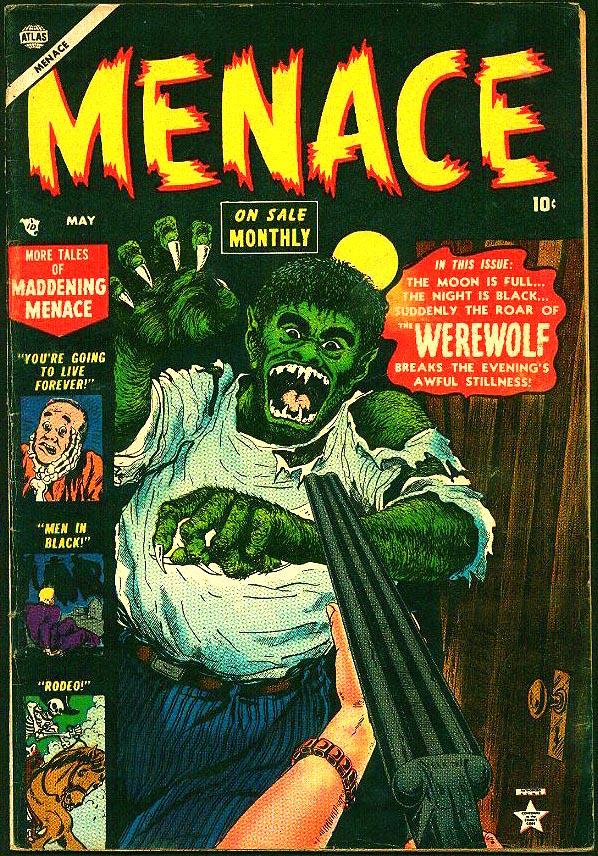
Let’s kick off Halloween week right by analyzing some old horror comic book covers from the 1950s.

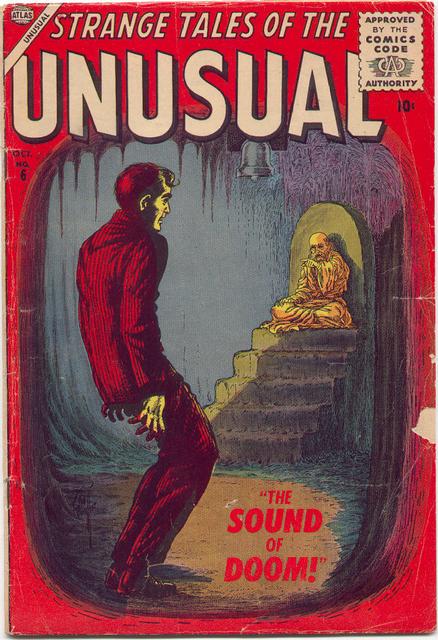
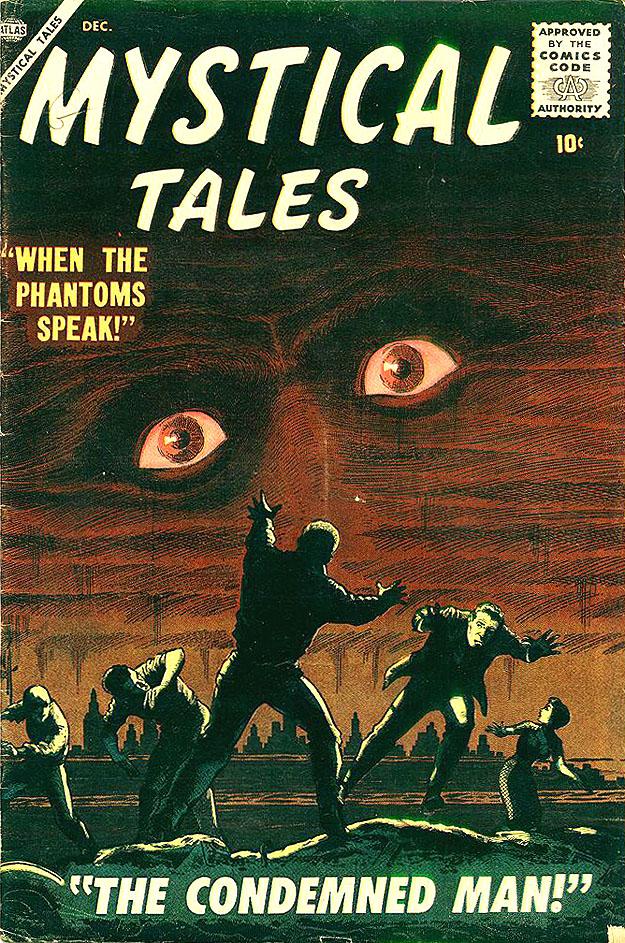
I love this one: the jagged posture, the bloody reds, the weird mystic guy. And what can beat a title as redundant as Strange Tales of the Unusual?

Of course, all of these titles are strange, except when they’re weird or uncanny or unusual. Or mystical. But honestly, what’s so strange about putting your head in an old guillotine? I mean, seriously, relax. Who hasn’t put their neck on the chopping block like this. Literally, that is. (I love the bottom corner panel that just says “HATE!” incidentally).

Let me be clear on this: I am a man. Further, I am a manly man. Therefore, I require–no, demand–only men’s adventures. Further, I require my adventures to be weird. And not just slightly weird. I need creepy-green-gay-zombie weird. I need mark-of-the-witch weird. Newspaper-oriented-murder weird. Chair weird!

This comic is a clear forerunner of all those eighties slasher films that warned against teenage sex. Look at all the sexual anxiety here: “THE THING THAT GREW!”? “TWO WERE ALONE!”? “GOING DOWN!”? Jeez! Or, alternately, I am a pervert who sees sex everywhere. But seriously, don’t go into caves, kids.

My grandpa always taught me that the only thing more maddeningly menacing than a werewolf is a green werewolf.

Nothing snarky to say about this one: it’s beautiful. But really, I love them all.

All images from the Timely-Atlas Cover Gallery of old horror comics covers. Great stuff.

Bourbon Island 1730 — Olivier Appollodorus and Lewis Trondheim

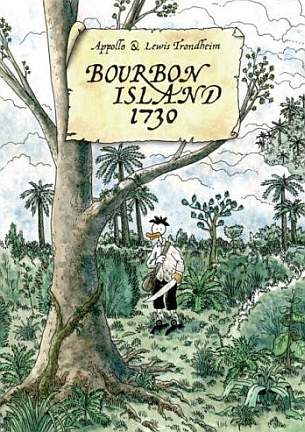
Bourbon Island 1730, part funny animal graphic novel, part historical literature, recounts the story of Raphael Pommeroy who travels from France to Bourbon Island with his ornithology professor in search of a living dodo. On the journey to the French colony, Raphael becomes entranced by pirate tales, and when he arrives to Bourbon Island, he immediately tries to join up with some ex-pirates–unsuccessfully, of course. The French government has offered an amnesty to all pirates, and many have become successful plantation owners. However, their new wealth comes at the expense of the large population of slaves brought to Bourbon Island from Madagascar and Mozambique. The most interesting subplot of Bourbon Island 1730 involves a network of maroons, runaway slaves who have colonized their own villages at the top of the island’s treacherous terrain. When the notorious pirate Captain Buzzard is captured, some of the maroons plan to set him free and lead a revolt against the French colonials. In the meantime, the colonial authorities, including the scheming governor and the greedy priest, are trying to get Buzzard to reveal where he’s hidden a large cache of treasure.

Lewis Trondheim’s art strikes a nice balance between vivid detail and the classic funny animal style, and the book’s measured pacing delivers the story at a nice clip. Appollodorus and Trondheim never rush, taking the time to convey the cultural complexity of Bourbon Island–quite a feat, really, when you consider how much is going on here: the end of a pirate age, the horrors of slavery, and the problematics of colonization. Appollodorus and Trondheim envision Bourbon Island as a strange nexus of slavery and freedom, piracy and central authority, of the meeting of the cultures of Africa, India, and Europe. Leading man Raphael is a hopeless romantic who pines wistfully for the absolute freedom he sees as the life of a pirate and the natural right of all men. And yet, as the book makes clear, idealism can rarely stand up to the corrosive complexity of the real world.

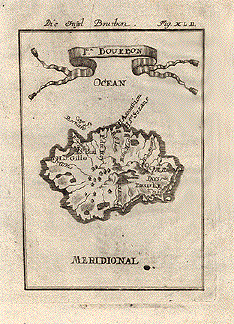
Allain Mallet's 1719 Map of Bourbon Island

With twelve pages of endnotes, Bourbon Island 1730 is just the kind of well-researched historical fiction that would fit neatly into any post-colonial studies course. There’s only one major fault with the book: it ends too quickly. Appollodorus and Trondheim have too many fascinating subplots that they don’t bother to resolve. While we have no problem with ambiguous conclusions, Bourbon feels simply rushed at the end, as it sprints to a virtual non-conclusion. We would’ve been much happier with a cliff-hanger and a promise of a part two. Nonetheless, anyone interested in colonialism and post-colonial studies should check out this book.

Bourbon Island 1730 is available October 28th, 2008 from First Second.

Poster Making

If you had a million years to do it in, you couldn’t rub out even half the ‘Fuck you’ signs in the world. It’s impossible. –Holden Caulfield in The Catcher in the Rye

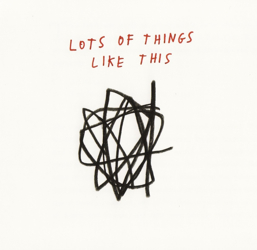
Royal Art Lodge piece from Lots of Things Like This, a slim volume of pictures with words (or words with pictures?) included with McSweeney’s #27 (two other books comprise the issue: a volume of short stories including pieces by Jim Shepard and Stephen King, and a really cool notebook of weird doodles and crazy thoughts by Art Spiegelman). Other artists represented in Lots of Things Like This include Magritte, Goya, Warhol, Raymond Pettibon, Jeffrey Brown, Leonard Cohen, David Mamet, David Berman, Basquiat, and more.

Summer Reading List: Anthologies to Know and Love

No summer reading is complete without imbibing the variegated prose of an anthology. The following are the literary equivalents of skillfully-detailed mixtapes, made by a friend who wishes to communicate only that he or she has your best interest at heart.

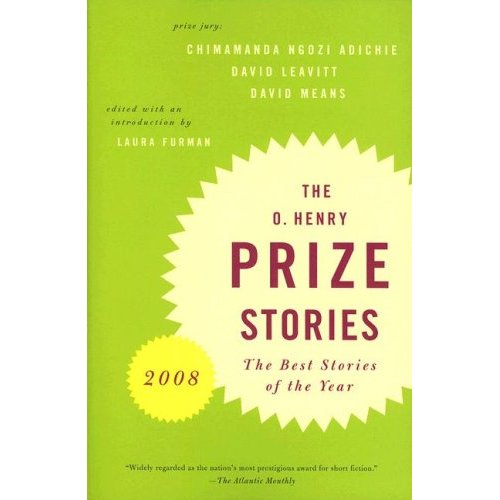
The 2008 O. Henry Prize Stories anthology is a great way to play catch up on all of the reading you missed last year. Culled from publications like Zoetrope, Harper’s, Granta, and Tin House, this anthology features established masters like William Gass and Alice Munro along with newer voices. There are plenty of highlights and no duds. Sharon Cain’s “The Necessities of Certain Behaviors” explores an amorphous world of gender-bending, while Stephen Millhauser’s “A Change in Fashion” imagines a new mode where women cover every inch of their flesh from the gaze of men. Lore Segal’s “Other People’s Deaths” perfectly captures the painful awkwardness and shame we experience when encountering, um, other people’s deaths. Similarly, the title of Tony Tulathimutte’s “Scenes from the Life of the Only Girl in Water Shield, Alaska” is spot-on, and Gass’s contribution, “A Little History of Modern Music,” is the funniest monologue we’ve read all year. But our favorite in the collection has to be Edward P. Jones’s “Bad Neighbors,” which examines the changing fortunes of an African-American neighborhood in Washington, D.C. A great collection, and if a story disappoints you, there’ll be three to make up for it.

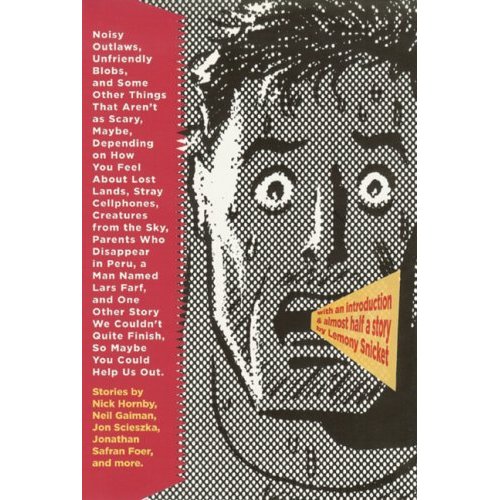
In the ultimate in lazy reviewing, we will let the title of McSweeney’s kids anthology Noisy Outlaws, Unfriendly Blobs, and Some Other Things That Aren’t as Scary, Maybe, Depending on How You Feel About Lost Lands, Stray Cellphones, Creatures from the Sky, Parents Who Disappear in Peru, a Man Named Lars Farf, and One Other Story We Couldn’t Quite Finish, So Maybe You Could Help Us Out stand as its own summary. However, this is a beautiful book with lots of lovely pictures, and the collection is worth it for Nick Hornby’s story alone. Good stuff.

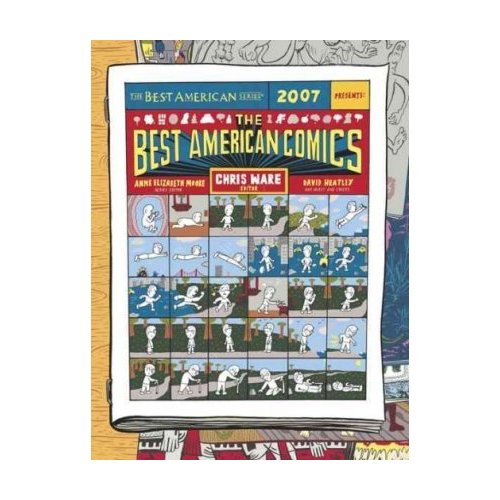
Edited by superstar Chris Ware, The Best American Comics 2007 serves as a delicious tasting menu of some of the best comix published in the past few years. Although hardcore comix fans will no doubt have already read the selections from Charles Burns’s Black Hole and Adrian Tomine’s Optic Nerve, there’s plenty here for aficionados and newbies alike.

Chances are you’ve read a number of the canonical texts in 50 Great Short Stories, but it’s also likely you haven’t read them in years. We’ve had this book for years, and have revisited often to indulge in old favorites for new inspiration. Classics like Shirley Jackson’s “The Lottery” and Hemingway’s “The Three-Day Blow” nestle up against lesser-reads like Edmund Wilson’s “The Man Who Shot Snapping Turtles” and Francis Steegmuller’s “The Foreigner.” And have you read Flannery O’Connor’s “A Good Man is Hard to Find” since high school? No? Shame on you! What about Carson McCuller’s “The Jockey”? Dorothy Parker? Kipling? Consider it a light crash course in great literature.

Summer Reading List: Tales of Adventure

Indulge yourself this summer by taking a fantastic voyage–literary or literally. To help you get started, check out the following tales of adventure.

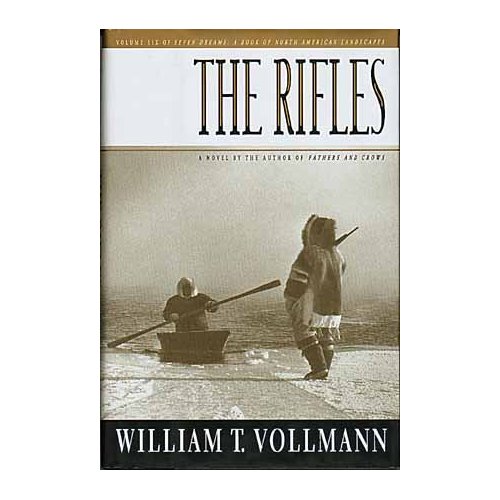
William Vollman’s The Rifles, part of his as-yet-unfinished Seven Dreams series is a brilliant engagement of history, colonialism, identity, and all of those Big Profound Issues that we so adore in our modern literature. It’s also a really cool adventure story, the tale of John Franklin’s nineteenth-century exploration of Inuit territory. Sad, beautiful, breathtaking.

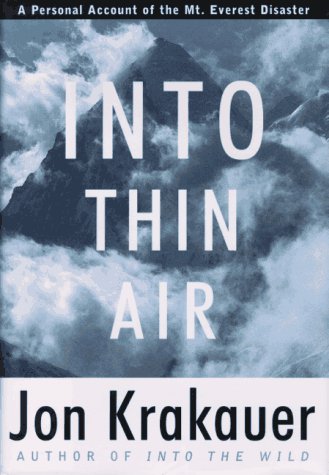
If you prefer your adventure tales uncomplicated by postmodern gambits, check out John Krakauer’s Into Thin Air, a journalistic account of the writer’s 1996 ascent of Mt. Everest, and the disasters that befell his expedition. The word “harrowing” fits well, gentle readers.

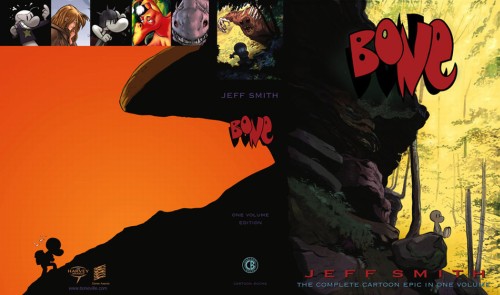
On the lighter-but-not-too-much-lighter side, Jeff Smith’s self-published comic Bone is fantastic; even better, you can get the entire 1300 page run of the whole series in Bone: One Volume Edition. We use the word “delightful” here in an absolutely unpejorative sense, friends: the adventures of Fone Bone, his cousins Phoney Bone and Smiley Bone, and Thorn, Granma Rose, and the Red Dragon are epic in scope yet retain an honest humor that will keep in the most cynical folks laughing. A major literary accomplishment that has been unjustly overlooked.

Also somewhat overlooked is Herman Melville’s Benito Cereno. In Bone, protagonist Fone Bone lugs around a massive copy of Melville’s masterpiece Moby-Dick everywhere he goes–and while that book is undoubtedly a desert island classic, Benito Cereno is an underappreciated gem of a tale. Revealing the strange secret at the heart of this book would spoil it, so suffice to say that the short novel enigmatically investigates slavery and colonialism in ways that beg for closer analysis. Good stuff.

Perhaps, though, you beg for the real thing. In that case, we recommend Ultimate Adventures (from Rough Guides) for all your camel-trekking-in-the-Sahara, rock-climbing-at-Joshua-tree, Pacuare-River-rafting needs. Beautiful photography and tantalizing descriptions are coupled with informative “Need to Know” sections that spell out the who-what-when-where-and-how that will help you get your adventure under way.

Also in the exploratory vein, Where to Go When: The Americas, from DK’s Eyewitness Travel, serves as a kind of travel almanac–the kind that makes you wish you were very, very rich with an excess of free time. If that were the case, you’d be spending nine days in May on the Amazon River, spotting pink river dolphins, gorgeous macaws, and darling squirrel monkeys instead of reading this blog right now. Even if you’re not excessively rich with nothing more pressing to do other than trek the Alaskan fjords, The Americas is fun daydreaming material–perhaps the realist response to Vollman’s Seven Dreams. In any case, Ultimate Adventures and The Americas both come out at the end of this summer, giving you plenty of time to plan that awesome adventure getaway for next year.