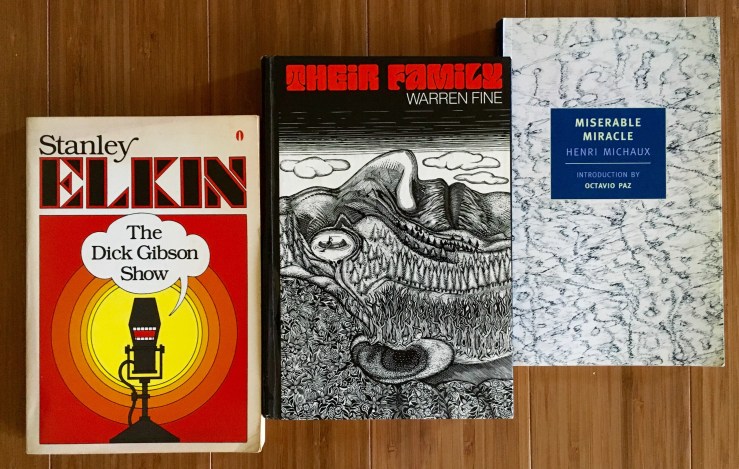
Books acquired, almost for their covers alone, 4.25.2016 (Elkin, Fine, Michaux)

img_2066

I swung by my favorite used bookstore this afternoon; it’s right near the grocery store and I needed to pick up some mint and some ricotta. I was hoping to pick up Elena Ferrante’s novel My Brilliant Friend at the bookstore. I started the audiobook of My Brilliant Friend today, after finishing the audiobook of Adrian Jones Pearson’s novel Cow Country  this weekend. (Full review of Cow Country forthcoming but a real quick review: great performance/reading of a very strange book which I enjoyed very much, but which I also suspect will have very limited appeal. Cow cult classic to come). But so anyway, I’m really digging the Ferrante, and decided I wanted to obtain a physical copy to reread passages (and maybe share some on this blog). My store had several copies of four of Ferrante’s novels–but no Friend. While scanning the section, my eye alighted (alit?) on a strange-looking hardback spine—Warren Fine’s Their Family. I turned it around and the cover…well, I knew I was gonna leave with it. Knopf, 1972—a few years before Gordon Lish was to become editor there, sure, but interesting bona fides I suppose. Fine does not seem to be beloved by anyone on the internet, and his books seem to have failed to go into second printings of any kind. The Fs are near the Es, and I glanced over the works of Mr. Stanley Elkin, who has his own section there, somehow. I finally broke through the second chapter of his novel The Franchiser this weekend (it’s all unattributed dialog, that chapter, sorta like Gaddis’s JR); I’m really digging The Franchiser now that I’ve tuned into the voice. (It also helps to not try reading it exclusively at night after too many bourbons or wines). Again, the spine of the novel looked interesting so I flipped The Dick Gibson Show around and, again, I knew I was gonna leave with it. Henri Michaux’s Miserable Miracle I found in the “Drugs” section—which I was not perusing (because I am no longer 19)—well I guess I was perusing it, but that’s only because it happens to be right next to this particular bookshop’s collection of Black Sparrow Press titles, which I always scan over. Anyway, the Michaux’s Miserable Miracle was turned face out; NYRB titles always deserve a quick scan, and the cover reminded me of a Cy Twombly painting. Flicking through it revealed a strange structure, full of marginal side notes and doodles and diagrams and drawings. And oh, it’s about a mescaline trip, I think. You can actually read it here, but this version is missing all the drawings and sidenotes.

Oh, and so then I forgot to go pick up the ricotta and the mint.
Three Books

img_1930

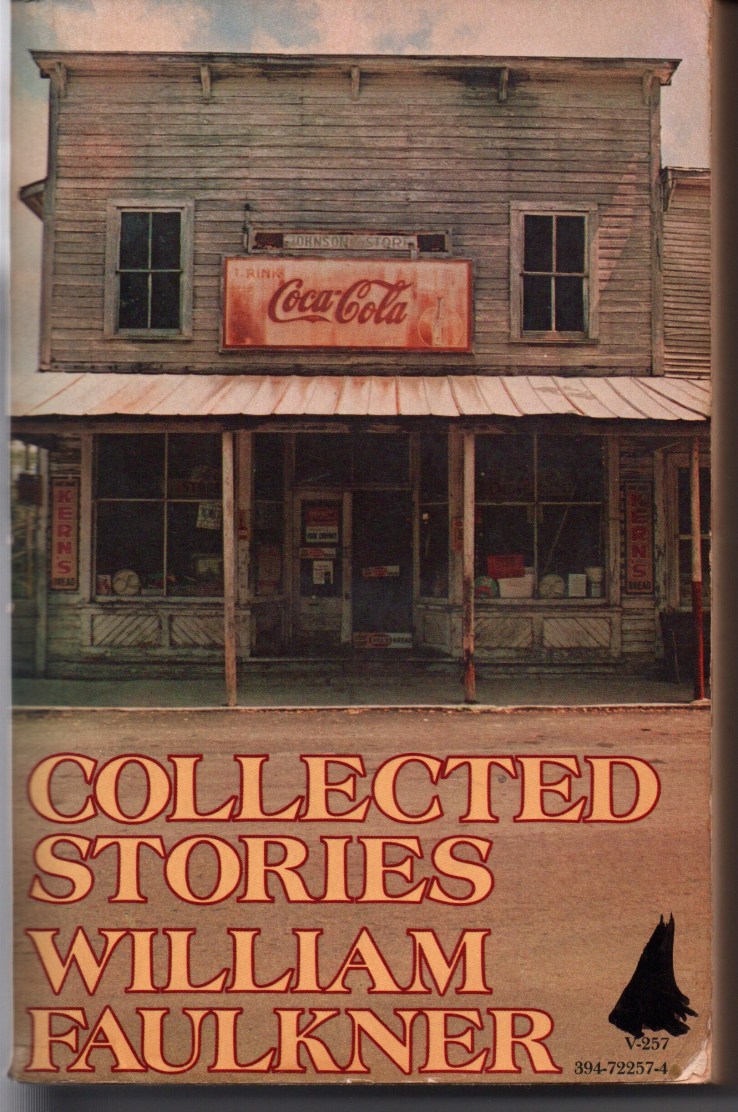
Collected Stories by William Faulkner. 1977 first edition trade paperback from Vintage. This book is 900 pages, exactly, not including the ancillary pages that detail publication dates and rights, as well as Vintage’s back catalog—and yet not one of those pages manages to credit the cover designer or photographer.

I’ve been reading/re-reading this very slowly, with the loose goal of finishing this year.

img_1929

Nausicaä of the Valley of the Wind, Vol. 4 by Hayao Miyazaki. English translation by David Lewis and Toren Smith. Studio Ghibli Library edition by Viz Media, 2010. No designer credited, but the cover is by Miyazaki and I imagine we can probably credit Studio Ghibli with the design.

I started rereading Nausicaä this week after revisiting Princess Mononoke this week. Then I got horribly ill, and the only stuff I can really read when I’m really sick are comics. I scanned Vol. 4 for this week’s Three Books post; I finished it pretty late last night. Vol 5-7 remain.

img_1931

Junkets on a Sad Planet by Tom Clark. First edition trade paperback by Black Sparrow Press, 1994. Cover design by Barbara Martin. The image is of Benjamin Robert Haydon’s life mask for John Keats (from a photo by Christopher Oxford).

I awoke around 1am in the middle of last week, and unable to sleep, I wandered to our den and randomly took this from the shelf to begin reading/rereading. The book (its title is a pun) is difficult to explain, a beautiful experience, rich. Here’s Clark’s own description: “…an extended reflection on the modern poet’s life, as Keats lived it. The book may be read by turns as poetic novel, biography in verse, allegorical masque, historical oratorio for several voices.”

Three Books

img_1820

Madness and Civilization by Michel Foucault. English translation by Richard Howard. Second edition Pantheon hardback, 1965. Cover design by Pan Visual, featuring a detail from Bosch’s Christ Carrying the Cross.

img_1819

Correction by Thomas Bernhard. English translation by Sophie Wilkins. 1983 first edition trade paperback by Aventura. Cover design by Keith Sheridan featuring an illustration by Marshall Arisman. I wrote about Correction here.

img_1818

The Tanners by Robert Walser. English translation by Susan Bernofsky. Irregular-sized trade paperback by New Directions, 2009. Cover design by Erik Rieselbach.

Three Books

img_1464

Angels by Denis Johnson. 1989 Vintage Contemporaries trade paperback. Cover design by Lorraine Louie. Cover illustration by Chris Moore.

img_1463

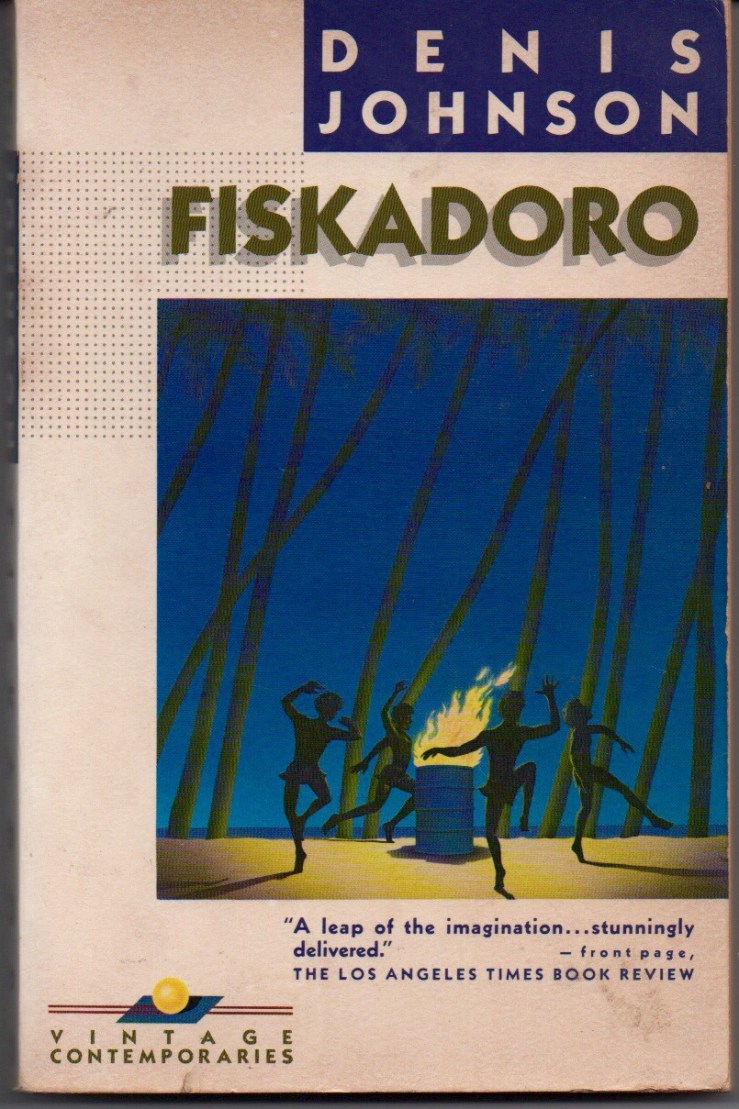
Fiskadoro by Denis Johnson. 1986 Vintage Contemporaries trade paperback. Cover design by Lorraine Louie. Cover illustration by Rick Lovell.

img_1465

The Stars at Noon by Denis Johnson. 1988 Vintage Contemporaries trade paperback. Cover design by Lorraine Louie. Cover illustration by Rick Lovell.

Three Books

IMG_1041

Masquerade and Other Stories by Robert Walser. English translation by Susan Bernofsky. 1990 trade paperback published by The Johns Hopkins UP. Cover design and lettering by Ann Walston. The illustration is a detail from Adolf Wölfli’s 1917 Arnica Flower. This was the first Walser I read.IMG_1042 IMG_1043

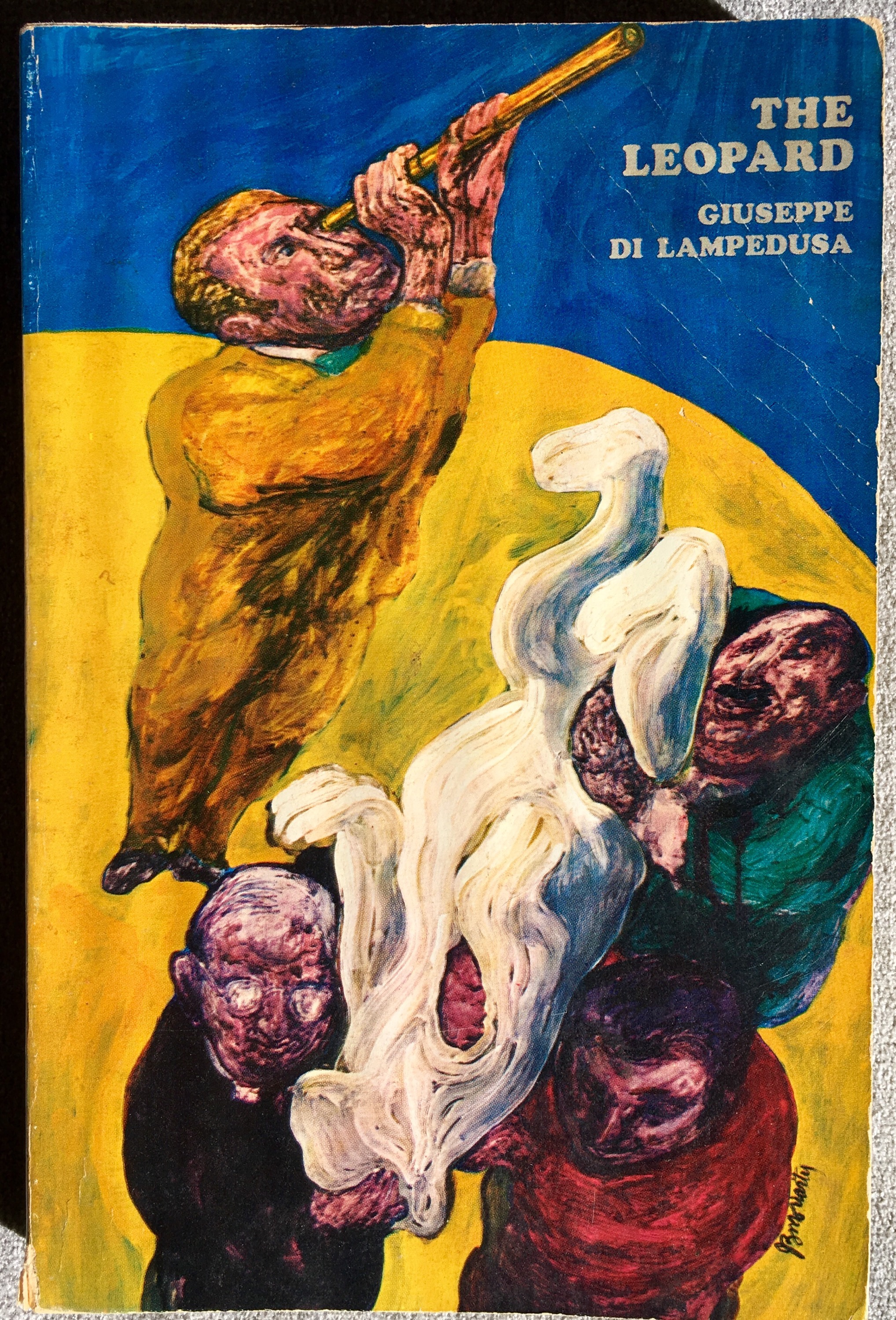
The Leopard by Giuseppe di Lampedusa. English translation by Archibald Colqhoun. A 1966 trade paperback from Time Life Books. Cover design by Jerome Moriarty. I’m not sure why, but I just love the design of this book—I love that there’s no blurb on the back too.IMG_1017

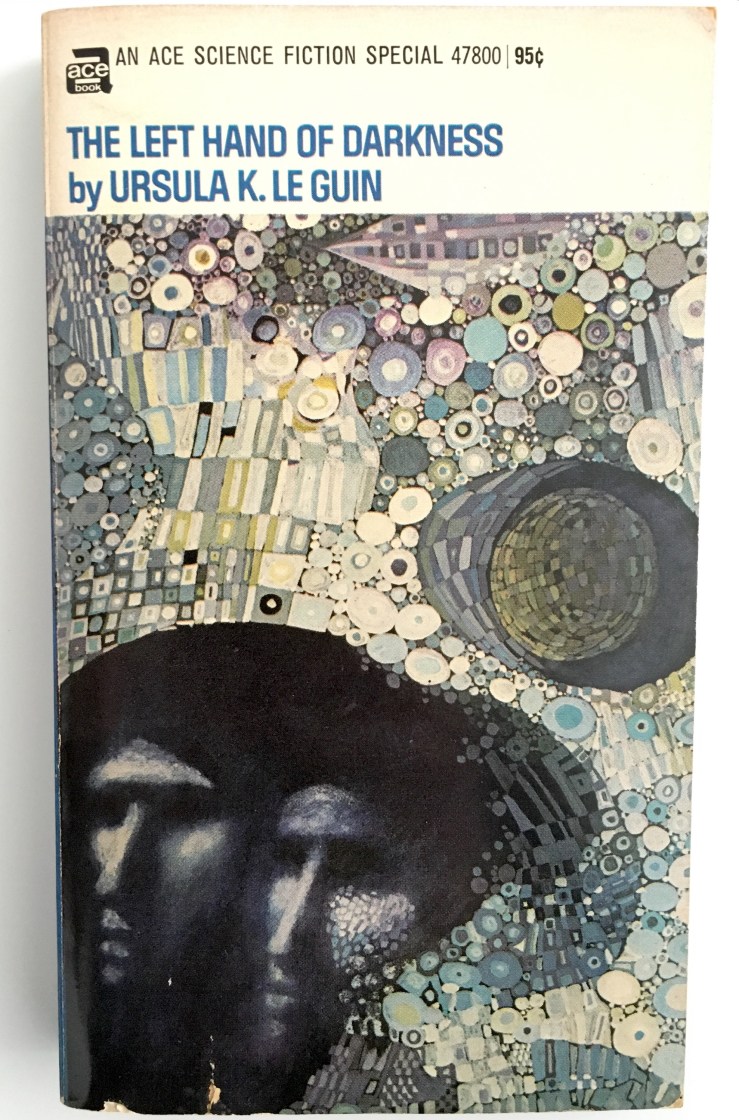
The Left Hand of Darkness by Ursula K. Le Guin. First printing of an Ace Books mass market paperback. No designer is credited, but the cover art, reminiscent of Gustav Klimt, is by Leo and Diane Dillon.

Three Books

IMG_8401

Victor Halfwit: A Winter’s Tale by Thomas Bernhard. English translation by Martin Chalmers. Illustration and design by Sunandini Banerjee. First edition oversized hardback from Seagull Books. On thick, heavy paper, Banerjee’s rich full-color digital collages illustrate what is essentially a microfiction by Thomas Bernhard. I bought this a few years ago at Faulkner House, a tiny bookstore in New Orleans.

IMG_8403

Go Down, Moses by William Faulkner. 1973 Vintage mass-market paperback edition. Cover photo by Robert Wenkham; no designer credited. My favorite Faulkner, although I’ve not read them all. I bought this for grad school, which explains the cheap used mass-market edition, but I love the cover. IMG_8402 Fractured Karma by Tom Clark. First edition trade paperback from Black Sparrow Press. Design by Barbara Martin. The cover painting, Waiting Room for the Beyond, is by John Register. This is the first Tom Clark book I read. Amazing.
Three Books

image

Love and Death in the American Novel by Leslie A. Fiedler. First edition hardback published by Criterion in 1960. Cover design by Sidney Feinberg. I was dismayed when I first found Fiedler—he’d arrived at his thesis—and supported it with a big fat book—decades before me. I was hipped to this by a kindly professor in graduate school, who suggested I read and then credit Fiedler. I pulled this book out to help me in an American lit course I’m teaching this fall.

IMG_8254

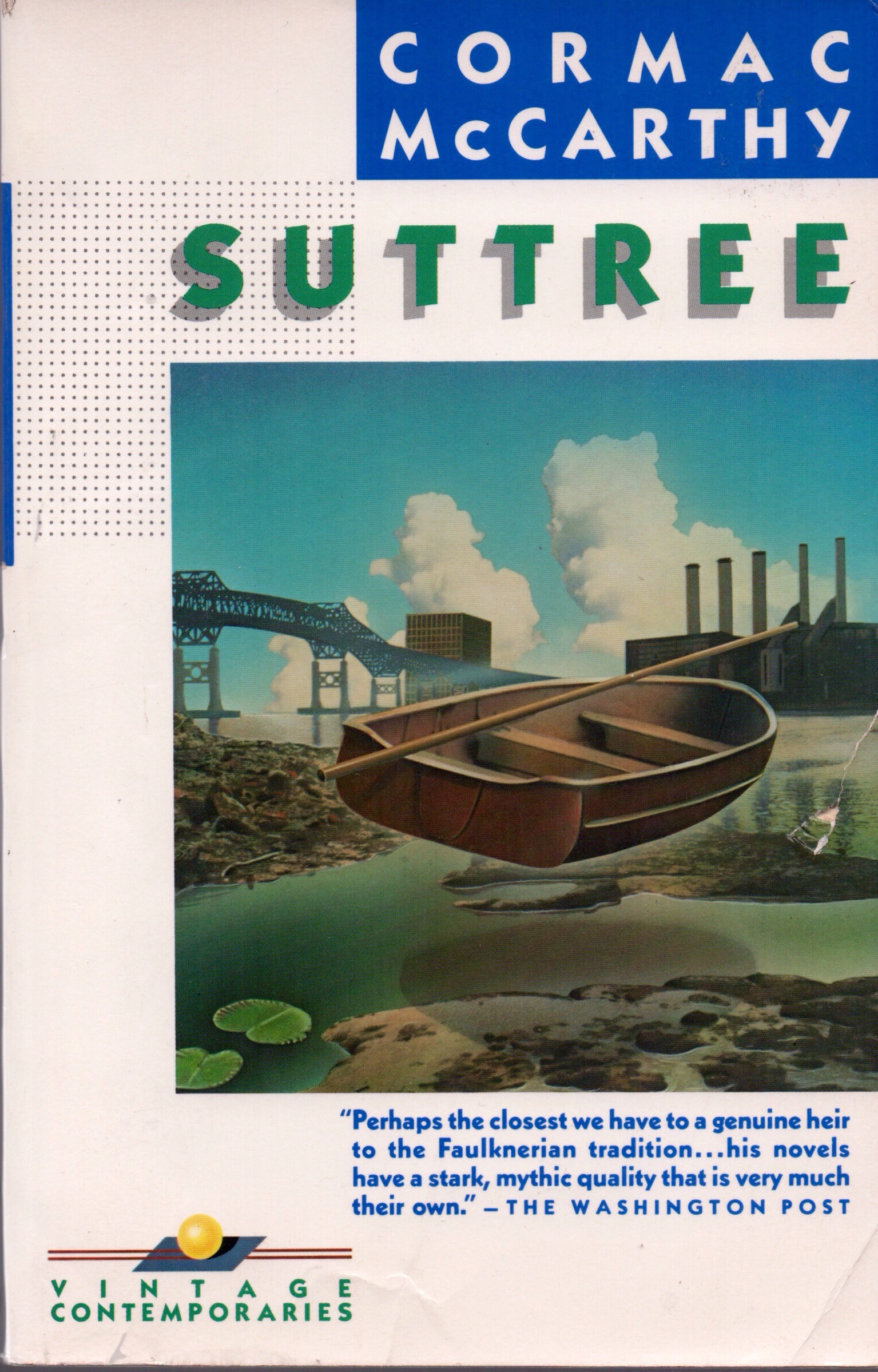
Suttree by Cormac McCarthy. First edition trade paperback published by Vintage Contemporaries. Cover design by Lorraine Louie; cover photo illustration by Marc Tauss. I’ve already written about my love of Vintage Contemporaries covers, and finding this copy of Suttree a few years ago was glorious. I’ve been rereading the novel—auditing it, really, through a superb reading by Michael Kramer. I’ve had this edition out as I go. Suttree, by the way, fits nicely neatly perfectly into Fielder’s thesis about American lit.
IMG_8300

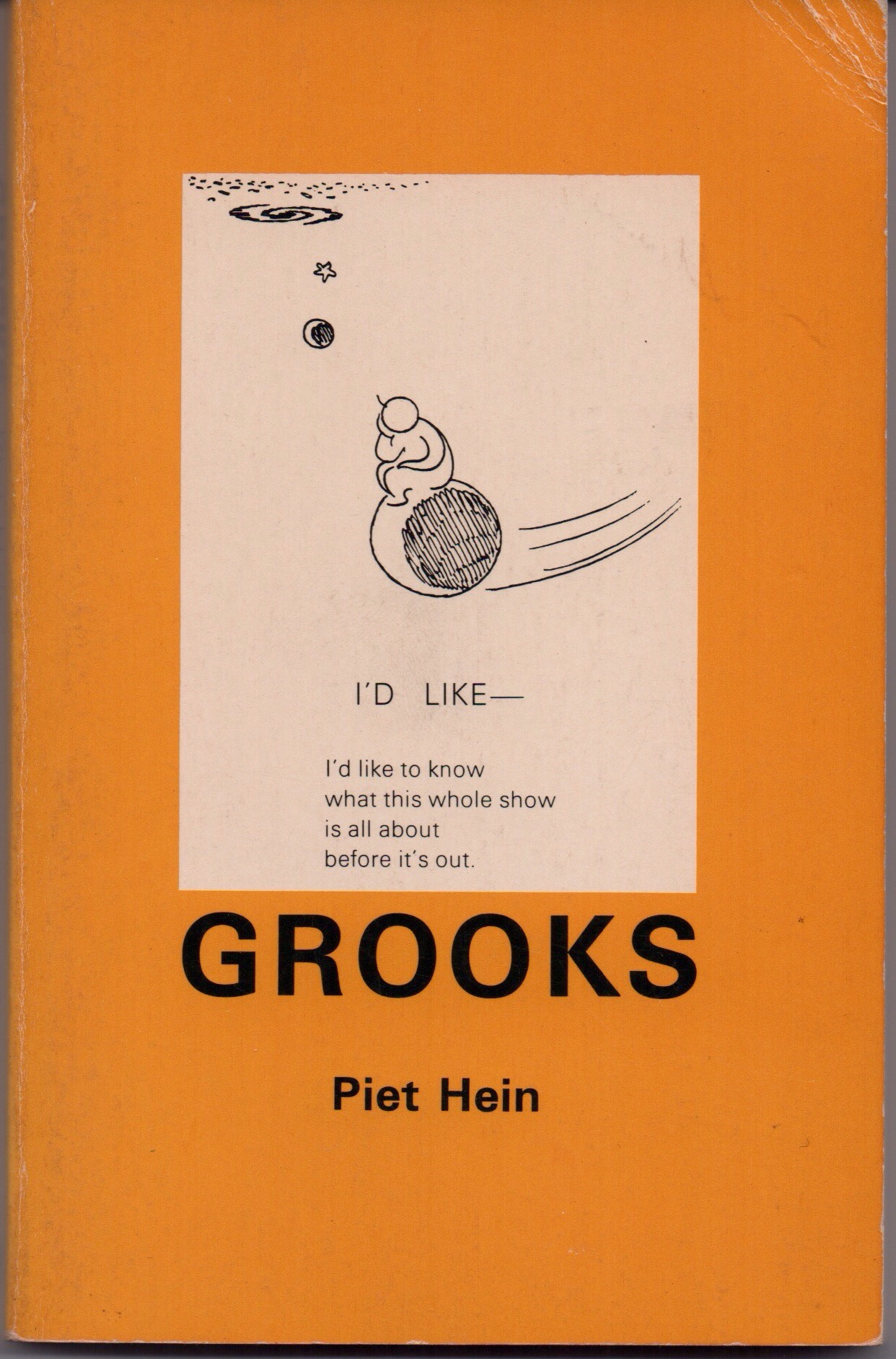
Grooks by Piet Hein. Cute little pocket-sized paperback. Second-edition published by the M.I.T. Press. Cover illustration is by Hein; I can’t find a credit for the designer. I found this in the bookstore the other day when I was looking for something else in the poetry section. Hein’s grooks can be clever, but also occasionally a bit too pithy, if that makes sense. Still.

Cool color signature covers

book-The-Road

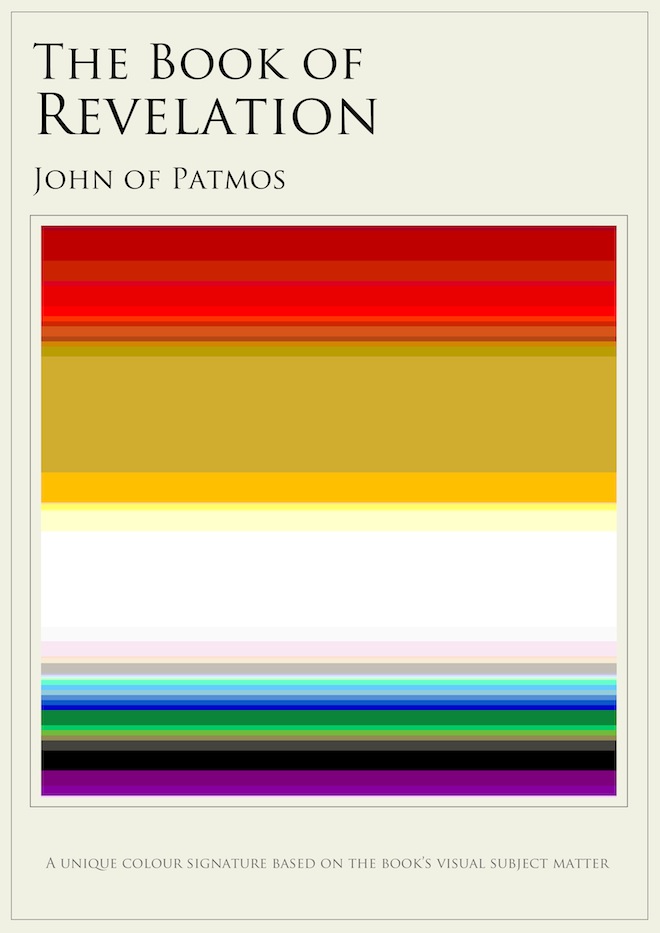
Cool article from Wired (yeah it’s a few years old now but hey) about artist Jaz Parkinson, who indexed the references to colors in various novels and created visual signatures of them. From the article

 Jaz Parkinson, an art student from England, was curious about how the written imagery in the work would translate into color, so she decided to chart the color signatures of some of her favorite books.

Using the color-related data pulled from novels, Parkinson visualized how famous books would look if you could only read them through a visual signature. “I think the charts are beautiful and informative, which is a very special mix of the subjective and the objective,” she says. “They reveal a new dataset which hasn’t been associated with the book before.”
book-The-Little-Prince book-Revelation

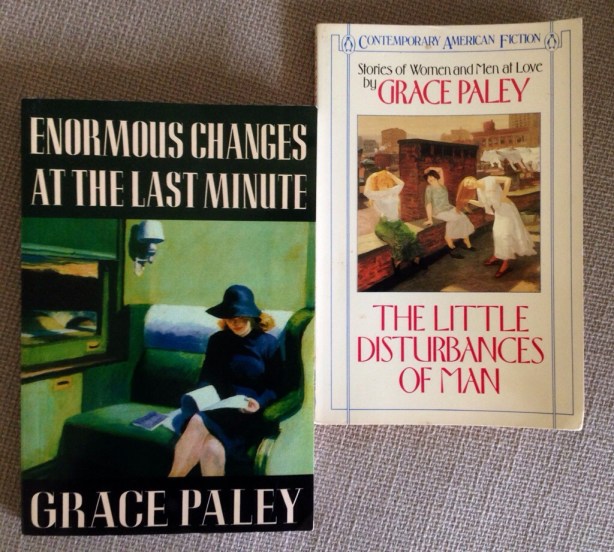
Two by Grace Paley (Books Acquired, 3.07.2014)

20140316-144125.jpg

I’d been wanting to pick up a collection of Grace Paley’s stories for awhile now. I wasn’t sure whether or not to pick up Enormous Changes at the Last Minute or The Little Disturbances of Man, so I just got both. The covers helped convince me, I’ll admit—I’m a sucker for Hopper, and John French Sloan is no slouch either. (I’m tempted here to launch into some vague critique of the covers that books by women get but nah).

I’ve already read most of Enormous Change, ingesting most of the tales while sitting in my car, waiting to pick my kids up after school, which seems like a perfect place to read it. Smart, odd, often sharp, scathing, precise, etc.—great stuff. I’ll try to do a full review but I’ve got a huge backlog. In the meantime, check out “Wants.”

Dirty Northern Bastard — Harland Miller

“My Girls” — Tears for Fears

The Penguin Guide to Children and Hallucinogens

Children and hallucinogens

From Scarfolk Council, one of the finest sites I’ve seen in sometime. Their self-description:

Scarfolk is a town in North West England that did not progress beyond 1979. Instead, the entire decade of the 1970s loops ad infinitum. Here in Scarfolk, pagan rituals blend seamlessly with science; hauntology is a compulsory subject at school, and everyone must be in bed by 8pm because they are perpetually running a slight fever. “Visit Scarfolk today. Our number one priority is keeping rabies at bay.” For more information please reread.

The site’s got this wonderfully weird Wickerman / Ballard / Prisoner vibe to it. Very cool stuff.


Nabokov Discusses Lolita Covers

See more Lolita covers.

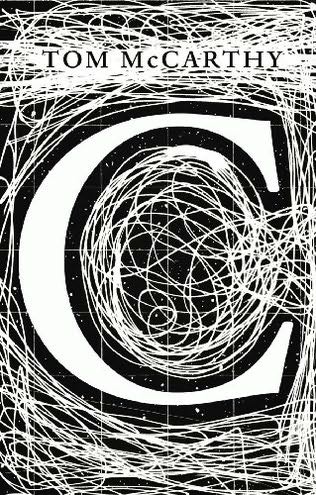
“Plugging Literature Into Other Literature” — Tom McCarthy on His New Novel, C

British Cover for C

Surplus Matters has reprinted last week’s edition of The Sunday Times interview with/profile of Tom McCarthy about his new novel C, our favorite new novel of 2010 (The Sunday Times is not free, so thank you, Surplus Matters). The author of the article, Robert Collins, situates McCarthy’s C as an indirect answer to David Shields’s argument in Reality Hunger that the successful modern novel must be a synthesis or remix. We’ve been critical of Shields’s argument, which ultimately rests on aesthetic assumptions that allow Shields to pick what texts will count in his reality canon. To put it another way, great works of literature, from Homer to Ovid to Shakespeare to Henry Miller have always been appropriating and recontextualizing the texts that came before them. McCarthy’s C doesn’t respond to Shields’s would-be manifesto; it obliterates it, following in the (counter)tradition of Joyce, Woolf, Faulkner, and William Burroughs, writers who navigated the treacherous straits of history, art, representation, and reality. C is rich and inventive, telling the life story of Serge Carrefax in the early part of the 20th century. We follow Serge through his strange youth, where he experiments with wireless technology, to the skies of WWI, where he maps the terrain below him; we follow him through his drug-soaked twenties in the ’20s and eventually to the tombs of Egypt. C isn’t a response to the demands of a marketplace that increasingly demands gimmicky concepts and reality-soaked memoirs; instead, to use McCarthy’s term, C plugs into the reservoir of literature that precedes it. From the article:

If McCarthy — as [Zadie] Smith has suggested — presents a radically fresh prospect for the future of the novel, it is probably, paradoxically, because he has instinctively ignored contemporary literature almost completely. He would argue, in fact, that it is only by immersing oneself in all that has gone before that any contemporary novelist has even the faintest chance of coming up with something new. “I don’t think most writers, most commercial middlebrow writers, are doing that,” he says. “I think they’ve become too aligned with mainstream media culture and its underlying aesthetic of ‘self-expression’. I see what I’m doing as simply plugging literature into other literature. For me, that’s what literature’s always done. If Shakespeare finds a good speech in an older version of Macbeth or Pliny, he just rips it and mixes it. It’s like DJing.”