America is the world’s living myth (Don DeLillo)

Terror. This is the subject she chose. In Europe they attack their own institutions, their police, journalists, industrialists, judges, academics, legislators. In the Middle East they attack Americans. What does it mean? She wanted to know if the risk analyst had an opinion.“Bank loans, arms credits, goods, technology. Technicians are the infiltrators of ancient societies. They speak a secret language. They bring new kinds of death with them. New uses for death. New ways to think about death. All the banking and technology and oil money create an uneasy flow through the region, a complex set of dependencies and fears. Everyone is there, of course. Not just Americans. They’re all there. But the others lack a certain mythical quality that terrorists find attractive.”

“Good, keep going.”

“America is the world’s living myth. There’s no sense of wrong when you kill an American or blame America for some local disaster. This is our function, to be character types, to embody recurring themes that people can use to comfort themselves, justify themselves and so on. We’re here to accommodate. Whatever people need, we provide. A myth is a useful thing. People expect us to absorb the impact of their grievances. Interesting, when I talk to a Mideastern businessman who expresses affection and respect for the U.S., I automatically assume he’s either a fool or a liar. The sense of grievance affects all of us, one way or another.”

“What percentage of these grievances is justified?”

I pretended to calculate.

From Don DeLillo’s novel The Names.

img_2722

Some pleasures overflow the conditions attending them (Don DeLillo)

He had bitten into a peach and was smelling the pit-streaked flesh. I think I smiled, recognizing my own mannerism. These peaches were a baffling delight, certain ones, producing the kind of sense pleasure that’s so unexpectedly deep it seems to need another context. Ordinary things aren’t supposed to be this gratifying. Nothing about the exterior of the peach tells you it will be so lush, moist and aromatic, juices running along your gums, or so subtly colored inside, a pink-veined golden bloom. I tried to discuss this with the faces across the table.

“But I think pleasure is not easy to repeat,” Eliades said. “Tomorrow you will eat a peach from the same basket and be disappointed. Then you will wonder if you were mistaken. A peach, a cigarette. I enjoy one cigarette out of a thousand. Still I keep smoking. I think pleasure is in the moment more than in the thing. I keep smoking to find this moment. Maybe I will die trying.”

Possibly it was his appearance that gave these remarks the importance of a world view. His wild beard covered most of his face. It started just below the eyes. He seemed to be bleeding this coarse black hair. His shoulders curved forward as he spoke and he rocked slightly at the front edge of the chair. He wore a tan suit and pastel tie, an outfit at odds with the large fierce head, the rough surface he carried.

I tried to pursue the notion that some pleasures overflow the conditions attending them. Maybe I was a little drunk.

From Don DeLillo’s novel The Names.

adriaen_coorte_-_three_peaches_on_a_stone_ledge_with_a_painted_lady_butterfly

Three Peaches on a Stone Ledge with a Painted Lady Butterfly, 1695 by Adriaen Coorte (ca. 1665–1707)

Tourism is the march of stupidity (Don DeLillo)

My life was full of routine surprises. One day I was watching runners from Marathon dodge taxis near the Athens Hilton, the next I was turning a corner in Istanbul to see a gypsy leading a bear on a leash. I began to think of myself as a perennial tourist. There was something agreeable about this. To be a tourist is to escape accountability. Errors and failings don’t cling to you the way they do back home. You’re able to drift across continents and languages, suspending the operation of sound thought. Tourism is the march of stupidity. You’re expected to be stupid. The entire mechanism of the host country is geared to travelers acting stupidly. You walk around dazed, squinting into fold-out maps. You don’t know how to talk to people, how to get anywhere, what the money means, what time it is, what to eat or how to eat it. Being stupid is the pattern, the level and the norm. You can exist on this level for weeks and months without reprimand or dire consequence. Together with thousands, you are granted immunities and broad freedoms. You are an army of fools, wearing bright polyesters, riding camels, taking pictures of each other, haggard, dysenteric, thirsty. There is nothing to think about but the next shapeless event.

From Don DeLillo’s novel The Names.


“The 27 Depravities” — Don DeLillo

Every day made her more certain of my various failings. I compiled a mental list, which I often recited aloud to her, asking how accurate it was in reflecting her grievances. This was my chief weapon of the period. She hated the feeling that someone knew her mind.

1.      Self-satisfied.

2.      Uncommitted.

3.      Willing to settle.

4.      Willing to sit and stare, conserving yourself for some end-of-life event, like God’s face or the squaring of the circle.

5.      You like to advertise yourself as refreshingly sane and healthy in a world of driven neurotics. You make a major production of being undriven.

6.      You pretend.

7.      You pretend not to understand other people’s motives.

8.      You pretend to be even-tempered. You feel it gives you a moral and intellectual advantage. You are always looking for an advantage.

9.      You don’t see anything beyond your own modest contentment. We all live on the ocean swell of your well-being. Everything else is trivial and distracting, or monumental and distracting, and only an unsporting wife or child would lodge a protest against your teensy weensy happiness.

10.   You think being a husband and father is a form of Hitlerism and you shrink from it. Authority makes you uneasy, doesn’t it? You draw back from anything that resembles an official capacity.

11.   You don’t allow yourself the full pleasure of things.

12.   You keep studying your son for clues to your own nature.

13.   You admire your wife too much and talk about it too much. Admiration is your public stance, a form of self-protection if I read it correctly.

14.   Gratified by your own feelings of jealousy.

15.   Politically neuter.

16.   Eager to believe the worst.

17.   You will defer to others, you will be acutely sensitive to the feelings of strangers, but you will contrive to misunderstand your family. We make you wonder if you are the outsider in this group.

18.   You have trouble sleeping, an attempt to gain my sympathy.

19.   You sneeze in books.

20.   You have an eye for your friends’ wives. Your wife’s friends. Somewhat speculative, somewhat detached.

21.   You go to extremes to keep your small mean feelings hidden. Only in arguments do they appear. Completing your revenge. Hiding it even from yourself at times. Not willing to be seen taking your small mean everyday revenge on me, which, granted, I have sometimes abundantly earned. Pretending your revenge is a misinterpretation on my part, a misunderstanding, some kind of accident.

22.   You contain your love. You feel it but don’t like to show it. When you do show it, it is the result of some long drawn-out decision making process, isn’t it, you bastard.

23.   Nurser of small hurts.

24.   Whiskey sipper.

25.   Underachiever.

26.   Reluctant adulterer.

27.   American.

We came to refer to these as the 27 Depravities, like some reckoning of hollow-cheeked church theologians. Since then I’ve sometimes had to remind myself it was my list, not hers.

From Don DeLillo’s novel The Names.

img_2722

“The Itch,” a new Don DeLillo story in The New Yorker

There’s a new DeLillo story in The New Yorker. It’s called “The Itch” and I started itching terribly about halfway through. First three sections (and yeah, the story starts with “But”):

But nobody showed up, so he sat awhile looking at the wall. It was one of those Saturdays that feel like Sunday. He didn’t know how to explain this. It happened intermittently, more often in the warmer months, and it was probably normal, although he’d never discussed it with anyone.

After the divorce he felt an odd numbness, mental and physical. He looked in the mirror, studying the face that looked back. At night he kept to his half of the bed with his back to the other half. Over time a life slithered out. He talked to people, took long walks. He bought a pair of shoes but only after testing them rigorously, both shoes, not just one. He walked from one end of the shoe store to the other, four times at various speeds, then sat and looked down at the shoes. He took one shoe off and handled it, pressing the instep, placing his hand inside the shoe, nodding at it, tapping with the fingers of his free hand on the rigid sole and heel.

The salesman stood in the near distance, watching and waiting, whoever he was, whatever he said and did when he wasn’t there.

In the office his desk was set alongside a window and he spent time looking at a building across the street, where nothing was visible inside the rows of windows. There were times when he could not stop looking.

He looks and scratches, semi-surreptitiously. Certain days it’s the left wrist. Upper arms at home in the evening. Thighs and shins most likely at night. When he’s out walking, it happens now and then, mostly forearms.

He was forty-four years old, trapped in his body. Arms, legs, torso. Face did not itch. Scalp developed something that a doctor gave a name to, but it itched only rarely, then not at all, so the name didn’t matter.

His eyes swept the windows across the street horizontally, never vertically. He did not try to imagine the lives inside.

Selections from One-Star Amazon Reviews of Don DeLillo’s White Noise

[Editorial note: The following citations come from one-star Amazon reviews of Don DeLillo’s novel White NoiseI’ve preserved the reviewers’ original punctuation and spelling. More one-star Amazon reviews].


quips

UGH

rubbish

chubby wife

Verble sparing

Love the cover

nothing happens

frequently witless

watching paint dry

orgasmic experiences

Barak Hussein Obama

supremely unamusing

my daughter hated this

rampant commercialism

trying to be ironic but failing

it’s not clear what the point is

hated this book with a violent passion

he goes to the grocery store about 4 times

slobbering self appointed literary pillocks

Fred Flintstonesque postmodern hectoring

some generic non-descript mid-western city

ultra trite unimaginative obsession about death

Theme is supposed to emerge from a work of fiction

desperately avoids any of the conventional trappings of fiction

a silly trick by a critic’s darling to help us feel more self-rightous

A left wing hipster might relate to the message the book is trying to communicate

It has good ideas and themes for a literature class if you look at it from that perspective

Feels false, like the author was trying to make sublime points about human nature and the direction of society

The cartoonish characters are about as credible as the windbag Biden is on foreign policy

felt like the author was just using the characters and the plot as puppets

I invested almost six minutes reading this book before I threw it out

I read this book so I’m smarter than the rest of you

Even allowing for the mid 1980’s publication date

entire pages go by and nothing really happens

moaning middle class left wing academics

they go through an airborne toxic event

the Sopranos and Anne of Green Gables

dated technology/consumer references

Droned on and on and on about death

wasn’t a single character I cared about

a Hannah Montana puke fest

tossed it into the trash

watching grass grow

I prefer life to death

local supermarket

A Seinfield book

literary (as if?)

he goes crazy

anal vacuity

it bore me

dullardish

it just ends

Three Books

img_2724

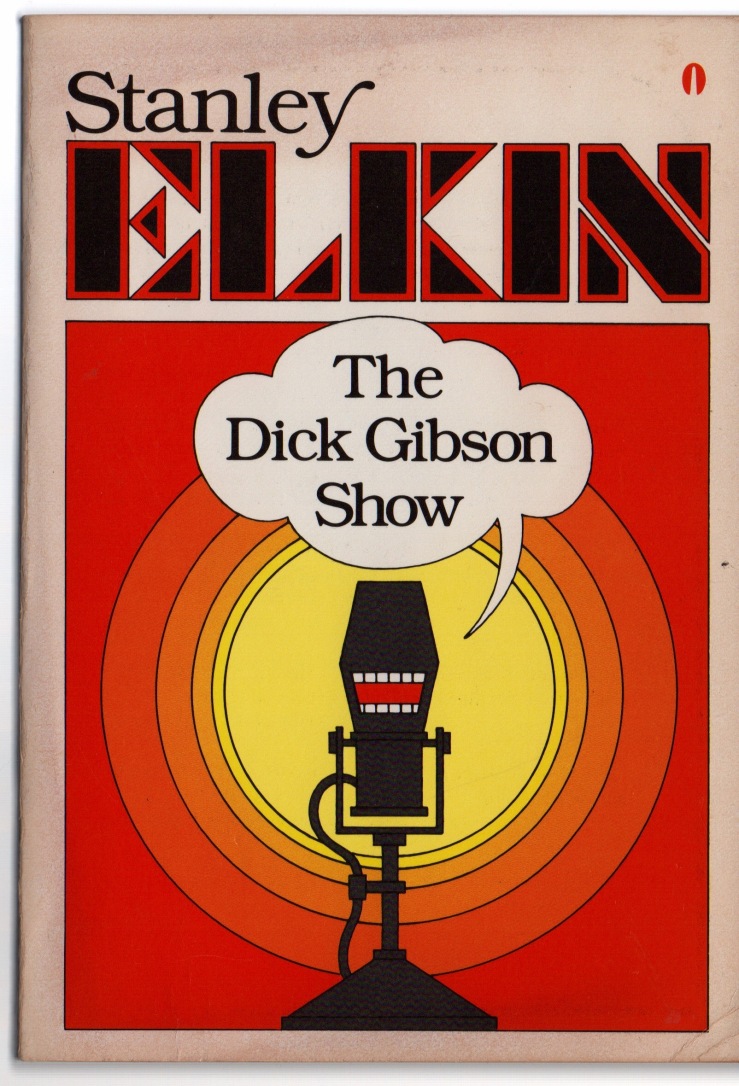
The Dick Gibson Show by Stanley Elkin. 1983 trade paperback by E.P. Dutton/Obelisk. Cover design by Janet Halverson.

I finished Elkin’s The Franchiser this week and started this one this week.

img_2722

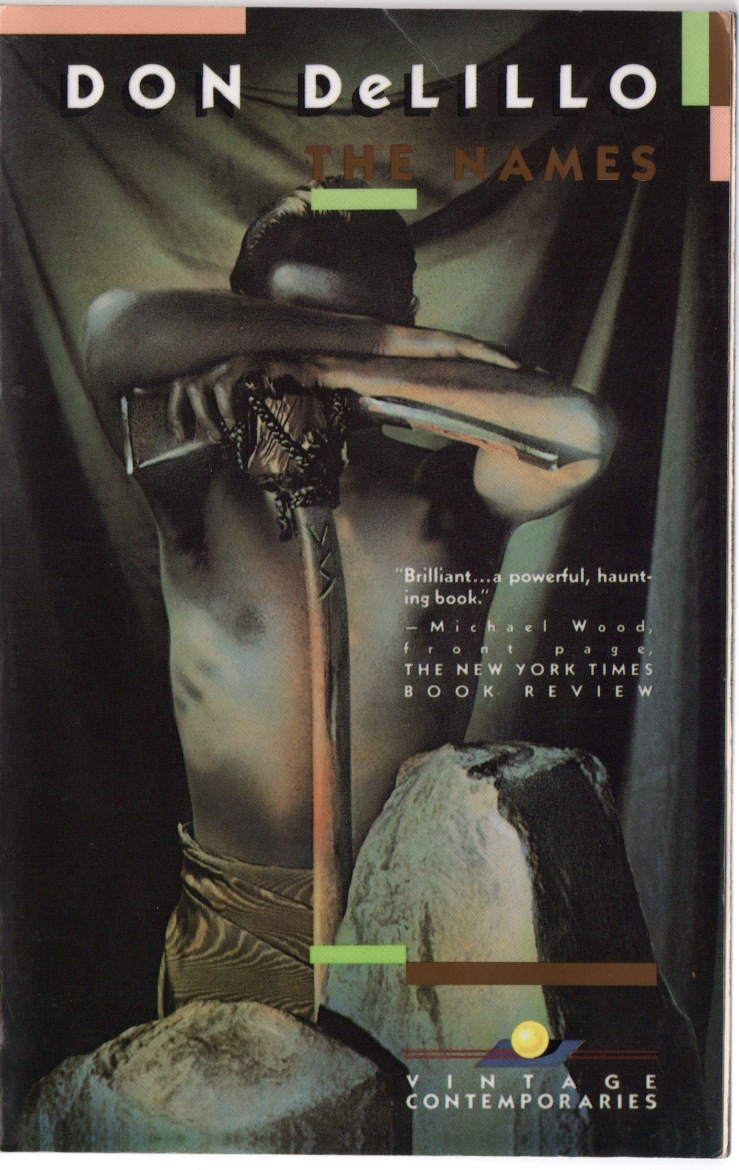
The Names by Don DeLillo. 1989 trade paperback by Vintage Contemporaries (God I love Vintage Contemporaries wonderful awful covers)God I love Vintage Contemporaries wonderful awful covers). COver design by Lorraine Louie employing an illustration by Marc Tauss.

I tried starting The Names after finishing The Franchiser, but took a pause…maybe I still have the bad taste of this recent DeLillo interview in my ears.

img_2721

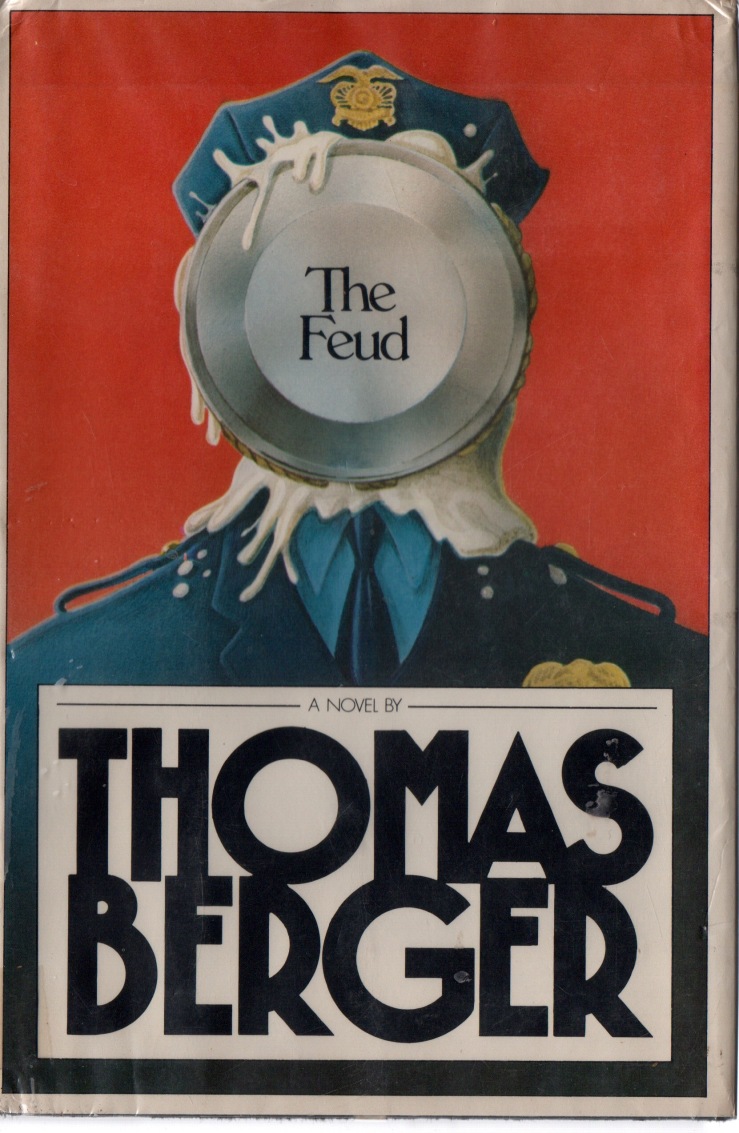
The Feud by Thomas Berger. First edition hardback by Delacorte Press, 1983. Jacket design and illustration by Fred Marcellino.

A colleague gave me this a few years ago, and I love the cover; Marcellino’s actually been featured in these Three Books posts a few times now—he did covers for Pynchon and Russell Hoban that I adore.

Three More Purple Books

Last week I crammed my thoughts about the death of Prince into one of these “Three Books” posts I’ve doing each Sunday for around 30 Sundays now (I plan to do 52, if anyone cares or counts). I grabbed a bunch of purple books and scanned them, and I still have the scans saved, so today’s Three Books are, I guess, books that I deemed not-quite-purple-enough for last week’s post. My thoughts on Prince remain the same: I’m still vaguely shocked at his death and shocked at my shock at his death. I tried to write a Thing on Prince’s sexy dystopian visions, but I failed.  Give me the electric chair 4 all my future crimes.

img_2144

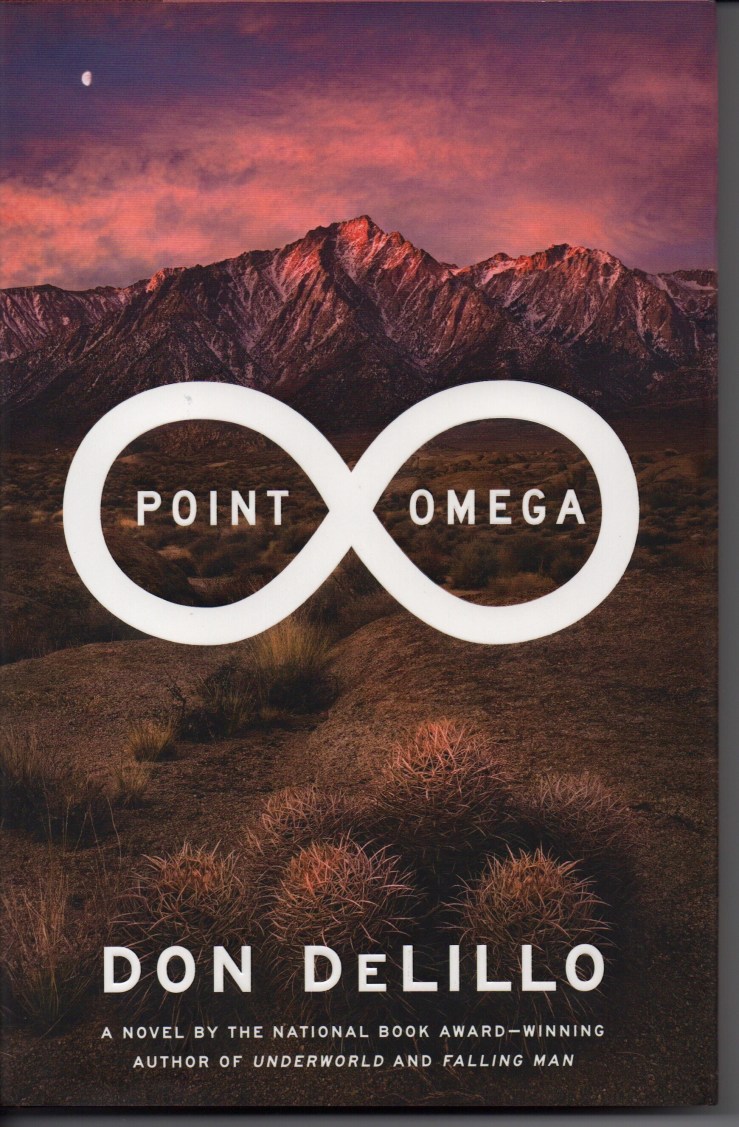
Point Omega by Don DeLillo. First edition hardback, Scribner, 2010. Jacket design by Rex Bonomelli using a photograph by Marc Adamus. I reviewed Point Omega when it came out, noting that it “is not a particularly fun book nor does it yield any direct answers, but it’s also a rewarding, engaging, and often challenging read.” The book got somewhat mixed reviews, but I think in retrospect it’s quite underrated. DeLillo wrote one of the earliest paraphrases of the Bush Wars here (without really writing a summation and without really writing a war novel), and I think about the book often—whenever I read a little digital clipping about Cheney or Wolfowitz or Rumsfeld or any  of the Old Neocon Gang—and the hacks and mouthpieces who supported them.

img_2147

Masscult and Midcult: Essays against the American Grain by Dwight Macdonald. Edited by John Summers. Published by NYRB, 2011. Cover design by Katy Homans; the cover image is a detail of Cedric Delsaux’s photograph 88, Las Vegas Casino 1. I reviewed Masscult a few years ago. The book has some perceptive essays, and its title essay is essential cultural criticism.

img_2146

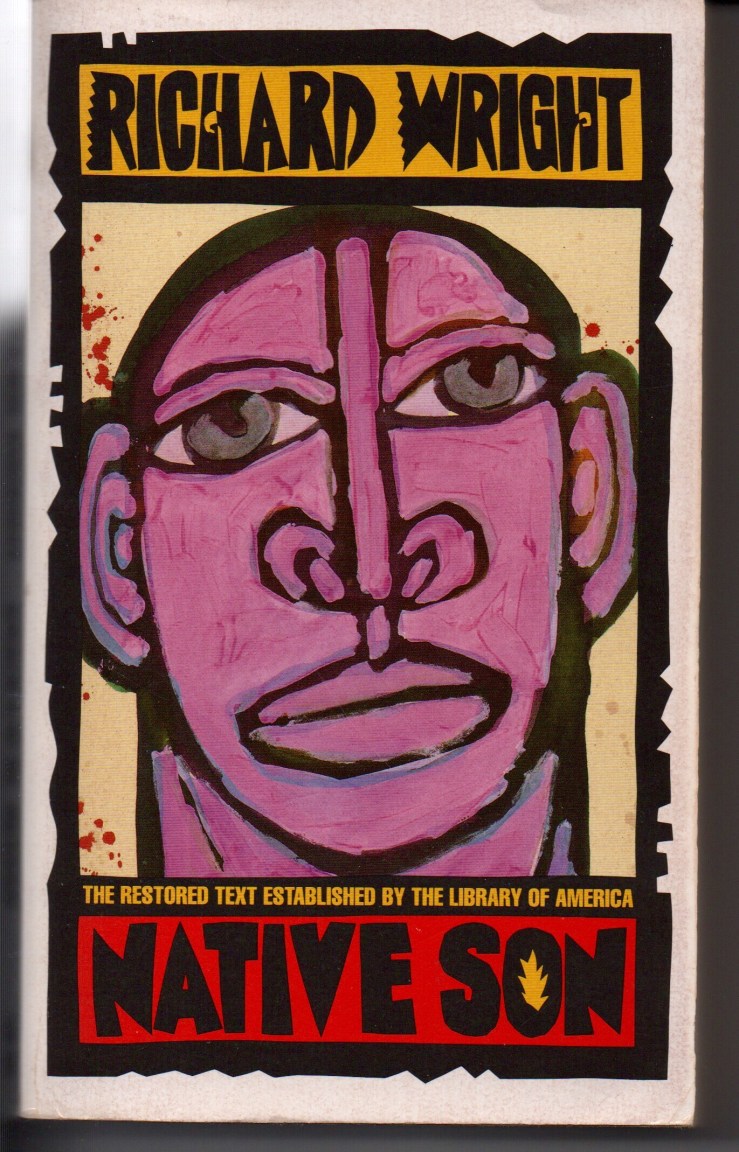
Native Son by Richard Wright. Mass market paperback edition by Harper Perennial, 1993. Cover design and illustration by David Diaz. This book was part of a class set I used years ago when I taught AP English Literature. It left with me when I left that job.

Don DeLillo: The Word, the Image, the Gun (Documentary)

Hemingway died one day and Pynchon was born the next (DeLillo on Pynchon)

It was as though, in some odd quantum stroke, Hemingway died one day and Pynchon was born the next. One literature bends into another. Pynchon has made American writing a broader and stronger force. He found whispers and apparitions at the edge of modern awareness but did not lessen our sense of the physicality of American prose, the shotgun vigor, the street humor, the body fluids, the put-on.

I was writing ads for Sears truck tires when a friend gave me a copy of V. in paperback. I read it and thought, Where did this come from?

The scale of his work, large in geography and unafraid of major subjects, helped us locate our fiction not only in small anonymous corners, human and ever-essential, but out there as well, in the sprawl of high imagination and collective dreams.

Don DeLillo on Thomas Pynchon. From the Summer 2005 issue of Bookforum.

Don DeLillo on William Gaddis

I REMEMBER THE BOOKSTORE, long gone now, on Forty-Second Street. I stood in the narrow aisle reading the first paragraph of The Recognitions. It was a revelation, a piece of writing with the beauty and texture of a Shakespearean monologue-or, maybe more apt, a work of Renaissance art impossibly transformed from image to words. And they were the words of a contemporary American. This, to me, was the wonder of it.
Years later, when I was a writer myself, I read JR, and it seemed to me, at first, that Gaddis was working against his own gifts for narration and physical description, leaving the great world behind to enter the pigeon-coop clutter of minds intent on deal-making and soul-swindling. This was not self-denial, I began to understand, but a writer of uncommon courage and insight discovering a method that would allow him to realize his sense of what the great world had become.
JR in fact is a realistic novel–so unforgivingly real that we may fail to recognize it as such. It is the real world of its own terms, without the perceptual scrim that we tend to erect (novelists and others) in order to live and work safely within it.
Two tremendous novels. And the author maneuvering his car out of a dark and cramped driveway, the last time I saw him, with four or five friends and acquaintances calling out instructions as the car backed onto the country road, headlights shining on our waved good nights.

Don DeLillo on William Gaddis. From the Fall 2003 issue of Conjunctions.

The Mystery at the Middle of Ordinary Life — Don DeLillo

The Mystery at the Middle of Ordinary Life, a one-act play by Don DeLillo

A MAN and a WOMAN in a room.

WOMAN: I was thinking how strange it is.

MAN: What?

WOMAN: That people are able to live together. Days and nights and years. Five years go by. How do they do it? Ten, eleven, twelve years. Two people making one life. Sharing ten thousand meals. Talking to each other face to face, open face, like hot sandwiches. All the words that fill the house. What do people say over a lifetime? Trapped in each other’s syntax. The same voice. The droning tonal repetition. I’ll tell you something.

MAN: You’ll tell me something.

WOMAN: There’s a mystery here. The people behind the walls of the brown house next door. What do they say and how do they survive it? All that idle dialogue. The nasality. The banality. I was thinking how strange it is. How do they do it, night after night, all those nights, those words, those few who do it and survive?

MAN: They make love. They make salads.

WOMAN: But sooner or later they have to speak. This is what shatters the world. I mean isn’t it gradually shattering to sit and listen to the same person all the time, without reason or rhyme. Words that trail away. The pauses. The clauses. How many thousands of times can you look at the same drained face and watch the mouth begin to open? Everything’s been fine up to now. It is when they open their mouths. It is when they speak.

[Pause.]

MAN: I’m still not over this cold of mine.

WOMAN: Take those things you take.

MAN: The tablets.

WOMAN: The caplets.

[Pause.]

MAN: Long day.

WOMAN: Long day.

MAN: A good night’s sleep.

WOMAN: Long slow day.

[Lights slowly down.]

CURTAIN

“What writing means to me” (Don DeLillo)

delillo

(Don DeLillo, in a 1982 interview with Contemporary Literature).

“On Freedom to Write” — Don DeLillo

freedom

List with No Name #17

  1. Gordon Lish
  2. Ed Sanders
  3. Nadine Gordimer
  4. Harry Matthews
  5. Doris Lessing
  6. Cynthia Ozick
  7. Philip Roth
  8. Derek Walcott
  9. William H. Gass
  10. John Ashberry
  11. E.L. Doctorow
  12. Lawrence Ferlinghetti
  13. Harold Bloom
  14. Gabriel García Márquez
  15. Joyce Johnson
  16. Milan Kundera
  17. Amiri Baraka
  18. Gary Snyder
  19. Joyce Carol Oates
  20. Mario Vargas Llosa
  21. Joan Didion
  22. Harper Lee
  23. John Barth
  24. Don DeLillo
  25. Cormac McCarthy
  26. Chinua Achebe
  27. Umberto Eco
  28. Günter Grass


“Name the Parts” (A Scene from DeLillo’s Underworld)

A favorite scene from Don DeLillo’s novel Underworld:

“Sometimes I think the education we dispense is better suited to a fifty-year-old who feels he missed the point the first time around. Too many abstract ideas. Eternal verities left and right. You’d be better served looking at your shoe and naming the parts. You in particular, Shay, coming from the place you come from.”

This seemed to animate him. He leaned across the desk and gazed, is the word, at my wet boots.

“Those are ugly things, aren’t they?”

“Yes they are.”

“Name the parts. Go ahead. We’re not so chi chi here, we’re not so intellectually chic that we can’t test a student face-to-face.”

“Name the parts,” I said. “All right. Laces.”

“Laces. One to each shoe. Proceed.”

I lifted one foot and turned it awkwardly.

“Sole and heel.”

“Yes, go on.”

I set my foot back down and stared at the boot, which seemed about as blank as a closed brown box.

“Proceed, boy.”

“There’s not much to name, is there? A front and a top.”

“A front and a top. You make me want to weep.”

“The rounded part at the front.”

“You’re so eloquent I may have to pause to regain my composure. You’ve named the lace. What’s the flap under the lace?”

“The tongue.”

“Well?”

“I knew the name. I just didn’t see the thing.”

He made a show of draping himself across the desk, writhing slightly as if in the midst of some dire distress.

“You didn’t see the thing because you don’t know how to look. And you don’t know how to look because you don’t know the names.”

He tilted his chin in high rebuke, mostly theatrical, and withdrew his body from the surface of the desk, dropping his bottom into the swivel chair and looking at me again and then doing a decisive quarter turn and raising his right leg sufficiently so that the foot, the shoe, was posted upright at the edge of the desk.

A plain black everyday clerical shoe.

“Okay,” he said. “We know about the sole and heel.”

“Yes.”

“And we’ve identified the tongue and lace.”

“Yes,” I said.

With his finger he traced a strip of leather that went across the top edge of the shoe and dipped down under the lace.

“What is it?” I said.

“You tell me. What is it?”

“I don’t know.”

“It’s the cuff.”

“The cuff.”

“The cuff. And this stiff section over the heel. That’s the counter.”

“That’s the counter.”

“And this piece amidships between the cuff and the strip above the sole. That’s the quarter.”

“The quarter,” I said.

“And the strip above the sole. That’s the welt. Say it, boy.”

“The welt.”

“How everyday things lie hidden. Because we don’t know what they’re called. What’s the frontal area that covers the instep?”

“I don’t know.”

“You don’t know. It’s called the vamp.”

“The vamp.”

“Say it.”

“The vamp. The frontal area that covers the instep. I thought I wasn’t supposed to memorize.”

“Don’t memorize ideas. And don’t take us too seriously when we turn up our noses at rote learning. Rote helps build the man. You stick the lace through the what?”

“This I should know.”

“Of course you know. The perforations at either side of, and above, the tongue.”

“I can’t think of the word. Eyelet.”

“Maybe I’ll let you live after all,”

“The eyelets.”

“Yes. And the metal sheath at each end of the lace.”

He flicked the thing with his middle finger.

“This I don’t know in a million years.”

“The aglet.”

“Not in a million years.”

“The tag or aglet.”

“The aglet,” I said.

“And the little metal ring that reinforces the rim of the eyelet through which the aglet passes. We’re doing the physics of language, Shay.”

“The little ring.”

“You see it?”

“Yes.”

“This is the grommet,” he said.

“Oh man.”

“The grommet. Learn it, know it and love it.”

“I’m going out of my mind.”

“This is the final arcane knowledge. And when I take my shoe to the shoemaker and he places it on a form to make repairs—a block shaped like a foot. This is called a what?”

“I don’t know.”

“A last.”

“My head is breaking apart.”

“Everyday things represent the most overlooked knowledge. These names are vital to your progress. Quotidian things. If they weren’t important, we wouldn’t use such a gorgeous Latinate word. Say it,” he said.

“Quotidian.”

“An extraordinary word that suggests the depth and reach of the commonplace.”


Gordon Lish: “Don’t Believe Me”

gl

From “A Conversation with Gordon Lish,” an outstanding interview between the writer/editor and Rob Trucks. The interview is really amazing—Lish talks at length about his writing process, his sense of competition, his friendships with Don DeLillo and Cynthia Ozick, his interest in Julia Kristeva, his feelings for Harold Brodkey and Barry Hannah—and Blood Meridian. Lots and lots of Blood Meridian.

I chose this little nugget because I think it reads almost like a perfect little Lish story—or at least, it seems to perfectly express Lish’s voice, which if you haven’t heard it, my god, get thee to his own reading of his Collected Fictions. Again, the whole interview is well worth your time if you have any interest in Lish. It includes this insight into the man’s fiction:

dickbook