Do you still need an idea for a jack o’ lantern? Are you a fan of Hayao Miyazaki films? Even the really sweet and gentle ones, like Ponyo and My Neighbor Totoro? And, are you, like, totally skilled at carving pumpkins? If so, have at it with this cool stencil by Flickr user PlayWithFire:
You can see variations on Totoro jack o’ lanterns–and other cool Miyazaki-inspired pumpkins here. From that set, here’s Flickr user C. Lambert’s Totoro pumpkin–
Here’s F.W. Murnau’s seminal 1922 vampire film, Nosferatu, in full, thanks to public domain laws. Nosferatu is a horrifying and beautiful example of German expressionism at its finest. Max Schreck is terrifying as the vampire Count Orlok (an adaptation of Bram Stoker’s character Dracula). Observe–
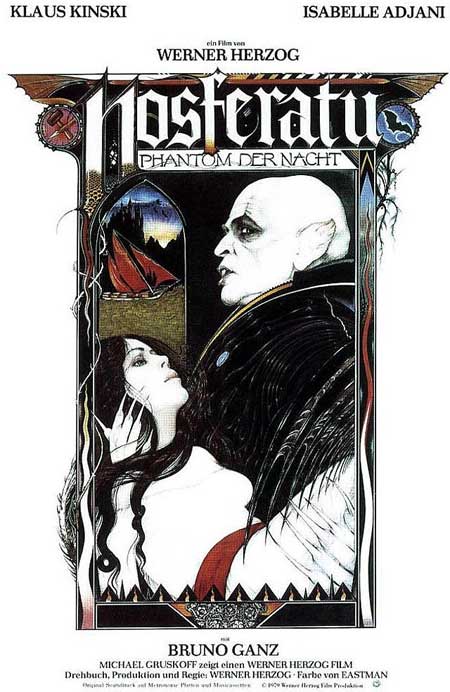
Werner Herzog’s 1979 remake is also gorgeous, but employs a more naturalistic style. Klaus Kinski plays Dracula. Two scenes–
In 2000, director E. Elias Merhige gave us the underrated gem Shadow of the Vampire, a fictionalized account of the making Murnau and his crew making the original Nosferatu. Willem Dafoe is amazing as Max Schreck–or really, as Orlok, rather, as he stays in makeup and costume for the entirety of the production. The movie is both hilarious and frightening, and at times even sadistic. It’s also of a piece with the wave of meta-textual films that surged in the last decade,like Being John Malkovich, I Heart Huckabees, and Adaptation.
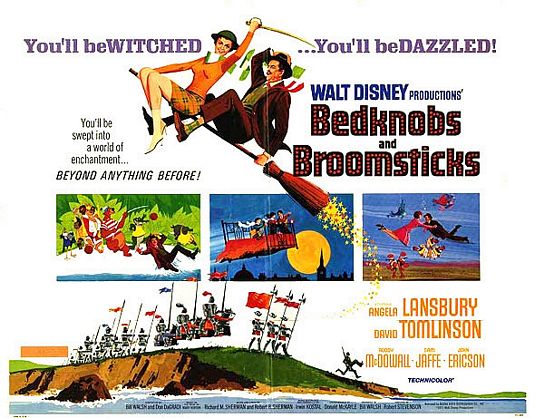
We’ve always felt that Bedknobs and Broomsticks is one of Disney’s most unfairly shunned films. This 1971 psychedelic classic combines live action with animation to tell the story of three young children billeted out during the blitz bombings of London in WWII (shades of Narnia). They’re sent to stay with Miss Price (Angela Landsbury), an amateur witch who’s none-too-pleased to take them in. They discover her (very amateurish) witchery, and blackmail her into bewitching a bed into a kind of magical transport. They set off to London, where they hook up with Professor Emelius Brown (David Tomlinson), a conman running a fake-wizarding school with a stolen spell book. The fivesome take off on a magical journey to find the other half of a spell, Substitutiary Locomotion, that Miss Price needs to make inanimate objects come alive (shades of “The Sorcerer’s Apprentice”). Their quest takes them to a number of strange places, including a lovely under-the-sea journey:
–and a soccer match with some animals:
The whole shebang climaxes (as you would expect) with a battle against Nazis:
Fun, fun, fun. An ersatz family on a magical quest, cheap, addictive songs, trippy animation, telekinesis–what’s not to love? And who can resist the metaphorical implications of a bed as a site of magical adventure? We watched this on VHS about a million times growing up. It’s far-superior to Mary Poppins, and something of a proto-Potter take on magic (okay, maybe that’s a stretch). In any case, it’s a fun family film for Halloween, and perhaps one that too-often goes overlooked. Highly recommended.
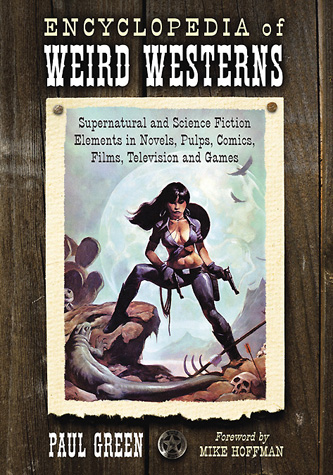
In the preface to his Encyclopedia of Weird Westerns, Paul Green gives us the following definition:
Weird Western
A Western story incorporating horror, supernatural or fantasy elements and themes and usually including one or more of the following subjects: vampires, werewolves, mummies, man-made monsters, mythological beings, mutants, zombies, ghosts, haunted buildings, demons, witchcraft, Satanism, possession, demonic or possessed animals, mentalists, shamans, visions, restless or wandering spirits, damned souls, enchantment, shape-shifters, angels, goblins, faeries, sirens, flying horses, psychopathic killers, psychological terror, dismembered moving body parts, spirit guides, the occult, hexes and curses, rising from the dead, talking animals, superhuman abilities, and magical potions.
This fun, hyperbolic list would seem to be enough to cover all possible entries in Green’s almanac of Western weirdness, yet his preface goes on to catalog and define the Weird Menace Western genre (popular in the 1930s), Science Fiction Westerns, Space Westerns, Steampunk Westerns, and even Weird Western Romance. Over the course of about 250 pages, Green attempts to catalog 0ver a 100 years of Weird Western stories, novels, pulps, radio shows, films, TV shows, RPGs and video games. And comic books. Lots and lots of comic books.
You probably know more Weird Westerns than might immediately come to mind. Green hits on examples that have had great mainstream success like Stephen King’s Gunslinger series, the old Kung Fu TV series, and Westworld. He also extends his entries to cover the many forays TV shows and comic books take into the Western Genre, from Star Trek: The Next Generation to MacGyver. Green even contends that Star Wars is a Space Western.
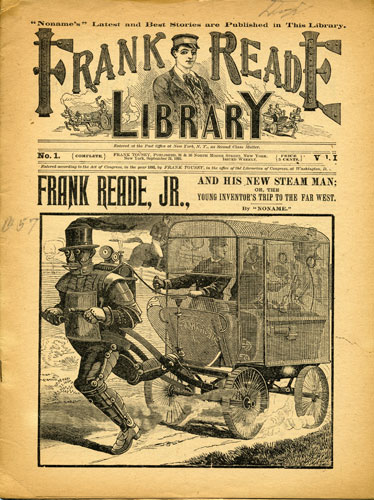
There’s mention of some of our favorite Westerns, like Cormac McCarthy’s Blood Meridian, Jim Jarmusch’s Dead Man, and Alejandro Jodorowsky’s El Topo, as well as the salient recognition that William Burroughsis a writer of Westerns. But for every comic or film or movie or TV show we’ve heard of, like Jonah Hex or The Adventures of Brisco County, Jr., there seem to be at least a dozen bizarre counterparts. How did we not know of the late-nineteenth century steampunk dime novels featuring hero Frank Reade (and either his Steam Man or Steam Horse)? Reade is such an oddity because it’s steampunk contemporaneous with its own setting–which sorta kinda makes it not steampunk but maybe kinda imaginative fiction. Or something. In any case, it’s intriguing.
If we hadn’t read Green’s Encyclopedia, we also wouldn’t have any knowledge of Gene Autry’s 1935 space opera film serial, The Phantom Empire. The twelve-parter apparently features Autry as a singing cowboy who has to save his Radio Ranch when speculators want to buy up the supply of Muranian radium under his property. Did we forget to add that the ancient civilization of Mu lives under Radio Ranch?
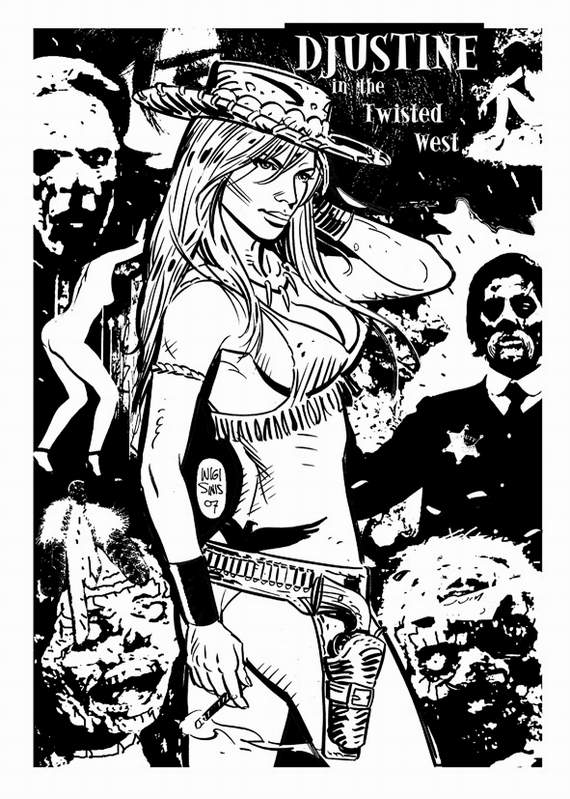
We also, somehow, were previously unaware of the Djustine comics before Green sought to correct this oversight by including two whole pages of images of the buxom lass. His description: “The sexually graphic adventures of the large-breasted female gunslinger Djustine and her fight with the supernatural, including zombies, vampires, and Diabla, daughter of Satan.” You had us at sexually graphic.
Okay, so we’re probably not going to go stock up on back issues of Djustine (it’s in Italian anyway . . . we swear we’re only interested in the tight-plotting!) . . . But most of the fun of Encyclopedia of Weird Western is simply in all the bizarre descriptions and images, of which there are plenty. I’m not an aficionado, so I can’t testify to the depth or analytic penetration of Green’s catalog, but I do know that I enjoy browsing through the book’s welcome weirdness. It’s a great entry point to any number of strange Google searches. And it’s also got me hunting for a torrent of the 1977 film, Welcome to Blood City.
You probably know by now whether or not any of this is up your alley. We’re digging it. Encyclopedia of Weird Westerns is now available from McFarland.
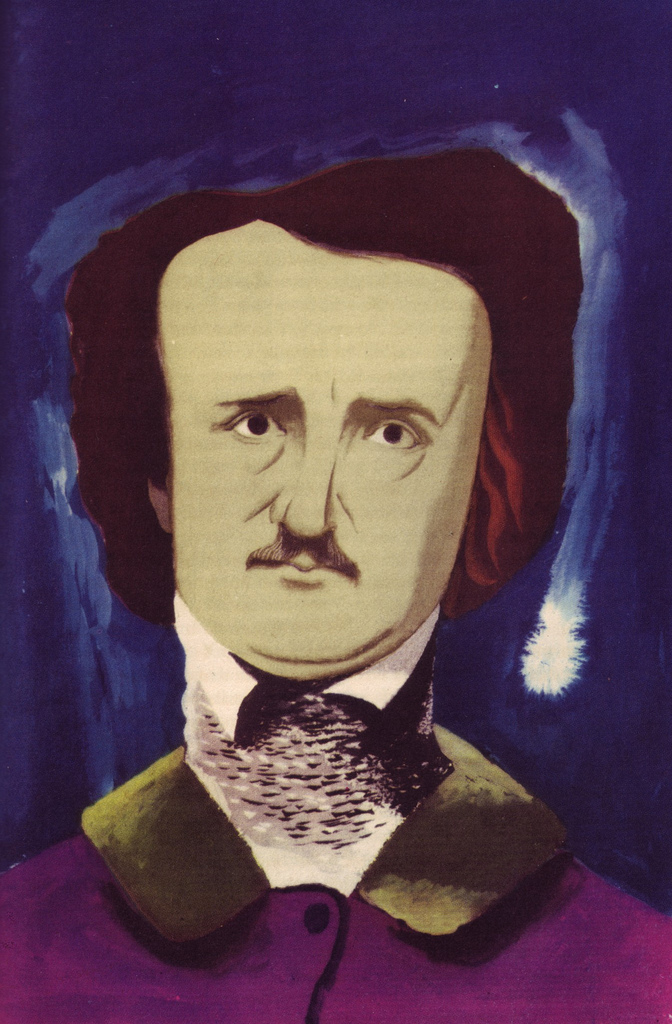
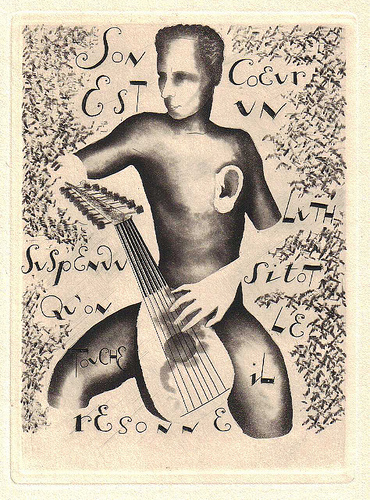
Image of Poe by Edward McKnight Kauffer, via A Journey Round My Skull
So, instead of grading essays like I should’ve today, I reread D. H. Lawrence’s essay on Edgar Allan Poe, collected in the former’s incomparable Studies in Classic American Literature. Lawrence asserts that Poe is “absolutely concerned with the disintegration-processes of his own psyche,” and goes on to try to prove this over a close-reading of some of Poe’s most famous tales, including “Ligeia” and “The Fall of the House of Usher.” Lawrence concludes his essay a bit melodramatically, but it seems to suit Poe’s depraved dilemmas:
But Poe knew only love, love, love, intense vibrations and heightened consciousness. Drugs, women, self destruction, but anyhow the prismatic ecstasy of heightened consciousness and sense of love, of flow. The human soul in him was beside itself. But it was not lost. He told us plainly how it was, so that we should know.
He was an adventurer into vaults and cellars and horrible underground passages of the human soul. He sounded the horror and warning of his own doom.
Doomed he was. He died wanting more love, and love killed him. A ghastly disease, love. Poe telling us of his disease: trying even to make his disease fair and attractive. Even succeeding.
Actually, a University of Maryland Medical Center study finds that rabies likely caused Poe’s death, not love, as Lawrence suggests. Rabies. Not drugs or women–or love–rabies. How’s that for a “disintegration-process”?
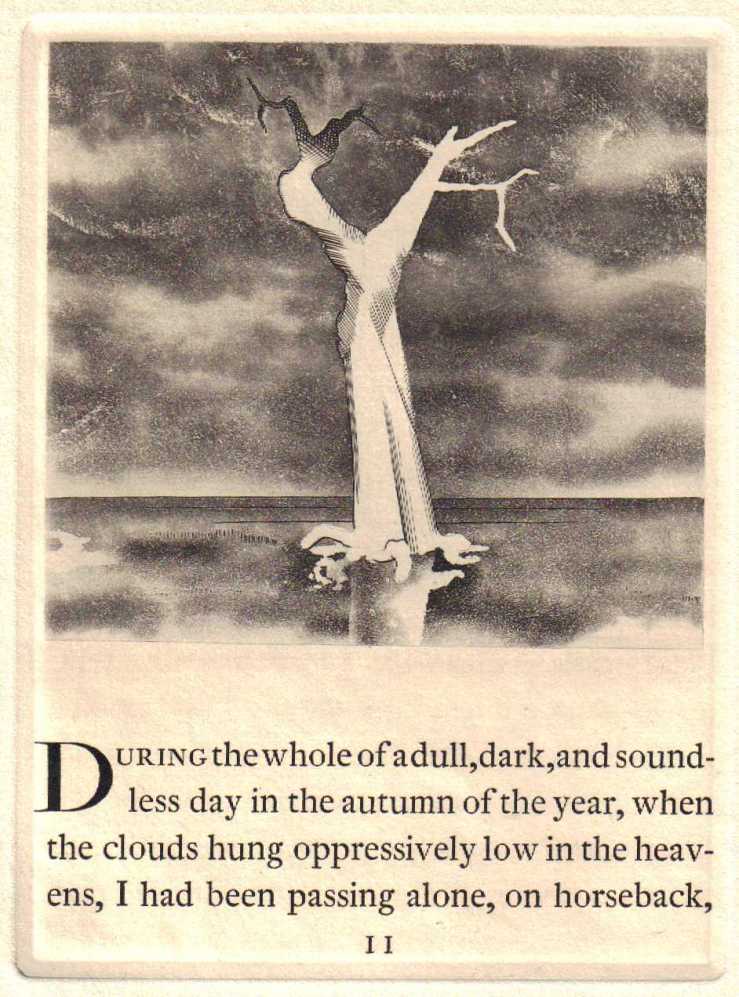
Excellent gallery of Alexander Alexeiff’s aquatint illustrations for Edgar Allan Poe’s short story, “The Fall of the House of Usher” via A Journey Round My Skull (what a fantastic site).
Alexeieff’s moody tints and stark designs beautifully match Poe’s gloomy tale. (We just love the lyrical and melancholy opening paragraph–all those thudding ds, low, somber o’s, and lilting ls). His rendering of Usher’s maniac composition is particularly ethereal:
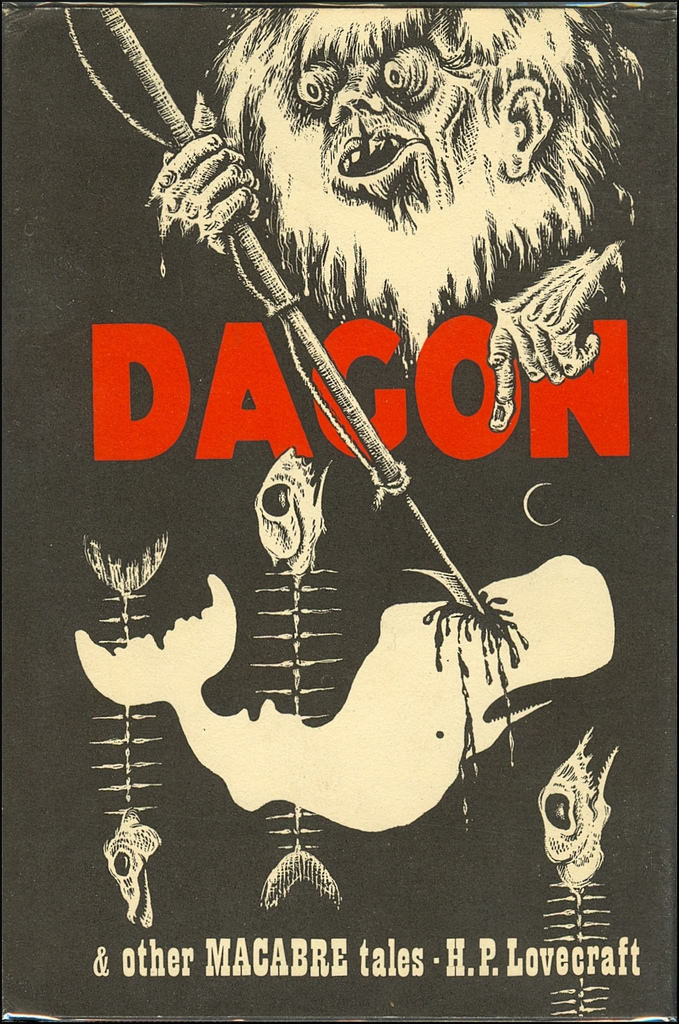
For more Halloween fun, check out this gallery of HP Lovecraft covers via Fantasy Ink. Spooky (and, alternately goofy) designs. We like this jam:
If you like your pictures moving and with sound yet still highly-stylized, check out Jim Henson’s “The Monster Maker,” from Henson’s short-lived but well-beloved series The Jim Henson Hour.
We often identify genre simply by its conventions and tropes, and, when October rolls round and we want scary stories, we look for vampires and haunted houses and psycho killers and such. And while there’s plenty of great stuff that adheres to the standard conventions of horror (Lovecraft and Poe come immediately to mind) let’s not overlook novels that offer horror just as keen as any genre exercise. We offer seven horror novels masquerading in other genres:
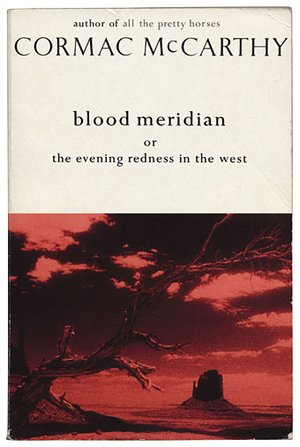
In our review (link above) we called Blood Meridian “a blood-soaked, bloodthirsty bastard of a book.” The story of the Glanton gang’s insane rampage across Mexico and the American Southwest in the 1850s is pure horror. Rape, scalping, dead mules, etc. And Judge Holden. . . [shivers].
Rushing to Paradise — J.G. Ballard
On the surface, Ballard’s 1994 novel Rushing to Paradise seems to be a parable about the hubris of ecological extremism that would eliminate humanity from any natural equation. Dr. Barbara and her band of misfit environmentalists try to “save” the island of St. Esprit from France’s nuclear tests. The group eventually begin living in a cult-like society with Dr. Barbara as its psycho-shaman center. As Dr. Barbara’s anti-humanism comes to outweigh any other value, the island devolves into Lord of the Flies insanity. Wait, should Lord of the Flies be on this list?
Okay. We know. This book ends up on every list we write. What can we do?
While there’s humor and pathos and love and redemption in Bolaño’s masterwork, the longest section of the book, “The Part about the Crimes,” is an unrelenting catalog of vile rapes, murders, and mutilations that remain unresolved. The sinister foreboding of 2666‘s narrative heart overlaps into all of its sections (as well as other Bolaño books); part of the tension in the book–and what makes Bolaño such a gifted writer–is the visceral tension we experience when reading even the simplest incidents. In the world of 2666, a banal episode like checking into a motel or checking the answering machine becomes loaded with Lynchian dread. Great horrific stuff.
King Lear — William Shakespeare
Macbethgets all the propers as Shakespeare’s great work of terror (and surely it deserves them). But Lear doesn’t need to dip into the stock and store of the supernatural to achieve its horror. Instead, Shakespeare crafts his terror at the familial level. What would you do if your ungrateful kids humiliated you and left you homeless on the heath? Go a little crazy, perhaps? And while Lear’s daughters Goneril and Regan are pure mean evil, few characters in Shakespeare’s oeuvre are as crafty and conniving as Edmund, the bastard son of Glouscester. And, lest we forget to mention, Lear features shit-eating, self-mutilation, a grisly tableaux of corpses, and an eye-gouging accompanied by one of the Bard’s most enduring lines: “Out vile jelly!” Peter Brook chooses to elide the gore in his staging of that infamous scene:
The Trial — Franz Kafka
Kafka captured the essential alienation of the modern world so well that we not only awarded him his own adjective, we also tend to forget how scary his stories are in light, perhaps, of their absurd familiarity. For our money, none surpasses his unfinished novel The Trial, the story of hapless Josef K., a bank clerk arrested by unknown agents for an unspecified crime. While much of K.’s attempt to figure out just who is charging him for what is hilarious in its absurdity, its also deeply dark and really creepy. K. attempts to find some measure of agency in his life, but is ultimately thwarted by forces he can’t comprehend–or even see for that matter. Nowhere is this best expressed than in the famous “Before the Law” episode. If you’re too lazy to read it, check out his animation with narration by the incomparable Orson Welles:
In our original review of Sanctuary (link above), we noted that “if you’re into elliptical and confusing depictions of violence, drunken debauchery, creepy voyeurism, and post-lynching sodomy, Sanctuary just might be the book for you.” There’s also a corn-cob rape scene. The novel is about the kidnapping and debauching of Southern belle Temple Drake by the creepy gangster Popeye–and her (maybe) loving every minute of it. The book is totally gross. We got off to a slow start with Faulkner. If you take the time to read our full review above (in which we make some unkind claims) please check out our retraction. In retrospect, Sanctuary is a proto-Lynchian creepfest, and one of the few books we’ve read that has conveyed a total (and nihilistic) sense of ickyness.
Great Apes — Will Self
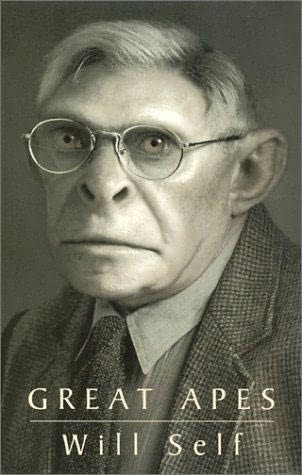
Speaking of ickiness…Self’s 1997 novel Great Apes made me totally sick. Nothing repulses me more than images of chimpanzees dressed as humans and Great Apes is the literary equivalent (just look at that cover). After a night of binging on coke and ecstasy, artist Simon Dykes wakes up to find himself in a world where humans and apes have switched roles. Psychoanalysis ensues. While the novel is in part a lovely satire of emerging 21st-century mores, its humor doesn’t outweigh its nightmare grotesquerie. Great Apes so deeply affected us that we haven’t read any of Self’s work since.
Edgar Allan Poe’s “The Tell-Tale Heart” is one of our all-time favorite scary stories. Poe’s story explores the troubled mind of a murderer suffering from manic bipolar depression. Or maybe it’s all about the suppression of dark secrets. Is the Evil Eye an “evil I”? I think so! Dig this great animation from 1953, featuring the vocal talents of James Mason:
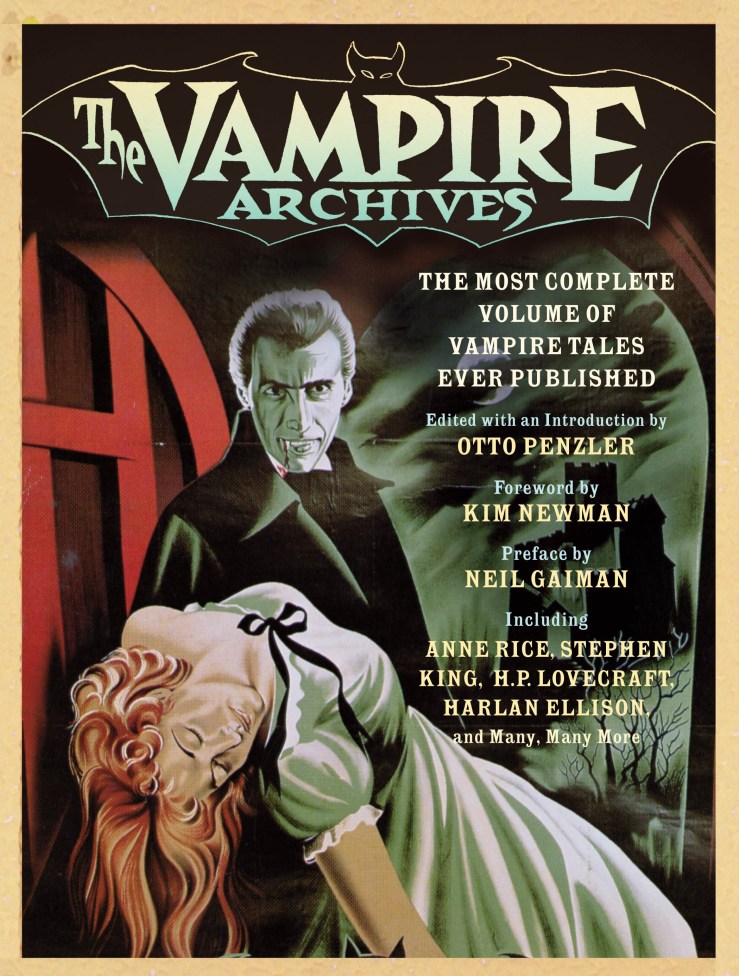
In his short foreword to Vintage’s massive, new, decidedly unshort The Vampire Archives, Neil Gaiman dryly observes, “And then, one day, they were everywhere. You couldn’t move for vampires. There were paranormal vampire romances and junior paranormal vampire romances . . . Everywhere vampires, stripped down like a simple metaphor for genitalia-free relationships.” We know that vampires are ubiquitous in the late oughties, whether its the turgid teen abstinence vampire theatrics of Twilight, HBO’s addictive interpretation of Charlaine Harris’s Sookie Stackhouse series, True Blood, the CW’s latest attempt to cash in, The Vampire Diaries or last year’s fantastic film Let The Right One In. Gamian’s theory for the thriving popularity of vampires (he agrees with Stephen King by-way-of Erica Jong that “Vampires . . . were the ultimate zipless fuck”) is as good as any, we suppose, but The Vampire Archives editor Otto Penzler is a bit more historical in his introduction to the volume, pointing beyond the traditionally-accepted notion that Stoker’s Draculais the first vampire story. Penzler brings up Lilith, the children of Hecate, Lamia, the Chinese monster Kian-si, brain-suckers of American Indian lore, the Scottish Glaistag, and the Brazilian jararaca–just to name a few. He also briefly discusses the lurid histories of Countess Elizabeth Bathory, who believed the blood of virgins would sustain her life, die-hard mad prophet Rasputin, and Vlad the Impaler, the historical basis of Count Dracula. Penzler’s eclectic overture here tellingly highlights the diversity of the 85-plus tales collected in the book.
There are “Pre-Dracula” stories here, like Edgar Allan Poe’s gloomy “Ligeia” and M.E. Braddon’s “Good Lady Ducayne,” as well as classic standards like Bram Stoker’s “Dracula’s Guest” and Jan Neruda’s “The Vampire.” Heavy-hitters like D.H. Lawrence and Guy de Maupassant are represented along with the pop fictions of Stephen King and Clive Barker. Especially welcome are Harlan Ellison’s insightful piece “Lonely Women Are the Vessels of Time” and Richard Matheson’s taut tale “Drink My Red Blood.” Writers often identified readily with genres other than horror, like Ray Bradbury, Tanith Lee, and Sir Arthur Conan Doyle also appear, along with a couple of Romantic poems by Goethe, Byron, and John Keats (while the inclusion of “La Belle Dame sans Merci” is great, it’s weird that The Vampire Archives doesn’t have just a little more room for Keats’s excellent “Lamia.” They could’ve also included Coleridge’s “Christabel,” but hey, we can hardly dispute their claim that the book is “The Most Complete Volume of Vampire Tales Ever Published”). Anne Rice pops up, naturally, with “The Master of Rampling Gate,” which wasn’t too emo for our icy blood. We also enjoyed H.P. Lovecraft’s creepy and sinuous story “The Hound.” Grave-robbers, weird amulets, ghoulish killers–great stuff.
If you can’t find enough to feed your need for vampire tales in The Vampire Archives, they’ve been kind enough to include what has to be, at 120 pages, one of the most extensive vampire bibliographies ever–although they note that their list does not include “comics, games, movies, plays, television, or radio programs.” While not every story here is gold, more than most of The Vampire Archives is great gothic fun, whether you dig pulp fiction or psychological realism in your horror. If you’re ready to take the next step past Twilight–you’re not a poseur, are you?–The Vampire Archives is an apt starting place.
October is here–time to read (or reread) favorite scary stories, watch our favorite horror films, and carve up Jack O’ Lanterns. We have a couple of spooky reviews coming up (vampires!) but in the meantime, those searching for a good horror read can troll through a few older posts. Biblioklept: Lazy blogging at its best since 2006.
Two of our favorite posts ever are analyses of the scary stories our students wrote for extra-credit in’06 and ’07. Not sure what happened in ’08, but the ’09 contest is in full effect, yo.
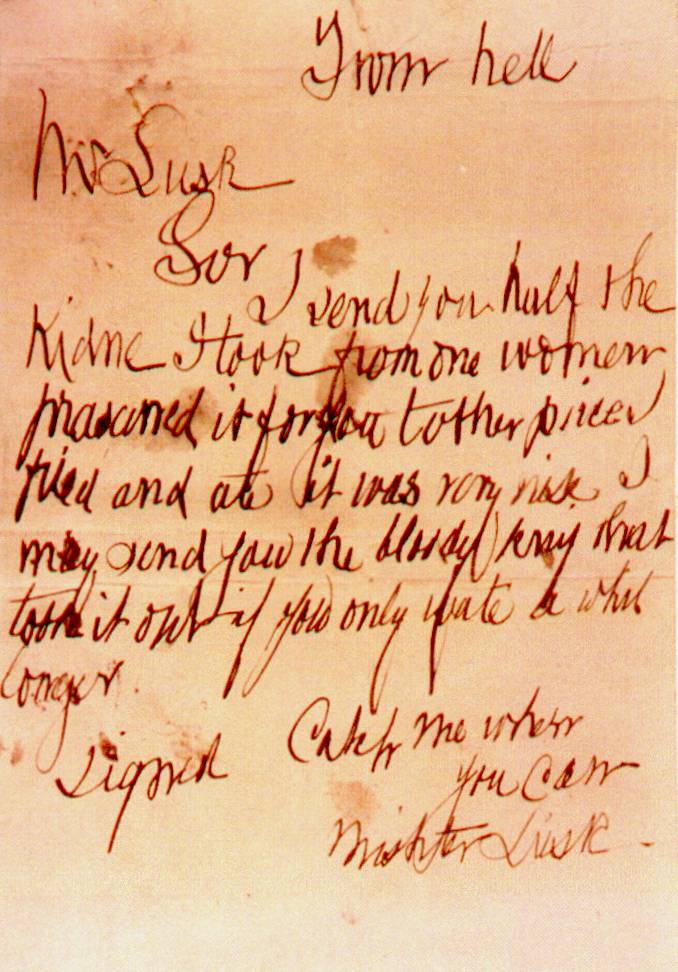
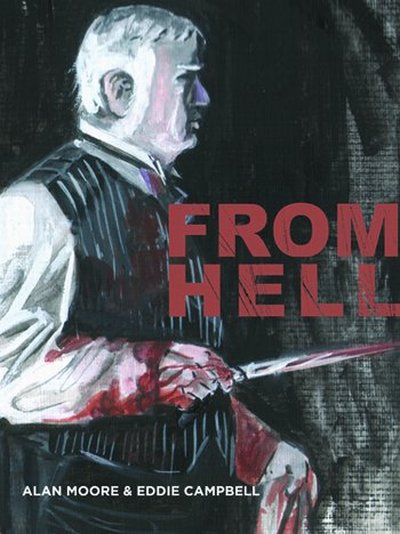
One of our favorite books ever is From Hell, by Eddie Campbell and Alan Moore. If you haven’t read it yet, that should be your sacred Halloween mission in ’09.
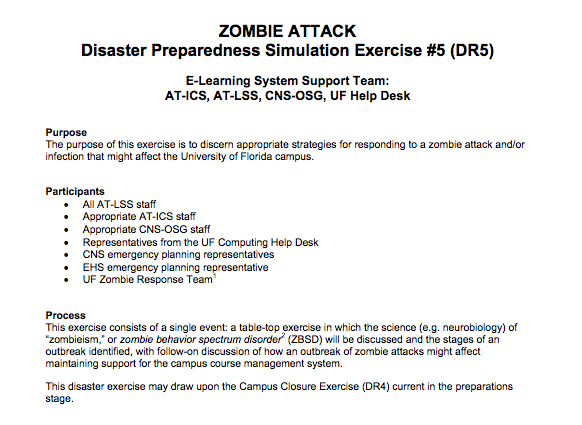
My glorious alma mater, the University of Florida, had a lovely zombie preparedness plan at their official website–up until a day or two ago. When university officials were alerted to the pdf (written in full academic language, complete with citations!) they quickly removed it. Too bad. It was really fun and funny. Don’t worry though, you can still download the official document here.
As non-scary (or at least not overtly-scary) reading goes, we’ve got a pretty big stack of books we vow to get through in October, including W.G. Sebald’s Austerlitz, Julio Cortázar’s Blow-up and Other Stories, and the newest issue of McSweeney’s. There’s also a ton of promos of upcoming releases to wade through.
Back to the scaries–check out the Brothers Quay illustrating His Name Is Alive’s “Are We Still Married?”:









 Biblioklept