“Frog in Prague” — Stephen Dixon

“Frog in Prague”

by

Stephen Dixon


They stand still. “And Kafka?” Howard says.

“Kafka is not buried here.”

“No? Because I thought—what I mean is the lady at my hotel’s tourist information desk—the Intercontinental over there—and also the one who sold me the ticket now, both told me—”

The man’s shaking his head, looks at him straight-faced. It’s up to you, his look says, if you’re going to give me anything for this tour. I won’t ask. I won’t embarrass you if you don’t give me a crown. But I’m not going to stand here all day waiting for it.

“Here, I want to give you something for all this.” He looks in his wallet. Smallest is a fifty note. Even if he got three-to-one on the black market, it’s still too much. He feels the change in his pocket. Only small coins. This guy’s done this routine with plenty of people, that’s for sure, and he’d really like not to give him anything.

“Come, come,” the man said.

“You understand?” Howard said. “For Kafka’s grave. Just as I told the lady at the ticket window, I’m sure the other parts of this ticket for the Old Synagogue and the Jewish Museum are all very interesting—maybe I’ll take advantage of it some other time—but what I really came to see—”

“Yes, come, come. I work here too. I will show you.”

Howard followed him up a stone path past hundreds of gravestones on both sides, sometimes four or five or he didn’t know how many of them pressed up or leaning against one another. The man stopped, Howard did and looked around for Kafka’s grave, though he knew one of these couldn’t be it. “You see,” the man said, “the governor at the time—it was the fourteenth century and by now there were twelve thousand people buried here. He said no when the Jewish elders of Prague asked to expand the cemetery. So what did the Jews do? They built down and up, not outwards, not away. They kept inside the original lines of the cemetery permitted them. Twelve times they built down and up till they had twelve of what do you call them in English, plateaus? Places?” and he moved his hand up in levels.

“Levels?”

“Yes, that would be right. Twelve of them and then the ground stopped and they also couldn’t go any higher up without being the city’s highest cemetery hill, so they couldn’t make any levels anymore.”

“So that accounts for these gravestones being, well, the way they are. All on top of one another, pressed togetherlike. Below ground there’s actually twelve coffins or their equivalents, one on top of—”

“Yes, yes, that’s so.” He walked on about fifty feet, stopped. “Another governor wouldn’t let the Jews in this country take the names of son-of anymore. Son of Isaac, Son of Abraham. They had to take, perhaps out of punishment, but history is not clear on this, the names of animals or things from the earth and so on.” He pointed to the stone relief of a lion at the top of one gravestone. “Lion, you see.” To a bunch of grapes on another stone: “Wine, this one. And others, if we took the time to look, all around, but of that historical era.”

“So that’s why the name Kafka is that of a bird if I’m not mistaken. Jackdaw, I understand it means in Czech. The Kafka family, years back, must have taken it or were given it, right? Which?”

“Yes, Kafka. Kafka.” Howard didn’t think by the man’s expression he understood. “Come, please.” They moved on another hundred feet or so, stopped. “See these two hands on the monument? That is the stone of one who could give blessings—a Cohen. No animal there, but his sign. Next to it,” pointing to another gravestone, “is a jaw.”

“A jaw?” The stone relief of this one was of a pitcher. “Jar, do you mean?”

“Yes. Jaw, jaw. That is a Levi, one who brings the holy water to wash the hands of a Cohen. That they are side by side is only a coincidence. On the next monument you see more berries but of a different kind than wine. Fertility.”

“Does that mean a woman’s buried here? Or maybe a farmer?”

“Yes. Come, come.” They went past many stones and sarcophagi. All of them seemed to be hundreds of years old and were crumbling in places. Most of the names and dates on them couldn’t be read. The newer section of the cemetery, where Kafka had to be buried, had to be in an area one couldn’t see from here. He remembered the photograph of the gravestone of Kafka and his parents. Kafka’s name on top—he was the first to go—his father’s and mother’s below his. It was in a recent biography of him he’d read, or at least read the last half of, not really being interested in the genealogical and formative parts of an artist’s life, before he left for Europe. The stone was upright, though the photo could have been taken many years ago, and close to several upright stones but not touching them. The names and dates on it, and also the lines in Hebrew under Kafka’s name, could be read clearly. It looked no different from any gravestone in an ordinary relatively old crowded Jewish cemetery. The one a couple of miles past the Queens side of the Fifty-ninth Street Bridge where some of his own family were buried.

The man walked, Howard followed him. “Here is the monument of Mordecai Maisel. It is much larger than the others because he was a very rich important man. More money than even the king, he had. The king would borrow from him when he needed it for public matters. Later, after he paid it back, he would say to him ‘Mordecai, what can I give you in return for this great favor?’ Mordecai would always say ‘Give not to me but to my people,’ and that did help to make life better in Prague for the Jews of that time. He was a good wealthy man, Mordecai Maisel. Come, come.”

They stopped at another sarcophagus. Hundreds of little stones had been placed on the ledges and little folded-up pieces of paper pushed into the crevices of it. “Here is Rabbi Low. As you see, people still put notes inside his monument asking for special favors from him.”

“Why, he was a mystic?”

“You don’t know of the famous Rabbi Löw?”

“No. I mean, his name does sound familiar, but I’m afraid my interest is mostly literature. Kafka. I’ve seen several of his residences in this neighborhood. Where he worked for so many years near the railroad station, and also that very little house on Golden Lane, I think it’s translated as, across the river near the castle. A couple of places where Rilke lived too.”

“So, literature, what else am I talking of here? The Golem. A world famous play. Well? Rabbi Low. Of the sixteenth century. He started it. He’s known all over.”

“I’ve certainly heard of the play. It was performed in New York City—in a theater in Central Park—last summer. I didn’t know it was Rabbi Low who started the legend.”

“Yes, he, he. The originator. Others may say other rabbis might have, but it was only Rabbi Low, nobody else. Then he knocked the Golem to pieces when it went crazy on him. Come, come.”

They went on. The man showed him the grave of the only Jewish woman in medieval Prague who had been permitted to marry nobil
ity. “Her husband buried here too?” Howard said. “No, of course not. It was out-of-religion. The permission she got to marry was from our elders. He’s somewhere else.” The stone of one of the mayors of the Jewish ghetto in seventeenth-century Prague. The stone of a well-known iron craftsman whose name the man had to repeat several times before Howard gave up trying to make it out but nodded he had finally understood. Then they came to the entrance again. After the man said Kafka wasn’t buried here and Howard said he wanted to give him something for all this, he finally gives him the fifty note, the man pockets it and Howard asks if he might know where Kafka is buried.

“Oh, in Strašnice cemetery. The Jewish part of it, nothing separate anymore. It isn’t far from here. You take a tube. Fifteen minutes and you are there,” and he skims one hand off the other to show how a train goes straight out to it. “It’s in walking distance from the station. On a nice day unlike today the walk is a simple and pleasant one. And once you have reached it you ask at the gate to see Kafka’s grave and someone there will show you around.”
Cast your jacket, noble dream, over the shoulders of the child (Pierre Senges)

From Studies of Silhouettes by Pierre Senges. English translation by Jacob Siefring. Get it from Sublunary Editions.

Let me recommend Antonio di Benedetto’s overlooked novel Zama

Let me recommend a novel for you.

The novel is Antonio di Benedetto’s Zama.

Zama was first published in Argentina in 1956.

NYRB published Esther Allen’s English translation in 2016. It is excellent.

What is Zama about?

Zama tells the brutally funny and often sad story of Don Diego de Zama, a bored and horny americano wasting away in the provincial backwaters of Paraguay. It’s the end of the world at the end of the 18th century, and there’s not a lot to do. Zama fills his time with schemes of lust and petty pride, shirking his job as a nominal governmental authority. He longs to be reunited with his wife and family in Buenos Aires, but seems to sabotage every opportunity to get back to them. He also longs for his glory days as a corregidor, putting down “the native rebellion” in the service of Spain’s imperial project. Zama is a confusing and confused character, frequently frustrating but also oddly sympathetic. He is a loser who does not seem to see that he is a loser, although life gives him every opportunity to come to this conclusion. As South African novelist J.M. Coetzee’s  puts it in his excellent in-depth review of the novel:

[Zama] is vain, maladroit, narcissistic, and morbidly suspicious; he is prone to accesses of lust and fits of violence, and endowed with an endless capacity for self-deception.

He is also the author of himself, in a double sense. First, everything we hear about him comes from his own mouth, including such derogatory epithets as “swaggering” and “dogslayer,” which suggest a certain ironic self-awareness. Second, his day-to-day actions are dictated by the promptings of his unconscious, or at least his inner self, over which he makes no effort to assert conscious control. His narcissistic pleasure in himself includes the pleasure of never knowing what he will get up to next, and thus of being free to invent himself as he goes along.

Coetzee captures the joy of reading Zama in those last few lines: It’s the joy in watching a first-person perspective invent itself in shambling picaresque adventures born of sheer boredom. It’s the pleasure of seeing an asshole who refuses to acknowledge that he is an asshole try to pretend that he is not an asshole—all in a kind of language that is simultaneously romantic and flat.

Let me give you a taste of that language, reader. Here are the opening bars of the novel:

I left the city and made my way downriver alone, to meet the ship I awaited without knowing when it would come.

I reached the old wharf, that inexplicable structure. The city and its harbor have always been where they are, a quarter-league farther upriver.

I observed, among its pilings, the writhing patch of water that ebbs between them.

A dead monkey, still whole, still undecomposed, drifted back and forth with a certain precision upon those ripples and eddies without exit. All his life the water at forest’s edge had beckoned him to a journey, a journey he did not take until he was no longer a monkey but only a monkey’s corpse. The water that bore him up tried to bear him away, but he was caught among the posts of the decrepit wharf and there he was, ready to go and not going. And there we were.

There we were: Ready to go and not going.

The ship that won’t come in, the floating dead monkey, the state of unknowing—these abject and negative motifs are the paradoxical genesis of the novel. The clipped repetitions, culminating in “Ready to go and not going” recall Samuel Beckett, whom translator Esther Allen acknowledges as “a perfect counterpoint to the prose voice of Zama” in her introduction.

In addition to Beckett, easy points of comparison are Dostoevsky, Camus, Borges, and especially Kafka. In his perceptive analysis of Zama, critic Benjamin Kunkel points out the novel’s existential core, absurdist peripheries, and realistic contours:

As with novels by Kafka, Camus, Sartre, and Beckett, the story’s preoccupation is the tension between human freedom and constraining circumstance. Zama, a man as impetuous as he is stuck, resembles other existentialist antiheroes as he swings between spellbound passivity and sudden lunges into action. But Don Diego never seems like a figure in an allegory, like K. in The Castle; or an ambulatory philosophical argument, like Roquentin in Nausea. Zama induces a rare feeling—to put it as naïvely as possible—of the main character’s realness. Don Diego is consistently surprised by his own behavior, but not as much as he would like. His abrupt acts and swerving meditations have an air of unplotted inevitability about them. He is a character more convincing than coherent, and more persuasive than intelligible.

These lifelike moments of “unplotted inevitability” are enthralling. Di Benedetto doesn’t just show us Zama seeing, he shows us Zama seeing what he is seeing. He shows us consciousness at work—or rather, consciousness in distress. In a representative passage which can stand alone as a bizarre parable in search of a moral, Zama, having lost all his money betting on horses, awakes from a drunken stupor to witness a spider crawling on a fellow drunkard: 

The spider approached the drunk. From a quarter vara away, these spiders can leap and bite so that if taken by surprise, even a man who’s awake has no time to defend himself. I had no wish to move. I could crush it with my boot but would postpone until the last.

The spider moved toward the sleeping head and I watched to see whether anything out of the ordinary would transpire. Would the man—obedient to some mysterious warning instinct—suddenly awaken and kill it? He did not. Now the insect was crawling in his hair. I didn’t see it climb up; I saw it there on him and then I was quite certain I should do nothing.

The episode continues in this way, building in tension as the large spider crawls over the man’s face while Zama remains inert and fascinated by his own inertia—until the drunken man absently bats the spider from his face. Zama is paradoxically stunned by this anticlimax:

I reviewed the episode. At no point had I felt any emotion, except when I imagined the man had wakened and was about to deliver himself of an entirely justified diatribe against me.

The passage is representative of Di Benedetto’s rhetorical skill—he gives us a deceptively lucid first-person narrator who articulately elides key information, both from the reader and himself. Zama refuses to name his intense desire to see the spider bite the man. Additionally, his emotional identification is bound to righteous anger, the righteous anger appropriate to the would-be-bitten drunkard. Instead of genuine pathos, Zama would usurp this man’s self-righteous anger, the anger that he feels all the time at his (literal and figurative) position in life. But the spider bite that would license self-righteousness never comes. Basically, Zama just wants something to happen.

And that’s the plot of Zama, more or less. Our (anti-)hero’s picaresque jabs at adventure and romance are sent awry or thwarted, usually by his own loutish passions. Zama’s would-be escapades unravel, that is, until the book’s final section, 1799

–Okay, let me digress momentarily: Zama, a slim 200 pages, is structured into three sections: 17901794, and 1799. The connective tissue between these sections hangs transparent, nearly invisible, but nevertheless accessible via small clues, motifs, scant threads. Di Benedetto gives us modernism in the last decade of the 18th century, boredom that tiptoes around the abyss of insanity. Rereading the three sections is a joy. But let me return to the central thread—

Zama’s would-be adventures unravel or collapse until the book’s final section, 1799, when Di Benedetto puts our hero in genuine harm’s way (and cunningly exfiltrates any opportunity for overt heroism on Zama’s part). The novel earns its drive toward what I take to be its central question: “Do you want to live?”

Di Benedetto hides his answer to this question not so much in the central figure Zama, but rather in Zama’s put-upon secretary, his mozo Manuel Fernández. Fernández is, at least for me, the secret star of the novel. When we first meet Fernández, Zama joins in gently mocking him at the lead of their boss, the governor. They tease Fernández when he tells them that he is writing a novel. “Make sons, Manuel, not books,” admonishes the governor, but the clerk replies: “I want to realize myself in myself…Children realize themselves, but whether for good or ill we don’t know. Books are made only for truth and beauty.” Later, Zama, in more of a ruse than in good faith, asks Fernández to read some of his book. He finds the “entangled” prose “incomprehensible,” to which Fernández replies: “the first man and the first lizard were each incomprehensible, as well, to all those who surrounded them.” Fernández declares that he writes for “no master.” If he has no audience today, his pages will be understood by his “grandchildren’s grandchildren…Things will be different then.” Later, Fernández reveals that he’s given away his manuscript to an old man, a stranger suffering boredom while waiting for a delayed ship to take him somewhere other than the end of the world.

Fernández sees himself as an author doomed to obscurity in the present, an author who awaits a future that will catch up to his originary vision. Perhaps it’s a bit much to suggest he’s a stand-in for Di Benedetto, but there are traces here. Above, I cited Benjamin Kunkel’s essay on Zama“A Neglected South American Masterpiece,” and J.M. Coetzee’s review, “A Great Writer We Should Know.” Those titles point to the novel’s obscurity, an obscurity which I sense is now being (if in increments) reversed. Esther Allen’s English translation obviously opens Zama to an even wider audience, and Argentine director Lucrecia Martel is apparently adapting the novel to film. But it’s perhaps Roberto Bolaño, a writer who time caught up to, however too late, who helped guide new readers—however obscurely—to Zama. In Bolaño’s 1997 short story “Sensini,” the titular character is a clear transposition of Di Benedetto, a cult author, a writer’s writer:

The novel was the kind of book that circulates by word of mouth. Entitled Ugarte, it was about a series of moments in the life of Juan de Ugarte, a bureaucrat in the Viceroyalty of the Rio de la Plata at the end of the eighteenth century. Some (mainly Spanish) critics had dismissed it as Kafka in the colonies, but gradually the novel had made its way, and by the time I came across Sensini’s name in the Alcoy anthology, Ugarte had recruited a small group of devoted readers, scattered around Latin America and Spain, most of whom knew each other, either as friends or as gratuitously bitter enemies.

Thank goodness, or thank evil, or thank boredom: thanks for word of mouth, for friends and enemies alike (as long as they have good taste); thanks for writer’s writers (and writer’s writer’s writers) and the cult books they transmit to us—like Zama.

Zama is a cult novel that deserves a larger cult. After two false starts (I admit I misread the voice, missing the humor), I read Di Benedetto’s novel in a kind of hunger. Then I read it again. Then I wrote this thing, to tell you, dear reader, that you should read it too. Very highly recommended.

[Ed. note–Biblioklept originally ran this review in April, 2017.]

“Kafka. Pure Kafka” (From Ishmael Reed’s The Last Days of Louisiana Red)

img_2323

He was a blonde. He lay in the bed, tossing turning. his room. What was that odor? The pungent odor of middle-class perfume making the air misty. He didn’t feel right. His hair. What on earth was the matter with his hair? It was long and was covering the pillow. The pillows? They had a flower print and were pink. Pink? He rose in his bed and his breasts jiggled. BREASTS? THE BREASTS?? He looked back into the mirror next to the bed and his mouth made a black hollow hole of horror. “O MY GOD. MY GOD.” He was a woman. You know what he said next, don’t you, reader? He’s from New York and so . . . you guessed it! “Kafka. Pure Kafka,” he said. A feeling crept over him. Tingly. What could he do? He felt like screaming, but he couldn’t scream. Was that someone coming coming down the hall? He ran and jumped back into the bed, pulled the covers up to his neck and pretended to be asleep.

From Ishmael Reed’s 1974 novel The Last Days of Louisiana Red. 

Let me recommend Antonio di Benedetto’s overlooked novel Zama

Let me recommend a novel for you.

The novel is Antonio di Benedetto’s Zama.

Zama was first published in Argentina in 1956.

NYRB published Esther Allen’s English translation in 2016. It is excellent.

What is Zama about?

Zama tells the brutally funny and often sad story of Don Diego de Zama, a bored and horny americano wasting away in the provincial backwaters of Paraguay. It’s the end of the world at the end of the 18th century, and there’s not a lot to do. Zama fills his time with schemes of lust and petty pride, shirking his job as a nominal governmental authority. He longs to be reunited with his wife and family in Buenos Aires, but seems to sabotage every opportunity to get back to them. He also longs for his glory days as a corregidor, putting down “the native rebellion” in the service of Spain’s imperial project. Zama is a confusing and confused character, frequently frustrating but also oddly sympathetic. He is a loser who does not seem to see that he is a loser, although life gives him every opportunity to come to this conclusion. As South African novelist J.M. Coetzee’s  puts it in his excellent in-depth review of the novel:

[Zama] is vain, maladroit, narcissistic, and morbidly suspicious; he is prone to accesses of lust and fits of violence, and endowed with an endless capacity for self-deception.

He is also the author of himself, in a double sense. First, everything we hear about him comes from his own mouth, including such derogatory epithets as “swaggering” and “dogslayer,” which suggest a certain ironic self-awareness. Second, his day-to-day actions are dictated by the promptings of his unconscious, or at least his inner self, over which he makes no effort to assert conscious control. His narcissistic pleasure in himself includes the pleasure of never knowing what he will get up to next, and thus of being free to invent himself as he goes along.

Coetzee captures the joy of reading Zama in those last few lines: It’s the joy in watching a first-person perspective invent itself in shambling picaresque adventures born of sheer boredom. It’s the pleasure of seeing an asshole who refuses to acknowledge that he is an asshole try to pretend that he is not an asshole—all in a kind of language that is simultaneously romantic and flat.

Let me give you a taste of that language, reader. Here are the opening bars of the novel:

I left the city and made my way downriver alone, to meet the ship I awaited without knowing when it would come.

I reached the old wharf, that inexplicable structure. The city and its harbor have always been where they are, a quarter-league farther upriver.

I observed, among its pilings, the writhing patch of water that ebbs between them.

A dead monkey, still whole, still undecomposed, drifted back and forth with a certain precision upon those ripples and eddies without exit. All his life the water at forest’s edge had beckoned him to a journey, a journey he did not take until he was no longer a monkey but only a monkey’s corpse. The water that bore him up tried to bear him away, but he was caught among the posts of the decrepit wharf and there he was, ready to go and not going. And there we were.

There we were: Ready to go and not going.

The ship that won’t come in, the floating dead monkey, the state of unknowing—these abject and negative motifs are the paradoxical genesis of the novel. The clipped repetitions, culminating in “Ready to go and not going” recall Samuel Beckett, whom translator Esther Allen acknowledges as “a perfect counterpoint to the prose voice of Zama” in her introduction.

In addition to Beckett, easy points of comparison are Dostoevsky, Camus, Borges, and especially Kafka. In his perceptive analysis of Zama, critic Benjamin Kunkel points out the novel’s existential core, absurdist peripheries, and realistic contours:

As with novels by Kafka, Camus, Sartre, and Beckett, the story’s preoccupation is the tension between human freedom and constraining circumstance. Zama, a man as impetuous as he is stuck, resembles other existentialist antiheroes as he swings between spellbound passivity and sudden lunges into action. But Don Diego never seems like a figure in an allegory, like K. in The Castle; or an ambulatory philosophical argument, like Roquentin in Nausea. Zama induces a rare feeling—to put it as naïvely as possible—of the main character’s realness. Don Diego is consistently surprised by his own behavior, but not as much as he would like. His abrupt acts and swerving meditations have an air of unplotted inevitability about them. He is a character more convincing than coherent, and more persuasive than intelligible.

These lifelike moments of “unplotted inevitability” are enthralling. Di Benedetto doesn’t just show us Zama seeing, he shows us Zama seeing what he is seeing. He shows us consciousness at work—or rather, consciousness in distress. In a representative passage which can stand alone as a bizarre parable in search of a moral, Zama, having lost all his money betting on horses, awakes from a drunken stupor to witness a spider crawling on a fellow drunkard: 

The spider approached the drunk. From a quarter vara away, these spiders can leap and bite so that if taken by surprise, even a man who’s awake has no time to defend himself. I had no wish to move. I could crush it with my boot but would postpone until the last.

The spider moved toward the sleeping head and I watched to see whether anything out of the ordinary would transpire. Would the man—obedient to some mysterious warning instinct—suddenly awaken and kill it? He did not. Now the insect was crawling in his hair. I didn’t see it climb up; I saw it there on him and then I was quite certain I should do nothing.

The episode continues in this way, building in tension as the large spider crawls over the man’s face while Zama remains inert and fascinated by his own inertia—until the drunken man absently bats the spider from his face. Zama is paradoxically stunned by this anticlimax:

I reviewed the episode. At no point had I felt any emotion, except when I imagined the man had wakened and was about to deliver himself of an entirely justified diatribe against me.

The passage is representative of Di Benedetto’s rhetorical skill—he gives us a deceptively lucid first-person narrator who articulately elides key information, both from the reader and himself. Zama refuses to name his intense desire to see the spider bite the man. Additionally, his emotional identification is bound to righteous anger, the righteous anger appropriate to the would-be-bitten drunkard. Instead of genuine pathos, Zama would usurp this man’s self-righteous anger, the anger that he feels all the time at his (literal and figurative) position in life. But the spider bite that would license self-righteousness never comes. Basically, Zama just wants something to happen.

And that’s the plot of Zama, more or less. Our (anti-)hero’s picaresque jabs at adventure and romance are sent awry or thwarted, usually by his own loutish passions. Zama’s would-be escapades unravel, that is, until the book’s final section, 1799

–Okay, let me digress momentarily: Zama, a slim 200 pages, is structured into three sections: 17901794, and 1799. The connective tissue between these sections hangs transparent, nearly invisible, but nevertheless accessible via small clues, motifs, scant threads. Di Benedetto gives us modernism in the last decade of the 18th century, boredom that tiptoes around the abyss of insanity. Rereading the three sections is a joy. But let me return to the central thread—

Zama’s would-be adventures unravel or collapse until the book’s final section, 1799, when Di Benedetto puts our hero in genuine harm’s way (and cunningly exfiltrates any opportunity for overt heroism on Zama’s part). The novel earns its drive toward what I take to be its central question: “Do you want to live?”

Di Benedetto hides his answer to this question not so much in the central figure Zama, but rather in Zama’s put-upon secretary, his mozo Manuel Fernández. Fernández is, at least for me, the secret star of the novel. When we first meet Fernández, Zama joins in gently mocking him at the lead of their boss, the governor. They tease Fernández when he tells them that he is writing a novel. “Make sons, Manuel, not books,” admonishes the governor, but the clerk replies: “I want to realize myself in myself…Children realize themselves, but whether for good or ill we don’t know. Books are made only for truth and beauty.” Later, Zama, in more of a ruse than in good faith, asks Fernández to read some of his book. He finds the “entangled” prose “incomprehensible,” to which Fernández replies: “the first man and the first lizard were each incomprehensible, as well, to all those who surrounded them.” Fernández declares that he writes for “no master.” If he has no audience today, his pages will be understood by his “grandchildren’s grandchildren…Things will be different then.” Later, Fernández reveals that he’s given away his manuscript to an old man, a stranger suffering boredom while waiting for a delayed ship to take him somewhere other than the end of the world.

Fernández sees himself as an author doomed to obscurity in the present, an author who awaits a future that will catch up to his originary vision. Perhaps it’s a bit much to suggest he’s a stand-in for Di Benedetto, but there are traces here. Above, I cited Benjamin Kunkel’s essay on Zama“A Neglected South American Masterpiece,” and J.M. Coetzee’s review, “A Great Writer We Should Know.” Those titles point to the novel’s obscurity, an obscurity which I sense is now being (if in increments) reversed. Esther Allen’s English translation obviously opens Zama to an even wider audience, and Argentine director Lucrecia Martel is apparently adapting the novel to film. But it’s perhaps Roberto Bolaño, a writer who time caught up to, however too late, who helped guide new readers—however obscurely—to Zama. In Bolaño’s 1997 short story “Sensini,” the titular character is a clear transposition of Di Benedetto, a cult author, a writer’s writer:

The novel was the kind of book that circulates by word of mouth. Entitled Ugarte, it was about a series of moments in the life of Juan de Ugarte, a bureaucrat in the Viceroyalty of the Rio de la Plata at the end of the eighteenth century. Some (mainly Spanish) critics had dismissed it as Kafka in the colonies, but gradually the novel had made its way, and by the time I came across Sensini’s name in the Alcoy anthology, Ugarte had recruited a small group of devoted readers, scattered around Latin America and Spain, most of whom knew each other, either as friends or as gratuitously bitter enemies.

Thank goodness, or thank evil, or thank boredom: thanks for word of mouth, for friends and enemies alike (as long as they have good taste); thanks for writer’s writers (and writer’s writer’s writers) and the cult books they transmit to us—like Zama.

Zama is a cult novel that deserves a larger cult. After two false starts (I admit I misread the voice, missing the humor), I read Di Benedetto’s novel in a kind of hunger. Then I read it again. Then I wrote this thing, to tell you, dear reader, that you should read it too. Very highly recommended.

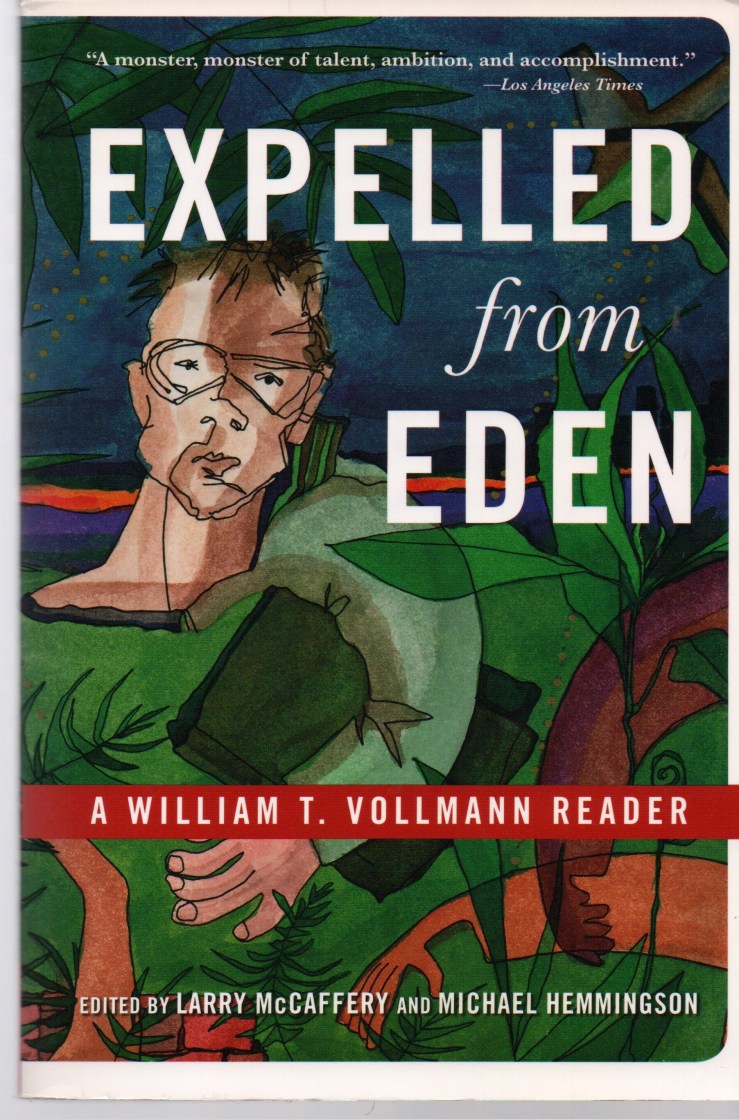
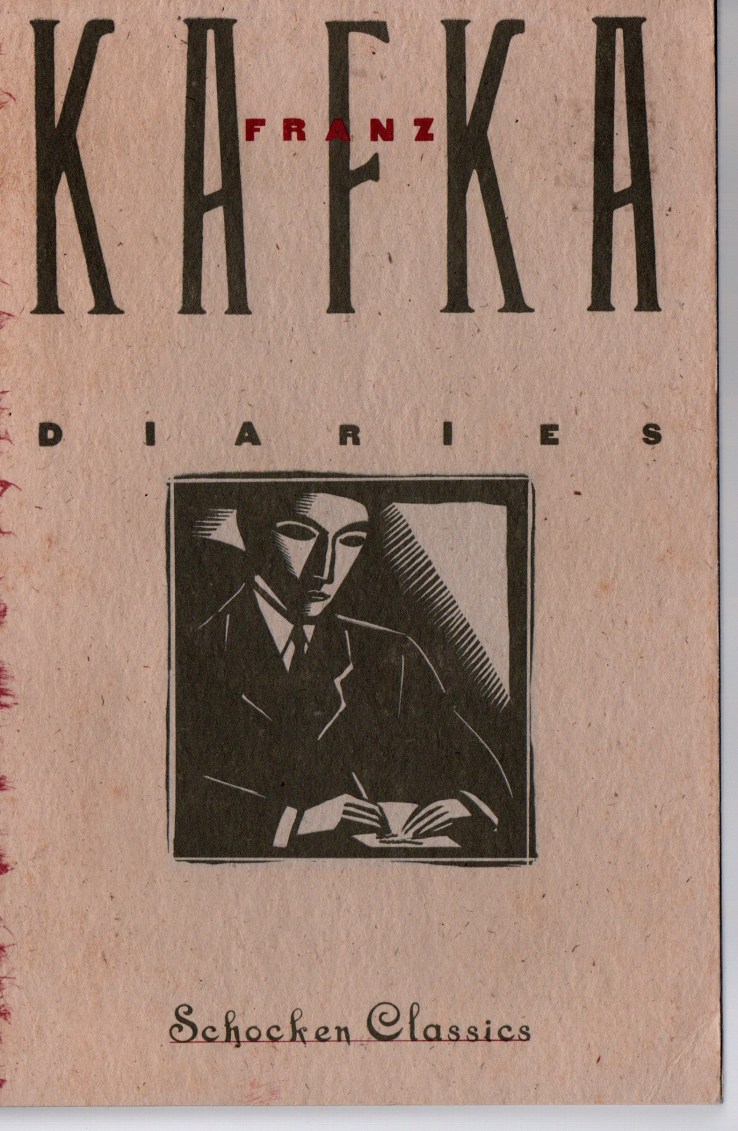
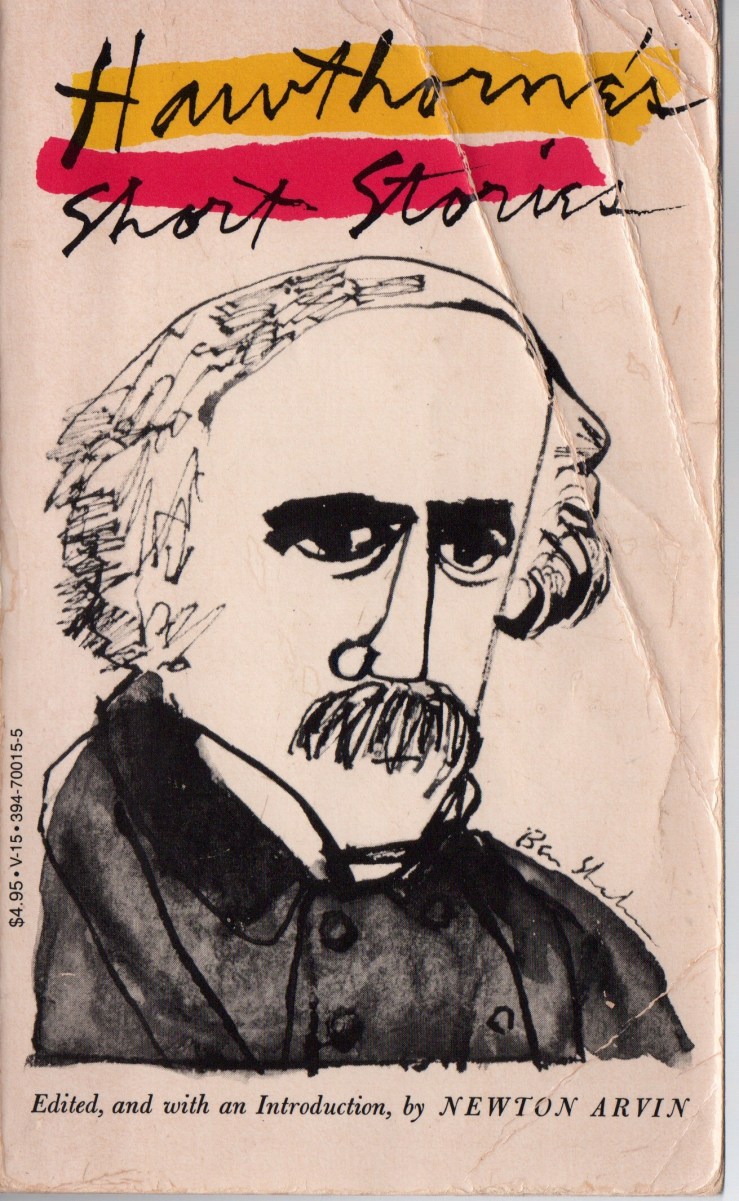
Three Books

img_3394

Expelled from Eden: A William T. Vollmann Reader by William T. Vollmann. Edited by Larry McCaffery and Michael Hemmingson. 2004 trade paperback from Thunder’s Mouth Press/Avalon Publishing. Cover design by David Riedy; cover art by Moira Brown.

This book features an illustration of its author on the cover. It is also a book I can dip into at any time.

img_3392

Diaries by Franz Kafka. English translation by Joseph Kresh and Martin Greenberg (with Hannah Arendt). Trade paperback by Schocken, 1988. Cover design by Louise Fili. Cover illustration by Anthony Russo.

This book features an illustration of its author on the cover. It is also a book I can dip into at any time.

img_3391

Hawthorne’s Short Stories by Nathaniel Hawthorne. Edited by Newton Arvin. Mass market paperback by Vintage. No designer/artist credited, and I can’t make out the signature over Hawthorne’s left shoulder. But this blog’s readers are smart and have good taste and identified the artist as Ben Shanh (I should’ve recognized the signature, after posting Shanh’s painting Peter and the Wolf on this blog a few years ago). This book is close to falling apart.

This book features an illustration of its author on the cover. It is also a book I can dip into at any time.

Sunday, 19 July, slept, awoke, slept, awoke, miserable life (Kafka)

Sunday, 19 July, slept, awoke, slept, awoke, miserable life. When I think about it, I must say that my education has done me great harm in some respects. I was not, as a matter of fact, educated in any out-of-the-way place, in a ruin, say, in the mountains – something against which in fact I could not have brought myself to say a word of reproach. In spite of the risk of all my former teachers not understanding this, I should prefer most of all to have been such a little dweller in the ruins, burnt by the sun which would have shone for me there on the tepid ivy between the remains on every side; even though I might have been weak at first under the pressure of my good qualities, which would have grown tall in me with the might of weeds.

From Franz Kafka’s July 19th, 1920 diary entry. From The Diaries of Franz Kafka. Translated from the German by Joseph Kresh.

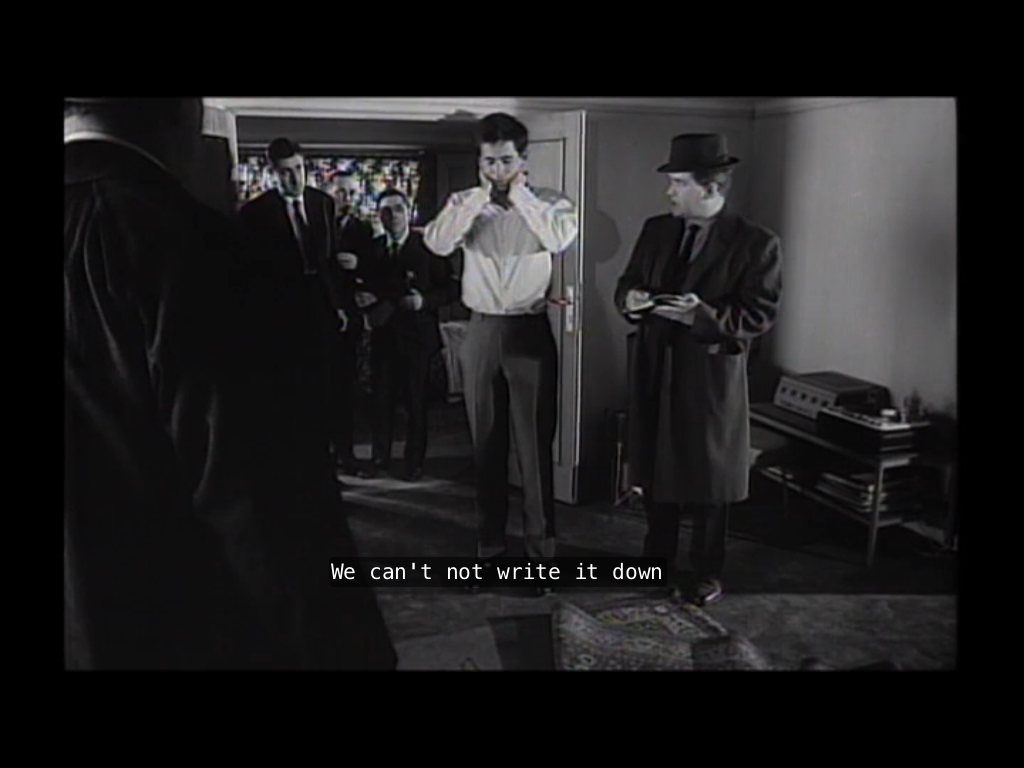
Can’t not write it down 


Incapable of writing even one word (Kafka diary entry, 8 April 1914)

8 April. Yesterday incapable of writing even one word. Today no better. Who will save me? And the turmoil in me, deep down, scarcely visible; I am like a living lattice-work, a lattice that is solidly planted and would like to tumble down.

Today in the coffee-house with Werfel. How he looked from the distance, seated at the coffee-house table. Stooped, half reclining even in the wooden chair, the beautiful profile of his face pressed against his chest, his face almost wheezing in its fullness (not really fat); entirely indifferent to the surroundings, impudent, and without flaw. His dangling glasses by contrast make it easier to trace the delicate outlines of his face.


From the diaries of Franz Kafka. The entry is from 8 April 1914. English translation by Martin Greenberg.

Speaking of dancers (Kafka)

The necessity of speaking of dancers with exclamation marks. Because in that way one imitates their motion, because one remains in the rhythm and the thought does not then interfere with the enjoyment, because then the action always comes at the end of the sentence and prolongs its effect better.

From Franz Kafka’s diary entry, 16 March 1912.

The impenetrable outline of human bodies is horrible (Kafka’s diary, Oct 30, 1921)

30 October. In the afternoon to the theatre, Pallenberg.
The possibilities within me, I won’t say to act or write The Miser, but to be the miser himself. It would need only a sudden determined movement of my hands, the entire orchestra gazes in fascination at the spot above the conductor’s stand where the baton will rise.
Feeling of complete helplessness.
What is it that binds you more intimately to these impenetrable, talking, eye-blinking bodies than to any other thing, the penholder in your hand, for example? Because you belong to the same species? But you don’t belong to the same species, that’s the very reason why you raised this question.
The impenetrable outline of human bodies is horrible.
The wonder, the riddle of my not having perished already, of the silent power guiding me. It forces one to this absurdity: ‘Left to my own resources, I should have long ago been lost.’ My own resources.

From Franz Kafka’s diary entry of October 30, 1921.

“He’s been reading Kafka again, hasn’t he?”

kafka gauld

An Excerpt From The Chapter “Mycobacterium tuberculosis” in Reiner Stach’s Kafka: The Years of Inight

tumblr_my52p06mUb1qzst69o1_1280


They had a difficult time with Kafka. His statements about the dangerous illness seem oddly self-assured, sensory, and at times downright theatrical, even to modern readers who have internalized the paradoxical forms of expression of literary modernity. But when we look over the correspondence of that little circle, it seems equally odd that Brod, Weltsch, and Baum had not developed any real feeling for Kafka’s psychological volatility after more than a decade of close personal contact, or understood his vulnerable, literally exposed life and his sense of reality, maintained in spite of it all. This sense of reality was what told him what to do and what not to do for his illness. But it was a far more basic need, over which he had little control, that compelled him to derive meaning from what had happened.

Continue reading “An Excerpt From The Chapter “Mycobacterium tuberculosis” in Reiner Stach’s Kafka: The Years of Inight”

An Excerpt From Reiner Stach’s “Kafka: The Years of Insight”

Franz-Kafka-with-his-first-fiancee-Felice-Bauer-in-1917-Mono-Print

No sooner was Felice out of her mother’s sight, however, than she blossomed. At the train station in Marienbad, she greeted an anxious Kafka in the tender and natural way he had always hoped for in vain in Berlin. Even the stumbling blocks they had to deal with on their first days in Marienbad–switching hotels, constant rain, and of course Kafka’s sensitivities and rigid habits–did nothing to change that. “Tribulations of living together,” he noted on the third day, and although he was undoubtedly aware that Felice had far more reason to complain, he twisted the knife a little deeper: “Impossibility of living with F. Impossibility of living with anyone at all.”

Continue reading “An Excerpt From Reiner Stach’s “Kafka: The Years of Insight””

Extract From Kafka’s “Letters to Milena”

You must also consider, Milena, the kind of person who comes to you, the 38-year journey lying behind me (and since I’m a Jew an even much longer one), and if at an apparently accidental turning of the road I see you, whom I’ve never expected to see and least of all so late, then, Milena, I cannot shout, not does anything shout within me, nor do I say a thousand foolish things, they are not in me (I’m omitting the other foolishness of which I have more than enough), and the fact that I’m kneeling I discover perhaps only through seeing your feet quite close before my eyes, and by caressing them.

“Mount Sinai” — Franz Kafka

k

“The Men Running Past” — Franz Kafka

kafka