We found it! (Donald Barthelme)

barthelme1

The Complete Short Stories of J.G. Ballard (Seventh Riff: 1966)

jgb_complete_ss40031

PREVIOUSLY:

Introductions + stories 1956-1959

Stories of 1960

Stories of 1961

Stories of 1962

“The Subliminal Man,” Black Friday, and Consumerism

Stories of 1963-1964

IN THIS RIFF:

“The Beach Murders'”(1966)

“The Day of Forever” (1966)

“The Impossible Man” (1966)

“Storm–Bird, Storm–Dreamer” (1966)

“Tomorrow is a Million Years” (1966)

“The Assassination of John Fitzgerald Kennedy Considered as a Downhill Motor Race” (1966)

1. “The Beach Murders” (1966)

Up until the mid-sixties, Ballard wasn’t able to find a rhetoric to match his ideas. Perhaps this makes sense if we consider that Ballard’s fiction has always been more interested in art, music, film, and biology than literature itself. He still relied on the tropes of magazine pulp fiction and hard-boiled detective stories to frame his tales, and while even the weakest of these tales was better than an episode of The Twilight Zone, they still occupied the same territory. Although Ballard’s earliest stories are distinctly Ballardian–obsessed with time, saturated in surrealism and psychology, shot through with a Cold War era paranoia and its attendant nihilism—it’s not until 1964, in the fragmentary “The Terminal Beach,” and the wry fabulism of “The Drowned Giant,” that Ballard finally merges form and content.

With “The Beach Murders,” Ballard manages to overstuff all of his tropes into a strange burlesque game. Paranoid, breast-obsessed, violent and funny, “The Beach Murders” comprises 26 sections, one for each letter in the English alphabet. And like the alphabet, Ballard’s story can be combined in any number of possibilities. In his introduction to the story, the narrator hints at a solution to the puzzle, before pointing out that any “final answer” will forever remain unclear:

Readers hoping to solve the mystery of the Beach Murders – involving a Romanoff Princess, a CIA agent, two of his Russian counterparts and an American limbo dancer – may care to approach it in the form of the card game with which Quimby, the absconding State Department cipher chief, amused himself in his hideaway on the Costa Blanca. The principal clues have therefore been alphabetized. The correct key might well be a familiar phrase, e. g. PLAYMATE OF THE MONTH, or meaningless, e. g. qwertyuiop… etc. Obviously any number of solutions is possible, and a final answer to the mystery, like the motives and character of Quimby himself, lies forever hidden.

“The Beach Murders” reads like a postmodern update of one of Edgar Allan Poe’s detective stories. Its gestures recall the fragmentation of his hero William Burroughs, as well as the techniques of his American contemporary Donald Barthelme–not to mention the emerging wave of continental deconstruction. It’s also very, very fun. Part of my ideal collection, The Essential Short Stories of J.G. Ballard.

2. “The Day of Forever” (1966)

It’s tempting to give in to biographical criticism when considering the subtle but significant shift in Ballard’s work after the shocking death of his wife Helen in 1964. While themes of loss, sleeplessness, and despair reverberate through many (if not most) of his early stories, they become sharper, more defined after 1964.

“The Day of Forever” is not exactly a great story, especially if you do what I’m doing—that is, read all of his stories chronologically. The story, about a world that has ceased to rotate, feels like a series of sketches that Ballard is using for something bigger (or has left out of something bigger). Taken in the context of his wife’s death, however, the story seems richer, sadder, more personal in its evocations of dreamlessness and loss.

When the story’s protagonist Halliday raids an abandoned gallery for its surrealist images, it’s hard not to intuit Ballard’s own desire to recover the unrecoverable:

In the students’ gallery hung the fading reproductions of a dozen schools of painting, for the most part images of worlds without meaning. However, grouped together in a small alcove Halliday found the surrealists Delvaux, Chirico and Ernst. These strange landscapes, inspired by dreams that his own could no longer echo, filled Halliday with a profound sense of nostalgia. One above all, Delvaux’s The Echo’, which depicted a naked Junoesque woman walking among immaculate ruins under a midnight sky, reminded him of his own recurrent fantasy. The infinite longing contained in the picture, the synthetic time created by the receding images of the woman, belonged to the landscape of his unseen night.

Delvaux’s The Echo

3. “The Impossible Man” (1966)

The theme of recovery surfaces again in “The Impossible Man,” where a young man named Conrad (insert observation here that so many of Ballard’s protagonist’s are nakedly named for writers) is given the chance to walk again after a terrible accident—he’ll receive the limbs of a man who died causing the accident. With its fetishizing of scars, auto accidents, and surgery, “The Impossible Man” points directly toward Ballard’s weirdest works, The Atrocity Exhibition and Crash.

4. “Storm–Bird, Storm–Dreamer” (1966)

“Storm-Bird, Storm-Dreamer” evokes a rich, Gothic world, a swampland where humans battle mutant birds. Here, a strange woman in mourning awaits the return of her lost child (there’s that theme again!) through some avian agency. There are skiffs and pergolas and feathers and shotguns. There is a dwarf. Dark and romantic, the tale’s themes—and the delivery of those themes—recall Ballard’s earlier forays into magical realism, “The Drowned Giant” and 1962’s “The Garden of Time.”

5. “Tomorrow is a Million Years” (1966)

Ballard’s narrator in “Tomorrow is a Million Years” directly invokes Robinson Crusoe and Moby-Dick and alludes to the myth of the Flying Dutchman. Allusion is a fundamental trope of literature—indeed, most literature seems to take literature as its own subject—but Ballard’s allusions, beyond his character names (he christens a character in 1967’s “Cry Hope, Cry Fury!” Melville) tend to skew toward art and music. The allusions to doomed voyages and shipwreck are appropriate here, and Ballard synthesizes them into a tale of madness and hallucination. And, at the risk of spoiling the tale’s shocking ending, I’ll suggest again that Ballard is writing through/to/around/beneath the death of his wife.

6. “The Assassination of John Fitzgerald Kennedy Considered as a Downhill Motor Race” (1966)

Ballard begins “Assassination” with an author’s note:

The assassination of President Kennedy on November 22nd, 1963, raised many questions, not all of which were answered by the Report of the Warren Commission. It is suggested that a less conventional view of the events of that grim day may provide a more satisfactory explanation. In particular Alfred Jarry’s “The Crucifixion Considered as an Uphill Bicycle Race” gives us a useful lead.

Author of the infamous proto-surrealist play Ubu Roi, Alfred Jarry’s pataphysical conceits undoubtedly influenced and engaged Ballard, offering him new ways of writing beyond the constraints of his earlier pulp fiction. Published almost 60 years after Jarry’s death, “Assassination” is just as shocking as the text it’s modeled on, suggesting that the disruptive powers of language that Ballard was beginning to experiment with retain vitality outside of history. It’s worth sharing the opening paragraphs of “Assassination”:

Oswald was the starter.

From his window above the track he opened the race by firing the starting gun. It is believed that the first shot was not properly heard by all the drivers. In the following confusion Oswald fired the gun two more times, but the race was already under way.

Kennedy got off to a bad start.

There was a governor in his car and its speed remained constant at about fifteen miles an hour. However, shortly afterwards, when the governor had been put out of action, the car accelerated rapidly, and continued at high speed along the remainder of the course.

The visiting teams. As befitting the inauguration of the first production car race through the streets of Dallas, both the President and the Vice–President participated. The Vice–President, Johnson, took up his position behind Kennedy on the starting line. The concealed rivalry between the two men was of keen interest to the crowd. Most of them supported the home driver, Johnson.

If “Kennedy got off to a bad start” doesn’t crack you up then it’s likely this story isn’t for you. Ballard’s humor often rests entirely on a kind of moral irony in his earlier stories (you know, like something from the Twilight Zone series), but “Assassination” shows a wry constraint, a trust in the reader that probably originated in Ballard’s growing comfort in his own powers. (Later stories like “The Greatest Television Show on Earth” and “The Life and Death of God” advance Ballard’s control of dark humor).

“The Assassination of John Fitzgerald Kennedy Considered as a Downhill Motor Race” was published in The Atrocity Exhibition; for whatever reason, The Complete Short Stories only includes two other stories from that collection (“Why I Want to Fuck Ronald Reagan” and “The Secret History of World War 3,” which wasn’t actually part of the original AE pressing). So maybe Complete is not so complete.

Should go without saying: Essential.

You can read “The Assassination of John Fitzgerald Kennedy Considered as a Downhill Motor Race” (paired with the Jarry text)and hear an audio version here.

7. On the horizon:

I’m actually almost finished with the book (my Kindle tells me I’m at 72%). I should probably slow down and try to take more notes for these riffs—or just write faster and looser. But the reading becomes far more compelling at this point, as Ballard transcends the limitations of sci-fi pulp and begins to contend with his surrealist forbears. Next time: “Why I Want to Fuck Ronald Reagan”! Another Vermilion Sands story—this one not so bad! Ballard takes on Vietnam! Etc.

Reading, rereading, trying to read

20131226-142706.jpg

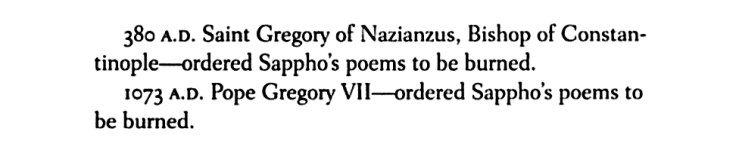
Burning Sappho (David Markson)

dm

Portrait of Félix Fénéon — Paul Signac

New Gordon Lish

There’s a new Gordon Lish rant in this month’s issue of Harper’s. The selection, titled “The Boys on the Block,” is collected in the forthcoming Goings: In Thirteen Sittings, out early next year from O/R Books.

First paragraph:

There was a game we played. Maybe it wasn’t a game in and of itself. Is a ball a game? A ball is not a game. But you can make a game with it, can’t you? What can’t you make a game with or of? You just have to decide you’re going to do it, is all. Or not even make up your mind and go ahead and decide as such. All you have to do is take the thing and start doing something with it and then say to a boy on the block, Can you do this? and then you show the boy that you can, and then the next thing is that that particular boy has to see if he can do it too or even if he can’t, well, I ask you, is there or is there not already enough of a game going from just that much of it already? Or even better, let’s say he can’t do it, the boy, that particular boy, then even better, even better that he can’t, except who can say, maybe before you know it you’re the boy who’s sorry you started the whole thing in the first place, because maybe the boy we’re talking about, maybe he can go ahead and do it better than you can do it, and then you wish you had never even taken the reins and started the game and could instead of any of that just stop playing it, but you can’t stop playing it, because every time that particular boy on the block comes around he’s got the thing you need for the game with him and he says to you, Hey look, can you do this, can you, can you? even if all you have to do is do it as many times as he can, or do it a little farther than he can, or do it faster than he can, or, you know, more times, or do it some other way different like that.


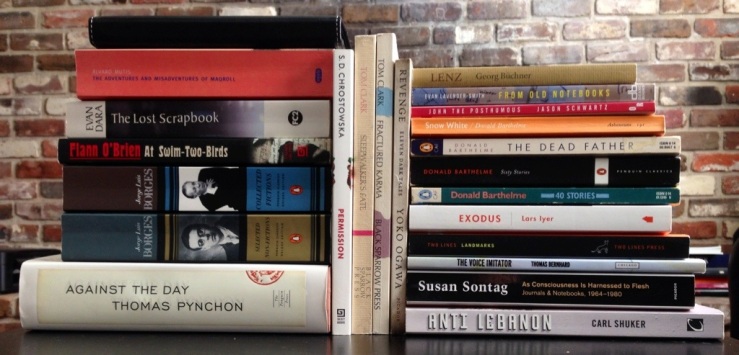
The books I liked the most in 2013

20131217-144555.jpg


Read My Interview with S.D. Chrostowska at 3:AM Magazine

I interviewed S.D. Chrostowska for 3:AM Magazine. I reviewed Chrostowska’s novel Permission here.

3:AM also features a new piece of short fiction from Chrostowska, “How to Avoid the Cardinal Sins /A Nominalistic Pamphlet/“.

From the interview:


3:AM: How did Permission begin? Did it begin as a novel? As something else?

S D Chrostowska: It began with the first message, and ended with the last. It was principally a literary effort subordinated to communication. To me this remains a crucial difference, itsdifferentia specifica. The origin of the now-book Permission was in an illegitimate literary dimension outside the frame of book authorship. You have to understand that, though I had chosen my reader, this reader could not know what if anything would become of the writing that came their way. Naturally I wonder whether and how it changes things for readers today, who approach them as a bound book, to know that the letters, just as they are, were once for real.

3:AM: Why write the letters under a pseudonym? How did you arrive at “Fearn Wren”?

SDC: For the sake of ambiguity. Knowing too much, or for that matter anything, about the artist-producer prejudices us about their work. The prejudice is not just personal or social but also simply contextual. It is all but unavoidable in visual and performing artworks requiring direct human contact, where other people are involved from the start rather than just on the receiving end. Sitting for a portrait or mounting a play depends on direct interaction. But we have already chosen the photographer based on their reputation. And we know something about the director before we get involved in their production or, if we happen to be directors, select actors based on their training or past work.

But writing, usually done at some distance from readers, can minimize our reader’s prejudices—at least until the finished work is judged, and the reviews and exposés come out. One way it can do this is by appearing anonymously or pseudonymously. Such publishing has a long history. As, one should add, does letter-writing under a pseudonym. Permission’s first reader would have had no context to go on.

Being read as an unknown author, not part of the literary scene, mimics that condition somewhat. But almost everyone nowadays can be googled, which is to say traced. I imagine that many people who would pick up a book like mine would be curious in this way.

I’m not sure how I settled on this particular pen-name. I do like ferns and wrens, their behaviors and the myths around them.

Bonus:

So, my signature interview question — “Have you ever stolen a book?” — had to be cut because it was just kind of confusing on 3:AM, but I couldn’t not ask it, so:

3:AM: Have you ever stolen a book?

SDC: Of course. 


The Complete Short Stories of J.G. Ballard (Sixth Riff: 1963-1964)

jgb_complete_ss40031

PREVIOUSLY:

Introductions + stories 1956-1959

Stories of 1960

Stories of 1961

Stories of 1962

“The Subliminal Man,” Black Friday, and Consumerism

IN THIS RIFF:

“The Reptile Enclosure” (1963)

“A Question of Re-Entry” (1963)

“The Time Tombs” (1963)

“Now Wakes the Sea” (1963)

“The Venus Hunters” (1963)

“End-Game” (1963)

“Minus One” (1963)

“The Sudden Afternoon” (1963)

“The Screen Game” (1963)

“Time of Passage” (1964)

“Prisoner of the Coral Deep” (1964)

“The Lost Leonardo” (1964)

“The Terminal Beach” (1964)

“The Illuminated Man” (1964)

“The Delta at Sunset” (1964)

“The Drowned Giant” (1964)

“The Gioconda of the Twilight Noon” (1964)

“The Volcano Dances” (1964)

1.”The Reptile Enclosure” (1963) / “A Question of Re-Entry” (1963) / “The Time Tombs” (1963) / “Now Wakes the Sea” (1963) / “The Venus Hunters” (1963) / “Minus One” (1963) / “Prisoner of the Coral Deep” (1964) / “The Illuminated Man” (1964) / “The Delta at Sunset” (1964) / “The Gioconda of the Twilight Noon” /”The Volcano Dances” (1964)

There are 98 stories in The Complete Short Stories of J.G. Ballard. That’s a lot of stories. Maybe too many. Too many for me to write about in full, anyway. I’ve lumped these stories together because they are somewhat unremarkable: Ballard does his Ballardian thing way better elsewhere. Several of these stories feel like sketches (or leftovers) from Ballard’s early novels like The Drowned WorldThe Burning World, and The Crystal World. Themes of time, memory, art, and nature abound here, usually glommed on to simple adventure narratives or sci-fi pulp treadthroughs. Jungles, watches, crystals, structures, beaches. Misanthropy, paranoia, nagging wives, misunderstood heroes. Man apart from nature, but beholden to nature. Etc. The worst moments of these stories—and we can find these moments all through early Ballard, to be fair—suffer from a bad case of White Man’s Burden doubled up with a shot of misogyny. I’ve written it before in these posts, but the most disappointing aspect of early Ballard is our would-be futurist’s inability to transcend the patriarchal ideology of the post-war era. So now let’s move to the good stuff.

2. “End-Game” (1963)

I first read “End-Game” when I was sixteen or seventeen, and it’s always stuck with me. It’s the story of a former “party member” who’s been imprisoned under nebulous circumstances—only his prison isn’t that bad—a nice little villa, comfortable, with books and a chess set. He even has a housekeeper. Unfortunately, the housekeeper is also his executioner, and the date and method of the execution is forever withheld from him:

This ironic inversion of the classical Kafkaesque situation, by which, instead of admitting his guilt to a non–existent crime, he was forced to connive in a farce maintaining his innocence of offences he knew full well he had committed, was preserved in his present situation at the execution villa.

The psychological basis was more obscure but in some way far more threatening, the executioner beckoning his victim towards him with a beguiling smile, reassuring him that all was forgiven. Here he played upon, not those unconscious feelings of anxiety and guilt, but that innate conviction of individual survival, that obsessive preoccupation with personal immortality which is merely a disguised form of the universal fear of the image of one’s own death. It was this assurance that all was well, and the absence of any charges of guilt or responsibility, which had made so orderly the queues into the gas chambers.

Ballard directly invokes Kafka, whose tale “Before the Law” comes to mind here (not to mention The Trial and The Castle); “End-Game” also feels like Ballard’s take on 1984. It’s a great little tale, and I think it helps to prove that Ballard is at his best when he sticks to a confined, limited cast and setting. Much of the force of “End-Game” comes from Ballard pitting his prisoner/protagonist against the protagonist’s mental conception of his guard/executioner. Part of my ideal collection, The Essential Short Stories of J.G. Ballard.

3. “The Sudden Afternoon” (1963) / “Time of Passage” (1964)

In “The Sudden Afternoon” and “Time of Passage,” Ballard explores how time and place—context, I suppose—constitute identity. The former story is a tale of metempsychosis with a troubling take on Indian spirituality, wherein a doctor—an Indian, of course—transplants his psyche and his wife’s psyche into the bodies of another couple (his wife is dying of a terminal disease). Ballard’s own wife died a year after the story was first published (I’m reminded of Poe here, whose wife Virginia died after the publication of “The Raven”). “The Sudden Afternoon” isn’t very good, but structurally we see Ballard beginning to employ something approaching the cut-ups/fragments he’ll move to in the next decade.

“Time of Passage” is essentially a rewrite of F. Scott Fitzgerald’s “The Curious Case of Benjamin Button.” It’s also basically a rewrite of Ballard’s own 1961 tale “Mr. F Is Mr. F” — only this time, Ballard dispenses with abject-horror-for-maternal-body in lieu of a fable-like exploration of what a life in reverse might actually look like. A lovely story. Stick it in The Essentials.

4. “The Screen Game” (1963)

Another Vermilion Sands story. More insanity. Another femme fatale. An attempt at the story of Orpheus, perhaps. I would have lumped it in with the stories in point 1, but I wanted to clarify: The Vermilion Sands stories are the worst.
15. “The Lost Leonardo” (1964)

This is an excellent little detective tale with mystical-magic undertones. I’m a sucker for any story of art theft, too. We all know Dan Brown ripped off Umberto Eco, but maybe Eco ripped off Ballard? Who cares. Lovely stuff. Ballard is excellent at the detective story; Poe is one of his clearest predecessors, but like Poe, he’s more famous for other stuff. Too bad. Let’s call it Essential.

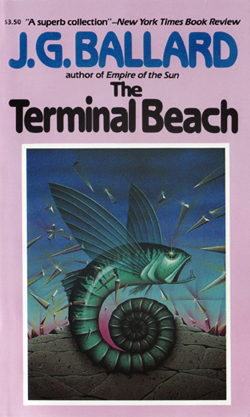
6. “The Terminal Beach” (1964)

1964’s “The Terminal Beach” is such a big break through for Ballard in terms of formal elements and structuring that it probably deserves its own post, but I’ll jab at it here anyway. Up until now, Ballard’s stories have been notable almost entirely for their ideas—his prose has improved some, but ultimately, the pulp fiction he’s writing for magazine publication constrains him to a pedestrian rhetoric that simply can’t match how far out his concepts are. With “The Terminal Beach,” Ballard finally approaches a narrative structure—fractured, polyglossic, shifting through interiors to exteriors, breaking through different forms—that can match the themes of his tale. The story–clearly an Essential—points to the finest of Ballard’s future work. You can read it here in two parts, but here’s a taste that I think stands alone as a microfiction:

The Fly

(A small fly, which Traven presumes has followed him into the fissure, now buzzes about the corpse’s face. Guiltily, Traven leans forward to kill it, then reflects that perhaps this minuscule sentry has been the corpse’s faithful companion, in return fed on the rich liqueurs and distillations of its pores. Carefully, to avoid injuring the fly, he encourages it to alight on his wrist.)

DR YASUDA: Thank you, Traven. In my position, you understand

TRAVEN: Of course, Doctor. I’m sorry I tried to kill it – these ingrained habits, you know, they’re not easy to shrug off. Your sister’s children in Osaka in ’44, the exigencies of war, I hate to plead them. Most known motives are so despicable, one searches the unknown in the hope that YASUDA: Please, Traven, do not be embarrassed. The fly is lucky to retain its identity for so long. ‘That son you mourn, not to mention my own two nieces and nephew, did they not die each day? Every parent in the world grieves for the lost sons and daughters of their earlier childhoods.

TRAVEN: You’re very tolerant, Doctor. I wouldn’t dare – YASUDA: Not at all, Traven. I make no apologies for you. Each of us is little more than the meagre residue of the infinite unrealized possibilities of our lives. But your son, and my nephew, are fixed in our minds forever, their identities as certain as the stars.

TRAVEN: (not entirely convinced) That may be so, Doctor, but it leads to a dangerous conclusion in the case of this island. For instance, the blocks – YASUDA: They are precisely what I refer to, Traven. Here among the blocks you at last find an image of yourself free of the hazards of time and space. This islandis an ontological Garden of Eden, why seek to expel yourself into a world of quantal flux?

TRAVEN: Excuse me (The fly has flown back to the corpse’s face and sits in one of the dried-up orbits, giving the good doctor an expression of quizzical beadiness. Reaching forward, Traven entices it on to his palm. He examines it carefully) Well, yes, these bunkers may be ontological objects, but whether this is the ontological fly is doubtful. It’s true that on this island it’s the only fly, which is the next best thing

YASUDA: You can’t accept the plurality of the universe – ask yourself why, Traven. Why should this obsess you? It seems to me that you are hunting for the white leviathan, zero. The beach is a dangerous zone. Avoid it. Have a proper humility, pursue a philosophy of acceptance.

TRAVEN: Then may I ask why you came here, Doctor?

YASUDA: To feed this fly. ‘What greater love – ?’

TRAVEN: (Still puzzling) It doesn’t really solve my problem. The blocks, you see

YASUDA: Very well, if you must have it that way

TRAVEN: But, Doctor

YASUDA: (Peremptorily) Kill that fly!

TRAVEN: That’s not an end, or a beginning.

(Hopelessly, he kills the fly. Exhausted, he falls asleep beside the corpse.)

7. “The Drowned Giant” (1964)

Another Essential, this puzzling fable readily recalls Gabriel García Márquez’s story “A Very Old Man with Enormous Wings.” Ballard rarely handles archetypes so directly as he does here. Even if the story’s theme seems almost too-plain—we lose the miracle, we cast down the old gods, we deny the sublime, etc.—its construction and telling are wonderfully achieved.

The lower jaw, typically, found its way to the museum of natural history. The remainder of the skull has disappeared, but is probably still lurking in the waste grounds or private gardens of the city – quite recently, while sailing down the river, I noticed two ribs of the giant forming a decorative arch in a waterside garden, possibly confused with the jaw–bones of a whale. A large square of tanned and tattooed skin, the size of an indian blanket, forms a backcloth to the dolls and masks in a novelty shop near the amusement park, and I have no doubt that elsewhere in the city, in the hotels or golf clubs, the mummified nose or ears of the giant hang from the wall above a fireplace. As for the immense pizzle, this ends its days in the freak museum of a circus which travels up and down the north–west. This monumental apparatus, stunning in its proportions and sometime potency, occupies a complete booth to itself. The irony is that it is wrongly identified as that of a whale, and indeed most people, even those who first saw him cast up on the shore after the storm, now remember the giant, if at all, as a large sea beast.

8. On the horizon:

Ballard plays with fragmentation again in “The Beach Murders” and “The Assassination of John Fitzgerald Kennedy Considered as a Downhill Motor Race” — and we finally get to his stories of the late sixties.

“Of Studies” — Francis Bacon

“Of Studies” by Francis Bacon

STUDIES serve for delight, for ornament, and for ability. Their chief use for delight, is in privateness and retiring; for ornament, is in discourse; and for ability, is in the judgment, and disposition of business. For expert men can execute, and perhaps judge of particulars, one by one; but the general counsels, and the plots and marshalling of affairs, come best, from those that are learned. To spend too much time in studies is sloth; to use them too much for ornament, is affectation; to make judgment wholly by their rules, is the humor of a scholar. They perfect nature, and are perfected by experience: for natural abilities are like natural plants, that need proyning, by study; and studies themselves, do give forth directions too much at large, except they be bounded in by experience. Crafty men contemn studies, simple men admire them, and wise men use them; for they teach not their own use; but that is a wisdom without them, and above them, won by observation. Read not to contradict and confute; nor to believe and take for granted; nor to find talk and discourse; but to weigh and consider. Some books are to be tasted, others to be swallowed, and some few to be chewed and digested; that is, some books are to be read only in parts; others to be read, but not curiously; and some few to be read wholly, and with diligence and attention. Some books also may be read by deputy, and extracts made of them by others; but that would be only in the less important arguments, and the meaner sort of books, else distilled books are like common distilled waters, flashy things. Reading maketh a full man; conference a ready man; and writing an exact man. And therefore, if a man write little, he had need have a great memory; if he confer little, he had need have a present wit: and if he read little, he had need have much cunning, to seem to know, that he doth not. Histories make men wise; poets witty; the mathematics subtile; natural philosophy deep; moral grave; logic and rhetoric able to contend. Abeunt studia in mores. Nay, there is no stond or impediment in the wit, but may be wrought out by fit studies; like as diseases of the body, may have appropriate exercises. Bowling is good for the stone and reins; shooting for the lungs and breast; gentle walking for the stomach; riding for the head; and the like. So if a man’s wit be wandering, let him study the mathematics; for in demonstrations, if his wit be called away never so little, he must begin again. If his wit be not apt to distinguish or find differences, let him study the Schoolmen; for they are cymini sectores. If he be not apt to beat over matters, and to call up one thing to prove and illustrate another, let him study the lawyers’ cases. So every defect of the mind, may have a special receipt.


Samuel Beckett’s Adventures of Tintin — Tom Gauld

beckett gauld tintin

“Coward” — Guy De Maupassant

“Coward” by Guy De Maupassant

In society he was called “Handsome Signoles.” His name was Vicomte Gontran-Joseph de Signoles.

An orphan, and possessed of an ample fortune, he cut quite a dash, as it is called. He had an attractive appearance and manner, could talk well, had a certain inborn elegance, an air of pride and nobility, a good mustache, and a tender eye, that always finds favor with women.

He was in great request at receptions, waltzed to perfection, and was regarded by his own sex with that smiling hostility accorded to the popular society man. He had been suspected of more than one love affair, calculated to enhance the reputation of a bachelor. He lived a happy, peaceful life—a life of physical and mental well-being. He had won considerable fame as a swordsman, and still more as a marksman.

“When the time comes for me to fight a duel,” he said, “I shall choose pistols. With such a weapon I am sure to kill my man.”

One evening, having accompanied two women friends of his with their husbands to the theatre, he invited them to take some ice cream at Tortoni’s after the performance. They had been seated a few minutes in the restaurant when Signoles noticed that a man was staring persistently at one of the ladies. She seemed annoyed, and lowered her eyes. At last she said to her husband:

“There’s a man over there looking at me. I don’t know him; do you?”

The husband, who had noticed nothing, glanced across at the offender, and said:

“No; not in the least.”

His wife continued, half smiling, half angry:

“It’s very tiresome! He quite spoils my ice cream.”

The husband shrugged his shoulders.

“Nonsense! Don’t take any notice of him. If we were to bother our heads about all the ill-mannered people we should have no time for anything else.”

But the vicomte abruptly left his seat. He could not allow this insolent fellow to spoil an ice for a guest of his. It was for him to take cognizance of the offence, since it was through him that his friends had come to the restaurant. He went across to the man and said:

“Sir, you are staring at those ladies in a manner I cannot permit. I must ask you to desist from your rudeness.”

The other replied:

“Let me alone, will you!”

“Take care, sir,” said the vicomte between his teeth, “or you will force me to extreme measures.” Continue reading ““Coward” — Guy De Maupassant”

A Rather Interesting Tale (From Barthelme’s The Dead Father)

It is rather an interesting tale, said the Dead Father, which I shall now tell. I had been fetched by the look of a certain maiden, a raven-haired maiden —He looked at Julie, whose hand strayed to her dark dark hair.

A raven-haired maiden of great beauty. Her name was Tulla. I sent her many presents. Little machines, mostly, a machine for stamping her name on strips of plastic, a machine for extracting staples from documents, a machine for shortening her fingernails, a machine for removing wrinkles from fabric with the aid of steam. Well, she accepted the presents, no difficulty there, but me she spurned. Now as you might imagine I am not fond of being spurned. I am not used to it. In my domains it does not happen but as ill luck would have it she lived just over the county line. Spurned is not a thing I like to be. In fact I have a positive disinclination for it. So I turned myself into a haircut —A haircutter? asked Julie. A haircut, said the Dead Father. I turned myself into a haircut and positioned myself upon the head of a member of my retinue, quite a handsome young man, younger than I, younger than I and stupider, that goes without saying, still not without a certain rude charm, bald as a bladder of lard, though, and as a consequence somewhat diffident in the presence of ladies. Using the long flowing sideburns as one would use one’s knees in guiding a horse —The horseman is still following us, Thomas noted. I wonder why.

— I sent him cantering off in the direction of the delectable Tulla, the Dead Father went on. So superior was the haircut, that is to say, me, joined together with his bumbly youngness, for which I do not blame him, that she succumbed immediately. Picture it. The first night. The touch nonesuch. At the crux I turned myself back into myself (vanishing the varlet) and we two she and I looked at each other and were content. We spent many nights together all roaratorious and filled with furious joy. I fathered upon her in those nights the poker chip, the cash register, the juice extractor, the kazoo, the rubber pretzel, the cuckoo clock, the key chain, the dime bank, the pantograph, the bubble pipe, the punching bag both light and heavy, the inkblot, the nose drop, the midget Bible, the slot-machine slug, and many other useful and humane cultural artifacts, as well as some thousands of children of the ordinary sort. I fathered as well upon her various institutions useful and humane such as the credit union, the dog pound, and parapsychology. I fathered as well various realms and territories all superior in terrain, climatology, laws and customs to this one. I overdid it but I was madly, madly in love, that is all I can say in my own defense. It was a very creative period but my darling, having mothered all this abundance uncomplainingly and without reproach, at last died of it. In my arms of course. Her last words were “enough is enough, Pappy.” I was inconsolable and, driven as if by a demon, descended into the underworld seeking to reclaim her.

I found her there, said the Dead Father, after many adventures too boring to recount. I found her there but she refused to return with me because she had already tasted the food-of-hell and grown fond of it, it’s addicting. She was watched over by eight thunders who hovered over her and brought her every eve ever more hellish delicacies, and watched over furthermore by the ugly-men-of-hell who attacked me with dreampuffs and lyreballs and sought to drive me off. But I removed my garments and threw them at the ugly-men-of-hell, garment by garment, and as each garment touched even ever-so-slightly an ugly-man-of-hell he shriveled into a gasp of steam. There was no way I could stay, there was nothing to stay for; she was theirs.

Then to purify myself, said the Dead Father, of the impurities which had seeped into me in the underworld I dived headfirst into the underground river Jelly, I washed my left eye therein and fathered the deity Poolus who governs the progress of the ricochet or what bounces off what and to what effect, and washed my right eye and fathered the deity Ripple who has the governing of the happening of side effects/unpredictable. Then I washed my nose and fathered the deity Gorno who keeps tombs warm inside and the deity Libet who does not know what to do and is thus an inspiration to us all. I was then beset by eight hundred myriads of sorrows and sorrowing away when a worm wriggled up to me as I sat hair-tearing and suggested a game of pool. A way, he said, to forget. We had, I said, no pool table. Well, he said, are you not the Dead Father? I then proceeded to father the Pool Table of Ballambangjang, fashioning the green cloth of it from the contents of an alfalfa field nearby and the legs of it from telephone poles nearby and the dark pockets of it from the mouths of the leftover ugly-men-of-hell whom I bade stand with their mouths open at the appropriate points —”

What was the worm’s name? Thomas asked.

I forget, said the Dead Father. Then, just as we were chalking our cues, the worm and I, Evil himself appeared, he-of-thegreater-magic, terrible in aspect, I don’t want to talk about it, let me say only that I realized instantly that I was on the wrong side of the Styx. However I was not lacking in wit, even in this extremity. Uncoiling my penis, then in the dejected state, I made a long cast across the river, sixty-five meters I would say, where it snagged most conveniently in the cleft of a rock on the farther shore. Thereupon I hauled myself hand-over-hand ‘midst excruciating pain as you can imagine through the raging torrent to the other bank. And with a hurrah! over my shoulder, to show my enemies that I was yet alive and kicking, I was off like a flash into the trees.

From Donald Barthelme’s novel The Dead Father.

The Bells — Edmund Dulac

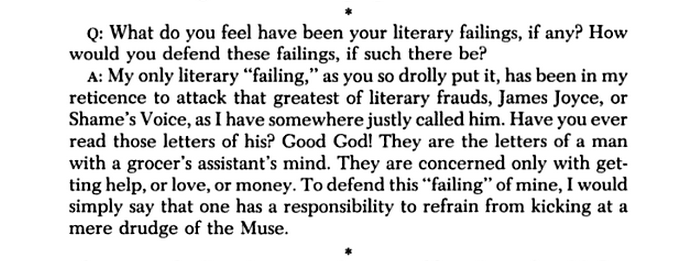
“James Joyce, or Shame’s Voice” | From Gilbert Sorrentino’s Mulligan Stew

gs

Jason Schwartz Interviewed at 3:am Magazine

3:am Magazine has published an interview with novelist Jason Schwartz. Schwartz’s latest, John the Posthumous, is my favorite book of 2013.  In the interview, Jason Lucarelli talks with Schwartz about John the Posthumous, his experiences with Gordon Lish, and teaching writing. The final answer of the interview though is my favorite moment—it reads like a wonderful and bizarre microfiction. Here it is, sans context:

This comes to mind: long ago, in New York, I taught middle school for a year. Rough and tumble sort of place. Lots of mischief, and no textbooks, as these had all been lost or destroyed or thrown out into a courtyard, where—I may be revising the memory slightly—there was a great pile of books, a pile nearly one story high. So it was upon the teacher to scratch out lessons on the blackboard. This was transcription, the transcription of many items, all these chapters from the absent books. And once this had been accomplished, once the blackboard had been covered with words, first thing in the morning, it was upon the teacher to guard the blackboard all day. So what to do when the fistfight breaks out? You know how people gather around. The teacher now fears the press of bodies, and the tendency of bodies to smudge, or even erase, words. Stop the fight or protect the blackboard? This seemed to me, at the time, the central educational dilemma. If you’re lucky, the fracas is close by, and you might arrange things accordingly—one hand here and one hand there, finding yourself in various complicated postures. I never managed that to successful effect. And perhaps all this explains why, in the old country, contortionists were always thought the best schoolteachers. Anyway, Mr. O’Riley’s room has been set afire in the meantime, or Mrs. Wilson has been trampled in the stairwell. The day would pass in that fashion, and then I would go home and write about postage stamps and Judas Iscariot.


Little Red Riding Hood — Arthur Rackham