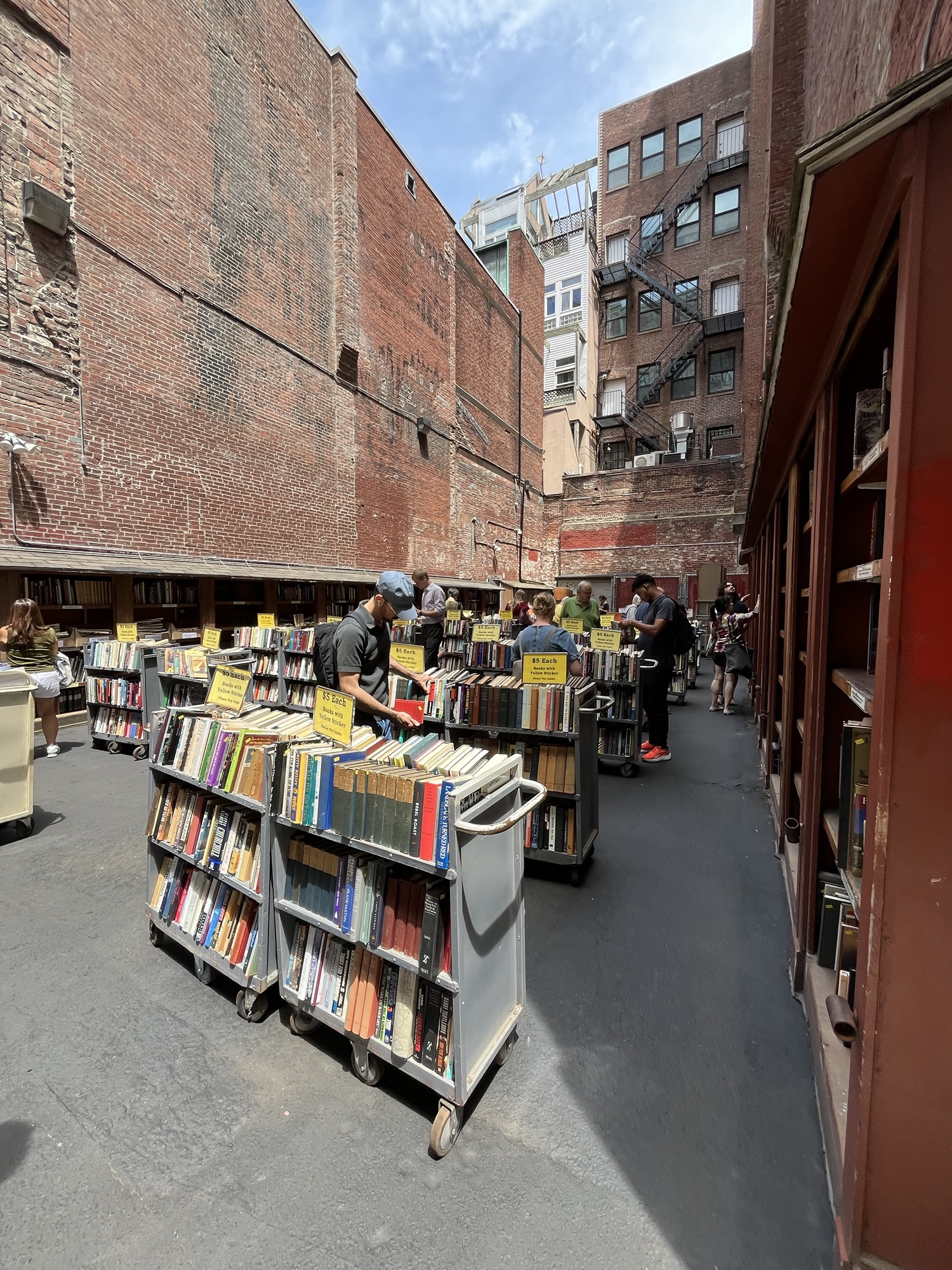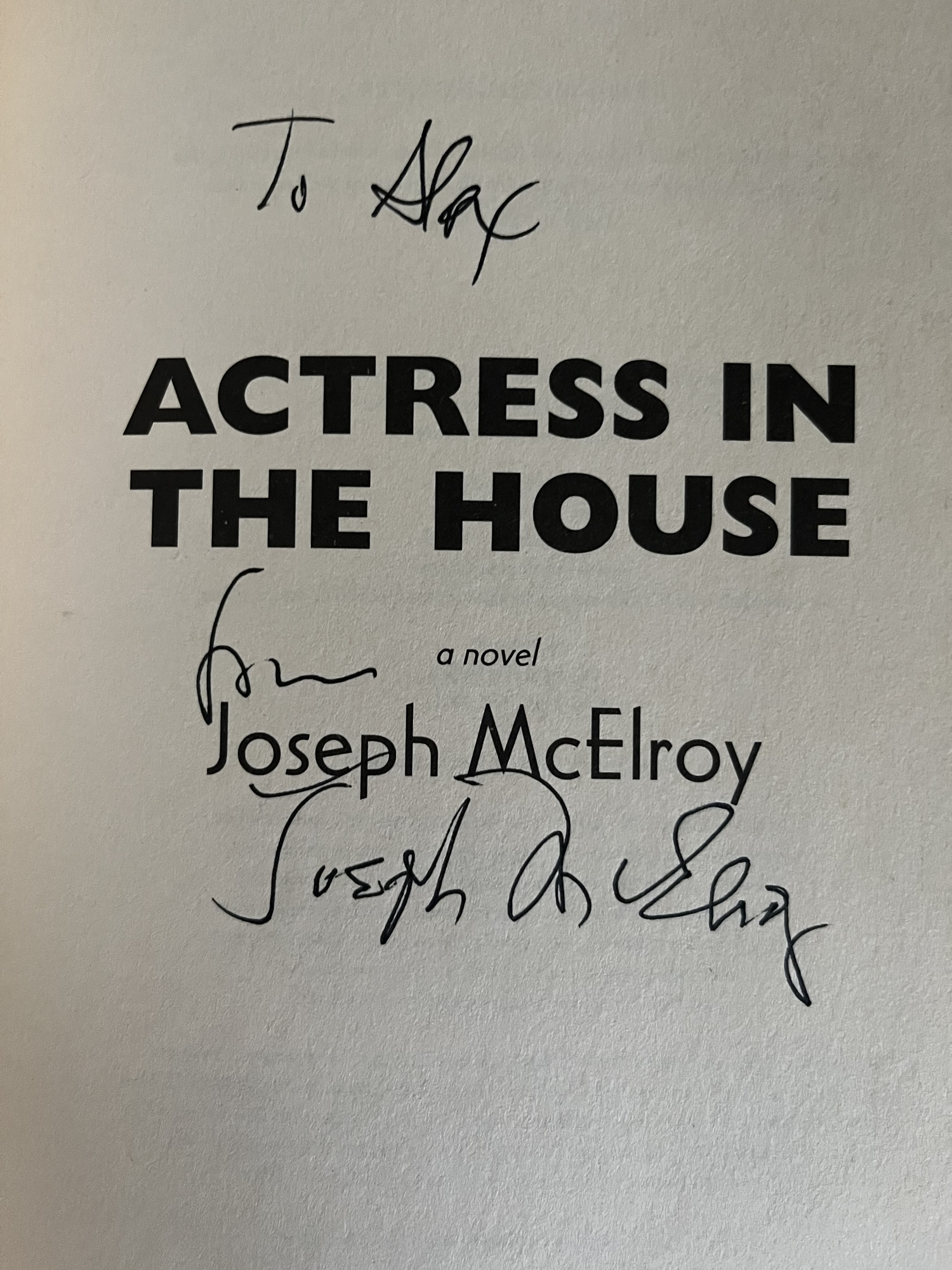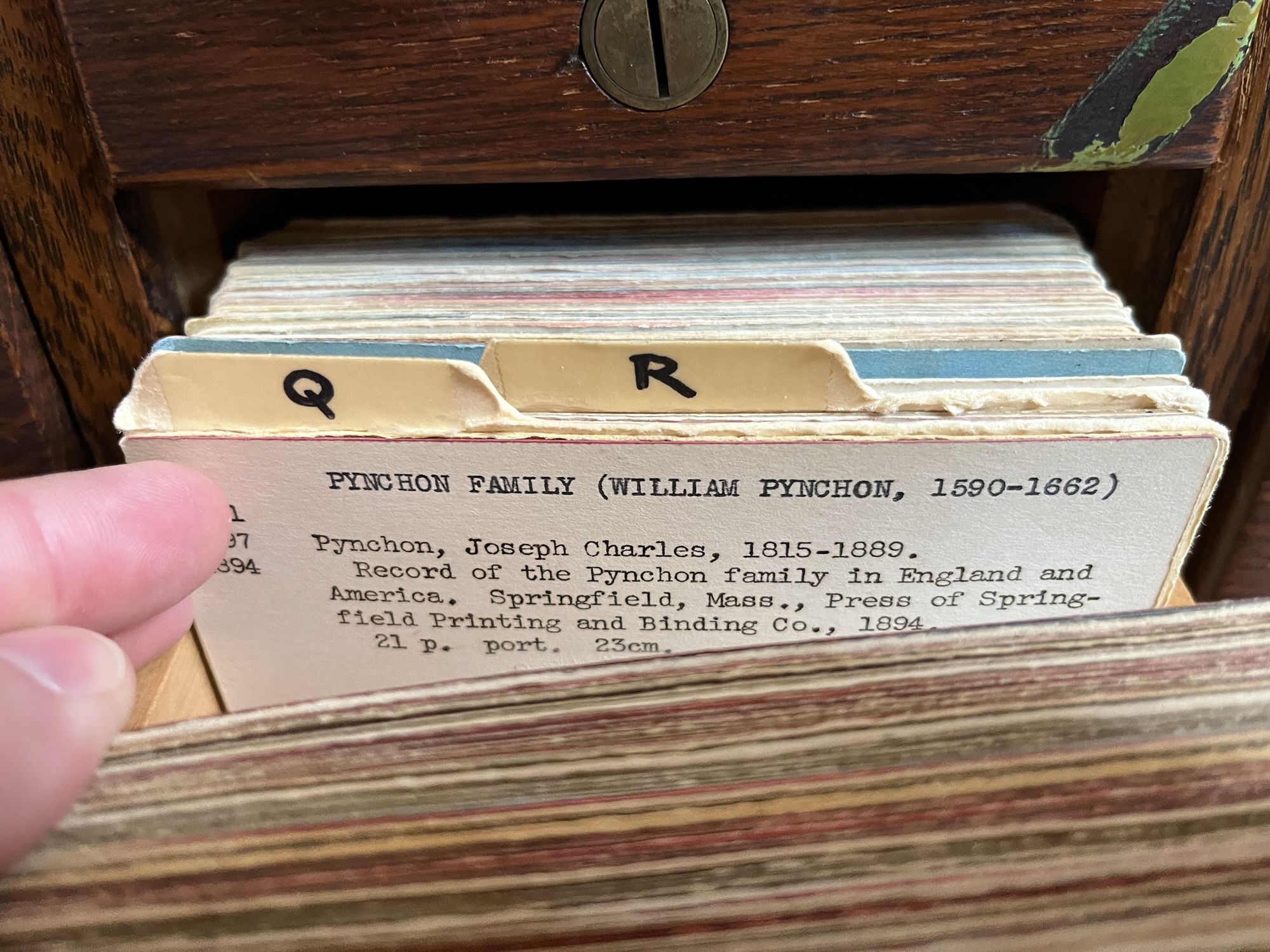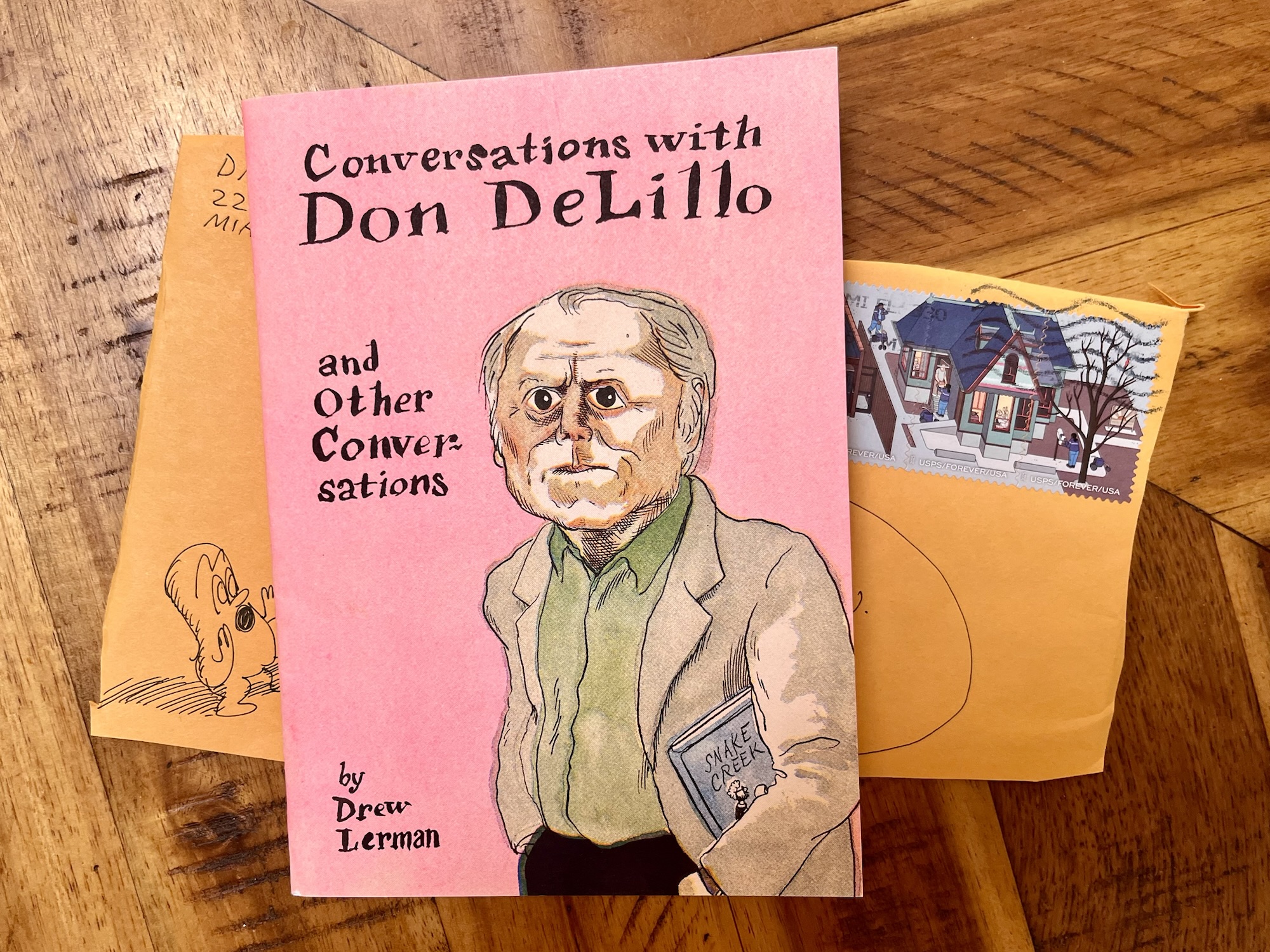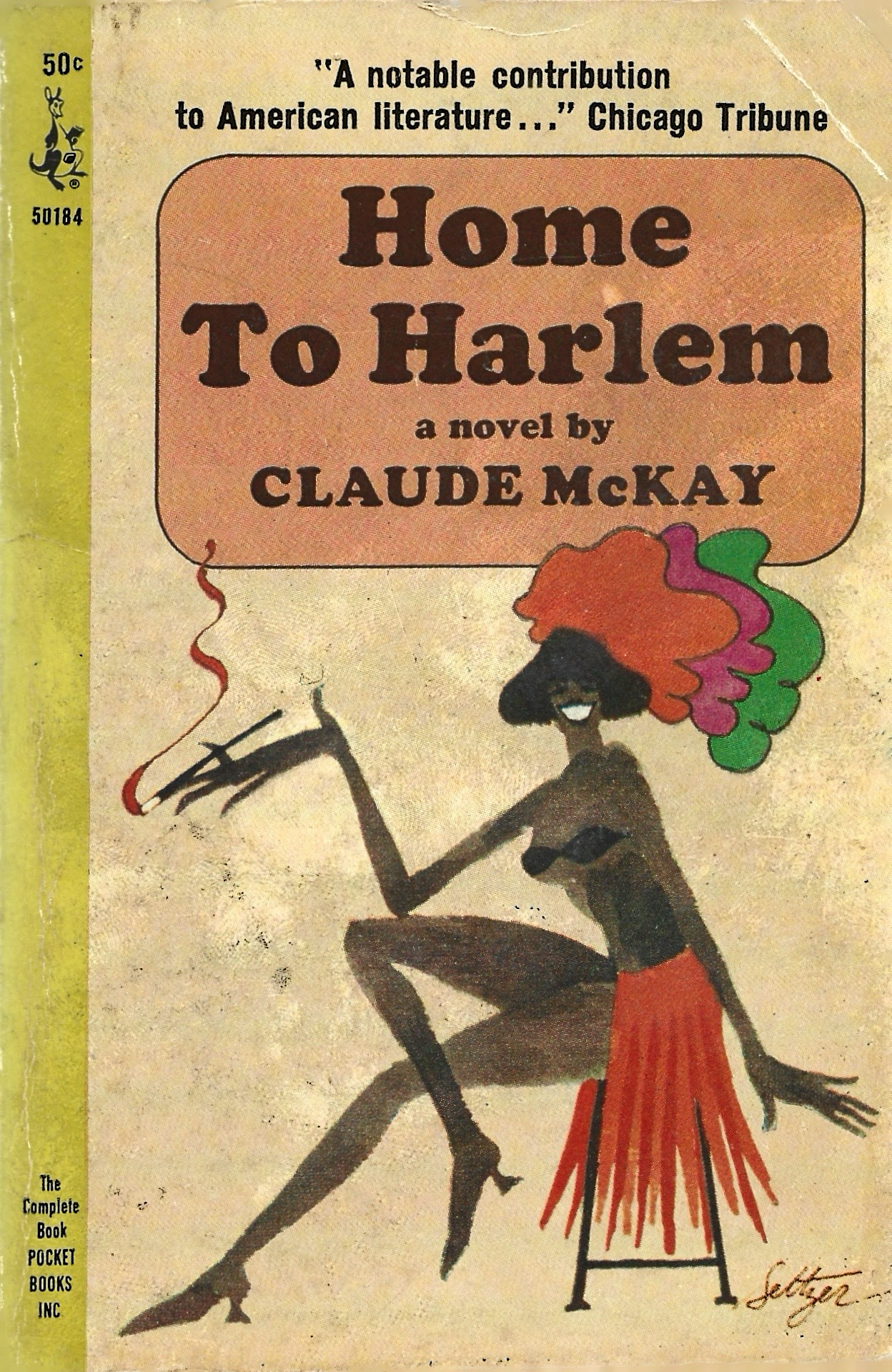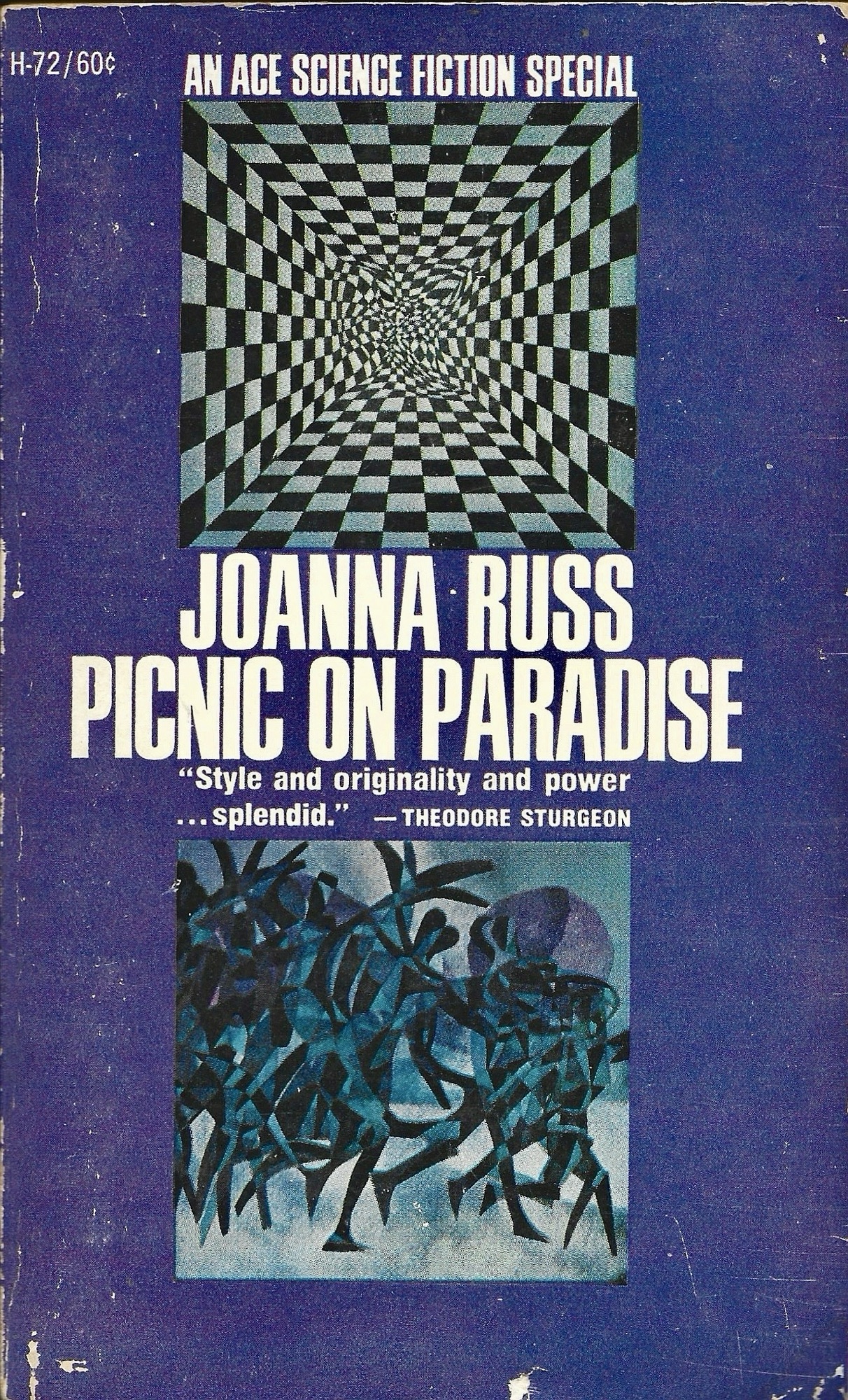
Best Books of 1976?

Previously:

Best Books of 1972?

Best Books of 1973?

Best Books of 1974?

Best Books of 1975?

Not-really-the-rules recap:

I will focus primarily on novels here, or books of a novelistic/artistic scope.

I will include books published in English in 1976, including translations published in English for the first time.


The New York Times Best Seller list for fiction in 1976 was dominated by Agatha Christie, Gore Vidal, and Leon Uris. Christie’s 1975 novel Curtain ruled winter and early spring, with her posthumous 1976 novel Sleeping Murder topping the charts in November and December. Vidal’s historical novel 1876 and Uris’s Trinity split the rest of the year. While Alex Haley’s Roots topped the nonfiction Best Seller list for only a few weeks in 1976, it’s the bestseller title of the year with the most cultural staying power. Bob Woodward and Carl Bernstein’s The Final Days, their follow up to 1974’s All the President’s Men was a bestseller in the spring and summer (and one of many, many Watergate books of this era). Gail Sheehy’s “road map to adult life” Passages was popular in the fall.

But sales charts ain’t literature.

Better to regard the New York Times Book Review’s end-of-year round up, “1976: A Selection of Noteworthy Titles.” It begins with a heavy dose of literary biographies, memoirs, autobiographies, and collections of letters. These include Christopher Isherwood’s Christopher and His KindLucille Clifton’s memoir Generations, Patrick McCarthy’s bio Celine, Charles Higham’s The Adventures of Conan Doyle, and Lillian Hellman’s third memoir Scoundrel Time. 

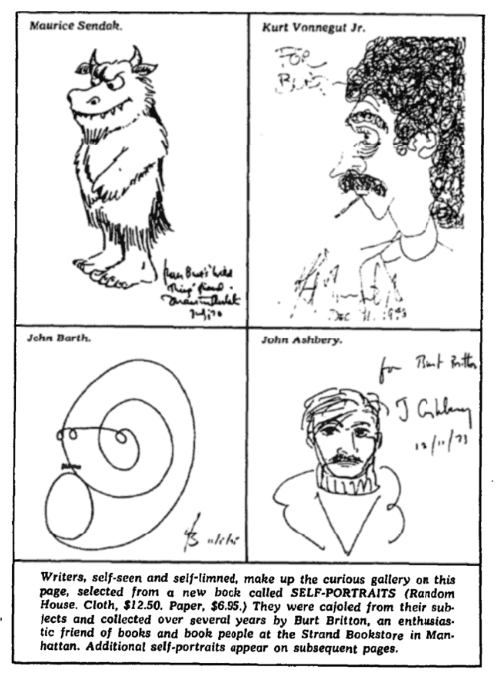
Also of note in the NYT list are Ron Kovic’s Born on the Fourth of JulyMaxine Hong Kingston’s The Woman Warrior, and Britt Britton’s collection of author Self-Portraits (the article is peppered with some of the portraits).

The Book Review piece also notes collections of letters by Sylvia Plath, E.B. White, and Virginia Woolf, as well as more diaries of Anaïs Nin. There are multiple memoirs of Hemingway (one by his son and one by his last wife) and David Heyman’s Ezra Pound biography. The list of literary bios and memoirs conveys the beginnings of a strange autopsy of the Modernist past giving way to something new.

Here are some of the fiction titles the New York Times Book Review includes in its “Selection of Noteworthy Titles” that I thought more noteworthy than other titles included:

The Acts of King Arthur and His Noble Knights, John Steinbeck

The Autumn of the Patriarch Gabriel García Márquez (trans. Gregory Rabassa)

The Easter Parade, Richard Yates

Flight to Canada, Ishmael Reed

The Franchiser, Stanley Elkin

Lady Oracle, Margaret Atwood

Lucinella, Lore Segal

Meridian, Alice Walker

Ratner’s Star, Don DeLillo

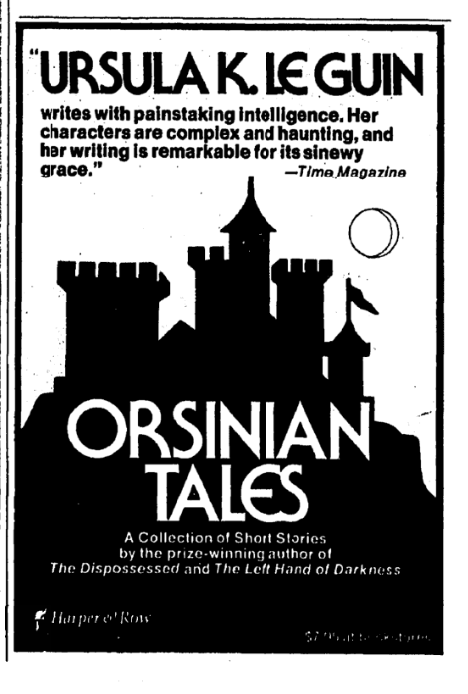
Orsinian Tales, Ursula K. Le Guin

Slapstick, Kurt Vonnegut

Speedboat, Renata Adler

The Takeover, Muriel Spark

Travesty, John Hawkes

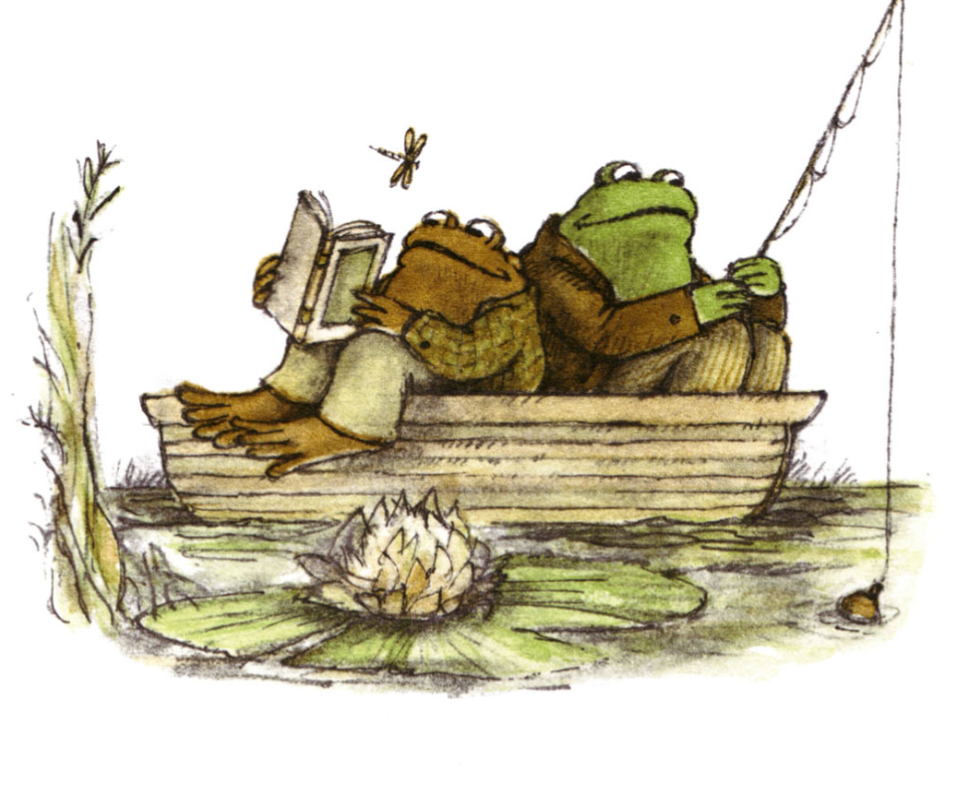
Frog and Toad All Year, Arnold Lobel

Children of Dune, Frank Herbert

The Fifth Head of Cerberus, Gene Wolfe

Triton, Samuel R. Delany

I’ll do some more with that list in a second. But for now–

One of the best sections of the NYT Book Review’s year-end recap is “Author’s Authors,” in which they ask various writers to pick their three favorite reads of 1976. John Cheever picks John Updike’s Picked Up Pieces (1975). Bernard Malamud picks García Márquez’s The Autumn of the Patriarch. Vladimir Nabokov, always humble selects his own manuscript for The Original of Laura (it remained unpublished until 2009).

William H. Gass selects buddies William Gaddis (J R, 1975) and Stanley Elkin (The Franchiser); I’ll pick up Craig Nova’s 1975 novel The Geek on his recommendation. I’ll also be on the look out for one of Ishmael Reed’s recommendations: Dangerous Music (1975) by Jessica Tarahata Hagedorn. He also recommends one of the many, many Watergate books of the era, Blind Ambition by John Dean and Shouting! by Joyce Carol ThomasAs far as I can tell, Shouting! wasn’t published until 2007.

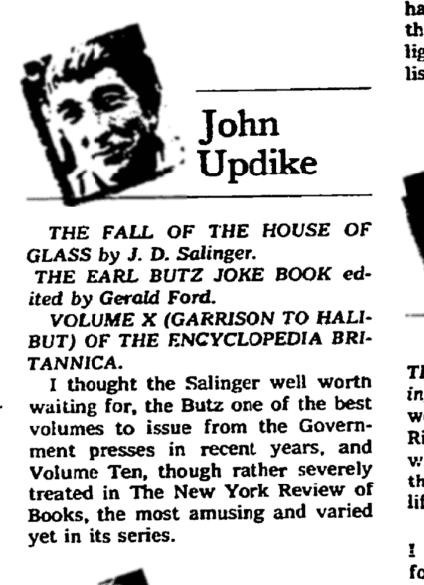
By far the best entry belongs to John Updike though:

John Updike THE FALL OF THE HOUSE OF GLASS by J.D. Salinger THE EARL BUTZ JOKE BOOK edited by Gerald Ford VOLUME X (GARRISON TO HALIBUT) OF THE ENCYCLOPEDIA BRITTANICA. I thought the Salinger well worth waiting for, the Butz one of the best volumes to issue from the Government presses in recent years, and Volume Ten, though rather severely treated in the New York Review of Books, the most amusing and varied yet in its series.

Shitposting in the Times in the late seventies. Gotta love it.

In her “Author’s Authors” write up, the novelist Lois Gold makes the only mention of Anne Rice’s Interview with the Vampire in the NYTBR piece. Rice’s seminal postmodernist vampire romance currently sits at #1 on Goodreads list of most popular books published in 1976, a testament to its populist staying power. Other notable books on the Goodreads list that were absent from the lofty NTYBR’s contemporary coverage include Tom Robbins’ Even Cowgirls Get the BluesMarge Piercy’s Woman on the Edge of TimeMichael Crichton’s Eaters of the DeadDavid Seltzer’s The OmenRaymond Carver’s Will You Please Be Quiet, Please?, Marian Engel’s BearOctavia Butler’s PatternmasterHarry Crews’ A Feast of SnakesHubert Selby Jr.’s The Demon, Richard Brautigan’s Sombrero FalloutKingsley Amis’s The Alteration, and many, many more. I’ll do more with that list momentarily, but next —

–prizes!

Saul Bellow won both the 1976 Nobel Prize in Literature (“for the human understanding and subtle analysis of contemporary culture that are combined in his work”) and the 1976 Pulitzer Prize for Fiction, specifically for his 1975 novel Humboldt’s Gift.

David Saville’s novel Saville was awarded the 1976 Booker Prize. The shortlist consisted of An Instant in the Wind by André Brink, Rising by R. C. Hutchinson, The Doctor’s Wife by Brian Moore, King Fisher Lives by Julian Rathbone, and The Children of Dynmouth by William Trevor. 

The 1977 National Book Award winner for fiction was Wallace Stegner’s The Spectator Bird. Runners-up were Will You Please Be Quiet, Please? by Raymond Carver, Orsinian Tales by Ursula K. Le Guin, The Balloonist by MacDonald Harris, and A Fine Romance by Cynthia Propper Seton. 

The 1976 National Book Critics Circle award for best fiction went to John Gardner’s October LightFinalists were Renata Adler’s Speedboat, Valdimir Nabokov’s Details of a Sunset and Other Stories, Cynthia Ozick’s Bloodshed and Three Novellas, and The Easter Parade by Richard Yates. Haley’s Roots was runner up to Maxine Hong Kingston’s The Woman Warrior. 

The Nebula Awards for fiction published in 1976 gave first place to Inferno by Larry Niven and Jerry Pournelle. Notable finalists included Marta Randall’s Islands, Delany’s Triton and Where Late the Sweet Birds Sang by Kate Wilhelm.

I have read many but hardly all the books mentioned in this post. But this is my blog, so here are my picks for the best books of 1976:

The Autumn of the Patriarch, Gabriel García Márquez (trans. Gregory Rabassa)

Bear, Marian Engel 

A Feast of Snakes, Harry Crews

Flight to Canada, Ishmael Reed

The Franchiser, Stanley Elkin

Orsinian Tales, Ursula K. Le Guin

Lucinella, Lore Segal

Ratner’s Star, Don DeLillo

Slapstick, Kurt Vonnegut

Speedboat, Renata Adler

A few sentences on every book I read or reread in 2025

☉ indicates a reread.

☆ indicates an outstanding read.

In some cases, I’ve self-plagiarized some descriptions and evaluations from my social media and blog posts.

I have not included books that I did not finish or abandoned.


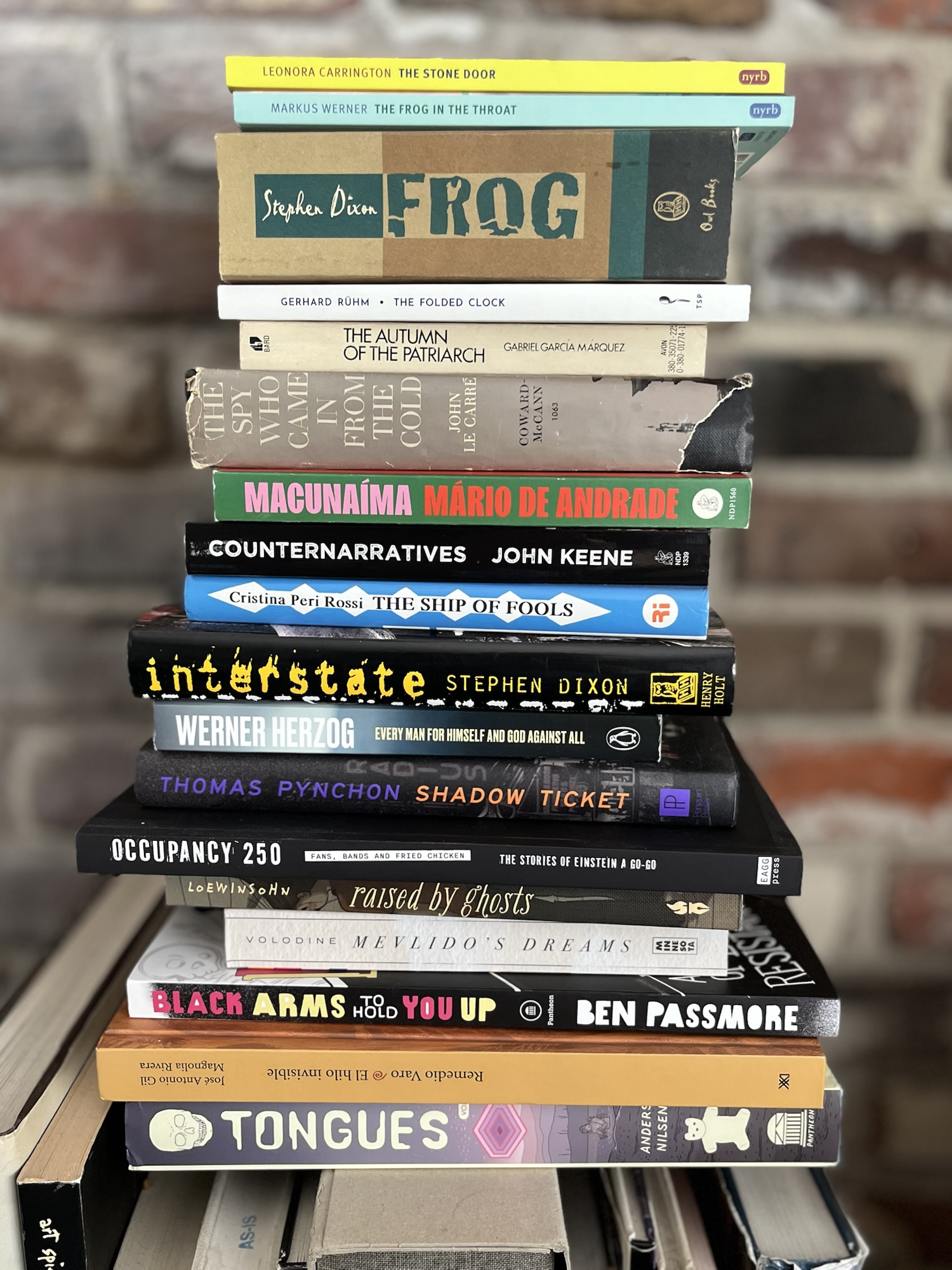
Every Man for Himself and God Against All, Werner Herzog☆

I got a paperback copy of Herzog’s memoir for Christmas last year but ended up listening to him read the audiobook on my commute for a week or two. Every Man for Himself was one of four memoirs as-read-by-the-author I listened to this year. The other three: The Friedkin Connection by William Friedkin; The Harder I Fight the More I Love You by Neko Case; Rumors of My Demise by Evan Dando. I enjoyed all four memoirs and maybe as I go through this post I’ll pull a few common threads. Herzog’s memoir is bonkers, better than fiction. It really is one of those deals where a paragraph starts one way and a few sentences later you’re in a totally different place.

Dispatches from the District Committee, Vladimir Sorokov (translation by Max Lawton; illustrations by Gregory Klassen)

An absolutely vile book. I loved it.

Raised by Ghosts, Briana Loewinsohn

Loewinsohn’s love letter to the latchkey nineties hit me hard. I reviewed it here.

Nazi Literature in the Americas, Roberto Bolaño (translation by Chris Andrews)☉

I think I was trying to get through the beginning of a novel by an “alt” midlist author when I realized I’d rather read something I loved. Or maybe there was something else in the air in late January. The notes on the draft for this post are cryptic.

Feminine Wiles, Jane Bowles

A slim lil guy, a nice reprieve from current events in January, a reminder that sanity is precarious.

Interstate, Stephen Dixon☆

From my review: “It upset me deeply, reading Stephen Dixon’s 1995 novel Interstate. It fucked me up a little bit, and then a little bit more, addicted to reading it as I was over two weeks in a new year.”

Remedios Varo: El hilo invisible, Jose Antonio Gil and Magnolia Rivera

A lot of Varo’s pictures, but also a lot of Spanish. I was trying hard at the time (to read Spanish). I used my iPhone to translate a lot.

Borgia, Alejandro Jodorowsky and Milo Manara 

Indian Summer, Milo Manara and Hugo Platt

CaravaggioMilo Manara

A nice little run there, I seem to recall. Borgia was the best.

Occupancy 250: The Stories of Einstein A Go-Go

The Einstein A Go-Go was an all-ages music club at Jacksonville Beach that was a massive part of my teenage years. I saw so many amazing bands there over four or five years (including Luna, Thinking Fellers Union Local 282, Man or Astroman, Sebadoh, Polvo, Superchunk, Archers of Loaf, and so many more), met so many cool people, and even played there with my band a time or two or five. And if I was too late (that is, too young) to see acts like Nirvana, The Replacements, 10,000 Maniacs, The Cranberries, and Soundgarden there at the the end of the eighties and beginning of the nineties, it feels pretty swell to see my band’s name on the back of Occupancy 250 right there in the mix, as well as flyers and photos. Occupancy 250 is like the yearbook we never got when the club had to shut its doors in ’97 in the name of beachfront development. What a gift it was. A few months ago we went to a reunion event, featuring bands like The Cadets and Emperor X. I’ve never been to a high school reunion, but I know that this was better.

Autumn of the Patriarch, Gabriel García Márquez (translation by Gregory Rabassa)☆

Loved it. A discussion with a colleague after, a Spanish instructor, led to my reading Cela, Peri Rossi, and Rulfo.

The Hive, Camilo José Cela (translation by Anthony Kerrigan)

Pascual Duarte, Camilo José Cela (translation by Anthony Kerrigan)

I liked them both but liked Pascal Duarte more than La colmena. I would love to read Cela’s 1988 novel Cristo versus Arizona if I could get my pink little hands on an English-language copy.

The Friedkin Connection, William Friedkin☆

I think that Spotfiy suggested that I listen to Friedkin’s memoir after I finished the Herzog memory; in any case, there was a lot of overlap. Like Herzog, Friedkin had no idea how to make a film and never really developed a baseline beyond, Doing the thing for real and filming it, whatever the thing was. Going to make a film where a criminal is going to counterfeit US currency? Better teach Willem Dafoe how to, I don’t know, counterfeit money and just film that instead of, like, getting a props department involved. (Weird overlap: both Friedkin and Herzog laud Michael Shannon as the greatest actor of his generation.)

I loved this memoir. It starts, if I recall correctly, with Friedkin admitting that he threw away a sketch by Basquiat and an offer from Prince. It ends with Friedkin telling his wife, legendary producer Sherry Lansing, to pass on Forrest Gump. Amazing stuff.

The Ship of Fools, Cristina Peri Rossi (translation by Psiche Hughes)☆ 

I loved it.

Monsieur Teste, Paul Valéry (translation by Charlotte Mandell) 

I hated it.

Pedro Páramo, Juan Rulfo (translation by Douglas J. Weatherford

I liked it!

Blood Meridian, Cormac McCarthy☉ 

I guess I fall into rereading this all the time.

Tongues, Anders Nilsen☆ 

screenshot-2018-08-31-at-4-34-20-pm

Amazing stuff.

Day of the Triffids, John Wyndham

I probably would’ve read Day of the Triffids a dozen times as a kid instead of, like, Joan D. Vinge’s novelization of Mad Max Beyond Thunderdome, if there had been a copy in the lending library in Tabubil. Anyway, I’m glad I got to it when I did.

Frog, Stephen Dixon☆ 

Above, I wrote I have not included books that I did not finish or abandoned; look, I didn’t finish Frog, but in some ways it’s the most important book — or rather, most important, reading experience — for me this year.

An old great friend mailed me his copy back in March. I read and loved a hefty chunk of Frog, a long book, but abandoned it when another great old friend died unexpectedly in early May. I was deep into it but there was no comfort in it, in Frog.

And so then well I just read or reread a bunch of John le Carré novels.

Call for the Dead, John le Carré

A Murder of Quality, John le Carré☆ 

The Spy Who Came in from the Cold, John le Carré

The Looking Glass War, John le Carré

Tinker Tailor Soldier Spy, John le Carré☉☆ 

Was a blur, thank you to Mr. Le Carré’s ghost. A Murder of Quality was my favorite (I think). (I was a fucking mess and these books really helped me.)

The Woman with Fifty Faces: Maria Lani and the Greatest Art Heist That Never Was, by Jon Lackman and Zack Pinson.☆ 

I read it all in one sitting. Loved it.

The Bus 3, Paul Kirchner

I reviewed it here.

Portalmania, Debbie Urbanski

In my review, I wrote that, “Debbie Urbanski’s new collection Portalmania is a metatextual tangle of science fiction, fantasy, and horror where portals don’t offer escape so much as expose the fractures beneath family, love, and identity.”

Dreamsnake, Voya McIntrye

I liked it!

The Stone Door, Leonore Carrington

Wrestled with this dude a lot and it beat me. I thought it would twist one way and it did another thing. Ended up reading it twice in the summer and I guess I’ll read it again.

The Great Mortality, John Kelly

Kelly’s Black Death chronicle was a comfort read this summer.

Figures Crossing the Field Towards the Group, Rebecca Grandsen

Skip my review of Grandsen’ poetic post-apocalyptic miniature epic and just buy it and read it.

Macunaíma, Mário de Andrade (translation by Katrina Dodson)☆ 

I am so glad my guy at the bookstore sold me on this one. A synthesis of Brazilian folklore with high and low modernism (eh, Modernism?).

The Sense of an Ending, Julian Barnes

A corny book a colleague recommended. I’m happy that someone I know IRL wants me to read a book and talk about it with them.

Unkempt Thoughts, translation by Jacek Galazka (translation by Jacek Galazka)

More Unkempt Thoughts Stanislaw J. Lec (translation by Jacek Galazka)

Aphorisms.

The Frog in the Throat, Markus Werner (translation by Michael Hofmann)☆ 

I gave the guy who gave me the Julian Barnes this novel; he didn’t like it!

I loved it. In my review of The Frog in the Throat. I noted that “you could throw a small dart in this short book and find a nice line” its protagonist. I included a lot of those pithy gems in the review if you want a sample.

Counternarratives, John Keene☆ 

Amazing stuff. I was halfway through when I realized that Keene wrote the intro to my edition of Mário de Andrade’s Macunaíma. My favorite piece in the collection reads like a riff on Melville’s Benito Cereno with strong Gothic undertones.

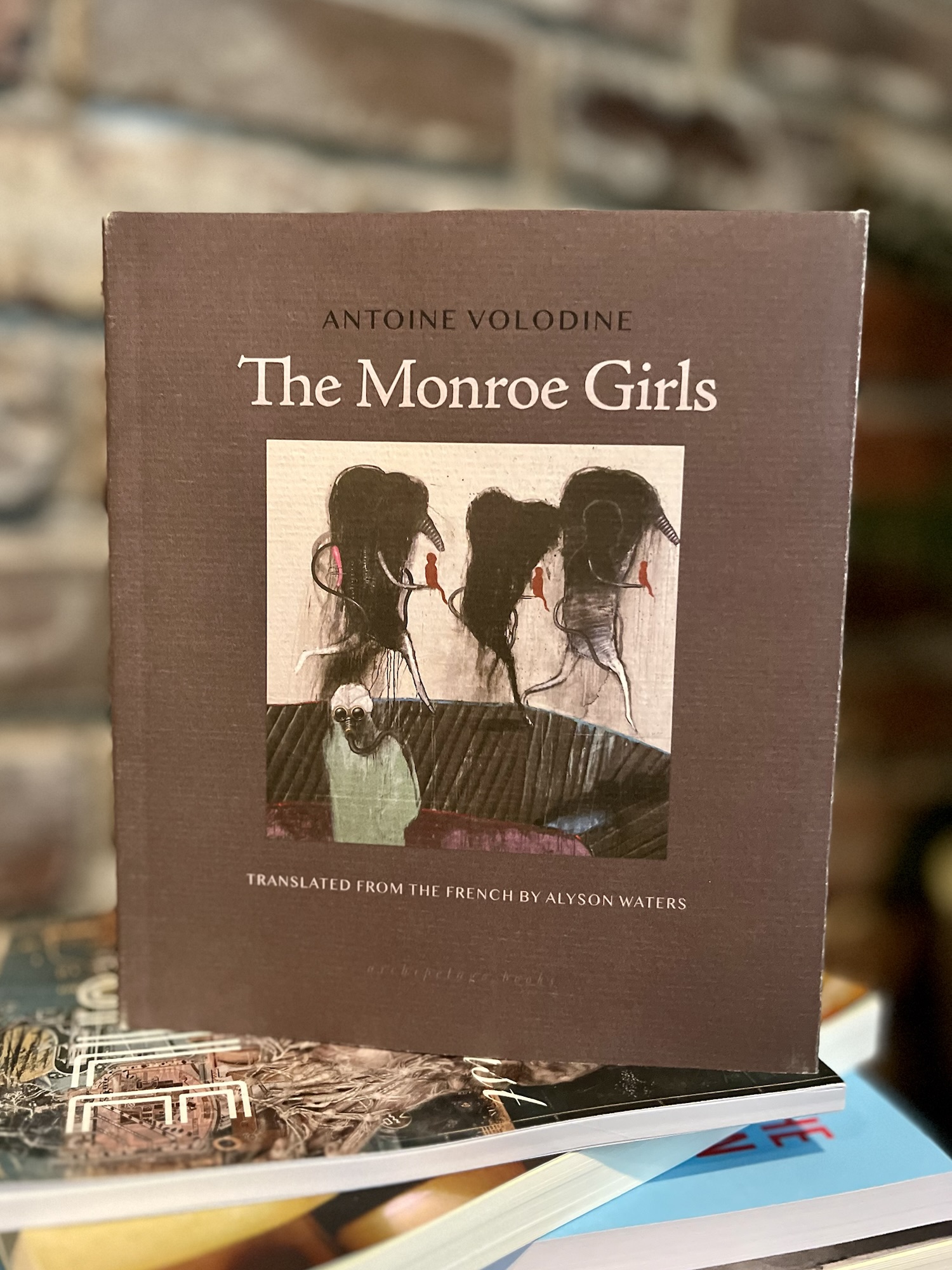
Mevlido’s Dreams, Antoine Volodine (translation by Gina M. Stamm)☆ 

A bleak, dystopian noir novel set several centuries in a ruined city-state wherein Mevlido’s fragmented consciousness becomes a vessel for Volodine’s haunting post-exotic vision of history, language, and apocalypse. Loved it! My review.

Shadow Ticket, Thomas Pynchon☆ 

The highlight of 2025 in reading was a new late Pynchon novel. It might not have been the best novel I read this year, but it was my favorite reading experience. I ended up reading it twice, running a series of posts I called Notes on Thomas Pynchon’s novel Shadow Ticket. At the end of those notes, I wrote:

“I should probably distill my thoughts on Shadow Ticket into a compact, “proper” review, but I’ve sat with the novel now for two months, reading it twice, and really, really enjoying it. I never expected to get another Pynchon novel; it’s a gift. I loved its goofy Gothicism; I loved its noir-as-red-herring-genre-swap conceit; I loved even its worst puns (even “sofa so good”). I loved that Pynchon loves these characters, even the ones he might not have had the time or energy to fully flesh out — this is a book that, breezy as it reads, feels like a denser, thicker affair. And even if he gives us doom on the horizon in the impending horrors of genocide and atomic death, Pynchon ends with the hopeful image of two kids chasing sunsets. Great stuff.”

Black Arms to Hold You Up, Ben Passmore

Sports Is Hell, Ben Passmore

Subtitled A History of Black Resistance, Passmore’s comic is more fun than you would think a book about fighting a racist state should be. I still owe it a proper review. It made me go back and read Passmore’s Sports Is Hell, which is kinda like the NFL x Walter Hill’s The Warriors x George Herriman’s Krazy Kat.

The Harder I Fight the More I Love You, Neko Case

Of the four memoirs I listened to this year, musician Neko Case’s is the most artfully written, packing in bursts of sensory images that pivot cannily to evoke very specific memories that connect the reader to the storyteller. The memoir is heavy on Case’s childhood and adolescence and purposefully avoids a direct accounting of her musical career. That’s not to say there isn’t a lot about music in here — there is (life on the road, songwriting, a nice section on her tenor guitar) — but Case seems to avoid going into too much detail about interpersonal relationships with other musicians. She also seems to want to apologize for some past behaviors, but the apologetic language is indirect and even cagey (Evan Dando’s memoir is a massive contrast here — the dude dishes deep, but is also frank and clear and specific about all the bad mean shit he did to people when he was younger).

Neko Case’s magnificent singing voice translates well to reading her memoir. She’s really good at reading it — expressive without being hammy, subtle, artful. I would love to hear her read other audiobooks, but I’m also happy for her to keep her focus on making music and playing live.

The King in Yellow, Robert Chambers☉

I played this silly fun indie game called The Baby in Yellow which led me to reread The King in the Yellow for the first time since I went nuts over True Detective (the first season). The first two stories were much stronger than I remembered — much weirder.

Acid Temple Ball, Mary Sativa

A Satyr’s Romance, Barry N. Malzberg

Flesh and BloodAnna Winter

I spent some of the year browsing through a copy of the Maurice Girodias edited volume The Olympia Reader. That edition offers excerpts from Olympia Press’s more “respectable” authors, like William Burroughs, Chester Himes, Henry Miller, Jean Genet etc. I downloaded a bunch of trashier Olympia titles and ended up reading these three. They were all pretty bad but also fun. Acid Temple Ball is like a sex-positive Go Ask Alice; both A Satyr’s Romance and Flesh and Blood are well-beyond “problematic” in their depictions of sexual relationships.

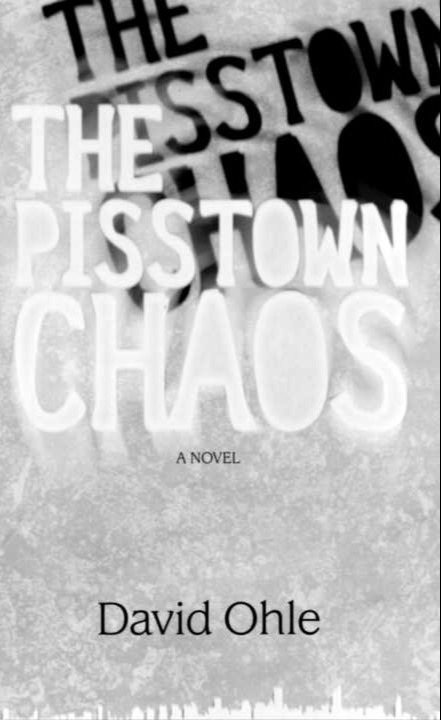
The Pisstown Chaos, David Ohle☆ 

In my golden-hued review, I called The Pisstown Chaos “a foul, abject, hilarious, zany vaudeville act, a satire of post-apocalyptic literature, an extended riff on American hucksterism. It’s very funny and will make most readers queasy.”

The Changeling, Joy Williams

Joy Williams is one of my favorite writers, but I’ll admit I was disappointed in her second novel, 1978’s The Changeling. I loved how dark and weird and oppressive it was, but soon tired of spending time in the rattled consciousness of its alcoholic hero, Pearl. When Williams explores beyond Pearl, the novel hints at weird Gothic cult island shit that is super-intriguing — but we always have to retreat back to our depressed, insane hero.

The Folded Clock, Gerhard Rühm (translation by Alexander Booth)

A collection of “number poems, comprising typewriter ideograms, typed concrete poetry, collages of everyday paper ephemera and scraps, and a wide variety of literary forms where the visual pattern created on the page underpins the thematic meaning,” as publisher Twisted Spoon puts it. A fascinating and frustrating read that hearkens back to the good ole days of the avant garde.

Rumors of My Demise, Evan Dando

In a review at the Guardian of Evan Dando’s memoir Rumors of My Demise, Alexis Petridis writes that the Lemonheads leader “sounds insufferable, but weirdly, he doesn’t come across that way.” Dando doesn’t try to deny, deflect, or otherwise shade his life. He’s upfront about his privileged background, his good looks, and his love of the rock star lifestyle. He’s also, as he always was, very upfront about the drugs. I was in eighth grade when It’s a Shame about Ray came out. I loved it. I loved the follow up album, Come on Feel the Lemonheads even more. I am, I suppose, the target audience for this book, and I found it very satisfying. I also think listening to Dando read it is really remarkable. He’s charming and affable, but he doesn’t seem comfortable reading out loud (you can hear it, for example, in an awkward pause when he has to change the page during the middle of a sentence). It’s also remarkably honest, and culminates in a series of apologies to many of the people he’d hurt when he was younger (“If I could go back in time and give a bit of advice to myself, I’d say ‘Evan, don’t be such a dick.’”)

My best friend Nick, who died this May, was a bigger Lemonheads fan than I was. I think he would have loved Rumors of My Demise and I thought about him all the time while I was listening to it, wanting to text him, Hey, you’re gonna love this story about Dando drinking Fanta Orange and Absolut with Keith Richards or, Man, Dando really has a score to settle with Courtney Love, or Dando’s some kind of disaster magnet — he lived right by the Twin Towers and was home on 9/11, he was in L.A. during the King riots, in Paris when Diana died, on Martha’s Vineyard when JFK Jr. crashed…or, Man, Dando seems to have finally quit heroin, good for him. I didn’t get to text those things so I’m writing them here.

Happy New Year to you and yours.

A partial glossary for Thomas Pynchon’s Gravity’s Rainbow

The October 1980 issue of Esquire ran a piece titled “What to Think about Gravity’s Rainbow” by the poet Terrill Shepard Soules. It’s not really a what to think piece, though (the title seems an editorial intervention), but rather a witty glossary.

“WHAT TO THINK ABOUT GRAVITY’S RAINBOW

by Terrill Shepard Soules


VERY CLEVER.

THOMAS PYNCHON, AUTHOR, KEEPS A LOW PROFILE.

MAIN CHARACTER: TYRONE SLOTHROP.

FIRST LINE: “A SCREAMING COMES ACROSS THE SKY.” NICE FIRST LINE.

LONG — 760 PAGES IN HARD-COVER.

BUZZWORDS: PIGS, PARANOIA, B MOVIES, SEX, NAZIS.

PUBLISHED 1973; EVERYONE WENT CRAZY.

NATIONAL BOOK AWARD, OF COURSE. PULITZER JUDGES LOVED IT, PULITZER TRUSTEES THOUGHT OBSCENE. ALSO INCOMPREHENSIBLE. NO PULITZER PRIZE. SOMETHING LIKE ULYSSES THAT WAY. A FREQUENT COMPARISON.

INSIDERS CALL IT RAINBOW. INSIDERS ARE INSIDERS BECAUSE THEY LOVE THE IDEA THAT
SOME RECLUSE (A CORNELL GRAD?) WROTE A 760-PAGE BOOK ABOUT PIGS AND PARANOIA. ALSO BECAUSE THEY KNOW SOME VERY EXTRAORDINARY WORDS FROM RAINBOW, LIKE THE ONES IN THE GLOSSARY BELOW (FROM THE HARD-COVER EDITION).


BOOK 1
Beyond the Zero

NARODNIK [p. 11]
From Russian narod, “people.” Intellectual trying to metamorphose peasant into revolutionaries. The Narodniki flourished in the late 1860s. In the late 1960s Student Nonviolent Coordinating Committee activists were referred to as narodoniks. By show-offs.

PRETERITION, PRETERITE
[p. 15 and throughout]
A passing over. Preterition is the Fluke Cosmic, the doctrine that God in John Calvin’s breast (cf. the Jampere-phrenia in Alien) decreed that you and you and you are heavenbound no questions asked but We’re going to have to think about the rest of you — don’t get your hopes up.

MAFFICK [p. 17]
The founder of the Boy Scouts defended the garrison at Mafeking against the Boers for two hundred seventeen days. When the siege was raised, on May 17, 1900, London went crazy, and the jubilant celebratory maffick — it’s a verb! — was born. Here, part of Lieutenant Oliver “Tantivy” Mucker-Maffick’s moniker.

TANTIVY [p. 17]
Mucker-Maffick’s nickname. Means to gallop along, or a blast on a horn, or that headlong gallop itself.

LOVE-IN-IDLENESS [p. 22]
The perfect word for violet. Pynchon’s choice is dazzling. First, on a map of London there’s a star for each of Slothrop’s women, Slothrop “having evidently the time, in his travels among places of death, to devote to girl-chasing.” Second, the many stars are of many colors. Third, Slothrop gets the idea that the stars look like flowers. Now Viola tricolor, the flower in question, turns out to be a violet with yellow, white, and purple petals and several country names. The name our author finally selects enables him to pull off a genuine rampage-prose triple play: “and all over the place, purple and yellow as hickeys, a prevalence of love-in-idleness.” Continue reading “A partial glossary for Thomas Pynchon’s Gravity’s Rainbow”

The Pisstown Chaos, David Ohle’s post-convenience novel of abject gags and grotesque japes

Let’s get the obvious out of the way first: The Pisstown Chaos is an improbably perfect and beautiful name for a novel. If you don’t like the title, The Pisstown Chaos isn’t for you. It is a foul, abject, hilarious, zany vaudeville act, a satire of post-apocalyptic literature, an extended riff on American hucksterism. It’s very funny and will make most readers queasy.

The author of The Pisstown Chaos is David Ohle. The novel was published in 2008; it is the second of three “sequels” to Ohle’s 1972 cult classic Motorman. You do not have to have read Motorman or The Age of Sinatra (2004) to “understand” The Pisstown Chaos. (But you’ll probably want to dig into those if you dig The Pisstown Chaos’s uh pungent urinous ammonia bouquet)

Moldenke, hero of Motorman, is a bit player in The Pisstown Chaos, a walk on, a song-and-dance man with no songs or dances. A storyteller. He’s a zombie, too — a “stinker” in the novel’s parlance — adorned in “black rags and a wide-brimmed white hat,” sporting “an inch-long tube of flesh protruding from just below his ear [which] had the general appearance and shape of an infant’s finger, but lacked a nail. In the end of the tube, a small hole leaked a clear, gelatinous fluid.”

Moldenke, we are to infer, is one of the “Victims of the Pisstown parasite…thought of as dead, but not enough to bury. Gray haggard, poorly dressed, they lay in gutters, sat rigidly on public benches, floated along canals and drank from rain-filled gutters.” He may or may not be centuries old.

It’s not clear how far into the future we are in the Ohleverse (it doesn’t really matter). After “the Great Forgetting,” and multiple and ongoing Chaoses, the world has regressed, or progressed, or really mutated, into a dusty, wet, gross, nasty post-infrastructure reality. You might read The Pisstown Chaos as a slapstick zombie Western.

The Reverend Hooker presides over this wonderfully abject world. Hooker’s loose theocratic federation revolves elliptically around a “shifting” scheme. Nothing is permanent, everything is moving, plates spinning on poles. Folks receive their shifting papers and must relocate from, say, a cozy cottage to a prison camp. Or they might end up paired with a new concubine or some such.

That’s the fate of Mildred Balls, née Mildred Vink, who meets Jacob Balls on the road to Witchy Toe. The pair meet cute and get on famously. (And who wouldn’t; after all, suave Jacob Balls was the inventor of  the “finely-grained, yellow-tinged powder” known as “Jake” — a kind of post-apocalyptic Bud Light.) Optimistic Jacob is optimistically optimistic of all the shifting, attesting his belief that “in any culture, when boredom and apathy take hold, the currency is debased and the decline is irreversible…What could be more of a tonic than a random redistribution of the populace?” Mildred is less convinced: “The whole scheme is idiotic.”

The Pisstown Chaos focuses on the Balls clan — primarily an older Mildred and her young adult grandkids, Roe and Ophelia. There are stinkers and imps, shifting folk consuming urpflanz, willy, and Jake on their way via Q-ped to Indian Apple or Bum Bay. Reverend Hooker is always lurking in the margins, too, before taking over the narrative’s final pages in a mock apotheosis that brought a stupid smile to my face.

Ohle’s narrative isn’t exactly a picaresque, but it runs on the same energy. Each chapter opens with a series of frank excerpts from the Pisstown rag, the City Moon. Here’s one update of news you need:

A fondness for pickled lips has led to the arrest of a Kootie Fiyo, a stinker known to be a trader in tooth gold and a vicious biter. Fiyo was just leaving the impeteria in South Pisstown when two Guards entered. The proprietor said, “That stink can eat more imp lips than I can heap in front of him. “

The City Moon is not just a source for the goods on a stinker’s glimpse of pickled imps’ lips, but also a gloss on the undead (or un-undead’s) physiology:

What then is a final-stage stinker’s life like? It has been described by scientists as showing a poverty of sensation and a low body temperature. In their nostrils is the persistent odor of urpmilk. The membrane which lines their mouth is extremely tough and is covered with thick scales. They like to touch fur and drink their own urine. Because they have been known to go without food for as long as eighteen years, we can assume that their sense of time passing is also very different from our own.

The Stinker Problem is likely the signature event of whatever century we are in. There’s probably an icky metaphor or allegory somewhere in there, but I find myself disinterested in that end of the novel. But still: Consider Mildred–who wants to find a “cure” for stinkerism–in charge of a crew of stinkers who, after their daily labors, commit “to walking in circles and searching the ground.” But these are not geologists peering into the navel of the world: “‘No, Miss,’ Spanish Johnny said, ‘We like to get dizzy and faint. It’s the way we have fun.'” We’ve all been there.

Mildred’s granddaughter Ophelia commands much of the narrative, shifting about her stations in life. Her domestic comedy with servants Red and Peters is a class-conscious comic delight. Our Miss Madame goes through a series of abject slapstick routines with the Help (including an enema gag that uh, gag me yeah). Here’s a foul episode in the life of Ophelia Balls:

She walked carefully from slippery stone to slippery stone until she got to the potting shed, then blew out the candle. She tried the door and found it locked. Wiping the dirty door-glass, she looked in at Peters, lying on the peat pile with his pants pulled down, fanning his rear with a handful of straw. Red, sitting beside him in Mildred Balls’s underwear, combed Peters’s coarse hair with a tortoise-shell comb. Peters’s cheeks were flushed, his eyes half-closed. When Ophelia entered, the scene seemed all the more lurid for the dim lantern and its flicker.

“I hope you don’t take any offense,” Red said, “but I’ve just mated with Peters here.”

Peters sat up. “I was quietly potting geraniums when that idiot stepped out of a dark corner and made advances, clumsy, lewd advances, with his big willy sticking out. I tried, but I couldn’t resist him.”

“Is that true, Red, that he put up resistance?”

“He lies like a rug. He clearly indicated he wanted me to sex him good and sex him hard.”

Ophelia saw the pointlessness of going any further with the inquiry. “All is forgiven. Let’s move past this.”

“I’ll serve the swan,” Red said.

If I’ll serve the swan isn’t your kinda punchline, The Pisstown Chaos ain’t your cup of Jake. It’s a rich, smelly, gross novel, fun, funny, fueled with 19th-century inventions viewed through piss-colored glasses, aimed at the apocalyptic future. It’s smoked imp-meat served with urpsmoke, a vaudeville buzz against the zombies in the gutter. When I was a kid we held our breath when we passed cemeteries. There are other ceremonies, other totems, but warding off the dead remains a concern.

I have neglected the Balls scion, young Roe, who eventually finds himself attending the Reverend Hooker. Late in the novel, Roe Balls prepares an enema for the theocrat; Hooker then delivers a sermon:

“I’ll warm up the bathroom right away, sir, and get the enema bag ready.”

Once Roe had firmly inserted the hose, the Reverend sat on the pot and closed his eyes. “There, that’s it, Roe. It’s in well enough.”

“Shall I leave you alone now, sir?”

“No. Don’t leave. Let me sermonize a little. I’ll tell you a story, a story with a lesson. In the days when all men were good, they had miraculous power. Lions, mountains, whales, jellyfish, hagfish, birds, rocks, clouds, seas, moved quietly from place to place, just as men ordered them at their whim and fancy. But the human race at last lost its miraculous powers through the laziness of a single man. He was a woodman in the Fertile Crescent. One morning he went into the forest to cut firewood for his master’s hearth. He sawed and split all day, until he had a considerable stack of hickory and oak. Then he stood before the pile and said, ‘Now, march off home!’ The great bundle of wood at once got up and began to walk, and the woodman tramped on behind it. But he was a very lazy man. Now, why shouldn’t I ride instead of galloping along this dusty road, he said to himself, and jumped up on the bundle of wood as it was walking in front of him and sat down on top of it. As soon as he did, the wood refused to go. The woodman got angry and began to strike it fiercely with his axe, all in vain. Still the wood refused to go. And from that time the human race had lost its power.”

“That certainly explains everything I’ve ever wondered about, sir.”

“You may clean me now.”

“Yes, sir.”

The punchlines accumulate after the Rev. Hooker’s fable — young Roe’s deadpan line “That certainly explains everything I’ve ever wondered about, sir” made me laugh aloud when I read it, and the following asswipe line is too much — but I think we have here in the fable a key to the novel. Not the key, but a key.

In the Rev’s woodman’s fable, humans once wielded Promethean power over the world. But that power’s contingent; it exists only when humans move with the world, attentive to its rhythms and limits. When the woodman attempts to ride the wood and make it a convenience instead of walking alongside it, cooperation collapses. S’all she wrote.

Ohle’s chaotic, grotesque world echoes his some-time collaborator William Burroughs’ alien abjection. It will also be comfortingly/nauseatingly familiar (familiar?!) with anyone who digs David Cronenberg’s corporeal horrors. The Pisstown Chronicles will also appeal to weirdos who dig the abject fictions of Vladmir Sorokin, José Donoso, and Antoine Volodine.

The Pisstown Chaos is not a novel for everyone, but there’s a certain type of reader who will love wading through its abject humor, grotesque imagery, and absurdist chaos. Ohle’s post-convenience world grunts and howls; it’s dark, vivid, gross, and hilarious. That scent will linger. Highly recommended.

Gerhard Rühm’s The Folded Clock (Book acquired, drifted through, last week or the week before, end of 2025)

I dug/was perplexed by Gerhard Rühm’s Cake and Prostheses a few years ago, so when I got my soft pink hands on The Folded Clock, (translated like C & P by Alexander Booth), I was intrigued. Publisher Twisted Spoon describes The Folded Clock as a collection of “number poems, comprising typewriter ideograms, typed concrete poetry, collages of everyday paper ephemera and scraps, and a wide variety of literary forms where the visual pattern created on the page underpins the thematic meaning.”

Rühm seems to identify Kurt Schwitters as his artistic precursor, or an artistic precursor. Like Cake and Prosthesesthe pieces in The Folded Clock defy easy categorization — Is it a script or a poem or art? is probably the wrong question.

Passing eyes over the text is probably not the way to go; Rühm’s asking you to engage. As Joseph Schreiber puts it in his review at Rough Ghosts, you might follow Rühm’s directions and “allow yourself to read aloud and, there are you are, from the very beginning, not simply reading but actively engaging with the poem.”

I don’t really like numbers that much, at least not in a mob, a gang, a swarm. I tried and didn’t work out. Not just with this book but in general. I can’t count sheep, I guess.

I had a better time with Rühm’s forays into music and letters and collages; I enjoyed whatever psychotic version of minesweeper or Sudoku this piece is:

Denis Johnson’s Train Dreams is a perfect novella

The Race, 1942 by Thomas Hart Benton (1889-1975)

With blunt grace, Denis Johnson navigates the line between realism and the American frontier myth in his perfect novella Train Dreams. In a slim 116 pages, Johnson communicates one man’s life story with a depth and breadth that actually lives up to the book’s blurb’s claim to be an “epic in miniature.”  I read it in one sitting on a Sunday afternoon, occasionally laughing aloud at Johnson’s wry humor, several times moved by the pathos of the narrative, and more than once stunned at the subtle, balanced perfection of Johnson’s prose, which inheres from sentence to paragraph to resonate throughout the structure of the book.

The opening lines hooked me:

In the summer of 1917 Robert Grainier took part in an attempt on the life of a Chinese laborer caught, or anyway accused of, stealing from the company stores of the Spokane International Railway in the Idaho Panhandle.

Three of the railroad gang put the thief under restraint and dragged him up the long bank toward the bridge under construction fifty feet above the Moyea River. A rapid singsong streamed from the Chinaman voluminously. He shipped and twisted like a weasel in a sack, lashing backward with his one free fist at the man lugging him by the neck.

The matter-of-fact violence here complicates everything that follows in many ways, because Grainier it turns out is pretty much that rare thing, a good man, a simple man who tries to make a life in the Idaho Panhandle at the beginning of the 20th century. The rest of the book sees him trying—perhaps not consciously—to somehow amend for the strange near-lynching he abetted.

Grainier works as a day laborer, felling the great forests of the American northwest so that a network of trains can connect the country. Johnson resists the urge to overstate the obvious motifs of expansion and modernity here, instead expressing depictions of America’s industrial growth at a more personal, even psychological level:

Grainier’s experience on the Eleven-Mile Cutoff made him hungry to be around other such massive undertakings, where swarms of men did away with portions of the forest and assembled structures as big as anything going, knitting massive wooden trestles in the air of impassable chasms, always bigger, longer, deeper.

Grainier’s hard work keeps him from his wife and infant daughter, and the separation eventually becomes more severe after a natural calamity, but I won’t dwell on that in this review, because I think the less you know about Train Dreams going in the better. Still, it can’t hurt to share a lovely passage that describes Grainier’s courtship with the woman who would become his wife:

The first kiss plummeted him down a hole and popped him out into a world he thought he could get along in—as if he’d been pulling hard the wrong way and was now turned around headed downstream. They spent the whole afternoon among the daisies kissing. He felt glorious and full of more blood than he was supposed to have in him.

The passage highlights Johnson’s power to move from realism into the metaphysical and back, and it’s this precise navigation of naturalism and the ways that naturalism can tip the human spirit into supernatural experiences that makes Train Dreams such a strong little book. In the strange trajectory of his life, Grainier will be visited by a ghost and a wolf-child, will take flight in a biplane and transport a man shot by a dog, will be tempted by a pageant of pulchritude and discover, most unwittingly, that he is a hermit in the woods. In Johnson’s careful crafting, these events are not material for a grotesque picaresque or a litany of bizarre absurdities, but rather a beautiful, resonant poem-story, a miniature history of America.

Train Dreams is an excellent starting place for those unfamiliar with Johnson’s work, and the book will rest at home on a shelf with Steinbeck’s naturalist evocations or Cormac McCarthy’s Border Trilogy. I have no idea why the folks at FS&G waited almost a decade to publish it (Train Dreams was originally published in a 2002 issue of The Paris Review), but I’m glad they did, and I’m glad the book is out now in trade paperback from Picador, where it should gain a wider audience. Very highly recommended.

[Ed. note: Biblioklept originally published this review in May of 2012. I still haven’t seen the Clint Bentley-directed film adaptation.]

Our racket happens to be exile | Notes on Thomas Pynchon’s Shadow Ticket, Ch. 37-38

Notes on Chapters 1-7 | Glows in the dark.

Notes on Chapters 8-14 | Halloween all the time.

Notes on Chapters 15-18 | Ghostly crawl.

Notes on Chapters 19-20 | The needs of cold capitalist reality and those of adjoining ghost worlds come into rude contact.

Notes on Chapters 21-23 | Phantom gearbox.

Notes on Chapters 24-26 | Idiots get respect out here, they’re believed to be in touch with invisible forces.

Notes on Chapters 27-29 | We’re in for some dark ages, kid.

Notes on Chapters 30-32 | Some occult switchwork.

Notes on Chapters 33-34 | The dead ride fast.

Notes on Chapters 35-36 | Ghost city.


Illustration of Vampyroteuthis infernalis from Deutschen Tiefsee-Expedition, 1898-1899 by Carl Chun

Chapter 37: Shadow Ticket continues its wrap-up. Hicks punches another old ticket, not-exactly-solving the mystery of missing Stuffy Keegan (who disappeared way back in Ch. 8 on a U-13 submarine — a submarine that not everyone can see — into the icy depths of Lake Michigan.)

Hicks meets Stuffy at “the old Whitehead factory, where the torpedo as we have come to know it was invented.” The Whitehead Torpedo Works, based in Fiume/Rijeka  invented and developed the self-propelled torpedo in the 1860s. After WWI the company (under different subsidiary names) manufactured motorcycles and then hand grenades — bikes and pineapples, in the parlance of Shadow Ticket. There are a lot of bombs and biwheels in this novel.

The Whitehead Torpedo Works is another of Shadow Ticket’s Gothic spots, “fallen into ruin [and] said to be haunted by the ghosts of submarines long dismantled.” The phantom submarine that Stuffy crews is supernatural, natch, and a totem of the bigger thesis that Pynchon underlines throughout his latest novel: It’s never too late to redeem yourself. A war machine might repurpose itself, friendly ghost, into a rescue ship (or at minimum, a do-no-harm ship).

Whitehead torpedo’s illustrated profile, 1898

Stuffy introduces Hicks to the submarine’s skipper, Ernst Hauffnitz a veteran of the Great War responsible for “no casualty count that I know of, idiot’s luck no doubt.” The idiot, the fool, is blessed in Pynchon’s oeuvre, and in Shadow Ticket especially. And the idiot-who-does-no-harm is especially blessed. Let’s consider Hicks’s past as a strikebreaker, which we learn about back in Ch. 4, in a pivotal encounter when the big gorilla goes to whack a  “truculent little Bolshevik” with a “lead-filled beavertail sap” that would’ve surely killed the poor fella. Hicks’s blackjack disappears — “asported,” in the novel’s paranormal lingo. It sets him on a non-violent path (whether he sees or chooses this path or not).

For skipper Ernst Hauffnitz, doubts about the merits of war — by which I think we should say, doubts about using technology and innovation in the service of violence and undue death — began when “Max Valentiner torpedoed and sank SS Persia in the Mediterranean, killing 343 civilians in direct violation of Chancellery orders to spare passengers and rescue survivors.”

Those doubts increased when post-WWI orders to bring his submarine “to be broken up pursuant to Article 122 of the Trianon dictate led Captain Hauffnitz to suicidal feelings — but he converts that despair into hope, and sets out on a “new career of nonbelligerence.”

That new do-no-harm career includes helping out the Al Capone of Cheez, Bruno Airmont, “Who is about to be taken, as we speak, off on an undersea voyage of uncertain extent.” The International Cheese Syndicate — InChSyn — is after Bruno who’s taken off with their cash and their secrets. The submariners, now in “the search and rescue line” aim to see that “Mr. Airmont is safely relocated where he can neither commit nor incur further harm.”

Captain Hauffnitz continues: “You might consider us an encapsulated volume of pre-Fascist space-time, forever on the move, a patch of Fiume as it once was, immune to time, surviving all these years in the deep refuge of the sea…” On the move is the move of Shadow Ticket, one of its grand themes summed up by Stuffy Keegan back in Ch. 20: “as long as you can stay on the run, that’s the only time you’re really free.”

The episode concludes with reference to theValdivia Expedition of 1898–99, which brought up into the daylight a pitch-black critter known as the Vampire Squid, by whose name, these days, the U-13 has since come to be known.” More Gothic tinges!


We transition to the parting farewells of Bruno and Daphne; Daphne’s secured her father’s passage with a mariner named Drago. Papa Bruno gives his “li’l midnight pumpkin” a parting gift — “Better than money…It’s information” on the machinations of the InChSyn. Their last moments end with Bruno looking down at his watch, a “Rolex Oyster Perpetual he does not seem to recognize, as if thanks to the psychical ambience he’s been in all evening it has just apported onto his wrist.” 

It’s an odd reference, Bruno’s phantom Rolex, but it also fits with the novel’s theme of time as well as the motif of timepieces. Way back in Ch. 1, Skeet Wheeler shows off his new watch to Hicks: “Hamilton, glows in the dark too.” We’ll get a reference to that timepiece in the last paragraphs of the novel.


Bruno doesn’t make it too far on Drago’s escape boat before Hauffnitz’s crew intervenes. He’s on their sub in no time, wondering if he’s imprisoned in his “not uncomfortable cabin” — “Is this the brig I’m in, he wonders. No, submarines don’t have brigs, they are brigs.”

Stuffy starts to explain the situation to Bruno; the Cheez Gangster at first believes that the crew of the Vampire Squid intend to turn him over to the InChSyn. But as we saw earlier in the chapter, their goal is to add to a world of do no harm. 

Stuffy tries to hip Bruno to his new life: “See, there’s a difference between the Al Capone of Cheese and the AC of C in Exile. One sooner or later gets the paving-material overcoat. The other goes where he’ll do no harm. Our racket happens to be exile.”

“Milk belonging to John Albrecht is poured out on Sept. 16, 1933, by insurgent members of the Pure Milk Association seeking to force higher prices.” Chicago Tribune.

The chapter ends with Stuffy hipping Bruno to the 1933 Wisconsin milk strikes:

Seems revolution has broken out in the U.S., beginning in Wisconsin as a strike over the price per hundredweight that dairy farmers were demanding for milk, spreading across the region and soon the nation. Milk shipments hijacked and dumped at trackside, trees felled across roadways and set aflame to stop motor delivery, all-night sentinels, crossroads pickets, roundups, ambushes, bayonet charges, gunfire, casualties military and civilian.

It’s easy to dismiss Pynchon’s evocation of American zaniness as goofy, silly, unserious — but that would require (the very easy threshold of) not actually really reading Pynchon, a writer whose works stand clearly on the side of organized labor as well as on the peace-anarchy dimension of do no harm. The notion of “milk strikes” and a gangster cheese magnate might seem wacky, but Pynchon’s narrator points us towards the wallet, the stomach, the soul. There’s something comforting in the idea of Midwestern dairy workers going hard as a motherfucker and taking collective action to resist exploitation a century ago.

“Men lay out obstacles for milk delivery trucks along the Wisconsin-Illinois state line at Route 41 during the milk strike in January 1934. More than 18,000 farmers were demanding a fair price for their milk.” Chicago Tribune.

Chapter 38: Who should Hicks run into on the Korzo but one-time mob-enforcer Dippy Chazz Foditto, recently deported from the USA but nevertheless “just signed on to a scheme hatched and run by U.S. ruling-class elements who are betting that the island of Sicily will be a strategic factor in the next war.” Dippy will help to establish “a local anti-Fascist guerrilla force, trained, armed, and ready to roll.” Again, we’re ramping up to WW2. Dippy Chazz brings news from the West: Hicks’s old flame April is now married to the head crimeboss Milwaukee, and pregnant to boot. Hicks is exiled: “Take the tip, is all, it’s over for you in M’waukee, Hicks, Chicago too.”

The chapter ends on a sad note, with Hicks, “in the dawn hours of the first day of a post-American life…dials a number without thinking much about it till later, when he remembers it’s a TRIangle exchange number in Chicago, same as Al Capone’s mother has.” We can recall from Ch. 4 that Hicks’s mother Grace abandoned him to run away with an elephant trainer. He has a conversation with a person — his mother? Capone’s? just a person? — that ends with the sad image of trying to find “just a glimpse of something blowing away into the night, something it’s already too late to chase in this windbeaten emptiness taking possession of his heart…”


The dead ride fast | Notes on Thomas Pynchon’s Shadow Ticket, Ch. 33-34

Notes on Chapters 1-7 | Glows in the dark.

Notes on Chapters 8-14 | Halloween all the time.

Notes on Chapters 15-18 | Ghostly crawl.

Notes on Chapters 19-20 | The needs of cold capitalist reality and those of adjoining ghost worlds come into rude contact.

Notes on Chapters 21-23 | Phantom gearbox.

Notes on Chapters 24-26 | Idiots get respect out here, they’re believed to be in touch with invisible forces.

Notes on Chapters 27-29 | We’re in for some dark ages, kid.

Notes on Chapters 30-32 | Some occult switchwork


Chapter 33 is the big-budget action sequence of Shadow Ticket, in which the “pocket-size golem Zdeněk” and musician/secret agent Hop Wingdale rescue Ace Lomax from the clutches of the fascist Vladboys in their “Hungaro-Croatian terrorist training camp, located right on the borderline.” (Notably–significantly–Hicks is missing from the rescue team.)

The narrator informs us that the camp is “flexibly all-purpose Fascist, quivering in readiness to be deployed anywhere…briefly innocent as Fascism in its ‘springtime of beauty,’ as the old anthem goes, before it descended into paperwork and brutality…” We tend to think, rightly, that fascism is a rejection of progressive values, but it’s worth remembering that much of what we now think of as Modernism was wrapped up in proto-fascist idealizations of energy and action — consider Filippo Tommaso Marinetti’s Manifesto of Futurism f’r’instance…

The camp where Ace is being held prisoner is a hotbed of action:

“Fascist adventurers have journeyed here from all over, Austrians sporting blue cornflowers and black grouse feathers, secret police, anti-Red goon squads, revolutionary cells, convicts escaped from internal exile and not sure where they are right now or what language they’re supposed to be speaking, colonial stooges in civvies in from as far afield as Indo-China and South America, irredentist aristos from the old Hungarian kingdom adrift in nostalgia, Polish freelancers working on spec for all of the above.” 

I love the force of the sentence. For such a breezy novel, Shadow Ticket is dense. We might take it as a sketch of a much larger, thicker, denser novel.

Well so and anyway–

The deal is that Hop’s band shows up to play this fascist gig; he’s informed that they, the fascist paramilitary Vladboys, “are pretending to invade Fiume, which any number of potential clients want back.” The garrulous entertainment liaison who meets with the band opines that such an invasion would be “all over in a day or two. Anasa supo.”

That last phrase, anasa supo, is Esperanto for duck soup, an American idiom referring to a task easily accomplished. Duck Soup is also of course the title of the 1933 Marx Brothers that centers (oh-so-anarchically) around the tiny nation of Freedonia–a bilocation of Fiume? Here’s a bit of bilocation from Duck Soup:

Hop and his band will play their swing tunes in “ruined limestone amphitheater, once dedicated to bloodletting presented as amusement, back when the Fifth Macedonian Legion were busy here invading and occupying.

The entertainment menu is “A Gay Evening with Vlad Ţepeş,” with riffs including “Vlad’s Vegetarian Chef”…(“Turnip loaf again, remind me to have the chef impaled”) and “Vlad at the Office” (the Count laments that they never call him “Vlad the Spending Reducer.”)

1499 German woodcut depicting Vlad the Impaler dining among his victims: “Here begins a gruesome and terrible history of the wild tyrant, Dracole Wayde. How he had people impaled, roasted, and boiled in a kettle with their heads. How he had people flayed and their skin salted like cabbage. He also had mothers’ children roasted, and they had to eat them themselves.”

Is this “Vlad Ţepeş” just a performer playing a character in the evening’s festivities, vamping on a riff–or is it, like, the Vlad Ţepeş, son of Vlad Dracul, Voivode of Wallachia, born half a century before the events of Shadow Ticket — like, Dracula man Vlad? A few paragraphs later, we are briefly introduced to the thug guarding Ace, “Csongor…a sort common in these parts, an apprentice vampire doomed never to develop past journeyman.” On one hand, the language here, and the general supernatural bent of Shadow Ticket suggests that these are like real (as in mythological) vampires — but the novel’s themes of bilocation also hedge the bet: vampire here could be a metaphor; the Vlad Ţepeş could be merely an actor playing a part.

Pynchon renders the scene in the kind of sexualized language we’d expect from vampire stories: “Vladboys have been building up, sending them out after prey each time in a more dangerous state of arousal. Trivial disputes are apt at any moment to erupt into violence. Local women go more and more in fear of their safety, cover their hair, stay in groups. The weirdly erotic charge accumulates, until vrrrooom! here’s the Vladboys out on another massive prowl…”

The prowl, as we’ve already learned, scores “Ace…an understandably welcome catch, with the Flathead an unexpected bonus, which the boys keep insisting is a Jewish motorcycle.” (The idiot vladboys reasoning? “Harley. David…Son, this is son of David, no?”)

Standing guard over their “welcome catch,” journeyman vampire Csongor takes interest in Ace’s tattoo: “’Die Todten reiten schnell,’ the Vladboy reads from the Gothic lettering there. ‘Something about the dead ride fast.'”

The phrase “Denn die Todten reiten schnell” appears in the opening chapter of Bram Stoker’s Dracula, a phrase recorded in Harker’s journal, which he identifies as the “line from [Gottfried August] Bürger’s ‘Lenore.'”

Illustration for Lenore, 1896 by Frank Kirchbach (1859-1912); engraving by Theodore Knesing (1840-1925).

Csongor wants to know if the dead actually do ride fast. Ace’s answer is philosophical: “Over there, among the dead, time has no meaning anymore, so to get distance per hour you’d have to divide by zero, which even if it was legal would still give you infinite speed.”

But before he can really explain his riff on death-speed paradox though, Ace’s rescuers arrive: “the pocket-size golem Zdeněk [and] Hop Wingdale.” Our mini-golem is a cyborg: “Zdeněk’s left arm turns out to be a modified ZB-26 Czech light machine gun, with the magazine built into his shoulder.” He likens it to “one of many earthly variants of Azrael, the Angel of Death” — yet still spares Csongor.

The chapter ends with our heroic trio escaping the fascist camp, fleeing their captors with the aid of a “pocket-size model” of a “a Bangalore torpedo” that Zdeněk has improvised from “a few sticks of dynamite thoughtfully borrowed last week in Transylvania off of a freelance firefighting crew passing through en route to a Romanian oil-well fire everybody could see from fifty miles away.”

The massive fire Pynchon’s narrator refers to here is, with most everything in Shadow Ticket, an historical event. The “torch of Moreni” burned for almost two and a half years, from September 1929 to November 1932.

The Moreni oil-well fire.

Chapter 34 opens with a sentence that lays out the situation for us: “Daphne looking for Hop has blundered out into a territory she thought she knew, which in fact the political situation has changed to something unrecognizable and poisonous.”

The Weimar days are over; “Hamburg, once the Swing Kid metropol” is now a Nazi hotbed, where “Blues licks have largely given way to major triads.” Conformity reigns; difference is punished. Daphne finds this out the hard way when she “wanders into a beer garden [Hop’s band] the Klezmopolitans once played at, formerly named the Midnight Mouse after a poem by Christian Morgenstern, now converted to a Sturmlokal” — she’s stumbled into a Nazi bar, and immediately finds herself imperiled by the not-so-subtle sexual predations of fascist goons (“Looking for me, Schätzchen?”)

But before our “Cheez Princess…become[s] fondue” she’s by Glow Tripforth del Vasto in her autogyro-cum-deus-ex-machina. They alight to a tavern; on the way Glow complains that because gyros “are forgiving ships…there’s the danger [of] The idiot appealromance on the cheap.” Modern convenience will puncture Gothic adventures of flight. Any idiot can fly.

Glow, headed to “some kind of anarchist sainthood” in Spain, drops Daphne in Fiume, but first delivers another one of several hey-we’re-about-to-be-in-some-bigger-mess-than-we-thought-we-were-going-to-be-in proclamations: “Whatever it is that’s just about to happen, once it’s over we’ll say, oh well, it’s history, should have seen it coming, and right now it’s all I can do to get on with my life.”

Glow adds, “I don’t care to know more than I need to about the mysteries of time…You’re expecting spiritual wisdom from little G. T. del V.? you’ll be waiting a long time, sucker.” 

The dead might ride fast–but they’re still dead.

Spontaneous pig rescue | A self-contained episode from Thomas Pynchon’s Shadow Ticket

What seems to’ve begun happening out here on the route with some regularity is that impulses disallowed in normal society are surfacing unexpectedly and being acted upon. Some more benevolent than others, spontaneous pig rescue, for example.

Unaccustomed bustle one day in the repair shop, where the ill-tempered Sándor Zsupka, across whose path few who have ever ventured care to do so again, currently on the run from a number of felony charges, including actual bodily harm, is putting together a pig-customized helmet and goggles combination revealing along with his criminal activities a gift for millinery.

“This is your…”

“Spirit guide, and even a spirit guide can do with some extra windproofing now and then. Further questions?”

“Never seen a pig quite like this…”

She’s a Mangalica, a popular breed in Hungary at the moment, curly-coated as a sheep, black upper half, blonde lower. And that face! One of the more lovable pig faces, surrounded by ringlets and curls. Squeezita Thickly should only look half this adorable.

No more than idly cruising the countryside, Sándor happened to get off on one of those fateful back roads, and there in a steep farmyard were a family and their livestock, a cute meet, you’d say, though not half as cute as the pig herself. “Oh and this is Erzsébet, we’re eating her for Christmas.”

Hell they are. Sándor and some barroom accomplices perform a snatch-and-grab in the middle of the night, the pig pretending to be asleep, as she is picked up, installed in the sidecar of Sándor’s rig, and spirited away, just like that. Next thing anybody knows she’s riding in the sidecar, done up in helmet and goggles, beaming, posing like a princess in a limousine. Anybody feels like commenting, they don’t.

A self-contained episode from Thomas Pynchon’s 2025 novel Shadow Ticket.

Ghostly crawl | Notes on Thomas Pynchon’s Shadow Ticket, Ch. 15-18

Notes on Chapters 1-7 | Glows in the dark.

Notes on Chapters 8-14 | Halloween all the time.


Chapter 15 opens proximal to Xmas time, presumably 1931, still–although it’d take a reread for me to pin down the timeline better. Hicks is in the grip of mild paranoia, feeling like he’s the target of some unknown They. The feeling is a haunting: “light as delusional bugs, the ghostly crawl of professional finger-eye coordination, somewhere above and in the distance, tightening in on whatever is centered in its crosshairs, which at the moment happens to be Hicks’s head.” 

Christmas bugs?!

Hicks’s paranoia is well-placed. He’s “handed a parcel wrapped in festive red-and-green paper whose design features Xmas trees, reindeer, candy canes, so forth. Ribbon tied in a big bow. Something to do with Christmas” by miscreants claiming to be “Santa’s elves.”

Skeptical Hicks denies the supernatural, natch, despite the “ghostly crawl” that’s come over his aspect this haunted season. The so-called elves protest that they are cousins of Billie the Brownie, an historical mainstay of Milawaukee’s Schuster’s Department Store Christmas spectacles.

(I’ve tried not to overload these riffs with too many of Pynchon’s Milwaukee/Milwaukee-proximal references–like, I couldn’t leave Les Paul out when I riffed on Ch. 8, but I didn’t include his reference in the same chapter to Árpád Élő, the Hungarian-American physicist who taught at Marquette in Milwaukee for four decades, during which time he developed the Elo chess rating. Anyway, the point is — for a breezy novel, Shadow Ticket is still pretty dense. Pynchon enjoys fat in the right proportion.)

Anyway, addressing Hicks as “Schultz,” the elves deliver an Xmas package and evaporate into thin air. Then who appears? “Damn if it ain’t the same sawed-off Bolshevik striker Hicks didn’t manage to kill that fateful night not so long ago,” who we learned of back in Ch. 4 (recall Hicks felt some kind of metaphysical interjection prevented his striking down the protester). He warns Hicks to dispose of the package posthaste, insinuating it’s a time bomb.

Hicks steps into Wisebroad’s Shoes in order to use their, yes, X-ray machine. The narrator informs us that, “One of many interesting facts about Milwaukee is that along with the Harley-Davidson motorcycle and the QWERTY typewriter keyboard layout, it’s also the birthplace of the shoe-store X-ray machine.” I have to admit I thought at first that the ridiculousness of such an apparatus struck me as a goofy Pynchonian invention. But shoe-fitting fluoroscopes were like a totally real twentieth-century thing.  (One of the shoe clerks attests that he prefers Brannock devices as X-rays “don’t pick up fat, and fat’s the key, see.”)

The X-ray riff here ties into Shadow Ticket’s themes of mad science, glow-in-the-dark wonders, and strange rays, like those Dr. Swampscott Vobe was said to experiment on his psychiatric patients (Ch. 14) or the irradiated “Radio-Cheez” that helped establish the Airmont cheese fortune (Ch. 13).

Instead of a bomb in the package, Hicks and the shoe clerks see something closer to a face when they peer into the fluoroscope’s lens. The scene is another moment of anxious dread, horror even, woven into the comic zaniness:

“Despite a certain blurriness, Hicks realizes it is inescapably a face, not unchanging and lifeless, like you’d get from a severed head for example, but instead gazing back with its eyes wide open and holding a gleam of recognition, a face he’s supposed to know but doesn’t, or at least can’t name. Mouth about to open and tell him something he should’ve known before this. The window he never wanted to have to look through, the bar he used to know enough not to set foot inside of.”

Hicks disposes of the package in Lake Michigan, where it explodes.

Later, Hicks, haunted and depressed, finds some solace in April. But they both know he won’t keep the girl, even as he dreams of them as partners on the move, “teamed up against each day and its troubles.”

The chapter ends with Hicks trying to pick up the thread of why those elves delivered the bomb to him, and why they called him Schulz. Uncle Lefty isn’t really much help. Hick checks in with the anarchist bombsmith Michele “Kelly” Stecchino, a character who could fit in neatly in Against the Day. Kelly suggests that “an explosion, not always but sometimes, is actually somebody with something to say. Like, a voice, with a message we aren’t receiving so much as overhearing.” He then advises Hicks to get out of town, suggesting a trip to Italy. Hicks protests that Italy’s, “Fascist dictatorship, Professore,” and anarchist Kelly needles him back, asking “What makes you private dicks any different?…Study your history, gabadost, you started off, mosta yiz, breakin up strikes, didn’t ya, same as Mussolini’s boys.” Again, one of the major conflicts in Shadow Ticket is Hicks realizing which side of history he wishes to be on. Hicks then checks in at the Nazi bolwing alley, New Nuremberg Lanes with his old associate Ooly, who thinks that the bomb “don’t feel local. Somethin’s on the way around here, bigger than a gang war.” That would be a World War. Finally, Hicks checks in with Lew Basnight (who was in Against the Day); Lew tells him that what he’s “after is an Overlooked Negative.” Is that something an X-ray could catch? Hicks tells Lew that he was “always what I was hoping to be someday” — and I don’t think he meant it as mere flattery.


Chapter 16 sees the action move out from Milwaukee (much to Hicks’s chagrin). His employer seems to agree with everyone else that he should get out of town for his own health and safety, and the agency sends him to New York (Hicks picks up on the fact that his travel stipend is decidedly a one way sum).

April’s gangster beau Don Peppino sends one of his enforcers along too to suggest he hits the bricks. (The goon tries to hip Hicks to how one might take a “grape so harsh and bitter you’d never make wine from it alone—but when you blend it with other grapes, sometimes only a couple percent, suddenly a miracle” — but Hicks protests that he’s “Only a beer drinker.” The scene is a sweet repetition of sorts of Mason and Dixon’s discussion of grape people and grain people in Mason & Dixon.)

Hicks then goes through some goodbyes with April. I realized that one of my favorite bits in Shadow Ticket is that April always addresses Hicks with a different, sweet-but-pejorative nickname — “Chuckles,” “damned ox,” “Fathead,” “Einsteins” (plural), and my favorite, “ten-minute egg.” They depart in a sweet noir phantasia at Union Station.


Chapter 17 is a relatively short chapter (especially given the sprawl of Chapter 15, which, let me say, I’m sorry that I went on so long about it — part of what I’m trying to do is reread the book by writing about it and tie some themes, motifs, etc. together — I know it went on long. But it was a long chapter, chock full of Important Stuff) — sorry, Chapter 17 is a relatively short ditty, with Hicks’s train moving east through “Depression Pittsburgh, a ghost city” and then entering deeper into the night run, having left behind and below what neon still shone, the Hoovervilles, the ghost-city light, hobo gatherings around trackside trash fires, stray auto headlights gliding briefly alongside the tracks, some fractional moonlight through the windows plus a few dim electric lamps in the observation car, deserted at this hour except for Hicks.” Reviewers and critics will rightly point out that Shadow Ticket is a detective noir; it’s possible to overlook the Gothic horror underpinnings of that genre though. Pynchon often foregrounds this Gothicism, as in the lovely description above. 

Solitary in the observation car, Hicks is approached by “a Pullman porter, whose name, as he’s quick to point out, isn’t George but McKinley.” The reference here is to George Gibbs, a nineteenth century naturalist who, in the parlance of Twain, lit out for the Territory to study, among other things, indigenous languages in the Pacific Northwest.

Our Pullman porter “McKinley Gibbs turns out to be running a sideline in race records; after riffing on politics with Hicks, he slips a few records out for our PI to peruse, including “Blind Blake, ‘Police Dog Blues.’”

We are then told that “McKinley brings it over to the club-car Victrola, puts it on. Before bar three Hicks is about to topple into a romantic nostalgia episode. ‘I’ve heard this. Not on a record, not in a club, but…'”

Presumably the referent for the “it” McKinley possesses is “Police Dog Blues” — but the “romantic nostalgia episode” reveals a different song. The vocalist? “It’s April. Natch.” We get another of Pynchon’s songs, including another of April’s nicknames for Hicks — “dimwit of my dreams” (rhymes with “strange as it seems”). But Hicks’s “romantic nostalgia episode” (American Gothic, I say) is pure reverie. He awakes — no record, no McKinley. Did either ever exist?


Chapter 18: Hicks makes it to New York and does a “courtesy drop-by at the New York branch of U-Ops, which he finds slightly west of Broadway beneath a neon sign featuring a pair of eyeballs electrically switching back and forth between bloodshot vein-crazed and lens-blank pop-bottle green.” The lurid eyeball image mixes nineteenth-century Gothicism with twentieth-century pop. Connie McSpool, on the U-Ops desk, ribs Hicks: “You just missed Judge Crater, he was in here looking for you.” Joseph Force Crater was a New York Supreme Court justice who infamously disappeared and, for a decade or two, was known as America’s “missingest” person. (Maybe surpassed, at the end of the twentieth century, by Jimmy Hoffa.) Shadow Ticket–and Pynchon’s oeuvre in general–features many characters “pulling a Crater.”

Chapter 18 concludes with Hicks overwhelmed, in true Pynchonian fashion, by a shadowy (tickety?) They. There’s “something weirdly off about Gould Fisk Fidelity and Trust,” the “bank” he finds himself at, getting an unexpected ticket to Europe and two-weeks pay. The reference here is to Black Friday, 1869, where big money boys Jay Gould and Jim Fisk tried to hijack the gold market in a Gilded Age financial thriller. Another fragment, maybe, from Against the Day.

The chapter ends with Hicks at “Club Afterbeat up in Harlem,” complaining to Connie McSpool that someone “wants me 86’d clear out of the U.S.A.” 

We’ll get to that ejection soon.


A put-upon frogman with too little oxygen vs. his angry father in Markus Werner’s novel The Frog in the Throat

The hero of Markus Werner’s 1985 novel The Frog in the Throat is Franz Thalmann, a disgraced, divorced, defrocked clergyman, who lives ashamed and diminished, yet nevertheless resilient in a philosophical recalculation of his life. There’s a major complication to Franz’s reevaluation though: the memory (or ghost?) of his stern father Klement turns up as a literal (or is it just metaphorical?) frog in his throat. Klement presents as a tragicomic, pestering apparition who ventriloquizes his son—and the novel—with rural grumbles. He milks cows, rants against modernity, and accuses Franz of having betrayed the world he was born into. In Michael Hofmann’s translation, Werner’s prose is crisp, dryly mortified and quietly savage: intimate cruelty turned into a dark, pinprick comedy about guilt, family, and the stubbornness of provincial life.

The voices of son and father drive The Frog in the Throat. These voices collide in bursts that never find harmony. There are ten punchy chapters: Thalmann the Younger takes the odd chapters; Daddy Klement narrates the even ones. Franz’s chapters are philosophical, discursive, and given to a choppy, aphoristic rhythm. (Franz does, however, declare at one point, “Well. I’m not a philosopher, am I. I’m a put-upon frogman with too little oxygen.) Klement’s sections are denser and earthier, but, for all their ravings and rantings, somehow easier to digest. The voices prickle and stick, evoking that ancient tale, a failure to communicate. This is not a duet, not a dialogue.

Franz, helming the novel’s odd chapters, takes the lead. Here’s childhood, adolescence, nascent adulthood, distilled into fragments:

Obedience. Belief. Suffering. Instructions followed. Expectations fulfilled. Said yes and please and thank you and three bags full, sir. Controlled stray impulses. Cleaned teeth, ditto ears. Swilled elderberry syrup. Studied the Good Book. Knew mastery and eventually self-mastery. Did what was dinned into me, and eventually started doing some dinning of my own. Shoveled snow. Madonnified women. Got in shape. Fiddled. Suffered. Was afraid. Could barely stand Father’s glower. Rarely laughed. Prayed. Fed swine. Visited libraries. Mucked out the cowshed. Dogmas, apologias, ethics. Kissed Helen. Struggled for purity. Homiletics, catechesis, liturgy. Forswore eggs. Was afraid. Was good. Marriage. Ministry.

Franz betrays Helen not in a torrid tryst or a meaningful long-term affair with an extramarital soulmate. It’s a one-off, an almost comically ordinary lapse. It’s not a fling; it’s a thing that happens—and yet it detonates his life, initiating an existential crisis in Franz-as-preacher:

Once it’s been understood that our existential crisis is first and foremost a crisis of our senses, then in spite of metaphysical obfuscations we can see the therapy: The extension and promotion of sensuality. An expansion of the realm of the senses. Humanity will only have a future if we are successful in establishing a new Age of Tulips. The individual sets aside his gloom as soon as he feels his body is a house of joy. A precondition for this is moral enfeeblement, because morality has seen its role for thousands of years as an impediment to French kisses. To put it briefly: Traditional morality impedes sensuality.

Franz’s desire for sensuality is undercut by an intellectual airiness, a quippiness of the spirit. Our man is full of aphorisms:

Castrate the fathers, gag the mothers.

and

I say again, gladly: Happiness is remote.

and

Cleared out the attic, threw all the rubbish away. My concern: The head empty of rubbish and without level crossing attendant will produce badness.

and

Humor, though. Almost eludes description. Strangely adorable bastard child of love and wistfulness.

You can throw a small dart in this short book and find a nice line from Franz. (I plucked most of these from very early in the novel, before too much of the (non)plot develops.)

But back to our Franz’s claim that “Traditional morality impedes sensuality” and thus human joy requires “moral enfeeblement” — a problem for a one-time theologian.

In contrast, Franz’s father Klement expresses an earthy sensuality in each of his chapters; he milks his cows and reflects on their udders, their calfing, their literal breeding. His bovine reflections drift into memories of his family, sketching out the often painful history of his children. We also come to see that, like his son, Klement is an outsider. He doesn’t quite fit in at the local pub. The other patrons can’t comprehend his contempt for the modern world.

Some of the finest moments in The Frog in the Throat happen when Franz wanders into a theme that Klement, grumbling from the cowshed, will half-pick up on in the next chapter—less a conversation than a comic game of misheard telephone. These echoes and prefigurations create a thematic tone, however discordant. Take for instance middle-aged Franz, feeling as if he’ll never really mature:

I’ll be fifty soon and I wonder what being grown-up will feel like. Was I grown-up when I turned twenty-two? For a bet, then, I ate a coffee cup. No problem. My stomach was equal to the challenge. Today, I poke at my sauerkraut. An un-grown-up way of behaving, only confirming one’s suspicion that being grown-up, like everything else, is a passing condition.

And a chapter later, Klement confirms Franz’s intuition:

People remain a mystery, you can read a hundred books and you’ll be no closer to understanding them, that’s my view, and when I was younger, I always used to think: When I’m older, I’ll work it out. You see, when you’re young, you see old fellows with white hair, and you think: They may be old and knackered, but they have experience of life, they’re not floundering like us, and maybe they have wisdom. And suddenly you’re old and gray yourself, and you realize that’s all you are, old and gray and just as clueless as you ever were, and so I say: No one’s got the secret. I often think we should view everything from above, we should look down on the world from way up high, and who knows what we would see, what connections, what never-guessed bridges and linkages, or then again maybe not. What a tangled mess, what a confused jumble, I don’t know.

Perhaps the two preceding passages might give a prospective reader the incorrect impression that The Frog in the Throat is a dour novel; it is not. It is often quite funny and quite moving. It’s easy to identify with Franz’s groping questions, and as the book progresses, we come to see under Klement’s anger a wounded pathos. Perhaps the father’s name is not ultimately ironic; perhaps there is a mercy in his haunting his son. Maybe Franz sees the past with new eyes (or, rather ears) through his father’s visitation. But I’m inclined to agree with translator Michael Hofmann in his introduction, when he suggests that “reconciliation is out of the question, but equally there is no possibility of not laughing.”

Synthesis between father and son was never the goal of this novel, let alone a metaphysical coherence. Rather, Werner seems to express his own literary ambitions most directly near the end of the novel, when his antihero Franz declares his admiration for novels that

…are subversive, making clear that their authors, in writing them, did so to avoid doing something far worse…the books that crackle subtly, the semi-house-trained powder kegs of books, the incautious, unconsidered, and if you like erroneous ones…

I’m not sure that The Frog in the Throat is a powder keg, but it does crackle subtly.

I have perhaps overshared Werner’s prose in this review. The truth is I just really loved the way his sentences stack up. And I must again applaud translator Michael Hofmann’s work here; his new  translation of Alfred Döblin’s 1929 novel Berlin Alexanderplatz was one of my favorite reads in recent memory. So I’ll share one last stack of sentences, again from a Franz section. It’s a passage I dogeared, perhaps thinking it exemplary of the novel’s sharp pacing and shifts between pathos and dark humor:

In the morning I’m miserable, at night I’m scared, and during the day I am at pains not to attract attention, putting one foot in front of the other, forming sentences, combing my hair, leaving tips for the waitstaff and buying five tomatoes and answering the telephone in my best and brightest voice, reading this and that in the newspaper, not killing myself, showering regularly. And I give advice to people and listen to them and feel moved by their confidence in me. I sit around, I drink, I brood, I pat myself down for flaws and find many and each evening I say: Starting tomorrow I’m going to get a grip on myself.

—but really it’s that last clause there hanging from the colon that I most connect to. For tomorrow, I too will get a grip on myself.

Highly recommended.


Birthday stacks | Not really a blog about Biblioklept turning nineteen

A few weekends ago we did the take-your-kid-to-college thing, made the ninety-minute SW drive to Gainesville, FL to move our daughter into her first place on her own. She’s living in the same apartment complex her mom lived in, only under a different name. (The apartment complex has a different name. Not my daughter or wife — although I guess my wife has something of a different name, having taken my own last name up as hers.) There was some nostalgia, some weird feelings, etc. But mostly excitement, followed by backache, muscle ache, and an intense week of schlepping even more stuff around my house, cleaning, painting, refinishing, etc. as we repurposed our daughter’s room into an office and my wife’s old office into a studio space for our son.

This process displaced many many books. The house was already littered with stacks, with at least two established semi-permanent piles of incoming volumes and TBRs and etc., but somehow all the furniture relocation led to an entire bookcase heading south and west of Biblioklept World Headquarters. I culled what I could and vowed to get to the rest later. And here we are.


I started this blog on 9 Sept. 2006, nineteen years ago today. I don’t think I would have remembered this connection, even though I’ve blogged about Biblioklept’s birthday several times before, if I hadn’t heard the local sportscaster on his local morning-commute sports show give a shoutout to his wife, whose birthday is today. I thought, Oh, that’s Biblioklept’s birthday too.


(The local sportscaster’s wife is his second wife, or maybe third, I’m not really sure. But he used to be married, way back in the gay nineties, to the news anchor. They were our little big town’s version of a celebrity couple, maybe. (I remember I took a date to Barnes & Nobles and then the Chili’s by the Barnes & Noble — these places are long gone — and I saw the sportscaster and his anchor wife bickering in the Chili’s parking lot before I ate fajitas or whatever.) The sportscaster’s news anchor wife had an affair with the weatherman, a bold blond surfer specimen who frequently wore suspenders on air. This affair was something of an open secret, and I think some of the people involved were fired, or shuffled to different networks. It’s like the most low rent version of prime Fleetwood Mac you could imagine.

Anyway, the anchor and the weatherman are still married. He still does the weather and she’s the mayor of the city now. Her ex covers local sports on TV, the web, and the radio. I listen to his show in the mornings as a diversion from reality. It’s not very good, but it’s better than the complacent centrism of NPR. I haven’t been able to listen to music on morning drives in decades (I would have to pull the vehicle over and weep); I cannot follow audiobooks or even podcasts in the mornings; I take the inane meaningless chatter for aural breakfast. Today was the sportscaster’s current wife’s birthday. And Biblioklept’s.)


So well and anyway, I thought, I should do some kind of birthday post for the blog. So again, here we are. (Or maybe you have wisely left by this point.)


How about those promised stacks, those totem poles that keep getting moved from room to room? Here’s one:

What these books have in common is that some of them used to be in a bookcase that is now in Gainesville and I don’t know where to put them. All the B.S. Johnson books came from a B.S. Johnson jag I went on a few years ago, and they ended up tucked away — can’t stick them on the shelf of American postmodernists, right? And Christie Malry’s Own Double-Entry? What an amazing novel? How have I not reread it. I got the Tim Tebow and Werner Herzog books for Christmas and I read them both. José Donoso’s The Obscene Bird of Night is maybe my richest reading experience of the past year.


Here’s another picture of a stack of books:

I got another copy of Woolf’s Mrs Dalloway a few weeks ago, which I think led to me pulling out some Woolfs (Wolves?); everything else here seems random, chaotic, emblematic maybe of my self-disgust—what am I doing with all these books? Of course I want to own a hardback first of Angela Carter’s Wise Children, even if I can’t find a proper home for it, right? And why wouldn’t I snap up every Alasdair Gray novel I come across? I think all these Evan Dara books were stacked up in the same missing bookcase that the B.S. Johnson books were stacked in; now they are loose, reminding me of the novelist’s diminishing career. Do I really need to hold on to Permanent Earthquake? The novel is terrible and the book itself is a cheaply-bound print-on-demand thing. It makes me feel sad. The Lost Scrapbook is amazing.


I was 27 when I started this blog.


What am I even doing here?


The Gordon Lish books were almost certainly smashed up against the B.S. Johnson and Evan Dara books — I think I wasn’t sure where to shelf them. I have been very mad at Gordon Lish for a few years now for reasons I promised not to divulge but which basically have to do with his being a flaming asshole. I finished Markus Werner’s novel The Frog in the Throat a week ago and the ending made me tear up. It’s a novel about aging and failure and fear; it’s very, very funny. The late great David Berman once said that Robert Stone’s Dog Soldiers was his favorite novel. I loved it and I suppose I’ll refuse to read another Robert Stone novel. (Why?)


For some years, David Berman kept Biblioklept on the blog roll of his blog Menthol Mountains. That’s like the proudest I’ve ever been of anything that ever happened on this blog. I miss him.


Last stack — not really the last stack, there are at least three others, but I’m getting tired of this, in several senses:

John Keene’s collection/semi-novel Counternarratives is one of the best things I’ve read in forever. He refracts history through these layered polyphonic fictions that pull truth from the margins. My favorite piece in the collection reads like a riff on Melville’s Benito Cereno. I read Leonora Carrington’s novel The Stone Door, realized I misread it, then read it again. I have about four tabs open attempting to properly review it, but alas! I don’t know. I keep failing to find a grip into Di Benedetto’s The Suicides; maybe it’ll take soon. I started reading Antoine Volodine’s Mevlido’s Dreams around 12:30am this morning. It’s much funnier so far than I would have imagined. I’d mislaid the novel maybe a year ago; it was in a pile in the back of a bookcase that is now south and west of here.


I don’t have a way out of this post. I’ll do this blog at least one more year. Odysseus did twenty years, right? That’s a ridiculous stupid fucking sentence, the previous one.


This summer has been the weirdest one of my life, but it’s over now, right?

Mass-market Monday | Ishmael Reed’s Mumbo Jumbo

Mumbo Jumbo, Ishmael Reed, 1972. Avon Bard Books (1978). Cover art by Andrew Rhodes (not credited); no designer credited. 256 pages.

A perfect novel. Reed’s five-novel run from ’67 to ’76 is astounding (the later stuff is good too).

From Mumbo Jumbo:

…Faust was an actual person. Somewhere between 1510 and 1540 this “wandering conjurer and medical quack” made his travels about the southwest German Empire, telling people his knowledge of “secret things.” I always puzzled over why such a legend was so basic to the Western mind; but I’ve thought about it and now I think I know the answer. Can’t you imagine this man traveling about with his bad herbs, love philters, physicks and potions, charms, overcharging the peasants but dazzling them with his badly constructed Greek and sometimes labeling his “wonder cures” with gibberish titles like “Polyunsaturated 99½% pure.” Hocus-pocus. He makes a living and can always get a free night’s lodging at an inn with his ability to prescribe cures and tell fortunes, that is, predict the future. You see he travels about the Empire and is able to serve as a kind of national radio for people in the locales. Well 1 day while he is leeching people, cutting hair or raising the dead who only have diseases which give the manifestations of death, something really works. He knows that he’s a bokor adept at card tricks, but something really works. He tries it again and it works. He continues to repeat this performance and each time it works. The peasants begin to look upon him as a supernatural being and he encourages the tales about him, that he heals the sick and performs marvels. He becomes wealthy with his ability to do The Work. Royalty visits him. He is a counselor to the king. He lives in a castle. Peasants whisper, a Black man, a very bearded devil himself visits him. That strange coach they saw, the 1 with the eyes as decorations drawn to his castle by wild-looking black horses. They say that he has made a pact with the devil because he invites the Africans who work in various cities throughout the Empire to his castle. There were 1000s in Europe at the time: blackamoors who worked as butlers, coachmen, footmen, pint-sized page boys; and conjurors whom only the depraved consulted. The villagers hear “Arabian” music, drums coming from the place but as soon as the series of meetings begin it all comes to a halt. Rumors circulate that Faust is dead. The village whispers that the Black men have collected. That is the nagging notion of Western man. China had rocketry, Africa iron furnaces, but he didn’t know when to stop with his newly found Work. That’s the basic wound. He will create fancy systems 13 letters long to convince himself he doesn’t have this wound. What is the wound? Someone will even call it guilt. But guilt implies a conscience. Is Faust capable of charity? No it isn’t guilt but the knowledge in his heart that he is a bokor. A charlatan who has sent 1000000s to the churchyard with his charlatan panaceas. Western man doesn’t know the difference between a houngan and a bokor. He once knew this difference but the knowledge was lost when the Atonists crushed the opposition. When they converted a Roman emperor and began rampaging and book-burning. His sorcery, white magic, his bokorism will improve. Soon he will be able to annihilate 1000000s by pushing a button. I do not believe that a Yellow or Black hand will push this button but a robot-like descendant of Faust the quack will. The dreaded bokor, a humbug who doesn’t know when to stop.

Another Dalloway

Virginia Woolf’s modernist classic Mrs Dalloway is getting a centennial update from publisher NYRB. The new edition is edited by literary critic Edward Mendelson, who makes a persuasive case for his version of the text in the book’s afterword, an essay with the appropriately flat title “The Text of This Edition.” “This edition is an attempt to provide the least bad, perhaps, among many possible editions,” Mendelson writes, before appending after a semicolon: “other editors will rank it more harshly.” I imagine it’s hard work to tidy a giant.

As a point of comparison, I pulled out the HBJ mass-market paperback of Mrs Dalloway that I read at least three times years and years ago; there’s no front or back matter, no intro or afterword, not even a credit for the lovely art. I (a version of myself) had scribbled “symbol is not universal” in the narrow margin of page 41; underlined “narrower and narrower” on page 45; boxed a paragraph catching salmon freely on page 152. Two photographs fell from the book — a picture of my wife and my infant daughter, c. 2008; the other, a picture of my wife and her eighteen-years-younger brother, also an infant in the picture, also held by wife, c. 1998. Those are probably the years I read the book. The older person made more scribbles, I think. What I most remember of the novel Mrs Dalloway is the WWI veteran, Septimus; I recall his anguish as a throbbing (organizing) pulse in the novel’s so-called stream-of-consciousness style. I remember generally enjoying the novel, but preferring Woolf’s Orlando; I remember a sort of sneer on the face of a fellow grad student after this declaration. Orlando is a more fun book, a picaresque sci-fi gender jaunt. I suppose Dalloway is more, like, important.

As another point of comparison, I pulled out the 1990 HBJ trade paperback of Mrs Dalloway that I picked up at the beginning of the summer at a Friends of the Library sale. I wrote in a post about those acquisitions that, “…I’ll be happy to trade out the cheap mass markets of Mrs. Dalloway and To the Lighthouse I’ve had forever in favor of these HBJ Woolfs (Wolves?)” — but that’s not true. I’ve decided I love the cheap mass market Dalloway. (A sixteen-year-old picture of my wife and daughter falling out of it didn’t hurt.) This 1990 edition features a 1981 introduction by novelist Maureen Howard. She voices her intro in the first-person plural, an unfortunate choice that we employed on this blog in our earlier years, insecure as we were. The occasion of Ms Howard’s introduction is, I think–we think, we mean–the fiftieth anniversary of the novel’s publication, although that math doesn’t add up. I dig Susan Gallagher’s cover art.

The cover for the new NYRB edition features a “specially commissioned” cover that pays “tribute to the original designs by Hogarth Press.” The publisher notes that forthcoming “new editions of To the Lighthouse and The Waves [reprinted] in celebration of their respective centenaries” will also get the cover updates. These editions are also Mendelson edits.

I mostly know Mendelson as the editor of Pynchon: A Collection of Critical Essays, and as the author of “The Sacred, the Profane, and The Crying of Lot 49.”

NYRB’s edition of Mrs Dalloway publishes next month.

Cannibals all | On William Gaddis’s novel A Frolic of His Own

I want to comment on the themes and style of William Gaddis’s fourth novel, 1994’s A Frolic of His Own, and I’d like to do so without the burden of summarizing its byzantine plot, so I’ll crib from Steven Moore’s contemporary review of the novel that was first published in the Spring 1994 issue of The Review of Contemporary Fiction. Although he initially protests that the “plot is too wonderfully complex to summarize,” Moore nevertheless offers a concise precis. Moore writes that A Frolic of His Own

…concerns an interlocking set of lawsuits involving the Crease family: Oscar, a historian and playwright; Christina, his stepsister and married to a lawyer named Harry Lutz; and their father Judge Thomas Crease, presiding over two cases in Virginia during the course of the novel. The story unfolds by way of Gaddis’s trademark dialogue but also by various legal opinions, brilliantly rendered in the majestic language of the law.

Law, one of the major themes of the novel, is announced in its opening lines: “Justice? —You get justice in the next world, in this world you have the law.” A Frolic of His Own delves into the intersection of justice, law, art, theft, and compensation, all while foregrounding language as the mediating force of not just these nebulous concepts, but the medium, of course, of the novel itself. “What do you think the law is, that’s all it is, language,” the exasperated lawyer Harry declaims to his wife Christina.

Language is always destabilized and destabilizing in A Frolic of His Own. Gaddis lards the novel with mistakes, misinterpretations, and muddles of every mixture. Characters repeatedly fail to communicate clearly with each other, their dialogue twisting into new territories before they’ve mapped out their present concerns. A Frolic reads as linguistic channel surfing, an addled mind constantly turning the dial before a thought can fully land.

The effect of this linguistic channel surfing at times stuns and overwhelms the reader, approximating the noise of modern language that Gaddis’s heroes so often rail against, even as they participate in and create more of this noise. It’s worth sharing a paragraph in full to offer a sense of what Gaddis is doing in A Frolic of His Own. Here, Christina takes a phone call from her husband Harry, while her brother Oscar (who is slowly going mad) watches the evening news:

—Has Harry called? And when it finally rang —We’re fine, did you get to that new doctor? Well whatever you call him, you… I know that Harry but you’ve simply got to make time, if you don’t you’re going to end up like… that’s exactly what I mean, he’s sitting right here waiting for the evening news to whet his appetite for supper, I mean I can’t take care of both of you can I? Scenes of mayhem from Londonderry to Chandigarh, an overweight family rowing down main street in a freak flood in Ohio, a molasses truck overturned on the Jersey Turnpike, gunfire, stabbings, flaming police cars and blazing ambulances celebrating a league basketball championship in Detroit interspersed with a decrepit grinning couple on a bed that warped and heaved at the touch of a button —because they offered him a settlement Harry, almost a quarter million dollars but of course he insists on going ahead with the case or rather Mister Basie does, he was out here for… what? The Stars and Bars unfurled in a hail of rocks and beer cans showering the guttering remnants of a candlelight vigil—but if you can just try to be patient with her Harry, you know her mother just died and she’s been in an awful state trying to… to what? Oscar will you turn that down! that now she wants you to help her break her mother’s will? I don’t see what… well they never really got on after her mother was converted by that wildeyed Bishop Sheed was it? a million years ago convincing her that it was more exclusive with Clare Luce and all that after the wads of money she’d been giving St Bartholomew’s with these millions of Catholics jamming every slum you can think of if you call that exclusive, she…—Look! Christina look! Placards brandishing KEEP GOD IN AMERICA, MURDERER  come quickly! and caught in the emergency vehicles’ floodlights towering over it all the jagged thrust of —that, that Szyrk thing that, look!

The noisy force of mass-mediated language threatens to overwhelm the reader, whom Gaddis challenges to make meaning of his mess. Later, Christina sums up the problem: “I mean you talk about language how everything’s language it seems all that language does is drive us apart.” Naive Oscar, whose multiple lawsuits initiate the plot of A Frolic, tries to clarify the problem of language in his own way too: “—Isn’t that what language is for? to say what you mean? That’s why man invented language, isn’t it? so we can say what we mean?” But the events that Gaddis arranges in his novel suggest that the answer is, Not quite. There’s only one language all Americans understand—money:

—You want to sue them for damages, that’s money isn’t it?

—Because that’s the only damn language they understand! …Steal poetry what do you sue them for, poetry? …Two hundred hours teaching Yeats to the fourth grade?

Oscar’s complaint is the apparent plagiarism of his Civil War play Once at Antietam by a major Hollywood studio that has turned it into a “piece of trash” called The Blood in the Red White and Blue. Gaddis includes large sections of Oscar’s play in A Frolic of His Own, often having various characters (including its author) stop to make critical remarks. Here, Gaddis has actually cannibalized parts of a play he wrote in the late 1950s after he’d finished The Recognitions. He was unable to get Once at Antietam produced or published. In a 1961 letter, he admitted that “Now it reads heavy-handed, obvious, over-explained, oppressive,” adding that there might be some value somewhere in the work “but the vital problem remains, to extract it, to lift out something with a life of its own, give it wings, release it.” A Frolic of His Own may, on one hand, “release” Gaddis’s old play, but it denies it any life of its own. The play is bound within the text proper, incomplete, riddled with elisions, terminally unfinished.

It also comes to light (via a lengthy legal deposition) that Oscar (and perhaps the younger Gaddis?) has plagiarized large sections of his play, notably from Plato’s Republic. Oscar pleads that his plagiarisms are justified—they are art. But in A Frolic of His Own, “it all evaporates into language confronted by language turning language itself into theory till it’s not about what it’s about it’s only about itself turned into a mere plaything.”

Language is, of course, Gaddis’s plaything, and his novel repeatedly underlines its own textuality without the preciousness that sometimes afflicts postmodernist writing. For all his innovations and experimentation with form, Gaddis here and elsewhere is at his core a traditionalist like his hero T.S. Eliot. And like Eliot, he seeks to pick up the detritus of culture and meld it into something new, all while attacking the hollow men who run America. There’s more than just crankiness here: There is howling and bleating and often despair. There’s no justice for our characters, but at the same time, they hardly deserve any. For all their apparent cares and worries, these rich, venal, petty characters are ultimately, to borrow a phrase from another book, careless people, leaving messes for others to clean up (often quite literally). The satire bites; it’s rightfully mean-spirited, caustic, and bitter.

As such, A Frolic of His Own, for all its humor, is often very bleak. It also becomes increasingly claustrophobic. The characters get stuck in their language loops; the only way out seems to be madness or death. Gaddis’s writing had long evoked suffocating domestic spaces, whether it was the paper-stuffed 96th Street apartment shared by Bast, Eigen, and Gibbs in 1975’s J R or the haunted house of 1985’s Carpenter’s GothicA Frolic of His Own takes the madness to another level, setting the stage for the monolingual stasis of his final work, Agapē Agape.

Even if its cramped quarters are often gloomy and crammed with sharp objects, there’s a zaniness to the linguistic channel surfing of A Frolic that propels its fractured narrative forward. “The rest of it’s opera,” repeats Harry throughout, calling attention to the novel’s satirical histrionics. “It’s a farce,” repeats Oscar, pointing to both his own legal cases and his family history. As A Frolic progresses, its farcical twists become more and more bizarre, yet Gaddis always ties his loose ends. The modern world he satirizes is absurd, but it is real.

The realism Gaddis evokes in A Frolic centers around food and shelter. The action is confined primarily to the dilapidated old Crease estate, with its family (in ever-shifting configurations) frequently trying to feed themselves: “We’ve got to get some food in the house” becomes a mantra. Poor privileged half-siblings Oscar and Christina can hardly shop for themselves, let alone cook.

They are very adroit at drinking, however. As the novel careens towards madness, the half-siblings respond by hitting the booze. Consumption runs throughout the novel, presaged in its domestic-but-dooming epigraph, a recollection of something Thoreau said to Emerson while they were walking:

What you seek in vain for, half your life, one day you come full upon, all the family at dinner. You seek it like a dream, and as soon as you find it you become its prey.

Gaddis was fond of repurposing language, and first used the lines in his first novel, 1955’s The Recognitions. The last line of the epigraph, which finds the seeker become prey to his own dream, seems to me now to further highlight A Frolic’s themes of consumption—taboo consumption: cannibalism.

Very early in the novel, the narrator calls attention to Oscar’s copy of George Fitzhugh’s 1857 defense of slavery, Cannibals All! The phrase “cannibals all” is then inverted near the very end of the novel, when a former lawyer, in the hopes of perpetrating an insurance scam, wedges his foot in Oscar’s door: “they’re cannibals Mister Crease, they’re all cannibals,” the former lawyer insists, referring broadly to the insurance industry (he’ll later extend the term to those working in the real estate market in particular and humanity in general).

These direct inversions—cannibals-all/all-cannibals—bookend A Frolic of His Own, neatly encasing the metaphorical cannibalism that runs through the novel. Gaddis depicts a “dog eat dog” world (full of literal dead dogs) ruled by venal consumption. Family members cannibalize family members, law cannibalizes art, texts cannibalize texts. “When the food supply runs out and the only ones around are your own species, why go hungry?” interjects the narrator of a nature documentary that Oscar watches absentmindedly. Harry puts it succinctly:

That’s…what this whole country’s really all about? tens of millions out there with their candy and beer cans and this inexhaustible appetite for being entertained? Anything they can get their hands on…

Gaddis depicts a world where all attempts at culture and art are ultimately cannibalized and excreted by capital. In one of the novel’s goofiest and meanest gags, an entrepreneur seeks to exploit the highly-publicized death of Spot, a dog trapped and then zapped in an ugly postmodernist sculpture. The huckster, capitalizing on the public’s love for Spot, creates “Hiawatha’s Magic Mittens…labeled ‘Genuine Simulated Spotskin® Wear ‘Em With The Furside Outside.'”

“Hiawatha’s Magic Mittens” might seem like a throwaway joke, but the joke is nevertheless part of the novel’s theme of cannibalized culture. Those familiar with the legend of Hiawatha may recall that in many versions, Hiawatha practices ritual cannibalism until he is converted by the Great Peacemaker Deganawida. After his conversion, Hiawatha ceases to eat human flesh and strives for mutual aid and cooperation.

Gaddis also evokes the Hiawatha of Henry Wadsworth Longfellow’s epic poem, itself a cannibalization of sorts of the mytho-historical Hiawatha. Gaddis grafts the oft-cited opening line of “Hiawatha’s Childhood,” “By the shores of Gitche Gumee” a few times early in the novel. The poem seems to loll and roll around in Oscar’s skull; as his alcoholic madness increases, the poem’s trochaic tetrameter infects his thoughts. The result is some of the most beautiful prose in the book (even if the lines are intended as half-parody). Consider the following passage, which begins with Oscar watching the sunset on the wetlands around his crumbling estate, takes flight into the poetic cannibalization of Longfellow’s lines, and winds up in the jumble of Oscar’s fish tank (I strongly suggest reading the passage aloud to hear the trochaic tetrameter):

Neither the red scream of sunset blazing on the icebound pond nor the thunderous purple of its risings on a landscape blown immense through leafless trees off toward the ocean where in flocks the wild goose Wawa, where Kahgahgee king of ravens with his band of black marauders, or where the Kayoshk, the seagulls, rose with clamour from their nests among the marshes and the Mama, the woodpecker seated high among the branches of the melancholy pine tree past the margins of the pond neither rose Ugudwash, the sunfish, nor the yellow perch the Sahwa like a sunbeam in the water banished here, with wind and wave, day and night and time itself from the domain of the discus by the daylight halide lamp, silent pump and power filter, temperature and pH balance and the system of aeration, fed on silverside and flake food, vitamins and krill and beef heart in a patent spinach mixture to restore their pep and lustre spitting black worms from the feeder when a crew of new arrivals (live delivery guaranteed, air freight collect at thirty dollars) brought a Chinese algae eater, khuli loach and male beta, two black mollies and four neons and a pair of black skirt tetra cruising through the new laid fronds of the Madagascar lace plant.

Forgive the long quote. Or don’t. As the novel swerves to its gloomy end, the poem overtakes Oscar’s consciousness, the transcendental beauty of Longfellow’s vision cannibalized by the chainsaws of “land developers,” the real fauna replaced with Disneyfied simulations to send him off to drunken troubled dream. Dreamy Oscar:

…made a bed with boughs of hemlock where the squirrel, Adjidaumo, from his ambush in the oak trees watched with eager eyes the lovers, watched him fucking Laughing Water and the rabbit, the Wabasso sat erect upon his haunches, watched him fucking Minnehaha as the birds sang loud and sweetly where the rumble of the trucks drowned the drumming of the pheasant and the heron, the Shuh-shuh-gah gave a cry of lamentation from her haunts among the fenlands at the howling of the chainsaws and the screams of the wood chipper for that showplace on the corner promising a whole new order of woodland friends for the treeless landscape, where Thumper the Rabbit and Flower the Skunk would introduce the simpering Bambi to his plundered environment and instruct him in matters of safety and convenience by the shining Big-Sea-Water, by the shores of Gitche Gumee where the desolate Nokomis drank her whisky at the fireside, not a word from Laughing Water left abandoned by the windows, from the wide eyed Ella Cinders with the mice her only playmates as he turned his back upon them with his birch canoe exulting, all alone went Hiawatha.

Many contemporary reviewers suggested that A Frolic of His Own was Gaddis’s most accessible novel to date, and it might be. Whereas J R and Carpenter’s Gothic are composed almost entirely in dialogue, Gaddis provides more stage direction and connective tissue in A Frolic. There are also the fragments of other forms: legal briefs, depositions, TV news clips, Oscar’s play…Some of these departures can exhaust a reader. Gaddis’s parodies of legalese are full of jokes, but the tone of the delivery can lead one’s mind’s eye to glaze over. Oscar/Gaddis’s play is problematic too, but in a rewarding if confounding way: Is it supposed to be, like, good? The answer, I think, comes in its cannibalized version—I mean the cannibalized version that Oscar watches over broadcast television. When he finally sees The Blood in the Red White and Blue, Oscar experiences a wild array of emotions, both positive and negative—but his feelings are real.

A Frolic of His Own is not the best starting point for anyone interested in William Gaddis’s fiction, although I don’t think that’s where most people start. It is rewarding though, especially read contextually against his other works, in which it fits chaotically but neatly, underscoring the cranky themes in a divergent style that still feels fresh three decades after its original publication. Highly recommended.

[Ed. note — Biblioklept first ran this review in June 2023. I’ve been falling asleep to William Hootkins’ reading of The Song of Hiawatha every night for the past two weeks.]

Thirteen ways of looking at a portal | A review of Debbie Urbanski’s Portalmania

Debbie Urbanski’s new collection Portalmania is a metatextual tangle of science fiction, fantasy, and horror where portals don’t offer escape so much as expose the fractures beneath family, love, and identity. Her characters navigate asexuality, neurodivergence, and the quiet violence of domestic life against an uneasy backdrop of porous reality. At any moment a portal might appear, or a mutation might take hold, or, a wife might sell her daughter to a witch to assassinate her husband. Nothing is stable in Portalmania.

There are nine stories in Portalmania. Or maybe there are ten stories. Or eleven. Or maybe thirteen. If there are thirteen stories, maybe I could riff on that Wallace Stevens poem for my review titles (that would be too fucking precious and obnoxious though, wouldn’t it).

There are nine or ten or eleven or thirteen discrete “stories” in Portalmania, depending on how you want to count or what you want to count as a discrete story. But this need to count, or, more precisely, to pin down what-something-is-and-is-not, runs counter to the spirit of Portalmania, whose heroes push back on the definitions that are literal placeholders, linguistic lines that bind identities.

Perhaps the biggest through-line of the nineteneleventhirteen stories in Portalmania is the big ole question: What is love? In the story “How to Kiss a Hojacki,” a character puts the problem succinctly, writing a note to her husband: “We need to redefine love.

The opening story, “The Promise of a Portal,” helps to establish a realistic world punctured by magical sci-fi. In “Promise,” we come to understand portals as personal escape hatches away from the humdrum domesticity of family life. “I think you can love people–children, mothers–and still want to leave them,” the hero of the story muses. These same portals pop up throughout the collection, creating continuity so that the nine (or are we saying thirteen? I misremember) stories here read more like a loose, discontinuous novel.

The second story, “How to Kiss a Hojacki,” also introduces a sci-fi conceit that repeats in the collection. In this story women transform into “Wonderfuls” — “Hojackis,” “Smith-Smiths,” or “Tangers” — asexual beings who must fight for their autonomy against a reactionary Trumpian politician who campaigns on interring them in camps.

“Hojacki” hovers around the viewpoint of a husband who is becoming increasingly resentful and sexually frustrated with his changing wife. He is unwilling to even try to redefine love: “having sex is how people love each other,” he contends. “Hojacki” is most fascinating when set in context against the stories at the back end of Portalmania, which deal far more directly with themes of asexuality, sexual coercion, and marital rape. While it would be a stretch to say Urbanski depicts the husband sympathetically, her rendering is nevertheless nuanced enough to be later deconstructed in far more visceral detail in stories like “The Dirty Golden Yellow House,” “Hysteria,” and “Some Personal Arguments in Support of the BetterYou (Based on Early Interactions).”

“The Dirty Golden Yellow House” is the strongest piece in Portalmania. It rewrites “How to Kiss a Hojacki” (and reimagines Charlotte Perkins Gilman’s “The Yellow Wall-Paper”) from the perspective of an asexual writer trapped in a marriage marked by marital rape and emotional coercion. “Yellow House” combines elements of fairy tales and Gothic horror with the more prosaic forms of the essay and the internet forum to yield a harrowing story. “Yellow House” also quickly registers as a metatextual tale, a self-deconstructing narrative that pauses early to take would-be critics to task:

Certain reviewers and readers have already started complaining about my recent stories, both their thematic similarities and their very specific view of relationships. I have examples. From one reviewer: Other than the overt political addition to the obvious social metaphors which helps extend this to novelette length, this [one of my stories] is exactly like the same author’s [another one of my stories] in being an overlong underplotted offputtingly narrated story of a repugnant asexual wife and a repugnant husband and their repugnant relationship. From another reviewer: It [one of my stories] is probablsending a message about something—menopause maybe?… I have no clue what the ending is supposed to mean.From a reader: My takeaway is that the story [one of my stories] was an exercise in catharsis for the author, and has no real value as a morality tale beyond—

My past self slams her (our?) body against the window glass. Has she not been clear enough. Here is what she expects in my writing: revenge, on me, on him, on them, on the structure of the story itself, and if I ever consider not placing her at the bloody heart of whatever I write, she will do this to me. She acts out what she will do to me. There is so much blood.

Angry, self-aware, and emotionally scorching, “Yellow House” nevertheless offers sparks of mean humor. The narrator observes that her “neighbors staked colorful rainbow signs into their front yard: WE BELIEVE LOVE IS LOVE AND KINDNESS IS EVERYTHING.” While the sentiment of the sign might be progressive, the tautology “love is love” is reductive and unhelpful in a book where redefining what love is is the (de)central problem. 

Another highlight of the collection is “LK-32-C,” a triptych of stories about a troubled child’s fantasy world. (We might count “LK-32-C” as three stories, not one; each section has its own title.) The narratives in “LK-32-C” seem to run in concurrent yet divergent directions, where fantasy punctures reality or vice versa. In one such topsy-turvy moment, a distraught mother dreams up a magical totem of familial security: “if anyone questioned whether or not there was some love here, she could have pointed to that sphere.”

And again, in “The Portal,” fantasy punctures reality and metatextuality punctures the narrative. Our narrator interrupts building her fantasy world to tell us that,

I do realize that, as an author, I’m not supposed to let my other worlds become utopias. At least, that was one successful writer’s advice to me when I told him I was working on this story. He explained that when portal worlds are utopias, it’s like a flashing neon sign that says lazy writing. If we want such fantastic places to be believable (and who doesn’t want their writing to be believed?), they have to possess a substantial dark side.

Our author-hero’s rejoinder points out that the dark side is the absence of the utopia: “What if I’m trying to create an untroubled and pleasant world that might haunt someone for as long as they could remember it?” We’re always looking for that perfect portal.

Not everything in Portalmania works. “How to Kiss a Hojacki” has a great premise but its collapse into a political satire is dissatisfying. “Long May My Land Be Bright” is the weakest link in the collection. Its central conceit is that there are literal rifts in the USA, which create two separate antithetical political-cultural realities. It’s not that I’m not sympathetic to the sentiment here, it’s just that I think the metaphor should be pushed even further, to more absurd places.

I’m also not sure how I feel about Urbanski’s decision to include a tenth chapter in her book titled “Story Notes.” By the time I got to the (ostensibly)-last story “The Portal,” I was having a really hard time keeping all the New Criticism, death-of-the-author, grad-school reading training stuff out of my head. With its constant metatextual interruptions and its deeply– personal themes, it became very, very difficult not to read Portalmania as in part a work of autofiction. So the notion of “Story Notes” both intrigued and repelled me. Here is how “Story Notes” begins:

One of the indisputably vital roles of the modern reader is to tease out what is autobiographically true for the fiction writer versus what that writer made up in their stories. What is fiction after all if not a porthole into the author’s private life? So allow me to get this out of the way: Everything you’ve read in Portalmania (or will read, depending on your preferred order) actually happened to me. The portals, the lack of portals, the witches, the monsters, the ghosts, the murders, the space travel of beloved family members—every story in this collection is a factual account of my own experience. And now that you know this, I can spend the remaining space of these notes discussing whatever I want.

And I suppose she does discuss whatever she wants in the notes.

If we are counting “Story Notes” as a story, there are ten stories in Portalmania. If we keep reading after “Story Notes,” there is a final piece, “Coda” an unlisted hidden track of sorts. I love the decision to put this last, brief, and strong piece after “Story Notes.” “Coda” revisits the themes of Portalmania and concludes by pointing to “a terrifying and wide-open future,” which is what I suppose we can all expect as we fumble toward our own redefinition of love, storytelling, and escape. Good stuff.

Mass-market Monday | John Barth’s End of the Road

End of the Road, 1958, by John Barth. Avon Books (1960). No cover artist or designer credited. 158 pages.

I already owned a more attractive edition of John Barth’s The End of the Road (or End of the Road as the title is given in this edition), but I couldn’t pass up on the odd rounded corners.