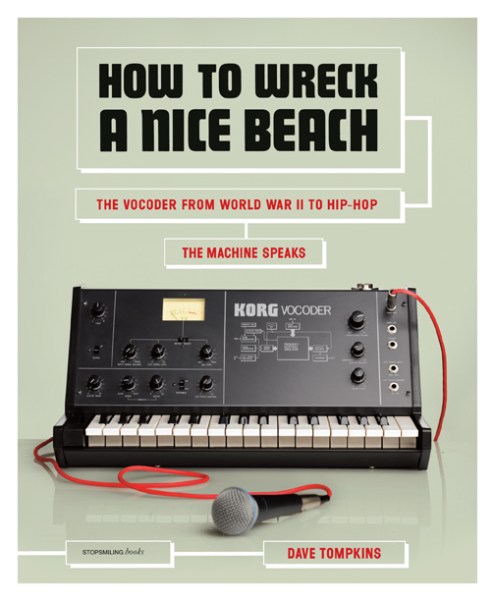
 If you missed this morning’s interview on NPR with Dave Tompkins on his new book How to Wreck a Nice Beach (Melville House) you can listen to it here. Tompkins discusses national defense, A Clockwork Orange, Kraftwerk, hip-hop, and autotune. Good stuff.
Month: May 2010
In Brief — Nick McDonell, Deirdre Madden, and Simon Rich
 Loved loved loved Nick McDonell’s collection of reportage on the US Army in Iraq, The End of Major Combat Operations. It’s not the sort of thing that I’d normally pick up, so I’m glad that it showed up as half of McSweeney’s 34. Embedded with the 1st Cavalry, McDonell offers a series of tightly-drawn close-ups of the soldiers in Iraq, their interpreters, and ordinary folks trying to make a life in Baghdad. Great stuff. You can read an excerpt now at Salon.
 Deirdre Madden’s novel Molly Fox’s Birthday takes place over the course of just one summer day in Dublin, Ireland. Perhaps that sounds a bit familiar, but Madden can’t be accused of trying to riff off Ulysses–even if her book is funny and erudite. Molly Fox, a famous stage actor, is abroad for a few months; in the interim her playwright friend, the unnamed narrator, takes residence in her home. The book opens with a strange dream sequence, full of joy and mystery, which ushers in a host of questions about the intertwined past of the narrator, Molly, and a TV art critic named Andrew. Madden’s book is a sustained investigation into how our friendships endure–and change–over the course of all the masks we wear. Molly Fox’s Birthday, a Picador trade paperback original, is new in the US this month.
Earlier this week I got a review copy of Elliot Allagash by 25-year old SNL writer Simon Rich. Now, normally I’d say all kinds of nasty things about Rich simply because he’s a debut novelist who’s younger than I am and, let’s face it, I’m a jealous hater. But Elliot Allagash‘s initial pages are charming and quite funny and seem to impel further reading, so I’ll probably just do that (i.e., you know, read it) instead of making snap judgments. Here’s one of the better book trailers in recent memory, starring SNL-er Bill Hader and Simon Rich (who apparently borrowed his father’s ill-fitting suit for the occasion):
Elliot Allagash is available May 25, 2010 from Random House.
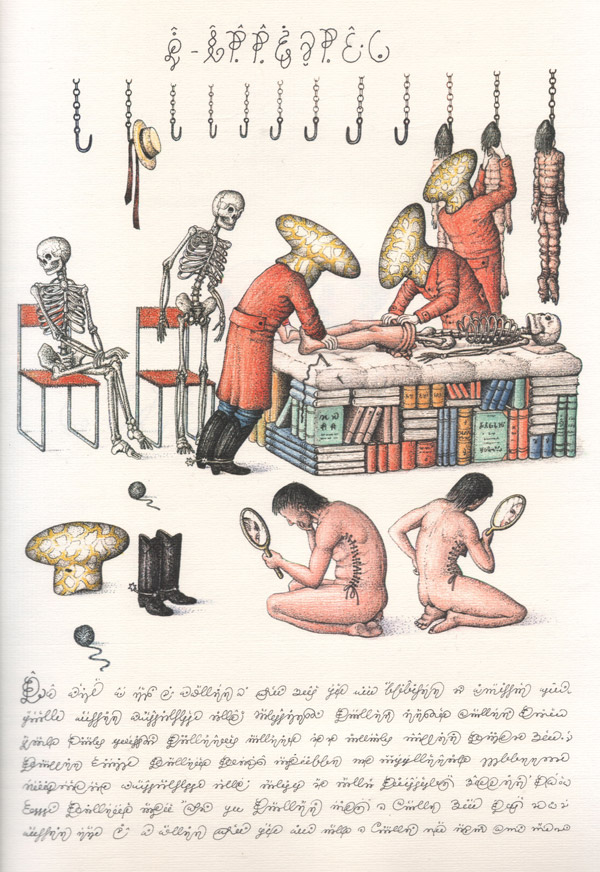
Images from Codex Seraphinianus
Images from Luigi Serafini’s surreal cryptoencyclopedia, Codex Seraphinianus. Learn more by reading Justin Taylor’s essay from the May 2007 issue of The Believer.

Vice Interviews Bret Easton Ellis

Vice interviews Bret Easton Ellis at length. Topics include troublesome editors, that “Cranky old bastard” J.D. Salinger (“who hated us all, by the way”), the weirdness of L.A., and his forthcoming novel Imperial Bedrooms, the sequel to his first big hit Less Than Zero. Here’s a taste of the interview, where BEE talks (mild smack) about Jonathan Franzen, Michael Chabon, and former classmate Jonathan Lethem:
Vice: [I]t seems like people will never get tired of probing you about how much of your fiction is autobiographical.
BEE: I wonder why? No other authors, when I read about them, get asked this. Michael Chabon doesn’t get asked this. Jonathan Franzen doesn’t get asked this. Jonathan Lethem doesn’t get asked this. I get asked this. Maybe because I’m just not as good a writer as they are.Vice: No. You’re as good or better than all of them. But I don’t know, I don’t want to get off topic too much. Never mind.
BEE: I want you to just briefly get off topic. You can say anything you want to me. I really don’t know any of them. I mean, I know them kind of, but I’m not friends with any of them.
Vice: I like Chabon, but I get this weird sense that I wouldn’t like him as a person. Not that that matters, of course.
BEE: No, it doesn’t matter. Always look at the art, not the artist.Vice: But it’s difficult for me sometimes. I think there’s something kind of too cute about Lethem, or at least something too cute about his last novel, Chronic City.
BEE: I really like The Fortress of Solitude. That’s the only book of his I’ve liked. And the only book of Michael Chabon’s that I really liked was Kavalier & Clay.Vice: That was great.
BEE: And I really don’t like anything by Jonathan Franzen but The Corrections, which I think is a great American novel.Vice: Those are kind of their inarguable books I guess, those three.
BEE: Yeah, but everything else by those three is just, you know, I go, “Grrrrrr.” You know, I went to school with Jonathan Lethem.Vice: Oh, really?
BEE: We were in the same class at Bennington.Vice: I didn’t know that. What was he like in school?
BEE: Nice. He was a nice guy. I had no idea that he wanted to be a writer. He wasn’t in any of the main workshops. Like Donna Tartt would be in there, and Jill Eisenstadt. You know, the people who really wanted to write were the people who always managed to get into the major workshop that term. And Jonathan never got into any of them. And then I got a galley in the mail a long time after we graduated, and it was for a novel by Jonathan Lethem about talking animals or something. And I was like, “What the hell is this?”
Brontë Sisters Power Dolls!
Biblioklept Interviews Librarian Josh Jubinsky about the Jacksonville Public Library’s Zine Collection
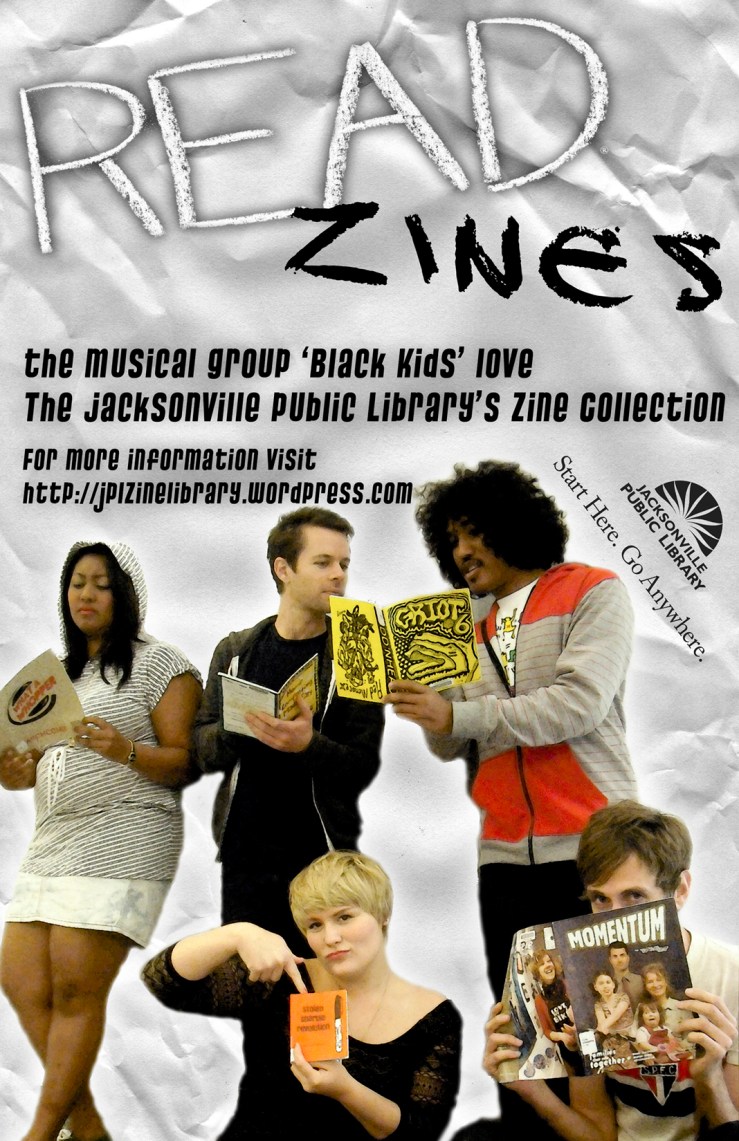
 Jacksonville Public Library’s Zine Collection is one of the first–and largest– such collections in the Southeastern United States. Librarian and collection archivist Josh Jubinsky was kind enough to talk to Biblioklept about the collection, the essence of punk, the future of zines in an increasingly technologically-mediated world, and the million-fart bill. We corresponded via email, although we could have done the interview in person easily–in full disclosure, I should mention that Josh lives down the street from Biblioklept World Headquarters.
Biblioklept: What is a zine?
Josh Jubinsky: A zine is a self-published pamphlet that ranges in format, size and topic. Although zines are clearly something dating back to the chapbooks of beat poets, to early science fiction fanzines and writings, to the 1960’s super hero comic zines such as Alter Ego which help spearhead a comics industry focusing more of masked avengers than horror and romance stories – my involvement with them has been only over the last 10 or so years and from a predominantly punk background. Whether the zines are music fanzines, literary journalistic diatribe, or DIY projects of a particular focus they are grounded largely in a punk music subculture and involve some sort of activism or simply an independent alternative media appeal. Physically speaking, a zine is typically a stack of 8 1/2 x 11 paper folded in half and stapled along the folded edge – although size and format does drastically vary.
B: Tell us a little bit about the Zine Collection at the Jacksonville Library.
JJ: The collection at the library had it’s grand opening party during the October Artwalk of 2009. It was started mostly on donations we had accumulated from my contacts from having a record store and distro [Deadtank distribution — ed.] (the store for 2 years, and the distro about 8.). We’ve gotten some funding from the library that, while it may not be much money compared to many other library activities, it goes a long way when you’re purchasing zines that cost $1-$2 a piece. Everything in the collection circulates, nothing is purely a reference material. As of now we have about 500 zines, and most everything has been checked out at least once. The circulation stats are great considering the size of the collection, averaging around 100 – 150 items a month.
Personally, it’s become a great vehicle for me to branch out into other programming at the library. I work in children’s library so in the past my programming outlets were confined to children’s programming – storytimes, outreaches to schools. I took that and applied my personal tastes and preferences to the job by teaching guitar lessons, doing classes on bike repair and safety, getting a children’s band together and having kids play all the instruments à la Rock Camp. But that sort of personal job molding increases tenfold when you can do programming in the name of the zine collection. The outreaches are to the Harvest of Hope Festival, to Cinema Sounds, to punk rock shows in warehouses. The programs are bands playing and zine authors reading or being part of a panel discussion. And that focuses back on my being in the children’s department. I started and now run a weekly creative writing and comic drawing class for kids called Zine Machine. The projects the kids work on get put into a zine that becomes part of the library collection. We’re not just creating library patrons, we’re creating authors.
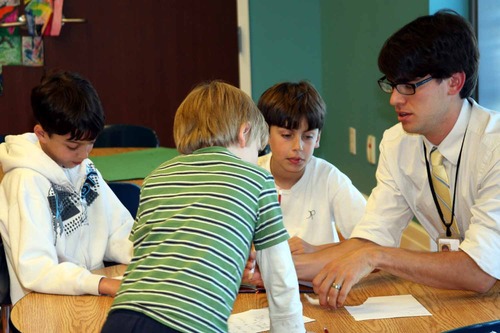
B: Zine Machine sounds really cool. What are some of the things the kids are writing about?
JJ: The first issue was just completed. It’s writings, collages, comics, etc. from January to April. The writing covers everything from short bios on themselves (with self-portraits of course) to designing a car. Some writing prompts are for basic journal entries, writing a review of a book, movie, or video game, asking things like what sot of super powers they’d like to have and why, describing how they think libraries could be better. . . It’s really interesting to see what kids come up with and how they approach the writing and the comics. The class is for kids ages 8-13, though I can’t seem to say no to the 7 years olds that show up. To talk about the difference between a magazine and a zine and have the kids understand that – to be exposed to what an advertisement is and why they are in magazines – to learn about why zines are important and how hey can do this themselves – it’s all really empowering for anybody, especially young kids. Before these kids even have it ingrained in them that “writing is hard” or “what you do isn’t good enough” or “it’s hard to get published” – they are learning and experiencing the opposite. The next issue won’t be from as long a time period of writing.
We’re focusing all month on a single project of designing a country. They are drawing maps, flags, and currency, making laws and deciding things like the country motto and tree. I am so excited about it. The variations in projects from kid to kid are so vast. The variation is amazingly refreshing – amazingly unique- for someone who’s only been alive for 8 years. Some kids have currency that is all based on roman numerals they look up, and others – the king of the country “Only Boys!” has currency based on farts. Everything from a 5 fart coin to a 1,000,000 fart bill. The class is hilarious and fun.
B: I guess you know you’ve made it when your face is on the million-fart bill.
One of the things I like about zines is that they tend to be the products of a very personal, different perspective; they tend to be obsessive and weird. Do you have any particular favorites from the collection you could highlight for us?
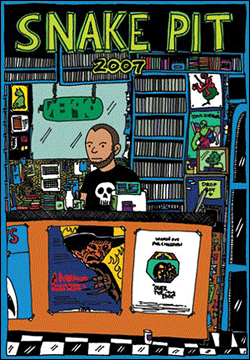 JJ: One that I really enjoyed and I wish I saw more of is A La Maison. It’s a french zine, written in English though. It’s a guide to the city of Lyon, France by some people who live there. Definitely a punk perspective on the city, maybe like a punk travel guide. It goes through the city section by section with what bars, falafel places and record stores are best. And it comes with a CDR of all these bands from Lyon. It’s amazing. The people who put out the zine set up a show for my band [Josh is in about seventy bands –ed.] when we toured Europe. I got the zine for the library when their band came through Florida on tour. Touring with your band selling a zine and CDR for a few bucks, advertising how awesome your town is – it’s amazing. Another favorite of mine is a zine called Snakepit. It’s perfect for the short attention span comic reader. Books compiling the issues focus on an entire year of his life, where every three panels is a day. Some Florida ones I love are America? by Travis Fristoe and Seven Inches to Freedom by Joe Lachut. Travis is just an amazing writer that I can’t recommend enough. Joe’s zine is primarily about music, record collecting in terms of hardcore punk. We have the book version of Zine Yearbook 9; it’s a good “best of” type-thing that helps find what you like.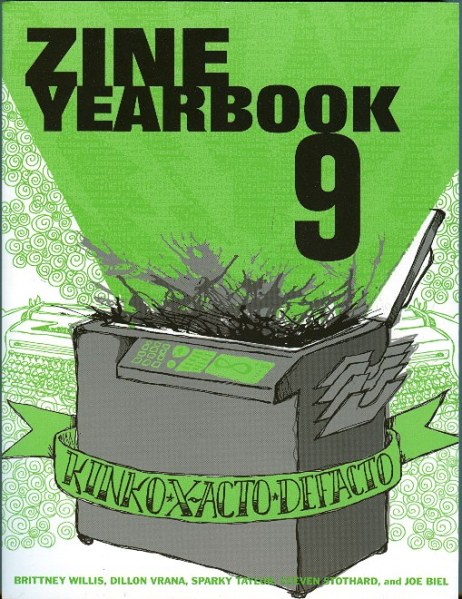
B: You bring up punk music, which many people closely associate with zines. What about non-punk zines? Or is zine-making punk in and of itself, despite aesthetics/ideology/taste/style?
JJ: We’re getting into really loaded words here, and I don’t think a conversation about what I think is punk and not punk will be too helpful for anyone. But yes, there are plenty of “non-punk” zines in terms of subject matter. Though to me they almost all seem like something punk – indeed not by musical interest, but an aesthetic appeal or just the fact that you’re doing a zine. People may not identify with being punk in some way, but if you do a zine you have a lot in common with punk. In terms of like doing it yourself, being part of a grassroots publishing world – in part, the medium is the message. I can’t really separate myself from that, although lots of bizarre gray areas exist. Are those little religious pamphlets people leave at the post office punk? Are these zines? That’s people expressing themselves, right? And they are sharing there thoughts at a grassroots level. Essentially, they already have the most published book in the world working for them. Take for example the Zine Machine zine. Nine year old kids aren’t automatically punk for contributing to a zine. But more punk than a kid who didn’t, maybe? It’s a very empowering exercise. It’d definitely be appreciated by anyone I’d consider punk. Does that sound too insular?
The zine collection is definitely helping me to branch out and find zines that aren’t somehow tied to the music scene I’m part of, to find zines besides fanzines, or amazing literary zines that are of course full of punk culture references or that I first got into because I know the author some other way (his or her band, label, meeting them at a show). Being a part of creating this is helping me understand it all more.
B: Why are zines important or meaningful in the age of the blogging? How are zines different than blogs? Is technology bad for zines? What’s the future of zines?
 JJ: Maybe this sounds like an overused reason for me (since it’s the same main reason I give when people ask why I have records), but, essentially that zines are tangible. Personally, that tangibility helps me remember them. I can barely tell you what I read online yesterday, but I can tell you about the book or zine I’m reading. You can bring zines along when you go on a tour or go fishing or go to the bathroom or sit in the park – and you don’t have to have an expensive device you must charge to read them. They also exude a sense of time and place. A zine is self-contained, obviously not in literary or musical references, but you can’t get bored with it and click to an updated version. You can’t add it to your blog reader. Like a record, it’s not convenient. It’s romantic. You aren’t jogging while listening to an audio book – you aren’t trying to maximize productivity. You sit, enjoy and get fresh air at the same time.
The interruptions are minuscule compared to reading something online. Right now as people are reading this I bet they have other windows open – your friend messaging you, some work you need to finish, your email. These readers won’t read this without clicking over to something else. What sort of compromises are we making, as readers, with this convenience? How much are we losing from what we really want to be doing by always trying to do something else in tandem? Technology isn’t bad for zines, it’s just different. Blogs and zines, these have very different cultures around them. You used to mail order zines from a paper catalog or get them at your local record store. Those catalogs are gone. Those stores stay open largely because some kid who doesn’t care about his credit is paying rent on his credit card, or people live in the back room. I’m not saying any of this is good or bad, it’s just different. The idea of convenience is literally changing our landscape. Sometimes it’s more convenient to work around modern day conveniences, and even when it’s not, you want to because it’s what you love. Zines help me relax. I like [love — ed.] your blog and I have one too, but – the internet is so full of crap. It just adds to the rushed feeling of our days. Increasingly days are becoming more and more just a series of errands and obligations. When I want to read something, I don’t want to be in front of the same machine, sitting in the same position, probably at the same place, that I do work at.
I see the future of zines as a larger part of what Jacksonville and Florida is about. Our collection here is great and items circulate rampantly. On the librarian level, we just presented at the Florida Library Association conference to roaring optimism. People are scheduling us to teach classes about how to start a zine collection. I’m hoping the local populous answers this collection’s existence, answers the authors whose work are represented with works of their own. What you do, what you write, what you create can be part of the library. It’s not lowering the bar for what we catalog – we use the same standards any other department does. It’s adjusting the aperture of our collection. We’re letting in more light, more opinions, more voices. The goal of a library it is to create equality, to level the playing field. Any economic background or any ethnic group, the library is here for you to use. Now, more than ever, it’s here not just for its community to become it’s patron, but part of its collection.
B: Have you ever stolen a book?
JJ: How dare you! I work at a library!
“The Founding Mothers” — David Eagleman’s Mother’s Day Thought Experiment
Very cool thought experiment at Slate by David Eagleman, author of Biblioklept fave Sum. He begins: “In honor of Mother’s Day, I’m going to spend five seconds thinking about each woman in the proud line of matriarchs who brought me here.” Here’s an excerpt from near the end:
Eleven months into the project I’ve reached my great5,797,443 grandmother, who in her youth breaks her hipbone when lightning strikes her from a boulder. This leaves her with a scarred hide and a strange gait, but she grows to be unusually large and is able to bark with such ferocity that her pack is saved by her on several occasions. Consumed with maternal passion, she nudges her progeny under sheltering branches whenever the skies darken.
A Few Thoughts on Starting Don Quixote
Inspired by Roberto Bolaño, who called it his favorite book, sections of Adam Thirlwell’s The Delighted States, Time’s Flow Stemmed’s recent review, and my own sense of literary duty, I picked up Edith Grossman’s translation of Miguel de Cervantes’ epic Don Quixote last week.
I’ve read chunks of the book over the years, but I’ve probably read more about it than I have the thing itself–never a good thing for a reader who aspires to literary criticism, I suppose. Anyway. I’m surprised at a few things so far. First–and I don’t know if it’s an effect of Grossman’s translation–but the book is very easy to read–breezy, almost. Not what I was expecting for a 400 year old tome famous for dismantling high/low distinctions. I’m also surprised at how terribly sad the book is. Most critics cite the book’s humor, its farcical depiction of Don Quixote as a satire on romanticism and erudition. But it’s also about a guy who’s batshit insane, who repeatedly attacks those he comes into contact with, and who also catches a beating himself now and then.
My goal is to finish it this summer–or at least the first book, anyway. The restaurant I ate lunch in today flaunted statues of Don Quixote and Sancho Panza, which I would take to be an auspicious sign if I believed in such things (I don’t). I couldn’t really get a good picture of both with my phone’s camera so I did my best for a headshot of Quixote. The sun’s light seems to obscure him but perhaps that’s appropriate.

“The Wasted Land” — A 1996 David Foster Wallace Profile Unearthed
Big kudos to Craig Ferman who tracked down and posted an obscure 1996 Details magazine profile on David Foster Wallace by David Strietfield. You can read the full profile here. Here are a few (heartbreaking) excerpts:
He doesn’t want Infinite Jest to be seen as autobiography, which it’s not. On the other hand, if Wallace hadn’t been hospitalized in 1988 and put on a suicide watch, he might not have written so accurately about Kate, a character in Infinite Jest who keeps trying to die: “It’s like something horrible is about to happen,” she explains to her doctor, “there’s the feeling that there’s something you have to do right away to stop it but you don’t know what it is you have to do, and then it’s happening, too, the whole horrible time, it’s about to happen and also it’s happening all at the same time.” . . .
Unlike some of his characters, Wallace managed to extricate himself from the downward spiral before the damage became permanent—these days, he won’t even drink beer. Moreover, he got the raw impetus for a new book. By this point, Wallace was living in upstate New York, in an apartment so small that he had to move everything onto the bed when he wanted to write. “It was,” he says, “like spending two years in a submarine.”
Recently he found a Mennonite house of worship, which he finds sympathetic even if the hymns are impossible to sing. “The more I believe in something, and the more I take something other than me seriously, the less bored I am, the less self-hating. I get less scared. When I was going through that hard time a few years ago, I was scared all the time.” It’s not a trip he ever plans to take again.
Chris Ware’s Rejected Fortune Cover
Cartoonist Chris Ware’s rejected cover for Fortune magazine. Guess his satire was too sharp. Via RW730:
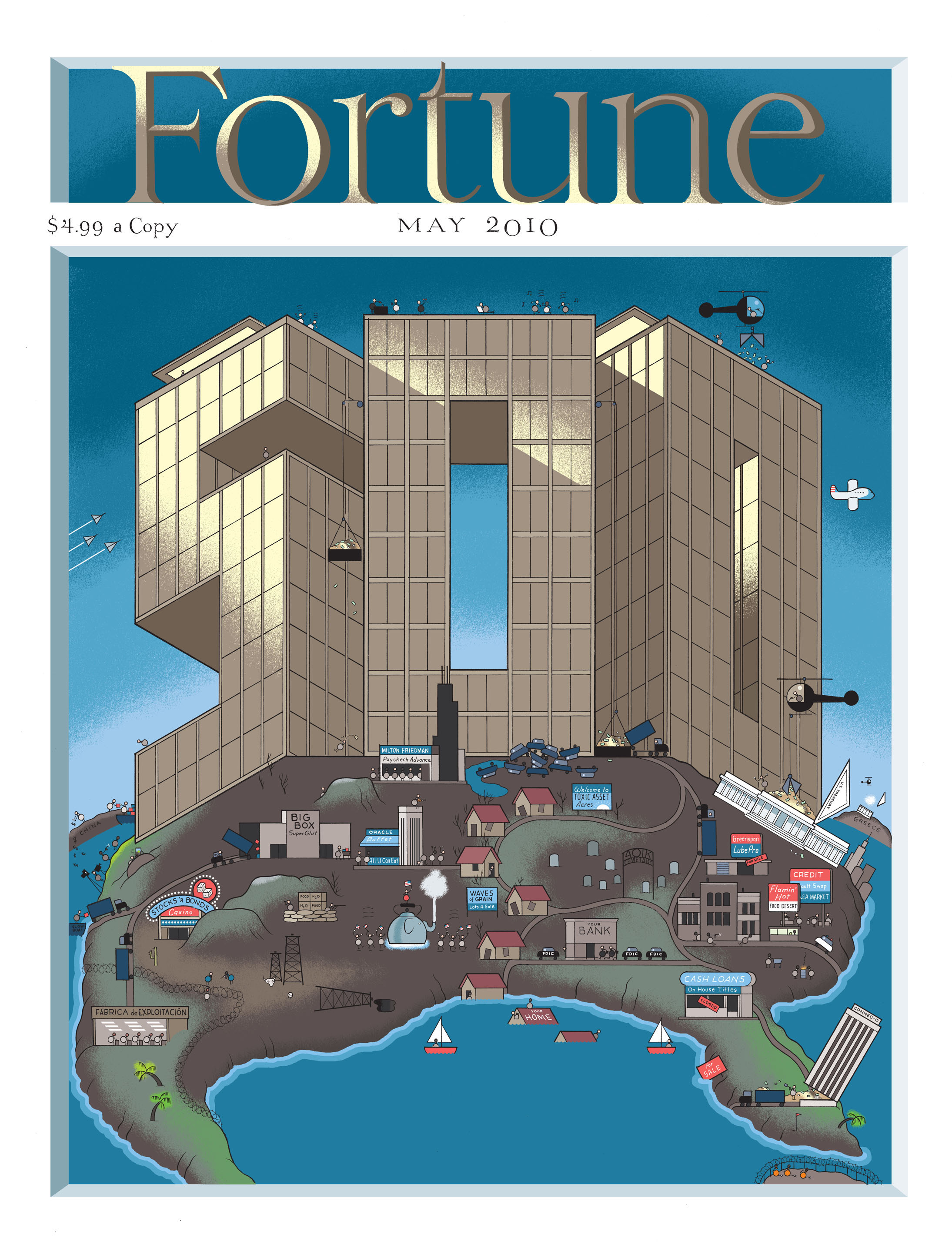
“A Thoroughfare of Learning” — Nietzsche and Teacher Appreciation Week
National Teacher Appreciation Week winds down today. Have you thanked that special teacher in your life? Or at least thought about him or her? No? Maybe your teachers scarred you. Or ruined you. It’s possible. But probably not all of them. I’m sure at least one of them was really important to you, right?
Although Biblioklept World Wide Industries brings in the kind of moolah that allows me to literally swim in cash à la Scrooge McDuck, I retain my day job as a teacher of literature in the English language; I do this because, you know, I care. So me waxing heavy on why teachers matter and blah blah blah is sort of like waitresses overtipping other waitresses because, you know, they know. So I’ll just say that teachers are generally overworked, underpaid, and perhaps undervalued in our society, and I appreciate all of you–all of you who taught me and shaped me and mentored me and shared your wisdom with me, and all of you who I’ve worked with over the years who’ve inspired me to do better and be better. Thanks.
So well anyway, I’ve been skimming again through Nietzsche’s highly-aphoristic volume Human, All Too Human for the past week, and came across this passage, section 200, Caution in writing and teaching. Quoting in full:
Whoever has once begun to write and felt the passion of writing in himself, learns from almost everything he does or experiences only what is communicable for a writer. He no longer thinks of himself but rather of the writer and his public. He wants insight, but not for his own use. Whoever is a teacher is usually incapable of doing anything of his own for his own good. He always thinks of the good of his pupils, and all new knowledge gladdens him only to the extent that he can teach it. Ultimately he regards himself as a thoroughfare of learning, and in general as a tool, so that he has lost seriousness about himself.
Ouch! Did Nietzsche just call me a tool? I think his words are actually quite insightful–teachers do think of themselves as instruments through which they may better their pupils. But I don’t think that that is the only end for knowledge as far as teachers are concerned, and I don’t think that that makes teachers unserious about knowledge. Knowledge-as-enlightenment and self-improvement is great of course, but knowledge-as-transcendence–that is, knowledge as wisdom and experience that can be passed from person to person, shared, communicated–that’s what’s really meaningful in life.
“Adam & Eve” — Robert Crumb

Bill Murray Reads Emily Dickinson (and Other Poets)
Bill Murray reads poems by Billy Collins, Lorine Niedecker, and Emily Dickinson to the workers who built the Poets House literary center in museum. The applause after “I dwell in possibility” is golden.
The Believer’s 2010 Reader Survey: (What Some Jokers Thought Were) The Best Books of 2009
The Believer‘s annual reader survey is always kinda sorta interesting. Here’s the top 20; linked titles go to Biblioklept reviews:
- Buffalo Lockjaw—Greg Ames
- Everything Ravaged, Everything Burned—Wells Tower
- Let the Great World Spin—Colum McCann
- Invisible—Paul Auster
- A Gate at the Stairs—Lorrie Moore
- Inherent Vice—Thomas Pynchon
- Juliet, Naked—Nick Hornby
- Chronic City—Jonathan Lethem
- Wolf Hall—Hilary Mantel
- The Anthologist—Nicholson Baker
- Await Your Reply—Dan Chaon
- Ablutions—Patrick deWitt
- The Interrogative Mood—Padgett Powell
- The Financial Lives of the Poets—Jess Walter
- This Is Where I Leave You—Jonathan Tropper
- Sag Harbor—Colson Whitehead
- The Way Through Doors—Jesse Ball
- The Children’s Book—A. S. Byatt
- Summertime—J. M. Coetzee
- The Selected Works of T. S. Spivet—Reif Larsen
Read the rest of the list–honorable mentions–here. Read Biblioklept’s Best of 2009 list here.
“They Just Want to Look in the Mirror” — William T. Vollmann
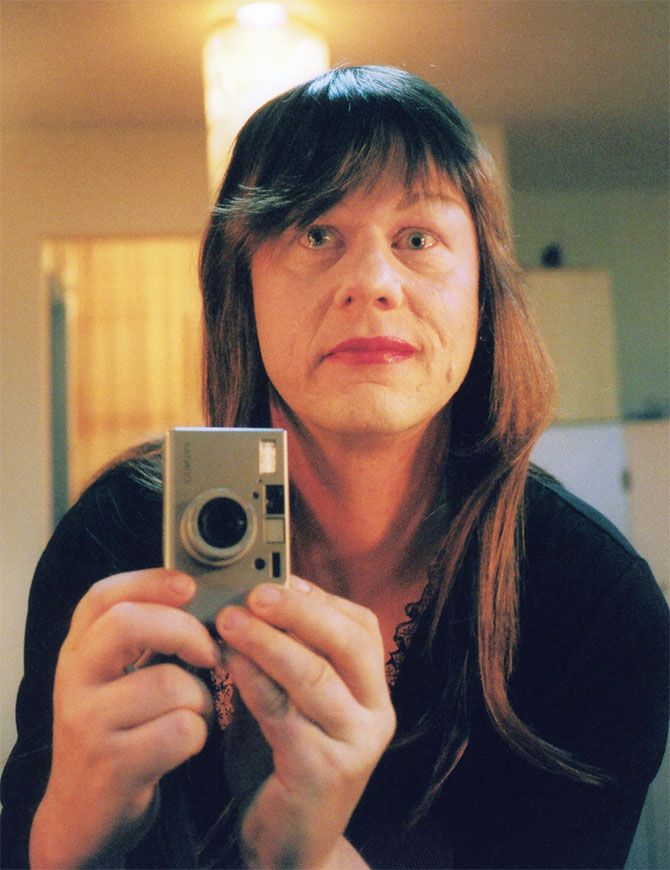
Vice Magazine has published an excerpt from William T. Vollmann’s new book Kissing the Mask: Beauty, Understatement, and Femininity in Japanese Noh Theater. Read the excerpt here. The picture above is Mr. Vollmann in drag, one of the themes of his new book. Here is an excerpt from Vice‘s excerpt:
The best mask of my self (never mind my soul) may well be a chujo; my forehead will soon begin to wrinkle in a pattern like roots, and I often bear the sparse mustache, gaping mouth, and blackened teeth of the loyal bewildered lieutenant; perhaps I belong to the Komparu school. What the artist inscribed on the back of my face I will never know, being unable to see myself objectively the way a professional Noh actor would. Most of the time I am a sturdy man who wears the same clothes often, preferring garments of lifelong reliability; I shave carelessly and shrug off my latest wrinkles, because anyhow I never possessed even a waki’s hope of being beautiful, nor felt the loss.
Nietzsche’s Draconian Law Against Writers
From Human, All Too Human (aphorism 193):
Draconian law against writers. One should regard a writer as a criminal who deserves acquittal or clemency only in the rarest cases: that would be a way to keep books from getting out of hand.
Butterfly Stories — William T. Vollmann
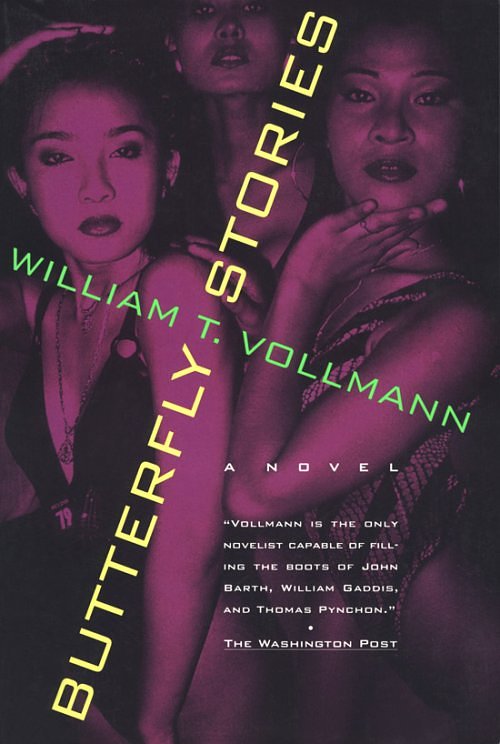
In his 1994 novel Butterfly Stories, William T. Vollmann explores the intense cost of unrelenting idealism. Butterfly Stories is a tragic-comic bildungsroman centered around the life of a protagonist who is almost certainly a semi-autobiographical stand-in for Vollmann. He’s never named in the text; few of the characters are. Instead, he goes by various appellations: the butterfly boy, the boy who wanted to be a journalist, the journalist, the husband. These names square with the protagonist’s painful idealism. He’s a professional alien, a traveler who reports on all the beautiful ugly poor places we Quiet (Ugly) Americans forget about (or never know of in the first place). The main set piece in Butterfly Stories takes place in Thailand and Cambodia:
Once upon a time a journalist and a photographer set out to whore their way across Asia. They got a New York magazine to pay for it. They each armed themselves with a tube of coll soft K-Y jelly and a box of Trojans. The photographer, who knew such essential Thai phrases as: very beautiful!, how much?, thank you and I’m gonna knock you around! (topsa-lopsa-lei), preferred the extra-strength lubricated, while the journalist selected the non-lubricated with special receptacle end. The journalist never tried the photographer’s condoms because he didn’t even use his own as much as (to be honest) he should have; but the photographer, who tried both, decided that the journalist had really made the right decision from a standpoint of friction and hence sensation; so that is the real moral of this story, and those who don’t want anything but morals need read no further.
I’ve quoted the passage at length because I think it delineates a good deal of Vollmann’s program very quickly: whoring-as-gonzo-journalism, a foreshadowing of the sexual grotesquerie to come, blackly ironic humor, and an uncomfortable gap between protagonist and narrator. It’s that gap between the narrator’s ironic detachment and the journalist’s earnest search for meaning–and love–in a world of violence and prostitution that made the book rewarding for me. However, I suspect many will not enjoy (perhaps even hate) this disconnect. The journalist falls in love with several prostitutes throughout the course of the novel, fixating on a Cambodian girl named Vanna in particular. His obsession with Vanna overcomes him, surpasses any rational course of action, and leads him to divorce his wife back in San Francisco in the hopes of marrying a girl he, over time, can no longer even visualize. In short, idealism tortures the protagonist; he’s in love with the idea of love. Late in the novel, he thinks (his thinking framed by the narrator, of course):
Better not to try anything than to be wicked! — That’s how most people acted, and they were probably right, dying their lumpish lives without collecting more than their share of the general blame; but he’d do whatever he was called to do . . .
And later, hallucinating in one of his STD-fueled fevers, he remembers the bully that tormented him back when he was the butterfly boy: “I’m not afraid of you anymore . . . Because I have someone whose life means more to me than mine.” The protagonist’s unrelentingly romanticized view of self-sacrifice is ultimately a defense mechanism against the world’s (equally unrelenting) Darwinian violence.
Vollmann’s milieu of disease-infested, war-torn, economically depressed lands dramatizes this conflict. The violence of the Khmer Rouge, the depravity of prostitution, and the specter of AIDS underpin the novel, and are never mere props for Vollmann, who places his protagonist in a paradoxically privileged vantage point from which to observe, investigate–or ignore–the atrocities of poverty. The book succeeds because of the tension between the narrator’s judgmental, ironic perspective and the protagonist’s big-hearted but ultimately facile dream of a self-sacrificing love. The narrator sees–and lets us see–the ironic selfishness of the protagonist’s dream to save the world, one prostitute at a time.
Just under 300 pages and larded with the author’s spidery black-ink sketches, Butterfly Stories is one of Vollmann’s shorter and more digestible (if that word may be used) volumes. It is bleakly funny, often depressing, and filled with erudite asides on Nobel prizewinners, transvestites, and the benefits of whiskey. And benadryl. Can’t forget the benadryl. Vollmann has an astounding gift for crafting concrete sentences that burst into blistering abstraction, but he can also drift rather aimlessly at times. Does he have an editor? What other literary writer can put out a book of at least 500 pages every year? Butterfly Stories may be a good start for those interested in Vollmann but daunted by his prolific output. It will also repel many readers with its grotesque depictions of sex, which recall Henry Miller and the best of Charles Bukowksi. I liked it very much. Recommended.
 Biblioklept