“Radio” — Denis Johnson

Reading — Berthe Morisot

“All schools are bad” (Thomas Bernhard)

All schools are bad and the one we attend is always the worst if it doesn’t open our eyes. What lousy teachers we had to put up with, teachers who screwed up our heads. Art destroyers all of them, art liquidators, culture assassins, murderers of students.

From Thomas Bernhard’s novel The Loser.

Flannery O’Connor and Her Marvelous Peacock

(More writers with animals).

Paradise — M.C. Escher

Pier Paolo Pasolini: “For me, every object is a miracle”

Songoku, the Monkey King and the Jewelled Hare by the Moon — Tsukioka Yoshitoshi

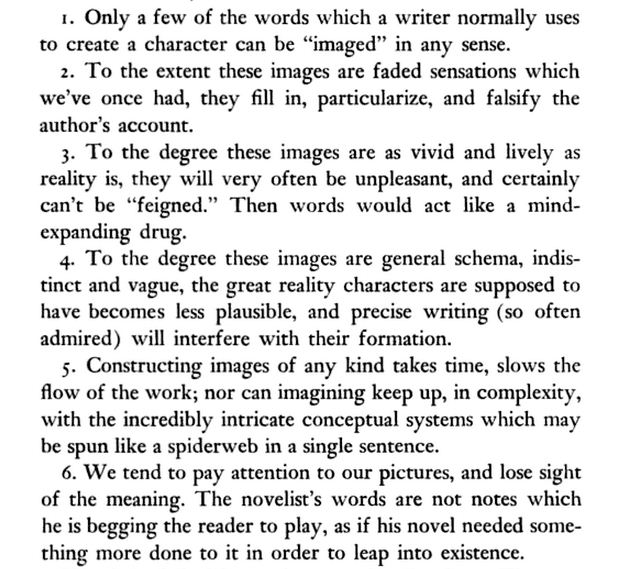
William H. Gass on Character and Images

From William H. Gass’s essay “The Concept of Character in Fiction.”

Spetssom — Anders Zorn

“Gold Soundz” — Pavement

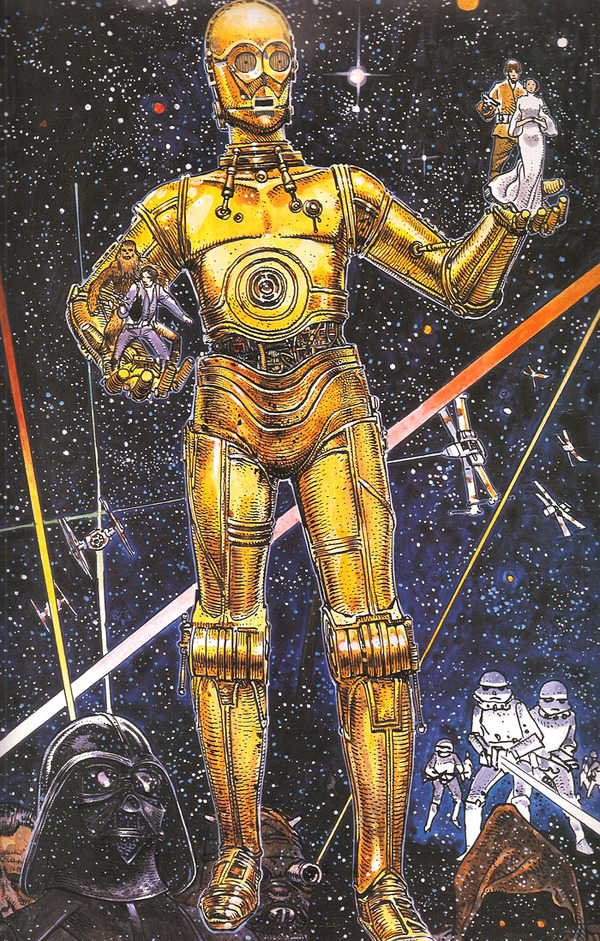
Moebius Star Wars Illustration

(Via).

Take Vladimir Nabokov’s “Good Reader” Quiz

One evening at a remote provincial college through which I happened to be jogging on a protracted lecture tour, I suggested a little quiz—ten definitions of a reader, and from these ten the students had to choose four definitions that would combine to make a good reader. I have mislaid the list, but as far as I remember the definitions went something like this.

Select four answers to the question what should a reader be to be a good reader:

1. The reader should belong to a book club.
2. The reader should identify himself or herself with the hero or heroine.
3. The reader should concentrate on the social-economic angle.
4. The reader should prefer a story with action and dialogue to one with none.
5. The reader should have seen the book in a movie.
6. The reader should be a budding author.
7. The reader should have imagination.
8. The reader should have memory.
9. The reader should have a dictionary.
10. The reader should have some artistic sense.

The students leaned heavily on emotional identification, action, and the social-economic or historical angle. Of course, as you have guessed, the good reader is one who has imagination, memory, a dictionary, and some artistic sense–which sense I propose to develop in myself and in others whenever I have the chance.

—Vladimir Nabokov. Collected in Lectures on Literature.

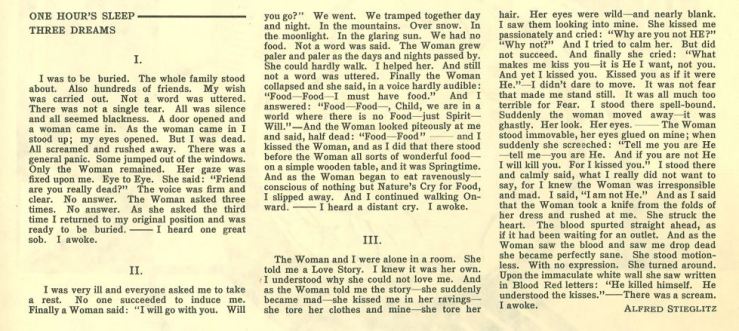
“One Hour’s Sleep—–Three Dreams” — Alfred Stieglitz

From the first issue of 291; via the mighty Ubuweb.

“The Exemplary Happiness That Surely Never Comes Again” — Alvaro Mutis

A woman’s body under the rush of a mountain waterfall, her brief cries of surprise and joy, the movement of her limbs in the brief cries of surprise and joy, the movement of her limbs in the rapid foam that carries red coffee berries, sugar cane pulp, insects struggling to escape the current: this is the exemplary happiness that surely never comes again.

From Alvaro Mutis’s novella The Snows of the Admiral, collected in The Adventures and Misadventures of Maqroll.

The Reader — Federico Zandomeneghi

Feast of the Prodigal Son — Vasily Polenov

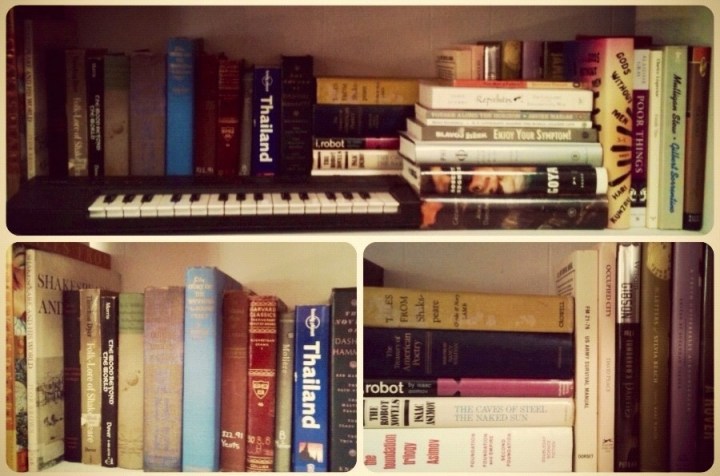
Book Shelves #48, 11.25.2012

20121125-115730.jpg


Book shelves series #48, forty-eighth Sunday of 2012

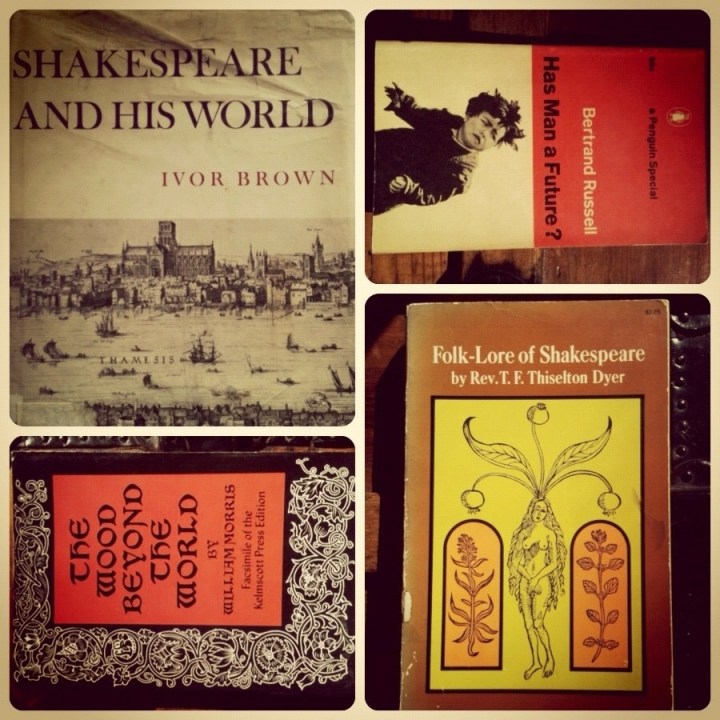
Another doublestocked shelf: The front stack (on the right) are all books I’ve been intending to read at some point, or been reading slowly or piecemeal. Behind and to the left: Lots of old hardbacks—some Yeats, some H.G. Wells, Arthurian legends, and Shakespeare-related texts. A totally misshelved and out-of date Lonely Planet guide (why is it there?). Some Asimov. A few faves:

20121125-115738.jpg