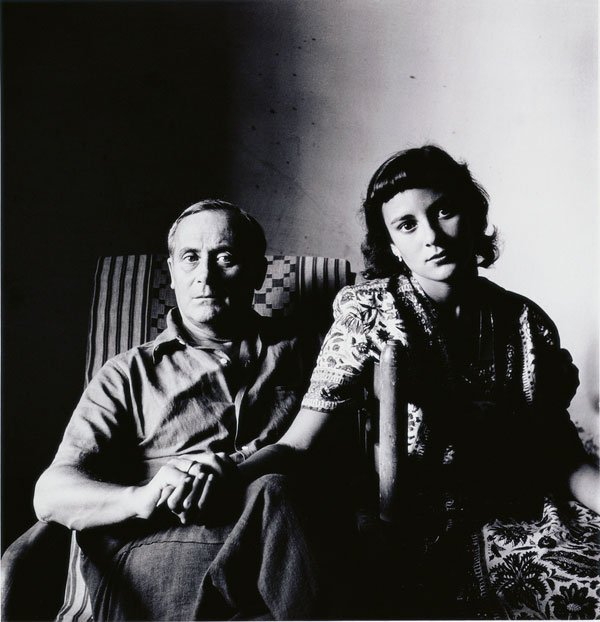
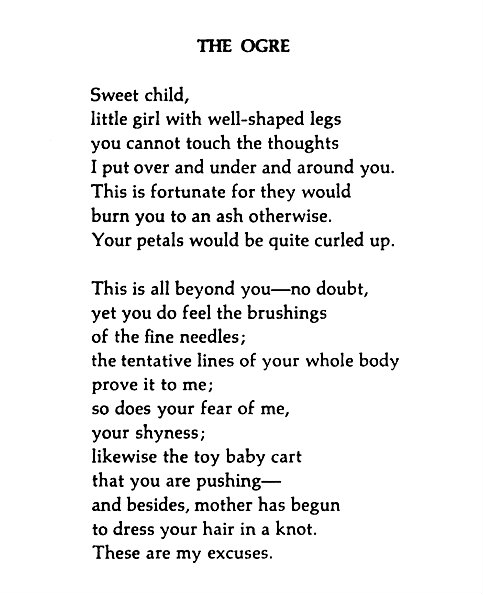
A woman
who loves a woman
is forever young.
The mentor
and the student
feed off each other.
Many a girl
had an old aunt
who locked her in the study
to keep the boys away.
They would play rummy
or lie on the couch
and touch and touch.
Old breast against young breast…
Let your dress fall down your shoulder,
come touch a copy of you
for I am at the mercy of rain,
for I have left the three Christs of Ypsilanti
for I have left the long naps of Ann Arbor
and the church spires have turned to stumps.
The sea bangs into my cloister
for the politicians are dying,
and dying so hold me, my young dear,
hold me…
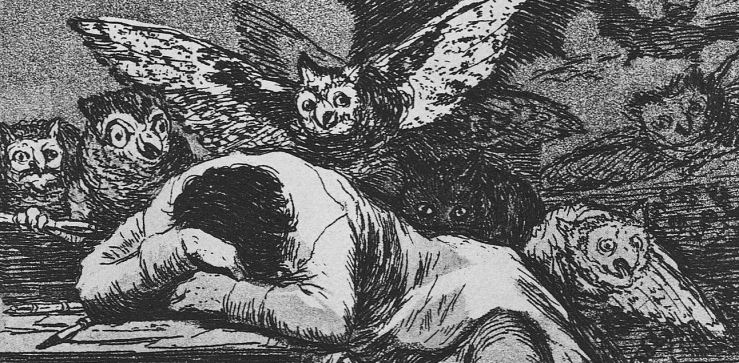
The Sleep of Reason Produces Monsters (detail), Francisco Goya
Composed in 1836, Georg Büchner’s novella-fragment Lenz still seems ahead of its time. While Lenz’s themes of madness, art, and ennui can be found throughout literature, Büchner’s strange, wonderful prose and documentary aims bypass the constraints of his era.
Let me share some of that prose. Here is the opening paragraph of Lenz:
The 20th, Lenz walked through the mountains. Snow on the peaks and upper slopes, gray rock down into the valleys, swatches of green, boulders, firs. It was sopping cold, the water trickled down the rocks and leapt across the path. The fir boughs sagged in the damp air. Gray clouds drifted across the sky, but everything so stifling, and then the fog floated up and crept heavy and damp through the bushes, so sluggish, so clumsy. He walked onward, caring little one way or another, to him the path mattered not, now up , now down. He felt no fatigue, except sometimes it annoyed him that he could not walk on his head. At first he felt a tightening in his chest when the rocks skittered away, the gray woods below him shook, and the fog now engulfed the shapes, now half-revealed their powerful limbs; things were building up inside him, he was searching for something, as if for lost dreams, but was finding nothing. Everything seemed so small, so near, so wet, he would have liked to set the earth down behind an oven, he could not grasp why it took so much time to clamber down a slope, to reach a distant point; he was convinced he could cover it all with a pair of strides.
Büchner sets us on Lenz’s shoulder, moving us through the estranging countryside without any exposition that might lend us bearings. The environment impinges protagonist and reader alike, heavy, damp, stifling. Büchner’s syntax shuffles along, comma splices tripping us into Lenz’s manic consciousness, his mind-swings doubled in the path that is “now up, now down.” We feel the “tightening” in Lenz’s chest as the “rocks skittered away,” as the “woods below him shook” — the natural world seems to envelop him, cloak him, suffocate him. It’s an animist terrain, and Büchner divines those spirits again in the text. The claustrophobia Lenz experiences then swings to another extreme, as our hero, his consciousness inflated, feels “he could cover [the earth] with a pair of strides.
And that baffling line: “He felt no fatigue, except sometimes it annoyed him that he could not walk on his head.” Well.
The end notes to the Archipelago edition I read (translated by Richard Sieburth) offer Arnold Zweig’s suggestion that “this sentence marks the beginning of modern European prose,” as well as Paul Celan’s observation that “whoever walks on his head has heaven beneath him as an abyss.”
Celan’s description is apt, and Büchner’s story repeatedly invokes the abyss to evoke its hero’s precarious psyche. Poor Lenz, somnambulist bather, screamer, dreamer, often feels “within himself something . . . stirring and swarming toward an abyss toward which he was being swept by an inexorable force.” Lenz is the story of a young artist falling into despair and madness.
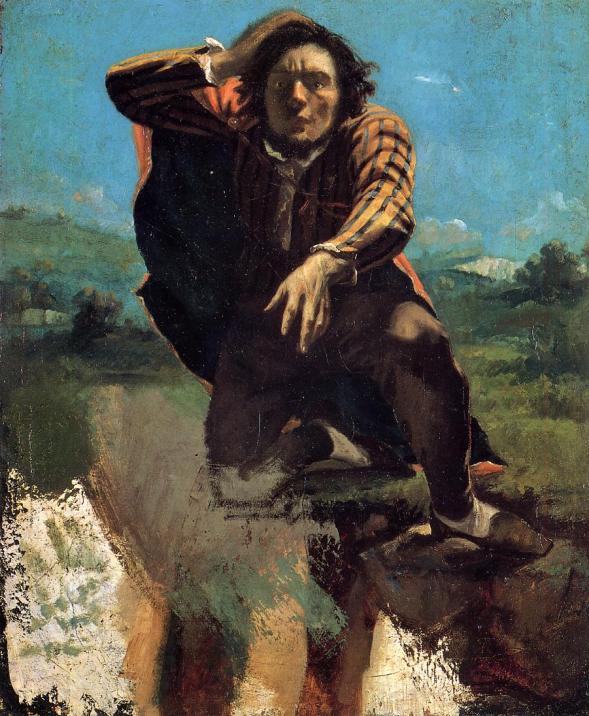
The Man Made Mad by Fear, Gustave Courbet
But perhaps I should offer a more lucid summary. I’ll do that in the next paragraph, but first: Let me just recommend you skip that paragraph. Really. What I perhaps loved most about Lenz was piecing together the plot through the often elliptical or opaque experiences we get via Büchner’s haunting free indirect style. The evocation of a consciousness in turmoil is probably best maintained when we read through the same confusion that Lenz experiences. I read the novella cold based on blurbs from William H. Gass and Harold Bloom and I’m glad I did.
Here is the summary paragraph you should skip: Jakob Lenz, a writer of the Sturm and Drung movement (and friend and rival to Goethe), has recently suffered a terrible episode of schizophrenia and “an accident” (likely a suicide attempt). He’s sent to pastor-physician J.F. Oberlin, who attends to him in the Alsatian countryside in the first few weeks of 1778. During this time Lenz obsesses over a young local girl who dies (he attempts to resurrect her), takes long walks in the countryside, cries manically, offers his own aesthetic theory, prays, takes loud late-night bath in the local fountain, receives a distressing letter, and, eventually, likely—although it’s never made entirely explicit—attempts suicide again and is thusly shipped away.
Büchner bases his story on sections of Oberlin’s diary, reproduced in the Archipelago edition. In straightforward prose, these entries fill in the expository gaps that Büchner has so elegantly removed and replaced with the wonder and dread of Lenz’s imagination. The diary’s lucid entries attest to the power of Büchner’s speculative fiction, to his own art and imagination, which so bracingly take us into a clouded mind.
In Sieburth’s afterword (which also offers a concise chronology of Lenz’s troubled life), our translator points out that “Like De Quincey’s “The Last Days of Immanuel Kant” or Chateaubriand’s Life of Rancé, Büchner’s Lenz is an experiment in speculative biography, part fact, part fabrication—an early nineteenth-century example of the modern genre of docufiction.” Obviously, any number of postmodern novels have explored or used historical figures—Public Burning, Ragtime, and Mason & Dixon are all easy go-to examples. But Lenz is more personal than these postmodern fictions, more an exploration of consciousness, and although we are treated to Lenz’s ideas about literature, art, and religion, we access this very much through his own skull and soul. He’s not just a placeholder or mouthpiece for Büchner.
Lenz strikes me as something closer to the docufiction of W.G. Sebald. Perhaps it’s all the ambulating; maybe it’s the melancholy; could be the philosophical tone. And, while I’m lazily, assbackwardly comparing Büchner’s book to writers who came much later: Thomas Bernhard. Maybe it’s the flights of rant that Lenz occasionally hits, or the madness, or the depictions of nature, or hell, maybe it’s those long, long passages. The comma splices.
Chronologically closer is the work of Edgar Allan Poe, whose depictions of manic bipolar depression resonate strongly with Lenz—not to mention the abysses, the torment, the spirits, the doppelgängers. Why not share another sample here to illustrate this claim? Okay:
The incidents during the night reached a horrific pitch. Only with the greatest effort did he fall asleep, having tried at length to fill the terrible void. Then he fell into a dreadful state between sleeping and waking; he bumped into something ghastly, hideous, madness took hold of him, he sat up, screaming violently, bathed in sweat, and only gradually found himself again. He had to begin with the simplest things in order to come back to himself. In fact he was not the one doing this but rather a powerful instinct for self preservation, it was as if he were double, the one half attempting to save the other, calling out to itself; he told stories, he recited poems out loud, wracked with anxiety, until he came to his sense.
Here, Lenz suspends his neurotic horror through storytelling and art—but it’s just that, only a suspension. Büchner doesn’t blithely, naïvely suggest that art has the power to permanently comfort those in despair; rather, Lenz repeatedly suggests that art, that storytelling is a symptom of despair.
The Last Judgment (detail), Rogier van der Weyden
What drives despair? Lenz—Lenz—Büchner (?)—suggests repeatedly that it’s Langeweile—boredom. Sieburth renders the German Langeweile as boredom, a choice I like, even though he might have been tempted to reach for its existentialist chain-smoking cousin ennui. When Lenz won’t get out of bed one day, Oberlin heads to his room to rouse him:
Oberlin had to repeat his questions at length before getting an answer: Yes, Reverend, you see, boredom! Boredom! O, sheer boredom, what more can I say, I have already drawn all the figures on the wall. Oberlin said to him he should turn to God; he laughed and said: if I were as lucky as you to have discovered such an agreeable pastime, yes, one could indeed wile away one’s time that way. Tedium the root of it all. Most people pray only out of boredom; others fall in love out of boredom, still others are virtuous or depraved, but I am nothing, nothing at all, I cannot even kill myself: too boring . . .
Lenz fits in neatly into the literature of boredom, a deep root that predates Dostoevsky, Camus, and Bellow, as well as contemporary novels like Lee Rourke’s The Canal and David Foster Wallace’s The Pale King.
Ultimately, the boredom Lenz circles around is deeply painful:
The half-hearted attempts at suicide he kept on making were not entirely serious, it was less the desire to die, death for him held no promise of peace or hope, than the attempt, at moments of excruciating anxiety or dull apathy bordering on non-existence bordering on non-existence, to snap back into himself through physical pain. But his happiest moments were when his mind seemed to gallop away on some madcap idea. This at least provided some relief and the wild look in his eye was less horrible than the anxious thirsting for deliverance, the never-ending torture of unrest!
The “never-ending torture of unrest” is the burden of existence we all carry, sloppily fumble, negotiate with an awkward grip and bent back. Büchner’s analysis fascinates in its refusal to lighten this burden or ponderously dwell on its existential weight. Instead, Lenz is a character study that the reader can’t quite get out of—we’re too inside the frame to see the full contours; precariously perched on Lenz’s shoulder, we have to jostle along with him, look through his wild eyes, gallop along with him on the energy of his madcap idea. The gallop is sad and beautiful and rewarding. Very highly recommended.
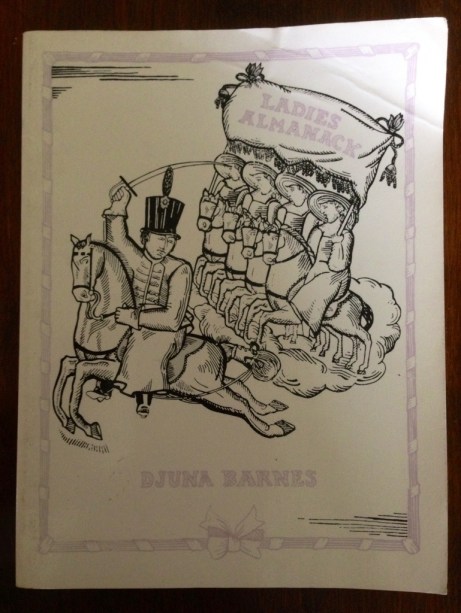
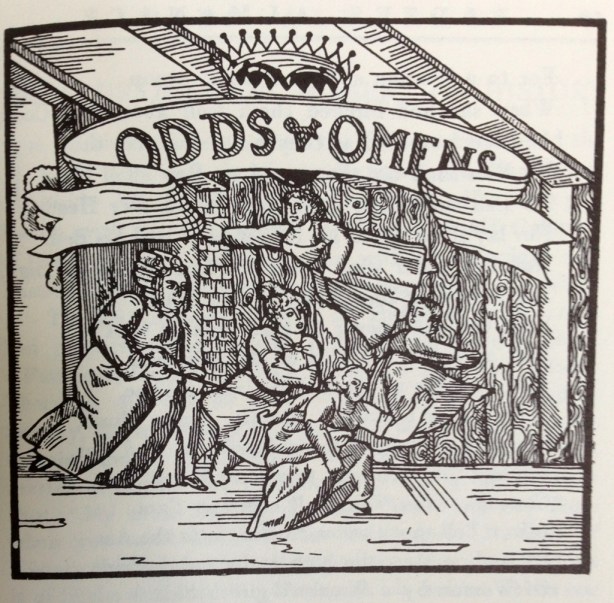
Like most Real Americans, I like to go to the bookstore on my birthday. At my favorite spot, I picked up Djuna Barnes’s Ladies Almanack, which intrigued me with its weird shape, odd typeset, strange conceit, and wonderful opening line: “Now this be a Tale of as fine a Wench as ever wet Bed.” Oh, and illustrated by Barnes too:
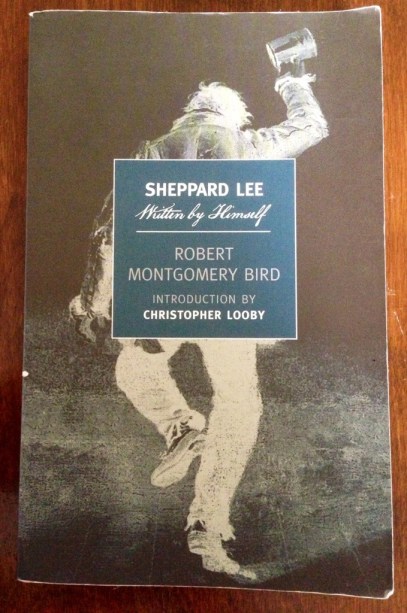
Sheppard Lee by Robert Montgomery Bird: This one looks fascinating. NYRB’s blurb:
Robert Montgomery Bird’s Sheppard Lee is a scathingly humorous and utterly original novel out of Andrew Jackson’s America, the story of an incorrigible loafer who inadvertently discovers the power to project his soul into dying men’s bodies and to take over their lives. So gifted, Sheppard Lee sets off in pursuit of happiness, only to find himself thwarted at every turn. In growing desperation he shifts from body to body, now a rich man and now poor man, now a madman and now a slave, a bewildered spirit trapped in the dark maze of American identity.
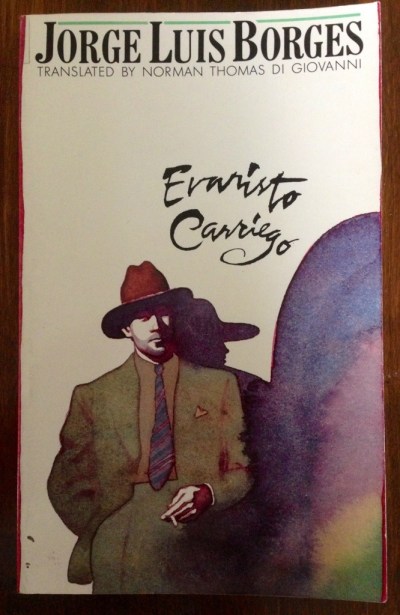
Also: Evaristo Carriego, a study of the poet by Jorge Luis Borges.
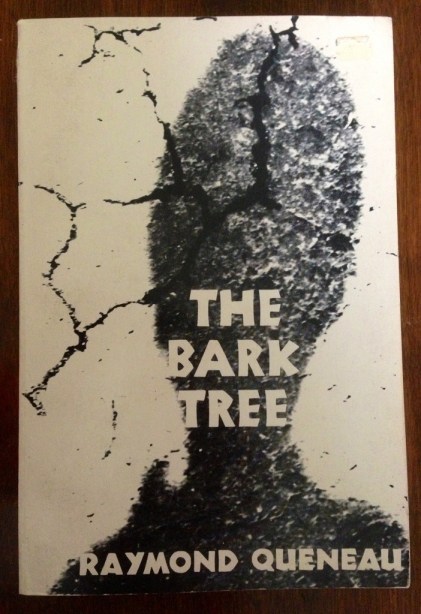
And The Bark Tree, also translated as Witch Grass. I don’t know if this is the right starting place for Queneau, but it was a nice used New Directions edition, so, hey.









 Biblioklept