“All art constantly aspires towards the condition of music”

Kafka/Cerebus (Books Acquired, 1.31.2014 + Bonus Circumcision Anecdote)

20140207-154015.jpg

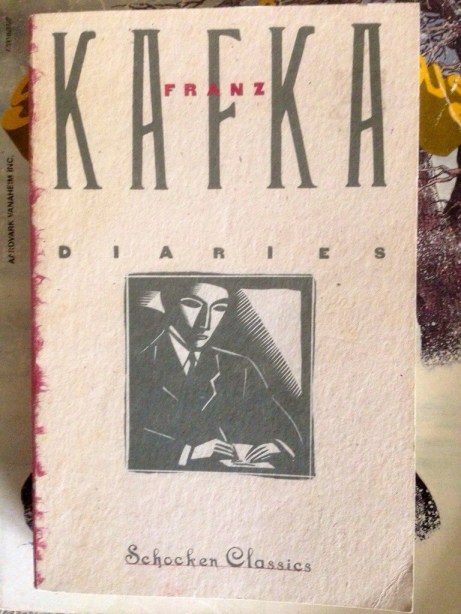
Picked up books last week, not needing them, but hey.

A digest of Kafka’s diaries; good stuff, great random reading.

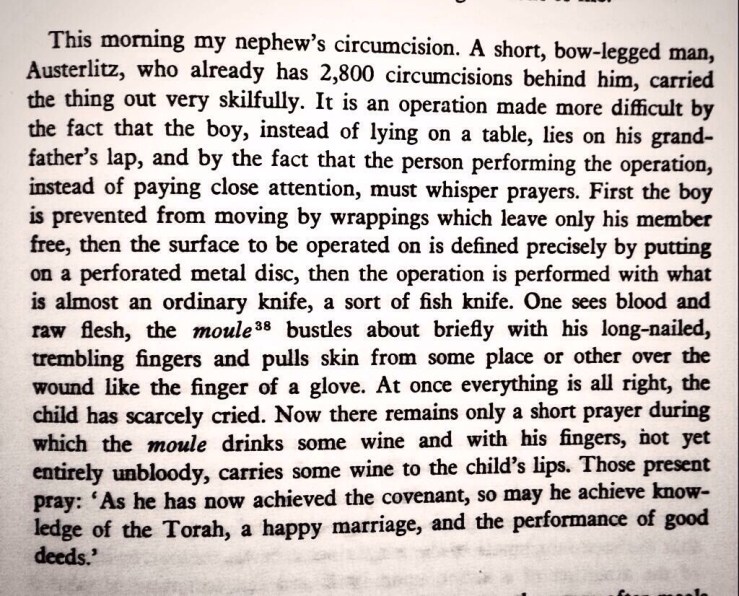
This is a great little anecdote:

20140207-154023.jpg

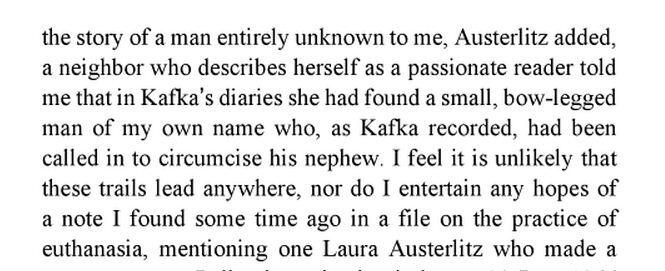
Austerlitz is of course the name of a W.G. Sebald novel. From that novel:

20140207-154029.jpg

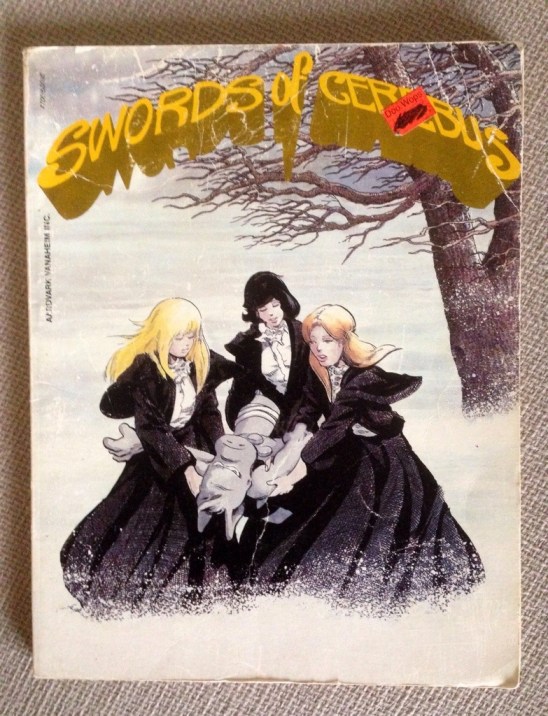
I also picked up the sixth issue of Swords of Cerebus by Dave Sim. It’s a second printing and in terrible shape and I already have the issues in other forms (reprint and graphic novel) but it’s still a pretty rare find. And I am a nerd.

20140207-154036.jpg

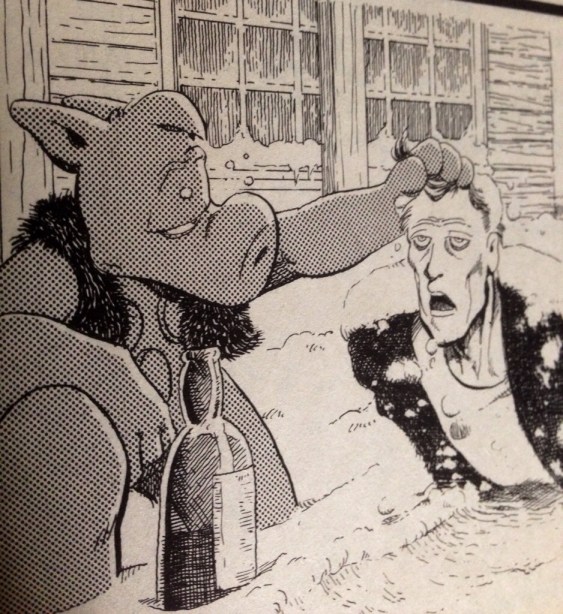
The book also includes a short little excellent wordless comic, “A Night on the Town,” where Cerebus parties with a corpse. I have the reprint somewhere else, but still:

20140207-154043.jpg

The Future Is Old — Marijn Akkermans

000130image

“Our Friend Judith” — Doris Lessing

“Our Friend Judith”

by Doris Lessing

I stopped inviting Judith to meet people when a Canadian woman remarked, with the satisfied fervour of one who has at last pinned a label on a rare specimen: “She is, of course, one of your typical English spinsters.”

This was a few weeks after an American sociologist, having elicited from Judith the facts that she was fortyish, unmarried and living alone, had enquired of me: “I suppose she has given up?” “Given up what?” I asked: and the subsequent discussion was unrewarding.

Judith did not easily come to parties. She would come after pressure, not so much-on felt-to do one a favour, but in order to correct what she believed to be a defect in her character. “I really ought to enjoy meeting new people more than I do,” she said once. We reverted to an earlier pattern of our friendship: odd evenings together, an occasional visit to the cinema, or she would telephone to say: “I’m on my way past you to the British Museum . Would you care for a cup of coffee with me? I have twenty minutes to spare.”

It is characteristic of Judith that the word spinster, used of her, provoked fascinated speculation about other people. There are my aunts for instance: aged seventy-odd, both unmarried, one an ex-missionary from China, one a retired matron of a famous London hospital. These two ladies live together under the shadow of the cathedral in a country town. They devote much time to the Church to good causes, to letter writing with friends all over the world, to the grandchildren and the great-grandchildren of relatives. It would be a mistake, however, on entering a house in which nothing has been moved for fifty years, to diagnose a condition of fossilized late-Victorian integrity. They read every book reviewed in the Observer or the Times, so that I recently got a letter from Aunt Rose enquiring whether I did not think that he author of On the Road was not-perhaps?-exaggerating his difficulties. They know a good deal about music, and write letters of encouragement to young composers they feel are being neglected!– “You must understand that anything new and original takes time to be understood.” Well-informed and critical Tories, they are as likely to dispatch telegrams of protest to the Home Secretary as letters of support. These ladies, my aunts Emily and Rose, are surely what is meant by the phrase English spinster. And yet, once the connection has been pointed out, there is no doubt that Judith and they are spiritual cousins, if not sisters. Therefore it follows that one’s pitying admiration for women who have supported manless and uncomforted lives needs a certain modification? Continue reading ““Our Friend Judith” — Doris Lessing”

A Quiet Hour — John White Alexander

0de9999a173984efb74e8e6e7af22848

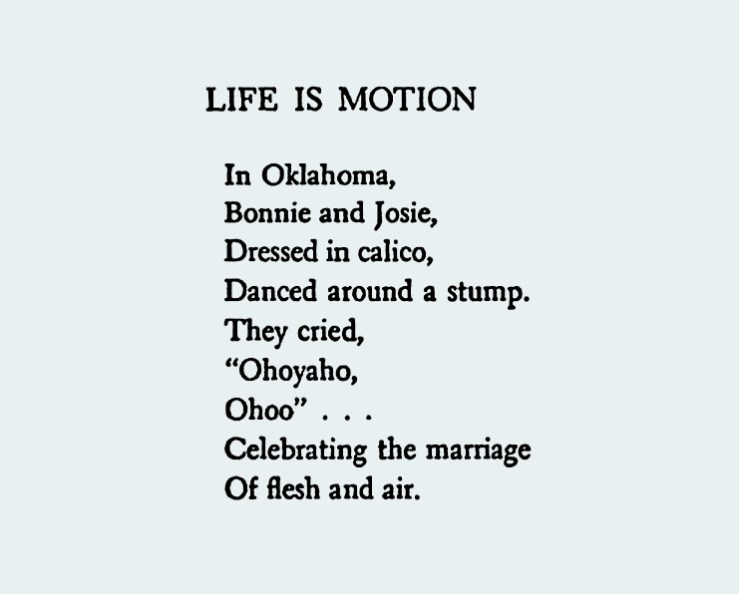
“Life Is Motion” — Wallace Stevens

life

Small Talk — Hans-Georg Rauch

159

Fear (Life in Hell)

fear

“William S. Burroughs was a high modernist and a writer of complete trash”

William S. Burroughs was a high modernist and a writer of complete trash; the two are by no means mutually exclusive. He was a genius and a bullshit artist. If his books prove anything, it’s that profundity and inanity can skip along merrily arm in arm. Sometimes his work was heavyweight, sometimes dumb. To borrow a Freudian analogy, sometimes a cigar really is just a cigar and sometimes a man who taught his asshole to talk really is just a man who taught his asshole how to talk (what it’s saying and why is a different story). The paradox of the freest writer being a lifelong junky is really no paradox at all. As a user and pedlar, he understood the mechanics of how it all worked and kindly pointed it out to us, even as he was picking our pockets. He was a stiff morose patrician figure in a suit (so much so his friend Herbert Huncke initially took him for an undercover agent) with books and a history full of debauchery and depravity. If there seems a contradiction there, it’s in the eye of the beholder. What makes Burroughs’ work seem prophetic is that he was perceptive enough to see that people don’t change, the secret to all successful prophecies. We’re still continually re-enacting Greek myths on a daily basis and always will. Psychosis may mirror the zeitgeist (whether it’s paranoia of witches, Jews, communists, drug fiends, Islamists or whoever next) but its essential character doesn’t alter. The bugs and the feds are always with us and there’s only so much one man can do, calling door to door with an extermination kit.

From Darran Anderson’s insightful and thorough essay “The Third Man: William Burroughs at 100.”

Nitrogen Cycle/10 Reds — Leslie Shows

“A Still Moment” — Eudora Welty

“A Still Moment”

by Eudora Welty

Lorenzo Dow rode the Old Natchez Trace at top speed upon a race horse, and the cry of the itinerant Man of God, “I must have souls! And souls I must have!” rang in his own windy ears. He rode as if never to stop, toward his night’s appointment.

It was the hour of sunset. All the souls that he had saved and all those he had not took dusky shapes in the mist that hung between the high banks, and seemed by their great number and density to block his way, and showed no signs of melting or changing back into mist, so that he feared his passage was to be difficult forever. The poor souls that were not saved were darker and more pitiful than those that were, and still there was not any of the radiance he would have hoped to see in such a congregation.

“Light up, in God’s name!” he called, in the pain of his disappointment.

Then a whole swarm of fireflies instantly flickered all around him, up and down, back and forth, first one golden light and then another, flashing without any of the weariness that had held back the souls. These were the signs sent from God that he had not seen the accumulated radiance of saved souls because he was not able, and that his eyes were more able to see the fireflies of the Lord than His blessed souls.

“Lord, give me the strength to see the angels when I am in Paradise,” he said. “Do not let my eyes remain in this failing proportion to my – loving heart always.”

He gasped and held on. It was that day’s complexity of horse-trading that had left him in the end with a Spanish race horse for which he was bound to send money in November from Georgia. Riding faster on the beast and still faster until he felt as if he were flying he sent thoughts of i love with matching speed to his wife Peggy in Massachusetts. He found it effortless to love at a distance. He could look at the flowering trees and love Peggy in fullness, just as he could see his visions and love God. And Peggy, to whom he had not spoken until he could speak fateful words (“Would she accept of such an object as him?”), Peggy, the bride, with whom he had spent a few hours of time, showing of herself a small round handwriting, declared all in one letter, her first, that she felt the same as he, and that the fear was never of separation, but only of death.

Lorenzo well knew that it was Death that opened underfoot, that rippled by at night, that was the silence the birds did their singing in. He was close to death, closer than any animal or bird. On the back of one horse after another, winding them all, he was always riding toward it or away from it, and the Lord sent him directions with protection in His mind.

Just then he rode into a thicket of Indians taking aim with their new guns. One stepped out and took the horse by the bridle, it stopped at a touch, and the rest made a closing circle. The guns pointed.

“Incline!” The inner voice spoke sternly and with its customary lightning-quickness. Continue reading ““A Still Moment” — Eudora Welty”

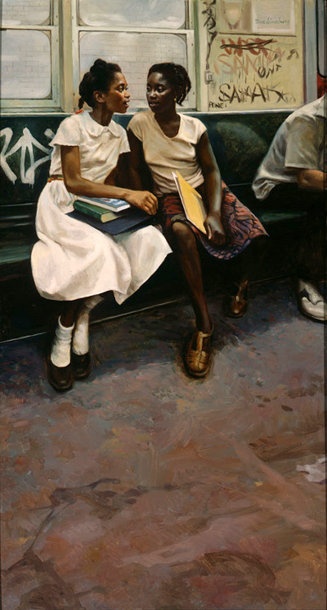
Girls with Books — Max Ginsburg

mg

Still Life With Fruit, Pie, and Drinking Vessels — Jan Davidsz de Heem

An Excerpt From Reiner Stach’s “Kafka: The Years of Insight”

Franz-Kafka-with-his-first-fiancee-Felice-Bauer-in-1917-Mono-Print

No sooner was Felice out of her mother’s sight, however, than she blossomed. At the train station in Marienbad, she greeted an anxious Kafka in the tender and natural way he had always hoped for in vain in Berlin. Even the stumbling blocks they had to deal with on their first days in Marienbad–switching hotels, constant rain, and of course Kafka’s sensitivities and rigid habits–did nothing to change that. “Tribulations of living together,” he noted on the third day, and although he was undoubtedly aware that Felice had far more reason to complain, he twisted the knife a little deeper: “Impossibility of living with F. Impossibility of living with anyone at all.”

Continue reading “An Excerpt From Reiner Stach’s “Kafka: The Years of Insight””

Watch Commissioner of Sewers, A 1991 Documentary About William S. Burroughs

100 Point William Burroughs Riff

1. William Seward Burroughs, born February 5th, 1914, St. Louis, Missouri. Died August 2, 1997, Lawrence, Kansas.

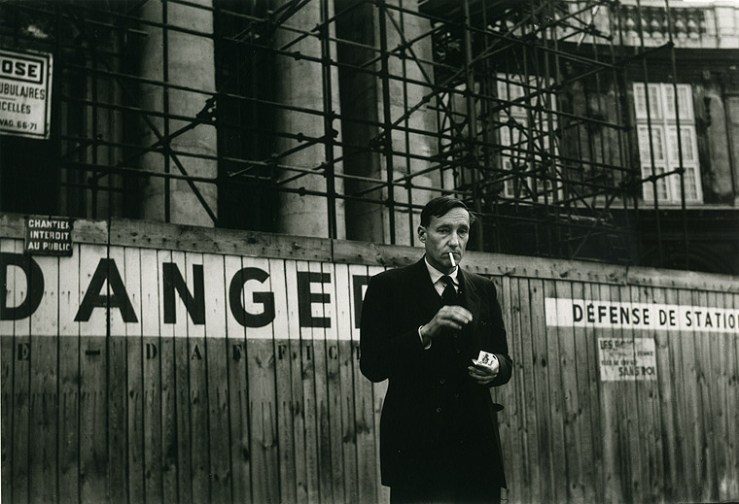
2. Danger.

danger

3. William S. Burroughs, a writer no one reads and everyone references.

4. Point three is not fair: I’m sure you, dearest reader, have read Burroughs, continue to read Burroughs, will read Burroughs, etc.

5. But, points three and four, it’s the idea of Burroughs, Burroughs-as-luminary, Burroughs-as-symbol, that our culture persists in keeping.

6. Re: Points three, four, five: Burroughs the poser who posed for so many photographs, who couldn’t say no to a spoken word CD or a collaboration or a fucking Nike ad.

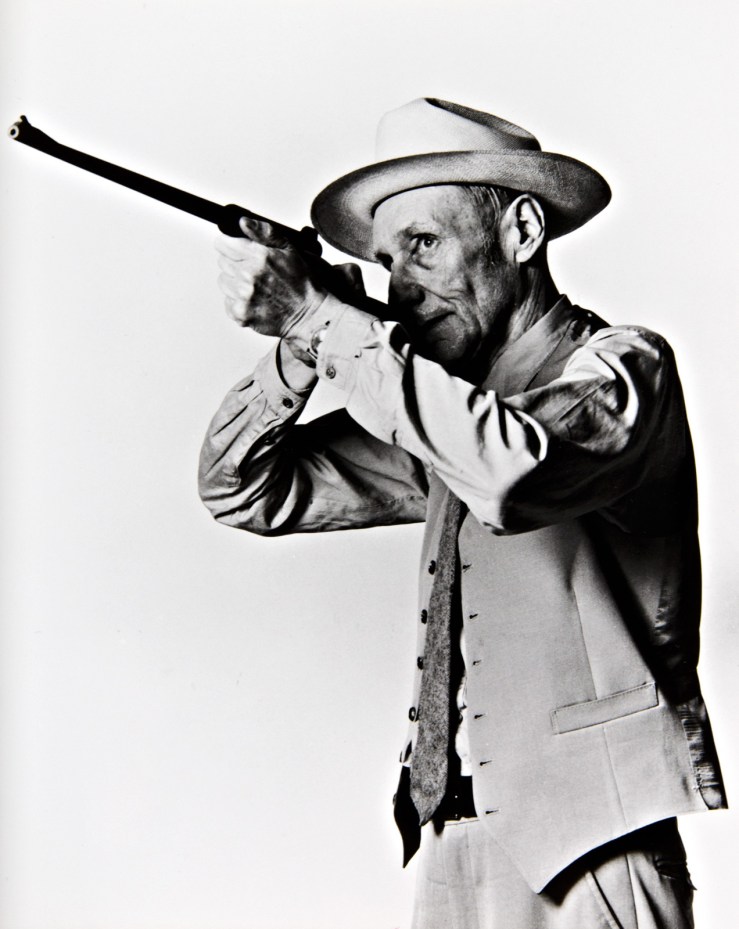
7. And always with the guns.

burroughs_maplethorpe

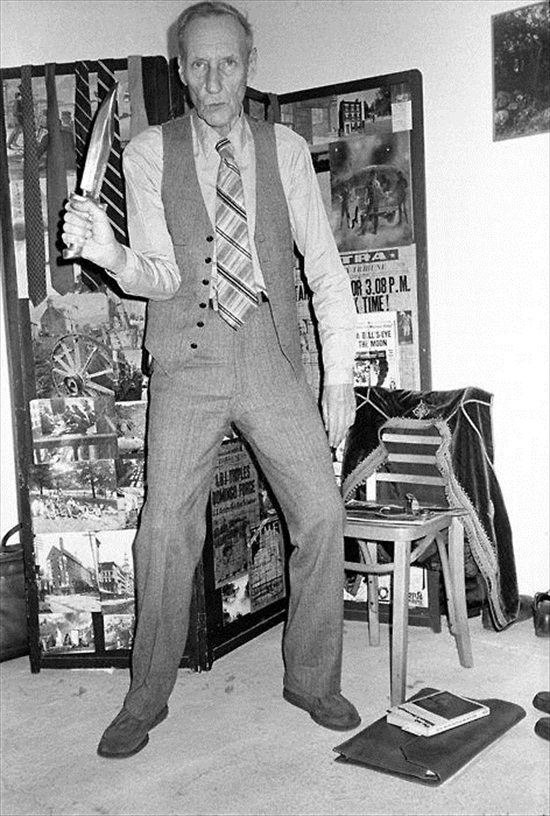
8. And the knives.

william burroughs wielding a knife

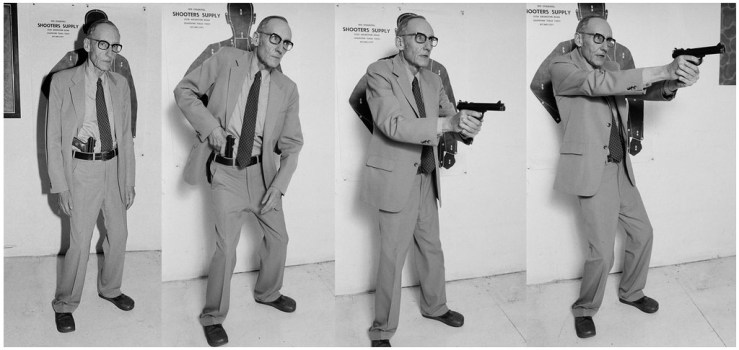
9. And the guns.

william-burroughs-guns1

10. If you want to know what licenses Picasso to break the human form (and other forms) into cubes and lines and colors and figured abstractions, go gander at Aunt Pepa or First Communion.

11. If you want to know what licenses Duchamp to call a urinal a work of art, go gander at Portrait of the Artist’s Father.

12. If you want to know what licenses Burroughs to call Naked Lunch a novel, go read Junkie or Queer.

13. Junkie, the first Burroughs novel I read, is a high modernist classic.

14. Typewriter.

05

15. Shoes.

03

16. The reader is invited, most cordially, to print this riff and cut it into little bits and rearrange it.

17. The reader is invited, most cordially, to cut and paste this riff into a new digital document and rearrange it.

18. William Burroughs, curator.

19. William Burroughs, collaborator. Continue reading “100 Point William Burroughs Riff”

William Burroughs Wielding a Big Ass Sword

William-S-Burroughs-william-s-burroughs-24369330-600-1003