Summer Days — Georgia O’Keeffe

For Kate — Kurt Schwitters

Heavenly Pop Hits: The Flying Nun Story

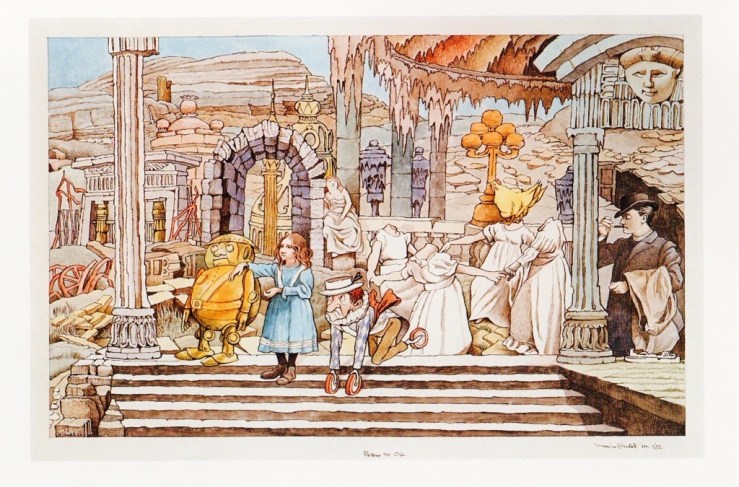
Return to Oz — Maurice Sendak

20140701-082357-30237640.jpg

“The Emerald” — Donald Barthelme

Hey buddy what’s your name?
My name is Tope. What’s your name?
My name is Sallywag. You after the emerald?
Yeah I’m after the emerald you after the emerald too?
I am. What are you going to do with it if you get it?
Cut it up into little emeralds. What are you going to do with it?
I was thinking of solid emerald armchairs. For the rich.
That’s an idea. What’s your name, you?
Wide Boy.
You after the emerald?
Sure as shootin’.
How you going to get in?
Blast. That’s going to make a lot of noise isn’t it?
You think it’s a bad idea?
Well…What’s your name, you there?
Taptoe.
You after the emerald?
Right as rain. What’s more, I got a plan.
Can we see it?
No it’s my plan I can’t be showing it to every—
Okay okay. What’s that guy’s name behind you?
My name is Sometimes.
You here about the emerald, Sometimes?
I surely am.
Have you got an approach?
Tunneling. I’ve took some test borings. Looks like a stone cinch.
If this is the right place.
You think this may not be the right place?
The last three places haven’t been the right place.
You tryin’ to bring me down?
Why would I want to do that? What’s that guy’s name, the one with the shades?
My name is Brother. Who are all these people?
Businessmen. What do you think of the general situation, Brother?
I think it’s crowded. This is my pal, Wednesday.
What say, Wednesday. After the emerald, I presume?
Thought we’d have a go.
Two heads better than one, that the idea?
Yep.
What are you going to do with the emerald, if you get it?
Facet. Facet and facet and facet.

Read the rest of Donald Barthelme’s short story “The Emerald.”


Taking Stock — Hans Haacke

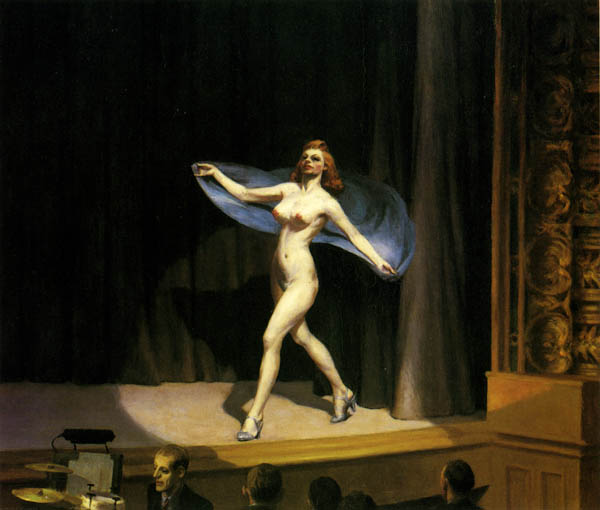
Girlie Show — Edward Hopper

girlieshow1941

Screen Test: Susan Sontag — Andy Warhol

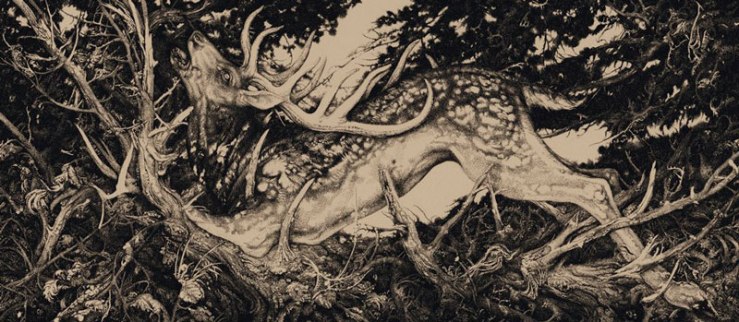
Moist Stag — Vania Zouravliov

Zouravliov_web02

A Riff on Stuff I Wish I’d Written About In the First Half of 2014

1. Leaving the Sea, Ben Marcus: A weird and (thankfully) uneven collection that begins with New Yorkerish stories of a post-Lish stripe (like darker than Lipsyte stuff) and unravels (thankfully) into sketches and thought experiments and outright bizarre blips. Abjection, abjection, abjection. The final story “The Moors” is a minor masterpiece.

2. Novels and stories, Donald Barthelme: A desire to write something big and long on Barthelme seems to get in the way of my writing anything about Barthelme. Something short then? Okay: Barthelme is all about sex. He posits sex as the solution (or at least consolation) for the problems of language, family, identity, etc.

3. Enormous Changes at the Last Minute and The Little Disturbances of Man by Grace Paley: I gorged on these precise, sad, funny stories, probably consuming too many at once (by the end of Little Disturbances I had the same stomach ache I got after eating too much of Barthelme’s Sixty Stories at once).

4. Concrete by Thomas Bernhard: Unlike the other novels I’ve read by Bernhard, Concrete seems to offer some kind of vision of moral capability, one which the narrator is unable to fully grasp, but which is nevertheless made available to the reader in the book’s final moments, accessible only through the novel’s layers of storytelling. Continue reading “A Riff on Stuff I Wish I’d Written About In the First Half of 2014”

Words is oh such a twitch-tickling problem to me all my life (Roald Dahl’s The BFG)

20140628-161806-58686560.jpg

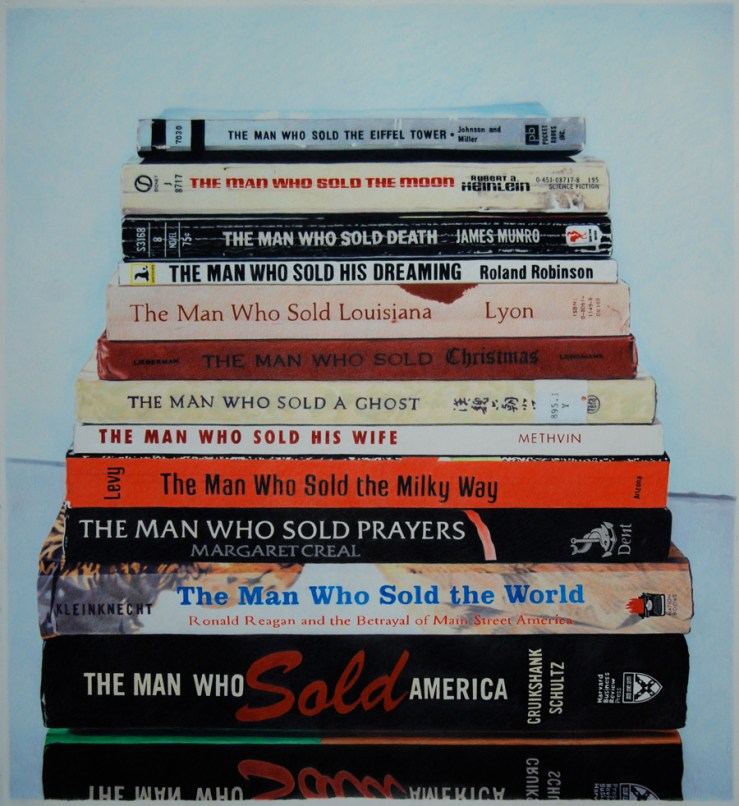
The Sell Out — Eric Yahnker

2012_TheSellOut_79x72

In Search of Moebius

Theseus — Edward Burne-Jones

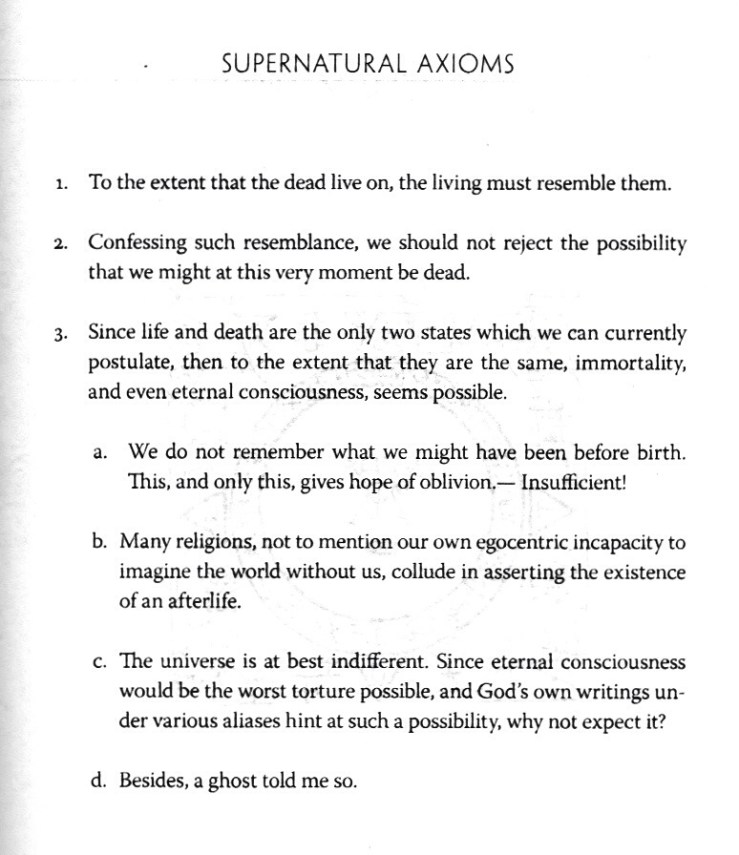
“Supernatural Axioms” — William T. Vollmann

20140629-115848-43128982.jpg

From William T. Vollmann’s forthcoming collection, Last Stories and Other Stories.

Studies of the Arm — Leonardo da Vinci

An Extract From Reiner Stach’s “Kafka: The Years of Insight”

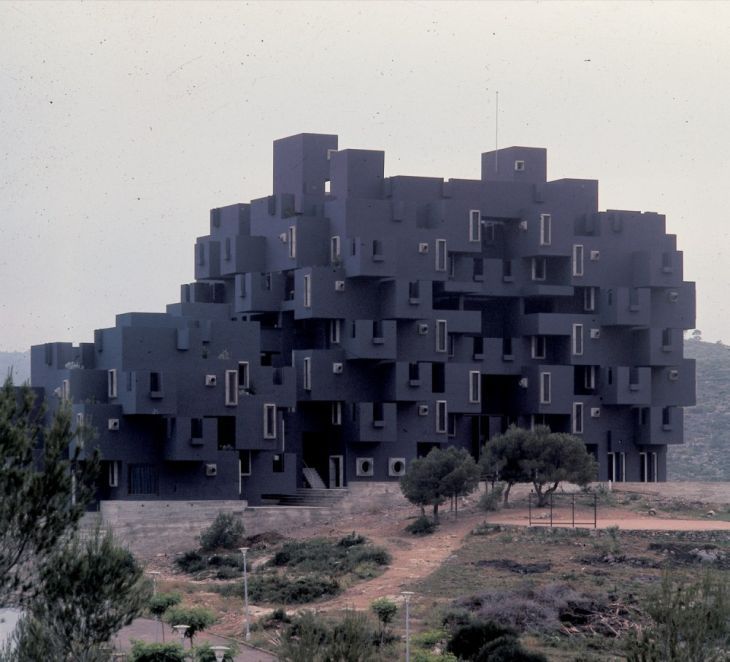
(Ricardo Bofill.)

The easy possibility of writing letters–from a purely theoretical point of view–must have brought ruination to the souls of the world. Writing letters is actually communication with ghosts, not only with the ghost of the recipient, but also with one’s own ghost, which secretly evolves inside the letter one is writing or even in a whole series of letters where one letter corroborates another and can cite it is a witness. How did people ever get the idea they could communicate with one another by letter! One can think about someone far away and one can hold on to someone nearby; everything else is beyond human power. But writing letters means barring oneself to the ghosts, who are greedily awaiting that. Written kisses never arrive at their destination; the ghosts drink them up along the way. This ample nourishment enables them to multiply so enormously. Mankind senses this and struggles against it; in order to attain a natural communication and a tranquility of soul, and to switch off the ghostly dimension as far as possible, man invented trains, cars, airplanes, but nothing helps anymore. These are evidently inventions devised at the moment of crashing. The opposing side is so much calmer and stronger; after the postal system, the ghosts invented the telegraph, the telephone, the wireless. The ghosts will not starve, but we will parish.


The opposing side. The phrase reveals that his mythopoeic imagination had reached the next level. Although the recipient of this letter could not know it, Kafka had just written a novel about this opposing side. But in The Castle, the fiends (who work mainly at night) are no longer a chaotic mob but emissaries of a ststem, officials who are not free and are themselves subjugated to an unfathomable will. Somewhere inside the castle a highest authority lives; it is the castle of Count Westwest, without whose tacit approval not a creature can stir. This creature with the unearthly name is mentioned on page 20, only to disappear behind a smoke screen of endless chatter. And no one penetrates these walls by waiting patiently for them to become porous–as in Kafka’s “Before The Law” legend–or by the land surveyor’s challenge to a “fight.” The highest authority exists, but it remains unrelentingly remote, and thus the crucial question of whether it is hostile or even evil remains a matter of conjecture. Kafka himself was not clear on this. A few months before beginning the novel, he wrote:

The systematic destruction of myself over the years is astonishing, it was like a slowly widening breach in a dam, a purposeful action. The spirit that brought it about must now be celebrating triumphs; why doesn’t it let me take part in them? But perhaps it hasn’t yet completed its work and can therefore think of nothing else.

(trans. Shelley Frisch).