Barthelme has managed to place himself in the center of modern consciousness (William H. Gass)

Barthelme has managed to place himself in the center of modern consciousness. Nothing surrealist about him, his dislocations are real, his material quite actual. Radio, television, movies, newspapers, books, magazines, social talk: these supply us with our experience. Rarely do we see trees, go meadowing, or capture crickets in a box. The aim of every media, we are nothing but the little darkening hatch they trace when, narrowly, they cross. Computers begin by discriminating only when they’re told to. Are they ahead that much? since that’s the way we end. At home I rest from throwing pots according to instructions by dipping in some history of the Trojan war; the fete of Vietnam is celebrated on the telly; my daughter’s radio is playing rock—perhaps it’s used cars or Stravinsky; my wife is telling me she loves me, is performing sexercises with a yogi Monday, has accepted a proposal to be photoed without clothing and now wonders if the draft will affect the teaching of freshman chemistry. Put end to end like words, my consciousness is a shitty run of category errors and non sequiturs. Putting end to end and next to next is Barthelme’s method, and in Barthelme, blessed method is everything.

From William H. Gass’s 1968 essay “The Leading edge of the Trash Phenomenon,” an ostensible review of Donald Barthelme’s collection Unspeakable Practices, Unnatural Acts.
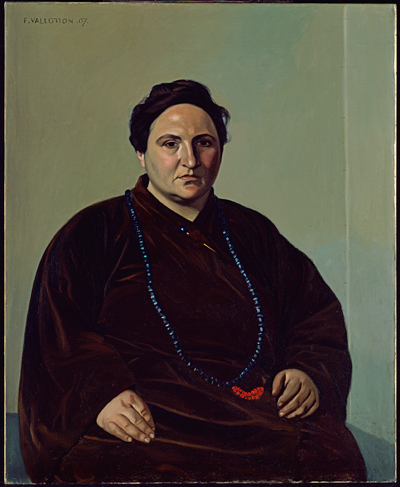
Portrait of Gertrude Stein — Felix Vallotton

1.3

“The Golden Poppy,” an essay by Jack London

“The Golden Poppy”

by

Jack London

I have a poppy field.  That is, by the grace of God and the good-nature of editors, I am enabled to place each month divers gold pieces into a clerical gentleman’s hands, and in return for said gold pieces I am each month reinvested with certain proprietary-rights in a poppy field.  This field blazes on the rim of the Piedmont Hills.  Beneath lies all the world.  In the distance, across the silver sweep of bay, San Francisco smokes on her many hills like a second Rome.  Not far away, Mount Tamalpais thrusts a rugged shoulder into the sky; and midway between is the Golden Gate, where sea mists love to linger.  From the poppy field we often see the shimmering blue of the Pacific beyond, and the busy ships that go for ever out and in.

“We shall have great joy in our poppy field,” said Bess.  “Yes,” said I; “how the poor city folk will envy when they come to see us, and how we will make all well again when we send them off with great golden armfuls!”

“But those things will have to come down,” I added, pointing to numerous obtrusive notices (relics of the last tenant) displayed conspicuously along the boundaries, and bearing, each and all, this legend:

Private GroundsNo Trespassing.”

“Why should we refuse the poor city folk a ramble over our field, because, forsooth, they have not the advantage of our acquaintance?”

“How I abhor such things,” said Bess; “the arrogant symbols of power.”

“They disgrace human nature,” said I.

“They shame the generous landscape,” she said, “and they are abominable.”

“Piggish!” quoth I, hotly.  “Down with them!” Continue reading ““The Golden Poppy,” an essay by Jack London”

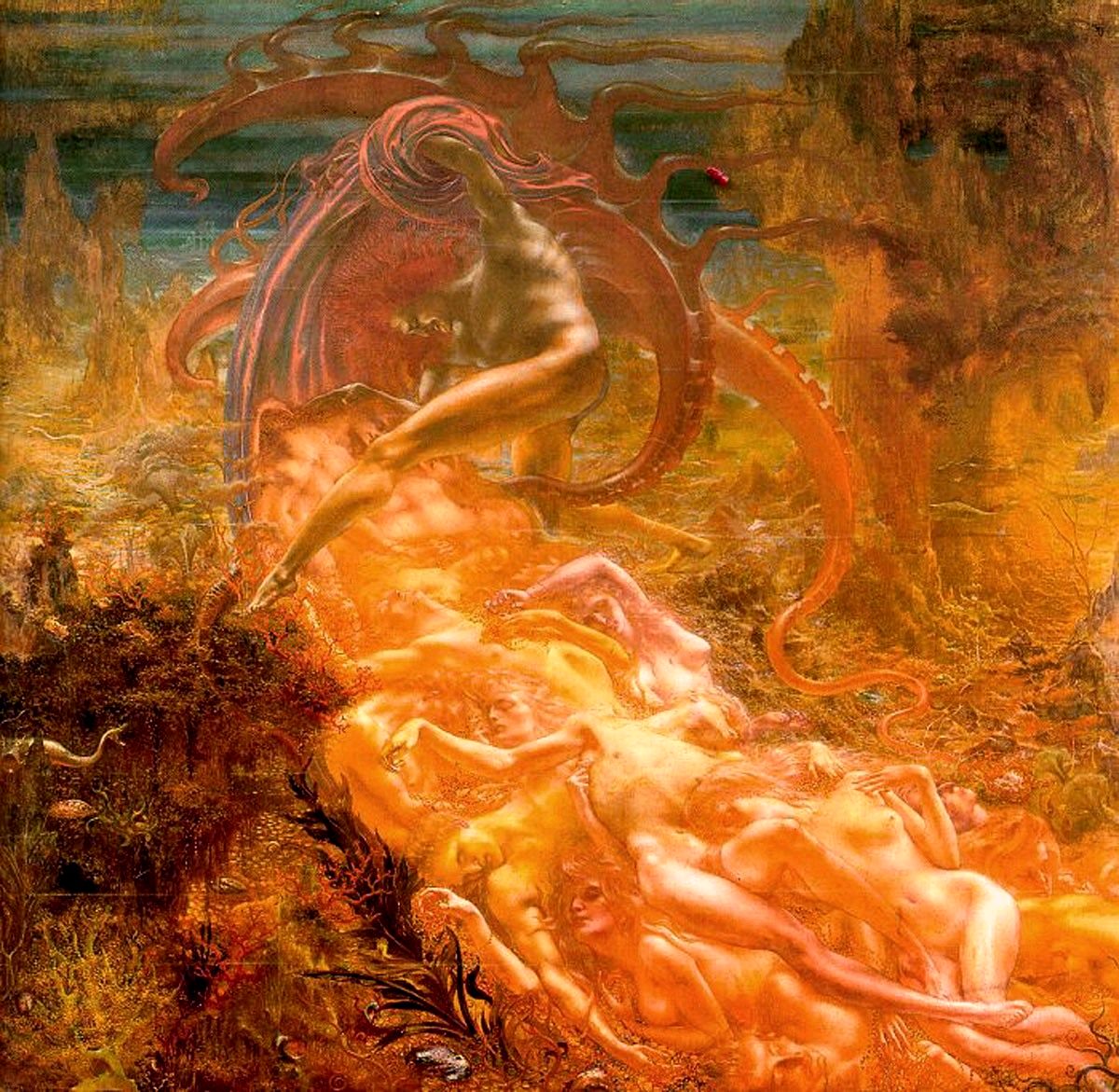
Angel of Splendors — Jean Delville

jd6

Phil Spector talks about “Be My Baby,” Scorsese’s Mean Streets, Brian Wilson, etc.

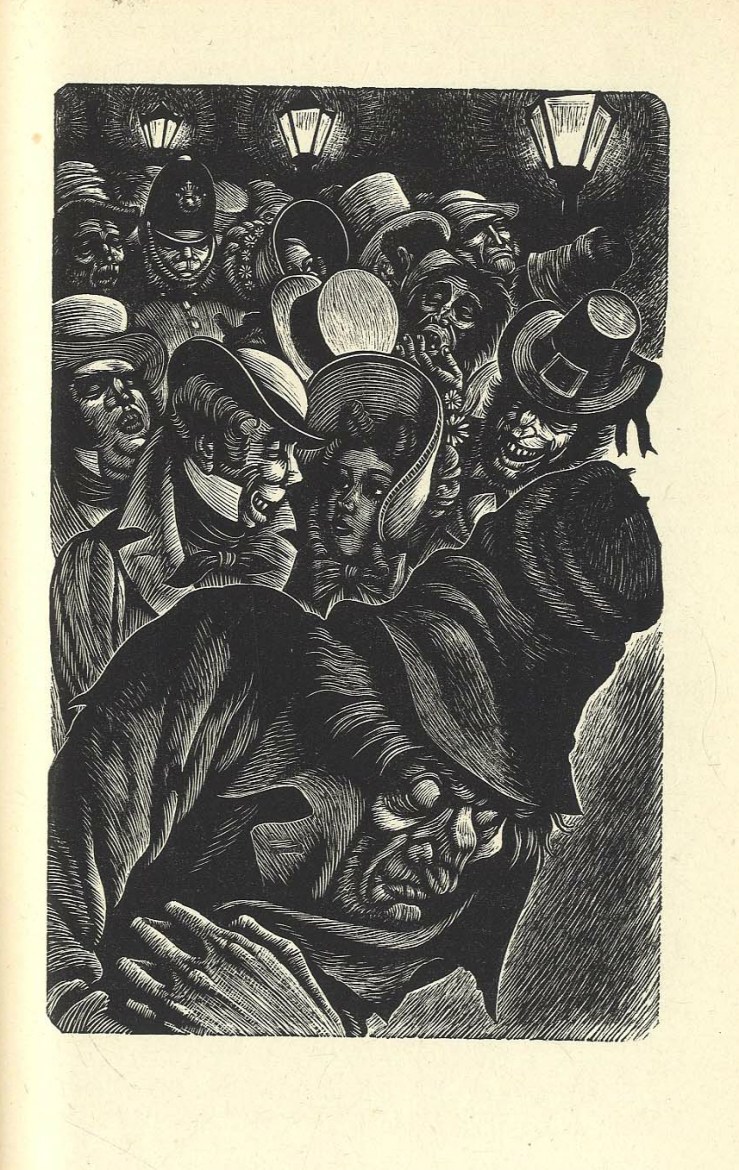
Illustration for Edgar Allan Poe’s story “The Man of the Crowd” — Fritz Eichenberg

SH925

Wonderful Fritz Eichenberg illustration to one of my favorite Poe stories, “The Man of the Crowd,”. Via a gorgeous gallery at Full Table.

The Bus — Paul Kirchner

dYdxq6N - Imgur

Odalisque — Georgy Kurasov

Georgy Kurasov Odalesque 32 x 40

And seems a moving land and at his gills Draws in, and at his trunk spouts out, a sea — Gustave Dore

“White Lemons” — Gilbert Sorrentino

IMG_7210

The Treasures of Satan — Jean Delville

tumblr_lpgcfbJH4A1qz4yqio1_1280

How can you tell if somebody’s sad? *Whether (Infinite Jest)

‘How can you tell if somebody’s sad?’A quick smile. ‘You mean whether someone’s sad.’

A smile back, but still earnest: ‘That improves it a lot. Whether someone’s sad, how can you tell so you’re sure?’

Her teeth are not discolored; she gets them cleaned at the dentist all the time for the smoking, a habit she despises. Hal inherited the dental problems from Himself; Himself had horrible dental problems; half his teeth were bridges.

‘You’re not exactly insensitive when it comes to people, Love-o,’ she says.

‘What if you, like, only suspect somebody’s sad. How do you reinforce the suspicion?’

‘Confirm the suspicion?’

‘In your mind.’ Some of the prints in the deep shag he can see are shoes, and some are different, almost like knuckles. His lordotic posture makes him acute and observant about things like carpet-prints.”

“How would I, for my part, confirm a suspicion of sadness in someone, you mean?’

‘Yes. Good. All right.’

‘Well, the person in question may cry, sob, weep, or, in certain cultures, wail, keen, or rend his or her garments.’

Mario nods encouragingly, so the headgear clanks a little. ‘But say in a case where they don’t weep or rend. But you still have a suspicion which they’re sad.’

She uses a hand to rotate the pen in her mouth like a fine cigar. ‘He or she might alternatively sigh, mope, frown, smile halfheartedly, appear downcast, slump, look at the floor more than is appropriate.”

“But what if they don’t?’

‘Well, he or she may act out by seeming distracted, losing enthusiasm for previous interests. The person may present with what appears to be laziness, lethargy, fatigue, sluggishness, a certain passive reluctance to engage you. Torpor.’

‘What else?’

‘They may seem unusually subdued, quiet, literally “low.” 

—From David Foster Wallace’s novel Infinite Jest.

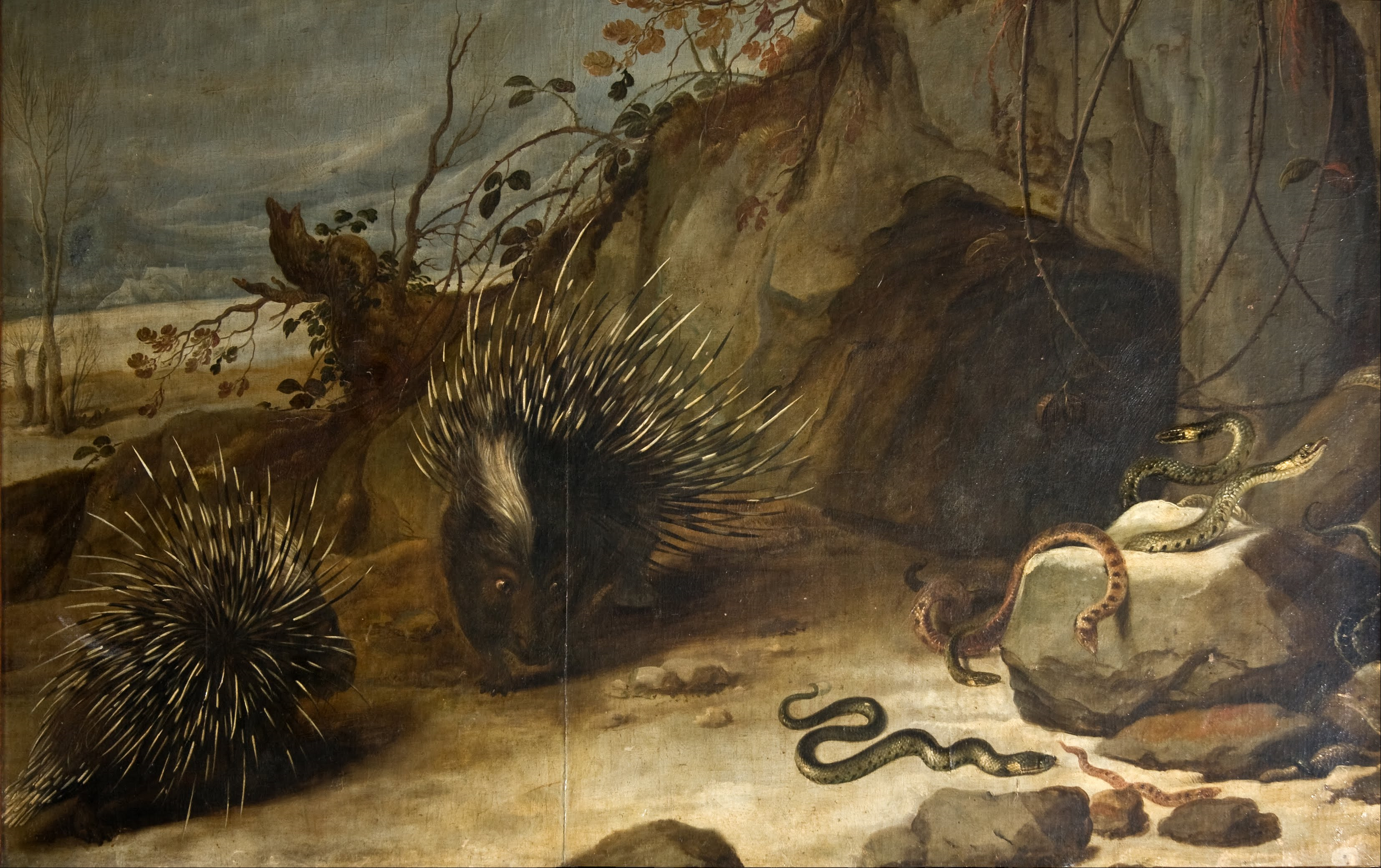
Porcupines and Vipers — Frans Snyders

The aim of the artist (William H. Gass)

The aim of the artist ought to be to bring into the world objects which do not already exist there, and objects which are especially worthy of love. We meet people, grow to know them slowly, settle on some to companion our life. Do we value our friends for their social status, because they are burning in the public blaze? do we ask of our mistress her meaning? calculate the usefulness of our husband or wife? Only too often. Works of art are meant to be lived with and loved, and if we try to understand them, we should try to understand them as we try to understand anyone—in order to know them better, not in order to know something else.

–More from William H. Gass’s essay “The Artist and Society” (1968). Collected in Fiction and the Figures of Life.

The Mediterranean Cat — Balthus

Pasolini’s Decameron

Moonsiren — Leonora Carrington

tumblr_llug6mAJKX1qcnlh2o1_1280