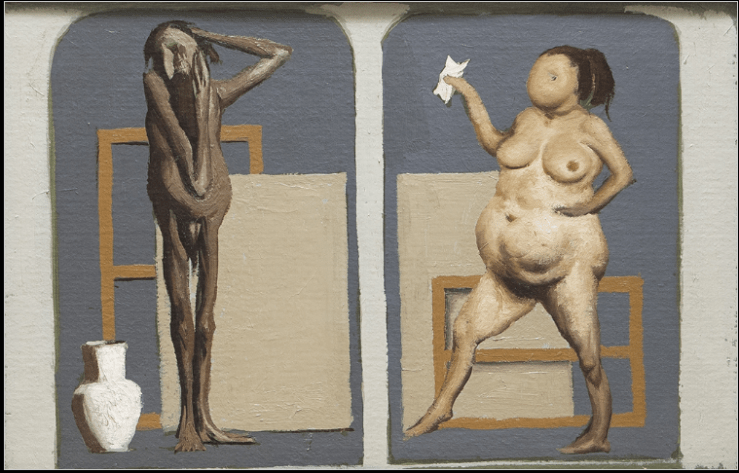
In the Artist’s Studio — Gely Korzhev

Screenshot 2017-03-13 at 4.02.25 PM

Read a previously-unpublished F.Scott Fitzgerald story at The New Yorker

The New Yorker has published “The I.O.U.,” an F. Scott Fitzgerald short story from 1920 that hasn’t been published until now.

First two paragraphs:

The above is not my real name—the fellow it belongs to gave me his permission to sign it to this story. My real name I shall not divulge. I am a publisher. I accept long novels about young love written by old maids in South Dakota, detective stories concerning wealthy clubmen and female apaches with “wide dark eyes,” essays about the menace of this and that and the color of the moon in Tahiti by college professors and other unemployed. I accept no novels by authors under fifteen years old. All the columnists and communists (I can never get these two words straight) abuse me because they say I want money. I do—I want it terribly. My wife needs it. My children use it all the time. If someone offered me all the money in New York I should not refuse it. I would rather bring out a book that had an advance sale of five hundred thousand copies than have discovered Samuel Butler, Theodore Dreiser, and James Branch Cabell in one year. So would you if you were a publisher.

Six months ago I contracted for a book that was undoubtedly a sure thing. It was by Harden, the psychic-research man—Dr. Harden. His first book—I published it in 1913—had taken hold like a Long Island sand crab and at that time psychic research had nowhere near the vogue it has at present. We advertised his new one as being a fifty-heart-power document. His nephew had been killed in the war and Dr. Harden had written with distinction and reticence an account of his psychic communion through various mediums with this nephew, Cosgrove Harden.

Read the rest of Fitzgerald’s “The I.O.U.”

Sunday Comics (A riff on FX’s show Legion)

I had no interest in watching the Legion television show.

Bill Sienkiewicz is my favorite comic book artist of all time.

I like Sienkiewicz so much I can spell his last name correctly without looking it up. I like Sienkiewicz so much that he was the first artist I featured when I first started this silly Sunday Comics thing last year.

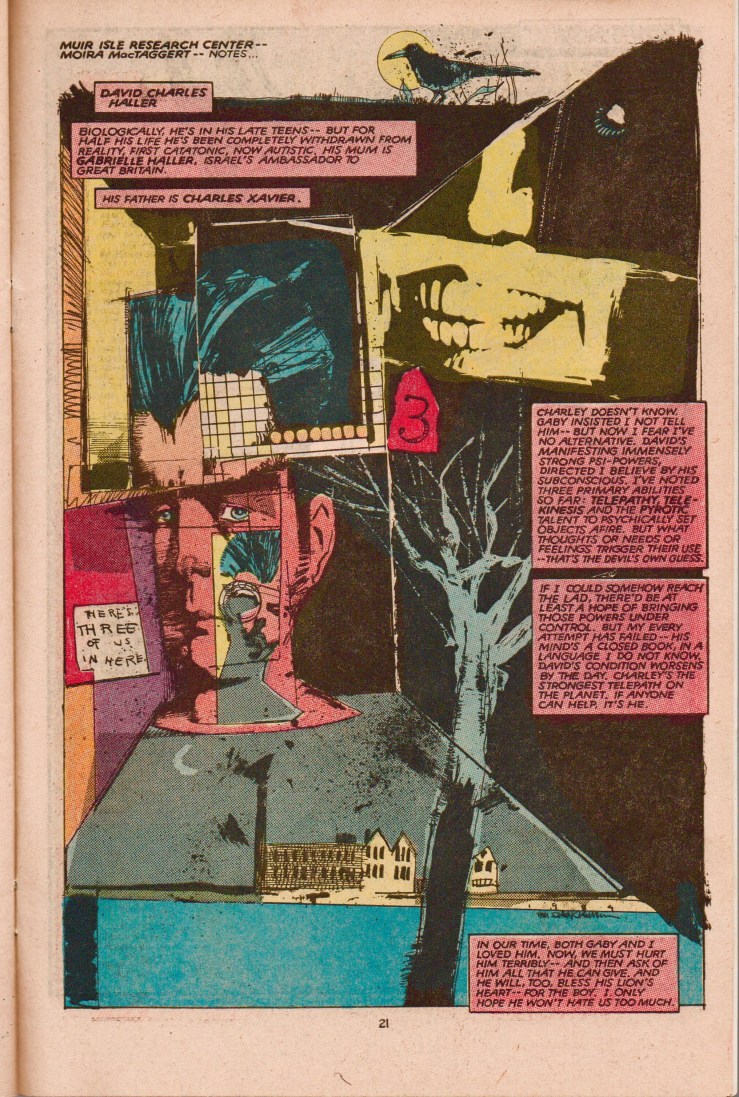
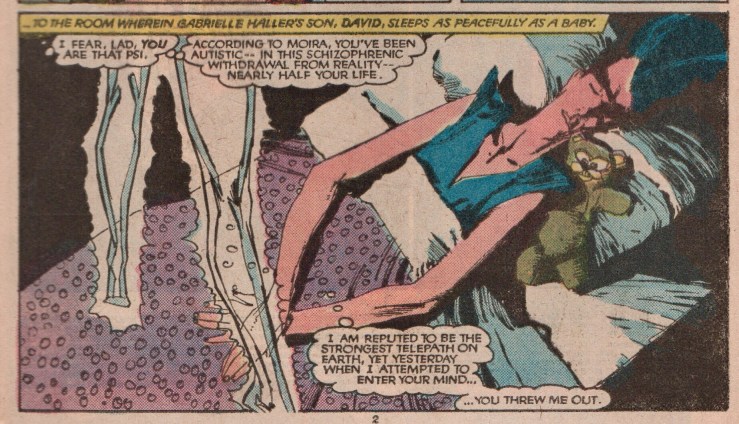
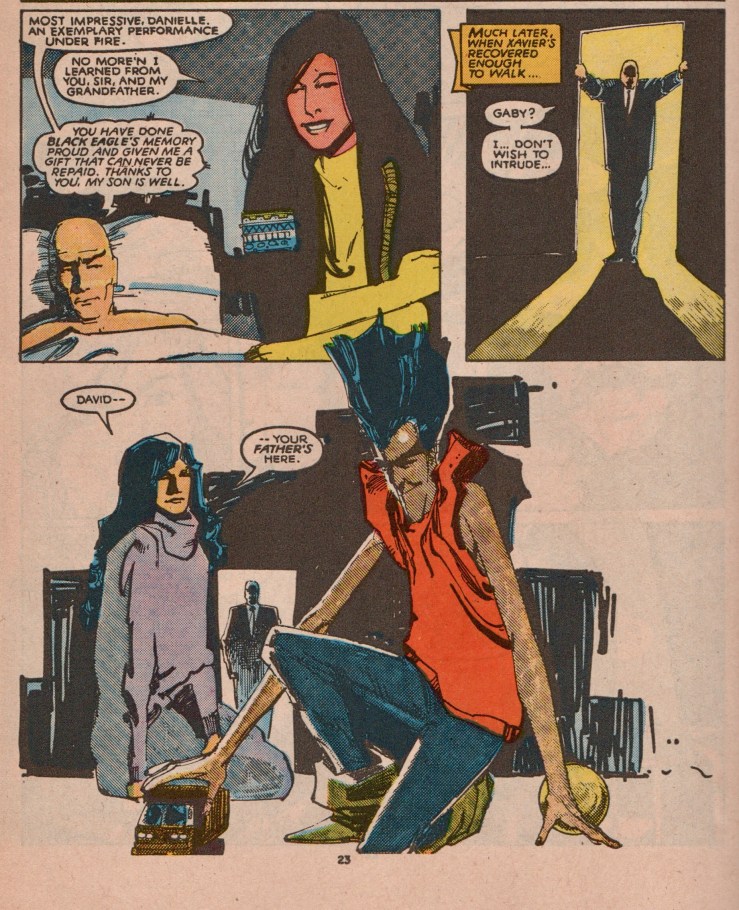
Sienkiewicz, along with Chris Claremont, created the character of David Haller (“Legion,” Professor X’s son). David first appeared in the last page of The New Mutants #25, Marvel Comics, March, 1985. (The issue is about the underrated duo Cloak & Dagger).

The New Mutants was/is my favorite childhood comic book. (By which I mean: Sienkiewicz’s run on The New Mutants was/is my favorite childhood comic book).

Here’s David’s début:

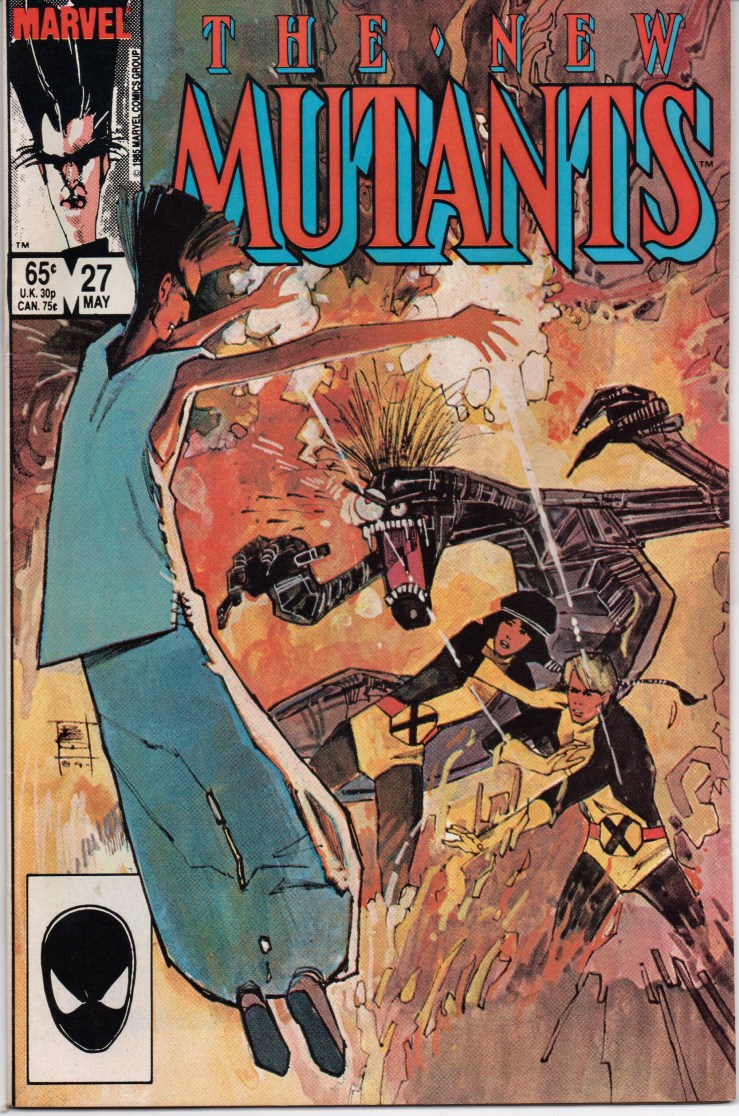
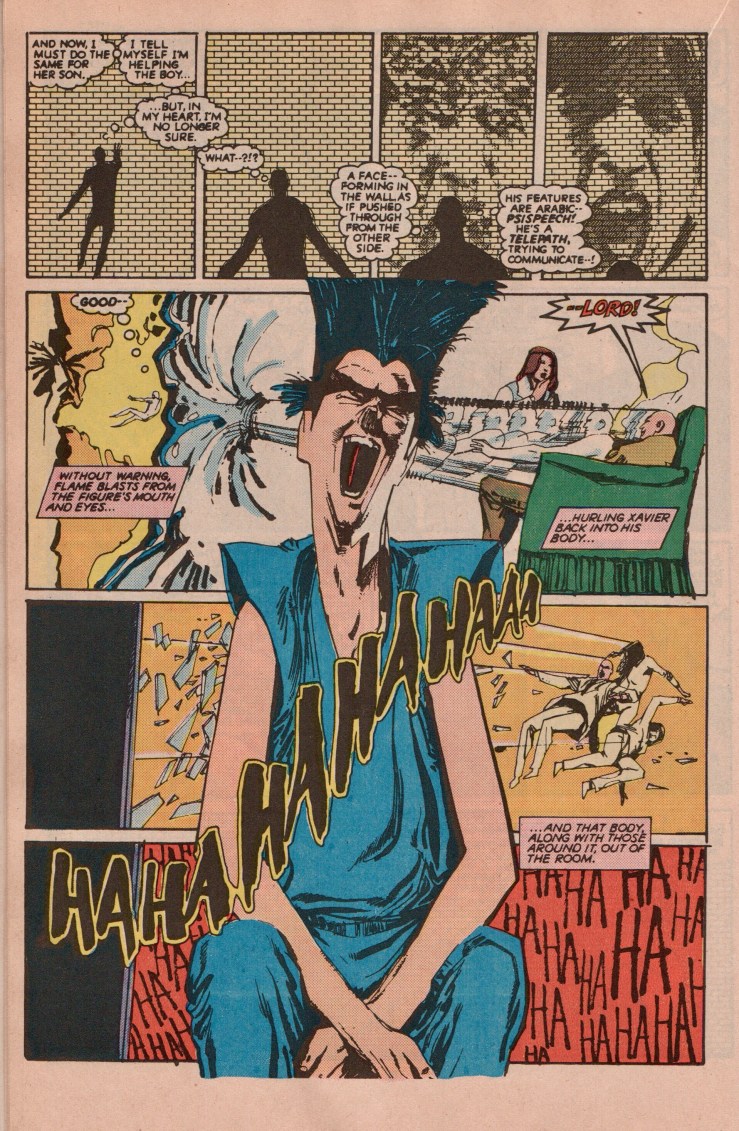
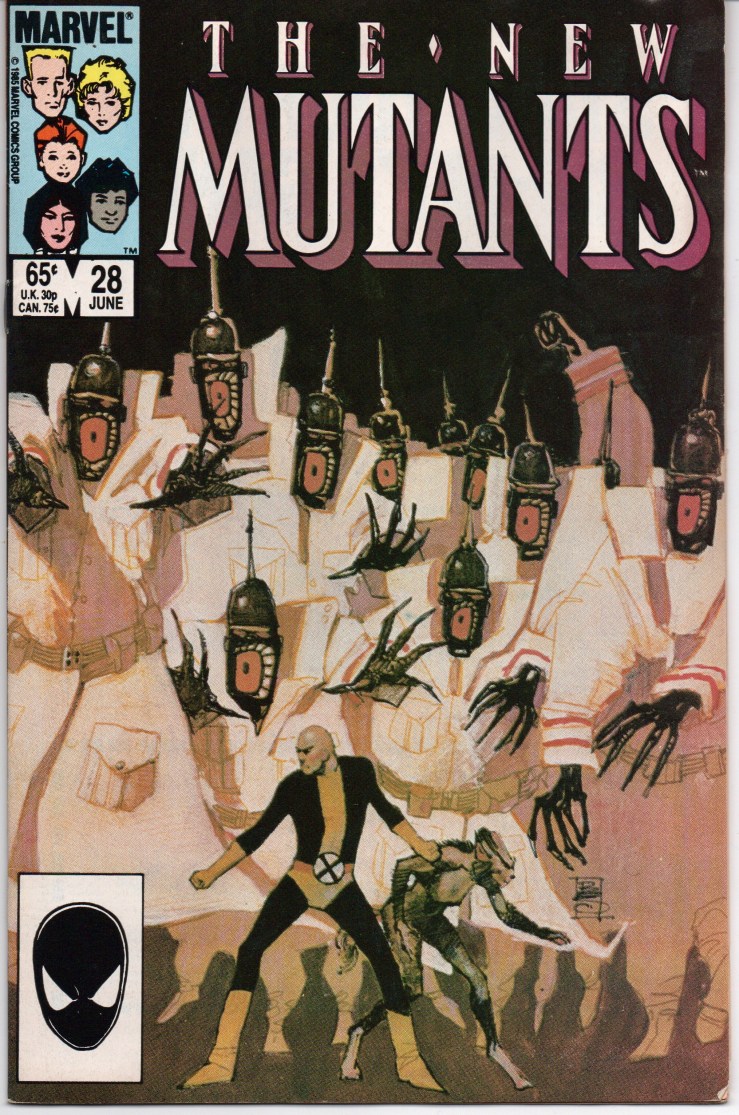
The next three issues of The New Mutants (27-29) tell the Legion story line.

I recall liking the Legion story of The New Mutants, although it never stood out as strongly as The Demon Bear Saga, or the issues where Magneto took over The New Mutants’ leadership. But that isn’t why I had no interest in watching the Legion television show.

I had no interest in watching the Legion television show because every single Marvel television show that I’ve seen so far has been boring, or garbage, or boring garbage. And don’t even get me started on the execrable X-Men films, which have squandered so many good storylines. (Although I thought Deadpool was great, which sort of counts as an X-Men film, and I do have an interest in seeing Logan).

Anyway, after a few critics and authors I admire tweeted that Legion was, like, actually really good/excellent/thrilling/etc., I looked up the show, and saw that the showrunner and creator is Noah Hawley. That’s the dude who did FX’s Fargo, another TV show I was also wary of which also turned out to be excellent.

So, over the past four nights, I’ve watched the first four episodes of Legion. (I’ll watch the fifth tonight).

The show is fantastic.

It’s the first “superhero” show I’ve seen that succeeds not just in its script, casting, and themes, but aesthetically as well. Hawley smuggles in references to the original New Mutants run in a way that doesn’t feel like fanservice—but the other reference points here go past comic books and into film: Legion openly steals from Charlie Kaufman, Michel Gondry, Alfonso Cuaron, and Wes Anderson. (I mean this as a compliment). Hell, there’s something Pynchonesque about the show too, in its themes of paranoia, its treatment of the concept of reality, its streak of dark but somehow zany humor, and its subversive sexiness.

The casting for Legion is pretty great too. The guy who played the guy who died in the car crash on Downton Abbey so he could leave that show and get better shows does an admirable job as David. The temptation would be to play David as batshit crazy, but the portrayal is measured, often archly comical, and ultimately sympathetic. (Shit, I just looked that guy’s name up—I saw him on a web episode of High Maintenance as a stay-at-home dad who enjoyed wearing women’s clothes and thought he was great, but also thought, Damn, hope Matthew Crawley can get some higher-profile gigs—anyway, that dude, Dan Stevens, is in that new Disney live action Beauty and the Beast film with Hermione Hogwarts, so I guess he’s doing fine).

Where was I? Oh, casting—yeah, there are solid performances here. Aubrey Plaza plays a dead junkie who may or may not be a ghost in David’s head. Jean Smart (aka my least favorite Designing Woman) plays the not-Moira MacTaggart/not-Prof. X character Melanie Bird. Smart was smart in the second season of Hawley’s other FX show, Fargo, which also featured Rachel Keller, who is basically the second lead on Legion as Sydney Barrett (not subtle, I know), David’s untouchable girlfriend. And the show basically had me when Bill Irwin showed up. Like I said, it’s great stuff.

Probably my favorite thing about the show so far though is that it doesn’t seem particularly interested in being anyone’s franchise. It stays true to the paranoid spirit of mid-eighties Claremont X-Men, and seamlessly combines plot and aesthetics in a way that a show about a telepathic and telekinetic mutant would have to to succeed. It’s also dark without being self-serious or self-important. (So many superhero films and shows fail utterly here).

Anyway, I’ve loved the first few episodes, and even if the showrunners fuck it all up, hey, it’s just TV, right?

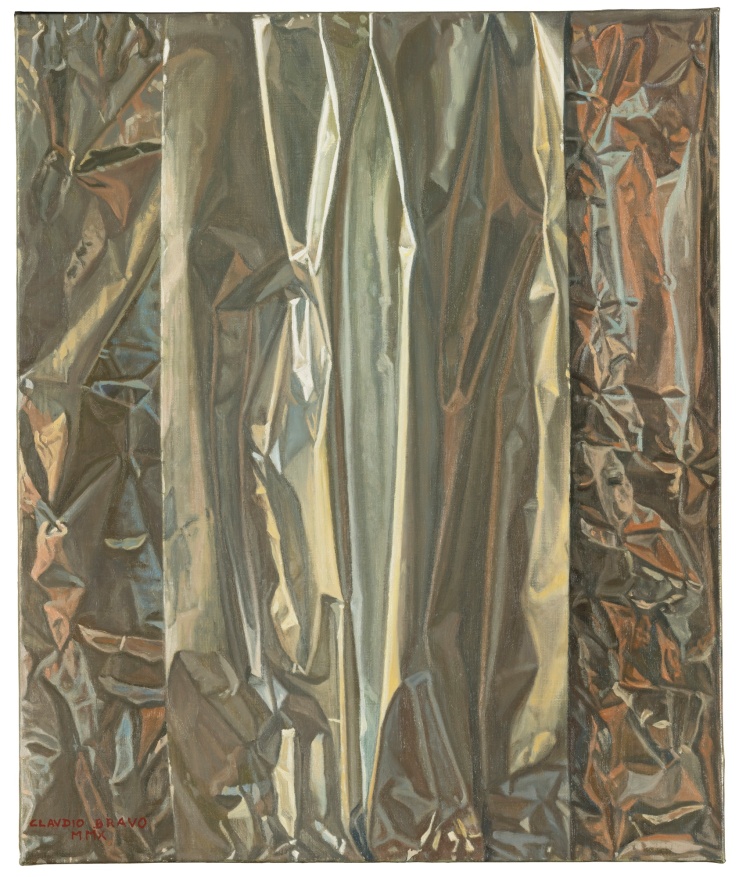
Silver Paper — Claudio Bravo

174N09152_79HBT

Untitled — Richard Müller

rm087g

The Pilgrim — Gwen John

the-pilgrim

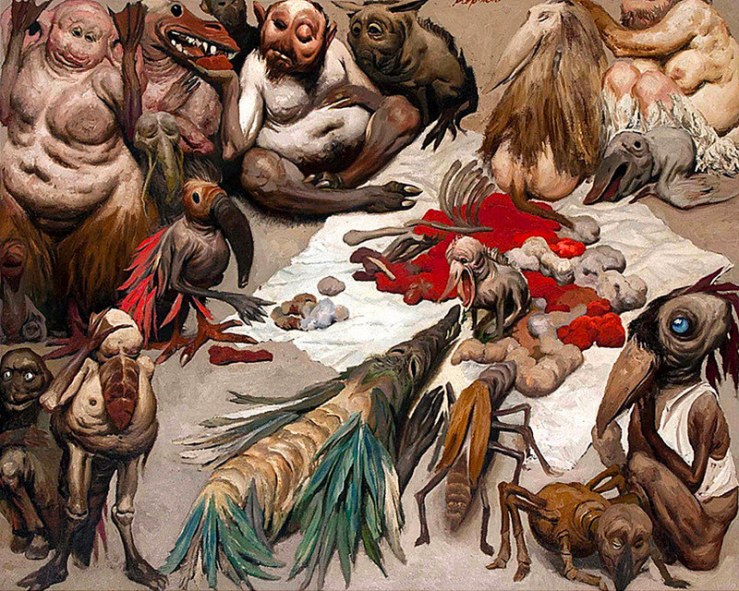
Feast — Gely Korzhev

feast

Roberto Bolaño’s Recipe for Brussels Sprouts with Lemon

In Roberto Bolaño’s sprawling opus 2666 (specifically, in “The Part About Fate”), founding member of the Black Panthers/cookbook author Barry Seaman offers the following recipe during a lecture at a Detroit church–

The name of the recipe is: Brussels Sprouts with Lemon. Take note, please. Four servings calls for: two pounds of brussels sprouts, juice and zest of one lemon, one onion, one sprig of parsley, three tablespoons of butter, black pepper, and salt. You make it like so. One: Clean sprouts well and remove outer leaves. Finely chop onion and parsley. Two: In a pot of salted boiling water, cook sprouts for twenty minutes, or until tender. Then drain well and set aside. Three: Melt butter in frying pan and lightly sauté onion, add zest and juice of lemon and salt and pepper to taste. Four: Add brussels sprouts, toss with sauce, reheat for a few minutes, sprinkle with parsley, and serve with lemon wedges on the side. So good you’ll be licking your fingers, said Seaman. No cholesterol, good for the liver, good for the blood pressure, very healthy.

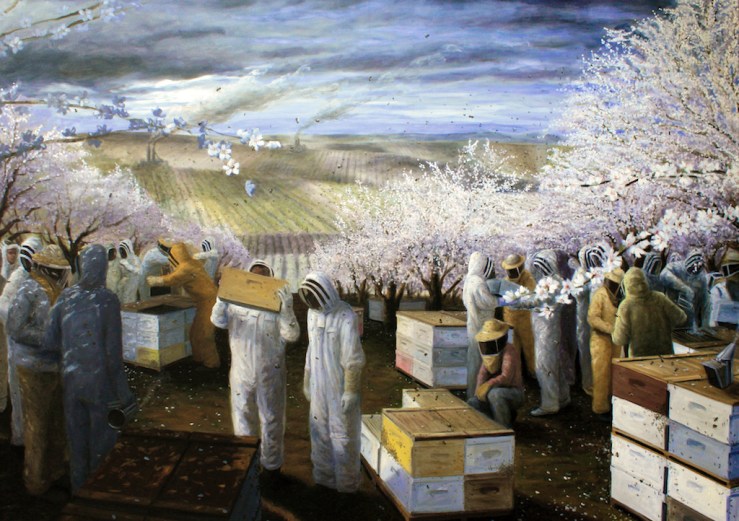
Monoculture Pollination — David Pettibone

835441683a4be2bd-05_David_Pettibone

I say madness is too pure like mother sky

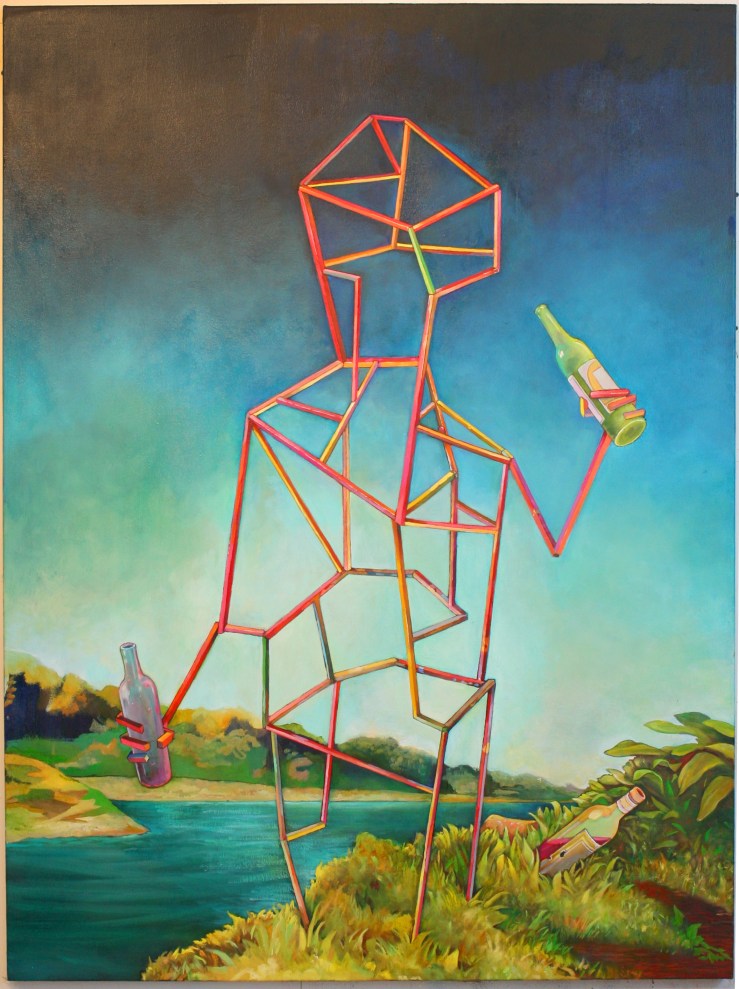
Lush — Eli Gabriel Halpern

badaed_53192a8b02fd439582d0dcbd9108a737

Night and Sleep — Evelyn de Morgan

Night and Sleep

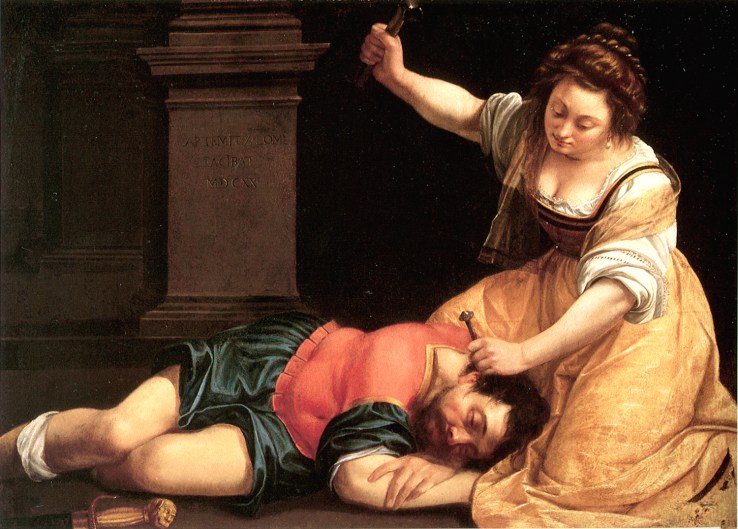
Jael and Sisera — Artemisia Gentileschi

ArtemisiaJaelSiserax1R

18 And Jael went out to meet Sisera, and said unto him, Turn in, my lord, turn in to me; fear not. And when he had turned in unto her into the tent, she covered him with a mantle.

19 And he said unto her, Give me, I pray thee, a little water to drink; for I am thirsty. And she opened a bottle of milk, and gave him drink, and covered him.

20 Again he said unto her, Stand in the door of the tent, and it shall be, when any man doth come and enquire of thee, and say, Is there any man here? that thou shalt say, No.

21 Then Jael Heber’s wife took a nail of the tent, and took an hammer in her hand, and went softly unto him, and smote the nail into his temples, and fastened it into the ground: for he was fast asleep and weary. So he died.

Judges 4:18-21, KJV

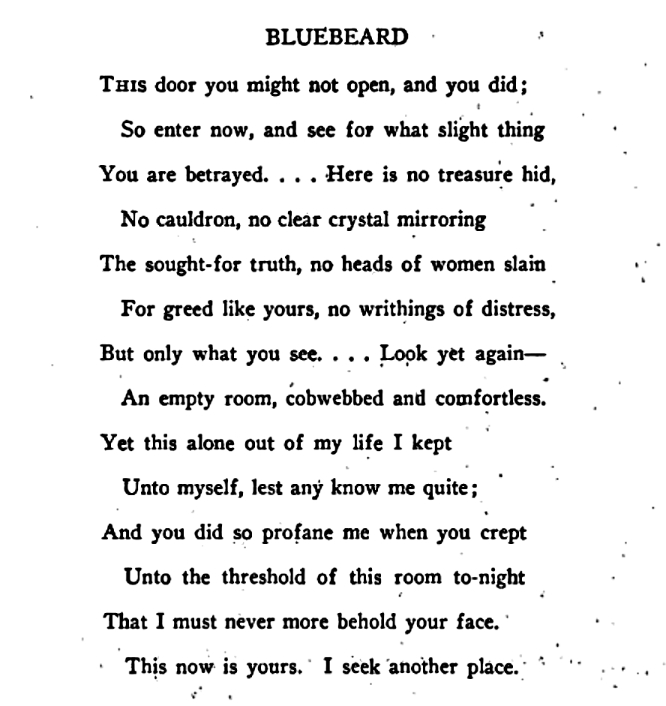
“Bluebeard” — Edna St. Vincent Millay

bluebeard

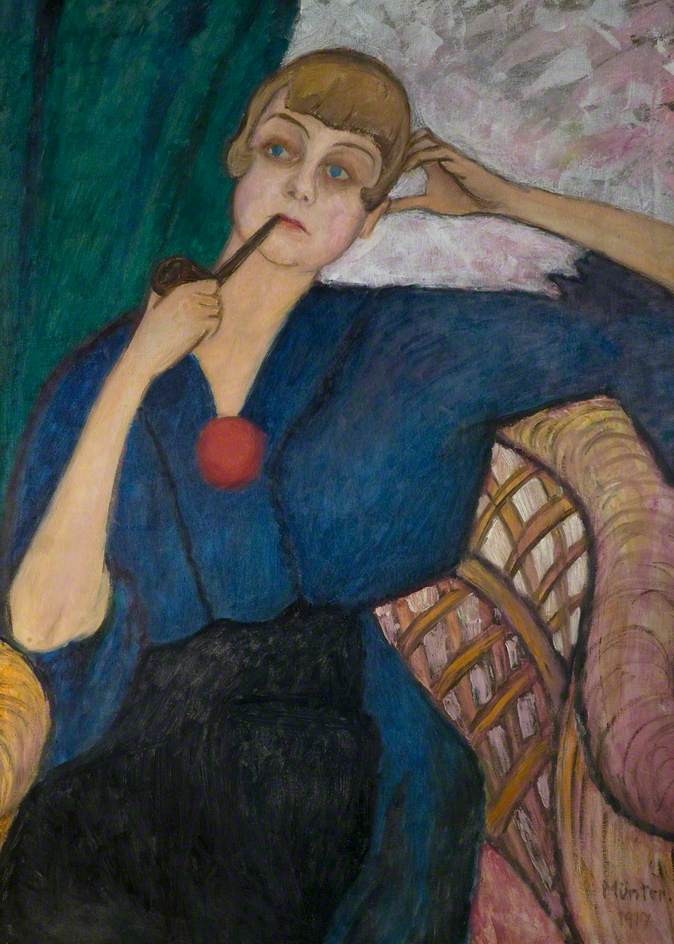
Portrait of Anna Roslund — Gabriele Münter

anna-roslund-1891-1941-1917(1)

Jane Bowles’ novel Two Serious Ladies confounds with sinister humor and dark delight

Two Women, Gwen John

Here’s a short review of Jane Bowles’ only novel, Two Serious Ladies: The book is amazing, a confounding, energetic picaresque suffused with sinister humor and dark delight. I read it knowing nothing about the plot on the recommendation of Ben Marcus, who described it as “so insane, so beautiful, and in some sense, unknowable to me. On the surface, it’s not really about much, but the arrangement of words does something chemical to me.” My recommendation is to dispense with the rest of my review and read Bowles’ novel.

“Unknowable” is a fair description, and Two Serious Ladies was met with bewilderment when it was first published in 1943, as Negar Azimi points out in the comprehensive essay “The Madness of Queen Jane”:

Edith Walton, writing in the Times Book Review, called the book senseless and silly: “To attempt to unravel the plot of ‘Two Serious Ladies’ would be to risk, I am sure, one’s own sanity.” Another reviewer said, simply, “The book is about nothing.” Jane’s family, in the meantime, found it unseemly in its stark depiction of lesbianism. Its characters, who have goals and motivations that are hard to grasp, were difficult to relate to. Yet another critic wrote, “The only shocking thing about this novel is that it ever managed to find its way to print.” Jane was only twenty-four.

The notion that “The book is about nothing,” is corrected by Marcus’s qualifier about its “surface”: Two Serious Ladies moves through the phenomenological world that its characters experience, but it does not mediate the concrete contours of that world in a way that its characters can name for the reader. When the characters, those two serious ladies, do stumble into language that might name, pin down, or otherwise fix their experience, fix their consciousness into a stable relation with the world, Bowles spins the wheel again, flings her characters into new scenarios. Moments of epiphany are transitory and hard-purchased. A (perhaps) illustrating passage, offered without context:

Mrs. Copperfield started to tremble after the girl had closed the door behind her. She trembled so violently that she shook the bed. She was suffering as much as she had ever suffered because she was going to do what she wanted to do. But it would not make her happy. She did not have the courage to stop from doing what she wanted to do. She knew that it would not make her happy, because only the dreams of crazy people come true. She thought that she was only interested in duplicating a dream, but in doing so she necessarily became the complete victim of a nightmare.

The free indirect style here still hides so much from the reader, who must suss the characters’ unnamed desires from bewildering details alone. The passage above shows us fear and trembling, dream, nightmare—and crazy people. What does Copperfield want to do? One subtext here is a lesbian desire seemingly comprehended by everyone but Mrs. Copperfield herself. (In some of the book’s strangest moments, Mr. Copperfield leaves his near-mad wife in a dangerous part of a foreign city to encounter hookers of every stripe). Two Serious Ladies is about women searching for something, but something they can’t name, can’t conceive in language—but can perhaps imagine.

A third-act epiphany—again transitory and hard-purchased—parallels Mrs. Copperfield’s fear and trembling. Miss Goering—

—okay, wait, it occurs to me now that I’ve completely neglected to offer any kind of plot description that might anchor this ostensible “review,” to set up who exactly Miss Goering is, etc., so  here goes (and I encourage you to just go ahead and skip the next long paragraph)—

A bad summary: Two Serious Ladies comprises three long chapters, each of which might stand on its own as a long short story. Part the first: Miss Goering is rich but strange. Her childhood is bizarre; alienated from others “she wore the look of certain fanatics who think of themselves as leaders without once having gained the respect of a human being.” Her attempt to baptize another child luckily doesn’t end in a drowning. She grows up out of step with her peers, dresses odd, speaks odd. One day out of nowhere appears a Miss Gamelon, who becomes her (often disagreeable) companion. At a party she runs into the other serious lady, Mrs. Copperfield, whose adventures in Panama comprise the second section of the book. At the same party she meets Arnold, a would-be artist, goes home with him, meets his folks, his father. She elects to move (with Arnold and Miss Gamelon) to a run-down cottage on a drab island, forsaking her wealth, sort of. Part the second: We shift to section two, the Copperfields’ adventures in Panama. Mr. Copperfield checks the couple into a seedy hotel in the wrong part of town and promptly drops his wife off where the brothels are. She moves into a run-down hotel with a prostitute named Pacifica while her husband does God-knows-what. There’s a lot of drinking and near-madness, run-ins with bad boyfriends and snooty hoteliers. Mr. Copperfield leaves without his wife. Part the third: We return to Miss Goering and gang in the dilapidated cottage. Arnold’s father soon moves in with them. Miss Goering starts going out at night alone. She gets picked up at bar and moves in with a man named Andy. She eventually leaves him for a gangster who mistakes her for a prostitute. On a dinner date—okay, not really a dinner date but—on a dinner date with the gangster (who, like the dinner date, is never actually named as a “gangster”), Miss Goering runs into Mrs. Copperfield. Both are much changed.

—okay, so this time with (or without) some context—

A third-act epiphany—again transitory and hard-purchased—parallels Mrs. Copperfield’s fear and trembling. Miss Goering and her gangster:

This man, they had noticed, drove up to the saloon in a very beautiful big automobile that resembled more a hearse than a private car. Miss Goering had examined it one day when the man was drinking in the saloon. It appeared to be almost brand new. She and Andy had looked in through the window and had been a little surprised to see a lot of dirty clothes on the floor. Miss Goering was completely preoccupied now with what course to take should the newcomer be willing to make her his mistress for a little while. She was almost sure that he would, because several times she had caught him looking at her in a certain way which she had learned to recognize. Her only hope was that he would disappear before she had the chance to approach him. If he did, she would be exempt and thus able to fritter away some more time with Andy, who now seemed so devoid of anything sinister that she was beginning to scrap with him about small things the way one does with a younger brother.

And of course she gives in to her terrible desire. The plot of Two Serious Ladies might be described as a search for “anything sinister.”  Miss Goering and Mrs. Copperfield seek the brink of all those things one can be brinked upon: disasters, abysses, madness. Love?

The novel most reminded me of what I love best in the films of David Lynch and the fiction of Roberto Bolaño—that sense of perverse night-time dread, the sordid intimation of just how easily the veneer might crack, of how simple it might be for civilization to give way to the madness under the surface.

David Lynch and Roberto Bolaño suffuse their work with an absurd howling humor that percolates along with the dread, and Two Serious Ladies operates along the same horror/humor axis. The book is hilarious, but my several attempts to capture that here in a few excerpts of dialogue fail to translate into this digest form. Will you take my word? Will you take my word that the book was much funnier the second time I read it?

The reading experience cannot be easily distilled. (Strike that adverb). Two Serious Ladies resists unfolding in the way we expect our narratives to unfold—to be about something—Bowles withholds exposition, clarification, and motivation—well, okay, not withholds, but rather hides, or obscures, or enshadows. (I don’t have the verbs for this book). I think of Harold Bloom’s rubric for canonical literature here. In The Western Canon, he  argues that strong literature exemplifies a “strangeness, a mode of originality that either cannot be assimilated, or that so assimilates us that we cease to see it as strange.” Nearly three-quarters of a century after its publication, Two Serious Ladies is still strange, still strong, still ahead of its time. Its vignettes flow (or jerk or shift or pitch wildly or dip or soar or sneak) into each other with a wonderfully dark comic force that simultaneously alienates and invites the reader, who, bewildered by its transpositions, is compelled to follow into strange new territory. Very highly recommended.

[Ed. note: Biblioklept first published this review of Two Serious Ladies in February of 2015].

Ritual — Robbie Trevino

robbie-trevino-ritual-styletest-final-2017-resized