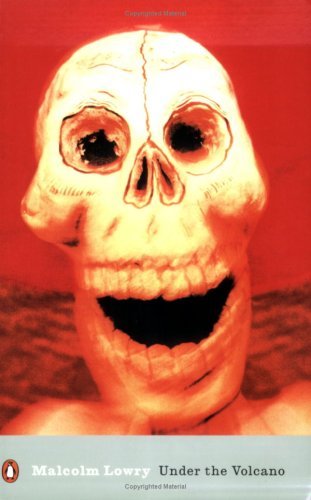
Most of Malcolm Lowry’s dense, depressing novel Under the Volcano takes place over the course of November 2nd, 1938, the Mexican Day of the Dead. Like a reticent, dour Virgil, Lowry guides the reader through the day’s tragic arc, floating between the minds of his novel’s three protagonists: Geoffrey Firmin, his half-brother Hugh, and Geoffrey’s estranged wife Yvonne. Geoffrey is British Consul to Mexico — ex-Consul, really, as British-Mexican relations sour against the backdrop of Spanish fascism and the rise of nationalism in Mexico — but he is almost always referred to as “the Consul,” a blackly ironic title. See, the Consul bears little authority aside from an extreme expertise on how to stay drunk (or “drunkly sober un-drunk”) 24/7. He’s ambassador to bar stools, a manager of mescal and little else (certainly not his own life; certainly not diplomatic affairs). The Consul is a wreck, an alcoholic to put Hemingway and Fitzgerald’s (and even Bukowski’s) alter-egos to shame.
After a first chapter that seems to derail all but the most patient readers, the narrative conflict arrives when Yvonne returns to Quauhnahuac, Mexico, a year after leaving (and divorcing) the Consul. She arrives to find the Consul (“Geoffrey,” as he’s called when the free indirect style inhabits her mind) drinking whiskey in a hotel bar in order to sober up (yep). It’s not immediately clear why Yvonne has returned to the Consul, but it seems that she hopes to save him from drowning in a drunken downward spiral. As the pair walks to the Consul’s house, they pass numerous advertisements for a boxing match; a child’s funeral proceeds down the avenue. These motifs of fighting, death, and futility permeate the novel.
During the walk we learn that Yvonne is not the only one concerned about the Consul’s health; his (much) younger brother Hugh has come to stay with him in the hopes of sobering him up. (Hugh employs a revolting and unsuccessful “strychnine cure”). That Hugh has also returned doubly complicates the plot. Much of Under the Volcano remains implicit, unnamed, hinted at, and this seems especially true of the implication that Yvonne cheated on the Consul with Hugh in the recent past (this implication may have been stated conclusively at some point in the novel, but I’ve only read the book once, which is perhaps like not having read it at all). What’s certainly clear is that Yvonne cheated on the Consul with a French filmmaker, Jacques Laruelle, a man whom the Consul, through sheer bizarre coincidence (but of course it isn’t sheer bizarre coincidence), spent a childhood summer with, and experience which bonded them as brothers in an Edenic holiday that eventually (inevitably) soured.
Despite her infidelities, Yvonne is generally present (I choose the verb “present” over “presented as” to highlight Lowry’s impeccable Modernist style) as a sympathetic character. Still, it is hard not to identify with the Consul (with “Geoffrey,” I suppose, if we are going to be familiar), the dark soul of this novel, and his complicated, painful feelings for Yvonne form the core of Volcano’s tragedy. He longs for her, pines for a complete life with her, yet resents her, cannot forgive her, hates her. For what? For leaving him. For betraying him. But perhaps foremost, he despises her inability to understand his alcoholism (he is particularly upset when she refuses to share a morning libation with him when they meet for the first time in a year). I’ll quote a passage at length now, one that showcases Lowry’s free indirect style, and one that reveals the strange indignities of the Consul’s sense of his own alcoholism. For context, dear reader, you must only know that Yvonne has suggested that she and the Consul might make long-term plans when he is sober “in a day or two”—
The Consul sat perfectly still staring at the floor while the enormity of the insult passed into his soul. As if, as if, he were not sober now! Yet there was some elusive subtlety in the impeachment that still escaped him. For he was not sober. No, he was not, not at this very moment he wasn’t! But what had that to do with a minute before, or half an hour ago? And what right had Yvonne to assume it, assume either that he was not sober now, or that, far worse, in a day or two he would be sober? And even if he were not sober now, by what fabulous stages, comparable indeed only to the paths and spheres of the Holy Cabbala itself, had he reached this stage again, touched briefly once before this morning, this stage at which alone he could, as she put it, “cope,” this precarious precious stage, so arduous to maintain, of being drunk in which alone he was sober! What right had she, when he had sat suffering the tortures of the damned and the madhouse on her behalf for fully twenty-five minutes on end without having a decent drink, even to hint that he was anything but, to her eyes, sober? Ah, a woman could not know the perils, the complications, yes, the importance of a drunkard’s life! From what conceivable standpoint of rectitude did she imagine she could judge what was anterior to her arrival? And she knew nothing whatever of what all too recently he had gone through, his fall in the Calle Nicaragua, his aplomb, coolness, even bravery there—the Burke’s Irish whiskey! What a world! And the trouble was she had now spoiled the moment.
The “fall in the Calle Nicaragua” the Consul references is quite literally a drunkard’s blackout (followed by the aforementioned fortifying whiskey, courtesy of a tourist), but it — falling — is perhaps the dominant motif in a novel crammed with motifs. In allegorical terms, if we want to ruin a good book (I don’t recommend this, of course), Volcano is pure Faust-stuff: end of innocence, fall of man, intractability of the human condition, ethical peril, moral inertia. While the Consul’s fall dominates the novel, Lowry brings this decline into dramatic relief in a late, climactic episode when his (anti-)heroic trio encounter a dying (dead?) man on the side of the road. Hugh tries to help, but the Darwinian venality of Mexican commonplace law makes his attempt impotent. Yvonne and the Consul are basically paralyzed.
Hugh’s attempt to save the man is a desperate call to action, an endeavor to perform some good in a world dominated by war and fascism. Hugh’s character fascinates. We learn of his past in one of the novel’s most intriguing episodes, a mini-bildungsroman that finds young Hugh working in the merchant marine as a calculated ploy to lend romance to his persona — he longs to prevail as a songwriter. He returns to find that no one cares about — has even heard — his guitar compositions; his publicity stunt fails. Although Hugh is only twenty-nine, he already seems himself as a failure, a fallen hero; he obsesses over the Battle of Ebro, daydreaming of helming a ship laden with hidden arms that he will deliver to the Loyalists who oppose the Fascists. Hugh’s greatest pain — and perhaps (only perhaps) Lowry’s greatest cruelty — is the awareness that the idealism of romantic heroism is intrinsically bound to a kind of selfish egoism. Hugh, perhaps with the visceral signal of his half-brother as a kind of radical prescience, can already see his own fall; his parts in Volcano are in a sense a constant meditation on falling. Hugh tries to save the dying man on the road, the cold double of his brother, whom he also tries to save — and yet it is all to little avail.
In Lowry’s world, in the volcano-world, there is only expulsion from the Eden. Lowry spells out this theme near the middle of his novel in a strange episode. The Consul wanders into his neighbor’s garden and reads a sign —
¿LE GUSTA ESTE JARDÍN?
¿QUE ES SUYO?
¡EVITE QUE SUS HIJOS LO DESTRUYAN!
The Consul stared back at the black words on the sign without moving. You like this garden? Why is it yours? We evict those who destroy! Simple words, simple and terrible words, words which one took to the very bottom of one’s being, words which, perhaps a final judgement on one, were nevertheless unproductive of any emotion whatsoever, unless a kind of colourless cold, a white agony, an agony chill as that iced mescal drunk in the Hotel Canada on the morning of Yvonne’s departure.
Significantly, either the sign is posted with improper punctuation, or (and?) the Consul’s translation is wrong — in either case a meaningful misreading occurs. We later receive the “proper” version of the sign: “¿Le gusta este jardín, que es suyo? ¡Evite que sus hijos lo destruyan! – “Do you like this garden that is yours? See to it that your children do not destroy it!” The Consul’s first reading is a corruption, a cruel misreading that questions humanity’s right to happiness, and, tellingly, he connects the sign to the end of his relationship with Yvonne. The second version of the sign, while still foreboding, perhaps signals a kernel of hope in Lowry’s bleak work — the idea that a garden might be preserved, might be tended to; that children might be raised who do not kill, cheat, steal, rape, enslave, or otherwise prey on each other. Still, Lowry refuses to imagine what such a world might look like for us. Did I mention that Volcano is really, really sad?
For all its bleak, bitter bile, Volcano contains moments of sheer, raw beauty, especially in its metaphysical evocations of nature, which always twist back to Lowry’s great themes of Eden, expulsion, and death. Lowry seems to pit human consciousness against the naked power of the natural world; it is no wonder then, against such a grand, stochastic backdrop, that his gardeners should fall. The narrative teems with symbolic animals — horses and dogs and snakes and eagles — yet Lowry always keeps in play the sense that his characters bring these symbolic identifications with them. The world is just the world until people walk in it, think in it, make other meanings for it.
In many ways, Under the Volcano is an antipodal response to Joyce’s Ulysses. Both novels stream through a number of consciousnesses over the course of one day; both novels invert and subvert mythical frameworks against diurnal concerns; both novels point to the ways that the smallest meannesses — and kindnesses — can color and affect our lives. And while there are many divergences (chiefest, I believe, the spirit of redemption in Ulysses that seems entirely absent from Volcano), the greatest similarity may be their difficulty. Simply put, Lowry, like Joyce, throws his readers into the deep end. The first chapter of the novel inhabits the mind of Jacques Laruelle and takes place exactly one year after the events of the rest of the novel. It is both overture and context for all that follows, and yet it is radically alienating; indeed, it only fully makes sense after one finishes the novel and goes back and reads it again, realizing it is the rightful coda, the sad epilogue of a sad story. Lowry leads with his conclusion, show us the fall-out up front, the splinters and shards of the narrative to come. Picking up these pieces is hardly easy and never joyful, but it is a rewarding experience. Very highly recommended.


 Hey. Do you like bourbon? I like bourbon a lot. It’s always been of a mild shame to me that the men in my family prefer the smoother stylings of Canadian whiskeys to the more robust corn-fueled liquors we produce here in the south. Now, as to whether Kentucky or Tennessee makes the finer product, I abstain from any definitive opinions (although a particular favorite brand of mine comes from Kentucky) because, as Sam K. Cecil’s book Bourbon: The Evolution of Kentucky Whiskey shows, there are many, many, many distilleries of bourbon (and that’s just in Kentucky alone).
 Listening to Gordon Lish read selections from
 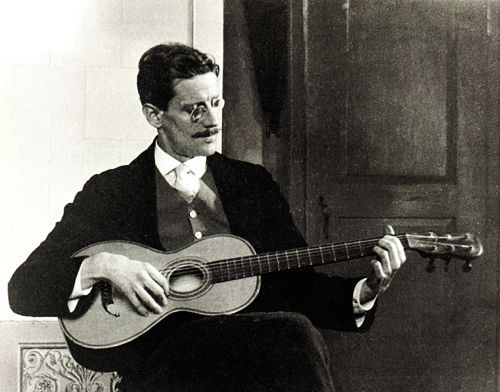 My third (complete) trip through James Joyce’s Ulysses finds me just as (or even more than) stunned as the previous two journeys, a bit (very much) unequal to properly reviewing the book, but this time with an easy out — I listened to an unabridged, full cast audio recording. The aforementioned “easy out” is resting on the received greatness and goodness (and evilness) of the book, which I will hardly contend with and heartily endorse (and do very little real critical work to support my endorsement). Ulysses is fantastic. But what about this audio recording?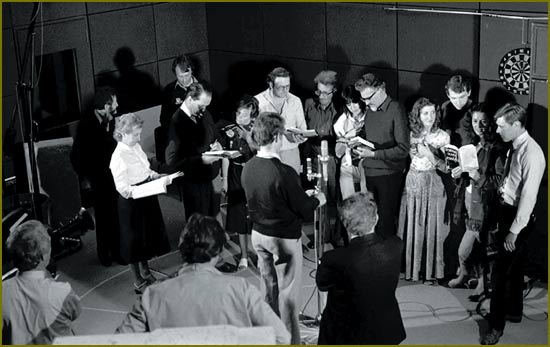
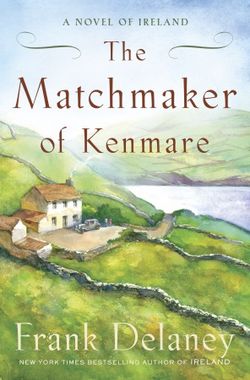 Frank Delaney’s new novel The Matchmaker of Kenmare is set against the dramatic backdrop of Europe in 1943. Its narrator is Ben McCarthy (returning from Delaney’s previous novel Venetia Kelly’s Traveling Show), who lets the story unfold in the style of a memoir. Ben’s wife Venetia Kelly has mysteriously disappeared. To assuage his anxiety, Ben begins collecting folklore Irish folklore as part of a government project. In the process, he comes into contact with the titular matchmaker, Kate Begley. The two soon form a close bond, and Kate does everything in her power to aid the grieving narrator. The plot turns when a U.S. intelligence officer named Charles Miller enters the picture. He strikes up a romance with Kate, but their relationship is tested when he asks her — and Ben — to use their country’s neutral status to travel through enemy territory in order to find a man the American’s need before D-Day. Their mission soon turns to finding the man Kate believes she loves, a plot doubled in Ben’s search for his wife Venetia. The Matchmaker of Kenmare, new in hardback from Random House, will appeal to those who enjoy sweeping, richly detailed historical romances with a literary bent.
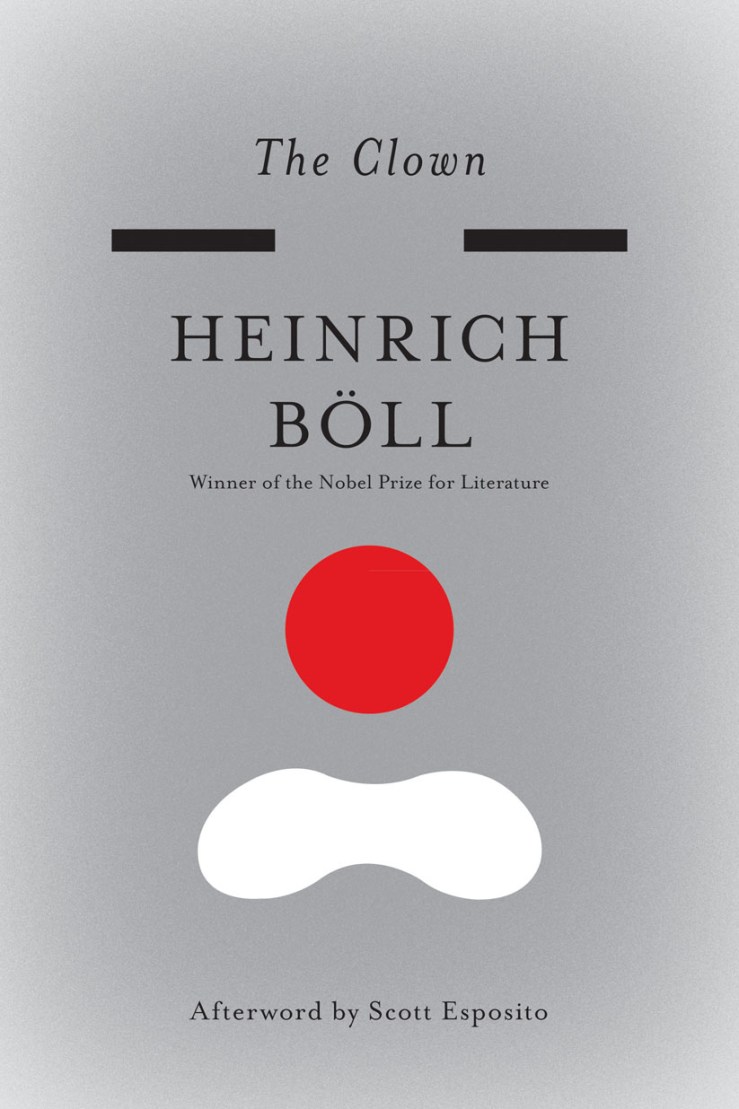 The titular figure in Heinrich Böll’s 1963 novel The Clown is Hans Schnier, a man whose personal and professional life is burning down around him as he howls in (often hilarious) despair. During a performance at a third-rate venue, Hans purposefully injures his knee and retreats to Bonn, where he holes up in his small apartment and makes angry desperate phone calls (and tries not to drink too much brandy) as he reflects on his past.
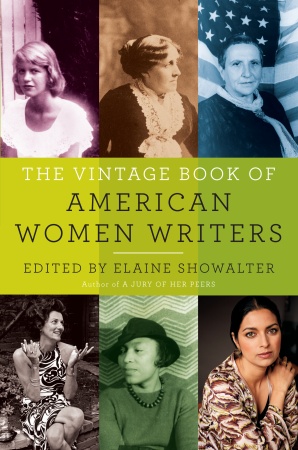 In her introduction to The Vintage Book of American Women Writers, editor Elaine Showalter suggests that “the main reason women do not figure in American literary history is because they have not been the ones to write it.” Showalter sought to amend the fact that women writers, even those who were praised in their own era, “tended to disappear from literary history and national memory” in her earlier volume
  I shouldn’t be reading five novels at once. It’s a terrible idea, a symptom of a bad habit that I thought I’d broken, but after abandoning Levin’s tedious tome
 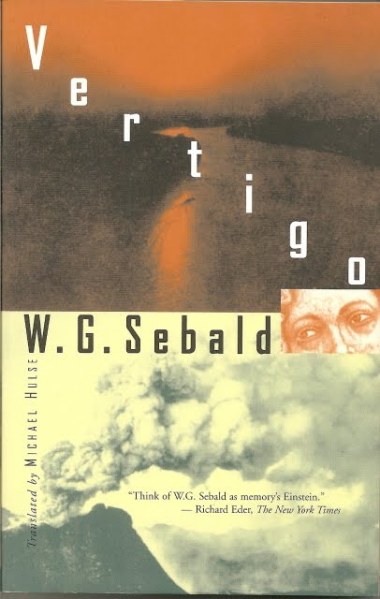 Iyer’s book dovetails nicely with W.G. Sebald’s first novel, Vertigo, which I picked up expressly to get the bad taste of Shteyngart out of my brain. Both books are haunted by Kafka, both blur the lines between fiction and biography, both are works of and about flânerie, and both are melancholy. The book comprises four sections; the first section tells the story of the romantic novelist Stendhal (or, more to the point, a version of Stendhal); the second section details two trips Sebald made to Italy, one in 1980, and one in 1987; the third
  section, which I just read last night, describes a trip Kakfa took to Italy near the end of his life. I’m almost certain that I’ve read this section, “Dr. K Takes the Waters at Riva,” before — but I can’t remember where or when. It was strange reading it, almost as if I were experiencing some of the vertigo that permeates the volume. Full review forthcoming.
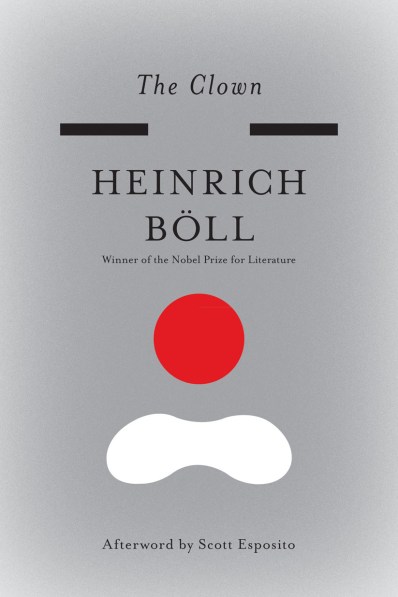 Continuing in this Teutonic vein is Heinrich Böll’s novel The Clown (also Melville House). It’s postwar Germany, and Hans Schnier is a clown who’s crashing and burning. He hurts himself–purposefully–during a performance (at one of the increasingly more provincial venues he finds himself playing for these days) and retreats to Bonn, where he holes up in his small apartment and makes angry desperate phone calls (and tries not to drink too much brandy) and reflects on his past. What’s eating him up? His gal Marie, basically his common-law wife, has reverted back to her Catholic ways and up and left him for some chump named Zupfner. Schnier rants against a complacent and complicit German bourgeoisie, spitting vitriol against Protestants and Catholics alike; some of the best parts of the novel though are his ravings about art and the role of the “artiste” in society. Also: he can smell over the phone. Full review soon.
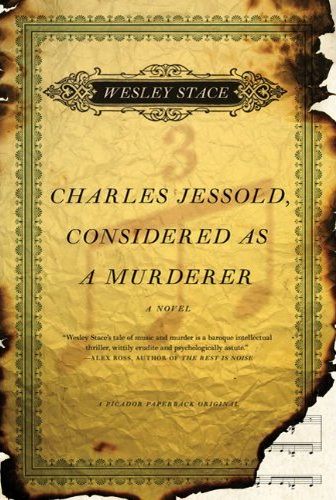 Wesley Stace’s new novel Charles Jessold, Considered as a Murderer (new from Picador) is a musical murder mystery set in the early part of 20th century Britain. Our (seemingly less than reliable) narrator Leslie Shepherd is a music critic with an aristocratic background who likes to spend his weekends collecting folk songs with other rich boys in the towns surrounding their country manors. He’s smitten (platonically, of course) with Charles Jessold, a middle class composer with a spark of avant-garde genius, and wins the younger man’s friendship quickly when he tells the story of Carlo Gesualdo, a fifteenth century composer/lord who kills his wife and her lover. (Notice the etymological connection between their names?) This tale of murder and cuckoldry is doubled in the ballad “
 Steve Hendricks is the author of two works of investigative journalism. 2006’s The Unquiet Grave is an examination of how the FBI aided and abetted the erosion of American Indian culture in the United States. Hendricks’s newest book is A Kidnapping in Milan, a nonfiction thriller that exposes the extraordinary rendition of radical imam Abu Omar by the CIA. In
 Hendricks: It was very important to me that readers empathize with the atrocities visited on Abu Omar. It’s easy for anyone to say that lesser criminals shouldn’t be tortured. But for some people it’s much harder to say that torture shouldn’t be used against our greatest enemies. Yet that’s the test–one test anyway–of whether a deed like torture is evil: does it repulse and degrade us even when we use it against those who are themselves in some measure evil? Yes, I was sure, as you suggest, that my portrayal would alienate some pro-torture readers, but I was more interested in appealing to readers whose minds weren’t made up.
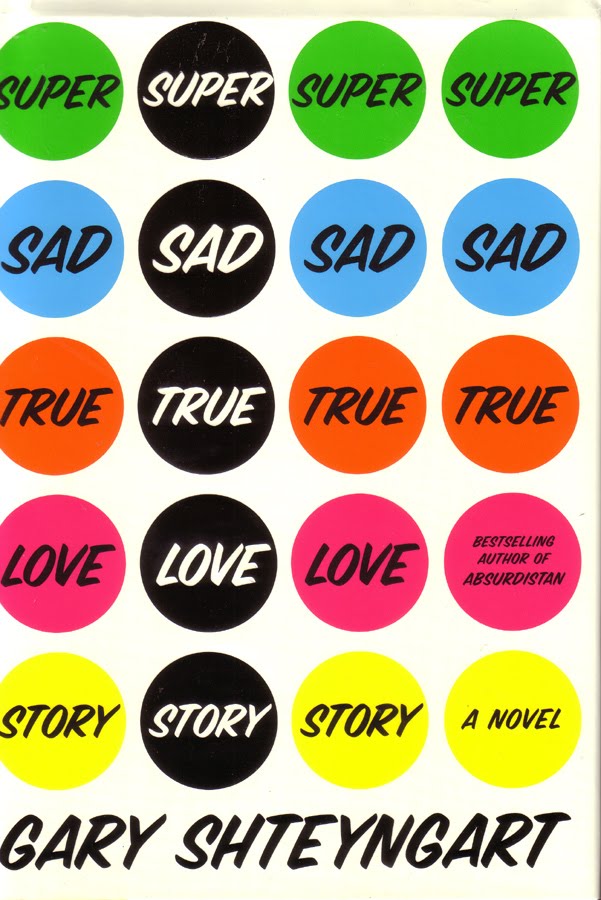 At a certain point, I was inclined to write a thoughtful review of Gary Shteyngart’s much-lauded, truly awful novel Super Sad True Love Story, the kind of review that might try to weigh Shteyngart’s choked May-December romance against its dystopian background. That was a few chapters in, a point at which I’d gotten past the realization that Shteyngart was going to do nothing new with the dystopian genre I so love, yet still early enough for me to think that he might have something to say about American culture and politics in the early 21st century. There’s nothing there, though — Super Sad True Love Story subscribes to the normal dystopian program of synthesizing 1984 and Brave New World through a contemporary lens, yet what we’re left with is Shteyngart’s observation that people might not like to read as much as they used to.

