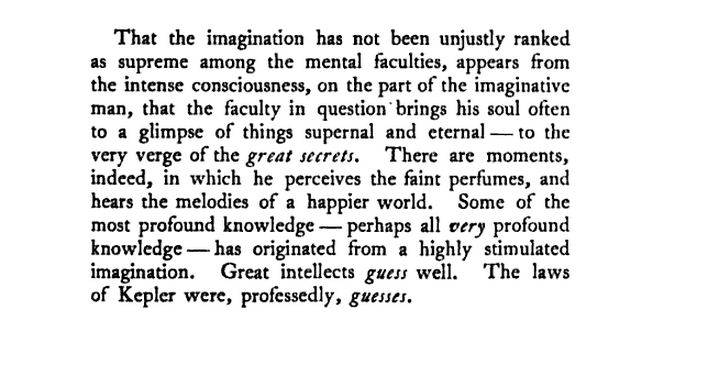
I Review The Mundane History of Lockwood Heights, a Chapbook by Allen Kechagiar

20121029-143421.jpg

“The Mundane History of Lockwood Heights” is a lovely little chapbook, new from Pilotless Press, an Athenian  outfit (uh, Greek, not Georgian) that  knows how to put together an aesthetically-pleasing text. “Lockwood Heights” is their first release. It’s by Allen Kechagiar, who, full disclosure, I’ve been email-friendly with for a several years now.

What’s “Lockwood Heights” about?

An unnamed narrator, a young man, returns to his hometown in California, the titular Lockwood Heights, “another far station, another dead end valley prone to fire, another far suburb with no other cause than the profit it would generate for its contractors.” With little going for it in a depressed economy, the citizens of Lockwood Heights allow porn production to become their town’s raison d’etre. Studios move in and the girls of Lockwood Heights soon find they can essentially auction off their virginity on camera:

They struggle to keep their virginity intact (or at any rate their parents struggle to keep it so) and hope that they will be chosen as the royal heir’s queen consort. Here, at Lockwood Heights, we had our very own race: at its finish line there was no prince to greet the winners, but a whole menagerie, or more accurately a bestiary, comprising of artificially tanned Californian would-have-beens, barely legal girls with gigantic strap-ons, transvestites and hermaphrodites, midgets and giants, obese, anorexic, effeminate, silicon-enhanced or not, all of them with a ticket to her body, standing in a metaphorical queue. A body that wasn’t hers to control anymore. The studio owned it from then on, through the unwritten contracts of promised fame that is rarely delivered.

They were also called the Treasurers or The Knights Who Say No. Their motto was non numquam. Their herald was a locked gate.

The various histories of these girls fill most of “The Mundane History of Lockwood Heights,” and as the narrator often uses the first-person plural “we” (that is, the high school boys), the story sometimes takes on a melancholy and wistful tone similar to Eugenides’s The Virgin Suicides. These are the finest moments of “Heights,” compact and precise narratives that relate the sad (and sometimes not-so-sad) lives of these girls who make porn (or, in some cases, refuse to).

It’s not just the girls of Lockwood Heights who sell their bodies on film—our protagonist comes home to sell all he has left, his “twin virginity” to be lost for a director who is sometimes called the Stanley Kubrick of porn. Scenes of the narrator meeting the casting director, his costar, and other workers on the film’s production are interspersed with the girl stories, as well as the backdrop of the narrator’s homecoming. His father has died, his mother is absent, and a strange little ersatz closet has been constructed in one of the house’s corridors. The interrelationship between these three elements is not as fully developed as it could be; I found myself wanting more. I also wanted more of the strange, aphoristic asides the narrator occasionally offers, like this one:

When we sleep we do not live in the full sense of the word. We rehearse death. Our dreams, the fallout of our daily lives, can only be remembered. They cannot be lived.

When they happen, we do not exist.

In its best moments (and there are plenty of those), “Heights” commands the reader’s attention with its bizarre mix of pathos and the pathetic, with sharp humor that threatens to tip into something more sinister. The southern California exurb Kechagiar crafts recalls the slightly off dystopias of George Saunders—the kind of place we wish were more removed from our immediate reality. “The Mundane History of Lockwood Heights” feels like the starting point of something bigger, more expansive, more detailed—and I’d want to read that something. Recommended.

Types of Fear (A Passage from Roberto Bolaño’s Novel 2666)

There are odder things than sacraphobia, said Elvira Campos, especially if you consider that we’re in Mexico and religion has always been a problem here. In fact, I’d say all Mexicans are essentially sacraphobes. Or take gephyrophobia, a classic fear. Eots of people suffer from it. What’s gephyrophobia? asked Juan de Dios Martinez. The fear of crossing bridges. That’s right, I knew someone once, well, it was a boy, really, who was afraid that when he crossed a bridge it would collapse, so he’d run across it, which was much more dangerous. A classic, said Elvira Campos. Another classic: claustrophobia. Fear of confined spaces. And another: agoraphobia. Fear of open spaces. I’ve heard of those, said Juan de Dios Martinez. And one more: necrophobia. Fear of the dead, said Juan de Dios Martinez, I’ve known people like that. It’s a handicap for a policeman. Then there’s hemophobia, fear of blood. That’s right, said Juan de Dios Martinez. And peccatophobia, fear of comitting sins. But there are other, rarer, fears. For instance, clinophobia. Do you know what that is? No idea, said Juan de Dios Martinez. Fear of beds. Can anyone really fear beds, or hate them? Actually, yes, there are people who do. But they can deal with the problem by sleeping on the floor and never going into a bedroom. And then there’s tricophobia, or fear of hair. That’s a little more complicated, isn’t it? Yes, very much so. There are cases of tricophobia that end in suicide. And there’s verbophobia, fear of words. Which must mean it’s best not to speak, said Juan de Dios Martinez. There’s more to it than that, because words are everywhere, even in silence, which is never complete silence, is it? And then we have vestiphobia, which is fear of clothes. It sounds strange but it’s much more widespread than you’d expect. And this one is relatively common: iatrophobia, or fear of doctors. Or gynophobia, which is fear of women, and naturally afflicts only men. Very widespread in Mexico, although it manifests itself in different ways. Isn’t that a slight exaggeration? Not a bit: almost all Mexican men are afraid of women. I don’t know what to say to that, said Juan de DiosMartinez. Then there are two fears that are really very romantic: ombrophobia and thalassophobia, or fear of rain and fear of the sea. And two others with a touch of the romantic: anthophobia, or fear of flowers, and dendrophobia, fear of trees. Some Mexican men may be gynophobes, said Juan de DiosMartinez, but not all of them, it can’t be that bad. What do you think optophobia is? asked the director. Opto, opto, something to do with the eyes, my God, fear of the eyes? Even worse: fear of opening the eyes. In a figurative sense, that’s an answer to what you just said about gynophobia. In a literal sense, it leads to violent attacks, loss of consciousness, visual and auditory hallucinations, and generally aggressive behavior. I know, though not personally, of course, of two cases in which the patient went so far as to mutilate himself. He put his eyes out? With his fingers, the nails, said the director. Good God, said Juan de Dios Martinez. Then we have pedophobia, of course, which is fear of children, and ballistophobia, fear of bullets. That’s my phobia, said Juan de Dios Martinez. Yes, I suppose it’s only common sense, said the director. And another phobia, this one on the rise: tropophobia, or the fear of making changes or moving. Which can be aggravated if it becomes agyrophobia, fear of streets or crossing the street. Not to forget chromophobia, which is fear of certain colors, or nyctophobia, fear of night, or ergophobia, fear of work. A common complaint is decidophobia, the fear of making decisions. And there’s a fear that’s just beginning to spread, which is anthrophobia, or fear of people. Some Indians suffer from a heightened form of astrophobia, which is fear of meteorological phenomena like thunder and lightning. But the worst phobias, in my opinion, are pantophobia, which is fear of everything, and phobophobia, fear of fear itself. If you had to suffer from one of the two, which would you choose? Phobophobia, said Juan de Dios Martinez. Think carefully, it has its drawbacks, said the director. Between being afraid of everything and being afraid of my own fear, I’d take the latter. Don’t forget I’m a policeman and if I was scared of everything I couldn’t work. But if you’re afraid of your own fears, you’re forced to live in constant contemplation of them, and if they materialize, what you have is a system that feeds on itself, a vicious cycle, said the director.

From “The Part About the Crimes,” 2666 by Roberto Bolaño.


Halloween Links

I suggest Count Dracula plays an uncredited cameo in Roberto Bolaño’s novel 2666

Seven horror stories masquerading in other genres

Death (and life) masks.

You can’t do better than From Hell (Alan Moore & Eddie Campbell)

Seven more horror stories masquerading in other genres

Roberto Bolaño’s powers of horror (I read 2666 through a Kristevan lens)

Jonathan Littell’s The Kindly Ones: lurid, horrific, abject

Bolaño’s werewolves

28 Weeks Later is a good film, but it hates children

I hated Justin Cronin’s The Passage, which I suppose counts as a horror novel

Yoko Ogawa’s novel Hotel Iris is subtle, Lynchian horror

David Lynch’s film INLAND EMPIRE is subtle Lynchian horror

Playing online bingo games: Horrific?

Bedknobs and Broomsticks: not scary but who cares

Cormac McCarthy’s Child of God is scary, obscene, etc.

What I liked about that Zodiac movie (spoiler: everyone in the comments section tells me I’m wrong!)

Read “The Outsider,” A Short Tale of Weird Horror by H.P. Lovecraft

“The Outsider,” by H.P. Lovecraft:

Unhappy is he to whom the memories of childhood bring only fear and sadness. Wretched is he who looks back upon lone hours in vast and dismal chambers with brown hangings and maddening rows of antique books, or upon awed watches in twilight groves of grotesque, gigantic, and vine-encumbered trees that silently wave twisted branches far aloft. Such a lot the gods gave to me – to me, the dazed, the disappointed; the barren, the broken. And yet I am strangely content and cling desperately to those sere memories, when my mind momentarily threatens to reach beyond to the other.

I know not where I was born, save that the castle was infinitely old and infinitely horrible, full of dark passages and having high ceilings where the eye could find only cobwebs and shadows. The stones in the crumbling corridors seemed always hideously damp, and there was an accursed smell everywhere, as of the piled-up corpses of dead generations. It was never light, so that I used sometimes to light candles and gaze steadily at them for relief, nor was there any sun outdoors, since the terrible trees grew high above the topmost accessible tower. There was one black tower which reached above the trees into the unknown outer sky, but that was partly ruined and could not be ascended save by a well-nigh impossible climb up the sheer wall, stone by stone.

I must have lived years in this place, but I cannot measure the time. Beings must have cared for my needs, yet I cannot recall any person except myself, or anything alive but the noiseless rats and bats and spiders. I think that whoever nursed me must have been shockingly aged, since my first conception of a living person was that of somebody mockingly like myself, yet distorted, shrivelled, and decaying like the castle. To me there was nothing grotesque in the bones and skeletons that strewed some of the stone crypts deep down among the foundations. I fantastically associated these things with everyday events, and thought them more natural than the coloured pictures of living beings which I found in many of the mouldy books. From such books I learned all that I know. No teacher urged or guided me, and I do not recall hearing any human voice in all those years – not even my own; for although I had read of speech, I had never thought to try to speak aloud. My aspect was a matter equally unthought of, for there were no mirrors in the castle, and I merely regarded myself by instinct as akin to the youthful figures I saw drawn and painted in the books. I felt conscious of youth because I remembered so little.

Outside, across the putrid moat and under the dark mute trees, I would often lie and dream for hours about what I read in the books; and would longingly picture myself amidst gay crowds in the sunny world beyond the endless forests. Once I tried to escape from the forest, but as I went farther from the castle the shade grew denser and the air more filled with brooding fear; so that I ran frantically back lest I lose my way in a labyrinth of nighted silence.

So through endless twilights I dreamed and waited, though I knew not what I waited for. Then in the shadowy solitude my longing for light grew so frantic that I could rest no more, and I lifted entreating hands to the single black ruined tower that reached above the forest into the unknown outer sky. And at last I resolved to scale that tower, fall though I might; since it were better to glimpse the sky and perish, than to live without ever beholding day.

In the dank twilight I climbed the worn and aged stone stairs till I reached the level where they ceased, and thereafter clung perilously to small footholds leading upward. Ghastly and terrible was that dead, stairless cylinder of rock; black, ruined, and deserted, and sinister with startled bats whose wings made no noise. But more ghastly and terrible still was the slowness of my progress; for climb as I might, the darkness overhead grew no thinner, and a new chill as of haunted and venerable mould assailed me. I shivered as I wondered why I did not reach the light, and would have looked down had I dared. I fancied that night had come suddenly upon me, and vainly groped with one free hand for a window embrasure, that I might peer out and above, and try to judge the height I had once attained.

All at once, after an infinity of awesome, sightless, crawling up that concave and desperate precipice, I felt my head touch a solid thing, and I knew I must have gained the roof, or at least some kind of floor. In the darkness I raised my free hand and tested the barrier, finding it stone and immovable. Then came a deadly circuit of the tower, clinging to whatever holds the slimy wall could give; till finally my testing hand found the barrier yielding, and I turned upward again, pushing the slab or door with my head as I used both hands in my fearful ascent. There was no light revealed above, and as my hands went higher I knew that my climb was for the nonce ended; since the slab was the trapdoor of an aperture leading to a level stone surface of greater circumference than the lower tower, no doubt the floor of some lofty and capacious observation chamber. I crawled through carefully, and tried to prevent the heavy slab from falling back into place, but failed in the latter attempt. As I lay exhausted on the stone floor I heard the eerie echoes of its fall, hoped when necessary to pry it up again.

Believing I was now at prodigious height, far above the accursed branches of the wood, I dragged myself up from the floor and fumbled about for windows, that I might look for the first time upon the sky, and the moon and stars of which I had read. But on every hand I was disappointed; since all that I found were vast shelves of marble, bearing odious oblong boxes of disturbing size. More and more I reflected, and wondered what hoary secrets might abide in this high apartment so many aeons cut off from the castle below. Then unexpectedly my hands came upon a doorway, where hung a portal of stone, rough with strange chiselling. Trying it, I found it locked; but with a supreme burst of strength I overcame all obstacles and dragged it open inward. As I did so there came to me the purest ecstasy I have ever known; for shining tranquilly through an ornate grating of iron, and down a short stone passageway of steps that ascended from the newly found doorway, was the radiant full moon, which I had never before seen save in dreams and in vague visions I dared not call memories.

Fancying now that I had attained the very pinnacle of the castle, I commenced to rush up the few steps beyond the door; but the sudden veiling of the moon by a cloud caused me to stumble, and I felt my way more slowly in the dark. It was still very dark when I reached the grating – which I tried carefully and found unlocked, but which I did not open for fear of falling from the amazing height to which I had climbed. Then the moon came out.

Most demoniacal of all shocks is that of the abysmally unexpected and grotesquely unbelievable. Nothing I had before undergone could compare in terror with what I now saw; with the bizarre marvels that sight implied. The sight itself was as simple as it was stupefying, for it was merely this: instead of a dizzying prospect of treetops seen from a lofty eminence, there stretched around me on the level through the grating nothing less than the solid ground, decked and diversified by marble slabs and columns, and overshadowed by an ancient stone church, whose ruined spire gleamed spectrally in the moonlight.

Half unconscious, I opened the grating and staggered out upon the white gravel path that stretched away in two directions. My mind, stunned and chaotic as it was, still held the frantic craving for light; and not even the fantastic wonder which had happened could stay my course. I neither knew nor cared whether my experience was insanity, dreaming, or magic; but was determined to gaze on brilliance and gaiety at any cost. I knew not who I was or what I was, or what my surroundings might be; though as I continued to stumble along I became conscious of a kind of fearsome latent memory that made my progress not wholly fortuitous. I passed under an arch out of that region of slabs and columns, and wandered through the open country; sometimes following the visible road, but sometimes leaving it curiously to tread across meadows where only occasional ruins bespoke the ancient presence of a forgotten road. Once I swam across a swift river where crumbling, mossy masonry told of a bridge long vanished.

Over two hours must have passed before I reached what seemed to be my goal, a venerable ivied castle in a thickly wooded park, maddeningly familiar, yet full of perplexing strangeness to me. I saw that the moat was filled in, and that some of the well-known towers were demolished, whilst new wings existed to confuse the beholder. But what I observed with chief interest and delight were the open windows – gorgeously ablaze with light and sending forth sound of the gayest revelry. Advancing to one of these I looked in and saw an oddly dressed company indeed; making merry, and speaking brightly to one another. I had never, seemingly, heard human speech before and could guess only vaguely what was said. Some of the faces seemed to hold expressions that brought up incredibly remote recollections, others were utterly alien.

I now stepped through the low window into the brilliantly lighted room, stepping as I did so from my single bright moment of hope to my blackest convulsion of despair and realization. The nightmare was quick to come, for as I entered, there occurred immediately one of the most terrifying demonstrations I had ever conceived. Scarcely had I crossed the sill when there descended upon the whole company a sudden and unheralded fear of hideous intensity, distorting every face and evoking the most horrible screams from nearly every throat. Flight was universal, and in the clamour and panic several fell in a swoon and were dragged away by their madly fleeing companions. Many covered their eyes with their hands, and plunged blindly and awkwardly in their race to escape, overturning furniture and stumbling against the walls before they managed to reach one of the many doors.

The cries were shocking; and as I stood in the brilliant apartment alone and dazed, listening to their vanishing echoes, I trembled at the thought of what might be lurking near me unseen. At a casual inspection the room seemed deserted, but when I moved towards one of the alcoves I thought I detected a presence there – a hint of motion beyond the golden-arched doorway leading to another and somewhat similar room. As I approached the arch I began to perceive the presence more clearly; and then, with the first and last sound I ever uttered – a ghastly ululation that revolted me almost as poignantly as its noxious cause – I beheld in full, frightful vividness the inconceivable, indescribable, and unmentionable monstrosity which had by its simple appearance changed a merry company to a herd of delirious fugitives.

I cannot even hint what it was like, for it was a compound of all that is unclean, uncanny, unwelcome, abnormal, and detestable. It was the ghoulish shade of decay, antiquity, and dissolution; the putrid, dripping eidolon of unwholesome revelation, the awful baring of that which the merciful earth should always hide. God knows it was not of this world – or no longer of this world – yet to my horror I saw in its eaten-away and bone-revealing outlines a leering, abhorrent travesty on the human shape; and in its mouldy, disintegrating apparel an unspeakable quality that chilled me even more.

I was almost paralysed, but not too much so to make a feeble effort towards flight; a backward stumble which failed to break the spell in which the nameless, voiceless monster held me. My eyes bewitched by the glassy orbs which stared loathsomely into them, refused to close; though they were mercifully blurred, and showed the terrible object but indistinctly after the first shock. I tried to raise my hand to shut out the sight, yet so stunned were my nerves that my arm could not fully obey my will. The attempt, however, was enough to disturb my balance; so that I had to stagger forward several steps to avoid falling. As I did so I became suddenly and agonizingly aware of the nearness of the carrion thing, whose hideous hollow breathing I half fancied I could hear. Nearly mad, I found myself yet able to throw out a hand to ward off the foetid apparition which pressed so close; when in one cataclysmic second of cosmic nightmarishness and hellish accident my fingers touched the rotting outstretched paw of the monster beneath the golden arch.

I did not shriek, but all the fiendish ghouls that ride the nightwind shrieked for me as in that same second there crashed down upon my mind a single fleeting avalanche of soul-annihilating memory. I knew in that second all that had been; I remembered beyond the frightful castle and the trees, and recognized the altered edifice in which I now stood; I recognized, most terrible of all, the unholy abomination that stood leering before me as I withdrew my sullied fingers from its own.

But in the cosmos there is balm as well as bitterness, and that balm is nepenthe. In the supreme horror of that second I forgot what had horrified me, and the burst of black memory vanished in a chaos of echoing images. In a dream I fled from that haunted and accursed pile, and ran swiftly and silently in the moonlight. When I returned to the churchyard place of marble and went down the steps I found the stone trap-door immovable; but I was not sorry, for I had hated the antique castle and the trees. Now I ride with the mocking and friendly ghouls on the night-wind, and play by day amongst the catacombs of Nephren-Ka in the sealed and unknown valley of Hadoth by the Nile. I know that light is not for me, save that of the moon over the rock tombs of Neb, nor any gaiety save the unnamed feasts of Nitokris beneath the Great Pyramid; yet in my new wildness and freedom I almost welcome the bitterness of alienage.

For although nepenthe has calmed me, I know always that I am an outsider; a stranger in this century and among those who are still men. This I have known ever since I stretched out my fingers to the abomination within that great gilded frame; stretched out my fingers and touched a cold and unyielding surface of polished glass.

 

Book Shelves #44, 10.28.2012

20121028-105045.jpg

Book shelves series #44, forty-fourth Sunday of 2012

Not a particularly beautiful shelf—it sits between a TV and a soundbar; houses an unused Wii, an analog clock, and a picture of my kids. The books camouflage cords and wires.

You can see the whole shelf in the top pic. The big pic on the right: a Kokeshi doll set on Henry Miller volume that was a gift from a friend years ago in high school.

To the left: Bukowski, Miller, Anaïs Nin. Then, a section of stuff you can’t really see, including an extremely tattered copy of A Passage to India.

Lower right: Mass-market paperbacks that were especially important to me over the years and as a result have managed to hang around—even in cases where they were replaced by handsomer volumes. Usually obscured by the clock. Includes stuff by Borges, Carson McCullers, Hemingway, Twain, Chopin, Richard Wright . . .

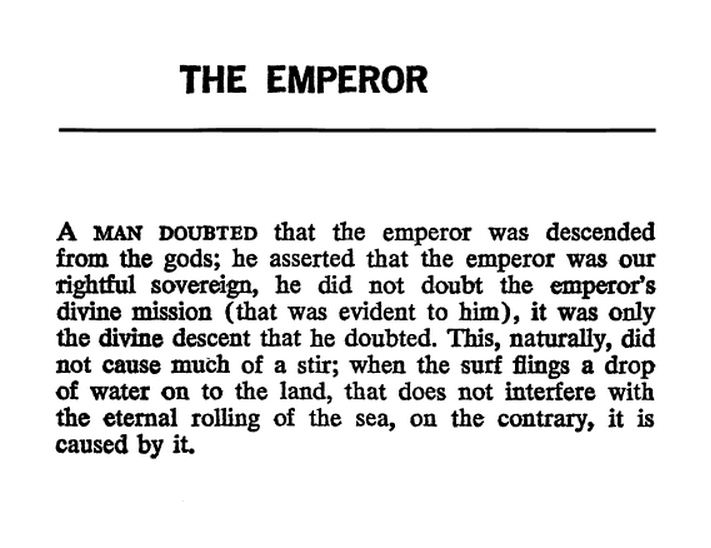
“The Emperor” — Kafka

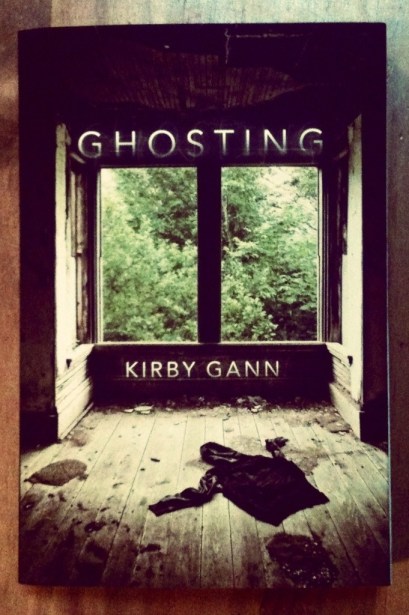
Ghosting (Book Acquired, 10.18.2012)

20121018-174628.jpg

I got a copy of Kirby Gann’s novel Ghosting a few week or so ago, and finally have had time to dip into the first three chapters this morning. Gann’s prose—and perhaps the framing of his characters—reminds me a bit of Russell Banks or Thomas McGuane—that combination of the rough and the refined, that rawness that actually comes from meticulous reworking. Sample of that prose (context not important):

The first cop to show nods at Dwayne Hardesty and stands beside him at the feet of four kids who lie spread-eagled face-down on the muddy portico steps leading to the graffiti-strewn boards that shield the seminary entrance. The wash of the cruiser’s spot frescoes their captive forms in hard outline, three underfed and thin and the fourth a fat block squeezed into a Kentucky basketball sweatshirt that strains to withstand his heavy nervous breathing, the grommets in their jeans and an occasional earring flashing agleam in the white light; four pairs of white sneakers, expensive and rain-wet, shine stark and severe and unworldly.

Ghosting is a thriller, and Gann propels the narrative forward with these cinematic images (and realistic dialogue), engaging the reader to keep turning the pages.

Here’s the jacket copy:

A dying drug kingpin enslaved to the memory of his dead wife; a young woman torn between her promising future and the hardscrabble world she grew up in; a mother willing to do anything to fuel her addiction to pills; and her youngest son, searching for an answer behind his brother’s disappearance—these are just some of the unforgettable characters that populate Ghosting, Kirby Gann’s lush and lyrical novel of family, community, and the ties that can both bond and betray.

Fleece Skaggs has disappeared along with Lawrence Gruel’s reefer harvest. Convinced that the best way to discover the fate of his older brother is to take his place as a drug runner for Greuel, James Cole plunges into a dark underworld of drugs, violence, and long hidden family secrets, where discovering what happened to his brother could cost him his life.

A genre-subverting literary thriller explored through the alternating viewpoints of different characters, Ghosting is both a simple quest for the solution to a mystery, and a complex consideration of human frailty and equivocation.


“Attacked by a Vampire” — Cormac McCarthy

They walked on into the dark and they slept like dogs in the sand and had been sleeping so when something black flapped up out of the night ground and perched on Sproule’s chest. Fine fingerbones stayed the leather wings with which it steadied as it walked upon him. A wrinkled pug face, small and vicious, bare lips crimped in a horrible smile and teeth pale blue in the starlight. It leaned to him. It crafted in his neck two narrow grooves and folding its wings over him it began to drink his blood.

Not soft enough. He woke, put up a hand. He shrieked and the bloodbat flailed and sat back upon his chest and righted itself again and hissed and clicked its teeth.

The kid was up and had seized a rock but the bat sprang away and vanished in the dark. Sproule was clawing at his neck and he was gibbering hysterically and when he saw the kid standing there looking down at him he held out to him his bloodied hands as if in accusation and then clapped them to his ears and cried out what it seemed he himself would not hear, a howl of such outrage as to stitch a caesura in the pulsebeat of the world. But the kid only spat into the darkness of the space between them. I know your kind, he said. What’s wrong with you is wrong all the way through you.

—from Cormac McCarthy’s novel Blood Meridian

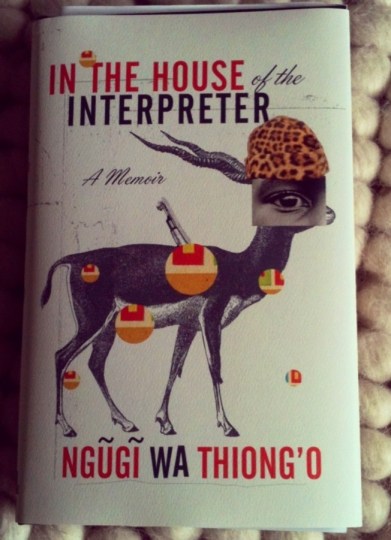
Ngugi wa Thiong’o’s Memoir — In the House of the Interpreter (Book Acquired, 10.24.2012)

20121025-161753.jpg

In the House of the Interpreter is a memoir from Ngugi wa Thiong’o. It’s new next month in hardback from Pantheon (lovely cover/design, on this one, Pantheon people. Seriously). Their blurb:

World-renowned Kenyan novelist, poet, playwright, and literary critic Ng˜ug˜ý wa Thiong’o gives us the second volume of his memoirs in the wake of his critically acclaimed Dreams in a Time of War.

In the House of the Interpreter richly and poignantly evokes the author’s life and times at boarding school—the first secondary educational institution in British-ruled Kenya—in the 1950s, against the backdrop of the tumultuous Mau Mau Uprising for independence and Kenyan sovereignty. While Ng˜ug˜ý has been enjoying scouting trips, chess tournaments, and reading about the fictional RAF pilot adventurer Biggles at the prestigious Alliance High School near Nairobi, things have been changing rapidly at home. Poised as he is between two worlds, Ng˜ug˜ý returns home for his first visit since starting school to find his house razed and the entire village moved up the road, closer to a guard checkpoint. Later, his brother Good Wallace, a member of the insurgency, is captured by the British and taken to a concentration camp. As for Ng˜ug˜ý himself, he falls victim to the forces of colonialism in the person of a police officer encountered on a bus journey, and he is thrown into jail for six days. In his second year at Alliance High School, the boarding school that was his haven in a heartless world is shattered by investigations, charges of disloyalty, and the politics of civil unrest.

In the House of the Interpreter hauntingly describes the formative experiences of a young man who would become a world-class writer and, as a political dissident, a moral compass to us all. It is a winning celebration of the implacable determination of youth and the power of hope.


“How Jack O’Lanterns Came To Be” — Zora Neale Hurston

From Zora Neale Hurston’s novelization of folklore, Mules and Men:

It was slavery time, Zora, when Big Sixteen was a man. They called ‘im Sixteen  cause dat was de number of de shoe he wore. He was big and strong and Ole Massa looked to him to do everything.

One day Ole Massa said, “Big Sixteen, Ah b’lieve Ah want you to move dem sills Ah had hewed out down in de swamp.

“I yassuh, Massa.”

Big Sixteen went down in de swamp and picked up dem 12 X 12’s and brought ’em on up to de house and stack ,em. No one man ain’t never toted a 12 X 12 befo’ nor since.

So Ole Massa said one day, “Go fetch in de mules. Ah want to look ’em over.”

Big Sixteen went on down to, de pasture and caught dem mules by de bridle but they was contrary and balky and he tore de bridles to pieces pullin’ on ’em, so he picked one of ’em up under each arm and brought ’em up to Old Massa.

He says, “Big Sixteen, if you kin tote a pair of balky mules, you kin do anything. You kin ketch de Devil.”

“Yassuh, Ah kin, if you git me a nine-pound hammer and a pick and shovel!”

Ole Massa got Sixteen de things he ast for and tole ‘im to go ahead and bring him de Devil.

Big Sixteen went out in front of de house and went to diggin’. He was diggin’ nearly a month befo’ he got where he wanted. Then he took his hammer and went and knocked on de Devil’s door. Devil answered de door hisself.

“Who dat out dere?”

“It’s Big Sixteen.”

“What you want?”

“Wanta have a word wid you for a minute.”

Soon as de Devil poked his head out de door, Sixteen him over de head wid dat hammer and picked ‘im  up and carried ‘im back to Old Massa.

Ole Massa looked at de dead Devil and hollered, “Take dat ugly thing ‘way from here, quick! Ah didn’t think you’d, ketch de Devil sho ’nuff.”

So Sixteen picked up de Devil and throwed ‘im back down de hole.

Way after while, Big Sixteen died and went up to Heben. But Peter looked at him and tole ‘im to g’wan ‘way from dere. He was too powerful. He might git outa order and there wouldn’t be nobody to handle ‘im. But he had to, go somewhere so he went on to hell.

Soon as he got to de gate de Devil’s children was playin’ in de yard and they seen ‘im and run to de house, says, “Mama, mama! Dat man’s out dere dat kilt papa!”

So she called ‘im in de house and shet de door. When Sixteen got dere she handed ‘im a li’l piece of fire and said, “You ain’t comin’ in here. Here, take dis hot coal and g’wan off and start you a hell uh yo’ own.”

So when you see a Jack O’Lantern in de woods at night you know it’s Big Sixteen wid his piece of fire lookin’ for a  place to go.

Read “The Oval Portrait,” a Short Short Story by Edgar Allan Poe

Edgar Allan Poe’s tale “The Oval Portrait” —

The chateau into which my valet had ventured to make forcible entrance, rather than permit me, in my desperately wounded condition, to pass a night in the open air, was one of those piles of commingled gloom and grandeur which have so long frowned among the Appennines, not less in fact than in the fancy of Mrs. Radcliffe. To all appearance it had been temporarily and very lately abandoned. We established ourselves in one of the smallest and least sumptuously furnished apartments. It lay in a remote turret of the building. Its decorations were rich, yet tattered and antique. Its walls were hung with tapestry and bedecked with manifold and multiform armorial trophies, together with an unusually great number of very spirited modern paintings in frames of rich golden arabesque. In these paintings, which depended from the walls not only in their main surfaces, but in very many nooks which the bizarre architecture of the chateau rendered necessary- in these paintings my incipient delirium, perhaps, had caused me to take deep interest; so that I bade Pedro to close the heavy shutters of the room- since it was already night- to light the tongues of a tall candelabrum which stood by the head of my bed- and to throw open far and wide the fringed curtains of black velvet which enveloped the bed itself. I wished all this done that I might resign myself, if not to sleep, at least alternately to the contemplation of these pictures, and the perusal of a small volume which had been found upon the pillow, and which purported to criticise and describe them.

Long- long I read- and devoutly, devotedly I gazed. Rapidly and gloriously the hours flew by and the deep midnight came. The position of the candelabrum displeased me, and outreaching my hand with difficulty, rather than disturb my slumbering valet, I placed it so as to throw its rays more fully upon the book.

But the action produced an effect altogether unanticipated. The rays of the numerous candles (for there were many) now fell within a niche of the room which had hitherto been thrown into deep shade by one of the bed-posts. I thus saw in vivid light a picture all unnoticed before. It was the portrait of a young girl just ripening into womanhood. I glanced at the painting hurriedly, and then closed my eyes. Why I did this was not at first apparent even to my own perception. But while my lids remained thus shut, I ran over in my mind my reason for so shutting them. It was an impulsive movement to gain time for thought- to make sure that my vision had not deceived me- to calm and subdue my fancy for a more sober and more certain gaze. In a very few moments I again looked fixedly at the painting.

That I now saw aright I could not and would not doubt; for the first flashing of the candles upon that canvas had seemed to dissipate the dreamy stupor which was stealing over my senses, and to startle me at once into waking life.

The portrait, I have already said, was that of a young girl. It was a mere head and shoulders, done in what is technically termed a vignette manner; much in the style of the favorite heads of Sully. The arms, the bosom, and even the ends of the radiant hair melted imperceptibly into the vague yet deep shadow which formed the back-ground of the whole. The frame was oval, richly gilded and filigreed in Moresque. As a thing of art nothing could be more admirable than the painting itself. But it could have been neither the execution of the work, nor the immortal beauty of the countenance, which had so suddenly and so vehemently moved me. Least of all, could it have been that my fancy, shaken from its half slumber, had mistaken the head for that of a living person. I saw at once that the peculiarities of the design, of the vignetting, and of the frame, must have instantly dispelled such idea- must have prevented even its momentary entertainment. Thinking earnestly upon these points, I remained, for an hour perhaps, half sitting, half reclining, with my vision riveted upon the portrait. At length, satisfied with the true secret of its effect, I fell back within the bed. I had found the spell of the picture in an absolute life-likeliness of expression, which, at first startling, finally confounded, subdued, and appalled me. With deep and reverent awe I replaced the candelabrum in its former position. The cause of my deep agitation being thus shut from view, I sought eagerly the volume which discussed the paintings and their histories. Turning to the number which designated the oval portrait, I there read the vague and quaint words which follow:

“She was a maiden of rarest beauty, and not more lovely than full of glee. And evil was the hour when she saw, and loved, and wedded the painter. He, passionate, studious, austere, and having already a bride in his Art; she a maiden of rarest beauty, and not more lovely than full of glee; all light and smiles, and frolicsome as the young fawn; loving and cherishing all things; hating only the Art which was her rival; dreading only the pallet and brushes and other untoward instruments which deprived her of the countenance of her lover. It was thus a terrible thing for this lady to hear the painter speak of his desire to pourtray even his young bride. But she was humble and obedient, and sat meekly for many weeks in the dark, high turret-chamber where the light dripped upon the pale canvas only from overhead. But he, the painter, took glory in his work, which went on from hour to hour, and from day to day. And be was a passionate, and wild, and moody man, who became lost in reveries; so that he would not see that the light which fell so ghastly in that lone turret withered the health and the spirits of his bride, who pined visibly to all but him. Yet she smiled on and still on, uncomplainingly, because she saw that the painter (who had high renown) took a fervid and burning pleasure in his task, and wrought day and night to depict her who so loved him, yet who grew daily more dispirited and weak. And in sooth some who beheld the portrait spoke of its resemblance in low words, as of a mighty marvel, and a proof not less of the power of the painter than of his deep love for her whom he depicted so surpassingly well. But at length, as the labor drew nearer to its conclusion, there were admitted none into the turret; for the painter had grown wild with the ardor of his work, and turned his eyes from canvas merely, even to regard the countenance of his wife. And he would not see that the tints which he spread upon the canvas were drawn from the cheeks of her who sate beside him. And when many weeks bad passed, and but little remained to do, save one brush upon the mouth and one tint upon the eye, the spirit of the lady again flickered up as the flame within the socket of the lamp. And then the brush was given, and then the tint was placed; and, for one moment, the painter stood entranced before the work which he had wrought; but in the next, while he yet gazed, he grew tremulous and very pallid, and aghast, and crying with a loud voice, ‘This is indeed Life itself!’ turned suddenly to regard his beloved:- She was dead!

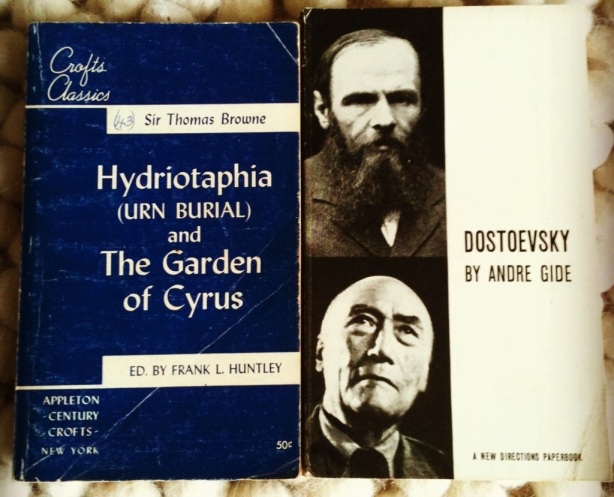
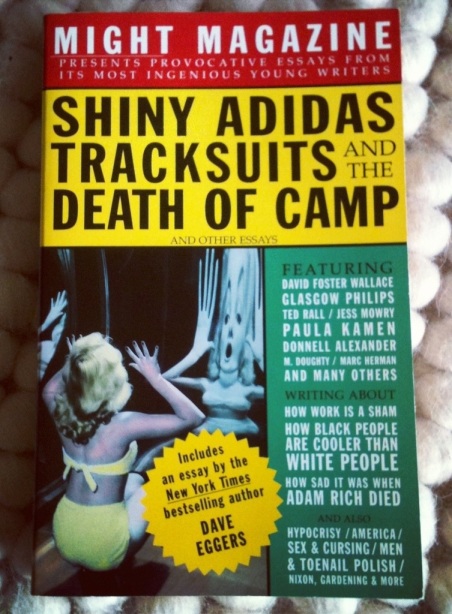
Thomas Browne’s Hydriotaphia, Gide’s Dostoevsky, David Foster Wallace’s AIDS Essay (Books Acquired, 10.25.2012)

20121025-161723.jpg

Needing more books like I need another hole in my head, I nevertheless visited my local bookshop (after an impressive three week abstinence period).

No, I haven’t read Thomas Browne’s Urn Burial yet. I’m a sucker for New Directions’ back stock, I just finished Crime & Punishment, and Gide’s book looks cool. Plus it was like a dollar.

I spied the Might Magazine collection—I knew Might as Dave Eggers’s first venture. I picked it up for the (very short) David Foster Wallace essay “Hail the Returning Dragon, Clothed in New Fire”—which, incidentally, doesn’t appear to be is collected in the forthcoming collection Both Flesh and Not under the new not-as-Game of Thronesish title “Back in New Fire.” 

20121025-161730.jpg

Night’s Plutonian Shore — Gustave Dore Illustrates Edgar Allan Poe’s Poem “The Raven”

Gustave Dore’s marvelous illustration’s for Edgar Allan Poe’s poem “The Raven”


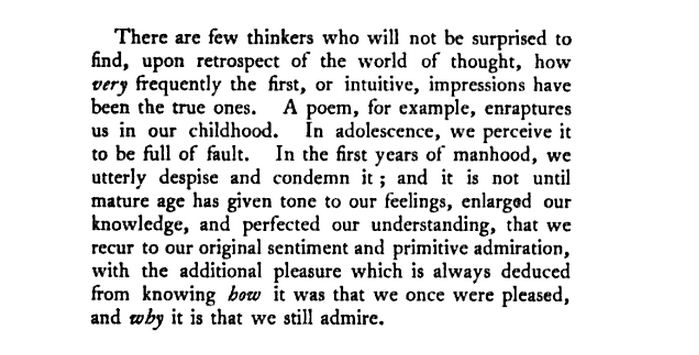
Edgar Allan Poe on Intuitive Impressions

(From “A Chapter of Suggestions”).

Read “55 Miles to the Gas Pump,” a Lovely Horrific Short Story by Annie Proulx

“55 Miles to the Gas Pump” is a very short story by Annie Proulx.

Rancher Croom in handmade boots and filthy hat, that walleyed cattleman, stray hairs like the curling fiddle string ends, that warm-handed, quick-foot dancer on splintery boards or down the cellar stairs to a rack of bottles of his own strange beer, yeasty, cloudy, bursting out in garlands of foam, Rancher Croom at night galloping drunk over the dark plain, turning off at a place he knows to arrive at a canyon brink where he dismounts and looks down on tumbled rock, waits, then steps out, parting the air with his last roar, sleeves surging up, windmill arms, jeans riding over boot tops, but before he hits he rises again to the top of the cliff like a cork in a bucket of milk.

Mrs. Croom on the roof with a saw cutting a hole into the attic where she has not been for twelve years thanks to old Croom’s padlocks and warnings, whets to her desire, and the sweat flies as she exchanges the saw for a chisel and hammer until a ragged slab peak is free and she can see inside: just as she thought: the corpses of Mr. Croom’s paramours – she recognizes them from their photographs in the paper: MISSING WOMAN – some desiccated as jerky and much the same color, some moldy from lying beneath roof leaks, and, all of them used hard, covered with tarry handprints, the marks of boot heels, some bright blue with remnants of paint used on the shutters years ago, one wrapped in newspaper nipple to knee.

When you live a long way out you make your own fun.

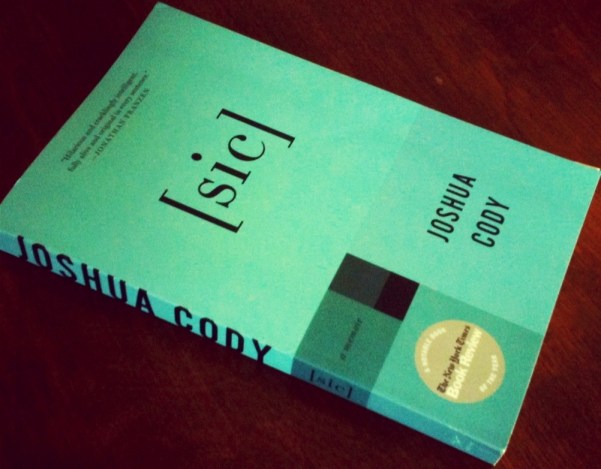
I Didn’t Like Joshua Cody’s Memoir [sic]

20121023-160233.jpg

Joshua Cody’s memoir [sic] showed up at Biblioklept World Headquarters a few weeks ago and despite my prejudices, I coasted through it over a few afternoons.

Those prejudices:

1) It’s a memoir.

2) There’s a Jonathan Franzen blurb on the cover.

3) The title [sic] is an unbearably too-clever pun (and this from a guy who loves puns).

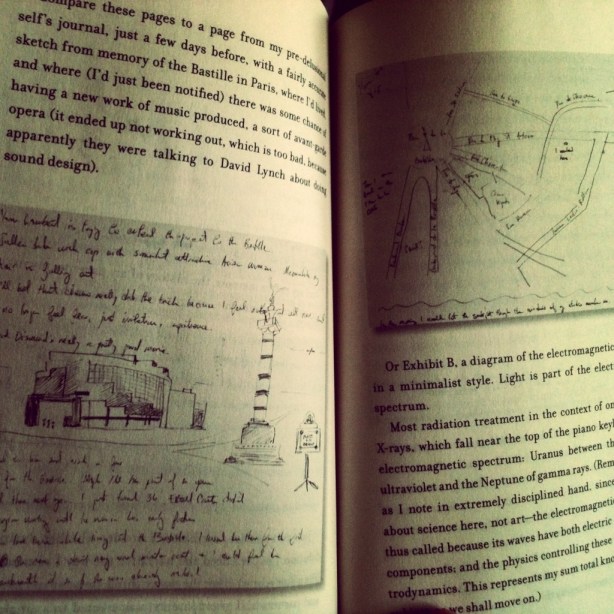
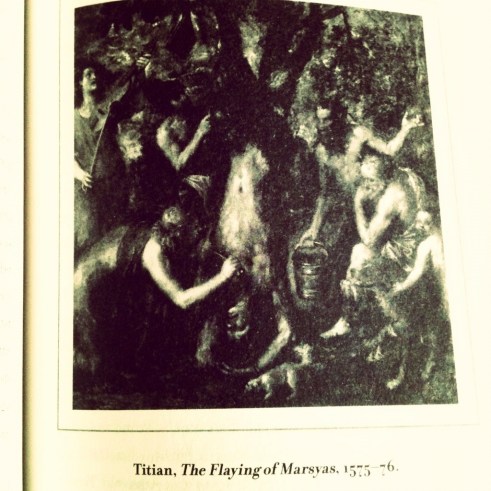
The first thing I noticed about [sic] were the pictures : paintings, maps, charts, sketches, lists, collages, other texts, and so on interspersed throughout the text. I like pictures in books.

20121023-160240.jpg

The way that Cody uses these illustrations at first reminded me of  W.G. Sebald, who employed pictures in novels like Austerlitz and The Rings of Saturn in an oblique, documentary approach.

Cody is less oblique than Sebald, and perhaps flippant too. He doesn’t namecheck Sebald, at any rate, unlike David Byrne, who openly admitted to following Sebald’s path in his 2008 memoir Bicycle Diaries. (Cody does namecheck David Byrne though).

Then I edged my way into the plot, such as it is. I’ll lazily let publisher W.W. Norton summarize:

Joshua Cody, a brilliant young composer, was about to receive his PhD when he was diagnosed with an aggressive form of cancer. Facing a bone marrow transplant and full radiation, he charts his struggle: the fury, the tendency to self-destruction, and the ruthless grasping for life and sensation; the encounter with beautiful Ariel, who gives him cocaine and a blow job in a Manhattan restaurant following his first treatment; the detailed morphine fantasy complete with a bride called Valentina while, in reality, hospital staff are pinning him to his bed.

Moving effortlessly between references to Don Giovanni and the Rolling Stones, Ezra Pound and Buffalo Bill, and studded with pages from his own diaries and hospital notebooks, [sic] is a mesmerizing, hallucinatory glimpse into a young man’s battle against disease and a celebration of art, language, music, and life.

20121023-160248.jpg

As Norton’s summary suggests, Cody’s memoir is highly discursive and playful, loaded with references to art, music, and literature. Digressions on figures like David Foster Wallace, Orson Welles, or Alexander Theroux lard the book—indeed, they often seem to edge out the story Cody intends to tell, his cancer memoir. He seems reticent to fully engage his own feelings, instead layering reference upon reference. These references become insufferable at times—are we supposed to care that Cody met David Lynch and would like to be his friend, or that Cody briefly studied ancient Greek? Cody is so busy trying to impress the reader that he forgets to express meaning.

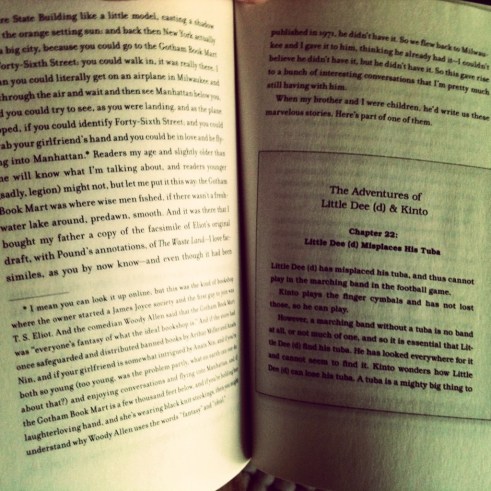
We see this reticence, this turning away from, here over two pages: Cody moves from a story about buying a facsimile copy of Pound’s notes on the original draft of The Wasteland to a lengthy footnote that manages to name drop James Joyce, T.S. Eliot, Woody Allen, Anaïs Nin, and Henry Miller (in just two sentences!) and then into a facsimile reproduction of one of the stories his brother would write for him as a child:

20121023-160254.jpg

The big problem with Cody’s memoir is that it never feels particularly real. I enjoy discursive referential postmodernism as much as the next fella, but [sic] often fails to cohere around a central idea, let alone an emotion. When Cody describes dating a stripper/dominatrix, it feels like a party trick, an inflated anecdote—there’s no emotional core, no contemplative connection to his illness. Other sexual episodes read like a parody of Henry Miller.

As its title suggests, [sic] is a dodge, a bait-and-switch, an evasion. Cody is clearly very clever—but a dazzling display of cleverness can’t sustain a narrative.

Edgar Allan Poe on Imaginative Capacity

(From “A Chapter of Suggestions”).