A Rambling Riff on the Age of the Amateur, Book Review Ethics, and Adam Johnson’s The Orphan Master’s Son

1.There’s been a lot of hubbub (at least in my particular echo chamber) the past few weeks about book reviews and the ethics of book reviews:

Too nice?

Too mean?

Just fine?

What about straight-up buying a book review?

And what about when authors get involved, via social media, in calling out reviewers?

2. A sloppy synthesis of what I’ve linked to above might be:

The traditional position of the serious book critic is perhaps being undermined via social media in the hands of well-meaning amateurs.

3. I’m not sure that I exactly agree with the statement above.

4. Still, we live in the Age of the Amateur.

(Saturday Night Live parodied this phenomena in a sketch called “You Can Do Anything!” that hits nail on head).

5. (SNL also unintentionally documented what happens when an amateur is given a forum beyond her untested abilities).

6. I suppose I could spend a few paragraphs parsing the delicate distinctions between literary criticism and book reviews and awarding fucking stars on Amazon or Goodreads, but I think you, gentle reader, probably get all that already.

7. (I consider myself an amateur book reviewer with an interest in but no pretension to literary criticism. I don’t intend to write about myself, but I do feel like I should clarify this).

8. (I know I just said that I don’t intend to write about myself, but again, perhaps germane:

I don’t read a lot of book reviews, especially contemporary book reviews. I mean, I hardly ever read contemporary book reviews. If I’m planning to review the work, a contemporary review may poison any pretense of objectivity I have.

With the occasional new major release, it’s almost impossible not to get a fix on some critical consensus—and I always scan of course.

I usually read a handful of reviews of a book I’m reading after I’ve drafted a review.

And I read lots of old reviews. Lots.

Again, maybe germane to all of this).

9.  But I’m riffing out all over the place. Let me get to the point. Let’s return to the second part of Point 2:

The traditional position of the serious book critic is perhaps being undermined via social media in the hands of well-meaning amateurs.

Is this true? I don’t know, exactly. A few points to consider:

Literary criticism has existed via two more-or-less stable forms for about a century now: Academic scholarship and popular media.

Academic scholarship tends to be highly-specialized and literally inaccessible for most people. I think academic scholarship and research about literature is important and I don’t want to knock it all—but most of it simply isn’t exposed to, let alone absorbed by, a reading public.

Popular media—magazines and newspapers—is clearly in a transitional phase. A lot of this boils down to the dissemination of new technologies, the advent of the so-called “citizen journalist,” and the oligarchization of mass media. Journalism, as taught in journalism school, prescribed a set of methods and ethics that seem frankly quaint when set against the internet and 24hr cable networks. How book reviews fit—if they fit at all—into the emerging paradigm of popular media is hard to say.

10. Obviously, one model for how book reviews/lit crit fits into the emerging paradigm of popular media  is Goodreads, which I really don’t know much about to be honest. Another is Amazon, which has so many problems I don’t even begin to know how to start. Both of these sites use star ratings though, which has always struck me as probably the worst critical model available.

11. (I got an email recently about Riffle, a new service “powered by the Facebook social graph and loaded with expert curated recommendations.” I mean, how’s that for a shudder down the metaphorical spine?)

12. (Re: Point 11—What is it with this term “curator”? Is it synonymous with: “I produce no original content”?)

13. So, to return to the pretense that I have a point:

I’ve written about 300 reviews on this site. Most for books, some movie reviews, and a few other things as well (uh, malt liquor). I didn’t really know what I was doing in the beginning—I mean, I wasn’t even intending to review books. I was just writing about books I’d pilfered, pinched. Stolen. (The name of the site was its mission statement).  At some point I started making critical judgments, trying to, you know, recommend books that I loved to people who I hoped would love them also.

And at some point I came across John Updike’s rules for reviewing books.

I’m not an Updike fan—wasn’t then, amn’t now—but his rules resonated with me, and I made a point of reading his criticism, which is generally excellent.

In short, I’ve tried to follow his rules.

14. (To clarify: A simple thesis for this whole riff: I think book reviewers need to follow some kind of aesthetic, ethical rubric, one that accounts for subjectivity in an objective way—and I think Updike’s list is great).

15. Updike’s first rule is his best:

Try to understand what the author wished to do, and do not blame him for not achieving what he did not attempt.

This one seems fairly straightforward, but is abused all the time, whether it’s Kakutani at the NYT pretending YA is not YA, or a reviewer at Book Kvetch lamenting that a metaphor-laced experimental novel isn’t a science textbook.

(I might have abused Updike’s first rule myself, but I’m not going to ransack the archives for self-incrimination).

16. Updike’s first rule is so graceful because it allows for a sliding scale of sorts, a range of possibilities beyond the critic’s own highly-subjective taste.

Put another way, it’s very easy to say, “I loved it” or “I hated it,” but Updike’s first rule places the onus of critical imagination on the reviewer. The responsible reviewer has to understand his or her audience (or at least has to try to understand his or her audience).

17. The subjective can’t be removed from reviews of course—nor should it be. I think the balancing act here might be described as taste.

18. I’ve occasionally broken some of Updike’s rules, especially when I super hated a book (usually #s 2 &3–didn’t bother to cite text—actually, I’ve done this repeatedly),

19. Sometimes a book confuses my approach to criticism.

20. Hence, Adam Johnson’s novel The Orphan Master’s Son, which I reviewed in hardback a few months ago, and which is now available in trade paperback, and which I will use now as some sort of loose illustration for whatever point there is in this ramble:

20120724-194425.jpg

21. (Okay. So, normally I photograph reader copies (and other books I obtain) and run a little blurb—usually the publisher’s copy or another review—and I was gonna do this with The Orphan Master’s trade paperback (citing my own review in this case), but the post lingered, thoughts accrued around it as I glommed onto all the ideas reverberating around my little echo chamber re: this whole riff. I bring this up in the recognition that a post purporting to address in some way the ethics of book reviewing should point out that the publisher in question (e.g. this blog, e.g. me) regularly posts what amounts to a kind of advertisement for forthcoming books).

22. So why The Orphan Master’s Son?

I use it as example (barring info re: Point 21 for a moment) of a book that didn’t do what I wanted the book to do.

Here’s the end of my review:

 Toward the end of The Orphan Master’s Son, I began imagining how the novel might read as a work divorced from historical or political reality, as its own dystopian blend—what would The Orphan Master’s Son be stripped of all its North Korean baggage? (This is a ridiculous question, of course, but it is the question I asked myself). I think it would be a much better book, one that would allow Johnson more breathing room to play with the big issues that he’s ultimately addressing here—what it means to tell a story, what it means to create, what it means to love a person who can not just change, but also disappear. These are the issues that Johnson tackles with aplomb; what’s missing though, I think, is a genuine take on what it means to be a North Korean in search of identity.

I think my review of The Orphan Master’s Son was/is fair, but it didn’t—couldn’t—exactly capture how I felt about the book: a mix of disappointment and admiration.

23. To be clear, I took pains to clarify that I thought highly of Johnson’s prose and that I thought most readers would really dig his book.

I gave it, I suppose, a mixed review, which is almost like giving it a negative review.

24. But I didn’t give it a mixed review to be nice—I tempered my criticisms with the knowledge that any attack I made on The Orphan Master’s Son was really a way of defining my own aesthetic tastes. Let me cite Updike’s fifth rule:

 If the book is judged deficient, cite a successful example along the same lines, from the author’s ouevre or elsewhere. Try to understand the failure. Sure it’s his and not yours?

Ultimately, my problem with The Orphan Master’s Son boils down to me wanting Johnson to have written a different book. I feel like I have plenty of reasonable reasony reasons for wanting a different book—first and foremost Johnson’s prowess as proser and storyteller—but that’s no way to review a book. From my review:

I should probably clarify that I think many people will enjoy this novel and find it very moving and that the faults I found in its second half likely have more to do with my taste as a reader than they do Johnson’s skill as a writer, which skill,  again I’ve tried to demonstrate is accomplished.

25. Let me end here in repetition (and, perhaps, here in the safety of these parentheses point to how riffing in a rambling wine-soaked list somehow frees me from actually coherently writing about any of the things I promised to—or maybe it doesn’t—which is of course its own ethical ball of worms) by restating a basic answer to some of the basic problems of amateurism:

Book reviewers need to follow some kind of aesthetic, ethical rubric, one that accounts for subjectivity in an objective way.
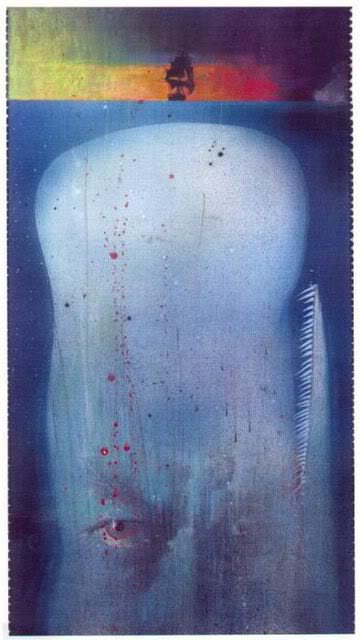
Moby-Dick Illustration — Bill Sienkiewicz

Book Shelves #35, 8.27.2012


20120826-135649.jpg

Book shelves series #35, thirty-fifth Sunday of 2012

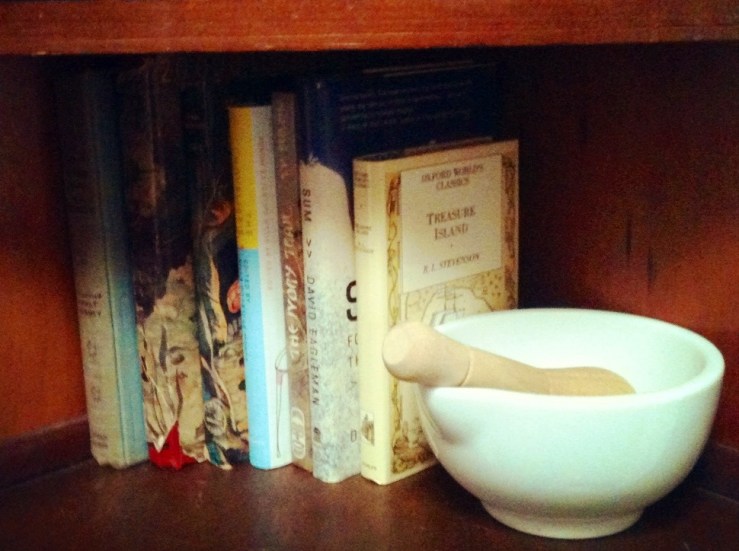
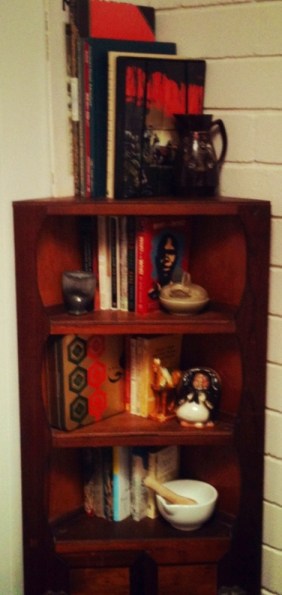
Corner case in the family room. Today’s shelf:

20120826-135655.jpg

The depth makes getting the shadow off the shot almost impossible without using additional lighting.

Note the use of mortar and pestle as bookend, a genteel move that screams respectability.

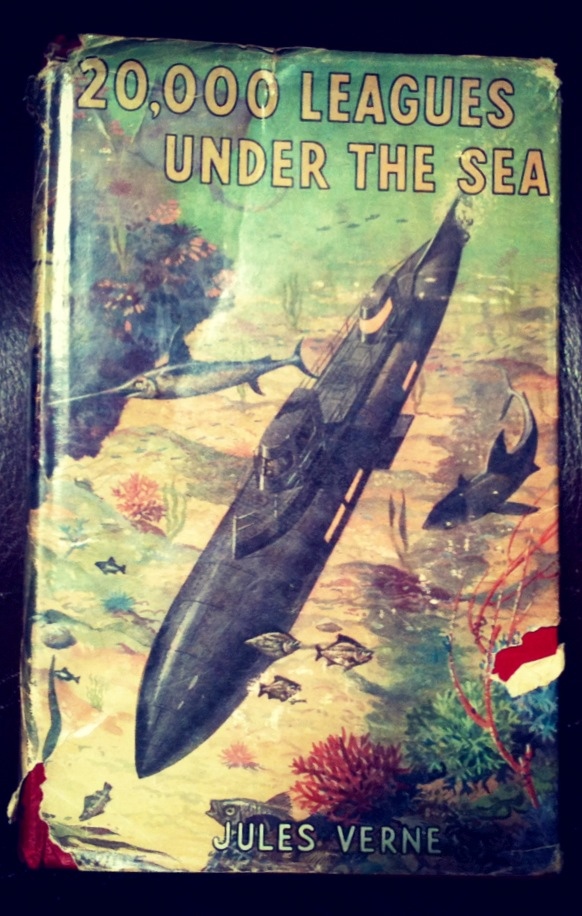
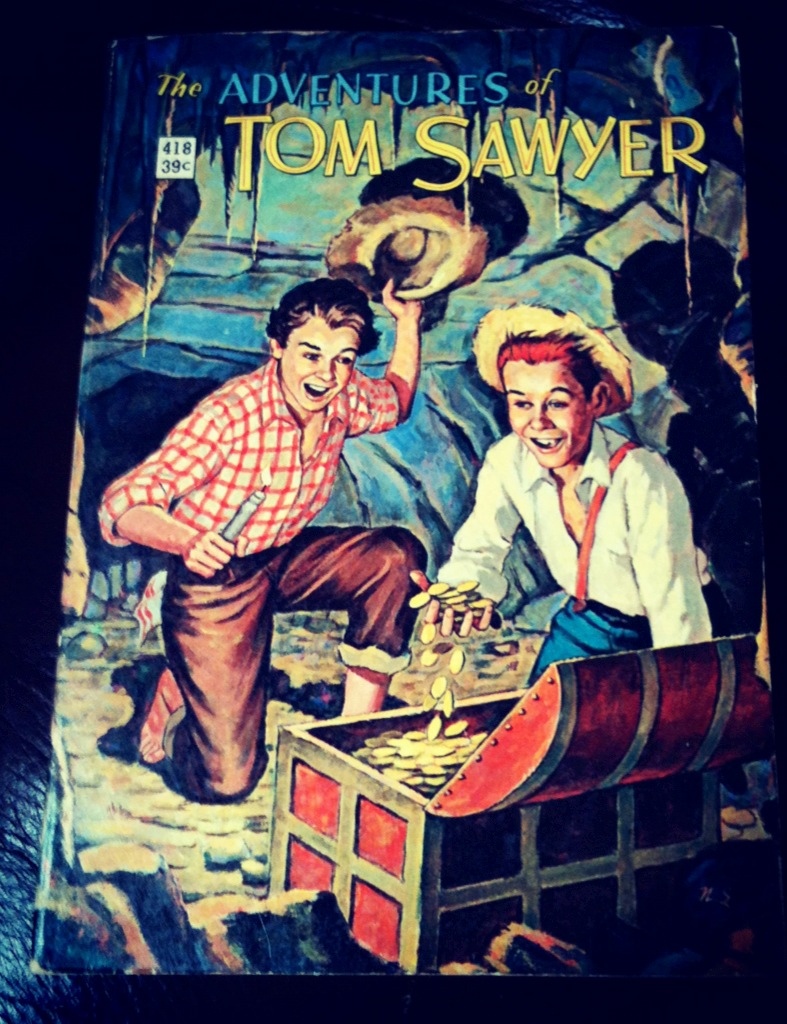
Volumes on this shelf include:

20120826-135702.jpg

And:

20120826-135710.jpg


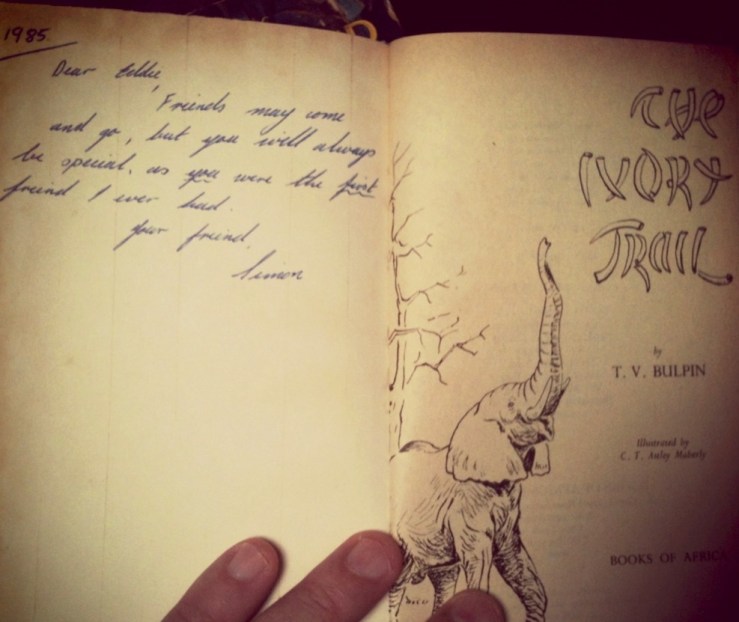
As well as The Ivory Trail, inscribed by my the mother of one of best friends of early childhood (and attributed to him):

20120826-135716.jpg


Moby-Dick Illustration — Tony Millionaire

“The Yellow Paint” — Robert Louis Stevenson


“The Yellow Paint,” a short fable by Robert Louis Stevenson—

In a certain city there lived a physician who sold yellow paint. This was of so singular a virtue that whoso was bedaubed with it from head to heel was set free from the dangers of life, and the bondage of sin, and the fear of death for ever. So the physician said in his prospectus; and so said all the citizens in the city; and there was nothing more urgent in men’s hearts than to be properly painted themselves, and nothing they took more delight in than to see others painted. There was in the same city a young man of a very good family but of a somewhat reckless life, who had reached the age of manhood, and would have nothing to say to the paint: “Tomorrow was soon enough,” said he; and when the morrow came he would still put it off. She might have continued to do until his death; only, he had a friend of about his own age and much of his own manners; and this youth, taking a walk in the public street, with not one fleck of paint upon his body, was suddenly run down by a water-cart and cut off in the heyday of his nakedness. This shook the other to the soul; so that I never beheld a man more earnest to be painted; and on the very same evening, in the presence of all his family, to appropriate music, and himself weeping aloud, he received three complete coats and a touch of varnish on the top. The physician (who was himself affected even to tears) protested he had never done a job so thorough.

Some two months afterwards, the young man was carried on a stretcher to the physician’s house.

“What is the meaning of this?” he cried, as soon as the door was opened. “I was to be set free from all the dangers of life; and here have I been run down by that self-same water-cart, and my leg is broken.”

“Dear me!” said the physician. “This is very sad. But I perceive I must explain to you the action of my paint. A broken bone is a mighty small affair at the worst of it; and it belongs to a class of accident to which my paint is quite inapplicable. Sin, my dear young friend, sin is the sole calamity that a wise man should apprehend; it is against sin that I have fitted you out; and when you come to be tempted, you will give me news of my paint.”

     “Oh!” said the young man, “I did not understand that, and it seems rather disappointing. But I have no doubt all is for the best; and in the meanwhile, I shall be obliged to you if you will set my leg.”

“That is none of my business,” said the physician; “but if your bearers will carry you round the corner to the surgeon’s, I feel sure he will afford relief.”

Some three years later, the young man came running to the physician’s house in a great perturbation. “What is the meaning of this?” he cried. “Here was I to be set free from the bondage of sin; and I have just committed forgery, arson and murder.”

“Dear me,” said the physician. “This is very serious. Off with your clothes at once.” And as soon as the young man had stripped, he examined him from head to foot. “No,” he cried with great relief, “there is not a flake broken. Cheer up, my young friend, your paint is as good as new.”

“Good God!” cried the young man, “and what then can be the use of it?”

“Why,” said the physician, “I perceive I must explain to you the nature of the action of my paint. It does not exactly prevent sin; it extenuates instead the painful consequences. It is not so much for this world, as for the next; it is not against life; in short, it is against death that I have fitted you out. And when you come to die, you will give me news of my paint.”

“Oh!” cried the young man, “I had not understood that, and it seems a little disappointing. But there is no doubt all is for the best: and in the meanwhile, I shall be obliged if you will help me to undo the evil I have brought on innocent persons.”

     “That is none of my business,” said the physician; “but if you will go round the corner to the police office, I feel sure it will afford you relief to give yourself up.”

Six weeks later, the physician was called to the town gaol.

“What is the meaning of this?” cried the young man. “Here am I literally crusted with your paint; and I have broken my leg, and committed all the crimes in the calendar, and must be hanged tomorrow; and am in the meanwhile in a fear so extreme that I lack words to picture it.”

“Dear me,” said the physician. “This is really amazing. Well, well; perhaps, if you had not been painted, you would have been more frightened still.”


Books Acquired, 8.10.2012 — Or, Here’s What’s New from Picador


20120818-193215.jpg

New stuff from Picador this month.

This is the one my wife gravitated to:

20120818-193234.jpg

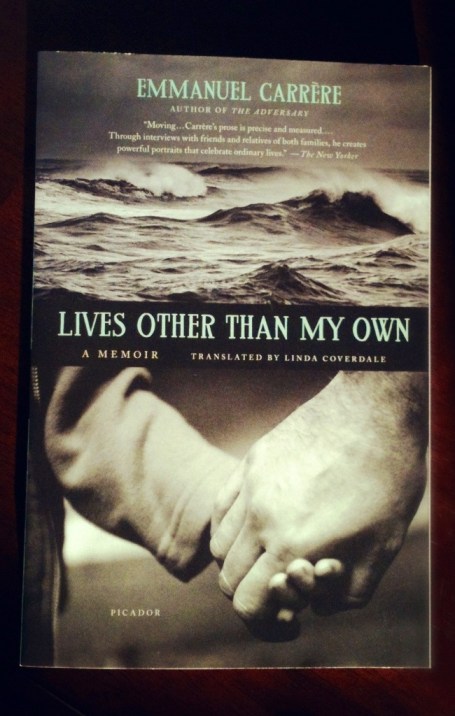
Lives Other Than My Own, by Emmanuel Carrere. Blurb:

In Sri Lanka, a tsunami sweeps a child out to sea, her grandfather helpless against the onrushing water. In France, a woman dies from cancer, leaving her husband and small children bereft. What links these two catastrophes is the presence of Emmanuel Carrère, who manages to find consolation and even joy as he immerses himself in lives other than his own. The result is a heartrending narrative of endless love, a meditation on courage in the face of adversity, and an intimate look at the beauty of ordinary lives.

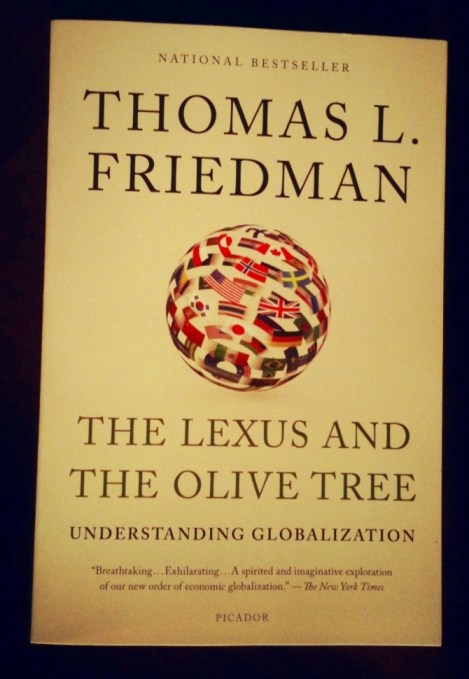
 I guess Picador have a new edition of Thomas Friedman’s The Lexus and the Olive Tree coming out. The book is 12 years old and seems kind of out of date:

20120818-193245.jpg

Do you know about Matt Taibbi’s agon with Thomas Friedman. He’s rough, I tell you, rough.


“Absent-minded Window-gazing” — Franz Kafka


Absent-minded Window-gazing

What are we to do with these spring days that are now fast coming on? Early this morning the sky was gray, but if you go to the window now you are surprised and lean your cheek against the latch of the casement.

The sun is already setting, but down below you see it lighting up the face of the little girl who strolls along looking about her, and at the same time you see her eclipsed by the shadow of the man behind overtaking her.

And then the man has passed by and the little girl’s face is quite bright

“Absent-minded Window-gazing” by Franz Kafka.


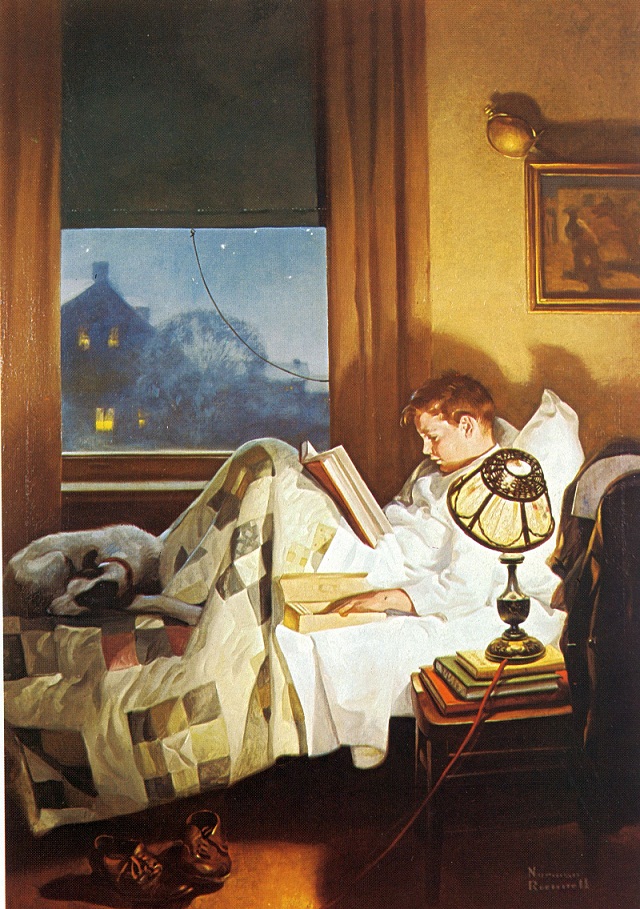
Crackers in Bed — Norman Rockwell

“The Five Boons of Life” — Mark Twain


“The Five Boons of Life,” a short fable from Mark Twain:

CHAPTER I

In the morning of life came a good fairy with her basket, and said:”Here are gifts. Take one, leave the others. And be wary, chose wisely; oh, choose wisely! for only one of them is valuable.”The gifts were five: Fame, Love, Riches, Pleasure, Death. The youth said, eagerly:”There is no need to consider”; and he chose Pleasure.He went out into the world and sought out the pleasures that youth delights in. But each in its turn was short-lived and disappointing, vain and empty; and each, departing, mocked him. In the end he said: “These years I have wasted. If I could but choose again, I would choose wisely.

CHAPTER II

The fairy appeared, and said:”Four of the gifts remain. Choose once more; and oh, remember-time is flying, and only one of them is precious.”The man considered long, then chose Love; and did not mark the tears that rose in the fairy’s eyes.After many, many years the man sat by a coffin, in an empty home. And he communed with himself, saying: “One by one they have gone away and left me; and now she lies here, the dearest and the last. Desolation after desolation has swept over me; for each hour of happiness the treacherous trader, Love, as sold me I have paid a thousand hours of grief. Out of my heart of hearts I curse him.”

CHAPTER III

“Choose again.” It was the fairy speaking.”The years have taught you wisdom — surely it must be so. Three gifts remain. Only one of them has any worth — remember it, and choose warily.”

The man reflected long, then chose Fame; and the fairy, sighing, went her way.Years went by and she came again, and stood behind the man where he sat solitary in the fading day, thinking. And she knew his thought:”My name filled the world, and its praises were on every tongue, and it seemed well with me for a little while. How little a while it was! Then came envy; then detraction; then calumny; then hate; then persecution. Then derision, which is the beginning of the end. And last of all came pity, which is the funeral of fame. Oh, the bitterness and misery of renown! target for mud in its prime, for contempt and compassion in its decay.”


CHAPTER IV

“Choose yet again.” It was the fairy’s voice.”Two gifts remain. And do not despair. In the beginning there was but one that was precious, and it is still here.””Wealth — which is power! How blind I was!” said the man. “Now, at last, life will be worth the living. I will spend, squander, dazzle. These mockers and despisers will crawl in the dirt before me, and I will feed my hungry heart with their envy. I will have all luxuries, all joys, all enchantments of the spirit, all contentments of the body that man holds dear. I will buy, buy, buy! deference, respect, esteem, worship — every pinchbeck grace of life the market of a trivial world can furnish forth. I have lost much time, and chosen badly heretofore, but let that pass; I was ignorant then, and could but take for best what seemed so.”Three short years went by, and a day came when the man sat shivering in a mean garret; and he was gaunt and wan and hollow-eyed, and clothed in rags; and he was gnawing a dry crust and mumbling:”Curse all the world’s gifts, for mockeries and gilded lies! And miscalled, every one. They are not gifts, but merely lendings. Pleasure, Love, Fame, Riches: they are but temporary disguises for lasting realities — Pain, Grief, Shame, Poverty. The fairy said true; in all her store there was but one gift which was precious, only one that was not valueless. How poor and cheap and mean I know those others now to be, compared with that inestimable one, that dear and sweet and kindly one, that steeps in dreamless and enduring sleep the pains that persecute the body, and the shames and griefs that eat the mind and heart. Bring it! I am weary, I would rest.”

CHAPTER V

The fairy came, bringing again four of the gifts, but Death was wanting. She said:     “I gave it to a mother’s pet, a little child. It was ignorant, but trusted me, asking me to choose for it. You did not ask me to choose.””Oh, miserable me! What is left for me?””What not even you have deserved: the wanton insult of Old Age.”


Watch Steven Soderbergh’s Kafka (Full Film)

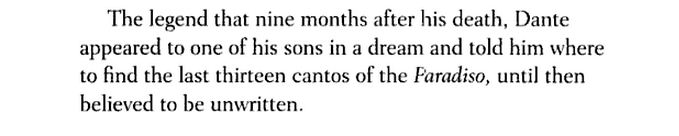
Dante Legend, as Reported by David Markson

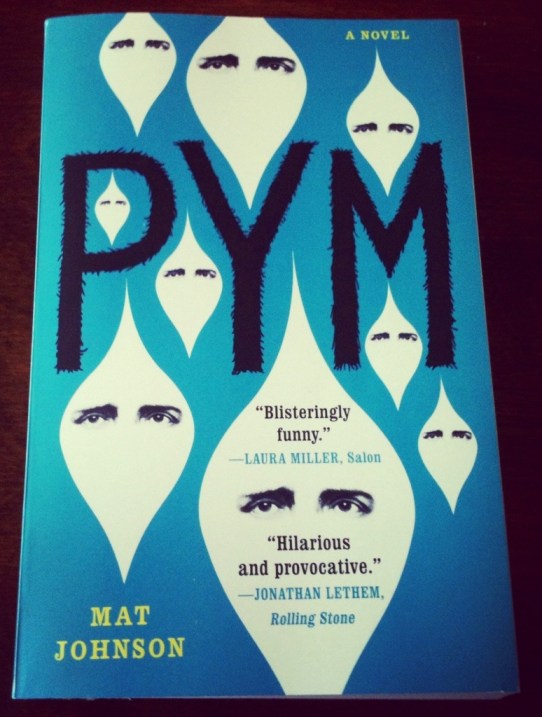
Pym (Book Acquired, 8.16.2012)


20120818-174043.jpg

I wanted to read Mat Johnson’s novel Pym when it came out last year, so I was pleased when Random House sent me a copy of the forthcoming trade paperback. Random House’s blurb:

Recently canned professor of American literature Chris Jaynes has just made a startling discovery: the manuscript of a crude slave narrative that confirms the reality of Edgar Allan Poe’s strange and only novel,The Narrative of Arthur Gordon Pym of Nantucket. Determined to seek out Tsalal, the remote island of pure and utter blackness that Poe describes, Jaynes convenes an all-black crew of six to follow Pym’s trail to the South Pole, armed with little but the firsthand account from which Poe derived his seafaring tale, a bag of bones, and a stash of Little Debbie snack cakes. Thus begins an epic journey by an unlikely band of adventurers under the permafrost of Antarctica, beneath the surface of American history, and behind one of literature’s great mysteries.


List with No Name #4

  1. A Tale of Two Cities
  2. Robinson Crusoe
  3. The Iliad
  4. Maggie: A Girl of the Streets
  5. Tender Is the Night
  6. Catch-22
  7. Native Son

“John Mortonson’s Funeral” — Ambrose Bierce

“John Mortonson’s Funeral,” a very short story by Ambrose Bierce

John Mortonson was dead: his lines in ‘the tragedy “Man”‘ had all been spoken and he had left the stage.

The body rested in a fine mahogany coffin fitted with a plate of glass. All arrangements for the funeral had been so well attended to that had the deceased known he would doubtless have approved. The face, as it showed under the glass, was not disagreeable to look upon: it bore a faint smile, and as the death had been painless, had not been distorted beyond the repairing power of the undertaker. At two o’clock of the afternoon the friends were to assemble to pay their last tribute of respect to one who had no further need of friends and respect. The surviving members of the family came severally every few minutes to the casket and wept above the placid features beneath the glass. This did them no good; it did no good to John Mortonson; but in the presence of death reason and philosophy are silent.

As the hour of two approached the friends began to arrive and after offering such consolation to the stricken relatives as the proprieties of the occasion required, solemnly seated themselves about the room with an augmented consciousness of their importance in the scheme funereal. Then the minister came, and in that overshadowing presence the lesser lights went into eclipse. His entrance was followed by that of the widow, whose lamentations filled the room. She approached the casket and after leaning her face against the cold glass for a moment was gently led to a seat near her daughter. Mournfully and low the man of God began his eulogy of the dead, and his doleful voice, mingled with the sobbing which it was its purpose to stimulate and sustain, rose and fell, seemed to come and go, like the sound of a sullen sea. The gloomy day grew darker as he spoke; a curtain of cloud underspread the sky and a few drops of rain fell audibly. It seemed as if all nature were weeping for John Mortonson.

When the minister had finished his eulogy with prayer a hymn was sung and the pall-bearers took their places beside the bier. As the last notes of the hymn died away the widow ran to the coffin, cast herself upon it and sobbed hysterically. Gradually, however, she yielded to dissuasion, becoming more composed; and as the minister was in the act of leading her away her eyes sought the face of the dead beneath the glass. She threw up her arms and with a shriek fell backward insensible.

     The mourners sprang forward to the coffin, the friends followed, and as the clock on the mantel solemnly struck three all were staring down upon the face of John Mortonson, deceased.

They turned away, sick and faint. One man, trying in his terror to escape the awful sight, stumbled against the coffin so heavily as to knock away one of its frail supports. The coffin fell to the floor, the glass was shattered to bits by the concussion.

From the opening crawled John Mortonson’s cat, which lazily leapt to the floor, sat up, tranquilly wiped its crimson muzzle with a forepaw, then walked with dignity from the room.


“Right now I am a pathetic and very confused young man” — Read an Excerpt from the New David Foster Wallace Biography by D.T. Max


The only thing Wallace knew for sure was that he desperately wanted to be a novelist again but some piece of him still felt too fragile to attempt an effort so key to his well-being. The problem, he felt, was not really the words on the page; he had lost confidence not in his ability to write so much as the need to have written. Jonathan Franzen, with whom he had struck up an epistolary friendship, offered to get together that April when he was in Boston. Wallace said fine but stood him up after they made plans. But because one tenet of recovery is to make amends to those you have wronged, he wrote to his friend explaining his behavior. “The bald fact is that I’m a little afraid of you right now,” he wrote. He begged to be allowed to bow out of their embryonic competition, to declare a truce against this writer who was so “irked by my stuff,” because Wallace was no longer “a worthy opponent in some kind of theoretical chess-by-mail game from which we can both profit by combat.”

He went on: “Right now I am a pathetic and very confused young man, a failed writer at 28, who is so jealous, so sickly searingly envious of you and Vollmann and Mark Leyner and even David F–kwad Leavitt and any young man who is right now producing pages with which he can live … that I consider suicide a reasonable—if not at this point a desirable—option with respect to the whole wretched problem.”

From D.T. Max’s forthcoming David Foster Wallace biography Every Love Story Is a Ghost Story. Read the rest of the excerpt.


William H. Gass Reads from His Novel The Tunnel (Video)

So this weekend I started auditing William Gass’s novel The Tunnel on mp3, read by the author: Sonorous, strange, ugly, beautiful, poetic, abyssal, phallic, anal, fragmented, rich. Here he is in 2007 reading from the beast of a book at The Village Voice Bookshop in Paris (RIP). More on The Tunnel.

“The Maid” — Robert Walser