Book Shelves #34, 8.19.2012


20120819-113046.jpg

Book shelves series #34, thirty-fourth Sunday of 2012

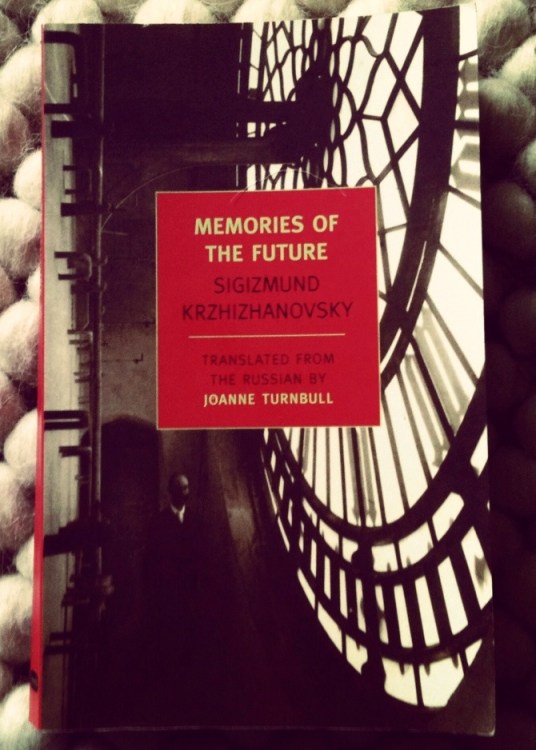
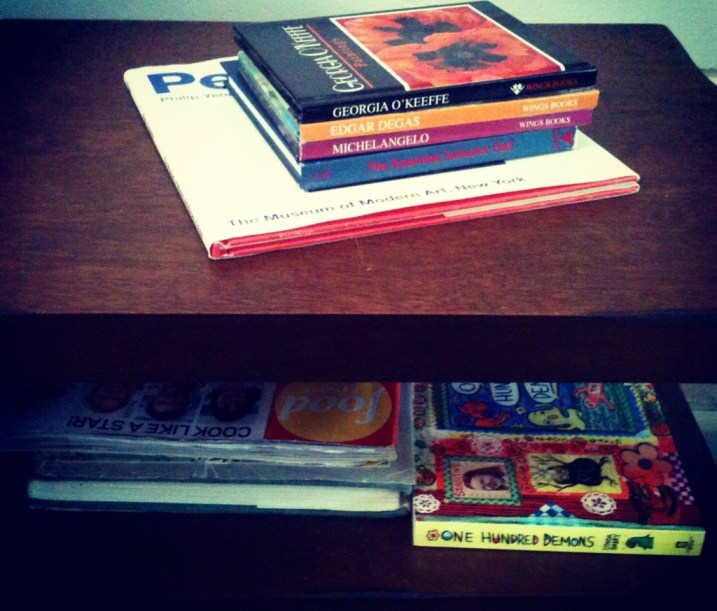
A little end table next to the couch in our family room.

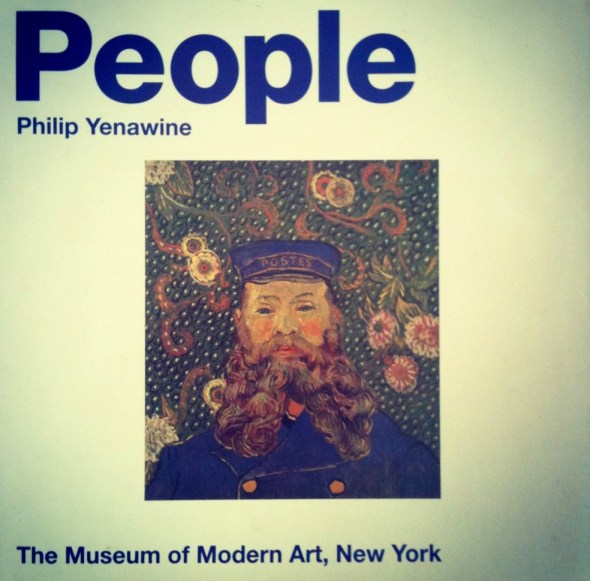
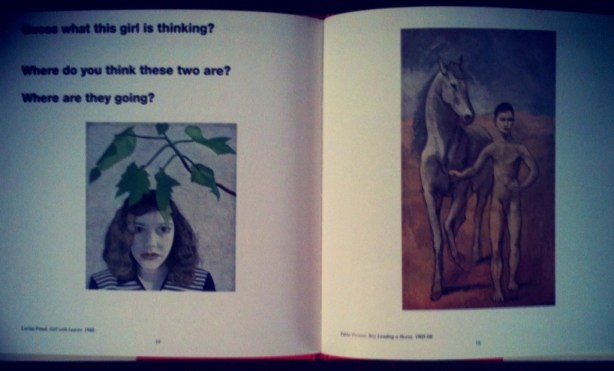
The books on top are little art books we keep out for the kids to look at, including People

20120819-113052.jpg

20120819-113058.jpg

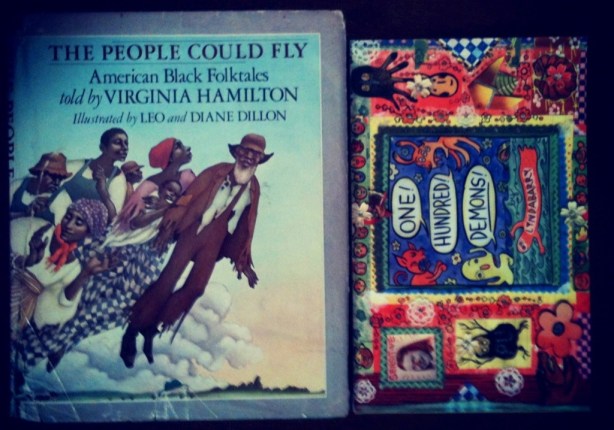
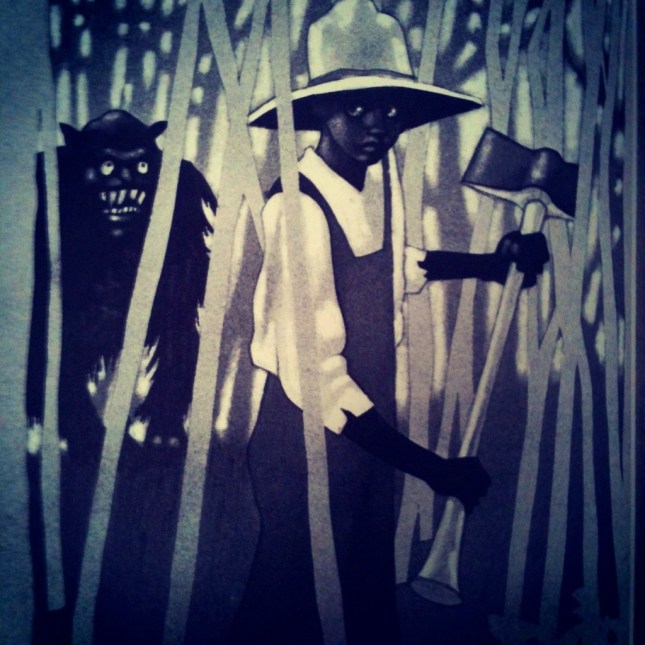
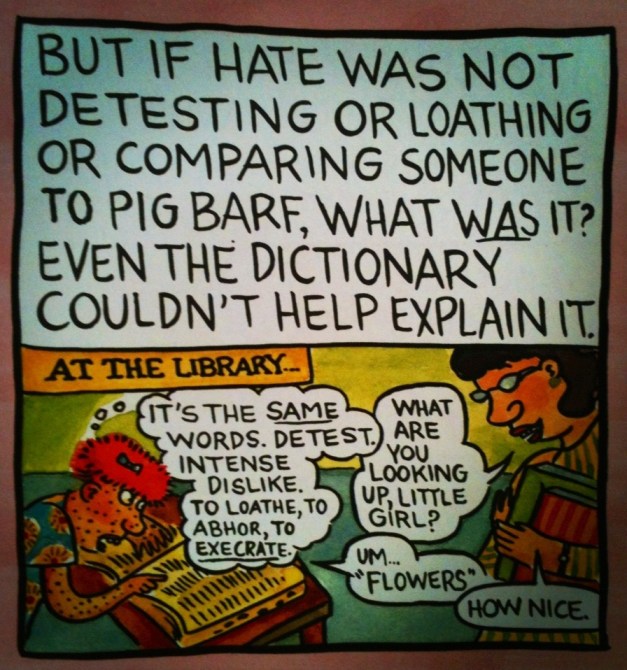
On the second shelf, along with a cooking magazine: The People Could Fly and Lynda Barry’s One Hundred Demons:

20120819-113104.jpg

20120819-113112.jpg

20120819-113121.jpg

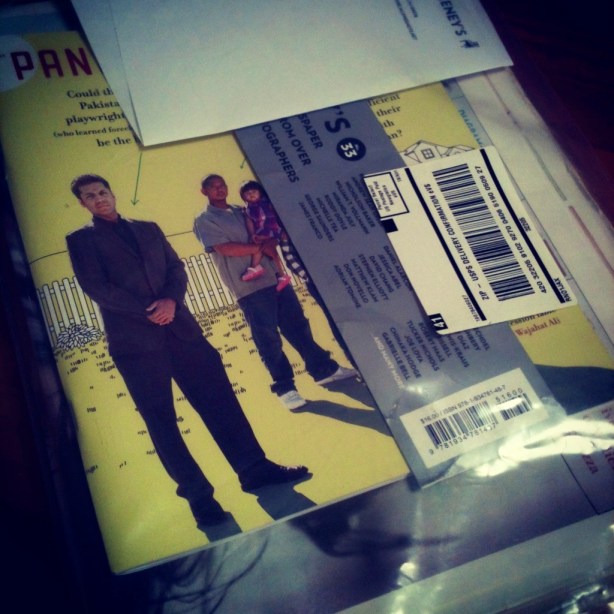
There are two drawers; one holds electronic manuals. The second holds McSweeney’s #33, the newspaper issue, which was pretty damn unwieldy:

20120819-113127.jpg

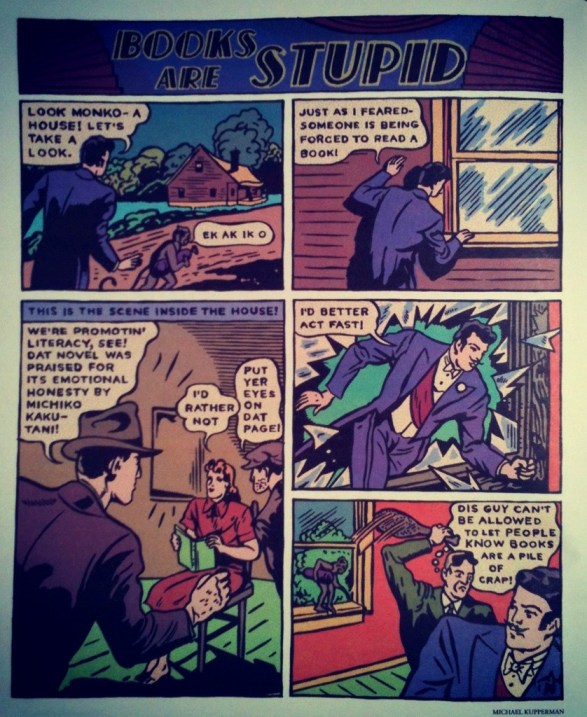
A comic from the McSweeney’s by Michael Kupperman:

20120819-113136.jpg

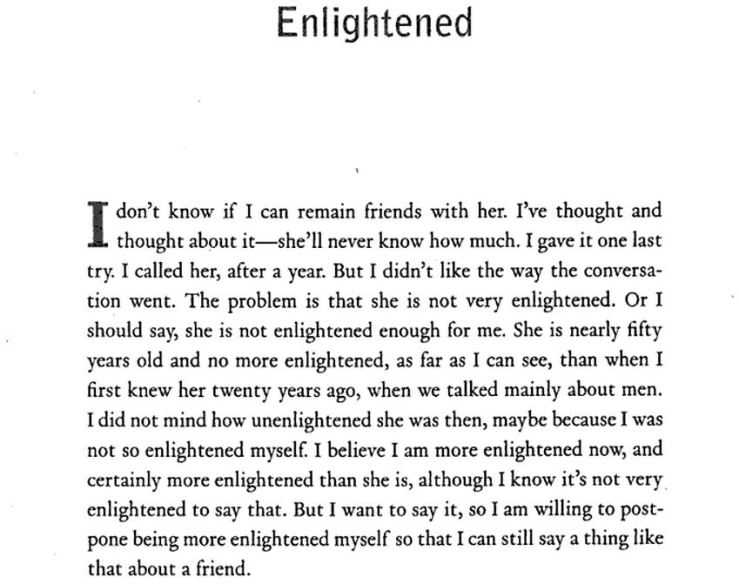
“Enlightened” — Lydia Davis

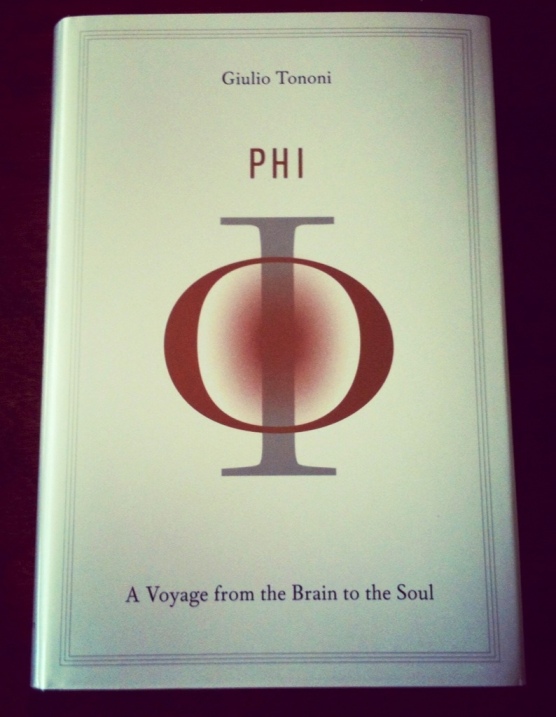
Phi (Very Beautiful Book Acquired, 8.08.2012)

20120818-173817.jpg


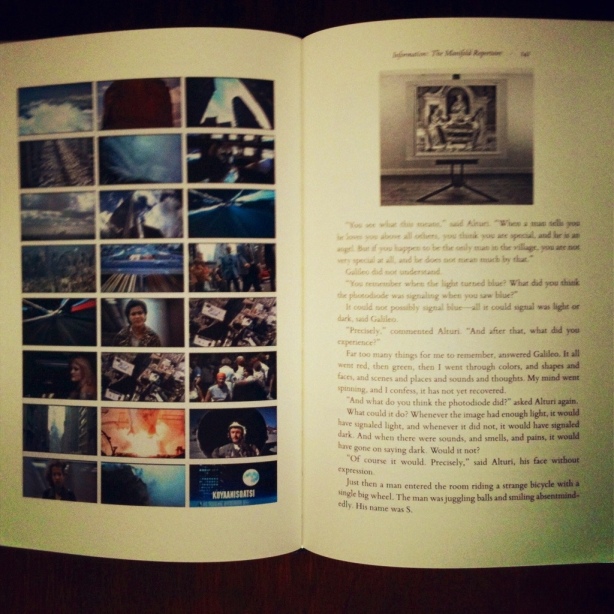
Giulio Tononi’s Phi—remarkable, beautiful, strange. Sort of a novel, sort of philosophical text, sort of a history, sort of a science book . . . I don’t know. Here’s the blurb:

From one of the most original and influential neuroscientists at work today, here is an exploration of consciousness unlike any other—as told by Galileo, who opened the way for the objectivity of science and is now intent on making subjective experience a part of science as well.

Galileo’s journey has three parts, each with a different guide. In the first, accompanied by a scientist who resembles Francis Crick, he learns why certain parts of the brain are important and not others, and why consciousness fades with sleep. In the second part, when his companion seems to be named Alturi (Galileo is hard of hearing; his companion’s name is actually Alan Turing), he sees how the facts assembled in the first part can be unified and understood through a scientific theory—a theory that links consciousness to the notion of integrated information (also known as phi). In the third part, accompanied by a bearded man who can only be Charles Darwin, he meditates on how consciousness is an evolving, developing, ever-deepening awareness of ourselves in history and culture—that it is everything we have and everything we are.

Not since Gödel, Escher, Bach has there been a book that interweaves science, art, and the imagination with such originality. This beautiful and arresting narrative will transform the way we think of ourselves and the world.

The comparison to Hofstadter’s Gödel, Escher, Bach might be apt. The book also recalls The Rings of Saturn to me. I’ve put it in a “read this” pile.

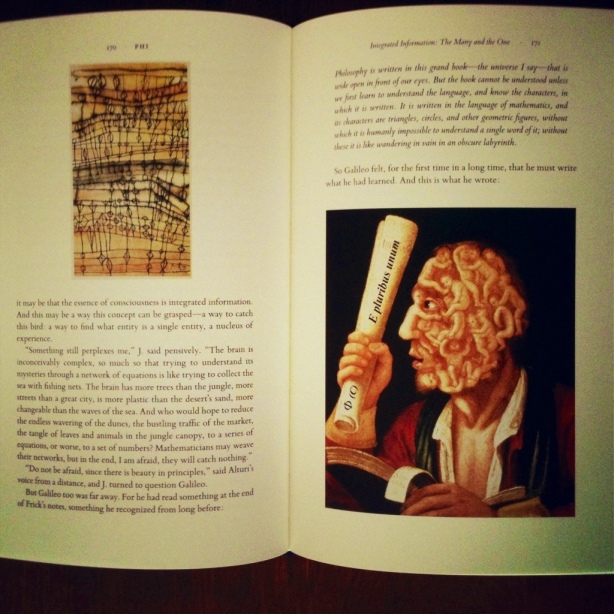
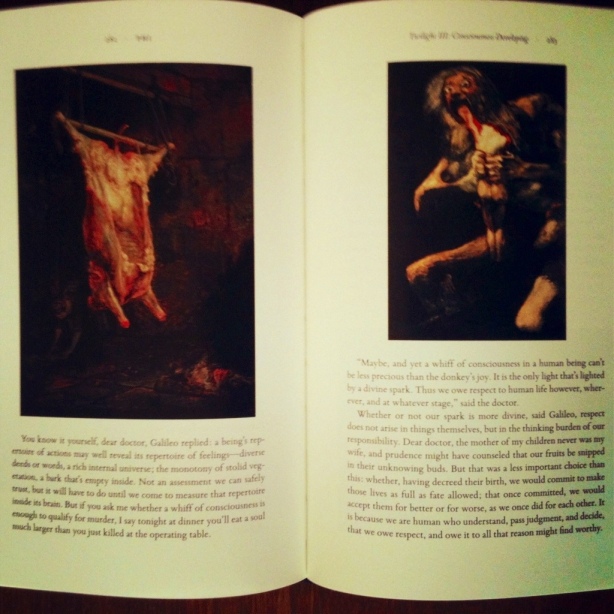
More to come, but here are some shots at random from its interior:

20120818-173834.jpg

20120818-173840.jpg

20120818-173847.jpg


Alejandro Jodorowsky: “The Only Exile I Know Is the Exile from Myself”

The thing is, I grew up as a foreigner.  Look, my father was a Jew who tried to pass for a Russian.  My mother was half-Russian, because a Cossack raped her mother, and she tried to pass for a Jew.  So, I was Chilean and not Chilean, because I was the son of immigrants.  I was trying to pass for a Chilean, but never completely.  I was never anything.  Therefore, the only exile I know is the exile from myself.  Because I was never myself.  The nostalgia I would have to get back to myself, what am I?  But not what am I as nationality.  What am I as a spirit without limits.  I have limits.  So, each day I try more and more to go toward the anonymous which is precisely the impersonal.  To try to be an impersonal person.  I don’t think in terms of cities now.  I think of the planet.  I don’t think in terms of nationality.  I think of human beings.

From a 1995 interview with Alejandro Jodorowsky by Jason Weiss (who was kind enough to forward a link to me).

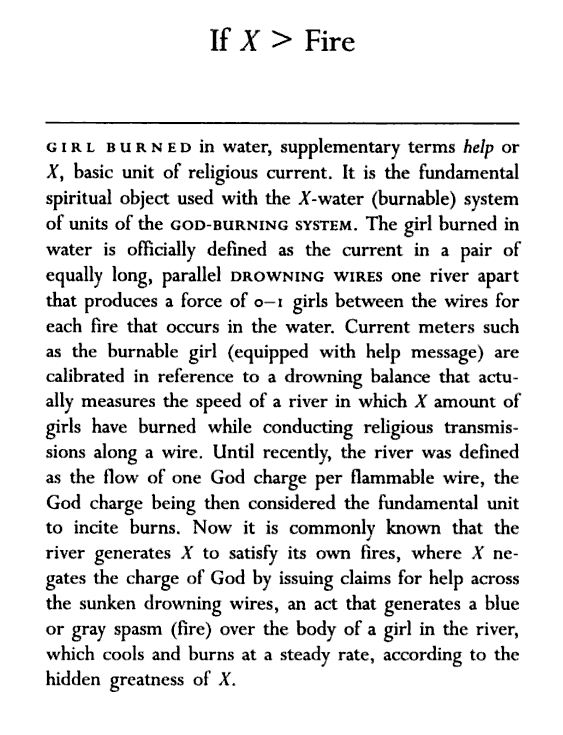
“If X > Fire” — Ben Marcus

Bukowski Riff

Charles Bukowski would be 92 if he was still alive, which he isn’t because he died in 1994.

I first read Bukowski in 1994 or 1995.

I can’t remember how I had heard about him, exactly—he might have been on MTV actually (MTV used to promote writers, believe it or not. Writers used to be cool). The Boo Radleys called a song on their 1995 album Wake Up! “Charles Bukowski Is Dead,” and I know I’d read Bukowski by the time I heard the record. I don’t know. In all likelihood, I first read Bukowski by browsing his books at the local Barnes & Noble.

do know that I “borrowed” three beautiful Black Sparrow Press editions of Bukowski from a kid in high school journalism class. I do know that I never returned those books, and they’re still on a shelf with probably five or six other Bukowski volumes. I feel sort of bad about stealing them.

One of those books was/is Women, a rambling riff-novel about Bukowski’s fatter years as a poet of some renown, of some notoriety. I’ve probably read Women in full five times through. It’s hilarious, occasionally silly and hamfisted, and glorious in parts.

I read a lot of Bukowski in high school. A lot. My friends read Bukowski. We all read him, even his poetry. I remember the excitement a friend and I felt when we saw a quick shot of his novel Hollywood in the film Swingers. I don’t know why.

And then I kind of dropped Bukowski. This was when I was a junior or senior in college. I had seen the limitations of his prose, the brutality of his fiction, the sheer sloppiness of it all, the anger, the misogyny—I was aware of these things from the get-go, to be clear—but I became overly concerned with his status as not one of the greats, or as a popular writer, or as a writer from a macho-age better left behind.

But I never traded in my Bukowskis, or put them away. I kept them on the shelf. I go to them every now and then—not for  nourishment, but for what? I don’t know. The work is admittedly spotty—a weird brand of self-deprecation and self-mythology. Henry Chinaski. Hank. Bukowski the autodidact, hunched in an LA library, reading his Shakespeare, his Celine. Bukowski the impoverished drunk. Ugly Bukowski. Romantic Bukowski.

There’s no point to this riff, of course. I was in a faculty meeting all morning and I thought about Bukowski on his birthday. What I mean to say is that Bukowski is a writer I read so thoroughly and so intensely when I was at such a young age that I feel that I know him, or at least know the version of himself that he willed to be let known. But of course I don’t know him.


Rivalry: A Geisha’s Tale (Book Acquired, 8.06.2012)

20120809-104953.jpg

I haven’t read any of Nagai Kafu’s 1917 novel Rivalry: A Geisha’s Tale (new in paperback from Columbia University Press in translation from Stephen Snyder) because my wife immediately took it and started reading it. I think she’s almost finished with it. I can only assume it involves some kind of rivalry, probably between geisha. I’ll ask her (the following is a more or less an accurate transcription of wife’s comments to me from the kitchen as she prepared some kind of corn salad):

Um, it’s about this geisha, who, when she was like 17, 18 became a geisha, then got married and moved out to the country, this is like in her early 20s, and after a couple of years her husband died, so she went back to Tokyo back to her old geisha house and ran into one of her former, um, clients, and he fell in love with her like immediately so they started a relationship but she fell in love with an actor, but then, I’m not finished with it, but the client found out about the affair, so he’s going to patronize this rival geisha. Which I guess is why, Rivalry.

Do you like it?

I mean, it’s what you’d expect from a geisha book, I mean it’s about a geisha. It’s a good geisha story.

My wife reports she’s about half way through it and wants to find out how it will end.

Bukowski: Born Into This (Full Film)

I Riff on Clarice Lispector’s Novella The Hour of the Star, a Strange Work of Pity, Humor, Terror, and Abjection

20120814-170735.jpg

1. How to go about this?

A starting place:

Clarice Lispector’s 1977 novella The Hour of the Star is a superb collection of sentences.

2. But what do I mean by this ridiculous statement? I mean isn’t that what all or most writing amounts to–a “collection of sentences”?

What I mean then is that Lispector’s sentences prickle and tweak and glare, launch off in strange angles from each other as if they were building out narratives in disparate, separate tones, moods, colors.

3. Another way to say this: the writing is strange, marvelous, uncanny. The good weird.

4. Or maybe I should let Lispector’s narrator say it:

Remember that, no matter what I write, my basic material is the word. So this story will consist of words that form phrases from which there emanates a secret meaning that exceeds both words and phrases.

(Our narrator repeatedly invokes the power of “the word,” but I’ll linger on the way those words string together in sentences).

5. And yes, our narrator is a “he.” Clarice Lispector the ventriloquist. Early in the book the narrator says that the tale could only come from “a man for a woman would weep her heart out.”

6. I’ll be frank: I don’t know how to unpack all the ventriloquizing here, the layering between Lispector and her narrator Rodrigo S.M., who relates the sad tale of  Macabéa (a typist!), indigent slum-dweller, no talent and no beauty.

7. Narrator Rodrigo S.M. seems unsure himself how to unpack the tale. He spends almost the first fifth of the book dithering over actually how to begin to start to commence:

I suspect that this lengthy preamble is intended to conceal the poverty of my story, for I am apprehensive.

And a page or two later:

I am scared of starting. I do not even know the girl’s name. It goes without saying that this story drives me to despair because it is too straightforward. What I propose to narrate sounds easy and within everyone’s grasp. But its elaboration is extremely difficult. I must render clear something that is almost obliterated and can scarcely be deciphered. With stiff, contaminated fingers I must touch the invisible in its own squalor.

8. (I promise to pick back up on that squalor and whatever invisible might be at the end of this riff).

9. The Hour of the Star: The story is thin, the plot is a shell, a threadbare ancient trope, as brave Rodrigo S.M. repeatedly tells us.

10. The plot is archetypal even. The orphan girl in the big city. Cinderella who imagines the ball, or tries to imagine the ball. Etc.

11. So here’s a proper plot summary, c/o translator Giovanni Pontiero (who surely deserves large praise heaped at his feet (or a location of his choice) for his poetic translation):

The nucleus of the narrative centres on the misfortunes of Macabéa, a humble girl from a region plagued by drought and poverty, whose future is determined by her inexperience, her ugliness and her total anonymity. Macabéa’s speech and dress betray her origins. An orphaned child from the backwoods of Alagoas, who was brought up by the forbidding aunt in Maceió before making her way to the slums of Acre Street in the heart of Rio de Janeiro’s red-light district. Gauche and rachitic, Macabéa has poverty and ill-health written all over her: a creature conditioned from birth and already singled out as one of the world’s inevitable losers.

Her humdrum existence can be summarized in few words: Macabéa is an appallingly bad typist, she is a virgin, and her favorite drink is Coca-Cola. She is a perfect foil for a bullying employer, a philandering boy friend, and her workmate Glória, who has all the attributes Macabéa sadly lacks.

12. A dozen things that The Hour of the Star may or may not be about: Poverty, storytelling, lies, illusions, abjection, resistance, agency, self, class, power, romance, fate.

13. But let’s get back to those words the narrator is braggin’ on:

Another angle at approaching The Hour of the Star: Its page of thirteen alternate titles, which act as a prose-poem descriptor for the novella:

20120814-170352.jpg

14. And some sentences:

The first provides a context. The second tells us everything about Macabéa. The third tells us everything about her awful, venal “boy friend” Olímpico:

For quite different reasons they had wandered into a butcher’s shop. Macabéa only had to smell raw meat in order to convince herself that she had eaten. What attracted Olímpico, on the other hand, was the sight of a butcher at work with his sharp knife.

15.  Macabéa, our primary, and Olímpico a distant second. But also Rodrigo S.M. (and a few others):

The story—I have decided with an illusion of free will—should have some seven characters, and obviously I am one of the more important.

16. (Again though, how to parse Rodrigo from Clarice Lispector . . .)

17. So maybe in one of his (her) parenthetical intrusions (but how can they be intrusions?). From late in the novella:

 (But what about me? Here I am telling a story about events that have never happened to me or to anyone known to me. I am amazed at my own perception of the truth. Can it be that it’s my painful task to perceive in the flesh truths that no one wants to face? If I know almost everything about Macabéa, it’s because I once caught a glimpse of this girl with the sallow complexion from the North-east. Her expression revealed everything about her . . .)

Solipsism? Hubris? Humor? Irony?

Truth?

18. But I want to say something about how funny this novella, but I don’t know how to say it, or I’m not sure how to illustrate it, how to support such a claim with text—how does one support a feeling, a vibe, a phantom idea? Is The Hour of the Star actually funny? Or am I a sick man? Why did I chuckle so much?

19. I think, re: 18, I think that it must be a mild streak of sadism, or an identification with the narrator’s flawed empathy, his raw presentation of a pathetic, abject heroine, a heroine whose heroism can only manifests in strange eruptions of self-possession, minor triumphs of the barest self-assertions.

20. Perhaps an illustration, re: 18/19—a lengthy one maybe, but indulge me (or, rather, indulge yourself):

At this point, I must record one happy event. One distressing Sunday without mandioca, the girl experienced a strange happiness: at the quayside, she saw a rainbow. She felt something close to ecstasy and tried to retain the vision: if only she could see once more the display of fireworks she had seen as a child in Maceió. She wanted more, for it is true that when one extends a helping hand to the lower orders, they want everything else.; the man on the street dreams greedily of having everything. He has no right to anything but he wants everything. Wouldn’t you agree? There were no means within my power to produce that golden rain achieved with fireworks.

Should I divulge that she adored soldiers? She was mad about them. Whenever she caught sight of a soldier, she would think, trembling with excitement: is he going to murder me?

Can you feel the shifts here? A distressing Sunday, a hungry Sunday (“without mandioca”); its strange happiness; an ecstasy that repeats a childhood vision; the desire for more, to rise above one’s allotment (The Right to Protest, or, She Doesn’t Know How to Protest); the limits of words, of language. An unexpected, seemingly irrelevant anecdote. A rare dip into our heroine’s consciousness.

21. There’s a certain absurdity here, a methodical absurdity, of course. There’s a rhythmic certainty to the prose—a sense of aesthetic uniformity—but the content jars against it, the meaning spikes out in subtly incongruous jags that form some other shape. Folks say folks say Lispector echoes Kafka in this way. (I’m reminded of Robert Walser’s sentences too).

22. But I’ve shared enough to give you a sense of Lispector’s style, a taste anyway, right?

What about the book’s claim, its viewpoint, its thesis?

23. Okay, so it’s right there upfront in the  book’s fifth paragraph, delivered early enough when the reader is suitably perplexed, looking for some kind of narrative inroad, not looking necessarily for a theme or a message or what have you:

Even as I write this I feel ashamed at pouncing on you with a narrative that is so open and explicit. A narrative, however from which blood surging with life might flow only to coagulate into lumps of trembling jelly. Will this story become my own coagulation one day? Who can tell? If there is any truth in it—and clearly the story is true even though invented—let everyone see it reflected in himself for we are all one and the same person . . .

24. Let’s not misunderstand the last sentiment as some hippy-dippy bullshit: Let’s go back to: “I must touch the invisible in its own squalor.”

25. That squalor is the abject, the filth, the not-me, the other, signified most strongly in waste, blood, filth, vomit, the corpse.

26. The gesture of The Hour of the Star is to make visible—in sentences, in words, in language—the invisible in its own squalor.

27. Highly recommended.
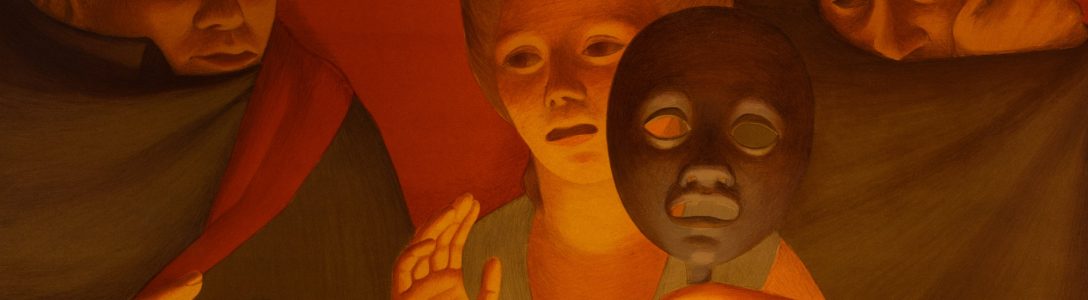
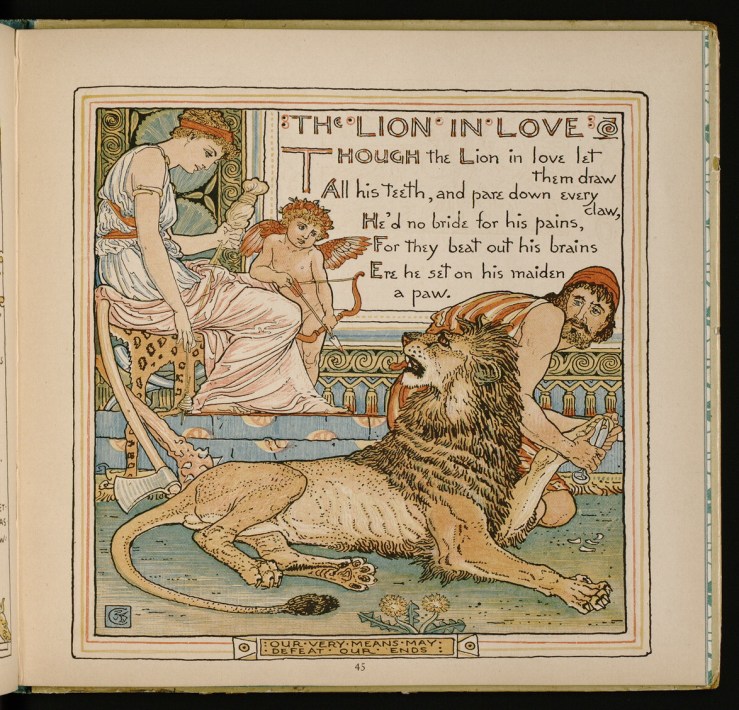
“The Lion in Love” (An Illustrated Fable)

(From The Baby’s Own Aesop: Being the Fables Condensed in Rhyme, With Portable Morals Pictorially Pointed by Walter Crane. Engraved and Printed in Colours By Edmund Evans. 1887. Via the LOC).

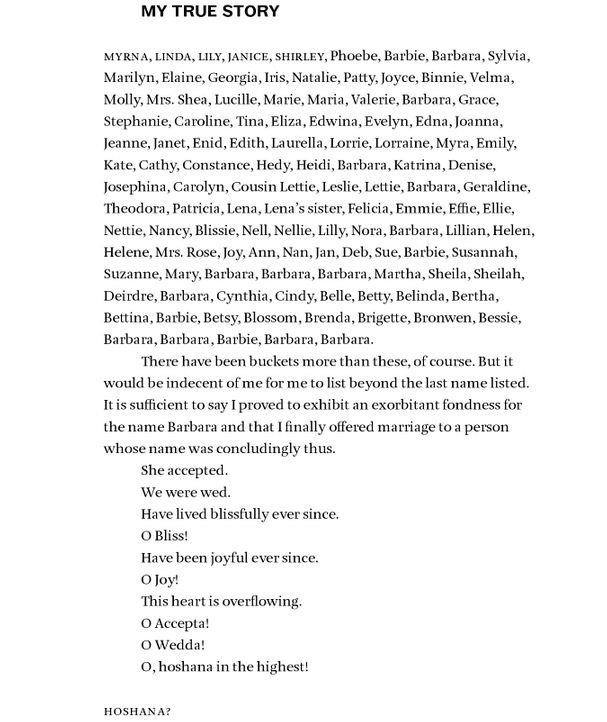
“My True Story” — Gordon Lish

“Stockings” — Tim O’Brien

Henry Dobbins was a good man, and a superb soldier, but sophistication was not his strong suit. The ironies went beyond him. In many ways he was like America itself, big and strong, full of good intentions, a roll of fat jiggling at his belly,slow of foot but always plodding along, always there when you needed him, a believer in the virtues of simplicity and directness and hard labor. Like his country, too, Dobbins was drawn toward sentimentality.

Even now, twenty years later, I can see him wrapping his girlfriend’s pantyhose around his neck before heading out on ambush.

It was his one eccentricity. The pantyhose, he said, had the properties of a good-luck charm. He liked putting his nose into the nylon and breathing in the scent of his girlfriend’s body, he liked the memories this inspired, he sometimes slept with the stockings up against his face, the way an infant sleeps with a magic blanket, secure and peaceful. More than anything,though, the stockings were a talisman for him. They kept him safe. They gave access to a spiritual world, where things were soft and intimate, a place where he might someday take his girlfriend to live. Like many of us in Vietnam, Dobbins felt the pull of superstition, and he believed firmly and resolutely in the protective power of the stockings. They were like body armor, he thought. Whenever we saddled up for a late-night ambush, putting on our helmets and flak jackets, Henry Dobbins would make a ritual out of arranging the nylons around his neck, carefully tying a knot, draping the two leg sections over his left shoulder. There were some jokes, of course, but we came to appreciate the mystery of it all. Dobbins was invulnerable. Never wounded, never a scratch. In August, he tripped a Bouncing Betty, which failed to detonate. And a week later he got caught in the open during a fierce little firefight, no cover at all, but he just slipped the pantyhose over his nose and breathed deep and let the magic do its work.

It turned us into a platoon of believers. You don’t dispute facts.

But then, near the end of October, his girlfriend dumped him. It was a hard blow. Dobbins went quiet for a while,staring down at her letter, then after a time he took out the stockings and tied them around his neck as a comforter.

“No sweat,” he said. “I still love her. The magic doesn’t go away.” [It was a relief for all of us.]

“Stockings,” a short short story by Tim O’Brien. From The Things They Carried.

Chapter V, In Our Time — Ernest Hemingway

They shot the six cabinet ministers at half-past six in the morning against the wall of a hospital. There were pools of water in the courtyard. There were wet dead leaves on the paving of the courtyard. It rained hard. All the shutters of the hospital were nailed shut. One of the ministers was sick with typhoid. Two soldiers carried him downstairs and out into the rain. They tried to hold him up against the wall but he sat down in a puddle of water. The other five stood very quietly against the wall. Finally the officer told the soldiers it was no good trying to make him stand up. When they fired the first volley he was sitting down in the water with his head on his knees.

—Chapter V of In Our Time by Ernest Hemingway

“The Man with the Pumpkin Head” — Robert Walser

Misunderstanding with Queequeg

(Via/more).

Unknown Pleasures (I Riff a Bit on Marcel Proust’s Swann’s Way)

20120809-105603.jpg

1. I was an undergrad in college when I first tried to read Marcel Proust. It was one of those things I did on my own, which is another way of saying that none of his writing was ever assigned to me; neither do I recall any of his writings even appearing in any of the anthologies I was assigned in high school; neither do I recall any of his writings appearing in any of the anthologies I’ve used as a teacher.

2. My initial interest in Proust, late in high school, when the name alone seemed so damn romantic, was aroused, like most people I’ll bet, by the fact that this guy basically wrote one long book, a book that seemed to have at least three names, not counting the names of the individual books and book-length chapters in those individual books.

3. But, like I said, I didn’t try to read Proust until college when I checked out the first volume from the university library. I think it might have actually been a compendium of two or more books that make up the Recherche. Anyway, I can’t recall much, except that I slugged it out through that interminable first chapter, “Combray,” getting absolutely nothing out of it.

4. Since then I’ve read a lot about Proust and his writing, enough to perhaps understand that my first foray into Swann’s Way was probably not from the best angle. I was into decidedly different stuff then—lots of the American postmodernists, English and Irish modernists, etc.—and Proust’s modernism was totally lost on me.

5. Re: Point 4: Perhaps a better way to put it would be to borrow Harold Bloom’s notion that strong/strange writers so assimilate their readers that the readers can no longer see the strangeness/strength. I was assimilated.

6. Wandering through the used book store I frequent, I spotted Lydia Davis’s translation of Swann’s Way and snapped it up, not because of any real interest in trying Proust again but because of a fannish devotion to Davis, or the idea that Davis would make Proust accessible.

7. (A brief fantasy I had as my hand hovered over the book, before my hand touched the book:

I imagined that Davis had turned Swann’s Way into a series of her own vignettes, that she had parsed and ventriloquized Proust, that her translation would be akin to “Ten Stories from Flaubert.”

This is not the case).

8. (While I’m being parenthetical: This riff started as a “books acquired” post, a post where I take a lousy photograph to document a new book that somehow arrives at Biblioklept World Headquaters. But I read so much of Swann’s Way that the original idea riffed out into this thing. Actually, go ahead and skip Point 8, if you haven’t already. Sorry).

9. The day after buying Davis’s translation I read “Combray” over two short airline trips.

10. Or should it be Combray?—it seems like a self-contained novel.

11. The opening paragraphs of “Combray” are an amazing and strange meditation on sleeping, or rather going to sleep, filled with wonderful little digressions. They are a simultaneously alienating and inviting way to open a book.

Proust writes—

Sometimes, as Eve was born from one of Adam’s ribs, a woman was born during my sleep from a cramped position of my thigh. Formed from the pleasure I was on the point of enjoying, she, I imagined, was the one offering it to me. My body, which felt in hers my own warmth, would try to find itself inside her, I would wake up.

Such a lovely set of images.

I marked it and moved on without trying to figure out exactly what it might mean.

12. Other moments are more lucid, penetrating, insightful:

Even the very simple act that we call “seeing a person we know” is in part an intellectual one. We fill the physical appearance of the individual we see with all the notions we have about him, and of the total picture that we form for ourselves, these notions certainly occupy the greater part.

“Combray” is full of these wonderful, subtle moments, and it includes some of the finest passages on reading and the transformative powers and pleasures of reading that I’ve encountered.

13. The phrase “unknown pleasures” pops out early in the book—is this where Joy Division got the album name?

14. Proust seems to hit on the idea of unknown pleasures again and again, speculative pleasures, idealized pleasures.

15. Introduced to the writer Bergotte by Swann and Bloch, the young narrator muses:

One of these passages by Bergotte, the third or fourth that I had isolated from the rest, filled me with a joy that could not be compared to the joy I had discovered in the first one, a joy I felt I was experiencing  in a deeper, vaster, more unified region of myself, from which all obstacles and partitions had been removed.

The passage concludes with the narrator deciding that he has accessed the “‘ideal passage’ by Bergotte,” an idealization through which he finds his mind “enlarged.”

16. Cataloging the meditations on unknown pleasures in the book would take forever though, and I’m just riffing here.

17. (Although I do love and will thus bring up a late passage where the narrator longs to walk in the woods with “a peasant girl,” one like a “local plant” (!), through which he will access new and individual and unknown pleasures, “Obscurely awaited, immanent and hidden. . . “).

18. Stray note: Swann is described as having a “Bressant-style” haircut, which the end notes describe as “a crew cut in front and longer in the back.” Is this not known colloquially as a mullet? Am I to understand that Swann sports a Kentucky waterfall?

19. Proust’s greatest strength in “Combray” seems to be his ability to move from the physical to the metaphysical, from object to memory. And then back again.

20. An empty statement: The writing is beautiful.

21.  Still, there’s something irksome about the narrator (Marcel?): I stopped writing “mama’s boy” in the margin after the third such notation.

22. Re: Point 21: Is this why I never stuck it out with Proust? Is this why, despite acknowledging “The writing is beautiful,” I am not particularly inclined to see what happens next? (And next and next and next . . .)

23. Re: Point 22: I think here of Cormac McCarthy’s assertion in a 1992 New York Times interview that Proust is “not literature” because it doesn’t “deal with issues of life and death.” McCarthy’s quote may or may not be out of context (not here; here it’s in perfectly sound context. I’m talking about proper context in the interview, which is to say that he may or may not have been riffing off the cuff).

24. Okay, from the McCarthy interview:

 His list of those whom he calls the “good writers” — Melville, Dostoyevsky, Faulkner — precludes anyone who doesn’t “deal with issues of life and death.” Proust and Henry James don’t make the cut. “I don’t understand them,” he says. “To me, that’s not literature. A lot of writers who are considered good I consider strange.”

25. Maybe I bring it up because I’ve read so much of McCarthy and the heroes on his list above and find them so compelling, find the protagonists and antagonists so compelling, and while Proust’s narrator is hardly repellent, I find myself occasionally wanting to give him a wedgie.

26. (Never having had the desire to give Ishmael a wedgie, or the underground man a wedgie, or Lucas Beauchamp a wedgie, or Cornelius Suttree a wedgie).

27. Okay. The sentiment I’ve just expressed seems cruel.

28. The same sensitivity I find occasionally overbearing in the narrator is exactly what makes so many of the passages and insights in the text so extraordinary.

29. The narrator is some kind of specialized receptive organic instrument, a psyche keenly attuned to the physical world who mediates that world through emotion, memory, psychological projection—language.

30. The narrator is some kind of membrane but also a self, his articulations winding from reader to self through memory to the natural world, to its phenomena, and back through desire, thought, anticipation, idealization, all back through memory again, back to the reader again. And if tracing these articulations is exhausting, the process also undeniably yields unknown pleasures.

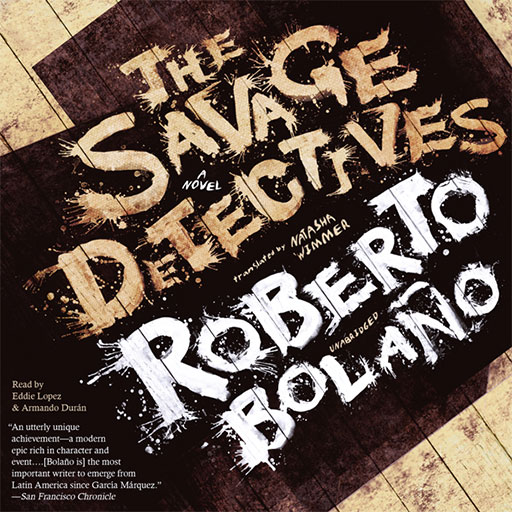
“The Desperate Reader” — Roberto Bolaño

Joaquín Font, El Reposo Mental Health Clinic, Camino Desierto de los Leones, on the outskirts of Mexico City DF, January 1977.

There are books for when you’re bored. Plenty of them. There are books for when you’re calm. The best kind, in my opinion. There are also books for when you’re sad. And there are books for when you’re happy. There are books for when you’re thirsty for knowledge. And there are books for when you’re desperate. The latter are the kind of books Ulises Lima and Belano wanted to write. A serious mistake, as we’ll soon see. Let’s take, for example, an average reader, a cool-headed, mature, educated man leading a more or less healthy life. A man who buys books and literary magazines. So there you have him. This man can read things that are written for when you’re calm, but he can also read any other kind of book with a critical eye, dispassionately, without absurd or regrettable complicity. That’s how I see it. I hope I’m not offending anyone. Now let’s take the desperate reader, who is presumably the audience for the literature of desperation. What do we see? First: the reader is an adolescent or an immature adult, insecure, all nerves. He’s the kind of fucking   idiot (pardon my language) who committed suicide after reading Werther. Second: he’s a limited reader. Why limited? That’s easy: because he can only read the literature of desperation, or books for the desperate, which amounts to the same thing, the kind of person or freak who’s unable to read all the way through In Search of Lost Time, for example, or The Magic Mountain (a paradigm of calm, serene, complete literature, in my humble opinion), or for that matter, Les Misérables or War and Peace. Am I making myself clear? Good. So I talked to them, told them, warned them, alerted them to the dangers they were facing. It was like talking to a wall. Furthermore: desperate readers are like the California gold mines. Soon- er or later they’re exhausted! Why? It’s obvious! One can’t live one’s whole life in desperation. In the end the body rebels, the pain becomes unbearable, lucidity gushes out in great cold spurts. The desperate reader (and especially the desperate poetry reader, who is insuffer- able, believe me) ends up by turning away from books. Inevitably he ends up becoming just plain desperate. Or he’s cured! And then, as part of the regenerative process, he returns slowly—as if wrapped in swaddling cloths, as if under a rain of dissolved sedatives—he re- turns, as I was saying, to a literature written for cool, serene readers, with their heads set firmly on their shoulders. This is what’s called (by me, if nobody else) the passage from ad- olescence to adulthood. And by that I don’t mean that once someone has become a cool- headed reader he no longer reads books written for desperate readers. Of course he reads them! Especially if they’re good or decent or recommended by a friend. But ultimately, they bore him! Ultimately, that literature of resentment, full of sharp instruments and lynched messiahs, doesn’t pierce his heart the way a calm page, a carefully thought-out page, a technic- ally perfect page does. I told them so. I warned them. I showed them the technically perfect page. I alerted them to the dangers. Don’t exhaust the vein! Humility! Seek oneself, lose one- self in strange lands! But with a guiding line, with bread crumbs or white pebbles! And yet I was mad, driven mad by them, by my daughters, by Laura Damián, and so they didn’t listen.

From The Savage Detectives by Roberto Bolaño