Jacques Derrida and Jorge Luis Borges

I Try to Riff on Both Flesh and Not, DFW’s New Essay Collection, Which I Haven’t Read, as I Drink Red Wine to Numb the Election Coverage (Book Acquired, 11.06.2012)

20121106-203121.jpg

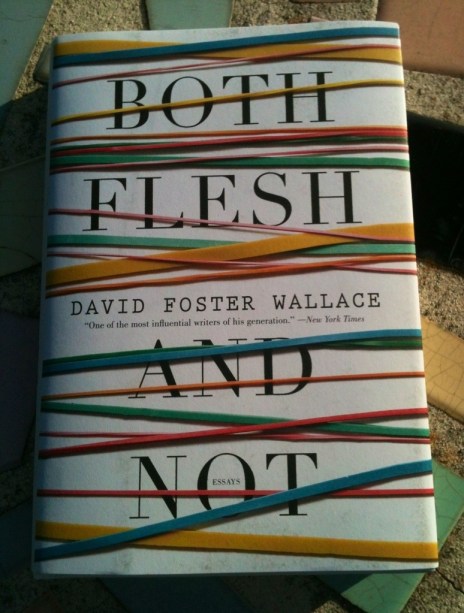
1. Today, I picked up Both Flesh and Not, a collection of David Foster Wallace essays and short pieces. I specifically ordered this book from my local bookstore (I didn’t get a review copy), and I bought it in hardback (I generally dislike hardbacks).

2. I should be reading it now—I’d like to be reading it—but I’m flicking between the five or six channels I have, usually stopping on PBS, and then scanning Twitter and other online media, because, hey, it’s Election Day in America.

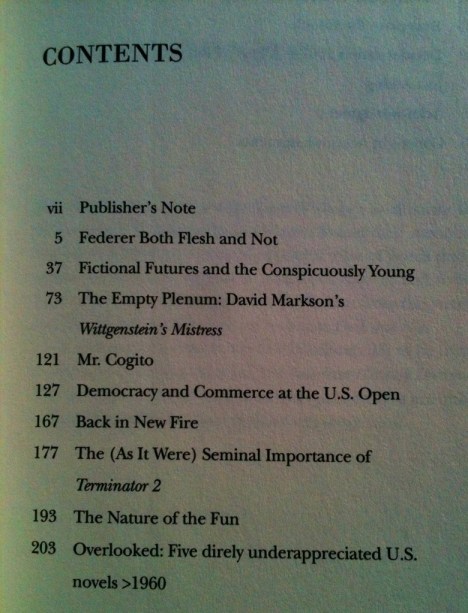
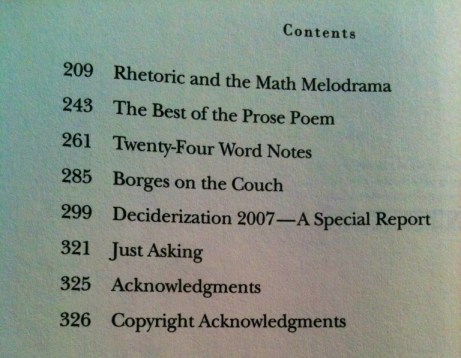
3. I’ve already read several of the pieces in Both Flesh. You might have too. Here’s the table of contents:
20121106-203459.jpg

20121106-203507.jpg

4. But a lot of it I haven’t read. I’m eager to dig into the piece on David Markson, and the piece on Brat Pack writers, “Fictional Futures,” which was later repurposed in “E Unibus Pluram.”

5. I spent most of the afternoon riffling through it, trying not to think about the election results that would be coming in the next few years. I played outside with my kids, building a strange hut out of giant elephant leaves and then a small nest out of pine straw. I photographed the planes that daily fly over our neighborhood, slow, heavy supply planes that drift in lazy routine arcs from the nearby naval base, not loud as jets, but bulky. Elephant mothers, pregnant.

20121106-211636.jpg

6. I remembered that Wallace killed himself in an election year, in September. I remember how I felt.

7. (Please don’t think this riff is really about anything. I’m distracted. I’ve imbibed some wine. Some Xanax might be involved).

8. Speaking of posts in 2008—

I went back just now, and riffled through the site’s archives from November of 2008. (Back when I’d post like three, maybe four times a week. Once a day at most).

A lot of vitriol there. A lot of vitriol for Palin, and a lot of vitriol for the emerging sentiment that would galvanize in what would become the Tea Party movement.

I wrote about the Election Night too. About Jesse Jackson’s tears. I even wrote about finding some respite from cynicism in Obama’s election. (Don’t worry, I’m as cynical as ever. Moreso—

9. —but

I remember watching the inauguration in 2009. I was still teaching high school. I had third period planning and I watched the whole shebang in an empty lab on the school’s third floor with my friend Derek, a black Muslim who taught history in the classroom next to mine. It was cold up there and empty. I remember he asked me if the election poem was good and I asked him what he thought (I thought it was good). I remember we cried a little in spite of ourselves and clutched at each other. The world seemed so much more possible. I’m clutching to this memory now, which is deep and rich and I hope to keep forever. It presents through pinot and Xanax).

10. Is this a bait and switch? I apologize. Look, I love you reader. Really, I do. I do.

11. So, another detail from the Wallace collection:

The selections are intercut with definitions from his vocabulary list for The American Heritage Dictionary. Like so:

20121106-203548.jpg

12. What was I doing here? I don’t know. Let me just wrap it up. I should be writing about DFW and the book but I can’t. Distracted. I’ll schedule the post. Let it stand. Let it roll at 11:11am tomorrow? (To clarify–it’s 9:55pm on 11/06/2012).

Okay, I’ll do that. Finish the rest in the comments? Sure. And some more, of course, about the book.

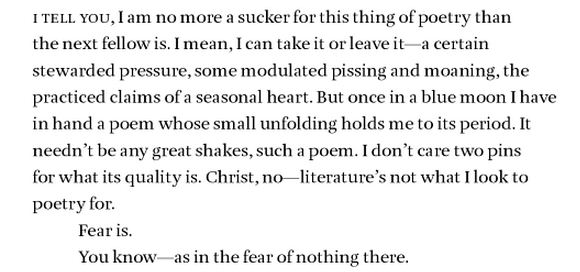
“Some Modulated Pissing and Moaning” (Gordon Lish on Poetry)


From Gordon Lish’s story “How to Write a Poem.”

George Washington’s Rules of Civility

(Non-manuscript, more legible version).

“Election Day” — William Carlos Williams”

“Election Day,” William Carlos Williams:

Warm sun, quiet air
an old man sits

in the doorway of
a broken house—

boards for windows
plaster falling

from between the stones
and strokes the head

of a spotted dog

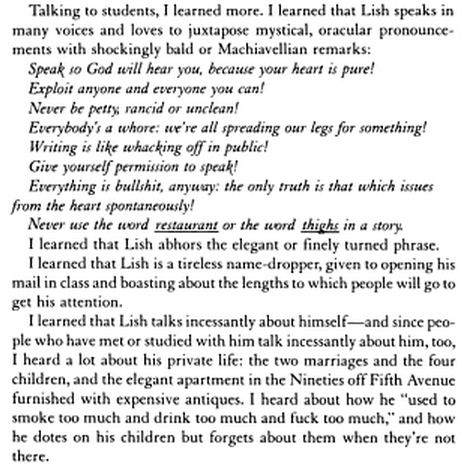
“What I Know About Gordon Lish” (1986 Spy Magazine Feature)

From a 1986 Spy magazine feature on editor/writer/hero Gordon Lish:

Henry Miller Riffs on Nietzsche and Dostoevsky (Film)

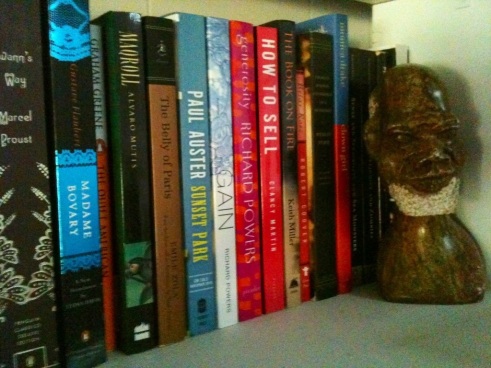
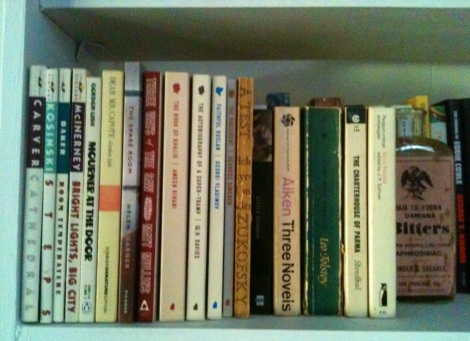
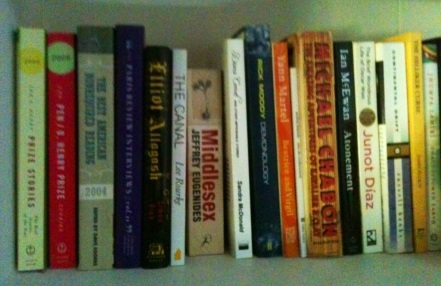
Book Shelves #45, 11.04.2012

20121103-171422.jpg

Book shelves series #45, forty-fifth Sunday of 2012

Yon shelf, murky, dim:

20121103-171436.jpg

Homeboy on the end, once my parents’,  tschotchke of time in ’80s South Africa, used to work as a bookend, now he just hangs out on this double-booked shelf.

20121103-171448.jpg

Front layer:

20121103-171458.jpg

Back layer, including a number of volumes (to be clear: Chabon, Martel, Diaz, Eugenides) I should just trade in.

20121103-171526.jpg

(Also: I hate this project and wish I’d never started it).

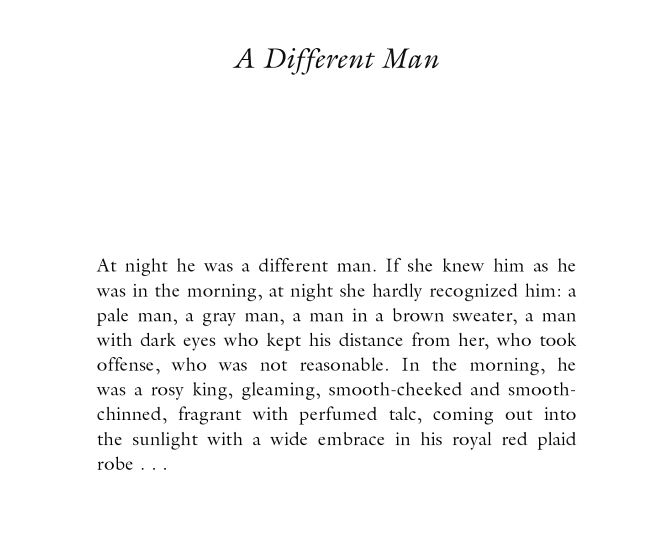
“A Different Man” — Lydia Davis

Watermill Procession (Kurosawa’s Dreams)


“The Brain within its groove” — Emily Dickinson

D.T. Max Talks About His David Foster Wallace Biography

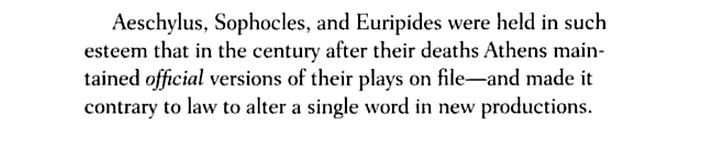
David Markson Comments on Some Athenian Playwrights

Definition of “Vote” (Ambrose Bierce)

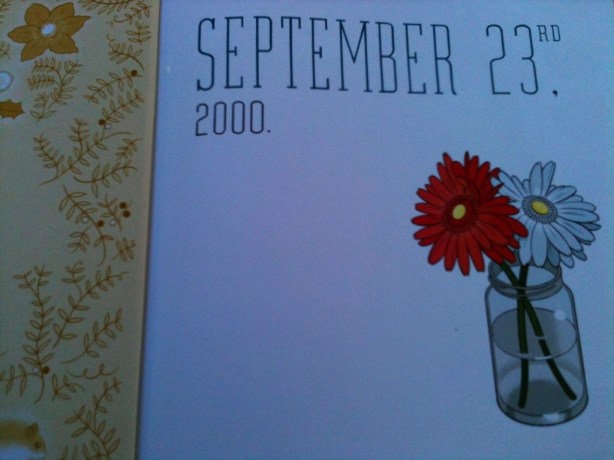
Reading Chris Ware’s Building Stories / September 23rd, 2000

20121101-205324.jpg

September 23rd, 2000 is one of the longer pieces in Chris Ware’s box set, Building Stories. Part of the joy and frustration of Building Stories is its free form—the possibility of reading one piece before another, of getting one tale or perspective before another. I started with Branford, which seems in retrospective a fairly neutral opening—it introduces many of the themes that develop in Building Stories but none of the major characters. I then read I just met, which introduces a couple suffering a sour relationship.

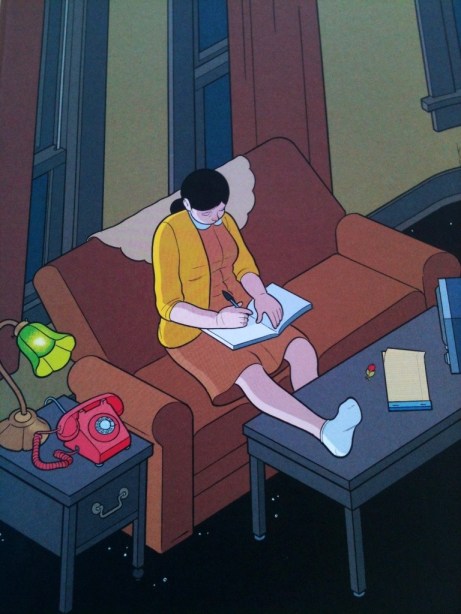
September introduces (to me, anyway), two major “new” (again, “new” to me; these characters appear central in other books and pamphlets of the collection and obliquely in others): The “lonely girl,” a would-be artist sporting a prosthetic leg, and the “old lady,” landlord of the building. Most of September takes the form of lonely girl’s diary entries.

20121101-205339.jpg

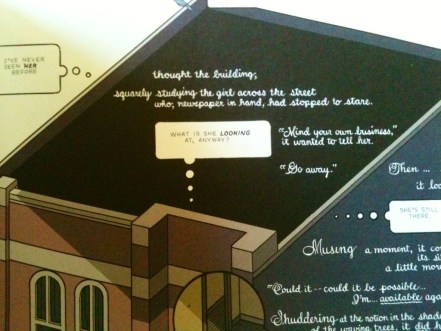
I noted two characters (again, new to me), but the building itself also gets a voice and prominent role in September; its thoughts and memories frame the narrative:

20121101-205351.jpg

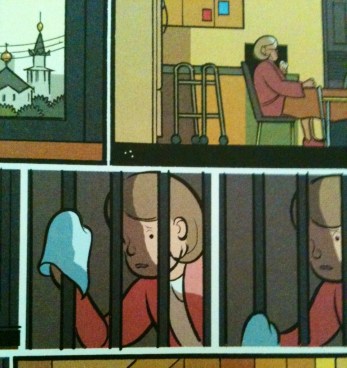
September frames the repetitions, the loops, the patterns that undoubtedly will resurface throughout Building Stories. We get access to the characters dreams, which seem to overlap and echo each other—and then repeat in real life, albeit in other forms. The landlady, recalling her youth, seems to echo the loneliness and despair of the lonely girl, as well as the pain of the woman in the sour relationship. We see that the building has in fact been a kind of prison for her, preventing her from forming real relationships:

20121101-205408.jpg

Other echoes are more subtle—a close up of a bee, for instance, either foreshadows or calls back to (or both, of course) Branford, the Best Bee in the World.

20121101-205429.jpg

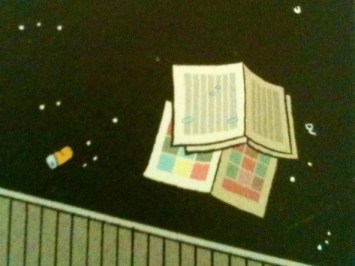
We can see the Branford episode again, here in the tiny detail of a soda can, a major setting for that episode. I was more fascinated by the newspaper though, particularly the colorful squares of a comics section, a reference Ware’s medium and perhaps a visual suggestion of Building Stories itself. The detail is tiny, but meaningful:

20121101-205421.jpg

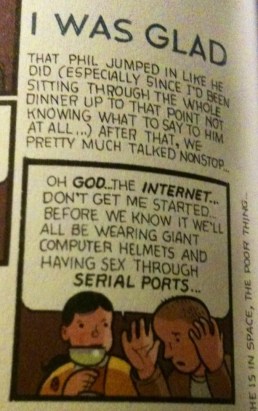
In a later part of September, we see a direct reference to the end of I just met:

20121101-205436.jpg

I imagine that there were other references, call backs, and echoes in September that I won’t get until later.

The story—well, it’s beautiful, a perfect short story, self-contained but thematically resonant with the larger project. The ending is so damn sweet and perfect that it brought a little tear to my eye. And yet: Was that the ending? Of course not. The sense of rhetorical resolution—that is to say the so-called happy ending—will almost surely be punctured, deflated, or otherwise complicated by one of the next texts I read. More to come.

“Montparnasse” — Ernest Hemingway

“Hysteria” — T.S. Eliot