“Easter Eve” — Anton Chekhov

“Easter Eve”

by

Anton Chekhov

I was standing on the bank of the River Goltva, waiting for the ferry-boat from the other side. At ordinary times the Goltva is a humble stream of moderate size, silent and pensive, gently glimmering from behind thick reeds; but now a regular lake lay stretched out before me. The waters of spring, running riot, had overflowed both banks and flooded both sides of the river for a long distance, submerging vegetable gardens, hayfields and marshes, so that it was no unusual thing to meet poplars and bushes sticking out above the surface of the water and looking in the darkness like grim solitary crags.

The weather seemed to me magnificent. It was dark, yet I could see the trees, the water and the people. . . . The world was lighted by the stars, which were scattered thickly all over the sky. I don’t remember ever seeing so many stars. Literally one could not have put a finger in between them. There were some as big as a goose’s egg, others tiny as hempseed. . . . They had come out for the festival procession, every one of them, little and big, washed, renewed and joyful, and everyone of them was softly twinkling its beams. The sky was reflected in the water; the stars were bathing in its dark depths and trembling with the quivering eddies. The air was warm and still. . . . Here and there, far away on the further bank in the impenetrable darkness, several bright red lights were gleaming. . . .

A couple of paces from me I saw the dark silhouette of a peasant in a high hat, with a thick knotted stick in his hand.

“How long the ferry-boat is in coming!” I said.

“It is time it was here,” the silhouette answered.

“You are waiting for the ferry-boat, too?”

“No I am not,” yawned the peasant—”I am waiting for the illumination. I should have gone, but to tell you the truth, I haven’t the five kopecks for the ferry.”

“I’ll give you the five kopecks.”

“No; I humbly thank you. . . . With that five kopecks put up a candle for me over there in the monastery. . . . That will be more interesting, and I will stand here. What can it mean, no ferry-boat, as though it had sunk in the water!”

The peasant went up to the water’s edge, took the rope in his hands, and shouted; “Ieronim! Ieron—im!” Continue reading ““Easter Eve” — Anton Chekhov”

Categories are bad news (Barry Hannah)

 WT: Do you read magazines?

BH: If someone would rave about a story in the New Yorker, I’ll read it. But you get a lot of that Woody Allen–New Yorker–Hamptons fiction. My [students] have to send off to the little magazines. I get the sense that only grad students read those.

WT: Writer’s writers?

BH: I don’t like that term, because I wouldn’t buy somebody’s album on a dare if they called him a musician’s musician. I don’t write to be a writer’s writer. I don’t want to be like the little-magazine writer. I don’t want to be that.

Categories are bad news. Being Southern will just kill you sometimes. It’s not always a graceful adjective. Sometimes it means, don’t bother because it’s gonna be [sings a lick from dueling banjos]. It’s gonna be: porch, banjo, Negroes. There’s a canned dream of the South that a lot of people get into, and I’ve resisted that stuff my entire so-called career. Ready-made Southernism just disgusts me, just makes me nauseated. I mean, you can’t see a movie without hearing that goddamned slide guitar. Shit, I’m just so tired of it.


From Barry Hannah’s interview with Wells Tower in The Believer.

“Holy Thursday” (Experience) — William Blake

Watch The Lives of Brian, A Documentary About Flann O’Brien

“Our April Letter” — F. Scott Fitzgerald

This is April again. Roller skates rain slowly down the street
Your voice far away on the phone
Once I would have jumped like a clown through a hoop—
but
“Then the area of infection has increased? …oh …What can I expect after all—I’ve had worse shocks.
Anyhow, I know and that’s something.” (Like hell it is, but it’s what you say to an X-ray doctor.)
Then the past whispering faint now on another phone:
“Is there any change?”
“Little or no change”
“I see”
The roller skates rain down the streets,
The black cars shine between the leaves,
Your voice far away:
“I am going with my daughter to the country. My husband left today. . . No he knows nothing.”
“Good”.
I have asked a lot of my emotions—one hundred and twenty stories, The price was high, right up with Kipling, because there was one little drop of something not blood, not a tear, not my seed, but me more intimately than these, in every story, it was the extra I had. Now it has gone and I am just like you now.
Once the phial was full—here is the bottle it came in.
Hold on there’s a drop left there. . . No, it was just the way the light fell
But your voice on the telephone. If I hadn’t abused words so what you said might have meant something.
But one hundred and twenty stories
April evening spreads over everything, the purple blur left by a child who has used the whole paint-box.

“Our April Letter” is from F. Scott Fitzgerald’s Notebooks.


Even more beautiful emotions (Kafka’s diary entry, 27 March 1912)

27. March. Monday, on the street. The boy who with several others, threw a large ball at a servant girl walking defencelessly in front of them; just as the ball was flying at the girls’ behind I grabbed him by the throat, choked him in a fury, thrust him aside, and swore. Then walked on and didn’t even look at the girl. One quite forgets one’s earthly existence because one is so entirely full of fury is permitted to believe that, given the opportunity, one would in the same way fill oneself with even more beautiful emotions.

Franz Kafka’s diary entry, 27 March 1912. Translation by Joseph Kresh.

Žižek riffs on Spike Jonze’s film Her, Lacan, sex, a Taco Bell ad, The Lady Eve, and so on and so on

A List of Irish Heroes from James Joyce’s Ulysses

One of my favorite passages in Ulysses (it’s from the “Cyclops” chapter, episode 12)—

He wore a long unsleeved garment of recently flayed oxhide reaching to the knees in a loose kilt and this was bound about his middle by a girdle of plaited straw and rushes. Beneath this he wore trews of deerskin, roughly stitched with gut. His nether extremities were encased in high Balbriggan buskins dyed in lichen purple, the feet being shod with brogues of salted cowhide laced with the windpipe of the same beast. From his girdle hung a row of seastones which dangled at every movement of his portentous frame and on these were graven with rude yet striking art the tribal images of many Irish heroes and heroines of antiquity, Cuchulin, Conn of hundred battles, Niall of nine hostages, Brian of Kincora, the Ardri Malachi, Art MacMurragh, Shane O’Neill, Father John Murphy, Owen Roe, Patrick Sarsfield, Red Hugh O’Donnell, Red Jim MacDermott, Soggarth Eoghan O’Growney, Michael Dwyer, Francy Higgins, Henry Joy M’Cracken, Goliath, Horace Wheatley, Thomas Conneff, Peg Woffington, the Village Blacksmith, Captain Moonlight, Captain Boycott, Dante Alighieri, Christopher Columbus, S. Fursa, S. Brendan, Marshal Mac-Mahon, Charlemagne, Theobald Wolfe Tone, the Mother of the Maccabees, the Last of the Mohicans, the Rose of Castille, the Man for Galway, The Man that Broke the Bank at Monte Carlo, The Man in the Gap, The Woman Who Didn’t, Benjamin Franklin, Napoleon Bonaparte, John L. Sullivan, Cleopatra, Savourneen Deelish, Julius Caesar, Paracelsus, sir Thomas Lipton, William Tell, Michelangelo, Hayes, Muhammad, the Bride of Lammermoor, Peter the Hermit, Peter the Packer, Dark Rosaleen, Patrick W. Shakespeare, Brian Confucius, Murtagh Gutenberg, Patricio Velasquez, Captain Nemo, Tristan and Isolde, the first Prince of Wales, Thomas Cook and Son, the Bold Soldier Boy, Arrah na Pogue, Dick Turpin, Ludwig Beethoven, the Colleen Bawn, Waddler Healy, Angus the Culdee, Dolly Mount, Sidney Parade, Ben Howth, Valentine Greatrakes, Adam and Eve, Arthur Wellesley, Boss Croker, Herodotus, Jack the Giantkiller, Gautama Buddha, Lady Godiva, The Lily of Killarney, Balor of the Evil Eye, the Queen of Sheba, Acky Nagle, Joe Nagle, Alessandro Volta, Jeremiah O’Donovan Rossa, Don Philip O’Sullivan Beare. A couched spear of acuminated granite rested by him while at his feet reposed a savage animal of the canine tribe whose stertorous gasps announced that he was sunk in uneasy slumber, a supposition confirmed by hoarse growls and spasmodic movements which his master repressed from time to time by tranquillising blows of a mighty cudgel rudely fashioned out of paleolithic stone.


Beware

beware

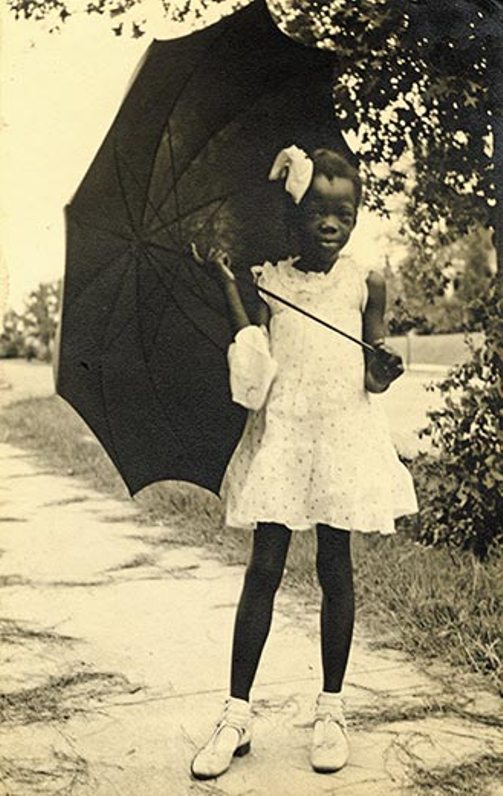
Sunday Morning — Eudora Welty

eudora-welty05

Taking Tea with Gordon Lish

Ready? I take my tea bag (or you take your teaspoon), one bag or one spoon for each five ounces of water, which is cold when I start and boiling up a rumpus before I pour, which I do, into a teapot that’s already hot, which condition of temperature is crucial.


So I pour furiously boiling water into good and hot teapot over bags or over loose tea or over bags or over tea bomb, slam top down, wrap entire business in dish towel, which is what I saw my mother do during the blizzard of ’46 and it made a tremendous impression on me, she being my mother and all. I understand some people are willing to buy a tea cosy—but, so far as I’m concerned, you’ve got to draw the line somewhere.


Anyhow, it sits for five minutes—you know, it steeps. If the waiting makes you edgy, go fold some paper bags. The next step is the last step, which is to hurry up and divide the product from its makings. Well, truth to tell, there is one more step—but that’s drinking it, drinking tea—which is a step I’m going to get around to, all in good time. When coffee scoots up over a sawbuck a can.

From Gordon Lish’s 1977 piece in The New York Times, “A Teaser on Tea, with a Footnote on Bags.” By way of context for that last line: the price of coffee soared in 1977 after a harsh freeze killed Brazilian crops. High coffee prices led to a coffee boycott. And tea drinking.

A rambling and possibly incoherent riff on Inherent Vice (film and novel) and The Crying of Lot 49

IMG_0200

A. The first time I saw Paul Thomas Anderson’s film Inherent Vice, I was in the middle of rereading Pynchon’s novel The Crying of Lot 49, which I hadn’t read in fifteen years. I remembered the novel’s vibe, its milieu, but not really its details.

B. I read The Crying of Lot 49 and then immediately reread it. It seemed much stronger the second time—not nearly as silly. Darker. Oedipa Maas, precursor to Doc Sportello, trying not to lose the thread as she leaves the tower for the labyrinth, rushing dizzy into the sixties.

C. Another way of saying this: Inherent Vice is sequel to The Crying of Lot 49. Any number of details substantiate this claim (and alternately unravel it, if you wish, but let’s not travel there)—we could focus on the settings, sure, or maybe the cabals lurking in the metaphorical shadows of each narrative—is The Golden Fang another iteration of The Tristero?—but let me focus on the conclusions of both novels and then discuss the conclusion of PTA’s film.

D. A favorite line from a favorite passage from The Crying of Lot 49: “the true paranoid for whom all is organized in spheres joyful or threatening about the central pulse of himself.” Paranoia as a kind of sustained hope, a way to find meaning, order, a center.

E. The final pages of The Crying of Lot 49 find Oedipa trying to make sense of the labyrinth (my emphases in bold):

For it was now like walking among matrices of a great digital computer, the zeroes and ones twinned above, hanging like balanced mobiles right and left, ahead, thick, maybe endless. Behind the hieroglyphic streets there would either be a transcendent meaning, or only the earth. In the songs Miles, Dean, Serge and Leonard sang was either some fraction of the truth’s numinous beauty (as Mucho now believed) or only a power spectrum. Tremaine the Swastika Salesman’s reprieve from holocaust was either an injustice, or the absence of a wind; the bones of the GI’s at the bottom of Lake Inverarity were there either for a reason that mattered to the world, or for skin divers and cigarette smokers. Ones and zeroes. So did the couples arrange themselves. At Vesperhaven House either an accommodation reached, in some kind of dignity, with the Angel of Death, or only death and the daily, tedious preparations for it. Another mode of meaning behind the obvious, or none. Either Oedipa in the orbiting ecstasy of a true paranoia, or a real Tristero. For there either was some Tristero beyond the appearance of the legacy America, or there was just America and if there was just America then it seemed the only way she could continue, and manage to be at all relevant to it, was as an alien, unfurrowed, assumed full circle into some paranoia.

There is either meaning, or there is not meaning. Continue reading “A rambling and possibly incoherent riff on Inherent Vice (film and novel) and The Crying of Lot 49”

“Publishing” — John Steinbeck

“Publishing”

by

John Steinbeck

from his 1969 “interview” in The Paris Review

EDITOR

The book is out of balance. The reader expects one thing and you give him something else. You have written two books and stuck them together. The reader will not understand.

WRITER

No, sir. It goes together. I have written about one family and used stories about another family as—well, as counterpoint, as rest, as contrast in pace and color.

EDITOR

The reader won’t understand. What you call counterpoint only slows the book.

WRITER

It has to be slowed—else how would you know when it goes fast?

EDITOR

You have stopped the book and gone into discussions of God knows what.

WRITER

Yes, I have. I don’t know why. Just wanted to. Perhaps I was wrong.

SALES DEPARTMENT

The book’s too long. Costs are up. We’ll have to charge five dollars for it. People won’t pay five dollars. They won’t buy it.

WRITER

My last book was short. You said then that people won’t buy a short book.

PROOFREADER

The chronology is full of holes. The grammar has no relation to English. On page so and so you have a man look in the World Almanac for steamship rates. They aren’t there. I checked. You’ve got the Chinese New Year wrong. The characters aren’t consistent. You describe Liza Hamilton one way and then have her act a different way.

EDITOR

You make Cathy too black. The reader won’t believe her. You make Sam Hamilton too white. The reader won’t believe him. No Irishman ever talked like that.

WRITER

My grandfather did.

EDITOR

Who’ll believe it.

2ND EDITOR

No children ever talked like that.

WRITER (losing temper as a refuge from despair)

God damn it. This is my book. I’ll make the children talk any way I want. My book is about good and evil. Maybe the theme got into the execution. Do you want to publish it or not?

EDITORS

Let’s see if we can’t fix it up. It won’t be much work. You want it to be good, don’t you? For instance, the ending. The reader won’t understand it.

WRITER

Do you?

EDITOR

Yes, but the reader won’t.

PROOFREADER

My God, how you do dangle a participle. Turn to page so and so.

There you are, Pat. You came in with a box of glory and there you stand with an arm full of damp garbage.

And from this meeting a new character has emerged. He is called The Reader.

THE READER

He is so stupid you can’t trust him with an idea.

He is so clever he will catch you in the least error.

He will not buy short books.

He will not buy long books.

He is part moron, part genius and part ogre.

There is some doubt as to whether he can read.

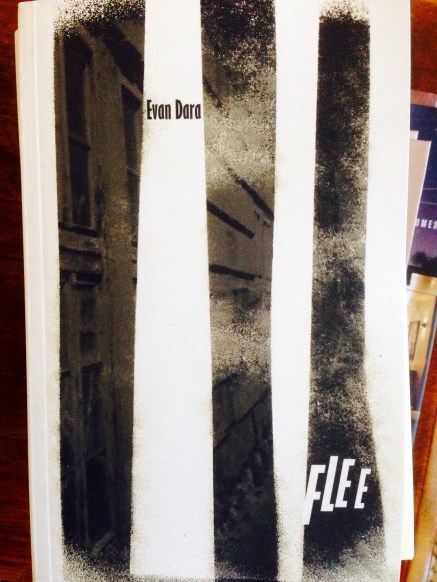
A Conversation about Evan Dara’s Novel Flee (Part 1)

[Context/editorial note: I’ve been meaning to read Evan Dara’s latest novel Flee for a while nowand when Biblioklept contributor Ryan Chang told me he’d be reading it as part of a contemporary literature class I decided to join him. This is the first part of a two-part discussion which took place over a few weeks of emails. — ET].   

Edwin Turner: So you’re reading Evan Dara’s Flee for a class, right? What’s the name of the class again? What are some of the other texts in the class?

Ryan Chang: Yeah, a class called 21st Century Fiction: What is Contemporary? We started out reading Reed’s Mumbo Jumbo and Acker’s Empire of the Senseless. We just finished reading Egan’s A Visit From The Goon Squad (awful), and we’re moving onto Chaon’s Await Your Reply and Pynchon’s Bleeding Edge. Everything, up to Pynchon, has as its central conflict the dissolution of the subject vis. the postmodern. Perhaps because of the spatialization of time (Egan, Reed) or a steroidal fungibility of a self because of technology (Chaon). The awareness of how deeply we are disciplined by master narratives (Acker). We’ve yet to get to Blake Butler’s There Is No Year and Richard Powers’ The Echo Maker, which I’m looking forward to after the Chaon and Egan who, in their attempt to write novels critical of the contemporary (more so of Egan, who does nothing but neuter the very real state of late capitalism’s terror into entertainment), do not make it past the merely interesting. I liked the Egan much less than the Chaon; part of the problem is the prose style, I think — it’s characteristically white American, shaped by sentimentality and preoccupied with the syntax of conventional form. In other words, the blueberry muffin prose styles betray the experimental forms in which they’re enveloped.

ET: I always have to look up the word fungibility. Dara’s Flee seems to fit into that early theme you mention, the conflict of the dissolution of the subject, which is both the book’s formal rhetorical strategy, but also its plot program, encapsulated (maybe) on page 45: “What is the weight of we?” What do you make of Dara’s style here? Like initial impression?

RC: I’m about ~40 pages in. I think I mentioned in the Books Acquired thing I wrote that Dara, stylistically, is hitting hard on Gaddis. Admittedly, I’m most familiar with the late Gaddis — Carpenter’s Gothic. (Agape Agape, too, but this is, of course, his letter to Bernhard.) I like that both focus on voice, on streams of speech that collide or blur into each other. The Gaddis influence is more of an echo than anything.
Specifically re: Dara — the interruptions, digressions and hesitations immediately struck me as something like a Tragic Greek chorus that, having incurred some sort of its own trauma (and not acting only as the all-knowing unconscious of the play), is completely disoriented, confused of its own purpose. But amidst the cacophony–or something like a directed cacophony towards the reader–they are still unwittingly functioning as a chorus. They’re giving us the stage for Flee’s story, hinting quietly at the book’s central plot conflict. Also naming characters (Carol, Rick, Marcus, etc), which is now more intriguing to me at the passage from p.45 you mention. What’s also different in Carpenter’s Gothic is, while that whole book remains on one diegetic level (as far as I can remember, it’s been a few years) because no narrator ever announces itself, in Dara, there’s a blurring of diegetic arenas, a refusal to centralize any narrative authority. Ok, so, re: dissolution of the subject: It seems that not only are the chorus members interrupting themselves, but they’re also interrupting the narrator as well. Each left-margin emdash cuts the narrator off, in a way, if you will. That scene when they’re pitying Rick, acting as a narrator with dialogue tags. The commonly individuated voice of the narrator is subsumed into the characters’ diegetic arena; a tension between the collective and individual implicit in prose structure alone. It also seems, by “36,551,” that whatever the population is fleeing from is not collectively driven (ie., the pity for Mark’s poorly planned meetings for something, we don’t know what yet), but selfishly driven. And in the flattening power of numbers, that selfishness — a hermetic individuality — becomes collective. There is a kind of infinite distance between I and we that, perhaps, the book is trying to trace? Or its relationship in the temporality of the novel is a perpetual expanding/contracting relationship, like a rubber band?

As far as I am in the book, the interruptions and digressions also have a hysteria to them that points to something the chorus is ignoring even in the face of the beginnings of a series of rude awakenings. Each voice just bemoans this dissolution of themselves; but, especially in the scene where Rick is, like, torn apart for his idea in service of the township, each voice is just narcissistically concerned with how it’s going to inconvenience them, rather than the potential worth of Rick’s idea.

ET: I teach an introductory American lit class, and today we were talking about Faulkner’s short story “A Rose for Emily,” which I think offers this wonderful example of a first-person plural narrator, this kind of limited chorus that is not-quite omniscient, not-quite omnipresent, and hardly omnipotent. It’s this weird we that seems able to transcend time, but not space—it can live for more than eighty years but it can’t see into Emily Grierson’s house. Its limitations are human; its limitations are the limitations of all the members of a community. I had your email in the back of my head while I was riffing on all this today—that, yes, the we is this fiction that we all subscribe to (hey look, I just used it!)—it’s our linguistic tag for culture, religion, whatever—but it requires some other—a you, I guess, that we can all point to, an Emily Grierson that’s only part of the we by paradoxically not being a part of the we, by defining the weFlee doesn’t seem to have that other, at least not in the first seven chapters anyway, although it does foreground two protagonists in Rick and Carol—something that Dara’s first novel The Lost Scrapbook does not do. The Lost Scrapbook is far more polyglossic than Flee also, which again reminds me of Faulkner’s story in its unified we-ness—Flee‘s narrative voice somehow unifies entropy, breakdown, the chaotic rumbling becomes this throbbing tone of dissolution (“There’s no here here,” page 79), where the narcissistic flight of each member of the community paradoxically underwrites the viability of a community, the possibility of a community… Continue reading “A Conversation about Evan Dara’s Novel Flee (Part 1)”

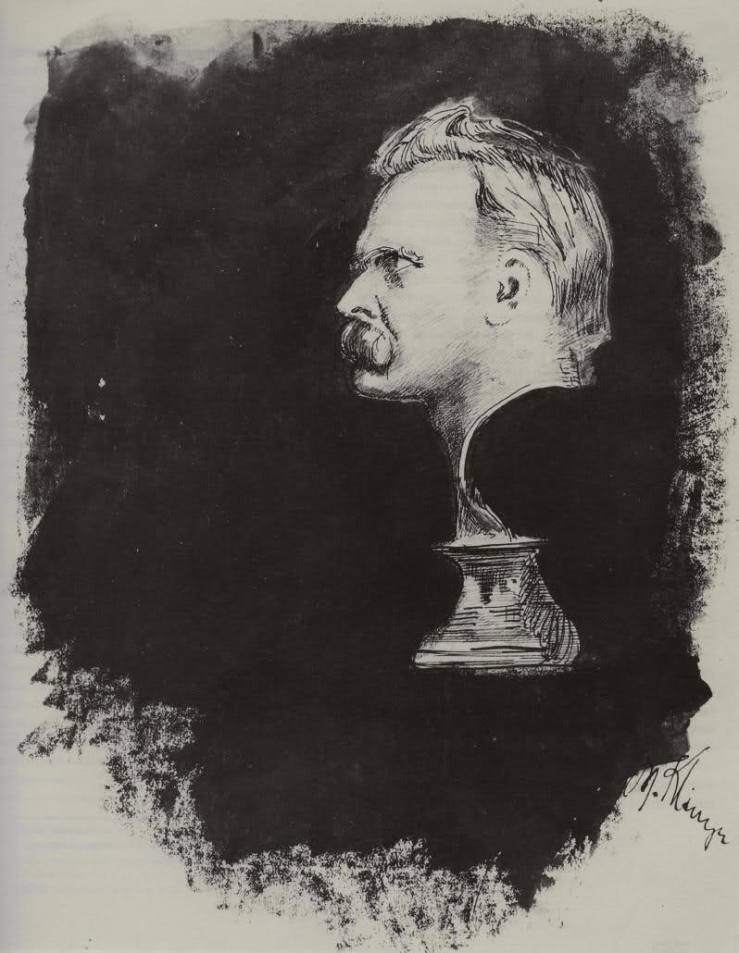
Nietzsche — Max Klinger

30wp177

Because It’s So Damn Cold, Donald Barthelme’s Recipes for Fine Homemade Oxtail Soup and Fine Homemade Leek Soup

In his introduction to The Teachings of Don B, Thomas Pynchon praises Donald Barthelme’s soups:

Those recipes. That oxtail soup mix. That “burgoo,” with the frozen ducks in it? A notable moment in chef psychopathology, to be sure — yet such is Barthelme’s genius that even the most porkophobic or duck-intolerant among us is drooling, unashamed, by recipe’s end.

I don’t own The Teachings of Don B, but Pynchon’s description (which I found while looking for something entirely different) piqued my interest (first and foremost: was the recipe even a real thing?). Anyway: Via Maude Newton, via Overnight to Many Distant Cities, and then an additional Google search to The Purest of Treats:

FINE HOMEMADE OXTAIL SOUP

Take Knorr Oxtail Soupmix, decant into same any leftover meat (sliced or diced) from the old refrigerator. Follow above strategies to the letter. The result will make you happy. Knorr’s Oxtail is also good as a basic gravy maker and constituent of a fine fake cassoulet about which we can talk at another time. Knorr is a very good Swiss outfit whose products can be found in both major and minor cities. The point here is not to be afraid of the potential soup but to approach it with the attitude that you know what’s best for it. And you do. The rawness of the vegetables refreshes the civilization of the Soupmixes. And there are opportunities for mercy–if your ox does not wish to part with his tail, for example, to dress up your fine Oxtail Soup, you can use commercial products from our great American supermarkets, which will be almost as good.

And if you’re into Lenten observation:

FINE HOMEMADE LEEK SOUP

Take one package Knorr Leek Soupmix. Prepare as directed. Take two live leeks. Chop leeks into quarter-inch rounds. Throw into Soupmix. Throw in ½ cup Tribuno Dry Vermouth. Throw in chopped parsley. Throw in some amount of salt and a heavy bit of freshly ground pepper. Eat with good-quality French bread, dipped repeatedly in soup.

(See also: Gordon Lish’s recipe for chicken soup).

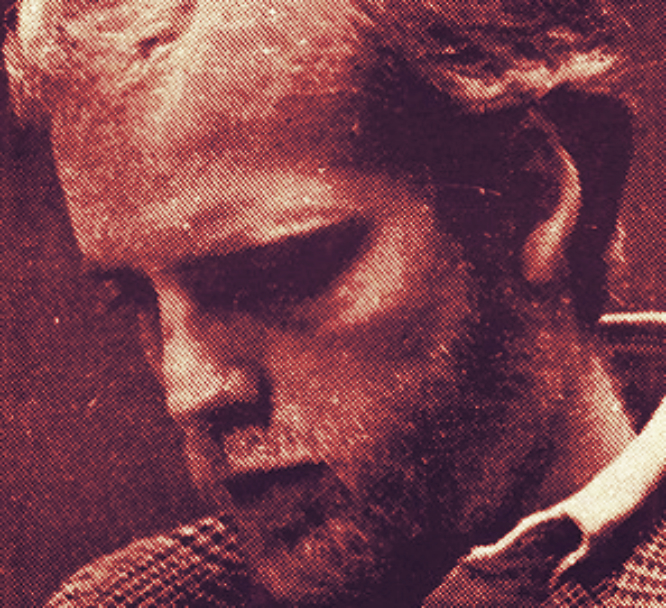
Happy Breece D’J Pancake Day

bdjp

Today is Shrove Tuesday or Fat Tuesday or Mardi Gras—or Pancake Day if you like. Besides his unusual last name, there is basically no connection between this pre-Lenten day and the West Virginian writer Breece D’J Pancake. But whatever. Pancake remains woefully under-read—so any occasion for notice, yes?

Breece Pancake’s stories are compact, sad, and beautiful. Haunting is a fair word—these tales stick with you. Pancake’s evocation of place and mood are so strong that it’s often a relief to leave the little world he’s painted for the reader. (Does that sound like a negative criticism? ‘Twas not meant to be).

There’s not much Pancake to read—just one collection of short stories, posthumously published. Pancake shot himself in the head a few months before his 27th birthday. In his afterword to The Stories of Breece D’J Pancake, John Casey points out that Pancake had not yet achieved his full vision of his writing (he also explains the unusual punctuation in the author’s name):

When he sold his first story to The Atlantic he scarcely took a breath. (He did do one thing by way of celebration. The galley proofs came back with the middle initials of his name set up oddly: Breece D’J Pancake. He said fine, let it stay that way. It made him laugh, and, I think, it eased his sense of strain—the strain of trying to get things perfect—to adopt an oddity committed by a fancy magazine.) He was glad, but the rhythm of his work didn’t let him glory or even bask. He had expected a great deal from his work, and I think he began to feel its power, but he also felt he was still far from what he wanted.

Obviously, we can lament that we don’t get to read what Pancake might have written—or we can read what he gave us and be grateful. There’s “Hollow”“The Honored Dead,” and “In the Dry”—go ahead, those links are for full-text stories. Don’t be afraid to click.

Pancake’s most well-known story might be “Trilobites” — here are the first few paragraphs:

I open the truck’s door, step onto the brick side street. I look at Company Hill again, all sort of worn down and round. A long time ago it was real craggy, and stood like an island in the Teays River. It took over a million years to make that smooth little hill, and I’ve looked all over it for trilobites. I think how it has always been there and always will be, least for as long as it matters. The air is smoky with summertime. A bunch of starlings swim over me. I was born in this country and I have never very much wanted to leave. I remember Pop’s dead eyes looking at me. They were real dry, and that took something out of me. I shut the door, head for the café.


I see a concrete patch in the street. It’s shaped like Florida, and I recollect what I wrote in Ginny’s yearbook: “We will live on mangoes and love.” And she up and left without me—two years she’s been down there without me. She sends me postcards with alligator wrestlers and flamingos on the front. She never asks me any questions. I feel like a real fool for what I wrote, and go into the café.


The place is empty, and I rest in the cooled air. Tinker Reilly’s little sister pours my coffee. She has good hips. They are kind of like Ginny’s and they slope nice curves to her legs. Hips and legs like that climb steps into airplanes. She goes to the counter end and scoffs down the rest of her sundae. I smile at her, but she’s jailbait. Jailbait and black snakes are two things “Won’t touch with a window pole. One time I used an old black snake for a bullwhip, snapped the sucker’s head off, and Pop beat hell out of me with it. I think how Pop could make me pretty mad sometimes. I grin.

Why isn’t the story in my Norton Anthology of American Literature?

Do you want more than those paragraphs? Here’s Joyce Carol Oates on Pancake, from her 1983 NYT review of the collection:

The most powerful of the stories – ”Trilobites,” ”Hollow,” ”Fox Hunters,” ”The Scrapper,” ”In the Dry” – are as compactly and tightly written as prose poems and should be read (and reread) with extreme care. The author’s method is to create an atmosphere of extreme tension in his readers as well as in his protagonists. The stories’ opening paragraphs often announce in embryo what will follow, so that the narrative is thematically complete before, in a sense, it begins, and one feels the inexorable bars of circumstance closing about the characters. And the writing, lean, taut, pared back, near-flawless in its uninflected cadences, is perfectly suited to its content.

Over three decades after that review, there’s still a sense that Pancake hasn’t quite gotten his due. Here’s Jon Michaud, writing almost exactly a year ago in The New Yorker:

…Pancake deserves to be more than a writer’s writer. In his stories, objects are constantly being unearthed: fossils and coal from the earth, skeletons and arrowheads from Indian burial grounds. “The Stories of Breece D’J Pancake” is a sharp, flinty object, an arrowhead left behind by a talented and tragic young author. It would be easy to allow his one collection of stories to be buried under the landslide of books published every year. But it’s worth doing a little excavating to dig it up. The past few years have seen late-in-the-day and posthumous revivals of interest in writers such as Renata Adler, Elena Ferrante, and John Williams. Get out your pickaxes. It’s high time for a Pancake revival.

I agree.