“The Adopted Son” — Guy de Maupassant

“The Adopted Son” by Guy de Maupassant

The two cottages stood beside each other at the foot of a hill near a little seashore resort. The two peasants labored hard on the unproductive soil to rear their little ones, and each family had four.

Before the adjoining doors a whole troop of urchins played and tumbled about from morning till night. The two eldest were six years old, and the youngest were about fifteen months; the marriages, and afterward the births, having taken place nearly simultaneously in both families.

The two mothers could hardly distinguish their own offspring among the lot, and as for the fathers, they were altogether at sea. The eight names danced in their heads; they were always getting them mixed up; and when they wished to call one child, the men often called three names before getting the right one.

The first of the two cottages, as you came up from the bathing beach, Rolleport, was occupied by the Tuvaches, who had three girls and one boy; the other house sheltered the Vallins, who had one girl and three boys.

They all subsisted frugally on soup, potatoes and fresh air. At seven o’clock in the morning, then at noon, then at six o’clock in the evening, the housewives got their broods together to give them their food, as the gooseherds collect their charges. The children were seated, according to age, before the wooden table, varnished by fifty years of use; the mouths of the youngest hardly reaching the level of the table. Before them was placed a bowl filled with bread, soaked in the water in which the potatoes had been boiled, half a cabbage and three onions; and the whole line ate until their hunger was appeased. The mother herself fed the smallest.

A small pot roast on Sunday was a feast for all; and the father on this day sat longer over the meal, repeating: “I wish we could have this every day.”

One afternoon, in the month of August, a phaeton stopped suddenly in front of the cottages, and a young woman, who was driving the horses, said to the gentleman sitting at her side:

“Oh, look at all those children, Henri! How pretty they are, tumbling about in the dust, like that!”

The man did not answer, accustomed to these outbursts of admiration, which were a pain and almost a reproach to him. The young woman continued:

“I must hug them! Oh, how I should like to have one of them—that one there—the little tiny one!”

Springing down from the carriage, she ran toward the children, took one of the two youngest—a Tuvache child—and lifting it up in her arms, she kissed him passionately on his dirty cheeks, on his tousled hair daubed with earth, and on his little hands, with which he fought vigorously, to get away from the caresses which displeased him.

Then she got into the carriage again, and drove off at a lively trot. But she returned the following week, and seating herself on the ground, took the youngster in her arms, stuffed him with cakes; gave candies to all the others, and played with them like a young girl, while the husband waited patiently in the carriage.

She returned again; made the acquaintance of the parents, and reappeared every day with her pockets full of dainties and pennies.

Her name was Madame Henri d’Hubieres. Continue reading ““The Adopted Son” — Guy de Maupassant”

John Huston’s Film Adaptation of Under the Volcano (Full Film)

(Here’s my review of Malcolm Lowry’s novel Under the Volcano).

Love (Peanuts)

love

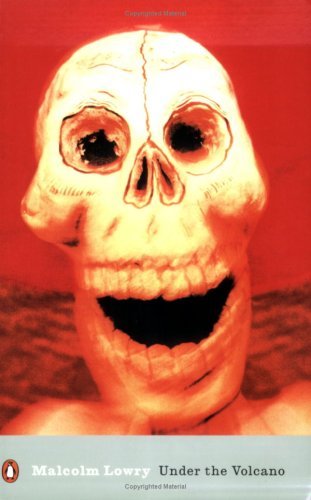
Under the Volcano, Malcolm Lowry’s Antipodal Odyssey of Despair

Most of Malcolm Lowry’s dense, depressing novel Under the Volcano takes place over the course of November 2nd, 1938, the Mexican Day of the Dead. Like a reticent, dour Virgil, Lowry guides the reader through the day’s tragic arc, floating between the minds of his novel’s three protagonists: Geoffrey Firmin, his half-brother Hugh, and Geoffrey’s estranged wife Yvonne. Geoffrey is British Consul to Mexico — ex-Consul, really, as British-Mexican relations sour against the backdrop of Spanish fascism and the rise of nationalism in Mexico — but he is almost always referred to as “the Consul,” a blackly ironic title. See, the Consul bears little authority aside from an extreme expertise on how to stay drunk (or “drunkly sober un-drunk”) 24/7. He’s ambassador to bar stools, a manager of mescal and little else (certainly not his own life; certainly not diplomatic affairs). The Consul is a wreck, an alcoholic to put Hemingway and Fitzgerald’s (and even Bukowski’s) alter-egos to shame.

After a first chapter that seems to derail all but the most patient readers, the narrative conflict arrives when Yvonne returns to Quauhnahuac, Mexico, a year after leaving (and divorcing) the Consul. She arrives to find the Consul (“Geoffrey,” as he’s called when the free indirect style inhabits her mind) drinking whiskey in a hotel bar in order to sober up (yep). It’s not immediately clear why Yvonne has returned to the Consul, but it seems that she hopes to save him from drowning in a drunken downward spiral. As the pair walks to the Consul’s house, they pass numerous advertisements for a boxing match; a child’s funeral proceeds down the avenue. These motifs of fighting, death, and futility permeate the novel.

During the walk we learn that Yvonne is not the only one concerned about the Consul’s health; his (much) younger brother Hugh has come to stay with him in the hopes of sobering him up. (Hugh employs a revolting and unsuccessful “strychnine cure”). That Hugh has also returned doubly complicates the plot. Much of Under the Volcano remains implicit, unnamed, hinted at, and this seems especially true of the implication that Yvonne cheated on the Consul with Hugh in the recent past (this implication may have been stated conclusively at some point in the novel, but I’ve only read the book once, which is perhaps like not having read it at all). What’s certainly clear is that Yvonne cheated on the Consul with a French filmmaker, Jacques Laruelle, a man whom the Consul, through sheer bizarre coincidence (but of course it isn’t sheer bizarre coincidence), spent a childhood summer with, an experience which bonded them as brothers in an Edenic holiday that eventually (inevitably) soured.

Despite her infidelities, Yvonne is generally present (I choose the verb “present” over “presented as” to highlight Lowry’s impeccable Modernist style) as a sympathetic character. Still, it is hard not to identify with the Consul (with “Geoffrey,” I suppose, if we are going to be familiar), the dark soul of this novel, and his complicated, painful feelings for Yvonne form the core of Volcano’s tragedy. He longs for her, pines for a complete life with her, yet resents her, cannot forgive her, hates her. For what? For leaving him. For betraying him. But perhaps foremost, he despises her inability to understand his alcoholism (he is particularly upset when she refuses to share a morning libation with him when they meet for the first time in a year). I’ll quote a passage at length now, one that showcases Lowry’s free indirect style, and one that reveals the strange indignities of the Consul’s sense of his own alcoholism. For context, dear reader, you must only know that Yvonne has suggested that she and the Consul might make long-term plans when he is sober “in a day or two”—

The Consul sat perfectly still staring at the floor while the enormity of the insult passed into his soul. As if, as if, he were not sober now! Yet there was some elusive subtlety in the impeachment that still escaped him. For he was not sober. No, he was not, not at this very moment he wasn’t! But what had that to do with a minute before, or half an hour ago? And what right had Yvonne to assume it, assume either that he was not sober now, or that, far worse, in a day or two he would be sober? And even if he were not sober now, by what fabulous stages, comparable indeed only to the paths and spheres of the Holy Cabbala itself, had he reached this stage again, touched briefly once before this morning, this stage at which alone he could, as she put it, “cope,” this precarious precious stage, so arduous to maintain, of being drunk in which alone he was sober! What right had she, when he had sat suffering the tortures of the damned and the madhouse on her behalf for fully twenty-five minutes on end without having a decent drink, even to hint that he was anything but, to her eyes, sober? Ah, a woman could not know the perils, the complications, yes, the importance of a drunkard’s life! From what conceivable standpoint of rectitude did she imagine she could judge what was anterior to her arrival? And she knew nothing whatever of what all too recently he had gone through, his fall in the Calle Nicaragua, his aplomb, coolness, even bravery there—the Burke’s Irish whiskey! What a world! And the trouble was she had now spoiled the moment.

The “fall in the Calle Nicaragua” the Consul references is quite literally a drunkard’s blackout (followed by the aforementioned fortifying whiskey, courtesy of a tourist), but it — falling — is perhaps the dominant motif in a novel crammed with motifs. In allegorical terms, if we want to ruin a good book (I don’t recommend this, of course), Volcano is pure Faust-stuff: end of innocence, fall of man, intractability of the human condition, ethical peril, moral inertia. While the Consul’s fall dominates the novel, Lowry brings this decline into dramatic relief in a late, climactic episode when his (anti-)heroic trio encounter a dying (dead?) man on the side of the road. Hugh tries to help, but the Darwinian venality of Mexican commonplace law makes his attempt impotent. Yvonne and the Consul are basically paralyzed.

Hugh’s attempt to save the man is a desperate call to action, an endeavor to perform some good in a world dominated by war and fascism. Hugh’s character fascinates. We learn of his past in one of the novel’s most intriguing episodes, a mini-bildungsroman that finds young Hugh working in the merchant marine as a calculated ploy to lend romance to his persona — he longs to prevail as a songwriter. He returns to find that no one cares about — has even heard — his guitar compositions; his publicity stunt fails. Although Hugh is only twenty-nine, he already seems himself as a failure, a fallen hero; he obsesses over the Battle of Ebro, daydreaming of helming a ship laden with hidden arms that he will deliver to the Loyalists who oppose the Fascists. Hugh’s greatest pain — and perhaps (only perhaps) Lowry’s greatest cruelty — is the awareness that the idealism of romantic heroism is intrinsically bound to a kind of selfish egoism. Hugh, perhaps with the visceral signal of his half-brother as a kind of radical prescience, can already see his own fall; his parts in Volcano are in a sense a constant meditation on falling. Hugh tries to save the dying man on the road, the cold double of his brother, whom he also tries to save — and yet it is all to little avail.

In Lowry’s world, in the volcano-world, there is only expulsion from the Eden. Lowry spells out this theme near the middle of his novel in a strange episode. The Consul wanders into his neighbor’s garden and reads a sign —

¿LE GUSTA ESTE JARDÍN?
¿QUE ES SUYO?
¡EVITE QUE SUS HIJOS LO DESTRUYAN!

The Consul stared back at the black words on the sign without moving. You like this garden? Why is it yours? We evict those who destroy! Simple words, simple and terrible words, words which one took to the very bottom of one’s being, words which, perhaps a final judgement on one, were nevertheless unproductive of any emotion whatsoever, unless a kind of colourless cold, a white agony, an agony chill as that iced mescal drunk in the Hotel Canada on the morning of Yvonne’s departure.

Significantly, either the sign is posted with improper punctuation, or (and?) the Consul’s translation is wrong — in either case a meaningful misreading occurs. We later receive the “proper” version of the sign: “¿Le gusta este jardín, que es suyo? ¡Evite que sus hijos lo destruyan! – “Do you like this garden that is yours? See to it that your children do not destroy it!”  The Consul’s first reading is a corruption, a cruel misreading that questions humanity’s right to happiness, and, tellingly, he connects the sign to the end of his relationship with Yvonne. The second version of the sign, while still foreboding, perhaps signals a kernel of hope in Lowry’s bleak work — the idea that a garden might be preserved, might be tended to; that children might be raised who do not kill, cheat, steal, rape, enslave, or otherwise prey on each other. Still, Lowry refuses to imagine what such a world might look like for us. Did I mention that Volcano is really, really sad?

For all its bleak, bitter bile, Volcano contains moments of sheer, raw beauty, especially in its metaphysical evocations of nature, which always twist back to Lowry’s great themes of Eden, expulsion, and death. Lowry seems to pit human consciousness against the naked power of the natural world; it is no wonder then, against such a grand, stochastic backdrop, that his gardeners should fall. The narrative teems with symbolic animals — horses and dogs and snakes and eagles — yet Lowry always keeps in play the sense that his characters bring these symbolic identifications with them. The world is just the world until people walk in it, think in it, make other meanings for it.

In many ways, Under the Volcano is an antipodal response to Joyce’s Ulysses. Both novels stream through a number of consciousnesses over the course of one day; both novels invert and subvert mythical frameworks against diurnal concerns; both novels point to the ways that the smallest meannesses — and kindnesses — can color and affect our lives. And while there are many divergences (chiefest, I believe, the spirit of redemption in Ulysses that seems entirely absent from Volcano), the greatest similarity may be their difficulty. Simply put, Lowry, like Joyce, throws his readers into the deep end. The first chapter of the novel inhabits the mind of Jacques Laruelle and takes place exactly one year after the events of the rest of the novel. It is both overture and context for all that follows, and yet it is radically alienating; indeed, it only fully makes sense after one finishes the novel and goes back and reads it again, realizing it is the rightful coda, the sad epilogue of a sad story. Lowry leads with his conclusion, show us the fall-out up front, the splinters and shards of the narrative to come. Picking up these pieces is hardly easy and never joyful, but it is a rewarding experience. Very highly recommended.

[Editorial note: Biblioklept ran a version of this review in March of 2011; we run it again in honor of The Day of the Dead]
Fantastical Fictive Beers

big

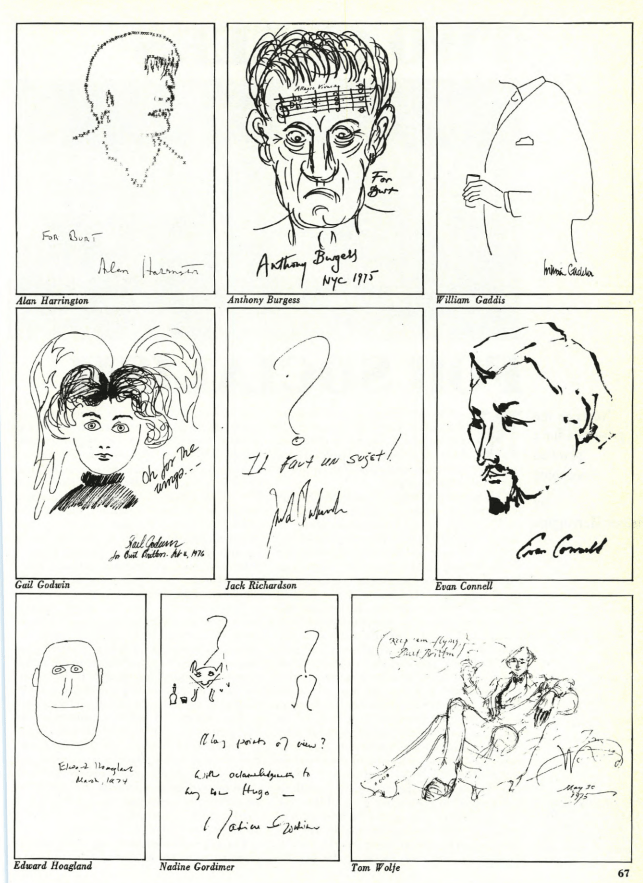
The Self-Portraits of Nine Authors

portraits

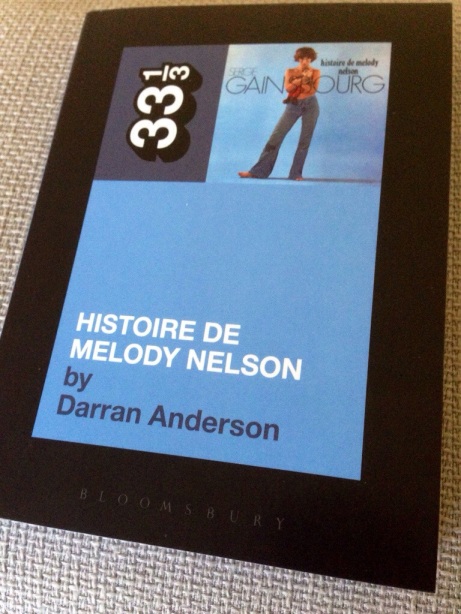
Serge Gainsbourg’s Histoire de Melody Nelson Gets the 33 1/3 Treatment (Book Acquired, 10.23.2013)

20131027-130605.jpg

Things I am a fan of: Serge Gainsbourg, Darran Anderson, and the 33 1/3 series. The 33 1/3 imprint focuses on specific albums, and the results are usually far more engaging than standard biographical fare. Histoire de Melody Nelson is the series’s latest entry; here, Darran Anderson takes on Serge Gainsbourg’s dark, moody, sexy, weird album (listen to it/see it here). I still remember the first time I heard Melody, back in college. Gainsbourg’s track with a breathy, orgasmic Brigitte Bardot “Je t’aime… moi non plus” was pretty much a party standard for my friends and me, and “Bonnie & Clyde” found its way onto plenty of mixtapes in the late ’90s. These bubblegum vamps didn’t really prepare me for Melody. I remember going to a friend’s apartment; he had just bought the album and had it playing on repeat. Dark, spacious, very short and full of strange shifts, from orchestral bombast to odd moments of quiet, the album made me feel weird. Such a weird album is a worthy topic for a book, and Anderson’s entry is a marvelous description and analysis of the artistic, cultural, and philosophical sources that Gainsbourg synthesized in Melody. Check out some of Anderson’s blog entries; they provide a compelling overview of his book:

The Origins of Melody – Nabokov’s LolitaBarbarella, Boris Vian, Sibelius, Mondo Cane.

The Avant Garde or Nothing – Gainsbourg and Vannier as innovators and a focus on their lost classics.

Initials O.G. – Serge Gainsbourg’s Hip-hop afterlife.

Connan Mockasin – Kiwi Psychedelia and the Ghost of Melody Nelson.

The book’s blurb:

Outside his native France, the view of Serge Gainsbourg was once of a one-hit wonder lothario. This has been slowly replaced by an awareness of how talented and innovative a songwriter he was. Gainsbourg was an eclectic, protean figure; a Dadaist, poète maudit, Pop-Artist, libertine and anti-hero. An icon and iconoclast.

His masterpiece is arguably Histoire de Melody Nelson, an album suite combining many of his signature themes; sex, taboo, provocation, humour, exoticism and ultimately tragedy. Composed and arranged with the great Jean-Claude Vannier, its score of lush cinematic strings and proto-hip hop beats, combined with Serge’s spoken-word poetry, has become remarkably influential across a vast musical spectrum; inspiring soundtracks, indie groups and electronic artists. In recent years, the album’s reputation has grown from cult status to that of a modern classic with the likes of Beck, Portishead, Mike Patton, Air and Pulp paying tribute.

How did the son of Jewish Russian immigrants, hounded during the Nazi Occupation, rise to such notoriety and acclaim, being celebrated by President François Mitterand as “our Baudelaire, our Apollinaire”? How did the early chanson singer evolve into a musical visionary incorporating samples, breakbeats and dub into his music, decades ahead of the curve? And what are the roots and legacy of a concept album about a Rolls Royce, a red-haired Lolita muse, otherworldly mansions, plane crashes and Cargo Cults?


“The Non-Entity” — William Carlos Williams

wcw

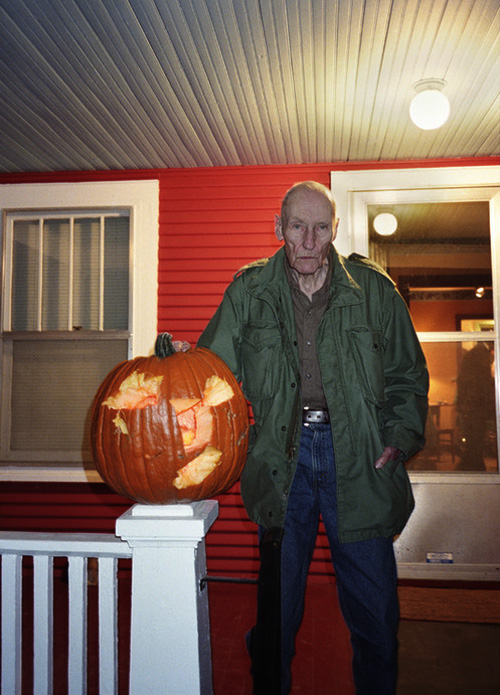
William Burroughs and His Hatchet-Carved Jack O’ Lantern

burroughs jack o lantern

(Via).

“…a face worthy of a murderer” (From Hell)

A page from Alan Moore and Eddie Campbell’s outstanding graphic novel From Hell, an encyclopedic account of the Jack the Ripper murders. In this scene, our evil protagonist Dr. Gull undergoes a transcendent experience, and appears to William Blake, inspiring The Ghost of a Flea

Blake’s The Head of the Ghost of a Flea

I pulled the image of From Hell from this fantastic detailed review by Miguel at St. Orberose (far better than my own my own meager tackle at writing about the book). Plenty more images there, along with a comprehensive analysis of (what I take to be) Moore’s best work.

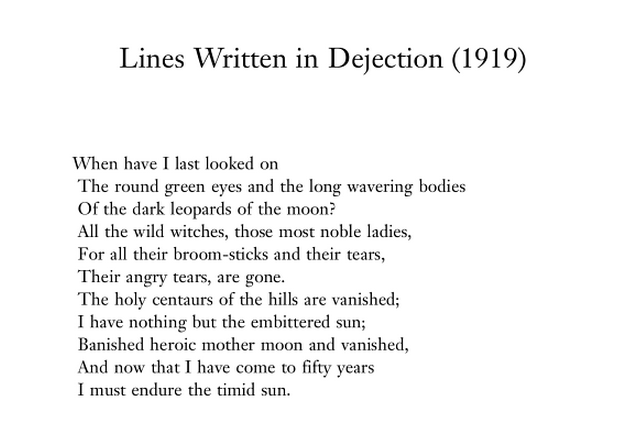
“All the wild witches” (Yeats)

yeats

See Edgar Allan Poe, D.W. Griffith’s 1909 Short Film

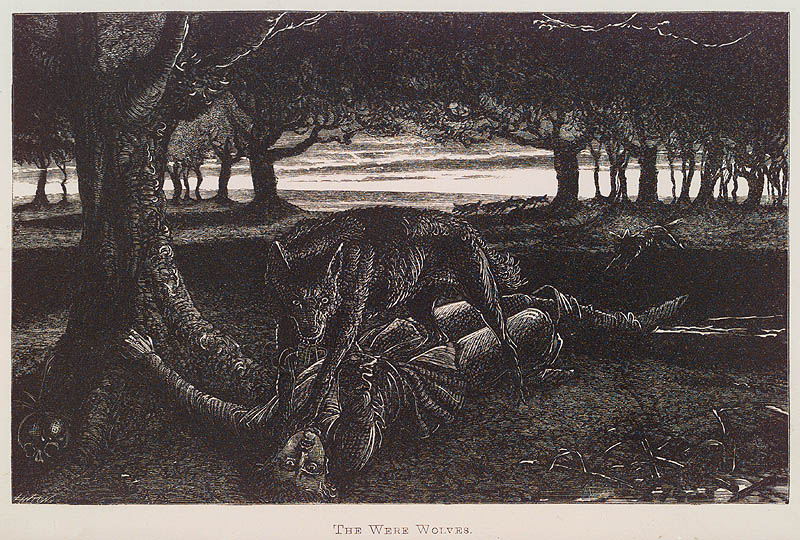
“The Werewolf” — Eugene Field

“The Werewolf” by Eugene Field

In the reign of Egbert the Saxon there dwelt in Britain a maiden named Yseult, who was beloved of all, both for her goodness and for her beauty. But, though many a youth came wooing her, she loved Harold only, and to him she plighted her troth.

Among the other youth of whom Yseult was beloved was Alfred, and he was sore angered that Yseult showed favor to Harold, so that one day Alfred said to Harold: “Is it right that old Siegfried should come from his grave and have Yseult to wife?” Then added he, “Prithee, good sir, why do you turn so white when I speak your grandsire’s name?”

Then Harold asked, “What know you of Siegfried that you taunt me? What memory of him should vex me now?”

“We know and we know,” retorted Alfred. “There are some tales told us by our grandmas we have not forgot.”

So ever after that Alfred’s words and Alfred’s bitter smile haunted Harold by day and night.

Harold’s grandsire, Siegfried the Teuton, had been a man of cruel violence. The legend said that a curse rested upon him, and that at certain times he was possessed of an evil spirit that wreaked its fury on mankind. But Siegfried had been dead full many years, and there was naught to mind the world of him save the legend and a cunning-wrought spear which he had from Brunehilde, the witch. This spear was such a weapon that it never lost its brightness, nor had its point been blunted. It hung in Harold’s chamber, and it was the marvel among weapons of that time. Continue reading ““The Werewolf” — Eugene Field”

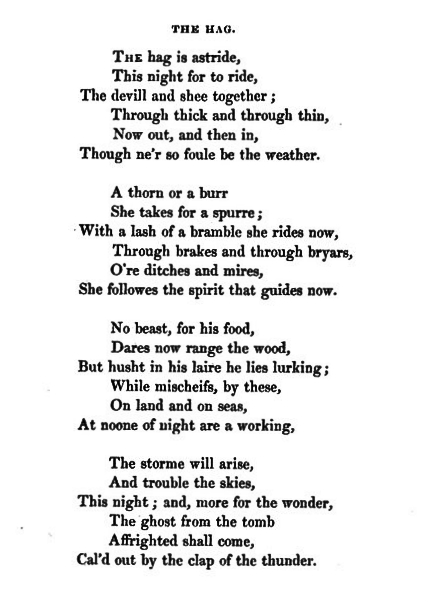
“The Hag” — Robert Herrick

the hag

The Sealed Room, D.W. Griffith’s 1909 Adaptation of Edgar Allan Poe’s “The Cask of Amontillado”


Bolaño’s Werewolves

In the first chapter of his estimable volume The Book of Were-Wolves (1865), Sabine Baring-Gould outlines his project (emphasis mine):

In the following pages I design to investigate the notices of were-wolves to be found in the ancient writers of classic antiquity, those contained in the Northern Sagas, and, lastly, the numerous details afforded by the mediæval authors. In connection with this I shall give a sketch of modern folklore relating to Lycanthropy.

It will then be seen that under the veil of mythology lies a solid reality, that a floating superstition holds in solution a positive truth.

This I shall show to be an innate craving for blood implanted in certain natures, restrained under ordinary circumstances, but breaking forth occasionally, accompanied with hallucination, leading in most cases to cannibalism. I shall then give instances of persons thus afflicted, who were believed by others, and who believed themselves, to be transformed into beasts, and who, in the paroxysms of their madness, committed numerous murders, and devoured their victims.

The first few chapters of the book recount werewolf mythology in heavily archetypal terms: we’re talking Greek and Norse stuff here, really ancient stories that tap into primal-human-animal-instinct and so forth. Then there are a few chapters on Scandinavian werewolves (and other shapeshifters) that reminded me of William Vollmann’s marvelous saga The Ice-Shirt, a book that treats warriors shifting into bears as totally standard fare. The book then tackles “The Were-Wolf in the Middle Ages,” where Baring-Gould relies heavily on monks who seem to view their subject through the heady lens of supernaturalism. Baring-Gould weaves together these culturally disparate stories, citing a strong backlist of sources, and refraining from pointing out the obvious archetypal flavor that girds these tales.

It’s in Chapter VI, “A Chamber of Horrors,” that mythology and archetype give way to a kind of terrible realism. Perhaps this is simply an effect of records-keeping, of the vague fact that narratives and terms of the early Renaissance seem so much more accessible to us than, say, the terms of Scandinavian saga. In any case, the book takes on a horrific scope: the vagaries of myth give way to dates, names, places, witnessestrialsverdicts. To go back to Baring-Gould’s intro, we see the “solid reality” under “the veil of mythology,” stripped away. Continue reading “Bolaño’s Werewolves”

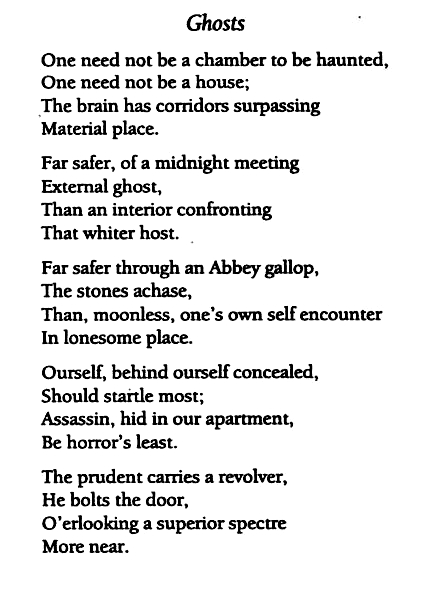
“One need not be a chamber to be haunted” — Emily Dickinson

ghosts