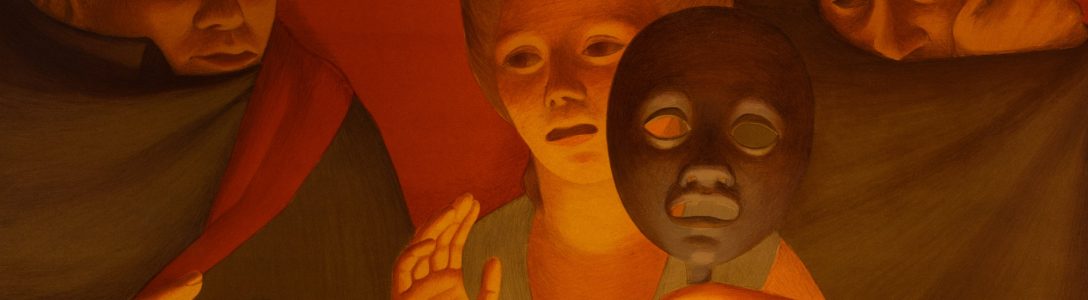
Blog about Martin Scorsese’s film The King of Comedy

Screenshot 2018-04-27 at 7.41.03 PM

I watched Martin Scorsese’s 1982 film The King of Comedy last weekend and then added it to a list of examples for a much bigger Thing I’ve been working on for a few years (and hence will never likely finish, unlike these Blog about posts). The much bigger Thing is about the relationship between Comedy and Horror—not purely the formal characteristics that belong to specific genres of literature, film, and art, but rather the relationship between the emotions themselves (with special attention to how literature, film, and art evoke that relationship).

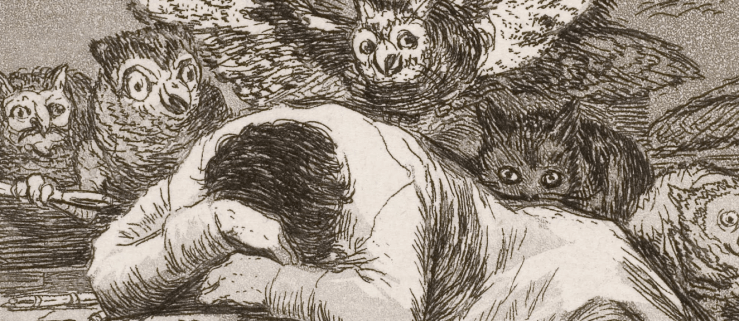
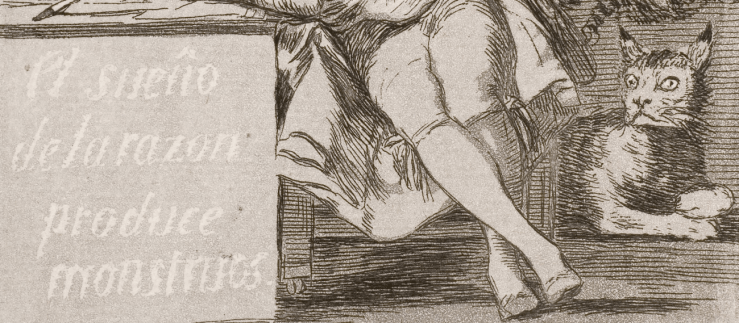
The short thesis for this bigger Thing is that I think that comedy relies strongly on horror, and that the best provocations of horror are tempered in humor. There is a long list of examples in support of this thesis, including Goya and Bolaño and Larry David and Don Quixote and Candide  and Thomas Bernhard and Surrealism and Get Out and etc. —-but that’s all for said bigger Thing, and the title of this post seems to promise Something (not a big Thing) on Martin Scorsese’s 1983 film The King of Comedy, which I recently rewatched.

I first saw The King of Comedy in the spring of 1998. I was a freshman at the University of Florida and had quickly discovered their library of films on VHS, which I would imbibe over my four years there. I started with stuff I was already a bit familiar with though. Like every other stupid eighteen-year old, I thought Taxi Driver was A Work of Genius (without fully understanding it), and I’d seen Goodfellas and Casino approximately one thousand times by this point. I started UF’s collection of Scorsese tapes with the neo-neorealism of Raging Bull, a brutal and hence thoroughly comprehensible character study, an ugly film shot in gorgeous black and white. The King of Comedy was next.

The internet in 1998 was not the internet of 2018. What I mean is that we generally learned about films through books and journals and magazines, or really other films, or really, really by word of mouth. I don’t think I had any word of mouth on The King of Comedy—what I mean is that I think I thought the film was a comedy. Which it is. Sort of. I mean, it’s funny—-very funny sometimes. But it’s also very cruel, and often scary and off putting, and generally queasy.

The King of Comedy stars Robert De Niro as Rupert Pupkin. That ridiculous name is on one hand a running joke, but on the other hand a vein of horror that pulsates throughout the film—an aberrant twitching oddity, a sort of literal curse, both on poor Rupert (who bears that name) and on every person who encounters him. Rupert is a would-be comedian who dreams (literally and often from his mother’s basement) of stardom. He dreams that he’ll achieve this stardom through a spotlight gig on The Jerry Langford Show, a Carson-style late night show hosted by Jerry Langford, played by a wonderfully fed-up Jerry Lewis.

Rupert is an autograph hound, an obsessive type of fan who makes Jerry’s life a literal terror.  Rupert’s foil is Masha, a trust-fund baby played by Sandra Bernhard. Masha stalks Jerry with extreme competitive anxiety; her stalking is a lifestyle elevated to art. When Masha goes too far early in the film and hijacks Jerry’s limo, Rupert sees an opening—he saves the day, ousting Masha, but then he invades the limo (proving himself stalker supreme over Masha).  In the limo ride, Rupert asks Jerry for help in advancing his career, and Jerry gives generous if general advice, which amounts to Put the work in and pay your dues. Rupert complains that he simply doesn’t have time to invest in doing the real hard grinding work, and basically demands that Jerry give him a shortcut.

In showing a deranged would-be artist who feels he’s entitled to bypass the years of work involved in honing a skill, Scorsese anticipates our current zeitgeist. Rupert Pupkin desires fame, adoration, and applause, but he is far less interested in producing an art that would earn these accolades. The King of Comedy slowly shows us that Pupkin is mentally ill, and that his disease is radically exacerbated by a culture of mass media.

The King of Comedy’s most sarcastic bite is that Rupert is eventually rewarded for his deranged behavior. He and Masha kidnap Jerry as part of a plan to get Rupert an opening set of The Jerry Langford Show. The plan succeeds, and Rupert executes it so that he not only gets to land his dream gig, he also gets to watch himself do it in front of The Girl He Liked in High School:

Rupert’s audacious gambit is part and parcel of a postmodern mass media era that makes only the slightest distinction between fame and infamy. Rupert is famous for doing something famous—and something horrific, kidnapping a beloved TV host. It’s his one bit of work, but it’s enough to land him a book deal, celebrity, and money (and a fairly short prison sentence).

Parts of Rupert’s monologue are funny, but other parts read like the memoir of a damaged soul trying to recover from an abusive childhood. And maybe these parts mix. Again, horror underwrites comedy.

This horror repeats in Scorsese’s framing of Rupert’s routine. There’s a dream-like quality to the monologue, with its television tube frame. This is not the first time we’ve seen this framing in King of Comedy—we get similar TV fantasies via Rupert’s deranged mind—but this time the plot asks us to think of it as “real,” even as Scorsese’s aesthetics suggest that the ending of the film may all be in Pupkin’s warped mind, the unseen clapping audience just another delusion of grandeur.

The same gesture is present at the end of Taxi Driver, which is essentially the twin of The King of Comedy. Travis Bickle—another ridiculous name, another loser—improbably ends up the hero of the narrative. But the conclusion of Taxi Driver has always struck me as the internal fantasy of its reactionary (anti-)hero. Likewise, The King of Comedy concludes in yet another fantasy in Rupert Pupkin’s addled consciousness.

With its metatextual contours and its insinuations of reality-as-mediated-by-mass-media, The King of Comedy is perhaps Scorsese’s most formally postmodern film (although his smaller follow-up After Hours might be his most thematically postmodern). It’s no wonder that the film didn’t land with audiences in 1983. Beyond its postmodern rhythms, The King of Comedy is essentially repulsive—nothing good happens; there is no clear hero; the world it depicts is devoid of any meaning not centered in relation to fame. Its satire is so black no light escapes. In comparison, Scorsese’s later films like Goodfellas and The Wolf of Wall Street are laugh riots.

The genius of The King of Comedy is something best felt. The film disrupts genre conventions (and audience expectations), pushing a comedy into a horror. Or maybe The King of Comedy is a horror film with comedic overtones. Or, really—I mean, what I really want to say here is:

The King of Comedy isn’t a horror film or a comedy film—like many of Scorsese’s best films, it’s a character study—realistic and engrossing and grotesque in its utter realism. Time has caught up with it. If Rupert Pupkin seemed an extreme example of the kind of derangement and alienation that could be aggravated by a mass media culture in the early 1980s, by today’s standards he’s perhaps charming. And that’s horrifying.

[Ed. note: Biblioklept originally ran this post in April, 2018].
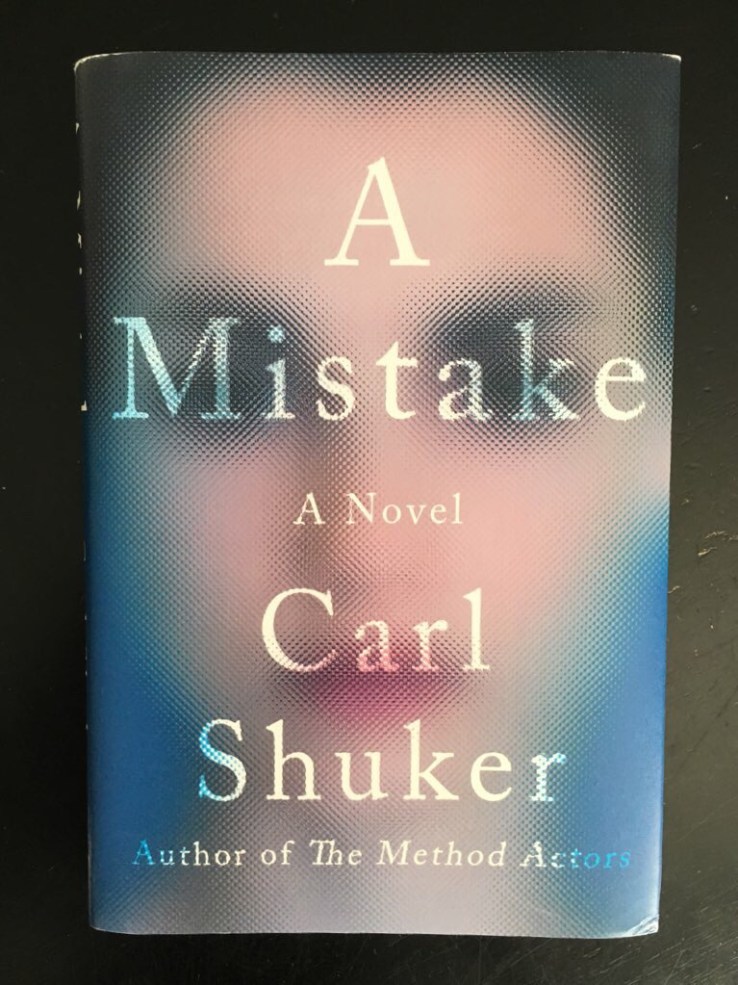
Carl Shuker’s novel A Mistake (Book acquired 27 Sept. 2019)

img_3969

Carl Shuker’s fourth novel A Mistake is new from Counterpress. Their blurb–

Elizabeth is a gifted surgeon—the only female consultant at her hospital. But while she operates on a young woman with life-threatening blood poisoning, something goes horribly wrong. In the midst of a new scheme to publicly report surgeons’ performance, her colleagues begin to close ranks, and Elizabeth’s life is thrown into disarray. Tough and abrasive, Elizabeth has survived and succeeded in this most demanding, palpably sexist field. But can she survive a single mistake?

A Mistake is a page-turning procedural thriller about powerful women working in challenging spheres. The novel examines how a survivor who has successfully navigated years of a culture of casual sexism and machismo finds herself suddenly in the fight of her life. When a mistake is life-threatening, who should ultimately be held responsible?

Carl Shuker has produced some of the finest writing on the physicality of medical intervention, where life-changing surgery is detailed moment by moment in a building emergency. A Mistake daringly illustrates the startling mix of the coolly intellectual and deeply personal inherent in the life and work of a surgeon.

The Rock — Peter Blume

00005195-01abcdefg

The Rock, 1948 by Peter Blume (1906–1992)

Hail to the Pure — Ivan Albright

default

Hail to the Pure, 1976 by Ivan Albright (1897-1983)

Blog about the opening lines of Shirley Jackson’s novel The Haunting of Hill House (even though it’s been done before)

Screenshot 2019-10-01 at 8.51.13 PM

Nearing the end of Shirley Jackson’s 1959 American Gothic novel The Haunting of Hill House, and not having blogged that much in September of 2019, I thought that I’d write something about its perfect opening sentences, which I’ve returned to a few times (and used in my classroom).

Here are those opening lines:

No live organism can continue for long to exist sanely under conditions of absolute reality; even larks and katydids are supposed, by some, to dream. Hill House, not sane, stood by itself against the hills, holding darkness within; it had stood so for eighty years and might stand for eighty more. Within, walls continued upright, bricks met neatly, floors were firm, and doors were sensibly shut; silence lay steadily against the wood and stone of Hill House, and whatever walked there, walked alone.

I shared the opening on twitter when I first read it the other week and one of the replies to the tweet linked to Random House copy editor (and author of Dreyer’s EnglishBenjamin Dreyer’s annotations of the first paragraph of The Haunting of Hill House. I didn’t read Dreyer’s annotations at the time, but as I sat down to write this blog, the memory that someone had already written about the opening of Hill House wormed its way into my soft brain. I read Dreyer’s appreciation twenty minutes ago, and then decided Not to Write this blog.

And then I decided to write anyway.

My fascination with the opening paragraph of Hill House has only increased as I’ve read the novel (the first I’ve read by Jackson, admittedly). When I first read the opening I was struck by Jackson’s forceful use of semicolons. There are three semicolons (and three periods) in the series of sentences, creating a strange stilted tilting rhythm.

Let’s consider the first sentence, comprised of two independent clauses:

No live organism can continue for long to exist sanely under conditions of absolute reality; even larks and katydids are supposed, by some, to dream.

Our novel begins with that magic word No. Phrases like “exist sanely” and “absolute reality” begin to sketch the novel’s themes. Jackson then pivots from the abstract to the concrete with her “larks and katydids”; in his annotations, Dreyer wonders “how many combinations of fauna Jackson experimented with before she landed on ‘larks and katydid.” I suspect those five wonderful syllables had lolled around her brain before the novel’s gestation.

And now our middle sentence, again two independent clauses tentatively joined by a semicolon:

Hill House, not sane, stood by itself against the hills, holding darkness within; it had stood so for eighty years and might stand for eighty more.

“Hill House, not sane” is a genius of four syllables, expressing again the theme of Jackson’s novel in terse curt prose. Dreyer finds fault with “the Hill/hills repetition right here,” writing that “it just doesn’t sing to me,” and suggesting that if he were the novel’s editor, he’d have “asked her whether she’d consider deleting ‘against the hills.'” That deletion would be a rhetorical mistake, I think, because the doubling of “hills” formalizes another of the novel’s tropes—twins and doubles, cousins and doppelgänger. Jackson’s punctuation instantiates this doubling in the first two sentences, both in the repetition of the semicolons and in the twinning of the phrases “by some” and “not sane.” (The repetition of “eighty years” serves as kind of syntactic echo, reverberating the ghostly theme from lifetime past to a generation beyond one’s own death.)

Here is the third and final line of the opening paragraph of Hill House, in which we get a rush of independent clauses—and another semicolon:

Within, walls continued upright, bricks met neatly, floors were firm, and doors were sensibly shut; silence lay steadily against the wood and stone of Hill House, and whatever walked there, walked alone.

The descriptions and events in the novel ultimately ironize this description: Hill House is hardly “upright,” nothing meets “neatly,” and the doors don’t seem to be “sensibly shut,” at least to the quartet of visitors who come to stay at Hill House. This quartet is led by and includes Dr. Montague a committed yet somewhat embarrassed paranormalist, who recruits three others: Luke Sanderson, heir to Hill House, wild Theodora (no last name), and Eleanor Vance, the viewpoint character who, cracked before the events of the novel begin, cracks even more.

(There is a part of me that would love to argue that the three opening sentences, sundered in strange twos by semicolons, represent Eleanor, Theodora, and Luke—but no, that’s ridiculous. Right?)

The final phrase of the last sentence, “walked alone,” set off by a comma (which Dreyer points out is unnecessary and perhaps ungrammatical) balances the other two-word nonessential elements (“by some” and “not sane”), highlighting its rhetorical importance. Hills is a novel of loneliness and companionship, of alienation and belonging. Our viewpoint character Eleanor navigates a walk alone in a world that may or may not be sane. And yet Eleanor doesn’t walk fully alone in this twisted house, with its infirm floors and unneat bricks and crooked walls. Hills vacillates between gloomy lethargy and kinetic ebullience, manically ping-ponging, thriving strangely, radiating a larky katydidiad dream of absolute unreality.

Screenshot 2019-10-01 at 8.52.08 PM.png


“October” — Tom Clark

october

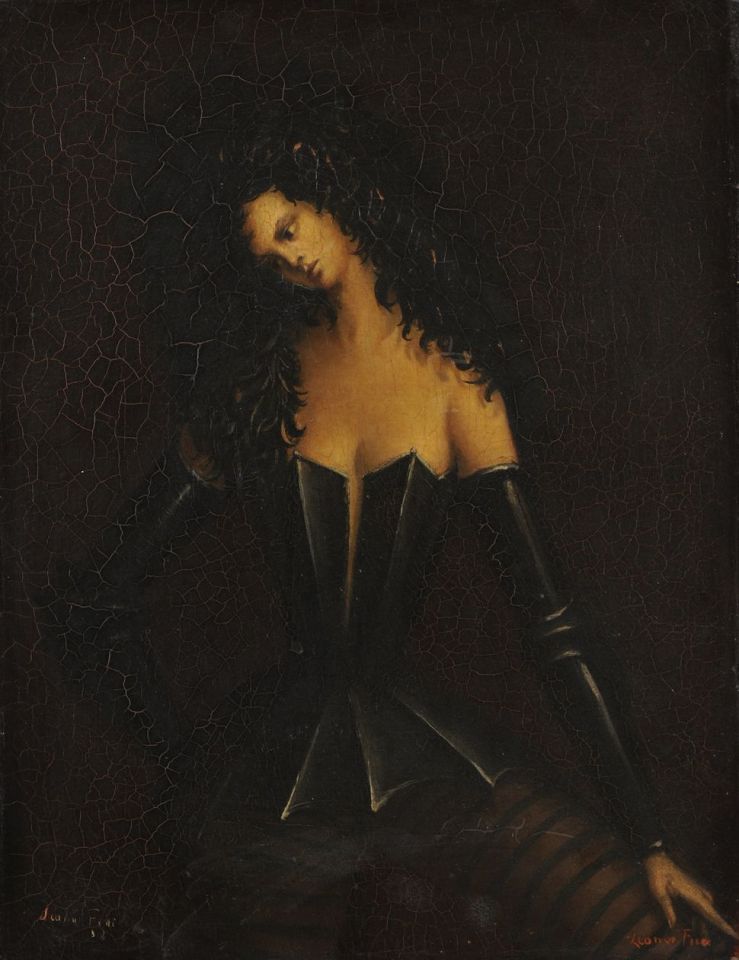
Woman in Armor — Leonor Fini

5bb295aa24000051009717c6

Woman in Armor, 1938 by Leonor Fini  (1908-1996)

Three Books

2019-09-29_132359

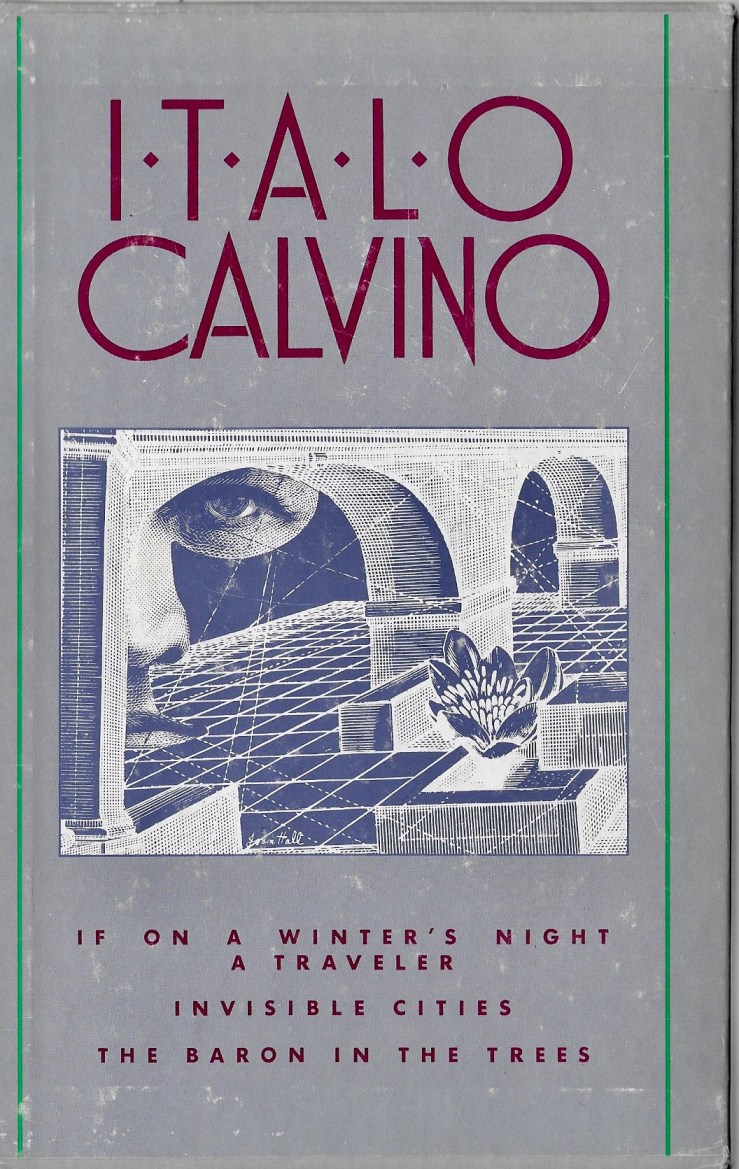
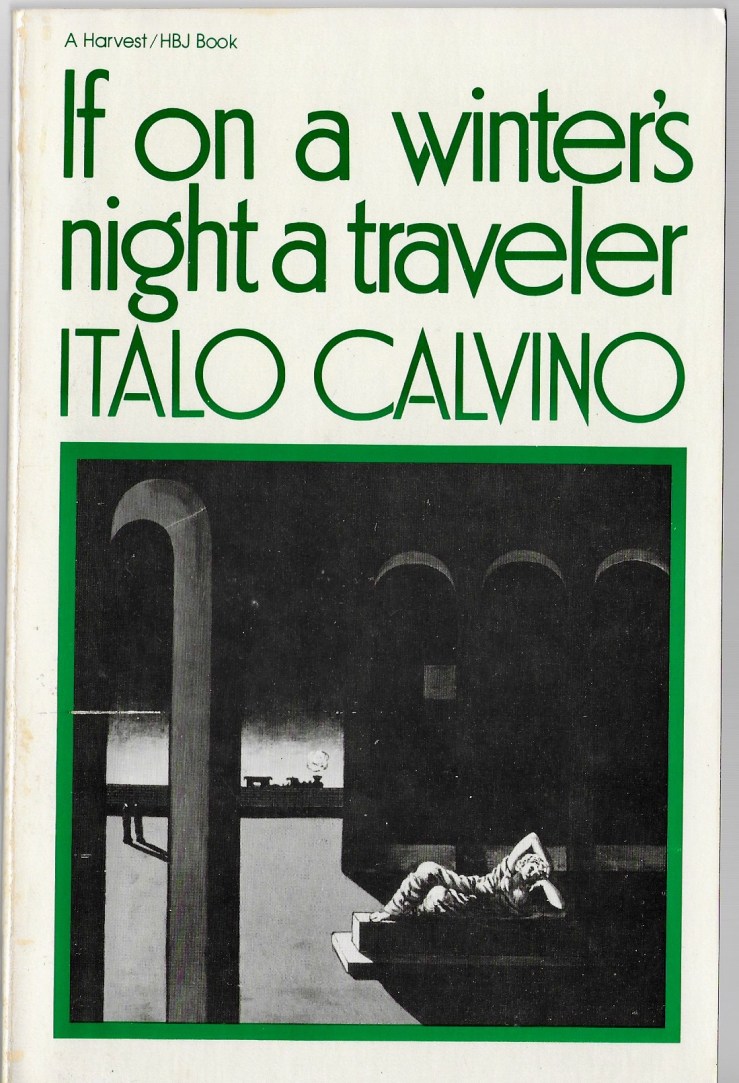
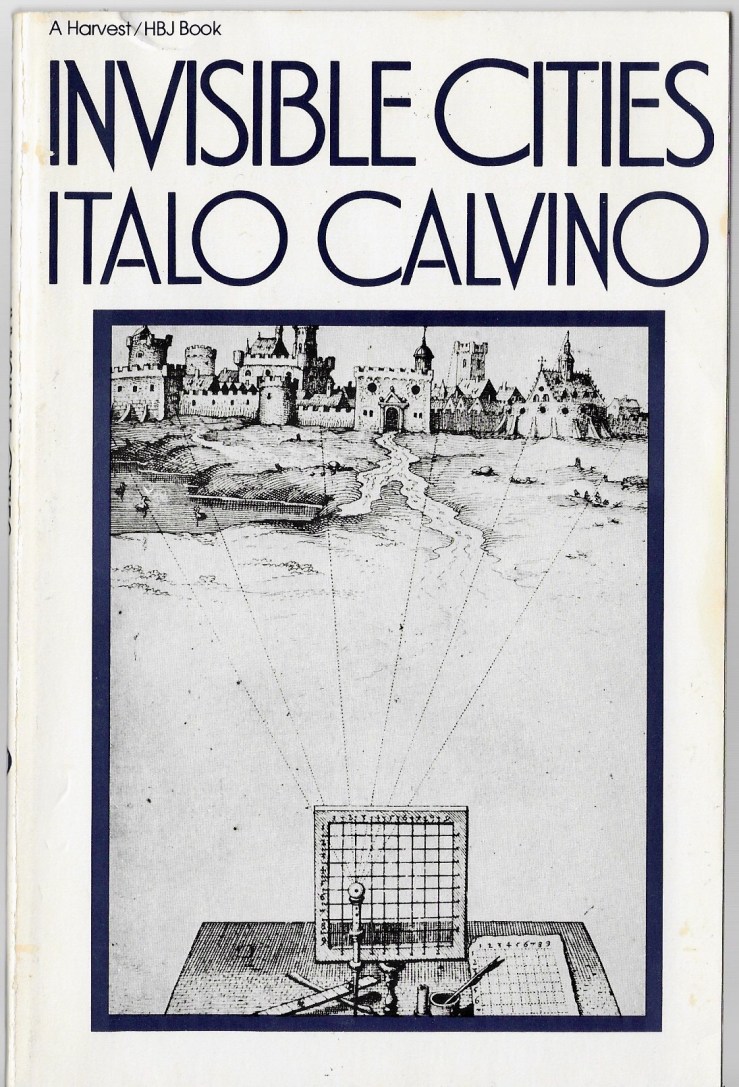
I haven’t read every Italo Calvino novel, but of the ones I’ve read, If on A Winter’s Night a TravelerInvisible Cities, and The Baron in the Trees are my favorites. I have a Harcourt Brace Jovanovich three-volume in slipcase edition designed by Louise Fili. The illustration on the slipcase is uncredited.

2019-09-29_132723

Fili’s design for If on a Winter’s Night a Traveler features Giorgio de Chirico’s 1915 painting Autumnal Melancholy. English translation by William Weaver.

This was the second Calvino novel I read. I was in my early twenties, still very much enamored of John Barth and David Foster Wallace, and Traveler’s formal postmodernism did something electric to me.

2019-09-29_132512

Fili’s cover features a woodcut of a seventeenth-century drawing screen. English translation by William Weaver.

Invisible Cities was the first Calvino novel I read. I read it in 2002 when I was 22, mostly in Chiang Mai, Thailand. A friend who met me in Bangkok had brought it with him in his backpack. I couldn’t find more Calvino in Chiang Mai, but I did manage a copy of Pynchon’s V. 

2019-09-29_132614

Fili’s design for The Baron in the Trees features a detail from on of Pablo Picasso’s drawings for La Guerre et la paix. English translation by Archibald Colquhoun.

Baron is probably my favorite Calvino novel, which is maybe strange because it’s not a very Calvinoesque (Calvinoish?) novel—it’s funny, absurd, and witty, true, but it’s not formally postmodern. It reads very much like a picaresque novel, jaunty and romantic, with an intriguing lead in the rebellious and charismatic hero Cosimo Piovasco di Rondo. Writing this makes me want to read it again.


Wing Seller — Stefan Caltia

c59etefancc3a2lc5a3ia-vc3aenzc483toruldearipi-uleipepc3a2nzc483-120x120cm

Wing Seller, 2006 by Stefan Caltia (b. 1942)

“The Fall Guy’s Faith” — Robert Coover

“The Fall Guy’s Faith”

by

Robert Coover


Falling from favor, or grace, some high artifice, down he dropped like a discredited predicate through what he called space (sometimes he called it time) and with an earsplitting crack splattered the base earth with his vital attributes. Oh, I’ve had a great fall, he thought as he lay there, numb with terror, trying desperately to pull himself together again. This time (or space) I’ve really done it! He had fallen before of course: short of expectations, into bad habits, out with his friends, upon evil days, foul of the law, in and out of love, down in the dumps—indeed, as though egged on by some malevolent metaphor generated by his own condition, he had always been falling, had he not?—but this was the most terrible fall of all. It was like the very fall of pride, of stars, of Babylon, of cradles and curtains and angels and rain, like the dread fall of silence, of sparrows, like the fall of doom. It was, in a word, as he knew now, surrendering to the verb of all flesh, the last fall (his last anyway: as for the chips, he sighed, releasing them, let them fall where they may)—yet why was it, he wanted to know, why was it that everything that had happened to him had seemed to have happened in language? Even this! Almost as though, without words for it, it might not have happened at all! Had he been nothing more, after all was said and done, than a paraphrastic curiosity, an idle trope, within some vast syntactical flaw of existence? Had he fallen, he worried as he closed his eyes for the last time and consigned his name to history (may it take it or leave it), his juices to the soil (was it soil?), merely to have it said he had fallen? Ah! tears tumbled down his cheeks, damply echoing thereby the greater fall, now so ancient that he himself was beginning to forget it (a farther fall perhaps than all the rest, this forgetting: a fall as it were within a fall), and it came to him in these fading moments that it could even be said that, born to fall, he had perhaps fallen simply to be born (birth being less than it was cracked up to be, to coin a phrase)! Yes, yes, it could be said, what can not be said, but he didn’t quite believe it, didn’t quite believe either that accidence held the world together. No, if he had faith in one thing, this fallguy (he came back to this now), it was this: in the beginning was the gesture, and that gesture was: he opened his mouth to say it aloud (to prove some point or other?), but too late—his face cracked into a crooked smile and the words died on his lips . . .


H.D. — Jolene Lai

hd

H.D., 2019 by Jolene Lai (b. 1980)

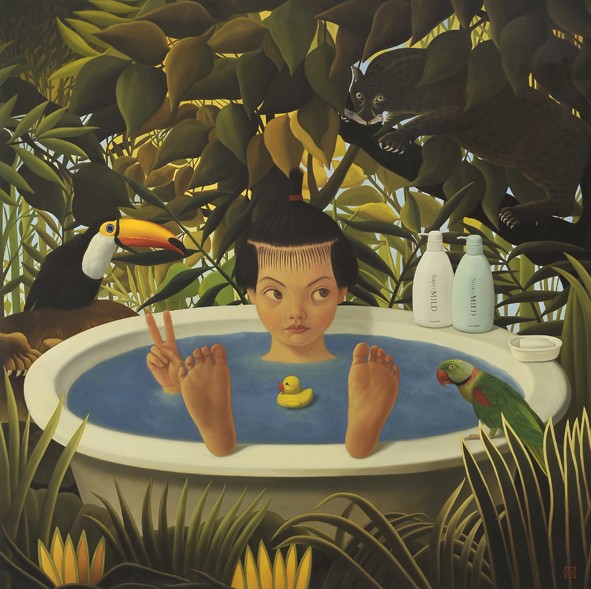
Naoko Taking a Bath in Rousseau Forest — Mitsuru Watanabe

170308164017-58bfb5611de3b

Naoko Taking a Bath in Rousseau Forest, 2007 by Mitsuru Watanabe (b. 1953)

The Whale — Bo Bartlett

bo-bartlett-6

The Whale, 2017 by Bo Bartlett (b. 1955)

Polyester was almost Divine’s Mildred Pierce

Young Man with Straw Hat — Ludwig Meidner

9930_meidner_young_man_with_straw_hat_-_verso

Young Man with Straw Hat, 1912 by Ludwig Meidner (1884–1966)

Three Books

2019-09-22_160823

The Corner That Held Them by Sylvia Townsend Warner. 2019 trade paperback from NRYB. Cover design by Kathy Homans featuring an image titled Ruins of Castle Acre Priory Church, c. 1780-1820 (artist uncredited).

Ironic, mordant, energetic, and packed with life, Sylvia Townsend Warner’s fifth novel The Corner That Held Them (1948) tells the story of a backwater convent over the course of a few hundred years. Warner’s story weaves her nuns’ mundane world into something grander and funnier than might be expected of such a premise.


2019-09-22_160912

Rusty Brown by Chris Ware. 2019 first edition hardback from Pantheon. No cover designer or artist credited, but the work is unquestionably Ware’s.

Rusty Brown is ostensibly the first part of Ware’s third novel. It ends, after 350 pages, with the word “INTERMISSION” vibrating across two pages, promising us a second part. I hope that that second part will not take Ware as long to produce as this first part, which took the better part of two decades. Like Jimmy Corrigan: The Smartest Kid on Earth (2000), Rusty Brown is crushingly sad and aesthetically brilliant; like Building Stories (2012), Rusty Brown adds up to more than the sum of its parts—its fragments come together to tell the story of sad lives intersecting. It’s moving, it’s funny, it’s beautiful, it’s challenging, and I hope that we don’t have to wait too long for the next installment.

2019-09-22_160715

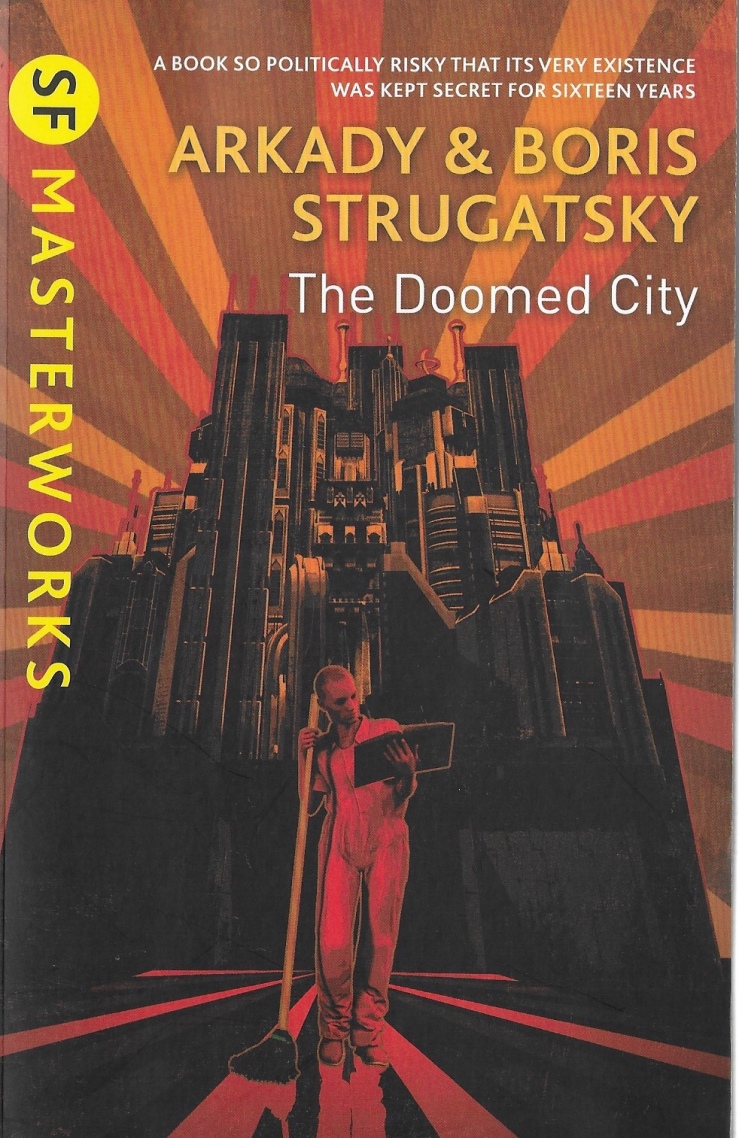
The Doomed City by Arkady & Boris Strugatsky. 2017 trade paperback from Gollancz. English. Cover illustration by Eamon O’Donoghue; no designer credited. English translation by Andrew Bromfield.

“The Experiment is the Experiment” repeat the citizens of the titular doomed city in the Strugatskys Kakfaesque dystopian novel, which was written in the early 1970s but wasn’t published until 1989. The Experiment, purportedly run by the Mentors, seemingly begins as an egalitarian project, but soon devolves into civil war against baboons, and eventually a dictatorship. There’s a late act expedition across the desert to infiltrate the fabled Anticity. Baggy and abject, The Doomed City was not the best Strugatsky novel I’ve read, but I enjoyed its weirder moments very much.

The 100 best books of the 21st century

  1. The Bible, GOD (Always Relevant)
  2. My Disaster, Poke Randy Son (2010)
  3. Piss Baby Millionaires, Carlton Von Strokesbridge (2010)
  4. M(ob)y Dick, Karlov Noseguård (2001-2023)
  5. Femdom, Johnny Frentzfranzen (2012)
  6. The Big Fraud, Malcom Gladwell (2006)
  7. Books Are Hardly a Stable Form, Itold Uso (2019)
  8. Mindy McMark Murks a Middlemarch Maggot, Paul McCartney (2020, posthumous)
  9. Three Salads After Our Apocalypse, Pink Stumblebum (2033)
  10. My Suicide: Part I (Part II), William T. Vollmann (2028)
  11. Bitter Kisses Remiss to Losses, Alyssa Krisper (2010)
  12. The Cement-Churner’s Dilemma, Khyle Chlomedia (2005)
  13. Angst-Fucker, Bea E. Ellis (2019)
  14. Purifying Water: A Basic Introduction, Anonymous (2045)
  15. Chocolate Rain, Tay Zonday (2007)
  16. And Novels Are Not the Same as “Books,” N. Süüffräble Prick
  17. Billy Bagscruppin, Passel Von Questfrond (2010)
  18. Just What I Kneaded: A Baker’s Odyssey, Corazon Whig (2019)
  19. (The) Desire To Desire, James O. Incandenza (2003)
  20. The Ass Cheeks, Jonathan Franzen (2009)
  21. Oh Man, Bob Dylan Wrote a Book?, No, No, Not Tarantula, Robert Zimmerman (2004)
  22. Ecce Homo No Homo, Dwayne Michael Carter Jr. (2008)
  23. The Atheist’s Dong: Laying the Incel Groundwork, Dicker Dongking (2006)
  24. Encounter with the Infanta, Bogdan Tarassiev (under the pseudonym Jean Balbaian)  (2021)
  25. The Adventures of Gummybear De Witt, Ainslie Castleberry (2001)
  26. Corpse Business, Ostrich Orlando (2008)
  27. Iodine Tablets, Radiation Exposure, and You!, Anonymous (2066)
  28. Captain Insolence, Andrew Howard-End (2002)
  29. Stuffing the Bird: A Sixty-Part Riddle Toward the Thanksgiving Conundrum: 500 Recipes [Book Converts into a Hook to Deep Fry Your Turkey Upon], Fred Dustyoffsky (2006)
  30. Shooting Your Pet for Food: A Guide For the Latter Millennium (2027)
  31. Pistol Pete Amongst the Heathens (An Erotic Journey), Sara Tonin (2018)
  32. Oh Shit!? Your Mom Got You an InstantPot? Rad! Why Not Try This Bullshit?, New York Times editorial staff (2018)
  33. Ulysses 2, Germs Choice (2023)
  34. In It for the Clicks: Clickbait, or, How I Learned to Stop Worrying and Love What We Talk About When We Talk About Stupid Fucking Listicles, Caspar Cowilligers (2029)
  35. 2666, Roberto Bolaño (2004)
  36. The Actual “Books” That Will Help Determine the Shape of This Century Will Likely Be Manuals on How to Grow Food in a Burned World, Anonymous PDF file printed and shared and then hopefully remembered (2033)
  37. Lexus Manual & Warranty Document, Toyota (2021)
  38. Listen to This Sauce: A Novel, Brixon Mortar (2008)
  39. The “Molotov Cocktail” and 25 Other Drinks to Toast the End of Civil Society, the WSJ editorial board (2023)
  40. Paragraph on a Sunday, Carmel Cavalcaudrei (2016)
  41. Pigwhistle Paradise, Jackie LaKhan (2011)
  42. Of Grammatology, Jackie Derrida (2079)
  43. Your Father Probably Loved You (Novelization of the Movie), Jet Sweep (2023)
  44. Roger Mexico and the Legend of Puma Pomegranate, R. Pacious (2045)
  45. Dillsburg, Evan Dara, (2025)
  46. The Idea of Writing Like Fifty More of These Is Causing Me to Crack Another Beer, Edwin Turner (2019)
  47. Kring Krong, Basil Esk Monsterbush (2099)
  48. How to Mourn the 20th Century, Connie Vords (2033)
  49. God, I Can’t Believe the Water Is All Poisoned!, Billy Chadwick (2040)
  50. The Parent Trap, Antoine Volodine (2021)
  51. My Suicide: Part I, William T. Vollmann (2028)
  52. Oblivion, David Foster Wallace (2004)
  53. Beetlejuice: The Novelization, Ben Lerner (2021)
  54. We Should Probably Catalog Seeds, Anonymous (2022)
  55. My Suicide: Part IV, William T. Vollmann (2035)
  56. I’m Still Here: Jonathan Lethem: A Serial Biography by David Eggers, Eggers/Lethem (2027)
  57. Y’all Know That We Will Never Really Know the Canon of Our Own Century, Right?, Dick Dickledong (2019)
  58. Pig Bodine’s Erotic Phantasia, Thomas Pynchon (2022)
  59. My Suicide: Part IX, William T. Vollmann (2041)
  60. Porkwhillinger’s Complaint, Caspie Golasspie (2002)
  61. The Asparagus Dilemma: What Paperclips and Pet Toys Can Teach Us About Late Capitalism, Porky Bonboysjeans (2056)
  62. Makin’ Mogwai: Gremlins 3: A Pornographic Cornucopia, Alex Hornibrooke (2029)
  63. Just Imagine Publishing Houses Like a Few Decades from NowWhat Are They Even Doing, A. White (2066)
  64. Blackface in the Age of Streakers, Stephen Morrissey (2023)
  65. So Your Neighbors Have Decided To Exterminate You: A Simple Guide to Civil War, Anonymous (2049)
  66. The Corrections, Jonathan Franzdick (2002)
  67. How to Fuck a Manatee (A Novel), Jimmy Buffett (2019)
  68. Elevator at the End of Time, Kris Kristhaffington (2043)
  69. Busted Coverage: My Life as a Stupid Goddamn Anglophile, Cory St. Crestenworth (2002)
  70. Hahahahaha A Poetry Collection on This List?!, G.E.T. Real (2004)
  71. My Suicide: Part VII, William T. Vollmann (2039)
  72. That Time We Got Pasta: A Memoir, Daisy D’Ellamonte (2011)
  73. Fingering the Matchbook, Costa del Mellon (2001)
  74. Pork Magic, Carson Brooks McSturgeon (2021)
  75. Honolulu Hahahha: Hawaiian Harikari: A Milkman Murder Mystery, Anna Burns (2024)
  76. Recycling Your Own Piss: The Gormac Method, Tony Gormac (2072)
  77. How to Hate Your Parents, Sally Draper (2029)
  78. Penguins, Sloths, Parrots: All Our Extinct Friends (A Children’s Book), Parry St. Croix (2031)
  79. Home Brew: Getting Drunk After the Apocalypse, Baron Crawsdale III (2045)
  80. Me and My Sodas (Buried in the Backyard), Piggy Donovan (2049)
  81. How Would You Do the Burrata on This Homemade Pizza? Like Pop It In at the End? A Post-Mortem for the 21st Century, Gladdy McRonsen (2033)
  82. My Dream, David Lynch (2021)
  83. After the Flavor, After the Hiccup, Morkwilde McSwindlegunt (2044)
  84. A Little Bit Disgusted by an Ephemeral List of the 100 Best Books of This Still Young Century, I Type This List, a Stupid Fucking Joke, Edwin Turner (2019)
  85. A Safety Made the Tackle, Dumberk Weddington (2021)
  86. Waiting for the Grown-Ups, Sallister McDumbass (2016)
  87. Cricket Balls: Five Thousand Poems, Sweet Baby Brushbermans (2066)
  88. Butchering Our Betters: A Class Guide to Cannibal Cuts, Dame Carlsbad of the New New Mexico (2080)
  89. Salem Thots: A Horny Witch Chronicle, Paula McCartney (2032)
  90. Flesh Toilet, Pink Saracen (2044)
  91. Lonely Fathers of the Trash Sage, Henry “Hank” Hill (2000)
  92. French Kissing Cormac McCarthy, Tao Lin (2044)
  93. Sweet Emotion, Charlize Ruckus (2007)
  94. Harvesting Your Own Eggs for Fun andProfit, Anonymous (2029)
  95. Dracula 2099, Woody Harrelson (2021)
  96. One Million Spider Dicks!!, Jonathan Franzen (2023)
  97. We’re Probably Done Now, Glum Ford (2019)
  98. Will There Even Be a Canon For This Century?, Baxter Millionhaires (2099)
  99. Oh My God, Am I Almost Done?, Another Fakename (2019)
  100. I’m Done, We’re Done (A Comma Splice), Edwin Turner (2019)