“The Ghost Ships: A Christmas Story” by Angela Carter

“The Ghost Ships: A Christmas Story”

by

Angela Carter


Therefore that whosoever shall be found observing any such day as Christmas or the like, either by forebearing of labor, feasting, or any other way upon any such account aforesaid, every person so offending shall pay for every offense five shillings as a fine to the county.

Statute enacted by the General Court of
Massachusetts, May 1659, repealed 1681

‘Twas the night before Christmas. Silent night, holy night. The snow lay deep and crisp and even. Etc. etc. etc.; let these familiar words conjure up the traditional anticipatory magic of Christmas Eve, and then — forget it.

Forget it. Even if the white moon above Boston Bay ensures that all is calm, all is bright, there will be no Christmas as such in the village on the shore that now lies locked in a precarious winter dream.

(Dream, that uncensorable state. They would forbid it if they could.)

At that time, for we are talking about a long time ago, about three and a  quarter hundred years ago, the newcomers had no more than scribbled their signatures on the blank page of the continent that was, as it lay under the snow, no whiter nor more pure than their intentions.

They plan to write more largely; they plan to inscribe thereon the name of God.

And that was why, because of their awesome piety, tomorrow, on Christmas Day, they will wake, pray and go about their business as if it were any other day.

For them, all days are holy but none are holidays.

New England is the new leaf they have just turned over; Old England is the dirty linen their brethren at home have just — did they not recently win the English Civil War? — washed in public.

Back home, for the sake of spiritual integrity, their brothers and sisters have broken the graven images in the churches, banned the playhouses where men dress up as women, chopped down the village Maypoles because they welcome in the spring in altogether too orgiastic a fashion.

Nothing particularly radical about that, given the Puritans’ basic premises. Anyone can see at a glance that a Maypole, proudly erect upon the village green as the sap is rising, is a godless instrument. The very thought of Cotton Mather, with blossom in his hair, dancing round the Maypole makes the imagination reel. No. The greatest genius of the Puritans lay in their ability to sniff out a pagan survival in, say, the custom of decorating a house with holly for the festive season; they were the stuff of which social anthropologists would be made!

And their distaste for the icon of the lovely lady with her bonny babe — Mariolatry, graven images! — is less subtle than their disgust at the very idea of the festive season itself. It was the festivity of it that irked them.

Nevertheless, it assuredly is a gross and heathenish practice, to welcome the birth of Our
Saviour with feasting, drunkenness, and lewd displays of mumming and masquerading.

We want none of that filth in this new place.

No, thank you.


As midnight approached, the cattle in the byres lumbered down upon their knees in homage, according to the well-established custom of over sixteen hundred English winters when they had mimicked the kneeling cattle in the Bethlehem stable; then, remembering where they were in the nick of time, they hastily refrained from idolatry and hauled themselves upright.

Boston Bay, calm as milk, black as ink, smooth as silk. And suddenly, at just the hour when the night spins on its spindle and starts to unravel its own darkness, at what one could call, elsewhere, the witching hour —

I saw three ships come sailing in,
Christmas Day, Christmas Day,
I saw three ships come sailing in
On Christmas Day in the morning.

Three ships, silent as ghost ships; ghost ships of Christmas past.

And what was in those ships all three? Continue reading ““The Ghost Ships: A Christmas Story” by Angela Carter”
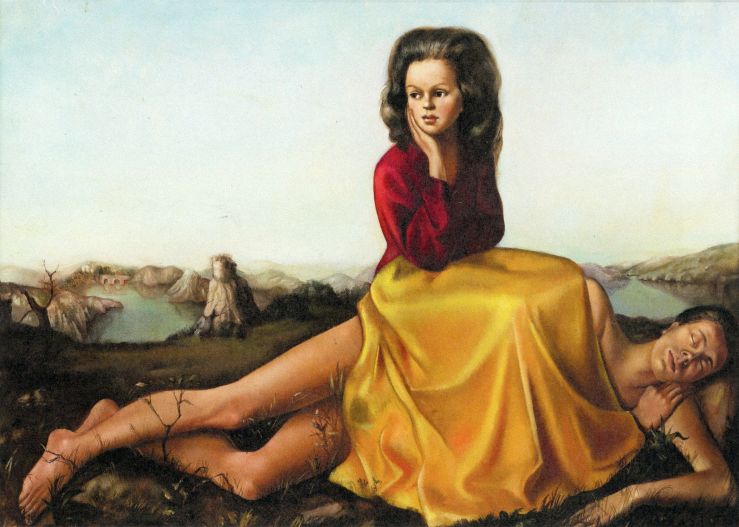
Woman Seated on a Naked Man — Leonor Fini

4e1c2ca36f43bd232e043c7677fd4a84

Woman Seated on a Naked Man, 1942 by Leonor Fini (1908-1996)

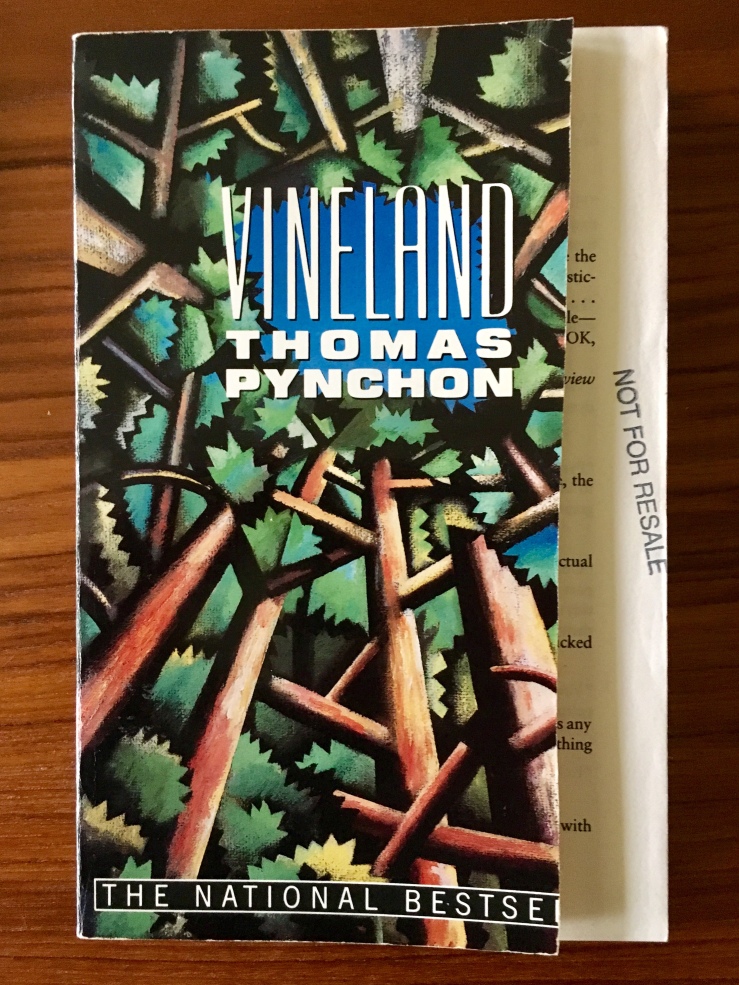
(Another copy of) Thomas Pynchon’s Vineland (Book acquired, 18 Dec. 2018)

img_1899

I’m not exactly sure why I picked up a hardback first edition of Thomas Pynchon’s 1990 novel Vineland the other day. I was killing a spare hour in a used bookstore, and I started handling the thing—started skimming again. I’ve made a few attempts at Vineland but it’s never fully hooked me. I can’t get past page 92. But so well anyway I ended up getting it (for five bucks), perhaps as a means to motivate myself to finally finishing it next year. Vineland and Bleeding Edge are the only Pynchon novels I haven’t finished—I still don’t own Bleeding Edge, actually, having checked it out from the library twice and failed to make anything like a dent in it. The copy of Vineland I tried on before a few times is Penguin’s 1991 paperback. The cover is ugly as hell, and my copy is cut cover remainder; I found it in an inventory room in the high school I used to work at. There were at least a dozen remaindered copies of Vineland there. I doubt anyone misses this one:

img_1900

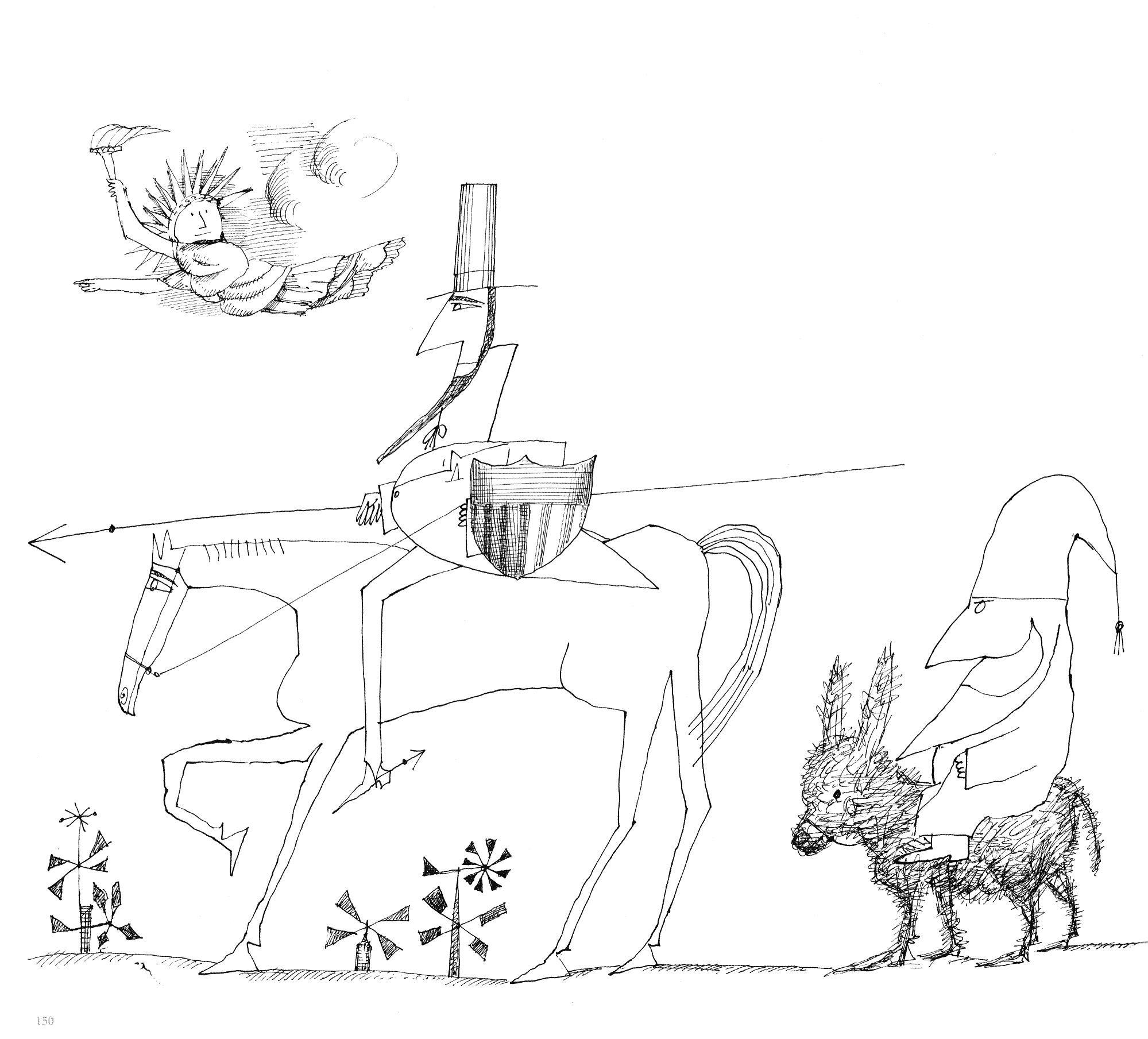
Untitled (Abraham Lincoln and Santa Claus as Don Quixote and Sancho Panza) — Saul Steinberg

ss2

Untitled, 1959 by Saul Steinberg (1914-1999). From The Labyrinth.

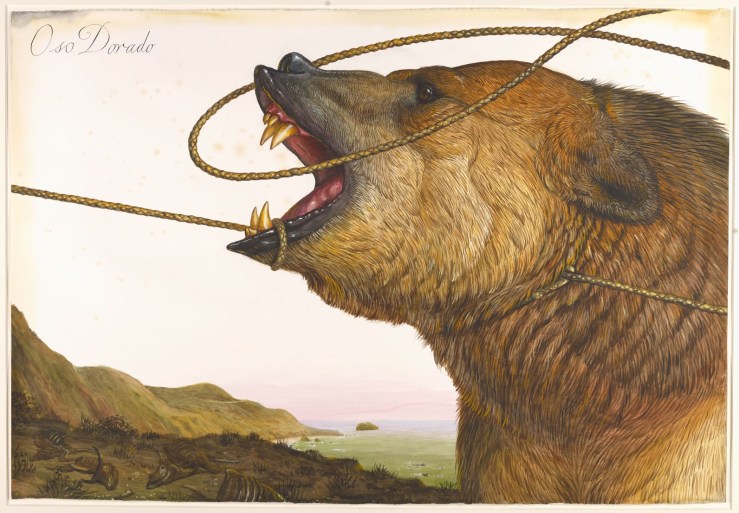
Oso Dorado — Walton Ford

04139331-db1f-4000-8763-a07535ed9a28

Oso Dorado (Golden Bear), 2013 by Walton Ford (b. 1960)

Screenshot 2018-12-19 at 6.37.26 PM.png

The Penitent of Valverde de la Vera — Margaret Modlin

tumblr_p9po7t4GlQ1qi6pt1o1_1280

The Penitent of Valverde de la Vera by Margaret Modlin (1927–1998)

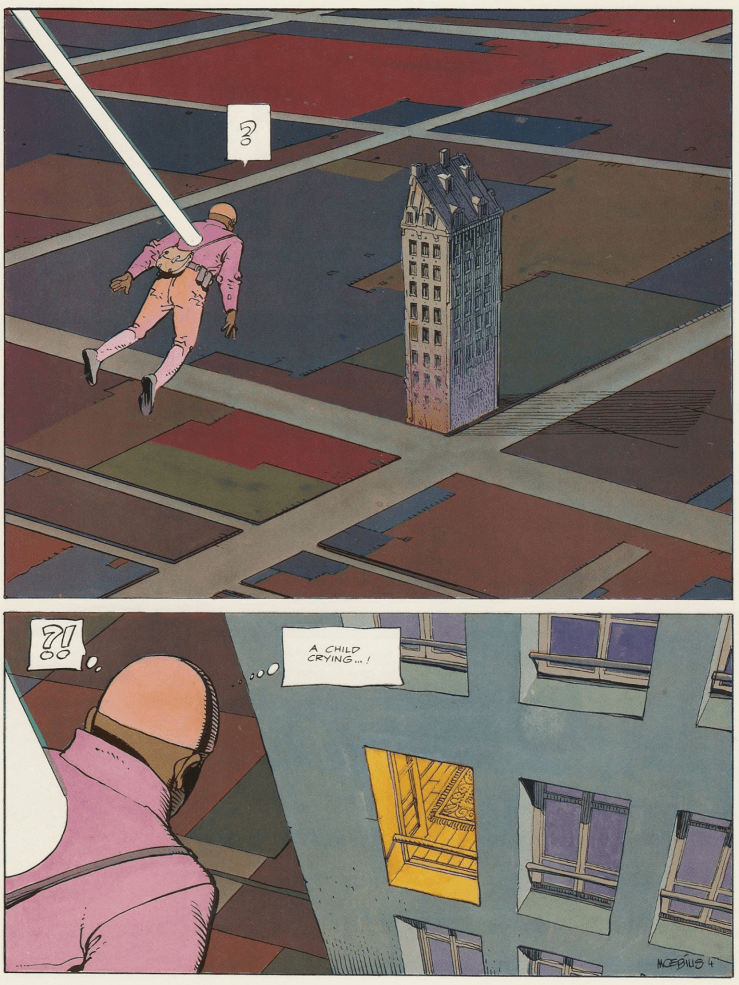
“A child crying…!” — Moebius

img_0637

From “The Repairmen” (part of Upon a Star) by Moebius

A review of Ishmael Reed’s Christmas satire, The Terrible Twos

Christmas approaches, so let me recommend a Christmas novel for you: Ishmael Reed’s The Terrible Twos (1982). I read it back in unChristmasy August and dipped into it a bit again today, looking for a passage or two to share. Maybe the bit where Santa Claus starts an anti-capitalist riot in Times Square?, or where the First Lady is electrocuted while lighting the White House Christmas tree?, or where the idiot U.S. President meets Harry Truman in A Christmas Carol tour of hell? I scrounged for a big fat citation that works on its own, but I kept wanting to build a frame, set a stage, and ended up with this instead, a “review,” a recommendation. A stage setting.  Of course, Ishmael Reed’s novels create their own stages, their own contexts and rhythms, and each paragraph, each sentence, each note fits into that context, blaring or humming or blasting the reader. Reed’s satire is simultaneously bitter and salty and sweet and sharp sharp sharp, the sort of strange rich dish you gobble up too fast and then, Hell!, it gives you weird dreams. For months.

But nice fat slices of Reed’s prose can be served on their own, as John Leonard’s 1982 NYT  review of The Terrible Twos shows. Leonard’s review is ten paragraphs long and he quotes Reed in full for two of those paragraphs, including this one, the longest paragraph in the piece:

Two-year-olds are what the id would look like if the id could ride a tricycle. That’s the innocent side of 2, but the terrible side as well. A terrible world the world of 2-year-olds. The world of the witch’s door you knock on when your mother told you not to go near the forest in the first place. Pigs building houses of straw. Vain and egotistic gingerbread men who end up riding on the nose of a fox. Nightmares in the closet. Someone is constantly trying to eat them up. The gods of winter crave them – the gods of winter who, some say, are represented by the white horse that St. Nicholas, or St. Nick, rides as he enters Amsterdam, his blackamoor servant, Peter, following with his bag of switches and candy. Two-year-olds are constantly looking over their shoulders for the man in the shadows carrying the bag. Black Peter used to carry them across the border into Spain.

Leonard (who describes the paragraph as “a kind of jive transcendence”— I’ll settle for “transcendence”) offers up this nugget as a condensation of Reed’s themes and mythologies. The paragraph neatly conveys the central idea of Reed’s novel, that American capitalism refuses to allow its subjects to Grow Up. It’s a tidyish paragraph. Tidyish. Reed always sprawls into some new mumbo jumbo. The anarchic energy of his prose digs up old mythologies, boots skeletons out closets, and makes all the old ghosts of Western history sing and dance.

So there’s a lot going in The Terrible Twos’ not-quite 200 pages. Should I take a stab at unjumbling the plot? Okay, so: Reagan is elected president. Things are bad. Rough for, like, the people. Fast forward a few terms, to the early/mid-nineties (Reed’s future…this is a sci-fi fantasy). Former fashion model Dean Clift ascends to the Presidency. Only he’s just a puppet for his cabinet, a cabal of war-profiteering zealots secretly planning a genocidal operation that would not only destroy a nuclear-armed African nation, but also “rid America of surplus people.” Surplus = poor. After Clift’s wife dies in a freak (not-really-freak) Christmas-tree-lighting accident, his life changes, and Saint Nicholas (like, the real Santa) comes to visit him. Santa takes the President on a Dantean-cum-Dickensian trip through the hell of American past. The poor dumb idiot President transforms his soul. Hearing Truman lament the bombing of Hiroshima might do that (not that that’s the only horror that haunts this novel—but a nuclear winter is not a winter wonderland, and Reed’s characters, despite their verve, are all suffering from Cold War Blues). Clift goes on TV and advocates a Christmas Change—but too late. The conspiracy cabinet hits him with the 25th Amendment to the United States Constitution. Reed gives a history lesson to the highest office of the land, changes the man’s life, and then imprisons him in a sanatorium. Satire at its cruelest.

But hell, what am I doing here, foregrounding President Clift? Or even Santa? There’s so much more going on in The Terrible Twos: the secret sect of Nicolites who worship Saint Nick; devotees of Black Peter (a version of the Dutch tradition of “Zwarte Piet”); the North Pole syndicate; secret agents, thugs, and sundry assassins; punk rioters; a rasta dwarf (um, Black Peter). And somehow I’ve left out the novel’s semi-hapless hero, Nance Saturday…

Look, the plot—the picaresque, mumbo-jumbo, always-mutating plot of The Terrible Twos is, yes, fun—but it’s the prose, the energy, the commentary, and, yes, the prescience of the novel that makes it so engrossing and fun and terrifying. This is a book that begins: “By Christmas, 1980, the earth had had enough and was beginning to send out hints,” a book that has the American President meeting with the American Nazi Party in the Oval Office, a book that has one character comment to another, on the election of Reagan, that “It feels good to be a white man again with him in office.” The satire’s prescience is painful, but Reed’s wisdom—the ballast of this ever-shifting picaresque—anchors the commentary in a deeper condemnation: It has always been this way. Ishmael Reed seems so prescient because we keep failing the past. Same as it ever was. Thus The Terrible Twos plays out in a series of plots and schemes, retaliations and riots—but also wry comments and righteous resistance. And so if Reed’s analysis of American history is unbearably heavy, it also points towards a negation of that heavy history, towards a vision of something better.

I shall give the last words to Reed’s Santa:

Two years old, that’s what we are, emotionally—America, always wanting someone to hand us some ice cream, always complaining, Santa didn’t bring me this and why didn’t Santa bring me that…Nobody can reason with us. Nobody can tell us anything. Millions of people are staggering about and passing out in the snow and we say that’s tough. We say too bad to the children who don’t have milk….I say it’s time to pull these naughty people off their high chairs and get them to clean up their own shit. Let’s hit them where it hurts, ladies and gentlemen. In their pockets. Let’s stop buying their war toys, their teddy bears, their dolls, tractors, wagons, their video games, their trees. Trees belong in the forest.

A riot ensues.

Very highly recommended.

[Editorial note: Biblioklept ran a version of this review in December, 2017].

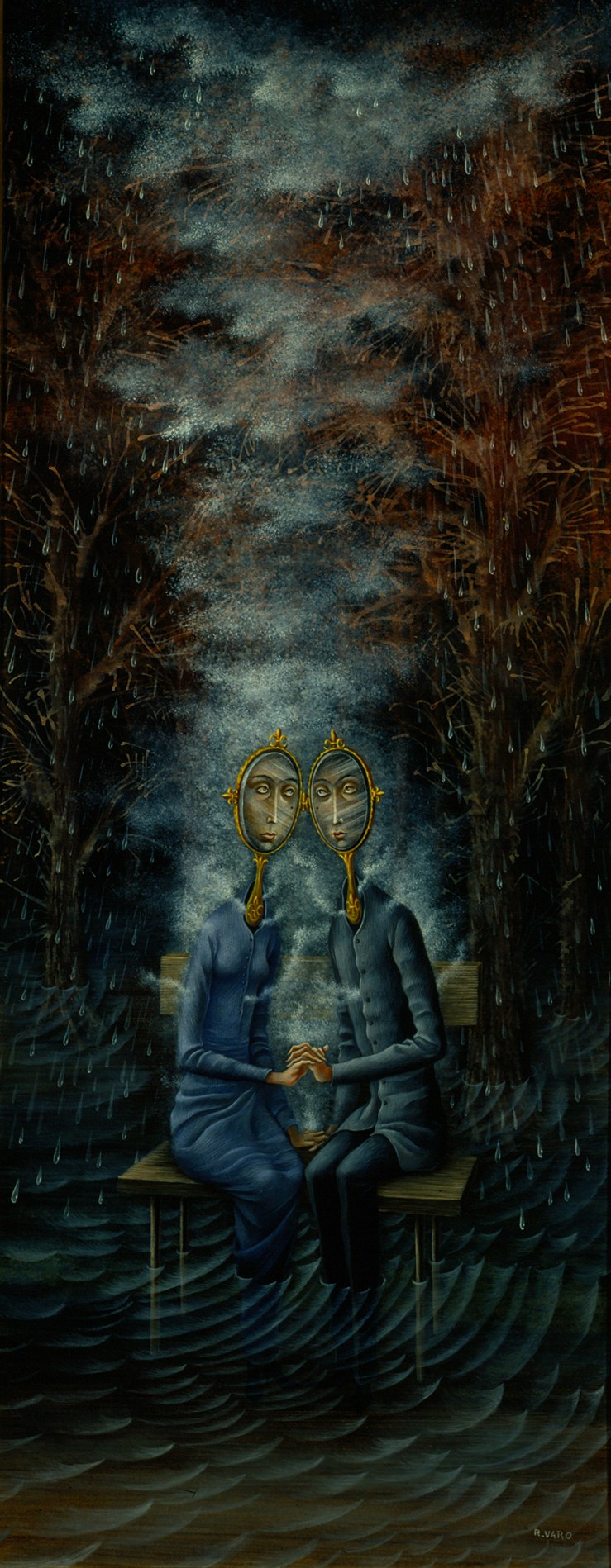
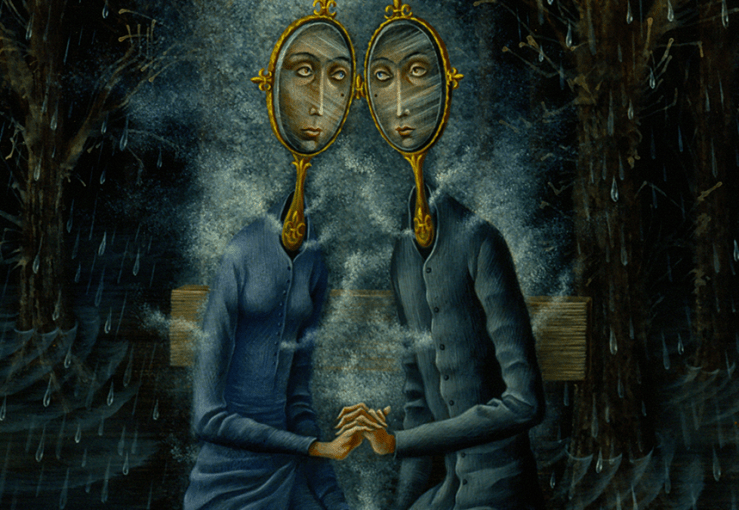
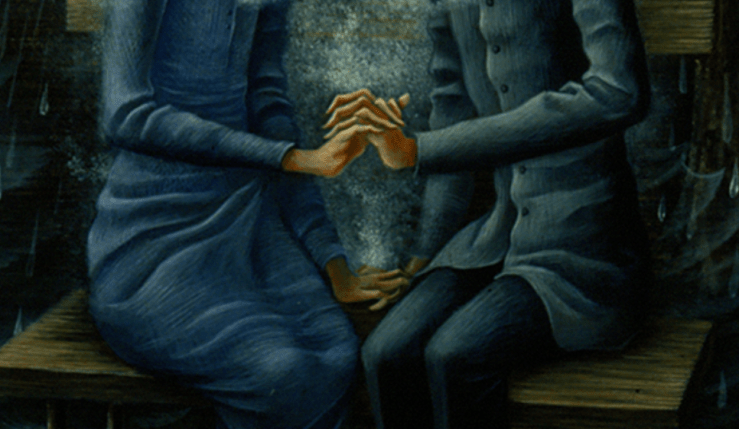
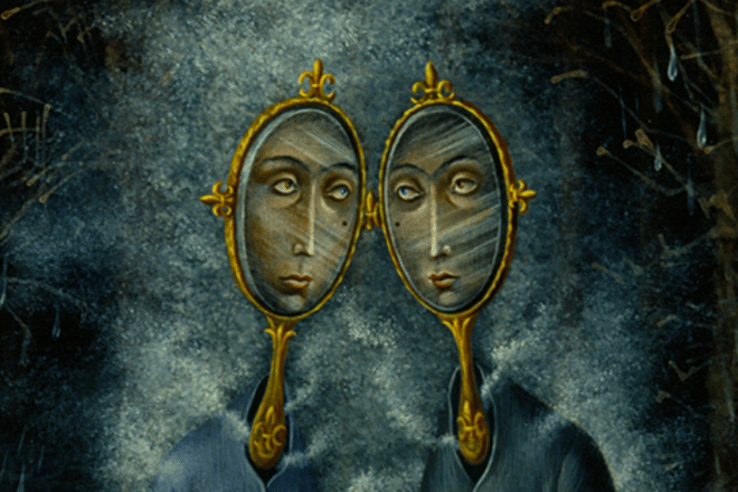
The Lovers — Remedios Varo

Cat.356-Los-Amantes-1963

The Lovers, 1963 by Remedios Varo (1908-1963)

Screenshot 2018-12-16 at 6.41.23 PM

Screenshot 2018-12-16 at 6.42.07 PM

Screenshot 2018-12-16 at 6.41.42 PM

Aello — Francis Picabia

9.20Aello

Aello, 1930 by Francis Picabia (1879-1953)

“A Chapter on Dreams” — Robert Louis Stevenson

“A Chapter on Dreams”

by

Robert Louis Stevenson

from

Across the Plains (1915)


The past is all of one texture—whether feigned or suffered—whether acted out in three dimensions, or only witnessed in that small theatre of the brain which we keep brightly lighted all night long, after the jets are down, and darkness and sleep reign undisturbed in the remainder of the body.  There is no distinction on the face of our experiences; one is vivid indeed, and one dull, and one pleasant, and another agonising to remember; but which of them is what we call true, and which a dream, there is not one hair to prove.  The past stands on a precarious footing; another straw split in the field of metaphysic, and behold us robbed of it.  There is scarce a family that can count four generations but lays a claim to some dormant title or some castle and estate: a claim not prosecutable in any court of law, but flattering to the fancy and a great alleviation of idle hours.  A man’s claim to his own past is yet less valid.  A paper might turn up (in proper story-book fashion) in the secret drawer of an old ebony secretary, and restore your family to its ancient honours, and reinstate mine in a certain West Indian islet (not far from St. Kitt’s, as beloved tradition hummed in my young ears) which was once ours, and is now unjustly some one else’s, and for that matter (in the state of the sugar trade) is not worth anything to anybody.  I do not say that these revolutions are likely; only no man can deny that they are possible; and the past, on the other baud, is, lost for ever: our old days and deeds, our old selves, too, and the very world in which these scenes were acted, all brought down to the same faint residuum as a last night’s dream, to some incontinuous images, and an echo in the chambers of the brain.  Not an hour, not a mood, not a glance of the eye, can we revoke; it is all gone, past conjuring.  And yet conceive us robbed of it, conceive that little thread of memory that we trail behind us broken at the pocket’s edge; and in what naked nullity should we be left! for we only guide ourselves, and only know ourselves, by these air-painted pictures of the past.

Upon these grounds, there are some among us who claim to have lived longer and more richly than their neighbours; when they lay asleep they claim they were still active; and among the treasures of memory that all men review for their amusement, these count in no second place the harvests of their dreams.  There is one of this kind whom I have in my eye, and whose case is perhaps unusual enough to be described.  He was from a child an ardent and uncomfortable dreamer.  When he had a touch of fever at night, and the room swelled and shrank, and his clothes, hanging on a nail, now loomed up instant to the bigness of a church, and now drew away into a horror of infinite distance and infinite littleness, the poor soul was very well aware of what must follow, and struggled hard against the approaches of that slumber which was the beginning of sorrows.

But his struggles were in vain; sooner or later the night-hag would have him by the throat, and pluck him strangling and screaming, from his sleep.  His dreams were at times commonplace enough, at times very strange, at times they were almost formless: he would be haunted, for instance, by nothing more definite than a certain hue of brown, which he did not mind in the least while he was awake, but feared and loathed while he was dreaming; at times, again, they took on every detail of circumstance, as when once he supposed he must swallow the populous world, and awoke screaming with the horror of the thought.  The two chief troubles of his very narrow existence—the practical and everyday trouble of school tasks and the ultimate and airy one of hell and judgment—were often confounded together into one appalling nightmare.  He seemed to himself to stand before the Great White Throne; he was called on, poor little devil, to recite some form of words, on which his destiny depended; his tongue stuck, his memory was blank, hell gaped for him; and he would awake, clinging to the curtain-rod with his knees to his chin. Continue reading ““A Chapter on Dreams” — Robert Louis Stevenson”

Gorgon — Ithell Colquhoun

img190

Gorgon, 1945 by Ithell Colquhoun (1906–1988)

“All art constantly aspires towards the condition of music”

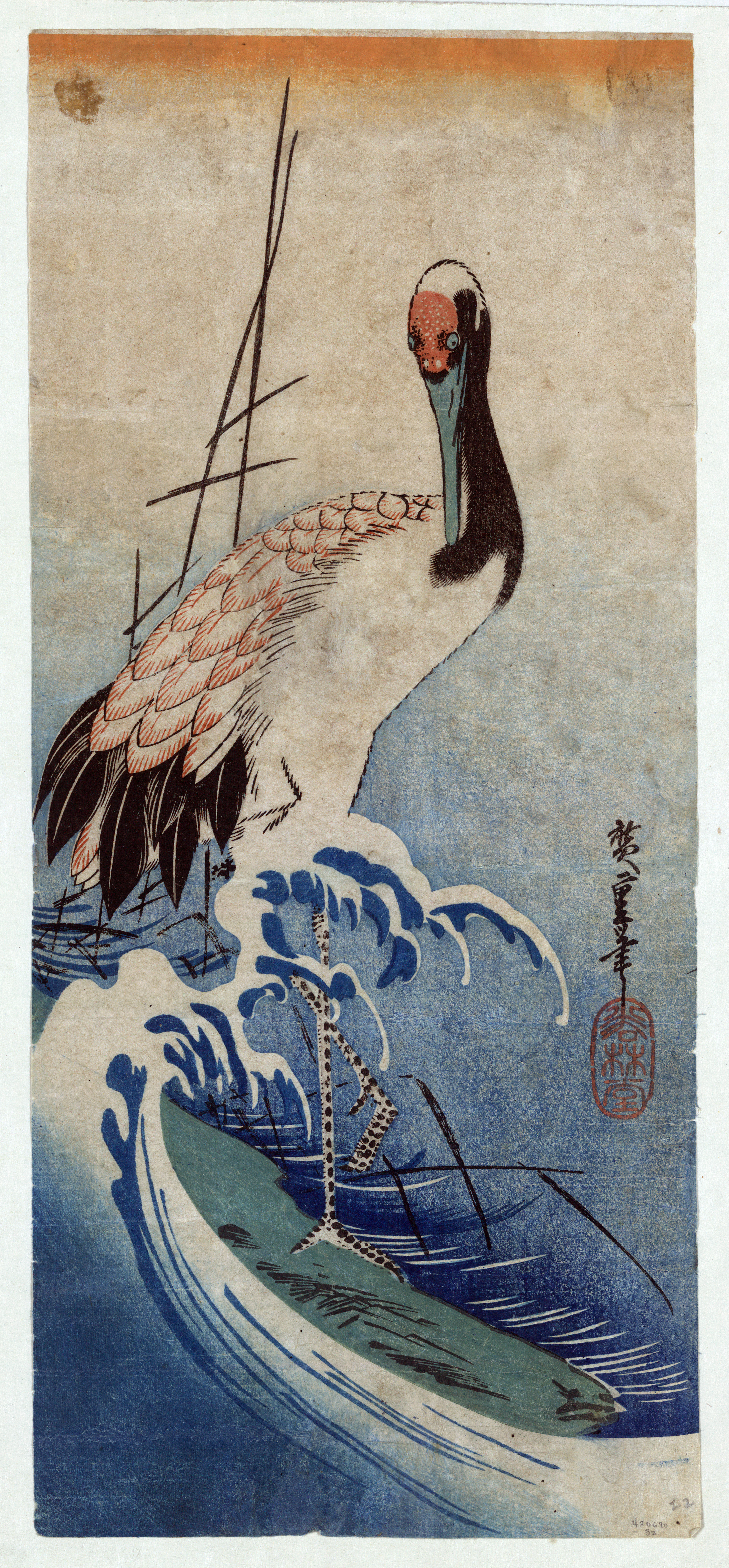
Crane in Waves — Utagawa Hiroshige

crane-in-waves-1835

Crane in Waves, c. 1835 by Utagawa Hiroshige (1797-1858)

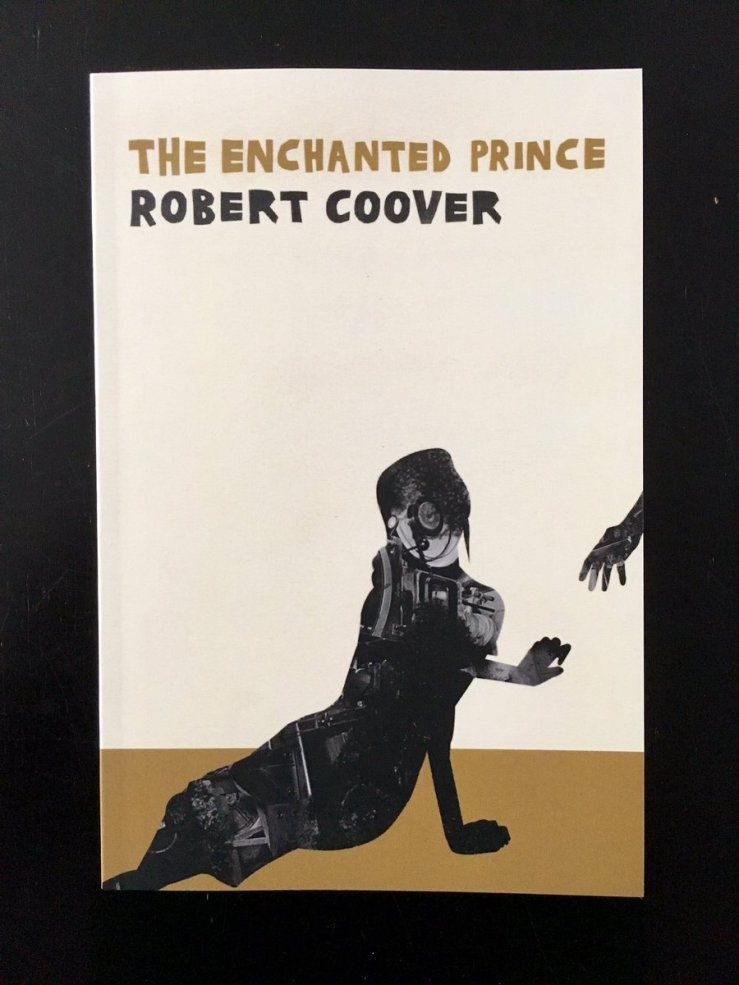
Robert Coover’s The Enchanted Prince (Book acquired, 11 Dec. 2018, read 13 Dec. 2018)

DuJ5a5XWoAAyuRS

Robert Coover’s not-quite-novella The Enchanted Prince (or is it “The Enchanted Prince”?) was first published last year in The Evergreen Review’s Winter 2017 issue. Foxrock Books and OR Books have collaborated to release a cute little volume of the story/stories/metastory/etc. I read the book the other day during an occasion where my attention was supposed to be elsewhere; I slipped it easily into some other papers. It’s a good read to slyly read on the sly. The Enchanted Prince is a postmodern fantasy riff on film and filmmaking techniques, as well as desire and drive. The basic moves here could fit into Coover’s 1987 collection A Night at the Movie’s horny postmodernism, only with some new technological updates—as well as a more pronounced theme of aging.  As always, Coover offers meta-line after meta-line of self-description, including this parenthetical nugget, which maybe kinda yeah surely describes Coover in action: “(stimulation and frustration, fort and da: it’s only the dailies, but the old metacineast is at it again).” Here’s the publisher’s more thorough blurb, which also contains a Cooverian self-description from the novel (the B-movie bit):

Literary grandmaster Robert Coover has long been obsessed with myth, decay, sex and narrative, time and technology: and these themes come together in this short, dark fable that centers around the once-grand, now-aged Princess. Years ago a star of the classic film “The Enchanted Prince,” she has become a cult figure—with mind intact but body failing, she remains a figure of cinematic royalty, but one who cannot turn away from the persistent demands of the camera and the ever-present director, himself a flabby iteration of the wunderkind-that-was, who is filming the last remake (in a long series of remakes) of the classic that made the Princess a star.

“The world is a bad B-movie,” he says. “We try to make better ones, but it probably can’t be done. Still, we go on cranking them out. Nothing else to do.”

Coover’s sardonic, biting humor—and his deep sympathy for the players in his game, all both manipulators and manipulated—has never been more clearly on display than in this brief, intense dose of verbal subterfuge about film within film within the book, itself a two-dimensional “film.” “The book is an essentially realistic tale about two ancient survivors of the New Wave (I had in mind people like Jean Seberg, Jean-Luc Godard) in the digital age,” writes the author about this novella. “The more fanciful elements are torturous parodies of fairytale movies.”

And a sample paragraph:

The movie’s plot was a folktale cliché. Until the box office tallies came in, critics treated it as a joke. A Prince on a knightly quest to liberate an oppressed and bewitched people comes on a runaway Princess of the corrupt kingdom and they fall in love on the spot. The Queen has died and her father the King, under a spell, has been trapped in marriage by an old harpy with brutish unshaven sons who grunt like hogs. The Prince whisks the Princess back to his place, but on her wedding day she’s abducted by her badboy stepbrothers, with black-magic assistance from their mother, and forced to work in the scullery. She’s eventually rescued by the Prince, and they fall into a forever-after kiss at their wedding.

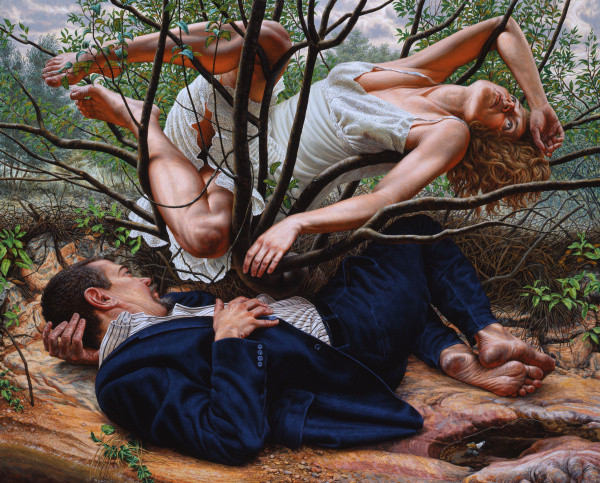
Riverbed — F. Scott Hess

n19s73-b781258863z.120140219165436000gtj1ijbm8.1

Riverbed, 2004 by F. Scott Hess (b. 1955)

The Prayers — Bo Bartlett

EDD

The Prayers, 2004 by Bo Bartlett (b. 1955)