
The Tower of Babel (detail), 1563 by Pieter Bruegel the Elder (c. 1525-1530–1569)

The Tower of Babel (detail), 1563 by Pieter Bruegel the Elder (c. 1525-1530–1569)
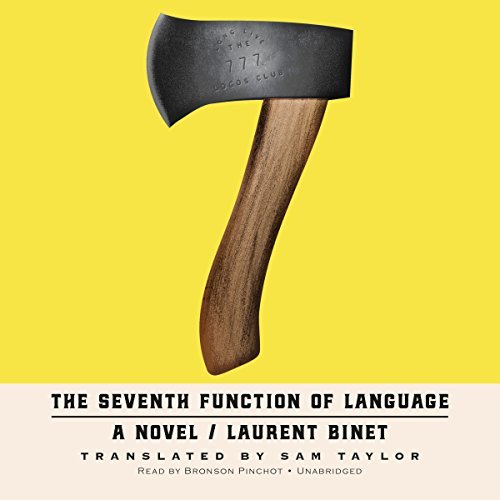
I was a big a fan of Laurent Binet’s novel HHhH, so I was excited when I heard about his follow up, The Seventh Function of Language. I was especially excited when I learned that The Seventh Function took the death of Roland Barthes as its starting point and post-structuralism in general as its milieu. I audited the audiobook (translated by Sam Taylor and read with dry wry humor by Bronson Pinchot).
The audiobook is twelve hours. If it had been six hours I might have loved it. But twelve hours was a bit too much.
Wait. Sorry. What is the novel about though? you may ask. This is not a review and I am feeling lazy and not especially passionate about the book, so here is the publisher’s-blurb-as-summary:
Paris, 1980. The literary critic Roland Barthes dies – struck by a laundry van – after lunch with the presidential candidate François Mitterand. The world of letters mourns a tragic accident. But what if it wasn’t an accident at all? What if Barthes was murdered?
In The Seventh Function of Language, Laurent Binet spins a madcap secret history of the French intelligentsia, starring such luminaries as Jacques Derrida, Umberto Eco, Gilles Deleuze, Michel Foucault, and Julia Kristeva – as well as the hapless police detective Jacques Bayard, whose new case will plunge him into the depths of literary theory. Soon Bayard finds himself in search of a lost manuscript by the linguist Roman Jakobson on the mysterious “seventh function of language.”
Kristeva! Eco! Derrida! All my childhood heroes are here!
So of course, y’know, I was interested. And I’m sure that the twenty-year-old version of me would have flipped out over Binet’s pastiche of postmodern theory and detective pulp fiction. But almost-forty me found the whole thing exhausting, a shaggy dog detective story with patches of the whole continental-philosophy-vs-analytical-philosophy debate sewn in with loose stitches.
The initial intellectual rush of what amounts to a Tel Quel fan fiction/murder-mystery/political thriller hybrid begins to wear thin about halfway through. Binet is smart and he’s writing about smart people, but the cleverness on display becomes irksome, especially when he’s drawing his characters’ big philosophical ideas in the broadest of strokes (Julia Kristeva arrives at her concept of abjection after a floating film on a glass of milk makes her ill).
Binet loves to cram his characters into social situations where they can wax philosophical (in the thinnest possible sense of that verb wax). The Seventh Function is larded with chatty cocktail parties where Kristeva and Foucault can toss out zinger after zinger. One of the novel’s centerpieces, an academic conference at Cornell, serves as an excuse for Binet to riff large (but shallow) on language philosophy. He even brings Chomsky and Searle to the conference to take on Derrida et al. (Binet also squeezes in a postmodern orgy here, in which Detective Bayard has a threesome with Hélène Cixous and Judith Butler). Such scenes are funny but baggy, overlong, and often feel like an excuse for Binet to show how clever he is. (And don’t even get me started on the fact that the novel’s central protagonist worries that he might be a character in a novel).
Binet is more successful at channeling his characters’ intellects during the high-risk debates of a secret society called the Logos Club. The best of these debates showcase thought-in-action, as Binet’s characters deconstruct various topics. Still, as engaging as some elements of the Logos Club debates are, they drag on too long, and the Club’s connection to the political-thriller aspect of the plot is pretty tenuous. Indeed, the novel is so loose that a minor character has to show up at the end and explain how all the elements connect for both the reader and detectives alike.
What’s probably most remarkable about The Seventh Function (despite the fact that it features a who’s-who of postmodern theory for its cast) is just how one-note the novel is. After all, it’s a mashup. As Anthony Domestico puts it in his (proper and insightful) review at The San Francisco Chronicle, “The novel is three parts Tom Clancy to two parts Theory SparkNotes to one part sex romp.” The Seventh Function of Language should be a lot more fun than it is. And it is fun at times, but not enough fun to sustain, say, twelve hours of an audiobook or 359 pages in hardcover.
As HHhH showed, Binet is a talented author, and even though The Seventh Function didn’t work for me, I’m interested to see what he does next. It’s possible that The Seventh Function didn’t float my proverbial boat precisely because I’m the ideal audience for the novel. If anything, it made me want to reread Umberto Eco’s Foucault’s Pendulum—but The Seventh Function also reminded me that I read Eco’s semiotics-detective story as a much younger man—as a kid in my early twenties who probably would’ve loved Binet’s novel. So maybe I should leave well enough alone.
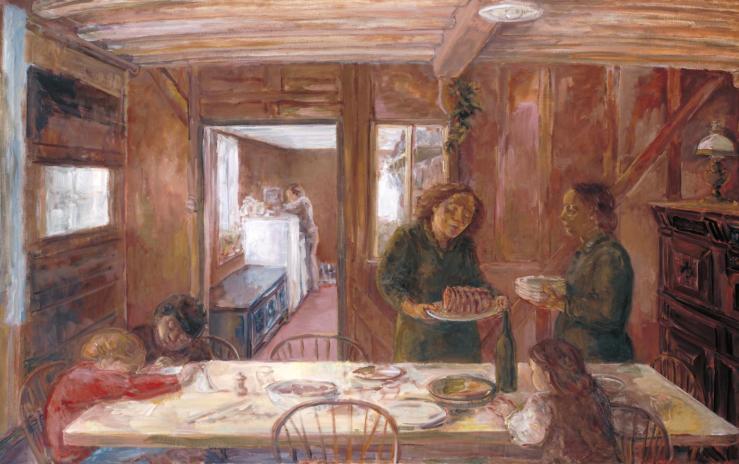
Sunday, 1989 by John Lessore (b. 1939)

Old Woman with Distaff, ca. 1642 by Bartolome Esteban Murillo (1617-1682)
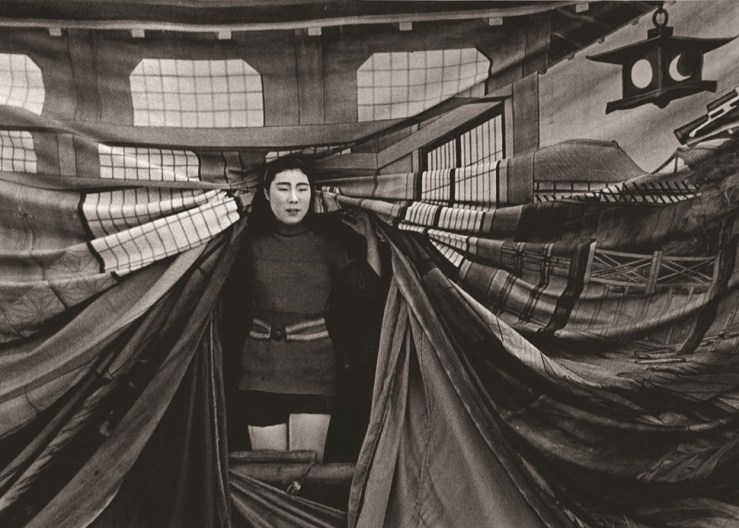
Circus Woman, 1940 by Nakaji Yasui (1903-1942)
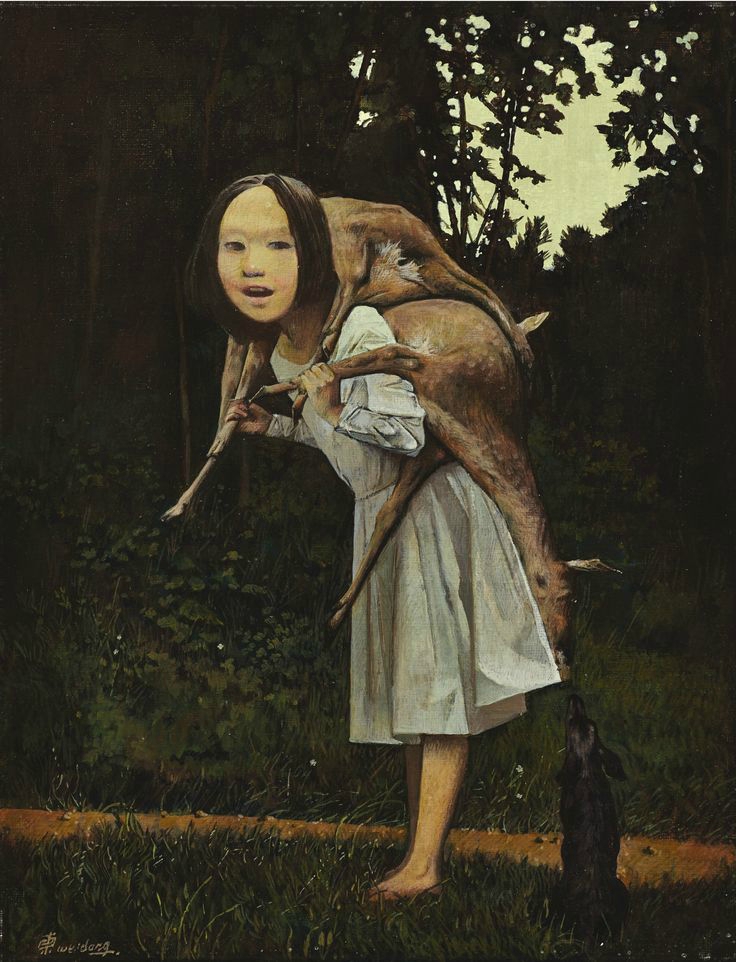
My First Lesson, 2014 by Wei Dong (b. 1968)
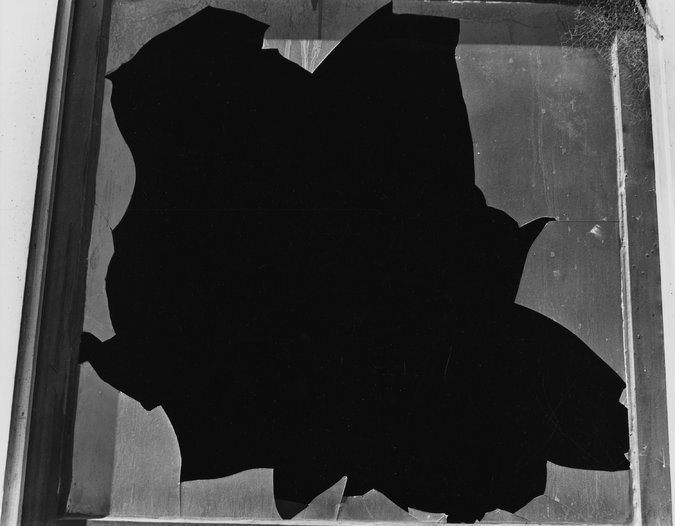
Teju Cole’s essay “The History of Photography is a History of Shattered Glass,” part of his “On Photography” series, is new in today’s New York Times.
From the essay:
Broken glass, and broken windows in particular, are a notable byway in photography’s history. Brett Weston made one of the most striking examples in San Francisco in 1937. Weston was not recording evidence of a crime, or even particularly making a sociological comment. He was describing an abstraction with his camera, the calligraphic presence of a jagged black hole surrounded by a gray remnant of glass. What has been broken away dominates the picture. We see an outline like a map of a fictional island. There’s more dark to see here than glass, and the darkness is deep and mysterious, a mouth agape in an unending scream. About this picture, John Szarkowski, the influential curator at the Museum of Modern Art, wrote that the black shape “is not a void but a presence; the periphery of the picture is background.” In the middle, in that darkness, is where Weston’s self-portrait would be, if the window were intact.
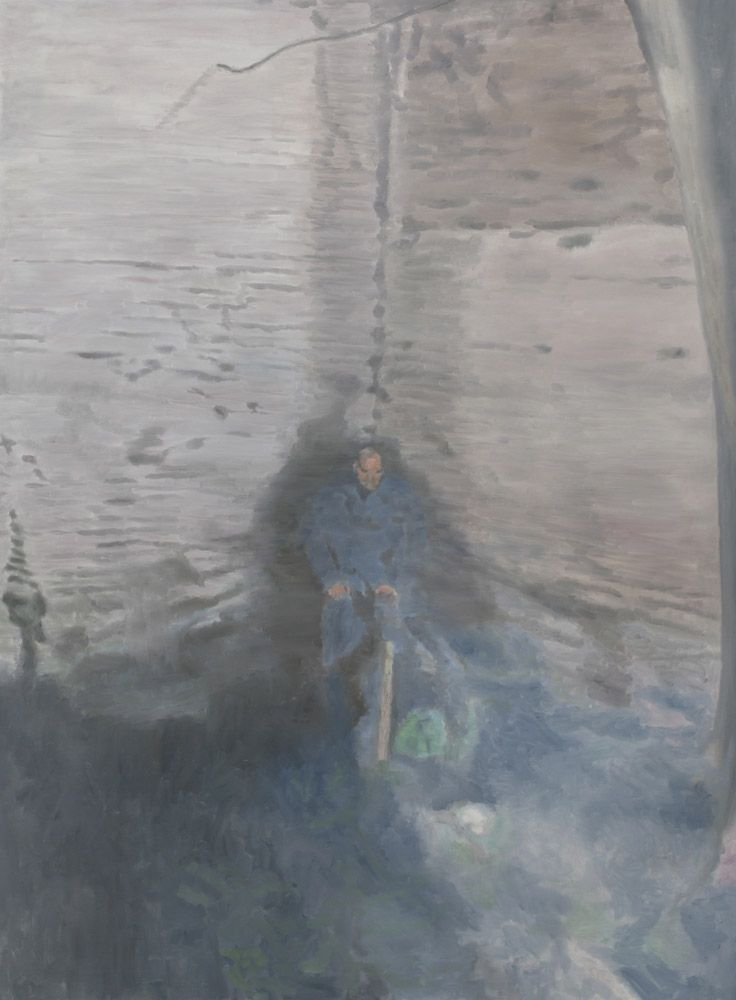
Against the Day II, 2009 by Luc Tuymans (b. 1958)


Satyrs, ca. 1505-1510 by Cima da Conegliano (ca. 1459 – ca. 1517)

Hunter in the Snow I, 2016 by Joshua Hagler (b. 1979)
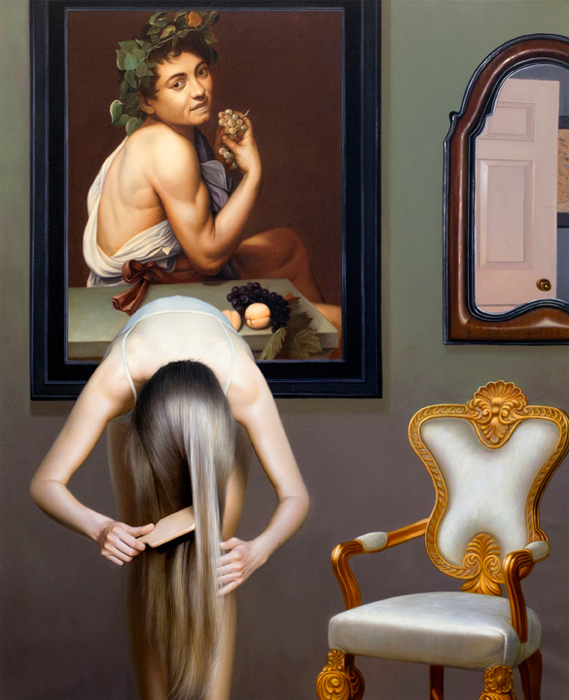
A Great Master of Privacy, 2013 by Marc Dennis (b. 1971)

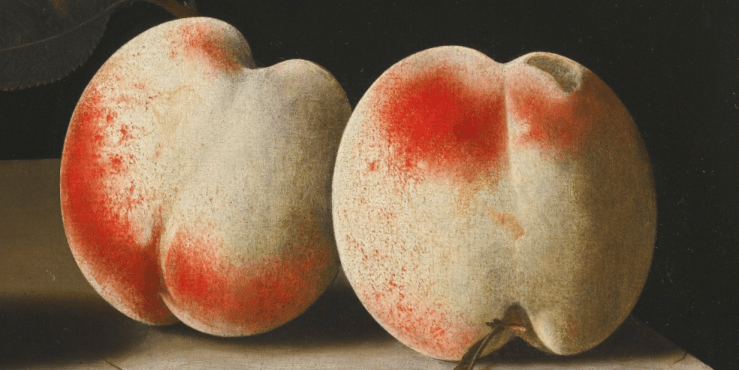
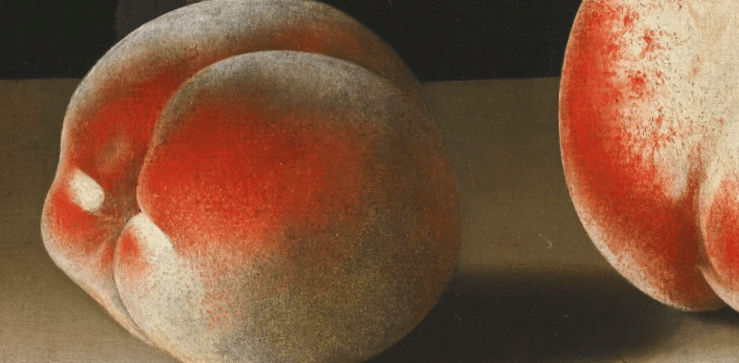
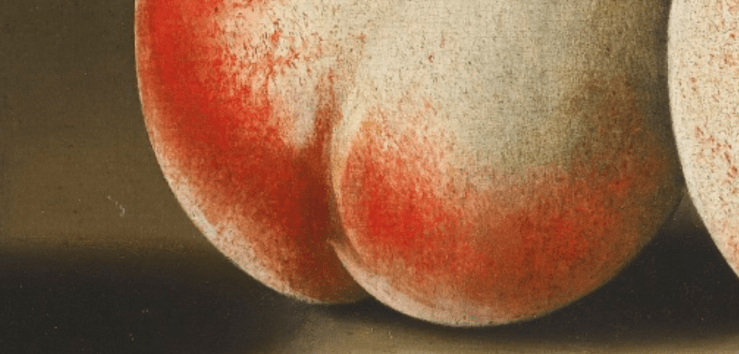
Three Peaches on a Stone Ledge with a Painted Lady Butterfly, 1695 by Adriaen Coorte (ca. 1665–1707)

Lot and His Daughters, 1520 by Lucas van Leyden (1494-1533)


 Biblioklept