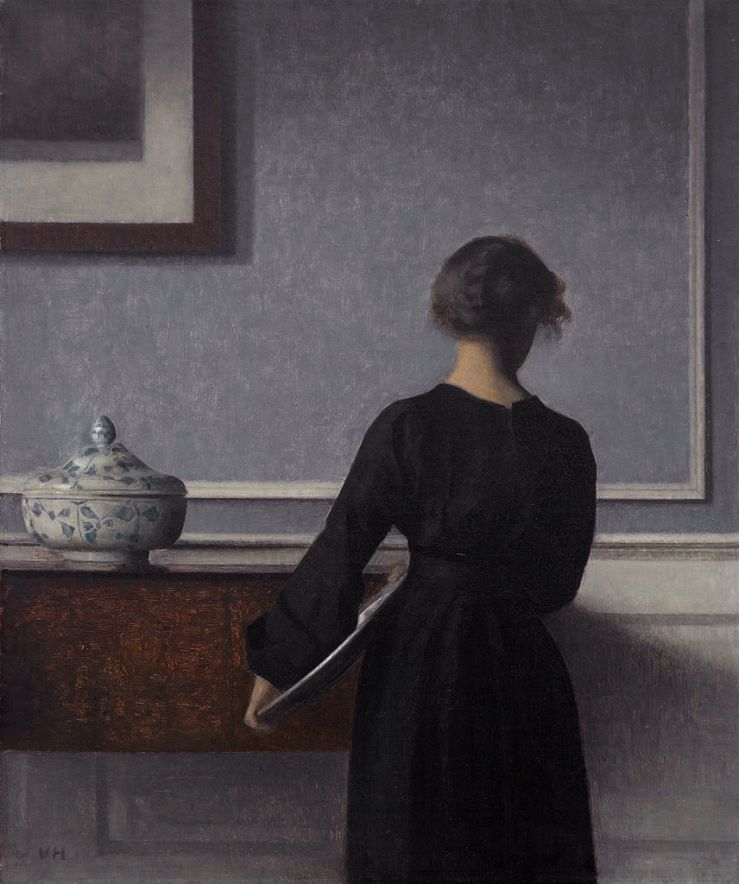
Interior with Young Woman from Behind, 1904 by Vilhelm Hammershøi (1864-1916)

Interior with Young Woman from Behind, 1904 by Vilhelm Hammershøi (1864-1916)
“Horses”
by
Stephen Crane
Richardson pulled up his horse, and looked back over the trail where the crimson serape of his servant flamed amid the dusk of the mesquit. The hills in the west were carved into peaks, and were painted the most profound blue. Above them the sky was of that marvellous tone of green—like still, sun-shot water—which people denounce in pictures.
José was muffled deep in his blanket, and his great toppling sombrero was drawn low over his brow. He shadowed his master along the dimming trail in the fashion of an assassin. A cold wind of the impending night swept over the wilderness of mesquit.
“Man,” said Richardson in lame Mexican as the servant drew near, “I want eat! I want sleep! Understand—no? Quickly! Understand?”
“Si, señor,” said José, nodding. He stretched one arm out of his blanket and pointed a yellow finger into the gloom. “Over there, small village. Si, señor.”
They rode forward again. Once the American’s horse shied and breathed quiveringly at something which he saw or imagined in the darkness, and the rider drew a steady, patient rein, and leaned over to speak tenderly as if he were addressing a frightened woman. The sky had faded to white over the mountains, and the plain was a vast, pointless ocean of black.
Suddenly some low houses appeared squatting amid the bushes. The horsemen rode into a hollow until the houses rose against the sombre sundown sky, and then up a small hillock, causing these habitations to sink like boats in the sea of shadow.
A beam of red firelight fell across the trail. Richardson sat sleepily on his horse while his servant quarrelled with somebody—a mere voice in the gloom—over the price of bed and board. The houses about him were for the most part like tombs in their whiteness and silence, but there were scudding black figures that seemed interested in his arrival. Continue reading ““Horses,” a short story by Stephen Crane”

The Knucklebone Player, 1867 by Frederic Leighton (1830-1896)
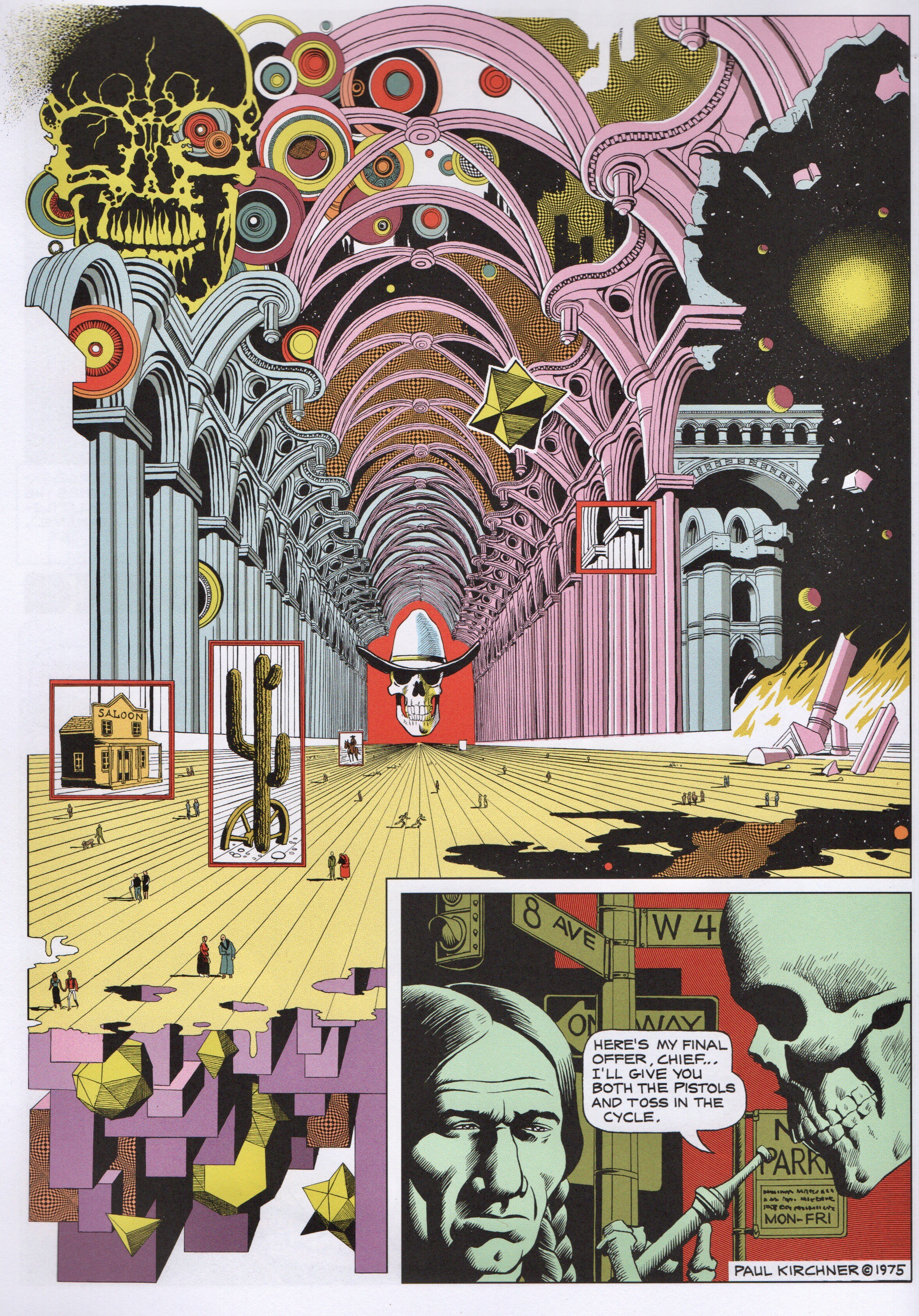
From “Dope Rider in ‘Meanwhile Back at the Ranch'” by Paul Kirchner. Originally published in High Times #5, Aug.-Sept. 1975. Republished in Awaiting the Collapse, Tanibis Editions.
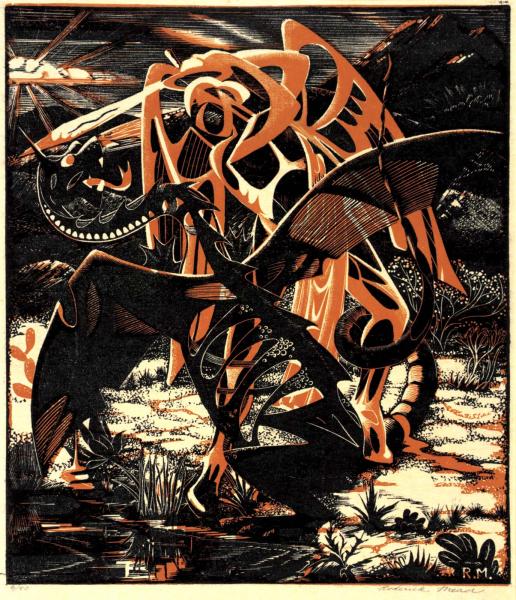
St. Michael and the Dragon, 1939 by Roderick Mead (1900-1971)
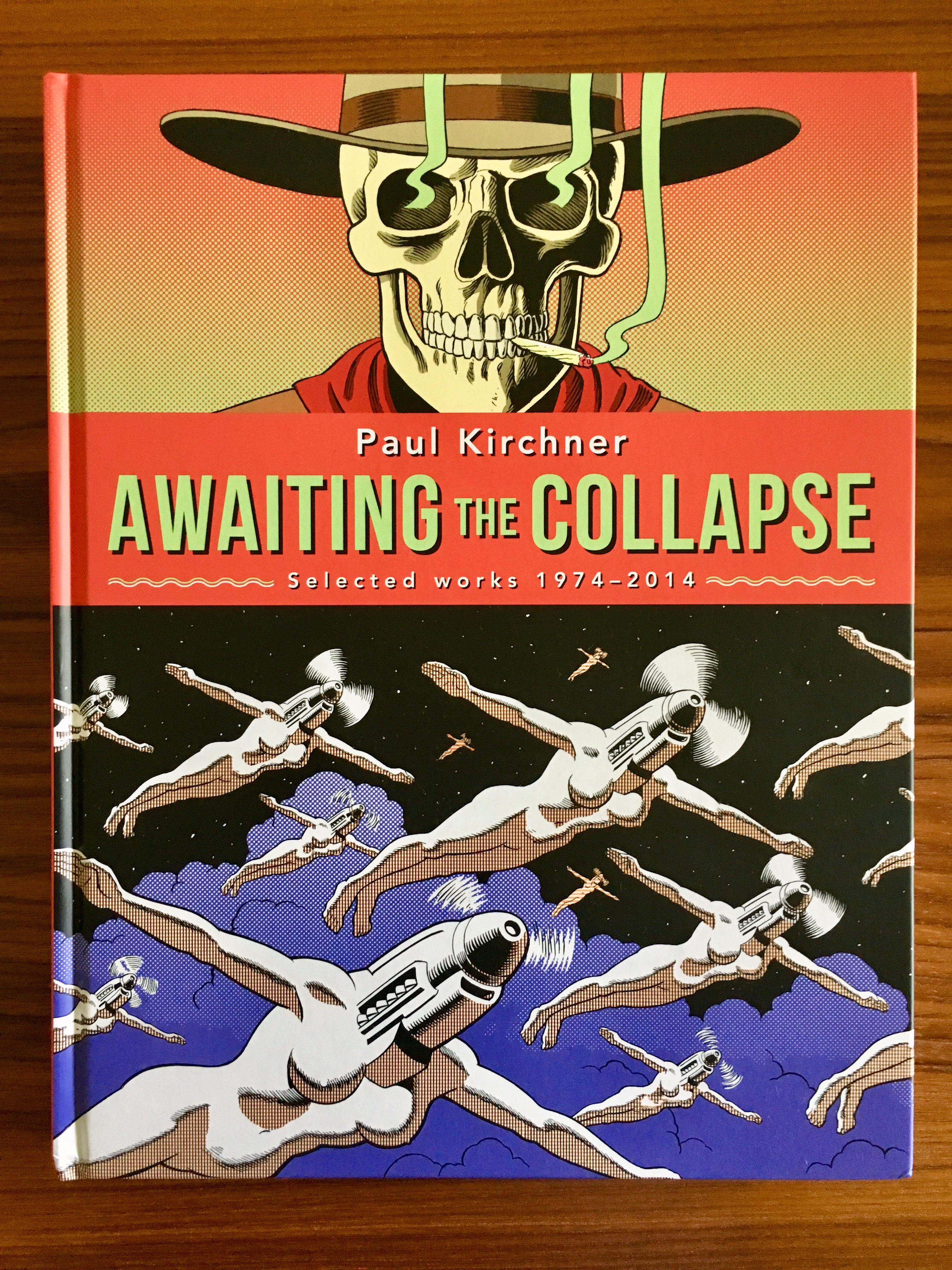
Awaiting the Collapse collects some of the finest and most surreal comix from Paul Kirchner, from the 1970s up through this decade. The book is big and bold and gorgeous. Here’s the back cover:
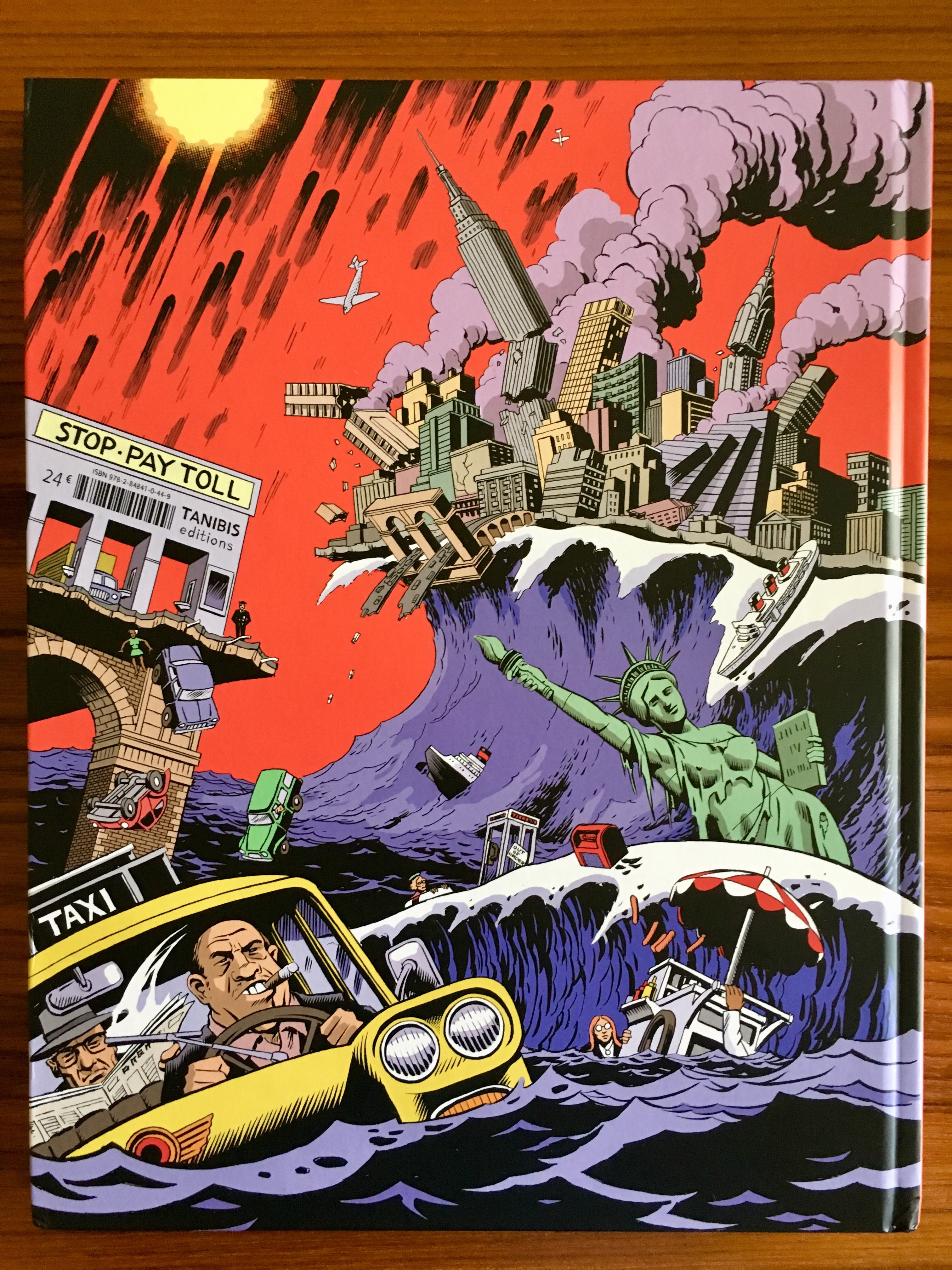
Awaiting the Collapse is new in hardback from Tanibis Editions, the same good people who brought us hardback editions of The Bus (which I reviewed here), and The Bus 2 (which I reviewed here). A large portion of Collapse features Kirchner’s surreal western Dope Rider strips, which have been hard to find on the internet. It also collects the covers that Kirchner did for Screw magazine, as well as dozens of other one-offs and vignettes, comix in different modes, moods, and manners.
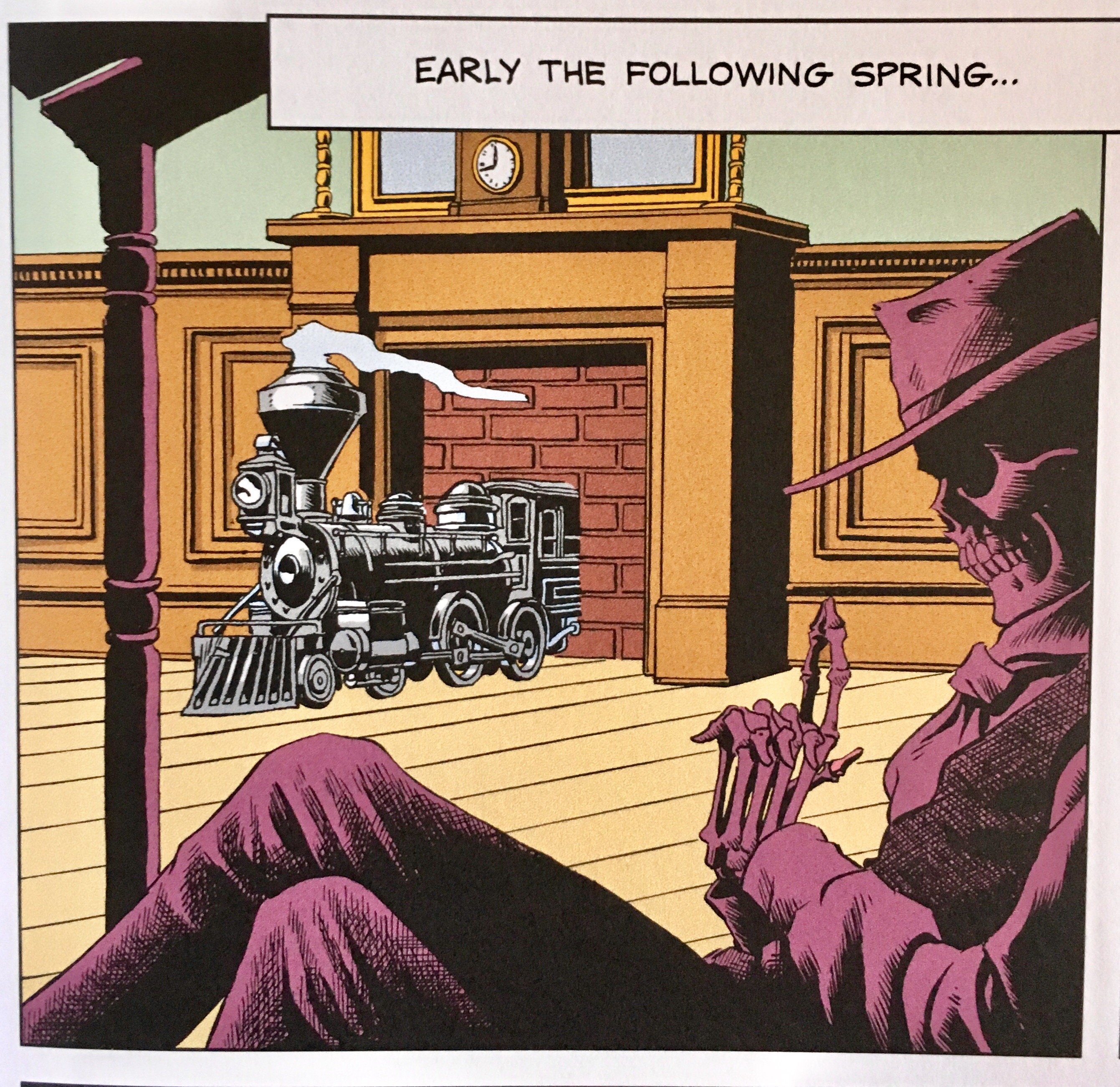
The collection ends with a nice long essay (including numerous photographs, strips, and illustrations) by Kirchner called “Sex, Drugs & Public Transportation: My Strange Trip Through Comics.” I haven’t gotten to it yet because I’m trying to restrain myself from gobbling the collection up all at once.

Here’s Tanibis’s blurb:
This third collaboration between French publishing house Tanibis and comic book artist Paul Kirchner is a collection of the artist’s works, most of them initially published in counter-culture magazines in the 1970s and the 1980s and some dating from his return to comics in the 2010s.
Roughly a third of the stories star Dope Rider, the pot-smoking skeleton whose psychedelic adventures take him through colorful vistas equally reminiscent of Sergio Leone’s spaghetti western films and of the surrealistic paintings of René Magritte and Salvador Dalí. These stories were originally drawn for the marijuana-themed magazine High Times but were also for Kirchner an excuse to create his very own brand of visual poetry.
An other third of the book is a miscellaneous collection of comics whose stories range from the loony (the sextraterrestrial invasion of Earth in “They Came from Uranus”) to the satirical (“Critical mass of cool”) and the outright subversive (if you ever wondered what games toys play at night, read “Dolls at Midnight”).
This book also features a broad selection of the covers Kirchner made for the pornographic tabloid Screw in the 1970s.
Awaiting the Collapse finally contains a previously unpublished essay by Paul Kirchner about his career and his influences, which helps put in perspective the works published in this book.

I promise I’ll have a review of Awaiting the Collapse up soon; for now, let me just underline my enthusiasm—it’s weird and wonderful and gorgeous stuff.

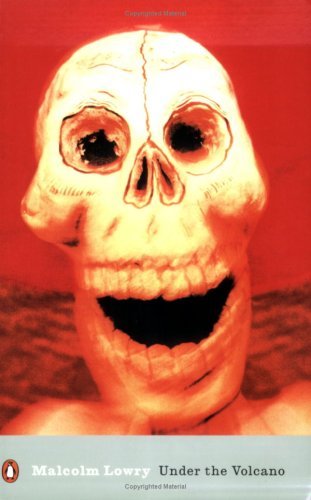
Most of Malcolm Lowry’s dense, depressing novel Under the Volcano takes place over the course of November 2nd, 1938, the Mexican Day of the Dead. Like a reticent, dour Virgil, Lowry guides the reader through the day’s tragic arc, floating between the minds of his novel’s three protagonists: Geoffrey Firmin, his half-brother Hugh, and Geoffrey’s estranged wife Yvonne. Geoffrey is British Consul to Mexico — ex-Consul, really, as British-Mexican relations sour against the backdrop of Spanish fascism and the rise of nationalism in Mexico — but he is almost always referred to as “the Consul,” a blackly ironic title. See, the Consul bears little authority aside from an extreme expertise on how to stay drunk (or “drunkly sober un-drunk”) 24/7. He’s ambassador to bar stools, a manager of mescal and little else (certainly not his own life; certainly not diplomatic affairs). The Consul is a wreck, an alcoholic to put Hemingway and Fitzgerald’s (and even Bukowski’s) alter-egos to shame.
After a first chapter that seems to derail all but the most patient readers, the narrative conflict arrives when Yvonne returns to Quauhnahuac, Mexico, a year after leaving (and divorcing) the Consul. She arrives to find the Consul (“Geoffrey,” as he’s called when the free indirect style inhabits her mind) drinking whiskey in a hotel bar in order to sober up (yep). It’s not immediately clear why Yvonne has returned to the Consul, but it seems that she hopes to save him from drowning in a drunken downward spiral. As the pair walks to the Consul’s house, they pass numerous advertisements for a boxing match; a child’s funeral proceeds down the avenue. These motifs of fighting, death, and futility permeate the novel.
During the walk we learn that Yvonne is not the only one concerned about the Consul’s health; his (much) younger brother Hugh has come to stay with him in the hopes of sobering him up. (Hugh employs a revolting and unsuccessful “strychnine cure”). That Hugh has also returned doubly complicates the plot. Much of Under the Volcano remains implicit, unnamed, hinted at, and this seems especially true of the implication that Yvonne cheated on the Consul with Hugh in the recent past (this implication may have been stated conclusively at some point in the novel, but I’ve only read the book once, which is perhaps like not having read it at all). What’s certainly clear is that Yvonne cheated on the Consul with a French filmmaker, Jacques Laruelle, a man whom the Consul, through sheer bizarre coincidence (but of course it isn’t sheer bizarre coincidence), spent a childhood summer with, an experience which bonded them as brothers in an Edenic holiday that eventually (inevitably) soured.
Despite her infidelities, Yvonne is generally present (I choose the verb “present” over “presented as” to highlight Lowry’s impeccable Modernist style) as a sympathetic character. Still, it is hard not to identify with the Consul (with “Geoffrey,” I suppose, if we are going to be familiar), the dark soul of this novel, and his complicated, painful feelings for Yvonne form the core of Volcano’s tragedy. He longs for her, pines for a complete life with her, yet resents her, cannot forgive her, hates her. For what? For leaving him. For betraying him. But perhaps foremost, he despises her inability to understand his alcoholism (he is particularly upset when she refuses to share a morning libation with him when they meet for the first time in a year). I’ll quote a passage at length now, one that showcases Lowry’s free indirect style, and one that reveals the strange indignities of the Consul’s sense of his own alcoholism. For context, dear reader, you must only know that Yvonne has suggested that she and the Consul might make long-term plans when he is sober “in a day or two”—
The Consul sat perfectly still staring at the floor while the enormity of the insult passed into his soul. As if, as if, he were not sober now! Yet there was some elusive subtlety in the impeachment that still escaped him. For he was not sober. No, he was not, not at this very moment he wasn’t! But what had that to do with a minute before, or half an hour ago? And what right had Yvonne to assume it, assume either that he was not sober now, or that, far worse, in a day or two he would be sober? And even if he were not sober now, by what fabulous stages, comparable indeed only to the paths and spheres of the Holy Cabbala itself, had he reached this stage again, touched briefly once before this morning, this stage at which alone he could, as she put it, “cope,” this precarious precious stage, so arduous to maintain, of being drunk in which alone he was sober! What right had she, when he had sat suffering the tortures of the damned and the madhouse on her behalf for fully twenty-five minutes on end without having a decent drink, even to hint that he was anything but, to her eyes, sober? Ah, a woman could not know the perils, the complications, yes, the importance of a drunkard’s life! From what conceivable standpoint of rectitude did she imagine she could judge what was anterior to her arrival? And she knew nothing whatever of what all too recently he had gone through, his fall in the Calle Nicaragua, his aplomb, coolness, even bravery there—the Burke’s Irish whiskey! What a world! And the trouble was she had now spoiled the moment.
The “fall in the Calle Nicaragua” the Consul references is quite literally a drunkard’s blackout (followed by the aforementioned fortifying whiskey, courtesy of a tourist), but it — falling — is perhaps the dominant motif in a novel crammed with motifs. In allegorical terms, if we want to ruin a good book (I don’t recommend this, of course), Volcano is pure Faust-stuff: end of innocence, fall of man, intractability of the human condition, ethical peril, moral inertia. While the Consul’s fall dominates the novel, Lowry brings this decline into dramatic relief in a late, climactic episode when his (anti-)heroic trio encounter a dying (dead?) man on the side of the road. Hugh tries to help, but the Darwinian venality of Mexican commonplace law makes his attempt impotent. Yvonne and the Consul are basically paralyzed.
Hugh’s attempt to save the man is a desperate call to action, an endeavor to perform some good in a world dominated by war and fascism. Hugh’s character fascinates. We learn of his past in one of the novel’s most intriguing episodes, a mini-bildungsroman that finds young Hugh working in the merchant marine as a calculated ploy to lend romance to his persona — he longs to prevail as a songwriter. He returns to find that no one cares about — has even heard — his guitar compositions; his publicity stunt fails. Although Hugh is only twenty-nine, he already seems himself as a failure, a fallen hero; he obsesses over the Battle of Ebro, daydreaming of helming a ship laden with hidden arms that he will deliver to the Loyalists who oppose the Fascists. Hugh’s greatest pain — and perhaps (only perhaps) Lowry’s greatest cruelty — is the awareness that the idealism of romantic heroism is intrinsically bound to a kind of selfish egoism. Hugh, perhaps with the visceral signal of his half-brother as a kind of radical prescience, can already see his own fall; his parts in Volcano are in a sense a constant meditation on falling. Hugh tries to save the dying man on the road, the cold double of his brother, whom he also tries to save — and yet it is all to little avail.
In Lowry’s world, in the volcano-world, there is only expulsion from the Eden. Lowry spells out this theme near the middle of his novel in a strange episode. The Consul wanders into his neighbor’s garden and reads a sign —
¿LE GUSTA ESTE JARDÍN?
¿QUE ES SUYO?
¡EVITE QUE SUS HIJOS LO DESTRUYAN!The Consul stared back at the black words on the sign without moving. You like this garden? Why is it yours? We evict those who destroy! Simple words, simple and terrible words, words which one took to the very bottom of one’s being, words which, perhaps a final judgement on one, were nevertheless unproductive of any emotion whatsoever, unless a kind of colourless cold, a white agony, an agony chill as that iced mescal drunk in the Hotel Canada on the morning of Yvonne’s departure.
Significantly, either the sign is posted with improper punctuation, or (and?) the Consul’s translation is wrong — in either case a meaningful misreading occurs. We later receive the “proper” version of the sign: “¿Le gusta este jardín, que es suyo? ¡Evite que sus hijos lo destruyan! – “Do you like this garden that is yours? See to it that your children do not destroy it!” The Consul’s first reading is a corruption, a cruel misreading that questions humanity’s right to happiness, and, tellingly, he connects the sign to the end of his relationship with Yvonne. The second version of the sign, while still foreboding, perhaps signals a kernel of hope in Lowry’s bleak work — the idea that a garden might be preserved, might be tended to; that children might be raised who do not kill, cheat, steal, rape, enslave, or otherwise prey on each other. Still, Lowry refuses to imagine what such a world might look like for us. Did I mention that Volcano is really, really sad?
For all its bleak, bitter bile, Volcano contains moments of sheer, raw beauty, especially in its metaphysical evocations of nature, which always twist back to Lowry’s great themes of Eden, expulsion, and death. Lowry seems to pit human consciousness against the naked power of the natural world; it is no wonder then, against such a grand, stochastic backdrop, that his gardeners should fall. The narrative teems with symbolic animals — horses and dogs and snakes and eagles — yet Lowry always keeps in play the sense that his characters bring these symbolic identifications with them. The world is just the world until people walk in it, think in it, make other meanings for it.
In many ways, Under the Volcano is an antipodal response to Joyce’s Ulysses. Both novels stream through a number of consciousnesses over the course of one day; both novels invert and subvert mythical frameworks against diurnal concerns; both novels point to the ways that the smallest meannesses — and kindnesses — can color and affect our lives. And while there are many divergences (chiefest, I believe, the spirit of redemption in Ulysses that seems entirely absent from Volcano), the greatest similarity may be their difficulty. Simply put, Lowry, like Joyce, throws his readers into the deep end. The first chapter of the novel inhabits the mind of Jacques Laruelle and takes place exactly one year after the events of the rest of the novel. It is both overture and context for all that follows, and yet it is radically alienating; indeed, it only fully makes sense after one finishes the novel and goes back and reads it again, realizing it is the rightful coda, the sad epilogue of a sad story. Lowry leads with his conclusion, show us the fall-out up front, the splinters and shards of the narrative to come. Picking up these pieces is hardly easy and never joyful, but it is a rewarding experience. Very highly recommended.
[Editorial note: Biblioklept ran a version of this review in March of 2011; we run it again in honor of The Day of the Dead]
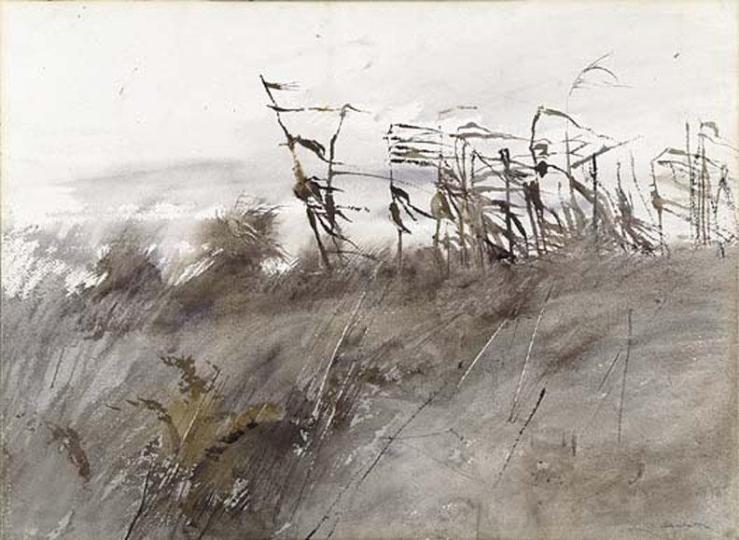
November First, 1950 by Andrew Wyeth (1917-2009)

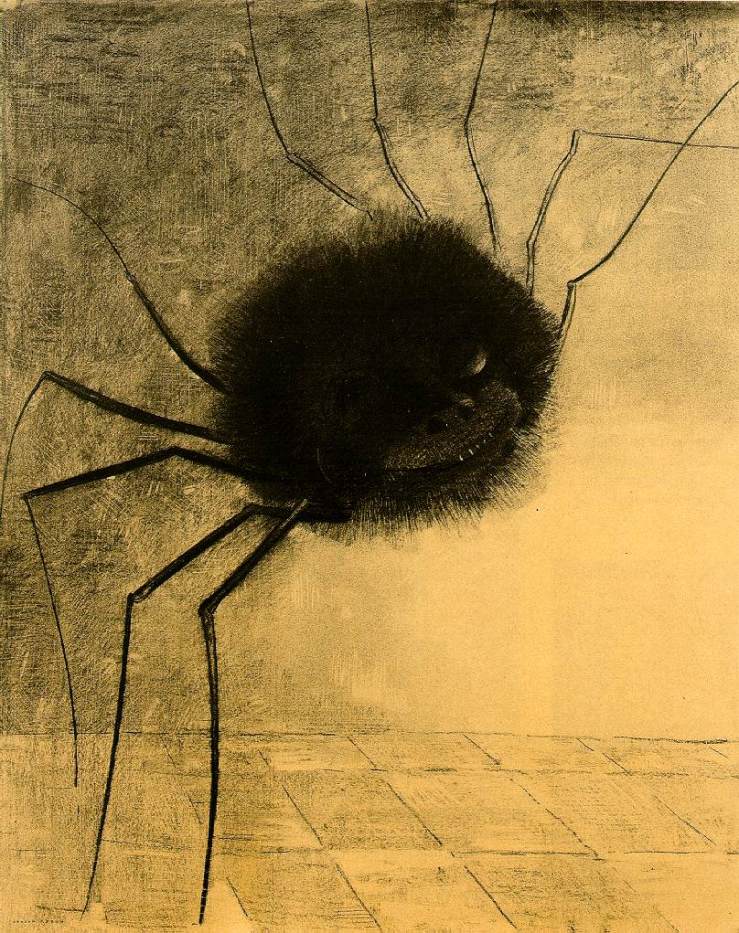
The Smiling Spider, 1891 by Odilon Redon (1840-1916)

I. Here’s my thesis:
Dracula is a character in Roberto Bolaño’s dark opus 2666.
Specifically, I’m suggesting that Dracula (like, the Count Dracula) is the unnamed SS officer in “The Part About Archimboldi” who hosts a strange party in a Romanian castle.
II. I’m willing to concede that my idea is probably full of holes and more than a little silly, but I think there’s some textual support for such a claim.
III. I’ve already suggested on this blog that 2666 is full of lycanthropic transformations, and in that earlier essay, I linked werewolves to vampires (using the work of mythologist Sabine Baring-Gould).
I also suggested on this blog that 2666 is a dark ventriloquist act, full of forced possessions and psychic hauntings.
It’s a work of mesmerism and transformation—vampire powers. Dracula showing up is a winking sick joke, a satire.
IV. In his post “Castle Dracula” at Infinite Zombies, Daryl L. L. Houston connects the many strands of vampirism that run through 2666, suggesting that “Bolaño is using the vampirism in the story, and Dracula in particular, to tie together some of the threads he’s been unwinding pertaining to insiders and outsiders, parasitism and consumption of people, and a sort of larger parasitism of nations.” Hence Aztec blood rituals, the Holocaust, the murder of helpless, marginalized women in Santa Teresa . . .
V. Okay, so back to that thesis. Let’s start with the first appearance of the unnamed SS officer:
At midmorning they came to a castle. The only people there were three Romanians and an SS officer who was acting as butler and who put them right to work, after serving them a breakfast consisting of a glass of cold milk and a scrap of bread, which some soldiers left untouched in disgust. Everyone, except for four soldiers who stood guard, among them Reiter, whom the SS officer judged ill suited for the task of tidying the castle, left their rifles in the kitchen and set to work sweeping, mopping, dusting lamps, putting clean sheets on the beds.
Fairly banal, right? Also, “midmorning” would entail, y’know, sunlight, which is poison for most vampires. Let me chalk this up to the idea that the SS officer is inside the castle, which is sufficiently gloomy and dark enough to protect him (I’m not going to get into any vampire rules that might spoil my fun, dammit!). In any case, hardly noteworthy. Indeed, the SS officer—a butler commanding house chores—seems hardly a figure of major importance.
VI. Next, we get the Romanian castle explicitly identified as “Dracula’s castle” and meet the actors for this milieu:
“And what are you doing here, at Dracula’s castle?” asked the baroness.
“Serving the Reich,” said Reiter, and for the first time he looked at her.
He thought she was stunningly beautiful, much more so than when he had known her. A few steps from them, waiting, was General Entrescu, who couldn’t stop smiling, and the young scholar Popescu, who more than once exclaimed: wonderful, wonderful, yet again the sword of fate severs the head from the hydra of chance.
(I love Popescu’s line here).
VII. Our principals soon take a tour of castle and environs, led by the SS officer (boldface emphasis is mine):
Soon they came to a crypt dug out of the rock. An iron gate, with a coat of arms eroded by time, barred the entrance. The SS officer, who behaved as if he owned the castle, took a key out of his pocket and let them in. Then he switched on a flashlight and they all ventured into the crypt, except for Reiter, who remained on guard at the door at the signal of one of the officers.
So Reiter stood there, watching the stone stairs that led down into the dark, and the desolate garden through which they had come, and the towers of the castle like two gray candles on a deserted altar. Then he felt for a cigarette in his jacket, lit it, and gazed at the gray sky, the distant valleys, and thought about the Baroness Von Zumpe’s face as the cigarette ash dropped to the ground and little by little he fell asleep, leaning on the stone wall. Then he dreamed about the inside of the crypt. The stairs led down to an amphitheater only partially illuminated by the SS officer’s flashlight. He dreamed that the visitors were laughing, all except one of the general staff officers, who wept and searched for a place to hide. He dreamed that Hoensch recited a poem by Wolfram von Eschenbach and then spat blood. He dreamed that among them they had agreed to eat the Baroness Von Zumpe.
He woke with a start and almost bolted down the stairs to confirm with his own eyes that nothing he had dreamed was real.
When the visitors returned to the surface, anyone, even the least astute observer, could have seen that they were divided into two groups, those who were pale when they emerged, as if they had glimpsed something momentous down below, and those who appeared with a half smile sketched on their faces, as if they had just been reapprised of the naivete of the human race.
Bolaño concludes the crypt passage by highlighting an essential ambiguity that courses throughout the entire “Castle Dracula” episode, a strange axis of horror/humor, romance/banality. What has been revealed in the crypt? We don’t know, of course, but our surrogate Reiter allows us access to a few visions of what might have happened, including terror and fear and cannibalism. (He employs Hawthorne’s escape hatch too—it was all a dream).

VIII. Then, supper time:
That night, during dinner, they talked about the crypt, but they also talked about other things. They talked about death. Hoensch said that death itself was only an illusion under permanent construction, that in reality it didn’t exist. The SS officer said death was a necessity: no one in his right mind, he said, would stand for a world full of turtles or giraffes. Death, he concluded, served a regulatory function.
Clearly it’s easy to link any of the dinnertime comments about death to Dracula, but note that the SS officer’s idea that death is a “regulatory function” is terribly banal, is quite literally regular—this idea contrasts with Hoensch’s more poetic notion that death is an illusion (an illusion that the SS officer, if he is in fact Count Dracula, would realize in a perfectly mundane way that foreclosed the necessity of metaphor).
IX. Dinner conversation turns to murder—obviously one of the central themes of 2666:
The SS officer said that murder was an ambiguous, confusing, imprecise, vague, ill-defined word, easily misused.
Again, ambiguity: on one hand, sure, an SS officer’s job was in large part about coordinating and executing mass murder. At the same time, we might appreciate that murder is a vague term if people are one’s lunch.
X. Then conversation turns to culture:
The SS officer said culture was the call of the blood, a call better heard by night than by day, and also, he said, a decoder of fate.
I’m pretty sure that this was the moment I started entertaining the fancy that the SS officer might be Dracula.
XI. Popescu the intellectual also seems to reconsider the SS officer:
The intellectual Popescu remained standing, next to the fireplace, observing the SS officer with curiosity.
XII. Then, they finally riff on Dracula. Significantly, the SS officer believes that Dracula is a good German (bold emphasis mine):
First they praised the assortment of little cakes and then, without pause, they began to talk about Count Dracula, as if they had been waiting all night for this moment. It wasn’t long before they broke into two factions, those who believed in the count and those who didn’t. Among the latter were the general staff officer, General Entrescu, and the Baroness Von Zumpe. Among the former were Popescu, Hoensch, and the SS officer, though Popescu claimed that Dracula, whose real name was Vlad Tepes, aka Vlad the Impaler, was Romanian, and Hoensch and the SS officer claimed that Dracula was a noble Teuton, who had left Germany accused of an imaginary act of treason or disloyalty and had come to live with some of his loyal retainers in Transylvania a long time before Vlad Tepes was born, and while they didn’t deny Tepes a real historical or Transylvanian existence, they believed that his methods, as revealed by his alias or nickname, had little or nothing to do with the methods of Dracula, who was more of a strangler than an impaler, and sometimes a throat slitter, and whose life abroad, so to speak, had been a constant dizzying spin, a constant abysmal penitence.
The SS officer is the noble Teuton. More importantly, we get language that connects Dracula to the murders in Santa Teresa, most of which are stranglings; we also get the idea that Dracula has had a “life abroad”—one outside of time—a life that might see his spirit inhabit and ventriloquize an industrial city in the north of Mexico. (Or not. I know. Look, I’m just riffing here).
We also get the idea of an abyss (this is the structure of 2666), as well as the idea of Dracula as a penitent of sorts.
So, let us recall that early in “The Part About the Crimes,” detective Juan de Dios Martinez is searching for a criminal dubbed The Penitent who desecrates churches and has committed a few murders in the process. He goes to psychologist Elvira Campos for help:
Sacraphobia is fear or hatred of the sacred, of sacred objects, especially from your own religion, said Elvira Campos. He thought about making a reference to Dracula, who fled crucifixes, but he was afraid the director would laugh at him. And you believe the Penitent suffers from sacraphobia? I’ve given it some thought, and I do. A few days ago he disemboweled a priest and another person, said Juan de Dios Martinez.
This is the first mention of Dracula in 2666, and he’s explicitly likened to the Penitent; later, as we see above, Dracula will be explicitly linked to penitence.
(I’m not suggesting that the Penitent is Dracula traveled to Mexico to piss in churches. What I want to say is that Dracula’s dark spirit ventriloquizes the text of 2666).
(I’m also suggesting, again, that 2666 be read intertextaully).

XIII. Our other principals continue to discuss Dracula, but I won’t belabor that discussion (I’d prefer you, dear reader, to return to the text).
I will summarize though: Popescu sees Dracula in nationalistic terms (“a Romanian patriot” who repels the Turks), and General Entrescu goes on a long rant about heroism and villainy and history, culminating in a lengthy digression on Jesus Christ (recall now that Entrescu will be crucified JC-style by his men).
One aside on the SS officer bears mentioning: we learn that “the fastidious SS officer” is the most sober conversant as he “scarcely wet his lips with alcohol.” (Because he’s a vampire who prefers blood! Muahahahaha!)
XIV. Fast forward a few hours. Our man Reiter, among fellow soldiers, sets out to explore the secret crannies and passageways of Castle Drac and play voyeur:
The room they came to was empty and cold, as if Dracula had just stepped out. The only thing there was an old mirror that Wilke lifted off the stone wall, uncovering a secret passageway.
Dracula’s spirit leaves the room, creating an opening, behind the ever-symbolic mirror. (Muahahahaha!). (2666: Mirror, tunnels, chambers, labyrinths).
They enter the passageway and come first upon our supposed Dracula, the SS officer:
And so they were able to look into the room of the SS officer, lit by three candles, and they saw the SS officer up, wrapped in a robe, writing something at a table near the fireplace. The expression on his face was forlorn. And although that was all there was to see, Wilke and Reiter patted each other on the back, because only then were they sure they were on the right path. They moved on.
XV. Dracula, the epistolary novel. Count Dracula, troubled writer of letters, will author the following scenes, his spirit ventriloquizing the principals all: Here, we find Reiter and his homeboy Wilke, lurking in a secret passage, jerking off to werewolf-cum-Jesus-Christ-figure Gen. Entrescu screwing the lovely Baroness Von Zumpe and reciting poetry (emphasis per usual mine):
Then Wilke came on the wall and mumbled something too, a soldier’s prayer, and soon afterward Reiter came on the wall and bit his lips without saying a word. And then Entrescu got up and they saw, or thought they saw, drops of blood on his penis shiny with semen and vaginal fluid, and then Baroness Von Zumpe asked for a glass of vodka, and then they watched as Entrescu and the baroness stood entwined, each with a glass in hand and an air of distraction, and then Entrescu recited a poem in his tongue, which the baroness didn’t understand but whose musicality she lauded, and then Entrescu closed his eyes and cocked his head as if to listen to something, the music of the spheres, and then he opened his eyes and sat at the table and set the baroness on his cock, erect again (the famous foot-long cock, pride of the Romanian army), and the cries and moans and tears resumed, and as the baroness sank down onto Entrescu’s cock or Entrescu’s cock rose up into the Baroness Von Zumpe, the Romanian general recited a new poem, a poem that he accompanied by waving both arms (the baroness clinging to his neck), a poem that again neither of them understood, except for the word Dracula, which was repeated every four lines, a poem that might have been martial or satirical or metaphysical or marmoreal or even anti-German, but whose rhythm seemed made to order for the occasion, a poem that the young baroness, sitting astride Entrescu’s thighs, celebrated by swaying back and forth, like a little shepherdess gone wild in the vastness of Asia, digging her nails into her lover’s neck, scrubbing the blood that still flowed from her right hand on her lover’s face, smearing the corners of his lips with blood, while Entrescu, undeterred, continued to recite his poem in which the word Dracula sounded every four lines, a poem that was surely satirical, decided Reiter (with infinite joy) as Wilke jerked off again.
I contend that the poem is the work of the SS officer, psychic mesmerist, the poet Dracula, a poem no one in the scene can understand, a dark satire that might also be a war poem or a love poem or an elegy, but definitely a dark satire, written in violence and sex and blood, a poem that ventriloquizes not only Entrescu, phallic delivery device, but also the baroness, and also Reiter and Wilke. And perhaps the reader.
XVI. Where to go after such a climax? Maybe point out that Dracula infects Reiter and Wilke, of whom we learn:
Some of their battalion comrades dubbed them the vampires.
(But better to return I think to our strange figure, the SS officer).
XVII. Here, his last appearance:
The next morning the detachment left the castle after the departure of the two carloads of guests. Only the SS officer remained behind while they swept, washed, and tidied everything. Then, when the officer was fully satisfied with their efforts, he ordered them off and the detachment climbed into the truck and headed back down to the plain. Only the SS officer’s car—with no driver, which was odd—was left at the castle. As they drove away, Reiter saw the officer: he had climbed up to the battlements and was watching the detachment leave, craning his neck, rising up on tiptoe, until the castle, on the one hand, and the truck, on the other, disappeared from view.
Dracula stays in Dracula’s castle; his spirit, his seed, his blood seeps out.
[Ed. note: This post was originally published in 2012].
[Editorial note: The following citations come from one-star Amazon reviews of Bram Stoker’s novel Dracula. I’ve preserved the reviewers’ original punctuation and spelling. More one-star Amazon reviews].
Crapula
hack author
Painfully verbose
he lives in a castle!
hard to understand
NOTHING is happening
find an abridged version
I have read many horror novels
may be the worst book ever written
being the avid vampire fan that I am
attempt to cash in on the vampire craze
cavort lasciviously with the sons of the devil
Watch the movie and save yourself some time
I’m always willing to read new vampire fiction
epistolary format is monotonous and repetitive
Turns out the vampire in this book is an old guy
It was so stupid and the movie was even stupider
If you’re like me, just tring this book to make yourself feel brave, forget it
I think I have been hacked or my late wife’s daughter is using our account
Any vampire fan knows that vampires roam the streets of upper middle class suburbia
Over the past couple years I’ve started a collection of vampire books which totals over 100 now
I’ll be returning this on my next trip to the library and sticking to the teen reading section for finding my next vampire novel
I fully realize that this is a fictional/fantasy tale containing elements that obviously require a certain amount of leeway and suspension of belief, but
Epostolary novel told from multiple perspectives about the vampire, Count Dracula, who is trying to invade London and turn everyone else into vampires. A bunch of rich guys and a chick decide to stop him.
no relationship between Lucy and the Count-which i suppose makes more sense as to why he bit her
up pops a homoerotic cover with naked men, one whose penis is exposed in the background
the book is down hill from the time Dracula is in London and it is decided that he must be destroyed
the method being used to advance the plot being in disuse since quite some time
he is not a suave romantic movie/play character but an angry stupid animal
Amazon markets this book not to children but homosexual adult men
The movie was so much better even with Keanu Reeves’ awful acting
what are the standards when it comes to classic books
It started so well and I don’t know what happen?
I do not recommend this product to anyone else
Maybe I’ve read too much Sookie and Twilight
it is a great deterrent to the modern reader
unspoiled virgins or destroyed whores
I was looking for the epic love story
the female characters are cloistered
No gore, no horror, no nothing
worthless female characters
illlogical under pinnings
There’s no STORY here
creepy, and disgusting
In style it is archaic
a very weird book
I call it a joke
no romance
boring plot
Sucked.

The Vagabonds, 1891 by Jan Toorop (1858-1928)
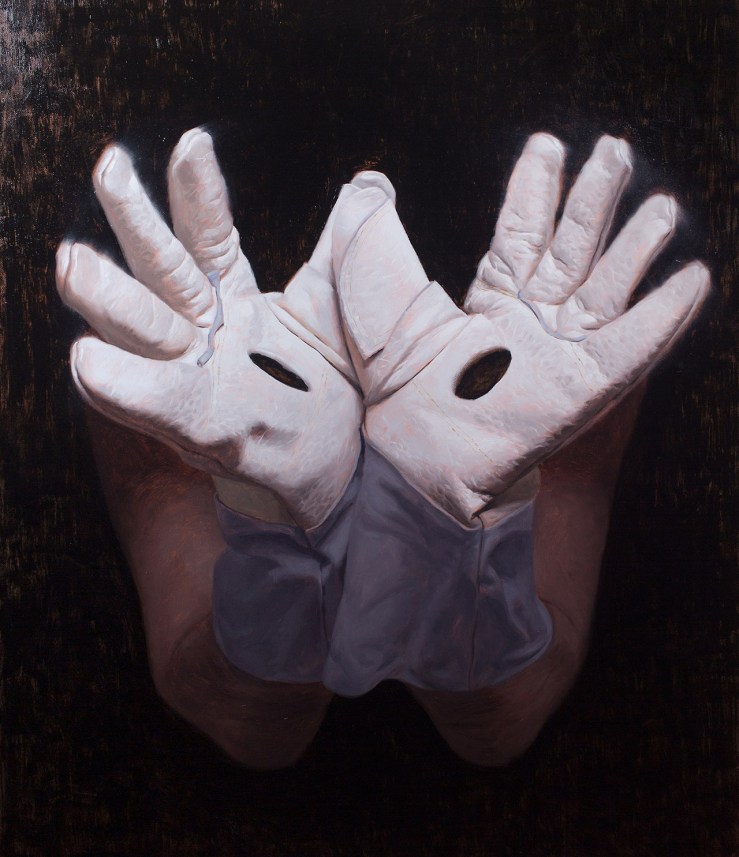
Unfinished #14, Holy Spirit, 2017 by Dragan Bibin (b. 1984)
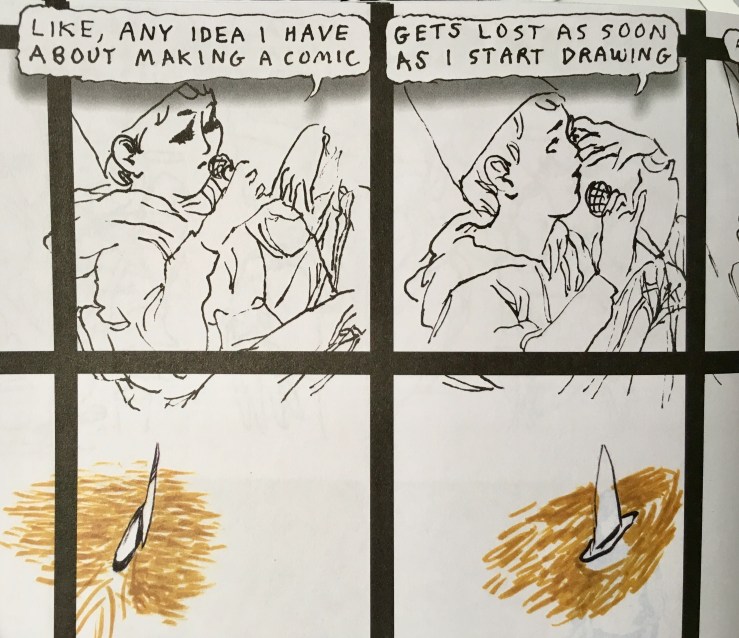
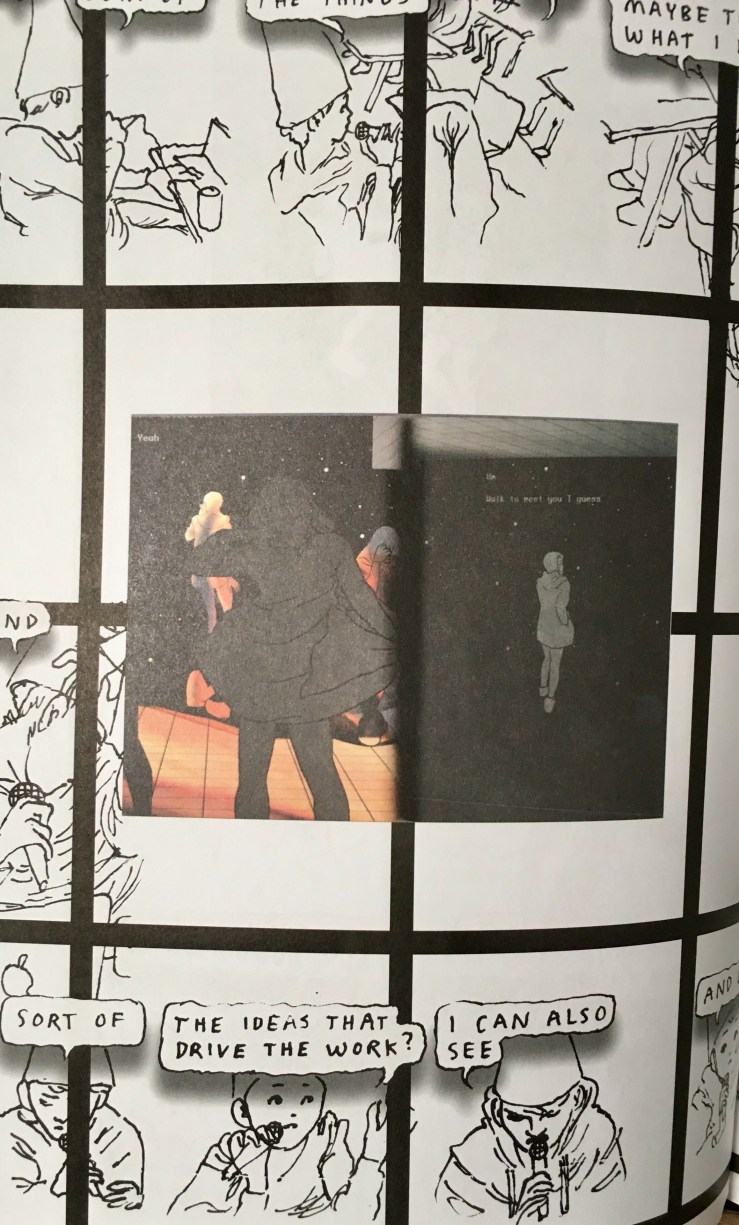
Blaise Larmee’s 2001 is new from 2dcloud. It showed up at the house a few weeks ago, its minimalist cover strange and intriguing.

I’m not sure what the book is—is it a sort of metatextual commentary on Larmee’s webcomic of the same name? A kind of autobiographical riff? A deconstruction of the graphic novel form?
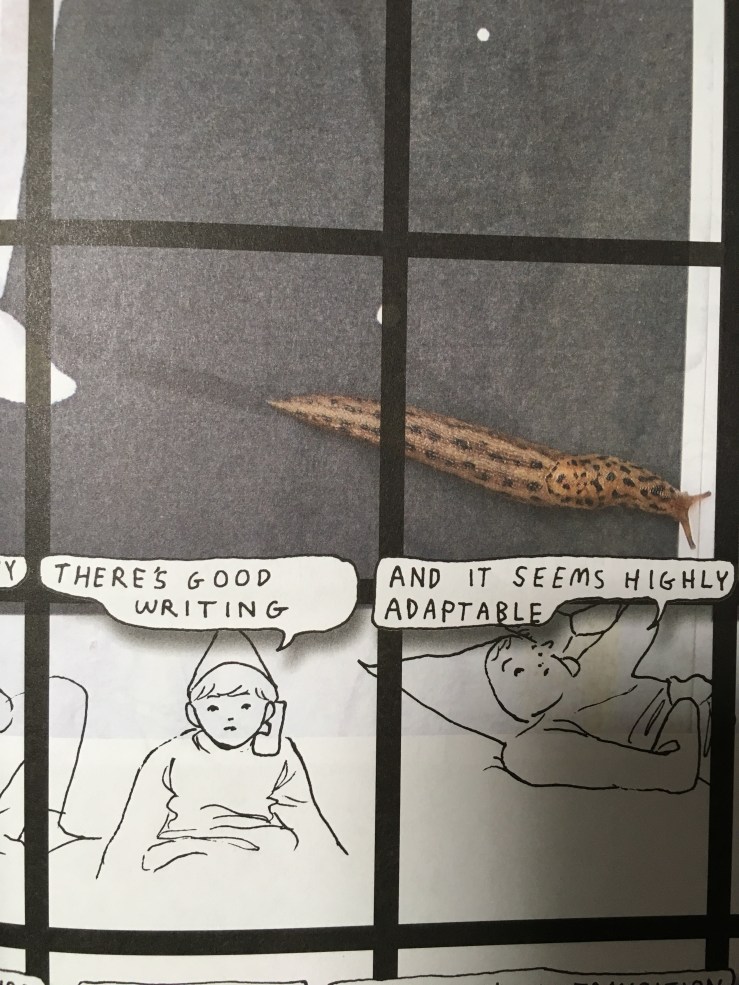
What Larmee’s book is is not as compelling, ultimately, as how it is—sketchy, loose, messy; littered with hi-res scans–receipts, crushed cans and bottles, a house key—scraps from the real that call attention to the narrative’s artifice.
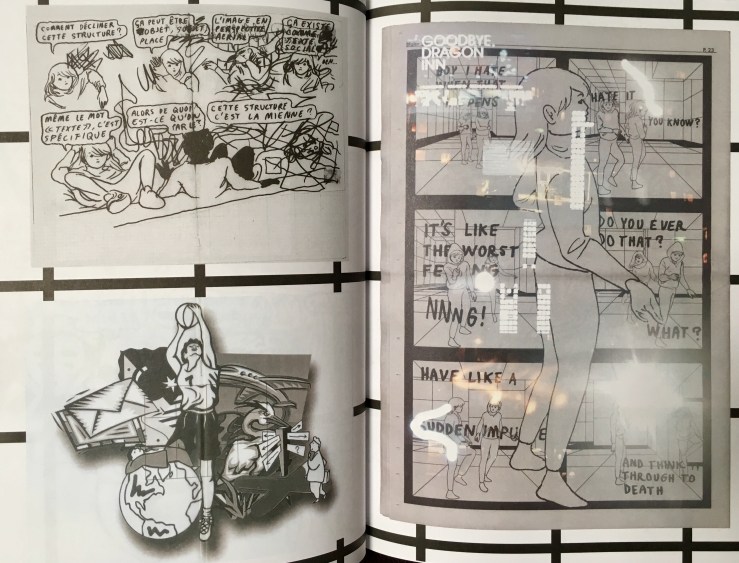
2001 is strange and fascinating in its fragmentary, elusory nature. Check it out.
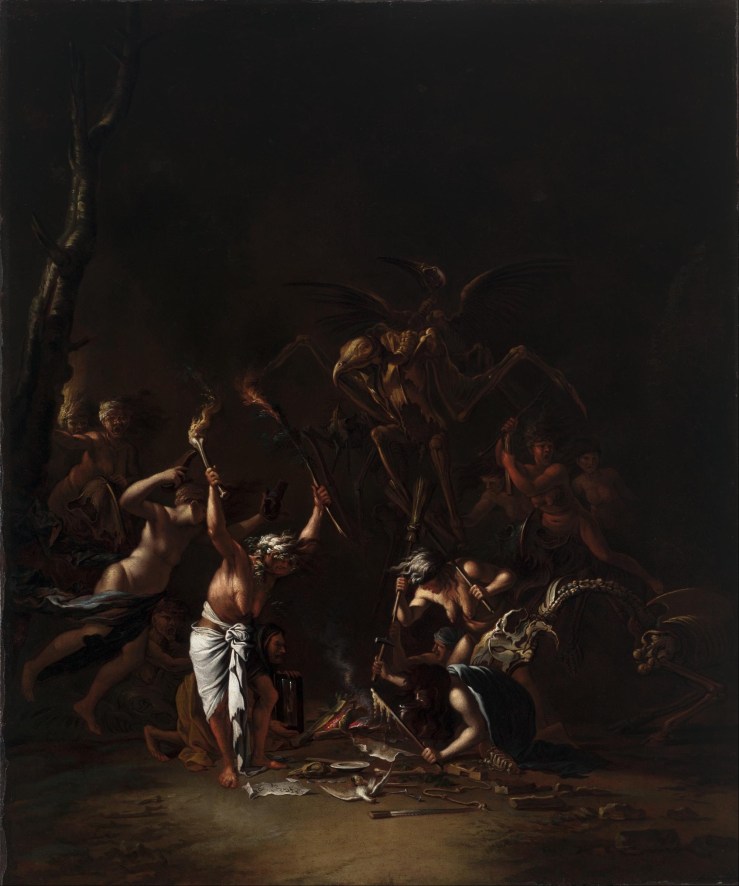


The Witches’ Sabbath, 1654 by Salvator Rosa (1615-1673)
“A Ghost”
by
Guy de Maupassant
Translated by M. Charles Sommer
We were speaking of sequestration, alluding to a recent lawsuit. It was at the close of a friendly evening in a very old mansion in the Rue de Grenelle, and each of the guests had a story to tell, which he assured us was true.
Then the old Marquis de la Tour-Samuel, eighty-two years of age, rose and came forward to lean on the mantelpiece. He told the following story in his slightly quavering voice.
“I, also, have witnessed a strange thing—so strange that it has been the nightmare of my life. It happened fifty-six years ago, and yet there is not a month when I do not see it again in my dreams. From that day I have borne a mark, a stamp of fear,—do you understand?
“Yes, for ten minutes I was a prey to terror, in such a way that ever since a constant dread has remained in my soul. Unexpected sounds chill me to the heart; objects which I can ill distinguish in the evening shadows make me long to flee. I am afraid at night.
“No! I would not have owned such a thing before reaching my present age. But now I may tell everything. One may fear imaginary dangers at eighty-two years old. But before actual danger I have never turned back, mesdames.
“That affair so upset my mind, filled me with such a deep, mysterious unrest that I never could tell it. I kept it in that inmost part, that corner where we conceal our sad, our shameful secrets, all the weaknesses of our life which cannot be confessed.
“I will tell you that strange happening just as it took place, with no attempt to explain it. Unless I went mad for one short hour it must be explainable, though. Yet I was not mad, and I will prove it to you. Imagine what you will. Here are the simple facts:
“It was in 1827, in July. I was quartered with my regiment in Rouen.
“One day, as I was strolling on the quay, I came across a man I believed I recognized, though I could not place him with certainty. I instinctively went more slowly, ready to pause. The stranger saw my impulse, looked at me, and fell into my arms.
“It was a friend of my younger days, of whom I had been very fond. He seemed to have become half a century older in the five years since I had seen him. His hair was white, and he stooped in his walk, as if he were exhausted. He understood my amazement and told me the story of his life.
“A terrible event had broken him down. He had fallen madly in love with a young girl and married her in a kind of dreamlike ecstasy. After a year of unalloyed bliss and unexhausted passion, she had died suddenly of heart disease, no doubt killed by love itself.
“He had left the country on the very day of her funeral, and had come to live in his hotel at Rouen. He remained there, solitary and desperate, grief slowly mining him, so wretched that he constantly thought of suicide.
“‘As I thus came across you again,’ he said, ‘I shall ask a great favor of you. I want you to go to my château and get some papers I urgently need. They are in the writing-desk of my room, of our room. I cannot send a servant or a lawyer, as the errand must be kept private. I want absolute silence. Continue reading ““A Ghost,” a short story by Guy de Maupassant”
 Biblioklept