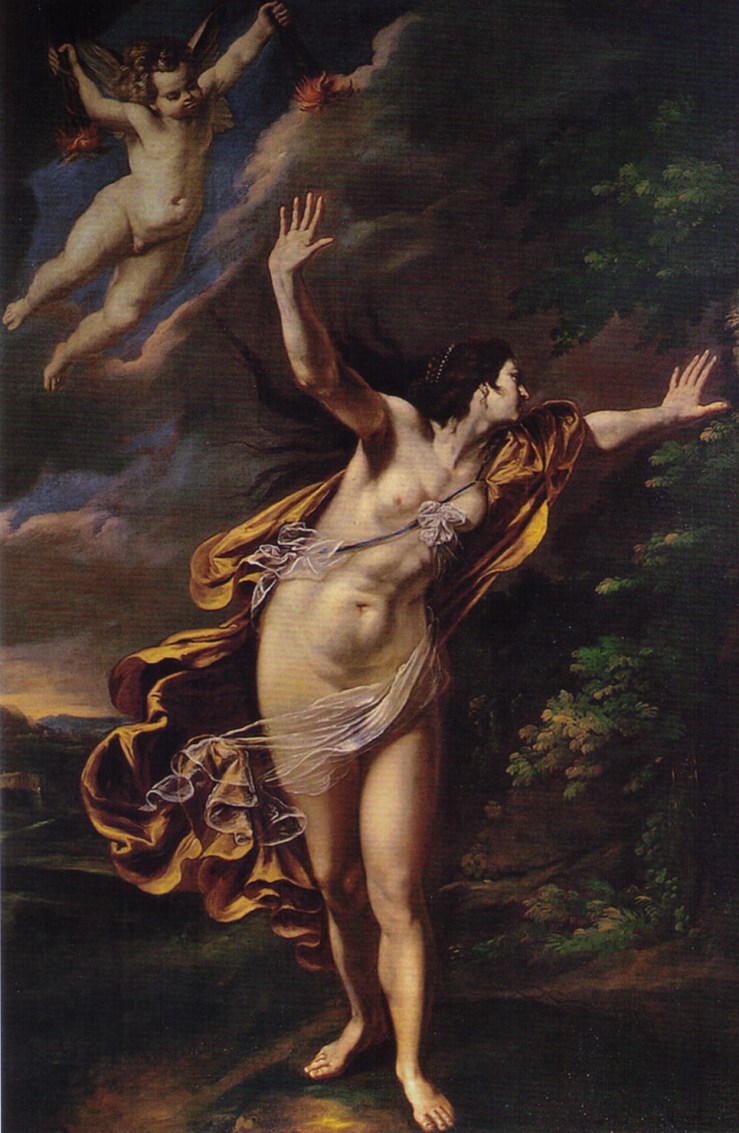
Aurora — Artemisia Gentileschi

aurora-1627

Aurora, 1627 by Artemisia Gentileschi (1610-1656)

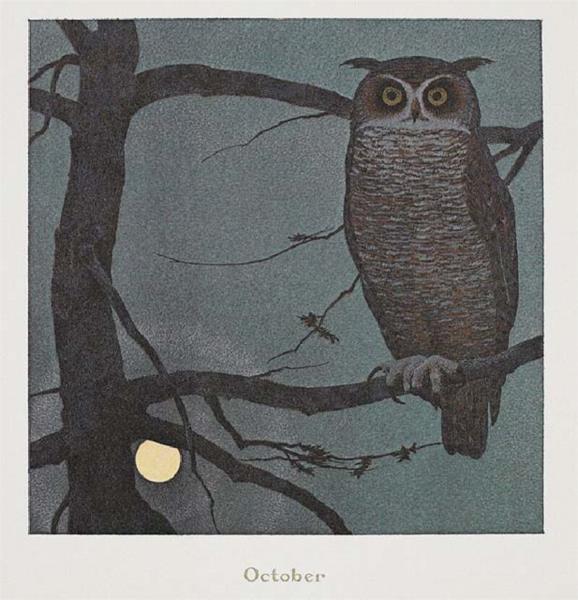
“October” — May Swenson

“October”
by
May Swenson

1
A smudge for the horizon
that, on a clear day, shows
the hard edge of hills and
buildings on the other coast.
Anchored boats all head one way:
north, where the wind comes from.
You can see the storm inflating
out of the west. A dark hole
in gray cloud twirls, widens,
while white rips multiply
on the water far out.
Wet tousled yellow leaves,
thick on the slate terrace.
The jay’s hoarse cry. He’s
stumbling in the air,
too soaked to fly.
       2
Knuckles of the rain
on the roof,
chuckles into the drain-
pipe, spatters on
the leaves that litter
the grass. Melancholy
morning, the tide full
in the bay, an overflowing
bowl. At least, no wind,
no roughness in the sky,
its gray face bedraggled
by its tears.
       3
Peeling a pear, I remember
my daddy’s hand. His thumb
(the one that got nipped by the saw,
lacked a nail) fit into
the cored hollow of the slippery
half his knife skinned so neatly.
Dad would pare the fruit from our
orchard in the fall, while Mother
boiled the jars, prepared for
“putting up.” Dad used to darn
our socks when we were small,
and cut our hair and toenails.
Sunday mornings, in pajamas, we’d
take turns in his lap. He’d help
bathe us sometimes. Dad could do
anything. He built our dining table,
chairs, the buffet, the bay window
seat, my little desk of cherry wood
where I wrote my first poems. That
day at the shop, splitting panel
boards on the electric saw (oh, I
can hear the screech of it now,
the whirling blade that sliced
my daddy’s thumb), he received the mar
that, long after, in his coffin,
distinguished his skilled hand.
       4
I sit with braided fingers
and closed eyes
in a span of late sunlight.
The spokes are closing.
It is fall: warm milk of light,
though from an aging breast.
I do not mean to pray.
The posture for thanks or
supplication is the same
as for weariness or relief.
But I am glad for the luck
of light. Surely it is godly,
that it makes all things
begin, and appear, and become
actual to each other.
Light that’s sucked into
the eye, warming the brain
with wires of color.
Light that hatched life
out of the cold egg of earth.
       5
Dark wild honey, the lion’s
eye color, you brought home
from a country store.
Tastes of the work of shaggy
bees on strong weeds,
their midsummer bloom.
My brain’s electric circuit
glows, like the lion’s iris
that, concentrated, vibrates
while seeming not to move.
Thick transparent amber
you brought home,
the sweet that burns.
       6
“The very hairs of your head
are numbered,” said the words
in my head, as the haircutter
snipped and cut, my round head
a newel poked out of the tent
top’s slippery sheet, while my
hairs’ straight rays rained
down, making pattern on the neat
vacant cosmos of my lap. And
maybe it was those tiny flies,
phantoms of my aging eyes, seen
out of the sides floating (that,
when you turn to find them
full face, always dissolve) but
I saw, I think, minuscule,
marked in clearest ink, Hairs
#9001 and #9002 fall, the cut-off
ends streaking little comets,
till they tumbled to confuse
with all the others in their
fizzled heaps, in canyons of my
lap. And what keeps asking
in my head now that, brushed off
and finished, I’m walking
in the street, is how can those
numbers remain all the way through,
and all along the length of every
hair, and even before each one
is grown, apparently, through
my scalp? For, if the hairs of my
head are numbered, it means
no more and no less of them
have ever, or will ever be.
In my head, now cool and light,
thoughts, phantom white flies,
take a fling: This discovery
can apply to everything.
       7
Now and then, a red leaf riding
the slow flow of gray water.
From the bridge, see far into
the woods, now that limbs are bare,
ground thick-littered. See,
along the scarcely gliding stream,
the blanched, diminished, ragged
swamp and woods the sun still
spills into. Stand still, stare
hard into bramble and tangle,
past leaning broken trunks,
sprawled roots exposed. Will
something move?—some vision
come to outline? Yes, there—
deep in—a dark bird hangs
in the thicket, stretches a wing.
Reversing his perch, he says one
“Chuck.” His shoulder-patch
that should be red looks gray.
This old redwing has decided to
stay, this year, not join the
strenuous migration. Better here,
in the familiar, to fade.

 

October — Alex Colville

october-1979large

October, 1979 by Alex Colville (1920-2013)

Tether Book — Jen Mazza

tetherbookdec2010

Tether Book, 2011 by Jen Mazza (b. 1972)

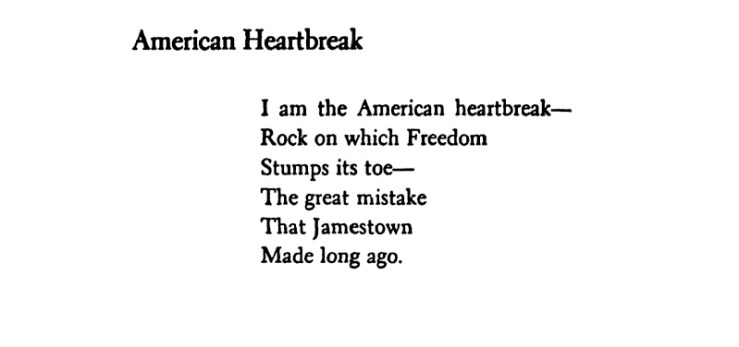
“American Heartbreak” — Langston Hughes

american heartbreak

The Flight of the Soul — Louis Janmot

1280px-louis_janmot_-_po25c325a8me_de_l252725c325a2me_16_-_le_vol_de_l25e22580259925c325a2me

Poème de l’âme 16: Le Vol de l’âme Louis Janmot (Poem of the Soul 16: The Flight of the Soul), 1855 by Louis Janmot (1814-1892)

Lynch wasn’t somebody who you could schedule with

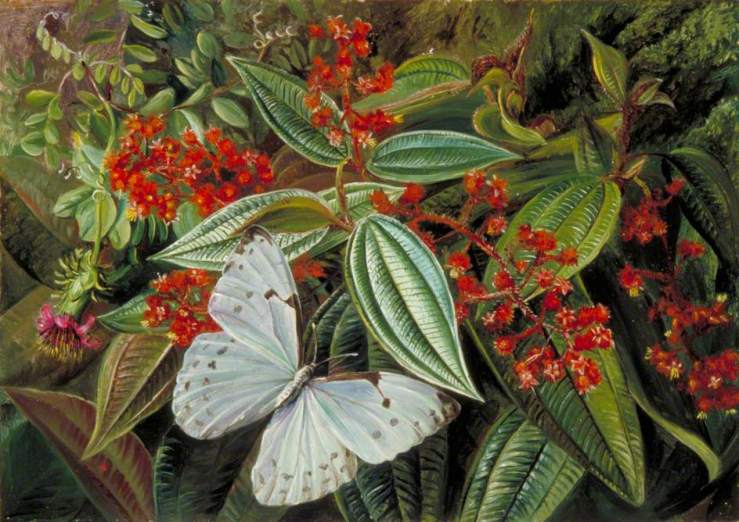
Trees Laden with Parasites and Epiphytes in a Brazilian Garden — Marianne North

trees-laden-with-parasites-and-epiphytes-in-a-brazilian-garden-1873

Trees Laden with Parasites and Epiphytes in a Brazilian Garden, 1873 by Marianne North (1830-90)

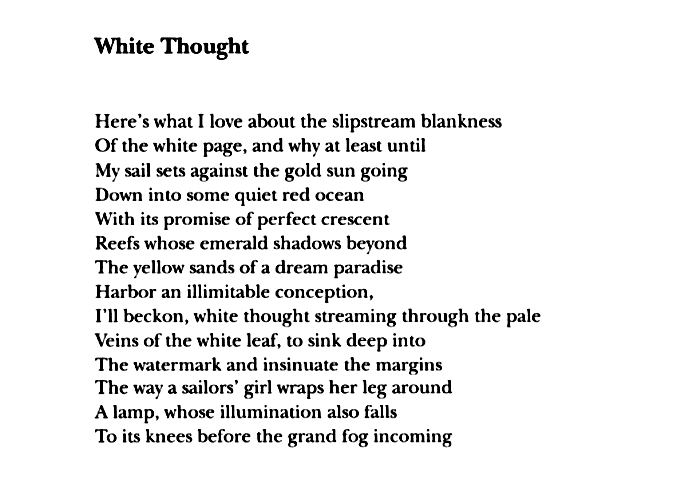
“White Thought” — Tom Clark

white thought

Parsifal I — Anselm Kiefer

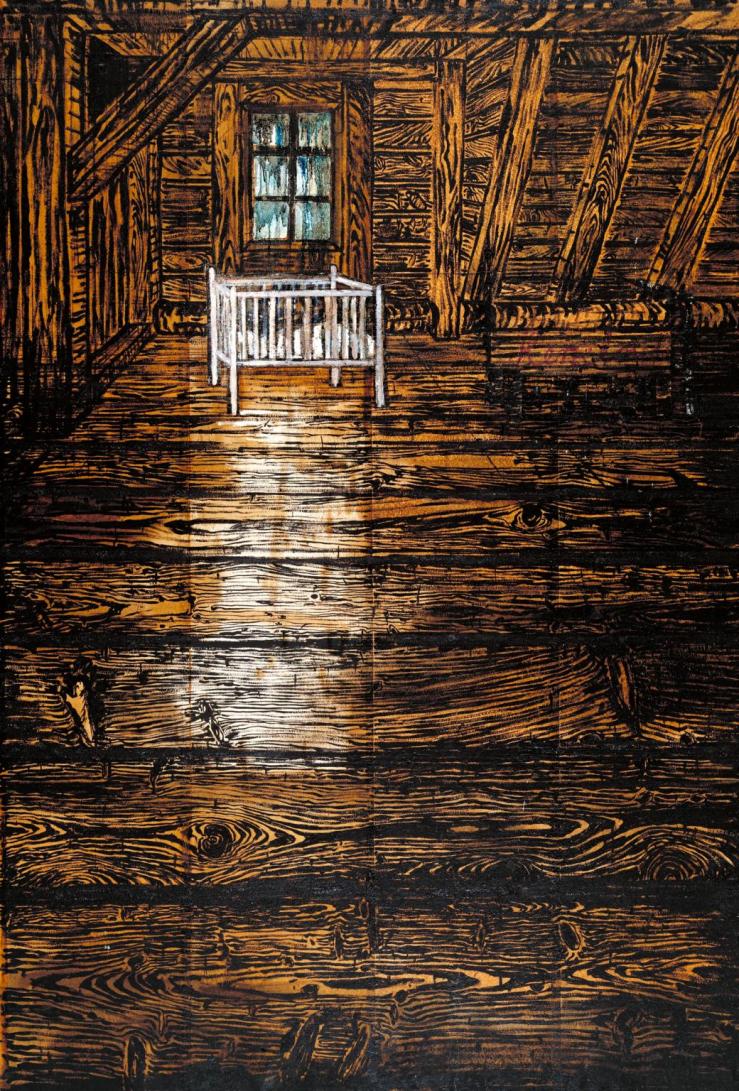
Parsifal I 1973 by Anselm Kiefer born 1945

Parsifal I, 1973 by Anselm Kiefer (b. 1945)

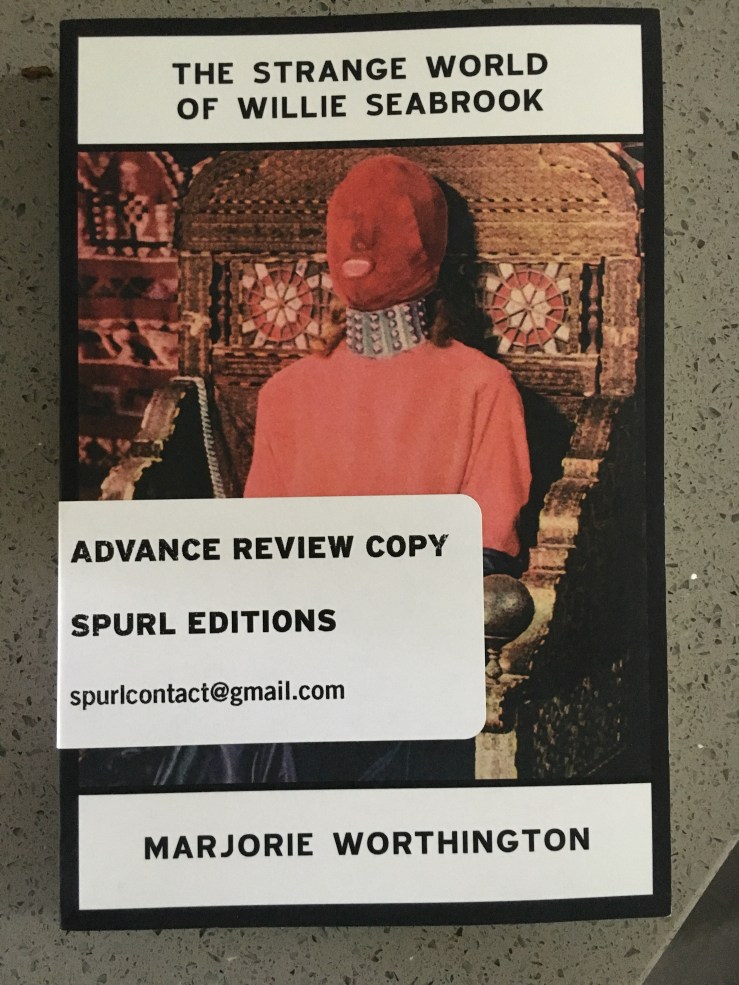
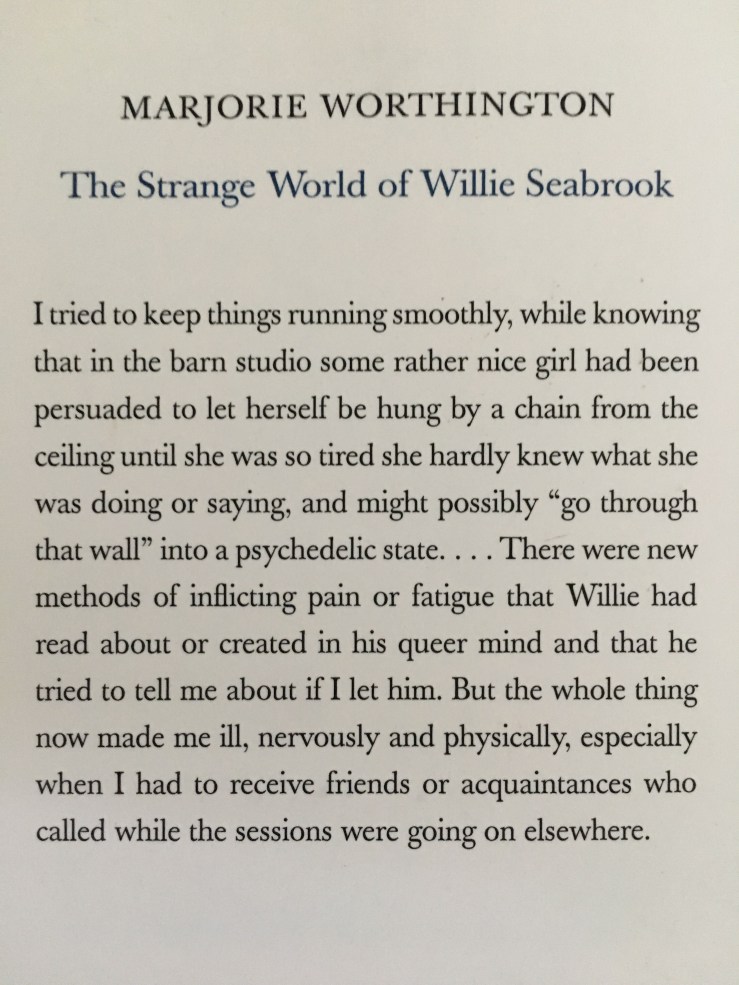
Marjorie Worthington’s The Strange World of Willie Seabrook (Book acquired 26 Sept. 2017)

Marjorie Muir Worthington’s 1966 memoir about her relationship with occultist and fellow Lost Generation weirdo William Seabrook is forthcoming in a new edition from indie Spurl. It looks fascinating. Their blurb:

This is the somber, quietly stunning account of American author Marjorie Worthington’s life and relationship with William Seabrook.

A bestselling writer on the exotic and the occult, Seabrook was an extraordinary figure from the 1920s to the 1940s who traveled widely and introduced voodoo and the concept of the “zombie” to Americans in his book The Magic Island.

In 1966, years after his death from suicide, Worthington, a novelist and Seabrook’s second wife, cast her eye on their years living in France as lost-generation expatriates; their time traveling in the Sahara desert (where Seabrook researched his book The White Monk of Timbuctoo); their friendships with Aldous Huxley, Gertrude Stein, and Michel Leiris; and the gradual erosion of their relationship.

Worthington was with Seabrook in France and later New York when his life became consumed by alcohol, and he took the drastic step of committing himself to a mental institution for a cure; though he wrote about the institution in his book Asylum, he remained an alcoholic. He was also fixated by sadistic games he played with women, which he and the surrealist Man Ray photographed, and which he later viewed as a way to initiate altered psychological states through pain.

The Strange World of Willie Seabrook is an intimate look at the complicated, torturous relationship of two writers. Seabrook was a sadist, yet to Worthington he was also enthralling; he was an alcoholic, but she believed she could protect him. Even after he had hurt her emotionally, she stayed near him. In brilliantly depicted moments of folie à deux, we watch Worthington join Seabrook in his decline, and witness the shared claustrophobic, psychological breakdown that ensues.

Penelope and the Suitors — Neil Packer

img_8025

From The Odyssey, retold by Gillian Cross and illustrated by Neil Packer, Candlewick Press, 2012.

The Bedroom — Pieter de Hooch

the-bedroom

The Bedroom, c. 1659 by Pieter de Hooch (1629-1684)

Brown and the Farrier | A menacingly comic vignette from Cormac McCarthy’s Blood Meridian

A self-contained episode from late in Cormac McCarthy’s Blood Meridian; this little vignette captures the book’s strange mix of menace and humor:

Noon he was red-eyed and reeking before the alcalde’s door demanding the release of his companions. The alcalde vacated out the back of the premises and shortly there arrived an American corporal and two soldiers who warned him away. An hour later he was at the farriery. Standing warily in the doorway peering into the gloom until he could make out the shape of things within.

The farrier was at his bench and Brown entered and laid before him a polished mahogany case with a brass nameplatebradded to the lid. He unsnapped the catches and opened the case and raised from their recess within a pair of shotgun barrels and he took up the stock with the other hand. He hooked the barrels into the patent breech and stood the shotgun on the bench and pushed the fitted pin home to secure the forearm. He cocked the hammers with his thumbs and let them fall again. The shotgun was English made and had damascus barrels and engraved locks and the stock was burl mahogany. He looked up. The farrier was watching him.

You work on guns? said Brown.

I do some.

I need these barrels cut down.

The man took the gun and held it in his hands. There was a raised center rib between the barrels and inlaid in gold the maker’s name, London. There were two platinum bands in the patent breech and the locks and the hammers were chased with scrollwork cut deeply in the steel and there were partridges engraved at either end of the maker’s name there. The purple barrels were welded up from triple skelps and the hammered iron and steel bore a watered figure like the markings of some alien and antique serpent, rare and beautiful and lethal, and the wood was figured with a deep red feather grain at the butt and held a small springloaded silver capbox in the toe.

The farrier turned the gun in his hands and looked at Brown. He looked down at the case. It was lined with green baize and there were little fitted compartments that held a wadcutter, a pewter powderflask, cleaning jags, a patent pewter capper.

You need what? he said.

Cut the barrels down. Long about in here. He held a finger across the piece.

I cant do that.

Brown looked at him. You cant do it?

No sir. He looked around the shop. Well, he said. I’d of thought any damn fool could saw the barrels off a shotgun.

There’s something wrong with you. Why would anybody want to cut the barrels off a gun like this?

What did you say? said Brown.

The man tendered the gun nervously. I just meant that I dont see why anybody would want to ruin a good gun like this here. What would you take for it?

It aint for sale. You think there’s something wrong with me?

No I dont. I didnt mean it that way.

Are you goin to cut them barrels down or aint ye?

I cant do that.

Cant or wont?

You pick the one that best suits you.

Brown took the shotgun and laid it on the bench. What would you have to have to do it? he said.

I aint doin it.

If a man wanted it done what would be a fair price?

I dont know. A dollar.

Brown reached into his pocket and came up with a handful of coins. He laid a two and a half dollar gold piece on the bench. Now, he said. I’m payin you two and a half dollars.

The farrier looked at the coin nervously. I dont need your money, he said. You cant pay me to butcher that there gun.

You done been paid.

No I aint.

Yonder it lays. Now you can either get to sawin or you can default. In the case of which I aim to take it out of your ass.

The farrier didnt take his eyes off Brown. He began to back away from the bench and then he turned and ran.

When the sergeant of the guard arrived Brown had the shotgun chucked up in the benchvise and was working at the barrels with a hacksaw. The sergeant walked around to where he could see his face. What do you want, said Brown.

This man says you threatened his life.

What man?

This man. The sergeant nodded toward the door of the shed.

Brown continued to saw. You call that a man? he said.

I never give him no leave to come in here and use my tools neither, said the farrier.

How about it? said the sergeant.

How about what?

How do you answer to this man’s charges?

He’s a liar.

You never threatened him?

That’s right.

The hell he never.

I dont threaten people. I told him I’d whip his ass and that’s as good as notarized.

You dont call that a threat?

Brown looked up. It was not no threat. It was a promise. He bent to the work again and another few passes with the saw and the barrels dropped to the dirt. He laid down the saw and backed off the jaws of the vise and lifted out the shotgun and unpinned the barrels from the stock and fitted the pieces into the case and shut the lid and latched it.

What was the argument about? said the sergeant.

Wasnt no argument that I know of.

You better ask him where he got that gun he’s just ruined. He’s stole that somewheres, you can wager on it.

Where’d you get the shotgun? said the sergeant.

Brown bent down and picked up the severed barrels. They were about eighteen inches long and he had them by the small end. He came around the bench and walked past the sergeant. He put the guncase under his arm. At the door he turned. The farrier was nowhere in sight. He looked at the sergeant.

I believe that man has done withdrawed his charges, he said. Like as not he was drunk.


Volatile Bodies — Emily Mae Smith

emsmith_2016_-072_006_volatilebodies_web_1000

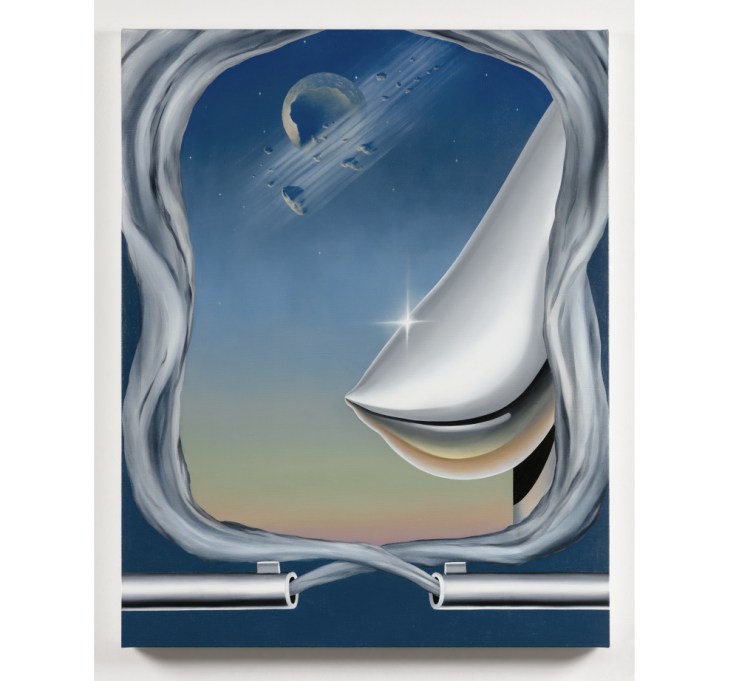
Volatile Bodies, 2016 by Emily Mae Smith (b. 1979)

Metamorphosis — Albert Bloch

metamorphosis-1948

Metamorphosis, 1948 by Albert Bloch (1882-1961)

“That in Aleppo Once…” — Vladimir Nabokov

“That in Aleppo Once…”

by

Vladimir Nabokov


Dear V. – Among other things, this is to tell you that at last I am here, in the country whither so many sunsets have led. One of the first persons I saw was our good old Gleb Alexandrovich Gekko gloomily crossing Columbus Avenue in quest of the petit cafe du coin which none of us three will ever visit again. He seemed to think that somehow or other you were betraying our national literature, and he gave me your address with a deprecatory shake of his gray head, as if you did not deserve the treat of hearing from me.

I have a story for you. Which reminds me – I mean putting it like this reminds me – of the days when we wrote our first udder-warm bubbling verse, and all things, a rose, a puddle, a lighted window, cried out to us: “I’m a rhyme!” Yes, this is a most useful universe. We play, we die: ig-rhymeumi-rhyme. And the sonorous souls of Russian verbs lend a meaning to the wild gesticulation of trees or to some discarded newspaper sliding and pausing, and shuffling again, with abortive flaps and apterous jerks along an endless windswept embankment. But just now I am not a poet. I come to you like that gushing lady in Chekhov who was dying to be described.

I married, let me see, about a month after you left France, and a few weeks before the gentle Germans roared into Paris. Although I can produce documentary proofs of matrimony, I am positive now that my wife never existed. You may know her name from some other source, but that does not matter: it is the name of an illusion. Therefore, I am able to speak of her with as much detachment as I would of a character in a story (one of your stories, to be precise).

It was love at first touch rather than at first sight, for I had met her several times before without experiencing any special emotions; but one night as I was seeing her home, something quaint she had said made me stoop with a laugh and lightly kiss her on the hair – and of course we all know of that blinding blast which is caused by merely picking up a small doll from the floor of a carefully abandoned house: the soldier involved hears nothing; for him it is but an ecstatic soundless and boundless expansion of what had been during his life a pinpoint of light in the dark center of his being. And really, the reason we think of death in celestial terms is that the visible firmament, especially at night (above our blacked-out Paris with the gaunt arches of its Boulevard Exelmans and the ceaseless Alpine gurgle of desolate latrines), is the most adequate and ever-present symbol of that vast silent explosion. Continue reading ““That in Aleppo Once…” — Vladimir Nabokov”