Woman after Bath — Goyo Hashiguchi

woman-after-bath-1920

Woman after Bath, 1920 by Goyo Hashiguchi (1880-1921)

The shock of dysrecognition | Philip K. Dick defines science fiction

I will define science fiction, first, by saying what sf is not.  It cannot be defined as “a story (or novel or play) set in the future,” since there exists such a thing as space adventure, which is set in the future but is not sf: it is just that: adventures, fights and wars in the future in space involving super-advanced technology. Why, then, is it not science fiction? It would seem to be, and Doris Lessing (e.g.) supposes that it is. However, space adventure lacks the distinct new idea  that is the essential ingredient. Also, there can be science fiction set in the present: the alternate world story or novel. So if we separate sf from the future and also from ultra-advanced technology, what then do we have that can  be called sf?

We have a fictitious world; that is the first step: it is a society that does not in fact exist, but is predicated on our known society; that is, our known society acts as a jumping-off point for it; the society advances out of our own in some way, perhaps orthogonally, as with the alternate world story or novel. It is our world dislocated by some kind of mental effort on the part of the author, our world transformed into that which it is not or not yet. This world must differ from the given in at least one way, and this one way must be sufficient to give rise to events that could not occur in our society—or in any known society present or past. There must be a coherent idea involved in this dislocation; that is, the dislocation must be a conceptual one, not merely a trivial or bizarre one—this  is the essence of science fiction, the conceptual dislocation within the society so that as a result a new society is generated in the author’s mind, transferred to paper, and from paper it occurs as a convulsive shock in the reader’s mind, the shock of dysrecognition.  He knows that it is not his actual world that he is reading about.

Now, to separate science fiction from fantasy. This is impossible to do, and a moment’s thought will show why. Take psionics; take mutants such as we find in Ted Sturgeon’s wonderful MORE THAN HUMAN.  If the reader believes that such mutants could exist, then he will view Sturgeon’s novel as science fiction. If, however, he believes that such mutants are, like wizards and dragons, not possible, nor will ever be possible, then he is reading a fantasy novel. Fantasy involves that which general opinion regards as impossible; science fiction involves that which general opinion regards as possible under the right circumstances. This is in essence a judgment-call, since what is possible and what is not possible is not objectively known but is, rather, a subjective belief on the part of the author and of the reader.

Now to define good  science fiction. The conceptual dislocation—the new idea, in other words—must be truly new (or a new variation on an old one) and it must be intellectually stimulating to the reader; it must invade his mind and wake it up to the possibility of something he had not up to then thought of. Thus “good science fiction” is a value term, not an objective thing, and yet, I think, there really is such a thing, objectively, as good science fiction.

I think Dr. Willis McNelly at the California State University at Fullerton put it best when he said that the true protagonist of an sf story or novel is an idea and not a person. If it is good  sf the idea is new, it is stimulating, and, probably most important of all, it sets off a chain-reaction of ramification-ideas in the mind of the reader; it so-to-speak unlocks the reader’s mind so that that mind, like the author’s, begins to create. Thus sf is creative and it inspires creativity, which mainstream fiction by-and-large does not do. We who read sf (I am speaking as a reader now, not a writer) read it because we love to experience this chain-reaction of ideas being set off in our minds by something we read, something with a new idea in it; hence the very best science fiction ultimately winds up being a collaboration between author and reader, in which both create—and enjoy  doing it: joy is the essential and final ingredient of science fiction, the joy of discovery of newness.

(in a letter) May 14,1981

From a letter by Philip K. Dick, used as the preface to The Collected Stories of Philip K. Dick, Vol. 1.

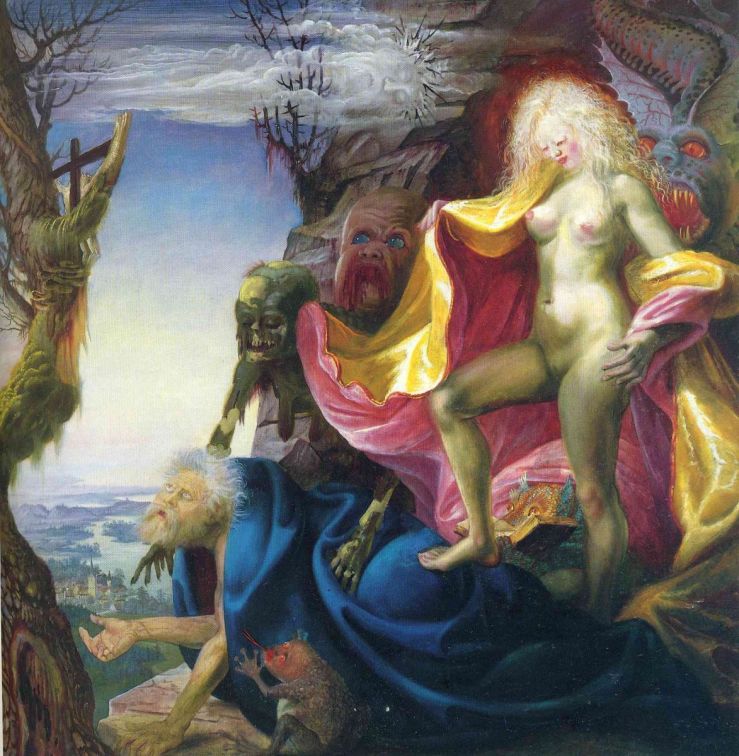
The Temptation of St. Anthony — Otto Dix

188718

The Temptation of St. Anthony by Otto Dix (1891-1969)

(Probably not) All of the similes in Blood Meridian

It was like…

like a wild animal

ribs like fishbones

like thin red leeches

they drank like dogs

It was like a sermon

true as a spirit level

like a string in a maze

He was bald as a stone

like rival bands of apes

silently as a bird alighting

mute as a tailor’s dummy

men or creatures like them

they buried their stool like cats

like effigies for to frighten birds

Yonder sun is like the eye of God

They rode either side like escorts

dark falls here like a thunderclap

The men looked like mud effigies.

like an army asleep on the march

their chins in the sand like lizards

like some naked species of lemur

something like a pound of powder

like a man beset with bees or madness

black waters all alight like cities adrift

like beings for whom the sun hungered

great steady suck­ing sounds like a cow

fingers spiderlike among the bolls of cotton

the fires on the plain faded like an evil dream

abdomens like the tracks of gigantic millipedes

leather wings like dark satanic hummingbirds

us behind him like the disciples of a new faith

he come along and raised me up like Lazarus.

jerking and lurching like a deputation of spastics

holding the coins cupped in her hands like a bird

the mules clambering along the ledges like goats

they labored on sideways over the sand like crabs

shambling past the fires like a balden groundsloth

whores call to him from the dark like souls in want

Men whose speech sounds like the grunting of apes

A hardlooking woman with a wiry body like a man’s.

They were shambling along the road like dumb things

our mother the earth as he said was round like an egg

The watchers looked like forms excavated from a bog.

is voice passed from him like a gift that was also needed

the old man sitting in the shrubbery soli­tary as a gnome

the parasol dipping in the wind like a great black flower

in his sleep he struggled and muttered like a dreaming dog

dragging themselves across the lot like seals or other things

an old anchorite nested away in the sod like a groundsloth

blackened and shriveled in the mud like an enormous spider

the kid behind him on the mule like something he’d captured

he had codified his threats to the one word kill like a crazed chant

the squatting houses were made of hides ranged like curious dorys

little cloven hoof-prints in the stone clever as a little doe in her going

a watered figure like the markings of some alien and antique serpent

The shadows of the smallest stones lay like pencil lines across the sand

the top of the sun rose out of nothing like the head of a great red phallus

the tent began to sway and buckle and like a huge and wounded medusa

he comes down at night like some fairybook beast to fight with the sailors

the blackened rings of the burnedout fires lay in the road like bomb-craters

Buzzards shuffled off through the chaff and plaster like enormous yardfowl

he naked bodies with their wounds like the victims of surgical experimentation

a deeper run of color like blood seeping up in sudden reaches flaring planewise

Then he waded out into the river like some wholly wretched baptismal candidate.

the barman labored over the floor toward him like a man on his way to some chore

He looked like a great clay voodoo doll made animate and the kid looked like another.

the burnt tree stood vertically in the still dawn like a slender stylus marking the hour

he looks like a raggedyman wandered from some garden where he’d used to frighten birds

the bloody stump of the shaft jutted from his thigh like a peg for hanging implements upon

The wagons drew so dry they slouched from side to side like dogs and the sand was grinding them

They crossed a vast dry lake with rows of dead volcanoes ranged beyond it like the works of enormous insects. Continue reading “(Probably not) All of the similes in Blood Meridian”

“Drink” — William Carlos Williams

wcw

Dream of St. Ursula — Vittore Carpaccio

dream-of-st-ursula-1495

Dream of St.Ursula, 1495 by Vittore Carpaccio (c. 1465-c. 1526)

What if art is not communicative? | Ursula K. Le Guin

“Editorial. By the President of the Therolinguistics Association”

by

Ursula K. Le Guin

from

“The Author of the Acacia Seeds And Other Extracts from the Journal of the Association of Therolinguistics


What is Language?

This question, central to the science of therolinguistics, has been answered—heuristically—by the very existence of the science. Language is communication. That is the axiom on which all our theory and research rest, and from which all our discoveries derive; and the success of the discoveries testifies to the validity of the axiom. But to the related, yet not identical question, What is Art? we have not yet given a satisfactory answer.

Tolstoy, in the book whose title is that very question, answered it firmly and clearly: Art, too, is communication. This answer has, I believe, been accepted without examination or criticism by therolinguists. For example: Why do therolinguists study only animals?

Why, because plants do not communicate.

Plants do not communicate; that is a fact. Therefore plants have no language; very well; that follows from our basic axiom. Therefore, also, plants have no art. But stay! That does not follow from the basic axiom, but only from the unexamined Tolstoyan corollary.

What if art is not communicative?

Or, what if some art is communicative, and some art is not?

Ourselves animals, active, predators, we look (naturally enough) for an active, predatory, communicative art; and when we find it, we recognise it. The development of this power of recognition and the skills of appreciation is a recent and glorious achievement.

But I submit that, for all the tremendous advances made by therolinguistics during the last decades, we are only at the beginning of our age of discovery. We must not become slaves to our own axioms. We have not yet lifted our eyes to the vaster horizons before us. We have not faced the almost terrifying challenge of the Plant.

If a non-communicative, vegetative art exists, we must rethink the very elements of our science, and learn a whole new set of techniques.

For it is simply not possible to bring the critical and technical skills appropriate to the study of Weasel murder mysteries, or Batrachian erotica, or the tunnel sagas of the earthworm, to bear on the art of the redwood or the zucchini.

This is proved conclusively by the failure—a noble failure—of the efforts of Dr. Srivas, in Calcutta, using time-lapse photography, to produce a lexicon of Sunflower. His attempt was daring, but doomed to failure. For his approach was kinetic—a method appropriate to the communicative arts of the tortoise, the oyster, and the sloth. He saw the extreme slowness of the kinesis of plants, and only that, as the problem to be solved.

But the problem was far greater. The art he sought, if it exists, is a non-communicative art: and probably a non-kinetic one. It is possible that Time, the essential element, matrix, and measure of all known animal art, does not enter into vegetable art at all. The plants may use the meter of eternity. We do not know.

We do not know. All we can guess is that the putative Art of the Plant is entirely different from the Art of the Animal. What it is, we cannot say; we have not yet discovered it. Yet I predict with some certainty that it exists, and that when it is found it will prove to be, not an action, but a reaction: not a communication, but a reception. It will be exactly the opposite of the art we know and recognise. It will be the first passive art known to us.

Can we in fact know it? Can we ever understand it?

It will be immensely difficult. That is clear. But we should not despair. Remember that so late as the mid-twentieth century, most scientists, and many artists, did not believe that Dolphin would ever be comprehensible to the human brain—or worth comprehending! Let another century pass, and we may seem equally laughable. “Do you realise,” the phytolinguist will say to the aesthetic critic, “that they couldn’t even read Eggplant?” And they will smile at our ignorance, as they pick up their rucksacks and hike on up to read the newly deciphered lyrics of the lichen on the north face of Pike’s Peak.

And with them, or after them, may there not come that even bolder adventurer—the first geolinguist, who, ignoring the delicate, transient lyrics of the lichen, will read beneath it the still less communicative, still more passive, wholly atemporal, cold, volcanic poetry of the rocks: each one a word spoken, how long ago, by the earth itself, in the immense solitude, the immenser community, of space.

Barry Hannah in Hollywood

635610880019438411-barry-hannah-rsd-release-front-cover-artwork

“Pull Back and Reload: Barry Hannah in Hollywood,” a wonderful article by Will Stephenson, is new this week in Oxford American. The article focuses on Hannah’s time in Hollywood in the early 1980s, trying to develop a movie script called Power and Light with Robert Altman. Altman, (not-so-)fresh from making cult jam Popeye, was enchanted by Hannah’s 1980 novel Ray. The director invited Hannah to stay in his Malibu home to work on a script:

Hannah had driven out to Hollywood proudly on his Triumph motorcycle, he and Altman having settled on a meeting place, whereupon Altman was to guide him the rest of the way to his home in Malibu. But when Altman arrived, Hannah hadn’t showed. The filmmaker waited for an hour, increasingly frustrated, until he noticed, across the street, a peep show and adult video store. As Rapp remembers him putting it, Altman thought to himself, “That fucker would be just crazy enough . . .” He wandered inside the adult emporium and there found Hannah, deeply absorbed.

The article is pretty great, larded with nuggets from Hannah’s correspondence and not a few wild anecdotes. Check it out.


The Repo Code

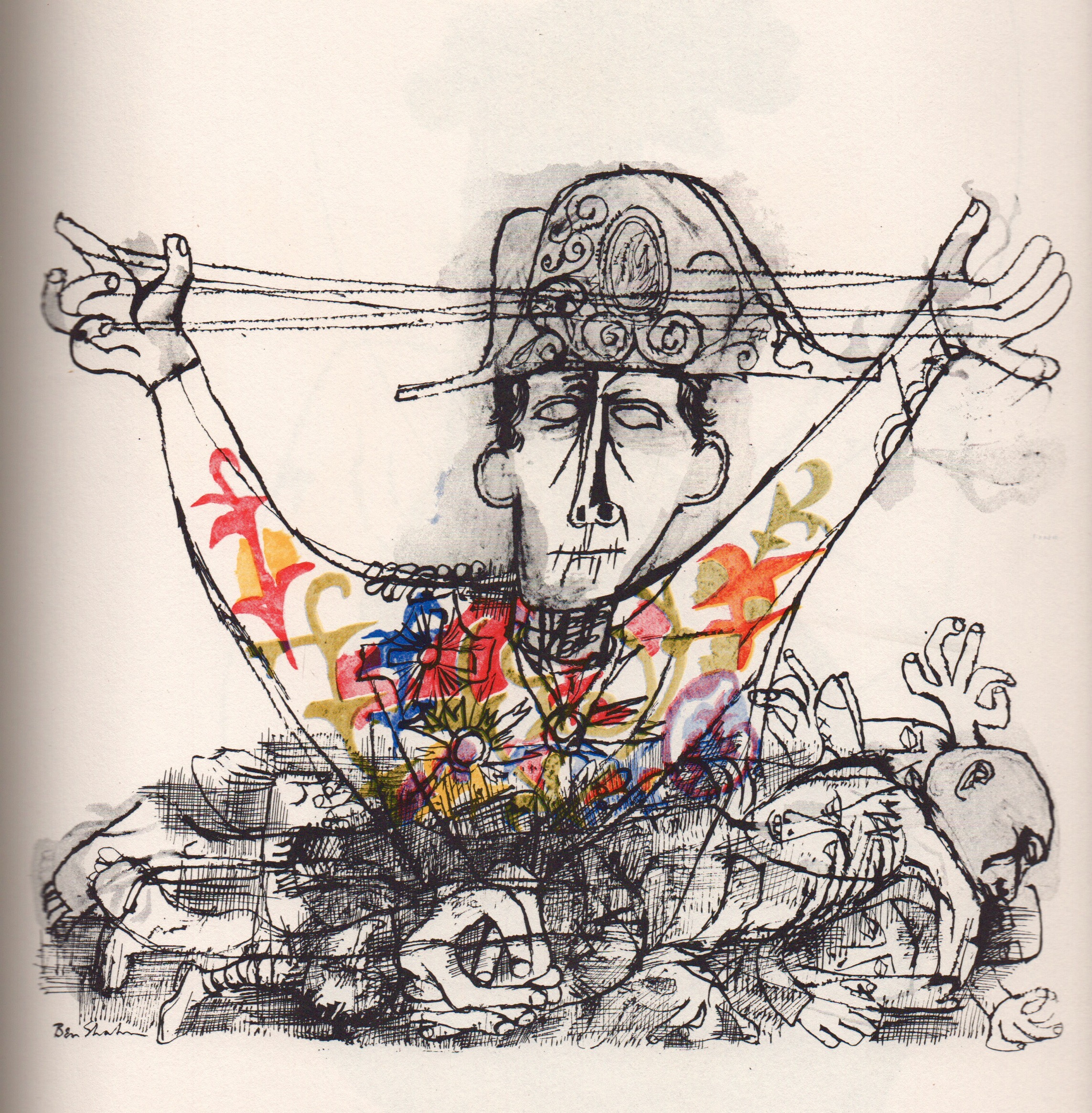
Study for “Goyescas” — Ben Shahn

Study for “Goyescas,” 1956 by Ben Shahn (1898–1969). From Ben Shahn: His Graphic Art, George Braziller, Inc., NY 1957.

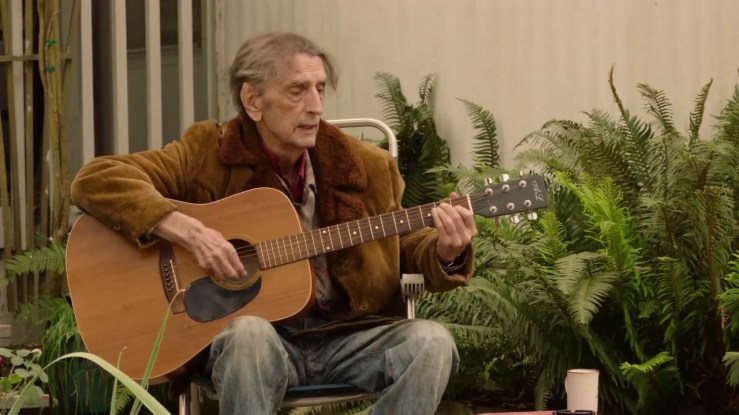
RIP Harry Dean Stanton

maxresdefault1

RIP the great Harry Dean Stanton, 1926-2017

…Kelly’s HeroesTwo-Lane BlacktopPat Garrett & Billy the KidCockfighterRenaldo and ClaraAlienWise BloodEscape from New YorkChristineRepo Man, Paris, TexasRed DawnPretty in PinkThe Last Temptation of ChristWild at HeartFire Walk with MeFear and Loathing in Las VegasThe Straight StoryThe Green MileBig LoveInland EmpireTwin Peaks: The Return, and so many, many more.

Harry Dean Stanton elevated any film he was in, adding strange depth and soul to characters who may have otherwise been flat. Stanton was what people who write about film call a character actor, a subtly bizarre term, really, if you think about it, one that we use to easily distinguish between leading actors—“stars”—and the folks around them who are far more interesting. The greatest character actors are true artists, and Harry Dean Stanton was the greatest character actor. He did play the lead, occasionally though, as in Paris, Texas (dir. Wim Wenders), a cult film that look let me stop here and say, See Paris, Texas already if you haven’t, it’s amazing. And while he’s not exactly the lead in Repo Man (dir. Alex Cox), he’s certainly the weird bouncing gravity that both anchors the film and propels it forward. (I assume that Repo Man is still required cult film viewing for young folks?). It was a joy to see Stanton one last time this year in Twin Peaks: The Return, where his performance of “Red River Valley” was a standout scene in a show full of standout scenes. While I’ll miss seeing him in new films, Stanton’s long list of roles insures that we’ll still be able to wonder into a film or show and excitedly declare, Oh shit! Harry Dean Stanton is in this!

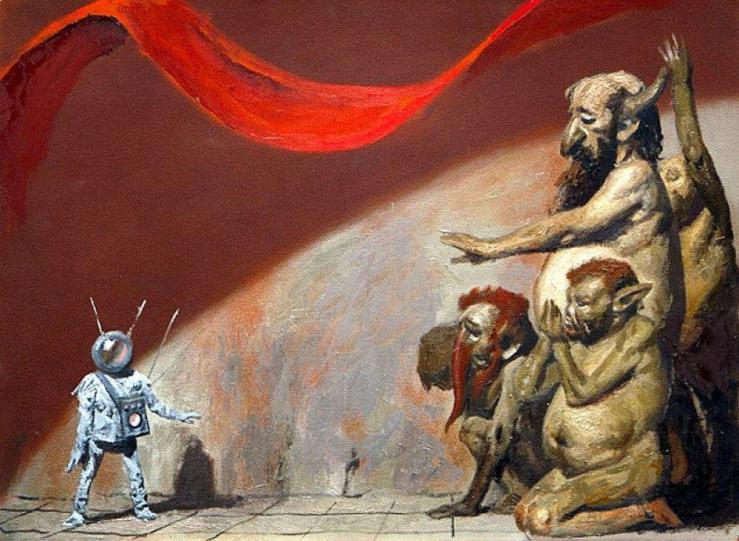
Tyurlikov and Alien — Gely Korzhev

tumblr_okcgh77hxe1un6l79o6_1280

Tyurlikov and Alien, 1981 by Gely Korzhev (1925-2012)

Read Philip K. Dick’s short story “To Serve the Master”

“To Serve the Master”

by

Philip K. Dick


Applequist was cutting across a deserted field, up a narrow path beside the yawning crack of a ravine, when he heard the voice.

He stopped frozen, hand on his S-pistol. For a long time he listened, but there was only the distant lap of the wind among the broken trees along the ridge, a hollow murmuring that mixed with the rustle of the dry grass beside him. The sound had come from the ravine. Its bottom was snarled and debris-filled. He crouched down at the lip and tried to locate the voice.

There was no motion. Nothing to give away the place. His legs began to ache. Flies buzzed at him, settled on his sweating forehead. The sun made his head ache; the dust clouds had been thin the last few months.

His radiation-proof watch told him it was three o’clock. Finally he shrugged and got stiffly to his feet. The hell with it. Let them send out an armed team. It wasn’t his business; he was a letter carrier grade four, and a civilian.

As he climbed the hill toward the road, the sound came again. And this time, standing high above the ravine, he caught a flash of motion. Fear and puzzled disbelief touched him. It couldn’t be — but he had seen it with his own eyes. It wasn’t a newscircular rumor. Continue reading “Read Philip K. Dick’s short story “To Serve the Master””

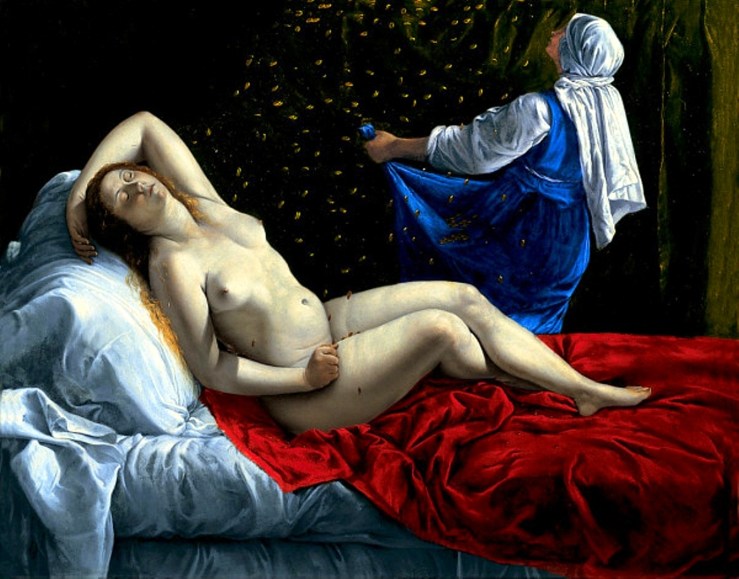
Danae — Artemisia Gentileschi

artemisia_gentileschi_-_danac3ab

Danae, 1612 by Artemisia Gentileschi (1610-1656)

Hurricane Irma reading riff

img_7920

I first started getting a tad—just a tad—nervous about Hurricane Irma on Monday, September 4th. This was Labor Day. I had the day off from work, and it was a good day: beer, barbecue, swimming. Etc. Hurricane Irma was already enormous, a monstropolous beast for the record books looming in the Atlantic to eat up our beloved Florida.

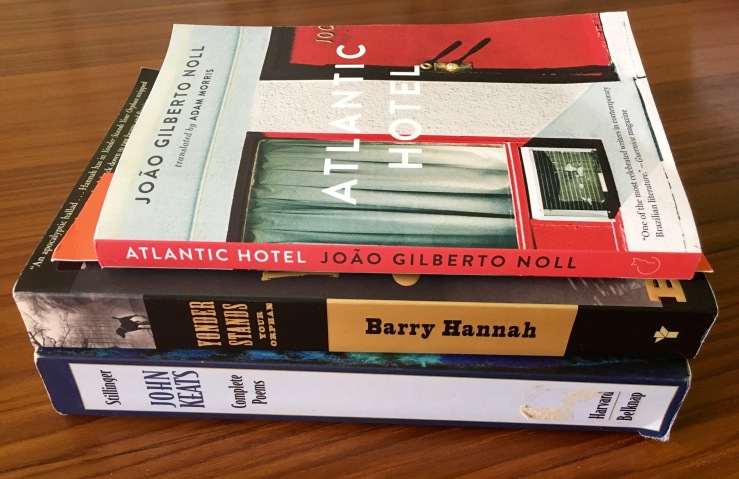
I was still reading Barry Hannah’s last novel Yonder Stands Your Orphan that day; I’d finish it up a few days later. It was excellent, full of great sentences, vignettes, riffs, rants, etc. I’d say it unraveled at the end but “unravel” implies a cohesiveness that maybe isn’t quite there—I’d have to read it again to see, and it’s worth a reread. Actually, in a sense, it coheres in that it collects a number of Hannah’s former characters into a picaresque of grotesque misadventures, hung loosely on a pimp-pornographer-outcast named Man Mortimer. Man Mortimer is the closest thing to a hero the novel has, and he’s pretty evil. Let me crib from an actual review; from Christopher Tayler’s 2001 write-up in the 2001 LRB:

The plot, such as it is, revolves around the depredations of a demonic big-city outsider called Man Mortimer, ‘a gambler, a liaison for stolen cars and a runner of whores, including three Vicksburg housewives’. Mortimer starts to take an interest in cutting people when he finds out that his sort-of girlfriend, Dee Allison – a single mother, nurse and ‘nun of apathy’ – has been unfaithful to him. Dee’s feral twin sons, meanwhile, find in a dried-up sinkhole a car containing the skeletons of Mortimer’s former lover and her child; they clean the skeletons up and take to carting them round the woods. Mortimer is initially concerned with avenging himself on Dee and reclaiming the evidence, but he soon graduates to fairly random attacks on all who cross his path – all, that is, except the poisonous Sidney Farté, who is delighted when Mortimer chops his father’s head off and replaces it with a football, since this speeds his inheritance of the family bait store.

Yonder Stands Your Orphan is often surreal and always dark; it often reminded me of David Lynch’s crime stories, with their grotesque gangsters and abject phantoms. Hell, there’s even a character named Frank Booth.

But where was I? Sorry. This riff is in part a way for me to collect the past few days into something coherent, to figure out what day it is, to prevent an unraveling. Yes, I was nervous on Labor Day, a tad. I had made a list at the beginning of that weekend of five items, chores, I mean, of which I’d accomplished four, including Clean gutters and roof. I did not complete the item I had listed as Hurricane audit.

I picked up a few flats of bottled water before my first class on Tuesday, September 5th. The shelves were already looking bare. I stopped by a Walmart and then a Lowe’s on the way home, failing to get a second gas can. Other people were starting to get a tad nervous. (Nervousness spreads like an infection).

By September 6th, it was nigh impossible to buy a generator in Jacksonville or any of its satellite cities. The college where I teach closed on Thursday, September 7th; my kids’ school closed. Everything started shutting down. There were lots of texts and calls between friends and family, basically amounting to, Should I stay or should I go? Back up plans, hotel reservations to hopefully cancel, etc.

I managed to get a generator on September 8th, which I’d crank up two days later. At this point it seemed clear, or relatively clear, that we were staying, and that family from Tampa Bay would be staying with us. September 8th was long: Trimming back suspicious branches, securing loose items from around the house’s perimeter, busting up an old playhouse that my kids really didn’t play on any more. Cooking meals that could be reheated on a grill. Rehashing plans, piling up supplies. Etc.

djogd1dvyaa_ul5

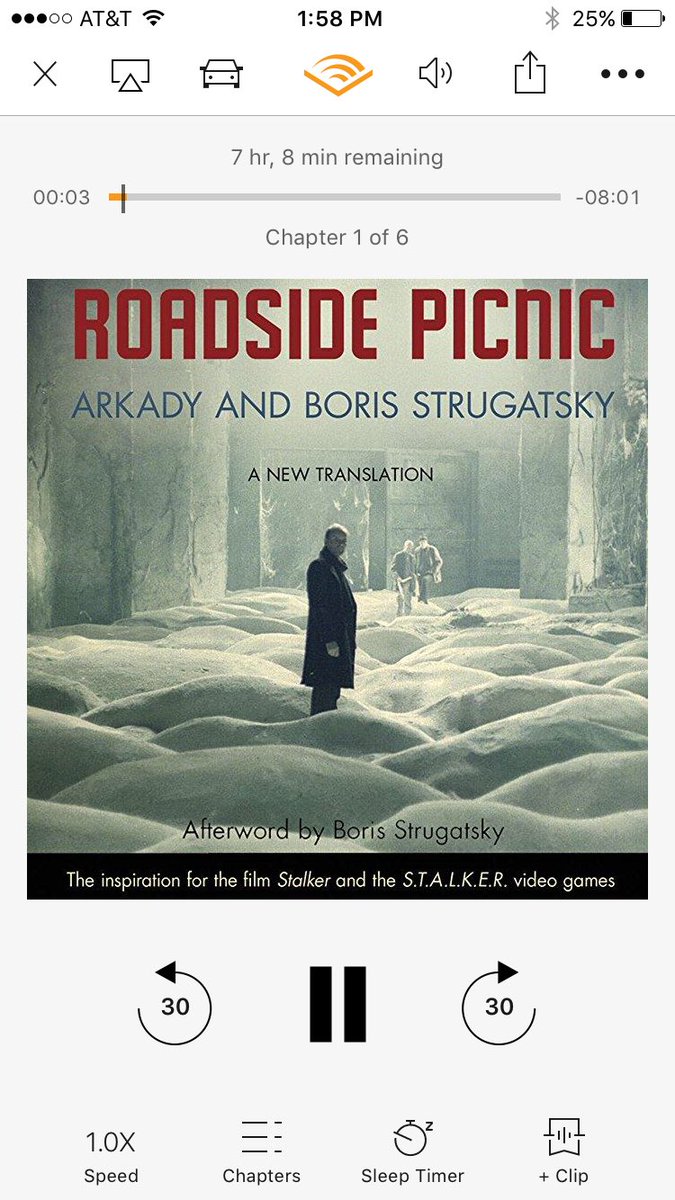
I finally got tired of listening to the radio (scaring the hell out of me) during this hurricane prep, and picked up the audiobook of Arkady and Boris Strugatsky’s Roadside Picnic, translated by Olena Bormashenko, and read by Robert Forster. I basically listened to each chapter twice over the next few days. The translation is inspiring—witty and raw, noir and smart, and Robert Forster’s narration is perfect—wry, dry, sad, and profound. I need to rewatch Tarkovsky’s Stalker now. I’m a bit ashamed that I haven’t read this one before, and I found its final moments especially moving (exhausted as I was). Highly recommended.

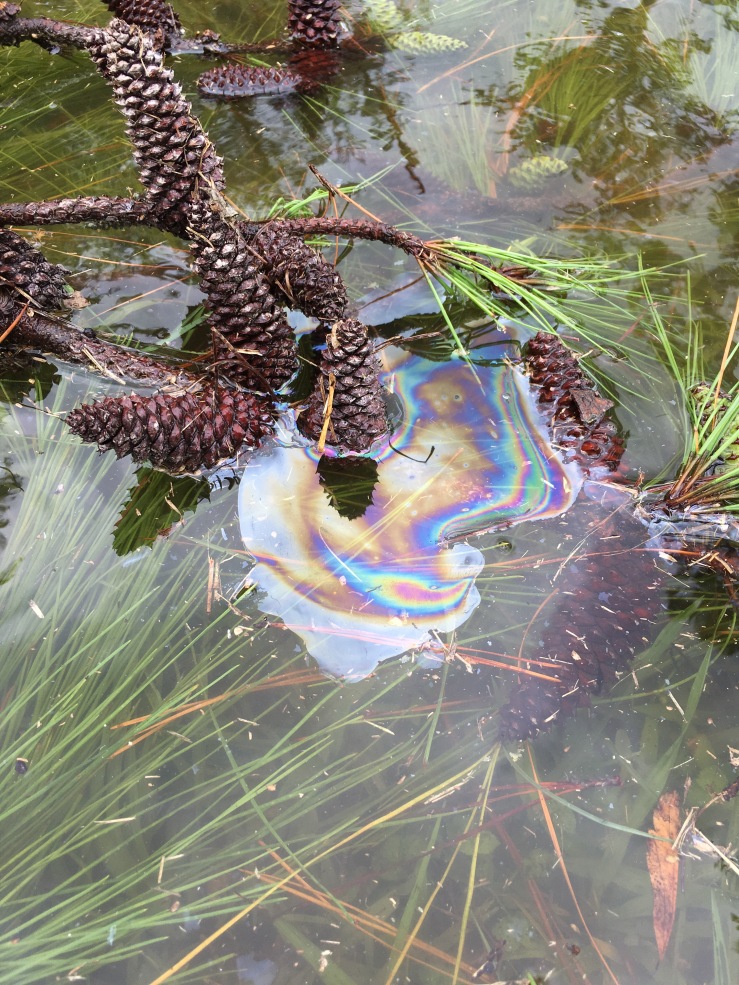
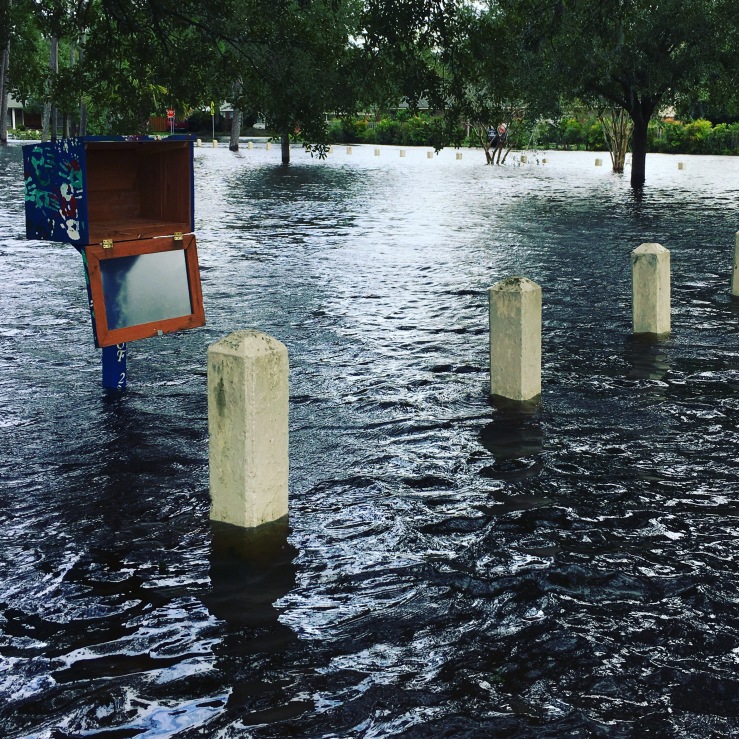
My evacuees arrived early September 9th. The next few days are a soggy blur. A nor’easter saturated northeast Florida; the St. Johns River was already, like, full, and the peninsula I live on (a peninsula on a peninsula), was loose. Like, not firm. Irma’s big bands started hitting the First Coast with a frank sincerity. We watched the local NFL team beat Houston’s team. There’s no symbolism or irony there. I was alternating vodka with coffee with green tea. Two twin pines lord over my house, one in the back, one in the front, maybe five decades old. They swayed and swayed, pelting fresh green pine cones onto the roof for the next 24 hours or so with an admirable consistency. By 10pm Sunday night I realized that I wouldn’t be able to sleep. We lost electrical  power, put the kids to bed. Branches started coming down, thudding with scary force, kick drums for the pine cones’ tight snare raps. Limbs like something heavier, thick bass notes. How did the kids sleep through it all?

img_7941

By candlelight, I read the first 66 pages of João Gilberto Noll’s novella Atlantic Hotel (English translation by Adam Morris) at some point that night. Atlantic Hotel is a picaresque nightmare, one weird horror turning into another. In a way, it was perfect reading for Irma’s approach, ominous and eerie. I also don’t know how much I registered, as I kept going out in the hard wind and slanted thick rain to put a big flashlight on my backyard, where the water kept creeping up and up, eventually getting too high for my gumboot but thankfully never spilling into my house. The feeling of reading Atlantic Hotel registered—the tone, the mood, the rhythm—but not the plot or the anonymous lead character. I’ll have to hit Reset on it.

By 3:00am the brunt of the storm cascaded over my own personal house (yes); the pine cones hailed down in a rhythm like hard rain, punctuated by larger crashes of pine limbs and other debris. For unreasonable reasons I will never know, I pulled out Keats and read Lamia with a bigass flashlight. The storm band somewhat subsided; I rested my eyes for an hour or two, then the whole thing commenced again. By nine in the morning it seemed the worst of the storm had passed, and I slept. Lamia snaked into my dreams, coiled into Irma. My son woke me up at 10:30am—a house down the street was on fire. Some asshole had cranked his generator in his garage—his closed garage!—next to his gas cans and propane tank and car. The garage burned; the car exploded, along with the other car in the driveway.

img_7930

That Sunday, September 11th saw historic flooding in the urban core of Jacksonville. My kids’ school, about a third of a mile from my house, flooded. While trudging around in the late afternoon in our gumboots, happy to be free of our sweltering house for a bit, we saw two teams of Army Rangers paddle up a canal, onto the street, there to evacuate stranded old folks. Surreal. Word traveled about other locations underwater—a flooded Publix, a ruined boatyard, Memorial Park a lake. The worst rumor, to me anyway, was that my beloved used bookstore, Chamblin Bookmine, was underwater. I still can’t bring myself to go over there. I know where it is and how high the water got.

These past few days, I listened to my favorite audiobook during much of the cleanup—Richard Poe’s recording of Cormac McCarthy’s Blood Meridian. What a strange awful comfort. A tree fell on my carport and shed, but they held, sorta. My lawn is a stinking mess, the blazing sun pulling out the water in humid reeking waves. The squelch of it all is something damn else. The pine trees dropped plenty of enormous limbs, but none did real damage. Up on the roof yesterday, clearing one off, I shuddered at its size and weight. I shuddered because of course It could have been so much worse. I’m thankful.


“Pink Turns to Blue” (Live in ’87) –Hüsker Dü

RIP Grant Hart, 1961-2017

We sat and talked of ghosts and kindred subjects | Nathaniel Hawthorne’s journal entry for September 13th, 1851

September 13th.–I spent last evening, as well as part of the evening before, at Mr. Thaxter’s. It is certainly a romantic incident to find such a young man on this lonely island; his marriage with the pretty Miranda is true romance. In our talk we have glanced over many matters, and, among the rest, that of the stage, to prepare himself for which was his first motive in coming hither. He appears quite to have given up any dreams of that kind now. What he will do on returning to the world, as his purpose is, I cannot imagine; but, no doubt, though all their remaining life, both he and she will look back to this rocky ledge, with its handful of soil, as to a Paradise.

Last evening we (Mr., Mrs., and Miss Thaxter) sat and talked of ghosts and kindred subjects; and they told me of the appearance of a little old woman in a striped gown, that had come into that house a few months ago. She was seen by nobody but an Irish nurse, who spoke to her, but received no answer. The little woman drew her chair up towards the fire, and stretched out her feet to warm them. By and by the nurse, who suspected nothing of her ghostly character, went to get a pail of water; and, when she came back, the little woman was not there. It being known precisely how many and what people were on the island, and that no such little woman was among them, the fact of her being a ghost is incontestable. I taught them how to discover the hidden sentiments of letters by suspending a gold ring over them. Ordinarily, since I have been here, we have spent the evening under the piazza, where Mr. Laighton sits to take the air. He seems to avoid the within-doors whenever he can. So there he sits in the sea-breezes, when inland people are probably drawing their chairs to the fire-side; and there I sit with him,–not keeping up a continual flow of talk, but each speaking as any wisdom happens to come into his mind.

The wind, this morning, is from the northwestward, rather brisk, but not very strong. There is a scattering of clouds about the sky; but the atmosphere is singularly clear, and we can see several hills of the interior, the cloud-like White Mountains, and, along the shore, the long white beaches and the dotted dwellings, with great distinctness. Many small vessels spread their wings, and go seaward.

I have been rambling over the southern part of the island, and looking at the traces of habitations there. There are several enclosures,–the largest, perhaps, thirty yards square,–surrounded with a rough stone-wall of very mossy antiquity, built originally broad and strong, two or three large stones in width, and piled up breast-high or more, and taking advantage of the extending ledge to make it higher. Within this enclosure there is almost a clear space of soil, which was formerly, no doubt, cultivated as a garden, but is now close cropt by the sheep and cattle, except where it produces thistles, or the poisonous weed called mercury, which seems to love these old walls, and to rot itself in or near them. These walls are truly venerable, gray, and mossy; and you see at once that the hands that piled the stones must have been long ago turned to dust. Close by the enclosure is the hollow of an old cellar, with rocks tumbled into it, but the layers of stone at the side still to be traced, and bricks, broken or with rounded edges, scattered about, and perhaps pieces of lime; and weeds and grass growing about the whole. Several such sites of former human homes may be seen there, none of which can possibly be later than the Revolution, and probably they are as old as the settlement of the island. The site has Smutty Nose and Star opposite, with a road (that is, a water-road) between, varying from half a mile to a mile. Duck Island is also seen on the left; and, on the right, the shore of the mainland. Behind, the rising ground intercepts the view. Smith’s monument is visible. I do not see where the inhabitants could have kept their boats, unless in the chasms worn by the sea into the rocks. 

One of these chasms has a spring of fresh water in the gravelly base, down to which the sea has worn out. The chasm has perpendicular, though irregular, sides, which the waves have chiselled out very square. Its width varies from ten to twenty feet, widest towards the sea; and on the shelves, up and down the sides, some soil has been here and there accumulated, on which grow grass and wild-flowers,–such as goldenrod, now in bloom, and raspberry-bushes, the fruit of which I found ripe,–the whole making large parts of the sides of the chasm green, its verdure overhanging the strip of sea that dashes and foams into the hollow. Sea-weed, besides what grows upon and shags the submerged rocks, is tossed into the harbor, together with stray pieces of wood, chips, barrel-staves, or (as to-day) an entire barrel, or whatever else the sea happens to have on hand. The water rakes to and fro over the pebbles at the bottom of the chasm, drawing back, and leaving much of it bare, then rushing up, with more or less of foam and fury, according to the force and direction of the wind; though, owing to the protection of the adjacent islands, it can never have a gale blowing right into its mouth. The spring is situated so far down the chasm, that, at half or two thirds tide, it is covered by the sea. Twenty minutes after the retiring of the tide suffices to restore to it its wonted freshness.

In another chasm, very much like the one here described, I saw a niche in the rock, about tall enough for a person of moderate stature to stand upright. It had a triangular floor and a top, and was just the place to hold the rudest statue that ever a savage made.

Many of the ledges on the island have yellow moss or lichens spread on them in large patches. The moss of those stone walls does really look very old. 

“Old Bab,” the ghost, has a ring round his neck, and is supposed either to have been hung or to have had his throat cut, but he steadfastly declines telling the mode of his death. There is a luminous appearance about him as he walks, and his face is pale and very dreadful.

The Fanny arrived this forenoon, and sailed again before dinner. She brought, as passenger, a Mr. Balch, brother to the country trader who has been spending a few days here. On her return, she has swept the islands of all the non-residents except myself. The wind being ahead, and pretty strong, she will have to beat up, and the voyage will be anything but agreeable. The spray flew before her bows, and doubtless gave the passengers all a thorough wetting within the first half-hour.

The view of Star Island or Gosport from the north is picturesque,–the village, or group of houses, being gathered pretty closely together in the centre of the island, with some green about them; and above all the other edifices, wholly displayed, stands the little stone church, with its tower and belfry. On the right is White Island, with the light-house; to the right of that, and a little to the northward, Londoner’s Rock, where, perhaps, of old, some London ship was wrecked. To the left of Star Island, and nearer Hog, or Appledore, is Smutty Nose. Pour the blue sea about these islets, and let the surf whiten and steal up from their points, and from the reefs about them (which latter whiten for an instant, and then are lost in the whelming and eddying depths), the northwest-wind the while raising thousands of white-caps, and the evening sun shining solemnly over the expanse,–and it is a stern and lovely scene. 

The valleys that intersect, or partially intersect, the island are a remarkable feature. They appear to be of the same formation as the fissures in the rocks, but, as they extend farther from the sea, they accumulate a little soil along the irregular sides, and so become green and shagged with bushes, though with the rock everywhere thrusting itself through. The old people of the isles say that their fathers could remember when the sea, at high tide, flowed quite through the valley in which the hotel stands, and that boats used to pass. Afterwards it was a standing pond; then a morass, with cat-tail flags growing in it. It has filled up, so far as it is filled, by the soil being washed down from the higher ground on each side. The storms, meanwhile, have tossed up the shingle and paving-stones at each end of the valley, so as to form a barrier against the passage of any but such mighty waves as that which thundered through a year or two ago.

The old inhabitants lived in the centre or towards the south of the island, and avoided the north and east because the latter were so much bleaker in winter. They could moor their boats in the road, between Smutty Nose and Hog, but could not draw them up. Mr. Laighton found traces of old dwellings in the vicinity of the hotel, and it is supposed that the principal part of the population was on this island. I spent the evening at Mr. Thaxter’s, and we drank a glass of his 1820 Scheidam. The northwest-wind was high at ten o’clock, when I came home, the tide full, and the murmur of the waves broad and deep.
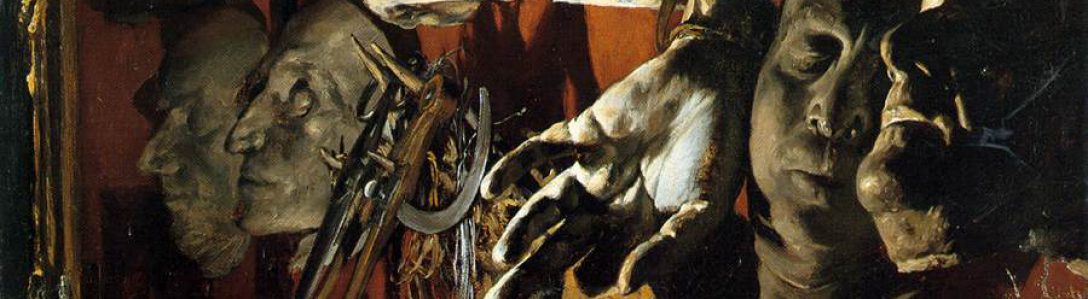
Nathaniel Hawthorne’s journal entry for September 13th, 1851. Collected in Passages from the American Note-Books.