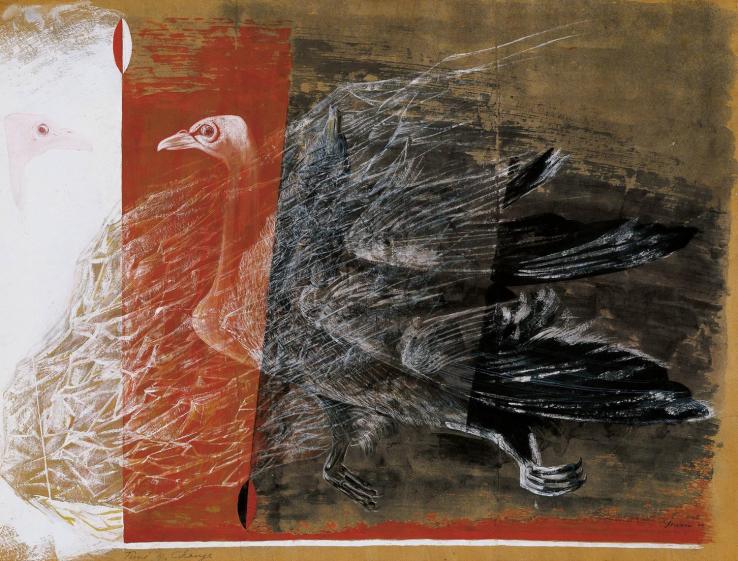
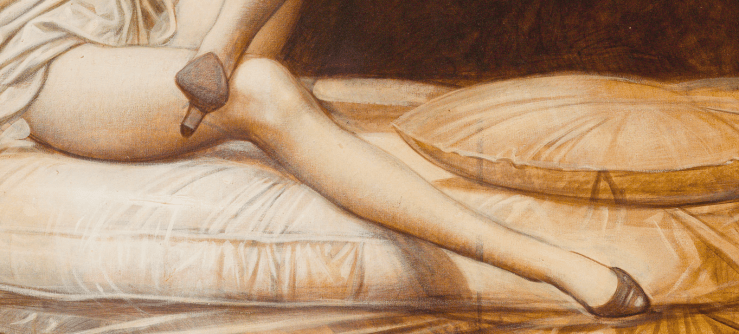
Time of Change – Morris Graves

Morris Graves time-of-change-1943.jpg

Time of Change, 1943 by Morris Graves (1910-2001)

In the passive voice, something happened, somebody was killed and so on (Barry Hannah)

The sheriff was doing a five-minute commentary on the Weekend Review on television Saturday night. Both Dee and Melanie watched.

“The world is full of middle-aged men who seek revenge. The anger passes for most when they see there is no way. The rate of incarceration is very low for first-time offenders of sixty. For some, there is a bigger engine of hate even then, running at the red line and very vigilant toward what they might consider insults or even bossiness. They aren’t just having it, the engine, like the others. They are it. They have not been aware of this, and their acts confound them. Those are ones you see on television or in the newspapers discussing sodomy, rape, kidnapping and murder in the passive voice, something happened, somebody was killed and so on, sometimes even giggling. ‘Mistakes were made, yes, when she was killed. I can’t remember, really.’ Such as that.”

From Barry Hannah’s 2001 novel Yonder Stands Your Orphan.

Over and Above #14 — Clarence Holbrook Carter

img_2066

Over and Above #14, 1964 by Clarence Holbrook Carter (1904-2000)

Measure of Time — Samuel Bak

bk1128_images

Measure of Time, 2006 by Samuel Bak (b. 1933)

Cain and Abel — Frederic Leighton

Cain and Abel published 1881 by Frederic, Lord Leighton 1830-1896

Cain and Abel, 1881 by Frederic Leighton, (1830–1896)

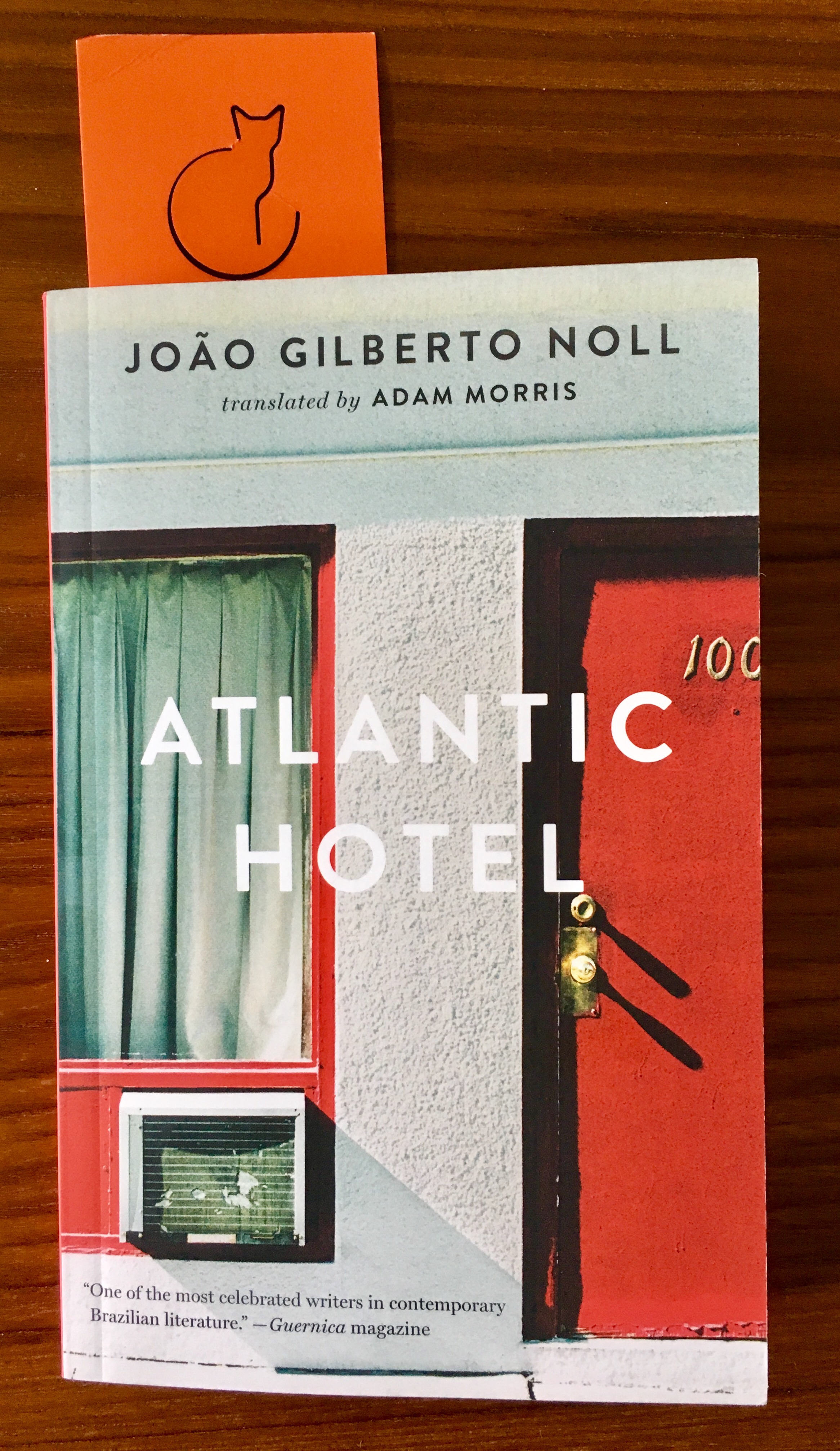
João Gilberto Noll’s Atlantic Hotel (Book acquired, 14 August 2017)

João Gilberto Noll’s novella Atlantic Hotel is new English translation by Adam Morris from Two Lines Press. I loved loved loved the last one I read by Noll, Quiet Creature on the Corner. Full review to come; for now, here’s Two Lines’ blurb:

Compared by critics to filmmaker David Lynch—and deeply influenced by Clarice Lispector—João Gilberto Noll is esteemed as one of Brazil’s living legends. Following the breakthrough success of last year’s Quiet Creature on the Corner, Two Lines Press now presents Noll’s career-defining work, Atlantic Hotel.

Just who narrates the dark and mysterious Atlantic Hotel? First he books a room where a murder has occurred, claiming he’s just arrived from the airport. But then he suddenly leaves, telling a cabbie he’s an alcoholic headed for detox. After that he hops on an all-night bus across Brazil, where he begins to seduce a beautiful American woman. Next he’s recognized as a soap opera actor. Then he impersonates a priest.

At length he knocks on a very wrong door in a small town: when it opens he’s looking down the barrel of a gun. He falls down unconscious, and when he awakes something terrible is happening to him…

All these beefy Caucasians with guns! (From Neal Stephenson’s novel Snow Crash)


All these beefy Caucasians with guns!  Get enough of them together, looking for the America they always believed they’d grow up in, and they glom together like overcooked rice, form integral, starchy little units.  With their power tools, portable generators, weapons, four-wheel-drive vehicles, and personal computers, they are like beavers hyped up on crystal meth, manic engineers without a blueprint, chewing through the wilderness, building things and abandoning them, altering the flow of mighty rivers and then moving on because the place ain’t what it used to be.

The byproduct of the lifestyle is polluted rivers, greenhouse effect, spouse abuse, televangelists, and serial killers.  But as long as you have that four-wheel-drive vehicle and can keep driving north, you can sustain it, keep moving just quickly enough to stay one step ahead of your own waste stream.  In twenty years, ten million white people will converge on the north pole and park their bagos there.  The low-grade waste heat of their thermodynamically intense lifestyle will turn the crystalline icescape pliable and treacherous.  It will melt a hole through the polar icecap, and all that metal will sink to the bottom, sucking the biomass down with it.

From Neal Stephenson’s prescient 1992 cyberthriller Snow Crash.

“The Modest Achievement” — William Carlos Williams

Screenshot 2017-07-30 at 7.56.33 PM

Dalvaux — Leonora Carrington

leonora_carrington_tributes_art_2

Dalvaux, 1952 by Leonora Carrington (1917-2011)

Notes on Vulture’s “100 Great Works of Dystopian Fiction” list

Did you see Vulture’s “100 Great Works of Dystopian Fiction” list? I saw it this morning, and on the whole it ain’t half bad, despite including way too many novels from the past 10 years. Lists are stupid and maybe we already live in a dystopia, but our dystopia could be way way worse and lists are stupid fun…so—my stupid thoughts on this stupid fun list. (They organized it chronologically, by the bye)—-

Gulliver’s Travels, Jonathan Swift, 1726: Good starting place, although I’m sure you could reach farther back if you wanted—Revelations, Blake, Milton, etc.

The Last Man, Mary Shelley, 1826: Never read it. The listmakers seem to have skipped Voltaire’s Candide (1759).

Erewhon, Samuel Butler, 1872: Hey, did you know that Erewhon is actually Nowhere backwards? Ooooh…far out. I really don’t remember it but I read it in school. I’m sure I would’ve thrown it on the list.

The Time Machine, H.G. Wells, 1895: Great track. Some of the best required reading ever.

“The Machine Stops,” E.M. Forster, 1909: Never read it/never heard of it.

We, Yvegny Zamyatin, 1924: The list reminded me I need to reread this one—I read it twice—in my teens and in my twenties. Good stuff. (Also reminds me that I would’ve added something by Sigizmund Krzhizhanovsky to the list—like his collection Memories of the Future).

Brave New World, Aldous Huxley, 1932: This is the guy. I mean, I think Huxley got it right here, y’know? Not that a dystopian novel needs to predict, but…anyway. I actually had a student come by during office hours just to visit, and she asked for a novel recommendation, and I gave her BNW after she told me 1984 was the last great book she’d read. If I recall correctly, the Vulture list only has one duplicate author (Margaret Atwood), but I’d also add Huxley’s often-overlooked novel Ape and Essence.

It Can’t Happen Happen Here, Sinclair Lewis, 1935: I think this is one of those ones where I know the basic plot, themes, etc., but I’m pretty sure I didn’t read it.

Swastika Night, Katharine Burdekin, 1937: An entry that I’ll admit I’ve never heard of, the sort of thing that shows the value in stupid silly fun lists. I’ll search it out.

1984, George Orwell, 1949: I guess this one is the big dawg, but I never want to reread it (unlike Huxley’s stuff). Maybe I’m missing the humor in it. Maybe the most important novel of the 20th century, whatever that means. Continue reading “Notes on Vulture’s “100 Great Works of Dystopian Fiction” list”

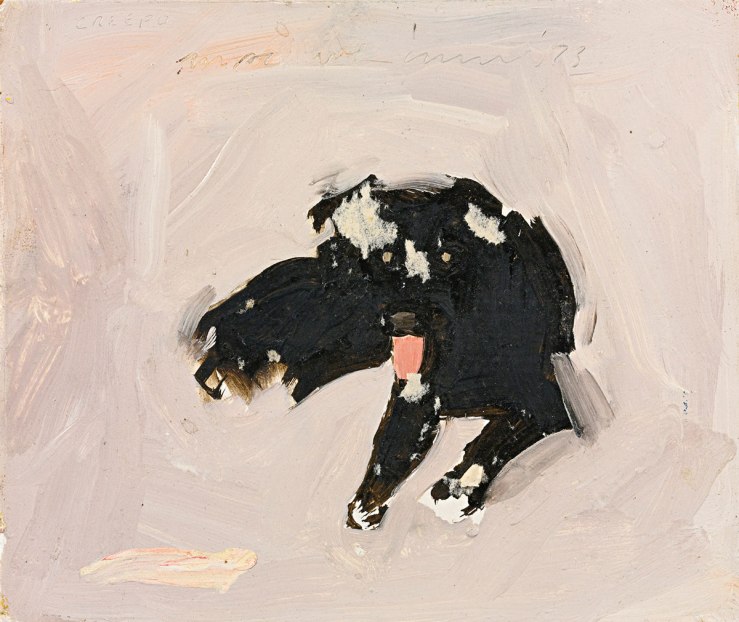
Creepo (The Dog) — Fairfield Porter

fairfield-porter-05-creepo-the-dog

Creepo (The Dog), 1973 by  Fairfield Porter (1907-1975)

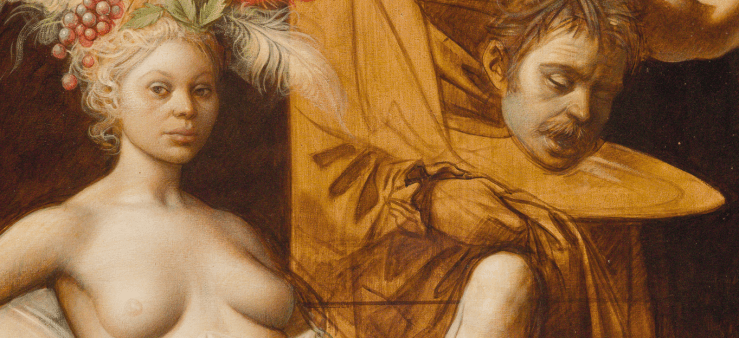
Salomè — Riccardo Tommasi Ferroni

5-tommasi-ferroni-salomeScreenshot 2017-08-21 at 8.04.56 PMScreenshot 2017-08-21 at 8.04.36 PMScreenshot 2017-08-21 at 8.04.19 PMScreenshot 2017-08-21 at 8.05.23 PM

Salomè, 1976 by Riccardo Tommasi Ferroni (1934-2000)

Piss on Star Wars (Barry Hannah)

Last night at one of his homes, the big fifties-ranch-style one, he had watched on his large flat screen Phillips television the film clips and recitation of a minister. A curious breed of faith, perhaps not even Christian.

“Why do people look for science, science fiction and signs of the End? Why do they seek the Revelation of the Apocalypse here and there and chant the old chants of the coming Antichrist, the Four Horsemen? Science fiction has already been had, fools. It was the Battle of Kursk, German tanks against Russian tanks, fifty-seven years ago. It was Leningrad, Stalingrad, Moscow, Berlin, idiots! What does it take, a sock in the jaw for you to get it that the Forces of Darkness fought then? The Antichrist on both sides. Piss on Star Wars. Nothing touches WW Two for science fiction and wasteland.

From Barry Hannah’s 2001 novel Yonder Stands Your Orphan.

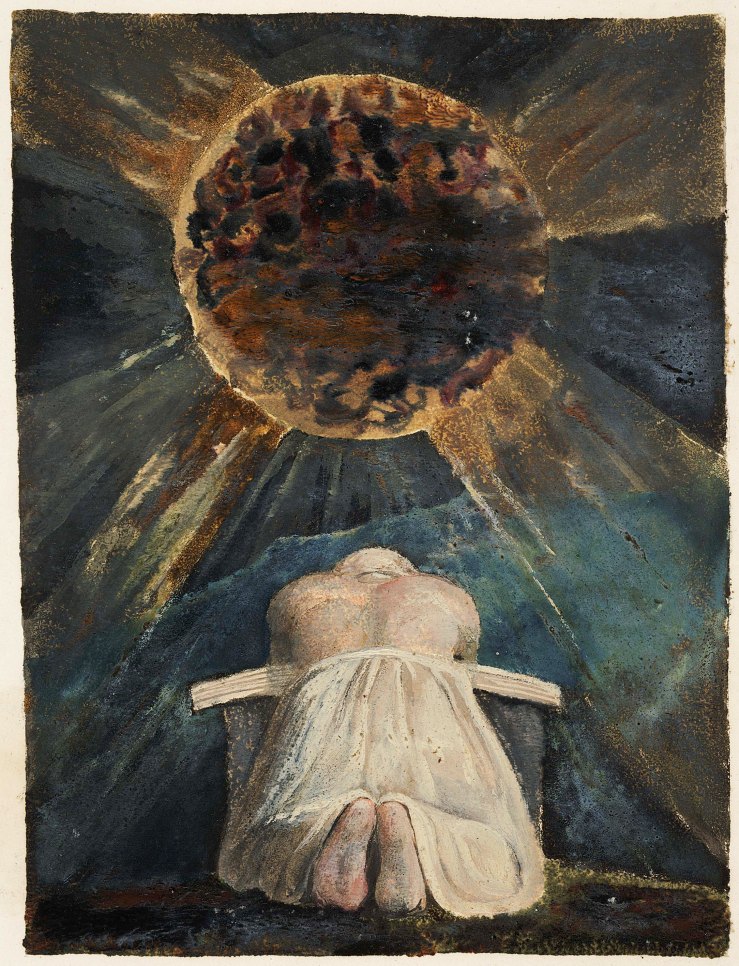
Frontispiece for The Song of Los — William Blake

s-los.e.p1.300

The Song of Los (frontispiece), 1794 by  William Blake (1757–1827)

Blue Eclipse — Albert Bloch

blue-eclipse-1955.jpg

Blue Eclipse, 1955 by Albert Bloch (1882-1961)

Everybody’s been futurized (Barry Hannah)

Ulrich had been quiet, painting on deck varnish. Now he spoke. “We don’t love each other as much as we used to. You can see the uncertain looks, the calculations, the dismissals. People are not even in the present moment. Everybody’s been futurized. You look in those eyes and see they’re not home, they’re some hours ahead at least. I hate to go into Vicksburg anymore. Anywhere, really. It’s all like meeting people who have just departed. Old men and women don’t look wise anymore. They are just aged children. And who gets the highest pay? Actors. Paid to mimic life because there is no life. You look at everybody and maybe they’re a little sad, some of ’em. They’re all homesick for when they were real.” Ulrich began painting again as the others tried to guess what could have prompted this.

From Barry Hannah’s 2001 novel Yonder Stands Your Orphan.

Deimos — Dragan Bibin

Dragan+Bibin+-+Deimos

Deimos, 2015 by Dragan Bibin (b. 1984)