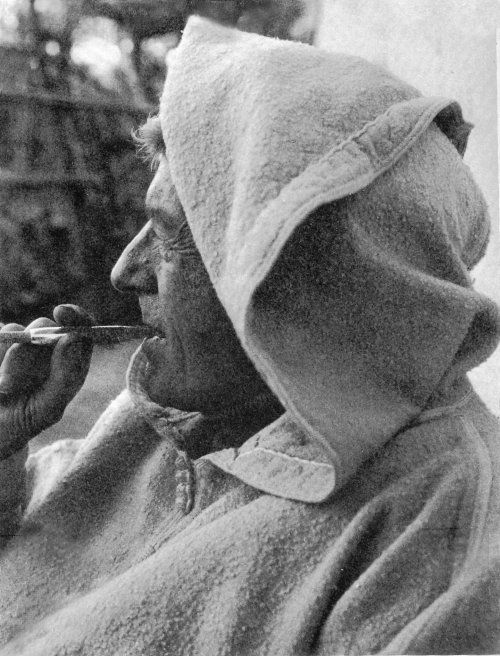
I was too young the first time I took a crack at Paul Bowles’ 1949 debut novel The Sheltering Sky. I was maybe 15 or 16 I think, reading a lot of Hemingway, Vonnegut, and William Burroughs at the time. I couldn’t click with Bowles.
Two decades later—by which I mean this January—I read/audited The Stories of Paul Bowles and fell in a weird love with them: Spare but sharp, wild but obscure, his fables refuse to square with our expectations. They are menacing, awful, loaded with strangers and travelers and outcasts. The characters do not know what is happening to them—indeed, they do not even know that they do not know what is happening to them. Sometimes the story’s narrator does not seem to know what is happening, and if the narrator does know what is happening, he’s not going to throw anything but the barest bones to the reader to piece together.
The best of the stories are wonderfully confusing, like “Tapiama,” the surreal, abject tale of a photographer’s picaresque journey into a mad foreign night. Bowles’ style succeeds in lucidly conveying the murk of a crashing consciousness:
The photographer had begun to suspect that something had gone very wrong inside him. He felt sick, but since he was no longer a living creature he could not conceive it in those terms. He had shut his eyes and put his hand over his face. “It’s going around backward,” he said. The undrunk cumbiamba was in his other hand.
Saying the sentence had made it more true. It was definitely going around backward. The important thing was to remember that he was alone here and that this was a real place with real people in it. He could feel how dangerously easy it would be to go along with the messages given him by his senses, and dismiss the whole thing as a nightmare in the secret belief that when the breaking-point came he could somehow manage to escape by waking himself up.
“Tapiama” is probably my favorite thing by Bowles, or at least the tale that best exemplifies what I like best in Bowles—the alienation of a stranger in a strange land, the creepy ickiness of realizing the unreal. Bowles’ characters are frequently tourists who wish to be more than tourists, who make ironic-romantic claims towards becoming travelers. He awakens these travelers to reality’s nightmare. There’s a quality here that I love, that dread noir thing that other storytellers like David Lynch and Roberto Bolaño evoke so well.
Bowles’ early stories succeed in evoking anxious, uncanny dread — “The Scorpion,” “By the Water,” “You Are Not I” are all easy go-to examples. I found the later tales in The Stories of Paul Bowles less intriguing, but emotionally richer. Sadder. Bowles’ later stuff grows more bitter, more resentful. The earlier tales are strange, sharp, and driven by weird nightmare alienation and sinister surrealism. But they also open into possibility, exploration, and radical newness. The later tales, composed in the 1980s, seem to me a closing off, not just in themes and tone, but also in style. They retreat into formalist modernism. There’s a palpable resistance to postmodernism in the later stories, an elegiac tone that romanticizes (even through multiple ironies) the post-War colonial past.
After I read The Stories of Paul Bowles, I read The Sheltering Sky, the fan favorite of this cult author. I’ll admit I was disappointed, although I probably failed the novel, not the other way around. I liked it best in its rawest moments, its looser strands creeping out like tendrils in another direction; often these tendrils were cut off in the service of a more formally organized novel—a novel that sags heavily in the middle, but explodes into a weird nightmare in the end as Kit, the book’s true hero, travels in a way her husband Port fails to.
The Sheltering Sky is larded with fantastic moments and meditations though, like the one below. Here, Bowles shows that to be human is to invest an aesthetic (and simultaneously anesthetic) viewpoint into one’s daily life—and that to invest in this viewpoint is to calculate psychic and emotional costs and payoffs:
He did not look up because he knew how senseless the landscape would appear. It takes energy to invest life with meaning, and at present this energy was lacking. He knew how things could stand bare, their essence having retreated on all sides to beyond the horizon, as if impelled by a sinister centrifugal force. He did not want to face the intense sky, too blue to be real, above his head, the ribbed pink canyon walls that lay on all sides in the distance, the pyramidal town itself on its rocks, or the dark spots of oasis below. They were there, and they should have pleased his eye, but he did not have the strength to relate them, either to each other or to himself, he could not bring them into any focus beyond the visual. So he would not look at them.
While I was admittedly disappointed in The Sheltering Sky, I found much in it to propel me on into more of Bowles’ writing. I next read Up Above the World—mostly because of its title. Phrases and iterations of “out in the world” repeat through Bowles’ writing, so it intrigued me. This 1966 novel has a reputation as being one of Bowles’ lesser novels, but I enjoyed it more than The Sheltering Sky—perhaps my expectations were lower.
Up Above the World’s reputation as a slighter work might have to do with the fact that it’s something of a genre fiction—a slow-burn thriller, a crime story really. There’s a cinematic structure to it, and a plainness to its tone that belies a murderous intensity. I won’t spoil the trick of the novel, but it twists in sinister, delightful ways, leaving loose threads for the reader to tie together.
I’ll close by sharing my favorite passage from Up Above the World. This moment comes in the crux of the novel, in its middle when Dr. Slade—a tourist who perhaps had the pretensions of being a traveler—shifts from one dimension to the next:
He reached out his hand and pressed the door handle, took two or three steps on the spongy grass, and raised his head. In front of him, not three feet away, there was a face—a muzzle, rather, for it surely belonged to an animal—looking at him with terrible intensity. It was unmoving, fashioned from a nameless, constantly dripping substance. Unmoving, yet it must have moved, for now the mouth was much farther open; long twisted tendons had appeared in each cheek. He watched, frozen and unbelieving, while the whole jaw swiftly melted and fell away, leaving the top part of the muzzle intact. The eyes glared more savagely than before; they were telling him that sooner or later he would have to pay for having witnessed that moment of its suffering. He took a step backward and looked again. There were only leaves and shadows of leaves, no muzzle, no eyes, nothing. But the leaves were pulsating with energy. At any moment they could could swell and become something other than what they were.
At any moment they could could swell and become something other than what they were: This is the monstrous power of Bowles’ best moments—his ability to evoke visceral reality, his ability to show how consciousness transforms the real into the surreal, even as it tries to navigate that reality. He shows that we are all tourists in our own heads.












 Biblioklept