Read Roberto Bolaño’s short story “Sensini”

“Sensini”

by

Roberto Bolaño

(English translation by Chris Andrews)


The way in which my friendship with Sensini developed was somewhat unusual. At the time I was twenty-something and poorer than a church mouse. I was living on the outskirts of Girona, in a dilapidated house that my sister and brother-in-law had left me when they moved to Mexico, and I had just lost my job as a night watchman in a Barcelona campsite, a job that had exacerbated my tendency not to sleep at night. I had practically no friends and all I did was write and go for long walks. starting at seven in the evening, just after getting up, with a feeling like jet lag: an odd sensation of fragility, of being there and not there, somehow distant from my surroundings. I was living on what I had saved during the summer. and although I spent very little, my savings dwindled as autumn drew on. Perhaps that was what prompted me to enter the Alcoy National Literature Competition, open to writers in Spanish, whatever their nationality or place of residence. There were three categories: for poems, stories, and essays. First I thought about going in for the poetry prize, but I felt it would be demeaning to send what I did best into the ring with the lions (or hyenas). Then I thought about the essay, but when they sent me the conditions, I discovered that it had to be about Alcoy, its environs, its history, its eminent sons, its future prospects, and I couldn’t face it. So I decided to enter for the story prize, sent off three copies of the best one I had (not that I had many), and sat down to wait.

Continue reading “Read Roberto Bolaño’s short story “Sensini””
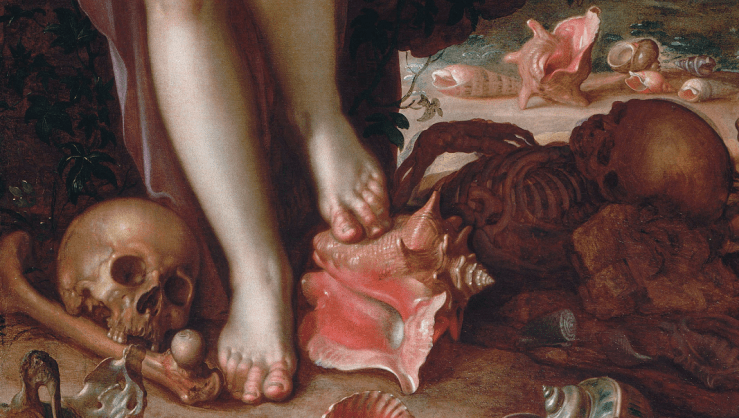
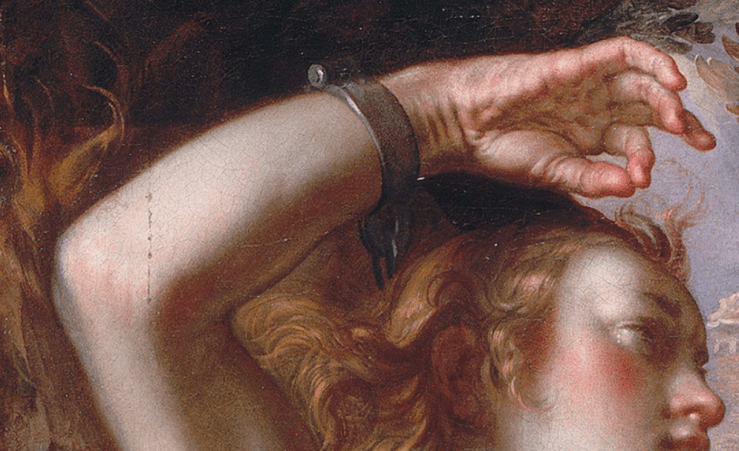
Perseus and Andromeda (detail) — Joachim Wtewael

screenshot-2017-01-07-at-6-46-45-pm

Perseus and Andromeda (detail) — Joachim Wtewael

screenshot-2017-01-07-at-6-43-50-pm

Sunday Comics 

Art by Simon Bisley from Batman-Judge Dredd: Judgment on Gotham. (1991, DC Comics; written by Alan Grant and John Wagner).

Perseus and Andromeda (detail) — Joachim Wtewael

screenshot-2017-01-07-at-5-16-10-pm

“The Hyena,” an ecstatic abject fable by Paul Bowles

“The Hyena”

by
Paul Bowles


A stork was passing over desert country on his way north. He was thirsty, and he began to look for water. When he came to the mountains of Khang el Ghar, he saw a pool at the bottom of a ravine. He flew down between the rocks and lighted at the edge of the water. Then he walked in and drank.

At that moment a hyena limped up and, seeing the stork standing in the water, said: “Have you come a long way?” The stork had never seen a hyena before. “So this is what a hyena is like,” he thought. And he stood looking at the hyena because he had been told that if the hyena can put a little of his urine on someone, that one will have to walk after the hyena to whatever place the hyena wants him to go.

“It will be summer soon,” said the stork. “I am on my way north.” At the same time, he walked further out into the pool, so as not to be so near the hyena. The water here was deeper, and he almost lost his balance and had to flap his wings to keep upright. The hyena walked to the other side of the pool and looked at him from there.

“I know what is in your head,” said the hyena. “You believe the story about me. You think I have that power? Perhaps long ago hyenas were like that. But now they are the same as everyone else. I could wet you from here with my urine if I wanted to. But what for? If you want to be unfriendly, go to the middle of the pool and stay there.”

The stork looked around at the pool and saw that there was no spot in it where he could stand and be out of reach of the hyena.

“I have finished drinking,” said the stork. He spread his wings and flapped out of the pool. At the edge he ran quickly ahead and rose into the air. He circled above the pool, looking down at the hyena.

“So you are the one they call the ogre,” he said. “The world is full of strange things.” Continue reading ““The Hyena,” an ecstatic abject fable by Paul Bowles”

The Studio Wall — Adolph von Menzel

015-adolph-von-menzel-theredlist

Some books I’ll try to read in 2017 (Presented by The Good Intentions Paving Company)

img_4855

I’m in the middle of Paul Bowles’s stories right now, and loving the weird sinister menace of it all. I’ll probably take a crack at some of his novels this year too (The Sheltering Sky next? I’ll need to pick them up).

Senges’s The Major Refutation is also on deck.

Not pictured, because it’s not out yet, is Leonora Carrington’s The Complete Stories (forthcoming in the spring from Dorothy); I’m really looking forward to this one. The NYRB is also publishing Carrington’s memoir Down Below, which looks really cool. I’ve only read the collection The Oval Lady (and that through samizdat means), so I’m happy to see Carrington’s words in print.

The Expedition of Dr. Ramsbottom, Leonora Carrington, 1961

Also not pictured because its forthcoming (from Two Lines Press) is Atlantic Hotel by João Gilberto Noll (translated by Adam Morris). I’m anxious to read more from Noll after digging his novella Quiet Creature on the Corner.

Back to the stack in the picture: I loved Ishmael Reed’s Mumbo Jumbo and The Freelance Pallbearers (which strikes me as a really under-remarked upon novel), and I plan on getting to Yellow Back Radio Broke-Down at some point this year.

I’ve had a few false starts with Arno Schmidt’s The Egghead Republic, but maybe I can knock it out in a weekend.

I’ve taken multiple cracks at the novels by Gray, Murdoch, and Hawkes in the stack…so we’ll see.

I read Leon Forrest’s There Is a Tree More Ancient Than Eden in a blur; I’d like to reread it and the other Forrest novel I picked up last month, Two Wings to Veil My Face.

I’ve read enough Pynchon now to make a better effort with Vineland…but again, we’ll see (I’m actually kind of jonesing to reread Against the Day).

(And oh I didn’t make a list like this in 2016, but I was 4 for 8 in the one I did in 2015).

Good intentions.

Paul Bowles describes a Moroccan trance dance of self-mutilation

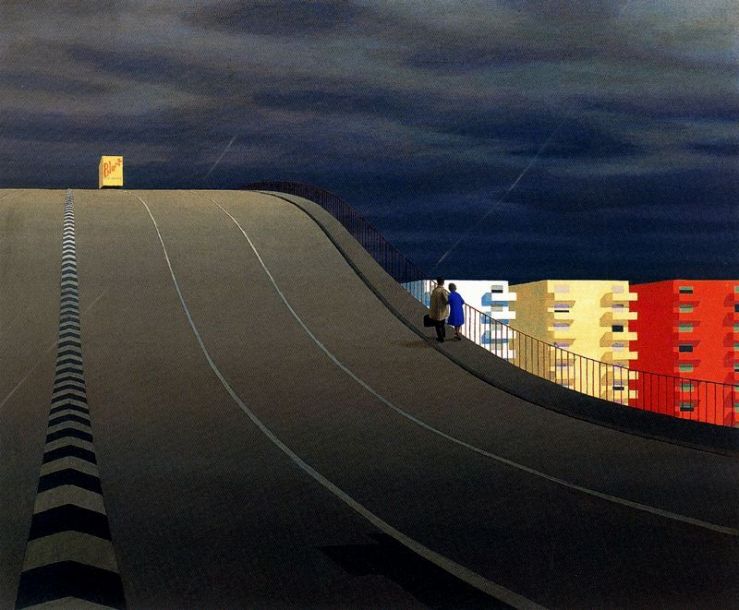
Approach to a City III — Jeffrey Smart

approach-to-a-city-iii

PK Dick’s Martian Time-Slip/Kafka regret (Books acquired and not acquired, 12.28.2016)

Two bucks.

Cover art by Darrell Sweet.

Here’s my riff on Philip K. Dick’s Martian Time-Slip.

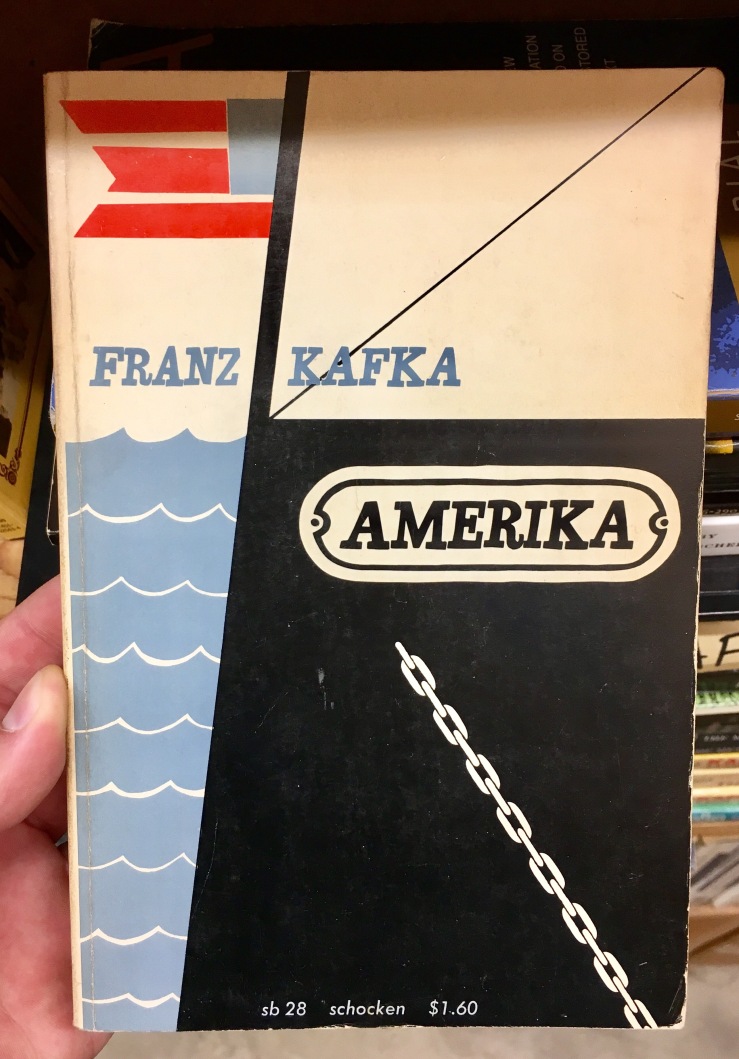
I regret not picking up this edition of Kafka’s Amerika that same day:

img_4639

I reviewed Schocken’s latest translation of Amerika (not the one above) on Biblioklept like over eight years ago. I still have the black hardback, but I’d maybe exchange it for this beauty.

P.S. — Lotta Hannerz

p-s

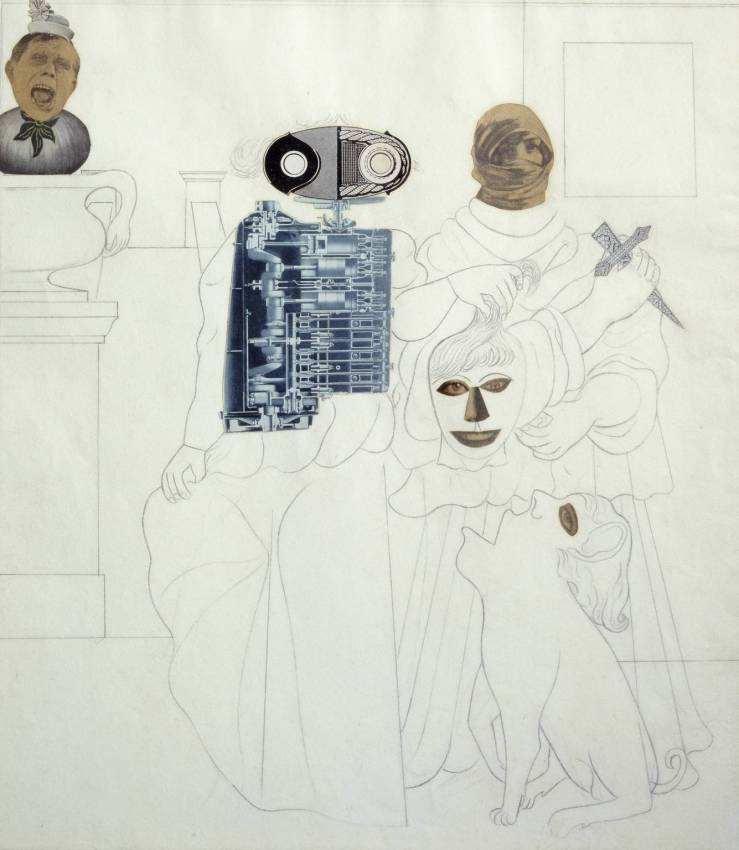
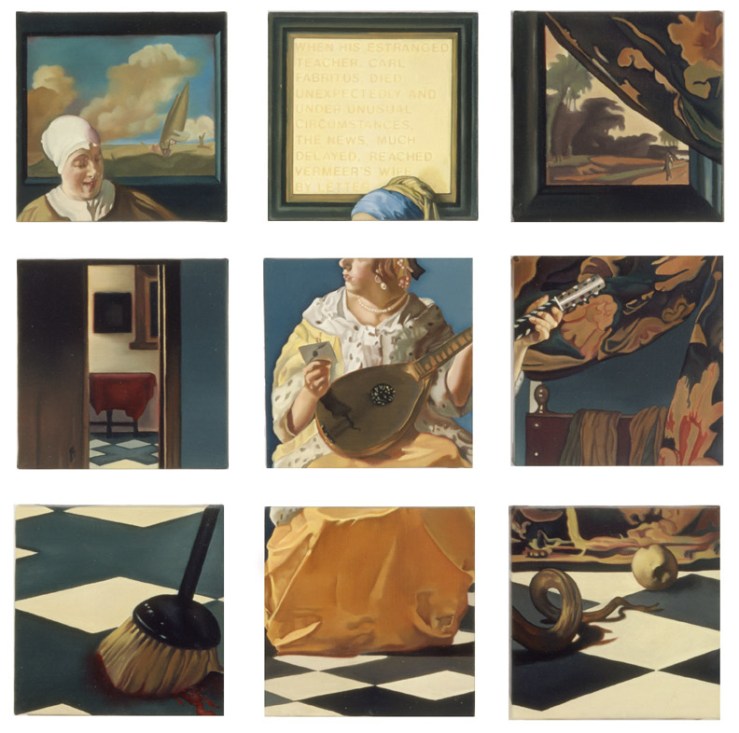
Vermeer’s Wife — Dotty Attie

368-991

The mind is a thing absolutely apart (Paul Bowles)

The only way to do anything is to have it so well rehearsed in one’s imagination that when the moment comes one does it automatically, as though for the hundredth time. Then it is all natural, and there is little likelihood of a slip-up. And there was no slip-up anywhere along the way. It was a heavy day, but not too hot because of the rain, which fell quietly as I walked down the road to the station. On the train I was not in the slightest degree perturbed: I knew there was no chance of any trouble. I kept marveling at the peculiar pleasure afforded by the knowledge that one has planned a thing so perfectly there can be no room for the possibility of failure, all the while being conscious that both the pleasure and the idea itself were completely childish, and that my conviction of success was, at the very least, ill-founded. But certain situations call forth certain emotions, and the mind is a thing entirely apart. I have cakes of soap that I bought twenty-five years ago, still in their wrappers, and I am saving them in the perfect confidence that the right day will come to unwrap each one and use it. And there are probably a hundred books downstairs in the library that I am eager to read, have been eager to read for years, yet refuse to read until the day comes, the day that says to me: This is the morning to start Villiers de L’Isle-Adam, or George Borrow, or Psichari, or someone else. Now, in my logical mind, I know quite well that these promised days are not likely ever to arrive: I shall never use those old cakes of soap that are stored in the linen closet, and I am reasonably sure of never reading Romany Rye, because it doesn’t interest me. But there is that other person, the ideal one that I ought to be, whom it does interest, and it comforts me to think that those things are there waiting for him. Certainly, the mind is a thing absolutely apart.

From Paul Bowles’s 1954 story “If I Should Open My Mouth.”

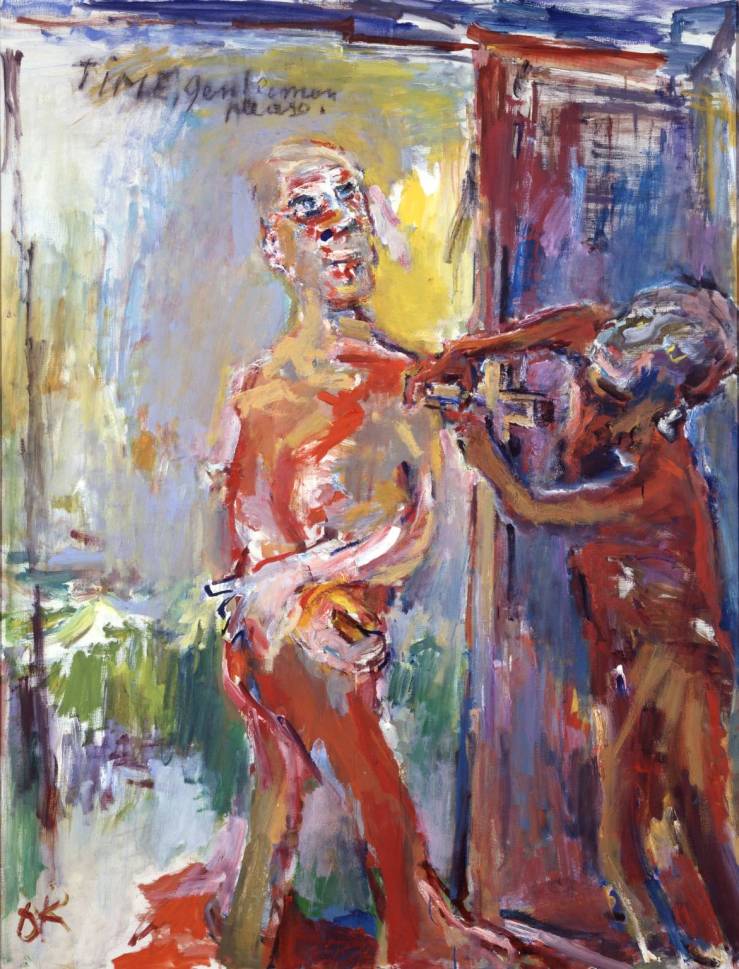
Time, Gentlemen Please — Oskar Kokoschka

Time, Gentlemen Please 1971-2 Oskar Kokoschka 1886-1980 Purchased 1986 http://www.tate.org.uk/art/work/T04876

Illuminated Shadows — Chronis Botsoglou

assets_large_t_420_53463739