Mass-market Monday | Ishmael Reed’s Mumbo Jumbo

Mumbo Jumbo, Ishmael Reed, 1972. Avon Bard Books (1978). Cover art by Andrew Rhodes (not credited); no designer credited. 256 pages.

A perfect novel. Reed’s five-novel run from ’67 to ’76 is astounding (the later stuff is good too).

From Mumbo Jumbo:

…Faust was an actual person. Somewhere between 1510 and 1540 this “wandering conjurer and medical quack” made his travels about the southwest German Empire, telling people his knowledge of “secret things.” I always puzzled over why such a legend was so basic to the Western mind; but I’ve thought about it and now I think I know the answer. Can’t you imagine this man traveling about with his bad herbs, love philters, physicks and potions, charms, overcharging the peasants but dazzling them with his badly constructed Greek and sometimes labeling his “wonder cures” with gibberish titles like “Polyunsaturated 99½% pure.” Hocus-pocus. He makes a living and can always get a free night’s lodging at an inn with his ability to prescribe cures and tell fortunes, that is, predict the future. You see he travels about the Empire and is able to serve as a kind of national radio for people in the locales. Well 1 day while he is leeching people, cutting hair or raising the dead who only have diseases which give the manifestations of death, something really works. He knows that he’s a bokor adept at card tricks, but something really works. He tries it again and it works. He continues to repeat this performance and each time it works. The peasants begin to look upon him as a supernatural being and he encourages the tales about him, that he heals the sick and performs marvels. He becomes wealthy with his ability to do The Work. Royalty visits him. He is a counselor to the king. He lives in a castle. Peasants whisper, a Black man, a very bearded devil himself visits him. That strange coach they saw, the 1 with the eyes as decorations drawn to his castle by wild-looking black horses. They say that he has made a pact with the devil because he invites the Africans who work in various cities throughout the Empire to his castle. There were 1000s in Europe at the time: blackamoors who worked as butlers, coachmen, footmen, pint-sized page boys; and conjurors whom only the depraved consulted. The villagers hear “Arabian” music, drums coming from the place but as soon as the series of meetings begin it all comes to a halt. Rumors circulate that Faust is dead. The village whispers that the Black men have collected. That is the nagging notion of Western man. China had rocketry, Africa iron furnaces, but he didn’t know when to stop with his newly found Work. That’s the basic wound. He will create fancy systems 13 letters long to convince himself he doesn’t have this wound. What is the wound? Someone will even call it guilt. But guilt implies a conscience. Is Faust capable of charity? No it isn’t guilt but the knowledge in his heart that he is a bokor. A charlatan who has sent 1000000s to the churchyard with his charlatan panaceas. Western man doesn’t know the difference between a houngan and a bokor. He once knew this difference but the knowledge was lost when the Atonists crushed the opposition. When they converted a Roman emperor and began rampaging and book-burning. His sorcery, white magic, his bokorism will improve. Soon he will be able to annihilate 1000000s by pushing a button. I do not believe that a Yellow or Black hand will push this button but a robot-like descendant of Faust the quack will. The dreaded bokor, a humbug who doesn’t know when to stop.

“One of These Days” — Gabriel García Márquez

“One of These Days”

by Gabriel García Márquez

translated by J.S. Bernstein


Monday dawned warm and rainless. Aurelio Escovar, a dentist without a degree, and a very early riser, opened his office at six. He took some false teeth, still mounted in their plaster mold, out of the glass ease and put on the table a fistful of instruments which he arranged in size order, as if they were on display. He wore a collarless striped shirt, closed at the neck with a golden stud, and pants held up by suspenders. He was erect and skinny, with a look that rarely corresponded to the situation, the way deaf people have of looking.

When he had things arranged on the table, he pulled the drill toward the dental chair and sat down to polish the false teeth. He seemed not to be thinking about what he was doing, but worked steadily, pumping the drill with his feet, even when he didn’t need it.

After eight he stopped for a while to look at the sky through the window, and he saw two pensive buzzards who were drying themselves in the sun on the ridgepole of the house next door. He went on working with the idea that before lunch it would rain again. The shrill voice of his eleven-year-old son interrupted his concentration.

“Papá”

“What?”

“The Mayor wants to know if you’ll pull his tooth.”

“Tell him I’m not here.”

He was polishing a gold tooth. He held it at arm’s length, and examined it with his eyes half closed. His son shouted again from the little waiting room.

“He says you are, too, because he can hear you.”

The dentist kept examining the tooth. Only when he had put it on the table with the finished work did he say:

“So much the better.”

He operated the drill again. He took several pieces of a bridge out of a cardboard box where he kept the things he still had to do and began to polish the gold.

“Papá.”

“What?”

He still hadn’t changed his expression.

“He says if you don’t take out his tooth, he’ll shoot you.”

Without hurrying, with an extremely tranquil movement, he stopped pedaling the drill, pushed it away from the chair, and pulled the lower drawer of the table all the way out. There was a revolver. “O.K.,” he said. “Tell him to come and shoot me.”

He rolled the chair over opposite the door, his hand resting on the edge of the drawer. The Mayor appeared at the door. He had shaved the left side of his face, but the other side, swollen and in pain, had a five-day-old beard. The dentist saw many nights of desperation in his dull eyes. He closed the drawer with his fingertips and said softly:

“Sit down.”

“Good morning,” said the Mayor.

“Morning,” said the dentist.

While the instruments were boiling, the Mayor leaned his skull on the headrest of the chair and felt better. His breath was icy. It was a poor office: an old wooden chair, the pedal drill, a glass case with ceramic bottles. Opposite the chair was a window with a shoulder-high cloth curtain. When he felt the dentist approach, the Mayor braced his heels and opened his mouth.

Aurelio Escovar turned his head toward the light. After inspecting the infected tooth, he closed the Mayor’s jaw with a cautious pressure of his fingers.

“It has to be without anesthesia,” he said.

“Why?”

“Because you have an abscess.”

/>   The Mayor looked him in the eye. “All right,” he said, and tried to smile. The dentist did not return the smile. He brought the basin of sterilized instruments to the worktable and took them out of the water with a pair of cold tweezers, still without hurrying. Then he pushed the spittoon with the tip of his shoe, and went to wash his hands in the washbasin. He did all this without looking at the Mayor. But the Mayor didn’t take his eyes off him.

It was a lower wisdom tooth. The dentist spread his feet and grasped the tooth with the hot forceps. The Mayor seized the arms of the chair, braced his feet with all his strength, and felt an icy void in his kidneys, but didn’t make a sound. The dentist moved only his wrist. Without rancor, rather with a bitter tenderness, he said:

“Now you’ll pay for our twenty dead men.”

The Mayor felt the crunch of bones in his jaw, and his eyes filled with tears. But he didn’t breathe until he felt the tooth come out. Then he saw it through his tears. It seemed so foreign to his pain that he failed to understand his torture of the five previous nights.

Bent over the spittoon, sweating, panting, he unbuttoned his tunic and reached for the handkerchief in his pants pocket. The dentist gave him a clean cloth.

“Dry your tears,” he said.

The Mayor did. He was trembling. While the dentist washed his hands, he saw the crumbling ceiling and a dusty spider web with spider’s eggs and dead insects. The dentist returned, drying his hands. “Go to bed,” he said, “and gargle with salt water.” The Mayor stood up, said goodbye with a casual military salute, and walked toward the door, stretching his legs, without buttoning up his tunic.

“Send the bill,” he said.

“To you or the town?”

The Mayor didn’t look at him. He closed the door and said through the screen:

“It’s the same damn thing.”

Skull of an Ancestor — Gely Korzhev

Skull of an Ancestor, 1991 by Gely Korzhev (1925-2012)

Sunday Comix

A “Dirty Duck” strip by Bobby London. From Air Pirates Funnies #1, July 1971, Last Gasp.

Mass-market Monday | John Steinbeck’s The Grapes of Wrath

The Grapes of Wrath, John Steinbeck, 1939. Penguin Books (1979). Cover design by Neil Stuart. 502 pages.

While it is not fair to call The Grapes of Wrath underrated I think it continues to be under-read. There’s something corny and beautiful I love in Steinbeck’s prose, and while the novel is not without its problems, it remains a sympathetic and convincing depiction of people — laborers — resisting the dehumanizing machinations of capital. Here is Chapter Twenty-One, one of the many stand-alone intercalary vignettes that flesh out the Joad’s saga–


The moving, questing people were migrants now. Those families which had lived on a little piece of land, who had lived and died on forty acres, had eaten or starved on the produce of forty acres, had now the whole West to rove in. And they scampered about, looking for work; and the highways were streams of people, and the ditch banks were lines of people. Behind them more were coming. The great highways streamed with moving people. There in the Middle- and Southwest had lived a simple agrarian folk who had not changed with industry, who had not formed with machines or known the power and danger of machines in private hands. They had not grown up in the paradoxes of industry. Their senses were still sharp to the ridiculousness of the industrial life.

And then suddenly the machines pushed them out and they swarmed on the highways. The movement changed them; the highways, the camps along the road, the fear of hunger and the hunger itself, changed them. The children without dinner changed them, the endless moving changed them. They were migrants. And the hostility changed them, welded them, united them—hostility that made the little towns group and arm as though to repel an invader, squads with pick handles, clerks and storekeepers with shotguns, guarding the world against their own people.

In the West there was panic when the migrants multiplied on the highways. Men of property were terrified for their property. Men who had never been hungry saw the eyes of the hungry. Men who had never wanted anything very much saw the flare of want in the eyes of the migrants. And the men of the towns and of the soft suburban country gathered to defend themselves; and they reassured themselves that they were good and the invaders bad, as a man must do before he fights. They said, These goddamned Okies are dirty and ignorant. They’re degenerate, sexual maniacs. These goddamned Okies are thieves. They’ll steal anything. They’ve got no sense of property rights.

And the latter was true, for how can a man without property know the ache of ownership? And the defending people said, They bring disease, they’re filthy. We can’t have them in the schools. They’re strangers. How’d you like to have your sister go out with one of ’em?

The local people whipped themselves into a mold of cruelty. Then they formed units, squads, and armed them—armed them with clubs, with gas, with guns. We own the country. We can’t let these Okies get out of hand. And the men who were armed did not own the land, but they thought they did. And the clerks who drilled at night owned nothing, and the little storekeepers possessed only a drawerful of debts. But even a debt is something, even a job is something. The clerk thought, I get fifteen dollars a week. S’pose a goddamn Okie would work for twelve? And the little storekeeper thought, How could I compete with a debtless man?

And the migrants streamed in on the highways and their hunger was in their eyes, and their need was in their eyes. They had no argument, no system, nothing but their numbers and their needs. When there was work for a man, ten men fought for it—fought with a low wage. If that fella’ll work for thirty cents, I’ll work for twenty-five.

If he’ll take twenty-five, I’ll do it for twenty.

No, me, I’m hungry. I’ll work for fifteen. I’ll work for food. The kids. You ought to see them. Little boils, like, comin’ out, an’ they can’t run aroun’. Give ’em some windfall fruit, an’ they bloated up. Me. I’ll work for a little piece of meat.

And this was good, for wages went down and prices stayed up. The great owners were glad and they sent out more handbills to bring more people in. And wages went down and prices stayed up. And pretty soon now we’ll have serfs again.

And now the great owners and the companies invented a new method. A great owner bought a cannery. And when the peaches and the pears were ripe he cut the price of fruit below the cost of raising it. And as cannery owner he paid himself a low price for the fruit and kept the price of canned goods up and took his profit. And the little farmers who owned no canneries lost their farms, and they were taken by the great owners, the banks, and the companies who also owned the canneries. As time went on, there were fewer farms. The little farmers moved into town for a while and exhausted their credit, exhausted their friends, their relatives. And then they too went on the highways. And the roads were crowded with men ravenous for work, murderous for work.

And the companies, the banks worked at their own doom and they did not know it. The fields were fruitful, and starving men moved on the roads. The granaries were full and the children of the poor grew up rachitic, and the pustules of pellagra swelled on their sides. The great companies did not know that the line between hunger and anger is a thin line. And money that might have gone to wages went for gas, for guns, for agents and spies, for blacklists, for drilling. On the highways the people moved like ants and searched for work, for food. And the anger began to ferment.

Sunday Comix

Art from “Tomb of the Space Gods” by Alexis Ziritt; from Space Riders #3, June 2015 by Alexis Ziritt (artist), Fabian Rangel, Jr. (writer), and Ryan Ferrier (letterer)Rory Hayes. Published by Black Mask Studios.

“The Last Untamed Writer in America,” another William T. Vollmann profile

Photograph of William Vollmann in his studio by Ian Bates

Late last week, The Wall Street Journal published “The Last Untamed Writer in America,” a profile of William T. Vollmann. The piece begins with its author Alexander Nazaryan politely refusing breakfast scotch from Vollmann, who is hosting Nazaryan at his studio (a converted Mexican restaurant):

It was breakfast time at the Sacramento, Calif., home of the novelist William T. Vollmann, which meant time for scotch. Out came two gold-colored shot glasses, modeled after 50-caliber rounds, a gift from a relative to the gun-loving writer. Despite gentle pressure, I stuck to my coffee, so Vollmann poured himself only a perfunctory nip of the Balvenie DoubleWood 12. “This will get me buzzed up,” Vollmann said. Then he added, ruefully, “I can hardly drink at all anymore.”

The piece has some interesting quips from Vollmann, but it doesn’t really expand on Alexander Sorondo’s long essay “The Last Contract: William T. Vollmann’s Battle to Publish an American Epic,” from this spring–notes on Vollmann’s cancer, getting dropped by his publisher Viking, and finding a home for his epic A Table for Fortune with Skyhorse, an iffy group that has published books by RF Kennedy Jr. and Alex Jones. A lot of the notes will be familiar with those tuned into the myth of the Vollmann (guns, drugs, sex, volume, etc.), but it’s kinda sorta interesting to see how the conservative Wall Street Journal frames Vollmann. They play up Vollmann’s enthusiasm for guns and note that he is not an author to be “cowed by sensitivity readers”; they even get a quote from him decrying “people who want trigger warnings.” And yet even when Vollmann professes a tinge of patriotism, he deflates it immediately:

“I love America because it’s my homeland, and I love Americans,” Vollmann says. “What I dislike is the whole hypocritical American exceptionalism. We do all these dirty, crummy things.”

There are some cool photos by Ian Bates accompanying the article, which you can read unpaywalled here.

A visit to Cormac McCarthy’s “enormous and chaotically disorganized personal library”

Photograph of Cormac McCarthy’s living room by Wayne Martin Belger

The September/October issue of Smithonian Magazine includes a visit to the late Cormac McCarthy’s house in New Mexico. The piece is by Richard Grant, who explains how the visit came about:

I was invited to the house by two McCarthy scholars who were embroiled in a herculean endeavor. Working unpaid, with help from other volunteer scholars and occasional graduate students, they had taken it upon themselves to physically examine and digitally catalog every single book in McCarthy’s enormous and chaotically disorganized personal library. They were guessing it contained upwards of 20,000 volumes. By comparison, Ernest Hemingway, considered a voracious book collector, left behind a personal library of 9,000.

It’s a long feature and contributes more information to McCarthy’s biography than I would have thought (please, Josh Brolin, give us McCarthy’s full story about “drinking wine with André the Giant in Paris”). Grant also focuses heavily on the scholarship going into cataloging McCarthy’s library. Grant describes “looking through a batch [of books to be cataloged] about Cistercian abbeys, violin makers, metaphysics, meta-ontology, the incest taboo and the material foundations of ancient Mesopotamian civilization.” We learn that McCarthy owned at least thirteen editions of Moby-Dick. Scholars found uncashed royalty checks to the tune of ten grand bookmarking William Faulkner’s niece’s memoir. Grant also shares some of McCarthy’s annotations, like this one:

In his copy of The Suit: A Machiavellian Approach to Men’s Style, McCarthy penciled his opinion of slip-on dress shoes: ‘disgusting.’ Further down the same page, next to a sentence praising shiny-buckled monk-strap shoes, he wrote, ‘yet more horror.’

The photographs by Wayne Martin Belger are likely to particularly interest McCarthy nerds. My favorite of the batch is a slip of paper in McCarthy’s handwriting, posed atop a Wittgenstein volume. The slip includes what appears to be a rough budget, notes on “Spengler’s number,” and a short grocery list:

“TARTAR SAUCE

CELERY SALT.”

I also dig Belger’s photograph of McCarthy’s gun barrel schematic; check out the piece for more:

Photograph of “Gun books and catalogs including a schematic, hand-drawn by McCarthy, of a plan to make a gun barrel” by Wayne Martin Belger

Another Dalloway

Virginia Woolf’s modernist classic Mrs Dalloway is getting a centennial update from publisher NYRB. The new edition is edited by literary critic Edward Mendelson, who makes a persuasive case for his version of the text in the book’s afterword, an essay with the appropriately flat title “The Text of This Edition.” “This edition is an attempt to provide the least bad, perhaps, among many possible editions,” Mendelson writes, before appending after a semicolon: “other editors will rank it more harshly.” I imagine it’s hard work to tidy a giant.

As a point of comparison, I pulled out the HBJ mass-market paperback of Mrs Dalloway that I read at least three times years and years ago; there’s no front or back matter, no intro or afterword, not even a credit for the lovely art. I (a version of myself) had scribbled “symbol is not universal” in the narrow margin of page 41; underlined “narrower and narrower” on page 45; boxed a paragraph catching salmon freely on page 152. Two photographs fell from the book — a picture of my wife and my infant daughter, c. 2008; the other, a picture of my wife and her eighteen-years-younger brother, also an infant in the picture, also held by wife, c. 1998. Those are probably the years I read the book. The older person made more scribbles, I think. What I most remember of the novel Mrs Dalloway is the WWI veteran, Septimus; I recall his anguish as a throbbing (organizing) pulse in the novel’s so-called stream-of-consciousness style. I remember generally enjoying the novel, but preferring Woolf’s Orlando; I remember a sort of sneer on the face of a fellow grad student after this declaration. Orlando is a more fun book, a picaresque sci-fi gender jaunt. I suppose Dalloway is more, like, important.

As another point of comparison, I pulled out the 1990 HBJ trade paperback of Mrs Dalloway that I picked up at the beginning of the summer at a Friends of the Library sale. I wrote in a post about those acquisitions that, “…I’ll be happy to trade out the cheap mass markets of Mrs. Dalloway and To the Lighthouse I’ve had forever in favor of these HBJ Woolfs (Wolves?)” — but that’s not true. I’ve decided I love the cheap mass market Dalloway. (A sixteen-year-old picture of my wife and daughter falling out of it didn’t hurt.) This 1990 edition features a 1981 introduction by novelist Maureen Howard. She voices her intro in the first-person plural, an unfortunate choice that we employed on this blog in our earlier years, insecure as we were. The occasion of Ms Howard’s introduction is, I think–we think, we mean–the fiftieth anniversary of the novel’s publication, although that math doesn’t add up. I dig Susan Gallagher’s cover art.

The cover for the new NYRB edition features a “specially commissioned” cover that pays “tribute to the original designs by Hogarth Press.” The publisher notes that forthcoming “new editions of To the Lighthouse and The Waves [reprinted] in celebration of their respective centenaries” will also get the cover updates. These editions are also Mendelson edits.

I mostly know Mendelson as the editor of Pynchon: A Collection of Critical Essays, and as the author of “The Sacred, the Profane, and The Crying of Lot 49.”

NYRB’s edition of Mrs Dalloway publishes next month.

Mass-market Monday | Stendhal’s The Charterhouse of Parma

The Charterhouse of Parma, 1839, Stendhal. Translation by C.K. Scott Moncrieff. Signet Classics (1962). No cover artist credited. 502 pages.

I have fond memories of reading Stendhal’s The Charterhouse of Parma. These memories turn out to be faulty, or perhaps more accurately, not indicative of the experience I had of actually reading the book. I went back and read the riffs I wrote nine years ago on the novel, and words like “boredom” and “slog” pop up. From my last riff on the novel:

Balzac was a great admirer of Charterhouse, as was Italo Calvino, and countless writers too. Indeed, the novel is, I suppose, a cult favorite for writers, which makes sense: Stendhal crowds each page with such psychological realism, such rich life, that every paragraph seems its own novel. I’ll admit that by page 400 or so I was exhausted though.

I’ve noted here a few times that Charterhouse is a “Modernist” novel; perhaps “proto-Modernist” is the term I need. (Again—I’m sure that countless lit critics have sussed over this; pardon my ignorant American ass). And yet Charterhouse also points back at the novels before it, the serialized novels, the epistolary novels, the romances and histories and etceteras of the seventeenth and sixteenth centuries. My favorite lines of the novel were often our ironic narrator’s brief asides like, “Doubtless the reader grows tired…” or “The conversation went on for hours more in trivial detail…” or “The letter went on for pages more after the same fashion…” (These aren’t actual quotes, dear reader, but I think I offer a fair paraphrase here). Stendhal’s modernism, or Modernism, or proto-Modernism, or whatever, is his wily irony, his winking at the novel’s formal characteristics. My own failing, then, is to perhaps want more of this. As I wrote last time I riffed on it, what I suppose I want is a postmodern condensation of The Charterhouse of Parma, such as Donald Barthelme’s 1968 story “Eugénie Grandet,” which parodied Honoré de Balzac’s 1833 novel Eugénie Grandet. 

Screenshot 2016-07-25 at 5.08.00 PM

How much of Balzac’s novel is lovingly leapt through right here?!

This wish of mine is of course my failure, not the novel’s.

The Charterhouse of Parma is undoubtedly an oddity, a work of genius, often thrilling, and often an utter slog. I suppose I’m glad that I finally finished it after so many years of trying, but I’m not sure if I got what I wanted out of it. The failure is mine.

I’ll close with the novel’s final line though, which I adore:

TO THE HAPPY FEW

Sunday Comix

Art/text attributed to “Marks.” Back cover of Mother’s Oats Comix #2, August, 1971, Rip Off Press.
_

“Knocking,” a very short story by Robert Walser

“Knocking”

by

Robert Walser

translated by Tom Whalen and Carol Gehrig


I am completely beat, this head hurts me.

Yesterday, the day before yesterday, the day before the day before yesterday, my landlady knocked.

“May I know why you are knocking?” I asked her.

This timid question was turned down with the response: “You are pretentious.”

Subtle questions are perceived as impertinent.

One should always make a lot of noise.

Knocking is a true pleasure, listening to it less so. Knockers don’t hear their knocking; i.e., they hear it, but it doesn’t disturb them. Each thump has something agreeable for the originator. I know that from my own experience. One believes oneself brave when making a racket.

There’s that knocking again.

Apparently it’s a rug being worked on. I envy all those who, thrashing, exercise harmlessly.

An instructor once took several students over his knee and spanked them thoroughly, to impress upon them that bars exist only for adults. I also was among the group beneficially beaten.

Anyone who wants to hang a picture on the wall must first pound in a nail. To this end, one must knock.

“Your knocking disturbs me.”

“That doesn’t concern me.”

“Good, then I shall compliantly see to the removal of this irritation.”

“It won’t hurt you.”

A polite conversation, don’t you agree?

Knocking, knocking! I’d like to stop up my ears.

Also, I once dusted as a servant the Persian carpets for the household of a count. The sound of it echoed through the magnificent landscape.

Clothes, mattresses, etc., are beaten.

So a modern city is full of knocking. Anyone who worries over something inevitable seems a simpleton.

“Go ahead, knock as much as you like.”

“Is that meant ironically?”

“Yes, a little.”

Man Reading a Newspaper — Roland Jarvis

Man Reading a Newspaper, c. 1957 by Roland Jarvis (1926-2016)

Annotations on The Guardian’s ranking of Thomas Pynchon’s books

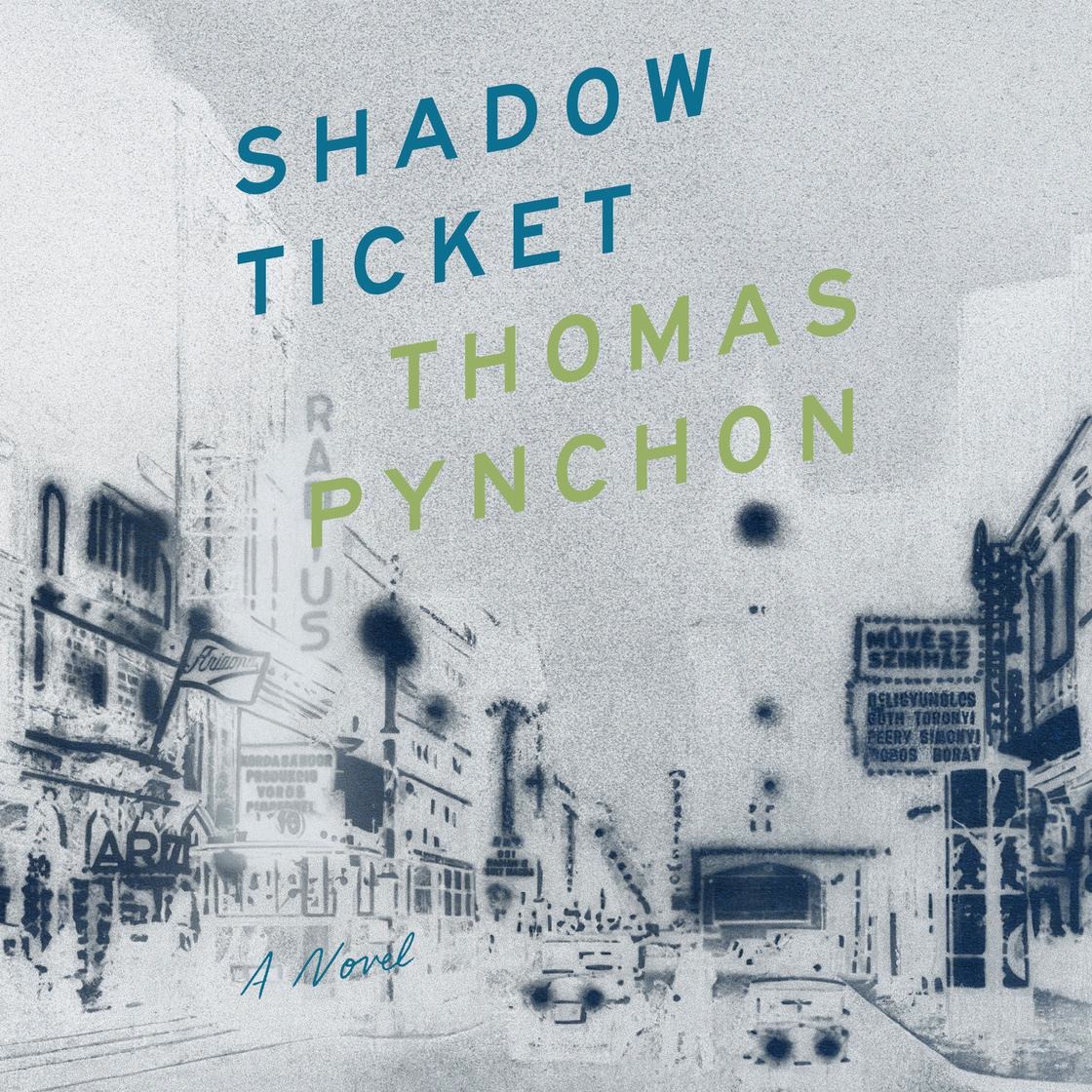
Thomas Pynchon’s ninth novel Shadow Ticket is out fifty days from now. In anticipation, there’s a piece today in The Guardian by John Keenan ranking Pynchon’s books to date.

I undertook a similar silly project just over a year ago on this blog in a post titled “A(nother) completely subjective and thoroughly unnecessary ranking of Thomas Pynchon’s novels” (this list was a correction to a previous 2018 list I foolishly compiled). Lists like these are obviously personal judgments (like, opinions man).

But Keenan’s list is wrong. So here are my annotations.

9. Keenan selects Slow Learner, writing,

A collection of early short stories that is chiefly of interest for the introduction, in which the author spells out why he thinks they fail. Pynchon does not spare himself but, unfortunately, he is right. For aficionados only.

I didn’t include Slow Learner in my rankings because it is not a novel. Pynchon’s intro to it is probably the best thing in it. I agree with Keenan’s assessment here.

8. Keenan selects Against the Day, writing,

Practically plotless, prolix and gargantuan, this novel landed with a thump following a nine-year gap. Characters fragment and double in a bewildering array, the style pastiches pulp novels, adventure stories and science fiction. It does not add up to more than the sum of its admittedly ingenious parts.

This assessment is egregious. Against the Day is perhaps the most directly political of Pynchon’s novels, and, in my estimation, the clearest (if not the most concise) expression of Pynchon’s political sympathies. I ranked it #3, writing: “I think this novel would make an excellent American history textbook. Its thesis: resist the military-industrial-entertainment-complex. Start here!

7. Keenan selects Bleeding Edge, writing,

Pynchon’s most recent novel is a lightweight. The protagonist, Maxine Tarnow, mother of two, longsuffering partner to a feckless financier, finds herself chasing shadows around Manhattan’s Silicon Alley. Maxine’s skills as a fraud investigator are put to the test unravelling the machinations of the nasty controller of a computer security firm who will do anything to get his hands on a virtual reality simulator called DeepArcher (geddit?). There are plentiful puns, red herrings and surnames that serve as possibly unhelpful acronyms – the usual Pynchon ingredients, in other words. Here they fail to cohere into an entirely satisfying whole.

Bleeding Edge is not top-tier Pynchon, but it’s hardly lightweight. I ranked it #6, writing,

Reading Bleeding Edge helped evoke all the weirdness the 2000s were about to lay out for us. It made me angry again, or reminded me of the anger that I’d sustain for most of the decade. It reminded me of our huge ideological failure after 9/11, an ideological failure we are watching somehow fail even more today.  But I also loved the novel’s unexpectedly sweet domestic plot, and found a kind of solace even in its affirmation of family, even as its final image pointed to the kind of radical inconclusiveness at the heart of being a parent.

6. Keenan selects Vineland, writing,

It is 1984, the year of Reagan’s re-election but for Zoyd Wheeler, Los Angeles-based veteran of the radical left, time has stopped. His wife, Frenesi, has left him to raise their daughter, Prairie, alone and he resorts to dismal acts of self-sabotage in order to qualify for government benefits. Prairie, in turn, flees the family coop to track down her mother, a subversive turned informant in league with federal baddy Brock Vond. Pynchon’s themes are prescient – surveillance, media saturation, generational miscommunication – but his aim is off.

I don’t think “Pynchon’s aim is off” is the best metaphor here. I think he hits what he shoots at — his targets are clear, and he’s an author, right? His characters are props he can set out where he likes, guaranteeing a bullseye. But that’s not always satisfying. I think the execution of Vineland is a bit slapdash. The book has always had cult status among Pynchon aficionados, perhaps stemming from a contrarian spirit. Paul Thomas Anderson’s (very) loose film adaptation, One Battle After Another, has also appeared to prompt a lot of reading, rereading, and online chatter about Vineland. I ranked it last in my list, at #8, writing that, “Vineland is ultimately depressing and easily my least-favorite Pynchon novel, but it does have some exquisite prose moments.

5. Keenan selects V., writing,

Sincerity is not a quality readily associated with Pynchon, but his debut novel displays an affection for his characters that would later take second place to irony. The story bounces between Benny Profane, unemployed sailor, and Herbert Stencil, obsessive seeker of the elusive V. The language shows its age in places, but the plight of people determined to keep themselves in the dark is as relevant as ever.

I love V. and also had it at #5 on my list. Keenan is right that “sincerity” is not associated with Pynchon, but absolutely incorrect that Pynchon’s mode of affection is displaced by irony in the later novels. It’s clear that Pynchon loves Jeremiah Dixon, Charles Mason, Webb Traverse, Roger Mexico, Maxine Tarnow, etc. In my list, I wrote,

I’ll repeat my endorsement that “V. makes a good starting place for anyone new to Pynchon” and recommend that anyone interested in Pynchon but daunted by the scope check out the book from their library and read the ninth chapter, the story of of Kurt Mondaugen.

4. Keenan selects The Crying of Lot 49, writing,

The author regretted publishing this novel but he was being unduly harsh on himself. Short, funny and shot through with allusions you can choose to follow or ignore, the story of Oedipa Maas’s search for the meaning behind the supposed rivalry of postal companies is the literary equivalent of non-Euclidean geometry.

I also had Crying at #4. I wrote,

The Crying of Lot 49 is probably a better novel than V. but I think I like V. better. 49 is very funny and showcases Pynchon’s tonality of paranoia/hope wrapped up in zaniness/horror. It’s an excellent sophomore novel, but also dense, claustrophobic even. I guess I like the Pynchon sprawl a bit better.

3. Keenan selects Inherent Vice, writing,

Wilfully weird, often sordid and occasionally borderline unintelligible, Pynchon’s seventh novel was adapted for the big screen by Paul Thomas Anderson in 2014. The adaptation was nominated for an Oscar, making Pynchon as mainstream as he’s ever likely to get. Larry “Doc” Sportello is a private investigator with a broken heart and a huge appetite for marijuana. His ex-girlfriend reappears out of nowhere, implores Doc to find her married lover, then promptly vanishes again. At the heart of the murky tale lurks the sinister presence of the Golden Fang, a vessel that means, as Doc surmises, “a lot of things to a lot of people” – all of them unsavoury.

I love Inherent Vice, but it’s hardly top-three! I had it at #7, above Vineland.

2. Keenan selects Gravity’s Rainbow, writing,

This kaleidoscopic tour de force cemented Pynchon’s reputation as a writer of baffling, farcical and profound genius. A chief delight is his brilliant ear for dialogue which is given full rein in this twisted tale of allied intelligence officers, Nazis, scientists and seers united by a MacGuffin in the shape of a mysterious rocket. The action arcs from London under bombardment to a postwar zone of surrender. What is striking is how the themes explored here – forever wars, technological domination, uncontrollable cartels – have become staples of internet discourse.

I had Mason & Dixon at #2 and Gravity’s Rainbow at #1.

1 . Keenan selects Mason & Dixon, writing,

Pynchon gives the 18th-century novel a postmodern twist to explore the relationship between Charles Mason and Jeremiah Dixon. . . The author layers fact over anachronistic fiction, scientific inquiry over conspiratorial rumour, and tragedy over knockabout farce, in a virtuoso display of storytelling. . . It is a ripping yarn spun for the incredulous enjoyment of both the cleric’s family and the grateful reader.

Here’s what I wrote in my (thoroughly unnecessary) list:

2. Mason & Dixon (1997)

A measurement of the world and a story about friendship. It would be Pynchon’s best novel if he hadn’t written—

1. Gravity’s Rainbow (1973)

The best book.

Rankings are stupid fun, and I appreciate Keenan giving me an opening for some stupid fun on a Monday morning when I should really be prepping for the onset of the fall semester. I’ll close with a more honest ranking — all of these books are good, most are excellent, and at least two are American classics. It might be better to rank Pynchon’s oeuvre on one of those dorky tier lists.

So here is my dorky unnecessary Pynchon tier list:

Sunday Comix

From “The Creature in the Tunnels” by Rory Hayes. Published in Bogeyman Comics #1, 1969, Twelve A.M. Publications.

Self-Portrait — Flannery O’Connor

Self-Portrait, 1952 by Flannery O’Connor (1925-1964)

The Villages — Barnaby Whitfield

The Villages, 2023 by Barnaby Whitfield (b. 1970)